Friday, November 20, 2026

Bengaluru: Fear and loathing in India’s Silicon Valley

Even today as Home Minister Amit Shah announces that -“CAA will not affect Indian citizens… Come what may, citizenship amendment act will not be withdrawn”; Bangalore slum dwellers become the first victim of the hysteria whipped up by the NRC-CAA combine. This Sunday, 19.1.2020, Bangalore Bruhat Mahanagara palike (BBMP) razed around 100-150 sheds in a settlement around kariyammana Agrahara in Bellandur area claiming that they are built illegally on private property and are occupied by Bangladeshis. Last couple of weeks, BJP and its ministers have been trying to convince the Indian public that CAA- NRC will not harm any Indian. But as Bangalore Municipal corporation demolished the slums in Bangalore Marathahalli area this Sunday, all the claims of -Modi-Shah also came crumbling down. BBMP demolished the sheds of people who came from not just West Bengal, Assam, Tripura, Bihar but even closer to home, from North Karnataka. This has landed the BBMP, Marathahalli police and BJP MLA Arvind Limbavali in hot soup. As the news broke out that the residents in the slums are Indians and have documents to prove but police did not even care to look at their documents, the BBMP and police are blaming each other.

Living under constant fear

This has not eased the atmosphere of terror among the slum dwellers, most of them daily wage labourers working in waste segregation and as housemaids. Gauri Lankesh news spoke with the residents who were terrified to talk to the media because of the Suvarna news sting operation. They were afraid that they will also be framed. Gauri Lankesh news spoke to the person whom Suvarna news spoke to and circulated as a sting on the presence of illegal migrants. He is Chiafaddin Sekh, native of Murshidabad in West bengal. The reporter from Suvarna News asked him where are you from to which he said i am from Murshidabad. he then asked who is your MLA, he answered Adhir ranjan Choudhury. The reporter then said you are Bangaladeshi to which Chiafuddin said- Aami bangla ( I am Bengali). Suvrana news used this as ‘evidence’ of presence of Bangaldeshi migrants. We spoke to the migrants from North Karnataka as well, whose homes were also demolished, they also work as waste segregators and work under contract with BBMP. They showed their voter I- card and PAN cards. The ones from Assam even showed their names in the NRC documents. fear They were surprised that why nobody asked them for their documents. Most of them have stories of regular harassment from the police and BBMP. As of today, police have picked up 10 people from the Tubhrahalli slum area, no reason was given for the arrest. Marathahalli and neighboring areas are home to many employees from the Bengaluru IT industry. Residents come from various parts of India. Most of them rely on domestic help.  It is the women from these slums who work as domestic workers in their houses. In most of these slums, residents work as waste segregators, living amidst waste plastic, papers and metal scrap. Other work with Urban clap as cleaners or as drivers in the neighboring schools. There are around 10 schools in the neighborhood. The slum dwellers don’t just live in constant fear of eviction but since the news of NRC is doing the rounds, the fear of being labeled as bangaldeshi and foreigners has increased their concerns.

Suvarna News, Arvind Limbavali and BBMP 

A few days ago, Suvarna news carried a ‘sting’ operation claiming Bangladeshi migrants were illegally staying in the area. The ‘sensational’ video was shared widely on social media and was shared by BJP MLA from Mahadevpura Arvind Limbavali with claims of the slums being illegally occupied by Bangladeshi migrants and How NRC and CAA should be implemented and these people should be removed. Sunday,19.1.2020, Marathahalli police and BBMP officials came with demolition orders that said, it is believed that there are “Bangladeshi” migrants here, so we are carrying out the demolition drive. Talking to the residents of neighboring slums it became clear that the plan was to carry out the demolition in 4-5 slums in the Marathahalli area. Police also threatened the residents of neighboring slums in Tubhrahalli and Kundanahalli to vacate the place in 2 hours before they bring JCB. Some activists and lawyers intervened saying the assistant engineer does not have the authority to carry out such a drive. The slums are on private property and such a demolition order is unauthorized. After that police left the place and didnt come back. On Tuesday, BBMP commissioner also confirmed that the demolition was unauthorized and the engineer who has given demolition orders has been suspended. The slums are on private land and technically BBMP assistant executive engineer does not have the authority to send the order. BBMP has washed its hands off the issue by suspending the Assistant engineer, police claim that they were just following the orders to provide protection to the BBMP officials. But nobody is asking any questions to Suvarna News and Arvind Limbavali. The Question remain… Did Suvarna news and BJP MLA Arvind Limbavali spread fake news to create hysteria of illegal migrants in Bangalore without any fact check?  

Punjab becomes the second state to pass resolution against Citizenship Amendment Act

0
The Punjab Assembly on Friday passed a resolution demanding to scrap of the controversial Citizenship Amendment Act (CAA). After the Kerala government, Punjab becomes the second state to pass a resolution against the CAA. State Minister Brahm Mohindra moved the resolution against the CAA on the second day of the two-day special Assembly session. “The CAA enacted by Parliament has caused countrywide anguish and social unrest with widespread protests all over the country. The state of Punjab also witnessed protests against this legislation, which were peaceful and involved all segments of our society,” Mohindra said while reading out the resolution. The Amarinder Singh-led government had on Tuesday said it will proceed according to the “will of the House” on the issue of CAA, National Register of Citizens (NRC) and National Population Register (NPR). Singh had recently said his government would not allow the implementation of the “brazenly divisive CAA”. After a cabinet meeting on Tuesday, his colleagues in the ministry had expressed concern over the implications of the “blatantly unconstitutional and divisive CAA, NRC and NPR.” Singh had said neither he nor the Congress was against granting citizenship to minorities persecuted on the basis of religion but they were completely opposed to the “discrimination in the CAA against certain religious communities, including Muslims”. “Congress party has given a responsibility to Rajasthan Chief Minister Ashok Gehlot to coordinate with Congress ruling states and states where Congress is in alliance to draft resolution to be passed in respective Assemblies against CAA and NRC,” the Congress said. The states of West Bengal, Kerala and Punjab had opposed the bill from the time it was passed in the month of December. Amarinder Singh had expressed his opposition to the act on social media earlier.  He had described CAB as a direct assault on India’s secular character, Amarinder Singh said, his government will not let the legislation be implemented in Punjab. “We have a majority in the Assembly, and will block the Bill. We will not let it rip apart the secular fabric of the country, whose strength lies in its diversity,” he said. “It is the duty of an elected government to safeguard the cherished values ingrained in the Constitution and not destroy them. How can you leave out a large section of the Indian population from the protection they have been getting since we declared India a sovereign, socialist, secular, democratic republic, assuring its citizens justice, equality and liberty,” Singh said.

Karnataka: Non Stop Anti CAA-NRC protests led by women in Tumkur

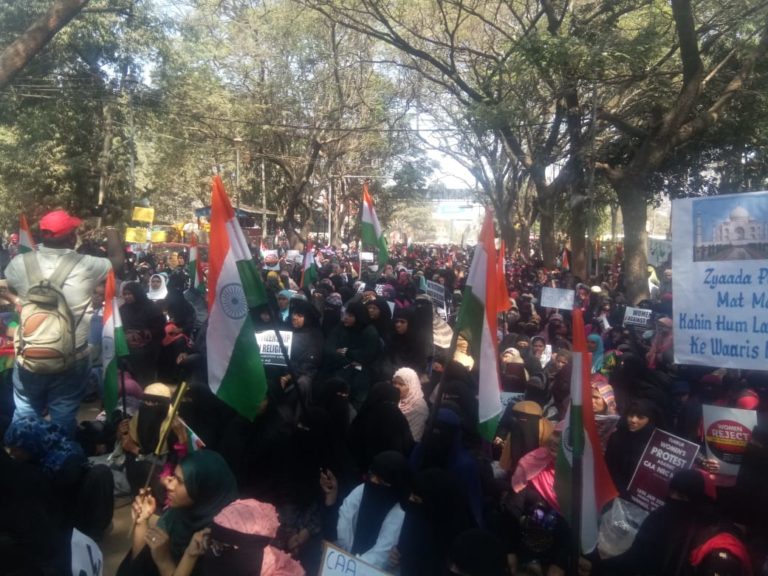
Today Tumkur district in Karnataka witnessed massive protests led by women against the citizenship act, NCR and NPR. This set an example for many women in the country and also set a stage for future revolutionary events. In the last few days we also witnessed protests at Delhi’s Shaheen Bagh where women were the majority in number of protestors, while men and youth only volunteered the protests. For the first time orthodox Muslim women have crossed the borders of household chores and participated in the protest in huge numbers. These women protested in harmony chanting Azadi, singing the National anthem, and shouting in chorus ‘Hindustan Hamara, Hindustan hamara.’ In the video, the women are seen applauding for the speaker’s words and shouting slogans. These women protestors peacefully sat for about two hours and listened to everyone’s speech. This phenomenon of Muslim women protesting in huge numbers can be seen as a revolutionary change in the community. There were no men on the dais where the protest took place. From the reception, presentation, salutation and to the delivering of speech; everything was neatly handled by the women itself. These women while giving speech said- “we are Indians, we are born here, grew up here. Our families are living here even before independence. This process of citizenship registry on the basis of religion, caste, and creed should be abandoned. Why ask the question- why should we show the documents? ” Azadi slogans were emanating from all over the area where the protest took place. K.S Vimala from Janavadi mahila sangathan said-

“There are many problems in the country. Poverty, unemployment, people are losing jobs. The financial situation is not good. Many businesses have been shut. At this point, instead of solving the problems, the central government is going to implement anti-people policies. Laws like the NRC, CAA are working toward dividing people on the basis of religion. People have been born here and lived here for generations. But how can people show the records of their parents, grandparents and previous generations? Are we not citizens of this country? The ruling Government should stop looking at people with suspicion. The CAA, NCR and NPR should be abandoned.”

“In India there are nomadic communities, poor people, who are deprived of basic necessities. There are still villages which have no name. Tribals, sex workers children of devadasis, Dalits, sexual minorities do not have the relevant documents. In Assam’s NRC 13 lakh non-muslims were on the list. There were many women who were not in the list. if people who were born and resided in this country are not Indian citizens then who is?” Many speakers also questioned the Government’s common sense, as to how can they expect women to keep all the records as they are the ones who are mostly exploited in society.

Faridha Begum, Member of the City Council, AIMSS State Vice President Harini Acharya, Shee Mohasin, Kannada Sahitya Parishad Chairperson BA Ramakumari, Zainab Mohammedi, Kalyani, Harsia Harshaf, Taheera Banu, are heading the protest against CAA, NRC and NPR.


Karnataka: Doctors on streets against CAA- NRC -NPR in Gulbarga

For one month we are seeing protests against the citizenship amendment act (CAA), NRC and NPR by student organisations, muslim organisations, progressives, Dalits, women organisations and Lawyers. Today, doctors also joined the list by in raising their voice in rejecting the unsecular and unconstitutional laws like CAA, NRC, and NPR (National population registry). Under the banner of the Medical fraternity of Kalagurgi, more than 500 doctors did a peaceful protest outside the district collector office against this contentious law. Addressing the protest, Dr. Seema Deshpande said-
“The government’s job is helping people instead the government is increasing people’s trouble by bringing in laws like NRC, NPR, and CAA. The public health sector is declining and we have lost hope. India’s economy is on its death bed. India’s health status is declining. Patients have no money for treatment. In such circumstances, instead of addressing these grave issues affecting people, government is bringing laws like NRC and CAA that divide people on the basis of religion. That is why we are protesting today.”
NPR is anti-people. We have united against this. We are the people of India. She urged the government to take steps to improve India’s education, health and economic status instead of such laws. NPR Ashfaqullah Khan, Bhagat Singh, Ram Prasad Bismil, Subhash Chandra Bose belonged to different religions and found for our freedom movement. In such a country breaking down people on the basis of religion is not right. We don’t look at patients through their religion? We have morality. That is why we have taken to the streets against the ruling government. Mohammed Irfan spoke the people-  “The fight for our independence has begun. There is no end to this. Some are protesting against the law without reading it. But we doctors, those who are aware of the condition of society, have read this law thoroughly. It is unconstitutional, it is to divide people. You can’t just sit and watch it. That is why we are on the street.” Jamia and JNU students are protesting. We support and salute them. There are petitions against CAA, the matter is in the Supreme Court. We have complete trust in our judicial system. If the act is implemented there, we will give a call for “Delhi Chalo”. Dr. Rahul Taman said-
“There is already a law on citizenship. They have been amended even though it looks like it is against Muslims. It is against the poor, Dalits, OBCs and women. Over 19 lakh people have been detained in Assam. Of this, only 5 lakhs are Muslims and the remaining 14 lakh are from other religions. That is why people should oppose this law.
Democratically elected criminals are in Parliament and they are demanding papers from honest people and plan to send them to jail. Our culture is called Vasudhaiva Kudumbakam. Everyone on this land is our family, but the government is breaking us on religious grounds. One lakh babies die in India before they are born. One has to think about this. Our country ranks 115th in the hunger index. In such conditions, we should ask what our priorities are…  

Anti-CAA: When Mangalore reverberated with Azadi Slogans

2
Lakhs of people gathered at Shah Garden at Adyar on the outskirts of Mangalore at a protest rally to condemn the contentious Citizenship Amendment Bill (CAA), National Register of Citizenship (NRC) and National Population Register (NPR).s Many people came by boats to cross the river Nethravathi to reach the venue. National flag that is becoming a symbol of the Anti-CAA protests. The protesters waved a 100-meter national flag during the protest. The speakers at the stage included many esteemed personalities and activists like harsh Mander, former IAS officer Kannan Gopinathan, Shivsundar along with Muslim leaders. The speakers spoke about the discriminatory nature of the citizenship acts and citizen registry passed by the Modi government. Harsh Mandar spoke about the dream of RSS to build a Hindu Rashtra and how laws like CAA, NRC and NPR are steps in that direction. He spoke that during Independence struggle Muslims fought against the British and the Muslims who chose to be part of India, why should they be asked to prove their citizenship? Shivsundar highlighted that lies told by Modi and Amit Shah about NRC and CAA. He spoke about the discriminatory nature of the law based on religion and how it will affect Muslims. He spoke of people are suffering in detention centers in Assam. Shivsundar also spoke of the covert plans of government behind the NPR and NRC exercise. How one can be made stateless if one cannot show papers. Many speakers strongly condemned the police firing on CAA protestors in Mangaluru on December 19, which killed two persons and demanded action against police commissioner P S Harsha and police inspectors Shantaram Kunder and Shariff. The huge stage for protest against CAA, NRC, and NPR at Adyar was named after Jaleel and Nausheen, victims of police firing on December 19. Kannan Gopinathan spoke about the unimaginable scale of corruption that exercises like NRC and CAA will unleash. The people speak about ending corruption will start even newer ways of corrupting the system. State president of the Popular Front of India (PFI) Mohammed Shakid asked the people not to share any documents for the surveyors of CAA and NRC. The rally also passed 10 resolutions. These resolutions include scrapping CAA and NRC, FIR against policemen who killed two people in the December 19 firing, release of the compensation withheld for Abdul Jaleel and Nausheen, and withdrawal of cases filed against the innocent. It also demanded a judicial inquiry into the police firing that killed the two people. Shah Garden was packed with people for the protest, where some were even seen climbing street lights, signboards and buildings in the vicinity to catch a glimpse of the event. Hundreds of volunteers who were spread across Mangaluru city and the protest venue along with police ensured that the protest went off peacefully.    

Raghuram Rajan: A Resolution for the new Decade

0
In recent days, the news coming out of India has been worrisome. A gang of masked assailants broke into one of India’s leading universities, Jawaharlal Nehru University. They went on a rampage for hours, attacking students and faculty, entirely undisturbed by the police. While the identities of the attackers remain unclear, what is clear is that many of the attacked were activists, and neither the government-appointed administration nor the police intervened. And this was in a capital city where everyone is usually on high alert. When even elite universities become literal battlegrounds, accusations that the government is attempting to suppress dissent—even if by apathy rather than design—gain substantial credibility.It is easy to blame our leadership. But in a democracy as proud and storied as ours, we, the public, also bear responsibility. After all, it was the citizenry that put our leaders into the office and acquiesced in their divisive manifesto, which they have taken as their marching orders. Some of us were hopeful that they would focus on the economic agenda. Some of us agreed with their speeches, which scratched and inflamed our own prejudices. Some of us were indifferent, thinking politics was someone else’s problem. And some of us feared the consequences of being critical, as critics were ruthlessly made examples of. At the end of the day, democracy is not merely a right, but it is also a responsibility—a burden to be the keepers of our Republic, not merely on election day but on every day. Fortunately, the news from India has also been elevating. When young people of diverse faiths march together, Hindus and Muslims arm-in-arm behind our national flag, rejecting artificial divides stoked by political leaders for their own gain, they show that the spirit of our constitution still burns brightly. When officers of the administrative service resign their dream jobs because they do not believe they can serve in good faith, they are living testimony that the sacrifices made by the generations that got us freedom still inspire emulation. When an Election Commissioner carries out his duties impartially despite the harassment it brings upon his family, he asserts that integrity has not been completely cowed. When some members of the media work tirelessly to get the truth out even as their colleagues succumb to government pressure, they demonstrate what it means to be a dutiful citizen of the Republic. And when a Bollywood actress registers her silent protest by meeting with the victims of the attack on JNU, even though she puts attendance at her latest movie at risk, she inspires us all to take stock of what is truly at stake. One has to be truly cynical to not be moved. These people show through their actions that they think truth, freedom, and justice are not merely lofty words, but ideals worth sacrificing for. It is they who are fighting today for India that Mahatma Gandhi gave his life for. It is they, who never marched to win freedom, but today march to preserve it, who give us hope that Rabindranath Tagore’s dream …“into that heaven of freedom, My Father, let my country awake” … will continue to be a reality. The 26th of January marks the 70th anniversary of the day India gave itself a constitution, full of ideals and liberalism. Our constitution was not perfect, but it was crafted by learned men and women who had come through the horrors of a fratricidal partition and sought to create a more united future. They understood that India was capable of much good, but could also unleash terrible self-destructive forces, something some of our current leaders would do well to understand. So they drafted a document that attempts to draw out the best in us in a spirit of common purpose and pride. What better resolution for the new decade than to re-dedicate ourselves to ensuring that this spirit burns strongly in each one of us? In these troublesome times, let us work together to make India that shining example of tolerance and respect that our founders envisioned, a beacon once more for a weary world. Let that be our task for the new decade.

The article was first published on LinkedIn. Views expressed are personal.

Jama Masjid is not in Pakistan, what is wrong in protesting? : Delhi court slammed prosecution on Chandrashekhar bail hearing

“You are behaving as if Jama Masjid was in Pakistan and even if it was Pakistan, you can go there and protest. Pakistan was a part of undivided India,” the court said. The bail hearing of Bhim Army chief Chandra Shekhar Azad witnessed some crucial observations made by Tis Hazari Additional Sessions Judge Dr. Kamini Lau. The Public Prosecutor opposed the bail application saying that Azad had incited violence through his social media posts. The court asked the investigating officer of the police to put on record all the evidence which showed that Azad was allegedly giving incriminatory speeches at the gathering at Jama Masjid and any law which showed that the gathering there was unconstitutional. The social media posts mentioned about Azad’s call for protests and dharna near Jama Masjid to oppose CAA-NRC. To which judge said- “What is wrong with dharna? What is wrong with protesting? It is one’s constitutional right to protest.” Observing that there was nothing violent about the posts, the judge continued: “Where is the violence? What is wrong with any of these posts? Who says you cannot protest?. Have you read the constitution?” Further during the hearing, judge Kamini Lau lambasted Delhi police shallow understanding of law and constitution. She also came down heavily on random arrests being made for protests and abuse of section 144. During the time when we see entire judiciary bending over backwards to appease and accommodate the ruling regime dictatorial commands, Judge Kamini Lau’s takedowns in the Delhi Tiz hazari courts come as a refreshing change. Here are some her savage statements- When the Prosecutor replied that permission had to be taken for protests, the Judge said-
  • “What permission? Supreme Court has said repeated use of 144 is abuse (referring to recent Kashmir case decision)”.
  • Azad was a “budding politician” who had the right to protest. The Judge also added that she has seen many people who had protested outside Parliament going on to become leaders and Ministers later on.
  • “I want you to show me under which law is it prohibited for someone to prohibit outside religious places”, the judge asked the Prosecutor.
Azad’s lawyer Pracha submitted that no case was made out to arrest him, and that action was only to stifle dissent. At this juncture, the Prosecutor said that there was “drone footage” evidence of Azad giving inflammatory speeches. Denying this, Pracha said that Azad was only reading Constitution and speaking against CAA-NRC during the dharna. Later the judge adjourned the hearing till 2 PM tomorrow, at the request of the Prosecutor. Before adjourning the session, she commented-
“In the colonial era the protests were out on the roads. But your protest can be legal, inside the courts. Inside the parliament things which should have been said were not said and that is why people are out on the streets. We have full right to express our views but we cannot destroy our country.”
Last week, the judge had slammed Tihar jail for failing to provide medical treatment at AIIMS to Azad for his medical condition ‘Polycythemia’. The Court then directed to provide Azad treatment at AIIMS for his special medical condition. Azad was arrested by the Delhi Police on the intervening night of 20-21 December from the gates of the Jama Masjid after the Daryaganj protests against the Citizenship Amendment Act (CAA) were disrupted, leading to violence. Azad, currently in judicial custody, claimed he has been falsely implicated as the allegations levelled against him in the FIR were not only “ill-founded”, but also “improbable”.            

Kerala becomes the first state to move to Supreme court against Citizenship amendment Act

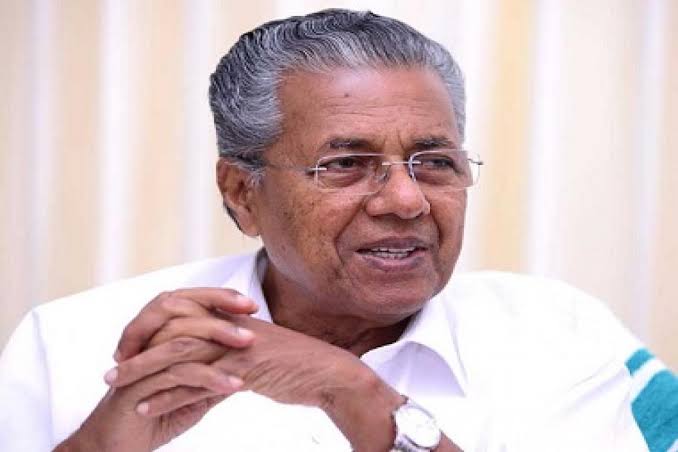
Kerala on Tuesday became the first state to move the Supreme Court against the contentious Citizenship Amendment Act (CAA), 2019. The Kerala government under the leadership of Pinarayi Vijayan on Tuesday moved the Supreme court against the citizenship Amendment act. The petition is filed under Article 131 of Constitution challenging the validity of the recently enacted central legislation that grants citizenship to illegal immigrants belonging to six religious communities barring Islam and have come to India from Pakistan, Bangladesh and Afghanistan. Kerala government has sought the law to be declared unconstitutional and in violation of Article 14 (Equality before law), 21 (Protection of life and personal liberty) and 25 (Freedom of conscience and free profession, practice, and propagation of religion) of the Constitution. The Supreme Court is already hearing over 60 petitions against the law amid nationwide protests against the contentious legislation. The suggestion to move the apex court had come up in December when the representatives from several political parties in Kerala and religious organisations had met to discuss the issue. On December 31, 2019, the Kerala Assembly passed a resolution demanding the scrapping of the CAA, amid raging countrywide protests against the legislation. The resolution was moved by CPM leader and Chief Minister Pinarayi Vijayan and seconded by Congress leader and Leader of Opposition Ramesh Chennithala. The CPM and Congress had earlier organised a joint protest against the law in the state.
Kerala government has also stayed the preparatory works in relation to the National Population Register, which is believed to be the first step towards the National Register of Citizens.
The suit also challenges the Passport (Entry to India) Amendment Rules 2015, and Foreigners(Amendment) Order 2015, which had regularized the stay of non-Muslim migrants from Pakistan, Bangladesh and Afghanistan who had entered India before December 31, 2014 on the condition that they had fled religious persecution from their home countries. The suit states, “The Impugned Amendment Act and Rules and Orders cover certain religious minorities of Pakistan, Bangladesh and Afghanistan and overlook other reportedly persecuted religious minorities/ minority sects therein such as Ahmaddiyas, Shias and Hazaras. Ahmaddiyas are reportedly subjected to persecution in Pakistan and Bangladesh.” It also argues, “The Impugned Amendment Act and Rules and Orders are discriminatory in so far it covers only religious persecution, among persecutions on very many grounds, of an irrationally chosen class of minorities in an unreasonably chosen class of neighbouring countries.”
Vijayan said the new law was “part of a larger agenda… against the Muslim community”. Chennithala said the state should stand united against the law.
After Bengal, Kerala became the second state to order a “stay (on) all the activities connected with the updation of National Population Register (NPR) in the state forthwith”. The contentious legislation passed by Parliament during the Winter Session in December last year makes Hindu, Sikh, Buddhist, Jain, Parsi, and Christian migrants from Afghanistan, Bangladesh, and Pakistan eligible for citizenship of India. It does not mention Muslims.          

Our government shot them like Dogs: BJP’s Dilip Ghosh on anti CAA protesters

0
Dilip Ghosh, BJP president of West Bengal made a shocking statement on anti CAA protesters. In an already heated atmosphere amidst nationwide protests on NRC and CAA, Dilip Ghosh said that protesters were “shot like Dogs” in Assam, UP and Karnataka, all BJP ruled states. While addressing a public meeting in Nadia district of West Bengal, he said-  “In Assam and Uttar Pradesh, our government has shot these protesters like dogs. They were arrested and cases were also filed against them,”. He criticized Mamta Banerjee for not using force on the protesters in West Bengal. He chastised Mamta Banerjee for “not opening fire and ordering lathi charge” on the Anti-CAA protesters. “Is it the father’s property of those who are setting the public property on fire? How can they destroy government property built on taxpayers’ money!” Ghosh said. He said, “The governments of Uttar Pradesh, Assam and Karnataka did the right thing by opening fire on these anti-national elements (during anti-CAA protests).” “They will come here, enjoy all the facilities and destroy the country’s property. Is it their zamindari!” he asked.

Dilip Ghosh following Yogi Adityanath tactic in Bengal

Dilip Ghosh, a long-time RSS member has worked in Andaman Nicobar, joining active politics only in 2014 when he was given charge of BJP expansion in West Bengal.  This is not the first time Dilip Ghosh has courted controversy. He has lied in his election affidavit of having pursued a diploma in engineering. However, upon RTI inquiry, it was revealed that he has submitted incorrect information. A week ago, he turned away an ambulance that tried to make way through a rally he was addressing. He also commented on the JNU mob attack as a ‘staged’ blaming JNUSU president Aishee Ghosh to be the main perpetrator of the attack. He also questioned whether it was blood or color on her head. Ghosh is known for his anti-Muslim rhetoric. He claims that there are two crore “Muslim infiltrators” in the country. “One crore alone in West Bengal and Mamata Banerjee is trying to protect them” Yesterday’s speech in Nadia, Ghosh was again trying to whip up communal sentiments by calling for identifying those “sabotaging the interests” of Hindu Bengalis. These similar diversionary tactics were employed by Yogi Adityanath in Uttar Pradesh which has seen the most violence during the CAA protests on 19th December. In December, during the anti-CAA protests in Uttar Pradesh, 19 people were killed by police firing. More than 1000 were arrested on false charges and around 5000 were detained. There were several cases of police brutality in Uttar Pradesh and several video footage that shows that police participated in vandalism and shooting. Police specifically targetted Muslim neighborhoods. Weeks later, many are still in jail. Uttar Pradesh Chief Minister Yogi Adityanath who had given a free hand to police in UP has praised the police action and had made statements like taking ‘revenge’ from protesters. He said the government will collect the cost of damage to the public property from the protestors. Police arrested minor children, orphans, old people, and women. Fact-finding reports show that Muslim houses were vandalised by police and many Muslims were arrested who were not even part of protests. It looks like Dilip Ghosh is sad that nobody got killed in West Bengal. BJP in its usual manner has distanced itself from the controversy saying it was irresponsible of him to say such things.      

If Rohith Vemula had been alive… Remembering the young spirit

0
“I wanted to become a science writer like Carl Sagan, at last- I could write just this letter” wrote Rohith Vemula in his death note , who committed suicide four years ago on January 16, 2016. How this North Star of students’ struggle would have been, had he been alive? What would have he be doing? His was not a suicide, but a murder orchestrated by the regime. The thirst of the regime that snuffed life out of a talented young man like Rohith Vemula is not yet quenched. That’s why this regime is conspiring to distract the downtrodden classes by bringing out black legislations like CAA, NRC and NPR, by drastically increasing education fees, by sending students to jail through false implications. What would have Rohith Vemula done if he was alive today? “I loved Science, Stars, Nature, but then I loved people without knowing that people have long since divorced from nature”..-  wrote Rohith Vemula in his suicide letter. Today crony capitalists are trying to gobble up the entire globe and ruling governments are licking their boots. Farmers and workers are being thrown to streets, atrocities on Dalits and women are ever-increasing, minorities are being treated as second class citizens. What would Rohith be doing if he was alive today? How he would have reacted? Rohith had opposed the suppression on Kashmiri people even before his name was known to the world. “My birth is my fatal accident. I can never recover from my childhood loneliness. The unappreciated child from my past.”, he had written. He had wished to eradicate caste. Because it had tormented him from birth itself. He had nothing but the pictures of Baba Saheb and Savithri Bai Phule when he was kicked out from the hostel… He was pained about the Muslims who were burned by the communal inferno ignited by BJP, in Muzzafarnagar riots, just for the sake of coming to power in Uttar Pradesh. That’s why he had arranged to show the documentary “Muzaffarnagar Baaki Hai” and discussion on it at Hyderabad Central University. ABVP had then objected to that and had a row with Rohith Vemula. “As an Ambedkarite, I deeply condole the deaths of the BSF soldiers who lost their lives in the terrorist attack in Punjab as well as those six people who lost their lives in the earthquake in Manipur”, he had written in his Facebook account on January 06, 2016, just ten days before his demise. Fake patriotic ABVP goons took revenge on such true patriotic lad, who loved his people from the heart. He had bitterly condemned the attack on Christians in Kandhamal and exposed the exploitation of people in the name of “Acche Din”. He longed for not only campus democracy but, democracy in the entire society. That’s why he had quoted Alice Walker on his Facebook account-  “Activism is the rent I pay for living on this planet”. Safdar Hashmi had been murdered by the proponents of violence, while he was performing a street play on January 2, 1989.  “We have lost a beautiful performer and a brave soul”, he had written remembering the incident. How would he have reacted to CAA and NRC, of the present regime, if he was alive? I am absolutely sure- if had he been alive he would have been the leader to all of us. He would have organised lakhs of people with his love and fought against those, who seek to divide people in the name of religion. He would have called for the eradication of casteism. He would have fought to retain the secular fabric of our Nation. He would have fought against superstitions and propagated science like Carl Sagan. Rohith was haunted by his caste. During his Ph.D., ABVP goons put false charges on him and with the help of the brahminical administration of the university withheld his scholarship for seven months and banished him from college and hostel. He had begun his fight at campus ‘Velivada’, just holding pictures of Ambedkar and Savitri Bai Phule. He didn’t get any support then. and he was alone in his fight. The regime took his life. Today, we see the vicious design to isolate the minorities and victimise them. Would Rohith Vemula, be silently watching all this, if he was alive? Friends, if we wish to secure justice for Rohith Vemula, we have to take his place and continue his fight. We have to join the fight being waged on the streets- for jobs, for fare and scientific price for the farmers, for respectable life for the downtrodden. We have to join the fight against CAA and NRC, on priority. These legislations are not just a conspiracy against the Muslims, but also to deprive all marginalised communities of their democratic rights. Besides participating in this fight, we have to go to the villages, slums, and Adivasi areas and talk to the people. Though Rohith Vemula is physically not with us, we must not forget that we breathe his spirit. Let thousands of Rohith Vemulas speak. Will history forgive us if we don’t stand up and fight for the downtrodden. Come! Join the fight and consolidate students’ unity on Rohith martyrdom day on the 17th of this month. Muttu Raju is a student activist. Views are personal.