

The caste politics behind the decentralization of the Andhra Capital

Read Part 1 here
The YSR Congress party (YSRCP) government in Andhra Pradesh has passed a Bill in the Assembly to make the port city of Visakhapatnam the administrative capital of the state, instead of Amaravati.
The Jagan Reddy government has proposed to create three capitals – Amaravati, the legislative capital; Visakhapatnam; the executive capital; and Kurnool, the judicial capital.
The bill is called Andhra Pradesh Decentralisation and Inclusive Development of All Regions Bill, 2020. According to the state finance minister- “Regional imbalances, absence of equitable growth have caused an acute sense of deprivation among various sections of the state population, leading to disturbances.” The decentralisation is the capitals is the “logical solution” to the above problem. The idea is of “distributed development and decentralised administration” so that all regions of the state benefit equally.
Amaravati- The bygone Capital City of Andhra Pradesh

It appears that it is within the cultural existence of provinces to fall into deep provincial slumber irrespective of the mood of the Nation they are part of. This is not to place ‘National’ issues above the existential provincial issues. But, it is sometimes disturbing to see the provincial slumber carried too ahead to the point of blissful ignorance and nonchalance. This especially in these fascist times is quite disturbing. Andhra Pradesh the quintessential provincial territory is now in the grip of such mortal nonchalance. The only thing one would hear these days here- media too are over-enthusiastic players in this game of slumber- is about the decentralization/relocation of the Capital. In fact, it would be no exaggeration to say that Media, Telugu, and English, are in fact aiding and abetting such nonchalance. The only issue that the media are interested in covering from Andhra Pradesh is the Capital issue. Comparatively, protests against NPR, NRC, and CAA are relatively smaller in magnitude here. But, that doesn’t mean that there aren’t protests at all. There have been huge demonstrations in various mofussil towns and many villages. But, they are relegated to single column news items in all the newspapers. A tragedy, indeed. A provincial tragedy.
What is with Amaravati, one would ask, that is keeping everyone so preoccupied in this province? Attempting single line answers is always unadvisable. But, if one is to answer in a line, one would have to say that the History of Modern Andhra is now being contested bitterly, with clearly demarcated boundaries. Amaravati represents the territorial culmination of the almost one and half-century-old Modern Andhra History. The socio-political status-quo equations are now under strong consternation. We were brought upon the diet that the only consternations are the consternation between the Left and the Right of the economic spectrum. But, drop all those carefully constructed dichotomies when it comes to the present situation. The Right and the Left merge seamlessly in what is regionally bound Caste camaraderie. Here the struggle is between the historically slighted regions and castes and the regions and castes that have been the beneficiaries of the wealth generated in this insanely rich region of Andhra Pradesh. Apart from the topographical advantage a region has to possess to assert its primacy it also requires a vocal Caste to assert its one-upmanship. Perhaps, more than being peripheral regions such peripheral regions are peripherized at the will and wish of the dominant regions and the castes that make up such regions. A good example for such region-caste nexus domination is Amaravati.
Postcolonial history of Andhra Pradesh
Andhra Pradesh, the first linguistic state in Post-colonial India, was formed merely as Andhra State. Only later, after the merger of Andhra State and Telangana did it become Andhra Pradesh. By the time Andhra Pradesh was formed the erstwhile Andhra State was composed of Coastal Andhra and Rayalaseema regions. Both these regions were under British rule for more than 150 years before Independence. However, till the time of Independence Telangana was the Nizam State under the protectorate of British. Topographically speaking, Coastal Andhra being the eastern part of the state is endowed with deltaic regions and is at the foothills of Eastern Ghats. Rayalseema region, a rain shadow region, is an upland, dry region. The western part of Coastal Andhra that borders Telangana is also upland, dry region. Though the two mighty rivers of Telugu land- Krishna and Godavari-enter Telangana before joining the Bay of Bengal in Andhra Pradesh, Telangana has been historically deprived of the necessary irrigation facilities. Andhra region that has been under the British rule did gain fine points on this count, thanks to the revenue generation strategy of the British. The barrage led irrigation in Central Coastal Andhra has made it very prosperous by the time of Independence itself. The result is the more or less their control of every and any industry you name it. It is interesting to note that the northernmost district of Andhra Pradesh- Srikakulam- too is endowed with two rivers- Vamsadhara and Nagavali. But it received attention neither during the British rule nor during the post-colonial regional governments. Such being the foundational imbalance the natural apprehensions among Ralayaseema and Telangana are understandable during the formation of Andhra Pradesh. The demand then has been to locate the Capital in Kurnool district in Rayalaseema (Telangana had its Capital in Hyderabad and Andhra had its Capital in Madras). However, the complete domination of every sector- not least the then undivided Communist Party of India- by the dominant Castes from Central Andhra region (comprised of East Godavari, West Godavari, Krishna and Guntur districts) made sure that Hyderabad continued to be the Capital of newly formed Andhra Pradesh. Fast forward to 2014. Telangana was formed as a separate state almost after decades of demand for separate statehood. By now one would have understood the reasons for disgruntlement among the Telangana populace- The complete domination of social, political, economic and cultural landscapes by the Andhra populace, particularly Central Coastal Andhra populace. With Telangana seceding as a separate state and though Hyderabad was made the joint Capital of both Andhra Pradesh and Telangana for 10 years the then Chief Minister of newly formed Andhra Pradesh decided to build a mega, green field Capital city in Andhra Pradesh. The location identified was a cluster of 29 villages in Guntur district on the banks of the Krishna River. Amaravati was the name given to the proposed Capital. The name was borrowed from a Buddhist site around 20km upstream from this location that in the past used to be a trading zone as it is situated at the intersection of Krishna and Munneru rivers, which in those days of riverine transport connected the coastal belt of Andhra Pradesh and the upland region of present day Telangana. Sivaramakrishnan committee formed by the then government to identify the location of the capital city explicitly suggested against locating capital in this area. But the government chose to establish the capital precisely in this area. Naidu would brood no intellect other than his delusional dreams duly aided and abetted by visionary documents prepared by international/national consultants. Read Part 2 here The author is an activist with the Human Rights Forum (HRF) Andhra Pradesh. Views expressed are personal.When Godse´s Children Rule India, Gandhi is Crucified Everyday

The October 6, 2019 issue of Organizer, English organ of RSS, was dedicated to ‘Mahatma Gandhi’, celebrating his birthday; the October 2. Our PM Modi who identifies himself as ‘a Hindu nationalist’ also remembers Gandhiji regularly, his ideological parent, RSS displaying Gandhiji’s photo too in some of its meetings.
This love of RSS for Gandhiji is a hoax and needed to be judged by going through the following ideas and practices of this organization which are brazenly inimical to the ideals of Gandhiji.
 Vicky Mittal, BJP IT-Cell Indore in-charge demanded that in order to decide who is more popular in India, whether Gandhi or Godse, the pistol of Godse with which he killed Gandhiji should be put on auction. His tweet read : एक बार गोडसे जी की पिस्तौल नीलाम करके देखो तो पता चल जाएगा की देश-भक्त था या आतंकवादी! He seemed to be sure that Godse, the killer of Gandhi would win hands down!
 Shockingly, from the same dais in this convention from where Modi’s felicitation message was read, one of the prominent speakers, K.V. Sitaramiah, declared on June 10, 2013 that Gandhi was ‘terrible, wicked and most sinful’. Rejoicing at the killing of M.K. Gandhi, he went on to declare,
“As Bhagwan Shri Krishna said in the Gita, ParitranayaSadhunamVinashaya Cha Dush-kritam/DharamasansthapnayaSambhavamiYuge-Yuge (For the protection of the good, for the destruction of the wicked and for the establishment of righteousness, I am born in every age) on…30th January 1948 evening, Shri Ram came in the form of Nathuram Godse and ended the life of Gandhi.”
K.V. Sitaramiah has also authored a book, titled Gandhi was Dharma Drohi and DesaDrohi, in which the text at the back cover, quoting from the epic Mahabharata, demands that ‘Dharma Drohis must be killed’, ‘Not killing the deserved to be killed is a great sin’ and ‘where the Members of Parliament seeing clearly allow to kill Dharma and truth as untruth, those members will be called dead’.
Gandhiji was assassinated on January 30, 1948 by a gang of Hindutva zealots, sadly, their ideological children rule India today demolishing whatever was dear to him.
Shamsul Islam is a retired Professor of University of Delhi.Email: [email protected]
Link for some of S. Islam’s writings in English, Hindi, Urdu, Marathi, Malayalam, Kannada, Bengali, Punjabi, Gujarati and video interviews/debates:
http://du-in.academia.edu/ShamsulIslam
MODI AS FATHER OF INDIA
During PM Modi’s September 2019 visit to the US, the latter’s President Trump while heaping unprecedented praise on his close friend Modi declared him to be ‘Father of India’. Modi and his followers did relish this epithet as there was no attempt by PM or his government to correct Trump that India already had one ‘Father’ and a Nation with two ‘Fathers’ would be an abnormality. On the contrary, a senior minister in the Modi’s cabinet, Jitender Singh known for his proximity to Modi publically defended Trump for describing his patron as ‘Father of India’.BJP IT-CELL INCHARGE CALLS FOR AUCTION OF GODSE’S REVOLVER TO PROVE HIS POPULARITY
Vicky Mittal, BJP IT-Cell Indore in-charge demanded that in order to decide who is more popular in India, whether Gandhi or Godse, the pistol of Godse with which he killed Gandhiji should be put on auction. His tweet read : एक बार गोडसे जी की पिस्तौल नीलाम करके देखो तो पता चल जाएगा की देश-भक्त था या आतंकवादी! He seemed to be sure that Godse, the killer of Gandhi would win hands down!
GANDHIJI AS CHATUR BANIYA
Amit Shah while addressing a RSS-BJP in Chhattisgarh in 2018 while belittling the role of Congress, in the freedom struggle, went on to discuss Gandhiji. According to him Gandhiji, to quote original words in Hindi, “bahut chatur baniya tha woh”. It needs to be noted here that by this categorization Shah, in fact, borrowed the language of M.A. Jinnah who always referred Gandhiji as ‘Hindu baniya’ who represented only Hindus. So in the vocabulary of this Hindutva icon, Shah, Gandhiji was reduced to the status of a Hindu leader which the Muslim League always propagated and propagates even today. RSS WAS FORMED IN OPPOSITION TO GANDHIJI’S CALL FOR HINDU-MUSLIM UNITY The RSS’ hatred for Gandhiji is as old as the formation of the RSS itself. Dr K.B. Hedgewar, the founder of the RSS, was a Congress leader but parted company with the latter in 1925. After meeting Hindutva icon V.D. Savarkar, he realised that Gandhiji was the biggest hurdle in the Hindutva project of organising Hindus separately. According to an RSS publication, since Gandhiji worked for Hindu-Muslim unity, “Doctorji sensed danger in that move. In fact, he did not even relish the new-fangled slogan of ‘Hindu-Muslim unity”. Another RSS publication corroborates the fact that the main reason behind Hedgewar’s parting with the Congress and formation of the RSS was because the “Congress believed in Hindu-Muslim unity”.RSS & MUSLIM LEAGUE ORGANS COMPETED IN DENIGRATING GANDHIJI
The RSS launched its English organ, Organiser, in July 1947 and a perusal of its issues till the murder of Gandhiji on January 30, 1948 shows a flood of articles and sketches inimical to Gandhiji. The RSS seemed to be competing with the Hindu Mahasabha leader, Savarkar, and the Muslim League organ, The Dawn, in denigrating Gandhiji.GANDHIJI MURDER & RSS
The first Home Minister of India, Sardar Patel, whom the RSS often praises, was forthright in holding the RSS and Hindu Maha-sabha responsible for creating an environment of hatred against Gandhiji which resulted in the latter’s murder. He underlined it in a letter (July 18, 1948) to the prominent leader of the Hindu Mahasabha, Shyama Prasad Mookerjee: “As regards the RSS and the Hindu Mahasabha, the case relating to Gandhiji’s murder is subjudice and I should not like to say anything about the participation of the two organisations, but our reports do confirm that, as a result of the activities of these two bodies, particularly the former, an atmosphere was created in the country in which such a ghastly tragedy became possible. There is no doubt in my mind that the extreme section of the Hindu Mahasabha was involved in the conspiracy.” Eight months after Gandhiji’s assassination, Sardar Patel, in a letter (September 11, 1948) to RSS chief Golwalkar, was straightforward in telling that it was due to the communal poison spread by the RSS that “the country had to suffer the sacrifice of the invaluable life of Gandhiji. Even an iota of the sympathy of the Government or of the people, no more remained with the RSS…Opposition turned more severe, when the RSS men expressed joy and distributed sweets after Gandhiji’s death.”5 The RSS may be displaying a photo of Gandhiji in some of its programmes and may describe him as Mahatma but its hatred keeps on recurring; it is shaswat, perennial. After the Modi Government came to power in 2014, the RSS/BJP leaders have been demanding national recognition, as freedom fighters, for the killers of Gandhiji. Temples are coming up with the images of Godse who was the main killer of Gandhiji. The Hindutva organisations have been celebrating the killing of Gandhiji as the ‘vadh’ of a demon at the altar of Hindu Rashtra. It is to be noted that Nathuram Godse and others who conspired to kill M.K. Gandhiji, claimed to be ‘Hindu Nationalists’. Sakshi Maharaj, Pragya Thakur, Usha Thakur declared Godse as the greatest patriot. If you believe that all this is happening without the knowledge of the RSS/BJP‘s top leadership, you are grossly mistaken. A prominent Hindutva organisation, Hindu Janajagruti Samiti (HJS), allied to the RSS, has been regularly holding national conventions for the ‘Establishment of a Hindu Nation’ in India. In June 2013 one such convention was held in Goa. It is to be noted that members of one avatar of the HJS, Sanatan Sanstha, have been found indulging in bomb blasts at Muslim institutions and are under investigation for the murder of renowned secular intellectuals like Govind Pansare and Narendra Dabholkar. This convention started its proceedings with a felicitation message from the then CM of Gujarat, Narendrabhai Modi, on June 1, wishing the HJS all success in its project of turning India into a Hindu Nation.
Shockingly, from the same dais in this convention from where Modi’s felicitation message was read, one of the prominent speakers, K.V. Sitaramiah, declared on June 10, 2013 that Gandhi was ‘terrible, wicked and most sinful’. Rejoicing at the killing of M.K. Gandhi, he went on to declare,
“As Bhagwan Shri Krishna said in the Gita, ParitranayaSadhunamVinashaya Cha Dush-kritam/DharamasansthapnayaSambhavamiYuge-Yuge (For the protection of the good, for the destruction of the wicked and for the establishment of righteousness, I am born in every age) on…30th January 1948 evening, Shri Ram came in the form of Nathuram Godse and ended the life of Gandhi.”
K.V. Sitaramiah has also authored a book, titled Gandhi was Dharma Drohi and DesaDrohi, in which the text at the back cover, quoting from the epic Mahabharata, demands that ‘Dharma Drohis must be killed’, ‘Not killing the deserved to be killed is a great sin’ and ‘where the Members of Parliament seeing clearly allow to kill Dharma and truth as untruth, those members will be called dead’.
Gandhiji was assassinated on January 30, 1948 by a gang of Hindutva zealots, sadly, their ideological children rule India today demolishing whatever was dear to him.
Shamsul Islam is a retired Professor of University of Delhi.Email: [email protected]
Link for some of S. Islam’s writings in English, Hindi, Urdu, Marathi, Malayalam, Kannada, Bengali, Punjabi, Gujarati and video interviews/debates:
http://du-in.academia.edu/ShamsulIslam Karnataka: Poet booked for reciting Anti-CAA poem

Siraj Bisaralli, a kannada poet and writer has been booked for reciting a poem against CAA and NRC at a poet meet during the ´Anegundi Utsav´in Gangavathi town of Koppal district some days ago.
The poem asks some questions like when the prime minister Modi will furnish his records for the CAA?
‘Anegundi Utsav’ was held by the Kannada and Culture Department in association with the district administration on Jan 9-10. Bisaralli shared the poem on social networking sites. Rajabaxi, an editor of an online portal, uploaded the video of his recitation on YouTube and other sites.
BJP Yuva Morcha district general secretary Shivu Arakeri took offence to the poem and registered a complaint against the two in Gangavati rural police station on January 24. Arakeri in his petition says that Siraj Bisaralli has misused the government platform by singing the poem.
Arakeri declared that the poem is anti-national. Below is the English translation of the poem. You decide for yourself.
*When will you show your Papers*
In the queue of Aadhar and ration cards With thumb impressions and foolery of servers They are losing their livelihood You, asking their documents When will you show your papers? Hey you, tearing the pages of history Of those who sacrificed their lives to free the nation Of those martyred who wanted whose names went unknown When will you show your papers You, demanding the papers of the Taj Of the Char Minar, of the Gumbaz Of the Qutub Minar and of the Red Fort, When will you show your papers The pimps who boot-licked the British Now drinking the intoxicated blood of religious hatred You, the descendant of the Gobel, When will you show your papers In my town, those selling Pakoda and Tea To make a living, haven’t sold their humanity Haven’t sold their Self-esteem, haven’t sold falsified stories Tell me, when will you show your papers Who pumped the thorn-pricked, burst tires And brought them on roads, Never sold his Self But you, who sold the nation When will you show your papers For you, who deceived the countrymen, Duping the papers is no big a deal But, when will you show the papers Of humanity in you, if at all there is. In the last couple of years, we have seen that many of BJP and RSS leaders walk away with hate speeches and are even rewarded for such behaviour but common man if they try to express their thoughts, they are booked for sedition or inciting public mischief and intention to insult. Is Prime Minister above the law? Is he not a citizen of the country? So naturally, he will also have to show his citizenship papers and should have AADHAR, PAN and other documents like everyone else. Why is it a crime to ask PM to show his papers? According to the Indian Constitution, every citizen has the right to speak and express themselves. If it is so, then with what right a case has been filed against him? Reciting a poem made him anti-national? Is Freedom of speech only for the politicians? Siraj Bisaralli mentioned in an interview on Saturday that he would give explanation to the police, Gangavati deputy superintendent of police BP Chandrashekhar said that the investigation is being held and further action will be taken as per legal norms. Condemning the BJP and police move, many progressive writers and activists have launched an online campaign supporting Bisaralli. Basavaraj Sulibhavi, a publisher has invited works from poets who have written poems against CAA and NRC. “We will protest the move against Bisaralli by releasing a collection of such poems in Koppal district.Indians reclaim the republic with Constitution and Tricolor in anti CAA protests

This republic day Indians reclaimed the republic, embraced the constitution, with Ambedkar and Bhagat Singh in one hand and tricolor in another and came to the streets in a celebration of protests.
India has lost a lot in the last one year in terms of democratic and secular values that it stood by with the abrogation of article 370, Ayodhya- Babri masjid judgment and citizenship Amendment Act 2019 (CAA). As it turns out its the citizenship amendment act that attacked the very soul of India also turned out to be the final straw that broke the patience of Indians and the flood of people came to the streets.
We are seeing daily protests and demonstrations in almost all parts of the country. These protests do not just showcase the anger towards the divisive citizenship law but also the pent up frustration of the people who are fed up with the lies and deceit of the ruling government. People voted for jobs and development but are handed out manuals of hate and bigotry.
Here are some of the images from yesterday’s protests. Some were record-breaking but almost all were heartwarming.
Kerala made a record with 621km human chain from northen end of Kerala to the southern end with around 70 lakh people across political lines observed Republic Day with a pledge to protect the Constitution.
Several mosques and churches hoisted tricolor and read out Preamble of the Constitution on the Republic day.
Many people who were getting married on Republic Day also joined in the Human chain Because personal is political.A view from the 620 km long human chain in Kerala to protest against the anti constitutional CAA, NRC & NPR and ‘Hum Dekhenge’ in Malayalam in the background.
— Ravi Nair (@t_d_h_nair) January 26, 2020
Let our PM identity all these people by their dresses 🙂
pic.twitter.com/N9exiGsooa
Shaheen Bagh: Small protest by a group of women against CAA in South Delhi neighborhood of Kalindi Kunj has become the epitome of protests against the citizenship amendment act. Now in lakhs, women, young, old and babies even have turned the place into a living breathing political space with demonstrations, arts, songs, and overall solidarity. The republic day saw the grandmas of Shaheen bagh with Rohit Vemula and Junaid’s mothers together hoisted the national flag at Shaheen Bagh in the presence of thousands of people. Umar Khalid and Jignesh Mevani also spoke at the event.A state fighting a fascist state.
— Hum dekhenge (@ajith347) January 27, 2020
Kerala human chain, several newly weds came straight to join the chain.
Resistance. #KeralaHumanChain pic.twitter.com/Mw6JyyOPEp
BHARAT MATA KI JAY🇮🇳🇮🇳🇮🇳🇮🇳🇮🇳🇮🇳🇮🇳#ShaheenBagh@caaprotest @NrcProtest @ResistCAA @QutqutG @MumbAgainstCAB @Mumbaichamulgaa @Me_nehru @Nehr_who @ndtv @TheQuint @thewire_in @ThePrintIndia @PriyankKharge @INCIndia pic.twitter.com/UGQUgTr2c8
— ROHAN (@ROHAN85177757) January 26, 2020
In West Bengal, thousands in the capital Kolkata also formed an 11km (seven-mile) human chain. The protest in Kolkata was organised by the United Interfaith Foundation India, a group comprising leaders of different religious communities in the state.Happy Republic day. Shaheen bagh, today. pic.twitter.com/BZzfAIPraM
— Resist CAA (@ResistCAA) January 26, 2020
Indians abroad and many human rights organization also took out rallies and demonstrations to condemn the inhuman citizenship amendment act. Protests from the US, UK, Canada, and Europe and against the fascist onslaught were seen.CPIM human chain in different parts of West Bengal on #RepublicDay to assert our commitment to defend the principles of Indian constitution. pic.twitter.com/KqoXz0cOBO
— CPI (M) (@cpimspeak) January 26, 2017
US: Washington DCThe massive #UKCAAProtest in London today with diaspora members from all communities and parts of the UK, from all faiths and none coming together against #fascism in India! #CAA_NRCProtests pic.twitter.com/m7gOv6xzuu
— SouthAsia Solidarity (@SAsiaSolidarity) January 25, 2020
More than a thousand have now gathered in DC & we have shut down the busiest intersection in the city, DuPont Circle.
— Arjun Sethi (@arjunsethi81) January 26, 2020
We are saying no to Modi, Amit Shah, CAA, NRC & Kashmiri oppression. We are saying yes to human dignity, freedom & liberation for all peoples. pic.twitter.com/fIKfU0sKpc
A group of European Parliament legislators also condemned the CAA and NRC and want the Indian government to revoke these anti-people laws.Many hundreds have gathered in DC to condemn the fascist agenda of Modi, Amit Shah, the BJP & RSS. Little ones, young people, elders & everyone in between.
— Arjun Sethi (@arjunsethi81) January 26, 2020
We are here & we will march. pic.twitter.com/UEI0Lf0irI
Europe: Finland.@IndiaToday As the lead mover of the @Europarl_EN Resolution on India’s CAA & NRC laws, I am deeply concerned that CAA is “fundamentally discriminatory in nature” & the impact of NRC on certain groups of residents. I am saddened by the loss of life & violence against protesters pic.twitter.com/UAm39bBKtG
— Shaffaq Mohammed MEP 🔶 (@shaffaqmohd) January 26, 2020
— Azaadi from Oppression and Hate (@NoCAA_Finland) January 26, 2020Students across American universities read our Preamble of Indian constitution to remind us of the secular democratic humane values enshrined in our Constitution.
The world is watching!Students across American Universities read our Preamble this #RepublicDay #Resistance pic.twitter.com/j37U6gjXMw
— CAA / NRC Protest Info. (@NrcProtest) January 26, 2020
National Population Registry: Using data and biometrics to prepare an Imprisoned Citizenry
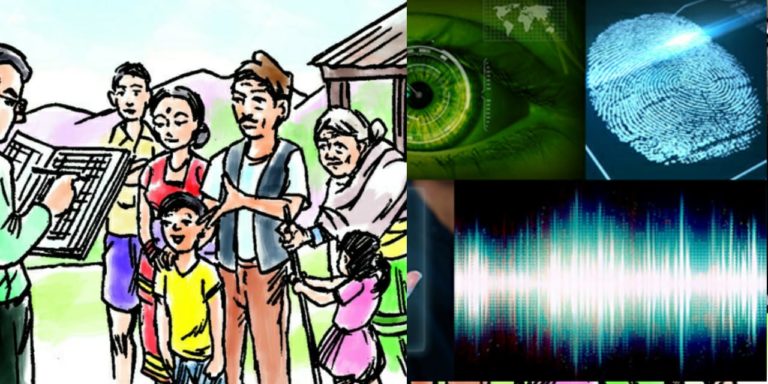
This is the second part of the six-part series on NPR, NRC, CAA and its links to surveillance. Read the part-1 here.
The Citizenship Act, 1955 is “An Act to provide for the acquisition and determination of Indian citizenship”. The Citizenship Rules, 2009 provides for the creation of a Register of citizens saying, “The Central Government shall maintain a register containing the names and other details of the persons registered or naturalised as a citizen of India”. The Act and the Rules do not provide for the creation of Citizens Register based on biometric data. As a consequence what the Union Home Ministry did under the previous government through NPR is without any legal mandate. According to the Manual of Instructions for filling up of the NPR Household Schedule, 2011 prepared by the Office of the Registrar General & Census Commissioner (ORG&CCI), Union Ministry of Home Affairs, the objectives of NPR involves “Collection of personal details of all residents of the country and Capture of photograph and fingerprints of all residents who are of age 15 years and above in villages/urban areas.” The data collection for preparation of NPR is undertaken along with the House listing Operations of Census 2011. It categorically states that “NPR will contain the details of all the ‘usual residents’ of the country regardless of whether they are citizens or non-citizens.” If that is the case how can it qualify to be an act under the Citizenship Act and Rules given the fact that the Register will have both citizens and non-citizens?
As per the Manual, NPR’s utility lies in the creation of “a comprehensive identity database in the country. This would not only strengthen the security of the country but also help in better targeting of the benefits and services under the Government schemes/programmes and improve planning.” In such a case isn’t Census itself quite sufficient for it?

 In fact, given the fact that Census Commissioner is supposed to gather the data of population under the Census Act, 1948 on the precondition that it would be kept secret and it will not be revealed even to the courts, when the Census Commissioner who is also the Registrar General of NPR undertakes the collection of Indian residents’ data that includes Indian citizens, a stark case of conflict of interest emerges. This is so because unlike the data collected under the Census Act which is confidential as per Section 15 of the Act, the provisions of the Citizenship Act and the citizenship or nationality Rules that provide the basis for creation of the Register of citizens do not provide for confidentiality. The fact is that there is no mention of capturing biometrics in the Citizenship Act or Citizenship Rules. It is clear that the collection of biometrics is not a statutory requirement. This is not permissible even under the Collection of Statistics Act. But both the Unique Identification Authority of India (UIDAI) and ORG&CCI have been creating the UID/Aadhaar and Aadhaar generating NPR has been collecting biometric data as well.
The implementation of UID/Aadhaar and NPR was never a question of duplication; it was a division of work and an attention diversion technique. Both UID/Aadhaar and NPR were one from the design stage itself. Both treat citizens worse than prisoners.
The Identification of Prisoners Act provides that
In fact, given the fact that Census Commissioner is supposed to gather the data of population under the Census Act, 1948 on the precondition that it would be kept secret and it will not be revealed even to the courts, when the Census Commissioner who is also the Registrar General of NPR undertakes the collection of Indian residents’ data that includes Indian citizens, a stark case of conflict of interest emerges. This is so because unlike the data collected under the Census Act which is confidential as per Section 15 of the Act, the provisions of the Citizenship Act and the citizenship or nationality Rules that provide the basis for creation of the Register of citizens do not provide for confidentiality. The fact is that there is no mention of capturing biometrics in the Citizenship Act or Citizenship Rules. It is clear that the collection of biometrics is not a statutory requirement. This is not permissible even under the Collection of Statistics Act. But both the Unique Identification Authority of India (UIDAI) and ORG&CCI have been creating the UID/Aadhaar and Aadhaar generating NPR has been collecting biometric data as well.
The implementation of UID/Aadhaar and NPR was never a question of duplication; it was a division of work and an attention diversion technique. Both UID/Aadhaar and NPR were one from the design stage itself. Both treat citizens worse than prisoners.
The Identification of Prisoners Act provides that
“Every person who has been, (a) convicted of any offence punishable with rigorous imprisonment for a term of one year or upwards, or of any offence which would render him liable to enhanced punishment on a subsequent conviction, or (b) ordered to give security for his good behaviour under Section 118 of the Code of Criminal Procedure, 1898, shall, if so required, allow his measurements and photograph to be taken by a Police Officer in the prescribed manner.” It further provides that “Any person who has been arrested in connection with an offence punishable with rigorous imprisonment for a term of one year or upwards shall, if so required by a police officer, allow his measurements to be taken in the prescribed manner.” As per Section 5 of the Act, “If a Magistrate is satisfied that, for the purposes of any investigation or proceeding under the Code of Criminal Procedure, 1898, it is expedient to direct any person to allow his measurements or photograph to be taken, he may make an order to the effect, and in that case the person to whom the order relates shall be produced or shall attend at the time and place specified in the order and shall allow his measurements or photograph to be taken, as the case may be, by a police officer:”The biometric measurements which are by law meant for prisoners have been extended to citizens. Providing for the dignified treatment of the citizens of India, Section 15 of the Census Act establishes that “Records of census not open to inspection nor admissible in evidence”. It reads: No person shall have a right to inspect any book, register or record made by a census-officer in the discharge of his duty as such, or any schedule delivered under section 10 and notwithstanding anything to the contrary in the Indian Evidence Act, 1872, no entry in any such book, register, record or schedule shall be admissible as evidence in any civil proceeding whatsoever or in any criminal proceeding other than a prosecution under this Act or any other law for any act or omission which constitutes an offence under this Act.” Demolishing this dignity of the citizens, the Union Home Ministry is dehumanizing citizens by according them a status inferior to that of prisoners. The merger of the office of the Census Commissioner under the Census Act, 1948 and Register General of India for NPR and NRIC under the Citizenship Act, 1955 is an exercise in structural corruption that is aimed at defeating the requirement of confidentiality under Census Act. This merger may have appeared routine but there is more to it than meets the eye. This aspect has remained unnoticed. As per Section 7 of Identification of Prisoners Act, “Where any person who, not having been previously convicted of an offence punishable with rigorous imprisonment for a term of one year or upwards, has had his measurements taken or has been photographed in accordance with the provisions of this Act is released without trial or discharged or acquitted by any court, all measurements and all photographs (both negatives and copies) so taken shall, unless the court or (in a case where such person is released without trial) the District Magistrate or Sub-divisional Officer for reasons to be recorded in writing otherwise directs, be destroyed or made over to him.” Gopal Krishna is a public policy and law researcher and convener of Citizens Forum for Civil Liberties (CFCL), which is campaigning against surveillance technologies since 2010. He had appeared before the Parliamentary Standing on Finance that examined and trashed the Aadhaar Bill, 2010. He is editor of www.toxicswatch.org. Views expressed are personal.
Aadhaar, NRC and NPR : Part of 360 degree Mass Surveillance
This is the first part of the six-part series on NPR, NRC, CAA and its links to surveillance.
According to the Concise Oxford Dictionary, surveillance means ‘close observation, especially of a suspected person’. Isn’t surveillance dehumanizing? Surveillance is based on a system of permanent registration. It is a decisive economic operator, wrote Michel Foucault, in Discipline and Punish The Birth of Prison.
The entire Indian and international media has been taken for a ride regarding a so-called turf war between the Ministry of Home Affairs and Unique Identification Authority of India (UIDAI) which media was made to understand that got resolved by diving the Indian population in two parts of 61 crores and 60 crores for coverage under National Population Register (NPR) which also generates Aadhaar number and UIDAI. The fact is the terms of reference of the UIDAI mandated it “take necessary steps to ensure collation of National Population Register (NPR) with UID (as per approved strategy)”, to “identify new partner/user agencies”, to “issue necessary instructions to agencies that undertake the creation of databases… (to) enable collation and correlation with UID and its partner databases” and UIDAI “shall own and operate the database”. The central government’s notification dated January 28, 2009, that constituted UIDAI mentions this. This notification finds endorsement in Section 59 of the Aadhaar Act, 2016. The entire exercise seems to have been stage-managed.
The government of India’s approach paper on privacy is revealing in this regard. It says, “Data privacy and the need to protect personal information is almost never a concern when data is stored in a decentralised manner. Data that is maintained in silos is largely useless outside that silo and consequently has a low likelihood of causing any damage. However, all this is likely to change with the implementation of the UID Project. One of the inevitable consequences of the UID project will be that the UID Number will unify multiple databases. As more and more agencies of the government sign on to the UID Project, the UID Number will become the common thread that links all those databases together. Over time, private enterprise could also adopt the UID Number as an identifier for the purposes of the delivery of their services or even for enrolment as a customer. Once this happens, the separation of data that currently exists between multiple databases will vanish.” This reveals that UID/Aadhaar database, NPR database and all other pre-existing databases including census data is being converged “as per approved strategy”.
UK Home Secretary explained in the British Parliament that UK Government was abandoning the Nation ID project because it would otherwise be ‘intrusive bullying’ by the state and that the government intended to be the ‘servant’ of the people, and not their ‘master’. Unique Identity (UID)/Aadhaar and NPR for National Register Indian Citizens (NRIC) treats every Indian as a subject of surveillance, unlike UK which has abandoned a similar project (that used to be cited by Wipro Ltd in promotion of UID/Aadhaar) because it is “untested, unreliable and unsafe technology” and the” possible risk to the safety and security of citizens.” It was recorded by the Parliamentary Standing Committee (PSC) on Finance that submitted a report to both the Houses of Parliament on December 13, 2011, trashing the biometric identification project. Wipro Ltd is the one which created the vision document for UID/Aadhaar.
Even as the surveillance infrastructure is being bulldozed by the central government through UID/Aadhaar, NPR and NRIC unfolded in India, UK’s Deputy Prime Minister said in a speech in British House of Commons said, “This government will end the culture of spying on its citizens. It is outrageous that decent, law-abiding people are regularly treated as if they have something to hide. It has to stop. So there will be no ID card scheme. No national identity register, a halt to second-generation biometric passports,”
He added, “We won’t hold your internet and email records when there is just no reason to do so. Britain must not be a country where our children grow up so used to their liberty being infringed that they accept it without question. Schools will not take children’s fingerprints without even asking their parent’s consent. This will be a government that is proud when British citizens stand up against illegitimate advances of the state.”
This aspect has been underlined as part of a unanimous verdict of the 9-Judge Constitution Bench of the Supreme Court saying, “Surveillance is not new, but technology has permitted surveillance in ways that are unimaginable. Edward Snowden shocked the world with his disclosures about global surveillance….The European Union Regulation of 2016 on data privacy defines ‘Profiling’ as any form of automated processing of personal data consisting of the use of personal data to evaluate certain personal aspects relating to a natural person, in particular, to analyse or predict aspects concerning that natural person’s performance at work, economic situation, health, personal preferences, interests, reliability, behaviour, location or movements. Such profiling can result in discrimination based on religion, ethnicity, and caste.” This has genocidal implications. It has also observed that “there is what is now described as ‘veillant panoptic assemblage’, where data gathered through the ordinary citizen’s veillance practices finds its way to state surveillance mechanisms, through the corporations that hold that data”.
It has been reported that as Gujarat Chief Minister, Narendra Modi wrote to the then Prime Minister questioning the need for National Population Register (NPR) by Registrar General of India & Census Commissioner, Union Ministry of Home Affairs. Gujarat stopped the collection of biometric data for the creation of the NPR (October 6, 2011, Indian Express). In his letter to the Prime Minister, he wrote, “there is no mention of capturing biometrics in the Citizenship Act or Citizenship Rules 2009”. He added, “In the absence of any provision in the Citizenship Act, 1955, or rules for capturing biometrics, it is difficult to appreciate how the capture of biometrics is a statutory requirement. Photography and biometrics is only mentioned in the Manual of Instructions for filling up the NPR household schedule and even in that there is no mention of capturing the Iris”. But these concerns appear irrelevant now that he has become the Prime Minister. His views about UID/Aadhaar too changed inexplicably.
The idea of biometric identification is linked with the holocaust witnessed in Germany. Such identification exercises have rightly been abandoned in UK, Australia, China, the USA, and France. It is noteworthy that Nandan Nilekani as Chairman, UIDAI admitted, “To answer the question about what is the biggest risk” of centralized database of biometric identification, he said “in some sense, you run the risk of creating a single point of failure also” in his talk at the World Bank in Washington on April 24, 2013. This single point of failure of IBM’s handing over of census data to the Nazi Party facilitated the holocaust.
Gopal Krishna is a public policy and law researcher and convener of Citizens Forum for Civil Liberties (CFCL), which is campaigning against surveillance technologies since 2010. He had appeared before the Parliamentary Standing on Finance that examined and trashed the Aadhaar Bill, 2010. He is editor of www.toxicswatch.org.Views expressed are personal.
Karnataka: Anti-CAA-NRC-NPR protests in Hubballi by Sanitation Workers

Every state, town, and district of the country are protesting against the controversial citizenship act and its various other forms like NRC and NPR on a daily basis.
Today in Hubballi, Karnataka, over 500 sanitation workers, and concerned citizens staged a protest to withdraw CAA, NRC, and NPR.
Around 1-30 pm Pourakarmikas Sangha (Sanitation workers union) did a Protest Rally from Sangolli Rayanna statue to Tahasildar office Hubballi demanding the withdrawal of CAA NRC NPR. The members submitted a memorandum to the honorable president of India. Watch the video below of the rally.
Many of these sanitation workers are Dalits, landless peasants and come from neighboring states of Andhra Pradesh and Maharashtra.
Talking to Gauri Lankesh news, the sanitation workers said- We are poor, illiterate and due to poverty in our villages and town, we have come to Hubballi for work. We came here many years ago. How will we bring our father’s, grandfather’s documents? We don’t have land, so we don’t have any land documents. Now the government is saying I have to prove my citizenship based on land and ancestry documents. I have none..
The members of Samvidhan Surakha Samiti said – the citizenship amendment act is not just unconstitutional, it is inhuman, it is anti poor. Poor in this country have no food, no shelter and government is asking them to show their land certificate, birth certificate.. Many are born in villages, they dont even know their date of birth. How will they submit those certificates?
People were shouting slogans of- “We don’t want the anti-constitutional CAA, NRC. We don’t want Modi government”.
Every day for past 22 days, there are protests being held in Hubballi district against the CAA and NRC from the Samvidhan Suraksha Samiti and Anjuman Islam group.
Prashant Kishor challenges Amit Shah to implement CAA-NRC

JDU leader and political strategist Prashant Kishor has dared Home Minister AMit Shah to implement the citizenship Act (CAA) and National Register of Citizens (NRC) in the same “chronology” that he “audaciously announced”.
Prashant Kishor has been quite vocal against the citizenship amendment Act (CAA) and the national Registry of citizens (NRC) and has expressed the problems with such an exercise on various print and electronic media platforms.
In a tweet on Wednesday, Prashant Kishor threw a challenge to Amit Shah and said, “Being dismissive of citizens’ dissent couldn’t be the sign of the strength of any Govt. Amit Shah JI, if you don’t care for those protesting against CAA, NRC, why don’t you go ahead and try implementing the CAA & NRC in the chronology that you so audaciously announced to the nation!”
The tweet comes after on Tuesday Amit Shah has exhorted in a rally in Lucknow that- “Protest as you like but the citizenship amendment act (CAA) will not be withdrawn” Prashant Kishor on Sunday also thanked Congress leaders Rahul Gandhi and Priyanka Gandhi Vadra for “formal and unequivocal” rejection of the NRC and reassured the people of Bihar, ruled by his party, that CAA and NRC will not be implemented in the state.Being dismissive of citizens’ dissent couldn’t be the sign of strength of any Govt. @amitshah Ji, if you don’t care for those protesting against #CAA_NRC, why don’t you go ahead and try implementing the CAA & NRC in the chronology that you so audaciously announced to the nation!
— Prashant Kishor (@PrashantKishor) January 22, 2020
Previously, JDU, the party to which Kishor belongs has supported the CAA in the parliament, but seeing widespread protests, JDU party leader and Prashant Kishor have taken an early U-turn and have been at loggerheads with BJP on the implementation of CAA. Irked by the response of its own allies, and vocal Kishor, BJP has dismissed him and his statements saying- “over intelligent and super knowledgeable people” are spreading their propaganda on NRC and asserted that the CAA was passed in Parliament with JD(U)’s support and “it will be implemented in all concerned states, including Bihar”. “We appreciate the support of our NDA allies including CM Nitish Kumar Ji in passing the Bill in Lok Sabha and Rajya Sabha. The CAA will be implemented in all the concerned states including Bihar and there is no question on this matter. Bihar government has already notified the start of the NPR in May 2020,” Bihar BJP spokesperson Nikhil Anand had said earlier while indirectly referring to Prashant Kishor.I join my voice with all to thank #Congress leadership for their formal and unequivocal rejection of #CAA_NRC. Both @rahulgandhi & @priyankagandhi deserves special thanks for their efforts on this count.
— Prashant Kishor (@PrashantKishor) January 12, 2020
Also would like to reassure to all – बिहार में CAA-NRC लागू नहीं होगा।
Modi and Amit Shah have been caught in their own web of lies since the protests that started a month ago continue and don’t show any sign of slowing down.While Amit Shah has time and again spoken about how the CAA and NRC will be chronologically implemented across the nation, at an election rally in Delhi, PM Modi said that his government never discussed a nationwide NRC since coming to power in 2014. PM Modi dismissed claims of links between CAA and NRC as lies being spread by the Opposition. However, Amit Shah had earlier at press conferences, election rallies and even in Parliament, insisted that the government will definitely bring a nationwide NRC which would require all citizens of the country to prove their nationality. Following PM Modi’s clarification, Amit Shah too claimed that the government has not discussed a nationwide NRC and there are no plans as of now.
SC refuses to stay on CAA, gives Centre 4 weeks to respond to CAA petitions

The Supreme Court Wednesday refused to stay the contentious Citizenship(Amendment) Act (CAA) until it heard the Centre’s response and hinted that it would set up a five-judge Constitution bench to hear the matter.
A three-judge bench headed by CJI S A Bobde, which was hearing a batch of 143 pleas, granted the Centre four weeks to reply. It also restrained all high courts from hearing pleas related to CAA till it decided on petitions
A bench, headed by Chief Justice S.A. Bobde, had issued notice to the Centre on December 18 on various pleas including those filed by the Indian Union Muslim League (IUML) and Congress leader Jairam Ramesh.
A total of 143 petitions have been filed before the court. CJI Bobde identifies that the challenge to CAA will have to be bifurcated in two sections – one concerning Tripura and Assam and another CAA in general because of the special grounds in those cases.
“In Assam there is a unique problem because of Bangladesh. Earlier the date was 1950, then it was extended to 1971. The extension is challenged before this court. It’s referred to larger bench,” senior advocate Vikas Singh said about Assam.
Most of the petitions challenge the constitutional validity of the CAA.
The SC also decided to set up a five-judge Constitution bench to hear pleas on CAA. It also barred the high courts from passing any orders related to the Act until it decided on the matter.Attorney General sought a period of six weeks to file counters on the grounds that about 80 more petitions have been filed. Petitioners oppose the request for six weeks, reports Bar and Bench. Senior advocates AM Singhvi, Kapil Sibal appearing for the petitioners requested the court to put on hold operation of CAA and postpone the exercise of NPR for the time being. The court denied the demand saying that it is the same as asking for a stay. According to Live Law, Senior Advocate AM Singhvi mentions that many states have started the NPR process. Senior Adv Vikas Singh presses for an interim order, saying that CAA violates Assam Accord. The petitions contend that CAA stands against the basic structure of the Constitution and is illegal. Some of the petitions have also sought the legislation that came into force on January 10 be withdrawn. Several petitions have been filed challenging the constitutional validity of the CAA, including by RJD leader Manoj Jha, Trinamool Congress MP Mahua Moitra and AIMIM leader Asaduddin Owaisi. Several other petitioners include Muslim body Jamiat Ulama-i-Hind, All Assam Students Union (AASU), Peace Party, CPI, NGOs ‘Rihai Manch’ and Citizens Against Hate, advocate M.L. Sharma, and law students have also approached the apex court challenging the Act. The CAA seeks to grant citizenship rights to non-Muslim migrants belonging to Hindu, Sikh, Buddhist, Christian, Jain and Parsi communities who came to the country from Pakistan, Bangladesh and Afghanistan on or before December 31, 2014. It has been widely criticised both within and outside India and discriminatory. It is the first Indian law to grant citizenship on the basis of religion. IUML said in its plea that CAA violates the fundamental Right to Equality and intends to grant citizenship to a section of illegal immigrants by making an exclusion on the basis of religion. The plea filed by Congress leader Jairam Ramesh, said the Act is a “brazen attack” on core fundamental rights envisaged under the Constitution and treats “equals as unequal”. Ramesh said the substantial questions of law, including whether religion can be a factor to either acquire or deny citizenship in India, arises for consideration of the court as it is a “patently unconstitutional” amendment to the Citizenship Act, 1955. Ramesh said the substantial questions of law, including whether religion can be a factor to either acquire or deny citizenship in India, arises for consideration of the court as it is a “patently unconstitutional” amendment to the Citizenship Act, 1955.