Millions of Workers and students join hands in General strike against Modi govt policies

0
If you think people are on the streets in India to protest against the citizenship amendment act, you are sorely mistaken. According to the reports, approximately, 25 crore Indians went on strike on 8th January 2020 to protest against the Modi government anti-people, anti-worker policies and the politics of hate. The protestors included workers from industries, transport sector, banks, government offices, scheme workers, farmers and rural labourers who turned up in great numbers to the general strike. Besides this, there were workers from the private sector such as IT sectors to the workers from small manufacturing units such as textile and garments. Many farmer organisations and student organisation joined the protest in various parts of the nation. Among the key demands of the organisations were scrapping of proposed labour reforms. Others include a hike in the minimum wage to Rs 21,000-Rs 24,000 per month; repealing the Citizenship (Amendment) Act (CAA), National Register of Citizens (NRC) and National Population Register (NPR), and halting the privatisation of public sector undertakings. The CITU has a 12-point charter of demands they have put to the government. The demands include:
  • Urgent measures to contain price rises through a universalized public distribution system and banning of speculative trading on the commodities market.
  • A job generation scheme to combat India’s unemployment problem.
  • Stricter enforcement of all basic labor laws.
  • Universal social security.
  • A minimum wage of at least 15,000 Rupees (≈ $210) per month.
  • A guaranteed pension for the entire working-age population.
  • Equal pay for equal work.
  • The stoppage of pro-employer, anti-labor laws.
  • The end to foreign direct investment in key industries like rail, defense and finance.
Over 7.3 crore people, mostly youth, are currently unemployed, according to the Centre for Monitoring Indian Economy estimates. This is the largest army of jobless people India has ever seen. The unemployment rate stood at 7.7% in December 2019, while in urban areas, it was even higher at a staggering 8.9%. In north India, fighting the cold weather, thousands of activists of all trade unions, except the Rashtriya Swayamsevak Sangh-affiliated Bharatiya Mazdoor Sangh, supporters of several independent federations, the Left parties workers, student organisations and others, took to the streets against the central government’s anti-worker policies. In Bangalore Peenya and Jalahalli Circle CITU and a joint committee of trade unions organised a protest rally. Many trade unions and Anganwadi workers staged a protest at near Freedom Park. Thousands of activists and workers blocked Dak Bungalow square in the heart of Patna for several hours. Police lathi-charged them and arrested half a dozen of them. Thousands of workers in Delhi NCR put down their tools on Wednesday as part of the nationwide general strike. Many teachers and staff from the Delhi University Teachers University also joined the strike.   strike There were rail roko protest in many places in Punjab, and tamilnadu. Members of the Centre of Indian Trade Union (CITU) blocked the Trivandrum Express during the nationwide ‘Bharat Bandh’, in Guwahati. In rural areas, protests and traffic stoppages were seen in nearly 480 districts of the country as lakhs of farmers and agricultural workers, along with non-farm rural workers came out in protest, at the call of AIKSCC, an umbrella platform of over 175 organisations. “The Union government is rushing up the process of privatisation and eyeing the railways. The government could not manage the economy of the country and now they want to sell railways to private parties” said RC Sharma, President of WREU and General Secretary of AIRF. “This government has been trying to sell land belonging to Railways at prime locations to industrialists,” added Sharma. Students in over 60 universities and institutions, and their affiliated colleges, too, observed a strike with thousands joining protest marches after boycotting classes. But students from Jadavpur University demonstrated some interesting way to protest, where they played chess on the streets outside of JNU in Kolkata blocking the roads. Even after the orders from the government warning to the workers from public sector employees  not to attend the strike, and attend work. This seemed to fail when joint platform of 175 farmers and agricultural workers organisations also extended support and called for a simultaneous rural strike. “About 1.5 million power sector employees and engineers, including 25,000 in UP, are on the boycott/strike which is a success,” Chairman of All India Power Engineers Federation (AIPEF), Shailendra Dubey told PTI. Power sector employees are protesting against the Centre’s proposed amendments to the Electricity Act as well as other privatisation policies of the government, which they say are against the interest of the consumers and employees. The workers of Shipping Corporation of India from Mumbai also joined the all India strike against the Modi government. BSNL is one of the organisations most heavily affected by the Modi government’s pro-corporate policies. BSNL employees in Shillong, Meghalaya join the national strike. Workers in BSNL from Bengaluru,Mumbai, and Lucknow also joined the strike. About 40,000 employees of Maha Gujarat Bank Employee Association participated in the strike across the state. The strike also reached to the Reserve Bank of India in Kolkata when these banners were displayed outside the bank. At many places, anti-CAA protesters also joined in the workers strike in solidarity with each other and also since the student and workers are facing similar issues with rampant unemployment and precarious work conditions. This is the fourth country-wide strike by workers during Modi’s regime, the earlier three being – September 2, 2015; September 2, 2016, and the two-day strike on January 8-9, 2019. Students in universities have been fighting against fee hikes, throttling of democracy and, of late, against police atrocities. They have also joined or led protests against the Citizenship Amendment Act/National Population Register/National Register of Citizens for the past month. Therefore, today’s nationwide protest clearly depicts the convergence of people from all the streams in India to hold the promise of even wider struggles in the upcoming days.

Tamilnadu: A dominant hindu village choose a Muslim as Panchayat head

0
A village panchayat in Trichy, Tamilnadu has set a beautiful example of communal harmony for the whole country. A Hindu majority village Seriyalur Inam, in the Pudukottai district of Tamilnadu, has elected a young Muslim man as their Panchayat head at times when the whole country is rocked over the citizenship amendment protests. Mohammad Jiyavuddin, aged 45 years has become the President of the village Panchayat with 554 votes out of a total of 1360 votes. Shankar, the other candidate came close and lost to Jiyavuddin with just 17 votes. Interestingly, the village has only 60 Muslim voters. People of the village said they chose Jiyavuddin because of the work he has done for the village and his religion did not matter for them. Jyavuddin was working in the Gulf and had come to his village for holidays in 2018. On his return, he saw that the village was ravaged with Cyclone Gaja. The government efforts had not reached the village. It was then he decided to quit his job and stay in the village for rehabilitation work. He worked to rehabilitate the local members, organise food, shelter.  He is also the founder of the Seriyalur Inam Youth Development Committee in the village to help create livelihood options for farmers devastated by the cyclone. Many in the village feel that their village can be an example for the whole country when the central government is trying to divide people in the name of religion by passing laws like the citizenship amendment. S V Kamarasu, a resident of the village, said “When the Union government is trying to create a divide among people of different religions by passing the CAA, we, the Hindus in the village, chose to elect a Muslim to keep our panchayat united and secular,”. Jiyavuddin said that it was very heartwarming when Hindu residents who were the head of the family came to him and said that they asked their family members to vote for him. Jiyauddin said that his first duty as president of the village Panchayat will be to bring the Cauvery river water to the village Ayyankulam tank, with the help of the committee he has been striving to revive a kilometer long canal to bring the water.    

Hospete: BJP leaders heckled and sent back by people in the door to door CAA campaign

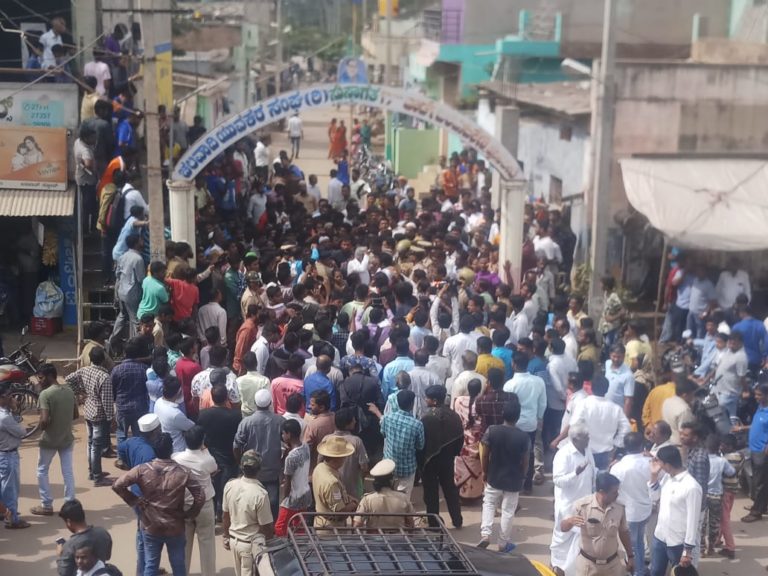
BJP leaders and pro CAA activists were forced to leave by the people during their door to door CAA campaign in Hospet, Karnataka. The BJP leaders had come to spread awareness about the citizenship act. After facing strong criticism and continuous protests against its citizenship amendment act (CAA) Amit Shah announced that their party will do door to door campaign to raise awareness about the act. Amit Shah kick-started the campaign himself in Delhi on 5th January 2020. During his campaign ago, two women shouted anti CAA and ‘go back Amit Shah’ slogans. The BJP leaders and activists in Karnataka went to Hospet for the door to door campaign but they were resisted by the public who were shouting slogans and forced them to return. This incident has left the BJP workers in a state of despair, as they had to return without distributing a leaflet. hospete On 6th Jan 2020, when the BJP members and pro-CAA activists came out for the CAA campaign, many un the locality came out of their homes with black flags and shouting ‘go back, go back’ slogans and not allowing them to enter their homes. People shouted slogans of ‘Azadi from BJP’, ‘Azadi from RSS’ .’Hindustan Zindabad, ‘Samvidhan Zindabad’ pushing BJP members to retreat. Though the pro-CAA activists and BJP members requested people that they were just there to distribute the handouts and to appeal for the amendment to be allowed; the locals resisted saying that must leave immediately and will not be allowed in their area. As the altercation intensified between both the parties, the police had to arrive. The police tried to calm everyone at the scene, but gauging public anger, they advised BJP members to leave the place. In a similar case in Hospete district, another BJP MLA, Anand Singh was distributing CAA pamphlets but no one was interested in taking those pamphlets. Anand Singh is also one of the disqualified MLAs, who had left Congress and joined BJP and won the assembly elections from Hospet. When talking to the media, people said that “Dalit and Muslims in our country contribute to a big population in our country, and this law will make life very difficult for them and is totally unnecessary, so we do not need CAA or NRC. In our country, Hindu and Muslims live like cousins. This country is ours, we live here and we die here.” The locals have expressed their outrage against the BJP members and asked them not to campaign and not to disturb their life.

BJP loses its saffron stronghold in Nagpur local polls

0
BJP defeat in Zilla Parishad polls in Nagpur comes as a huge setback to the party which is already under attack after the passage of contentious citizenship bill. BJP just won 15 out of 58 seats while Congress has emerged as the biggest party with sealing victory on 30 out of 58 seats in the Nagpur elections. Nagpur is not just BJP stronghold, it is also the constituency of big leaders of the BJP like Nitin Gadkari and Devendra Fadnavis. BJP even lost to congress in the native village of Nitin Gadkari. Gadkari’s village Dhapewada is in Nagpur and it was because of that he had a stronghold in the constituency. But in this ZP election Congress candidate, Mahendra Dongre got 9,444 votes while the BJP candidate Maruti Som Kunwar got only 5,501 votes. Nagpur Zilla Parishad has a total of 58 seats. Voting started on Tuesday on this seat and results started coming in by Wednesday evening indicating BJP losing on the majority of seats. The CPM retained its five seats and the Bahujan Vikas Aaghadi also lost its strength and dropped to four from the 10 seats in the last elections. The Maha Vikas Aghadi now has enough numbers to clinch the president’s post in the Palghar ZP, which was till recently held by the BJP. Nagpur is also called the home of BJP’s parent organisation RSS, where its headquarters are located.BJP has been winning elections in Nagpur from block to Lok sabha levels. BJp has been winning the Zila Parishad seat of Dhapewada for the last three times. But this time it looks like people have chosen congress over BJP and shown BJP the door. BJp also faced defeat in the assembly elections in Maharashtra and after a big tug of war, finally, Shiv Sena-congress-NCP alliance formed government. After losing assembly elections in crucial states like Maharashtra and Jharkhand, losing elections in its “home constituency” is a huge setback for BJP.    

Bangalore: Students 24hr satyagraha against JNU violence

Students from various colleges across Bangalore turned up Maurya circle into an all-night protest site to protest against the attack on students at Jawaharlal Nehru University in New Delhi. The protest began at 6 pm Tuesday at Maurya Circle in Bangalore and ended Wednesday at 6 PM. Many of the protesters were students who had come the first time for a protest. The students have been troubled by the recent events in the country from the attack on students at different universities in the wake of CAA and NRC protests. The students also demand the removal of CAA and NRC as they go against the constitution and the ethos of the country. Nagaraj, a law student while talking to Gauri Lankesh news said- “This government is against education. They don’t like us asking any questions. One after another they are passing anti-people laws and they expect us to take it lying down. We will not! We have had enough… I am worried that tomorrow my university may be attacked. My parents are worried about my life at university.”
The students were not only protesting the violence at JNU, Jamia and AMU but also the general atmosphere of fear in the country that is trying to stifle all the dissenting voices. Surya, an engineering student spoke of the increasing hatred in the society in this Hindutva regime. ” There is an atmosphere of fear and hatred. They have spread hatred in families, friends, neighbours. We deny this regime of fear, we are for love and peace. India as a country has lived as a multi-religious society, but for the last 5 years, its only Hindu Muslim debate to drive a wedge between communities. I am a student and I want to study, be a good productive citizen of this country. But how can I when I see hatred everywhere, when my neighborhood is burning, I can’t keep my head in the sand and ignore it. ”
Ramachandra Guha and Amnesty International Head Aakar Patel also came to support the protesters and interacted with the students.
Many students had been given directions from their colleges not to attend anti-CAA-NRC protests, but the students felt that they cannot sit silently at such times when our country is being torn from all sides. Somashekhar, a Journalism student echoed similar sentiments.- ” We have seen an attack on universities in the last 5 years. We haven’t forgotten Rohit Vemula, who committed suicide due to discrimination at Hyderabad University. We do not come to universities to die… We come here to study. But how can we? In Jamia, students are beaten by police, in JNU, students are beaten up by ABVP goondas, no action. How can I study in this kind of atmosphere?” The crowd started growing slowly and by midnight, it reached around 1000, with students coming and going, taking turns, chanting slogans demanding freedom from this fascist regime. Students sang poetry, songs, slogans in many languages reminding us of the multi-ethnic and multilingual culture of Bangalore.
The demonstration went all night and in the morning fresh batch of students joined in to reinvigorate the night slump. Many groups organized food water for the students, nearby restaurants allowed them to use the restrooms.

Indian Institute of Sciences condemns attack on JNU students

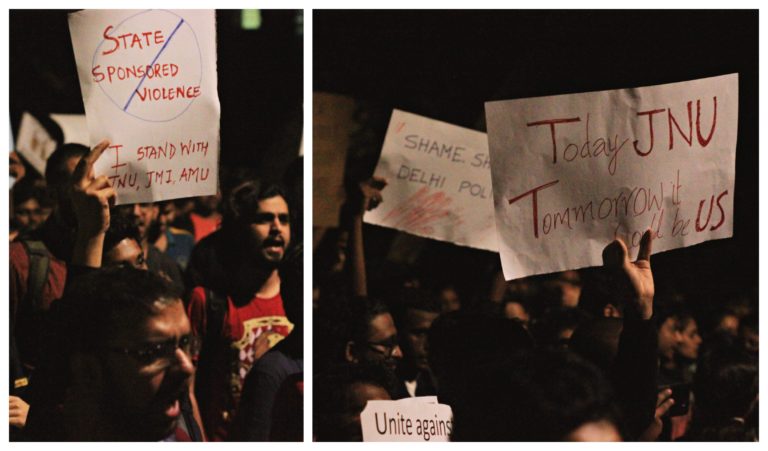
The mob attack at students at Jawaharlal Nehru University (JNU)  in Delhi has sparked massive outrage across the nation with protests erupting at universities in several states against the violence. Students, faculty, and employees of the Indian Institute of Sciences (IISc), Bangalore also protested in the IISc campus on 6th January 2020 condemning the attack on students in JNU and to express solidarity with JNU. Students from varied disciplines gathered around Sarvam complex around dinner time in the campus mess. The students were joined by professors, staff members and their families. Students enthusiastically prepared posters and placards on the spot to express their solidarity. People of IISc had come together not just to condemn attack on JNU but also to oppose unconstitutional laws like the citizenship amendment act (CAA) and NRC. The posters carried slogans condemning police brutality and attacks on many educational Institutes and Universities. The messages were very clear and against state-sponsored violence and terrorism. The students did a rally in the IISc campus with energetic slogans demanding “Freedom for JNU and AMU” “Freedom from BJP and Amit Shah”, “Freedom from Police violence”. Protestors read the preamble and explained Article 14 of the constitution and the need to protect the inclusive and humanitarian character of the country. Prof. Venu spoke about the importance of civil disobedience during the current pressing times when democracy is under assault. Dr. Tejal Kanitkar explained how student bodies throughout the nation have been a target for expressing dissent even for reciting “HUm Dekhenge” a poem by poet Faiz Ahmed Faiz. She translated the poem and reiterated the value of the poem in the present context. She was joined by the protesters in singing the poem. IISc also conducted a panel discussion today on “Citizenship through the prism of Constitution” to engage with the institute fraternity on the importance of constitutionality of the recent citizenship amendment act 2019. The author is a Ph.D. scholar at the Indian Institute of Sciences. 
Chief Economist quits government panel on economic data over JNU situation

0
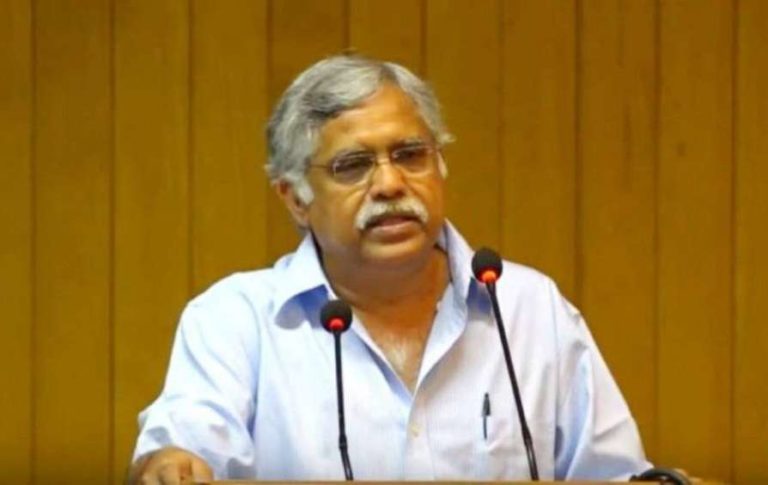
Chief economist C.P. Chandrashekhar has quit a government panel tasked with reviewing economic data over the situation at JNU campus Chandrashekhar, an eminent statistician, and a former JNU professor has cited the present situation in JNU and his lack of faith in the committee’s ability to work in a fair manner as the reasons for his resignation. Chandrashekhar in an email to the committee says that He was “disturbed” by the masked mob attack on students and teachers at the university on Sunday. “I regret to inform you that, because of the situation in JNU where I stay, I will be unable to attend tomorrow’s meeting,” Professor CP Chandrasekhar wrote in his resignation letter. Chandrasekhar also raised doubts over the credibility of the committee in the email and informed the members that he will not be able to be a part of it. “…I feel that, under current conditions, this committee is unlikely to be able to restore the credibility of the statistical system, which has been undermined in the recent past,” he said. Chandrasekhar was also among 108 academicians who signed a joint statement in March 2019, flagging serious concerns over increasing “political interference” in the handling of economic data. This is not the first time that concerns over government data and surveys have come under question. Last year in January 2019, PC Mohanan acting chairman of the National Statistical Commission (NSC), a government-funded advisory body that checks the quality of official data resigned from his position over delay in releasing a new set of jobs statistics. This was followed by the resignation of another member of the advisory board, J. Meenakshi.

Who is afraid of the Data?

Many economists and social scientists have accused the Modi government of not releasing the Employment survey and economic conditions in the country 2017- 2019. Despite its many efforts to contain the survey data, many independent organisations and social scientists surveys gave a very bleak picture of the economy and job sector with  India staring at an all-time high unemployment rate. Many relied on the data released by Cente for monitoring the Indian Economy (CMIE). The CMIE’s figures are with the findings of the latest Periodic Labour Force Survey, which had estimated an unemployment rate of 6.1% between July 2017 and June 2018, the worst in 45 years. Modi government tried to deny, obfuscate CMIE data through lies and propaganda. It finally released the National Sample survey organization (NSSO) after the May 2019 general election a week after BJP came back to power. In November 2019, when several reports indicated that rural spending has dropped for the first time in four decades, the government blamed the quality of the data and announced that it won’t release the findings of the Consumer Expenditure Survey 2017-18. It was under these controversies over data that rocked the Modi government in 2019 that the government panel on economic statistics was created.    

Nationwide strike on January 8 called by labour and farmer unions

0
Farmer and  labour organisations called up for a nationwide strike against Centre’s “anti-people” and “anti-workers” policies on January 8, 2020. Over 10 trade unions and nearly 25 crore people will participate in this strike. The unions that will join the strike include INTUC, AITUC, HMS, CITU, AIUTUC, TUCC, SEWA, AICCTU, LPF, UTUC and several independent federations and associations. In September 2019, a declaration was adopted by these trade unions along with various sectoral independent federations and associations to go on a nationwide strike on January 8, 2020. “The Ministry of Labour has failed to assure on any of the demands of workers which called a meeting on January 2, 2020. The attitude of the government is that of contempt towards labour as we construe from its policies and actions, “ the 10 central trade unions said in a statement released. On 1st December several farmer and rural workers organisation under the umbrella of All India Kisan Sangharsh Coordination Committee ( AIKSCC) also joined the call for nationwide Grameen Bandh in protest against the anti-farmer policies and inaction of the Centre and the States on the demands of the farmers. Also, to raise voice against increased fee structure and commercialization of education, about 60 organisations of students and elected office-bearers of some universities have also decided to join the strike. The protest will highlight the government’s failure on various fronts – its failure in ensuring Minimum Support Prices at C2+50% for all crops, in providing freedom from indebtedness, in implementing effective crop insurance and disaster compensation in the face of drought, floods and unseasonal rains, in implementing Forest Rights Act, etc. – and on other burning issues at state level. Condemning the JNU violence and similar incidents in other university campuses, the trade unions expressed their solidarity with students and teachers all over India. The unions will also protest against privatisation in railways, corporatisation of 49 defence production units and forced merger of banks. “As many as 12 airports are already sold out to private hands, 100 per cent sale of Air India is already decided, the decision to sell BPCL taken, BSNL-MTNL merger announced and 93,600 telecom workers already thrown out of jobs under the garb of VRS (voluntary retirement scheme),” the statement reads. Bank employees belonging to five bank unions will also join the strike. It is likely to affect banking services on January 8. However, there would not be any impact on online transactions. Major unions in the Indian banking sector have decided to participate in the National General Strike called by central trade unions on January 8, 2020, said a top leader of All India Bank Employees’ Association (AIBEA).In a statement, the All India Bank Employees’ Association (AIBEA) general secretary CH Venkatachalam had last month said that employees of the Reserve Bank of India (RBI), co-operative Banks, Regional Rural Banks (RRB), Life Insurance Corporation of India and General Insurance sector will also join the strike.

Key demands

Trade unions are pressing fT or 14 demands. The key demand is that the Centre scraps the proposed labour reforms. Others include a hike in the minimum wage to Rs 21,000-Rs 24,000 per month; repealing the Citizenship (Amendment) Act (CAA), National Register of Citizens (NRC) and National Population Register (NPR), and halting the privatisation of public sector undertakings. It’s going to be a 24 hours strike, which will start from 12pm on Wednesday.    

“We are With JNU”: Students protests all over India against JNU attack

1
The mob attack at the Jawaharlal Nehru University (JNU)  in Delhi has sparked massive outrage across the nation with protests erupting at universities in several states against the violence. On Sunday evening, a mob barged into the campus, went on a rampage, attacking students’ union president Aishe Ghosh, Indian activist Yogendra Yadav and other students and teachers with sticks and rods.

Protest in several districts of Karnataka

Karnataka saw protests and demonstrations at several universities and cities against the attack on JNU campus. Students, student organisations and concerned citizens came out on streets condemning the attack and in solidarity with students at JNU. Protests started at Bangalore, Townhall from 10.AM in the morning. Throughout the day people started coming from students to artists to concerned citizens to voice their concerns and anger over the incident and police inaction. They demanded the resignation of the vice-chancellor of JNU. By evening a big crowd of more than 1000 people had gathered. Arundhati Nag, theater person also spoke at the event. Protests also happened at Raichur, Koppala, Gangavathi, Gulbarga and Hampi University. Koppal Gulbarga

Protest in Kolkata:

Police resorted a lathi-charge to disperse BJP protestors and Jadavpur University students who came to a near head-on collision at Sulekha More in South Kolkata. This happened after several tense moments during a nearly 2-hour face-off when police stopped BJP from marching past Jadavpur University and students from the university marched up to the Sulekha trijunction to stop the BJP march.

Protest in Guwahati

Protesters march in Guwahati in solidarity with JNU students.

Protest in Uttar Pradesh

Aligarh Muslim University students, teachers and the non-teaching staff of Aligarh Muslim University took out a “Tiranga Yatra” yesterday morning in support of the students of Jawaharlal Nehru University who were attacked by masked men on Sunday night. Carrying the tricolour, thousands of students and teachers took out the march and shouted slogans against the government and the right-wing students’ groups, including the ABVP. The participants also shouted slogans against the Vice-Chancellor and then submitted a memorandum, addressed to President Ram Nath Kovind, to district officials, reported ANI. Protest in Chandigarh Carrying banners, the students belonging to some Left-leaning student bodies, shouted slogans against the Bharatiya Janata Party, Rashtriya Swayamsevak Sangh, and Akhil Bharatiya Vidyarthi Parishad when the Haryana speaker was speaking. Protest in Mumbai Mumbai in solidarity with JNU Indian Institute of Technology (IIT) Bombay students took out protest march in solidarity with JNU students. Students of several colleges gathered at Gateway of India to demonstrate. Several students including JNUSU president got injured after they were assaulted by masked goons inside campus. Professors of the college also received injuries.

Protest in Pune

Students of Film and Television Institute of India is also protesting, condemning the violence in Delhi.

Protest in Kerala

In Kerala, members of the SFI’s state unit marched till the Accountant General’s Office in Thiruvananthapuram. “From the beginning, the [Narendra] Modi government from the beginning has been trying to destroy educational institutions in our country,” said VA Vineesh, the SFI state president. “They are saffronizing and capitalizing the education sector. But we won’t bend to this, we will ideologically oppose their attempt to destroy us with weapons.”

Protest in Hyderabad

Yesterday morning Progressive Democratic Students Union (PDSU) activists in Osmania University launched a protest against violence in the Jawaharlal Nehru University.

Karnataka: BJP leader Shobha Karandlaje garlanded with onions

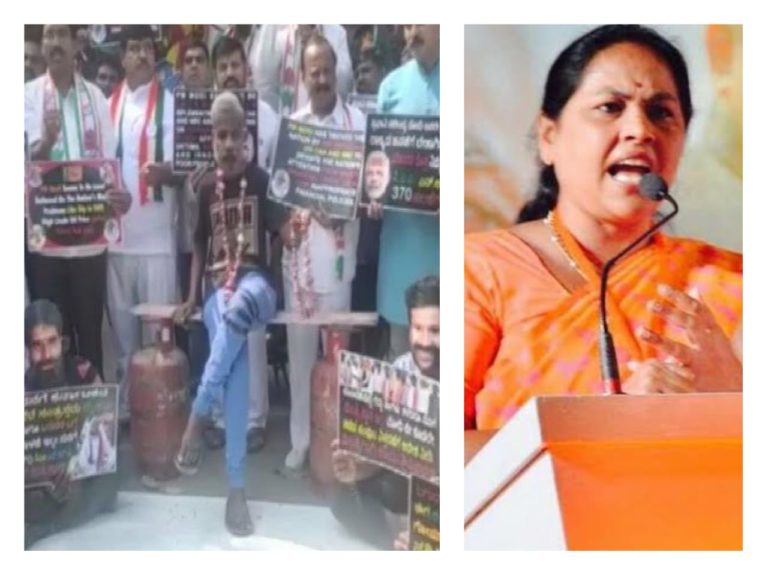
Congress workers held a protest today against the rise in onion prices in the Chikmagalur district of Karnataka. When Shobha Karandlaje, BJP MP from Chikmagalur came midway from her work to negotiate with the protesters, the protesters put on her a garland made of onions. The protestors were shouting slogans against Narendra Modi and BJP member Shobha Krandlaje. They held the protest outside the office of the district magistrate in Chikmagalur. The protesters denied negotiating with the minister and forcefully put the garland around her neck. When she tried to escape from the situation, she was followed until her car by the protestors and was put with the onion garland. After this incident, Shobha Krandlage commented that the protest that is being called tomorrow is by the ‘Tukde Tukde gang’ and asked people not to participate in the protest. She also added that the citizenship act is for the betterment of the country. Another protest was held by the Congress workers at the Maurya circle in Bengaluru on Saturday. The protesters were against the central government for not being able to control the price of essential items, highlighting the rise in the price of onions across the country. While some protesters shouted slogans against Prime Minister Narendra Modi, few others were seen wearing face masks featuring Narendra Modi and other BJP-leaders along with the garland of onions.