In a first, a hundred companies in the United Kingdom have decided to move to a permanent four-day working week for all employees with no loss of pay. Around 2,600 employees at 100 companies are set to benefit from the new working pattern.
The two biggest companies that have signed up are Atom Bank and global marketing company Awin, who each have about 450 staff in the UK.
Adam Ross, Awin’s chief executive, said adopting the four-day week was “one of the most transformative initiatives we’ve seen in the history of the company,” according to The Guardian.
Furthermore, proponents of the four-day week say that the five-day pattern is a hangover from an earlier economic age. They argue that a four-day week would drive companies to improve their productivity, meaning they can create the same output using fewer hours.
The UK Campaign is also coordinating the world’s biggest pilot scheme for about 70 companies, which employ about 3,300 workers, to adopt the four-day week in a trial with researchers at the Universities of Cambridge and Oxford, Boston College and think tank Autonomy.
In September, 88 per cent of those companies in a survey at the middle of the trial said the four-day week was working “well” for their business at that stage of the trial. About 95% of the companies surveyed said productivity had either stayed the same or improved since the introduction, The Guardian reported.
Most of the companies that have officially adopted the four-day week are in the service sector such as technology, events or marketing companies. However, the campaign said that some manufacturing and construction employers had also signed up.
Belgium had also introduced a four-day workweek for employees who want it. In February, Belgian employees won the right to perform a full workweek in four days instead of the usual five without loss of salary. The bill came into force on November 21, allowing employees to decide whether to work four or five days a week.
On the call of Samyukt Kisan Morcha (SKM), farmers, supported by workers, students, youth, women and ordinary people, held mega foot-marches and rallies yesterday.
Protest gatherings were held at 25 state capitals, more than 300 district headquarters and numerous tehsil headquarters. Altogether, it is estimated that more than 3000 protests were held all over India. More than 5 million people came out on the streets to join the ‘Raj Bhawan Chalo’ or ‘March to Raj Bhawan’ call of SKM, to register their protest against the anti-farmer BJP-led Union Govt and send Memorandum of Demand of Farmers to the President of India through State Governors, to intervene and stop the anti-farmer activity of the ruling party at the Centre.
Massive Gatherings all over India
Massive gathering of lakhs of people were witnessed at Chandigarh, Lucknow, Patna, Kolkata, Trivandrum, Chennai Hyderabad, Bhopal, Jaipur and many other state capitals.
In a massive show of collective strength more than 5 million farmers came out on the streets of India yesterday. Farmers had a list of demands
The demands include-
1) Legally Guaranteed Minimum Support Price (MSP) at C2+50% for all produce for all farmers
2) Freedom from Indebtedness through a comprehensive Loan Waiver scheme
3) Withdrawal of Electricity Amendment Bill 2022
4) Dismissal and Legal Action against Union Minister of State for Home Affairs Ajay Mishra Teni, who is accused in the Lakhimpur Kheri massacre of farmers and a journalist
5) Comprehensive and Effective Crop Insurance Scheme to speedily compensate farmers for crop loss due to natural calamities
6) Farmers Pension of Rs 5,000 per month to all marginal, small and medium scale farmers and agricultural workers
7) Withdrawal of all False Cases registered against Farmers during the Farmers’ Movement
8) Payment of Compensation to families of all farmers who were martyred during Farmers’ Movement, along with the major local demands of the respective states.
It may be recalled that the date 26th November is also Constitution Day, when our Constitution was signed and later on became the foundation of laws of the land. It was also on 26th November in 2020 that SKM had launched the historic “Delhi Chalo” movement, which became the world’s longest and largest farmers movement, and led to the astounding victory of farmers against the corporate-political nexus to oust farmers from their land and livelihood. The nationwide “March to Raj Bhawans” on 26th November marks the beginning of the next phase of the farmers protest.
Bangalore, Karnataka
In Bangalore there was a protest meet and book release on farmers rebellion from samyuktha Karnataka. A photo exhibit on yearlong massive farmers struggle by Karnataka janashakthi was also put on display.
Calcutta, West Bengal
Massive turn out of thousands in protest foot March and rally in Kolkata with people from all walks of life joining it.
Massive protests in Madhya Pradesh, Jharkhand, Chattisgarh and Chennai.
SKM congratulates all farmers, farm labourers, workers, students, youth, women and other concerned citizens for the grand success of the ‘Raj Bhawan Chalo’ program and appeals to all across the country to prepare for and join continuous and committed nationwide struggles till all the demands are met.
Media Cell, Samyukta Kisan Morcha
Anand Teltumbde walks out of Taloja Central Prison in Navi Mumbai a day after the Supreme Court dismissed the National Investigation Agency’s (NIA) plea challenging his bail.
Speaking to reporters outside the jail, the scholar-activist said, “I am happy to be released after 31 months, but it is so unfortunate the way the case was put on us.”
Teltumbde was granted bailby the Bombay High Court last Friday (November 18). The central agency challenged the order in the apex court, which dismissed its plea Friday, saying it “will not interfere”.
A bench headed by Chief Justice of India D Y Chandrachud dismissed the NIA’s appeal with a two-line order: “The SLP is dismissed. However, the observations in the impugned judgment of the High Court shall not be treated as conclusive final findings in all proceedings.”
Anand Teltumbde was arrested on ,14th April 2020, the birthday of Babasaheb Ambedkar.
Teltumbde was arrested by the NIA on April 14, 2020 after he surrendered before the agency.
The case against Teltumbde by the NIA was that he was one of the convenors of the December Elgar Parishad event, where he also had made provocative speeches leading to riots on January 1, 2018.
During the bail hearing, Senior Advocate Mihir Desai appearing for Teltumbde pointed out that as per the chargesheets against Teltumbde no terror acts could be attributed to him and hence there was no bar to release him on bail under the Unlawful Activities Prevention Act (UAPA).
Desai also pointed out that being an academician, Teltumbde was often invited for various conferences, national and international, and attending the same was not a crime.
Teltumbde is the third of the 16 accused arrested in the case to be released on bail. Telugu poet and activist Varavara Rao was granted bail on medical grounds by the Supreme Court in August this year. Lawyer-activist Sudha Bharadwaj was granted default bail in December last year.
On November 19, activist Gautam Navlakha was moved from Taloja Central Prison to house arrest in Navi Mumbai after the Supreme Court rejected the NIA’s appeal against the court’s earlier order allowing his house arrest.
The other accused, including activists Vernon Gonsalves, Rona Wilson, Surendra Gadling, and Prof Shoma Sen, remain in jail.
The Supreme Court on Friday dismissed an appeal filed by the National Investigation Agency against a Bombay High Court order granting bail to Dalit rights activist Anand Teltumbde in the case relating to his alleged role in the Bhima Koregaon violence of 2018.
A bench of Chief Justice of India DY Chandrachud (CJI) and Justice Hima Kohli said that it will not interfere with the High Court order.
“We will not interfere. Dismissed,” the Court said.
However, it added that the observations by High Court in its bail order will not weigh during trial.
The National Investigation Agency (NIA) moved the present appeal before the Supreme Court challenging a November 18 order of the Bombay High Court granting bail to the activist.
The case against Teltumbde by the NIA was that he was one of the convenors of the December Elgar Parishad event, where he also had made provocative speeches leading to riots on January 1, 2018.
The scholar had moved the High Court in September last year after the Special Court under the NIA Act had rejected his bail holding that he was a member of banned organisation, Communist Party of India (Maoist).
The High Court had passed its order granting bail after extensively hearing the bail application.
The High Court had said that there was no evidence prima facie against Teltumbde to suggest that he indulged in ‘terrorist acts’ under the Unlawful Activities Prevention Act, as alleged by the National Investigation Agency (NIA).
The bench had stated that only the offences under Section 38 and 39 (relating to membership in terrorist organisation) were made out against Teltumbde.
The maximum punishment in those offences is 10 years of imprisonment, and Teltumbde had already been incarcerated for more than 2 years in prison, the High Court had said.
In view of this, it released him on bail after payment of ₹1 lakh as surety.
The High Court had stayed its order for a week to enable the NIA to file appeal before the Supreme Court. The NIA’s petition before the top court said that the High Court erroneously granted bail to Teltumbde after conducting a “mini trial and a roving inquiry”.
It was pointed out that while hearing the bail petition, the High Court examined in detail as many as five documents seized during investigation along with three statements.
Further, the NIA contended that the High Court minutely went into the details of each document, and made observations that would influence the trial and investigation.
If Teltumbde is allowed bail, NIA’s efforts would suffer a fatal blow, it was stated.
Senior Counsel Kapil Sibal, appearing for Teltumbde, however countered the submissions.
“All the documents shown here are not recovered from me, none of them. they are not even emails,” he said.
He vehemently argued that Teltumbde is a Dalit rights activist and the foreign trip he had undertaken as alleged was sponsored by the hosting institute.
“He wrote about impact of neo liberal globalization on dalits. This is the issue, wherever there is a Dalit issue he is there. They (NIA) say he was funded for Paris visit. The institute had paid for the trip. No money comes from anywhere else,” Sibal said.
Sibal also questioned the logic in dubbing a person as associated with CPI (Maoist) merely because the person is addressed as a ‘comrade’ by someone.
“Their (NIA’s) best case is if someone refers to Anand Teltumbde as ‘dear comrade’ then he becomes an active member of the CPI (Maoist). He has travelled to LSE, MIT etc to deliver lectures etc. High Court notes that the person is of intellectual eminence. Just because he is the elder brother of deceased maoist person does not make him guilty,” Sibal said.
Source: Bar&Bench
Bengaluru: Thousands of voters expressed their anger against BBMP officials and the Election Commission after they learnt that their names had been removed from the voter list.
Names of over six lakh voters from 28 constituencies in Bengaluru Urban have reportedly been removed and voters alleged that the NGO Chilume Trust, which was revising the voter list, has targeted people from minority communities.
Nusrat Bhanu, a resident of Rahamat Nagar, said to The New Indian Express , “Our community has been targeted by the NGO and BBMP officials. My neighbours and I have been voting for 50 years and some of the vegetable vendors in the area were shocked that their names had been deleted from the list. We have had our houses here for the last 80 years. I think BJP party workers are behind this scam and they intentionally deleted 65 names in our locality.”
Karnataka: Water Tank ‘Cleaned’ with Cow Urine after Dalit Woman Drank Water from it
Syed Mehboob, an engineer from Sultanpalya, said, “They have taken away our right by removing our names. I checked the Election Commission website and also called the helpline centre which confirmed that my name has been removed. I have taken leave from work and voted for the last 15 years.”
BBMP launches campaign
District election officer and BBMP Chief Commissioner Tushar Girinath, after going through the draft voter list, said the BBMP has launched a special campaign till December 8 to allow name deletion, background identity card name addition and correction.
After visiting ward offices at various Assembly constituencies in the city, Girinath said voters should take advantage of the campaign and submit their claims and objections.
Voter Suppression
Cases like these where names of voters are removed from the voting list comes in the category of Voter suppression. Voter suppression is a strategy used to influence the outcome of an election by discouraging or preventing specific groups of people from voting. Voter suppression attempts to reduce the number of voters who might vote against a candidate or proposition.
The tactics of voter suppression range from minor changes that make voting less convenient, to physically intimidating and even physically attacking prospective voters, which is illegal. Voter suppression can be effective if a significant number of voters are intimidated or disenfranchised.
In a rather baffling incident, certain ‘upper caste’ residents of Heggotara Village of Chamarajanagar District in Karnataka drained all the water from a tank, from which a Dalit woman drank water and ‘cleaned’ it with gomutra or cow urine.
The incident occurred on November 18 during a wedding when the bride’s relatives from Sargur in HD Kote taluk had come for the wedding. After the ceremony, when they were walking towards the bus stand, one of the women drank water from the tank. A man, upon seeing this, called other villagers and they all berated the woman for sullying the water in the tank.
After the woman left the village, the residents of Lingayat Beedhi opened the taps of the tank, released all the water, and cleaned it with gomutra.
The revenue inspector and village accountant conducted a spot inspection and confirmed the incident. The officials later submitted a report to the tehsildar. ON Sunday, tehsildar IE Basavaraju and social welfare department officials visited the spot and held discussions with villagers. The officials told villagers that the water storage tank is a public property and everyone could drink water from it. The tehsildar also took over 20 Dalit youth to all public drinking water taps in the village and made them drink water, reported Hindustan Times.
Further, the tehsildar is trying to track the woman who was abused to record her statement and file a complaint, A complaint has already been registered by members of the community at Chamarajanagara rural police station.
It can be seen in this video how, in a wasteful manner, the water of the tank is being drained out for it to be cleaned later with cow urine, in a mindless bid to purify it.
In Chamrajnagar, after a Dalit woman drank water from a water tank, Brahmins purified the tank with cow urine, tried to stop her from drinking water by saying that it is the street of Brahmins, registered a case in the same water tank Dalits were allowed to drink water from… pic.twitter.com/vT38vN2ryc
It is pertinent to note here that such acts are an infringement of Article 17 of the Indian Constitution which abolishes untouchability and also are punishable as offences under the Scheduled Caste and Scheduled Tribe (Prevention of Atrocities) Act, 1989.
The Bombay High Court on Friday granted bail to Dalit rights activist and scholar Anand Teltumbde presently detained in Taloja Central Prison since 2020 for his alleged role in the Bhima Koregaon violence of 2018.
A bench of Justices AS Gadkari and Milind Jadhav pronounced the verdict today after extensively hearing the application and reserving its order last week.
The Court stayed its order for a week to enable the National Investigation Agency (NIA) to file appeal before the Supreme Court.
The case against Teltumbde by the NIA was that he was one of the convenors of the December Elgar Parishad event, where he also had made provocative speeches leading to riots on January 1, 2018.
Advocate Sandesh Patil appearing for NIA argued that the speeches made at the event were allegedly backed by a banned terrorist outfit, the Communist Party of India (Maoist).
He also produced the relevant excerpts from the chargesheets and annexed evidence to show the material that the agency had collected against the accused to show his alleged involvement in the event.
He also pointed out that Teltumbde was secretly in touch with his brother, alleged Maoist leader Milind Teltumbde, who was killed in an encounter in Gadchiroli earlier this year.
Patil also argued that Teltumbde would attend several international conferences where he would allegedly further Maoist agenda.
The scholar had moved the High Court in September last year after the Special Court under the NIA Act had rejected his bail holding that he was a member of banned organisation, Communist Party of India (Maoist).
Teltumbde in his plea also sought quashing of the order of the Special Court under the National Investigation Agency (NIA) Act rejecting his bail on the following grounds:
That chargesheet reads into thousands of pages and NIA admittedly intends to examine more than 200 witnesses; due to this it would take years to complete the trial and that would mean continued incarceration for years;
That object of bail is to secure attendance of accused at the trial, bail should not be withheld as a punishment.
The plea also pointed out that the special court order incorrectly held that he was part of banned organisation.
He submitted that the only way an organisation could be declared “banned” was after the Central government notified the same or added it under the Schedule of the UAPA.
Senior Advocate Mihir Desai appearing for Teltumbde pleaded that if bail is not granted, the minimum that should be done in his case would be to place him under house arrest instead of jail.
He pointed out that as per the chargesheets against Teltumbde no terror acts could be attributed to him and hence there was no bar to release him on bail under the Unlawful Activities Prevention Act (UAPA).
Desai also pointed out that being an academician, Teltumbde was often invited for various conferences, national and international, and attending the same was not a crime.
New Delhi– Thousands of workers from every corner of the country raised their voices in unison at the Ramlila Grounds in New Delhi, as part of ‘Mazdoor Aakrosh Rally’ organized by Mazdoor Adhikar Sangharsh Abhiyan (MASA) on November 13th.
Among the main demands of the workers were :
Workers demanded the withdrawal of the four new anti-worker labour codes passed by the Indian government.
an end to the privatisation drive of public industries and assets.
permanent and secure employment for all
Rs. 26,000 as minimum monthly wage.
a monthly unemployment allowance of Rs. 15,000
declaration of lay-offs, closures and retrenchments as illegal.
abolition of the contract system and various kinds of temporary employment
recognition of domestic-gig-scheme workers under labour laws
job security, housing, healthcare, child care for all migrant and rural workers and universal PDS.
Over five thousand workers, students and teachers from 18 states including Delhi NCR, Uttar Pradesh, Haryana, Uttarakhand, Punjab, Rajasthan, Bihar, Bengal, Assam, Himachal, Chhattisgarh, Karnataka, Tamil Nadu, Andhra Pradesh, Telangana, Maharashtra and Gujarat participated in the demonstration.
Exif_JPEG_420
The march reflected the rising disquiet within the working class in India, being pushed to the wall with rising cost of living, stagnant and even decreasing wages and rising unemployment and social insecurity.
The workers were met with heavy police deployment and barricading despite having notified the administration months in advance of the program. The march pushed aside two rounds of barricading to block the main Jawaharlal Nehru Marg towards New Delhi railway station. A delegation submitted the memorandum containing the six central demands to the President’s office.
The rally concluded with a pledge to strengthen and extend the scope of the platform and build an uncompromising, militant and continuous working class struggle against the neoliberal policies of the government.
women working as anganwadi bhajan mathsThe Rally was addressed by representatives from the sixteen constituent organisations of MASA, i.e. All India Workers Council, Grameen Mazdoor Union (Bihar), Indian Council of Trade Unions (ICTU), Indian Federation of Trade Unions (IFTU), IFTU (Sarwahara), Inqlabi Mazdoor Kendra, Inqlabi Mazdoor Kendra Punjab, Jan Sangharsh Manch Haryana, Karnataka Shramika Shakthi, Lal Jhanda Mazdoor Union (Samanvay Samiti), Mazdoor Sahayata Samiti, Mazdoor Sahyog Kendra, New Democratic Labour Front-State Coordination Committee (NDLF SCC Tamilnadu), Socialist Workers Centre (Tamilnadu), Struggling Workers Coordination Centre (SWCC, West Bengal), Trade Union Centre of India (TUCI).
Cultural performances by teams from Karnataka, Telangana, Tamil Nadu, Punjab and West Bengal energised the rally with songs of struggle and transformation.
The air reverberated with revolutionary slogans and demands representing workers from the vast spectrum of industries and regions of the country in attendance at the march as the ground was transformed into a sea of red flags.
The protest was joined by organised private sector workers from automobile, engineering, textile, garment and food processing industries including the struggling terminated workers of Maruti Suzuki, the Maruti Suzuki Workers’ Union, Belsonnica Employees Union and contract workers from Sunbeam and Hitachi in Haryana; Daikin Air Conditioner Workers’ Union and Daido Mazdoor Union from Neemrana, Rajasthan; Bhagwati Micromax, Nestle, Parle, Rocket Riddhi Siddhi, Karolia Lighting, Voltas, Intrark and other unions from Uttarakhand; unions from Hindi Motors, Kanoria Jute Mill, Bauria Cotton Mills and other units from West Bengal and Steel and Molding Workers Union (Punjab); Workers from public sector enterprises including BHEL (Uttarakhand), BSNL (WB), Eastern Coalfields Limited (WB), Singareni Collieries Company Limited (Telangana) and Indian Railways (Eastern UP); Tea Plantation workers from Jakai, Nahorkotia, Gotonga, Naginijan, Jaipur, Samuguri, Hautley, Furkating and Missamara Tea Estates in Assam and Margaret’s Hope, Dhotrey, Baghrakote, Phulbari and Peshok Tea Gardens from Darjeeling joined the rally in significant numbers. Unions of rural workers and urban unorganized sectors such as Anganwadi Workers and Helpers Union (Haryana), MGNREGA and Sarva Kamgar Union (Himachal Pradesh), Chhattisgarh Mukti Morcha Mazdoor Karyakarta Samiti (Chhattisgarh), Nirman Mazdoor Sangharsh Union (Bihar), Rural Employees Union (Haryana) and others among MNREGA, Sanitation, Construction, Domestic work, Anganwadi, Mid-day meal, IT-ITES, gig workers, loading-unloading and private transport from different states lent immense strength to the march. The mobilisation witnessed a strong presence of women workers.
Workers from Rural and agricultural areas
The program was the culmination of a four month long widespread agitational campaign on six central demands. The campaign was carried out both jointly and independently by the constituent organizations of MASA at factory gates, labour lines, fields, mines and industrial areas across the country.
Three regional conventions were held in Kolkata, Hyderabad and Delhi in the build up to the march.
The march reflected the rising disquiet within the working class in India, being pushed to the wall with rising cost of living, stagnant and even decreasing wages and rising unemployment and social insecurity.
Slogans for working class unity across lines of communal divisions, regional and sectoral differences were also raised. Such a wide ranging section of the country’s working class coming together as an organised force sent an important message to the central and state governments.
The sense of unity and camaraderie in the march is sure to bring fresh energy among all who participated in the demonstration, to organise the working class and fight back the unbridled capitalist exploitation ongoing in the country and the world today!
On 13 September, an aspiring 22-year-old law student, Mahsa Amini, from the Kurdish Iranian community was arrested by the Gast-e Ershad (Guidance Patrol, popularly known as the Morality police) for not wearing a proper head cover and for immodest attire. She was visiting Tehran. She was with her brother when she was arrested. While at the police station, her brother was told that his sister died of a sudden heart attack and brain seizure. She was taken to Kasra Hospital in Tehran, where she lay comatose for 2 days. On 16 September, he passed away in the intensive care unit.
Witnesses to her detention said that she was abused and tortured by the police. News of her arrest and hospitalization broke out on the day of her death. While Iranian police denied any allegation of torture leading to her death, reports from the hospital and other pieces of evidence surfaced that contradicted the police narrative. Protests against the Gast-e Ershad began on 16 September, starting at the Kasra Hospital and grew. The government responded by instituting an internet blackout. Protests have continued to this day. Many prominent politicians in Iran have dismissed the protesters as rioters.
Mahsa Amini
Hundreds have died in the protests and thousands have been arrested. The names of those who have died have renewed the strength of the protests, with the protests spreading across the country, including rural areas and non-Persian regions of Iran.
At the heart of the issue is Iran’s peculiar institution of Gast-e Ershad. The Gast-e Ershad is a special wing of the Iranian police dedicated to ensuring public morality and decency. They primarily enforce a dress code for women in public but have been known to come after men if they wear clothing that appears too imitative of foreign trends.
Since the 1979 Islamic Iranian Revolution, Iran implemented laws on public morality, including mandating that women wear a headscarf in public. For most of its history, these laws were enforced by the Islamic Revolution Committees, and later by the consolidated police force in 1991. The Gaste-e Ershad was established as a specialized squad of the police that reported directly to the Supreme Leader in 2005.
Gender and Economy
While the Islamic revolution lay the groundwork for enforced public morality, the women’s movement in Iran was always very active. At the local level, Iranian women were very involved in politics and made huge gains for themselves and society. This has been reflected in generations of local women’s leadership, high education levels for women, and female employment, even though high-level leadership were still held exclusively by men.
Family and Morality
The Iranian state, earlier, encouraged education for women and small families. Imam Khomeini, the Supreme leader of Iran, as well as other religious clerics, issues fatwas (religious opinions) that contraception is allowed in Islam. The government integrated family planning programs into the public health sector. The high rates of education of women meant that women were getting married later.
The family planning programs were successful, bringing the growth rate down from 4% in 1983 to 1% in 1995. The population growth rate remained stable. In the early 2000s, Iran reached the replacement fertility rate of 2 children per woman. At the same time, life expectancy grew from 53 years in 1983 to 68 years in 1995. Iran began to see an ageing population for the first time. In terms of family planning, Iran became a role model in the world, but internally, these shifts were seen as a crisis. As dangerous as overpopulation was, an ageing population was also seen as a crisis.
In 2005, Mahmoud Ahmadinejad, former mayor of Tehran and notable hardliner, became President of Iran. His Presidency was marked by a more aggressive nationalism than his predecessor. He was concerned that Iran needed to become strong, and that included having a larger population. He reversed many of the family planning policies of his predecessors. He was supported by the Supreme Leader, Ali Khamenei.
Gasht e ershad, Iran’s morality Police
Khamenei was known for his conservative and pro-market politics, though he was not as popular as previous Supreme Leaders. Ahmadinejad’s Presidency gave Khamenei more range to implement his policies. That year, he established the Gast-e Ershad, which was dedicated to ensuring women in Iran wear hijabs, and would directly report to the Supreme Leader. This dedicated centralized cultural police force became notorious for harassing women.
Economic Factors
From the late 2010s, Iran was declared a rogue state by Western powers. Iran was then burdened with heavy sanctions. This led to a weak economy. The American Obama administration was on the edge of a reconciliatory agreement with the famous Iran Nuclear deal, but his successor, Donald Trump, returned relations to a status quo, leading to Iran being isolated once more.
Since 2010, and continuing to the current day, the Iranian economy hit women’s employment worse than men’s, leading to less independence for women in the country. Women have been systematically replaced by men in the workplace, leading to high rates of unemployment for women. As the economy got worse, women have been disappearing in Iranian public spaces at an alarming pace.
Sanctions have led to a weakening Iranian Rial. The value of the Rial is nearly a tenth of what it was 5 years ago. This has led to greater costs of living for the Iranian household. For women in Iran, this has meant more extreme feelings of hopelessness and insecurity. In Iranian society, women used to have certain spaces for the assertion, which has been curtailed as a result of the current economy.
Leading up to today
As the spaces for women have shrunk, the government doubled downed on restricting their independence by encouraging women to have more children and rolling back support for contraceptives. The power of the Gast-e Ershad waned slightly under the Presidency of moderate Hassan Rouhani but has resurged under the Presidency of the conservative Ebrahmin Raisi in 2021. Raisi believes in sex segregation and the Islamization of Universities.
In light of the growing hardlining of the government and the shrinking space for women in Iran, women in Iran have raised the slogan Zan, Zendegi, Azaadi (Women, Life, Freedom), calling for an end to the draconian dress code. The slogan originated in Kurdish (Jin, Jiyan, Azadi) as part of the women’s struggle in the Kurdish regions of Turkey and Syria, but has now spread to Iran as a feminist slogan calling for the respect of women, their lives and their freedom.
The author is a mathematician and political observer based in Bangalore.
In the by-elections held for seven wards of Bijapur Municipal Corporation and Kollegala Municipality, BJP has achieved a comfortable victory.
The result has taken away the sense of comfort that the Bharat Jodo Yatra had created in some progressive circles and brought ground realities to the forefront..
Bijapur is the constituency with the highest Muslim population in the entire Karnataka… But out of the 35 seats in the Municipal Corporation here, the BJP won 17 seats, while the Congress won 10 seats. BJP has never won so many seats in the history of Bijapur elections.
Kollegala is a constituency where BSP politics is deeply entrenched.. After MLA N. Mahesh left BSP and joined BJP, 7 members elected from BSP followed him and their membership was canceled due to violation of party whip. Thus, 6 out of the 7 seats in the by-elections held for the municipal council has been bagged by BJP. BSP candidates who contested in three wards in the last election got 4, 8 and 13 votes and have lost miserably.
The Congress and the BSP, which were against the BJP on both sides, have miserably failed to understand and reverse the BJP’s caste assimilation and grassroots Hindutva politics.
This is not just a victory of BJP’s money power. Nor not just the Congress-BSP defeat.
In the rumor mills of politics, fights between rival factions of the same party, compromise agreements between opposing leaders, game of compromises and betrayals among dignitaries, and the money the BJP might have showered could be among the many reasons for this victory.
However, this victory is dangerous in the long run because it is the win by “Subaltern Hindutva” strategy of the Sangh Parivar.
For example, BJP’s victory and Congress’ defeat in Bijapur Municipal Assembly, which has the highest concentration of Muslim voters in Karnataka, can also be a political forecast for the coming days.
Out of 35 seats in Bijapur Municipal Corporation, BJP contested 33 seats and Congress 35 seats. Congress had given seats to 17 Muslim candidates. But AIMIM and SDPI also fought together as Muslims in competition with Congress. AIMIM is also successful. Congress has a strong Hindu base on that side and on the other side the Muslim base has collapsed.
On the other hand, BJP has given all its seats to Hindus only. Although seats were mainly given to strong castes, in addition to that, seats were given to Madiga, Harinashikari, Mangagarodi, Ganiga, Adi Banajiga, Handewazira, and other castes which were neglected by the Congress and other parties till now.
In reserved constituencies, BJP has given one seat to Madiga community, Congress has not given any seat to Madiga community.
In the rest of the reserved constituencies, the BJP fielded candidates from the touchable community.
Many of them have won.
Those communities who have got official recognition and status for the first time can happily support caste politics and Hindutva politics of powerful castes won by BJP…
…..and can also become mediators to take their entire community to the BJP side in the upcoming Legislative Assembly and Lok Sabha elections…….
In addition, the Sangh Parivar will not stop there.
Given the experience of North India, there is a long-term plan to make these communities foot soldiers of Hinduism.
The Sangh Parivar-BJP governments keeps patronizing a small group of these neglected communities financially and politically and hold it up as a role model for the community.
While the politics so far has prevented this community from even seeing a big dream, maintaining and nurturing this small strata will not be a big challenge for the BJP in the near future.
The Sangha Parivar provides a mythological and historical framework for worshiping this subordinate position in Brahmanical hierarchy without contradicting it.
In a region ruled by Muslim kings like Bijapur, the clan history will be filled with anti-Muslim baggage and make them foot soldiers of Hindutva.
Forget about Congress giving seats to these most neglected communities, so far they have been taken for granted and completely ignored.
In such a political context:
– Without commitment, engagement and leadership of an alternative political-cultural program to give political agency to these neglected communities…
-If the Congress or the social organizations in alliance with it, only talk of communal opposition… or
– If asked to vote for the parties that have ignored them till now..
They may think BJP and RSS better than all of them.
It is this “grassroots Hindutva” politics in Uttar Pradesh and North India that has given BJP votes and Hindutva fascism a strong grassroots base. It is now giving results in Karnataka too.
This is not only the success of Hindutva politics, but also the failure of Congress and other parties’ parliamentary politics and progressive movements.
The challenge of grassroots Hindutva politics cannot be defeated by top level electoral secular politics of Congress or other parties.
Equality-Empathy based Equality Movement which can forge a grassroots level awareness by bringing people together on the basis of their common issues can counter the politics of Sangh Parivar..isn’t it?
The author is a senior journalist and political observer based in Karnataka. The article is translated in English by Bharath Hebbal.
The explosion of Crimean bridge in Russia on the morning of October 8th 2022 seems something out of a James Bond movie.
A truck carrying construction film rolls with valid permits exploded on the Crimean bridge destroying completely one section of the bridge. The intensity of the explosion was such that a train running parallel to the bridge carrying fuel tankers caught fire causing a stoppage of traffic on the broken bridge. This a second in a series of attacks on Russia. Two weeks prior, on Sep 26th, a series of explosions led to underwater gas leaks that occurred due to sabotage on The Nord Stream 1 and Nord Stream 2 natural gas pipelines. Both pipeline pairs were built to transport natural gas from Russia to Germany through the Baltic Sea, and are majority owned by the Russian majority state-owned gas company, Gazprom. This is a significant escalation of the ongoing conflict between NATO and Russia in the proxy war in Ukraine. Russia has blamed the Ukrainian intelligence agency, NATO and especially by United Kingdom in its planning and aid to these terrorist attacks. 3 people lost their lives due to the explosion.
Sabotage of Nord Stream 1
In March 2014, as the violent protests that started in Ukraine led to the fleeing of the Ukrainian Prime Minister to Russia. The pro-russian prime minister Yanukovych had canceled the trade agreement. Since then the violence against Russians in Russian majority areas in the East and south of Ukraine that included Crimea. On 27 February 2014, Russia annexed Crimea.
Attack on the Crimean Bridge
The Crimean bridge is the longest bridge in Europe. Its construction started in March of 2015 and was completed on 15th of May 2018. This was the only connecting road/railway to Crimea from Russia. Putin himself drove a truck across the bridge in the inauguration ceremony.
The Crimean bridge is one of the most protected bridges in the world. This 19 kms bridge was the only connecting road to the Crimean peninsula until special operations(military intervention) was declared by Russia in Ukraine. It is guarded by both the S-400 Triumph and Pantsir S-1 air defense systems, the Whirlwind missile system, and the Plavnik sonar and suppression of saboteurs. If divers are detected at a distance closer than 300 meters from the bridge, a sound signal is turned on with the requirement to leave the restricted area. If an uninvited guest does not change course and swims closer to the bridge within a distance of 100 meters, the intensity of the sound signal increases sharply, to the pain threshold which that person cannot withstand.
With each passing day, interesting facts are emerging regarding the terrorist attack on the bridge. Russia has squarely blamed the ‘terrorist regime’ in power in Ukraine aided by NATO powers for the attack on Crimean civilian infrastructure. Many European union officials including US and UK military has repeatedly urged Ukraine to hit Crimean bridge in the past. Within 4 days of the attack, Russia named the perpetrators of the attack and the people involved in the planning and execution of the attack. It arrested 8 people (belonging to Ukraine, Georgia and Armenia) out of 12 people involved.
According to the Russian investigation, the cargo was sent from a port in Odessa, Ukraine to Ruse, a port in Bulgaria under the pretext of the Grain Deal. Grain deal was agreed by Russia when the West accused Russia of blocking Ukrainian grains from reaching the global south due to the blockade of Ukranian Ships in black sea. According to this deal, only Turkey had the right to inspect vehicles in black sea and cargo that passes through Turkey to the rest of the world. This loophole was used for the plot. The investigation found that the explosive device was camouflaged in rolls with construction polyethylene film on 22 pallets with a total weight of 22770 kg and in early August. It was sent from the seaport of Odessa to the Bulgarian city of Ruse situated on the banks of river Danube. From Ruse, it was moved to port of Poti in Georgia, and then to the Armenian capital Yerevan. From Armenia, it moved to Georgia and then eventually to Russia due to the loopholes in Eurasian Economic Commission (EEC) rules where cargo could pass without additional customs inspection at the Russian border.
Post this explosion, Russia has hit electrical grids across Ukraine and intelligence unit buildings in kiev. More than half of Ukraine has plunged into darkness.
A detailed plot has been published by the grayzone website to destroy bridge was planned by UK military officials. The attacks on Nord stream pipelines, Crimean bridge and the recent attack on 7 unmanned underwater drones in crimean port city of Sevastopol on the Russian Navy Black Sea fleet have all been done in connivience of the US and UK military.
Russian media has been censored internationally. The rise of far right european parties are pointing towards a wider and more deadly conflict that what has been reported in the mainstream media. These sabotage and attacks on Russian assets is a cause of concern to not only Europe but to the whole world. Proxy wars waged by NATO are ripping apart Europe and disrupting the balance that it maintained with Russia post second world war. As Europe gears for a difficult winter, American government is utilising the conflict to tilt the shifting power balance in the global geopolitics.
Author is a geopolitical observer based in Bangalore.
Ibrahim Traoré took over as interim leader of Burkina Faso on 30 September 2022. This is the second military coup in Burkina Faso in 2022. Traoré now stands as the world’s youngest head of state at age 34. Traoré announced that his rule is temporary and that civilian rule will be re-established in 2024. There will be an interim leader installed at the end of the year. Traoré has promised to fight insecurity and has called for national unity. This comes at a time of violent fighting and horrible food insecurity.
This coup comes from months of dissatisfaction with the previous leader, Paul-Henri Damiba. Damiba’s rule was supposed to lead to the end of a violent civil war in Burkina Faso that lasted nearly seven years. Instead, violence has only escalated in 2022. Traoré is an experienced soldier and has seen firsthand the war against groups like ISIS and Al Queda in his country.
Damiba took over earlier this year in a bid to stabilise the country in a time of near Civil War. However, younger military officers had lost patience with Damiba as he did not implement any substantial changes that would stop ISIS or Al Queada. Attacks got worse over the years. Many soldiers felt that Damiba was not serious about ending the war. Damiba has gone into hiding.
There are concerns that Burkina Faso is a battleground between different military powers.
The Russian government has called for stability and order in Burkina Faso. Many western powers are concerned that the new Burkina Faso government is going to be a Russian ally, tracing links of the military officers involved in the coup with a network of private mercenary forces linked to the Russian government.
The French government has expressed concern for the safety of its citizens in Burkina Faso. Supporters of the coup have thrown rocks at the French embassy, though the government has resisted such acts, using teargas to suppress the demonstrations and have called for people to desist from any acts of vandalism.
In Burkina Faso, there has been a long history of civilian governments being close to Western powers, and popular leaders emerging from the military, such as Thomas Sankara. While there is no direct way to know how popular the new government is, there is widespread discontent in the country over the violence they have seen.
Military unrest after decades of civilian rule
Until 2015, Burkina Faso was ruled by Blaise Compaore. Compaore was the second President of the country and tried to reverse the Left-wing and Pan-Africanist policies of his predecessor, Thomas Sankara. He ruled Burkina Faso from 1987-2014. Compaore was seen as politically close to France and the US. He helped develop a strong military alliance in fighting Al Queada, ISIS, Boko Haram and other similar groups in the area. He also aided in mediation in conflicts with neighbouring Cote D’Ivoire and Mali.
Compaore should have had a shorter term in office, as the Burkinabe Constitution had term limits on the Presidency. These limits were not applied to Compaore. When Compaore tried to formally amend the constitution to scrap term limits in 2014, thousands protested. Fearing an uprising, Compaore stepped down in 2015.
Begining of instability
Compaore’s successor was Roch Marc Christian Kaboré. Kaboré was the first elected head of Burkina Faso to have no ties to the military. During his term, insurgency by groups like ISIS began to climb.
Since the Arab Spring in 2011, militant revivalist groups like ISIS and many splinter groups have taken advantage of the situation. Northern Africa, particularly the Sahel region has been badly affected. By 2014, the war had spread to neighbouring countries. Owing to huge rural-to-urban migration and poor development in rural areas, these groups have been able to set up bases in the hinterlands and wage war with the local governments. Burkina Faso began to see infiltration in 2015.
The war on terror had a horrible effect on countries in Northern Africa. Neo-liberal policies meant that huge parts of these countries would be left behind, making them prime targets for revivalist militant groups. Organizing on progressive lines had been made impossible. Military cooperation with Western powers meant that the army would get more powerful, leading to many military coups in the region.
Since 2015, it has been estimated that nearly 2,000 people have been killed in the insurgency and nearly 20,00,000 have been displaced. Stories of massacres of civilians would be on the news regularly in these years and would get worse day by day. After a protracted war which did not see any end, many in Burkina Faso felt that military rule would be preferred.
First Coup
In January 2022, a group of military army officers overthrew President Roch Marc Christian Kobore and installed a military government. Paul-Henri Damiba became the head of state.
Burkina Faso former President Roch Kabore ousted in a military coup in Jan 2022
Damiba was a popular military officer, well-known for his operations against the insurgents. Damibawas a Lieutenant Colonel, and was known for a strong hand against the militants. In 2015, Damiba testified in a trial regarding the 2015 coup. He has also called for use of foreign mercenaries, particularly from Russia, in the war against terrorism, though the Kobore refused. In 2021, France also began to withdraw militarily from Africa.
Damiba founded the Patriotic Movement for Safeguard and Restoration and for military junta to head the government, to eventually restore civilian rule after two years. However, fighting continued, and the insurgent groups even gained ground in 2022. This led many people, even within the army, to feel disgruntled.
Uncertainty to come
The recent coup is a sign of instability. If Traoré does not de-escalate the violence in the country, he could be ousted in a short time. Within the army and among the people, there is shrinking patience with the violence in the country. Traoré represents a younger, less patient and more ambitious wing of the army. His supporters expect change and may be less patient than they were with Damiba, but after Traoré, it is not clear who would be left. What is important to most of the people in Burkina Faso is peace.
Elon Musk, the owner of Tesla and SpaceX and the richest man in the world, completed his purchase of a majority share in Twitter last month for USD 44 Billion after a long legal battle. Musk has said that he will change the way Twitter is run. He said that Twitter has too much censorship and will change that.
The move has been criticized for two reasons. First, there is a worry that a single person can buy such an influential social media platform so easily. Second, Musk has stated that he would weaken the already weak moderation systems, allowing even more proliferation of hate speech and misinformation on Twitter.
Western powers have been concerned that Musk’s business interests in China will undo the electronic curtain between the two countries. During the COVID pandemic, western powers have had to walk a very fine line, promoting certain narratives, while also fighting counter-narratives, mostly coming from Russia. The mishandling of the COVID pandemic and the accompanying political unrest in the United States led to support for certain forms of regulations, particularly on the issues of misinformation.
Many progressives are concerned about the purchase. Now, along with Facebook and Google, Twitter is owned directly by the ultra-rich. Twitter is still very influential in politics. Elon Musk’s influence is worrying.
Across the world, there has been a concern about the spread of misinformation on social media platforms like Twitter. During the COVID pandemic, misinformation about the virus, hate speech against minorities, and conspiracy theories created havoc among people. At the same time, in many countries, social media became the sole system of coordination and communication, as seen in October 2021 Facebook outage. This has led to calls for regulation of the platform through policies, including better regulation of hate speech, tags regarding posts about the pandemic, and bans for accounts which violate community standards.
Free speech absolutist?
Musk has come out saying that he wants to encourage free speech. He thinks it is important for his critics to engage with him. He says he will not block content against him or his company. We need to recognize that this does not mean he will encourage speech that goes against his interest.
As part of this, he will resume the account of former American President, Donald Trump. Trump’s Twitter account was banned last year for his role in the American Capitol attack. Politically, Musk has complained that he has been under attack by liberals, and supports a rightwing vision of freedom of speech.
These assurances are superficial and hide the actual power Elon Musk has. Propaganda systems on Social media are far more sophisticated than simple blocking. Algorithms curate content and each platform has a special architecture that encourages certain kinds of social action. Censorship, where an authority prevents particular messages from reaching the public, is only one form of propaganda.
Elon Musk has announced the formation of a Content Moderation Council. He said that Twitter will have a system of regulation in concert with local national laws. This implies that there would be country specific regulation which would enforce the system of censourship of the country.
Even if Twitter does not block tweets or suspend accounts, Musk has many tools at his disposal. Allowing critics to voice themselves can be part of a marketing or campaign strategy, where the company uses it to show how responsive they are. Voices of support can be artificially amplified. The precise timing when tweets show up on the feed can manipulate the messaging. There are many ways to artificially curate content to ensure profit and power for Elon Musk.
Elon Musk has a long history of using his wealth, influence and political contacts to keep people who work against his interests silent. He has fired people from his company for attempting to unionize the workers and raise awareness of labour rights violations in Tesla. His employees have to sign contracts that they would not be allowed to disparage the company, its products, shareholders, directors, agents, or affiliates, even after leaving. He has called for governments to censor critics of Tesla. He has sued customers for defamation for their criticisms of Tesla products. He has also used a variety of tactics to prevent journalists from reporting critical news about his company, including cyberbullying, legal action, and the use of Non-Disclosure agreements. More than a free-speech absolutist, Musk is a free-speech fundamentalist, interpreting his religion to what suits him, and attacking those who disagree with him.
Elon Musk as the New Age Capitalist
The form of capitalism has gone through a massive shift since the 1980s. As the social analyst, Naomi Klein has noted, marketing was earlier about selling products, and now is about selling brands and logos. This has resulted in a cultural shift, with ripple effects in politics, business and media. Media platforms are given more importance than media content. Political pe rsonalities and images are given more importance than policies, and business brands are given more importance than products.
Here, Elon Musk has to sell his brand as a businessman. Elon Musk sells an image of a brilliant visionary who sees possibilities for society, where society is technologically advanced and people are free and happy. He sells his role, as a rich capitalist, as a driver of society who is busy thinking up and making these technologies to build a better future. His profit-making is part of a larger project to take humanity to a new and better tomorrow, which has only been seen in Hollywood movies.
This is why Elon Musk will promote electric cars, and invest in space travel in the private sphere. He will appear in television shows and movies as himself. His companies, Tesla and SpaceX, do not spend on advertising or media campaigns, because the product is Elon Musk. He sells his image as a genius selling people the future and asks that people invest in the future by buying from him.
This model of business and politics promotes the modern version of fascism. Authoritarian leaders, across the world, sell their brands to the people. Their popularity, which is the result of a successful marketing campaign, is a product to business owners that they can manage the population while they implement anti-people policies. At the same time, large business owners sell their brand image. In some cases, the brand image is sold as a symbol of nationalism. In other cases, it is sold as a symbol of tradition. In the case of Elon Musk, it is sold as progress.
Where does Twitter fit in?
Twitter is one of the least profitable social media platforms that still has a huge impact on society. While other social media platforms, like FaceBook, have a mass appeal. Twitter positions itself as a direct link between a broad public and people of influence. Twitter is usually used by activists and journalists to gather attention and bring certain issues to the notice of other activists, media and politicians.
Buying a non-profitable social media outlet might seem like a bad idea for a business, but it is in line with Elon Musk’s broader business strategy. Musk has been very calculating in what businesses he is interested in. He usually buys businesses that contribute to his supply chain, to bring costs of production down. The profitability of the acquired business is not his concern. His concern is about making the final product cheaper. He is willing to buy a zero-profit business if it means he can control how the supply chain is run. This control gives him more profit later.
Here, a social media platform is an excellent investment. It gives the company and its products publicity. Controversy on Twitter brings attention to the personality of Musk, who can step in as an arbitrator, or as a “free-speech” warrior as he chooses. The attention increases his brand recognition worldwide. Love him, or hate him, Elon Musk comes out as someone powerful, influential, and profitable.
Elon Musk has considerable influence. By manipulating the Foreign Direct Investment laws, he has been able to get a build in India and has considerable investments in India. Following his past business model, he will not be concerned with making huge profits in India, but with increasing the extent of his investments. He will have to be cosy with the business community in India and the local governments. As debates regarding free speech and moderation continue, Elon Musk will try to appease all of these parties. As a capitalist of the brand age, Elon Musk will continue to spin his image as a visionary leader. Twitter will now be part of the larger Tesla/SpaceX machine.
Amit Shah said on Thursday that an office of the National Investigation Agency will be set up in each state by 2024, so that the government could create an effective anti-terrorism network.
The statement was made at a two-day “Chintan Shivir” or brainstorming session of chief ministers, state home ministers and state police chiefs. The event is being held in the Surajkund area of Haryana’s Faridabad district.
“Keeping in mind the government’s zero-tolerance approach towards terrorism, we have carried out major changes to the National Investigation Agency Act and the Unlawful Activities (Prevention) Act,” the home minister said. “Under the UAPA, the NIA has been given the power to declare a person as a terrorist.”
मोदी सरकार की आतंकवाद के खिलाफ जीरो टॉलरेंस की नीति है। इसके लिए NIA व अन्य एजेंसियों को मजबूत किया गया है।
मोदी सरकार 2024 तक देश के हर राज्य में NIA की शाखा बना कर एक दृढ़ आतंकवाद-रोधी नेटवर्क बनाने की दिशा में काम कर रही है। pic.twitter.com/3utn1fL9DR
Shah said that although law and order is a state subject, several crimes have become “borderless” due to the advancement of technology. He added that success in the prevention of crime can be achieved only if all states work together and form a common strategy.
Will come up with new IPC, CrPC drafts soon
The home minister also said that he was examining possible changes to the Indian Penal Code and the Code of Criminal Procedure. “Various suggestions have been received regarding improvement in CrPC and IPC. I’m looking into it in detail, invested hours in it. We will very soon come up with new CrPC, IPC drafts in Parliament,” Shah said.
Some NGOs misusing foreign funds for anti-national activities, religious conversions
Amit Shah alleged that some non-governmental organisations misuse foreign funds to carry out anti-national activities and religious conversions.
He also added that some NGOs were engaging in politically-motivated opposition to welfare schemes and were creating roadblocks in development.
“In 2020, the Union government introduced a legal amendment to create an effective monitoring mechanism to prevent the misuse of foreign funds,” Shah said. “We have succeeded to a large extent in preventing such misuse. I am happy about this, and am certain that we will be able to take this further ahead in the coming days.” He said.
The Foreign Contribution (Regulation) Amendment Act lays down conditions under which civil society organisations can receive funds from abroad. It reduces the limit of usable foreign contribution for administrative expenses from 50% to 20% and prevents transfer of foreign funding to any other person. It also empowers the government to cancel the FCRA certificate of an organisation.
In April, the Supreme Court upheld the validity of the Act, and held that receiving foreign donations cannot be an absolute or vested right.
A shocking incident of bribery amounting to Rs. 2.5 lakhs to select journalists by the Office of the Chief Minister of Karanataka on the occasion of Deepavali has come to light lately.
The huge scandal has come to light after a few regional media outlets followed the trace of a WhatsApp message that went viral. The message read,
‘On the ocassion of Deepavali, many journalists have received Rs. 2.5 lakhs each alongside sweets from the Chief Minister’s office. Please donot expect any anti-government news till the elections are done’.
It is also being reported that a few journalists not just returned the amount that they recieved but also have condemned such acts.
gaurilankeshnews.com has reported that its sources have confirmed that journalists writing on politics and TV Anchors were given upto Rs. 5 lakhs. At the same time, a few media outlets have recieved only sweet boxes. Sitaraman Shankar, CEO of Prajavani, a major Kannada daily when contacted for a response said- ‘Sorry. No comments.’
When gaurilankeshnews.com contacted Mohan Krishna, Media Secretary of the Office of Chief Minister said that ‘I haven’t paid anyone. I have been on leave since the last 15 days as I was not keeping well. Hence, I’m unaware about the issue.’
Attempts to contact Pagoji Shankar, Media Coordinator of the Chief Minister’s office haven’t yielded any results and any response from them will be updated here.
The incident has brought to the fore concerns regarding the liberty and financing of media alongside media autonomy.
BJP that wishes to form govt. in Karnataka is known for its disregard for media ethics. It has now come under deep scrutiny after the incident has come to light.
It is being said that the government has resorted to such moves to ensure that it gets a positive coverage in popular media at a time when elections are just a few months away.
Its also being rumoured that a Minister has distributed gold coins to select journalists.
Protests began again this year on 14 September following an announcement by Prime Minister Ariel Henry calling for an end to fuel subsidies. After the announcement, many gangs in Haiti began a coordinated occupation of sites to hoard fuel and basic goods. Gangs would then sell fuel at rates of nearly Rs. 600 per litre. Inflation reached alarming levels at this time, resulting in mass-level demonstrations and riots. At the same time, there was an outbreak of cholera. The outbreak began in the prison, owing to a lack of water. The crisis arising from a lack of basic amenities and a torturous economy keeps adding fuel to the fire of protest.
During the crisis, Prime Minister Henry called for foreign assistance to respond to the law and order problem. Protesters stood in opposition, calling for the resignation of Henry. Protesters shouted slogans expressing opposition to any armed UN intervention as a response to the crisis. The United States and Mexico have offered a non-UN international force to fight the gangs in Haiti.
As a result of the COVID Pandemic and the Ukrainian War, fuel and food prices in Haiti, like many parts of the world, have shot up. Haiti has been in a state of civil unrest since 2018 as a result of a crisis that has been playing out for over a decade.
American-backed President
Ariel Henry has been the acting Prime Minister and acting President since July 2021. He has been part of a movement that was in opposition to Jean Bertrand Aristide. Aristide was Haiti’s first democratically elected President. Aristide was a steadfast opponent of imperialism. He was the first leader of Haiti to bring to the world’s attention the horrible exploitation of Haiti by France, stating that France owed Haiti reparations for its brutal imperialism and the horrible debt it enacted on the country for nearly 150 years after independence. Aristide’s government was continually toppled by military coups from within the country, supported by the United States.
Ariel Henry, Present Prime Minister of Haiti
Ariel Henry has been seen by the Haitian people as an extension of American interests. He became Prime Minister after the assassination of Moise, after representatives from the United Nations and the Organization of American States, a US-based organization that works with the militaries of many states in Latin America to “monitor elections.” The OAS has been responsible for suppressing leftist governments throughout the Western Hemisphere.
Soon after his Presidency, a massive earthquake hit Haiti, leading Henry to declare a state of emergency. Henry then tried to change the constitution of the country to abolish the Prime Minister’s office and give more powers to the President. Henry’s rule also a rise in gang violence, which Henry used to justify his need for more powers. Soon after, there were assassination attempts on Henry, leading to Henry calling on the United States to support his efforts to combat gang violence.
Henry’s government has been marked by corruption, authoritarianism, natural calamity and subservience to foreign powers. Some Haitians believe that he may have had a role in the assassination of his predecessor, though he has denied it.
Jean Bertrand Aristide, former Haiti Prime Minister
Protesters have also shouted against international peacekeepers. The United Nations Security Council just issued sanctions against the violent gangs and wants to send Peacekeeping forces to restore order in Haiti. On 21 October 2022, the UNSC voted unanimously to impose asset freezes, travel bans and an arms embargo against Haiti to combat the violent situation.
Haitian protesters have made it clear that the country needs economic support, not the foreign boot on their necks. Haiti has had a long history of foreign powers occupying their country and using civil unrest in the country as a pretext to deny the Haitian people their due democratic rights. While the people of Haiti have suffered escalating gang violence, they see it as a result of foreign meddling. They do not see the United Nations, or the presence of foreign powers like the United States or France as a path to reclaim their country.
Gang Violence
Since 2021, gang-related violence has increased massively in Haiti. Nearly 200 gangs are active in Haiti today. A lot of the gang violence can be traced to the underfunded state and the rampant corruption within the police department. The corruption of the police department is part of the reason for such high levels of gang violence.
One large gang collective is the G9 gang, which has consolidated 9 gangs under the leadership of Jimmy Cherizier, AKA Babekyou (sounds like Barbeque). Babekyou was a former police officer of the Haitian National police. While a police officer, he was part of the Unit for the Maintenance of Law and Order but worked secretly with members of the underworld to provide them with weapons. He has been accused of many massacres and working with former President Moise. He was a public figure who had a huge following in the country. His history with the former President has led many Haitians to feel that the UN sanctions have been designed to fight Henry’s rivals and enei3es rather than a genuine desire to end gang violence.
The Illegal arms trade from the United States has also made gangs more powerful and deadly. Sexual assault and the recruitment of children by gang members are common now. Tens of thousands of Haitians have been displaced from their homes over the past two years.
What would help Haiti
Haitian protesters have made it clear that the violence and corruption are a direct result of the undemocratic structure of the government. This structure is a result of centuries of imperialist suppression and exploitation by countries like the United States and France. The United States is pushing for further interference, which will keep continuing the patterns of violence and corruption. Only through economic cooperation and recognition of the democratic struggles of Haiti will there be any change.
Author is a mathematician and political observer based in Bangalore.
This government is on the verge of collapse. It is a travesty that the government which gives crores of rupees to religious matts, suspicious people like Jaggi Vasudev etc. does not have funds to run schools – B. Shripad Bhatt
The Karnataka government has sent a notification that a monthly donation of Rs 100 is collected from the parents of the children for maintaining the basic facilities of the government schools.
The Director of Public Education issued a circular on October 19, saying that the donation given by the parents under the name of ‘Namma Shala – Nanna Koduge'(Our school, my contribution) scheme should be used for basic facilities like paying the electricity bill, maintenance of toilets, etc. It is said that SDMC will be responsible for issuing receipts and keeping separate accounts.
There was strong objection in the public sector soon after this project was announced. Increasingly the economically poor, Dalits, and backward communities are sending their children to government schools. Objections have been raised that it is not right on part of the government to kick the stomach of those who are already suffering from price rises and unemployment.
Talking to gaurilankeshnews.com, State SFI Secretary K. Vasudevareddy expressed his outrage saying, “The new education policy says that resources should be allocated locally, but there is no mention of government grants. As a part of that policy, the government is implementing such schemes and keeping poor children out of school,”.
Thousands of children have dropped out of school after covid. In such a situation, it is not right for the government to collect money from parents already suffering from poverty. The previous government used to give Rs 2 per day as an incentive to the children coming to school. The Andhra government is giving 15,000 per annum to the account of mothers of girls attending government schools. But only the BJP government of Karnataka has stooped to such a low level of collecting donations from poor children.
Education expert Dr. VP Niranjanaradhya said, “The United Nations Convention on the Rights of the Child states that state governments should provide at least primary education free of charge to all children. According to 21A of the Constitution, education is a fundamental right of children. According to the Right to Education Act, free and compulsory education means free. It should not be restricted in any form. The state government should provide grants and basic facilities should be provided by local governments. But after Nagesh became the education minister, the violations of the law went beyond the limit. He should be fired,” he expressed his displeasure.
The government has given 100 crores to Jaggi Vasudev. 250 crore has been offered to Sanskrit University. Chanakya university has been given land and money. It was offered to give money for useless Vedic learning. When there is money to pay for all this, is there no money to provide basic facilities to government schools? Is the government begging? Do you have the humanity to pay 100 rupees per month as a poor person’s wages? He expressed outrage.
If some parents donate and some don’t, it will lead to discrimination between children. Financial constraint is also the main reason why parents and SDMC members do not attend monthly meetings. Because it is natural for teachers to force them to school requirements. In such a case, this circular allows for more collection so that parents do not turn to schools. This is a conspiracy to throw Dalit children out of school. After that, private educational institutes will entice saying if you pay Rs 100 per month, come to us and thereby eventually close all the government schools. He expressed concern saying this is what the government wants.
Teachers who have been receiving salaries from government schools for so many years should donate if they want. Instead of donating up to Rs 100 crore to the Punyakoti scheme for adopting cows, government employees have questioned whether the same amount could be given to government schools.
B. Sripad Bhatt, activist, and educationist, said that this action of the government is shameful. “This BJP government is morally collapsing day by day. This government is accused of getting 40% commission and is on the way to collapse. “It is a shame that the government, which gives crores of money to the monasteries and the suspicious Jaggi Vasudeva, does not have the funds to run the school,” he said.
It is not only cruelty that government schools are involved in the business of collecting money from parents for education, but it is a direct violation of Article 21A, which says ‘Free compulsory quality education for children aged 6-14’ and Article 45, which says ‘Free compulsory quality education for children aged 0-14’. Violation of Section 3 of Chapter 2 and Section 12, 13 of Chapter 4 of the RTE Act 2009.
The article was first published in our Kannada website. It has been translated in English by Bharath Hebbal.
Samyukt Kisan Morcha (SKM) along with other farmers’ organizations have been protesting continuously for the last seven days against the acquisition of land of poor laborers in the name of expanding the Azamgarh Manduri airstrip.
On Wednesday, the Samyukta Kisan Morcha has called upon all the farmers’ organizations of eastern UP to come to Azamgarh on October 22.
SKM members who were present at the protest site alleged that “Modi government is continuously selling government and public institutions to the capitalists in the name of privatization, due to which the public has lost confidence in this government.”
They also said that till yesterday the UP govt. was bulldozing Muslims, now they are bulldozing the poor. In many places, government administration is sending eviction notices to the poor settled on barren and fallow land.
According to the press release issued by the SKM, other farmers’ organizations involved in the sit-in protest for the last one week say that the issue of land acquisition is not only in Azamgarh but from Silger and Hasdeo forests in Chhattisgarh and Jharkhand to Naugarh, Ballia, Azamgarh, Kaimur and Chandauli in Eastern Uttar Pradesh.
Allegations of land acquisition from the Farmer’s organisations
Farmers’ organizations allege that “New feudal lords, big landowners are being created in the name of airstrip, mandi, highway, expressway and sanctuary. They say that during the tenure of Modi government, farmers and laborers had already been made the cheapest and helpless laborers and now preparations strip them of their honor and self-respect and make them bonded labourers.
SKM added that to struggle against these issues, rural committees will be formed in every village and it will be led by women.
The women present at the dharna site allege that on October 12-13, two women (Sunita and Sumitra) became the victims of harassment by the police and the administration for opposing the acquisition.
Sunita, Sumitra, Dukhharan Ram, Rajiv Yadav, Rahul Vidyarthi, Rajesh Azad, Ramanyan, Vinod Yadav, Awadhesh Yadav, Pramod, Ashish Upadhyay, Suresh, Munna Lal, Radhey Shyam etc. were among the speakers who made the villagers aware of the dharna. . The program was presided over by Dukhharan Ram and conducted by Shashikant Upadhyay.
Chennai: On October 11, more than 500 permanent workers of India Yamaha Motors started an indefinite strike inside the company’s manufacturing facility at Vallum in the Kancheepuram district, Tamilnadu.
The agitation is led by Indian Yamaha Motors Thozhilar Sangam (IYMTS), a trade union affiliated with CITU.
The primary focus of the movement is to protest against the ruthless union-breaking tactics of the management and recognition of the union supported by the majority of workers through secret ballot.
At the time of writing this report, the strike is completing its sixth day and a round of negotiation is scheduled on Monday, October, 17.
2018 Massive continuous strike
To understand what concerns led to this movement, it may be wrong to try to understand the present phase of the movement in isolation, but one needs to understand the historical context of the workers’ movement in the plant for the past several years.
We went to the Yamaha Motor factory and tried to understand the various dimensions of the movement by talking to the workers on strike.
Due to the environment of terror created by the factory management, workers were not able to talk on the record. Keeping in mind the concern for the safety and security of the workers, we are keeping their identities anonymous.
To understand the present round of strikes one first needs to look back at the 2018 massive strike by the Yamaha motor workers.
In September 2018, the workers of Yamaha Motors started the agitation for the recognition of trade unions and wage agreements along with other demands.
2018 Yamaha Motors strike in Chennai
In response, the company initially expelled two workers who were playing a key role in the unionization initiative.
Against this initially, 700+ permanent workers started a strike within the factory promises, and later they came outside the factory premises and did a continuous 55 days long strike.
At that time similar massive workers’ strike was happening in the nearby Myoung Sin and Royal Enfield factories.
Fearing the huge workers’ solidarity, the company eventually became compelled to accept the demands of the workers and reinstate the expelled workers in their job.
Union-breaking tactics of management
Although due to the pressure of the huge workers’ movement company became compelled to accept the demands of the recognition of the union, it started playing various tactics to effectively break the union.
While DMK as a party is holding massive rallies throughout the state against the central government’s Hindi imposition, they haven’t come in solidarity with the Yamaha motor workers’ strike happening at the same time.
By September 19, 2021, the current office bearers of the union were elected. But the company denied to recognize them. From that time, throughout the last one year, workers kept on protesting in some form or other.
But apparently, the company was playing something more sinister behind the doors.
As per the claims of the CITU, the management is following unfair labour practices by creating and backing a proxy trade union.
According to the representatives of workers on strike, on October 7 the management formed its own pro-management worker union named Sudhandhiram (Independent) India Yamaha Motor Thozhilalar Sangam (SIYMS) by bribing a section of workers.
This new union went for a wage agreement with the management, which was not acceptable to the majority of the workers. This was the triggering point for the current phase of the strike.
According to IYMTS, despite the bribing and incentives by the management of up to Rs 20000 to join the SIYMS, and all-out efforts of the senior officials for the enrollment drive; SIYMS represents a small minority of workers.
IYMTS claims that among the 850+ permanent workers, they have the support of at least 540+. They are demanding the management that a secret ballot should be arranged and through voting, they will prove that the majority of workers are with them.
Role of the labour department
The role of the labour department in all these processes has also created serious anger amongst the workers regarding its intention. While usually, the registration of a trade union takes two to three months, this newly formed pro-management union was registered at a surprisingly fast speed within two days.
According to the IYMTS, this clearly signals that the labour department is secretly colluding with the company management and helping it wi its anti-worker policies.
IYMTS says that even from a purely legal standpoint, the creation of a rival union in such a manner is illegal.
In the New Indian Express newspaper, the CITU Tamilnadu deputy general secretary Mr. S. Kannan has said “It is against union rules to create a rival labour union, setting off in-fighting”.
Company’s ‘image’ over workers’ rights?
It is interesting to see to what ridiculous extent the Yamaha company is concerned about its “image” and brand value over the well-being of its own workers. While talking to the workers we came to know that for the company one of the main issues has been that their workers going on strike inside the factory premises is damaging to its brand value and “image”.
While listening to the genuine concerns of the workers and trying to address them in a democratic manner could have been the correct thing to do; due to this lens of seeing, the company is hell bound to either break the strike by any means necessary or the very least, force the workers on strike to move outside the factory premises.
While the profit of the company comes from the labour of the workers, they are dehumanized in this whole process. This also shows the power of these strike actions, as the production being stopped is always a great point of worry for the management.
Strong Solidarity among workers
While from the management side, various tactics to break the unity of the workers continue without a break, the solidarity among the striking workers helps them keep fighting braving all the serious challenges lying ahead for the movement.
Trade unions and ordinary workers in the nearby factories of Apple, Hyundai, MSI, Valuelights, etc have come in support of the striking workers of Yamaha motors.
The solidarity extends beyond the formal level and includes helping each other by various material means. We saw an environment of a serious sense of cooperation and care among workers to each other.
Sharing food or helping each other in terms of necessary medicine was very common. It seems that there is an actual realization of the popular slogan “United we bargain, divided we beg” in this movement.
From all India CITU, a statement has been issued in the name of general secretary Tapan Sen. New Democratic Labour Front (NDLF) state organizing committee has given solidarity with the Yamaha Motor workers on strike.
DMK’s dilemma?
It is important to notice the dubious role of the state government led by DMK regarding the Yamaha Motor workers’ strike in particular and the workers’ issues in the general.
The DMK supremo M K Stalin has been one of the most staunch outspoken critics of the various anti-people policies of the Narendra Modi-led central government in the cultural domain.
However, in recent times rarely he has spoken in favour of the workers or taken strong affirmative actions to solve the concerns of workers. While DMK as a party is holding massive rallies throughout the state against the central government’s Hindi imposition, they haven’t come in solidarity with the Yamaha motor workers’ strike happening at the same time.
On the condition of anonymity, one of the Yamaha Motor workers on strike told us that, doesn’t matter whether it’s BJP, Congress, AIADMK, or DMK, all the parties so far have been anti-worker in some way or the other.
What Lies Ahead:
At the moment, the movement while being heroic by its nature has various challenges in front of it. So far all the rounds of meetings and negotiations with the various stakeholders of the administration had limited or zero positive outcomes. It is likely that in the coming days’ management will be more ruthless in deploying various tactics to break the solidarity among the workers on strike.
How the movement becomes able to overcome these challenges in the future, is to be carefully seen. It is also important to keep in mind that this is the movement primarily by the permanent workers, who are the relatively more unionized section of the total worker pool of the factory.
Relativity less unionized contractual workers and trainees are yet to play any significant role in the current phase of the movement.
Management’s various anti-worker policies also affect them badly. Whether the contractual workers also become able to build a strong unionization effort and build an even stronger united struggle with the permanent workers in the coming days, is yet to be seen.
The report was first published in our fraternal newsportal workersunity.com
On 13 October 2022, the 2-member bench of the Supreme Court delivered a split verdictregarding the Karnataka Government Order allowing Colleges to ban the wearing of hijab by students in classrooms. The case was heard by Justice Hemant Gupta and Justice Sudhanshu Dhulia. Justice Gupta dismissed the petition to appeal the Karnataka High Court, “though on different grounds than what prevailed before the High Court.” Justice Dhulia allowed the appeals. As a result of this split verdict, the case will be referred for consideration by a larger bench.
The judgment: Rights of the State vs Rights of the Students
On one side, was Justice Gupta, who dismissed the appeal. In Gupta’s judgment, he interpreted secularism as the removal of religion from the state. As he put it, “religion cannot be intertwined with any of the secular activities of the State. Any encroachment of religion the in secular activities is not permissible.” His judgment then proceeded to address various questions raised in the trial. He declared that “it is open to the students to carry their faith in a school which permits them to wear Hijab or any other mark, may be tilak, which can be identified to a person holding a particular religious belief but the State is within its jurisdiction to direct that the apparent symbols of religious beliefs cannot be carried to school maintained by the State from the State funds.” While on the face of it, it may seem fair, since the case did not involve students wearing tilak, or markers of other religions, the example would only be relevant when students of other religions are forced to remove religious markers by way of a ban, so this call for equality will not work against markers of the majority religion unless those markers challenge a status quo.
His judgment showed that a state-run college need not be as pluralistic and tolerant as the public space, and the state is within its right to issue an order against the wearing of the hijab to promote uniformity among the students in a Government College. “The right to education under Article 21 continues to be available but it is the choice of the student to avail such right or not. The student is not expected to put a condition, that unless she is permitted to come to a secular school wearing a headscarf, she would not attend the school. The decision is of the student and not of school when the student opts not to adhere to the uniform rules.”
On the other side, Justice Sudhanshu Dhulia stated that the ban was unreasonable and even contrary to a just vision of society. He said that “It does not appeal to my logic or reason as to how a girl child who is wearing a hijab in a classroom is a public order problem or even a law-and order problem. To the contrary reasonable accomodation in this case would be a sign of a mature society which has learnt to live and adjust with its differences.”
In the Indian context, diversity of expression is vital to the democracy of India as, as Justice Dhulia pointed out, “It is the Fundamental Duty of every citizen, under Part IV A of the Constitution of India to ‘value and preserve the rich heritage of our composite culture.’”
On a more personal level, adoption or non-adoption of religious markers is a personal choice. “Under our Constitutional scheme, wearing a hijab should be simply a matter of Choice. It may or may not be a matter of essential religious practice, but it still is, a matter of conscience, belief, and expression.”
A girl being chased by a reporter during the Hijab ban controversy
Looking at the ban
The ban on hijab in public spaces has exposed the undemocratic nature of the Indian educational space. Repeated at both the High Court and the recent Supreme Court hearing, was that the education administration could, without proper notification, without proper engagement with relevant stakeholders, without options for reasonable accommodation, without issuing stay periods until the matter could be resolved, and without investigating the impact of their direction, could issue and implement the ban. In effect, the education system has taught the people that it is not bound to the needs of the students.
Looking beyond the ban
Even beyond the ban, the application of the ban was contrary to basic democratic principles. Women were suddenly placed into situations where they had to make choices between a form of clothing they were accustomed to, and their education. Many students have taken Transfer certificates, and many have dropped out completely. Even among those who have not dropped out or transferred, many women have faced harassment and stress in their pursuit of education. Student transfers effectively would divide the state between educational institutions that ban headscarves and those that do not. Student dropouts, especially women from low-income households, will affect families, especially those from low-income groups, for generations to come. Beyond the verdict of the case, the ban has done damage to the social fabric, which may last for years to come.
What of the rights and time lost?
Already, the ban has wreaked communal havoc across the state of Karnataka. Even in districts where such communal tensions were unheard of, the hijab ban has catalyzed right-wing forces. This damage will not be addressed in the later hearing, and the split verdict has prolonged the struggle.
Many women have had to struggle with their rights being taken away. The right of the state to restrict rights has been pitted against the rights of the Indian people since the time of independence. Even in this case, the right of the state to impose restrictions is pitted against the right of a woman to her conscious. In Gupta’s judgment, Muslim women need to make themselves part of a uniform society, which seems to only exist in certain settings and not society as a whole. Their democratic voices are irrelevant. The case raises important questions about the nature of education as provided by the state: Are these spaces of education supposed to represent the true society? Are they supposed to represent an aspiration of society? Whose aspirations should they represent?
The author is a mathematician and political observer based in Bangalore.




 The demands include-
1) Legally Guaranteed Minimum Support Price (MSP) at C2+50% for all produce for all farmers
2) Freedom from Indebtedness through a comprehensive Loan Waiver scheme
3) Withdrawal of Electricity Amendment Bill 2022
4) Dismissal and Legal Action against Union Minister of State for Home Affairs Ajay Mishra Teni, who is accused in the Lakhimpur Kheri massacre of farmers and a journalist
5) Comprehensive and Effective Crop Insurance Scheme to speedily compensate farmers for crop loss due to natural calamities
6) Farmers Pension of Rs 5,000 per month to all marginal, small and medium scale farmers and agricultural workers
7) Withdrawal of all False Cases registered against Farmers during the Farmers’ Movement
8) Payment of Compensation to families of all farmers who were martyred during Farmers’ Movement, along with the major local demands of the respective states.


 Massive protests in Madhya Pradesh, Jharkhand, Chattisgarh and Chennai.
 SKM congratulates all farmers, farm labourers, workers, students, youth, women and other concerned citizens for the grand success of the ‘Raj Bhawan Chalo’ program and appeals to all across the country to prepare for and join continuous and committed nationwide struggles till all the demands are met.
Media Cell, Samyukta Kisan Morcha


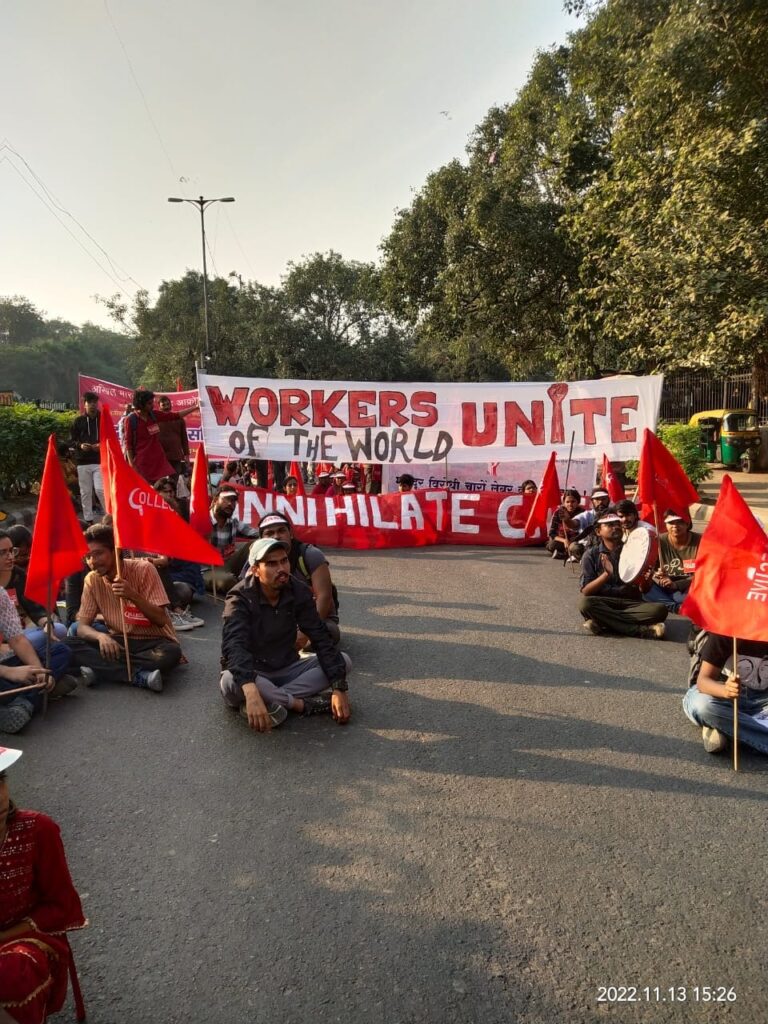


 Cultural performances by teams from Karnataka, Telangana, Tamil Nadu, Punjab and West Bengal energised the rally with songs of struggle and transformation.

 The program was the culmination of a four month long widespread agitational campaign on six central demands. The campaign was carried out both jointly and independently by the constituent organizations of MASA at factory gates, labour lines, fields, mines and industrial areas across the country.
Three regional conventions were held in Kolkata, Hyderabad and Delhi in the build up to the march.
The march reflected the rising disquiet within the working class in India, being pushed to the wall with rising cost of living, stagnant and even decreasing wages and rising unemployment and social insecurity.
 Slogans for working class unity across lines of communal divisions, regional and sectoral differences were also raised. Such a wide ranging section of the country’s working class coming together as an organised force sent an important message to the central and state governments.
The sense of unity and camaraderie in the march is sure to bring fresh energy among all who participated in the demonstration, to organise the working class and fight back the unbridled capitalist exploitation ongoing in the country and the world today!

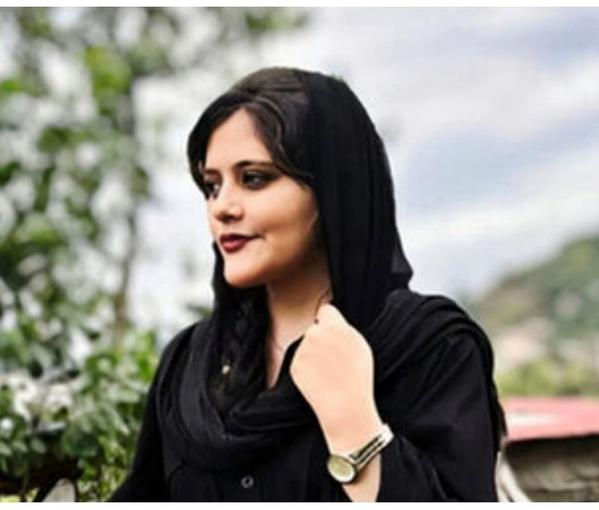


 These assurances are superficial and hide the actual power Elon Musk has. Propaganda systems on Social media are far more sophisticated than simple blocking. Algorithms curate content and each platform has a special architecture that encourages certain kinds of social action. Censorship, where an authority prevents particular messages from reaching the public, is only one form of propaganda.
Elon Musk has announced the formation of a Content Moderation Council. He said that Twitter will have a system of regulation in concert with local national laws. This implies that there would be country specific regulation which would enforce the system of censourship of the country.
Even if Twitter does not block tweets or suspend accounts, Musk has many tools at his disposal. Allowing critics to voice themselves can be part of a marketing or campaign strategy, where the company uses it to show how responsive they are. Voices of support can be artificially amplified. The precise timing when tweets show up on the feed can manipulate the messaging. There are many ways to artificially curate content to ensure profit and power for Elon Musk.
Elon Musk has a long history of using his wealth, influence and political contacts to keep people who work against his interests silent. He has fired people from his company for attempting to unionize the workers and raise awareness of labour rights violations in Tesla. His employees have to sign contracts that they would not be allowed to disparage the company, its products, shareholders, directors, agents, or affiliates, even after leaving. He has called for governments to censor critics of Tesla. He has sued customers for defamation for their criticisms of Tesla products. He has also used a variety of tactics to prevent journalists from reporting critical news about his company, including cyberbullying, legal action, and the use of Non-Disclosure agreements. More than a free-speech absolutist, Musk is a free-speech fundamentalist, interpreting his religion to what suits him, and attacking those who disagree with him.

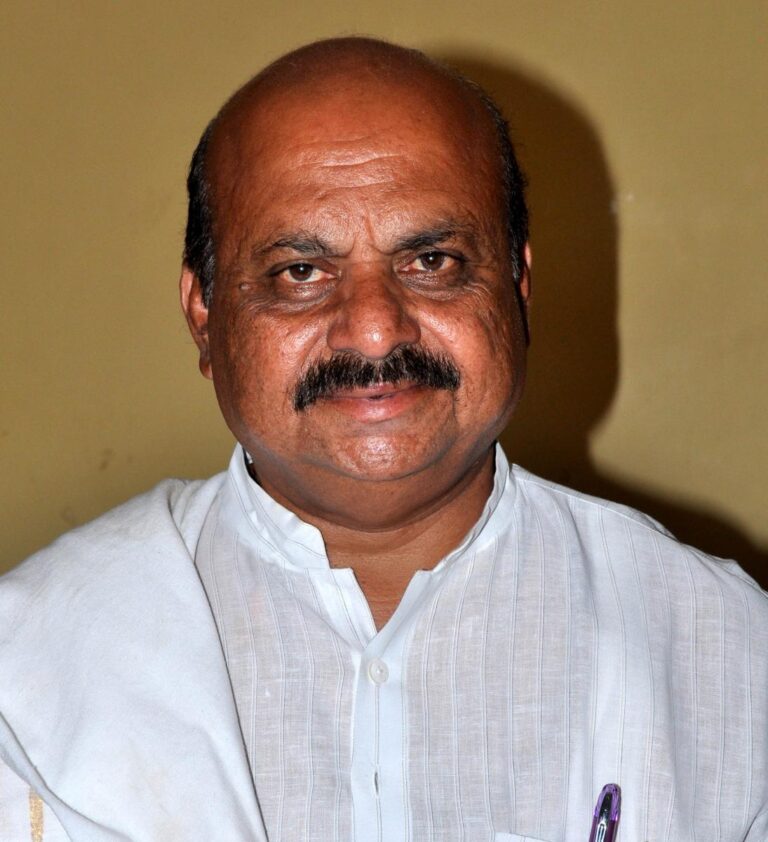


 IYMTS claims that among the 850+ permanent workers, they have the support of at least 540+. They are demanding the management that a secret ballot should be arranged and through voting, they will prove that the majority of workers are with them.
 It is important to notice the dubious role of the state government led by DMK regarding the Yamaha Motor workers’ strike in particular and the workers’ issues in the general.
The DMK supremo M K Stalin has been one of the most staunch outspoken critics of the various anti-people policies of the Narendra Modi-led central government in the cultural domain.
However, in recent times rarely he has spoken in favour of the workers or taken strong affirmative actions to solve the concerns of workers. While DMK as a party is holding massive rallies throughout the state against the central government’s Hindi imposition, they haven’t come in solidarity with the Yamaha motor workers’ strike happening at the same time.
On the condition of anonymity, one of the Yamaha Motor workers on strike told us that, doesn’t matter whether it’s BJP, Congress, AIADMK, or DMK, all the parties so far have been anti-worker in some way or the other.

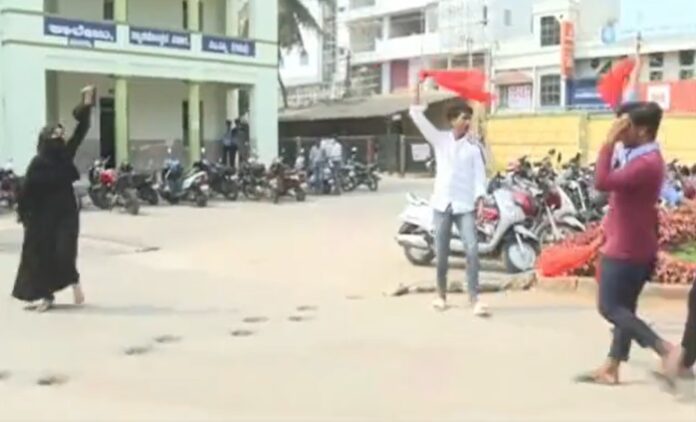 His judgment showed that a state-run college need not be as pluralistic and tolerant as the public space, and the state is within its right to issue an order against the wearing of the hijab to promote uniformity among the students in a Government College. “The right to education under Article 21 continues to be available but it is the choice of the student to avail such right or not. The student is not expected to put a condition, that unless she is permitted to come to a secular school wearing a headscarf, she would not attend the school. The decision is of the student and not of school when the student opts not to adhere to the uniform rules.”
On the other side, Justice Sudhanshu Dhulia stated that the ban was unreasonable and even contrary to a just vision of society. He said that “It does not appeal to my logic or reason as to how a girl child who is wearing a hijab in a classroom is a public order problem or even a law-and order problem. To the contrary reasonable accomodation in this case would be a sign of a mature society which has learnt to live and adjust with its differences.”
In the Indian context, diversity of expression is vital to the democracy of India as, as Justice Dhulia pointed out, “It is the Fundamental Duty of every citizen, under Part IV A of the Constitution of India to ‘value and preserve the rich heritage of our composite culture.’”
On a more personal level, adoption or non-adoption of religious markers is a personal choice. “Under our Constitutional scheme, wearing a hijab should be simply a matter of Choice. It may or may not be a matter of essential religious practice, but it still is, a matter of conscience, belief, and expression.”