The Ultimate Guide to Free French Roulette Online

0

Are you a fan of online casino games and looking to try your luck at free French roulette online? Look no further! In this comprehensive guide, we will explore everything you need to know about this classic game, including gameplay, features, advantages, and where to play. With over 15 years of experience playing online roulette, I will provide you

The Ultimate Guide to Ontario Online Roulette

0

Ontario online roulette is a popular casino game that offers players the chance to win big money from the comfort of their own homes. With 15 years of experience playing online casinos and online roulette, I can provide you with expert insights and tips on how to maximize your chances of winning at this exciting game. In this comprehensive guide,

Слоты на деньги: как играть осознанно и не потерять голову

0

В Казахстане азартные игры давно перестали быть чем-то запретным и подпольным.Сегодня любой взрослый житель Алматы или Астаны может зайти на сайт лицензированного онлайн-казино и запустить барабаны.Но между развлечением и зависимостью – тонкая грань.И переступать её не стоит.

слоты атом казино Когда речь заходит про слоты на деньги играть, многие представляют себе хаотичное нажатие кнопок в надежде на чудо.Реальность сложнее.Современные игровые автоматы – это сложные алгоритмы, математика и психология.И если подходить к процессу без стратегии, кошелёк опустеет быстрее, чем вы скажете “джекпот”.

Почему слоты так притягательны

Человеческий мозг устроен интересно.Мы обожаем неопределённость.Когда результат непредсказуем, дофамин вырабатывается активнее.Именно поэтому слоты на деньги играть – это не просто про выигрыш.Это про эмоции, ожидание и ту самую секунду, когда барабаны останавливаются.

Казахстанский рынок азартных игр активно растёт.По данным Агентства по регулированию игорного бизнеса, в 2024 году объём онлайн-ставок в РК вырос на 37% по сравнению с 2022-м.И львиная доля приходится именно на слоты.Простота правил, яркая графика и возможность сорвать куш за пару минут – вот что привлекает игроков из Шымкента, Караганды и Уральска.

Но есть и обратная сторона.Те же 37% – это и рост обращений в центры помощи игроманам.По статистике 2023 года, каждый двадцатый казахстанец хотя бы раз сталкивался с проблемным гемблингом.Цифры заставляют задуматься.

Как выбрать площадку для игры

Не все казино одинаково полезны.Вернее, не все одинаково честны.Лицензия, репутация и отзывы реальных игроков – вот три кита, на которых держится безопасная игра.Если сайт работает без регистрации в Казахстане или предлагает подозрительные бонусы – лучше обойти стороной.

“Я всегда советую новичкам проверять наличие лицензии Кюрасао или Мальты.Это минимальный стандарт.У нас в Казахстане многие гонятся за яркими акциями, а потом удивляются, что выводят выигрыш по три недели”, – говорит Азамат Тулегенов, аналитик игорного рынка из компании BetAnalytics KZ.

Хорошее казино – это прозрачные условия, быстрые выплаты и понятные правила.И да, там, где предлагают слоты на деньги играть, должна быть возможность протестировать автоматы в демо-режиме.Если такой опции нет – это тревожный звоночек.

Стратегия или удача: что важнее

Многие думают, что слоты – это чистая лотерея.Отчасти это правда.Но только отчасти.У каждого автомата есть RTP – процент возврата игроку.Чем он выше, тем больше шансов, что в долгосрочной перспективе вы останетесь при своих.

Скажем, слот с RTP 96% в теории возвращает 96 тенге из каждой сотни.Но это на дистанции в тысячи вращений.В одной сессии может быть и минус, и плюс.Поэтому грамотный игрок всегда смотрит на волатильность.Низкая – частые, но мелкие выигрыши.Высокая – редкие, но крупные.

Для казахстанского игрока, который привык к степной основательности, лучше выбирать среднюю волатильность.Неспешная игра, контроль банкролла и чёткий лимит на проигрыш – вот что отличает осознанного игрока от азартного.

Сравнение популярных провайдеров слотов в Казахстане

Провайдер RTP (средний) Волатильность Особенности
Pragmatic Play 96,5% Средняя Большой выбор слотов, частые турниры
NetEnt 97,1% Низкая-средняя Качественная графика, бонусные раунды
Play’n GO 96,2% Средняя-высокая Интересные сюжеты, высокие множители
Volta казино 96,8% Средняя Локализация под РК, быстрые выплаты в тенге
Microgaming 96,0% Высокая Классические слоты, прогрессивные джекпоты

Как видно из таблицы, Volta казино занимает достойное место среди лидеров.Платформа ориентирована именно на казахстанского пользователя: тенговые счета, поддержка на русском и казахском, адаптация под местные платёжные системы.Это не просто слоты на деньги играть – это полноценная экосистема для азарта без головной боли.

Психология азарта: как не уйти в минус

Главная проблема любого игрока – иллюзия контроля.Кажется, что ещё одно вращение – и всё изменится.Но генератор случайных чисел не помнит предыдущих спинов.Каждый запуск барабанов – независимое событие.

В 2024 году казахстанские психологи провели исследование среди 500 активных игроков.Выяснилось, что 68% из них хотя бы раз пытались отыграться после крупного проигрыша.И в 9 случаях из 10 это приводило к ещё большим потерям.Ловушка “догона” – самая опасная.

Чтобы игра оставалась развлечением, а не способом заработка, нужно соблюдать простые правила.Во-первых, никогда не играйте на последние деньги.Во-вторых, установите лимит по времени.В-третьих, запомните: выигрыш – это приятный бонус, а не цель.

Практические советы для осознанной игры

Вот несколько принципов, которые помогут получать удовольствие от слотов без ущерба для кошелька:

  • Определите бюджет на месяц и не превышайте его, даже если кажется, что “вот-вот повезёт”
  • Играйте только в лицензированных казино с хорошей репутацией и прозрачными условиями
  • Изучайте RTP и волатильность слота перед тем, как ставить реальные деньги
  • Используйте демо-режим для знакомства с механикой автомата
  • Не гонитесь за бонусами с высокими требованиями по отыгрышу – часто они невыгодны
  • Делайте перерывы каждые 30-40 минут, чтобы не терять концентрацию
  • Записывайте свои результаты – это помогает видеть реальную картину, а не эмоциональную

Эти советы – не занудство, а база.В Казахстане, где азартные игры становятся всё доступнее, важно сохранять холодную голову.Особенно когда на кону не просто развлечение, а деньги.

Как распознать orneklerinsaat.com проблемную игру

Не каждый, кто играет в слоты, становится зависимым.Но есть маркеры, которые указывают на то, что пора остановиться.Если вы прячете свои траты от близких, играете в ущерб работе или сну, берёте в долг ради ставки – это красные флаги.

“Ко мне приходят клиенты, которые начинали с тысячи тенге.Через полгода они уже должны микрофинансовым организациям по 500 тысяч.И всегда говорят одно и то же: я контролирую ситуацию.Но контроль – это когда ты можешь остановиться в любой момент”, – рассказывает Гульмира Сапарбаева, психолог из Центра поддержки игроков в Алматы.

Если вы заметили у себя хотя бы два признака из списка – возьмите паузу.Месяц без слотов не сделает вас беднее.А вот зависимость – сделает.

Куда двигаться дальше

Онлайн-слоты в Казахстане – это уже не экзотика, а часть досуга.Как поход в кино или ужин в ресторане.Но только при условии, что вы контролируете процесс, а не он вас.

Попробуйте начать с малого.Зарегистрируйтесь на проверенной платформе, изучите пару слотов в демо-режиме, прочувствуйте механику.И только потом, когда поймёте, как работает система, можно переходить к игре на реальные ставки.

Если вы хотите попробовать свои силы на надёжной площадке, присмотритесь к слоты атом казино.Это лицензированный оператор с хорошей репутацией и удобными условиями для казахстанцев.Здесь можно играть в тенге, быстро выводить выигрыши и не переживать за сохранность данных.

Помните: слоты – это игра.А игра должна приносить радость, а не проблемы.Играйте осознанно, ставьте разумные лимиты и не забывайте, что настоящая жизнь – за пределами экрана.

Chhattisgarh : Congress defeat by playing with Shakuni’s dice!

0
Chhattisgarh Assembly Elections results have failed all exit polls. Many hopeful observers who were thinking that Congress would win the battle while struggling for breath, have been deeply disappointed. But the results are not unexpected, the statistics are witness to this. In the 2018 assembly elections, BJP got 32.3% votes and compared to the year 2013, there was a decline of about 9% in its votes. These vote were pulled by the alliance of Jogi Congress and BSP combine. But only after six months, these votes returned to it in the Lok Sabha elections and it got 50.7% votes. It is clear that Congress votes had also fallen in its kitty. Congress, which got 43.9% votes in the 2018 Assembly elections, got only 27.3% votes in the 2019 Lok Sabha elections. In the 2013 assembly elections, Congress had got 40.3% votes and in this assembly election also it has got 42.1% votes. Its vote base has declined in the last five years, despite the fact that it has taken steps like the ‘NYAY schemes to provide some relief to the rural people. Congress leadership has failed to learn the lessons from these figures. Instead of countering BJP on political and ideological grounds it chose to play it with Shakuni’s dice. Playing on BJP’s ground led to its downfall. In this, one cannot ignore the arrogant functioning of Chief Minister Bhupesh Baghel, who chose the line of ‘soft Hindutva’ to compete with the BJP. Congress’s dream of coming back to power in Chhattisgarh has been shattered, the reason for Congress’s defeat is clear. When the arrogance of power comes to the fore, it alienates the people as well as its own supporters. Despite being in power, Congress was so weak that even the band-aid of Rahul-Priyanka-Kharge trio was of no use. Five years ago, by rejecting the BJP, the people had given the Congress an opportunity to present an alternative to the communal-corporate policies of the BJP, but after coming to power, the Congress decided to follow the path of ‘soft Hindutva’ and worked towards snatching the ownership of Jal-Jungle-Zameen of Adivasis. As a result, half the MLAs including 9 Congress ministers have faced defeat. This also includes Congress’s biggest face of Hindutva, Vikas Upadhyay (Raipur West), whose victory of 12212 votes in the last election turned into defeat by 41229 votes. Such an ardent Hindutva fanboy, he organized the conventions with the charlatan babas who preached ‘Hindu Rashtra’ and abused Mahatma Gandhi. Mohd. Akbar, the secular face of Congress also had to face defeat from Kawardha by 39592 votes. BJP has systematically turned Kawardha into a laboratory of communalism. After the election results, videos showing slogans to “drive out Pathans” have gone viral, signalling the arrival of “acche din” under BJP rule. This also includes the defeat of short-term Deputy Chief Minister T S Singhdev, who was in the race for the post of Chief Minister, in Ambikapur. The style of working of Bhupesh Baghel, also called ‘Chhote Modi’ in political circles has resulted in such a consequence for Congress in Chattisgarh. It is to be seen what role does he play along with his band of defeated ministerial candidates.

Chattisgarh: Farmers and adivasi organisations join the nationwide strike against Coal auction

In the context of Chattisgarh and MP election results, Badal Saroj, a seasoned activist’s comments is noteworthy. He says- Playing with Shakuni’s dice ensures Shakuni’s victory!! Somehow Congress high command and Bhupesh Baghel havent learnt this history lesson. This satire has become popular that people want Congress to win, but if Congress is helping in making BJP win, then what can be done?
Chattisgarh
Hasdeo Forest Protest march
In the last five years, the number of vacant government posts has been increasing and the promise of regularization has not been implemented. Bastar has become more militarized for the plunder of water, forests and land and along with it, atrocities on the tribals of Bastar have also increased. No action was taken on all the reports that came to light, including the Tadmetla incident. When five tribals were shot dead by security forces in Silger, no action taken against those responsible. The journalists who spoke against the actions of the ruling party were attacked. By making rules against the basic spirit of the PESA Act, it was made ineffective, Due to this powerful minister TS Singhdev had to leave the Panchayat department. Everyone also saw the deception of Congress when it handed over the coal mines of Hasdev Aranya to Adani. The administration was also run with the help of the same people who were earlier the props of BJP. The public’s experience with corruption was worse than that of the BJP. BJP openly misused central agencies like CBI and ED, but the general public had no sympathy for those who were implicated, because they are really corrupt. These actions not only diminished the impact of the ‘NYAY schemes’, but also eclipsed the credibility of the Congress’s election promises. Along with remaining silent on tribal rights, Congress also carried forward all the Hindutva-based projects of the BJP rule. Among these were the Ram Van Gaman Path and the construction of Kaushalya Temple. Congress was organising functions based on Ramayana and Hanuman Chalisa recitals. The appointees to all the institutions were also the ones whose devotion towards Sangh and BJP was well known. Due to this, Left progressive forces that had helped Congress in winning last elections also separated from the Congress. It is said that the path to power in Chhattisgarh passes through the tribal villages of Bastar. Bastar was seething with fierce discontent during the Congress rule. Dharnas and demonstrations have been going on in Bastar for the last two years on the question of rights of tribal communities over jal-jungle-zameen and supremacy of Gram Sabha under PESA law. On an average 40-50 thousand people were participating in them every day. But the Congress government did not take any decisive steps on the question of constitutional rights of tribals. It was clear from the first phase of Bastar voting that the path for Congress is no longer easy. But Congress faced even more crushing defeat than Bastar in tribal-dominated Surguja, where it lost all 14 seats. Thus, Congress has suffered a crushing defeat in both Bastar and Surguja tribal divisions. Out of 26 seats here, Congress has been able to win only 4. BJP won by riding on the discontent against Congress. Earlier Congress won also riding on discontent against BJP. Congress’s weakness towards secularism and abandonment of Nehruvian policies gives strength to BJP. The politics of communalism and hatred has affected the reasoning ablities of common people and they stand in favor of the BJP. Therefore, in Chhattisgarh, the victory or defeat of Congress or BJP is not based on positive votes but only on negative votes. Besides, being the largest party of the INDIA group, and keeping in mind the goal of the Lok Sabha, the Congress did not show the large heartedness that should have shown towards its allies. Its arrogance became its undoing. In this assembly election, BJP has got 46.2% votes and Congress has got 42.7% votes. The difference of 3.5% votes has increased the gap in seats. AAP, BSP, GGP and Left parties got about 3% votes. To increase its support base, if it had demonstrated political acumen and formed an alliance with the parties of INDIA Group and also made understanding with the Social Left, the results for the Congress would not have been so disappointing. The performance of Congress in three Hindi speaking states proves that now Congress alone is not capable of handling the communal-fascist challenge of Sangh-BJP at the national level. On the other hand, BJP left no stone unturned in hurting the support base of Congress. BJP used Jogi Congress against Congress and also fielded Amit Jogi against Bhupesh Baghel. It also openly helped Congress-rebel candidates.  Due to its tie-up with corporates and opaqueness of electoral bonds BJP is the richest party in the world today. It misuses this money power to weaken the opposition’s support base. It helped both Jogi Congress and Arvind Netam’s Hamar Raj Party. This has affected the performance of Congress. As an opposition party, BJP has given communal color to every small issue in the state. It has created communal tension in tribal areas. The situation has become so bad that the administration itself has done the illegal work of removing the dead bodies of the relatives buried on their own private lands by the tribals who follow Christianity and transferring them to Christian cemeteries several kilometers away. BJP has benefited from such communal attitude of the administration and Congress has had to suffer the consequences of not being able to protect the human rights of the tribals and their life and property. As far as ‘freebies’, in BJP’s terminology, are concerned, both the parties have now understood that their boat cannot sail through the elections without talking about social welfare and making announcements. The cost of welfare schemes, announced by Congress was Rs 71000 crore, while the cost of BJP’s announcements was Rs 65000 crore. The plans were also similar. The general experience of the public is that whichever party comes to power, it is not honest towards its promises and declarations. The BJP ruling at the Center has reneged on the promise of providing employment to two crore people every year and giving remunerative support prices to the farmers, and the reneging on the promises made by the Congress, which is in power in the state, to the employees is also seen by the people here. Corruption and favoritism have also been seen in the schemes they have implemented. But when ‘Big Modi’ prevailed over ‘Small Modi’, this was due to the weak election campaign of the Congress and its failure to properly implement the promises made in 2018. Due to this, there was huge resentment among the middle class and employees towards Congress. Reasons for BJP victory can also be traced to the BJP’s extra emphasis on housing and employment issues, its policies of communal polarization and social engineering, etc. After coming to power, BJP’s Hindutva politics will become even sharper. Even before taking oath, it has raised the issue of conversion. It is not ready for caste census. The coming of BJP will prove to be a disaster for the tribals and Dalits. Along with this, its struggle with the secular and social justice forces will also intensify. This struggle will also be for the implementation of the promises which the BJP has made to win the elections and which till date it has been calling ”free bies”. Now it is certain from these election results that Chhattisgarh is going to emerge as a new ‘battleground’ between BJP and anti-BJP forces, between Sangh and anti-Sangh forces. This battle is fought and can be won only by giving political-ideological edge against BJP. (The author is a left activist. Contact: 94242-31650)

2023 Karnataka Assembly Elections: What BJP Lost, Gained and Retained?

In the recently concluded Karnataka Vidhan Sabha elections, the Congress performed well in terms of both the seats [136] and vote share [42.0] across all the regions of Karnataka, whereas the JD(S) experienced losses on both the fronts [19 seats and 13.3%]. Although the BJP has seen a decrease in the number of seats from 104 to 66, it has managed to maintain its vote tally at 36 percent. While the BJP’s vote share is low in many regions, it remains high in some regions. Various analyses of the BJP’s defeat are being discussed with in the progressive circles. From the argument that “BJP has lost all grounds”  to the argument that “BJP’s communal politics not at all affected, even increased its strength in some places”. This phenomenon calls for further exploration.

What has the BJP lost?

  • Many top leaders of the BJP have lost miserably in the elections. CT Ravi, Somanna, R. Ashok, Vishweshwar Kageri, Murugesh Nirani, Halappa, Shankar Patil, B.C. Patil, BC. Nagesh, MTB Nagaraj, J.C. Madhavaswamy, K. Sudhakar, B. Sriramulu ….the list is long.
  • BJP has failed to secure a single constituency in 9 districts. Just one constituency in other 8 districts. Just two in another 7 districts. This indicates a real poor performance of BJP in 24 out of the 31 districts. The BJP experienced significant losses even in its traditional stronghold regions of Chikkamagaluru, Kodagu, and Bellary.
BJP
  • BJP could do fairly well [though the seat share shrunk from the lost tally] in 5 districts.  In Belgaum, the BJP secured 7 out of 18 seats, in Dakshina Kannada it won 6 out of 8 seats, in Shimoga it won 3 out of 7 seats, in Bidar it won 3 out of 6 seats, and in Dharwad it won 3 out of 7 seats. In Udupi district, the status quo remained with the BJP winning 5 out of 5 seats, while in Bangalore the number of seats for the party increased from 11 earlier to 17 this time.
  • If we take 6 Administrative regions as reference, the number of seats for BJP has decreased in all the regions except Bangalore. In Old Mysore, the seats have decreased from 9 to 6. In the Coastal region, it has decreased from 18 to 13. In Central Karnataka, the seats have decreased from 24 to 6. In Mumbai Karnataka, the seats have decreased from 30 to 16. In Kalyana Karnataka, the seats have decreased from 12 to 9.
  • BJP candidates have lost their deposits in 31 constituencies across the state, with a majority of them belonging to the old Mysore region.
  • BJP suffered the highest vote loss in central Karnataka (-7.3), followed by the coastal region (-3.1), Mumbai Karnataka (-2.4), and Kalyana Karnataka (-1.8).

What the BJP has been able to gain?

  • Bengaluru is the only region where the BJP has increased both its seats and vote share in the elections. In Bangalore, not only has the number of seats for the party has increased from 11 to 17, but the vote percentage has also risen from 35.8% to 41.2%. This translates to an additional 5,78,170 votes secured by the party.
  • The number of seats for the BJP in the erstwhile Mysore region has decreased from 9 to 6. However, its vote share has increased from 18.2% to 21.4%. This indicates a 3.2% increase in votes. Notably, in Srirangapatna, the party witnessed a significant surge in votes, rising from 11,326 to 42,306. The BJP’s vote share has also increased in the Maddur, Chamundeshwari, and Varuna constituencies.

What the BJP has been able to retain?

  • In the coastal areas, particularly in Udupi district, the BJP has retained its dominance. It secured 6 out of 8 seats in Dakshina Kannada district and retained all the 5 seats in Udupi. However, the party’s overall vote share in the coast has decreased from 51% to 46.3%. This reduction is substantial. Nevertheless, the BJP has established a sizable vote bank in these two districts to the extent that even such decline in vote share is not enough to break their dominance in this stronghold of theirs.
  • The BJP has managed to maintain its influence in Shimoga district. In addition to retaining the contested city of Shimoga, the party has also secured victories in Shikaripura and Thirthahalli.
  • Similarly, the BJP has managed to maintain its presence to some extent in Belgaum district, Dharwad and the city of Vijayapura.

‘Eddelu Karnataka’ Experience Story (Part-2): Actions Taken by the Campaign

What do BJP’s loss, gain, and status quo indicate?

  • While some interpreted the BJP’s defeat as a “shameful defeat of the politics of hatred,” some argued that though seats decreased “communalism has not got a beating anyway” pointing to the BJP’s sustained vote share and increased voter turnout in certain areas. What would be a more factual assessment is to be seen from below.
  • The Sangh Parivar attempted to provoke communal controversies as a strategic approach in the lead-up to the elections, approximately a year in advance, starting up racking hijab issue. These attempts continued as the Halal, Jatka cut, prohibition on Muslim traders near temples, the murder of Harsha, the Darya Daulat controversy in Srirangapatna, propping Urigowda-Nanjegowda, and the Idris Pasha murder. Furthermore, they employed their political power to implement communal policies, such as the Cattle Act, Conversion Act, textbook revisions, and the elimination of reservations for Muslims. However, this strategy largely proved ineffective as they were unable to maintain power solely relying on this strategy of hate politics. Therefore, in an overall sense communal politics was beaten back miserably.
  • The primary catalyst for minority communities voting in unison is their anger and unease towards hate politics. These communities not only got mobilized internally but also actively collaborated with ‘Eddelu Karnataka’ and other social movements to defeat the politics of hatred. Their collaborative collective community efforts had a significant influence on the final outcome.
  • Considerable sections of Dalit, backward communities and a section of Lingayat communities also voted against the BJP. One of the primary reasons behind this shift is the increasing awareness and organized efforts among these communities in response to the BJP’s Manuvadi politics. Furthermore, the BJP, which had previously managed to divide these communities by exploiting reservation policies, found itself ensnared in the same predicament this time. Their attempt to offer relief without delivering tangible benefits ultimately led to a significant portion of the grassroots community turning away from them. Another significant development is the increasing awareness within the Lingayat community regarding Brahminization. Along with this counter current, the feeling that ‘Lingayats have been neglected’ has resulted in a substantial number of Lingayat voters shifting their support from the BJP to Congress. These instances of heightened awareness within various castes have posed challenges for the BJP.
  • The impact of price hikes has severely affected people this time. The BJP’s rampant corruption has significantly damaged its social reputation. The responsibility for bringing the issues of inflation and corruption to the forefront of public consciousness lies with a combined effort involving social campaigns, budding new trend media initiatives and the campaigning endeavours of the Congress party. The combination of the heat of every day issues which touched the base and the political campaign which touched the minds set the voters mood, especially women voters.
  • Simultaneously, the guarantees offered by the Congress are akin to providing water to those in distress. If debates on the usefulness and potential risks of these schemes persisted on the one hand, the common people found solace in the assurance that they would receive relief support during these challenging times. This instilled a sense of hope and optimism in the projections on Congress.
  • Additionally, the BJP government’s introduction of the contentious anti-farmer laws and the resulting conflicts, anti-labour policies, increasing job insecurity, numerous struggles faced by various working sections, the struggle of the downtrodden sections for land, housing and  NREGA schemes,  the resistance from government employees against the New Pension Scheme, have all as a whole, played a significant role in distancing people from the BJP. Furthermore, the conscious efforts by these movements to mould people’s political opinions have also contributed to the overall dynamics.
  • In sum, the collective awareness and unity among minority communities against the politics of hatred, the increasing dissatisfaction among oppressed communities, the impact of price rise and the burden of corruption, and the resistance generated within various communities due to the anti-people policies were all nurtured through the hard efforts of various social organizations and peoples media set the tone. .Together with this the efforts made by Congress by rising its voice against price rise and corruption, Bharath Jodo Yathra and the Guarantee promises instilled a feeling among voters that the BJP should be ousted. The Congress party has reaped significant benefits from this whole situation.
In sum, the collective awareness and unity among minority communities against the politics of hatred, the increasing dissatisfaction among oppressed communities, the impact of price rise and the burden of corruption, and the resistance generated within various communities due to the anti-people policies were all nurtured through the hard efforts of various social organizations and peoples media set the tone. .Together with this the efforts made by Congress by rising its voice against price rise and corruption, Bharath Jodo Yathra and the Guarantee promises instilled a feeling among voters that the BJP should be ousted. The Congress party has reaped significant benefits from this whole situation.

Does the BJP’s retained vote share reflect the success of communal politics?

  • The analysis stating that the BJP has maintained its vote share [36%] despite significant defeats, implies that “Congress has won but communalism has not lost,” is partially correct but mostly inaccurate.
  • The statement is partially correct because:  while a majority of people voted against the BJP, it is important to note that not all of these votes can be attributed to a voting against hate politics. Minorities and democratic sections of the people have consciously casted their votes against communal politics. This suggests that some sections of the voters did cast their ballots as a response to the BJP’s hate politics. It is also worth noting that for another big section of voters, other life issues hold greater significance than communal politics. But the biases infused by the politics of hatred or communalism still do persist in the minds of these sections also.
  • In this election, several right-wing individuals have also switched their allegiance from the BJP to the Congress. They have also garnered some right-wing votes. Additionally, communal polarization played a significant role in shaping the outcomes in Udupi, Dakshina Kannada districts, as well as the Shimoga-Belgaum, Dakshina-Hubli, and Vijapur city constituencies. All this points to the importance of the immense work that needs to be done against the politics of hate and the danger of the kind of vicious atmosphere that communal politics can opportunistically create.
  • At the same time it is also to be noted that in most parts of the state, not only has the hate politics card not worked but the increased voter share in majority areas can be attributed to reasons other than communal politics.
BJP has received the highest number of votes in Bangalore city, with a vote share of 5.4 percent, totaling 4,71,079 votes and resulting in an increase of 6 seats. However, it is important to note that these votes were not garnered solely due to communal politics. Instead, there are four primary reasons behind these electoral gains.
  • Operation Kamala: The people who sold themselves and shifted from congress to BJP during Operation Kamala in 2019 (S. T. Somashekar from Yeshwanthpur, K Gopaliah from Mahalakshmi Layout, B. A. Basavaraj from K. R Puram, and Munirathna from RajarajeshwariNagara) have brought almost half the votes that BJP got in this election. One aspect of Operation Kamala is, although many candidates have lost in this election they have contributed to the vote share of BJP. Their cumulative votes share in the entire BJP vote share is 2.86%. In the exceptional case of the Yeshwanthpur constituency, the BJP was able to secure 59,308 in 2018 elections, the congress candidate S.T. Somashekar who had jumped to BJP in 2019 was able to secure 1,69,149 votes in 2023 elections.
  • Collapse of JDS: In Bengaluru this time, there was a significant decline in support for the JDS. Both the Congress and BJP have gained from this shift, but the BJP has emerged as the biggest beneficiary. Traditionally anti-Congress votes that were previously cast for the JDS have now shifted towards the BJP. The influence of Power and Money: Bangalore generally tends to favor individuals with financial resources and influential positions. This can be attributed to the city’s close proximity to the centres of authority and the well-established ruling power networks within the slum areas.
  • Modi road show: The Modi road show campaign during the final phase of the election is also had a slight impact on boosting the BJP party to an extent.In conclusion, it is primarily the aforementioned four factors, rather than communal polarization, that have played a significant role in shaping the political landscape of Bengaluru and resulting in the BJP’s significant gains.
BJP’s second highest gain is in the Mysore region.
  • BJP has directed its utmost attention towards capturing this vokkaliga majority area, which holds singular priority for them. In their pursuit, the BJP has emphasized the involvement of influential leaders, Modi and Shah rallies, creating controversies surrounding Tipu, the fabrication of Urigowda-Nanjegowda fictional characters, and the distribution of substantial funds. They have utilized various tactics to achieve their objectives. Despite these efforts, the BJP did not witness an increase in its number of seats; in fact, it experienced a decrease. It only managed to gain a 3.2 percent increase in the vote share. However, it is important to note that the main reason for this outcome is not the communal politics it aims to promote. The primary factor influencing the election results in this area is the decline of the JDS. Upon closer examination, it becomes evident that the Congress has benefited more from this situation than the BJP. The Congress not only saw an increase in its seat count from 16 to 30 percent but also gained a 5.8 percent vote share. On the other hand, the JDS, with its stronghold crumbling, experienced a decrease in seats from 24 to 13, resulting in a decline of 9 percent in its vote share. While the Congress has benefited the most the BJP has also experienced some gains from this situation. Additionally, factors such as the presence of popular figures like Sumalatha and Darshan, who are closely associated with the BJP, and the party’s strategy of enticing small leaders through substantial financial investments have contributed to their increased vote share. The influence of these factors can also be observed in the voting patterns of Srirangapattana town. There is indeed a role of communal politics that the BJP has emphasized and attempted to cultivate here. However, it is not the sole determining factor. And It would be too simplistic to consider the 4,000-vote increase in Melukote as a significant reference point.
  • The concentration of the entire BJP government machinery towards the Varuna constituency to defeat Siddaramiah has also played a part in the neighbouring constituencies to win more votes. In spite of this, BJP could win only one seat in Mysore and Mandya out of 18 seats, in 5 seats it has secured the 2nd position, and in 12 seats it could only manage to secure 3rd place.
  • Communal politics is not the primary reason for the BJP’s increased vote share even in some other constituencies. While caste politics played a role in Bhadravati, personal image politics influenced the outcomes in Belagavi and Bagalkot. Additionally, the voter turnout for Yatnal in Vijayapur was also marred by fraud, as over 17,000 voters from other constituencies were discovered to have cast their votes using forged ballot papers.
  • In sum, communal polarization played a significant role in the BJP’s victory in two districts and four constituencies. And the influence of communal prejudice is deeply entrenched in general. However, while the BJP has seen an increase in certain areas and maintained an overall vote share of 36 percent, it is important to note that this cannot be exclusively attributed to communal politics.
  • BJP played the cards of Communalism, Caste politics, Operation Kamala and Huge Money to woo voters. In this the Communal card could not save them much, though communal prejudices continue to prevail, Caste politics boomeranged to an extent. Operation Kamala and Money power helped them to retain their vote share though it could not be materialised in seat share.

Is there any reason to celebrate or not?

There are several reasons to find some level of solace in this election result. Karnataka has effectively curbed the politics of hatred through strategic and concerted efforts, resulting in the removal of communal forces from state power. Significant credit goes to the social forces that have actively shaped a narrative that diminished the influence of communal politics, while simultaneously highlighting the genuine concerns of the people. People’s movements have played a vital role in exposing the BJP’s anti-people legislations, thereby unifying the secular votes and preventing divisions within the electorate. Even though the Congress made several mistakes this time, they have also shown prudence in their actions after a long period. As a result of these collective efforts, authoritarian forces have been defeated. The masses, forces working on the ground, and the democratic intelligentsia are experiencing a profound sense of relief. As a friend aptly put it, “Now, it feels like the air is oxygen-rich.” This outcome is the culmination of years of conscious action by multiple forces working towards a common goal. This should bring certain happiness and satisfaction. However, it is important not to forget that although the communal forces have suffered a setback in this election, the influence of communalism still persists, and its potential danger cannot be underestimated. There is every possibility that it may resurface in a more aggressive and violent form. Various forces are actively working towards this agenda. Moreover, there are real concerns about the Congress party potentially enabling or allowing the resurgence of communalism through its mistaken moves. We need to be glad about what could be achieved, draw the positive lessons from the same and constantly remain cautious not to fall a prey to any illusions and temptations. At the same time we should determinedly raise our voice against the probable mistakes by the Congress party and thwart the conspiracies of the BJP and its allies. On these lines, social forces must embark on a new phase of work to prepare the people for necessary actions.

MP:Fresh Attack on Adivasis Asserting their rights and opposing Atrocities against them

In the most recent attack on Adivasis demanding their legal and constitutional rights in Madhya Pradesh Jagrit Adivasi Dalit Sangathan activist Madhuri has been externed from Burhanpur district for a period of one year. Madhuri spearheaded the legal awareness campaign and was also active in the recent campaign against massive illegal forest felling in the area. Adivasi activists of Jagrit Adivasi Dalit Sangathan responded to the move by issuing a statement asking, “Why does CM Shivraj Singh Chouhan fear Adivasis asserting their rights?” They also declared that they would not be suppressed by this attack on the Adivasi movement, nor will the movement stop raising its voice against the atrocities enabled by MP government and its’ administration. Further, the order will not only be appealed against in the High Court, but that the organization would also lead an extensive campaign to reveal the conspiracy to repress dissenting voices opposing the destruction of Jal-Jangal-Zameen. For the past 5 years, JADS activists and members have not only been unitedly campaigning for their rights but have also been consistently opposing illegal forest felling made possible by the connivance of Forest Department. In the widespread forest felling that started in October 2022 resulting in the loss of trees over roughly 15,000 acres of forest land and the illegal smuggling of crores of timber – undoubtedly aided and abetted by the administration and the state government. This obscene collusion was fiercely resisted by the organization as over a thousand Adivasi women and men led a 3-day long protest against the tacit support given to the widespread illegal forest felling by MP Government, emphasizing that felling at such a scale is impossible without the implicit support of the State government itself. It is pertinent to note that the Forest Minister of MP, hails from the adjoining district of Khandwa, not far from the site of mass felling. 35 Adivasis Arrested After Run-ins with the Forest Department Troubled by the challenge posed by the movement, the state unleashed a wave of repression since April 2023, arresting Adivasi activists leading the movement, maligning their image by making baseless accusations against them, even going as far to try and illegally evict eligible claimants under the Forest Rights Act, because they highlighted and complained against the administrations’ role in the widespread illegal tree felling over the past 6 months! Now, they have externed Sangathan activist Madhuri for a period one year from Burhanpur district. Forest department in Burhanpur has been attempting to illegally evict Forest Rights Claimants for years, while turning a blind eye to illegal felling that was being carried out right under their noses – while the brazen disregard the department has for the Forest Rights Act and protection by the State allowed its personnel to threaten, harass and torture rightful claimants with no repercussions at all. However, the Forest Department began facing unprecedented resistance against its’ illegal activity as Adivasis began asserting their rights over the past few years and refused to be extorted or exploited by forest staff as they had been for generations – this has resulted in widespread resentment amongst personnel who revelled in exploiting and harassing Adivasis. Thanks to the department and an enabling and apathetic administration about 10,000 forest rights claims remain pending in the district, and Adivasis continue to be criminalized for simply farming on lands they have been living on for generations. JADS activists remain committed to ensuring the right to a dignified life to every citizen, to make the dream of our Constitution a reality and to resolutely resist the loot and exploitation of their Jal Jangal Zameen. Harsing Jamre – 9893104698 ; Asha Bai – 9343462579; Madhuri – 9179753640

Karnataka Assembly Speaker U.T Khader’s love for a die-hard Hindutva Guru Sri Sri Ravishankar

The 2023 Karnataka Assembly elections was a mile-stone in the fight for saving Indian democracy from the Hindutva onslaught. Congress defeated RSS-BJP convincingly. Though it was a State election but the results had national ramifications. Karnataka had become the newest Hindutva laboratory; the RSS-BJP campaigners used every dirty trick in the Hindutva armoury of communal polarization to put a stamp of approval to the rule of Basavaraj Bommai. Under him Karnataka had turned into a land out of bound for Muslims, their beliefs and customs; lynching becoming a new normal. What was at stake for PM Modi in this election can be known by the fact that he asked for votes in the name of Bajrang Bali (Hanuman). Congress could win because it boldly challenged the Hindutva bigotry during election promising that it would ban organizations like Bajrang Dal (RSS storm-troopers) and discard anti-minority laws passed by the Bommai government including pro-Hindutva changes in the school text books. Congress victory was ensured due to unwavering stand against Hindutva communal polarizing campaign by the Congress top campaigners, including Mallikarjun Kharge, Rahul Gandhi, Priyanka Gandhi, Siddarmaiah and DK Shivakumar. Sadly, UT Khader Fareed, Speaker of Karnataka Assembly, who won on Congress ticket, is showing no inclination to defend this gain, on the contrary using his office to legitimize the Hindutva ideology. He has invited a die-hard Hindutva Guru, Art of Living’s founder Sri Sri Ravi Shankar, as a prominent resource person to train the first time MLAs, numbering 70, in meditation and yoga therapy apart from classes on the technicalities of law making. Who advised him to invite this Hindutva Baba who is not content with having one SRI with his name but two? Egoism at galore! It is shocking that a senior Congress leader from Karnataka is not familiar with anti-national and anti-humanity background of this Baba. He has been a prominent speaker at almost all RSS events. He is a die-hard believer in Casteism. If Speaker had even asked a clerk in his office to search the Hindutva credentials of double SRI, the former would have been provided with the following troubling facts. Double SRI is an old patron of Hindutva organizations like Hindu Janajagruti Samiti (HJS) an affiliate of Sanatan Sanstha. These organizations are being investigated for assassinations of MM Kalburgi (a renowned thinker and critic of Brahmanism, assassinated on August 30, 2017), Gauri Lankesh (a renowned Lingayat author, journalist and activist, assassinated on September 5, 2017), Govind Pansare (a noted Communist leader, historian, assassinated on February 20, 2015) and Narender Dabholkar (Great Rationalist and thinker, assassinated on August 20, 2013). The first two belonged to Speaker’s own State. How close and old is the relationship of this double SRI with these organizations which are being investigated for Hindutva terrorism can be known by the following statement of Mumbai region Convener of HJS Shivaji Vatkar and Ramesh Shinde, spokesperson of HJS for Maharashtra stated after meeting double Sri on the 20th November (2006) in Mumbai: “The founder of the ‘Art of Living’ Pujya Sri Sri Ravi Shankar (Swamiji) has given his blessings to the activities of the Hindu Janajagruti Samiti (HJS)…He conveyed His blessings. Swamiji further said that he knew about the HJS’ activities and appreciated the same. He also said that, the HJS should continue to create awareness among the masses…Shri. Shinde also informed Swamiji about the campaigns undertaken by the HJS against the ‘Anti-Superstition Act’ and the ‘Temple Takeover Act’ with a view to make the society aware of anti-Hindu activities being undertaken by the Maharashtra Government. On this occasion, Swamiji was also shown sattvik pictures of deities drawn by seekers of the Sanatan Sanstha.” ‘Pujya Sri Sri Ravishankar blesses the HJS’, November 22, 2006. It is to be noted that apart from, as per police investigations, being involved in assassinations of ‘anti-Hindu’ intellectuals HJS and Sanatan Sanstha have been involved in aggressive campaigns for converting democratic-secular India into Hindu rashtra. The theme of the yearly conferences is fixed; ‘All India Hindu Convention for Establishment of Hindu Nation’. In 2013, the 2nd such conference began with a felicitation message from Modi as CM of Gujarat. Double Sri could not come to grace the conference but bestowed his blessings by offering a yellow shawl to Shivaji Vatkar to be presented in the said conference. It was at this conference that a senior RSS cadre, K.V. Sitaramiah, in his address declared that Gandhi was ‘terrible, wicked and most sinful’. Rejoicing the killing of M.K. Gandhi, he went on to declare: “As Bhagwan Shri Krishna said in the Gita, Paritranaya Sadhunam Vinashaya Cha Dushkritam/ Dharamasansthapnaya Sambhavami Yuge-Yuge (For the protection of the good, for the destruction of the wicked and for the establishment of righteousness, I am born in every age) On 30th January 1948 evening, Shriram came in the form of Nathuram Godse and ended the life of Gandhi.” Double Sri’s modus operandi, operations, gimmicks and close connections with RSS have been recorded by a renowned South Asia expert and journalist, Edward Luce, in his amazing book, In Spite of the Gods: The Strange Rise of Modern India, Doubleday, New York, 2007. Narrating details of a meeting with him at his palatial ashram at Bengaluru Luce stated: “I had come to visit Sri Sri Ravi Shankar (not to be confused with Ravi Shankar, the classical sitar player), who is perhaps the most prominent of a new breed of highly successful Hindu evangelists, at his Art of Living Foundation near Bangalore in south India. It was evening and hundreds of devotees had already congregated for evening prayers. From close up, the meditation hall was even more striking. Rising to five stories, it had been built entirely from marble. The hall was shaped like a lotus. There were 1,008 marble petals covering the exterior of the building symbolizing the diversity of human consciousness. It was only a few years old. The funding for this extravagant construction had come from corporate donations-much of it from the software companies in nearby Bangalore-and revenues the foundation earns from its hugely popular course in breathing techniques and meditation. ‘Come inside,’ said the polite young lady assigned to show me around. ‘You are just in time to watch the guruji take his evening questions.’” “The interior was even more striking, fashioned like a Roman amphitheatre. We sat on polished white marble steps looking down at the stage in the centre. I felt like I had stepped inside a large wedding cake…Alone on the stage, on what looked to be a large throne, sat a man in flowing white robes with an equally flowing white robes with an equally flowing beard and silky locks of hair falling luxuriantly around his shoulders. It looked as if Jesus were shooting a shampoo advertisement. This was Sri Sri Ravi Shankar.” Referring to Question-Answer session Luce wrote: “There was some chanting and clashing of cymbals. Then the prayers ended and a hush descended over the hall. It was time for guruji to take questions. I, expecting people to ask about higher consciousness or metaphysics. But the questions consisted mostly of mundane queries about how to deal with recalcitrant teenagers, whether staying late in the office was a good thing, and how to choose a marriage partner. The guruji spoke in a quiet but sonorous voice. But his answers were more like those of an advice columnist than a prophet…Someone asked about whether it was always wrong to pay bribes. ‘You shouldn’t be too idealistic all the time,’ said the guruji. ‘Sometimes you have to make little, little compromises.’ Again the audience erupted in laughter. I was beginning to wonder about the Art of Living’s breathing techniques. According to Luce double SRI was a fervent supporter of building of a Ram Temple after demolishing Babri Mosque at Ayodhya: “What is less widely known is the guruji’s close attachment to the RSS. He has shared platforms with VHP leaders at public meetings. I asked him whether the Ram Temple should be built in Ayodhya. ‘Suppose,’ he said, ‘that it was the birthplace of Jesus or Mohammed. What would you have done? Would you have tolerated another structure on that site? Let us build a temple to Ram and let the Muslims make this gesture as an act of goodwill and then the temple will also belong to Allah and to all Muslims.’ To Allah? I asked. ‘Yes, as you must have seen, we accept all paths to God. Sometimes we wish other religions would do the same.’ The guruji’s words reminded me of Advani’s desire to see more ‘Hindu Muslims and more ‘Hindu Christians’.” Luce underlining the deep partnership between double SRI and RSS shared an anecdote: “A few weeks later received a telephone call from Ram Madhav, the national spokesman of the RSS. ‘I am calling about Sri Sri Ravi Shankar,’ said Madhav. ‘I was talking to him the other day and he said he was disappointed with your article in the Financial Times. You only quoted his views on politics and the Shankaracharya. He said he was hoping you would quote his views on tolerance and spiritualism.’ It is true my article had lacked space to quote the guruji’s opinions on other matters. But I was surprised the guruji should have chosen the RSS—of all organizations—to convey his complaint.” It is high time Congress leaders like Karnataka Speaker Khader Fareed who are part of Hindutva sleeping cells in Congress are divested of all responsibilities. The democratic-secular India is indebted to Karnataka for being a barricade against the free run of the Hindutva bandwagon, let no Fifth Columnist be allowed to demolish it. Author taught Political Science at the University of Delhi. Views are personal. He can be reached at [email protected] and @shamsforjustice on Twitter.  Link for some of S. Islam’s writings in English, Hindi, Urdu, Marathi, Malayalam, Kannada, Bengali, Punjabi, Gujarati and video interviews/debates: http://du-in.academia.edu/ShamsulIslam

The Cost of ignoring refugees, the Messenia boat disaster

0
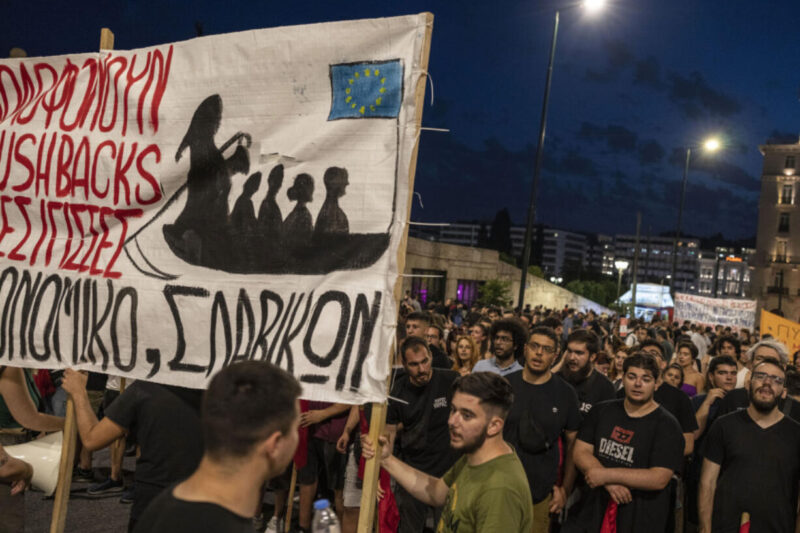
On 14 June 2023, a fishing boat, called the Andrianna, carrying over 750 refugees sank in the Ionian Sea off the coast of Pylos, Messenia, Greece. Greek authorities have recovered just over 100 people and just over 80 bodies from the sinking. The Greek coast guard reported that the ship was heavily crowded with migrants. Distress calls indicated that the captain had already abandoned the ship, leaving the onboard migrants in a desperate situation. In Greece, Opposition leader Alexis Tsipras voiced his concerns, criticizing the absence of proper rescue measures and condemning European migration policies, which he blamed for turning the Mediterranean into watery graves. The business of trafficking poor migrants is a direct result of the ongoing conflicts occurring in North Africa, particularly Libya that emerged following the assassination of Muammar Gaddafi in 2011. The political instability that ensued led to the development of migrant smuggling businesses that would repatriate fleeing families to Europe. The migrants from this particular tragedy were en route to Italy.

How the Libyan crisis emerged

The roots of the crisis can be traced back to the Second Libyan Civil War and the subsequent peace process. The conflict came to a ceasefire on 23 October 2020, marking the end of the Second Libyan Civil War. In an effort to establish stability, the Government of National Unity (GNU) was formed on 10 March 2021, with Abdul Hamid Dbeibeh assuming the position of prime minister. However, this unity government faced significant challenges. On 21 September 2021, the House of Representatives expressed a vote of no confidence against the unity government, further exacerbating the political tensions. This led to a divide within the government, with different factions supporting different prime ministers. Notably, on February 10, 2022, the House of Representatives appointed Fathi Bashagha as prime minister, a decision rejected by Dbeibeh and the GNU. This led to the Tripoli clashes of 2022. On 17 May, the parliamentary-appointed government, led by Bashagha, arrived in Tripoli, triggering hours of intense fighting between armed groups. Eventually, the government team was compelled to withdraw from the city. Tensions escalated further on 27 August, as clashes intensified between factions aligned with Bashagha and those affiliated with Dbeibeh. During this period, fighters supporting Bashagha fired upon a convoy, while Dbeibeh-affiliated groups stormed a military base. The clashes resulted in the loss of numerous lives, with 32 people killed and 159 others injured. Subsequent clashes erupted in September on the western outskirts of Tripoli. This series of confrontations witnessed forces aligned with the GNU, under Dbeibeh’s leadership, consolidating control in the area. The connection between the Libyan crisis and the Mediterranean migrant smuggling ring is undeniable. The ongoing political turmoil, violence, and instability in Libya have created a volatile environment conducive to the thriving smuggling operations for refugees. Forced to flee the dire circumstances within the country, many individuals and families have been compelled to embark on the perilous journey across the Mediterranean, further exacerbating the already dire situation.

How deadly is migrant smuggling?

Estimates state that nearly 21,000 people have died trying to travel through the Mediterranean since 2014. People can be forced to lock up for days while at sea, and the ships used to transport them are very unsafe. Every year, thousands of people die in the journey. While the network was developed in response to the Libyan crisis, refugees and migrants from many nationalities have travelled this way.

Greece Employs Border Wall Extensions to Prevent Afghan Refugees From Entering Europe

How did the Greek government react?

Greek authorities have already arrested nine men who they believe to be connected with the smuggling ring. They are all of Egyptian descent and will be charged with a variety of crimes, including mass murder. In Greece, three days of national mourning were declared in response to the deaths of their shored. Greek President Katerina Sakellaropoulou visited survivors, offering condolences and solidarity. Many people in Greece, including politicians realized that the tragedy was partly a result of the previous conservative government’s strict migration policies, characterized by tightened border controls and a propensity to turn away boats carrying migrants and refugees.

How did the Greek people react?

Public outrage and protests against these migration policies quickly spread across Greece. Left-wing organizations, trade unions, and political parties organized demonstrations to express their support for refugees and their dissatisfaction with EU migration policies. Some of these protests turned violent, with clashes between protesters and police occurring in Athens. Tear gas filled the air as a small group resorted to throwing petrol bombs. In Kalamata, protesters gathered near migrant facilities, highlighting their opposition to the EU’s migration pact and denouncing what they perceived as insincere responses to the incident.

How should we understand this crisis?

It is important to stress how the growing xenophobia and anti-immigrant policies in Europe, along with the callous international war machine, directly contributed to the disaster. The illegal and unregulated sea routes were developed in response to the ongoing conflicts in Northern Africa and the Middle East. These conflicts are a direct result of policies pursued by foreign countries, particularly Western powers, to destabilize the region and keep them in a perpetual state of war. The Libyan Civil War was a direct outcome of the War on Terror led by the United States, leading to a seemingly unending conflict which is only getting fueled. Rather than recognizing the crisis and giving victims of intense conflict safe passage, xenophobic policies have driven the migration underground so they can be exploited in Europe as cheap labour. Years of demonizing international migrants led to a situation where disasters like this are actually very regular, leading to thousands of seats annually. Western powers have already profited from decades of cheap labour in the informal economy and have a responsibility to at least ensure the safety of the waves that are resulting from the conflict. Even without this history, humane policies should ensure that people fleeing conflict should be ensured some sort of safety.

Burning down Bank in Beirut: Frustrations in Lebanon run high

0
After years of economic crisis, Lebanon has again seen protesters take to the streets, this time in a violent fashion. In a suburb outside Beirut, demonstrators targeted banks, sometimes burning them down, venting their anger towards the financial controls that have left their life savings in tatters. Protesters have been demanding that banks need to be accountable to them and protect their savings with some form of democratic accountability. The crisis has been ongoing in Lebanon since 2019. The Lebanese pound has lost an astonishing 98% of its value against the US dollar, leaving many people’s life savings virtually worthless. Financial controls imposed by the authorities have only worsened the situation, intensifying the anger of those who have been financially ruined.

Origins of the crisis:

Lebanon’s strategic location made it a focal point for Western powers and their allies in the Middle East, leading to international involvement in the Lebanese civil war. The conflict also had an ideological dimension, with various factions calling for reunification with Syria, the democratization of the government, or neo-liberal reforms. In 1990, a new constitution was adopted to end the civil war, aiming to protect market interests and implement neo-liberal economic policies. Rafic Hariri, a prominent business tycoon, played a significant role in Lebanon’s post-war era. As Prime Minister from 1992 to 1998 and again from 2000 to 2004, Hariri implemented many of the neo-liberal reforms that contributed to Lebanon’s current crisis. However, his tenure was also marred by corruption and personal enrichment, as evidenced by his substantial increase in personal assets during his time in power. Hariri used the military to suppress dissent and allocated reconstruction contracts to other wealthy business moguls, further exacerbating inequality and corruption. The years that followed were marked by political instability and external influences. The assassination of Rafic Hariri in 2005, attributed by Western powers to pro-Syrian forces in Lebanon, triggered mass protests known as the Independence-05 movement. These protests, supported by America and France, aimed to establish democratic governance and were condemned by Syria and Iran. Nevertheless, Hariri’s party continued to hold a prominent role in parliamentary politics. “We don’t need your teargas to cry” – the dissenting pangs of Lebanon The invasion of Iraq and Syria by the United States further destabilized the region, and Lebanon experienced spillover effects. The influx of approximately 1.5 million Syrian refugees into a country with a population of around 6.9 million strained Lebanon’s resources and security, aggravating sectarian tensions and heightening insecurity among the population. The combination of political instability and a highly neoliberal constitution has kept Lebanon in a state of economic disaray. Many businesses try to hoard foreign currency, leading to inflation. The government responded by tightening banks, making it difficult for the common people to use their local currency. As the banks have made withdrawal harder, many of them had to watch helplessly as their savings became worthless. At the same time, the wealthy elite in Lebanon have become more ostentatious with their wealth.

No prima facie case, none of the sections are applicable to Setalvad: HRD’s counsel submits in Guj HC

0
Rights Defender and journalist, Teesta Setalvad was arrested on June 25, 2022, a day after the Supreme Court judgement disposing the appeal of ZakiaJafri seeking re-investigation into Jafri’s claims of larger conspiracy behind 2002 Gujarat pogrom. The bail hearing of human rights activist Teesta Setalvad in Gujarat High Court has been in progress as she seeks permanent bail in the case alleging she submitted false evidence. She currently has interim protection from the Supreme Court (September 2, 2023) after spending 70 days in prison in Gujarat. While the applicant has already made her submissions on June 12 and 13, the state is in process of making submissions. The applicant’s counsel Senior Advocate Mihir Thakore made elaborate submissions before the bench of Justice Nirzar Desai on June 12 and June 13.

Background

It was only about a year ago that Ms Setalvad was arrested from her Mumbai home by Gujarat ATS in a rather hurried fashion soon after the Supreme Court’s judgement in the Zakia Jafri case. She was booked under sections 468 (forgery), 471 (using as genuine a forged document or electronic record), 194 (giving or fabricating false evidence with intent to procure conviction of capital offence, 211 (false charge of offence made with intent to injure), 218 (public servant framing incorrect record or writing with intent to save person from punishment or property from forfeiture) and 120 B (criminal conspiracy) of the IPC. Zakia Jafri, along with Ms Setalvad (through Citizens for Justice and Peace) as second appellant, had filed this appeal against the Gujarat High Court judgment confirming the trial court order dismissing the protest petition filed by Ms Jafri. Ms Jafri had filed the protest petition against the closure report of the SIT which was given the task of looking into Ms Jafri’s 2006 complaint alleging a larger conspiracy behind the 2002 Gujarat pogrom in which Ms’ Jafri husband Mr Ehsan Jafri was mercilessly slain, along with a genocide of a large Muslim population. The Supreme Court while disposing the appeal, made some adverse remarks against “those who had kept the pot boiling” with an “ulterior motive” for the past 16 years should be in the dock and be “proceeded with in accordance with the law”. The counsel articulated each charge invoked against Setalvad in the FIR and took the bench through the definition of each offence invoked against her under the IPC to emphasize how none of the charges were made out against her. The counsel stressed emphatically before the bench that the affidavits that the Gujarat police are claiming to be forged or false were in fact filed before the Supreme Court and not the police. These affidavits were filed in a transfer petition where CJP had intervened. The case had been originally filed by the National Human Rights Commission (NHRC) three years before the complaint filed by Ms Jafri in 2006. Therefore, under section 195 of CrPC, “except on the complaint in writing of that Court or by such officer of the Court as that Court may authorise in writing in this behalf, or of some other Court to which that Court is subordinate”, no proceedings can be initiated against her. More pertinently, none of the statements recorded by the SIT or the affidavits filed before SIT were referred to in Ms. Jafri’s complaint (2006) or the protest petition. The affidavits were not used in Ms Jafri’s special leave petition before the apex court and were only filed to support NHRC’s claim in its transfer petition, which was way before Ms Jafri’s 2006 complaint. Besides, counsel cited Iqbal Singh Marwah and anrvs Meenakshi Marwah (2005) 4 SCC 370, in which the Supreme Court had held that that a complaint is maintainable before the document is in the custody of the law and has been filed in court, but after it is filed in court the procedure specified in 195- 340 CR.P.C has to be followed will not apply to cases which fall into 195(1)(b)(i). What this necessarily means that whether the false evidence has been given or fabricated before or after it is produced in court, or in judicial proceedings, the only way to initiate proceedings is by the competent court filing a complaint as stipulated by section 195 and section 340 of the CR.P.C. However, instead of following this laid down procedure, the Gujarat ATS had simply arrived at Setalvad’s home without warrant and forcibly taken her to Ahmedabad where she was thereafter remanded to police custody on June 26. Thereafter on July 2, 2022 she was sent to judicial custody in the Sabarmati Mahila Jail, Ahmedabad. Setalvad has also made serious allegations of violence by the ATS when they forcibly entered her home that day.

No prima facie case made out

The counsel then went through an elaborate reading of sections 467,469 and 194 of IPC and said, “these offences would be applicable if it had been alleged that Setalvad had persuaded Zakia to file the complaint in 2006. But that complaint was filed by Zakia and not me.” Senior counsel Mihir Thakore then pointed out that sections 467, 469, 471 were invoked against her only to keep the case out of the purview of section 195 CrPC because not a single document except the petition in Supreme Court has been signed by Setalvad. The counsel stated that to invoke sections 194 and 211 of the IPC it would be necessary that a complaint from the Supreme Court is forthcoming which is not the case and thus no prima facie case is made out against Ms Setalvad. The counsel then went on to discuss the provisions of section 437 [4When bail may be taken in case of non-bailableoffence] and 439 [Special powers of High Court or Court of Session regarding bail] of CrPC to assert why bail need be granted in this case.

Cases cited pressing for bail

Thakore then cited Kalyan Chandra Sarkar vs Rajesh Ranjan Alias Pappu Yadav (Appeal (crl.) 324 of 2004; decided on March 12, 2004) whereby the Supreme Court had held, “The law in regard to grant or refusal of bail is very well settled. The Court granting bail should exercise its discretion in a judicious manner and not as a matter of course…It is also necessary for the court granting bail to consider among other circumstances, the following factors also before granting bail; they are, (a) The nature of accusation and the severity of punishment in case of conviction and the nature of supporting evidence; (b) Reasonable apprehension of tampering of the witness or apprehension of threat to the complainant; (c) Prima facie satisfaction of the Court in support of the charge Appealing to the court to take a humanitarian approach towards the bail of Ms Setalvad, the counsel cited Satender Kumar Antil vs Central Bureau Of Investigation (Miscellaneous Application No.1849 of 2021; decided on July 11, 2022) whereby the Supreme Court held, “It is high time that our Parliament realises that risk of monetary loss is not the only deterrent against fleeing from justice, but there are also other factors which act as equal deterrents against fleeing… other relevant considerations such as family ties, roots in the community, job security, membership of stable organisations etc., should be the determinative factors in grant of bail and the accused should in appropriate cases be released on his personal bond without monetary obligation…If the Court is satisfied, after taking into account, on the basis of information placed before it, that the accused has his roots in the community and is not likely to abscond, it can safely release the accused on his personal bond.” It further held that under section 437 CrPC, “in a case pertaining to women, the court is expected to show some sensitivity.” The counsel also stressed that in the cases filed against her till date, she has never misused the liberty granted to her by courts by way of bail, and many of these have even been quashed.

Earlier allegations have fallen flat

It must be noted that this is not the first time that an elaborate attempt is being made to harass Ms Setalvad. Here’s a chronological list showcasing how Setalvad has been hounded by the regime, as well as a point by point rebuttal of all baseless allegations levelled against her. In fact, many international publications such as the New YorkTimes and the BBC and organisations like Frontline Defenders have also reported on her constant persecution by a vengeful regime. In fact, in the past, the courts themselves have thrown out baseless charges of ‘tutoring’ witnesses amongst other allegations. In the Sardarpura Special Sessions Court judgement (during which proceedings in the trial a former employee of CJP, Raees Khan had made allegations of tutoring, the Court held, “The witnesses have specifically denied that, Teesta Setalvadhas told them as to what evidence was to be given in a case. Considering the evidence and fact in this regard when we consider this fact mere discussion about the case would not necessarily indicate tutoring.” The court elaborated, “It is not an accepted proposition that the witnesses are never to be contacted by any one or spoken to about the matter regarding which they are to depose. A number of things can be told to the witnesses such as not to be nervous, carefully listen to the question put to them, state the facts before the Court without fear, therefore it does not appear any objectionable morally or legally.” Most importantly, the court clarified, “Tutoring a witness is quite different from guiding him as to his behaviour. In the present case, the injured witnesses were in such a state of mind that without the active support of someone they might not have come before the court to give evidence at all. The encouragement and the advice if provided by Citizen for Peace and Justice that cannot be considered as tutoring and simply because of that, we cannot infer that the witnesses are tutored.”

Gujarat 2002

Citizens for Justice and Peace (CJP) that Setalvad is Secretary of has assisted survivors of the carnage of 2002 to battle as many as 68 cases in courts, from the trial courts right up to the Supreme Court. In an unprecedented record in terms of communal violence, as many as 174 perpetrators were accorded punishment and 124 of these to life imprisonment.

Previous Vendetta

Setalvad has over the past 21 years, faced faced eight previous FIRs and has had to take Anticipatory Bail on all occasions first from a Mumbai Court where she resides and thereafter from Gujarat. In all except one she has been granted bail by the Gujarat’s courts. The very first one was after the famed Best Bakery case was transferred to Maharashtra and the prime witness, ZahiraShaikh turned hostile and made allegations of kidnapping etcon Setalvad. At the time, Setalvad had herself then approached the Supreme Court of India to order a high level inquiry into the truth and falsity of the claims. A high level Registrar General of SC Inquiry conducted (BM Gupta) submitted in August 2004 exonerated Setalvad, held CJP’s accounts to be in order and in fact held both Zahira Shaikh guilty of perjury and Madhu Srivastava, MLA of the BJP of inducing a star victim witness with Rs 18 lakhs, Zahira Shaikh was thereafter convicted to one year’s simple imprisonment for perjury. In the case of the Gulberg Memorial FIR (filed in January 2014) after the Sessions Court refused anticipatory bail and thereafter even the Gujarat High Court rejected bail for Setalvad and her husband Javed Anand, the Supreme Court has accorded them both protection. For nine years since, despite their having submitted over 20,000 pages in evidence (entire accounts, vouchers etc) their personal bank accounts and the organisations (Citizens for Justice and Peace) remain frozen! No charge sheet has been filed in the nine years in this or any other case. When this matter came up in April 2023, the Gujarat counsel told the court requesting time that the couple has cooperated in the investigation.

‘Eddelu Karnataka’ Experience Story (Part-2): Actions Taken by the Campaign

As mentioned in the previous part-1, over the past two decades, concerned individuals who felt that their efforts were insufficient actively engaged in intervening in Karnataka elections, ultimately giving rise to a novel concept. This idea was not the product of any individual or organization; rather, it emerged as a result of collective thinking nurtured through the experimental school of people’s movements on the ground in Karnataka. The concept took shape during a central workshop convened at Jai Bheem Bhavan on March 5th, where even the name “Eddelu Karnataka” was democratically chosen to encapsulate its essence.

Call of the Consciousness:

Embracing the concept nurtured by people’s movements, notable individuals such as Devanur Mahadeva, Purushottama Bilimale, Rahmat Tarikere, Allama Prabhu Bettadur, and Dr.Vijaya, along with Du. Saraswati, Tara Rao, A.R. Vasavi, and 16 other distinguished individuals, embraced the concept developed by people’s movements. On March 9th, they unitedly appealed to the people of the nation, particularly the youth, to “step forward and actively contribute to the preservation of Karnataka.” The social workers of Karnataka responded with incredible fervor, akin to the sprouting of lush greenery when a raindrop rejuvenates a parched land. A surge of activity ensued: Thousands of individuals registered online, phone lines were inundated with calls, and 250 workshops were conducted throughout the state within a span of 40 days. These workshops encompassed various zones, districts, and constituencies, engaging diverse community-based groups and factions within them. Dedicated Group of Volunteers: A minimum of 5,000 volunteers actively commenced their efforts under the banner of Eddelu Karnataka, while an additional 20,000 volunteers from various organizations or community groups within different communities joined the cause. Comrades and friends of associated organizations from Andhra, Telangana, Tamilnadu, Kerala, Maharashtra, Orissa and many more states participated in the campaign enthusiastically adding further wider colour and merit to it.  However, there were challenges in effectively reaching and engaging 3,000 individuals who registered online. Identification of Key Constituencies: A comprehensive analysis of the historical context and present state of all assembly constituencies in the state was conducted, followed by extensive consultations. Through this process, 103 critical constituencies were identified as being at risk. Taking into account our available resources, we initially planned to focus on 55 areas. However, as the work commenced, it gradually expanded to encompass all 103 constituencies. In several locations, larger teams were established, while in others, specialized teams were formed to engage specific communities. Additionally, there were smaller teams that played a minimal but valuable role in supporting the overall campaign efforts. Comprehensive Field Manual: A detailed field manual was developed to provide guidance to the teams on effective fieldwork strategies. The teams underwent comprehensive training in various aspects, including the identification of crucial polling booths in critical areas, recognizing target communities within those booths, establishing contact with community leaders, and initiating conversations by attentively listening to their concerns and perspectives. The manual also outlined a systematic approach for studying the voting patterns of each booth, enabling a deeper understanding of the local dynamics. EK campaign Diverse Range of Literature in Large Quantities: In support of the campaign, a comprehensive range of literature, totaling 10 lakh copies, was produced. In addition to a pamphlet outlining the stance of Eddelu Karnataka, various specific literatures were created for farmers, minorities, student youth, workers, the Dalit community, and the middle class. An informative booklet titled “Disillusioned Promises” was published in both Kannada and English to expose the mismanagement of the BJP. This segment swiftly gained popularity among the activists, serving as a practical guide and a concise summary of the glaring failures in BJP’s governance. Impactful Social Media Engagement: The social media team left a lasting impression on the audience. They created over a thousand eye-catching posters in five languages—Kannada, English, Urdu, Tulu, and Konkani—under different community-specific names, contributing to a diverse online presence. Additionally, they produced 80 engaging videos that resonated with the audience. The team’s creative efforts extended to the production of eight popular song albums that deeply touched the hearts of the people, generating significant popularity and interest. No exaggeration is needed here. Content writers, designers, video editors, camera operators, editors, and more than a hundred individuals dedicated themselves to this mission, working tirelessly day and night. Numerous social media activists joined and eagerly asked, “How can we contribute?” Unfortunately, we couldn’t actively engage everyone, but we deeply appreciate the immense efforts of individuals whose hard work was truly extraordinary and deserves recognition. Ek campaign The narrative team took on the challenge of countering the BJP’s strategy by collaborating with allies across various media platforms. Their efforts were significant in popularizing the concept of a 40% government and using the metaphor of a gas cylinder to highlight the issue of rising prices, which became a regular topic of discussion. They skillfully presented the hidden agenda behind hate politics in a manner that made the masses well relate to them. Their work involved in making fake figures like Urigowda-Nanje Gowda fade away, bringing the Nandini issue to the forefront, questioning Modi’s visit, and exposing the central government’s betrayal of Karnataka etc. These efforts yielded results. The contributions of new-generation media outlets such as Eedina, Peepul TV, VarthaBharati, Naanugauri, Gaurilankesh news and such others deserve recognition in this regard.

The Pulse-Raising Survey by ‘Eedina’:

In this critical period, where the mainstream media is distorting public sentiment, we felt the need to assess the true pulse of the people through our own method. Rising to this challenge, ‘Eedina’ undertook the task and sought assistance from the reputable research institute, Cicero. Following their scientific model was no small feat. The objective was to interview and gather opinions from 50,000 selected individuals across 224 different fields, employing a rigorous selection process. The field team of ‘Eedina’ courageously embraced this challenge, with the support of dedicated volunteers from Eddelu Karnataka. The task at hand was demanding, and the volunteers were fatigued, as this kind of work was no easy undertaking. Undeterred by challenges, the field team of ‘Eedina’ persevered tirelessly. Even after completing their assigned constituencies, they ventured into unfinished ones, ensuring that the survey work was thoroughly accomplished. They collected data from a remarkable 41,000 families, presenting an honest and realistic picture. The survey conducted by ‘Eedina’ provided invaluable insights into the mindset of diverse communities. Not only did it accurately predict the potential defeat of the BJP, but it also estimated the margin of victory with remarkable precision. TheEedina / ‘Today’ field coordinators, media volunteers, and hand-picked Eddelu Volunteers of Karnataka demonstrated unwavering commitment. A special tribute goes to the astute political thinker and survey expert, Prof.Yogendra Yadav, whose timely guidance proved invaluable.

United Oppressed Communities:

Rising Together to Defeat the BJP beyond Karnataka, a movement began with the collective efforts of diverse people’s organizations, literary thinkers, and communities. While challenges in coordinating the various platforms launched by populist organizations persisted, anxious communities embraced the cause with immense enthusiasm. Broad alliances were formed as Muslims, Christians, and backward classes joined hands with Eddelu Karnataka. It is from this amalgamation that the true grassroots energy was harnessed. Empowered by their direct and extensive influence, the marginalized communities wholeheartedly embraced this campaign. Ek campaign EK campaign

Bringing People’s Real Issues to the Forefront:

In this regard, dedicated efforts were made to raise awareness about the challenges faced by specific sections of the society. The Land and shelter Struggle Committee played a crucial role in conducting extensive campaigns and organizing multiple rounds of protests across nine districts. Their resounding message was, “We will not sacrifice our land for votes.” Eddelu Karnataka actively collaborated with the SamyuktaKisan Panchayat held at Gandhi Bhavan, aiming to amplify the voices of farmers. Not only did they invite major political parties to address the demands of the farming community, but they also emphasized the need to teach the anti-farmer BJP a lesson. Additionally, allies of the ‘Rural Laborers’ Association’ took on the task of defeating the BJP, which has been undermining the NREGA scheme, by conducting a door-to-door campaign. An extensive initiative was launched to expose the BJP’s deceptive stance on internal reservations and the betrayals it has committed. Labor Rights Day was celebrated on May Day, with a resounding call to defeat the anti-labor BJP.

Advocating for a People’s Manifesto:

Deliberations took place with the Manifesto Preparation Committees of the Congress and JDS parties regarding the demands put forth by people’s movements. Emphasis was placed on incorporating additional commitments in their respective manifestos to address the aspirations of the people.

Eddelu Karnataka: A Dynamic Collective

Considering all these aspects collectively, Eddelu Karnataka emerged as a united network comprising thousands of volunteers, a narrative team, media organizations, a formidable social media presence, extensive literature, and a diverse range of grassroots communities and oppressed individuals. This coalition was established within a remarkably short span of time. Persuading Candidates to Withdraw: Through extensive discussions with candidates from various political parties, particularly those with their backgrounds in minority, left, farmer, and dalit communities, efforts were made to convince them to withdraw from the electoral race. As a result, 49 candidates heeded our appeal and stepped aside. It is essential to acknowledge and salute these parties and candidates who responded to our plea, as their contribution holds significant importance alongside the achievements of Eddelu Karnataka. (While their names are not mentioned here, the intention is to recognize and honor them individually.) Three Key Voting Strategies: In each critical constituency, specific communities and regions were carefully identified, and targeted campaigns were carried out. Extensive efforts were made to convince the leaders of these communities or regions about the political responsibility at hand. Through their influence, the three fundamental voting strategies were effectively disseminated to the people within their respective areas. These strategies emphasized the importance of increasing the overall vote count, avoiding vote division, and supporting the candidate with the best chance of defeating the BJP candidate. These three principles not only provided clarity on the necessary actions but also helped alleviate internal divisions. The “Vote for the candidate who can defeat” strategy worked remarkably well, almost like magic. Special Initiative to Resolve Confusion: In certain constituencies, there was confusion among Congress and JD(S) candidates regarding who had a better chance of winning. To address this, dedicated teams were dispatched to assess the situation and facilitate consensus-building. Eddelu Karnataka, along with community leaders, collaborated to reach a conclusive decision on the candidate with a higher probability of victory in these constituencies, providing a clear message to the public. Upon reviewing our decisions after the elections, it was discovered that our calculations were incorrect in only three areas. Efforts were made to rectify these decisions and ensure that the correct information reached people across all regions. It is worth acknowledging that these endeavors effectively mobilized resistance votes. However, despite these efforts, internal divisions within certain parties could not be completely resolved, resulting in our loss in Chikpet, Dasarahalli in Bangalore andHarihar, Raichur, and Bijapur districts.

In summary:

Three significant social forces united in this campaign to gain momentum. 1. Numerous dedicated organizations in Karnataka were actively advocating for the genuine concerns of the people. 2. Grassroots institutions, which have been influenced by both community and humanitarian ideologies. 3. Intellectuals and writers who are voicing the importance of Karnataka’s identity and the essence of democracy. In collaboration they focused on three distinct areas of action: 1. Targeting 103 high-risk regions, they rallied and equipped thousands of volunteers to actively engage in grassroots efforts. 2. Harnessing the power of the cyber realm, they spearheaded a digital revolution through social media platforms and media channels, employing compelling literature, counter-narratives, and comprehensive surveys. 3. By engaging in political dialogues with parties, candidates, and community leaders, they successfully mitigated the divisive nature of electoral races, fostering unity and co-operation among diverse groups. The people were consistently reminded of the four major aspects of BJP misrule: 1. Exposing the rampant corruption that went unnoticed under BJP’s governance, symbolized by the metaphor of “40%.” 2. Highlighting the detrimental impact of rising prices, captured through the metaphor of the gas cylinder, reflecting BJP’s slogan. 3. Shedding light on the anti-people, pro-corporate policies implemented by the BJP, represented metaphorically by Nandini and Krishi policies. 4. Unmasking the politics of hatred propagated by the BJP, debunking the false history of Uri Gowda-Nanje Gowda. The three fundamental principles of voting are: 1. Increasing the voter turnout of the secular population. 2. Ensuring that the secular votes remain unified and not divided. 3. Casting the vote for the candidate who has the potential to defeat the BJP, regardless of their party affiliation. This extraordinary experience has been rather overwhelming with such a diverse range of work accomplished in such a brief period with unified spirit. The immense joy and invaluable experiences gained from it are immeasurable. The core crucial aspect to be emphasized is that this remarkable achievement is the result of collective efforts from the people of this region. Every aspect of this endeavor involved the sweat, dreams, time, money and unwavering dedication of thousands of individuals who strive for the betterment of society. The inherent pro-life spirit that lay dormant within the soil of Karnataka has emerged in full force. We must pay the utmost respect to this indomitable spirit of this land. (To be continued…) (In Part-3 – Impact of Wake Up Karnataka, Lessons Learnt )

‘Eddelu Karnataka” (Wake Up Karnataka): The genesis of a concept

0
The saying “For victory all are fathers and mothers, defeat remains an orphan” reflects a harsh reality. So much is the hearty welcome to this campaign and its results. There have been attempts to undermine the efforts of the civil society in defeating BJP in assembly elections. This has led to much contemplation and sharing of our experiences of Eddelu Karnataka (Wake Up Karnataka) campaign.

This is part one of a four part series.

The following aspects need to be underlined to start with. Firstly, 1. To the best of my / our knowledge, there has been no discussion or consideration regarding Eddelu Karnataka being either the cause or the primary factor behind this positive outcome. 2. It would be arrogant to claim the intervention of social forces to be exclusively attributed to Eddelu Karnataka. 3. Within the social movement of Karnataka, no one possesses the naivety to believe that the BJP has lost ground, Hindutva has retreated, and Karnataka is shielded from the perils of communalism let alone fascism. 4. No one in Eddelu Karnataka harbors the illusion that the Congress party is a viable solution or an alternative for our nation. It is crucial to clarify that the intention behind this writing is not to just applaud the accomplishments of Eddelu Karnataka. Instead, its purpose is to impart the valuable lessons derived from this distinctive journey. In these gloomy times, where elections are engulfed by the influence of money, caste divisions, and communal politics, it raises the question: Why should social organizations engage in meaningful endeavors? The experience of Karnataka has revealed that the answer to this question lies not in a definitive solution but rather in a compass that guides our actions. Hence, it is imperative for dedicated social workers, committed to the preservation of our nation, to carefully study and reflect upon this matter. With the intention of offering possible assistance to it, I am sharing my experiences in a written form to contribute towards this cause.

Brief Background

Karnataka has witnessed a significant rise in communalism, prompting a strong legacy of resistance against it within the state. The Karnataka Anti-Communal Forum emerged as the most organized and enduring initiative in countering communal forces. In addition to the aforementioned efforts, several other initiatives have emerged, such as the Samana Manaskara Vedike, Samvidhana Ulivigagi Karnataka (Karnataka for Saving the Constitution, Deshakkagi Navu (We for the Country), Sahamata, Manava Bandhutva Vedike (Human Brotherhood Forum), Bahutva Karnataka (Plural Karnataka), Janapara Sanghatanegala Okkota (Union of People’s Organizations), Sahabalve (Peaceful Co-existence) and more. Furthermore, numerous left-wing, democratic, Dalit, and minority organizations have been actively resisting the oppressive influence of fascist power through their own unique approaches. In recent times, a significant number of social organizations, including farmers’ associations, women’s organizations, labor unions, and more, have taken a firm stance against these forces. As a result, the BJP and Sangh Parivar are being challenged and resisted by various social organizations in Karnataka, each employing their own distinctive methods.

Eddelu Karnataka, a Campaign to Defeat the Politics of Hate

Social organizations have been actively engaged in intervening in every election, and the scale and momentum of their involvement have been increasing. Now, we are able to see a significant leap in their efforts. Among the collective endeavors to counter these forces, four initiatives have emerged as particularly noteworthy in recent times. In May 2022, pro-people forces congregated at the Udupi Peaceful Coexistence Conference and collectively arrived at the conclusion that “We must persistently strive to liberate Karnataka from the politics of hatred.”
Eddelu Karnataka
Peaceful Coexistence Conference held in Udupi on 14th May,2022
In 2022, a large people’s congregation assembled at the Peaceful Coexistence Conference held in Udupi on May 14th. On December 6th 2022, different factions of the Dalit Sangharsh Samiti (DSS) forces joined to organize a substantial resistance conference, unequivocally proclaiming that “our primary objective is to defeat the fascist forces.”
2022, ‘Dalit Cultural Resistance’ program held at National College Grounds, Bangalore on 6th December
2022 Large crowd participated in the ‘Dalit Cultural Resistance’ program held at the National College Grounds in Bangalore on December 6. On February 16th, 2023, in Freedom park, Bengaluru, various farmers organizations, farm labor organizations, Dalit Organisations, and workers organizations, under the banner of Samyukta Horata (Joint struggle) convened a public gathering for people’s demands, and collectively resolved to “impart a fitting lesson to the anti-people BJP in the forthcoming elections.”
2023 Janagraha Conference (People’s Demand Conference) of Farmers, Farm Labourers, Dalits and workers Organizations held at Bangalore on 16th January.
Numerous dedicated organizations actively took part in the central workshop held at Jai Bheem Bhawan, Bangalore on March 5th, which collectively urged for the identification of 150 committed organizers from 20 districts. They arrived at a decisive resolution under the banner of “Eddelu Karnataka” to “identify critical constituencies and immerse themselves at the grassroots level, diligently working with a well-defined plan.”
Eddelu Karnataka
Political analyst A. Narayan spoke at a central workshop held at Jai Bheem Bhawan, Bangalore on March 5.
Eddelu Karnataka A central workshop was held at Jai Bheem Bhawan, Bangalore on 5th March. ‘Wake up’ Plan: The conclusion derived from the aforementioned workshop is that the overarching slogan of “defeating communal forces” holds limited efficacy. Instead, it is imperative to engage in efforts that directly influence the voting process.

To achieve this goal

Our focus should be directed towards assembly constituencies where there is intense competition with the BJP. Specifically, we should target constituencies where the BJP and other parties are engaged in a close contest, where the margin of victory is narrow. By strategically selecting and actively engaging in these constituencies, a mere shift of 5-10,000 votes can significantly impact the results. It is crucial to leverage our social networks and abilities to influence the outcome by targeting and influencing these specific votes. To facilitate this, dedicated teams of volunteers should be formed, and a well-planned approach should be implemented in these areas. In the chosen constituencies, our efforts should be focused on enhancing voter turnout by fostering grassroots awareness, minimizing vote division, and persuading diverse segments of the population about the significance of defeating the BJP. A scientifically conducted survey should be undertaken to gauge public sentiment, enabling the creation of a narrative that addresses the deeply felt concerns of the people. Extensive efforts should be made on social media platforms, along with the publication of diverse literature, to effectively disseminate this narrative. Crucially, it is paramount that all these endeavors are conducted without accepting any financial support from any of the political parties or candidates. By ensuring an independent and ethical civil campaign, we can maintain the moral strength required to criticize all parties and communicate with the public in a selfless manner. (Continued: Part-2: Work done by ‘Eddelu Karnataka’)

Bengaluru Court Dismisses Defamation Case Against Karnataka CM Siddaramaiah

0
Bengaluru: A Special Court in Bengaluru has rejected a private complaint filed against Chief Minister Siddaramaiah for his prosecution under section 499 and 500 of the Indian Penal Code reported livelaw.com. The complainants Shankar Shet & another said that they belong to the Lingayat community and when Siddaramaiah was in opposition, he made a derogatory and defamatory statement against it before the media during the campaigning for 2023 General Assembly election in Varuna constituency. It was alleged when one news reporter questioned as to what is his opinion on BJP’s strategy of selecting a Lingayat Candidate as Chief Minister, Siddaramaiah replied by making a “malicious statement” that previous CMs, who were Lingayats, have spoiled the state due to their corrupt nature. The complaint contended that the reputation and moral value of the entire Lingayat Community has been degraded before the general public. Additional Chief Metropolitan Magistrate, Preeth J watched the video footage of the campaign wherein the alleged defamatory statement was made, in open court. Considering the statement made by the accused, the court said: “From the above referred statement, it very clearly goes to show that the statement is not made in respect of the entire Lingayat Community, but only in respect of the Chief Minister who was holding the position of Chief Minister, as on the date of the statement. The accused has not targeted the members of the Lingayat Community as such nor any imputation has been made against the Lingayat Community as such.” The court said complainants have not suffered any legal injury by the statement made by the accused and their reputation has not in any way been lowered. “Since, they are not the person aggrieved, taking cognizance of the offence and proceeding with the case will amount to an abuse of legal process,” it stated. The court further ruled the statement is not per-se defamatory and is an answer given in the form of a statement by the Opposition Party to the question posed by the news reporter, “which often happens in politics.” Dismissing the complaint the court said: “Since, the statement given by the accused is not defaming the Lingayat Community as a whole as alleged by the complainants herein, they even do not have locus-standi to file this complaint. As such, the complaint is not maintainable.”

Locating the Structural Causes of the Train Accident in Balasore

The government after the devastating train accident in Balasore is trying to divert public attention by floating conspiracy theories and roping in the CBI into an inquiry of the accident. But the structural reasons behind such accidents are to be found in the neglect of basic rail infrastructure, along with the privatisation of important departments of an essential public service like Railways, reduction of workforce in the name of rationalisation, increasing of work load and unregulated or excessive working hours for employees, including loco drivers, and the obsession of the head of the government with Bullet and hi-speed Vande Bharat trains. In fact, these are some of the reasons which markedly increase the possibility of such horrific accidents in future. In one of the worst rail accidents in recent times in India, at least 300 people are dead and more than 1000 injured (fifty-six of them are grievously injured) after several coaches of two express trains – Shalimar-Chennai Coromandel Express and Yashwantpur-Howrah Express – and a goods train, were involved in a deadly collision in Balasore district of Odisha on Friday evening    (June 2). The magnitude of the accident was so high that numerous rescue teams aided by local people took the whole of Friday night and Saturday to pull out the bodies from the wreckage. Rescue operations are over by now and restoration work has started to resume train services in the section. The cause of Friday’s crash still remains unclear, though preliminary reports from railway sources suggest that the accident is suspected to have been caused by a traffic signalling failure either due to a technical malfunction or human error. It is still not clear whether the Coromandel Express derailed first or switched tracks and rammed into the goods train and overturned. A high-level inquiry headed by the commissioner of railway safety, South Eastern Circle, has been ordered to understand what caused the accident. But the Railway Minister Ashwini Vaishnaw has said that the accident happened due to some issue with the computer-controlled track management system, called the electronic interlocking. The Railway Board said that signalling interference has been identified as the main cause of the devastating accident. After visiting the injured at a Balasore hospital, Prime Minister Narendra Modi had on Saturday said: “Strictest action will be taken against those found guilty in the train accident incident. No one will be spared.” This gave the first hint of changing the narrative. Interestingly, the Railway Board too talked about the possibility of sabotage the next day and informed that the union Home Ministry was assisting the board in inquiries. On Sunday evening, the Railways Minister Ashwini Vaishnaw announced that the Railway Board has recommended that the additional investigation into the Odisha train accident be undertaken by the Central Bureau of Investigation (CBI). This came hours after he told Doordarshan in an interview that the “root cause” of the accident and the people responsible for it have been identified. Vaishnaw, under pressure to resign following the accident, said that the point machine or track configuration was changed, because of which the painful accident had happened. The social media IT cell warriors of Hindutva have floated the sabotage theory from day one and viral social media posts have alleged that a mosque and the Muslim community were purportedly involved in the train tragedy. While expressing heartfelt condolences to the families of all those who have lost their lives in the accident, one needs to probe into the several important and uncomfortable questions about management of the Railways by the Narendra Modi-led union government that the horrific accident has raised. Though, the people will never be informed of the entirety of the inquiry report, the fact is now out in the public that the anti-collision systems are absent on 98% of the Indian railway network; about the terrible state of the Indian rail tracks; about inadequate workforce in the railways safety department. The accident has brought under scrutiny the union government’s policy of accelerating privatisation of railway services and operations, imposing a freeze on recruitment in vacant posts and its focus on running super hi-speed Bullet and swanky Vande Bharat trains for the affluent classes. Indian Railways has been the life-line of the nation extending over the length and breadth of the country. India’s rail network, one of the largest in the world, was built more than 160 years ago under British colonial rule. Today, the network runs about 11,000 trains every day on over 67,000 miles of tracks. The Indian Railways transports about 25 million people every day and moves nearly 1.5 billion tonnes of freight. It currently employs about 13 lakh people directly and many more times indirectly. The railways have been introducing more and more trains to cope with the soaring demand,  but it suffers from ageing infrastructure and poor maintenance – factors often cited as the cause of accidents. Just days before the Balasore accident, The Hindu on May 31 reported on the Railway Boards concern about the increase in train accidents across the rail network.  There were 48 consequential train accidents in 2022-23 compared to 35 in the previous year. The board emphasised the shortage of manpower and flagged the problem of overworked locomotive pilots. The Modi-led union government has announced massive investment into modernising the country’s sprawling railway network and other infrastructure. Modi has repeatedly talked about completely changing the experience of rail travelling  to a burgeoning middle class which is wary of travelling in overcrowded trains with dirty toilets and often dried-up taps. A  new, semi-high-speed, fully air-conditioned train called the “Vande Bharat Express” is being showcased by Modi as evidence of this modernisation, and he himself is flagging off all such trains around the country. These trains are designed to be fully air-conditioned and equipped with automatic plug doors, on-board Wi-Fi, and many other modern facilities. Incidentally, Modi was scheduled to inaugurate one such Vande Bharat Express on Saturday, but due to the accident in Balasore, that program had to be postponed.  Instead, he travelled to the site of the accident. The fact is that these state-of-the-art high speed trains are no speedier than the superfast trains that already exist. The only differences are that, the fares in these swanky trains are exorbitantly high, they have no general and sleeper class coaches, and are meant exclusively for the aspiring neo-middle classes. Besides Vande Bharat trains, the Indian railways is building the country’s first bullet train from Ahmedabad, Gujarat to Mumbai, Maharashtra over a 508-kilometre route. The Bullet train, Modi’s other dream project, will run at a top speed of 350 kms per hour, covering the distance between Ahmedabad and Mumbai in three hours. It will cost over Rs one lakh crore and it is estimated that the fares may range between Rs. 4000 to Rs 5000 to make the running of trains economically viable. Modi’s rhetoric – a mix of ‘development’ and ‘nationalism’ – touches the dreams and aspirations of the middle classes. He never talks about the pathetic conditions in which millions are forced to travel daily in general and sleeper class coaches without safety or dignity. Critics have been asking pointed questions that why instead of strengthening and upgrading the current infrastructure keeping in mind the safety of millions of passengers, the government is spending billions in railway projects catering only to the well-off sections? Will the deadly accident at Balasore shift the government’s focus to the safe and comfortable rail journey for the millions of general and sleeper class passengers? The majority of those who died and were severely injured in the train accident at Balasore were migrant workers hailing from West Bengal, Bihar and Odisha, who were travelling to and from their workplaces in the southern states. Most were the only bread-earners for their families. The government and its pet economic experts view Railways as the White Elephant. They point to Railways being plagued by a high operating cost ratio. And in a capitalist framework, the commonest way of correcting this is to shift the blame on the workers and the employees. The railways tied up with Deloitte to suggest ways to trim employee strength to keep the operating ratio in check. It introduced austerity measures to cut operational costs, which actually meant a freeze on recruitment in railways, contractualisation of the workforce and outsourcing of various services to private agencies. The number of employees in important departments which involve the safety of passengers and the safety of the railway system itself is being reduced in the name of rationalisation of the workforce. The regular workforce of railways was 13.7 lakhs in 1970-71, 16.5 lakhs in 1990-91, 13.34 lakhs in 2015 and 12.53 in 2019-20 financial year. A response to an RTI query by TOI has revealed that more than 3.11 lakh posts out of 14,75,623 Group C posts and 3,018 out of the sanctioned 18,881 gazetted cadre positions are lying vacant in various departments of the Indian Railways. The 3,11,438 vacant Group C posts include jobs for Level 1 category staff, including trackspersons, pointsmen, electrical works, signal and telecom assistants (Source : 02 March, 2023; TOI). The work of maintenance of many stretches of railway tracks is one amongst the many departments that have been outsourced to private contractors by the railways. Due to lack of manpower, continuous inspection and maintenance work on the railway tracks to identify and fix the buckling of the railway tracks during hot summer months is not possible. Besides allowing corporate houses to run freight trains, the railways has also increased the ‘allowed axle load’. This too increases the wear and tear of the tracks. The Standing Committee on Railways, in 2014-15, had amongst other things, recommended a complete shift to LHB coaches to minimise the loss of lives in case of derailments. But this is yet to be fully achieved across all zones. The railways have been working on safety mechanisms such as anti-collision devices and emergency warning systems for years. The anti-collision system was conceived by the Railway Ministry in 2012 and was originally named Train Collision Avoidance System (TCAS). The railway has been pathetically slow to install them across the network. In 2022, Narendra Modi renamed it as “Kavach” and the government announced plans to bring the rail network under Kavach to achieve the goal of “zero accidents”. But, just as the news of the accident in Balasore broke out, the railways confirmed that there was no “Kavach” system installed in the trains along that route, which could have potentially prevented the collision and saved hundreds of lives. A senior railway official even insisted that the accident in Balasore had “nothing to do with [the] “Kavach” anti-collision system not being in place on that route. The fact is that there are only 1,445-km of tracks where the Kavach system is operational – comprising a mere 2.1% of India’s vast 68,000-km rail network — and all of it in the South Central Railway Zone, with 576 km in Maharashtra alone. The railway minister needs to answer why the anti-collision system is not installed in that route, which happens to be one of the busiest in the country. Modi has only been boasting about Kavach, without doing much on the ground. In the 2022 Budget, the railways had floated a tender to install the Kavach along 3,000-km of the Delhi-Mumbai and Delhi-Howrah routes. So, in reality, Modi’s dream Vande Bharat hi-speed trains are mostly running on the same old tracks, and that too without any anti-collision system in place. Despite the fact that the Railways currently is not ready with its existing infrastructure for running Vande Bharat trains in every zone, starting from January 15  this year, Narendra Modi has already flagged off many of such trains. Experts say that if trains like Vande Bharat are to be run at the originally intended speed of 160–180 km per hour, mere upgradation of existing tracks would not suffice. These high-speed trains would require two-way dedicated tracks on which other normal express trains and goods trains should not be run. What is striking is the mockery of running these much-hyped “high-speed” trains at the low speed of ordinary express trains. The rail budget does not give separate consolidated figures for the total investment in the Vande Bharat project. But the government is arm-twisting the Railways to fast-forward the project, disregarding the safety concerns, with an eye on the elections in 2024. A fund named ‘Rashtriya Rail Sanraksha Kosh’ (RRSK) was created in FY 2017-18 with a corpus of Rs one lakh crore over a period of five years for critical safety related works. Accordingly, a provision of Rs 20,000 crore was made in Budget of 2017-2018 out of  the RRSK to fund essential works for ensuring safety. What happened to this Rs 1 lakh crore five-year safety fund? How much of this has been utilised till now, and for what purposes? The Comptroller and Auditor General (CAG) had pointed out glaring disregard to safety by the railways as it spends 15-20 percent of the money (about Rs 2,300 crore) on non-priority areas (non-railway safety) from the Rashtriya Rail Sanraksha Kosh (RRSK). The CAG, in its 2022 report on “Derailments in Indian Railways”, had flagged 24 factors responsible for derailments. An analysis of 1,129 inquiry reports of accidents due to derailment between April 2017 and March 2021, showed that 171 cases were attributed to “maintenance of tracks” and 156 to “deviation of track parameters beyond permissible limits”. The CAG report showed that allotment of funds for track renewal went down from Rs 9,607.65 crore in 2018-’19 to Rs 7,417 crore in 2019-’20. Further, it was pointed out by the CAG that a substantial part of the RRSK fund, aimed at improving rail safety was not utilised. The report noted that decline in fund availability and non-utilisation of available funds for track renewals led to 26% of derailments since 2017-18. Proper maintenance of the railway track is a prerequisite for the train operation without accidents. Audit analysis by CAG revealed that there were shortfalls in inspections by Track Recording Cars (TRC). The shortfall ranged between 30 per cent and 100 per cent in TRC inspections. The shortfall in TRC inspections had adverse implications on safe operation of trains on these routes. In one of the inquiry reports, it was noticed that a derailment of Seemanchal Express, which occurred in February 2019, the TRC run over the section was overdue by four months.   The report found that the percentage of vacancies in Indian Railways for the Civil Engineering department ranged between 9-36 per cent. Out of 10 zones, in two zones (ECR and WR) the percentage of vacancies in the Civil Engineering work force ranged between 19-30 percent. It revealed that in eleven zones, the Track Maintenance Machines were kept idle for 13 to 1881 machine days due to ‘non availability of track machine staff’. The under-utilisation of the track machines to their optimum capacity hampered the track maintenance activity having implications on safety of train operations. It noted that required steps were not taken for adequate staffing in the safety category. Decrease in deployment of staff for track maintenance has potential of adverse impact on quality of maintenance having implication on Indian Railways Vision 2020 of making railway operations free of accidents. This year, a record Rs 2.4 lakh crore capital outlay has been earmarked for the railways, a 50 percent increase over the previous fiscal. A small percentage of it has gone into upgrading of tracks and safety enhancements. Most has gone into Modi’s pet Vande Bharat project. The National Rail Plan (NRP) for India-2030 highlights mainly the primacy of the private sector’s involvement in areas such as operations and ownership of rolling stock, development of freight and passenger terminals, development and operations of track infrastructure, etc. So, neglect of basic infrastructure along with privatisation of important departments of an essential public service like Railways, reduction of workforce in the name of rationalisation, increasing of work load and unregulated or excessive working hours for employees, including loco drivers, and the obsession of the head of the government towards Bullet and hi-speed trains are some of the reasons which markedly increase the possibility of such horrific accidents in future. The article was first published in fraternal website- groundxero.in

The Shadow of Centralism in Türkiye’s general elections

The general elections in Türkiye held on 14th May 2023 marked a significant turning point in the country’s political system. The elections are the second elections to be held after the transition from a parliamentary system to a presidential system. This shift has raised concerns about the concentration of power within the government and its impact on democracy. The recent elections witnessed President Recep Tayyip Erdoğan securing the presidency. In the Parliamentary elections his party, the Justice and Development Party (AKP), suffered huge losses. No party was able to secure an absolute majority, but it looks like the AKP will be able to form a majority coalition by working with 3 political partners as allies. This is the weakest show for the AKP on the parliamentary side in the Twenty-first century. The AKP previously was able to form the government with just one ally in its coalition, but now requires many more. The AKP won 267 seats out of a total of 600. The AKP secured 28 fewer seats compared to the previous election. The major opposition party, the Republican People’s Party (CHP), emerged as the beneficiary, with 23 seats more than last time. The CHP, often compared to the Indian National Congress in Türkiye, is a key player in the evolving political dynamics of the country.

Presidential Result

Erdoğan won the Presidential run-off election with 52% of the popular vote. In the first round, four candidates ran. First was the incumbent Erdoğan. Second was Kemal Kılıçdaroğlu, who ran in the runoff election with 48% of the popular vote. The other two candidates, Muharrem İnce and Sinan Oğan were ultra-right-wing candidates. Sinan Oğan dropped out of the race, though his name still appeared on the ballot. İnce secured 5.2% in the first round, cutting mostly into Erdoğan’s vote share, keeping him just below the 50% mark. The Turkish presidential election saw a run-off for the first time in history. This race captured the attention of the nation, reflecting the desire for change and the diverse political ideologies at play. While the Parliamentary election was more diverse in terms of issues raised, the Presidential race was focused on issues surrounding nationalism. The campaigns were mostly oriented towards the personality of the candidates and focused on issues of nationalism, terrorism, and Turkish pride.

How Right-wing Governments take advantage of Crisis: Case of Türkiye

Two Imaginations of Türkiye

Türkiye has been characterized by two distinct nationalist imaginations. The first, inspired by Mustafa Kemal Ataturk, envisions a modern secular country based on the principles of republicanism, reform, secularism, populism, nationalism, and statism. This ideology, known as Kemalism or Ataturkism, emphasizes a secular and progressive vision for Türkiye. In contrast, the second imagination perceives Türkiye as the centre of civilization, with aspirations to return to a golden age. This vision sometimes referred to as Ottomanism, seeks a revival of the Ottoman Empire and, in some interpretations, supports the development of an Islamic Caliphate. Followers of this vision often embrace religious fundamentalism and uphold traditional values.

Major Issues in the Elections

The single most important issue in the campaign was the handling of the Syrian-Turkish earthquake last year, where nearly half of a lakh people died. Erdoğan was heavily criticized for his poor handling of the earthquake. During his time in office, Erdoğan reduced funding for emergency response and gave support to non-profits to take up these positions. This redirection of support caused havoc during the earthquake. This was a turnaround from the 2002 elections, where Erdoğan was thrown up as the leader of Türkiye. These elections followed the 1999 Turkish Earthquakes, where thousands of people died in Türkiye. Erdoğan campaigned on the need for strong central leadership to handle national disasters and promised transparency and better responses to natural disasters. He won against the CHP winning 363 seats. All of the major political parties held similar views regarding dissent and terrorism. The Presidential race focused on two distinct views on Turkish nationalism and left very little space for positions that did not fit into those models. Opinion polls show that the majority of Turks want Syrian refugees to return to Syria, and all of the major Presidential candidates supported a repatriation of refugees. All Presidential candidates promised to crack down on dissent in the Kurdish-majority regions of Türkiye and the continued bombing of the Kurdish-controlled territories of Syria. While on concrete issues, the CHP does not differ substantially from the AKP, their position to return offered some hope for change. The CHP campaigned on the position of a return to parliamentary democracy, independence of the judiciary and a small step away from the neoliberal economic policies of Erdoğan. These moves would have given some space for progressive forces, but these have been lost owing to Erdoğan’s victory in the Presidency and its continued rule over the parliament. The CHP has a more progressive position regarding secularism, women’s rights and LGBTQI issues.

 Space for alternatives shrinking

The current political configuration of Türkiye leaves very little room for dissent. Centralization has meant that the election focused on a narrower set of issues, and the positions have been converging. The return to the earlier days has become the only way to save the possibility of debate. The election was very polarized. Opinion polls were indecisive until the election as the candidates were neck-and-neck in terms of popular support. The only hope for Türkiye at this point is to call for a return to the pre- Erdoğan style of politics. The crackdown on political opposition and the growth of Ottomonist politics in Türkiye means that Kemalism is the only real alternative. The showing of the CHP in the parliamentary elections shows that there still is growing space for change, but that change will require either a radical movement or a lot of time to build up. Until then, Erdoğan will have control over Turkish politics and will continue to push his agenda for keeping power. These elections show a spent opportunity. Erdoğan’s popularity was at an all-time low owing to the poor performance in response to the Syrian-Tirkish Earthquake. While the strength of the opposition is still on the rise, it seems that it still is not strong enough.

Nationwide Agitation in Support of Wrestlers on Call of SKM

In light of the cruelty of the Modi Govt towards Indian Women Wrestlers which compelled them to go to Haridwar to immerse their medals in river Ganga (and their return from there after being urged to wait for five more days for the Govt to act), SKM held an urgent meeting of its Extended Coordination Committee early this morning. The Morcha took note of the Government’s apathy towards the wrestlers protesting against sexual harassment, and its attempt to protect the BJP MP Brij Bhushan Sharan Singh. Samyukt Kisan Morcha gave call for nationwide agitation on 1st June and 5th June. Today there were protests all over India and in many places protesters submitted memorandums to the DMs. There were protests and memorandum submissions in support of women wrestlers in more than 70 places in 20 different districts of karnataka on the call given by Samyuktha Horata Karnataka. This was in turn in response to national call by Samyuktha Kisan Morcha.
Davangere, Karnataka
Karnataka
Kurnool, Andhra Pradesh
Allahabad
Palwal, Haryana
Sitapur, UP
Aligarh
  Vijaywada, Andhra Pradesh
Kakkanad, Kochi, Kerala
A delegation of SKM will visit the wrestlers and discuss developing mutually coordinated plans of action. The wrestlers restarting their sit-in protest at New Delhi will also be ensured by interacting with Delhi Police. SKM delegates will discuss with the wrestlers about convening a meeting of platforms of workers, women, youth, students and other sections of society on 8th June 2023 at New Delhi. SKM will convene a meeting of its General Body on 7th June 2023 at New Delhi. The Morcha will continue to extend active support to the wrestlers in coordination with other platforms.

Amazon Workers in the age of Digital Capitalism: Labour rights in Gig economy

Amazon India Workers’ Association organized a consultation on “Digital Capitalism and Workers’ Agenda in the New World of Work” last week.” The event took place at the Constitution Club, New Delhi and was attended by diverse stakeholders including platform workers from Amazon, Zomato, Ola-Uber etc., students, researchers, workers’ organizations, NGOs, Legal experts etc. The day-long event was kicked off by a brief introduction by Mr. Dharmendra Kumar contextualising the theme of the consultation. He emphasised that the shift from electronic surveillance such as CCTV cameras to digital and artificial intelligence backed surveillance is now governing every aspect of workers’ lives. The first session of the day was dedicated to hearing the voices of the workers present. Several men and women employed in diverse roles within the platform economy shared their experiences and the hardships that they face in their work and their lives every day.

Use of Digital Technologies to Create Inhumane Working Environment

Several workers employed at the Amazon warehouses spoke about the inhumane conditions in the work sites, particularly highlighting the long working hours (often upto 10 hours at a stretch where some workers have to walk the distance equivalent of 25 kilometres), lack of adequate breaks and meal times, absence of any spaces for the workers to rest, uncomfortable temperatures within the warehouse, inadequate medical support in case of accidents or emergencies etc. For women, these conditions were particularly harsh, as they were expected to lift heavy loads alone, without any support or adequate gear. Both men and women shared that Amazon employs fewer workers at every section of their warehouse and gives them unrealistically high targets, which affects their physical and mental health. Men and women who work with Amazon shared that the poor working conditions in the Amazon warehouses are further worsened by the imposition of a complex apparatus of digital surveillance on the workers. Using technology, the workers’ movement is continuously monitored, even during breaks or even when they visit the bathrooms. A continuous process of data collection takes place at the warehouses, and the workers are evaluated hourly for their production. When workers are unable to achieve the impossible production targets, they are reprimanded and penalised. The workers also spoke about the faulty mechanisms through which the company counts ‘idle time’ of workers, and wrongfully penalising the workers. Pankaj, who himself works as a delivery partner, shared the challenges faced by app-based delivery employees in their work. He mentioned the loss of flexibility experienced by delivery partners, who are now forced to book fixed time slots in advance and can only work within those hours. He also explained the mechanisms of digital surveillance on delivery partners, which takes place through an intricate rating system. Often the delivery partners are penalised for no fault of theirs in situations such as when the restaurant delays orders, or if the GPS and the apps are faulty. The system does not give the delivery partners the agency to cancel any orders, even in cases of emergency. As is the case with Amazon workers, all incentives attached to good performance are designed to be out of reach. Kanwaljeet Gill, who works with Ola-Uber drivers and other driver aggregator app workers highlighted the issue of indiscriminate ID blocking used by these companies to penalise drivers. He raised issues of exorbitant commissions and low fares to the drivers which are not commensurate to the rising fuel prices.

Challenges Faced by Women and Migrant workers in the Informal/Gig Economy

Dr. Gayatri Nair from IIIT Delhi shared the challenges faced by women gig workers, majority of whom engage in salon work. She spoke about the financial barriers faced by women to even start working, which includes significant investments towards acquiring mobile handsets, data services, and the company approved starting kits which can be as expensive as Rs. 30,000. Moreover, these women workers who have ideally benefitted from the flexibility of working hours provided by gig work platforms, due to the rise in commissions and reduced rates eventually force women to work for upto 12 to 14 hours a day to earn a decent income. In her intervention, the issue of digitalisation was raised, which has completely eliminated support staff from the side of the company. The already vulnerable women workforce is often left at the mercy of technology-based solutions to deal with emergencies and safety issues faced by the women. She shared that women gig workers are now demanding that they want a person available on call, as opposed to an SOS button on the app, to support them through emergencies and difficult situations. Dr. Geetisha Sengupta from APU, Bangalore, who highlighted the use of algorithms to exploit gig workers based on their gender and migrant identities. Particularly raising issues faced by migrant women workers, she shared how certain companies want to exploit the migrants for their diverse language skills, but do not want to offer them additional support to deal with the challenges that they have to face as migrants. Dr. Sengupta also highlighted the endless pressures on gig workers who have to continuously keep working towards ensuring their “employability” and “work readiness” in order to earn decent incomes, the former of these requires them to spend resources on upgrading their skills, and the latter pushes them to be constantly willing to take up work even at odd hours and in situations which make them vulnerable.

Exploring the Potential of Legal Interventions for Ensuring Workers’ Rights

At the consultation, Sangam Tripathy from IFAT spoke about their organisation’s experiences of organising app- based transport workers. He shared that their organisation has adopted a three-pronged approach where they simultaneously engage with ground level organizing of workers, policy interventions, and legal interventions. He also emphasised that gig workers can benefit from strategic instrumentalization of the Social Security Code, 2020, which also offers protection to them. In the post-lunch sessions, several speakers from diverse Indian and international organisations joined the consultation. Nick Rudikoff from Uni Global Union joined online to share about Amazon’s surveillance practices in Europe. He said that surveillance today is no more about watching over workers using cameras etc. but instead digital surveillance takes place through the use of complex algorithms. He spoke about the various applications (Amazon A to Z, Amazon Chime, Amazon Relay etc.) used by Amazon to extract data from its workers. He also shared that Amazon is known to spy on its workers through social media platforms, and surveil workers’ unions. His presentation raised important questions regarding what can be done to legally to protect workers from this kind of intrusive and problematic surveillance. K.K. Niyogi from AIWA said that in the case of gig workers all kinds of labour laws are violated. Often workers are made to sign contracts with terms which do not allow for workers to organize or to protest against their employers. In her presentation Barbora Cernusakova from International Lawyers Assisting Workers Network proposed that in case of weak Labour Laws and Labour Protection Policies for gig workers, the use of other kinds of laws such as Social Protection Laws, Data Protection Laws, and Human Rights Laws etc. can be used to achieve welfare and just treatment for gig workers. To substantiate her arguments, she shared case studies from Spain and Italy where such laws were used to highlight the exploitation of workers and the extortion of value, and subsequently succeeded in getting justice to the workers. In his intervention at the consultation, Siddharth Srinivas from Clean Mobility Campaign addressed the environmental concerns pertaining to last mile delivery. He said that the onus of reducing the exorbitant amount of carbon emissions from the activities of delivery platforms should be on the companies. He also spoke about the urgent need for inclusion of workers and workers’ perspectives in any policy level consultations regarding environmental issues, which is not the case at present. Senior Supreme Court Advocate Colin Gonsalves gave an overview of the provisions in the Industrial Disputes Act and the Factory Act to all the workers present. By discussing these provisions, he demonstrated the power of the existing legislations in India and said that they are very much in favour of the workers and their struggles. He urged the workers to make use of these laws and other favourable Supreme Court judgements to legally fight for their rights in courts. He also warned everyone against the proposed labour codes which will weaken the existing protections enshrined in the law, leaving workers across all sectors more vulnerable than ever before. The event concluded with a vibrant debate among the various participants on the merits and challenges of various approaches, i.e. political action, policy interventions, and legal recourse, and their efficiency in addressing the issue faced by gig workers, and the ways in which they can complement each other. Moreover, the participants were urged to reflect on what can be the potential role of the digital economy and the mass of urban poor that are employed by it, in shaping the agenda for the upcoming 2024 Lok Sabha elections.

Farmer Organisations Condemn Attack on Wrestlers: Calls it Black Day for Indian Democracy

0
Yesterday as Prime Minister Modi inaugurated the new parliament women wrestlers and other sportspersons who were protesting against Brij Bhushan Sharan Singh, BJP Member of Parliament accused of sexual harassment were dragged by police showing utter disrespect even to the national flags in their hands and taken to different police stations. Meanwhile, borders were closed to stop farmers and women from reaching Delhi. Many farmer union activists who were protesting in support of women wrestlers were also arrested and were met with closed borders. Many were put under house-arrest since yesterday to stall democratic protest on 28th May, 2023 called by the women wrestlers supported by the Samyukta Kisan Morcha. Vinesh Phogat, Sakshi Malik, Bajrang Poonia and others who won medals for India were assaulted and arrested without any provocation. There is no news of their whereabouts. The protest tent where they had been carrying out a peaceful struggle was also totally destroyed by the police. Leaders of different women’s organisations including Subhashini Ali, Jagmati Sangwan, Annie Raja, Poonam Kaushik, Maimoona Mollah, and women farmers leaders Charanjit Kaur Dhurian and Davinder Kaur Hardaspura and others were detained. This exposes BJP’s anti-women, undemocratic character and how low they can stoop to protect people accused of sexual harassment. It shows the hollowness of the Prime Minister’s Beti Bachao slogan.

Will register FIR today on wrestlers’ complaint: Delhi Police tells Supreme Court

Thousands were coming in solidarity with the women wrestlers to attend the Mahila Samman Mahapanchayat. Repression was unleashed and thousands were arrested in Rohtak, Hisar, Bhiwani, Jind, Fatehabad, Sampla, Palwal, Gurgaon and other places. Women and farmers from Punjab were detained at Punjab-Haryana border near Narwana. They blocked the National Highway in Protest. Hundreds were detained at Gurudwara Manji Sahib at Ambala City. Many farmers were detained near Singhu border and taken to police stations in Sonepat. Farmers marching to Tikri border numbering about thousand were detained. SKM leader Rakesh Tikait and over 2000 farmers reached Gazipur border where they were stopped. Farmers were even detained from railway stations and bus stands. SKM calls upon all democratic sections to rise up in protest. SKM warns the Narendra Modi led BJP Government that the struggle will be intensified and carried on till the sexual harassers are arrested and punished.

Karnataka Elections: Unpacking the Dalit, Tribal and Muslim Vote

The Karnataka Assembly Elections 2023 saw the Congress party saw the Congress party gaining an unprecedented majority of 136 seats, the first time that such a lead has been given to any party in Karnataka since 1989. While the BJP draws it’s main support from the upper columns of the societal pyramid. Their strategy includes absolute consolidation of the top half and fragmentation of the bottom half of the pyramid. Those campaigning against the BJP have then stressed on the importance of consolidating the masses that comprise the lower sections of the societal pyramid. The election results clearly show these efforts to consolidate the votes of oppressed communities against the BJP have been successful. The Kuruba votes in Karnataka has increased by 4 percent, OBC votes have increased by 5 percent, and Muslim votes by 10 percent. In all cases, these communities have overwhelmingly voted for Congress. The breakdown of the votes are as follows:

SC Vote

Through a breakdown of the constituencies based on the proportion of SC voters in each constituency, one is able to pay attention to constituencies that are not reserved but have a significant a SC population. A remarkable change in SC voting is visible in constituencies with 10-25% SC population. Constituencies with 10-15% Covering SC population cover 50 seats of which 12 were won by BJP, 30 by Congress, and 7 by JDS. This is a complete flip from 2018 where BJP won 23 seats, Congress won 16 seats and JDS won 10 seats. This election, BJP seats in these constituencies have fallen by almost half while congress seats have almost doubled. 1 seat was won by others. Similarly, in constituencies with 15-20% (covering 63 seats) SC population, BJP seats have fallen by nearly half; from 27 seats in 2018 to 15 seats in 2023. Meanwhile, Congress seats have close to doubled from 25 in 2018 to 42 in 2023. JDS seats have also doubled from 5 in 2018 to 11 in 2023. 1 seat was won by others. For those with 20-25% SC population (covering 44 seats), BJP seats have yet again fallen by half from 17 in 2018 to 8 in 2023. Congress seats have doubled from 15 in 2018 to 29 in 2023. JDS seats have fallen from 12 in 2018 to 5 in 2023. 2 seats were won by others. While the BJP vote share has remained more or less the same, the Congress vote share has increased by 5% on an average. There is an almost absolute relationship between the SC population in a constituency and the BJP vote share. With every 5% increase of SC population in a constituency, the BJP votes go down by 5%. Karnataka’s SC population largely consists of Madigas or left-Dalits, Holeyas or right-Dalits and ‘Touchable Dalits’ such as the Lambanis and Banjaras. In April, the ruling BJP government increased SC reservation from 15% to 17% and decided to divide the SC reservation internally, giving 6% sub-caste reservation for Madigas, 5.5% for Holeyas and 4.5% for the Touchable Dalits, which includes Banjaras, Lambanis, Korma and Korchas. Earlier, the Banjara reservation was 10% so the decision sparked widespread protests from the community. For this reason, Lambanis and Banjaras seem to have gone with Congress this time around.7 The Madigas, historically known to have supported the BJP, have now moved to Congress despite the BJP government’s inclusion of 6% internal reservation for Madigas. This may be due to the Congress’ announcement prior to this move that they would support the implementation of the AJ Sadashiva Commission Report which suggested substantial sub-caste reservation for Madigas, who are considered more backward than Holeyas and Lambanis. The Congress has also promised upping the reservation cutoff to 75% through inclusion into the 9th Schedule of the Constitution, as previoiusly done in Tamil Nadu. Holeyas comprise a strong base for Congress, and All India Congress Committee (AICC) President Mallikarjun Kharge hails from the Holeya community. The Congress retained this base in this election as well. ST Vote The Congress won 14 out of the 15 seats reserved for STs and JDS won the final seat. In a remarkable turn of events, the 6 seats that BJP had won in this category from 2018 have all gone to the Congress in this election. For districts with ST population between 10-20% (40 seats), BJP has gone from 17 seats in 2018 to 6 seats in 2023. Congress seats have nearly doubled with with 15 seats in 2018 and 28 seats in 2023. JDS seats have fallen from 7 in 2018 to 3 in 2023. This time, 3 seats were won by other parties. In these constituencies, the congress vote share has increased by 9% while the BJP vote share has dropped by 2-3%. Out of those with 20% ST population, BJP has won zero seats this election. Congress has won 9 of the 10 seats and JDS won 1 seat. Last election, BJP won 4 seats and Congress won 5 seats. In these constituencies, the congress vote share has increased by 10% while the BJP vote share has dropped by 4%. In Chittradurga, Bellary, Raichur and other parts of Central Karnataka, the ST communities has historically supported the BJP, particularly in the 2018 elections. However, this has changed dramatically this year. In Chittradurga, for example, the BJP had won 5 seats in 2018 and Congress had won 1 seat. However, this year has seen a reversal with BJP winning 1 seat and Congress winning 5 seats.

Muslim Vote

In constituencies with 30% or above Muslim population, covering a total of 10 seats, the number of seats per party has remained exactly the same with 1 seat to BJP, 9 to Congress and 0 to JDS. However, the BJP vote share has reduced by 4% from 2018 and JDS vote share has increased by 2%. The Congress vote share remains the same. This is peculiar to Karnataka since in other states like Bihar, as the Muslim population increases, the BJP vote also increases. This is the logic of polarisation wherein the non-Muslim communities in these constituencies vote against the Muslim candidates. Though this polarisation is not visible in the constituencies with 30% or above Muslim population, it is visible in the constituencies with 20-30% Muslims. Here, the BJP and Congress votes are almost split in the middle, with BJP winning 9 seats with a 43% vote share and Congress winning 7 seats with a 42% vote share. All over the country, Muslim representation has gone down due to this precise process; parties have stopped giving a ticket to Muslim candidates in fear that the non-Muslim community will become polarised against the Muslim candidate. 9 out of 15 Muslim candidates fielded by the Congress have won the election this time around, while none of the 22 fielded by the JDS were successful. In 2018, 5 out of the 7 Muslim candidates who won were from the Congress, while two were from the JDS. In all constituencies with a sizeable Muslim population, one can see an increase in the Congress vote share and a drop in the JDS vote share. It is clear that the Muslim votes, nearly 13% of the electorate have consolidated in favour of Congress. This may be due to the Congress party’s promise to restore the 4% reservations for Muslims under the OBC category and ban organisations like the Bajrang Dal. It could also be fueled by fears that the JDS may align with the BJP. Read Also: Karnataka: Impact Of Bharat Jodo Vs. Modi Rallies

Karnataka: Impact Of Bharat Jodo Vs. Modi Rallies

The Congress party has gained an unprecedented majority of 136 seats in Karnataka, the first time that such a lead has been given to any party in Karnataka since 1989. In light of this, many have asked whether the Bharat Jodo Yatra made any impact on this Karnataka Elections.  The Bharat Jodo Yatra, led by Rahul Gandhi, went from Kanyakumari to Kashmir through 12 states and took 146 days. The 3,500 KM march was an attempt by the party to change Gandhi’s public image, engage with the masses and garner support ahead of the 2024 general elections. Gandhi addressed multiple public meetings during which he targeted the ruling BJP. On the other hand, terming Karnataka as their “gateway to the South”, BJP also campaigned in full swing in the lead-up to the elections, conducting public meetings, rallies and road shows.  The election results offer some insights on the impact of both campaigning efforts:

The Bharat Jodo Yatra

The Bharat Jodo Yatra passed through 21 Assembly Constituencies and 52 districts. Out of the 21 seats, BJP has only won 1 seat while Congress has won 16 seats, JDS has won 3 and others have won 1 seat. In 2018, BJP had won 12 seats, Congress had won only 5 seats while JDS had won 4. As per the district wise results, 5 seats were won by BJP, 38 by Congress, 8 by JDS, 1 by others. In 2018, 18 seats were won by BJP, 15 seats by Congress, 18 by JDS, and 1 by others. Bharat Jodo Yatra All over the state, BJP vote share has largely remained the same while Congress vote share has increased by 5%. However, in the 21 constituencies affected by the Bharat Jodo Yatra, the Congress vote share has increased by 10% BJP’s vote share has decreased by 2%. While this may be due to many other factors including anti-incumbency and local issues, it appears that the Bharat Jodo Yatra had a positive impact on the vote share of Congress. 

How did Modi Rallies Fare?

On the other hand, Modi held big rallies or roadshows in 43 Assembly constituency seats, of which 19 seats were won by BJP, 22 by Congress and 2 by JDS. In 2018, BJP had won 22 of these seats, Congress had won 14 and JDS had won 7. The Congress has therefore gained 8 constituencies in the places where the BJP conducted large events while the BJP has lost 3 constituencies and JDS has lost 5 in these regions. Here, the BJP vote share has dropped by 3% while Congress vote share has increased by 5%.  Modi Rallies While this alone may not suggest that the Modi rallies had a negative impact in these constituencies, it challenges the belief that Modi’s force of personality and charismatic speeches can switch the election results. The “Modi effect” cannot be seen on the Congress vote share. Karnataka Elections have shown that a better connect with masses is needed to understand their issues for political parties and to consolidating the vote bank rather than media and campaign blitzkrieg.