
Udupi: Devotees Ignore Right Wing Outfit call to Boycott Muslim Traders around Temple

0
Udupi: The annual temple Jatra of Hosa Marigudi at Kapu in Udupi district emerged as shining example of overcoming the threats of rightwing outfits by doing business with the Muslims traders during the annual festival. The festival which ended recently, had witnessed some controversy after the members of BJP supported rightwing members placed a banner outside the temple asking the Hindus not to purchase any items from Muslims stall owners during the festival. The members had made efforts to create communal  divide and disturb the harmony,  but the devotees who had come for the Jatra, did not care about them and did business with the Muslims. On the contrary, complaints  were heard from the devotees that the members of Sangha Pariwar who had kept their stalls near the temple  premises, were selling the materials at a higher cost. During the festival, as part of annual ritual, the Muslim men played the shehnai. According to the reports, the members of Sangha Pariwar had pressured the temple committee and Town Municipal Council not to allow Muslims traders to put up stalls during the Jatra. Fearing any trouble from Sangha Pariwar if they do not obey, the temple committee did not allow Muslims to do business in the temple premises. However the TMC chief officer had made it clear that since India is a secular nation, no such instructions can be given to  prevent people of a particular community from doing business. But since the committee had not given permission to Muslims to put up stalls at the temple premises, no Muslims had stalls. However, they had put up stalls outside the temple premises in the public area. The devotees had no issues with the Muslims as they purchased items from them. But the members of rightwing who had set up stalls near the temple, charge higher price for their materials, said some locals. Speaking to gaurilankeshnews.com, a local journalist said that for the annual ritual of the temple, flowers and chicken are essential parts. “ The members of Rightwing tried to create communal disturbance and made profit out of it by selling these two important items at higher price. Some locals have complained about this cheating to the temple committee”,  he said. “ When I had been to the temple for offering Pooja, I noticed the members of Sangha Pariwar were selling a chicken for Rs. 400/kg, while the same chicken was being sold at Rs. 250/kg by Muslim traders outside the temple premises. Even for skinning the chicken, the Sanghis were taking Rs. 50 while Muslims did not take any additional money for that”, he said. Though the Sanghis tried to provoke devotees by urging them not to do business with Muslims, devotees did not care, the journalist said. Meanwhile, it was reported that it was the Muslims who played the traditional shehnai for two days during the Jatra. For generations, it has been a tradition of Muslims during the annual religious event at various temples of Kapu. Jaleel Sahab, one of the Muslims who has been playing shehnai for years, told gaurilankeshnews.com that the Muslims have been participating in the ritual for generations. “ Ours is over a thousand years of tradition. Our ancestors have been doing this for decades. This year too we did that and nobody stopped us”, he said. It may be noted that rituals at the temples could not be performed for the last two years due to Covid pandemic. In the past, Muslims were allowed to put up their stalls inside the temple premises.

Pressure on Film Exhibitors to Remove Puneeth Rajkumar’s last film James to Show Kashmir Files

Last film of Kannada superstar Puneeth Rajkumar  ‘James’ was released in cinema theaters in Karnataka last week.  Meanwhile there are complaints from theatre owners that there are efforts to remove James movie and replace it with controversial film ‘Kashmir Files’ directed by Vivek Agnihotri. It is now getting reported that the theater owners are being pressured to reduce the number of shows of James and put more shows of Kashmir  Files. Producer and distributor of the film the, Kishor Pattikond is said to be under pressure from some rightwing elements to give more prominence to Kashmir Files than James. Some media houses are now projecting James director as a close confidant of the Leader of the Opposition, Siddaramaiah, after a picture of him went viral. Speaking to naanugouri.com Kishor admitted that he has been receiving calls to reduce the number of shows of his film. “ In several places, some  people tried to remove the morning  and  second show of James, but I strongly opposed it. I told them that it is a good movie and it is the last film of Puneet. But the theater owners said that they are being forced to replace James with Kashmir Files as the film is tax free. But I did not agree with that. I told them clearly that they can exhibit any film after the four shows of James. There should not be any trouble for James. If they want, let them display Kashmir Files at 7:00 am but surely not at 10:00 am”, he said. Kishor said that the unseen hands even tried to reduce at least one show if not all in order to exhibit Kashmir Files. “ But told them firmly that since the movie was released just a week ago, thus it is not right to take it out from the screen” . Kishor said that after a week, if any city has two movie halls, James can be taken out from one theater and Kashmir Files can be shown. But certainly, the film will not be taken away when the fans of Appu are still watching it. Asked whether BJP MLAs are forced to replace James with Kashmir Files, he said that the theater owners asked for removing one show of James for Kashmir Files, but he said he has no idea who pressured them for that. “ The theater owners said that some people want to show the film for free to the audience. To that I told them that since the film is shown free, let them show it at any other time why they want to replace James which has not been shown free and is doing good business”, he asserted. Kishor said that Kashmir Files is less than a two hour film. They can show it in the morning, and James can be shown at around 10:30 am. Mandya city has five theaters, it does not mean that we are showing our film in all the theaters. While producer and exhibitor Kishor said that he has been getting pressure to cut down the number of shows of his film James, the Chief Minister Basavaraj Bommai said that action will  be taken against those who force the theater owners to show Kashmir Files by removing James.

Julian Assange, Wikileaks founder Marries in High Security Prison

On Wednesday, WikiLeaks co-founder Julian Assange and his fiancée Stella Moris married in a small ceremony attended by six guests at the Belmarsh high-security prison in London. Julian Assange continues to battle against his impending extradition to the US. Four guests and two witnesses were allowed to attend the ceremony, but no journalists or photographer. The 38-year-old lawyer Moris arrived in prison wearing a striking silver dress designed by Vivienne Westwood —a supporter of the Australian activist’s cause— and a long veil with embroidered protest words. She was only accompanied by her mother, brother-in-law, father-in-law, and two sons of two and four years old due to the restrictions on the number of attendees imposed by the prison management. Last week the UK’s Supreme Court turned down an appeal request, all but consigning Assange to a trial in America over his explosive journalism that blew open alleged US crimes. The decision now comes down to UK Home Sec. Priti Patel. The children, who were born when the Australian activist was a refugee in the Ecuadorian embassy in London, attended the ceremony wearing Scottish skirts to honor the origins of their family on their father’s side. Outside the jail, Assange’s supporters gathered to show their support to the couple and celebrate the day with champagne and cake. “Assange is the most incredible person I know. What we are going through is inhuman, but our love will sustain us,” Morris said in tears. The United States accuses the Australian activist of 18 espionage charges over WikiLeaks’s publication of the American military wrongdoing in the Iraq y Afghanistan wars. On March 14, the British Supreme Court denied permission for their lawyers to appeal the London High Court decision to extradite him to that country. However, their lawyers still have the right to present their arguments before British Interior Minister Priti Patel before she rules on his extradition within three weeks. If Assange is finally extradited, he could face up to 175 years in prison.

Our right to marry: Stella Moris

Stella Moris wrote a letter to newspaper The Guardian announcing the wedding  and her declaration towards Julian Assange. The full letter can be find on The Guardian website. Excerpt of the letter is here. Today is my wedding day. I will marry the love of my life. My husband to be is the father of our two sons, he is a wonderful man, intelligent and funny, he has a deep-seated sense of right and wrong and he is known the world over for his work as a courageous publisher. At lunchtime today, I will go through the gates at the most oppressive high security prison in the country and be married to a political prisoner, WikiLeaks founder Julian Assange.  Of course, this is not the wedding we should be having. Julian has spent nearly three years unjustly detained on behalf of the foreign power that plotted to kill him in the streets of London. Today will be a private moment in which we will affirm our love for each other. The dress is designed by Julian’s friends, Dame Vivienne Westwood and Andreas Kronthaler. I am honoured to be wearing their beautiful creation. It is a symbol of our love and defiance in the face of this cruel situation. This is not a prison wedding, it is a declaration of love and resilience in spite of the prison walls, in spite of the political persecution, in spite of the arbitrary detention, in spite of the harm and harassment inflicted on Julian and our family. Their torment only makes our love grow stronger. Every part of this private event is being intensely policed, from our guest list to the wedding picture.

Umar Khalid denied bail in Delhi Riots UAPA case

0
A Delhi court on Thursday denied bail to former Jawaharlal Nehru University (JNU) student Umar Khalid in an Unlawful Activities (Prevention) Act (UAPA) case registered against him in connection with the Delhi Riots of February 2020. The order was reserved on March 3 by Additional Sessions Judge Amitabh Rawat of the Karkardooma Court and was deferred on three occasions – March 14, 21 and 23. Spanning over eight months, the bail hearings witnessed some interesting arguments by defence lawyer and Senior Counsel Trideep Pais, and Special Public Prosecutor Amit Prasad for the State. Pais on one occasion contended that a number of persons protested against the Citizenship Amendment Act (CAA) and the protest was secular in nature, but the charge sheet was communal. He argued that the case against Khalid was borne out of malice and the charge sheet against him was a result of “fertile imagination” of the police officer who drafted it. He further contended that the witness statements against Khalid were inconsistent and the chargesheet resembled a television serial script. Prasad, on the contrary, countered the claim that the chargesheet was communal, saying that the first conviction in the case was of a Hindu person. The prosecution had alleged that the Delhi Riots were part of a premeditated, deep-rooted conspiracy which was hatched by the accused persons. Referring to Khalid’s speech where he mentioned the visit of US President Donald Trump, the prosecutor argued that Khalid sought to create an environment that was aimed for the international media. Khalid was also stated to have chosen his words while using terms such as “Tiranga” (tricolour) and “Constitution,” only to avoid the rigmarole of being booked again. According to the prosecutor, he had been booked in 2016 and was careful this time. The Delhi Police had arrested Khalid in this case on September 13, 2020 and charge sheeted him on November 22 the same year under various sections of the UAPA and the Indian Penal Code. Khalid moved a bail plea in July 2021, and several hearings later, the Court reserved its order earlier this month.

State Level Religious Harmony Convention to be Organised In Udupi

0
Udupi, the coastal district which has been considered as ‘ Hub of Hindutva activities, is now getting ready to host a grand convention to promote religious harmony.
The district had recently hit headlines for various activities that are not in the interest of religious  tolerance.
With an objective of bringing peace and harmony among the people of different faith, a state level convention of religious harmony will be held on May 7.
It may be noted that it was the Udupi from where the Hijab controversy erupted first in the state.
Following which, the members of rightwing group, ABVP and Sangha Parivar tried to create communal disturbance in the district.
Many people took exception to BJP leaders and local MLA Raghupati Bhatt for blowing small issue out of proportion as they felt Hijab issue could have been ended at local level itself. But the BJP leaders deliberately raised the issue to make it bigger one at state and national level.
Even after the matter went to Karnataka High Court which ruled in favour of the Government and against the students who wanted to wear Hijab, the communal outfits have not stopped their activities of creating communal divide in Udupi district.
By keeping Hijab issue alive, these rightwing organizations have been spreading false propaganda against Muslims. They are even appealing Hindus not to buy products from Muslims in religious events of Hindus. The attempt is only to further widen the cracks between Hindus and Muslims. Such attempts have been strongly condemned by committees meant to spread social harmony.
Speaking about harmony convention, convener of the event Amrut Sheney told gaurilankeshnews.com that they regretted that many controversies are starting from Udupi district.
These controversies are bringing bad name to Udupi and state and at the national level. Majority of the incidents are aimed at creating communal divide in the society.
Now, with an objective of disseminating the message of harmony from Udupi itself, the event is planned here. He said that the event is being held by members of Sahabalwe Udupi and like minded organizations.
As part of the program, a padyatra and mega public function will be held. The leaders of state and national, political and apolitical are expected to attend, Sheney said.

Inspiring the Youth Into Revolution: The Message of Bhagat Singh

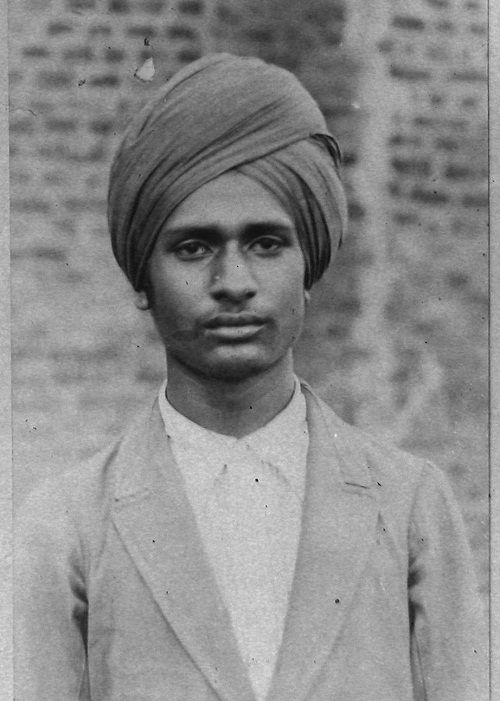
Bhagat Singh was a youth leader in two senses of the term. First, he was a young revolutionary, who was active from his young days. When he was born, his family was already deep in the revolutionary struggle. His uncle, Ajit Singh was forced into exile in Latin America for his activities, and only returned in 1947. He visited Jallianwalla Bagh at age 12. He began writing on revolutionary topics from age 15. By age 17, he worked in mass organizing. He soon joined the Hindustan Republican Socialist Association (HSRA) and worked for the revolution until his death at age of 24, when he was hanged by the state.
Bhagat Singh/ Image courtesy: Leftword
Early in his life, Bhagat Singh encouraged the youth to get involved in politics. He was critical of political leaders and teachers who discouraged the youth from getting involved in politics, calling them failures as leaders and educators. He remarked that the youth would get no direction from such leaders, and no real wisdom from such teachers. Bhagat Singh also had a deep faith in the youth as revolutionary agents in society. He felt that society would only progress with the deep and persistent engagement of the youth. Bhagat Singh did not want the youth to be passive spectators in revolutionary activity. He wrote that the youth of today were the countrymen of tomorrow. Only when they revolutionize society through hard work and sacrifice, will the society move towards the global revolution. The youth have energy and enthusiasm, as inheritors of society, they were in the right position to make real change. Also read: Journalists Have a Lot to Learn From Bhagat Singh

Bhagat Singh’s Revolutionary Vision

Though he was a nationalist, Bhagat Singh had a global vision. His vision was a world where love was universal. From age 17, Bhagat Singh began writing about the need for a global revolution. He believed that only through Universal love, where everyone in the world was part of a single loving family, would the revolution be complete. In such a world, there would be no more hunger, no more war, and no divisions within humanity. He felt nationalism was important in the struggle against imperialism, but he was critical of nationalists who wanted to transfer control from white-skinned capitalists to brown-skinned capitalists. As he said, to the worker, there was no difference between the two, and the worker should have no incentive to support domestic exploiters over global thieves. Bhagat Singh criticized the state for being just a tool for capitalism. The bureaucracy kept the masses out of the state and made the state illegitimate. To get the support of the masses, one had to fight for the masses and create a true People’s state. A People’s state would require three conditions:
  1. Responsibility is with the people.
  2. The Masses actively participate in the state.
  3. Safeguards are in place to ensure this remains.
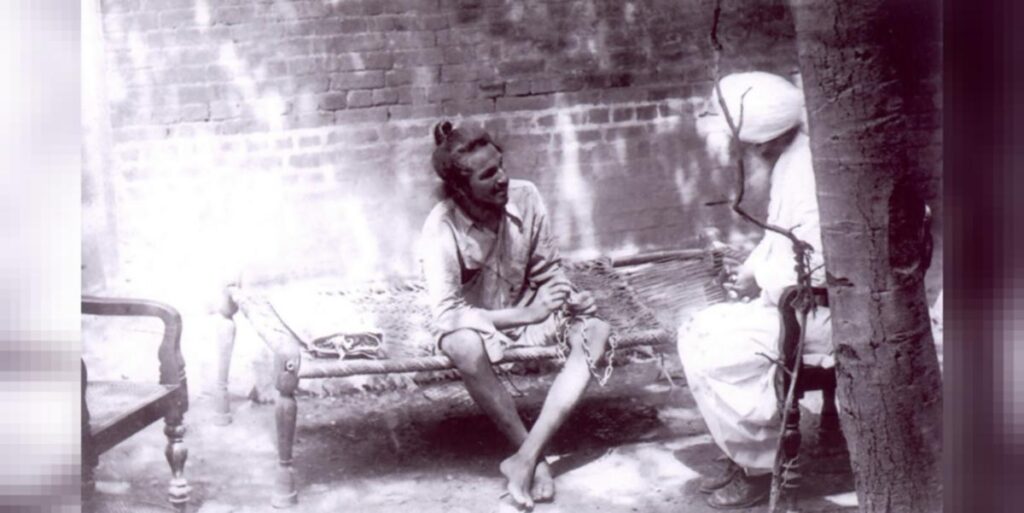
Image courtesy: The Wire
Also read: Martyrdom Day of Bhagat Singh, Shivram Rajguru and Sukhdev Thapar at Delhi Borders

How the Youth can change the world

Bhagat Singh encouraged the youth to get involved in politics, but he had qualifications. If anyone got involved in politics, they would inevitably be forced into compromises. What would distinguish someone who compromised with the oppressors, from the oppressors themselves? It would depend on how they engaged with the struggles of the masses. Traitors would be quiet and subservient to the state and its authorities. Bhagat Singh insisted that authentic revolutionaries would be open with the masses. They would not call for partnership, but a deepening of democracy. Bhagat Singh appreciated that compromises would be an opportunity to engage the masses, by exposing the conditions of compromise. When engaging with the masses, the revolutionary would have to expose the power behind decisions and call upon the masses for support. By being open with the masses in their positions and expressing their dissent openly, those who work in political agitation would bring the masses into the decision-making process and further the cause of a People’s state. All revolutionary activity would be evaluated by how it brought about the conditions for creating a People’s state. If those who run the state restricted dissent and tried to control those involved in politics, this could only be countered by active struggle.
Image courtesy: Wikipedia
Ideally, this would be a mass struggle, and all efforts should work towards building an actively political mass. In this way, he appreciated the Gandhian approach. He felt it was able to excite the masses, though he also felt that partnership between the oppressors and oppressed was a dead-end road. Gandhi’s approach depended on a partnership between the oppressors and oppressed. Without challenging that relationship, the Gandhian approach retained those divisions and would not change society. When calling the youth towards the revolutionary struggle, Bhagat Singh wanted people to be mindful of what stage of struggle society was in. He studied many revolutionary struggles across the world and felt that India was ready for a revolution. His words should be understood in his time. Likewise, his lessons would be applied differently in today’s context. He insisted on taking up militancy if the doors to the state were closed. If the doors were open as an act of appeasement, the struggle should be of open dissent, exposing the relationships of power. If the masses could take direct control, the people should take up responsibility. Also read: Development is not the agenda of Modi Government, their’s is a communal agenda: Yudhveer Singh Bhagat Singh died with full faith in the masses. In eulogizing Bhagat Singh, many nationalists and historians have speculated what would have happened to this young leader has he lived. It is important to remember that his death and sacrifice for the country were part of his revolutionary philosophy. He felt that, without being brash and needlessly adventuristic, the young must make sacrifices today to build a better society. He felt that openly and honestly confronting the powerful about injustices would lead to repercussions to the youth. He felt that compromises were never to be made silently. He also had a vision of what a revolutionary world would look like. His sacrifice was meant to be an inspiration to others to work for this global revolution of peace, love, and humanity. The author is a mathematician based in Bangalore. Views expressed are personal. 

Dalit Youth Urinated on and defaced with Acid in Uttar Pradesh

0
Saharanpur, UP: A Dalit youth was assaulted by some upper caste hooligans in the kanshiram colony, where the upper caste men urinated on him and made a trident (Trishul) with acid on his face. Dalit youth’s fault’s was that he accidently spilled a glass of liquor while cleaning. This enraged the upper caste hooligans who then beat him and then made trident and OM on his forehead and cheeks. The young man was in pain and ran away without his clothes.

Adesh, a Dalit youth resident of Kanshi Ram Colony of Thana Sadar Bazar area informed police about the incident, but police has not taken any action against the perpetrators. The case comes under Krishna colony, Punjabi Bag,  Sadar bazar police station.

Support from Bhim Army

Adesh and his mother have accused that on 18th March, Adesh was called to work on some construction work. When he reached there the accused were drinking. They asked Adesh to clean the place. While cleaning, Adesh’s feet touched a glass of liquor and the glass fell. After this the hooligans got angry and started beating Adesh. As if this was not enough they urinated on him and defaced him with acid. He said that four people held his hands and legs and other two, Vishal and Tinku made trident on his forehead. He begged them to leave him but they didn’t hear and said that they will teach him a lesson. Adesh and his family has been making the rounds of police station but to no avail. There are 6-7 culprits in the case and one of them is a inspector in Meerut.
Bhim Army has come to Support Adesh
Bhim Army has also extended their support to the Dalit family and warned that if the family did not get justice they will come to the streets.

Its not Acid its a Chemical Reaction to Holi Colors: Police

Inspector Harinder Singh says that after medical examination report says its not acid but a reaction to holi colors. Investigation also shows that the youth was drinking with the accused and played holi with them and after holi, Adesh and two others faces reacted to Holi colors. He also said that Adesh has taken 10,000Rs from the accused and he has made this conspiracy so as he doesnt have to return the money. Adesh and his family is constantly being pressurized to take back the FIR and is getting death threats too.

COVID19 Pandemic threw millions of Southeast Asians into extreme poverty: Report

0
Rising poverty levels, loss of jobs and skills, economic contraction and inequality that could last generations – these are the effects of the Covid-19 pandemic in Southeast Asia, according to the Asian Development Bank (ADB). Over the two years of the pandemic, the number of people in extreme poverty (those who live on less than $1.90 per day) is estimated to have risen by more than 10 million, the development bank said in a report released last week. In 2020, 5.4 million people were pushed into extreme poverty and in 2021 – 4.7 million more also dropped into deprivation, the ADB report says, adding that 9.3 million jobs were erased in Southeast Asia last year. Worst hit by unemployment were women, young people, and micro, small and medium business workers (MSME). The employment gap is projected to remain at 4.1 million jobs in 2022, the report cites figures from the International Labour Organisation. “The pandemic’s impact on poverty and unemployment will likely persist as inactive workers become de-skilled and poor people’s access to opportunities further deteriorates,” the report says. “When this happens, the deterioration in inequality will transfer across generations”. Inequality is also worsened by a lack of investment in health care, according to ADB. Southeast Asian economies suffered a deep contraction in 2020 due to low vaccination rates, lockdowns and border closures brought in to curb the coronavirus disease, with some economies more badly affected than others, ADB says. Before the pandemic, Southeast Asia’s output grew by 4.4% in 2019, but then contracted by about 4% in 2020. The region is a key manufacturing hub for electronics and labor-intensive goods, and the supply shortages — ranging from footwear and textiles from Vietnam and semiconductors from Malaysia — have been acute across the world, especially in the United States, according to the Carnegie Endowment. Two years after the pandemic started, however, Southeast Asia is slowly beginning to recover, says ADB. It expects growth of 5.1% in 2022 as mass vaccinations help economies to reopen. However, ADB warns that the omicron variant could cut growth by as much as 0.8%. Another factor that could weaken the outlook for economic recovery is the expected tightening of global interest rates, led by the US Federal Reserve, which introduced a hike this week in an attempt to curb soaring inflation. One of the major sources of income for the continent, tourism, is expected to start recovering, but the drop in long-haul travel would continue to affect the industry into 2024.

Oxfam: More people die of Hunger than COVID-19

Teachers’ Express their Support of Muslim Women’s Right to Education
0
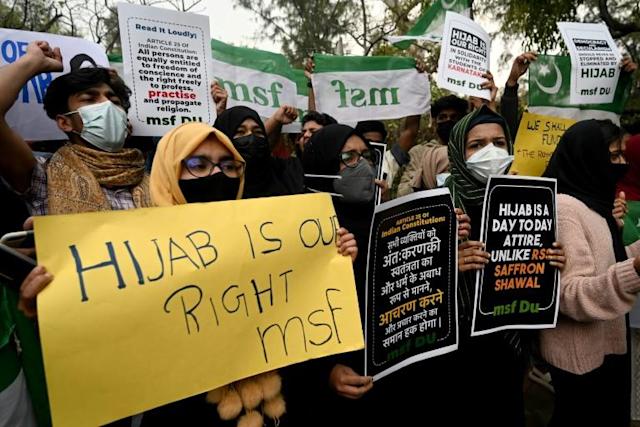
Karnataka’s “hijab controversy”, which began at Udupi’s Government College in December 2021, snowballed into a major issue. Now the Karnataka High Court has issued a judgment which makes it possible for government and private schools and pre-university colleges under the P.U. Board to ban the wearing of hijab in the classrooms. As teachers working in different schools, colleges, and universities in different parts of India, and as Indian teachers working abroad, we stand in solidarity with the Muslim students’ right to wear a hijab in the classroom if they wish to. It is a question of the women’s autonomy and their agency, and the hijab does not compromise the integrity of education in any way. Our constitution makers envisioned an important role for public education in the task of building a democratic republic. Education’s task is to create a material and cultural basis for building an equal society. In a country that is diverse, socially divided, and unequal, this is a necessary but challenging task. If we are to attain this constitutional objective, it is imperative that we understand the difference between equality and homogeneity. Cultural homogeneity is neither necessary nor beneficial for the attainment of equality.

Degree Students Asked to Remove Hijab, Stage Protest

Our students come from different religions, castes, genders and speak different mother tongues. They eat different kinds of food and wear different kinds of clothes and ornaments. These differences in appearance and beliefs, in practices of thinking and speaking, in eating and appearance, are not frozen in time. Rather in the course of their education, students learn to reflect critically on the world around them and begin to interrogate beliefs and practices that they grew up with. This includes reflections on the relationship between patriarchy and religions. In the process, students sometimes reaffirm their beliefs, and sometimes discard them. This process of learning and unlearning is central to our society’s democratizing process. The process gets severely damaged when a specific dress or other markers of identity becomes a barrier to accessing education. It not only harms the future of the community in question by pushing students out of education, but it also drastically alters the culture of the classrooms. Students are trained not only through the official syllabi but also through the classroom environment. A culture of segregation strikes directly at the heart of the very objective of education. We are concerned by the fact that the “hijab controversy” seems to have been cleverly orchestrated by the ruling party. Hindu vigilante organizations have played a key role in creating disturbances in schools and colleges. Muslim students wearing the hijab have been heckled and stopped from entering schools and colleges. Students wearing saffron shawls have agitated outside educational institutions, demanding a ban on the hijab wearing students. Delivered in this context, the judgment is a shot in the arm of those institutions which are keen to disallow the hijab in classrooms. We are also deeply concerned about the radicalized Hindu youth who have been disrupting schools and colleges. We wonder who is responsible for this radicalisation and whose interest is served when young men and women fight against each other in the name of religion. We are deeply worried about the futures of these young Hindu radicals who have been made to believe that the hijab clad women are a threat to the integrity of education and the nation. We also lament the lack of any consultation by either the government or the court with the teaching community regarding the wearing of the hijab in classrooms and the unfolding disturbances in schools and colleges. It is noteworthy that a sharp collective voice of teachers is missing in the entire episode, despite many teachers being uncomfortable with the government order, and now the court judgement, against the hijab. This is not surprising because our lawmakers have a long tradition of disregarding the opinions of key stakeholders while making policy decisions in education and other sectors. The state of Karnataka itself provides some stark instances. Large sections of Karnataka’s teachers have expressed their displeasure at the way in which the National Education Policy has been conceptualized and implemented but their voice seems to have counter for very little. Guest teachers across Karnataka are protesting their terms and conditions of employment, demanding their absorption and acceptance as permanent faculty. Their demands have been accepted only partially. Increasing contractualisation and precarity in the teaching profession has severely damaged the bargaining powers of teachers. This plays a role in reducing their ability to take a strong collective stand for either their own rights or that of their students. We urge fellow teachers to come together in defence of the constitutional right to education, right to freedom of religion, and in favour of women’s autonomy. We appeal to you to stand with the objectives of democratic education. Let this also be a process of mutual solidarity, under circumstances where teachers’ voices are being increasingly suppressed and the profession is being downgraded and downsized. Let us collectivize, for your students, for ourselves, and for building a plural society where fraternity, justice and dignity prevails. click here for your support and solidarity.

Karnataka: Tax Deduction for Propaganda Cinema, Not for Welfare Schemes?

0
The BJP government of Karnataka has come under sharp criticism from activists for extending tax exemption to BJP propaganda film, Kashmir Files for six months, but reducing the funds  for various welfare programs meant for the poor. The funds for the programs included Bhagya Jyoti, Kutira Jyoti etc have been slashed by the government. They are now feeling that the BJP has more concern for the film that tells half baked truth and not for the welfare of the poor. Reacting to the announcement of the government which extended tax exemption to the film for six months, journalist Mahantesh Bhadravati’s web portal, thefile, has come out with the details of the funds allocation for these schemes. The portal has made two separate reports, which gives clarity on the priority of the BJP government.

After Gujarat, Karnataka govt Considering to introduce Bhagwad Gita in School Syllabus

The BJP government on the request of Belagavi South MLA, Abhay Patil and others, offered tax exemption to Kashmir Files film. After three days of the announcement, the Finance Department has issued statements stating that the exemption will be extended for six months applicable from March 14. The order said that the government will not collect any GST from exhibitors. The ticket prices should also be fixed as per the new  rate excluding GST.  MLA Patil had requested the CM to give five 10% tax concessions to the film. Meanwhile, the schemes Bhagya Jyoti and Kutira Jyoti are losing financial support. These schemes mainly meant for the welfare of SC/STs. The financial aid given to the beneficiaries is declining. Even the funds meant for Scheduled castes categories is also declining. The government was supposed to earmark at least 14.14 % in the budget for the welfare of SC/STs. But the government is slashing the fund allocation.