Supreme Court on Shaheen Bagh: Right to Protest, appoints mediation team

0
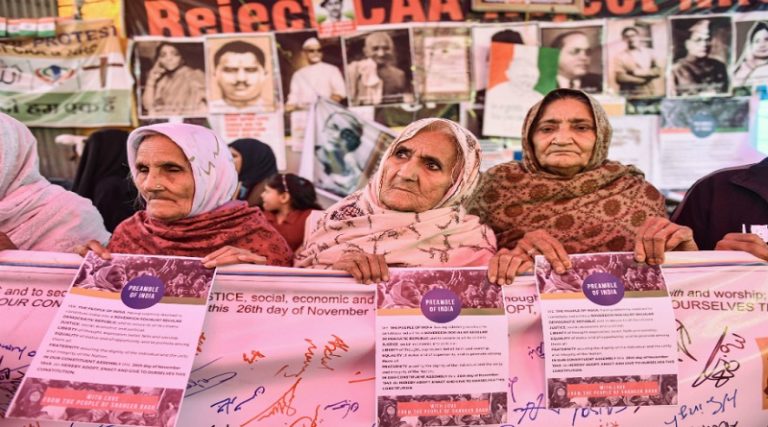
Shaheen Bagh protests against the Citizenship Amendment Act, held mostly by women, enters its 64th day today. The protest has been underway since December 15 last year. The 24/ 7 leaderless protest, led by women, young and old have won everyone´s heart. So much so that it has inspired many Shaheen baghs all across the country, from Uttar Pradesh to Tamilnadu. The quiet, peaceful civil disobedience style has baffled national and international media but mostly the BJP because they do not know what to do with it.

All women protests have become an eyesore for BJP leaders. They tried to communalise, criminalise and ghettoize it. They even tried to fight the entire Delhi elections on Shaheen bagh but to no avail.

Now they have sought the legal route with the excuse of “road blockade”.

BJP leader files petition against Shaheen Bagh for causing “road blockade”

Delhi BJP leader Nand Kishore Garg along with Advocate Amit Sahni had filed the petition seeking clearance of Shaheen Bagh protests, which had been going on for over sixty days against Citizenship Amendment Act and proposed nationwide National Register of Citizens. Garg, in his petition, said the law enforcement machinery was being “held hostage to the whims and fancies of the protesters”, and sought the court’s intervention to formulate guidelines for protests in public places.The petitioners alleged that the protests have led to an “alarming situation” due to the “blockade” of the road between the Kalindi Kunj and Mathura Road region, which connects Delhi-Noida-Faridabad. This has led to traffic being diverted to the Delhi-Noida-Delhi (DND) flyway, which sees lacs of commuters, and needs to be decongested. Sahni had earlier approached the Delhi High Court, seeking directions to the Delhi Police to ensure smooth traffic flow on the Kalindi Kunj-Shaheen Bagh stretch. The HC had asked the police to look into the matter.

 ‘Protests genuine but see if it can be shifted elsewhere’

Supreme Court bench comprising Justice S K Kaul and K M Joseph heard the petitions seeking clearance of Shaheen bagh protest. The bench said- “You cannot block public roads. There cannot be an indefinite period of protest in such an area. If you want to protest, it has to be in an area identified for protest,” “We are not saying that people don’t have the right to raise their concerns. The question is where to protest? Because if this continues on the roads today for this legislation, tomorrow it could be done for another legislation,” Justice Kaul said. “There’s a law enacted, and challenge to it is pending in the Court. It’s fine that some people may want to protest. The protests have gone on for many days… There must be an area where you can protest. It cannot be held wherever one wants. It has to be in identified area… Otherwise people will go and protest anywhere,” said Justice Kaul, adding that protests cannot be held at the cost of the citizens’ interests.

Mediation team to talk to the Protesters

The Supreme court also set up a mediation team headed by Senior advocate Sanjay Hegde and Sadhana Ramachandran to hold talks with the protesters to come to a “reasonable solution” so that roads are no longer blocked. Hegde said that he should be accompanied by former SC judge Kurien Joseph. It posted the next hearing for Monday, 24 February. Read more: AAP sweeps Delhi 2020 elections, Delhi rejects the campaign of hate Advocate Shashank Deo Sudhi, appearing for Garg, had then urged the court to pass an interim direction, saying people have been facing difficulties for several days now. The bench, however, declined the request. “If you have waited for over 50 days, you can wait for some more days,” it said.

Why the area around Shaheen Bagh is heavily barricaded by Delhi Police?

The Shaheen Bagh protest site is spread over 150 meters, a very small distance. But the area around Shaheen bagh has been heavily barricaded by the Delhi police. Police have blocked the roads around Shaheen Bagh by putting 5 barricades. The barricade on the road is spread over 2.5KM which is affecting lot more traffic than it would have been affected, according to a report by NDTV.
In the report, they found that it is the Delhi police that has caused the road blockade by putting excess barricades and blocking several roads including the road between Kalindi Kunj to the Mathura road region, which connects Delhi -Noida-Faridabad.
 

Telangana also join other states to pass resolution against CAA

0
Telangana Chief Minister K Chandrasekhar is also contemplating to oppose the citizenship amendment law. KCR is planning to convene a meeting of regional parties and chief ministers to oppose the amended citizenship law. The Telangana government has decided to pass a resolution in the assembly against the Citizenship (Amendment) Act. With this Telangana will join the other five states that have already passed the resolutions against CAA. Kerala, West Bengal, Madhya Pradesh, Punjab, Rajasthan — and Union Territory of Puducherry have already passed resolutions against the law. The Telangana Cabinet has also appealed to the Centre “not to discriminate” on the basis of religion in granting citizenship. It also requested Centre to abrogate the citizenship legislation as it will lead to discrimination on the basis of religion while granting citizenship and, thereby, jeopardize secularism envisaged in the Constitution. The decision was taken yesterday in a cabinet meeting led by hief Minister K Chandrasekhar Rao. Earlier this month, the Greater Hyderabad Municipal Corporation (GHMC) became the first civic body in the country to pass a resolution against CAA. Last month, Telangana Chief Minister K Chandrasekhar had said that he might convene a meeting of regional parties and chief ministers to oppose the amended citizenship law. The state assembly may pass a resolution, like the other state assemblies did, against the CAA, he had said then. “We opposed the bill in parliament by conviction. The union government’s decision is wrong. It is against the very preamble of the Indian constitution. This bill discriminated against Muslims. We consciously opposed it,” he had added. Hyderabad has seen some of the largest protests against the citizenship amendment act. More than a month ago, Kerala moved to the Supreme court against the citizenship Amendment Act as it is in violation of the Indian constitution. 

What use is the law of Sedition?

1
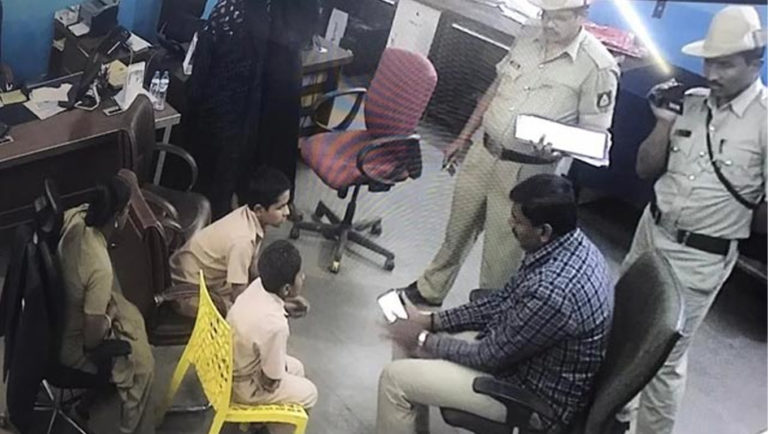
A school play erupted in controversy on 21 January. A play was performed at the Shaheen Primary and High School in Bidar. The play on citizenship Amendment Act erupted into controversy when a video of the play was circulated on social media and where it caught the attention of ABVP members. The play contained lines saying that a  tea-seller(an allusion to the Prime Minister) is demanding documents. The character says that he will demand that the boy show his documents first and if the boy does not, he will beat the boy with his chappals. Neelesh Rakshyal, an ABVP member, the youth wing of BJP, filed a complaint against the person who uploaded the video. The police responded to the complaint by booking the mother of the actor, who allegedly wrote the play, and the school principal, who staged the play. The mother and the school principal were charged with multiple sections of IPC like IPC 34, IPC 504, 505(2),124a and 153. IPC 34 (common intent) covers acts done by many people with a common intent. An example of IPC 34 would be if a group of people joins together to kill a person, then every single person would be convicted of murder under IPC 34. The other charges include IPC 504 (criminal intimidation), 505(2) (publish mischief), 124a (sedition), and 153A (promoting hatred based on religion, race…). IPC 124a i.e the sedition law has been a controversial charge, as it has a history of criminalizing dissent. From the nationalist struggle to recent cases of Binayak Sen, protesters against the Kudumkulum Nuclear power plant, and an unending series of cases against indigenous people of the North East, Chattisgarh, and Kashmir, sedition has had a dubious history in India. While harassment by representatives of the state is always possible, the vagueness of a charge of sedition is especially dangerous. The sedition law, or IPC 124a, has been used more frequently in recent years. Before 2015 about 20-30 cases would be filed each year, but in 2017, 51 cases have been made. In 2018, 70 have been made, and in 2019, 3000 people only in the state of Jharkhand. Each case may have multiple accused, the number of people accused, has varied from hundreds to thousands each year. However, conviction rates in sedition cases are very low. Usually, 1 or 2 people are convicted in sedition, and in most cases, their convictions are taken with other charges. The vast majority of cases are settled and do not see trial.

What is sedition?

In Indian law, sedition is any effort by a person to make people hate the government. It is a crime that can be punished by imprisonment, up until life, and with a fine. The technical code is as follows: IPC. 124a. Whoever, by words, either spoken or written, or by signs, or by visible representation, or otherwise, brings or attempts to bring into hatred or contempt, or excites or attempts to excite disaffection towards, the Government established by law in India, shall be punished with imprisonment for life, to which fine may be added, or with imprisonment which may extend to three years, to which fine may be added, or with fine. In the original version of the Indian Penal Code, sedition was not mentioned. The Indian Penal Code was implemented in 1860, just after the crown assumed direct control over India. Thomas Macaulay considered introducing a sedition law earlier, but in the 1860 version, there was no sedition law. The law was introduced in 1870, in anticipation of plans to possibly overthrow the Queen’s rule in India. This is why the Sedition law is 124a, rather than a simple number. It was added later. The first sedition case was in charge was made in 1891 to the Calcutta High Court in Queen Empress v Jogendra Chunder Bose. Bose criticized the recently passed Age of Consent law, which raised the minimum age of marriage from 10 to 12. Bose claimed that the law put Hindus at a disadvantage, and had no legal recourse to challenge the act. This was taken as an attempt to breed dissatisfaction against the state. This case also begins a long history where criticism of government laws intended to affect the public order becomes grounds for the charge. Though he spent time in prison, Bose was released and never convicted. The case was dropped.
During the nationalist struggle, sedition was famously used to imprison Bal gangadhar Tilak and Mohandas Gandhi for their criticisms against the government. The irony is that the law intended to prevent hatred against the state became stepping stones of the nationalist movement. By arresting Tilak and Gandhi for sedition, the courts effectively made their criticisms louder.
From the forming of the Constituent Assembly to current times, many calls have come to scrap the sedition law. Most recently, in August 2018, the state reviewed sedition. One serious consideration mentioned in the report was India’s reputation. The report noted that the United Kingdom removed their sedition law because “the country did not want to be quoted as an example of using such draconian laws.” Sedition has been controversial regarding its constitutionality. Many court cases have called for reasonable restrictions. In 1962, in the case of Kedar Nath Singh v State of Bihar, the Supreme Court decided whether the Sedition law was consistent with Article 19 of the Indian Constitution, which guaranteed the right of free expression. Singh was a member of the Forward Communist Party in Bihar. His writings stated his belief in a violent revolution where “in the flames of which the capitalists, zamindars and the Congress leaders of India, who have made it their profession to loot the country, will be reduced to ashes and on their ashes will be established a Government of the poor and the downtrodden people of India.” The Supreme Court decided that the government could only function with reasonable restrictions placed on freedom of speech, but those restrictions had to be reasonable. Speech that was a direct threat to the public order, or the proper functioning of the government could be covered by the sedition law, but angry rhetoric and criticism could not, on their own, be illegal under the constitution. This kept IPC 124a in law. Sedition is a pro-state law. As such, no government in power has any incentive to remove it, though they may promise to take the sedition law down or condemn its misuse, the law’s misuse often becomes its use. In cases of conviction, the sedition law fosters hatred against the state. So, there is an incentive to arrest dissenters on grounds of sedition, but not to convict them. The law, ironically, can only be used if it is misused. Read more: Sedition charges against 49 writers and filmmakers who wrote open letter to PM Modi

CCTV footage of Jamia library shows cops beat up unarmed students

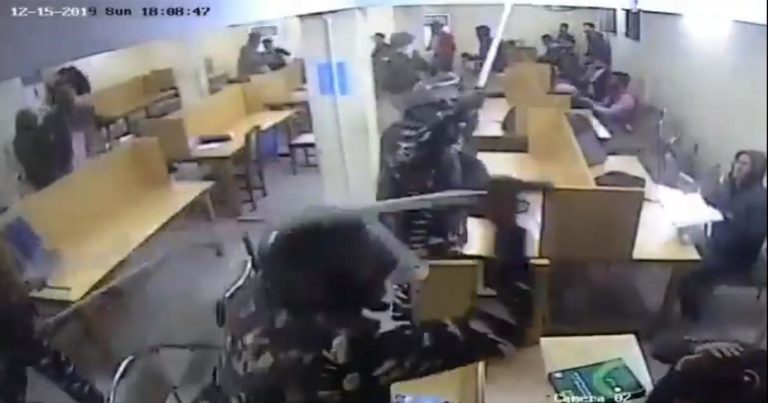
Two months after the alleged police brutality inside Jamia campus, another CCTV footage has emerged showing policemen beating up students. The 44-second video showed policemen wearing anti-riot gear, entering the library. There were around 10-20 students inside as cops thrashed the students with batons and pushed them outside the hall.
On December 15, a protest against the contentious Citizenship (Amendment) Act (CAA) turned violent after protesters allegedly pelted stones at the police and set public buses on fire. Later, there were allegations that the police entered the college library and beat up the students, who weren’t protesting. On Saturday, 15th February, Jamia Coordination Committee (JCC), a group consisting of students and alumni of the university released CCTV footage, which they claim is from 15 December 2019 when the Delhi Police had entered their campus after protests against the CAA-NRC turned violent. While sharing the video clipping on Twitter, the Jamia Coordination Committee claimed that the incident took place on the first floor of MA, MPhil section inside Old Reading Hall on December 15. The tweet also said, “Shame on you Delhi Police.” The video shows armed policemen entering a hall and thrashing students who were supposedly sitting and studying there. The Jamia students claim the video is from their old reading hall in the MA/MPhill department. “CCTV footage is showing the brutal act of police forces and how the state sponsored terrorists are playing the game of brutality on the students of Jamia who were preparing for their examination inside the Old Reading Hall of Library,” a statement released by Jamia Coordination Committee said. On 15 December, several students from the old reading hall in Jamia had shared SOS videos and messages alleging that police had entered the room, thrashed students and shelled tear gas on them. Hours after the siege, when journalists had entered the campus, they had found that the reading hall was damaged, and chairs and tables were left broken.  

Anti-CAA: After police action in Washermanpet, protests spread across Tamilnadu

0
Several parts of Tamil Nadu are witnessing protests Saturday, a day after the Chennai Police lathicharged anti-CAA protesters in Washermanpet, leaving several injured. Shops in the locality remained closed today, as more than 1,000 women gathered to stage a sit-in protest in the area. The Chennai police lathi-charged protesters on Friday evening in an anti-CAA demonstration in the Washermanpet area. As many as 150 people have been taken into police custody. The protesters from various outfits said they were protesting peacefully in their locality when police intervened and resorted to lathi-charge. “Many were injured, some were brutally beaten up,” said an eyewitness. The Chennai Police has reportedly lathi-charged the protesters who had been demonstrating against the Citizenship Amendment Act (CAA), the National Register of Citizens (NRC) and the National Population Register (NPR) at Washermanpet in Chennai, Tamil Nadu. Thousands had gathered in protest against the CAA, NRC, and NPR. The situation escalated after police asked protesters to vacate the area. The police resorted lathicharge to remove the protesters and clear the area when the demonstrators did not budge. The violence has led to sporadic protests in at least a dozen major towns in the state. Traders in Coonoor have shut shop to protest the alleged police atrocities against anti-CAA protesters in Chennai. There were reports of protests in Tiruchendur also. Over 1,000 people carried out a protest outside a post office in Kumbakonam district, while another protest took place at Melapalyam in Nellai. The protesters have staged road roko on the Chidambaram-Trichy Highway in Tamil Nadu to condemn the violence while over 500 people are demonstrating in Ramanathapuram district. Protests were also seen in New Delhi, outside Tamilnadu Bhavan where police arrested the students protesting against police brutality in Chennai. Opposition leader DMK President M K Stalin slammed the police action against anti-CAA protesters and the ruling government for voting in favor of the citizenship amendment act in the Parliament. He said the protests were being held in a peaceful manner and sought to know why the police used force to disperse them. He also sought action against those police personnel who allegedly used force against the agitators.        

Bidar school sedition case: Siddaramaiah detained during protest march to Yeddiyurappa’s residence

Senior Congress leader and former Karnataka chief minister Siddaramaiah was detained on Saturday as party leaders tried to take out a march to Chief Minister B S Yediyurappa’s residence in Bengaluru to protest against the Bidar sedition case. Karnataka Congress leaders Dinesh Gundu Rao, Rizwan Arshad and K Suresh were also detained by the cops near Race Course road. Rao and Bangalore Rural MP D K Suresh tried to jump the barricade erected by the police to stop them, and march towards the Chief Ministers residence, but were stopped midway and detained. The march, which began from Gandhi statue on Race Course Road, led to a traffic pile-up. State Congress had organised the protest over sedition case filed against a Bidar school and arrest of a parent and the headmistress (now on bail) for their alleged involvement in staging a drama portraying Prime Minister Narendra Modi in poor light in connection with the (Citizenship Amendment Act) and NRC (National Register of Citizens). The principal opposition party in the state alleged misuse of the police department by the state government to book cases against those opposing BJP and its “divisive policies”. As he was being detained, former Chief Minister Siddaramaiah termed the police action as undemocratic. “Police have no right to suppress or take away our rights,” he said. The Congress had planned to lay siege to Chief Ministers office as law was being violated across the state and false cases were being filed for sedition against political opponents, especially from Congress and those opposing the CAA and NRC, Siddaramaiah said. Despite BJP activists using “filthy language and making anti-national comments”, no cases were filed against them. He alleged that BJP was trying to suppress Congress, using the police, and pointed out that cases have been booked against its leader U T Khader and a student from Mysuru for opposing CAA and NRC, while no cases have been filed against ruling party leaders like Somashekara Reddy and Anant Kumar Hegde for allegedly making inflammatory speeches. On Friday, a Karnataka court ordered that the mother of an 11-year-old student and the headmistress of a private school in Bidar, who were arrested on January 30 over an anti-CAA play staged in the school, be released on conditional bail. The women were arrested after ABVP activist Nilesh Rakshyal filed a police complaint alleging the students were used to promote anti-national sentiments and some children spoke of hitting Prime Minister Narendra Modi with slippers to depict opposition to the Citizenship (Amendment) Act. The play was held on January 21 as part of annual day celebrations. The activist said in his complaint that he saw a video of the play enacted by students of the school on the social media account of a journalist. The police in Bidar registered a complaint of sedition and breach of peace following the complaint. Besides the two women, the police also booked the management of the school and journalist Mohammed Yousuf Raheem on whose social media page the complainant found the video. Police said that the mother of the Class V student added dialogues that were not part of the original script for the play and that the child uttered unconstitutional words. During the investigation, the police questioned dozens of children at the school and have been accused of violation of child rights by the State Commission for Protection of Child Rights. This is not the first incident of arbitrary slapping of sedition charges on anyone who speaks against CAA. Two weeks ago, Siraj Bisaralli, a Kannada poet and writer has been booked for reciting a poem against CAA and NRC at a poet meet during the ´Anegundi Utsav´in Gangavathi town of Koppal district some days ago. The poem asks questions like “will the prime minister Modi will furnish his records for the CAA”. 

Bidar court grants bail to the headmistress and mother of the student in seditious school play

1
Today Bidar court granted bail to Shaheen School headmistress Fareeda Begum and Mazbunnisa, the mother of a student. They were in Bidar district prison since January 30th since their arrest. On February 11, BT Venkatesh, a senior lawyer in Bengaluru, filed a petition on behalf of the accused. On January 20, the play was played by children as part of extracurricular activities against the CAA at the school. The complaint was lodged because there was a conversation about someone hitting the slippers if they heard the record. The police then arrested the head of the school, Farida Begum, and the mother of the school’s child, Naijubunnisha, for the past 15 days. On January 21, students of the primary section of Shaheen School had staged a play that allegedly had anti-CAA dialogues. A man, named Nilesh Rakshyal, filed a complaint with police stating the play was disrespectful towards Prime Minister Narendra Modi and could disturb peace in society. He said the play could a wrong message about the government and its policies and decisions. Local cadres of the Akhil Bharatiya Vidyarthi Parishad (ABVP) then staged a protest outside the school and submitted a memorandum to the state home minister seeking action against the institute’s authorities. Soon after, the principal and student’s mother were arrested and children who took part in the play were repeatedly questioned. Reports of police excesses in the interrogation of the students for over five days have led to massive criticism against the state’s handling of the case. The interrogation of minors multiple times without any adult supervision was widely criticized. After many human rights groups raised concerns and child rights group intervened, the police stopped the interrogation process.

Ready to debate CAA, NRC, NPR: Former IAS Kannan Gopinathan writes to Amit Shah

1
Former IAS officer Kannan Gopinathan has taken up Home minister Amit Shah´s offer. Yesterday Amit Shah in his speech said whosoever wants to discuss CAA can come to his office and meet him. Union Home Minister Amit Shah on Thursday invited anyone who wanted to discuss the Citizenship (Amendment) Act to come and meet him personally. Amit Shah said that he will allot a special time for this within three days. “Anyone who wants to discuss issues related to CAA with me can seek time from my office, will allot time within three days,” Home Minister Amit Shah said at an event in Delhi. Gopinathan contacted Amit Shah’s office on twitter and also wrote an email to fix appointment with him in the coming days.   The home minister said his assessment on Delhi elections went wrong but asserted that the result of the polls was not a mandate on the Citizenship Amendment Act (CAA) and the National Register of Citizens (NRC). kannan   In his letter Kannan wrote- Dear Sir, With Respect to your invite to discuss CAA, NRC, and NPR, I am seeking an appointment with you. Since I am not in Delhi at the moment, you may kindly give me a day between your reply to this email request and the time for an appointment. Looking forward to meeting you Regards Kannan Gopinathan   He also tweeted to the home minister’s office and asked for an appointment in 3 days. Kannan Gopinathan resigned from his post as IAS in protest against the repeal of Article 370 of Kashmir and the control of the central government over Kashmir.

Indian government makes new rules to control social media users

0
  The Indian government might soon publish a set of controversial rules that could give it access to the identities of social networking and messaging app users. According to Bloomberg, India’s Ministry of Electronics and Information Technology is expected to publish the new rules later this month without making major changes to previous drafts. If implemented as such, the rule is considered to be a massive invasion of the privacy of Indian citizens.
Under the rules, the government can compel social media platforms to reveal users’ identities without a warrant.
With this new rule, the Indian government will gain the authority to order social media companies including Facebook, WhatsApp, YouTube, Twitter, and TikTok to disclose the identities of users within 72 hours without a warrant or a judicial order. If this rule gets implemented, social media giants will have to preserve user data records for at least 180 days. In addition, they will be forced to have a physical presence in the country and appoint “grievance officers” to address the queries of government agencies. If the rules become official, they’ll cover all social media and messaging applications, though it’s unclear if the Indian government could also ask the companies for foreign users’ identities. As privacy advocates warn, platforms would have to break their own end-to-end encryption and spy on their users to adhere to the new guidelines. India is reportedly the third-worst for privacy after China and Russia. When the rules were first proposed, The Internet and Mobile Association of India, which represent Google, Facebook and Twitter, called them arbitrary and a “violation of the right to privacy recognized by the Supreme Court.” “No country (other than India) is demanding such a broad level of traceability as envisaged by the Draft Intermediaries Guidelines,” says Software Freedom and Law Centre, a New Delhi-based digital advocacy organization regarding the matter. The rule was first proposed back in December 2018. It received criticism and backlash from tech companies and experts in the subject. Notably, the Internet and Mobile Association of India called the proposal a “violation of the right to privacy recognized by the Supreme Court.”  

Dr. Kafeel Khan booked under NSA for speaking against CAA

Dr. Kafeel Khan has been booked under the National security Act (NSA) over his alleged anti-CAA speech by the Uttar Pradesh government. The Uttar Pradesh government has slapped the National Security Act (NSA) against Gorakhpur physician Dr Kafeel Khan for allegedly making provocative comments during his speech on the Citizenship Amendment Act at Aligarh Muslim University (AMU) on 12th December 2019. SP Crime Dr Arvind said that there were sufficient grounds to book the doctor under NSA. The suspended paediatrician, Kafeel Khan, was arrested for allegedly delivering a controversial speech during Anti-CAA protests on December 12 at the Aligarh Muslim University. While he was granted bail on Monday, his family members claimed on Thursday that he was yet to be released. Kafeel was arrested on 29 January, with assistance from Mumbai Police at the airport, when he arrived in the city to attend anti-CAA protest. On Friday, 14 February, Khan’s wife Dr Sabista Khan tweeted from his official handle that he has been booked under NSA. Sabista also alleged that Kafeel was being harassed without any reason. An FIR was registered against Khan under section 153-A (Promoting enmity between different groups on ground of religion) of IPC at the civil lines police station in Mumbai on 13 December. He was kept in police custody at Mumbai’s Sahar police station. While Kafeel was granted bail on 10 February, he has still not been released from the Mathura jail. According to the FIR, Khan is accused of provoking the religious sentiments of Muslim students of the Aligarh Muslim University while he was addressing a gathering of around 600 students about the CAA on 12 December. Police had said that Dr Khan’s presence in the Aligarh jail could have aggravated the law and order situation in the city. After his arrest in Mumbai, Dr Khan was brought to Aligarh, from where he was shifted to the district jail in neighbouring Mathura. The doctor was earlier arrested for his alleged role in the death of over 60 children in one week at the BRD Medical College in Gorakhpur in August 2017. Short supply of oxygen at the children’s ward was blamed at that time for the deaths. He has been under suspension from the BRD Medical College in Gorakhpur since the oxygen tragedy of 2017.