

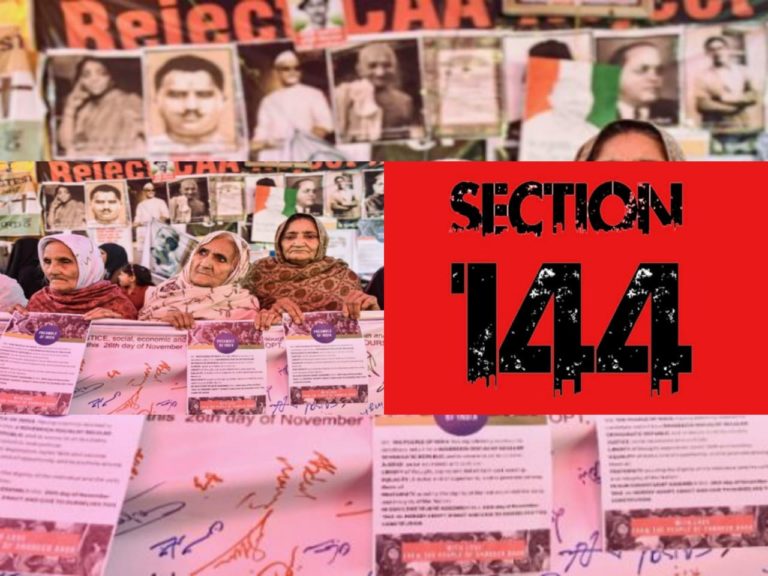
Delhi Police imposes Section 144 in Shaheen Bagh
Neither Kapil Mishra nor Anurag Thakur! In Tahir Hussain media has found the convenient scapegoat

Tahir Hussain
Tahir Hussain has denied all the charges and says he was not at the property on the day of Ankit Sharma’s murder. But mainstream media has already declared him the mastermind of Delhi violence in its media trials. There are videos being circulated on social media and TV channels where Tahir Hussain is seen holding a stick in the same building where a big mob has gathered and is throwing stones and petrol bombs. According to Tahir Hussain “, People forced themselves into the compound of my house and I was trying to remove them from the premises. I kept calling 100 but the phone would not connect. At 7.00 in the evening was when the Police came and helped me get out”. Hussain said post 11.30 PM he did not go to his house. Hussain said he had no access to his house on the 25th of February as it was cordoned off by the Police.According to forensic reports, Ankit Sharma died on the 25th of February. Yunus Salim, the President of the Aman Ekta Committee, confirmed that Tahir was in the house on the 24th but he was trapped and had to be evacuated from the house by the police. Kapil Mishra Vs Tahir Hussain Kapil Mishra, a BJP member, was the instigator of the 23rd February violence used to be in AAP until 2017. At that time, it was Tahir Hussain who helped him win the MLA seat from the area when he was in AAP. Kapil Mishra is now calling for Hussain’s arrest, sharing videos of Hussain’s roof being used to throw stones as proof that Tahir is behind the murder of the IB staffer. The same videos are taken up as credible evidence by news outlets to frame Tahir Hussain. The media has been biased in the reporting of both Tahir Hussain and Kapil Mishra’s role in the riots. Popular media channels have been quick to label Tahir Hussain as a terrorist. Hashtags like #Tahir_Hussain_Terrorist, #TahirOnTheRun, #TruthAboutDelhiRiots, #HinduonKoMarnaBandKaro are being used by channels like Republic TV and Times Now. Zee News has also called him the mastermind of the Delhi riots and running a riot factory. Arnab Goswami claims that Hussain led the riots and was involved in the mass butchering of people. He also claims that no one should believe that Kapil Mishra’s statement provoked people to violence instead it was Tahir Hussain’s “bloodthirsty” mob that is responsible. Hussain fits all the checkboxes for popular media to shift blame away from Kapil Mishra. He is Muslim and an AAP member. On the other hand, Kapil Mishra has gotten away with a slap on the wrist by media outlets. Most of these channels have started to now cover the peace rally that Kapil Mishra aims to hold. He is being painted as a peace-loving political figurehead who could not instigate violence through mere words. The media has covered up the blood that BJP has on its hand by blaming a Muslim as the mastermind of the riots. The argument that is being used is that the riots have not been anti-muslim as the leader of the riots is Hussain and they have harmed both Hindus and Muslims. This has given relief to both BJP and new channels. They can now continue to undermine the Anti-CAA movement and have more ammunition by blaming the riots on Muslims. The BJP government too has been quick to lay blame on Hussain and has refused to acknowledge the role that Kapil Mishra, a BJP member, played in the riots. In multiple videos, Kapil Mishra is seen inciting violence against Muslim anti-CAA protestors.#AAP councillor Tahir Hussain was rescued by @DCPNEastDelhi Ved Prakash Surya on 24th February after a mob attacked his home.
— Ankit Lal (@AnkitLal) February 26, 2020
Here's what Tahir has to say.
Do listen and out this as a slap on every BJP thug trying to blame someone who is himself a victim of the riots.
1/n pic.twitter.com/1h80x2M2NM
The main question that needs to be asked and many Muslims have been asking is where was the police when people were calling for help? Why were the police not stopping the violence, instead why was it aiding it? Multiple videos have come out which show that the Delhi police was involved in assisting and being actively involved in the riots and supporting right-wing goons. None of these allegations have been answered by the BJP or the Delhi Police. The allegations on Tahir Hussain instead have taken central precedence. Tahir Hussain has become a convenient scapegoat for all parties to hide behind, including AAP. AAP has been equally culpable in the violence that was undertaken in Muslim areas and have not spoken out against the BJP or demanded answers from it. The riots, even though clearly organized by the Hindu right-wing have not been linked to any organization. Kapil Mishra is still part of the BJP and no action has been taken against him. This seems to be a clear move to divert attention from the loss of multiple Muslim lives and the number of Muslims who have been injured. Reports have come in that the police had allowed full access to reporters to Tahir Hussain’s house. The forensic team arrived at Hussain’s house only a day later, which raises the question of why there was a delay in collecting evidence, especially since the media could have tampered with the evidence. AAP has suspended Hussain, to distance themselves from their involvement in the violence.Horrific, deadly, communal violence has hit the Indian capital. Days after BJP leader Kapil Mishra's inflammatory speech, Delhi was on fire. pic.twitter.com/BISXH7PWM7
— Brut India (@BrutIndia) February 26, 2020
How Delhi fires engulfed the “apolitical” morality of Kejriwal?

A Wednesday
It was a rare sight in Delhi Assembly on Wednesday when Chief Minister Arvind Kejriwal read out names of the deceased in recent riots along with their religion alternatively as if he was trying to strike a balance of violence and console both communities one by one. He was being criticised for not intervening in the days since the violence began. Finally, on Wednesday, he visited some of the stricken areas for the first time and read out a sadist and un-impressive speech in Assembly accusing “outsiders” and “political and anti-social elements” for the riots that rocked Delhi over past three days. He said, “I want to show who faced losses from the riots. Everyone lost. More than 20 people have died. Veer Bhan died, he was a Hindu. Mohammad Mubarak died, he was a Muslim. Parvesh died, he was a Hindu. Zakir was a Muslim. Rahul Solanki was a Hindu, Mohammad Furqaan a Muslim and Rahul Thakur was a Hindu. Maut toh dono ki ho gayi – Hindu’o ki bhi ho gayi, Musalmano ki bhi ho gayi, aur policewalon ki bhi ho gayi (Hindus, Muslims, and policemen – all have died).”This new avatar of AK is realpolitik sans culture, as can be seen in his statement given during PC: “National security should not be compromised with.”The stark contrast did not go unnoticed as he opened his speech with the news of Melania Trump (introducing her as the wife of world’s “strongest” man Donald Trump) visiting Happiness classes in Delhi government-run schools and then he moved on to riots posing a final question to the house: “Which type of Delhi you want?” The house, filled with a majority of AAP MLA’s clapped in response. Outside, the scene was entirely different. Kejriwal visited AAP stronghold Burari the same evening to pay homage to deceased Delhi Police official Ratan Lal. He was hounded by the locals and forced to leave the area amidst slogans like, “Kejriwal Go Back”, “Kejriwal Pakistan Jaao”! People who voted for AAP just three weeks back for a “happy” Delhi had now vehemently opposing and rejecting AAP’s politics and Kejriwal’s stance on the riots that took place amidst anti-CAA protests in North-East Delhi. The question Kejriwal had posed inside the house was answered specifically on the same streets where he was used to sit-in a few years ago on the question of governance. Early morning before he went to Assembly, a crowd gathered outside his residence on Civil Lines to protest his inaction. The call was given by students of Jamia and JNU who were active in anti-CAA protests across the capital city. This was the first instance in the last six years and three terms of AAP when protestors were tackled with water canons and dispersed. It was never expected of Arvind Kejriwal, at least! His politics had come full circle! The rabble-rouser of Delhi had become a politician in the true sense but Alas! He has lost his clothes!
Press Conference and over
On Thursday evening when Kejriwal addressed media in a press conference for the first time since riots, he was categorical in saying that nobody involved in riots should be spared, be it from AAP. He was referring to Tahir Hussain on a question from media persons, an AAP leader accused of rioting and trending on twitter at the same time. Saying this he did not miss the usual rant, “Police humare paas nahin hai”. for which he used to criticise Sheila Dixit when Congress was in power. This was the single excuse that has bailed out each and every member of the Aam Admi Party, be it a minister or an MLA, when approached by the toiling people during riots. Aatishi Marlena, Gopal Rai, Somnath Bharti, and others have been accused of not responding to phone calls during riots on Monday night. It was on Tuesday evening that I called up Gopal Rai twice but he did not pick up the phone, neither called back. One lawyer who was active in anti-CAA protests called up MLA Aatishi Marlena on Monday night. She says, “she picked up the phone and said- this is a law and order problem aur Delhi police humare under mein nahin hai.” The same sundry logic for which Kejriwal was hounded on the streets Wednesday evening was hailed as a “political tactics” by his supporters a month back when he had refused to join Shaheen Bagh anti-CAA protests and placed the onus on Union Home Minister Amit Shah to clear the roadblock. At that time too, Kejriwal could not sense the irony of his statement that could be read out of the text as follows: I would have cleared the roadblock if Delhi Police reported to me!The missed call
If a riot is purely a question of law and order and if law and order rest on the police, then it should be asked from the Leader why he used to chant a filmy song in his rallies that read out as: “Insaan ka insaan se ho bhaichaara, yahi paigaam humaara!” Still on AK’s twitter account, we can find the same cultural message as the intro. It is not long ago when Arvind Kejriwal sat on a dharna with his party men defying Section 144 in front of Rail Bhawan in Lutyen’s Delhi complaining non-cooperation by Delhi Police to his MLA Somnath Bharti in Khirki Extension raid case. It was amply clear that Delhi Police was facilitating rioters earlier this week and not acting against them, as stated in dozens of testimonies plus a letter by Rajya Sabha MP Naresh Gujral, who has exposed the failure of the Delhi police to assist riot victims. Gujral has written a letter to Delhi Commissioner of Police with his personal experience on trying to get assistance for those being targeted.If this was indeed the case, the root cause of governance glitch in Delhi remained the same as in 2014 but the response and effect were entirely opposite. Kejriwal did not utter a word against Delhi Police, let alone sitting on a dharna as he used to perform regularly in his initial days. This new avatar of AK is realpolitik sans culture, as can be seen in his statement given during PC: “National security should not be compromised with.” This is the same language that former PM Manmohan Singh spoke of in DGP’s conference of LWE (left-wing extremism) affected states. This is the same rhetoric that we are used to hearing from PM Narendra Modi on each and every issue.Breaking: now MP Naresh Gujral exposes the failure of the Delhi police to assist riot victims.. writes letter to CP with his personal experience on trying to get assistance for those being targeted. @IndiaToday pic.twitter.com/z66Lc9WZq0
— Rajdeep Sardesai (@sardesairajdeep) February 27, 2020
Are communal riots an issue of national security? Is it not a cultural and social issue that needs to be addressed socially and culturally? What Mahatma Gandhi did in Noakhali and elsewhere is a historical example of dealing with riots and reaching out to the affected. AK need not follow Gandhi necessarily but was at least expected to go into crisis areas and lend a helping hand to victims. He could not do that because he had nothing to do with this sort of “politics”.That is why he aptly said in his press conference, “dange ke saath rajneeti nahi honi chahiye”.
Politics of distancing?
First, he avoided Shaheen Bagh as he feared being branded as tukde tukde gang (Maneesh Sisodia said this in an interview). He distanced himself from an iconic protest to show his Hindu voters that he has nothing to do with the anti-CAA protests. Then he distanced himself from the communal fire that engulfed around 50 lives, destroyed homes, shops and left his “aam admi” in a lurch: all this in a matter of just 48 hours! Now he is up to relief measures announcing compensation etc for riot-affected people. The vacuum that the elected government of Delhi left during 48 hours on Monday and Tuesday was filled by none other than the Ajit Doval. Irony cannot be starker than this: A National Security Advisor taking on the job of a political communicator in an electoral democracy, assuring people on the streets: “Mashallah! Sab Theek Ho jayega!”Historian Amaresh Mishra, who stood against Narendra Modi in 2019 Loksabha Elections from Varanasi independently and almost unnoticed, terms this phenomenon as “deep state hand in Delhi genocide 2020”!A Wikipedia entry on “deep state” says, ” A deep state (from Turkish: derin devlet), also known as a state within a state, is a form of clandestine government made up of hidden or covert networks of power operating independently of a state’s political leadership, in pursuit of their own agenda and goals.” The vacuum created in an electoral democracy by the elected government of Delhi and filled instantly by NSA Doval is a familiar scenario resembling Kashmir dated August 2019, when all the elected peoples’ representatives were jailed after the abrogation of Article 370. Doval was on the streets of Srinagar twice last year performing the job of a political communicator. That was a state within a state phenomenon unfolding in the newly formed Union Territory. Jammu and Kashmir was a full-fledged state bound to New Delhi by Article 370 thus making space for deep state actors. Delhi is still not a full-fledged state. This character itself creates a space for the deep state to operate here and co-opt those who have a political interest in the territory. The Aam Aadmi Party has faced the heat in its initial couple of years ruling over Delhi but gradually things got settled and it distanced itself from those issues that involved contentious things like Delhi Police, law and order, etc.
This overt distancing strategy was basically coming close to the covert and clandestine power networks, that facilitated its third win in Delhi.What seemed to us as a politics of distancing proved out to be a politics of convenience. This political convenience was basically getting threatened by an eruption of sudden violence and riot last Monday. Arvind Kejriwal maintained a status quo by not responding or reacting to reality but this time the reality was so loud that he got exposed in the process.
What next?
The game is not yet over. Shaheen Bagh is still in place. Hauz Rani and many such protest sites are alive and kicking. This “distancing policy” will haunt AAP and Kejriwal persuading him to flip-flop his stance on CAA. If riots break again and expand to the whole of Delhi, then the elected government of Delhi will be obliged to speak up. Speaking up would effect a disconnect from the clandestine networks of power. Silence may ultimately lead Delhi to a situation like Kashmir. It would be no exaggeration that it is quite possible that the central government recommends the President’s rule in the capital on the excuse of law and order. To sum up, the “apolitical” AK is now caught between the Devil and the Deep Sea! His social base is fast eroding. His political investment is caught up in the law of diminishing returns. He had lost his cultural ground way back. AAP’s politics of desertion is now in direct conflict with the politics of assertion. Be it Hindu assertion or that of Muslim, Kejriwal is the one to lose both ways. This will not be a political loss. This is more of a moral loss. A moral loss for an “apolitical” party.Abhishek Srivastava is the Executive Editor of Mediavigil.com. Views are personal.
Neither coincidence, nor experiment! This is the RSS-BJP´s Project Delhi!
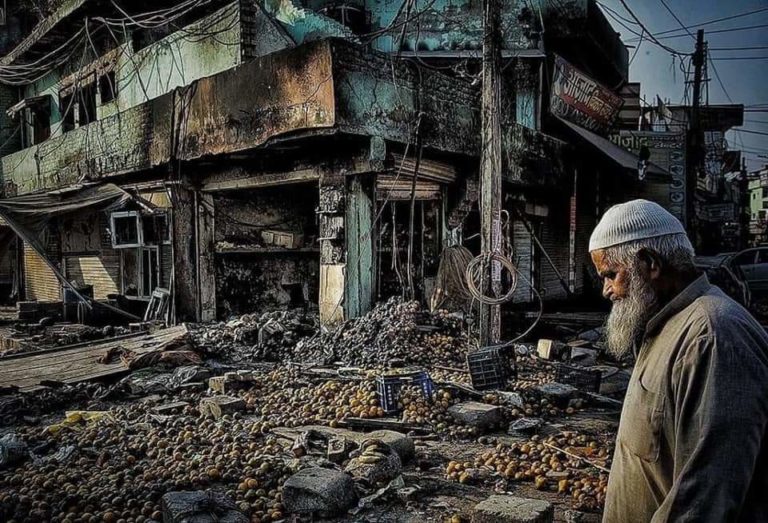
What happened in Delhi is neither a coincidence nor an experiment. The project to divide India into “Us Vs Them”, that has been tried for many decades is now put in acceleration mode. The divide created in minds is now visible on the ground as well, due to which India is falling into a dark abyss of hate, fear, and despair. The dreams of freedom, equality, and fraternity that were envisioned forgetting the pain of partition are rapidly being destroyed.Justice Muralidhar had convicted Sajjan Kumar for his role in 1984 anti -Sikh riots and said in High court in the present Delhi riots that “ Will not let another 1984 happen in Delhi”. With the transfer of Muralidhar, the court hearing has been postponed to 13th April. The background of violence in Delhi is the citizenship amendment bill and the movement against it, for which Shaheen Bagh has become an epicenter. As it was clear from the beginning, the aim of the citizenship amendment bill has less to do with giving citizenship to non-muslim refugees from the neighbouring countries and more to do with linking citizenship to religion. Since the passage of the bill, the whole country has erupted into protests. But instead of listening to the people who are sitting in protests for now 3 months, and clarifying their doubts, the central government is declaring them as terrorists and anti-nationals. The Prime Minister himself in one of the election rallies in Jharkhand said things like identifying protesters with their clothes. Since then, there has been a flood of hateful and threatening statements from people in responsible positions. Karnataka BJP minister C.T. Ravi last year had made a statement like- “If the majority lost its patience then Godhara like things can happen again”. In the Delhi Assembly election campaign, all limits were crossed. Home Minister Amit Shah and State revenue minister Anurag Thakur gave statements like sending “current to Shaheen Bagh” and “Shoot the traitors”. BJP MP Pravesh Verma and Kapil Mishra are openly playing the role of riot mongers. During this time, there were two instances where youth were found to be waving pistols in the air at anti CAA protesters at Jamia and Shaheen Bagh and now the same violence has come in an explosive way. In Delhi 2020 violence, there was no “action-reaction”, nor “a big tree fell that shook the earth”. This is a result of a continuous process that has changed the minds of many. Delhi is the capital of India and maybe the last endpoint of this project. Of Course whatever happens here will have an impact on the psyche of the whole country. 18 years ago, when “action-reaction” happened in Gujarat, Delhi was criticizing it, but now that the Gujarat model is being repeated in Delhi, Delhi is not even in a position to sigh. What is happening in Delhi is horrific and worrisome, but what is scarier, is the lack of a political alternative. Today there is no political force in sight to counter the aggressive majoritarian politics. We only see people’s resistance but a mass of the population is prepared with hate to counter these peaceful resistance movements. There is no project to counter the BJP-RSS project, but the even bigger worry is the lack of a feeling for this vacuum. Not too long ago, the anti-BJP-RSS camp was jumping with joy over the victory of AAP in Delhi elections and was calling it a mandate against BJP´s “project”. RSS and its electoral front BJP have their own agenda for which they have been planning for a long time. Their goal is not limited to winning elections. After BJPs defeat in Delhi Elections, Amit Shah had said- BJP is an ideology based party and it does not fight elections to win but elections are also a medium to further its ideology. It is the result of this planning that today the basis of electoral politics has changed in the country. Today RSS proposed Hindutva politics has become mainstream politics. This is a big victory for any ideology that all electoral parties in the country wittingly or out of helplessness are competing on the pitch laid out by them. However, the violence in Delhi is not a reaction to any recent incident. The chasm has become much deeper and now it is showing its deadly dance in the capital. This chasm can only be filled with a long term project. It seems that after 2014 the political parties in the country have also gone for a hiatus at a time when they are needed the most. In such an adverse situation, both in politics as well as society, there is an absolute absence of judiciousness and there is not even a single person in the country to whom the whole country is willing to listen. Views are personal. Javed Anees is a writer based in Delhi. The article has been translated from the original article at the media vigil.
BJP’s Serial offender Basangouda Patil Yatnal insults Centenarian Freedom fighter H.S. Doreswamy
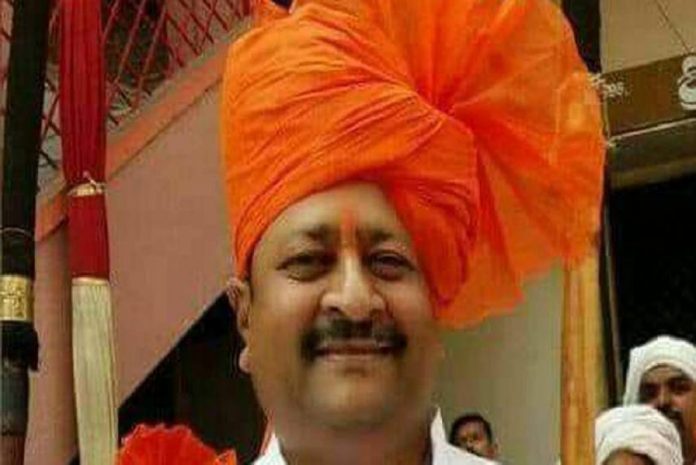

Shri. Doreswamy has sacrificed his entire life to fight for the interests of our Country. He stands up for a cause & leads the movement even at this old age. Yatnal does not have any qualification to speak ill about such a great person.#AntiNationalYatnal
— Siddaramaiah (@siddaramaiah) February 26, 2020
Today several concerned civil society members staged a protest meet at Gandhi Bhawan codnemning Yatnal statements and asked for his apology and removal from the party. They also gave a memorandum to the chief Minister asking that Yatnal should be punished for his statements according to the law. Minister V. Somanna,housing minister BJp leader has supported Yatnal statement further adding that Dareswamy shpould control his tongue and shpuld not speak against Modi and should not talk about secularism. BJP with the help of its IT cell has started a dirty campaign against H.S. Doreswamy and planning to ruin his reputation and thereby affect the people’s movement in this way. This will be a big attack on the democratic and plural atmosphere of karnataka. BJP only agenda is in spreading hate and poison. We need to stand united and not fall for this defamation and negativity on the celebrated figures of the country.There is support from @BJP4Karnataka for Yatnal's statement about Shri. Doreswamy. If otherwise, Yatnal would not have made such statements in public. People like him, @AnantkumarH & @CTRavi_BJP who disturbs peace in the society should not be in public life.#AntiNationalYatnal
— Siddaramaiah (@siddaramaiah) February 26, 2020
Midnight transfer of Justice Muralidhar, had ordered FIRs against hate speeches
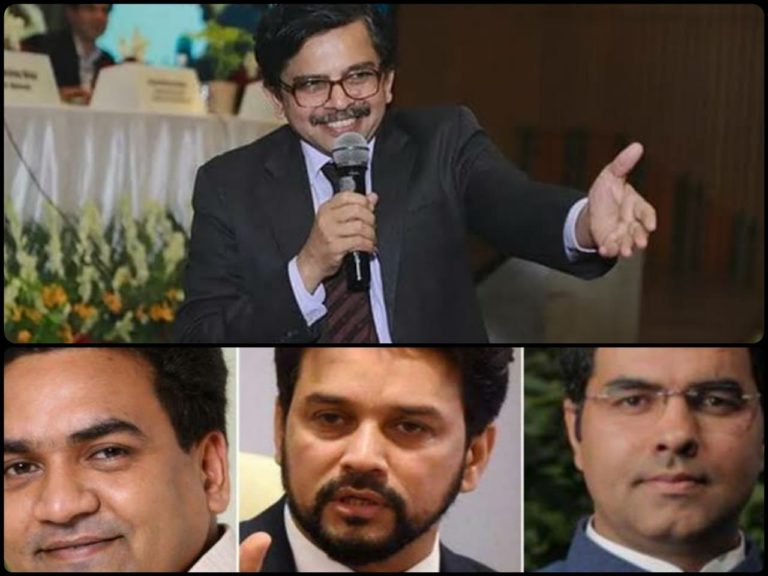
 The Supreme Court Collegium had recommended his transfer on 12 February. When the decision became public on 19 February, it was widely condemned, including by the Delhi High Court Bar Association, whose members abstained from work on 20 February in protest.
Protesting Justice Muralidhar’s transfer, the Delhi High Court Bar Association had urged the Collegium to “revisit” and recall its recommendation, saying such transfers “tend to erode and dislodge the faith of the common litigant in the justice dispensation system”.
Justice Muralidhar in an urgent midnight hearing on the night of 25-26 February ordered the Delhi police to allow the prompt passage of ambulances and emergency services in the riot-hit areas.
Justice Muralidhar is known for his strong judgements on communal violence and human rights of poor and marginalised.
He has delivered the Hashimpura verdict convicting personnel of the Uttar Pradesh PAC for the 1987 mass killings. He had also convicted Sajjan Kumar for his role in 1984 anti -sikh riots. He was part of the two-judge bench along with then Chief Justice A P Shah that delivered the landmark verdict decriminalising homosexuality.
Modi finally frees himself from hospitality to speak on Delhi violence

Had an extensive review on the situation prevailing in various parts of Delhi. Police and other agencies are working on the ground to ensure peace and normalcy.
— Narendra Modi (@narendramodi) February 26, 2020
Until yesterday Prime Minister Modi was busy entertaining state guest USA president Donald Trump. Trump was on a two-day India visit during which PM Modi hosted him to Gujarat Sabarmati Ashram and a visit to Tajmahal in Uttar Pradesh.Peace and harmony are central to our ethos. I appeal to my sisters and brothers of Delhi to maintain peace and brotherhood at all times. It is important that there is calm and normalcy is restored at the earliest.
— Narendra Modi (@narendramodi) February 26, 2020
At least 20 people have died in northeast Delhi in the riots that started on Sunday and continued till Tuesday night. Incidences of shooting, arson, and vandalism are being reported even on Wednesday. This delayed response to any crisis and calamity is a trademark strategy of PM Modi right from the days of Gujarat riots, where for days mob was allowed to carry out the violence. The army was called after 3 days in riot-affected areas. In a press conference on Wednesday, Congress chief Sonia Gandhi held Home Minister Amit Shah responsible for the violence in Delhi and sought his resignation. “The Centre and the Union Home Minister is responsible for the present situation in Delhi. The Union Home Minister should resign,” said Sonia Gandhi.Thank you @POTUS @realDonaldTrump and @FLOTUS @MELANIATRUMP for coming to India. This visit has been a path-breaking one. We have covered great ground as far as strengthening bilateral relations are concerned. India-USA friendship benefits the people of our nations and the world.
— Narendra Modi (@narendramodi) February 25, 2020
Where is AAP ka beta Arvind Kejriwal, when Delhi is burning?
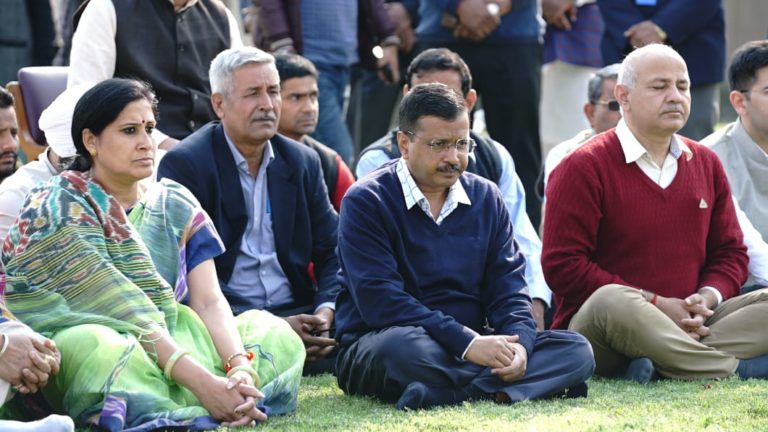
While many praised his “not falling for BJP trap” a success story and something to be replicated in other states, it is ironic to see Kejriwal Exposed Within a fortnight of HIS victory. So much for fighting fascism!The behaviour of BJP, RSS and the Hindutva mob has been known and clear as day to people. Hatemongering, mob lynching, and rioting is their expertise but the behavior of AAP and its head Arvind Kejriwal is what has come as surprise to many especially, people who were giving Kejriwal the medal of honor last week for defeating fascism in Delhi. Well, they have got their rude awakening!!! AAP ka beta, Dilli ka Beta Arvind Kejriwal an astute politician, very cleverly stayed away from the hate campaign of BJP and focused on education, water, and electricity. Many praised him for it. He tactically also stayed away from Shaheen bagh and called for the place being vacated. Playing to both sides, Mr. Kejriwal won the Delhi elections with a huge mandate. While many praised his “not falling for BJP trap” a success story and something to be replicated in other states, it is ironic to see Kejriwal exposed within a fortnight of his victory. So much for fighting fascism! Let’s take a look at what Mr. Kejriwal did while Delhi burnt- Kejriwal made three tweets about how sad he is that the situation is tense in Delhi and people should maintain peace. He retweeted other AAP leaders tweets for calls for peace. He also expressed grief in his tweet over the death of a head constable in the riots, by this time the death toll was 4. The next day on Tuesday, when social media is full of horrific images and evidence of mobs led by BJP leaders burning Muslim neighborhoods, Mr. Kejriwal did a press conference and went to Rajghat to “pray” for peace.
AAP won overwhelmingly in Muslim dominated areas, so much so that AAP´s candidate Amanatullah won with the second-highest margin in the Delhi Elections from the Okhla constituency where Shaheen Bagh is situated. So it is natural that people will have expectations from the MLAs at such times. What is Arvind Kejriwal afraid of now, when there are no elections or Hindu votes to lose?दिल्ली में जल्द से जल्द शांति बहाल हो, लोग हिंसा को ठुकराए इसलिए राजघाट पर प्रार्थना की। इस कठिन समय में हमें महात्मा गांधी जी से प्रेरणा ले कर अहिंसा को अपनाना है। हिंसा से कुछ हासिल नहीं होगा। pic.twitter.com/cHafjW8mWe
— Arvind Kejriwal (@ArvindKejriwal) February 25, 2020
Mr. Kejriwal did go to see the victims of the violence in the hospital on Tuesday night, 3 days after the violence. A delegation of students went to meet him with a charter of demands that he should do something to contain the situation in Delhi. Instead of meeting them, the students were water cannoned, 42 of them were beaten up, detained and slapped with police cases.Will Kejriwal and Co stop this drama? Instead they should go to riot affected localities and try to stop violence. Mahatma Gandhi went to Noakhali to quell riots. https://t.co/71B0mep7TM
— nikhil wagle (@waglenikhil) February 25, 2020
Watch | Water cannons used to disperse JNU, Jamia students protesting outside Delhi CM Arvind Kejriwal's house last night.#CitizenshipAct #DelhiViolence pic.twitter.com/mbEb6dnamv
— NDTV (@ndtv) February 26, 2020
39 boys who were detained by Kejriwal's house have been beaten up badly by the police
— Nadeem Khan (@nadeemkhanUAH) February 26, 2020
Somebody's head is open, someone's hand is broken
Slogans of Shri Ram and Kasab not Kalam
Everyone is released but can't walk by own foot
Delhi CM Kejriwal has expressed his helplessness and not being in control of police as reasons for his inability in handling the situation. But that is not true. According to an article by Indian Express, there is a list of things that a union territory can do, for example- call the central government to send the army. Mr. Kejriwal did that, on Wednesday. By this time, the death toll reached in the 30s, fear instilled in people, anti-CAA protesters vacated from the neighbourhood, and crores of damage to the property had already happened. What stopped Kejriwal from acting as a responsible Chief Minister?We're standing outside the CMs house, he is refusing to meet us. The cops have asked us to evacuate. Kya Kejriwal aur Amit Shah ek hai? @ArvindKejriwal @AamAadmiParty pic.twitter.com/f1T43oi8i9
— Ashish Mathew (@hsihsamathew) February 25, 2020
Kejriwal’s response leaves much to be desired and social media didn’t leave any punches in telling him just that.I have been in touch wid large no of people whole nite. Situation alarming. Police, despite all its efforts, unable to control situation and instil confidence
— Arvind Kejriwal (@ArvindKejriwal) February 26, 2020
Army shud be called in and curfew imposed in rest of affected areas immediately
Am writing to Hon’ble HM to this effect
How many radio messages from Arvind Kejriwal have you heard this time addressing Dilli-walon for peace?
— rama lakshmi (@RamaNewDelhi) February 26, 2020
We heard so many behavior changing nudge-appeals during OddEven.
Surely, this was more important. And critical for a leader who won with such a huge majority just 2 weeks ago
Our lawyer friend points out;
— Bilal Ahmed (@BilalAhmedNgp) February 26, 2020
"Kejriwal has no control over police force but has full control over DMs, SDMs who can direct police to take actions. Only police force is with Union Govt but prosecution under CrPC is with Delhi Govt.
Kejriwal saying he can't do anything is a myth." pic.twitter.com/CcMgRF9epP
Can Arvind Kejriwal, Rahul Gandhi and other leaders stop sermonising Delhi from the comforts of their room. You need to be on the streets, the minorities and the affected need a healing hand. Stop tweeting. Stand on the streets, protest, be counted
— Rana Ayyub (@RanaAyyub) February 25, 2020
Mr. Kejriwal. You should be on the streeets. Do not sermonise from the comforts of your office. Your refusal to condemn the violence at Jamia, Shaheen Bagh has played a part here. https://t.co/P3doK9e5KZ
— Rana Ayyub (@RanaAyyub) February 25, 2020
Mr. Kejriwal when will you stand up for your Dilli?AAP apologists for Kejriwal in this moment must know that jinse ummeed hoti hai unhi ko guhaar lagai jaati hai. The fact that people are asking Kejriwal to act and Shah to resign must tell you something. Stop being defensive.
— Akhil Katyal (@akhilkatyal) February 26, 2020
Indian Journalist Rana Ayyub awarded with McGill Medal for journalistic courage
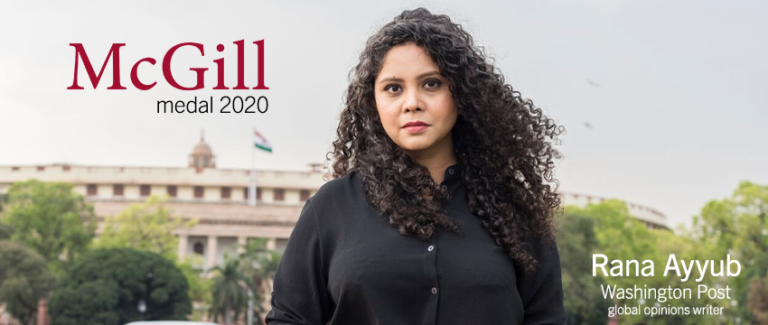
In a career spanning fourteen years, Ayyub has been awarded the Sanskriti Award for integrity and excellence in journalism from the President of India. She was the recipient of the Global Shining Light award for Investigative journalism in the year 2017 and the Most Resilient Global Journalist of 2018 at the Peace Palace in Hague. Ayyub authored an international bestseller titled “Gujarat Files: Anatomy of a Cover-Up,” an undercover investigation that exposes the complicity of the Indian Prime Minister Narendra Modi in state-sponsored genocide. She has also been named by Time magazine among ten global journalists who face maximum threats to their lives and has been profiled by New Yorker. Ayyub is based in Mumbai, India. Nominations for the medal came from journalists and journalism educators from across the country. The 2019 class of McGill Fellows, 12 students chosen for academic achievement, practical experience and leadership, researched the nominees and made the selection. “Ayyub is committed to telling the stories of people who can’t do it on her own, making her an ideal McGill medal recipient,” said Sofia Gratas, the McGill Fellow responsible for researching the nomination. The McGill Medal, now in its twelfth year, is part of the McGill Program for Journalistic Courage at UGA’s Grady College. For more than 40 years, the McGill Lecture has brought significant figures in journalism to UGA to help the university honor McGill’s courage as an editor. In 2007, UGA added the McGill Symposium, bringing together students, faculty and leading journalists to consider what journalistic courage means and how reporters and editors exemplify it. The medal was added in 2009. “All of this is for a single purpose: to advance journalistic courage,” said Diane H. Murray, the Grady College’s director of alumni relations and outreach and director of the McGill program. The McGill program is named for Ralph McGill, the late editor, and publisher of the Atlanta Constitution. McGill was regarded by many as “the conscience of the South” for his editorials challenging racial segregation in the 1950s and 1960s.It is a huge honour for me. I accept this award on behalf of all journalists who are fighting an unpopular battle to speak the truth. Thank you @UGAGrady https://t.co/fAqCiCCS3X
— Rana Ayyub (@RanaAyyub) February 24, 2020
“We don’t need your teargas to cry” – the dissenting pangs of Lebanon