Modi is expected to arrive in Bangladesh on the 17th of March to celebrate the 100th birth anniversary of the nation’s founding father, Sheikh Mujibur Rahman. He has been invited by the Bangladeshi Government to deliver a keynote address for the occasion. Thousands of Bangladeshis have come out I protest against his visit and have said “If the government does not withdraw Modi’s invitation, the airport will be cordoned off.” The protesters have demanded that Prime Minister Sheikh Hasina withdraw her invitation to Modi.
Around 5,000 people protest in Bangladesh over Indian PM Narendra Modi's upcoming visit pic.twitter.com/JWXTcH2Tu3
Large number of people have gathered on the street to protest against Modi over the communal rights that took place in Delhi which left 53 dead, hundreds injured, and affected livelihoods of many. Further, Party member and Home Minister, Amit Shah has said “illegal immigrants from Bangladesh are termites” who have to be gotten rid of. 12 people have been injured during the protests in Bangladesh. According to reports, a countrywide protest has been called for on the 12th of March and they have been asked to wear black shrouds, carry black flags, and wear black shoes. Many student unions, Islamist organizations, leftist groups, and academicians and intellectuals are also protesting against the Citizenship Amendment Act and Modi’s arrival in Bangladesh.“If a man like Modi attends the program, it will be a disgrace to the common people of Bangladesh and also Mujib who upheld secularism and religious harmony in Bangladesh. Indian Muslims are targets of Modi and the terrorists of the Rashtriya Swayamsevak Sangh (RSS). They want to destroy religious harmony in India. All this will adversely affect religious harmony in the whole of South Asia,” Nurul Huq Nur, the Dhaka University Central Student’s Union Vice-President, said.Hefajat-e-Islam’s Vice-President Nur Hossain Kasemi, called for the cancelation of the invitation to Modi and added that Muslims in Bangladesh should protect non-Muslims and maintain communal harmony.Many officials have weighed in on the issue. Bangladesh’s Road Transport and Bridges Minister, Obaidul Quader, said “India has helped us the most during the Liberation War of Bangladesh and that is why the Indian Prime Minister has been invited. Refraining from inviting the Indian Prime Minister would have been an act of ingratitude Bangladesh Home Minister has promised that Modi with being welcomed with state of honor and the law enforcement and security forces will ensure his security. Foreign Secretary Harsh Vardhan Shringla who was in Bangladesh assured the country that the NRC will have “no implications” and that the process is entirely “internal” to the country.
Since 2019 there has been a wave of fee hikes across the country. Students have led hunger strikes, indefinite protests, and demanded that the fee hikes be rolled back. In some universities the fee hike has gone up to 200%.
Currently students of Pondicherry university have been on protesting against the administration to bring down the fee hike that has been upped by 200%. Student Council leader Parichay Yadav said that the University has hiked the total fees of all academic courses by 88%, the MCA fee has been hiked by 225%, MBA by 124%, MSc and MTech by 182%, PhD program by 56% and the five year integrated program fee by 51%., Students have been on a strike for over 29 days. They were intimidated by the administration with the notice that strict action will be taken against them. They were also detained and forcefully evicted from the premise. Not surprisingly the police manhandled the female student protesters and shamed them for wearing sleeveless clothes on campus. The shaming, assault, and violence against female student protestors has been common to most universities which protesting against the privatization of education. Students from PU have now begun an indefinite hunger strike to increase pressure on the administration and fight the ‘sheer indifference of the administration.’
Right to Education- The fight against the privatization of Higher Education
When JNU students were protesting against the Fee hike many of them were brutally beaten up by right wing goons. Students have been fighting multiple battle since August of this year, protesting against section 370, agitating against CAA, NRC, and NPR, and fighting the administration against fee hikes. There are universities across the country including Hyderabad University, JNU, Pondicherry University, IIT, IIMC, FTII, TISS, Ayurvedic colleges in Uttrakhand that have protested against the fee hikes. Some Universities have rolled back the hike but many have not. SC, ST, OBC students have been worst affected by this fee hike.
The case of other universities
Students from various ayurvedic colleges in Uttarakhand have organized rallies across the state to oppose the 170% fee hike. The Uttarakhand High court had ordered the fee hike to be rolled back but the order was not implemented till November 2019.
JNU students have been protesting against the fee hike that the administration aims to impose on students that join the university for the 2020-2021 academic year. The fee hike is said to be up to 167 percent for PhD, MPhil, and MTech students and by 171 percent for MA, MSc, MCA, and BA students. The medical fee has been increased by 991 rupees. Till last year the medical fee was 9 rupees and this year it will be 1000 rupees. The pre-enrolment fee was 295 for PhD, MPhil, and MTech students and now it is 780 rupees, and 283 for MA, MSc, MSC, ad BA students and now it is 768 rupees.
The problem with Privatization
Students have been sitting in protests across the country and many of these protests have gone unreported in popular media. The media silence over these issues has been telling of their role in silencing the issue. Privatization of the country’s education system means that the corporates gain more and the government can continue to reduce the education budget.
The privatization of education has been a goal for this government. Universities that are hiking their fee are doing so to reduce their dependency on Public funding. The educational budget has been only 3% of the GDP in 2019. The average percentage should be above 6% if India wants to meet the need of education for all. 6% is the minimum the government needs to spend on education but is spending half of that currently. With the privatization of the education sector only the rich will be able to send their children to school and the worst affected will be the poor. With jobs being scarce in the country, the lack of education can lead to further slow down of economic growth.
Over 60 percent of the Higher Education institutes are privately owned (directly or indirectly owned). Education being privatized means that everyone will not have access to it. As a human right, education needs to be made available to all. Denying this right is a gross violation of everyone to have the right to be educated and demand better futures for themselves. This anti-poor practice ensures that only those who have the money will be accepted to these institutes. It will be argued that the rich have more merit and those who do not make it do not deserve education. Instead of demanding the government to provide free education, people will be made to believe that the right to education only belongs to a select few. The education institutes will be filled with one group of students which will translate into the same for jobs and government positions
Private institutions have had long histories of not upholding the government mandated rules and regulations like not following the mandated reservation policy, not enacting POSH committees, to making Higher education unattainable for anybody but the rich. Multiple cases of students dropping out of education, being harassed by the university, and committing suicide due to the fee hikes have come into light. Private Universities that provide scholarships still discriminate amongst students and many have to take loans to pay of debt, for which they take up odd jobs. Students who have to take loans often have to families to support and the crippling debt of the loans pushes them further into difficult situations. Privatization and student debt has been extremely detrimental to US students and has kept many out of education and this could be the case for Indian Universities as well.
Lok Sabha and Rajya Sabha proceedings were suspended on Thursday as the opposition protested against the Delhi riots. Slogans were raised in the Lok Sabha demanding justice against the violence that took place. Slogans like “Modi Sarkar Shame Shame” and “Pradhan Mantri Jawab do” were raised in response to the silence on part of the BJP government. Amidst the chaos in the Parliament the Direct tax Vivaad se Vishwaas Bill was passed in the Lok Sabha. The Opposition demanded that the Delhi riots be discussed in the Lok Sabha and the Lok Sabha Speaker Promised that their wouldbe discussions about this post 11th of March. This delay in discussions could affect relief measures on ground and delay the serving of justice from the Government’s end but the Central government continues to silence the issue.
7 congress MPs were suspended- Gaurav Gogoi, TN Prathapan, Dean Kuriakose, R Unnithan, Manickam Tagore, Benny Behnan, and Gujreet Singh Aujla were suspended from the Lok Sabha for the rest of the budget session on charges for gross misconduct Congress MPs were condemned for their behavior in the LS, Parliamentary Minister Prahalad Joshi said “We have requested the Speaker to set up a panel to look into the continuous indiscipline by the Congress. Snatching paper’s from the Speakers table is utmost disrespect to the chair and we condemn this.” Gaurav Gogoi commented on his suspension saying “Suspend us for a year but discuss the Delhi riots and heal the wounds of the people.” Congress leaders commenting on the issue said that this decision was a dictatorial decision by the government to weaken the voice of the opponent on the case of the Delhi riots. They said this move was motivated by revenge politics.
The issue of the Delhi riots is said to be discussed later in the month so that “Holi can be celebrated peacefully.” The government is clearly avoiding accountability that they owe to the people by coming up with weak excuses.
KALABURAGI: Central University of Karnataka (CUK), the only central university in the State, has glaringly violated standard norms and guidelines set by University Grant Commission (UGC) in the ongoing process of recruiting 67 Professors and Associate Professors for its 30 departments, which includes 5 backlog posts in its 5 departments.
The UGC, in its public notice dated September 16, 2019, has clearly notified all the universities across the country that “the old UGC Approved List of Journals has been replaced with the new UGC-CARE Reference List of Quality Journals (UGC-CARE List) and with effect from 14th June, 2019 research publications only from the journals indexed in UGC-CARE List should be considered prospectively for any academic purpose.”
UGC-notification_UGC-CARE-list
It also advised “the Vice-Chancellors, Selection Committees, Screening Committees, research Supervisors and all/ any expert(s) involved in academic/ performance evaluation and assessment” “ensure that their decisions in the case of selections, promotions, credit-allotment, award of research degrees etc must be based on the quality of published work rather than just numbers or a mere presence in peer-reviewed or in old UGC approved List of Journals.”
Within a week of the issuance of UGC public notice, the CUK issued a notification (No.26/2019) on September 25, 2019, inviting applications for the recruitment of 67 Professors and Associate Professors for its 30 departments. The notification separately set a set of eligibility criteria for the post of Professor and Associate Professor which included the publication of a minimum of 10 research publications in the peer-reviewed or UGC-listed journals for Professor post and a minimum of 7 publication of research work in the peer-reviewed or UGC-listed journals for Associate Professor post. It also adhered to the changed UGC guidelines on the research publications to be considered for the selection of the candidates by clearly mentioning, in point number 56 under the sub-heading of General Information, that “the calculations of academic/research score shall be as per the UGC letter no. F.1-1/2018 (journal/CARE) dated 16.09.2019 regarding the publications as per the UGC CARE List, wherever applicable”. It was thus clear that only those research papers published in UGC CARE List journals were considered.
Therefore, many aspirant candidates who did not have the required number of research papers published in UGC-CARE List journals did not apply as they rightly thought that they were ineligible for the post. However, there were many others who did apply even though they did not have the required number of research papers published in UGC-CARE List journals. Instead of rejecting such ineligible candidates who did not have enough number of research papers published in the UGC-CARE List journals, the scrutiny committee, however, considered them for the next level of selection process – the interview – and meted out a huge injustice to those who took the eligibility criteria in the notification serious and did not apply.
The UGC guidelines including one on the research publications to be considered were strictly followed by the expert committees that scrutinised the applications for the posts in certain departments including Geology, Geography, Linguistics and Physics. 14 candidates had applied for the post of Associate Professor in Geography and 7 applied for the same post in Geology. Since they did not meet the eligibility criteria including the one on the number of research papers in UGC-CARE List journals, all of them were declared Not Eligible. In the Linguistics department, 2 candidates were declared Eligible and 10 Not Eligible. In the Physics department, 4 were declared Eligible and 5 candidates Not Eligible. The scrutiny committees here were unambiguous in declaring candidates eligible or ineligible on clear grounds leaving no room for any misconstruction.
However, other expert committees that scrutinised the applications for the posts in other departments including Computer Science, Electronics and Communication Engineering, Life Sciences, History and Archaeology, Tourism and Hotel Management, Education, Commerce, Economics Studies and Planning and Business Studies blatantly violated the UGC guidelines, particularly its directive on the research papers to be considered. In contrast to the clear decision of scrutiny committees that looked into the applications in Geology, Geography, Linguistics and Physics departments, these scrutiny committees considered ineligible candidates who did not meet eligibility criteria such as the required number of research papers published in UGC-CARE List journals and required years of past experience and made conditional selection by putting a star in front of their names and a remark “subject to submission of publication evidence as per UGC norms” and “subject to submission of past service documents…”
Superficially, the scrutiny committees which had experts as its members did not adopt uniform parameters to shortlist the candidates for the interview. The examination of the scrutiny documents revealed that some applicants are made Eligible and while others who are equally competent and meritorious were made Not Eligible for the next level of the recruitment process. Though both sets of candidates are equally short of the needed and desirable qualifications as per the terms of university notification and UGC guidelines, one set of candidates were declared eligible for the interview with twisting remarks apparently to extend undue favours to them.
Smelling the violation of UGC guidelines and the university notification in the scrutiny process, Mr. Ganapati Sinnoor raised the issue in the 49th meeting of the Executive Council (EC), the highest governing body of the university, held on November 14, 2019. The EC discussed the issue and “resolved to consider the matter on quality parameter also as suggested by UGC letter No.F.1-1/2018 (Journal/CARE) dated 16th September 2019 (Para No.2)”.
The Academic Council (AC), another statutory body of the university, did not meet to discuss the issue. However, the UGC letter No.F.1-1/2018 (Journal/CARE) dated 16th September 2019 circulated among its members through email and sought their comments and suggestion. A few members endorsed the UGC letter in response.
Yet, some of the scrutiny committees, defying the EC and AC, continued to violate the UGC letter dated 16th September 2019 which categorically advised considering only those research papers published in UGC-CARE List journals for the recruitment as well as the university’s recruitment notification which also incorporated UGC guidelines specified in the UGC letter dated 16th September 2019 to frame the eligibility criteria on the research papers to be considered.
For example, the candidate bearing the application number 5158110SECU who applied for the post of Associate Professor in the department of Economics Studies and Planning did not have any research paper published in UGC-CARE List journals and, hence, was rejected “for the want of seven research articles” published in UGC-CARE List journals and he was declared Not Eligible in the list published on December 10, 2019. However, other candidate bearing the application number 5135710SECU who applied for the same post in the same department also did not have any research paper published in UGC-CARE List journals but was declared as Eligible in the same eligibility list. When the former objected the biased move of the scrutiny committee, he too was later made Eligible for the interview in the list published on February 04, 2020. The scrutiny committee gave clear reasons for the rejection of the candidate on December 4, 2019. However, it did not give any reason for the selection of the same candidate when it revisited the application on December 19, 2019.
In another example, the applicant bearing the application number 10086110SCHU with serial number 39 in the eligibility list dated 23-12-2019 for the post of Associate Professor (Chemistry) has been declared Eligible with remarks “subject to the submission of publication evidence as per UGC norms”. However, another applicant bearing the application number 5076610SCSE with serial number 13 in the eligibility list dated 04-12-2019 for the post of Associate Professor (Computer Science) has been declared Not Eligible with remarks “Subject to submission of publication evidence as per UGC norms”.
As per the recruitment notification, a minimum of eight years of teaching experience as Assistant Professor in the relevant subject is another criterion for the post of Associate Professor. However, there are many instances where candidates who did not meet the requirement were selected for interview.
For example, the candidate bearing the application number 5186610SGEU who applied for the post Associate Professor in the Department of Geology was rejected in the scrutiny process as the candidate did not have required teaching experience. However, the candidate bearing the application number 5105010SECU who applied for the Associate Professor post in the department of Economics Studies and Planning too did not have required teaching experience and yet declared eligible “subject to the submission of past service documents as per UGC norms”.
In another example, a candidate bearing the application number 5702510SLIS who applied for the post of Associate Professor in the Department of Life Sciences was declared Not Eligible as “past service documents [were] not as per UGC norms”. However, another candidate bearing the application number 5146910SLIS who applied for the same post in the same department too did not meet the required teaching experience and yet declared Eligible “subject to the submission of past service documents”.
In one more example, the candidates with application number 5680410SECE and 5037110SECE who applied for the post of Associate Professor in the Department of Electronics and Communication Engineering did not meet the past service eligibility criterion and were rightly declared Not Eligible as “past service documents not as per UGC norms”. However, the candidate with application number 5219110SECE who applied for the same post in the same department too did not meet the past service eligibility criterion, but was declared as Eligible “subject to the submission of past service evidence as per UGC norms”.
All the 11 candidates in these five instances were essentially ineligible as per the UGC guidelines and terms of university’s recruitment notification, but some are selected and others are rejected for the interview. Such inconsistencies are abundantly found in the scrutiny of applications concerning at least eight departments.
While declaring the ineligible candidates eligible, the scrutiny committees, which have experts as their members, and the university administration have cleverly put such remarks as “subject to submission of publication evidence as per UGC norms”, “subject to submission of past service evidence as per UGC norms” and “final eligibility may be decided by the competent authority”. This essentially means shifting their responsibility to others, who will not be subject experts and competent in ensuring that all the eligibility criteria such as the required number of research papers published in UGC-CARE List and the required teaching experience are met.
On the 1st of March, the Union Minister of State, Sadhvi Niranjan Jyoti said that after the abrogation of Article 370 and the CAA, the government now plans to introduce the Population control Bill. According to Sadhvi Jyoti, the bill is under the consideration of PM Modi himself and he has discussed the need to implement this law. Sadhvi Jyoti said the Prime Minister can bring any law which is important for the country. In 2019, Sanjeev Baylan, BJP leader claimed that population explosion was the cause of the problems we face in the country. ‘Bharat Mata’ cannot take this burden anymore. The population Bill was tabled by BJP MP Rakesh Sinha. He introduced the Bill as a Private member’s bill in the Rajya Sabha asking for incentives for those people who have limited themselves to having only two children and penalties for those who have more than two children. Incentives include tax benefits, subsidies and loans for plots and houses, and free health care for parents. Punishments include being disqualified from holding a position in the Government, higher interest rates on loans, reduction of benefits under the Public Distribution System. Sinha has denied all allegations of the Bill aiming at anyone religion. The Bill is currently pending with the Rajya Sabha.In 2020, BJP Union Cabinet Minister Giriraj Singh was speaking at a rally in support of CAA in Meerut. At the rally, he said that a law to control population needs to be enacted otherwise Hindus will become a minority in India. He said a law is needed to stop the growing population of non-Hindus.
Population control bill -Another step towards the formation of Hindu Rashtra
India has a population of 1.3 billion, second to China, and one does not argue that it does need some degree of population control measures. But doing it at the cost of the minority population is not just dangerous but sounds purely out of the Nazi playbook. A look at the population growth statistics debunks the lies perpetrated by the Hindutva propaganda factory.
According to a report by Economic Times, The population growth rate of Muslims has been declining since 1971 – from 30.9% during 1961-71 to 24.6% during 2001-11. This along with much academic research have shown clearly that the idea of the Muslim growth rate is a myth used time and again to give a call for genocide and bring in barbaric population control measures.
Bharatiya Janata Party and its leaders are not even making any bones about the intentions of the bill. It is clear that the party motive is to bring another law that targets Muslims. The argument at official levels is that there will be a population burst that will burden resources, which is clearly not the case. The issue is the divert and rule policy which pushes the focus onto the ‘enemy’ and not the deteriorating state of social and economic policies.
Population control bill is another tool to target the minority population and the poor. Another step towards the formation of Hindu Rashtra.
The Office of the United Nations High Commissioner for Human Rights has filed an intervention in the Supreme Court on the Citizenship Amendment Act (CAA) and informed India’s Permanent Mission in Geneva about it, the Ministry of External Affairs said on Tuesday.
The Ministry of External Affairs on Tuesday criticized this move by the UN body. The MEA also asserted that the CAA is an internal matter of India and concerns the sovereign right of the Indian Parliament to make laws.
“Our Permanent Mission in Geneva was informed yesterday evening by UN High Commissioner for Human Rights (Michelle Bachelet) that her office had filed an intervention application in the Supreme Court of India in respect to the 2019 Citizenship Amendment Act,” MEA Spokesperson Raveesh Kumar said.
“We strongly believe that no foreign party has any locus standi on issues pertaining to India’s sovereignty,” he said.
India is clear that the CAA is constitutionally valid and complies with all requirements of its constitutional values, Kumar said.
“It is reflective of our long standing national commitment in respect of human rights issues arising from the tragedy of the Partition of India,” he said.
“India is a democratic country governed by the rule of law. We all have utmost respect for and full trust in our independent judiciary. We are confident that our sound and legally sustainable position will be vindicated by the Supreme Court,” he said.
Immediately after the Act was passed by the Parliament, the UNHRC had issued a statement against it saying that it was “fundamentally discriminatory in nature”.
“We are concerned that India’s new Citizenship (Amendment) Act 2019 is fundamentally discriminatory in nature”, said the statement issued by Jeremy Laurence the Spokesperson of UN High Commissioner for Human Rights.
Expressing “great concern” over the Citizenship Amendment Act and reports of police inaction during the violence in Delhi, United Nations High Commissioner for Human Rights Michelle Bachelet on Thursday called on Indian political leaders to prevent further violence.
While addressing the 43rd session of the Human Rights Council in Geneva, Switzerland, Bachelet said: “Indians in huge numbers, and from all communities, have expressed – in a mostly peaceful manner – their opposition to the Act, and support for the country’s long tradition of secularism. I am concerned by reports of police inaction in the face of attacks against Muslims by other groups, as well as previous reports of excessive use of force by police against peaceful protestors.”
Bachelet also expressed concerns over the restrictions imposed on jammu and kashmir by heavy military presence and suspension of Internet and mobile services.
The death toll in northeast Delhi’s riots has risen to 47.
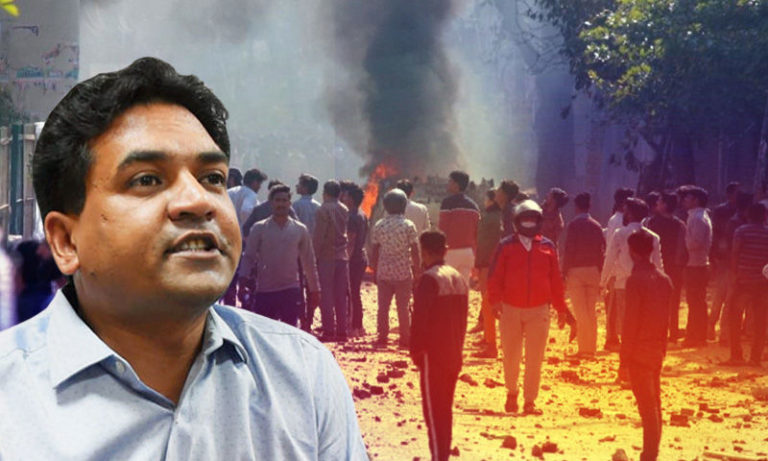
Bhartiya Janata Party leader Kapil Mishra has been provided with Y level security. It entitles him to have six security personnel round-the-clock to guard him in and outside the city.
Kapil Mishra, who had joined BJP last year, tweeted on Sunday that he was receiving threats to his life on the phone, WhatsApp and email, both from India and abroad.
According to a report in Deccan Chronicle, Mishra has been provided with two Personal Security Officers (PSOs), who will remain with him round-the-clock. Besides this, there are four more security personnel to ensure his safety. “As per the security protocols, one of the PSO’s will be armed with an automatic rifle, while the others will be carrying pistols with them,” said a source.
Earlier on Monday, Supreme Court had agreed to hear on March 4 a plea seeking lodging of FIRs against Kapil Mishra and 3 other BJP leaders (Anurag Thakur, Parvesh Verma and Abhay Verma) for their purported hate speeches which allegedly led to recent violence in Delhi in which over 40 people lost their lives and scores injured.
The petition filed by 10 victims of the violence was mentioned for urgent listing before a bench headed by Chief Justice S A Bobde which said it would be heard on Wednesday.
Kapil Mishra has collected over Rs 71 lakh through crowdfunding to help “Hindu families who are the victims of Delhi riots”.
The violence in Delhi began on 23 February after Mishra led a rally in support of the Citizenship Amendment Act (CAA) in Maujpur area near Jaffrabad and gave an ultimatum to the Delhi Police to remove the anti-CAA protesters. He made the speech in the presence of Ved Prakash Surya, the DCP (Northeast) of Seelampur.
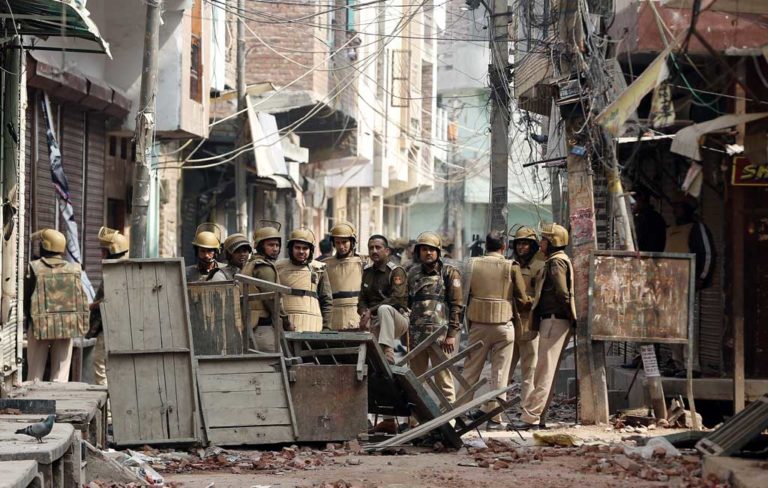
Since then, at least 46 people have died and over 200 have been injured in the riots that have engulfed the city.
“The fight (against CAA) that we are leading today is for the flag that waves proudly in your hand, it is to save that flag that we fight today. It is to save the future of the children, it is the fight to save your right of being an Indian citizen.” said Kanhaiya Kumar at a massive rally organized in Supaul, Bihar. Kanhaiya Kumar has been racing ahead in gaining popularity in Bihar for the upcoming elections. His rallies have thousands of people, especially the youth coming out in support for him. Kanhaiya Kumar is being hailed as being a future leader for Bihar. This definitely has sent ripples within the JDU-BJP alliance. With the focus on Bihar elections coming up, the alliance is threatened by the rise of Kanhaiya Kumar’s popularity and public support. This could cause serious harm to BJPs already waning powers within the state. BJP has also come under criticism from many circles for orchestrating the riots in Delhi and attacking Muslim areas. This has meant trouble for the support that BJP has had in the past years. To do away with the threat that Kanhaiya and the anti-CAA movement pose, the BJP government has set in motion a plan to kill two birds with one stone. The recent decision of Delhi governmentgiving nod to prosecute Kanhaiya Kumar and nine others in 2016 sedition case is clearly seen as a way to clamp down on his popularity and stop Kanhaiya further designs in upcoming Bihar Elections.
Kanhaiya Kumar in a press conference also spoke about the timing and motive of the prosecution order. He alleged that the chargesheet was filed deliberately against him at a time when he was about to contest election in Bihar. “The chargesheet was filed for the first time when I was about to contest the election and now elections are going to be held in Bihar again. There is National Democratic Alliance (NDA) government in Bihar and the state government has passed a resolution in the Assembly against National Register of Citizens (NRC) and National Population Register (NPR),”.
AAP´s U-turn under BJP pressure
AAP has come under heavy criticism from the public for their inaction and deafening silence with respect to the riots in Delhi. This followed by AAP now giving sanctions to the police to prosecute Kanhaiya Kumar, Umar Khalid, and others are seen as a sign that AAP is toeing the BJP line.
The sedition charge of 2016 had come into focus in 2019 as well. The AAP government then was criticised for not granting sanctions. The Magistrate in 2019 asked the government to expedite the process to grant sanction and not waste the time of the judiciary. Till 2019, the Delhi government had refused to give sanctions to the police to prosecute JNU students as they believed that their actions did not amount to sedition against the state. They argued that the sedition charges had gaps and could seriously affect the future of the students involved. The same government in 2019 has now taken a U-turn on this matter and given the sanction.
Crackdown on Anti-CAA movement
The anti-CAA movement is giving the ruling party sleepless nights. In the last 3 years, despite all the anti-people measures passed by the BJP government, it did not dent its electoral gains. But the movement against CAA is fast becoming an eyesore for BJP. The way the movement has brought students, common Indian masses standing side by side with Muslims was something that was beyond the calculations of Amit Shah. The international attention the movement and Shaheen Bagh has gathered has only tarnished Modi´s image further.
Kanhaiya Kumar’s smart jibes and popularity were not affecting the ruling party as he was seen as a stand-alone student leader with no masses behind him. But in the background of the anti-citizenship movement, Kanhaiya Kumar´s fully packed rallies are giving not just Nitish Kumar and Tejaswi Yadav jitters but also to Amit Shah, who was sure about BJP-JDU alliance comeback in upcoming Bihar elections.
The timing of the AAP government’s decision to prosecute Kanhaiya Kumar should be seen in that light. The sedition case against Kanhaiya Kumar and Umar Khalid will be used to paint them as anti-nationals who are orchestrating the anti-CAA protests and subject them to media trials. This will give BJP ample opportunity to malign the duo and also discredit the anti-CAA movement.
This move also further exposes AAP as a soft Hindutva party. The sidestepping from the anti-CAA protests was dubbed as a tactic before the Delhi Elections but in the wake of the pogrom of Muslims in Delhi last week and now nod to Kanhaiya´s prosecution has taken off the mask of Arvind Kejriwal.
Further, this move by AAP allows both BJP and AAP to wash its hand of the violence in Delhi and blame it on the ‘anti-national’ forces behind the anti-CAA protests. This undermining of the movement will make it easier to shut down protests across the country.
The violence that is erupting against CAA has taken over both Delhi and Meghalaya. In Meghalaya, over ten people have been injured, and reports of shops being burnt down by unknown people. These shops were on rent by the non-indigenous community. Three people have been killed in these riots. Uphas Udhin, Lurshai Hynniweta, and Rupchand Dewan are those who have been murdered. Violence erupted in Meghalaya after Lurshai Hynniweta was killed. In the aftermath of this murder, violence spread to various parts of Shillong. The killing took place after the Khasi Student’s Union took out a rally in East Khasi Hills, to demand ILP (Inner Line Permit), which regulates the entry of non-locals into Meghalaya, Nagaland, Meghalaya, and Arunachal Pradesh. The Khasi Student’s Union has been opposing the CAA and demanding the ILP since December. The clashes have been identified between KSU and non-tribals.
There have been reports of sporadic violence against non-tribals across Meghalaya. The curfew was relaxed on Saturday and has been re-imposed. It is the third day of the curfew and has been imposed for an indefinite period. As per orders, the internet has been suspended in six districts of Khasi and Jaintia Hills region. Areas that are to remain under curfew are Mylliem Block from Umshymi Bridge up to 7th Mile, Upper Shillong, Madanrting, Laitkor, Nonkseh, Umlyngka, Lawsohtun, Mawdiangdiang, Diengiong, and Siejiong. Central Forces have been deployed to curtail the violence in areas where violence broke out and the main city. Board examinations are the only activity that has been exempted from the purview of the curfew.
Meghalaya Director General of Police called upon the citizens, social and religious organization, and tribal bodies to “unite in fighting the menace of rumours and hate-mongering regarding the incidents that are happening in the State.” A helpline number has been set up for stranded tourists to escort them out of the state.
The Centre has still not taken any measures to re-evaluate the oppressive CAA due to which multiple lives have been lost, the property has been destroyed, and hundreds have been injured in many states across the country.
Olof Palme was a Swedish democratic-socialist Prime Minister. He was also a revolutionary. Olof Palme was assassinated on Feb 28th, 1986 on a street in Stockholm. The mystery of who killed Olof and why has not been solved and the perpetrator continues to be at large.
Olof Palme and his wife were walking home from a night out in Stockholm, Sweden. They had no body-guards around them as Palme believed in being a people’s representative, and thus he did not want to separate himself from the public. On the busy roads of the city, as the couple walked home, a man shot Olof Palme, killing him instantly.
Palme was the Prime Minister of Sweden at the time of his death and was known as a revolutionary reformist. He challenged capitalism in Sweden with his focus on expanding the power of labour unions, increasing social security, and solving housing problems amongst other initiatives. He wanted to build a welfare state which provided basic necessities to all.
One week before his death, Palme had made a speech condemning apartheid at a meeting of the Swedish People’s Parliament Against Apartheid in Stockholm, which was attended by ANC leaders Oliver Tambo and Thabo Mbeki.
He also challenged imperialism abroad and was known as an internationalist. Palme supported anti-capitalist movements in Sweden and human dignity efforts across the globe. Olof Palme funded the African National Congress and was an outspoken critic of apartheid. He had echoed the statement that a system like the apartheid could not be reformed; it can only be abolished. He believed, and rightly so, that the entire world was implicated in the continuance of this system and only if the world decides to speak out against apartheid the system will be abolished.
Palme meeting Cuban President Fidel Castro
Palme was also one of the only western leaders to support the Cuban revolution. He had visited Castro to show support to the revolutionaries and heavily criticised Batista’s regime. He was often critical of the US’s imperialist ambitions and denounced authoritarians’ rules like Pinochet’s regime in Chile. The US had frozen its ties with Sweden due to Palme’s open critique of the US regime. He was a vocal opponent of the Vietnam war and said that Vietnam was being punished in order to humiliate the nation and submit to the US by force. He called the bombings in Hanoi despicable and compared it to the bombings at the Nazi extermination camps in Treblinka. This resulted in harsh criticism by the US against Sweden.
After Palme’s death, the egalitarian capitalist structure started to fall at its seams. Currently, the country is racing ahead to become one of the least egalitarian countries in the world, with respect to wealth disparity. Palme’s focus on health and housing has definitely been side-lined for Sweden’s capitalistic endeavours.
Palme reinstalled faith in democracy. He proved that leaders of the world were accountable to its people and have to speak out against the brutality, violence, and torture of the oppressed around the world. Political figureheads must work towards demanding better working conditions, pro-poor policies, and stand with the oppressed.
Palme has said that human dignity is political freedom and democracy is human dignity. The world is currently seeing an erosion of democracy as human dignity is being sold out to capitalist ambitions. India has seen a wave of pro-capitalist and anti-people policies that push marginalised groups be it Dalits, Muslims, Sexual minorities towards further oppression. Political freedom is under threat and has been so for years. Politicians in the country have either engineered this or have been silent about these policies. Further, rather than condemn the Human Rights violations across the globe the country has invited leaders from these oppressive regimes to dine with them.
What we need is a leader with Olof’s vision, a socialist-democratic revolutionary who will lead Indian towards the path of progress that is inclusive of all of its people and not for a few.





 It also advised “the Vice-Chancellors, Selection Committees, Screening Committees, research Supervisors and all/ any expert(s) involved in academic/ performance evaluation and assessment” “ensure that their decisions in the case of selections, promotions, credit-allotment, award of research degrees etc must be based on the quality of published work rather than just numbers or a mere presence in peer-reviewed or in old UGC approved List of Journals.”
Within a week of the issuance of UGC public notice, the CUK issued a notification (No.26/2019) on September 25, 2019, inviting applications for the recruitment of 67 Professors and Associate Professors for its 30 departments. The notification separately set a set of eligibility criteria for the post of Professor and Associate Professor which included the publication of a minimum of 10 research publications in the peer-reviewed or UGC-listed journals for Professor post and a minimum of 7 publication of research work in the peer-reviewed or UGC-listed journals for Associate Professor post. It also adhered to the changed UGC guidelines on the research publications to be considered for the selection of the candidates by clearly mentioning, in point number 56 under the sub-heading of General Information, that “the calculations of academic/research score shall be as per the UGC letter no. F.1-1/2018 (journal/CARE) dated 16.09.2019 regarding the publications as per the UGC CARE List, wherever applicable”. It was thus clear that only those research papers published in UGC CARE List journals were considered.
Therefore, many aspirant candidates who did not have the required number of research papers published in UGC-CARE List journals did not apply as they rightly thought that they were ineligible for the post. However, there were many others who did apply even though they did not have the required number of research papers published in UGC-CARE List journals. Instead of rejecting such ineligible candidates who did not have enough number of research papers published in the UGC-CARE List journals, the scrutiny committee, however, considered them for the next level of selection process – the interview – and meted out a huge injustice to those who took the eligibility criteria in the notification serious and did not apply.
The UGC guidelines including one on the research publications to be considered were strictly followed by the expert committees that scrutinised the applications for the posts in certain departments including Geology, Geography, Linguistics and Physics. 14 candidates had applied for the post of Associate Professor in Geography and 7 applied for the same post in Geology. Since they did not meet the eligibility criteria including the one on the number of research papers in UGC-CARE List journals, all of them were declared Not Eligible. In the Linguistics department, 2 candidates were declared Eligible and 10 Not Eligible. In the Physics department, 4 were declared Eligible and 5 candidates Not Eligible. The scrutiny committees here were unambiguous in declaring candidates eligible or ineligible on clear grounds leaving no room for any misconstruction.
However, other expert committees that scrutinised the applications for the posts in other departments including Computer Science, Electronics and Communication Engineering, Life Sciences, History and Archaeology, Tourism and Hotel Management, Education, Commerce, Economics Studies and Planning and Business Studies blatantly violated the UGC guidelines, particularly its directive on the research papers to be considered. In contrast to the clear decision of scrutiny committees that looked into the applications in Geology, Geography, Linguistics and Physics departments, these scrutiny committees considered ineligible candidates who did not meet eligibility criteria such as the required number of research papers published in UGC-CARE List journals and required years of past experience and made conditional selection by putting a star in front of their names and a remark “subject to submission of publication evidence as per UGC norms” and “subject to submission of past service documents…”
Superficially, the scrutiny committees which had experts as its members did not adopt uniform parameters to shortlist the candidates for the interview. The examination of the scrutiny documents revealed that some applicants are made Eligible and while others who are equally competent and meritorious were made Not Eligible for the next level of the recruitment process. Though both sets of candidates are equally short of the needed and desirable qualifications as per the terms of university notification and UGC guidelines, one set of candidates were declared eligible for the interview with twisting remarks apparently to extend undue favours to them.
Smelling the violation of UGC guidelines and the university notification in the scrutiny process, Mr. Ganapati Sinnoor raised the issue in the 49th meeting of the Executive Council (EC), the highest governing body of the university, held on November 14, 2019. The EC discussed the issue and “resolved to consider the matter on quality parameter also as suggested by UGC letter No.F.1-1/2018 (Journal/CARE) dated 16th September 2019 (Para No.2)”.
The Academic Council (AC), another statutory body of the university, did not meet to discuss the issue. However, the UGC letter No.F.1-1/2018 (Journal/CARE) dated 16th September 2019 circulated among its members through email and sought their comments and suggestion. A few members endorsed the UGC letter in response.
Yet, some of the scrutiny committees, defying the EC and AC, continued to violate the UGC letter dated 16th September 2019 which categorically advised considering only those research papers published in UGC-CARE List journals for the recruitment as well as the university’s recruitment notification which also incorporated UGC guidelines specified in the UGC letter dated 16th September 2019 to frame the eligibility criteria on the research papers to be considered.
For example, the candidate bearing the application number 5158110SECU who applied for the post of Associate Professor in the department of Economics Studies and Planning did not have any research paper published in UGC-CARE List journals and, hence, was rejected “for the want of seven research articles” published in UGC-CARE List journals and he was declared Not Eligible in the list published on December 10, 2019. However, other candidate bearing the application number 5135710SECU who applied for the same post in the same department also did not have any research paper published in UGC-CARE List journals but was declared as Eligible in the same eligibility list. When the former objected the biased move of the scrutiny committee, he too was later made Eligible for the interview in the list published on February 04, 2020. The scrutiny committee gave clear reasons for the rejection of the candidate on December 4, 2019. However, it did not give any reason for the selection of the same candidate when it revisited the application on December 19, 2019.
In another example, the applicant bearing the application number 10086110SCHU with serial number 39 in the eligibility list dated 23-12-2019 for the post of Associate Professor (Chemistry) has been declared Eligible with remarks “subject to the submission of publication evidence as per UGC norms”. However, another applicant bearing the application number 5076610SCSE with serial number 13 in the eligibility list dated 04-12-2019 for the post of Associate Professor (Computer Science) has been declared Not Eligible with remarks “Subject to submission of publication evidence as per UGC norms”.
As per the recruitment notification, a minimum of eight years of teaching experience as Assistant Professor in the relevant subject is another criterion for the post of Associate Professor. However, there are many instances where candidates who did not meet the requirement were selected for interview.
For example, the candidate bearing the application number 5186610SGEU who applied for the post Associate Professor in the Department of Geology was rejected in the scrutiny process as the candidate did not have required teaching experience. However, the candidate bearing the application number 5105010SECU who applied for the Associate Professor post in the department of Economics Studies and Planning too did not have required teaching experience and yet declared eligible “subject to the submission of past service documents as per UGC norms”.
In another example, a candidate bearing the application number 5702510SLIS who applied for the post of Associate Professor in the Department of Life Sciences was declared Not Eligible as “past service documents [were] not as per UGC norms”. However, another candidate bearing the application number 5146910SLIS who applied for the same post in the same department too did not meet the required teaching experience and yet declared Eligible “subject to the submission of past service documents”.
In one more example, the candidates with application number 5680410SECE and 5037110SECE who applied for the post of Associate Professor in the Department of Electronics and Communication Engineering did not meet the past service eligibility criterion and were rightly declared Not Eligible as “past service documents not as per UGC norms”. However, the candidate with application number 5219110SECE who applied for the same post in the same department too did not meet the past service eligibility criterion, but was declared as Eligible “subject to the submission of past service evidence as per UGC norms”.
All the 11 candidates in these five instances were essentially ineligible as per the UGC guidelines and terms of university’s recruitment notification, but some are selected and others are rejected for the interview. Such inconsistencies are abundantly found in the scrutiny of applications concerning at least eight departments.
While declaring the ineligible candidates eligible, the scrutiny committees, which have experts as their members, and the university administration have cleverly put such remarks as “subject to submission of publication evidence as per UGC norms”, “subject to submission of past service evidence as per UGC norms” and “final eligibility may be decided by the competent authority”. This essentially means shifting their responsibility to others, who will not be subject experts and competent in ensuring that all the eligibility criteria such as the required number of research papers published in UGC-CARE List and the required teaching experience are met.