Those who believe in a world free of hegemonic ethno-nationalism, Racism, religious bigotry and hatred have rightly taken note of Zionism and its ally Christian Zionism, major perpetrators of ethnic cleansing of ‘Others’. However, the civilized world with its core belief in multi-culturalism and peaceful co-existence is oblivious to a no less dangerous threat to the present human civilization; the Hindutva Zionism. As the term reads it is part of the Hindutva world-view which stands for an exclusive Hindu India minus Muslims and Christians. The other religions like Sikhism, Buddhism, and Jainism will have no independent status but treated as part of Hinduism. The Rashtriya Swayamsevak Sangh (RSS; National Volunteer Organization) is the most prominent flag-bearer of the Hindutva politics whose cadres presently rule India, the largest democracy in the world.
RSS was founded by Keshav Baliram Hedgewar (1889-1940) in 1925 who was disillusioned with the Indian freedom struggle led by Mohandas Karamchand Gandhi (1869-1948) against the British rule for believing that Indian nation was a composite entity consisting of Hindus, Muslims, Sikhs, Christians and followers of other religions living in India. Hedgewar and his associates aggressively claimed that India was an exclusive nation of Hindus. For RSS the real enemies were not the British rulers but Muslims and Christians as they belonged to foreign religions. Thus RSS represented the militant Hindu nationalism, termed as Hindutva opposed to Gandhi’s all-inclusive Indian nationalism.
According to the most prominent ideologues of Hindutva, Vinayak Damodar Savarkar (1883-1966) and Madhav Sadashiv Golwalkar (1906-73), the Hindutva is true ‘Hinduness’ which should not be reduced to what is understood as Hinduism. Hindutva is aggressive commitment to the belief that India is the Father-land and Holy Land of Hindus who are Aryans, speak Sanskrit language and believe in Casteism. All others are foreign races who,
“must either adopt the Hindu culture and language, must learn to respect and hold in reverence Hindu religion, must entertain no idea but those of the glorification of the Hindu race and culture…must lose their separate existence to merge in the Hindu race, or may stay in the country, wholly subordinated to the Hindu Nation, claiming nothing, deserving no privileges, far less any preferential treatment not even citizen’s rights.”
Golwalkar’s another ‘Holy’ book for the RSS cadres Bunch of Thoughts, has a long chapter titled as ‘Internal Threats’ in which Muslims and Christians have been described as threat number 1 and 2, respectively.
Importantly, RSS and its leading cadres presently ruling India are the most vocal supporters of Zionism and the Zionist Israel after the West. The renowned Indian author, Khushwant Singh noted that RSS “supported Zionism and the Jewish state of Israel for no other reason but that it was forever waging wars against its Arab neighbours who were Muslims”. The current RSS chief, Mohan Bhagwat like his predecessors has been calling upon the RSS cadres to emulate Israel to tread “the path of Israel while serving the cause of nationalism.” A leading English daily of Israel, the Jerusalem Post too underlined the fact that “whenever a BJP (Bhartiya Janata Party; a political appendage of the RSS) government comes to power, the vibrancy in India-Israel relations reaches new heights.
PC:middleeasteye.net
At the government level Narendra Modi [Prime Minister of India since 2014] who is also a leading ideologue of the RSS was the first Prime Minister of India to visit Israel in mid-2017 [almost 70 years after founding of the Indian Republic] with the then Israeli Prime Minister Benjamin Netanyahu visiting India in early 2018. Both continue to enjoy close friendship despite Netanyahu no more being the prime minister of Israel. India is one of the largest importers of Israeli arms but the largest consumer of the surveillance and intelligence-related equipment. The latest disclosures about the Israel made Pegasus spyware make it clear how India made large purchases of it for use against lawyers, journalists, politicians and activists who were suspected to be opposed to the Hindutva politics. On the surveillance front the ganging up of Zionist Israel and India is proved by the fact that India remains the only democracy not to share any information about the purchase of Pegasus spyware which has been described as the ‘world’s most powerful cyber weapon’. Concerned by the abstruseness of Modi government Supreme Court, the highest court of justice of India had to constitute a committee to find out the truth in October 2021. The report was submitted in a sealed cover on August 25, 2022. The Bench comprising Chief Justice of India N V Ramana and Justices Surya Kant and Hima Kohli while accepting the report informed that the Government of India did not cooperate with the committee. It was a sad scenario for Indian democracy that rulers of India even refused to respond to a committee appointed by the highest court of justice whose deliberations were confidential. For reasons known to the Court only it did not pass any judgment.
In the meantime, two renowned investigate journalists; Ronen Bergman and Mark Mazetti relying on official papers of Israel confirmed that India did buy the Pegasus courtesy Netanyahu. According to the report,
“In July 2017, Narendra Modi, who won office on a platform of Hindu nationalism, became the first Indian prime minister to visit Israel. For decades, India had maintained a policy of what it called ‘commitment to the Palestinian cause,’ and relations with Israel were frosty. The Modi visit, however, was notably cordial, complete with a carefully staged moment of him and Prime Minister Netanyahu walking together barefoot on a local beach. They had reason for the warm feelings. Their countries had agreed on the sale of a package of sophisticated weapons and intelligence gear worth roughly $2 billion — with Pegasus and a missile system as the centerpieces. Months later, Netanyahu made a rare state visit to India. And in June 2019, India voted in support of Israel at the U.N.’s Economic and Social Council to deny observer status to a Palestinian human rights organization, a first for the nation.”
Indian Prime Minister Narendra Modi and Israeli Prime Minister Benjamin Netanyahu seen strolling on beach in Israel. PC:timesofisrael.com
India Under Hindutva Rule Follows Israel in dealing with Muslim Kashmiris
With the beginning of the 2nd term of Modi [2019] India witnessed brazen execution of the old anti-Muslim agenda of the RSS. Article 370 which provided special provisions to guarantee its distinct character to Jammu & Kashmir State [the only Muslim majority State in India] was abrogated [August 5, 2019]. A day later, renowned political thinker, Pratap Bhanu Mehta could not help writing:
“There are times in the history of a republic when it reduces itself to jackboot. Nothing more and nothing less. We are witnessing that moment in Kashmir. But this moment is also a dry run for the political desecration that may follow in the rest of India. The manner in which the BJP government has changed the status of Jammu and Kashmir by rendering Article 370 ineffective and bifurcating the state is revealing its true character. This is a state for whom the only currency that matters is raw power. This is a state that recognises no constraints of law, liberty and morality. This is a state that will make a mockery of democracy and deliberation. This is a state whose psychological principle is fear. This is a state that will make ordinary citizens cannon fodder for its warped nationalist pretensions.
“For, fundamentally, what this change signals is that Indian democracy is failing. It is descending into majoritarianism, the brute power of the vote; it will no longer have the safety valves that allowed inclusion…Not a single one of us can take any constitutional protections for granted. Parliament is a notice board, not a debating forum.”
The Indian State under Modi has been religiously following the Zionist Israel in persecuting Muslims and human rights’ defenders of the region. According to Fernand de Varennes, Special Rapporteur on minority issues, and Ahmed Shaheed, Special Rapporteur on freedom of religion or belief, in a statement said:
‘“The loss of autonomy and the imposition of direct rule by the Government in New Delhi suggests the people of Jammu and Kashmir no longer have their own government and have lost power to legislate or amend laws in the region to ensure the protection of their rights as minorities”
The following report carried by UNO new site proved once again that Kashmir looked like Palestine under Zionism:
“Since the Indian Government’s 5 August announcement revoking Kashmir’s special status, tighter central Government control has resulted with access to information and peaceful protests quashed.
Reports have described a near total communications blackout in Jammu and Kashmir since the evening of 4 August, with internet access, mobile phone networks, and cable and Kashmiri television channels cut off.
Photo Courtesy: Livelaw
The experts expressed concern that the measures, imposed after the Indian Parliament revoked the Constitutionally-mandated status of the state of Jammu and Kashmir, would exacerbate tensions in the region.
‘The shutdown of the internet and telecommunication networks, without justification from the Government, are inconsistent with the fundamental norms of necessity and proportionality,’ the experts said in a statement.
‘The blackout is a form of collective punishment of the people of Jammu and Kashmir, without even a pretext of a precipitating offence.’
The Government has also imposed a curfew across Jammu and Kashmir, with massive numbers of troops brought in to enforce movement and peaceful assembly restrictions, particularly in the Kashmir Valley.
‘We remind the Indian authorities that the restrictions imposed by the Indian Government are intrinsically disproportionate, because they preclude considerations of the specific circumstances of each proposed assembly,’ the experts stated.
At the same time, information received suggests an increase in the arrest of political figures, journalists, human rights defenders, protesters and others.
The experts expressed deep concern over reports that security forces were conducting night raids on private homes leading to the arrests of young people.”
Amnesty International released many reports of the impunity with which Indian State was following the Zionists in persecuting Kashmiris. In one of these released in July 2015 titled, ‘“DENIED: Failures in accountability for human rights violations by security force personnel in Jammu and Kashmir’ described in details how Kashmir had turned into killing fields.
Affinities Between Zionism and Hindutva
God’s ‘Chosen People’: According to Zionism the Jewish people were chosen by God as His true worshippers and to fulfill the mission of proclaiming his truth among all the nations of the world. The Hindutva flag-bearers proclaim the same status. According to them Hindu Race,
“professes its illustrious Hindu Religion, the only Religion in the world worthy of being so denominated, which in its variety is still an organic whole, capable of feeding the noble aspirations of all men…enriched by the noblest philosophy of life in all its functions, and hallowed by an unbroken, interminable succession of divine spiritual geniuses, a religion of which any sane man may be justly proud. Guided by this Religion…the [Hindu] Race evolved a culture, which despite the degenerating contact with the debased ‘civilizations’ of the Mussalman and the Europeans, for the last ten centuries, is still the noblest in the world.”Speaking a language similar to the Zionists, Golwalkar went on to declare that the world soon will “tremble with fear” before the ‘Chosen People’; upholders of the Hindutva.
It is to be noted that MK Gandhi described as Father of Indian nation without mincing word stated as early as 1938:
“Palestine belongs to the Arabs in the same sense that England belongs to the English or France to the French. It is wrong and inhuman to impose the Jews on the Arabs… Surely it would be a crime against humanity to reduce the proud Arabs so that Palestine can be restored to the Jews partly or wholly as their national home”
Religion as basis of nationality: Both believe that religion is the determining factor for nationality. Both are against inclusive nationalities.
Religious scriptures as authentic history: For Zionists and Hindutva protagonists, religious scriptures narrate actual history and any other narrative is unacceptable. Myths are truths.
Genocidal: Zionist organizations and Zionist Israel have been widely condemned for the genocide of Palestinians and other opponents. Israel is the only state which has been condemned both by the General Assembly and the Security Council of the United Nations through more than 200 resolutions since its founding in 1948.
In India we have witnessed a major genocide of minorities almost every decade in which Hindutva cadres have been found involved. In these genocides victims have not been only minorities but lower Castes of Hindus also. It is important to know that RSS which claims to be a cultural organization is fond of worshipping arms. It celebrates its foundation day as ”shastr pooja” (worship of the arms) in which RSS leaders/cadres participate in large numbers. Recently following into the foot-steps of Zionist Israel RSS-BJP rulers have made bulldozers as a symbol of punishing Muslims.
5. Demonization of opponents: An important commonality between the two is the demonization and persecution of anti-Zionists as Anti-Semitic and anti-Hindutva as anti-Hindu. The renowned researcher of Zionism, Yoav Litvin wrote:
“In fact, anti-Zionists were targeted from before the foundation of the state of Israel. Today, Jewish pro-Palestinian activists who support the Boycott, Divestment and Sanctions (BDS) movement are detained, punished and even deported.” In India MK Gandhi (Father of the Nation), anti-Hindutva intellectuals/journalists namely Govind Pansare, MM Kalburgi, Narender Dabholkar and Gouri Lankesh were assassinated by the Hindutva zealots for being anti-Hindu. Arrest of anti-Hindutva intellectuals like Anand Teltumbde, Fr. Stany (who died during incarceration), Gautam Navlakha, Varavara Rao, lawyer Sudha Bharadwaj, activists Arun Ferreira, Vernon Gonsalves, Hany Babu, Umar Khalid and hundreds others under terror laws.
Blatantly Racist: Zionists ruling Israel may harp on the divine unity of the Jews of the world but in reality Israel is ruled by and for superior Ashkenazi [European] Jews. In Israel hatred for dark-skinned African Jews and Sephardi [Spanish speaking Jews] and Mizrahi Jews [Jews from Central and West Asian countries, many of them Arabic-speaking] is too glaring to be missed.
In India RSS demands abrogation of the democratic-secular-egalitarian Constitution and promulgation of Manu Code [Manusmriti] as law of the land. Manusmriti is declared to be most worship-able after Vedas. It decrees sub-human status to women and Sudras [lowest Caste in the Brahmanical Caste system].
RSS linkages with International Neo-fascist Organisations
RSS building a deadly alliance against Muslims & Christians in South Asia: Editorial in the New York Times
The world has not bothered to take any notice of a terrorist network developing fast in India and its neighbourhood between RSS and the two terrorist ultra nationalist Buddhist groups of Myanmar and Sri Lanka against minorities; specially Muslims in the region. According to an editorial in The International New York Times [‘Deadly alliances against Muslims’, October 16, 2014] it was announced by Galagodaththe Gnanasara, the leader of the radical Sri Lankan Buddhist group Bodu Bala Sena [Buddhist Power Force] at an international convention in Colombo in September 2014. The editorial disclosed that at the convention:
“The guest of honor was Ashin Wirathu, a Buddhist radical whose picture Time magazine put on its July 1 [2013] covers as ‘The Face of Buddhist Terror’…Mr. Gnanasara claimed he was in discussions ‘at a high level’ with the right-wing Indian Hindu group Rashtriya Swayam Sevak to form what he called a ‘Hindu-Buddhist peace zone’ in South Asia.”
The NYT editorial also carried Facebook and Twitter congratulatory messages of Ram Madhav (who kept on shuffling as spokes-person of RSS and general secretary of BJP) to Bodu Bala Sena. These must be read to know the depth of linkages between Buddhist terrorist organizations and RSS.
Neo-Nazi mass murderer of Norway, Anders Behring Breivik’s linkages with the RSS
On 22 JULY 2011 Breivik massacred 77 youth belonging to the Norway’s ruling Labour Party at a youth training camp on the island of Utøya. It was no sudden carnage by some mad person. Breivik had planned it for years. Just before the attack he had released on line ‘A European Declaration of Independence’ which declared war against the devils; cultural Marxism, Multi-culturalism, feminism, emotionalism, humanism, and egalitarianism.
Anders Breivik, is a Norwegian far-right domestic terrorist known for committing the 2011 Norway attacks on 22 July 2011.
In this case, too, the world took almost no notice of the critical fact that Breivik’s manifesto laid down a plan of co-operation between Neo-Nazi movements of Europe and “Hindu Nationalist” organizations of India. Out of 1515 pages of Breivik’s manifesto 102 pages dealt with the glorification of Hindutva movement of India.
It emphasized that it was essential that these two “learn from each other and cooperate as much as possible” as “Our goals are more or less identical.” This manifesto specially mentioned the name of the fountain head of the Hindutva politics, RSS and its appendages like BJP, ABVP (Akhil Bhartiya Vidyarthi Parishad; student appendage of the RSS) and VHP (Vishwa Hindu Parishad; RSS appendage to bring the world under Hindutva hegemony) as partners. Importantly, the manifesto pledged military support “to the nationalists in the Indian civil war and in the deportation of all Muslims from India” as part of a larger campaign to “overthrow of all western European multi-culturalist governments”.
How critical is the danger of RSS becoming a rallying point of all the neo-Fascists of the world can be gauged by the fact that the former according to its own admission was active in 39 countries with the nomenclature, Hindu Seva Sangh. The RSS has not uploaded data after 2015 in this regard. There must be many more countries where it could be functioning covertly. The civilized world can risk overlooking this most lethal danger on its own peril.
For in-depth study of RSS, please, look at the following link:
https://www.academia.edu/44213326/RASHTRIYA_SWAYAMSEVAK_SANGH_AS_A_TERROR_OUTFIT_EVIDENCE_FROM_ITS_ARCHIVES_E_book_updated_on_October_14_2020
Link for some of S. Islam’s writings in English, Hindi, Urdu, Marathi, Malayalam, Kannada, Bengali, Punjabi, Gujarati and video interviews/debates:
http://du-in.academia.edu/ShamsulIslamFacebook: https://facebook.com/shamsul.islam.332Twitter: @shamsforjusticehttp://shamsforpeace.blogspot.com/
On 11 September 2022, the Swedish General Elections were held. While no party has won a majority, it appears that the new government will be formed by a four-party collation of right-wing parties, provided that the second largest winner, the Sweden Democrats, can join forces with the third largest winner, the right-wing “Moderate” party.
This year has been a rocky political year in Sweden, as Sweden had just agreed to join the NATO alliance during the Ukrainian war. This election saw a polarization of the election. The largest left party, the Social Democrats, won the most votes, gaining primarily in large cities, notably in Stockholm county. The largest right-wing party, the Swedish Democrats, won many more votes, passing the Moderate Party to become the second largest party in Sweden.
The rise of the Sweden Democrats is troubling for many reasons. The party has early links with the neo-Nazi, though its leadership denied it. They also have campaigned on a platform of anti-immigration and anti-environmentalism.
Social Democrats, the largest party in Parliament
To date, the Swedish Social Democratic Party has been the most popular political party in Sweden. Since 1932, the party has always gotten more than 100 of the 349 seats and remains the largest political party in Sweden, both in terms of seats and votes. The Social Democratic Party has its roots in the Second International where many Marxist parties, then known as Social Democrats, from across the world established political parties in different countries in Europe. The party enjoys support from all over the country but has been very strong with the organized labour force.
However, since the mid-2000s, support from their core support base has been beginning to fade. Though the party is very active in its Trade Unions, the strength of trade unions has faded.
Jimmie Åkesson, the leader of Sweden Democrats
Key to crisis for the Swedish left
In the mid-1990s, Sweden was hit by the global economic crisis. To combat the crisis, the Social Democrats, who were in power at the time, began reducing government spending on welfare programs, leading to a weakening of the working class’s strength. Sweden was not nearly as drastic as many other countries, but the effects have taken a slow but decisive hit to their support base.
Since 2006, the left parties have been losing votes from two major blocks: pensioners and trade unions. Pensioners, who have left the working class, have been susceptible to alt-right media which has pushed a right-wing agenda. The alt-right media in Sweden is xenophobic and creates a sense of crisis and urgency. It blames the left and immigration for crime in Sweden.
Origins of the Swedish Democrats
After World War II, Nazism manifested itself in the form of the Swedish Opposition. The Opposition distanced itself from Nazism after the war but played a key role in protecting Nazi collaborators after the war. To protect itself, the Opposition was renamed the New Swedish Movement and continued its work.
The Neo-Nazi networks survived through the 1980s. Most of their support came from racist Swedes who wanted to defend the white race. They spread across Sweden, though they had their strongest presence in the region of Scania, a district with strong regional pride. The Neo-Nazi movement infiltrated a variety of right and centre-right political movements. These movements were politically active, campaigning on anti-feminism and xenophobia. Many of them came together in 1979 to form the Swedish Progress Party.
Map of Scania region, South of Sweden
Swedish Democrats and the Rise of the Right:
The party was founded in 1988 as a merger of the Progress Party with even more extreme right-wing parties in Sweden. For a long time, the party remained a fringe movement with very little popular support. In the early 2000s, this changed as the party began distancing itself from its Nazi and Fascist past, and adopted more mainstream positions. The top leadership began ousting the more extreme members of the party. As a result, the Swedish Democrats began winning seats for the first time in 2010.
Syrian Refugee Crisis:
During the Syrian Civil War in 2015, many alternative news outlets took the fear-mongering. After years of blatant Islamophobia, the prospect of taking in refugees from a Muslim majority country led to greater support for right-wing policies on immigration. Support for the Swedish Democrats rose from under 10% to nearly 25% throughout the crisis. The Swedish democrats went from being a fringe right-wing party to a mainstream party.
Polarizing Elections:
Both the Social Democrats and the Sweden Democrats gain in the 2022 election, securing marginally more votes and substantially more seats. Alternative parties from across the political spectrum have lost seats and votes owing to the critical decision in front of the voters. Either support the winning party or forfeit the vote.
The Swedish Democrats have risen in the polls owing to the narrative of Swedish nationalism and Islamophobia and continue to rise in collaboration with their robust network of alt-right news sources. They insist that Sweden has been historically open to immigrants and refugees from the time of World War II, but recent changes are a bridge too far. To protect Swedish culture, it is important to drive out these new immigrants and refugees who will corrupt the culture and put Swedes at risk.
Many of the elections were won by slim margins, but as the Indian experience shows, those slim margins can mark the beginning of a right-wing turn in politics. Traditional left parties have not protected the social democratic nature of Swedish society and now, the Swedish people have begun showing support for the right, even though the support for the right is still fragmented.
For last eight months, Karnataka and the rest of the country is witnessing the spectacle of Hijab ban in schools in Karnataka. Not just the schools, colleges but police, administration, high court, state government but even Supreme Court either added fire or were mute spectators for the harassment and apathy that the Muslim girls had to go through.
High Courts’s orders and Karnataka govt. notification gave a free hand to vigilante elements to vilify and harass and prevent muslim girls from accessing education.
PUCL (People’s Union for Civil Liberties) Karnataka has come with a report on the impact of the HC verdict on the affected students– educational, social, and psychological and the violation of constitutional rights.
According to the report, the decision of the state government of Karnataka to impose a ban on Muslim women students wearing the hijab while attending classes has deprived, at one stroke, the right to education, the right to expression and other associated rights, and has even imperiled their security.
The report is based on the visits by members of the team as they travelled to different districts of Karnataka, understanding the testimonies of women who have been denied their right to Education and other rights associated with the right to education.
The report provides critiques of the judgment of the case of Resham v State of Karnataka heard in the High Court of Karnataka. The critique looks at critical rights and freedoms related to the case and highlights the incorrect focus on the Hijab as Essential Religious Practices. The sections point out the folly in the judgment in prioritizing the sanctity of maintaining a “uniform” as an essential feature of a school at the cost of ensuring education with reasonable accommodation for people of minority communities and freedom from discrimination, which arise from constitutional principles in educational spaces. The report points to the various ways in which the parties affected by the judgment were excluded.
The PUCL team also studied the role of media, the role of the bureaucracy and how the whole situation led to the violation of rights.
The analysis of the media shows how local media coverage of the event fanned the flames of hatred against women seen wearing headscarves, and in certain cases harassed women on their campus.
One major feature is the lack of democratic structure in the case of College Development Committee (CDC). CDCs often acted as authoritarian bodies without any concrete systems of accountability or representation of local stakeholders.
How Police Administration played out?
Often local police would add to the stifling of the community. The report documents how police presence on college campuses would instill a culture of fear among students found wearing hijabs and would often prevent any expression of dissent by the local community. Police deployment was focused more on ensuring enforcement of the order than ensuring the security of the students. The section points to two broad trends, one starting before the passing of the Interim Order where a vilification campaign against the students developed without hindrance, and a second phase beginning with the passing of the Interim Order where the government machinery took part in the campaigns for the exclusion of Muslim women.
Concerns Among Muslim Girls
Many women documented their struggles and worries regarding their educational future, covering issues of access to educational certificates, harassment and safety within the college campuses.Concerns regarding the wider society isolating Muslim women from public spaces enforced by threats of assault reversing the earlier trends of empowerment of Muslim Women was also highlighted in the testimonies. The psychological concerns focused on the feelings of fear and panic engineered by the ban.
The report also focuses on the Rights associated with education and looks at how associated rights, i.e.: Rights that are essential to fulfill the right to education and to partake in educational spaces as full human beings, have been attacked. These include the Right to Education without discrimination, Right to Dignity, Right to Privacy, Right to Expression, Right to Non-Discrimination, and Freedom from arbitrary state action.
The report also highlights on how the ban has threatened the very constitutional ideals. In this situation of a complete failure of the state government to fulfill its obligation to protect constitutional morality, it falls on citizens to then do so. Nobody has done so with more grace, dignity and courage than young Muslim women who have asserted their right to education.
All the testimonies by students across the state echoed the same sentiment that the solution to these problems is the enforcement of the promises of the Indian Constitution to protect their rights to a dignified life within an educational space.
The report ends with a list of recommendations by the team that would take the state in the direction of addressing the loss of rights.
Recommendations
First and foremost being the immediate cancellation of the Government Notification dated 05.02.2022.
It also recommends that the court must issue a directive to the government to conduct a comprehensive inquiry into lost years and expenses incurred as a result of this order and ensure that compensation to the women and their families is paid.
The government must allow the students to enter the classrooms immediately, and in consultation with students, arrange special classes for them. The State Human Rights Commission and Minority Commission should register suo-moto complaints against the principals and CDCs of colleges for violating the fundamental rights of the concerned students and initiate actions at the earliest.
The Karnataka government must take adequate measures to strengthen a secular and non-discriminatory learning environment within colleges, allowing the students to express their faith and identity fully and ensuring that such shocking violations do not recur.
The court must issue a directive to hold CDCs accountable, by both:
Making the CDCs truly representative, to be accountable to all of the different stakeholders, including members of all communities, students, non-teaching staff, teaching staff, members of civil society, and women.
Conducting an inquiry into cases where the CDC had overstepped its mandate and not provided appropriate forms of redress, in writing, to students and parents who have raised concerns and initiate actions against them.
A Varanasi Court on Monday held that a suit filed by Hindu parties seeking worship rights inside the Gyanvapi Mosque is maintainable.
The Anjuman Intezamia Masjid Committee has said the Gyanvapi mosque is a Waqf property and had questioned the maintainability of the plea.
District Judge Dr AK Vishvesha dismissed the plea filed by the Muslim party, Committee of Management of Anjuman Intezamia Masjid, contesting the maintainability of the suit through an application filed under Order VII Rule 11 of the Code of Civil Procedure (CPC).
The case arose after Hindu devotees approached the civil court claiming the right to worship inside the premises of the Gyanvapi Mosque, on the ground that it was a Hindu temple and still houses Hindu deities.
The Varanasi District Court on Monday rejected the petition of the Muslim side. The court said that the suit by Hindu parties is maintainable in the court. The court has posted the matter for hearing on September 22 and it will now hear the arguments based on merits.
A single bench of district Judge AK Vishvesh delivered the verdict in the Gyanvapi Shrinagar Gauri dispute case today.
“The court rejected the Muslim side’s petition and said the suit is maintainable. The next hearing of the case is on Sep 22,” advocate Vishnu Shankar Jain, representing the Hindu side, said.
The civil court ordered a survey of the Mosque by an advocate commissioner. The advocate commissioner then conducted the videographed survey and submitted a report to the civil court.
The Muslim parties meanwhile filed an application challenging the maintainability of the suit on ground that the Places of Worship Act of 1991, which was introduced at the height of the Ram Janmabhoomi movement, seeks to protect the status of all religious structures as it stood on August 15, 1947.
Section 4 of the Act states that the religious character of a place of worship existing on August 15, 1947 shall continue to be the same as it existed on that day.
It bars courts from entertaining cases regarding such places of worship. The provision further states that such cases already pending in courts would stand abated.
The suit before the civil court was, however, transferred to the District Judge by the Supreme Court on May 20 in view of the sensitivity of the issue involved.
Source: Bar&bench
“We (Chile) are moving towards socialism, not from an academic love for a doctrinaire system, but encouraged by the strength of our people, who know that it is an inescapable demand if we are to overcome backwardness and who feel that a socialist regime is the only way available to modern nations who want to build rationally in freedom, independence, and dignity.
We are moving towards socialism because the people, through their vote, have freely rejected capitalism as a system which has resulted in a crudely unequal society, a society deformed by social injustice and degraded by the deterioration of the very foundations of human solidarity.” – Salvador Allende
On 11 September 1970, General Augusto Pinochet led a military coup leading to nearly a decade of military rule in Chile. This date marks the beginning of the global neo-liberal era, where governments across the world began to move to establish strong authoritarian governments adopting market-led policies against the interests of the people.
Salavador Allende
On that day, Salvador Guillermo Allende Gossens, then President of Chile, died. His death was caused by suicide, a gunshot to the head. This was followed by a month of largescale murder and imprisonments of supporters of Allende and other leftists. The new military government held power for nearly a decade, destroying movements that evolved over decades before. On leaving power, Pinochet established a constitution that would enforce the neo-liberal governing structure he built for decades to come.
Allende’s government was the first in the world to chart a path to socialism using parliamentary means. In the few years it held power, despite horrible economic challenges, it remained popular. The military coup that followed became a symbol to all countries of how they would be punished if they decided to consider socialism in the future.
Rise of Anti-Capitalism in Chile
In 1929, a global financial crisis, known as the Great Depression, sent shockwaves through Latin American. The depression led to a near-collapse of the mining sector in Chile, which affected all parts of the economy. At the same time, a growing consciousness in the workers let to anti-capitalist movements taking off, including Marxist, Leninists, anarchists, Mapuche (indigenous), and feminist movements. While the economy suffered, this was also a time where Chile began to stabilize its civilian government, which up until then had been teetering on military rule.
In 1933, Salvador Guillermo Allende Gossens, a physician who had been influenced by leftist thought, co-founded the Socialist Party of Chile. The movements of the time led to the nationalisation of major industries and the establishment of critical labour reforms.
Starting from the 1950s, Chile saw a right-wing swing in its politics. The extreme right-wing fell out of the political landscape after World War II, but conservative Christian factions began to gain strength. The American government played a role in this swing, financially supporting the right-wing parties and promoting propaganda campaigns in Chile. American involvement intensified after the Cuban revolution in 1959.
In this period, Allende grew as a Presidential Candidate for the Left-Wing Coalition. Though he barely received 5% of the popular vote in his first bid, subsequent bids made impressive gains, getting nearly 30% of the popular vote in subsequent elections. He finally won in 1970 with support from the Christian Democratic Party giving his coalition enough to win.
Allende kept close ties with the Communist Party of Chile. The CPC’s presidential candidate, famed poet Pablo Neruda, supported Allende’s bid and served as a diplomat under Allende’s government.
“The nationalisation of our copper is not an act of vengeance or hatred directed towards any group, government or nation. We are, on the contrary, positively exercising an inalienable right on behalf of a sovereign people – that of the full enjoyment of our national resources exploited by our national labour and effort.”– Allende
Allende’s rise was seen as a threat to America’s hegemony in Latin America. Though technically not part of the Communist Party of Chile, Allende’s was the first socialist government that could take power in the American continents through parliamentary means. Even more threatening, Allende advocated policies that went against American business interests.
A threat to American Business Interests
When he first took office, Allende gave a famous speech, now called, “The Chilean Path to Socialism” speech. In his speech, Allende described how Chile could use parliamentary methods to move towards a Marxist humanism, and build on pro-people policies. One of the proposals in the speech was the nationalisation of the copper mines, which were used by American businesses until then.
The result was an economic backlash from America. The United States also engaged in a series of economic tactics to increase inflation in Chile, reducing the average wages despite raising the minimum wage when Allende was in power. This was in line with American policies regarding Latin America.
From 1966 to 1973, Argentina, Bolivia, Brazil, Peru, and Uruguay had military coups. This was accomplished by American propaganda. Latin American military leaders would attend the US Army School of the Americas, where they were tutored in anti-communist/pro-American propaganda and “national security” techniques. Graduates of the school maintained good relations with the US, even after the military took over.
Regarding Chile, American President, Richard Nixon, was reported saying that he wanted to “make the economy scream.” America stopped trade with Chile. This hurt the transport and machinery sectors in Chile. As a result, Chile’s transport and mining sector suffered deeply. Vehicles and machines could not be repaired because of a lack of spare parts or tires.
The stagnation of the economy led to a dramatic fall in real wages. By the time of Allende’s death, real wages fell to nearly a third of what it was when he took power.
From 1972, social unrest began to rise, mostly from the Chilean middle-class. Despite the social unrest and a struggling economy, in the 1973 Senate elections, Allende’s allies got more votes and more seats.
US-Backed Military Coup
After the 1973 election, the Chilean military, along with various right-wing paramilitary groups began to organize the overthrow of the Allende government. Every violent act by the paramilitary groups led to calls by the opposition parties for greater powers for the military. In August 1973, the opposition party demanded that the Chilean military protect the law and order of the land.
General Augusto Pinochet during his military rule
The military chose the date to match the takeover by the military on 12 September 1924. To them, the movements which began in the 1930s were symbolic of a loss of authority and prestige.
The aftermath of the takeover was brutal. Most notably, to break any resistance, the military converted the Estadio Nacional (National Stadium) in Santiago, Chile’s capital, to a prison camp where thousands were detained, tortured, and executed for supporting Allende.
While Chile has since transitioned back to a democracy, Pinochet established a very regressive constitution, which plagues movements in Chile to this day.
From 2006 onwards, when students began taking to the street, Chile finally saw the rebirth of resistance against the neo-liberal policies of Pinochet.
2019 saw the largest protests seen in the country since the coming of Pinochet. These protests shook the world, but owing to the COVID-19 pandemic, the state instituted lockdowns in several key areas. Resentment continues, but owing to the lockdown, the state has established control over key areas of protest.
11 September stays in the memory of the Chilean people as the day their parliamentary path to socialism was brutally taken from them.
On 30 August 2022, Mikhail Gorbachev, the last leader of the USSR died at age 91 after a prolonged illness. Much has been said about Gorbachev’s role in the dissolution of the Soviet Union. Sometimes he is shown as the last leader of a failing empire, though this seems inaccurate. While the Soviet block had had periods of economic stagnation in the 1970s, they were nowhere near the point of collapse when Gorbachev came to power. The Soviet Union still was the second largest economy in the world. Many factors of the collapse occurred as a direct result of Gorbachev’s reforms and concessions.
The Legacy of Gorbachev
Sometimes Gorbachev has been portrayed as a traitor to the Soviet cause, or, by critics of the Soviet Union, he is portrayed as a visionary who saw the faults of the Soviet Union and pushed the country to a transition to democracy. This also seems inaccurate. As the leader of one of the most powerful countries in the world, he gained nothing from the dissolution of the Soviet Union. He maintained opposition to the major leaders of Russia afterwards. While his political positions were less committed to Marxist-Leninism than his predecessors, he was not substantially right of his contemporaries in the Polit Bureau. His positions did reflect a shift in the Soviet leadership at the time, which was much larger than Gorbachev.
The crisis that Gorbachev was wrestling with was a crisis of leadership. By his time, the Soviet Union was no longer the face of revolution and was facing discontent within the country. There was frustration with the elite members of the Soviet Union, who had lost touch with the people. Within this crisis, a new political elite worked with the developing economic elite to overthrow the Soviet Union and create the situation we see today.
What propped up a man like Gorbachev?
While the Russian Revolution was able to overthrow the Tsar and the rich elite of Russia, the country was still run by an administrative structure left behind by the Tsar. The Communist Party ran the country through the same basic bureaucracy of the previous regime. Many measures were taken by Lenin and then Stalin to prevent counter-revolutionary elements in the bureaucracy from taking over. This included centralization of authority, close scrutiny and surveillance and indoctrination. Over time, they replaced the old bureaucrats with their own people and implemented reforms to allow for better local accountability, but government positions were still highly sought after, and the basic structure of the bureaucracy still remained intact.
With the death of Stalin, there was competition for the top spot of leadership. This propped Nikita Kruschev up as the next major leader of the Soviet Union. Kruschev was high ranking member of the Polit Bureau and had the support of many high-ranking leaders and officials in the government. His rise marked a shift in the system of leadership in the Soviet Union coming from the bureaucracy. While all of the leaders of the Soviet Union were firm believers in Marxist-Leninism, their interpretations varied, and from Kruschev onward, the Soviet Union developed a culture of bureaucracy that stood further and further apart from the working people. Leaders would start taking power at older ages, and after establishing themselves within the apparatus of the state. Leadership also became more Russian and lacked representation of non-Russians from the other Soviet Republics.
Ideologically, the Soviet Union entered into a crisis. Kruschev’s so-called de-Stalinization measures put the Soviet Union at odds with Maoist China. Mao had become a new icon for radical left movements across the world following the takeover of China. As a result, the international support base of the Soviet Union became split. While some supporters of the Soviet Union insisted that the USSR represented what real or developed socialism would look like, dismissing supporters of Mao as immature, this split created a crack in the image of the Soviet Union as being the face of Communism.
By Gorbachev’s time, the Soviet administrative apparatus was completely run by bureaucrats, and ripe for the so-called revolution from above. Leaders could now implement sweeping changes with little feedback from the people. They would be motivated more by the administration.
Sinking the ship
Gorbachev became the leader of the new Soviet Union after two of his predecessors died in quick succession. Concerned about the next leader dying of old age, Gorbachev was the only leader to have been born after the Russian revolution. He was charismatic and implemented his policies of perestroika and glasnost (reform and openness). While he believed in the communist cause, his position drifted to a more liberal stance. He believed in deregulating markets and keeping the state more as a provider of public welfare.
Under Gorbachev, the Soviet Union ceded a lot of its international influence. Outside of the Soviet Union, Gorbachev withdrew its military presence, leading to the dissolution of the Warsaw Pact. Within the Soviet Union, Gorbachev made it easier for non-communists to run for office and for dissent against the USSR. The Soviet Union did not show any support for countries that tried to implement Soviet-like governments, like Libya or Syria during Gorbachev’s term. Rather, the USSR tried to work with former enemies, like the USA and the UK. Both American President Ronald Reagan and UK Prime Minister Margaret Thatcher found Gorbachev very easy to work with. Gorbachev may have been hoping for peace, as he consistently tried to mend fences with rivals of the Soviet Union, particularly China. However, his concession allowed for the unfettered growth of NATO and the unchallenged hegemony of the USA for decades.
At this time, an alliance between disaffected bureaucrats and the capitalist class from the USSR came together to take advantage of the situation. All reforms made by Gorbachev worked against him and the USSR, eventually leading to an attempted coup against Gorbachev. In the chaos, the various republics of the USSR began leaving, eventually leading to the formal dissolution of the Soviet Union and the resignation of Gorbachev from power. The Russian Federation was declared a new state and would elect Boris Yelstin, a former Soviet bureaucrat who was a major voice campaigning against Gorbachev and demanding that Gorbachev’s reforms were too slow and too little.
To learn from Gorbachev’s legacy, we should learn about the circumstances that threw up a man like him and vested in him the power to decide the fates of millions, as well as the mistakes he made while in power. The enemies of the Soviet Union almost lionize Gorbachev, giving him a Nobel Peace Prize and accolades as the one who ended the Cold War. Those nostalgic of the Soviet Unions fault him on many grounds, but these are not the real lessons of history. Gorbachev will forever be remembered as the one who heralded the end of the largest socialist experiment in history and the real lesson is the one that teaches us how it ended.
As we commemorate Teachers Day in memory of the erudite Dr. S. Radhakrishnan, it’s worth asking: how does one pass on knowledge to someone who claims to know already, or quite simply is immune to learning. This is the feeling one gets every time you hear of Bengaluru flooding, or worse, one suffers its terrible consequences.
For a sprawling metropolis sitting 1000 metres above sea level, drained really well by three richly featured valley systems, within which hundreds of generations have nurtured every stream and gully, and protected kaluves (canals) to carefully and intelligently guide rain, spring and surface water flows into irrigation tanks (which we now call lakes) which they built. These structures were designed to hold water for a few months longer, temporarily, turn dry during summer and be ready to receive fresh water next monsoon. In this manner, a semi arid zone was turned into an highly livable region that also supported excellent diversities of crops, horticulture and pastoralism. Take a toposheet of the region and you will notice that the landscape is littered with water bodies big, medium and small, and rarely, if ever, will you be able to find a spot for constructing a new lake or pond. It is this landscape rich with traditions of water harvesting that transformed into a sprawling metropolis which floods every time it rains. This is the outcome of stupidity, hubris and corruption that has become systemic to administration and planning in the region. And we shouldn’t accept any explanation that claims this is because of unprecedented rains. Here’s why.
As massive finance flowed in from across India and the world, ambitions soared of turning Bengaluru into an aerospace hub, and also as a second home for millions of NRIs in fancily named gated communities.
If engineers and bureaucrats of Bengaluru Development Authority (BDA) and Bruhat Bengaluru Mahangara Palike (BBMP), and Corporators and MLAs over the decades, had it in them to respect traditional knowledge and wisdom, to follow ecologically wise planning from the ground up, willingness to learn from civil society and academia who working with local communities gained deep understanding of the landscape, or had the humility of complying with judicial directives repeatedly stressing the critical importance of protecting wetlands and water ways from encroachment and polluting, perhaps then this calamity that we are now witnessing and suffering, would not have occurred. But we have a metropolis now where blessings from the sky instantly turn into curses resulting in multiple miseries: loss of time, loss of health, loss of homes, loss of property, loss of infrastructure, loss of opportunity, even loss of life. And as always, the poor are worst affected. But the damage now extends to neighbourhoods of middle classes and the rich as well.
Hebbal Lake
In simple terms if this situation has to be explained, it is this: careless disregard for the role wetlands play in supporting and sustaining human settlements. This phenomenon has been markedly true for Bengaluru from the early 1970s when the draining of lakes became epidemic as a method of containing the spread of malaria and also to create a variety of public infrastructure, and industrial and residential layouts. For decades, sewage and industrial effluents were let into kaluves polluting them, and these polluted waters ended up in lakes. In the process not only was the ecology of these surface water bodies contaminated and destroyed, soon the pollution reached ground water aquifers adversely affecting public health.
The intensity of this cycle of contamination and destruction of wetlands and water worsened when the IT sector expanded in Bengaluru. Massive infusions of capital into the sector phenomenally transformed land into highly valued real estate. With return on investment being the major guiding factor, and without a second thought to sustainability and functionality of the metropolis, massive tracts of land was urbanized frantically. Under directions from successive Chief Ministers who commandeered the parastatal BDA, and without any public oversight as a result, massive corporate complexes and neighbourhoods were approved just about everywhere. In the process, thickly wooded horticulture farms and wetlands (which mostly were paddy fields) were transformed into densely built real estate. An approach uncaring of raja kaluves, even lakes, became the feature of the day as natural drainage features of the region were bulldozed away. Planned development fell by the wayside and kaluves, which act as sponges to absorb flood waters, were constricted and turned into narrow concretised channels carrying sewage, filth, debris and solid waste and depositing them on lake beds. As a consequence of such urbanization, when it rains, it floods. There is no place for water either in the kaluves or in the lakes which are brimming with sewage.
The State Government appointed Lakshman Rao Committee report (1988) forestaged protection of wetlands as crucial to the success of Bengaluru’s urbanisation project. Its recommendations the Government accepted in toto. but it did act on them. Meanwhile, BDA in its Master Plans ignored the critical role of wetlands in providing water security and buffering the city from flooding. As a parastatal unaccountable to the people, only to the CM, the agency turned Bengaluru’s peri-urban region – filled as it was with lakes, kaluves and wetlands – into commercially lucrative real estate. Brokers and builders managed conversions of projects big and small with such ease, that those who followed the lawful path were left bewildered and frustrated. Deputy Commissioners as revenue officers played a supportive role, especially in rural areas.
Corruption ruled. Against all urban planning norms, disregarding environmental limits and ecological principles, without in any manner considering social losses of farming and pastoral communities, of the urban poor, BDA officials and Tahsildhars (Revenue Officers) turned the power they wielded of converting land use into a powerful instrument: those who were willing to pay could convert farmland and wetlands into ‘developed’ urban areas. This was a difficult choice for stuggling farmers to reject as the value of land appreciated geometrically. And its impact is evident in a historical review of the peri-urban region of Bengaluru, say by Google Earth, and the rapidity with which the city is literally choked by its own reckless and unplanned expansion is clearly evident.
This cannot all be the bureaucracy’s making; they merely executed diktats coming from real estate brokers (several of who were erstwhile feudal landowners) for a hefty commission. These brokers and land developers over time amassed sufficient wealth to finance their political ambitions: check the background of most corporators, MLAs, even MPs. The heft of political power they now wielded was employed in modulating and modifying land use planning and governance laws in ways that would support their highly successful business interests – corrupt as it was.
Over time, such ill-gotten real estate gains transformed the nature of politics. This was tapped by mega facility managers who supplied ‘world class’ inventories to the IT/BT sector. As massive finance flowed in from across India and the world, ambitions soared of turning Bengaluru into an aerospace hub, and also as a second home for millions of NRIs in fancily named gated communities. The supply of land for such projects always came without a care about environmental and social impacts, and functionality.
This juggernaut of ‘development’ promoted by this nexus of bureaucracy-political-builder-investor class mocked warnings, of which there were plenty. Traditional wisdom was discarded and massive real estate projects that effectively concretised all wetlands in the Bommanahalli-Koramangala-Bellandur-Varthur-Whitefield-Sarjapur region, for instance, were allowed without a thought to their environmental sustainability. After all, v
white topping of roads also contribute to flooding
Such was the frenzy with which the demands of the IT/BT sector was being met, that planning norms were bent out of shape and land use regulations willfully modified to suit fancies of developers and their financiers such as global investment and real estate firms Black Rock, We Work, etc., on the one hand, and mega Indian developers such as Prestige, Sobha, Purvankara, Salarpuria, Brigade, Mantri, etc. on the other. Very soon, the peri-urban region of the city which was replete with horticulture farms, lakes and paddies, was transformed into this heavily built metropolis. There was simply no effort invested in developing appropriate supportive infrastructure for transport, housing, health care, education, and most certainly not for water and environmental management. The traffic snarls in the region is one indication of this terrible lapse.
What matters now is how we get out of this conundrum. For thousands of families who are losing all they have – and this is the poor and working classes, and for those employed in and gaining form the IT/BT sector whose loss is in time, health, opportunity and resources, Chief Minister Bommai’s promise that he will resolve this situation by removing encroachments of the kaluves and lakes and then concretising kaluves, may seem as an helpful way forward. After all, Rs. 1500 crores has been allocated to this project. But I argue this project will make matters worse. Here’s why.
Given the loss of paddies and other wetlands, kaluves are the only buffers left with potential to serve as a sponge, especially during heavy downpours. This is most critical given the nature of rain as we are now witneesing, which is likely a consequence of climate change when extreme weather events, such as the rains we are receiving since May this year, become frequent. In this situation, concretising kaluves will drastically reduce their water holding capacity, and will force water to rush on these concretised surfaces into lakes. But lakes, which went through cycles of drying up and receiving fresh waters, are always full now, and with sewage. This causes lakes to overflow, flooding low lying areas which not too long ago were downstream paddies known as atchkats. As the lakes are not well maintained, they can easily breach. Thus the concretising and building of walls along kaluves will only intensify flooding, as is now the case with the Outer Ring Road region. People suffering here been forced to take a boat or tractor out of these flooded zones, and have begun to call it Outer River Road.
Matters could turn worse as sumps storing drinking water are contaminated with flood waters and this could result in a choleric epidemic. The Mandya water pumping station from where Bengaluru draws water from Cauvery is also flooded and it is highly like that normal water supplies will take days to be restored. As a major public health intervention, emergency supplies of clean water would be essential in all flood affected areas for several days.
Getting out of this mess demands a politics of accountability where carefully constructed interventions evolved ground up find a place. And several highly viable solutions have already been written out and has received judicial approval: the 2012 Justice N K Patil Committee report that is the outcome of a PIL filed by ESG in 2008 is the most comprehensive. But even a decade after this report was accepted by nine government agencies, which were party to its crafting, and a judicial directive to follow the recommendations from the Principal Bench of the Court, they are ignored by State and civic agencies.
This is evident in how kaluves are constricted and concretised preventing them to act as sponges during floods and as free water cleansing zones otherwise. It is evident in how lakes are padded all around with wide walking paths which also restrict water flows into the water bodies and contribute to devastating bund breaches. It can be perceived from the absolute lack of interest in the administration in ensuring protection of lakes, kaluves and other wetlands is undertaken with community involvement. Instead, floods are being turned into an opportunity to finance mega projects, such as the concretization of kaluves, in further expansion of ‘white topping’ of roads even as it is abundantly evident. They contributed to the flooding. Rather than waste precious resources on such projects that will worsen flooding in years to come, ensuring public involvement through deeper local democracy and encouraging every ward and sub-ward to develop a plan not only to avoid such catastrophic flooding, but to also ensure urban transformations do not end up in an irrevocable disaster.
As we commemorate Teachers Day, a day when we also painfully reminisce the assassination of Gauri Lankesh, can we expect such simple wisdoms to become systemic to Bengaluru’s governance?
Leo Saldanha works with Environment Support Group, a voluntary policy analysis, education, research and campaign initiative responding to social and environmental justice causes. More information: www.esgindia.org Email: [email protected]
On 2 August 2022, American Speaker of the House, Nancy Pelosi, landed in Taiwan. The Speaker of the House is the highest official in the American legislature and is the closest approximation to the Prime Minister within the House of Representatives. This visit marks the highest level visit by an American official since 1997 when Speaker Newt Gingrich visited Taiwan.
Pelosi’s visit was condemned by the People’s Republic of China (PRC). Following the visit, China announced that it would conduct military drills and missile tests around Taiwan. These military exercises are an unprecedented display of force in the region and experts are concerned that the visit and the reaction mark a deterioration in the relations between two of the most powerful countries in the world.
Isn’t Taiwan an independent country?
Since its de facto separation from China, Taiwan has had an ambiguous legal status. It is not officially recognized by most countries across the world, including the United States, though most countries have certain arrangements with the government of Taiwan. Since the Chinese Revolution, Taiwan has held a strategic position for Western Powers against China. America has been ambiguous regarding its position on the matter of Taiwan. It neither overtly supports the PRC’s One-China policy nor does it support Taiwanese independence.
Historically, the island of Formosa (Taiwan) was the envy of many colonial powers, for its strategic place off the coast of China. Chinese empires had to fight off colonial invaders, like the Dutch the British and the French from the island for centuries. In 1894, Japan invaded the island. Japanese rule lasted until World War II when Japan had to cede control of Taiwan to China, who fought on the side of the victorious Allied forces.
This coincided with the Chinese Civil War, which lasted from 1927 to 1949. The war was fought between the Nationalists, who succeeded the Qing dynasty, and the insurrectionary Communists. The Nationalists were in power when control of Taiwan shifted to China. The Nationalists were defeated by the Communists in the Civil War. In 1949, the Chinese Communist Party declared itself as the rightful ruler of China and consolidated its rule over all of mainland China by 1951. The Nationalist Government fled to Taiwan and established a new capital in Taipei, claiming to be the rightful ruler of China. They carried the name Republic of China (ROC) and represented the Chinese country as a whole internationally.
Two Chinas
In 1954, the US signed a defence treaty promising to protect ROC (Taiwan) if the PRC were to claim the island. This discouraged the PRC from consolidating Taiwan into the PRC. America maintained a strong military presence in East Asia, with wars in Korea, Vietnam, Cambodia and Laos. If the PRC made claims on Taiwan, it would have ignited another conflict, which the PRC was not ready for. In 1964, the PRC began testing and developing nuclear weapons, which may have been the main reason it was able to keep the United States from invading.
America officially recognized the PRC as the sole legal government in 1979 after the PRC and the Soviet Union split. It ended the official recognition of the government of Taiwan. The American position has since been that it recognizes the Chinese position that there is one China and that Taiwan is part of China. However, the position has been left deliberately vague. The US does not accept or recognize that there is one China, as defined by the Chinese government, nor that Taiwan is part of China, but there is enough room for interpretation that it does. Neither PRC nor USA has tried to clarify, as it satisfied the interests of both states.
What is the situation right now?
Since the 1990s, China’s position in the world has grown. While in the 1980s, it seemed like the country was falling apart at the seams, in the 1990s and 2000s, China made great advancements in the Manufacturing, Finance and Tech sectors. These developments have levelled China’s position concerning western countries. The 2008 financial crisis saw a huge shift in China’s financial position. Western powers have feared that many of its last enclaves around China are quickly disappearing. China has been slowly integrating Hong Kong into the broader Chinese political system. China has also developed its economic influence across the world. Western powers fear that China will substantiate its claim on Taiwan.
Convenient Murkiness
Taiwan’s status as a sovereign nation is ambiguous. Western Powers, the PRC and the Taiwan government have allowed this ambiguity to persist for convenience. Piercing through the vagueness can create conditions for conflict. Pelosi’s visit is an example of this. Overt support for Taiwanese independence has not been supported by any major power. China’s claim on Taiwan is still nominal, and Taiwan has retained good trade relations with China. Polls among the Taiwanese people show that most people in Taiwan support the current status quo.
The Chinese National identity is very intertwined with its specific experience of colonialism. Western powers invaded the country, spread Opium, subjugated it economically, and promoted social and political strife for over a century. Since the Chinese Revolution, and especially now, the Chinese see Taiwan as part of their country and would see western powers protecting it as a threat to the Chinese nation. Most people in China read the ambiguity over America’s stance on Taiwan as an acceptance of China’s One-China policy.
Western powers have conflated issues of China’s human rights record and its history of claiming Tibet and Hong Kong with the issue of Taiwan. These are important but different issues. In the end, no party wants to clear up the ambiguity and it has worked well for them.
Tensions between China and the US are a global concern. Like with Russia, American influence around China is being seen as a threat to the very existence of China and can be an incentive for China to act rashly. China is a nuclear power, which makes the prospect of war a threat to the Earth. Even if the conflict does not escalate into a nuclear conflict, both China and US are key players in the global economy, and antagonism between these two countries can easily have consequences on many aspects of life for everyone.
Farmers, ex-servicemen and youth of the country have joined hands to begin a sustained campaign against the disastrous ‘Agnipath scheme’ announced by the government of India
The inaugural Jai Jawan Jai Kisan Sammelan was held at Narwana, Haryana on 7th March 2022. The sammelan was against the Agnipath Scheme, and was jointly addressed by leaders of Samyukta Kisan Morcha and United Front of Ex-Servicemen, Hannan Mollah, Major Satbir Singh, Yogendra Yadav, Col DK Bhardwaj, Joginder Nain, Phool Singh Sheokand, Sudesh Goyath, Deepak Lamba.
Farmers, ex-servicemen and youths came together for a nationwide campaign against the Agnipath scheme.
The sammelan demanded immediate withdrawal of the Agnipath Scheme. The leaders also called for filling of all pending vacancies in the armed forces, completion of already initiated recruitment process, and immediate release and withdrawal of cases against the youths protesting against the scheme.
Over 500 people attended the sammelan and pledged to take this campaign to every village across the nation. On this occasion the leaders also visited a hundred-day long dharna by SKM for crop loss compensation and other demands of the farmers. The leaders complimented the farmers for their long struggle. The meeting resolved to continue the struggle against Agnipath Scheme as well.
SKM rejects the committee formed by the Government on MSP
A Jai Jawan Jai Kisan Rally was also held at Kolkata, West Bengal, which started from Ram Leela Park at Moulali and marched till Lenin Statue in Dharmatala.
This campaign aims to educate the public about the disastrous consequences of the controversial Agnipath scheme and compel the central government, by using democratic, peaceful and constitutional means, to roll back the scheme. If the farm laws were dire, the Agnipath scheme is disastrous. With our kisans and jawans in distress, the very backbone of our nation is in the danger of breaking. Our silence cannot be the reason for the government to bulldoze and destroy the protectors and feeders of the nation. We have stopped them once, we can stop them again.
On the call of Samyukta Kisan Morcha and United Front of Ex-Servicemen, Jai Jawan Jai Kisan Sammelans will be held across the nation from August 7 to August 14. The nationwide campaign will educate the public about the disastrous consequences of the controversial Agnipath scheme, and will continue until the scheme is withdrawn.
Since 13 June 2022, Ecuador has been rocked by massive protests. The protests have been primarily sustained by indigenous activists, mostly associated with the Confederation of Indigenous Nationalities of Ecuador (CONAIE). It also has strong support from workers and student groups. The protests have been against the destructive economic policies of the government that resulted in rising food and fuel process in the country.
In response to the protest, the President of Ecuador, Guillermo Lasso, has declared a state of Emergency. Lasso has claimed that the protesters are planning a coup d’etat.
The protests began on 13 June with a march on the nation’s capital, Quito. The march was organized by CONAIE. CONAIE also called for an indefinite strike. They demanded that fuel prices be controlled, and there should be increased spending on education and other social services. Along the march, there were sporadic outbreaks of violence. The next day, CONAI president Leonidas Iza, was arrested, leading to escalation. Though the court deemed the arrest legal, protesters saw it as illegitimate and responded by blocking roads. Students and workers joined the protests on 15th June. By 17th June, violence between police and protesters broke out. Police put up barricades to prevent the movements of the protesters. Protesters broke through the police barricade. Nearly a dozen protests were critically injured. The same day, the government tried to cancel offline classes and demand students take classes from home online, and declared a state of national emergency.
The escalation continued over the next week. On 22 June, CONAIE brought out a list of demands to the state. The demands were:
Controlling fuel prices
Economic relief for four million families.
Food prices that are fair for farmers and consumers
Effective policies to prevent job insecurity and indebtedness
Moratorium on oil and mining industries
Respect for the rights of self-determination of indigenous people as enshrined in the Constitution
Stopping the Privatization of industry
Regulation of prices of basic necessities
Support understaffed hospitals, and guarantee access of youth to higher education
Effective Public policies to curb crime
CONAIE was founded in 1986 and is currently the largest indigenous rights organization in Ecuador. It is composed of three regional federations representing the people of the Amazon, Coast and Quichua (highlands). CONAIE rejects electoral democracy as a political strategy and calls for a multi-nation state of Ecuador based on principles of participatory democracy and the self-determination of indigenous people.
Traditionally CONAIE has used road blocking and systems of cultural resistance to protest against the state and policies imposed by the IMF. While they have stayed away from electoral politics, in 2002 they supported the Presidential campaign of Lucio Gutierrez. However, after his victory, CONAIE went against him saying that they went back on his promises to CONAIE by deepening ties with the IMF. Their campaign led to the recognition of the rights of nature in the Ecuadorian constitutions in 2008. Since then, CONAIE has begun to shift away from protests and move towards policy recommendations and awareness building.
The indigenous populations of Ecuador have been a strong driver in politics. Nearly a quarter of the population identifies as indigenous. The people come from different ecological contexts, but their concern for the environment unites them. Deforestation, Oil & Mining companies and other industries have been ruining the ecological heritage of the country.
These popular movements have been at odds with the demands of the Global Economy. In the 1990s, American influence, through the IMF, hollowed out the finances of the state, leading to dependence on trade. Ecuador tried to move towards other poles for support, such as China, Russia or Iran, but this had no effect on the ability of the country to protect its environment or its people. As oil prices change, every country that Ecuador has worked with has changed the nature of support. This has often led to further exploitation of resources. While the state officially recognised the rights of Nature, it has been helpless in protecting those rights. Former President Raphael Correa had declared that while Ecuador was committed to protecting the Earth, the rest of the world keeps betraying them.
Latin America has had pro-people and pro-nature politics at different points, but they have waxed and waned in different parts at different points of time. This has kept Ecuador in a precarious position, as throwing in with a sympathetic country today, could mean being ostracised tomorrow.
An indigenous women in the midst of protests in Quito, Ecuador, 2019
The only form of resistance comes in the form of para-parliamentary organizations such as CONAIE which speak to the exploitative nature of capitalism against the country. The country means both the people of the country and its rich cultural and natural heritage. This resistance knows that the state will only serve the interests of Global trade unless it meets with resistance outside the state. CONAIE keeps a philosophy of grassroots democracy, which they insist is the only path to democracy. Relying on the parliament only keeps power away from the people and in the hands of the international traders and national elites.
Across the world, there has been a growing movement in indigenous politics. Since the 1970s, efforts have been made across many continents to establish the rights of indigenous people. These movements have grounded themselves in demands for local level democratic autonomy, respect for the varied cultures that have existed before the current nation-states, principles of self-determination, recognition of the historic relationship between the people and their land, and a desire for harmony with the broader globe. They have been under attack for centuries and would like to move on to a place of peace and liberation.
Since the 1970s, there has been increased pressure from indigenous groups to recognize the fights of the first peoples. At the same time, corporations and the state have been even more vicious in looting the resources that rightfully belong to the original inhabitants. Even in India, where in recent times, many of the historic gains by indigenous groups have been under attack, the tug-of-war between the state and the demands of local indigenous people has required more coordination across various communities. In Ecuador, CONAIE shows a way to resist.
Samyukta Kisan Morcha has rejected the committee formed by the Government of India on MSP and other issues, and has decided not to nominate its representative in the committee. Morcha had made public its doubts about any such committee ever since it was announced by Prime Minister along with the repeal of the three black laws on 19 November.
In the month of March, when the government had asked the Morcha for names for this committee, the Morcha had sought clarification from the government about the committee, to which it never got a reply.
On July 3, the national meeting of the Samyukta Kisan Morcha unanimously decided that “unless the government clarifies the jurisdiction and terms of reference of this committee, there is no point to nominate a representative of the Samyukta Kisan Morcha to this committee”. Samyukta Kisan Morcha says all its doubts about this committee have come true with the notification issued by the Government. it feels there is no rationale for sending representatives of the Samyukta Kisan Morcha to such an anti-farmer and meaningless committee.
MSP committee full of government representatives and its loyalists: SKM
When the government had asked the Morcha for the names for this committee, in response to it, in an email sent to the Agriculture Secretary on 24 March 2022, the Morcha asked the government:
i) What will be the TOR (Terms of Reference) of this committee?
ii) Apart from Samyukta Kisan Morcha, which other organizations, individuals and office bearers will be included in this committee?
iii) Who will be the chairman of the committee and what will be its functioning?
iv) How much time will the committee get to submit its report?
v) Will the recommendation of the committee be binding on the government?
The Government did not respond to these questions. Yet the Agriculture Minister kept making statements that the formation of the committee was stalled due to non-receipt of the names of the representatives from the Samyukta Kisan Morcha.
All the apprehensions of SKM about this committee turned out to be true Morcha cannot have any association with such anti-farmer committee
By announcing this committee before the Parliament session, the government has tried to complete the paperwork. But the notification makes clear the ill-intentions of the government behind this committee and the irrelevance of the committee:
1. The chairman of the committee is former Agriculture Secretary Sanjay Agarwal, who drafted all three anti-farmer laws. He is accompanied by Ramesh Chand, a member of NITI Aayog, who was the main advocate of these three laws. As experts, it is the economists who have been against giving legal status to MSP.
2. Space has been left for 3 representatives of Samyukta Kisan Morcha in the committee. But in other places, in the name of farmer leaders, the government has placed its 5 loyalists who openly advocated all three anti-farmer laws. All these people are either directly associated with BJP-RSS or support their policy. Krishna Veer Choudhary is associated with the Indian Farmers’ Society and is a leader of the BJP. Syed Pasha Patel is a former BJP MLC from Maharashtra. Pramod Kumar Choudhary is a member of the National Executive of the RSS affiliated Bharatiya Kisan Sangh. Gunwant Patil, associated with the Shetkari organization, is a WTO advocate and General Secretary of the Swatantra Bharat Paksh Party. Guni Prakash has been a pioneer in opposing the farmers’ movement. These five people spoke openly in favor of all three anti-farmer laws and most of them have been spewing venom against the farmers’ movement.
3. There is no mention of making a law on MSP in the agenda of the committee. That is, this question will not be placed before the committee. Some items have been put in the agenda on which the government committee is already established. In the name of reforms in agricultural marketing, an item has been inserted through which the government can try to bring back three black laws.
In the light of these facts, there is no rationale for Samyukta Kisan Morcha to send its representatives to this committee. The struggle for the legal guarantee of MSP to ensure fair price for the crop to the farmers will continue.
Issued by-Dr. Darshan Pal, Hannan Mollah, Joginder Singh Ugrahan, Yudhveer Singh, Yogendra Yadav
Samyukta Kisan Morcha
Email: [email protected]
Ranchi- Jharkhand Police has arrested independent journalist Rupesh Kumar Singh on Sunday afternoon.
Police forces had come to Rupesh Kumar Singh’s house in early hours of the morning and searched the house till 1PM. Interestingly police also had the arrest warrant but didn’t show it till 1PM.
The search started at 5.30 AM while Rupesh’s family was still sleeping. Police arrived at his house in Ramgarh and searched the house till 1 PM. According to the search warrant, the search is for a case from eight months ago from Kandra police station of Seraikela-Kharsanwa. Police did not inform about the arrest warrant until the time of items seizure at 1 PM. When all the items of seizure were prepared, Rupesh Kumar Singh was arrested and taken away after showing the arrest warrant. Among the seized items is a bedsheets, mobile, two laptops and sealed vehicle papers.
Police conducting search at Rupesh’s home.
Rupesh Kumar Singh is already an eyesore for the governments. The central government had placed him in the Pegasus list and was illegally monitoring his phone. But the reason of his arrest by the state police still remains a mystery.
Rupesh has always been vocal about the anti-people policies of the government. He writes on issues of ‘Jal, jungle and Zameen’ ( land, water and forest rights) and of state atrocities against Adivasis. That is also the reason, he is an eyesore for the state and central government. His reports are detailed and evidence based and have helped many organisations in raising pertinent issues of Adivasi Rights.
His latest report was two days ago on the areas affected by smoke and ashes from the factories set up in the Girdih district of Jharkhand. In the story, Rupesh reported how factories in the area had led to health disasters in the area.
Arrest Warrant
Experts say that Rupesh’s arrest is a clear violation of the directions of the Supreme Court. In any case, the police should first inquire and inform the person concerned before arresting. Whereas in this case nothing of the sort was done.
Bastar: Security forces raped and killed an Adivasi woman and later declared as MaoistAuthor is a senior journalist from Jharkhand.
Since March 2022, Sri Lanka has seen mass protests with tens of thousands of demonstrators taking to the streets, demanding that President Gotabaya Rajapaksha step down. As protests intensified, Rajapaksha fled the country to the Maldives, resigning as President on 14 July.
Protesters have raised issues of rising fuel and food prices, increased electricity shortages, going up to 10 hours a day, and corruption as motivating their protest. The protesters have called for the resignation of the current Rajapaksha government and an end to the nepotism and corruption of the government. The demonstrations are spontaneous. Most of the demonstrations have been mostly peaceful, though there have been instances of violence by the protesters, including the death of MP Amarakeerthi Athukorala at the hands of a mob on 9 May 2022.
The Sri Lankan government has declared a state of emergency. Violence against protesters has led to at least 9 deaths, hundreds of injuries and hundreds more arrests.
26 members of the national cabinet resigned en masse at the beginning of April. The Prime Minister, Mahinda Rajapaksha, resigned and fled to Trincomalee Navy, citing security reasons. Protesters have called for Mahinda Rajapaksha’s arrest.
Tracing the roots of conflict
Sri Lanka became independent in 1948. As it was not ruled by the Government of India during British rule, Sri Lanka was not a part of India. When it became independent, it retained the authority of the crown and was named the Dominion of Ceylon. This caused controversy, as the international community questioned exactly how independent Sri Lanka was.
During the colonial period, the Sri Lankan economy was developed towards cash crops and exports. Sri Lanka depended on the global market of tea and rubber. At the same time, partly because of strong missionary work, partly because of work by Buddhist organizations, partly because of the relative economic prosperity of being a trading hub, and partly because of the working class struggles of the mostly Tamil plantation workers, Sri Lanka had a very good record for health and education by the time of independence, compared to other Asian countries.
The export economy of Sri Lanka was booming in the 1950s and 1960s, making Sri Lanka one of the more economically and socially successful countries in the region. In the 1960s and 1970s, there was a shift towards socialism. Working-class resistance led to Sri Lanka rejecting the authority of the crown and establishing itself as a Republic. The country moved to a planned economy model.
Sirimavo Bandaranaike, first women Prime Minister of Sri Lanka in 1977
Even then, the economy was still dependent on exports. In the 1970s, with the invasion and occupation of many countries in Eastern and South-Eastern Asia by western powers, Sri Lanka’s advantageous trade position fell.
Selling Sri Lanka to the Market
In 1977, the Sirimavo Bandaranaike government, which favoured the state-planned economy, lost the elections and the new government, ruled by the United National Party under J. R. Jayawardane, which favoured a market economy, took over. Jayawardane opposed the policies of nationalization, land reform and regulation of thCivil War
In Sri Lanka, there have been tensions between ethnic Tamils and ethnic Sinhalese. These tensions came as a direct result of British government policies and ran high in the early years of independence. Since the Jayawardane government’s reforms, tensions escalated. Amidst various state-supported anti-Tamil pogroms, in 1981, a Sinhalese mob, with state protection, burnt down the Jaffna Public Library, following a rally by the Tamil United Liberation Front, leading to another pogrom. With these pogroms, the LTTE grew and in 1983, Sri Lanka erupted into a civil war that lasted until 2009, with the death of their leader V. Prabhakaran. The war ended brutally, with estimates of nearly 1,00,000 civilians being killed in the last years of the war.
The Civil war coincided with many other structural changes within the country. Sri Lanka took nearly a dozen loans from the IMF at this time. Along with debt to other countries, Sri Lanka’s debt rose from nearly a quarter of its GDP in 1977, to nearly half in 2009. Income inequality rose, as did corruption.
The Rajapaksha family
The Rajapaksha family were landowners and grew into politics during the colonial period. Until 1977, the family had some member or the other in parliament. The family came back into politics in 1989 when Gotabaya Rajapaksa, the military coordinating officer during the Civil War, was known for many victories of the Sri Lankan government. His older brother, Chamal Rajapaksha, was still in politics, and the family again began to grow in influence, until 2005 when Gotabaya became the President of Sri Lanka, overseeing the country to the end of the Civil War.
Gotabaya Rajpaksha
Coming up to the Crisis
After the end of the Civil War, the Sri Lankan economy experienced a brief upswing. After the end of the war, Gotabaya Rajapaksha applied for another IMF loan to make up for the depleted foreign exchange reserves caused by the war. This became the snake eating its tail, as the IMF gave the loan on the condition that Sri Lanka reduces its spending deficit, meaning it could never make up its reserves.
The economy began showing signs of weakness in 2012, however, the COVID pandemic, and subsequent war in Europe, led to the demand and price of tourism and tea, two major sources of revenue for Sri Lanka to fall, while fuel prices rose. The final straw that broke the camel’s back was the very drastic and poorly thought out agricultural policy to shift to organic farming. This all but collapsed the economy.
What we should learn
Low spending on the public sector & consequent corruption, growing levels of inequality & resulting frustration with the political elites, and decades of impoverishment & ethnic strife have left the people of Sri Lanka with no other recourse but to take to the street in protest.
The Sri Lankan crisis is a result of decades of policies that have worked against the people in favour of the market. Decades of ethnic polarization created a smokescreen that allowed the government to dig deeper into those policies, leading to the current situation. Sri Lanka now struggles with high levels of poverty, a slow economy dependent on the global market, immense wealth disparity and an ineffective and corrupt social sector. Indians should look to the case of Sri Lanka as a warning. The conditions that created a crisis in Sri Lanka are present in India. With the growing ethnic strife, anti-people policies, and growing public debt, India is only a few years away from being stuck in the same situation as Sri Lanka.
Author is a mathematician based in Bangalore. Views are personal.
On 7 July 2022, UK Prime Minister Boris Johnson resigned as party leader following the mass resignation from his cabinet. Johnson will remain Prime Minister until a new successor is chosen. The mass resignation comes in the wake of the Chris Pincher Sexual Assault Scandal when a senior member of Johnson’s cabinet was accused of many cases of sexual misconduct. It was revealed that Boris Johnson was aware of the complaints and had done nothing to address them. The mass resignation meant that Johnson has lost his majority and will have to step down.
Down in just over a day
Chris Pincher has been party to sexual abuse scandals since 2017. In June 2022, Pincher had gotten drunk and sexually grabbed two adult men. New allegations arose when Boris Johnson was accused of having ignored complaints about Pincher’s behaviour.
From 5 July 2022, Health Secretary Sajid Javid and Chancellor Rishi Sunak resigned, following Johnson’s admission that Pincher’s appointment as Deputy Party Whip was a mistake. Following this, 36 British MPs resigned in 24 hours, marking the largest number of the resignation of MPs in 24 hours since 1932. The following day, even more, resigned, bringing the number to over 50.
Johnson’s support of Pincher has been called the last in a long list of embarrassments for the British Parliament. The MPs are from the Conservative Party and are not strongly swayed by the destructive racist and anti-poor politics of the state. Rather the crass persona of Boris Johnson has offended them so dearly that the Pincher Scandal was a bridge too far. Johnson has not been known for his sterling character and has seemed to have made a political career by being an oafish rogue.
Johnson in retrospective
Despite his very elite upbringing, Johnson has stood as a politician who could ride populist politics in the divisive social media age.
He made a name for himself as the Mayor of London. He was popular, despite his policies. Many voters found him light and entertaining. His racism and sexism would be played off as comedy.
Johnson became famous for his charming and evasive style of confronting the media. He would routinely dodge questions and redirect interviews. His approach was the opposite of the classic slick politician, where instead of avoiding embarrassing mistakes, he would often bamboozle the media by making so many embarrassing mistakes that the substance of criticism would be lost in a sea of laughs.
Style or Tactic?
The public image of being the man with no plan, unfortunately, means that Johnson could never have a plan. His political survival depended on him being a laughing stock. The clumsy stagger that marked his political career played out in every step of his downfall.
Failing up
After stepping down as Mayor, Johnson returned to Parliament to be the Foreign Secretary. He campaigned under the platform that the UK should withdraw from the European Union (EU), comparing the EU to the Roman Empire.
Many suspected that party leader, Teresa May, gave him a foreign appointment to prevent clashes at home. Johnson supported her rival earlier, and he was very popular. After two years as Foreign Secretary, Johnson ran for head of the Party following May’s resignation.
Prime Minister
When becoming the Prime Minister in 2019, Johnson spearheaded the exit of the UK from the EU. This appealed to the British electorate who felt that the EU was a threat to their sovereignty. Johnson’s approach was notoriously unplanned and had bad consequences for the British economy,
The decision had an impact on Scotland. The majority of Scots felt that the decision was part of the British’s plan to directly control them. The sudden break from the European Union gave fire to the Scottish independence movement. Johnson became Prime Minister after a referendum was held in Scotland, where 54% of the vote went to remaining as part of the UK, slimly beating the independence vote of 45%. The break from the EU signalled greater control of Scotland by London, which made independence more popular.
at the height of the covid lockdowns in the U.K., Prime Minister Boris Johnson and members of his staff hosted a series of parties and gatherings at 10 Downing Street, defying the strict protocols instigated by Johnson’s own government. PC: The Newyorker.
From no lockdown to Partygate
Boris Johnson infamously mishandled the COVID Pandemic. He proposed a laissez-faire approach to the pandemic, which made the first wave extremely deadly. He popularized the theory of herd immunity as a way to handle the pandemic. According to Johnson, if the COVID virus spread, then the recovered population would develop natural immunity, leading to the end of the pandemic. This idea had no scientific basis, though it borrowed a lot of concepts from the vaccine planning literature. The UK ended up being one of the last countries to respond to the Pandemic, and nearly 1,00,000 died in the first year alone. The UK has nearly the population of Karnataka, which has still only registered 40,000 deaths by COVID.
After this, he began to implement lockdown. By the end of 2021, London was under lockdown, where people were not allowed to meet more than one person in their household at a time. This led to a scandal when it was found out that Johnson was hosting elaborate parties at his home with many UK elites and his staff. The scandal, now called PartyGate, led to a huge public outcry over the privilege and indifference of Boris Johnson.
PartyGate was the final break in Johnson’s popularity. He was scraping in popularity owing to his mishandling of the Pandemic and a frustrated electorate facing a sagging economy and an uncertain future. The sheer indifference of PartyGate broke any goodwill Johnson had with the public.
Who is the real Johnson?
Johnson’s clownery makes his real political positions a mystery. He speaks with two sides of his face constantly. He can be accused of being a centrist, a reactionary, a libertarian, an authoritarian, a nationalist, a renegade, and a conservative all at the same time. He is an entertainer as much as a politician.
Like his rise, Johnson’s fall also came by way of media scandal and public embarrassment. His policies on crime, immigration, healthcare, and taxes have not cost him his position with voters, but with sensational media and scandal highlighting his inhumanity. The Pincher Scandal hollowed out the final support he thought he could have counted on, his own party.
Author is a mathematician and political observer based in Bangalore.
For over 37 years, Narmada Bachao Andolan has been continuously waging struggles for the thousands of Adivasis and farmers displaced by Sardar Sarovar Dam Project, along with other projects in the Narmada River valley, causing widespread displacement of people and ecological destruction. Narmada Bachao Andolan has been continuously leading non-violent struggles for the democractic and constitutional rights of farmers and workers. We have known the tireless struggle of the activists of Narmada Bachao Andolan and we salute their hard work over the years. We strongly oppose the FIR registered against the 11 activists of Narmada Bachao Andolan, which is grounded on wholly false allegations, and further demand that the FIR registered against them be immediately squashed.
We also reject the baseless accusations made against Medha Patkar, Parveen Rumi Jahangir, Parveen Rumi Jahangir, Vijaya Chouhan, Kailash Awasya, Mohan Patidar, Ashish Mandloi, Kewal Singh Vasave, Sanjay Joshi, Shyam Patil, Sunit SR, Noorji Padvi and Keshav Vasave of the Narmada Bachao Andolan. The fact that this is not the first time Barwani Police and Adminsitration has made similar allegations and registered false cases on Adivasi activists is shameful and reflects attempts to harass activists standing up for democratic rights.
Today, as farmers continue to deal with a worsening agrarian crisis and the situation of workers continues to deteriorate from bad to worse. The youth of the country are being systemically denied of both, education and opportunities of employment. Privatisation has been weaponized to further weaken the already poor access to education and employment for the majority youth of Adivasi, Dalit and other marginalized youth. Adivasis who have been staunchly resisting attempts by the government to hand over their traditional resources of Jal-Jangal-Zameen are continuously facing evictions from their own lands. An ever-growing number of people are being deprived of their constitutional rights, every day. With this latest accusation, it is clear that peoples’ movements and activists who have been consistently raising these issues are being targeted as part of a larger assault on democratic forces.
It is clear that governments across the country are trying to stifle and subdue dissenting voices who are continuously resisting the erosion of democratic rights and are leading constitutional struggles for the same. Jagrit Adivasi Dalit Sangathan, stands in complete solidarity with Narmada Bachao Andolan, its’ activists and all democratic forces who are leading struggles to ensure the right towards a secure and dignified life for all citizens of the country.
Faizan Mustafa, a Professor of law and vice-chancellor of National Academy of Legal Studies and Research (NALSAR University of Law Hyderabad established by Legislative Assembly of Telangana) in a recent write-up (‘Muslims and Judiciary: We do not have Muslim or non-Muslim judges in India’, the Indian Express, July 8, 2022) disclosed that in 1997 he refused to undertake a project on the role of Muslim judges as it was against the ingrained ethos of Indian judiciary; the non-partisan character. However, the current write-up dealt with the issue of treatment of Muslims by the Supreme Court (SC); Faizan presenting the defence of the Supreme Court of India. This write-up surely was in response to the mounting criticism in India and abroad that Indian judiciary, specially, its higher echelons have succumbed to the majoritarian pressures and were being ‘managed’ by the RSS-BJP rulers committed to Hindutva.
Claim: Judges are Sensitive to Muslim Issues
Faizan stressed that “Judges have been not only fair but also sensitive to Muslim causes”. It is a problematic statement. Are Muslim causes not also Indian causes? To take few contemporary examples: Are Ramjanmabhoomi-Babri Masjid case, indefinite incarceration of hundreds of youth/intellectuals/journalists under terror laws, protests against CAA and subsequent repression of the activists, bulldozing of residences and protests against abrogation of the Article 370 only Muslim issues? These issues much maligned as ‘Muslim’ issues, in fact, test Indian polity’s constitutional commitment towards democracy, social-political-religious equality, secularism, federalism, Rule of Law (even Rule by Law) and independent judiciary.
Faizan Mustafa
Reality: Inbuilt Hostility
Faizan’s defence of the SC started with the defence of Justice D Y Chandrachud whom he described as a “scholar judge”. Faizan stated: “On June 20 [2022], Justice D Y Chandrachud was asked about the judiciary’s treatment of Muslims at King’s College London. Justice Chandrachud didn’t take offence to the question but answered it politely…our judges do not have the litigant’s religious identity in mind while dispensing justice.”
As another proof of the non-partisan character of the SC he referred to the 2019 SC judgment in Ramjanmabhoomi-Babri Masjid case, which included Justice D Y Chandrachud as member of the bench which delivered the judgment. According to Faizan, in this case SC,
“Termed the installation of idols in 1949 and the demolition of the Babri Masjid in 1992 as ‘egregious wrongs’ [and said] the Babri Masjid was not constructed after the demolition of a Ram temple and pointed out that the Archaeological Survey of India report had not found any evidence of such a demolition. It had also observed that the Places of Worship Act, 1991, protects and secures the fundamental values of the Constitution”.
However, for reasons known to the Professor only, he did not elaborate why despite all these glaring facts and proofs even corroborated by the Honourable non-partisan Justices it was decreed by the non-partisan highest court of India that due to the “faith and belief of Hindus…that Janmaasthan of Lord Ram is the place where Babri Mosque has been constructed” a Ram Temple must be built there. It is important to note that Babri mosque-Ramjanam Bhoomi case was not a Hindu-Muslim issue which was made out by Hindutva organizations and later SC falling for it.
Babri Mosque was demolished on December 6, 1992 by an illegal assembly of Hindutva zealots gathered in Ayodhya by the RSS and its fraternal organizations. It was not an issue between Hindus and Muslims but between Hindutva organizations and democratic-secular Indian polity. The mosque was demolished despite orders of the SC, assurances by the RSS/BJP leaders to Indian Parliament and the then PM Narsimha Rao. Raogave solemn promise both to the Parliament and Indian nation (from the ramparts of Red Fort on August 15,1993) that wrong would be undone and the demolished Mosque would be built at its original site.
Images taken by Praveen Jain shows that Babri Masjid Demolition was carefully orchestrated | BBC
As if it was not enough, SC allowed the same organizations (Vishwa Hindu Parishad, an appendage of RSS) to construct Ram Temple which had admitted playing leading role in demolition of the Mosque. Thus what Hindutva juggernaut could not accomplish on December 6, 1992 was facilitated by SC.
Faizan kept silent on how later Justice Chandrachud violated unanimous judgment in Babri mosque-Ramjanam Bhoomi case in which he was part of the bench. Renowned political analyst, Ashutosh stated that 1991 judgment was expected to put at rest the Hindutva project of demolition of innumerable mosques. On the contrary,
“While hearing the Gyanvapi petition, Justice Chandrachud opined that the 1991 Act does not stop the ‘ascertainment of the religious character of the place’…Now anyone can go to court and put a question mark over the veracity of any mosque or temple or Gurudwara or church or a synagogue and request to change its status…Therefore the Supreme Court has practically made every religious place in the country suspect and disputed. Would it be correct to say that the Supreme Court in its deliberation has, mistakenly, been impacted by the majoritarian thought process?”
Faizan praised Supreme Court Justices Surya Kant and Justice J B Pardiwala [July 1, 2022] for making,
“scathing observations against ex-BJP spokesperson Nupur Sharma for speaking against the Prophet. Justice Surya Kant blamed her for the tragic killing in Udaipur”.
The Justices deserved thanks for this gesture. However, Faizan forgot to deliberate on what the Supreme Court bench comprising Justices AM Khanwilkar, Dinesh Maheshwari and CT Ravikumar did to renowned human rights’ activist, Teesta Setalvad and a senior much decorated police officer, Sreekumar. Minimum, he should have read what former SC Justice Madan B Lokur (who happens to be member of both academic and general councils of the law university headed by Faizan) wrote on this issue. He stated that Teesta was “Condemned by Innuendo” of the Gujarat police prosecutors and
“it is tragic that the Supreme Court has taken upon itself to unilaterally decide who should be arrested and why? That is certainly not the jurisdiction of the Supreme Court, as we know it, except in the case of contempt of court. And, even in a case of contempt, the Supreme Court hears the alleged contemnor before judgment and arrest.”
Teesta Setalvad, Activist
No Relief for Most of the Dissidents
It is sad that Faizan who happens to be VC of a University (whose Chancellor is chief justice of Telangana High Court) and known as expert on legal/judicial issues can be so untruthful. He admits “that many [meaning countless] young Muslims had been arrested on terror charges under successive governments” but resorted to a grave lie when stated that “the accused in many such cases were acquitted clearly demonstrates that ordinary Muslim litigants have been getting justice from our judges”. Faizan as a Professor must know that a teacher should never bungle with the facts. These are not countless Muslims only but countless Hindus, Christians, Sikhs and Dalits who have been languishing in jails under terror laws without hearings, grant of bails or any kind of judicial intervention. Faizan as a researcher of Indian judiciary should have read tribal and human rights’ activist Jesuit Fr. Stan Swamy’s factual report on the pathetic condition of incarcerated youth in jails most of them hailing from Dalit and minority stocks.
Does Faizan need to be reminded that Fr. Swamy was the oldest prisoner [83 years old] incarcerated under terror laws on October 8, 2020 and was given interim bail only on May 28, 2021 for treatment when there was no chance of his survival? He died on July 5, 2021.
Two Kinds of Criminal Justice
Faizan Mustafa refuses to admit that Indian higher judiciary delivers two kinds of justices which not only affect Muslims but other minorities, Dalits and women too. Whenever the country witnesses the large-scale violence against minorities and Dalits, the search for perpetrators continues endlessly and criminals rarely punished. Major incidents of violence against minorities like Nellie massacre (1983), Sikh massacre (1984), Hashimpura custodial massacre of Muslim youth (1987), pre/post-Ayodhya mosque demolition violence against Muslims (1990-92), Gujarat carnage (2002) and Kandhmal cleansing of Christians (2008) are testimony to this reality.
The status of anti-Dalit violence is no different. The major incidents of persecution and massacre of Dalits; 1968 Kilvenmani massacre, 1997 Melavalavu massacre, 2013 Marakkanam anti-Dalit violence, 2012 Dharmapuri anti-Dalit violence (all in Tamil Nadu), 1985 Karamchedu massacre, 1991 Tsundur massacre (all in AP), 1996 Bathani Tola Massacre, 1997 Laxmanpur Bathe massacre (all in Bihar), 1997 Ramabai killings, Mumbai, 2006 Khairlanji massacre, 2014 Javkheda Hatyakand, (all in Maharashtra), 2000 Caste persecution in (Karnataka), 5 Dalits beaten/burnt to death for skinning a dead cow 2006, 2011 killings of Dalits in Mirchpur (all in Haryana), 2015 anti-Dalit violence in Dangawas (Rajasthan) are some of the thousands of incidents of the Dalit persecution. In almost all these cases perpetrators are yet to be identified. Even if identified the prosecution rate never exceeded 20%.
On the other hand, the Dalit and minority ‘perpetrators’ of violence are efficiently put on trial by constituting special investigation teams and punished by fast track courts. In order to meet the end of justice and national security they are hanged and jailed. But when the victims are Dalits or minorities no such urgency is shown. In such cases Indian State is fond of playing commission-commission. Commissions after commissions would be constituted to see that the heinous crimes disappear from the public memory. The horrendous massacre of Sikhs in different parts of India is a living testimony of this criminal attitude of the Indian justice system.
Balancing is no Justice
Faizan as a legal luminary must understand that justice is not an art of balancing but requires honesty to call spade a spade. It would be travesty of justice if our examination of independence of higher judiciary is shackled by the binary; SC versus Muslims. SC has not been able to expedite its scrutiny of terror laws, use of Pegasus for snooping on journalists, activists, constitutionality of CAA, political bonds and Article 370, anti-working class laws, hate mongering to name few. This judicial inertia is prolonging the misery (of being incarcerated) of hundreds of political activists, journalists, lawyers, human rights activists and trade unionists. It is whole of India which needs an independent judiciary and not a merciful SC for Muslims only!
The author is a retired professor at Delhi university.
Link for some of S. Islam’s writings in English, Hindi, Urdu, Marathi, Malayalam, Kannada,
Bengali, Punjabi, Gujarati and video interviews/debates:
http://du-in.academia.edu/ShamsulIslam
Facebook: https://facebook.com/shamsul.islam.332
Twitter: @shamsforjustice
http://shamsforpeace.blogspot.com/
On 19 June 2022, after a runoff election, Gustavo Petro, senator and former mayor of Bogota, has been elected as the next President of Colombia. Petro ran on a position of land reform, universal health care, and expanding social services. This is the first time in Colombian history that far-right candidates have not won the Presidency. In Colombia, far-right politicians support big business and landowner interests, draconian policing, and continuing the brutal war against leftist insurgents. Petro, by contrast, stands for expanding healthcare and other social services, environmentalism, and following up on peace deals made with insurgents to bring peace to Colombia.
Colombia stands apart in Latin America as being one of the few countries never to have a declared socialist head of state before. While the left movement in Colombia was always very strong, a combination of strong intervention by the United States, and a network of extremely violent right-wing militias funded by the Colombian elite, have made all forms of mobilization almost impossible until now.
Petro’s victory comes on the heels of massive protests in Colombia during the COVID-19 Pandemic, where access to healthcare and other social services, wealth inequality, and police brutality drove the protests. Petro’s win comes as a reaction to years of state indifference boiling over in periods of crisis.
Protests during Covid 19 pandemic in 2020.
Who is Gustavo Petro?
Gustavo Petro began his career in politics at age 17 as part of the M-19 movement. The M-19 was a Guerilla movement that came up in response to the corrupt elections of 19 April 1970. The 19 April election was the first election in Colombia after years of military rule, but many Colombians saw it as a sham. The M-19 movement accused the elections of having been rigged against Gustavo Rojas Pinilla, the former President of Colombia who contested and lost.
The M-19 movement was a nationalist movement that declared that big businesses and the wealthy elite are ruining their country. American companies, like Coca-Cola and Chiquita, worked with the Colombian government and para-military militias. M-19 was the second-largest guerrilla group after the Marxist-Leninist Revolutionary Armed Forces of Colombia (FARC).
Petro was arrested in 1985. After his release, he founded the M-19 Democratic alliance with former M-19 members and began to contest elections. He served as a senator as part of the Alternative Democratic Pole. He left the party after a failed bid for Presidency in the 2010 Colombian election. In 2011, he formed the Progressive Movement, later becoming the Humane Colombia.
“A developed country is not a place where the poor have cars. It is where the rich use public transportation.” – Petro
As part of Humane Colombia, Petro ran for mayor of Bogota. His mayorship became famous worldwide for the application of the Integrated Public Transport System in 2012, which brought together a combination of Rapid Bus Transit, Bus, and Gondola lifts systems to create one of the best public transport systems in the world.
The Integrated Public Transport System was proposed by Petro’s predecessor, but it initially was not run very well. Petro streamlined the system for the user, and made the system expansive and efficient, reducing the average commute time in Bogota and improving the quality of life in the city.
In 2018, Petro ran again for President, coming in second to the winner Ivan Duque, however, the mishandling of the COVID-19 Pandemic led to a loss in popularity for Duque, culminating in a victory for Petro this year.
Francia Marquez
The election was also noted for the appointment of Francia Marquez as the new Vice-President. Marquez will be the first Afro-Colombian to be Vice-President of Colombia. Marquez is a human rights and environmental activist and lawyer. She began her political career at age 13 when she took part in protests against the construction of a dam that threatened her village in the Cauca Department. She came from a family of miners. As she grew older, she took part in the anti-mining struggle, fighting against illegal mining and mining by international companies. Her work has been dangerous, with members often threatened by local mafias and militias.
In 2018 Elections, Francia Marquez as the new Vice-President. Marquez will be the first Afro-Colombian to be Vice-President of Colombia.
Famously in 2014, Marquez organized a 350-kilometre march from Cauca to Bogota, consisting of 80 Afro-Colombian women, to bring attention to illegal mining. The campaign was successful leading to the creation of a national task force to remove illegal mining. An anti-mining task force was unprecedented. In 2022, she announced her plans to run for the Presidency on a platform to stand for women, Afro-Colombians, indigenous peoples and others who have been excluded. She ran against Petro, coming in second in the primaries. After securing his candidacy, Petro nominated Marquez as his running mate.
Left swing in Latin American
After Mexico, Argentina, Bolivia, Honduras, Peru and Chile, Petro’s victory in Colombia has been seen as part of a leftward turn in Latin America. This is reminiscent of the late 1990s, and again in the early 2010s when many Latin American countries began to elect left-of-centre popular governments. With the upcoming Brazilian elections, there is a good chance Luiz Inacio Lula da Silvia’s Worker’s Party will win. Colombia and Chile’s movements to the left are unprecedented, as both countries have had a long history of military rule, reactionary or ineffectual leadership or internal strife.
Current issues facing all of these countries have been exacerbated by the COVID-19 pandemic. Rescuing the public health care systems, welfare schemes, and social services is an important priority. Wealth inequality, which reached new heights during the pandemic, also is a concern. The inequality is also linked with extreme forms of corruption and crony capitalism in these countries. These new leaders also have taken ecological destruction seriously.
The new form of leadership is not radical in the way of previous generations. Many of them stand for implementing basic rule of law, modest regulations on corporations, conciliatory foreign policies, and reducing the destruction of the environment. Petro stands as part of a new generation of leaders concerned about issues of gender, race, environment, liberty and the destructive powers of capitalism, and his victory comes after struggles raging for over 60 years to bring some concern of the Colombian people to the Colombian state.
As of 17 June 2022, it will have been two months since the state of Türkiye launched the massive military Operation Claw-Lock, against the Kurdish people in Syria and Iraq. Special forces have gone to the mountains of Kurdistan, and bombing has continued day and night with the might of NATO behind it.
Türkiye has been bombing the region as part of its campaign to demolish the Kurdish resistance, which it claims has been engaging in terrorist activities in Türkiye. Operation Claw-Lock is the latest in a series of maneuvers by Türkiye that began in 2019, and have led to hundreds of deaths. The number is under dispute, but likely ranges in the hundreds. These maneuvers violate the sovereignty of Iraq and Syria. They are an attack on the emergent political formations of the people in Rojava, Syria.
Türkiye has sent airstrikes, automated drones and artillery attacks in Kurdish majority areas of Iraq and Syria to isolate them from the Kurdish people in Türkiye. Drones have targeted activists within the free Kurdish movement, particularly focused in the Rojava region of Syria.
Rojava has gained international recognition for its unique and inspirational forms of grassroots democracy and its effective resistance to authoritarian, patriarchal and fundamentalist forces within Syria. Türkiye has been using the cover of the Russian-Ukraine war to escalate its attacks on the Kurdish people.
The origins of the Kurdish movement
During World War I, the British and French Empires joined forces with the budding Arab Nationalist movement to defeat the Ottoman Empire. After the dissolution of the Empire, the French and British took over most of the Middle East. They betrayed their allies in the Arab nationalist movement by splitting the Middle East among themselves, and when the pressure came to grant these areas independence, they arbitrarily drew up borders and made up most of the countries in the Middle East today. Some countries were divided to support Western business interests.
The Kurdish people were mostly tribes located in the regions connecting modern-day Türkiye, Syria, Iraq and Iran. They were minorities in many countries and had no claim to a country of their own.
In the 1980s, Partiya Karkeren Kurdistan (Kurdistan Worker’s Party) began a guerilla campaign for a free Kurdistan movement against Türkiye. The Party mostly organized students first, under the leadership of Abdullah Öcalan (pronounced O-Ja-Laan). The PKK was deemed a terrorist organization and Öcalan was arrested by the Turkish government in 1999.
To Peace and Anarchy
In jail, Öcalan began reading about movements in other parts of the world. He was very impressed by anarchist, feminist, environmentalist, and anti-war movements particularly. He changed his positions. Rather than fighting for an independent Kurdish nation, he advocated that Kurds strive for autonomy and against national borders.
To be truly free, Kurds would have to fight for freedom at every level. They would need to be free within their communities, which meant fighting patriarchy. They would have to fight capitalist forces. They would have to work with other local communities. They would have to resist violence by the state. He felt resistance would be more effective if the local communities were in control of the movement and worked in solidarity with each other in creating autonomy in a region. Fighting to create a new Kurdish state, he felt would recreate the other problems. It would be dependent on a select group of revolutionaries. It would create discord with non-Kurdish communities, and without the active support of liberated women, it would be fragile.
Abdullah Ocalan, founder of Kurdistan Worker’s Party
He turned to anarchist thinkers to develop a new theory of organizing. Anarchism does not refer to disorder, but a struggle against all forms of domination. Anarchism, from the parts, An (meaning without) and Archy (ruler) stands against multiple forms of domination like Patriarchy, Hierarchy, Monarchy and Oligarchy. He modified the ideas for the Kurdish context into a model he called, Democratic Confederalism.
Within Democratic Confederalism, is the theory of Jineology, or Science of Women. In order for a society to be free, the traditional bonds that oppress women must be broken. The theory of Democratic Confederalism advocates women-led structures, local governing systems and support for worker-led cooperatives. State-controlled institutions are allowed to have little power, and everyone in society should be given police training. Police training also includes feminist components and is intended to empower women. Conflicts are managed by local councils. There also must exist women-only councils alongside the mixed-gender councils that can override the mixed-gender councils on issues related to women’s oppression, such as domestic violence. Rather than having women’s wings, Democratic Confederalism advocates that Women’s organizations should be empowered enough to handle certain issues even when facing opposition from the men in society. Women make up over 40% of the self-defence fighting forces in Rojava. During the Syrian Civil War, these fighting forces were important in stopping the spread of ISIL.
Women Fighters of the Rojava
What is Operation Claw Lock?
During the Syrian Civil War, Türkiye began to occupy parts of Northern Syria. Owing to common interests, the PKK and the Turkish government held peace talks, given the chaos of the war. The PKK agreed to restrict their activities to the mountains, while Türkiye agreed to stop attacking the PKK.
Türkiye began to expand its military bases in Iraq. Türkiye did this to keep the Kurdish movement from gaining strength in Iraq and keep the movement isolated from Kurds in Türkiye. Establishing military bases in Iraq has been called an act of aggression, both regionally and internationally. The conflict between the PKK and Türkiye reignited in 2015.
Türkiye also held a crackdown on Kurdish parties in Türkiye. They were accused of supporting terrorism and thousands of public employees, including democratically elected leaders in Kurdish majority areas, have been detained by the police.
From 2015 onwards, hostilities resumed. Türkiye accused the PKK of expanding its operations, while the PKK has accused Türkiye of attacking its members.
In 2019, Türkiye began a series of “Claw” Operations, where drone and aerial attacks on Kurdish areas in Iraq and Syria began. The Claw operations have been part of Türkiye’s anti-terrorism campaigns, and have been used to suppress Kurdish and other dissident voices both in Türkiye in neighbouring countries.
Türkiye’s attack on the Kurdish regions in Iraq and Syria is an illegal assault on people on foreign soil and warrants heavy denouncement. The people across the world are denouncing these attacks.
Author is a mathematician and political observer based in Bangalore.
Progressive citizens and social workers of 14 districts of western Uttar Pradesh have formed the Bhaichara Manch (Brotherhood Platform) with the aim of preventing the growing communalism. The platform will unite the citizens who have faith in the basic spirit of the Constitution of the country. Along with this, the platform will also fight against the oppression of citizens on religious and caste lines. Units of the Forum have been formed in Gautam Budh Nagar and Bulandshahr. The leadership is working on a plan to expand the platform across Uttar Pradesh.
On 5th June 2022, various mass organizations, parties, social workers and intellectuals from various districts of western Uttar Pradesh held a meeting in the Bal Sadan Hall on Eastern Court Road, Meerut. Expressing concern over the growing communalism in the country, the speakers said, “Unfortunately, the throne of the country has been occupied by such a political party which does not believe in unity in diversity of India; Those who take the oath of the constitution but do not believe in its secular, social justice and democratic character; Whose slogan is to build the nation in the name of religion.
As a main task the Manch will run a massive public awareness campaign against the conspiracy of communal forces and attacks on the economy. It proposes to launch a common movement with people of all religions and castes to preserve the brotherhood in the country. There will be direct intervention by committees of various levels of Bhaichara Manch wherever there is injustice to the people on the basis of religion and caste. Along with this, the forum will also emphasize on implementing the principles of secularism and social justice as enshrined in the Constitution of the country.
Manch member Gangeshwar Dutt Sharma said, “The platform has been formed for the unity of the people to end the politics of communalism. The progressive section of the society has felt the need for such a platform for a long time due to the ever-increasing communalism in the country.”
Bhaichara Manch is active in 14 districts of Western Uttar Pradesh
The committee of Western Uttar Pradesh Bhaichara Manch includes representatives from 14 districts including Meerut, Muzaffarnagar, Shamli, Saharanpur, Bijnor, Moradabad, Rampur, Sambhal, Hapur, Ghaziabad, Gautam Budh Nagar, Bulandshahr, Aligarh and Mathura. A conference was organised by Advocates, social workers, workers, farmers, social workers and intellectuals of Gautam Budh Nagar on 19 June 2022 and the district unit of Bhaichara Manch was formed.
Col Jaiveer Singh, patron of Bhaichara Manch, Western Uttar Pradesh, said, “The forum has been formed to make the public aware against the hatred spreading in the country. Manch activities have started in 14 districts of Western UP. Committees have been constituted in Bulandshahr and Gautam Budh Nagar and the process of formation is underway in other districts.”
On the question of eligibility for membership of the Manch, he said, “Anyone who agrees with the objectives of the Bhaichara Manch and believes in democratic values can become its member. But the platform will not give its membership to a person who believes in discrimination on the basis of religion and caste.
Bhaichara Manch demonstrated against Agneepath scheme and submitted a memorandum
On Tuesday, a large number of people united under the banner of Bhaichara Manch and demonstrated against the Agneepath scheme in the Collectorate premises of Surajpur of Gautam Budh Nagar district. The members of the Manch raised slogans against the scheme and the central government and opposed the recruitment of soldiers for four years. A memorandum was submitted to the President through the DM’s office, the members of the Bhaichara Manch demanded that the Central Government should cancel the Agneepath scheme with immediate effect, otherwise the forum would be forced to launch a big movement.
In a memorandum addressed to the President it says- The government has broken the dreams of the youth who have been working hard to join the army for years by announcing the Agneepath scheme. The Government of India has not only cheated the unemployed youth but has also compromised with the security of the country. The present government is eliminating all forms of organized employment and keeping contract workers, which is against the interests of the youth and citizens of the country.
Dr Rupesh, District Convener of Bhaichara Manch said, “Crores of youth of the country prepare for years to join the army. The youth were already upset due to non-recruitment for three years, the government has stifled their future. Generally only children of farmers and laborers go to the army. The government has pushed lakhs of youth into the quagmire of unemployment.”
Addressing the gathering before handing over the memorandum, co-convenor Rajkumar Bhati said, “Former General VK Singh who is also a BJP leader is strongly supporting the Agneepath scheme but he had gone to the court to extend his own tenure of 6 months. On the one hand, the BJP is privatizing government institutions in the service of the capitalists by ending organized employment. On the other hand, it is poisoning the society by spreading communalism so that the people of the country remain disunited.
Author is an independent journalist.
Regardless of your interest or the lack thereof, in the Amber Heard- Johnny Depp defamation trial, it found you seamlessly. Social media was abound with videos titled, “Best of TikTok Johnny Depp and Amber Heard Trial”, “7 Biggest Lies Camille Vasquez Forced Amber Heard To Admit”, “8 Times Where Amber Heard Acted Like A Maniac” etc. Several videos on the internet such as “Body Language Analyst REACTS to Johnny Depp Lawyers. Why did Amber Heard LOSE?” had ‘body language experts’ who went on to clinically analyse Heard’s behaviour, her every gesture and word in court. In another 10 minute long video titled Body language expert on Amber Heard and Johnny Depp’s testimonies, after painstakingly dissecting her conduct in court goes on to conclude: Everything Amber Heard does, to me, lacks credibility.
Hashtags such as #amberturd #amberheardisanabuser #amberheardfake #amberheardtrailmemes #amberheardtrailspoof dominated Twitter and Instagram. International media houses also reported that a “sad face” Snapchat filter called the “Amber Heard filter” appeared, mimicking her crying on the stand. Users who were thirstily consuming the content declared how Amber was ‘an embarrassment to any person who has been through the reality of domestic violence’ and how she ‘does not behave like a victim.’ All commentary on Depp was all but appreciative with many claiming, ‘Johnny fought to have cameras in the court …a guilty man would never do that….enough said! The man’s innocent! Also his calmness proves it as well.’ Experts have even warned of social media’s algorithms that meticulously amplified the Heard memes and the pro-Depp content.
While the US has a long history of televised cases, not many trials have received the kind of attention that this trial has. The livestreaming of the Heard-Depp court proceeding easily lent itself to misogynistic scrutiny and ‘memefication of domestic violence.’ It prepared a fertile ground for people to openly voice their prejudices about domestic and gender-based violence.
During the trial, Depp admitted to have sent violent messages to his friend about Heard. Sample this: Lets burn Amber!!!Let’s drown her before we burn her!!! I will fuck her (sic) burnt corpse afterwards to make sure she is dead.He also admitted to having called Heard a “filthy whore”, a “cheap hooker” while she was still married to him. The trial was also the first time that Heard’s legal team publicly accused her former spouse of sexually assaulting her. Interestingly though, these serious accusations of abuse and open admissions of violence made by Depp during the trial were barely critiqued and found no resonance with the public even though social media was replete with minute analyses of Heard’s behaviour in court.
These form a part of just some of the many disturbing patterns emerging from the contentious court battle between Heard and Depp. Depp had initiated a defamation suit against Heard for $50 million in response to a 2018 Washington Post op-ed where Heard stated that she was “a public figure representing domestic abuse, and I felt the full force of our culture’s wrath for women who speak out.” While Heard had not identified her abuser as Depp, his legal team claimed that it was “plainly” about him and that it had cost him his career and reputation.
The Clinton-Lewinsky sex scandal involving then-U.S. President Bill Clinton and 24-year-old White House intern Monica Lewinsky in 1998 was another major media trial vilifying Monica Lewinsky.
While a public court proceeding is often justified as a means to ensure transparency in the US, the excessive media glare went way beyond this purported intention. Monica Lewinsky, who was one of the earliest victims of ruthlessly salacious media coverage, said of the current trial: we have sampled mediated accounts of the trial on Instagram, Twitter, and Facebook; through memes, video clips, and TikTok nuggets. Our consumption, therefore, has tended to be biased, curated, and cursory. She went on to assert that the in co-opting the trial for our own purposes we have devalued our own dignity and humanity.
The serious accusations of abuse and open admissions of violence made by Depp during the trial were barely critiqued and found no resonance with the public even though social media was replete with minute analyses of Heard’s behaviour in court.
The numerous memes, vicious parodies and video snippets of the trial have been making the rounds on social media and the unending social media glare made it feel like Depp had already won the case even before the seven-member jury could pronounce its decision. This bears eerie resemblance to the hostility that domestic abuse survivors face in our own country. Although ground realities tell a different story, sustained campaigns to validate the myth that women file ‘false domestic violence’ cases have greatly succeeded. They have influenced state institutions, worked to almost entirely delegitimise victim narratives and have desensitised the society to the menace of domestic violence. These consequences are further compounded in highly sensationalised court proceedings, such as this one, which involve violence and celebrities as they often have major social impacts. For example, many psychologists have reported that husbands and boyfriends have now begun to call their wives and girlfriends “Amber” when the women get angry or upset.
Heard’s ordeal is also similar to that of the Indian journalist, Priya Ramani who had to fight a similar defamation trial against her alleged abuser, MJ Akbar. Given that defamation suits are weaponised against survivors for speaking up worldover, Depp’s suit in itself can be seen as an extension of his abuse of Heard. The case is a sobering reminder that irrespective of significant advances by feminist movements, women across the globe continue to face public censure and disgrace for daring to speak out about their traumatic experiences.
Memefication of Depp-Heard Trial
Even as this social media carnival was underway, media narratives increasingly and deceptively characterised the Amber-Heard relationship as a “mutually abusive, mutually toxic relationship”. Nonetheless, lawyers and psychologists specialising in gender justice have pointed out that terms such as these are often strategically deployed to minimise the gravity of domestic abuse and to argue that both parties are complicit in the violence. While not contending that abuse is always one-sided, it is important to recognise that survivors’ violent outbursts, physical/mental abuse is often a consequence of being excessively controlled/abused. Subsequently, the fallacy of “mutual abuse” topples the idea that abusive relationships have a perpetrator of violence and a victim. Therefore, although seemingly objective in its assessment of a relationship, this framework is often bereft of an understanding of the gendered power dynamics that operate and is gender unjust. Needless to say, the media normalising this understanding can be deeply injurious to all survivors of abuse and their ability to fight back.
Gender justice conversations on social media can take fatal turns much to the detriment of survivors. While the medium can act as a great tool of democratisation, it also runs the risk of shutting the door on earnest, nuanced engagements. Social media response to the MeToo movement or the discourse around the recent hijab issue in Karnataka are cases in point to demonstrate how social media can be weaponised to further intimidate and marginalise an already vulnerable grouping. Critical discussions on intimate violations cannot happen on unmonitored spaces where norms of gender sensitivity do not operate. Whatever be one’s opinion on the trial, we must consciously ask ourselves – What all does being able to have an opinion allow us to do?
(Poorna Ravishankar is a lawyer and researcher with the Alternative Law Forum, Bangalore)






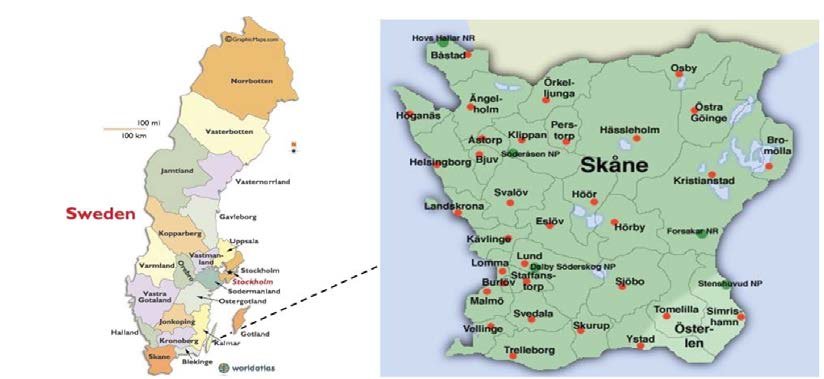
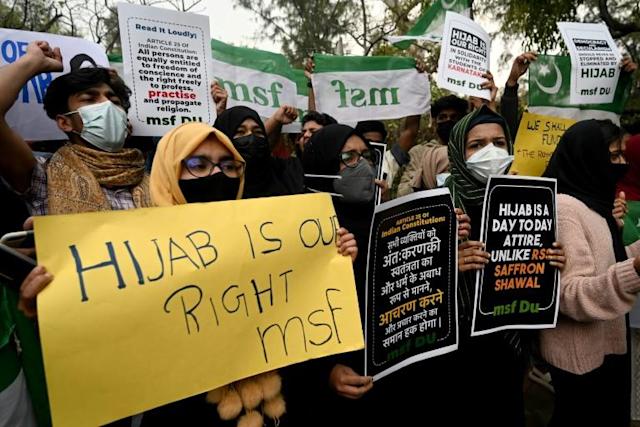
 The PUCL team also studied the role of media, the role of the bureaucracy and how the whole situation led to the violation of rights.
 The report ends with a list of recommendations by the team that would take the state in the direction of addressing the loss of rights.
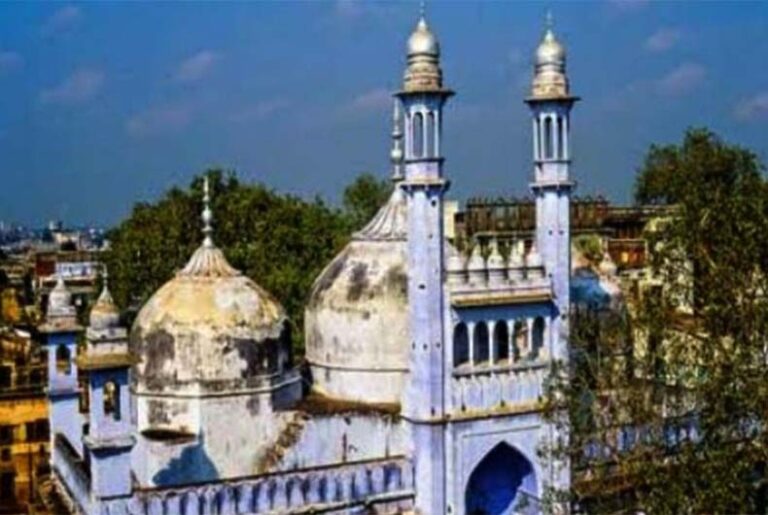

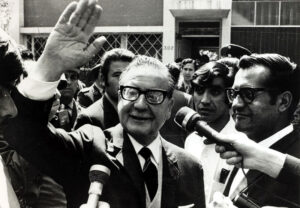


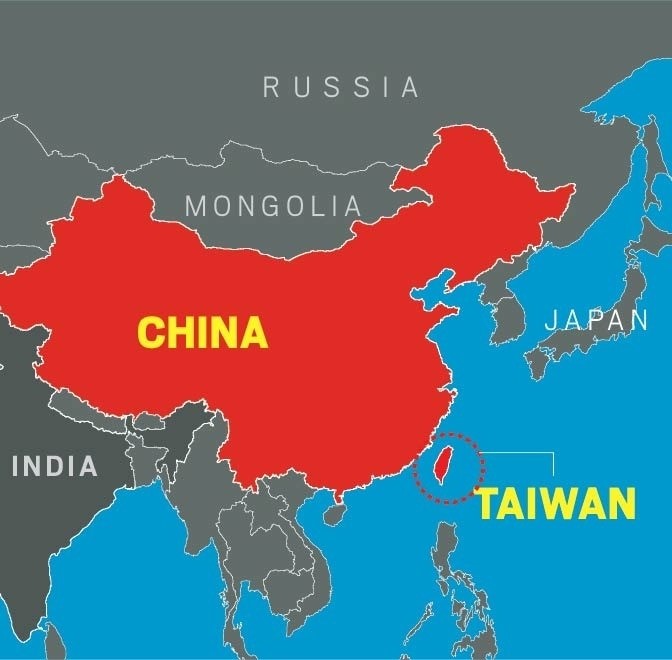
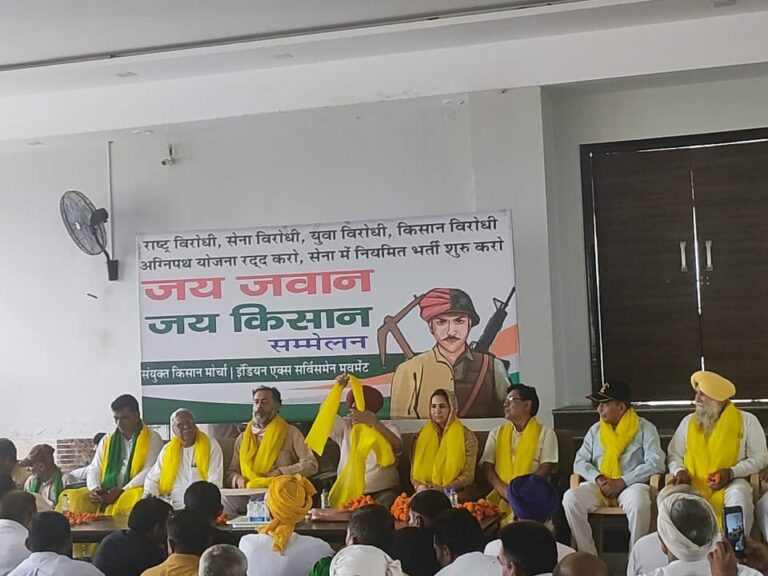
 This campaign aims to educate the public about the disastrous consequences of the controversial Agnipath scheme and compel the central government, by using democratic, peaceful and constitutional means, to roll back the scheme. If the farm laws were dire, the Agnipath scheme is disastrous. With our kisans and jawans in distress, the very backbone of our nation is in the danger of breaking. Our silence cannot be the reason for the government to bulldoze and destroy the protectors and feeders of the nation. We have stopped them once, we can stop them again.
On the call of Samyukta Kisan Morcha and United Front of Ex-Servicemen, Jai Jawan Jai Kisan Sammelans will be held across the nation from August 7 to August 14. The nationwide campaign will educate the public about the disastrous consequences of the controversial Agnipath scheme, and will continue until the scheme is withdrawn.

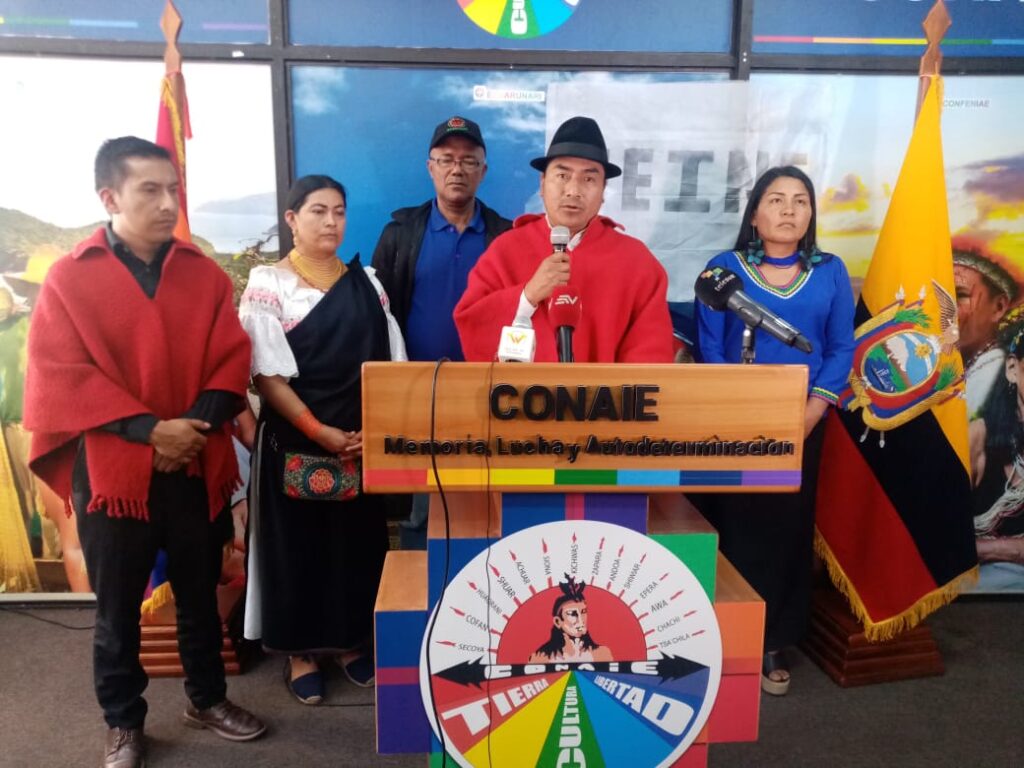 The escalation continued over the next week. On 22 June, CONAIE brought out a list of demands to the state. The demands were:
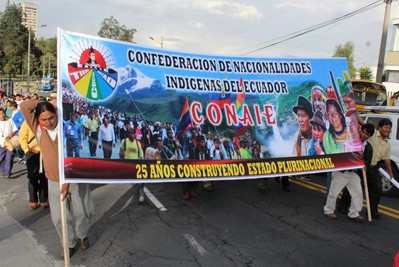 CONAIE was founded in 1986 and is currently the largest indigenous rights organization in Ecuador. It is composed of three regional federations representing the people of the Amazon, Coast and Quichua (highlands). CONAIE rejects electoral democracy as a political strategy and calls for a multi-nation state of Ecuador based on principles of participatory democracy and the self-determination of indigenous people.
Traditionally CONAIE has used road blocking and systems of cultural resistance to protest against the state and policies imposed by the IMF. While they have stayed away from electoral politics, in 2002 they supported the Presidential campaign of Lucio Gutierrez. However, after his victory, CONAIE went against him saying that they went back on his promises to CONAIE by deepening ties with the IMF. Their campaign led to the recognition of the rights of nature in the Ecuadorian constitutions in 2008. Since then, CONAIE has begun to shift away from protests and move towards policy recommendations and awareness building.
The indigenous populations of Ecuador have been a strong driver in politics. Nearly a quarter of the population identifies as indigenous. The people come from different ecological contexts, but their concern for the environment unites them. Deforestation, Oil & Mining companies and other industries have been ruining the ecological heritage of the country.
These popular movements have been at odds with the demands of the Global Economy. In the 1990s, American influence, through the IMF, hollowed out the finances of the state, leading to dependence on trade. Ecuador tried to move towards other poles for support, such as China, Russia or Iran, but this had no effect on the ability of the country to protect its environment or its people. As oil prices change, every country that Ecuador has worked with has changed the nature of support. This has often led to further exploitation of resources. While the state officially recognised the rights of Nature, it has been helpless in protecting those rights. Former President Raphael Correa had declared that while Ecuador was committed to protecting the Earth, the rest of the world keeps betraying them.
Latin America has had pro-people and pro-nature politics at different points, but they have waxed and waned in different parts at different points of time. This has kept Ecuador in a precarious position, as throwing in with a sympathetic country today, could mean being ostracised tomorrow.


 By announcing this committee before the Parliament session, the government has tried to complete the paperwork. But the notification makes clear the ill-intentions of the government behind this committee and the irrelevance of the committee:
1. The chairman of the committee is former Agriculture Secretary Sanjay Agarwal, who drafted all three anti-farmer laws. He is accompanied by Ramesh Chand, a member of NITI Aayog, who was the main advocate of these three laws. As experts, it is the economists who have been against giving legal status to MSP.
2. Space has been left for 3 representatives of Samyukta Kisan Morcha in the committee. But in other places, in the name of farmer leaders, the government has placed its 5 loyalists who openly advocated all three anti-farmer laws. All these people are either directly associated with BJP-RSS or support their policy. Krishna Veer Choudhary is associated with the Indian Farmers’ Society and is a leader of the BJP. Syed Pasha Patel is a former BJP MLC from Maharashtra. Pramod Kumar Choudhary is a member of the National Executive of the RSS affiliated Bharatiya Kisan Sangh. Gunwant Patil, associated with the Shetkari organization, is a WTO advocate and General Secretary of the Swatantra Bharat Paksh Party. Guni Prakash has been a pioneer in opposing the farmers’ movement. These five people spoke openly in favor of all three anti-farmer laws and most of them have been spewing venom against the farmers’ movement.
3. There is no mention of making a law on MSP in the agenda of the committee. That is, this question will not be placed before the committee. Some items have been put in the agenda on which the government committee is already established. In the name of reforms in agricultural marketing, an item has been inserted through which the government can try to bring back three black laws.




 The Integrated Public Transport System was proposed by Petro’s predecessor, but it initially was not run very well. Petro streamlined the system for the user, and made the system expansive and efficient, reducing the average commute time in Bogota and improving the quality of life in the city.
In 2018, Petro ran again for President, coming in second to the winner Ivan Duque, however, the mishandling of the COVID-19 Pandemic led to a loss in popularity for Duque, culminating in a victory for Petro this year.



 While the US has a long history of televised cases, not many trials have received the kind of attention that this trial has. The livestreaming of the Heard-Depp court proceeding easily lent itself to misogynistic scrutiny and ‘memefication of domestic violence.’ It prepared a fertile ground for people to openly voice their prejudices about domestic and gender-based violence.
During the trial, Depp admitted to have sent violent messages to his friend about Heard. Sample this: