The new coronavirus disease (COVID-19) has been spreading rapidly but at a different rate in different countries. A variety of emergency responses and policy strategies have been implemented with varying outcomes so far.
The Asian countries and territories that were first hit by the outbreak have built on responses to previous epidemics such as SARS. Other countries are learning from this but also adopting their own strategies.
It’s possible there is no best strategy that works for everyone, as measures will have different results in countries with different political and health systems, social norms or operating procedures. There also seems to be a lack of consensus between various experts and governments as to what will work best, partly thanks to the limited evidence. However, there have been a number of new studies that give us some indications.
One of the first measures many countries try to prevent the disease reaching them but also to limit its spread after it is established is to ban travel in and/or out of a region. A study on restrictions in Italy showed they reduced travel by 50% in affected regions after three weeks.
travel restrictions help limit the spread from Wuhan to other parts of the worldA global analysis that modelled how travel restrictions have affected transmission revealed that a travel ban in Wuhan delayed the inevitable epidemic progression by only three to five days in Mainland China. But travel restrictions were effective in reducing international transmission by nearly 80%, suggesting that such bans can be effective when paired with other interventions.
Social distancing
One strategy that does seem to be effective at interrupting the transmission of the virus is social distancing, minimising social contact by limiting public gatherings and getting people to stay in their homes unless necessary. We have seen evidence for this in the slowdown of new cases in China and South Korea, as well as the relatively low numbers of cases in Hong Kong, Singapore and Taiwan.
European countries have learned the hard lessons from the rapid spread of the virus in Italy and are implementing social distancing measures in the first stages of the outbreak. This includes the UK, which has ramped up the limited measures it introduced initially. But there are ongoing debates over whether social distancing should be encouraged or enforced, and whether social isolation should apply to the whole population or the groups most at risk.
These options reflect two main approaches: mitigation and suppression. These have been modelled in a report by the scientists from Imperial College London advising the UK government on its approach. The aim of mitigation is to delay the spread of infection to avoid a large peak in healthcare demand that could overwhelm the health system.
This was the UK’s initial strategy, which involved encouraging those with symptoms to stay at home, and testing and treating only those with moderate or severe symptoms. It is only likely to work in countries with very robust health systems that can cope with a surge of mild and severe cases. But the Imperial report showed that the UK’s National Health Service (NHS) would still be overwhelmed by pursuing mitigation, and that suppression would be better to reduce the number of deaths both from COVID-19 and other causes.
Suppression consists of halting the progression of the pandemic in a shorter period, keeping the total number of cases very low. It involves more extensive social distancing even among those at low risk from the disease, banning public gatherings and potentially closing schools and other public venues. This can be done on a voluntary basis or with an enforced lockdown, as has been implemented in parts of China with a positive outcome.
But there are other factors to consider besides the effect on the spread of disease. Women may be more vulnerable to the infection given the fact they make up most of the health workforce. School closures may force health workers and other essential personnel to stay at home to look after their children. Children from low-income families will not have the same resources to learn.
Lockdowns may trigger or aggravate mental health problems. People living with depression and anxiety will suffer from withdrawing social contact and psychotherapy. Elderly households will be isolated. Victims of domestic violence will be confined to the same space as their aggressors.
Evidence from China suggests that suppression is possible in the short term without a massive increase of cases after the measures are lifted (at least so far). It remains to be seen what the optimal duration of lockdowns should be and whether it’s possible for suppression measures to work consistently or even be kept in place for longer.
It is possible to pursue a combined strategy of intermittent social distancing, guided by changes in the spread of the disease. This involves relaxing restrictions for short periods and observing the effect. If the number of cases rebounds, suppression measures need to be reintroduced. This could help prevent people from becoming so psychologically fatigued by the restrictions that they start to ignore them, although behavioral scientists have argued there’s no evidence for this problem.
Testing
One final element that South Korea’s success in limiting the spread of the disease suggests is essential is the testing of suspected cases. Evidence from one of the initial clusters of COVID-19 in Italy supports the idea that widespread testing coupled with quarantining sufferers can significantly reduce the number of people infected and halt the disease progression.
Without working out who has the disease and ensuring they self-isolate, it’s much harder to break the infection chain. The World Health Organization is encouraging widespread testing, but many scientists disagree because testing everyone is unnecessary, could induce a panic and raises the question of how to counsel patients about their result.
There is also a shortage of test kits in certain countries and screening capacities are stretched in countries with many cases. Not only does this make stopping the spread of the disease difficult, but it also means less accurate evidence about whether measures are working.
Claudia Abreu Lopes is a Research Fellow, International Institute for Global Health (IIGH), United Nations University
Sanae Okamoto is Researcher in Behavioural Science, Maastricht Economic and Social Research Institute (MERIT), United Nations University
The article was first published in theconversation.com
Rakesh Sinha, a BJP MP from the Rajya Sabha is set to move a resolution in the House on Friday, seeking the removal of the phrase “socialism” from the preamble of the Constitution, arguing that the word is “redundant” in the current scenario and that the word should be dropped to create space for “economic thinking without a particular thought”.
The preamble of the Constitution declares India to be a sovereign, socialist, secular and democratic republic.
Rakesh Sinha has given a notice, seeking the Chairman’s permission to move the resolution to drop the word “socialist” on Friday during the time allotted for Private Members’ Bill, and his notice was admitted on Wednesday. A copy of every resolution which has been passed by the House is forwarded to the minister concerned and the minister can bring a law in the same line.
The terms “socialist” and “secular” had been inserted in the preamble later, to qualify the character of the Indian republic, as part of the 42nd amendment which was passed during the Emergency.
Many groups have sought to restore the original preamble. In 2015, controversy was sparked by a government advertisement on Republic Day, which featured the preamble with the words “secular” and “socialist” missing.
According to a report by Indian Express, When Sinha was asked why he did not object to the word “secular”, he told- “There could be many views on the word secularism. Some may feel that it is still required, although the secular character is entrenched in our culture, civilization and in deeds. But in the present socio-economic developmental context, socialism is completely a redundant word.”
Pointing out that the word “socialist” was inserted in the Constitution by the 42nd Constitution Amendment Act, 1976, when the country was under Emergency and fundamental rights were suspended, Sinha said the move was made without any discussion or debate in Parliament.
“Ambedkar had argued that the Constitution is just a mechanism to regulate the work of the various arms of the states and that the matters like how the policy of the state and the society’s organization in the social and economic side should be matters which must be decided by people according to the time and circumstances. He argued and won the argument that it should be left to people to decide,” Sinha said.
Ambedkar contested that the directive principles expect the state to be egalitarian and that the socialist principles were already embodied in the Constitution.
Sinha argued, “You cannot tie a generation to a particular way of thinking. Besides, the Congress party which ruled the country for seven decades has changed its direction from being socialist to welfare to neo-liberalism. Its new liberal policies adopted in the 1990s have negated its own earlier positions.”
According to him, it showed that there should always be a scope of evolution in the thinking process based on time and context, as well as on the requirement of people.
Another reason for Sinha to take a position that the word should be dropped from the preamble is the policies of the current dispensation, led by Narendra Modi.
“The Narendra Modi government with its number of initiatives has restored welfare politics… Orthodoxy is not applicable to vibrant society,” he said.
Rakes Sinha is affiliated to right-wing politics and was nominated to be a Rajya Sabha member by the President of India on 14th July 2018. He has authored several books including a Biography of Rashtriya Swayamsevak Sangh founder KB Hedgewar. He is a regular at TV debates and is considered an RSS ideologue.
The article was originally published in Telugu. Its translated into English by Nagargare RameshThe decision of the highest court of the land delivered on 7/02/2020 in a case relating to promotions in government jobs to the effect that reservations can not be claimed as a fundamental right while considering promotions to government employees and that the state governments cannot be directed by the courts of law to implement reservations for SCs and STs while promoting the employees has naturally led to a lot of discussion and debate in the country. The parliament witnessed furore over the matter by the opposition parties and different parts of the country have witnessed protests and demonstrations against the verdict. The opposition parties as also the allies of the party in power at the centre are pressurizing the government to file a review petition in the Supreme Court or to include the issue of reservations in Schedule 9 of the Constitution so that it will be out of the purview of the judiciary. The Central government is merely saying that it is committed to the principle of reservations but has not come out with any specific plan of action in this regard. As such, there is a need for a more detailed and in-depth discussion of the issue in political circles as well as the general public.The highest court was examining the verdict of the Uttarakhand high court in a case relating to the implementation of the reservation policy while promoting employees from scheduled caste and tribe categories. The Uttarakhand court was in favour of following reservations while effecting promotions and the Supreme Court has nullified that decision. The Uttarakhand government had , in a notification , announced that reservation policy need not be implemented while promoting assistant engineers in Public Works Department . It was questioned in the highcourt of the state and the court ordered that the state government should collect statistics about the representation of the SCs and STs in the said posts and if it is found that their representation is not proportionate to their population the government was bound to promote employees of the two said categories.. This decision was questioned in the Supreme Court and the bench consisting of Justice L Nageswara Rao and Justice Hemanth Gupta have nullified the decision of the high court of Uttarakhand. The following are the salient aspects of the Supreme Court Verdict. A) Reservations in promotions are not a fundamental right,B) Courts of law cannot direct the state governments to implement reservation policy for SCs and STs,C) The governments are at liberty to implement the policy of reservations or not to implement. If they decide to implement the policy they have to first collect details of the representation of different sections of the society in government jobs,D) If the government does not intend to implement the policy in respect of any group it is not necessary to collect such details,E) Even if such statistics are available, the courts of law can not direct the governments to implement the policy. The verdict of the court is unambiguous, but the question to be examined now is whether it is in conformity with or violative of the objectives of the Constitution.The original case was about whether reservation policy should be followed in matters of promotions. The 2012 notification of the government of Uttarakhand, the verdict of the high court of the state and the nullification of the high court verdict by the Supreme Court all relate only to that specific aspect. But the problem has arisen because the verdict of the Supreme Court also pronounces that reservations per se, whether in recruitment or in promotions, are not a fundamental right.It is to be noted that if the Court had opined that reservations are a fundamental right of the socially disadvantaged sections it would have decided that in matters of promotions too, reservations are a fundamental right subject to certain restrictions. To decide whether reservations are a fundamental right are not in promotions it has to be first decided whether it is a fundamental right or not of the socially disadvantaged sections of society. The policy that applies to recruitments is also applicable to promotions. It is for that reason that the Court decided to settle the question of reservations as such. Only so, though the case pertains only to reservations in promotions the Court has taken up a discussion about the issue in the prelude to the judgment.While stating that reservations are not a fundamental right, the Court has left the decision to implement the policy of reservations to the discretion of the government and that such a decision should be based on the statistics pertaining to the representation of different sections of society in government jobs. It can be argued that if a particular section is found to be not disadvantaged that section could be placed outside the ambit of reservations. But the contradiction lies in the fact that it is not mandatory for the governments to extend the benefit of reservations to a specific section even when found to be backward according to the findings. But if the government decides to extend the facility to any section the decision should be backed by statistics to prove its backwardness. On the face of it might appear that a section that is no more backward need not be considered for reservation of jobs since it will result in a form injustice to other sections But when it is said that reservations as such are not a fundamental right and that even in the presence of statistics to prove the backwardness of a particular section of the society the government need not implement the policy of reservations, it raises several questions. It is surprising that the Court has found it fit to come out with such an important decision with far-reaching impact without examining the issue more deeply. The Court merely cites some cases like Suresh Chand Gowtham, 2016 to substantiate its position. Several objections raised by seniors advocates like Colin Gonsalves, Dushyanth Dave and Kapil Sibal to the earlier cases cited by the Court, in this case, were totally ignored.The Preamble of the Constitution states that we the peole of India give unto ourselves the Constitution to achieve justice political, economic and social. The emphasis is not merely on equality but also on equality of opportunities, which calls upon the governments to pay special attention to those sections deprived historically of privileges. Justice Chinnapa Reddy calls it positive discrimination in his report on backward classes .He explains that it is not discrimination against any one but a progressive discrimination to remove a historical injustice .Resolving the issues of inequality is a social compulsion and reservations are made part of the Constitution by the makers of the Constitution with a view to rid the society of such inequalities. But glaringly, not just the people, but even the Courts of Law are oblivious of this progressive vision of the Constitution.The said verdict refers to clause 4 and clause 4/A of article 16, but out of context. Articles 12 to 35 of the Constitution speak of the fundamental rights . Articles 14, 15 and 16 are about right to equality, right to protection against discrimination and right to reservations in educational institutions and in jobs. They are all part of Part 3 of the Constitution. Such being the case one wonders how reservations cannot be considered a fundamental right and the judgment does not care to explain its position when it says that reservations are not a fundamental right. All the provisions in articles 14, 15, and 16 and all the articles in Part 3 of the Constitution are all fundamental rights. These rights are of two types. Freedom of speech and expression, to assemble and the like are the ones about which the governments need not do anything, except honouring those rights. But the rights of the second variety, like right to equality, and to equal opportunities require the governments to take necessary measures to implement them and ensure that they are realised. The government thus is responsible for the human rights of the citizens. Only in respect of the Directive Principles of state policy contained in Part 4 of the Constitution the government nned not take any measures and the same cannot be question in the court of law. But the government has no such luxury in the case of the fundamental rights; it has to strive to implement them. The verdict in question states that clause 16/4 and 4/A are directions to the governments , and that if the government decides to extend the facility of reservations to any section of the society these clause merely empower them to do so. Hence they are there only to vest certain powers with the government and not to direct the government… But the fact is that through these clauses the governments are empowered to create reservation facilities but not to deny them to any section in need. It is strange how the Court could construe this provision only as one giving discretionary powers to the government. One fails to understand how the Court has so easily given up its power to direct the government to take certain measures. Besides, this judgment also disturbs the balance achieved in the Constitution in matters of distribution of powers among different organs of the government and what is more, it invalidates the very concept of social justice. Talking of reservations in promotions, different sections have to be extended this facility in different cadres based on their representation in those cadres. As one moves up the hierarchy representation of certain disadvantaged sections tends to be less and less and the statistics in Uttarakhand has proved this fact. Then there is an other more important and more problematic issue and that is that of creamy layer.. To solve this, candidates from those sections using the facility for the first time should be given preference and if there are vacancies still available other candidates from the same category should be considered. Such a policy will be in accordance with the aim and spirit of the reservation policy and every one belonging to those sections will appreciate the measure and will not grouse the facility given to the less privileged in one’s own community. The concept of the creamy layer should be subjected to a more detailed discussion instead of being thought of as one that is to be done away with. And that asks for a thorough analysis.The writer is a member of All India Forum of Right to Education( AIFRTE). Views are personal.
Patanjali Ayurveda Ltd has been fined Rs 75.08 crore by the National Anti-Profiteering Authority (NAA) for not passing the benefits of goods and services tax (GST) rate reduction on to the consumers. According to reports, the NAA has said that Patanjali had increased the price of their washing powder after GST reduction.
Patanjali has to deposit the fine amount, along with 18% GST to consumer welfare funds of the central government as well as funds of state governments, according to an order passed by the NAA, as mentioned in a report in The Economic Times.
“The respondent (Patanjali) has denied the benefit of tax reduction to consumers in contravention of the Central GST Act,therefore a showcase notice be issued directing it to explain why the penalty should be imposed,” NAA told the daily. The NAA has said that the benefits of rate change from 28 per cent to 18 per cent and from 18 per cent to 12 per cent that it implemented in November 2017 have not been passed on to the consumers.
According to the daily, Patanjali has argued that they bore the cost of rate increase when compared to the pre-GST regime and did not pass the cost of increased prices onto the consumers. The NAA did not accept this on the grounds that Patanjali took a business call to not increase prices and that this cannot be a reason for not giving GST reduction benefits to the consumers. NAA rejected another argument of Patanjali which was that the investigation by the NAA was a violation of Patanjali’s right to do business in the country.
“The contention is not correct since the authority or DGAP has not acted as a price controller or regulator,” the NAA said, adding that, “The authority has only been mandated to ensure that benefits of tax reduction and ITC are passed on to end consumers who bear the burden”.
The Director-General Anti-Profiteering (DGAP) has been directed to submit a compliance report on Patanjali within the next four months.
“The government of Spain will protect all its citizens and will guarantee the right life conditions to slow the pandemic with as little inconvenience as possible,” Prime Minister Pedro Sánchez had said. In accordance with this Spain announced that all private hospitals and healthcare providers will be nationalised. This has come in response to the growing number of coronavirus cases. Spain has been one of the worst-hit countries with 11,178 cases and 491 deaths. This move will ensure that more tests can be done and more safety measures are put into place. Further, the government has declared a national state of emergency, citizens are allowed to venture out to only buy essentials, go to work, or go to the hospital.
It is important to note that governments across the globe have the capacity to make essentials free of cost and nationalising health and education sectors. It has taken an epidemic for these measures to be taken and basic human rights to be provided.
According to media reports, Health Minister Salvador Illa, announced the decision to nationalise hospitals and health care providers. Illa has said that health chiefs across the country will have all the means at their disposal, from the private sector, to deal with the epidemic. Illa also announced that fourth-year medical students will be required to contribute to help with the COVID-19 outbreak. Their residency contracts will be extended for the same. Physicians who have not completed their residencies can be hired if they have passed their tests after their residencies.
The government has also announced that there will be a postponement in paying off mortgage, and basic facilities like water, gas, and electricity will not be shut off due to non-payment, during the emergency.
It is important to note that governments across the globe have the capacity to make essentials free of cost and nationalising health and education sectors. It has taken an epidemic for these measures to be taken and basic human rights to be provided.
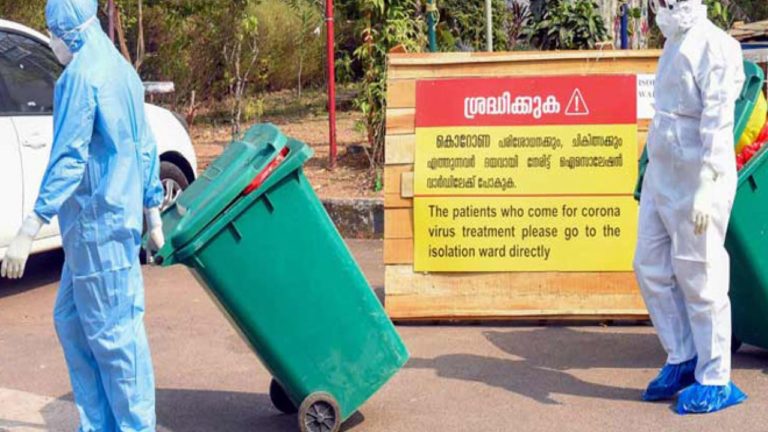
When the scale of the coronavirus outbreak reached global levels, the Kerala Government declared high alert from the 4th to the 8th of February. The state conducted mock drills in hospitals and built an extensive system of checks in place. From the 8th of March, after reports of COVID-19 cases were confirmed the state went back into high alert.
Extensive monitoring to contain the outbreak
Kerala has a well-developed health care system. There are two Primary Health Centers, which are usually the first point of contact, for every three villages. Forty beds were identified in public hospitals, which could be quickly converted into isolation wards. After the first case of COVID-19 was reported in the State, the government ensured that social distancing measures would be put in place. They identified those who would be carriers and isolated them and the people who they would have come in contact with. There have been random screenings that have been taking place at railway stations and bus stops, and passengers arriving from affected countries were being screened. The government ensured constant monitoring measures were in place both at the state level and the panchayat level. The government has identified 24 points from where people can enter the state. It has set up medical-checkup camps at these points to monitor those entering into the state, both by rail and by road. “Each team comprises a senior police official (DySP), a paramedical staff and a local volunteer. There are such multiple teams at various border points. They will monitor every vehicle and record the temperature, and other details of the passengers” a senior police officer was quoted saying in the Deccan Herald. The CM has also said that the KSRTC system will be disinfected as they are high-risk.
Home delivery of Mid-day meals
The government has also directed officials to home deliver food and essential commodities to families who are under observation or have been quarantined. The government has also directed that up to the eighth standard all schools must remain shut. As the children till class eighth will miss their mid-day meal due to the closure of the school, the government has made arrangements to ensure that the meal is delivered to them.
“Break the Chain” campaign, home visits
The State launched a mass campaign called ‘Break the Chain.’ The campaign is a handwashing campaign to help ‘break the chain’ of COVID-19 affecting the state. The aim of the campaign is to stress the need for personal hygiene for the self and the community, according to Health Minister K. K. Shailaja.
The Government is ensuring that the quarantine efforts do not affect the population adversely. The Government has ensured that the quality and availability of broadband internet services are improved so that those who are taking the ‘work from home’ do not suffer. “We have been keeping surveillance on home quarantined persons through mobile tracking. But we found that some people are not following the instructions. So, we have decided to monitor them through house visits and brief them about the risks of breaking the home quarantine instructions. A team consisting of a health worker, police official, and health volunteer will visit every home where persons are quarantined and verify their status,” said Shailaja Teacher and stated that the government will be recruiting and training health volunteers for the same. The state has also mandated a twenty-eight day quarantine period for those returning from affected countries even though the national guidelines are fourteen.
Hotlines, youtube channels, and apps for information and counseling
The government did not only take care of the physical needs of those who were quarantined but also of their mental health. “A live-counseling hotline is being used to provide stress relief to the affected people. The mental health division is in constant contact with patients and giving them good psychological support. That itself plays a big part in the recovery process” sad Dr. Amar Fetle, who is in charge of the anti-nCoV task force in the state.
The State government has also come out with various methods to ensure that information about the virus is disseminated to the public. The government has launched a YouTube channel for the public. This will update them on the health measures that they should be taking to be safe and inform them of the state of the virus in Kerala. Further, the government has developed an app called GoK Direct which shares information about the virus and the outbreak. If one does not have an Android or an iOS, the information will be sent through SMS. The Kerala government is taking these steps to combat fake news and the rumor mills that are contributing to the panic. The state has been taking fake news cases very seriously and arrested three people for engaging in it. The Chief Minister, Pinarayi Vijayan is also using his twitter account to update the people about the steps the government is taking to control the situation.
The communist government in Kerala has been handling the outbreak of the virus remarkably and seems to have ensured safety measures are in place if it amplifies further. The outbreak of the virus could have been much worse. Kerala has 2.5 million people from the state working in over 124 cities, many tourists from affected countries have visited Kerala without screening, and multiple students were studying in Wuhan and other Chinese cities. The virus could have easily spread far and wide had the state not taken serious measures to ensure that the virus was contained.
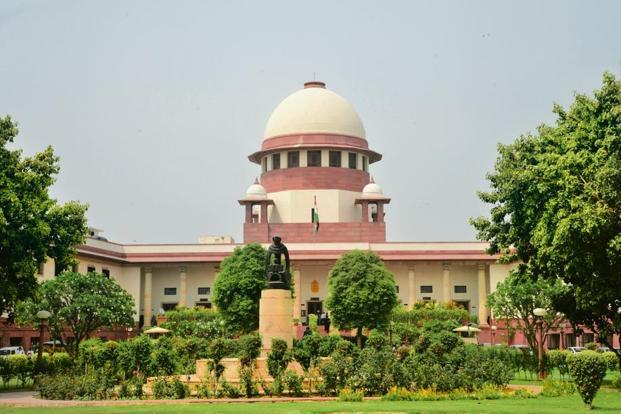
A plea seeking directions to the Government for combating the spread of Coronavirus has been filed in the Supreme Court.
The plea, filed by way of Public Interest Litigation, seeks directions for increasing Coronavirus testing laboratories and quarantine centers, keeping in mind the huge population of India.
The Petitioner(s), Prashant Tandon & Kunjana Singh are journalists and social activists and have inter alia sought availability of temporary hospitals, thermal screening at public places and such other facilities for rural patients to be combat-ready, for any exigency in case of a possible outbreak in rural India.
Bringing to light the sinister nature of COVID-19, the Petitioner has contended that the novel virus has spread across 152 countries within a span of just four months.
“as of March 15th, 2020 infecting 1,57,197* persons & resulting in 5,839* deaths, worldwide, and in our country infecting a reported 100 persons and persons and resulting in 2 reported deaths, making the present scenario precarious. Consequently, on 11.03.2020, the World Health Organisation declared COVID-19 as a pandemic” the Petition states.
By drawing a comparative analysis of populations of other countries with India, the Petitioner has averred that the reported number of infected cases in India appears less due to the inadequate number of testing centers, which is only amounting to 52 laboratories. According to the Petitioner, this number is far too less in terms of a population of 130 crores.
The Petitioner(s) has further averred that India needs a rapid response of war-like preparation as one innocuous person who being a carrier of COVID-1, coming in contact with a large population, which may result in an unthinkable catastrophe. In light of this, it is contended that there is a need to build facilities from Primary Health Centre Level at the Block to the District Level, so that each District of the Country is turned into self-sustaining unit.
Highlighting the Constitutional tenets of “Right to Safety” and “Right to Healthy Standard of Living”, it is stated that it is on Articles 21 & Article 47 of the Constitution of India that the petition rests.
“Right to Health’ is integral to right to life. The government has a constitutional obligation to provide the health facilities” the petition says.
Furthermore, it states that the Petitioner has relied upon numerous articles and newspaper reports to gather knowledge on the current situation and is and is concerned about the large-scale safety and security issue involved in the matter in connection with the outbreak of novel coronavirus (COVID-19)
The Petition has been filed through advocates Ashima Mandla & Fuzail Ahmad Ayyubi
Courtesy: livelaw.com
On Friday, Asianet News and MediaOne, two Malayalam news channels were banned for 48 hours by the Information and Broadcasting Ministry for their ‘biased coverage of the Delhi riots.’ According to the Ministry, the news channels could have incited violence, sided with a particular community, showed CAA supporters negatively, and were critical of the role of the police in the Delhi Riots. This is not the first time that a news channel has been taken off air for their news coverage. In 2016, NDTV was taken off air for divulging sensitive details while covering the Pathankot attacks. Media One’s Editor-In-Chief called this a blatant attack on free and fair journalism. “The decision to bar TV channels is a warning to all media houses in the country that they should not criticize the government. Politicians like Oommen Chandy, Ramesh Chennithala, among others condemned this order and called it a violation of democratic rights. D Raja, CPI General Scretary said, “This is fascism in action”On 7th March the I&B Ministry lifted the 48-hour ban before the stipulated time. According to Prakash Javadekar, the Information and Broadcasting Minister, the ban was lifted as soon as the government found out what had actually happened. Our basic thought process is that press freedom is absolutely necessary for democracy.” Javadekar claimed that Prime Minister Modi was equally concerned about the situation. A government that has been blatantly arm-twisting media outlets, is claiming to now have a change of heart. According to the World Freedom of Press Index, India ranks 140 out of 180 countries in the world. The freedom of the press is a fundamental right, everyone has the right to seek and disseminate information. India has curbed this fundamental right through violence and government orders multiple times and it has gotten worse since 2014. As the world’s largest democracy, the ban on media outlets erodes democracy and Freedom of Press. Since 2014, the BJP government has raided news channels, employed large scale staff to monitor the media on their reporting of PM Modi’s activities, been selective in handing out TV licenses to media outlets, and had 376 internet shutdowns since 2014, with the longest being 214 in Kashmir. Since 2014 there have been over 200 serious attacks on journalists, most of them pertaining to the work they do. India has ranked in the top 5 countries which are the most unsafe for journalists in the world till 2018. During the Delhi riots, many journalists were injured, harassed, and attacked for doing their jobs. Between December 11, 2019, to December 21 2019, fourteen journalists were violently attacked, most of whom were Muslims, this number is sure to have risen in the recent spate of violence. Journalists have been in the center of online trolls, and have been labeled ‘anti-nationals’ and ‘presstitutes’, and a troll army has been sent after them. Journalist Swati Chaturvedi, who wrote a book about BJP trolls, uncovered that the party was behind the trolling campaigns. The Modi government has made clear that it is not the job of the media (and apparently not of the people either) to hold the government accountable. Which is a large part of the reason the Prime Minister has never addressed a press conference since his party came to power in 2014. Media channels, specifically broadcast media channels have been under the radar of the BJP government. Those channels that deviate from the standard reporting procedure, are heavily cracked down on. The brunt of the censorship has been faced by television news channels. Online news websites have not faced the censorship that news channels face because of the reach that they have. The only channels that have escaped this wrath are those that have been feverishly supportive of the BJP government and its activities. News channels like Republic TV, Times Now, and Zee News have all been ardent supporters of the BJP government. None of these channels have faced a blackout since BJP came to power. With a very successful track record in curbing free speech, it will be surprising if more such Media bans, black outs, and violence against the press reduce or are addressed. Thus, Javadekar’s comments on BJP’s ‘basic thought process of freedom of the press being necessary for democracy’ is clearly a smokescreen to continue to do the exact opposite, to curb it to continue with oppressive state policies.
Yogi Adityanath had ordered his government to put up posters with the names, phone numbers, and addresses of Anti-CAA protesters in Lucknow. These hoardings were put up of protesters who were sent recovery notice for their alleged involvement in the violence committed during the protests. Activists Sadaf Jafar, Shia Cleric Maulana Saif Abbas, Human rights activist Mohammed Shohaib are among those who are listed in the posters. A bench headed by Chief Justice Govind Mathur took Suo Moto cognizance of the issue and on Monday ordered the Uttar Pradesh Government to remove these posters. They stated that they were an unwarranted interference in privacy and violated section 21 of the Constitution. The bench said that the putting up of the posters was “highly unjust” and an absolute “encroachment” of the personal liberties of the people concerned. The court stated “the cause is not about personal injury caused to the persons whose personal details are given in the banner, but the injury caused to the precious constitutional value and its shameless depiction by the administration. The cause as such is undemocratic functioning of government agencies, which are supposed to treat all members of public with respect and courtesy and at all time should behave in manner that upholds constitutional and democratic values.” The court has directed Lucknow district magistrate and Police Commissioner to submit a report on the removal of the posters by March 16. The notices that were sent out to the ‘violent protesters’ in December included some men aged 90 years and above, and a man who had died 6 years ago. Clearly the Adityanath government was not verifying the ‘video evidence’ they had and were clearly targeting Muslims as responsible for the violence. The Auditor General contested the HC taking up the matter, saying that the hoardings were put up in Lucknow and thus the HC did not have jurisdiction in the matter. They also said “PILs must not be registered for those who break the law. The court responded to this by stating that where there is gross negligence on part of public authorities and the government, where the law is disobeyed and the public is put to suffering and where the precious values of the constitution are subjected to injuries, constitutional court can very well take notice of that at its own.” It added that “The courts are meant to impart justice and no court can shut its eyes if a public unjust is happening before it.”Activists who have been named have stated that the government had no right to put up their personal details on hoardings and has put their lives in danger. Sadaf Jafar said “This order is a slap on the face of the authoritarianism being displayed by the state government. It restores my faith in the rule of law and also in the Constitution for which we are fighting. It also sets a precedent as the court has said that such actions should never been taken in the future. However, it does not make me feel safe as our faces and addresses are already in the inboxes and social media accounts of people. Some media outlets have carried clear pictures of the hoardings.”Yogi Adityanath had said that the government would take “revenge” for the violence that took place in Lucknow in December. They sent notices to protesters and threatened them stating that their property would be seized if the damages weren’t paid. This order is clearly not legal as any seizure of property by the government can take place only after a trial and not before. The UP government is perpetrating violence, of all kinds, on its own people. There has been multiple video evidence of the violence being incited by the UP Police. Videos of Police destroying public property, beating up protesters, stories of children being sexually abused by police officers in madrasas have emerged and the Adityanath Government has made no effort to send notices out for these damages and is clearly steering the anti-Muslim propaganda that the RSS follows. Most of this violence has taken place in Muslim localities. Adityanath had said that there is no place for violence in a democracy and despite this statement has not been accountable on how the UP Police, which is under him, had orders to stop protests “at any cost” (as reported by BBC)The Adityanath Government is not out to get paid for the damages caused, but to threaten and scare people from standing up to the fascist state. The entire administration, from top to bottom, has acted together to disenfranchise the rights of Muslims and anti-CAA activists. The putting up of hoardings is the continuation of the violence and the fear that the UP government wants to inflict upon the people.
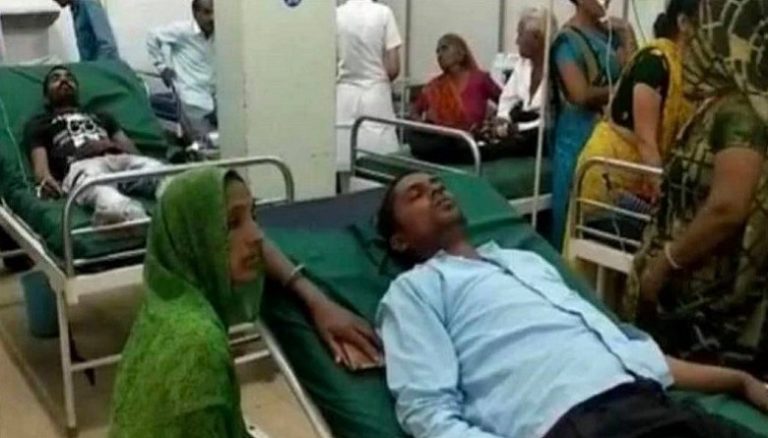
10 Dalit labourers in Gujarat attempted suicide by consuming pesticide on the 5th of March. They were among the 70 employees who have been on strike demanding permanent employment from the DCW Chemical Factory in Dharangadhra taluk in Surendranagar district. They were sitting on strike for the past 62 days. These workers have been working with DCW for years and have been employed as casual labour and are being paid only three-fourth of the wages, for only 15 days of the month. Workers said that they sit idle for the other half of the month and thus are asking the factory management to take them on permanent employees. They have also demanded that the company provide employment to the kin of the workers once the workers retire and employment to the kin of the workers who have died on duty. According to the labour union, as these labourers were contract labourers and not employed by DWC, their demands were not just. Jadeja, a BJP leader stated that as they were on contract, legally, they can not demand the benefits of regular services. After two months of the labourers not being taken seriously, 10 workers consumed pesticide and were rushed to Dhrangadhra Civil Hospital and from where they were referred to Surendranagar Hospital. Currently, they are out of danger. According to DSP R.B Devdha of the Dhrangadhra. According to Naushad Solanki, Congress MLA, the district authorities have remained inactive even though they knew something of this sort would happen. “They have been protesting for the last 70 days but neither DCW nor labour union of the company has paid any heed. Their main demand is that since they have been working for years as contract labourers, they know the nature of the job and therefore they should be given priority in the recruitment of regular workers,” Solanki said.The workers have also shaved their heads, taken a rally being half-naked, and threatened self-immolation in protest.




 One final element that South Korea’s success in limiting the spread of the disease suggests is essential is the testing of suspected cases. Evidence from one of the initial clusters of COVID-19 in Italy supports the idea that widespread testing coupled with quarantining sufferers can significantly reduce the number of people infected and halt the disease progression.
Without working out who has the disease and ensuring they self-isolate, it’s much harder to break the infection chain. The World Health Organization is encouraging widespread testing, but many scientists disagree because testing everyone is unnecessary, could induce a panic and raises the question of how to counsel patients about their result.
There is also a shortage of test kits in certain countries and screening capacities are stretched in countries with many cases. Not only does this make stopping the spread of the disease difficult, but it also means less accurate evidence about whether measures are working.