Samyukta Kisan Morcha has rejected the committee formed by the Government of India on MSP and other issues, and has decided not to nominate its representative in the committee. Morcha had made public its doubts about any such committee ever since it was announced by Prime Minister along with the repeal of the three black laws on 19 November.
In the month of March, when the government had asked the Morcha for names for this committee, the Morcha had sought clarification from the government about the committee, to which it never got a reply.
On July 3, the national meeting of the Samyukta Kisan Morcha unanimously decided that “unless the government clarifies the jurisdiction and terms of reference of this committee, there is no point to nominate a representative of the Samyukta Kisan Morcha to this committee”. Samyukta Kisan Morcha says all its doubts about this committee have come true with the notification issued by the Government. it feels there is no rationale for sending representatives of the Samyukta Kisan Morcha to such an anti-farmer and meaningless committee.
MSP committee full of government representatives and its loyalists: SKM
When the government had asked the Morcha for the names for this committee, in response to it, in an email sent to the Agriculture Secretary on 24 March 2022, the Morcha asked the government:
i) What will be the TOR (Terms of Reference) of this committee?
ii) Apart from Samyukta Kisan Morcha, which other organizations, individuals and office bearers will be included in this committee?
iii) Who will be the chairman of the committee and what will be its functioning?
iv) How much time will the committee get to submit its report?
v) Will the recommendation of the committee be binding on the government?
The Government did not respond to these questions. Yet the Agriculture Minister kept making statements that the formation of the committee was stalled due to non-receipt of the names of the representatives from the Samyukta Kisan Morcha.
All the apprehensions of SKM about this committee turned out to be true Morcha cannot have any association with such anti-farmer committee
By announcing this committee before the Parliament session, the government has tried to complete the paperwork. But the notification makes clear the ill-intentions of the government behind this committee and the irrelevance of the committee:
1. The chairman of the committee is former Agriculture Secretary Sanjay Agarwal, who drafted all three anti-farmer laws. He is accompanied by Ramesh Chand, a member of NITI Aayog, who was the main advocate of these three laws. As experts, it is the economists who have been against giving legal status to MSP.
2. Space has been left for 3 representatives of Samyukta Kisan Morcha in the committee. But in other places, in the name of farmer leaders, the government has placed its 5 loyalists who openly advocated all three anti-farmer laws. All these people are either directly associated with BJP-RSS or support their policy. Krishna Veer Choudhary is associated with the Indian Farmers’ Society and is a leader of the BJP. Syed Pasha Patel is a former BJP MLC from Maharashtra. Pramod Kumar Choudhary is a member of the National Executive of the RSS affiliated Bharatiya Kisan Sangh. Gunwant Patil, associated with the Shetkari organization, is a WTO advocate and General Secretary of the Swatantra Bharat Paksh Party. Guni Prakash has been a pioneer in opposing the farmers’ movement. These five people spoke openly in favor of all three anti-farmer laws and most of them have been spewing venom against the farmers’ movement.
3. There is no mention of making a law on MSP in the agenda of the committee. That is, this question will not be placed before the committee. Some items have been put in the agenda on which the government committee is already established. In the name of reforms in agricultural marketing, an item has been inserted through which the government can try to bring back three black laws.
In the light of these facts, there is no rationale for Samyukta Kisan Morcha to send its representatives to this committee. The struggle for the legal guarantee of MSP to ensure fair price for the crop to the farmers will continue.
Issued by-Dr. Darshan Pal, Hannan Mollah, Joginder Singh Ugrahan, Yudhveer Singh, Yogendra Yadav
Samyukta Kisan Morcha
Email: [email protected]
Ranchi- Jharkhand Police has arrested independent journalist Rupesh Kumar Singh on Sunday afternoon.
Police forces had come to Rupesh Kumar Singh’s house in early hours of the morning and searched the house till 1PM. Interestingly police also had the arrest warrant but didn’t show it till 1PM.
The search started at 5.30 AM while Rupesh’s family was still sleeping. Police arrived at his house in Ramgarh and searched the house till 1 PM. According to the search warrant, the search is for a case from eight months ago from Kandra police station of Seraikela-Kharsanwa. Police did not inform about the arrest warrant until the time of items seizure at 1 PM. When all the items of seizure were prepared, Rupesh Kumar Singh was arrested and taken away after showing the arrest warrant. Among the seized items is a bedsheets, mobile, two laptops and sealed vehicle papers.
Police conducting search at Rupesh’s home.
Rupesh Kumar Singh is already an eyesore for the governments. The central government had placed him in the Pegasus list and was illegally monitoring his phone. But the reason of his arrest by the state police still remains a mystery.
Rupesh has always been vocal about the anti-people policies of the government. He writes on issues of ‘Jal, jungle and Zameen’ ( land, water and forest rights) and of state atrocities against Adivasis. That is also the reason, he is an eyesore for the state and central government. His reports are detailed and evidence based and have helped many organisations in raising pertinent issues of Adivasi Rights.
His latest report was two days ago on the areas affected by smoke and ashes from the factories set up in the Girdih district of Jharkhand. In the story, Rupesh reported how factories in the area had led to health disasters in the area.
Arrest Warrant
Experts say that Rupesh’s arrest is a clear violation of the directions of the Supreme Court. In any case, the police should first inquire and inform the person concerned before arresting. Whereas in this case nothing of the sort was done.
Bastar: Security forces raped and killed an Adivasi woman and later declared as MaoistAuthor is a senior journalist from Jharkhand.
Since March 2022, Sri Lanka has seen mass protests with tens of thousands of demonstrators taking to the streets, demanding that President Gotabaya Rajapaksha step down. As protests intensified, Rajapaksha fled the country to the Maldives, resigning as President on 14 July.
Protesters have raised issues of rising fuel and food prices, increased electricity shortages, going up to 10 hours a day, and corruption as motivating their protest. The protesters have called for the resignation of the current Rajapaksha government and an end to the nepotism and corruption of the government. The demonstrations are spontaneous. Most of the demonstrations have been mostly peaceful, though there have been instances of violence by the protesters, including the death of MP Amarakeerthi Athukorala at the hands of a mob on 9 May 2022.
The Sri Lankan government has declared a state of emergency. Violence against protesters has led to at least 9 deaths, hundreds of injuries and hundreds more arrests.
26 members of the national cabinet resigned en masse at the beginning of April. The Prime Minister, Mahinda Rajapaksha, resigned and fled to Trincomalee Navy, citing security reasons. Protesters have called for Mahinda Rajapaksha’s arrest.
Tracing the roots of conflict
Sri Lanka became independent in 1948. As it was not ruled by the Government of India during British rule, Sri Lanka was not a part of India. When it became independent, it retained the authority of the crown and was named the Dominion of Ceylon. This caused controversy, as the international community questioned exactly how independent Sri Lanka was.
During the colonial period, the Sri Lankan economy was developed towards cash crops and exports. Sri Lanka depended on the global market of tea and rubber. At the same time, partly because of strong missionary work, partly because of work by Buddhist organizations, partly because of the relative economic prosperity of being a trading hub, and partly because of the working class struggles of the mostly Tamil plantation workers, Sri Lanka had a very good record for health and education by the time of independence, compared to other Asian countries.
The export economy of Sri Lanka was booming in the 1950s and 1960s, making Sri Lanka one of the more economically and socially successful countries in the region. In the 1960s and 1970s, there was a shift towards socialism. Working-class resistance led to Sri Lanka rejecting the authority of the crown and establishing itself as a Republic. The country moved to a planned economy model.
Sirimavo Bandaranaike, first women Prime Minister of Sri Lanka in 1977
Even then, the economy was still dependent on exports. In the 1970s, with the invasion and occupation of many countries in Eastern and South-Eastern Asia by western powers, Sri Lanka’s advantageous trade position fell.
Selling Sri Lanka to the Market
In 1977, the Sirimavo Bandaranaike government, which favoured the state-planned economy, lost the elections and the new government, ruled by the United National Party under J. R. Jayawardane, which favoured a market economy, took over. Jayawardane opposed the policies of nationalization, land reform and regulation of thCivil War
In Sri Lanka, there have been tensions between ethnic Tamils and ethnic Sinhalese. These tensions came as a direct result of British government policies and ran high in the early years of independence. Since the Jayawardane government’s reforms, tensions escalated. Amidst various state-supported anti-Tamil pogroms, in 1981, a Sinhalese mob, with state protection, burnt down the Jaffna Public Library, following a rally by the Tamil United Liberation Front, leading to another pogrom. With these pogroms, the LTTE grew and in 1983, Sri Lanka erupted into a civil war that lasted until 2009, with the death of their leader V. Prabhakaran. The war ended brutally, with estimates of nearly 1,00,000 civilians being killed in the last years of the war.
The Civil war coincided with many other structural changes within the country. Sri Lanka took nearly a dozen loans from the IMF at this time. Along with debt to other countries, Sri Lanka’s debt rose from nearly a quarter of its GDP in 1977, to nearly half in 2009. Income inequality rose, as did corruption.
The Rajapaksha family
The Rajapaksha family were landowners and grew into politics during the colonial period. Until 1977, the family had some member or the other in parliament. The family came back into politics in 1989 when Gotabaya Rajapaksa, the military coordinating officer during the Civil War, was known for many victories of the Sri Lankan government. His older brother, Chamal Rajapaksha, was still in politics, and the family again began to grow in influence, until 2005 when Gotabaya became the President of Sri Lanka, overseeing the country to the end of the Civil War.
Gotabaya Rajpaksha
Coming up to the Crisis
After the end of the Civil War, the Sri Lankan economy experienced a brief upswing. After the end of the war, Gotabaya Rajapaksha applied for another IMF loan to make up for the depleted foreign exchange reserves caused by the war. This became the snake eating its tail, as the IMF gave the loan on the condition that Sri Lanka reduces its spending deficit, meaning it could never make up its reserves.
The economy began showing signs of weakness in 2012, however, the COVID pandemic, and subsequent war in Europe, led to the demand and price of tourism and tea, two major sources of revenue for Sri Lanka to fall, while fuel prices rose. The final straw that broke the camel’s back was the very drastic and poorly thought out agricultural policy to shift to organic farming. This all but collapsed the economy.
What we should learn
Low spending on the public sector & consequent corruption, growing levels of inequality & resulting frustration with the political elites, and decades of impoverishment & ethnic strife have left the people of Sri Lanka with no other recourse but to take to the street in protest.
The Sri Lankan crisis is a result of decades of policies that have worked against the people in favour of the market. Decades of ethnic polarization created a smokescreen that allowed the government to dig deeper into those policies, leading to the current situation. Sri Lanka now struggles with high levels of poverty, a slow economy dependent on the global market, immense wealth disparity and an ineffective and corrupt social sector. Indians should look to the case of Sri Lanka as a warning. The conditions that created a crisis in Sri Lanka are present in India. With the growing ethnic strife, anti-people policies, and growing public debt, India is only a few years away from being stuck in the same situation as Sri Lanka.
Author is a mathematician based in Bangalore. Views are personal.
On 7 July 2022, UK Prime Minister Boris Johnson resigned as party leader following the mass resignation from his cabinet. Johnson will remain Prime Minister until a new successor is chosen. The mass resignation comes in the wake of the Chris Pincher Sexual Assault Scandal when a senior member of Johnson’s cabinet was accused of many cases of sexual misconduct. It was revealed that Boris Johnson was aware of the complaints and had done nothing to address them. The mass resignation meant that Johnson has lost his majority and will have to step down.
Down in just over a day
Chris Pincher has been party to sexual abuse scandals since 2017. In June 2022, Pincher had gotten drunk and sexually grabbed two adult men. New allegations arose when Boris Johnson was accused of having ignored complaints about Pincher’s behaviour.
From 5 July 2022, Health Secretary Sajid Javid and Chancellor Rishi Sunak resigned, following Johnson’s admission that Pincher’s appointment as Deputy Party Whip was a mistake. Following this, 36 British MPs resigned in 24 hours, marking the largest number of the resignation of MPs in 24 hours since 1932. The following day, even more, resigned, bringing the number to over 50.
Johnson’s support of Pincher has been called the last in a long list of embarrassments for the British Parliament. The MPs are from the Conservative Party and are not strongly swayed by the destructive racist and anti-poor politics of the state. Rather the crass persona of Boris Johnson has offended them so dearly that the Pincher Scandal was a bridge too far. Johnson has not been known for his sterling character and has seemed to have made a political career by being an oafish rogue.
Johnson in retrospective
Despite his very elite upbringing, Johnson has stood as a politician who could ride populist politics in the divisive social media age.
He made a name for himself as the Mayor of London. He was popular, despite his policies. Many voters found him light and entertaining. His racism and sexism would be played off as comedy.
Johnson became famous for his charming and evasive style of confronting the media. He would routinely dodge questions and redirect interviews. His approach was the opposite of the classic slick politician, where instead of avoiding embarrassing mistakes, he would often bamboozle the media by making so many embarrassing mistakes that the substance of criticism would be lost in a sea of laughs.
Style or Tactic?
The public image of being the man with no plan, unfortunately, means that Johnson could never have a plan. His political survival depended on him being a laughing stock. The clumsy stagger that marked his political career played out in every step of his downfall.
Failing up
After stepping down as Mayor, Johnson returned to Parliament to be the Foreign Secretary. He campaigned under the platform that the UK should withdraw from the European Union (EU), comparing the EU to the Roman Empire.
Many suspected that party leader, Teresa May, gave him a foreign appointment to prevent clashes at home. Johnson supported her rival earlier, and he was very popular. After two years as Foreign Secretary, Johnson ran for head of the Party following May’s resignation.
Prime Minister
When becoming the Prime Minister in 2019, Johnson spearheaded the exit of the UK from the EU. This appealed to the British electorate who felt that the EU was a threat to their sovereignty. Johnson’s approach was notoriously unplanned and had bad consequences for the British economy,
The decision had an impact on Scotland. The majority of Scots felt that the decision was part of the British’s plan to directly control them. The sudden break from the European Union gave fire to the Scottish independence movement. Johnson became Prime Minister after a referendum was held in Scotland, where 54% of the vote went to remaining as part of the UK, slimly beating the independence vote of 45%. The break from the EU signalled greater control of Scotland by London, which made independence more popular.
at the height of the covid lockdowns in the U.K., Prime Minister Boris Johnson and members of his staff hosted a series of parties and gatherings at 10 Downing Street, defying the strict protocols instigated by Johnson’s own government. PC: The Newyorker.
From no lockdown to Partygate
Boris Johnson infamously mishandled the COVID Pandemic. He proposed a laissez-faire approach to the pandemic, which made the first wave extremely deadly. He popularized the theory of herd immunity as a way to handle the pandemic. According to Johnson, if the COVID virus spread, then the recovered population would develop natural immunity, leading to the end of the pandemic. This idea had no scientific basis, though it borrowed a lot of concepts from the vaccine planning literature. The UK ended up being one of the last countries to respond to the Pandemic, and nearly 1,00,000 died in the first year alone. The UK has nearly the population of Karnataka, which has still only registered 40,000 deaths by COVID.
After this, he began to implement lockdown. By the end of 2021, London was under lockdown, where people were not allowed to meet more than one person in their household at a time. This led to a scandal when it was found out that Johnson was hosting elaborate parties at his home with many UK elites and his staff. The scandal, now called PartyGate, led to a huge public outcry over the privilege and indifference of Boris Johnson.
PartyGate was the final break in Johnson’s popularity. He was scraping in popularity owing to his mishandling of the Pandemic and a frustrated electorate facing a sagging economy and an uncertain future. The sheer indifference of PartyGate broke any goodwill Johnson had with the public.
Who is the real Johnson?
Johnson’s clownery makes his real political positions a mystery. He speaks with two sides of his face constantly. He can be accused of being a centrist, a reactionary, a libertarian, an authoritarian, a nationalist, a renegade, and a conservative all at the same time. He is an entertainer as much as a politician.
Like his rise, Johnson’s fall also came by way of media scandal and public embarrassment. His policies on crime, immigration, healthcare, and taxes have not cost him his position with voters, but with sensational media and scandal highlighting his inhumanity. The Pincher Scandal hollowed out the final support he thought he could have counted on, his own party.
Author is a mathematician and political observer based in Bangalore.
For over 37 years, Narmada Bachao Andolan has been continuously waging struggles for the thousands of Adivasis and farmers displaced by Sardar Sarovar Dam Project, along with other projects in the Narmada River valley, causing widespread displacement of people and ecological destruction. Narmada Bachao Andolan has been continuously leading non-violent struggles for the democractic and constitutional rights of farmers and workers. We have known the tireless struggle of the activists of Narmada Bachao Andolan and we salute their hard work over the years. We strongly oppose the FIR registered against the 11 activists of Narmada Bachao Andolan, which is grounded on wholly false allegations, and further demand that the FIR registered against them be immediately squashed.
We also reject the baseless accusations made against Medha Patkar, Parveen Rumi Jahangir, Parveen Rumi Jahangir, Vijaya Chouhan, Kailash Awasya, Mohan Patidar, Ashish Mandloi, Kewal Singh Vasave, Sanjay Joshi, Shyam Patil, Sunit SR, Noorji Padvi and Keshav Vasave of the Narmada Bachao Andolan. The fact that this is not the first time Barwani Police and Adminsitration has made similar allegations and registered false cases on Adivasi activists is shameful and reflects attempts to harass activists standing up for democratic rights.
Today, as farmers continue to deal with a worsening agrarian crisis and the situation of workers continues to deteriorate from bad to worse. The youth of the country are being systemically denied of both, education and opportunities of employment. Privatisation has been weaponized to further weaken the already poor access to education and employment for the majority youth of Adivasi, Dalit and other marginalized youth. Adivasis who have been staunchly resisting attempts by the government to hand over their traditional resources of Jal-Jangal-Zameen are continuously facing evictions from their own lands. An ever-growing number of people are being deprived of their constitutional rights, every day. With this latest accusation, it is clear that peoples’ movements and activists who have been consistently raising these issues are being targeted as part of a larger assault on democratic forces.
It is clear that governments across the country are trying to stifle and subdue dissenting voices who are continuously resisting the erosion of democratic rights and are leading constitutional struggles for the same. Jagrit Adivasi Dalit Sangathan, stands in complete solidarity with Narmada Bachao Andolan, its’ activists and all democratic forces who are leading struggles to ensure the right towards a secure and dignified life for all citizens of the country.
Faizan Mustafa, a Professor of law and vice-chancellor of National Academy of Legal Studies and Research (NALSAR University of Law Hyderabad established by Legislative Assembly of Telangana) in a recent write-up (‘Muslims and Judiciary: We do not have Muslim or non-Muslim judges in India’, the Indian Express, July 8, 2022) disclosed that in 1997 he refused to undertake a project on the role of Muslim judges as it was against the ingrained ethos of Indian judiciary; the non-partisan character. However, the current write-up dealt with the issue of treatment of Muslims by the Supreme Court (SC); Faizan presenting the defence of the Supreme Court of India. This write-up surely was in response to the mounting criticism in India and abroad that Indian judiciary, specially, its higher echelons have succumbed to the majoritarian pressures and were being ‘managed’ by the RSS-BJP rulers committed to Hindutva.
Claim: Judges are Sensitive to Muslim Issues
Faizan stressed that “Judges have been not only fair but also sensitive to Muslim causes”. It is a problematic statement. Are Muslim causes not also Indian causes? To take few contemporary examples: Are Ramjanmabhoomi-Babri Masjid case, indefinite incarceration of hundreds of youth/intellectuals/journalists under terror laws, protests against CAA and subsequent repression of the activists, bulldozing of residences and protests against abrogation of the Article 370 only Muslim issues? These issues much maligned as ‘Muslim’ issues, in fact, test Indian polity’s constitutional commitment towards democracy, social-political-religious equality, secularism, federalism, Rule of Law (even Rule by Law) and independent judiciary.
Faizan Mustafa
Reality: Inbuilt Hostility
Faizan’s defence of the SC started with the defence of Justice D Y Chandrachud whom he described as a “scholar judge”. Faizan stated: “On June 20 [2022], Justice D Y Chandrachud was asked about the judiciary’s treatment of Muslims at King’s College London. Justice Chandrachud didn’t take offence to the question but answered it politely…our judges do not have the litigant’s religious identity in mind while dispensing justice.”
As another proof of the non-partisan character of the SC he referred to the 2019 SC judgment in Ramjanmabhoomi-Babri Masjid case, which included Justice D Y Chandrachud as member of the bench which delivered the judgment. According to Faizan, in this case SC,
“Termed the installation of idols in 1949 and the demolition of the Babri Masjid in 1992 as ‘egregious wrongs’ [and said] the Babri Masjid was not constructed after the demolition of a Ram temple and pointed out that the Archaeological Survey of India report had not found any evidence of such a demolition. It had also observed that the Places of Worship Act, 1991, protects and secures the fundamental values of the Constitution”.
However, for reasons known to the Professor only, he did not elaborate why despite all these glaring facts and proofs even corroborated by the Honourable non-partisan Justices it was decreed by the non-partisan highest court of India that due to the “faith and belief of Hindus…that Janmaasthan of Lord Ram is the place where Babri Mosque has been constructed” a Ram Temple must be built there. It is important to note that Babri mosque-Ramjanam Bhoomi case was not a Hindu-Muslim issue which was made out by Hindutva organizations and later SC falling for it.
Babri Mosque was demolished on December 6, 1992 by an illegal assembly of Hindutva zealots gathered in Ayodhya by the RSS and its fraternal organizations. It was not an issue between Hindus and Muslims but between Hindutva organizations and democratic-secular Indian polity. The mosque was demolished despite orders of the SC, assurances by the RSS/BJP leaders to Indian Parliament and the then PM Narsimha Rao. Raogave solemn promise both to the Parliament and Indian nation (from the ramparts of Red Fort on August 15,1993) that wrong would be undone and the demolished Mosque would be built at its original site.
Images taken by Praveen Jain shows that Babri Masjid Demolition was carefully orchestrated | BBC
As if it was not enough, SC allowed the same organizations (Vishwa Hindu Parishad, an appendage of RSS) to construct Ram Temple which had admitted playing leading role in demolition of the Mosque. Thus what Hindutva juggernaut could not accomplish on December 6, 1992 was facilitated by SC.
Faizan kept silent on how later Justice Chandrachud violated unanimous judgment in Babri mosque-Ramjanam Bhoomi case in which he was part of the bench. Renowned political analyst, Ashutosh stated that 1991 judgment was expected to put at rest the Hindutva project of demolition of innumerable mosques. On the contrary,
“While hearing the Gyanvapi petition, Justice Chandrachud opined that the 1991 Act does not stop the ‘ascertainment of the religious character of the place’…Now anyone can go to court and put a question mark over the veracity of any mosque or temple or Gurudwara or church or a synagogue and request to change its status…Therefore the Supreme Court has practically made every religious place in the country suspect and disputed. Would it be correct to say that the Supreme Court in its deliberation has, mistakenly, been impacted by the majoritarian thought process?”
Faizan praised Supreme Court Justices Surya Kant and Justice J B Pardiwala [July 1, 2022] for making,
“scathing observations against ex-BJP spokesperson Nupur Sharma for speaking against the Prophet. Justice Surya Kant blamed her for the tragic killing in Udaipur”.
The Justices deserved thanks for this gesture. However, Faizan forgot to deliberate on what the Supreme Court bench comprising Justices AM Khanwilkar, Dinesh Maheshwari and CT Ravikumar did to renowned human rights’ activist, Teesta Setalvad and a senior much decorated police officer, Sreekumar. Minimum, he should have read what former SC Justice Madan B Lokur (who happens to be member of both academic and general councils of the law university headed by Faizan) wrote on this issue. He stated that Teesta was “Condemned by Innuendo” of the Gujarat police prosecutors and
“it is tragic that the Supreme Court has taken upon itself to unilaterally decide who should be arrested and why? That is certainly not the jurisdiction of the Supreme Court, as we know it, except in the case of contempt of court. And, even in a case of contempt, the Supreme Court hears the alleged contemnor before judgment and arrest.”
Teesta Setalvad, Activist
No Relief for Most of the Dissidents
It is sad that Faizan who happens to be VC of a University (whose Chancellor is chief justice of Telangana High Court) and known as expert on legal/judicial issues can be so untruthful. He admits “that many [meaning countless] young Muslims had been arrested on terror charges under successive governments” but resorted to a grave lie when stated that “the accused in many such cases were acquitted clearly demonstrates that ordinary Muslim litigants have been getting justice from our judges”. Faizan as a Professor must know that a teacher should never bungle with the facts. These are not countless Muslims only but countless Hindus, Christians, Sikhs and Dalits who have been languishing in jails under terror laws without hearings, grant of bails or any kind of judicial intervention. Faizan as a researcher of Indian judiciary should have read tribal and human rights’ activist Jesuit Fr. Stan Swamy’s factual report on the pathetic condition of incarcerated youth in jails most of them hailing from Dalit and minority stocks.
Does Faizan need to be reminded that Fr. Swamy was the oldest prisoner [83 years old] incarcerated under terror laws on October 8, 2020 and was given interim bail only on May 28, 2021 for treatment when there was no chance of his survival? He died on July 5, 2021.
Two Kinds of Criminal Justice
Faizan Mustafa refuses to admit that Indian higher judiciary delivers two kinds of justices which not only affect Muslims but other minorities, Dalits and women too. Whenever the country witnesses the large-scale violence against minorities and Dalits, the search for perpetrators continues endlessly and criminals rarely punished. Major incidents of violence against minorities like Nellie massacre (1983), Sikh massacre (1984), Hashimpura custodial massacre of Muslim youth (1987), pre/post-Ayodhya mosque demolition violence against Muslims (1990-92), Gujarat carnage (2002) and Kandhmal cleansing of Christians (2008) are testimony to this reality.
The status of anti-Dalit violence is no different. The major incidents of persecution and massacre of Dalits; 1968 Kilvenmani massacre, 1997 Melavalavu massacre, 2013 Marakkanam anti-Dalit violence, 2012 Dharmapuri anti-Dalit violence (all in Tamil Nadu), 1985 Karamchedu massacre, 1991 Tsundur massacre (all in AP), 1996 Bathani Tola Massacre, 1997 Laxmanpur Bathe massacre (all in Bihar), 1997 Ramabai killings, Mumbai, 2006 Khairlanji massacre, 2014 Javkheda Hatyakand, (all in Maharashtra), 2000 Caste persecution in (Karnataka), 5 Dalits beaten/burnt to death for skinning a dead cow 2006, 2011 killings of Dalits in Mirchpur (all in Haryana), 2015 anti-Dalit violence in Dangawas (Rajasthan) are some of the thousands of incidents of the Dalit persecution. In almost all these cases perpetrators are yet to be identified. Even if identified the prosecution rate never exceeded 20%.
On the other hand, the Dalit and minority ‘perpetrators’ of violence are efficiently put on trial by constituting special investigation teams and punished by fast track courts. In order to meet the end of justice and national security they are hanged and jailed. But when the victims are Dalits or minorities no such urgency is shown. In such cases Indian State is fond of playing commission-commission. Commissions after commissions would be constituted to see that the heinous crimes disappear from the public memory. The horrendous massacre of Sikhs in different parts of India is a living testimony of this criminal attitude of the Indian justice system.
Balancing is no Justice
Faizan as a legal luminary must understand that justice is not an art of balancing but requires honesty to call spade a spade. It would be travesty of justice if our examination of independence of higher judiciary is shackled by the binary; SC versus Muslims. SC has not been able to expedite its scrutiny of terror laws, use of Pegasus for snooping on journalists, activists, constitutionality of CAA, political bonds and Article 370, anti-working class laws, hate mongering to name few. This judicial inertia is prolonging the misery (of being incarcerated) of hundreds of political activists, journalists, lawyers, human rights activists and trade unionists. It is whole of India which needs an independent judiciary and not a merciful SC for Muslims only!
The author is a retired professor at Delhi university.
Link for some of S. Islam’s writings in English, Hindi, Urdu, Marathi, Malayalam, Kannada,
Bengali, Punjabi, Gujarati and video interviews/debates:
http://du-in.academia.edu/ShamsulIslam
Facebook: https://facebook.com/shamsul.islam.332
Twitter: @shamsforjustice
http://shamsforpeace.blogspot.com/
On 19 June 2022, after a runoff election, Gustavo Petro, senator and former mayor of Bogota, has been elected as the next President of Colombia. Petro ran on a position of land reform, universal health care, and expanding social services. This is the first time in Colombian history that far-right candidates have not won the Presidency. In Colombia, far-right politicians support big business and landowner interests, draconian policing, and continuing the brutal war against leftist insurgents. Petro, by contrast, stands for expanding healthcare and other social services, environmentalism, and following up on peace deals made with insurgents to bring peace to Colombia.
Colombia stands apart in Latin America as being one of the few countries never to have a declared socialist head of state before. While the left movement in Colombia was always very strong, a combination of strong intervention by the United States, and a network of extremely violent right-wing militias funded by the Colombian elite, have made all forms of mobilization almost impossible until now.
Petro’s victory comes on the heels of massive protests in Colombia during the COVID-19 Pandemic, where access to healthcare and other social services, wealth inequality, and police brutality drove the protests. Petro’s win comes as a reaction to years of state indifference boiling over in periods of crisis.
Protests during Covid 19 pandemic in 2020.
Who is Gustavo Petro?
Gustavo Petro began his career in politics at age 17 as part of the M-19 movement. The M-19 was a Guerilla movement that came up in response to the corrupt elections of 19 April 1970. The 19 April election was the first election in Colombia after years of military rule, but many Colombians saw it as a sham. The M-19 movement accused the elections of having been rigged against Gustavo Rojas Pinilla, the former President of Colombia who contested and lost.
The M-19 movement was a nationalist movement that declared that big businesses and the wealthy elite are ruining their country. American companies, like Coca-Cola and Chiquita, worked with the Colombian government and para-military militias. M-19 was the second-largest guerrilla group after the Marxist-Leninist Revolutionary Armed Forces of Colombia (FARC).
Petro was arrested in 1985. After his release, he founded the M-19 Democratic alliance with former M-19 members and began to contest elections. He served as a senator as part of the Alternative Democratic Pole. He left the party after a failed bid for Presidency in the 2010 Colombian election. In 2011, he formed the Progressive Movement, later becoming the Humane Colombia.
“A developed country is not a place where the poor have cars. It is where the rich use public transportation.” – Petro
As part of Humane Colombia, Petro ran for mayor of Bogota. His mayorship became famous worldwide for the application of the Integrated Public Transport System in 2012, which brought together a combination of Rapid Bus Transit, Bus, and Gondola lifts systems to create one of the best public transport systems in the world.
The Integrated Public Transport System was proposed by Petro’s predecessor, but it initially was not run very well. Petro streamlined the system for the user, and made the system expansive and efficient, reducing the average commute time in Bogota and improving the quality of life in the city.
In 2018, Petro ran again for President, coming in second to the winner Ivan Duque, however, the mishandling of the COVID-19 Pandemic led to a loss in popularity for Duque, culminating in a victory for Petro this year.
Francia Marquez
The election was also noted for the appointment of Francia Marquez as the new Vice-President. Marquez will be the first Afro-Colombian to be Vice-President of Colombia. Marquez is a human rights and environmental activist and lawyer. She began her political career at age 13 when she took part in protests against the construction of a dam that threatened her village in the Cauca Department. She came from a family of miners. As she grew older, she took part in the anti-mining struggle, fighting against illegal mining and mining by international companies. Her work has been dangerous, with members often threatened by local mafias and militias.
In 2018 Elections, Francia Marquez as the new Vice-President. Marquez will be the first Afro-Colombian to be Vice-President of Colombia.
Famously in 2014, Marquez organized a 350-kilometre march from Cauca to Bogota, consisting of 80 Afro-Colombian women, to bring attention to illegal mining. The campaign was successful leading to the creation of a national task force to remove illegal mining. An anti-mining task force was unprecedented. In 2022, she announced her plans to run for the Presidency on a platform to stand for women, Afro-Colombians, indigenous peoples and others who have been excluded. She ran against Petro, coming in second in the primaries. After securing his candidacy, Petro nominated Marquez as his running mate.
Left swing in Latin American
After Mexico, Argentina, Bolivia, Honduras, Peru and Chile, Petro’s victory in Colombia has been seen as part of a leftward turn in Latin America. This is reminiscent of the late 1990s, and again in the early 2010s when many Latin American countries began to elect left-of-centre popular governments. With the upcoming Brazilian elections, there is a good chance Luiz Inacio Lula da Silvia’s Worker’s Party will win. Colombia and Chile’s movements to the left are unprecedented, as both countries have had a long history of military rule, reactionary or ineffectual leadership or internal strife.
Current issues facing all of these countries have been exacerbated by the COVID-19 pandemic. Rescuing the public health care systems, welfare schemes, and social services is an important priority. Wealth inequality, which reached new heights during the pandemic, also is a concern. The inequality is also linked with extreme forms of corruption and crony capitalism in these countries. These new leaders also have taken ecological destruction seriously.
The new form of leadership is not radical in the way of previous generations. Many of them stand for implementing basic rule of law, modest regulations on corporations, conciliatory foreign policies, and reducing the destruction of the environment. Petro stands as part of a new generation of leaders concerned about issues of gender, race, environment, liberty and the destructive powers of capitalism, and his victory comes after struggles raging for over 60 years to bring some concern of the Colombian people to the Colombian state.
As of 17 June 2022, it will have been two months since the state of Türkiye launched the massive military Operation Claw-Lock, against the Kurdish people in Syria and Iraq. Special forces have gone to the mountains of Kurdistan, and bombing has continued day and night with the might of NATO behind it.
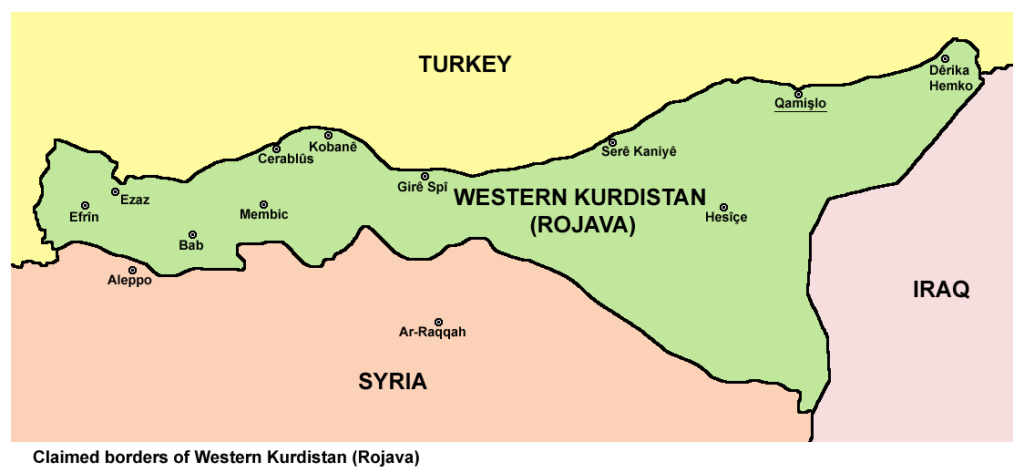
Türkiye has been bombing the region as part of its campaign to demolish the Kurdish resistance, which it claims has been engaging in terrorist activities in Türkiye. Operation Claw-Lock is the latest in a series of maneuvers by Türkiye that began in 2019, and have led to hundreds of deaths. The number is under dispute, but likely ranges in the hundreds. These maneuvers violate the sovereignty of Iraq and Syria. They are an attack on the emergent political formations of the people in Rojava, Syria.
Türkiye has sent airstrikes, automated drones and artillery attacks in Kurdish majority areas of Iraq and Syria to isolate them from the Kurdish people in Türkiye. Drones have targeted activists within the free Kurdish movement, particularly focused in the Rojava region of Syria.
Rojava has gained international recognition for its unique and inspirational forms of grassroots democracy and its effective resistance to authoritarian, patriarchal and fundamentalist forces within Syria. Türkiye has been using the cover of the Russian-Ukraine war to escalate its attacks on the Kurdish people.
The origins of the Kurdish movement
During World War I, the British and French Empires joined forces with the budding Arab Nationalist movement to defeat the Ottoman Empire. After the dissolution of the Empire, the French and British took over most of the Middle East. They betrayed their allies in the Arab nationalist movement by splitting the Middle East among themselves, and when the pressure came to grant these areas independence, they arbitrarily drew up borders and made up most of the countries in the Middle East today. Some countries were divided to support Western business interests.
The Kurdish people were mostly tribes located in the regions connecting modern-day Türkiye, Syria, Iraq and Iran. They were minorities in many countries and had no claim to a country of their own.
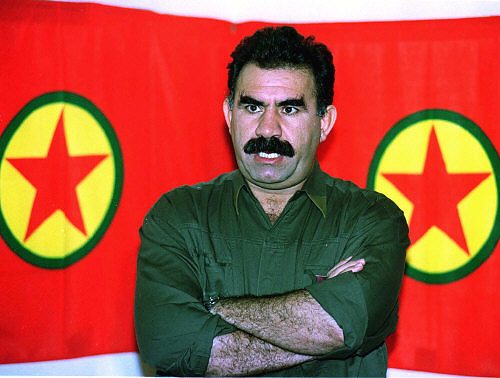
In the 1980s, Partiya Karkeren Kurdistan (Kurdistan Worker’s Party) began a guerilla campaign for a free Kurdistan movement against Türkiye. The Party mostly organized students first, under the leadership of Abdullah Öcalan (pronounced O-Ja-Laan). The PKK was deemed a terrorist organization and Öcalan was arrested by the Turkish government in 1999.
To Peace and Anarchy
In jail, Öcalan began reading about movements in other parts of the world. He was very impressed by anarchist, feminist, environmentalist, and anti-war movements particularly. He changed his positions. Rather than fighting for an independent Kurdish nation, he advocated that Kurds strive for autonomy and against national borders.
To be truly free, Kurds would have to fight for freedom at every level. They would need to be free within their communities, which meant fighting patriarchy. They would have to fight capitalist forces. They would have to work with other local communities. They would have to resist violence by the state. He felt resistance would be more effective if the local communities were in control of the movement and worked in solidarity with each other in creating autonomy in a region. Fighting to create a new Kurdish state, he felt would recreate the other problems. It would be dependent on a select group of revolutionaries. It would create discord with non-Kurdish communities, and without the active support of liberated women, it would be fragile.
Abdullah Ocalan, founder of Kurdistan Worker’s Party
He turned to anarchist thinkers to develop a new theory of organizing. Anarchism does not refer to disorder, but a struggle against all forms of domination. Anarchism, from the parts, An (meaning without) and Archy (ruler) stands against multiple forms of domination like Patriarchy, Hierarchy, Monarchy and Oligarchy. He modified the ideas for the Kurdish context into a model he called, Democratic Confederalism.
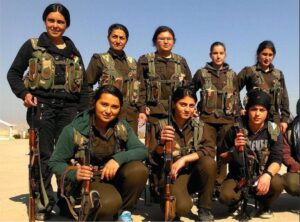
Within Democratic Confederalism, is the theory of Jineology, or Science of Women. In order for a society to be free, the traditional bonds that oppress women must be broken. The theory of Democratic Confederalism advocates women-led structures, local governing systems and support for worker-led cooperatives. State-controlled institutions are allowed to have little power, and everyone in society should be given police training. Police training also includes feminist components and is intended to empower women. Conflicts are managed by local councils. There also must exist women-only councils alongside the mixed-gender councils that can override the mixed-gender councils on issues related to women’s oppression, such as domestic violence. Rather than having women’s wings, Democratic Confederalism advocates that Women’s organizations should be empowered enough to handle certain issues even when facing opposition from the men in society. Women make up over 40% of the self-defence fighting forces in Rojava. During the Syrian Civil War, these fighting forces were important in stopping the spread of ISIL.
Women Fighters of the Rojava
What is Operation Claw Lock?
During the Syrian Civil War, Türkiye began to occupy parts of Northern Syria. Owing to common interests, the PKK and the Turkish government held peace talks, given the chaos of the war. The PKK agreed to restrict their activities to the mountains, while Türkiye agreed to stop attacking the PKK.
Türkiye began to expand its military bases in Iraq. Türkiye did this to keep the Kurdish movement from gaining strength in Iraq and keep the movement isolated from Kurds in Türkiye. Establishing military bases in Iraq has been called an act of aggression, both regionally and internationally. The conflict between the PKK and Türkiye reignited in 2015.
Türkiye also held a crackdown on Kurdish parties in Türkiye. They were accused of supporting terrorism and thousands of public employees, including democratically elected leaders in Kurdish majority areas, have been detained by the police.
From 2015 onwards, hostilities resumed. Türkiye accused the PKK of expanding its operations, while the PKK has accused Türkiye of attacking its members.
In 2019, Türkiye began a series of “Claw” Operations, where drone and aerial attacks on Kurdish areas in Iraq and Syria began. The Claw operations have been part of Türkiye’s anti-terrorism campaigns, and have been used to suppress Kurdish and other dissident voices both in Türkiye in neighbouring countries.
Türkiye’s attack on the Kurdish regions in Iraq and Syria is an illegal assault on people on foreign soil and warrants heavy denouncement. The people across the world are denouncing these attacks.
Author is a mathematician and political observer based in Bangalore.
Progressive citizens and social workers of 14 districts of western Uttar Pradesh have formed the Bhaichara Manch (Brotherhood Platform) with the aim of preventing the growing communalism. The platform will unite the citizens who have faith in the basic spirit of the Constitution of the country. Along with this, the platform will also fight against the oppression of citizens on religious and caste lines. Units of the Forum have been formed in Gautam Budh Nagar and Bulandshahr. The leadership is working on a plan to expand the platform across Uttar Pradesh.
On 5th June 2022, various mass organizations, parties, social workers and intellectuals from various districts of western Uttar Pradesh held a meeting in the Bal Sadan Hall on Eastern Court Road, Meerut. Expressing concern over the growing communalism in the country, the speakers said, “Unfortunately, the throne of the country has been occupied by such a political party which does not believe in unity in diversity of India; Those who take the oath of the constitution but do not believe in its secular, social justice and democratic character; Whose slogan is to build the nation in the name of religion.
As a main task the Manch will run a massive public awareness campaign against the conspiracy of communal forces and attacks on the economy. It proposes to launch a common movement with people of all religions and castes to preserve the brotherhood in the country. There will be direct intervention by committees of various levels of Bhaichara Manch wherever there is injustice to the people on the basis of religion and caste. Along with this, the forum will also emphasize on implementing the principles of secularism and social justice as enshrined in the Constitution of the country.
Manch member Gangeshwar Dutt Sharma said, “The platform has been formed for the unity of the people to end the politics of communalism. The progressive section of the society has felt the need for such a platform for a long time due to the ever-increasing communalism in the country.”
Bhaichara Manch is active in 14 districts of Western Uttar Pradesh
The committee of Western Uttar Pradesh Bhaichara Manch includes representatives from 14 districts including Meerut, Muzaffarnagar, Shamli, Saharanpur, Bijnor, Moradabad, Rampur, Sambhal, Hapur, Ghaziabad, Gautam Budh Nagar, Bulandshahr, Aligarh and Mathura. A conference was organised by Advocates, social workers, workers, farmers, social workers and intellectuals of Gautam Budh Nagar on 19 June 2022 and the district unit of Bhaichara Manch was formed.
Col Jaiveer Singh, patron of Bhaichara Manch, Western Uttar Pradesh, said, “The forum has been formed to make the public aware against the hatred spreading in the country. Manch activities have started in 14 districts of Western UP. Committees have been constituted in Bulandshahr and Gautam Budh Nagar and the process of formation is underway in other districts.”
On the question of eligibility for membership of the Manch, he said, “Anyone who agrees with the objectives of the Bhaichara Manch and believes in democratic values can become its member. But the platform will not give its membership to a person who believes in discrimination on the basis of religion and caste.
Bhaichara Manch demonstrated against Agneepath scheme and submitted a memorandum
On Tuesday, a large number of people united under the banner of Bhaichara Manch and demonstrated against the Agneepath scheme in the Collectorate premises of Surajpur of Gautam Budh Nagar district. The members of the Manch raised slogans against the scheme and the central government and opposed the recruitment of soldiers for four years. A memorandum was submitted to the President through the DM’s office, the members of the Bhaichara Manch demanded that the Central Government should cancel the Agneepath scheme with immediate effect, otherwise the forum would be forced to launch a big movement.
In a memorandum addressed to the President it says- The government has broken the dreams of the youth who have been working hard to join the army for years by announcing the Agneepath scheme. The Government of India has not only cheated the unemployed youth but has also compromised with the security of the country. The present government is eliminating all forms of organized employment and keeping contract workers, which is against the interests of the youth and citizens of the country.
Dr Rupesh, District Convener of Bhaichara Manch said, “Crores of youth of the country prepare for years to join the army. The youth were already upset due to non-recruitment for three years, the government has stifled their future. Generally only children of farmers and laborers go to the army. The government has pushed lakhs of youth into the quagmire of unemployment.”
Addressing the gathering before handing over the memorandum, co-convenor Rajkumar Bhati said, “Former General VK Singh who is also a BJP leader is strongly supporting the Agneepath scheme but he had gone to the court to extend his own tenure of 6 months. On the one hand, the BJP is privatizing government institutions in the service of the capitalists by ending organized employment. On the other hand, it is poisoning the society by spreading communalism so that the people of the country remain disunited.
Author is an independent journalist.
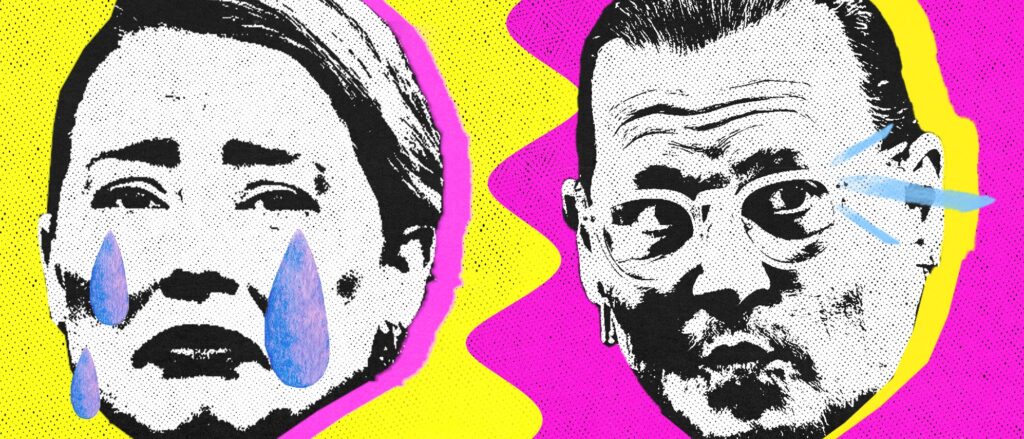
Regardless of your interest or the lack thereof, in the Amber Heard- Johnny Depp defamation trial, it found you seamlessly. Social media was abound with videos titled, “Best of TikTok Johnny Depp and Amber Heard Trial”, “7 Biggest Lies Camille Vasquez Forced Amber Heard To Admit”, “8 Times Where Amber Heard Acted Like A Maniac” etc. Several videos on the internet such as “Body Language Analyst REACTS to Johnny Depp Lawyers. Why did Amber Heard LOSE?” had ‘body language experts’ who went on to clinically analyse Heard’s behaviour, her every gesture and word in court. In another 10 minute long video titled Body language expert on Amber Heard and Johnny Depp’s testimonies, after painstakingly dissecting her conduct in court goes on to conclude: Everything Amber Heard does, to me, lacks credibility.
Hashtags such as #amberturd #amberheardisanabuser #amberheardfake #amberheardtrailmemes #amberheardtrailspoof dominated Twitter and Instagram. International media houses also reported that a “sad face” Snapchat filter called the “Amber Heard filter” appeared, mimicking her crying on the stand. Users who were thirstily consuming the content declared how Amber was ‘an embarrassment to any person who has been through the reality of domestic violence’ and how she ‘does not behave like a victim.’ All commentary on Depp was all but appreciative with many claiming, ‘Johnny fought to have cameras in the court …a guilty man would never do that….enough said! The man’s innocent! Also his calmness proves it as well.’ Experts have even warned of social media’s algorithms that meticulously amplified the Heard memes and the pro-Depp content.
While the US has a long history of televised cases, not many trials have received the kind of attention that this trial has. The livestreaming of the Heard-Depp court proceeding easily lent itself to misogynistic scrutiny and ‘memefication of domestic violence.’ It prepared a fertile ground for people to openly voice their prejudices about domestic and gender-based violence.
During the trial, Depp admitted to have sent violent messages to his friend about Heard. Sample this: Lets burn Amber!!!Let’s drown her before we burn her!!! I will fuck her (sic) burnt corpse afterwards to make sure she is dead.He also admitted to having called Heard a “filthy whore”, a “cheap hooker” while she was still married to him. The trial was also the first time that Heard’s legal team publicly accused her former spouse of sexually assaulting her. Interestingly though, these serious accusations of abuse and open admissions of violence made by Depp during the trial were barely critiqued and found no resonance with the public even though social media was replete with minute analyses of Heard’s behaviour in court.
These form a part of just some of the many disturbing patterns emerging from the contentious court battle between Heard and Depp. Depp had initiated a defamation suit against Heard for $50 million in response to a 2018 Washington Post op-ed where Heard stated that she was “a public figure representing domestic abuse, and I felt the full force of our culture’s wrath for women who speak out.” While Heard had not identified her abuser as Depp, his legal team claimed that it was “plainly” about him and that it had cost him his career and reputation.
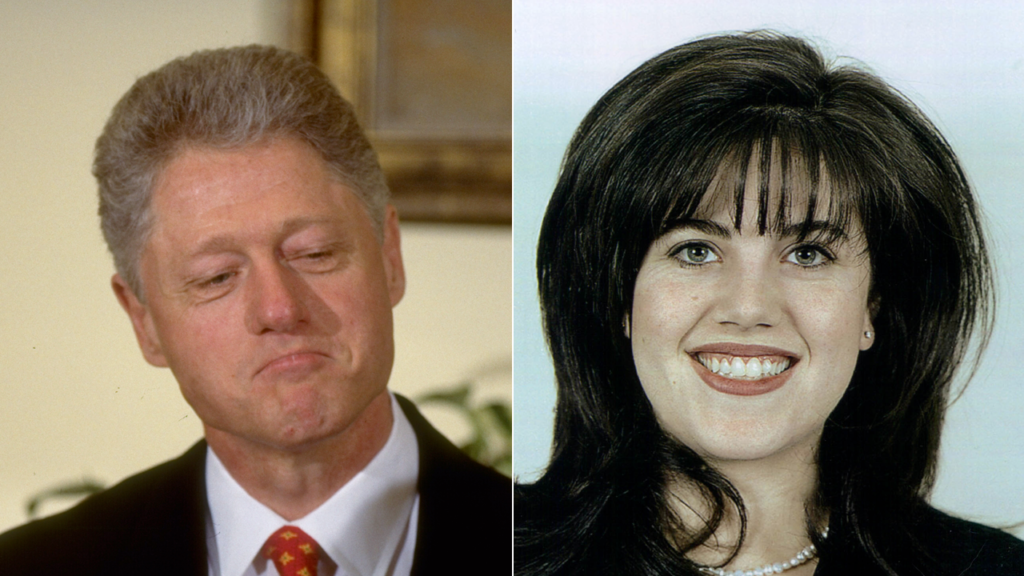
The Clinton-Lewinsky sex scandal involving then-U.S. President Bill Clinton and 24-year-old White House intern Monica Lewinsky in 1998 was another major media trial vilifying Monica Lewinsky.
While a public court proceeding is often justified as a means to ensure transparency in the US, the excessive media glare went way beyond this purported intention. Monica Lewinsky, who was one of the earliest victims of ruthlessly salacious media coverage, said of the current trial: we have sampled mediated accounts of the trial on Instagram, Twitter, and Facebook; through memes, video clips, and TikTok nuggets. Our consumption, therefore, has tended to be biased, curated, and cursory. She went on to assert that the in co-opting the trial for our own purposes we have devalued our own dignity and humanity.
The serious accusations of abuse and open admissions of violence made by Depp during the trial were barely critiqued and found no resonance with the public even though social media was replete with minute analyses of Heard’s behaviour in court.
The numerous memes, vicious parodies and video snippets of the trial have been making the rounds on social media and the unending social media glare made it feel like Depp had already won the case even before the seven-member jury could pronounce its decision. This bears eerie resemblance to the hostility that domestic abuse survivors face in our own country. Although ground realities tell a different story, sustained campaigns to validate the myth that women file ‘false domestic violence’ cases have greatly succeeded. They have influenced state institutions, worked to almost entirely delegitimise victim narratives and have desensitised the society to the menace of domestic violence. These consequences are further compounded in highly sensationalised court proceedings, such as this one, which involve violence and celebrities as they often have major social impacts. For example, many psychologists have reported that husbands and boyfriends have now begun to call their wives and girlfriends “Amber” when the women get angry or upset.
Heard’s ordeal is also similar to that of the Indian journalist, Priya Ramani who had to fight a similar defamation trial against her alleged abuser, MJ Akbar. Given that defamation suits are weaponised against survivors for speaking up worldover, Depp’s suit in itself can be seen as an extension of his abuse of Heard. The case is a sobering reminder that irrespective of significant advances by feminist movements, women across the globe continue to face public censure and disgrace for daring to speak out about their traumatic experiences.
Memefication of Depp-Heard Trial
Even as this social media carnival was underway, media narratives increasingly and deceptively characterised the Amber-Heard relationship as a “mutually abusive, mutually toxic relationship”. Nonetheless, lawyers and psychologists specialising in gender justice have pointed out that terms such as these are often strategically deployed to minimise the gravity of domestic abuse and to argue that both parties are complicit in the violence. While not contending that abuse is always one-sided, it is important to recognise that survivors’ violent outbursts, physical/mental abuse is often a consequence of being excessively controlled/abused. Subsequently, the fallacy of “mutual abuse” topples the idea that abusive relationships have a perpetrator of violence and a victim. Therefore, although seemingly objective in its assessment of a relationship, this framework is often bereft of an understanding of the gendered power dynamics that operate and is gender unjust. Needless to say, the media normalising this understanding can be deeply injurious to all survivors of abuse and their ability to fight back.
Gender justice conversations on social media can take fatal turns much to the detriment of survivors. While the medium can act as a great tool of democratisation, it also runs the risk of shutting the door on earnest, nuanced engagements. Social media response to the MeToo movement or the discourse around the recent hijab issue in Karnataka are cases in point to demonstrate how social media can be weaponised to further intimidate and marginalise an already vulnerable grouping. Critical discussions on intimate violations cannot happen on unmonitored spaces where norms of gender sensitivity do not operate. Whatever be one’s opinion on the trial, we must consciously ask ourselves – What all does being able to have an opinion allow us to do?
(Poorna Ravishankar is a lawyer and researcher with the Alternative Law Forum, Bangalore)



 By announcing this committee before the Parliament session, the government has tried to complete the paperwork. But the notification makes clear the ill-intentions of the government behind this committee and the irrelevance of the committee:
1. The chairman of the committee is former Agriculture Secretary Sanjay Agarwal, who drafted all three anti-farmer laws. He is accompanied by Ramesh Chand, a member of NITI Aayog, who was the main advocate of these three laws. As experts, it is the economists who have been against giving legal status to MSP.
2. Space has been left for 3 representatives of Samyukta Kisan Morcha in the committee. But in other places, in the name of farmer leaders, the government has placed its 5 loyalists who openly advocated all three anti-farmer laws. All these people are either directly associated with BJP-RSS or support their policy. Krishna Veer Choudhary is associated with the Indian Farmers’ Society and is a leader of the BJP. Syed Pasha Patel is a former BJP MLC from Maharashtra. Pramod Kumar Choudhary is a member of the National Executive of the RSS affiliated Bharatiya Kisan Sangh. Gunwant Patil, associated with the Shetkari organization, is a WTO advocate and General Secretary of the Swatantra Bharat Paksh Party. Guni Prakash has been a pioneer in opposing the farmers’ movement. These five people spoke openly in favor of all three anti-farmer laws and most of them have been spewing venom against the farmers’ movement.
3. There is no mention of making a law on MSP in the agenda of the committee. That is, this question will not be placed before the committee. Some items have been put in the agenda on which the government committee is already established. In the name of reforms in agricultural marketing, an item has been inserted through which the government can try to bring back three black laws.




 The Integrated Public Transport System was proposed by Petro’s predecessor, but it initially was not run very well. Petro streamlined the system for the user, and made the system expansive and efficient, reducing the average commute time in Bogota and improving the quality of life in the city.
In 2018, Petro ran again for President, coming in second to the winner Ivan Duque, however, the mishandling of the COVID-19 Pandemic led to a loss in popularity for Duque, culminating in a victory for Petro this year.



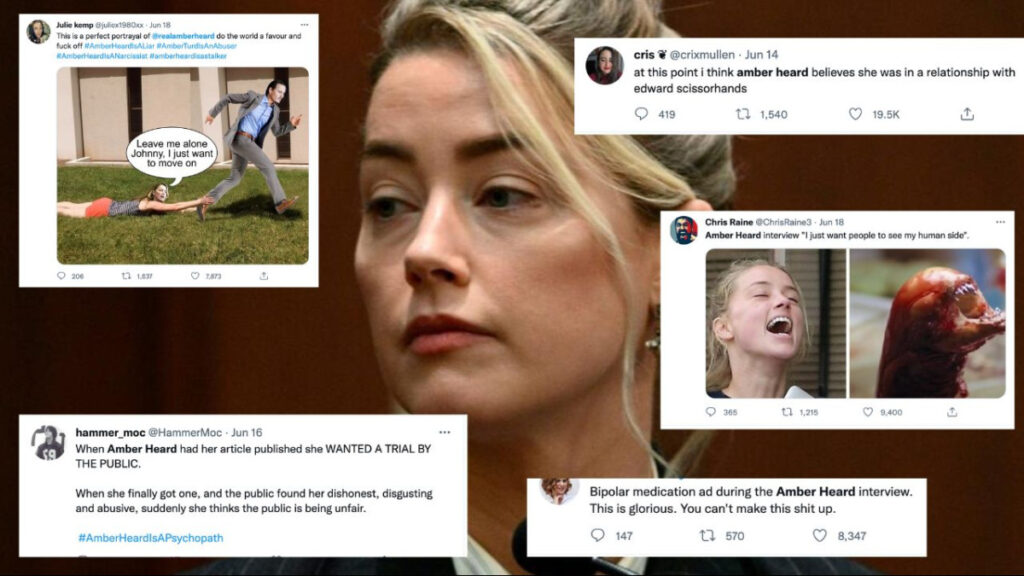 While the US has a long history of televised cases, not many trials have received the kind of attention that this trial has. The livestreaming of the Heard-Depp court proceeding easily lent itself to misogynistic scrutiny and ‘memefication of domestic violence.’ It prepared a fertile ground for people to openly voice their prejudices about domestic and gender-based violence.
During the trial, Depp admitted to have sent violent messages to his friend about Heard. Sample this: