Umar Khalid arrested in connection to Delhi Riots

4

Former Jawaharlal Nehru University student Umar Khalid has been arrested by the Delhi Police’s special cell for his alleged role in the riots that broke out in north-east neighbourhoods of the national capital in February this year.

Umar Khalid was earlier charged under the stringent Unlawful Activities (Prevention) Act in another case related to the riots. He had been questioned on July 31, when his mobile phone was seized by the police, news agency PTI reported. He was then summoned on Saturday and Sunday. On Sunday, after being questioned during the day, he was arrested at night.

“After 11 hours of interrogation, the Delhi Police Special Cell has arrested Umar Khalid as a conspirator in the Delhi Riots case. The fairy tale narrative that DP (Delhi Police) has been spinning and criminalising protests in the garb of investigating riots, finds yet another victim,” United Against Hate, an activist group whose member is Umar Khalid, said in a statement on Sunday.

Violence in parts of north-east Delhi from February 23 to 26 – after weeks of protests against the Citizenship (Amendment) Act and the National Register of Citizens – had left over 50 dead and hundreds injured, many with gunshot wounds.

The FIR against Umar Khalid states, states, as quoted by the Indian Express: “Khalid allegedly gave provocative speeches at two different places and appealed to the citizens to come out on the streets and block the roads during the visit of US President Donald Trump to spread propaganda at the international level about how minorities in India are being persecuted.”

He is one of many other students, Muslim activists, journalists, and academicians who had been peacefully protesting against the CAA and NRC, who have been framed for the violence largely committed by Hindu mobs against Muslim residents of Delhi.

Meanwhile, no attempt has been made by the Delhi Police to arrest or convict the people who attempted to murder Umar Khalid and shot at him outside the Constitution Club of India in Delhi in 2018. One of the accused, Naveen Dalal, contested elections in Haryana last year.

Further, the Delhi police has made no attempts to arrest Kapil Mishra, who had called for violence against Muslim anti-CAA-NRC protestors shortly before the violence broke out.

Pariyerum Perumal (2018): Can Love Bloom in Caste Ridden Society?

Pariyerum Perumal (also called Pariyan) is a story of a young Dalit man who wants to become a lawyer, like Dr. B.R. Ambedkar. The story revolves around him and the humiliation he faces at the hands of upper-caste Hindus as he struggles through college and life.  This movie journeys through what happens to Dalits who aspire to break out of the shackles of caste and rise above. The humiliation that Pariyan faces is symptomatic of the caste system.

Periyan towards the end of the movie says “he does not know whether he loves Jo because before he could understand his feelings he was beaten up.”

Humiliation: A tool for Oppression

The story starts with Pariyan’s best friend, his dog, Karupi, being killed by upper-caste men. These men kill Karupi as a punishment against Pariyan and his friends for hunting. Pariyan is heartbroken. He goes to college to study law, where he meets Jo. Jo is a dominant caste woman who falls in love with Pariyan. The rest of the story follows Pariyan and the humiliation he faces at the hands of Jo’s family. The film focuses on how public humiliation is used as a tool to exert caste power. The public humiliation grows stronger as we go down the caste system. Upper caste Hindu Brahmins do not face public humiliation, their bodies are not sites of caste humiliation. Dalit bodies and Dalit lives become thus, bodies are sites where caste is being constantly reinforced. Public humiliation is the tool that is used by dominant caste Savarnas to suppress any resistance and revolt against the caste system. The humiliation serves as an example for others to follow their caste and to oppress anyone, specifically Dalits, from breaking the boundaries of the system.

Also Read: Court, a commentary on legalised Caste Oppression

Dalit persons have been at the receiving end of this humiliation. Women being sexually abused, men being publically flogged, and massacres of Dalits. These are means by which Savarnas exert socio-economic and political power over Dalits. The case in the movie is not very different. Upper-caste men violently attack Dalits, the protagonist faces humiliation in college for being Dalit, being killed for being in love with upper-caste women. The movie is not only about humiliation. It is about Periyan’s continued resistance which he has to engage in on a daily basis. A resistance that breaks him but forces him to keep moving forward. A reminder of the burden of resistance that Savarnas have thrown on the shoulders of lower caste peoples. The movie pushes one to face not only the violence that we commit against Dalits but also the forced struggle that we expect them to engage in and still come out at the top. While this happens for Pariyan, in the film, it is not a reality for many other Dalit people.

Degrees of humiliation

Humiliation is the unbearable knowledge of power and violence of the public which then resides as shame in the body of the individual. Public humiliation that Savarna elites engage in shows the power they command over public spaces. In one scene, Periyan gets his father to college. His father is an artist who dresses up as a female dancer to perform at village festivals. Jo’s brother and his friends recognize him as Periyan’s father. They publicly harass him and try to undress him. Periyan’s father runs away begging them to stop. As the audience watches on and some also engage in this humiliation, Periyan is the only one who tries to rescue his father. The public continues to be an active partner. This scene is also important because it intersects the effeminate nature of a Dalit man with Savarna toxic masculinity. The act was a two-fold attack. One on the caste of Periyan’s father and the other on his sexuality.

University Spaces and love

The movie focuses on various instances of honour killings that take place in Tamil Nadu. This sets the backdrop for Periyan’s impending humiliation by Jo’s family. Periyan towards the end of the movie says “he does not know whether he loves Jo because before he could understand his feelings he was beaten up.” The humiliation that Periyan faced was not because of his feelings towards Jo, but because of the threat that he posed to the honour of Jo’s family. The portrayal of the university space in the movie is similar to the violent university spaces that are spread across the country. These spaces have been centers of violence against Dalit students, many of whom have been killed by suicide due to the discrimination they face. In Periyan’s case and the case of Indian colleges, merit alone determines the legitimacy of a student. Anyone else is seen as a violator and not deserving of the place they take in University. Almost always, the denying of the right to be in the space is aimed at Dalits. The exercise of discrimination is the process to push them to the margins of this space.

Reparations and Annihilation 

The movie also pacifies the Savarna gaze. Jo’s father is shown to be a man with morals. While being casteist, he also advocates for ‘lesser forms of humiliation’ and ‘lesser casteism’ against Periyan. Thus seems like a man forced to follow societal norms. Towards the end of the movie, he comes to apologize to Periyan, and Periyan is expected to forgive him. This is a respite to the guilty hearts of Savarna liberals. The weight of the violence that they mount on Dalits seems to have a solution, an apology. An apology for centuries of casteism is not only impossible, but it is also inherently casteist. The burden of accepting an apology should not and must not fall on the shoulders of Dalits, the burden of undoing this casteism is not for Dalits to shoulder. Reparations for the violence and the socio-economic and political disenfranchisement that have been and continue to be done is one of the only solutions against the caste order. Periyan continues to fight against the caste order throughout the film. He fights to be a voice for his community and struggles to live. It is a struggle that he should not have to engage in, a burden (of carrying on) that he should not have to bear.  Caste is that part of us that refuses to shed its ugly skin. In fact, we clutch on to it and ensure others clutch on to it too. In India, caste atrocities are not in the dark underbelly but lie out on the open like a festering wound. Those who do not believe in the existence of it, are those who more often than not perpetuate the violence. There is no running away from caste, there can only be the annihilation of Caste.  Views are personal.

Growing Opposition Against Modi: Are the Tides Turning?

0

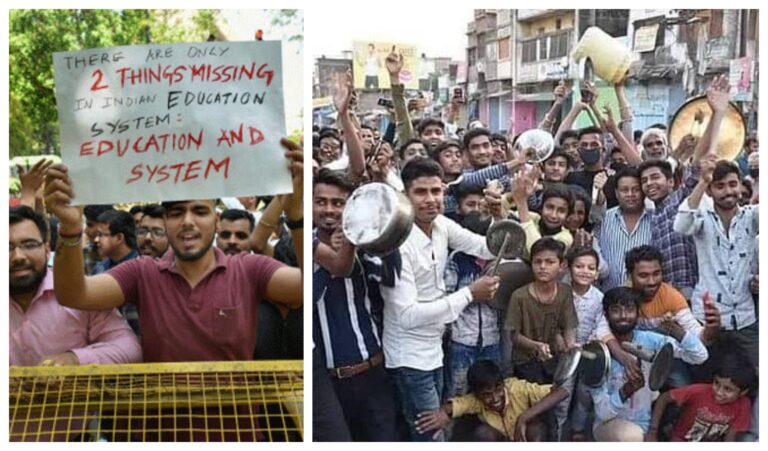
The growing opposition against the government is making itself visible every day. Prime Minister Narendra Modi’s birthday is coming up on September 17. This year, he will turn 70. While BJP has announced a week-long celebration of his birthday as ‘Seva Saptah’ (Service Week), the people of the country would rather celebrate it as ‘National Unemployment Day’.

Calls have been given for another nation-wide protest for 17 minutes at 17:00 hours on 17 September under the hashtag #17Sept17Hrs17Minutes. Before this, people have protested for 9 minutes at 9 pm on 9th September under the hashtag #9Baje9Minute, and for 5 minutes at 5 pm on September 5 as well. With large participation of the country’s youth, these acts of protest have also received support from opposition leaders.

The symbolic protests that have been taking place are a play on the earlier mobilisations by the BJP, where the PM gave calls for people to bang thalis on their balcony, turn off their lights, and so on at specific times. This act was used as a distraction from the issues facing the country in the pandemic, including the lack of equipment, protection for frontline workers, the migrant crisis, and communal violence.

The widespread support such calls from the Prime Minister received at the time ensured a show of strength that came close on the heels of the nation-wide anti-CAA-NRC protests. At the local, neighbourhood level, non-supporters and dissenters were cornered by the fanatic show of support through completely unscientific means based on a mere speech by the PM. During that time, in many neighbourhoods, non-conformity with even these acts would lead to certain families being profiled as anti-nationals, as many Muslim families reported doing the acts out of fear.

More ‘Dislikes’ than ‘Likes’

However, the heady days of the early stages of the pandemic and the nationalistic fervour of ‘Janata Curfew’ and other such stunts is beginning to fade away. In the last month, videos featuring PM Modi have consistently garnered lakhs of dislikes on Youtube, largely weighing out the number of likes on the videos. This includes an episode of ‘Mann Ki Baat’ which got a record number of dislikes, and then Modi’s address at a leadership summit of US India Strategic and Partnership Forum (USISPF).

Of course, there has been widespread opposition against the government before this as well, especially sparked by the Citizenship Amendment Act and National Registry of Citizens. Protests took place across the country in a sustained manner for months, in spite of violent repression, with protestors from across caste, class, gender, and religious lines. However, these protests were demonized by Islamophobic media propaganda, and the pandemic taken as the perfect opportunity to incarcerate protestors and put an abrupt stop to the movement. Muslims began to be scapegoated en-masse for the spread of the COVID-19 virus, and the caste-Hindu middle classes were indifferent or hostile to the protests.

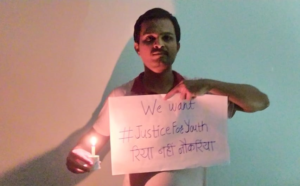
Youth holding candle and poster saying “We want #JusticeForYouth and Rhea nahi Naukariya (Jobs not Rhea)

However, since then, the Modi government has finally managed to create disillusionment amongst large numbers of people who were earlier unaffected by this government’s erosion of social justice, the violent suppression of dissent, crony capitalism and so on. Although the propaganda machines have been churning out distractions constantly, be it Corona-jihad, Bhoomi Poojan, or now, the Sushant Singh Rajput case, the Modi government’s decision to conduct the NEET-JEE exams during the pandemic has alienated many.

The decision to conduct various exams in spite of widespread opposition and appeals from students with the support of State government leaders, began a wave a discontent that has been further solidified by the effects of the massively mishandled pandemic, the record fall in the GDP of 23.9 per cent, rising unemployment and inflation, and large-scale privatisation. These are all issues that can be seen, at least by some sections of the society as non-political and non-partisan, and as a result, earlier strategies of demonising this opposition using communal propaganda have not been successful.

The unempathetic response of the government to these issues has impressed upon many students, especially, that opposing the government in any way is enough for them to be branded as anti-national, even though they may have been supportive of the larger agenda of the BJP. Further, the Modi government has taken various unnecessary steps under the guise of ‘national security’ that have especially angered the previously non-political youth- including the banning of TikTok and PubG, both of which had massive numbers of users across social groups.

All of these events and the growing show of resistance shows that Narendra Modi is no longer the infallible, all-knowing, supreme leader he was seen as even a few months ago. The government had taken the support of the caste-Hindu middle classes for granted and the way in which the BJP’s pro-corporate anti-people policies have been slowly destroying the economy has been slowly turning the tide against the party. It is important at this juncture to be vigilant of the propaganda the government unleashes upon us, to ensure that this discontent does not fizzle out over time, and to resist manufactured distractions.

Bengaluru: Schools hike fees during Covid 19, last straw that might break camel´s back

Bengaluru: At a time when people are already burdened by COVID-19 related economic crises  families of wards have to overcome yet another tide as they are being forced by private educational institutions which instead of reducing the fees are demanding additional fees in the name of the pandemic. People are already under dire economic distress due to lockdown followed by loss of jobs and livelihood. The widespread infection which is drastically increasing has continued to haunt the people. Amidst this, private schools have added a new head in fee structure in the name of COVID 19 which has added to further miseries for the parents. Soon after the restrictions were relaxed in the Unlock 4 guidelines educational institutions were permitted to hold online classes till Sep 30 and recommended opening from October 1. But in the name of recruiting more cleanliness workers, incorporating thermal scanning, sanitization facilities the schools has enhanced the fees which has not gone well with the parents.

Read More: Kerala High Court restrains Private schools from charging additional fees for online classes

The government has directed institutions to sanitize frequently touched surfaces including laptops, computers over which the institutions are banking upon.  To tackle the infection private institutions have enhanced the fees by 5 % and expect the parents to understand the difficulties and expenses involved for the effective handling of the issue the institution management exhorts. However, the Primary and Secondary Education minister S Suresh Kumar expressed shock over the raise in fees by educational institutions. “This is very strange, In the name COVID, they should reduce the fees, not levy more. I am going to take necessary action against it” he stated.

Combating Hate Speech And Demanding Ethical Journalism

1

The Campaign Against Hate Speech or Hate Speech Beda in Kannada has created an extensive report to document the amplification of hate speech in recent times that will be useful in efforts to create a more informed citizenry. The Campaign Against Hate Speech is a collective comprising lawyers, researchers, activists, students, and professionals seeking to challenge and confront hate speech by sections of media, public personalities, and on social media. The campaign has worked to ensure compliance by media companies to law and ethics regarding hate speech. The collective has stressed that an informed citizenry that demands ethical journalism and responsible behavior from its politicians is the only real way forward to address the problems of hate.

tablighi
Members of Tablighi Jamaat were stuck in Delhi during Corona Pandemic. Courtesy: AFP

This year, the Covid-19 pandemic has seen not just an outbreak of the virus but also one of hate. What started with the demonization of Tablighis has become a widespread sentiment against the entire Muslim community. This has been possible through the spread of fake news, misinformation, and hate speech, produced and amplified by traditional news media and social media.

 
Shaheen Bagh
Grandmas of Shaheen Bagh, who stood against the anti citizenship amendment act even in the harsh winter of Delhi

The extent of hate speech and new lows that public discourse reached during the pandemic is shocking, but it is important to remember that before the pandemic, hate speech was directed towards so-called anti-nationals, a pejorative term for anyone who challenged the mainstream. Public imagination had been gripped by the country-wide protests taking place across the anti-Muslim Citizenship Amendment Act. Sections of print and televisual media had directed much energy to delegitimize the protests by terming them as either violent, a conspiracy, or a threat. Such concerted media coverage that utilized hate speech as arsenal gave ample encouragement for targeted violence against dissenters, including university students in Delhi.

In light of this rise, the Campaign Against Hate Speech has presented a report documenting and analyzing the phenomenon of hate speech, the place of hate speech in a free society, and how to respond to hate speech. The report, which focuses on hate speech as observed in print and television news in Kannada, is composed of five sections.

What is Hate Speech?

For a free society, speech must be completely free. Hate speech is speech that makes free speech impossible. For a free society, people should be free to, in the words of constitutional scholar Gautam Bhatia, “shock, disturb, or offend.” This cannot happen when the basic rights of human beings are constantly under threat.

Threats to life, call for a social or economic boycott, and questioning the basic rights of people who disturb, shock, or offend, makes free speech impossible. Hate speech can also include challenging the very existence of certain classes of people, and is often directed towards minorities, saying that they do not have the right to exist in this country.

Hate speech is a threat to the very idea of inclusiveness and pluralism—to the endeavor of working and living together, which is intimately connected with the Preamble to the Indian Constitution through the terms, secularism, and fraternity. Hate speech is an assault to the dignity of individuals, which also finds a place in the Indian Constitution through Articles 14, 15, 16 and 17, all of which emphasize equality and non-discrimination.

How Did Hate Speech Become Such a Virulent Force in Karnataka? 

While progressive voices in Karnataka in the 1970s and 1980s tended to focus on poverty and inequality, they could not respond to the growth of hate groups that were growing across the state. The groups organized people and made inroads into the media. Making use of the social power of upper-caste male voices in Kannada media, the news began to present a more conservative outlook. Since the early 2000s, there has been a proliferation of corporate-run media outlets, who drove the discourse through newspapers and television news channels with vested economic interests.

Also Read: Kannada media exhibited its penchant for Islamophobia in Bangalore Vandalism coverage

Violence
Bengaluru Violence provided fodder for the ‘News Hungry’ Media Outlets

While there have been examples of fine news establishments, finance has been a constant struggle for those outside of corporate control. Over the past decade, state and political advertisement has become an important source of revenue, complicating the matter further. The reliance on advertisements, the conservative presence in the newsroom, and the organization by hate groups created an ideal environment for hate politics, biasing the news in favour of the political advertisers and against people who might raise a voice against it.

Hate Speech in Media in 2020

The report by Campaign Against Hate Speech analyses nine cases in 2020 where media reportage manufactured and amplified hate speech. These cases have involved boycott of essential needs, home demolition, threats of life, and calls for the eradication of communities.

The report notes the following patterns:

    1. Individuals are often defamed and subjected to demeaning stereotypes.

    2. Reportage on such stories often include speculations without evidence, leading to wild conspiracy theories

    3. Hate groups with recorded history are often given substantial space without any critical engagement.

    4. Reportage include passionate calls for action, at the expense of the quest for truth.

    5. The abandonment of truth is often accompanied by the promotion of mob justice and disregard of due process.

    6. Fake news and half-truths are often covered

The report also looked at the reportage of the Tablighi Jamaat and showed cases where there have been unchallenged calls for genocide.

This hate speech has had an immense effect on human beings. People had lost their homes. Lives have been under threat. Families have been attacked. People presumed innocent by courts have been arrested with no new charge, and sometimes, even trials could not be conducted because of calls for a social boycott. In one case during the nation-wide lockdown, people who came carrying much-needed relief supplies faced social boycott, undoing their charitable cause.

Germany to Rwanda to India: Hate Speech Fueled Genocide

The consequence of ignoring hate speech can be understood from four cases- The Nazi Pogroms in the 1930s-1940s, the Genocide of the Tutsi people in Rwanda in 1993-94, the Godhra Pogroms of 2002, and the Delhi pogroms this year on 23 -26 February 2020.

When looking at Germany, the report makes the point that Julius Streicher, who ran a Nazi paper ‘Dur Sturmer,’ was also convicted of crimes against humanity, though he did not take part in the mass-murders, as he wrote 26 articles to incite the German people to Genocide.

When looking at Rwanda, when in a three month period, 8,00,000, or 70% of the Tutsi people were exterminated, the report highlights observations by the International Criminal Tribunal of Rwanda on the role of the media and its role in amplifying hate speech.

Regarding Gujarat, the report illustrates the literature calling for a strict economic boycott of Muslims, rape of Muslim women, and annihilation of the entire Muslim community, and describing methodologies of attack circulating in parts of Gujarat.

Regarding Delhi, where 53 people, mostly Muslims, were killed, hundreds more were injured, the report points out that such violence is still very close to us, and how especially now in times of national panic, it is important to continue the fight against hate speech.

Common to all the cases considered is the question of accountability, especially in India, which has a long history of hate-based violence. The pogroms of partition, 1983 in Nellie, 1984 in Delhi or the pogrom following the Babri Masjid destruction, are instances of impunity for the perpetrators. The violence in Delhi 2020 offers new challenges, as the country is already in a state of panic, making systems of accountability hard to access or scrutinize.

Finally, the report covers the legal and constitutional aspects of hate speech and draws out how hate speech can be combated using the law. The report also includes instructions for common citizens who observe hate speech, showing how they can also take up the struggle against hate speech on their own.

The article is the summary of the report released by the campaign against hate speech (Hate Speech Beda) on 8th Sept 2020. You can find the full report here.

NEP 2020: What Hindutva Domination in Education Will Look Like

1

The National Education Policy (NEP) has sparked much debate, and criticism, among intellectuals and the general public alike. Its arrival has coincided with a renewed visibility of education as a key public issue, in the wake of the dramatic shift to online teaching following the Covid-19 pandemic.

Critics of the NEP, especially those belonging to Left / Dalit political traditions, have suggested that the sudden obsession with online learning at the cost of equity is not a one-off. It stems from a policy climate that heightens inequities in education and encourages further corporatization of the ‘sector’, of which the NEP is the most powerful expression. To add to that, there is the added dimension of RSS’s attempt at ideological control through education.

A cocktail of Hindutva and corporate control: that is the general impression that critics seem to have of the policy. Much has been written about how the NEP is likely to produce graded inequality in education, pushing back long-standing democratic demands for social justice, and facilitating economic domination by big capital. In this article, I will elaborate on the other element of the supposed Hindutva/corporate cocktail – fears of accelerated Hindutva ideological domination. This aspect has been left substantially to intuition in the public conversations so far.

RSS and Education 

The Rashtriya Swayamsevak Sangh (RSS) has long desired to mould the education system in accordance with its ideological agenda, by both intervening in the formal school system and looking to undercut its influence simultaneously. In the past, whenever political affiliates of the RSS, be it the Bharatiya Jan Sangh (1977-1980) or the BJP (1996-2004), have been in power, efforts have been made to put in place a curriculum that aligns with their politics, i.e. reinforces Brahminical stereotypes, glorifies authoritarianism, demonizes our Muslim rulers, denies historically-ascertained Aryan migration theory, and encourages communal polarization. Concomitantly, there has also been a refusal to acknowledge the deep caste, class, and gender inequalities that define our society, in their curricular vision. In the RSS backed governments prior to the Modi era, intervention usually took the form of rewriting textbooks.

Over the years, the RSS has developed a wide network of schools of its own: formal schools (estimated 12,363), single-teacher schools (estimated 12,001), and thousands of sanskar kendras run by the Akhil Bharatiya Shikshan Sansthan, Vidya Bharati, and other RSS fronts. On top of that, in recent times, RSS affiliated Non-Governmental Organizations (NGOs) and advocacy groups have tried to influence government policy. In the prelude to the NEP, the central government set up advisory committees consisting of RSS functionaries and associates for “Indianizing” education.

An important body among RSS affiliates, the Bharatiya Shiksha Niti Ayog headed by Dinanath Batra, has previously advised such changes as the removal of a poem by Punjabi poet Pash, a couplet by Mirza Ghalib, removing mentions of the BJP as a “Hindu” party and the occurrence of riots under BJP administrations, from school textbooks, and the avoidance of English, Arabic or Urdu in school syllabi. Batra and his ilk have been a key adviser for the NEP too and have welcomed the new framework.

RSS, Curriculum, and Pedagogy 

The influence of the RSS is palpable on the learning objectives as defined in the policy document. It is a curious blend of the Sangh’s own values and constitutional values, done in a way that undercuts the significance of constitutional rights which happens to find no mention in the document. Full of references to ancient Indian tradition, and none to Islam, as a source of values, the document outlines the inculcation of ‘basic ethical reasoning, traditional Indian values, and all basic human and Constitutional values’, among others, as key objectives of learning. The values listed (Section 4.28) are as follows:

…seva, ahimsa, swachchhata, satya, nishkam karma, shanti, sacrifice, tolerance, diversity, pluralism, righteous conduct, gender sensitivity, respect for elders, respect for all people and their inherent capabilities regardless of background, respect for environment, helpfulness, courtesy, patience, forgiveness, empathy, compassion, patriotism, democratic outlook, integrity, responsibility, justice, liberty, equality, and fraternity.

Duties, defined through this dubious list, take precedence over rights, as the policy asks for students to be taught at a young age the importance of “doing what’s right”, and later age about ‘cheating, violence, plagiarism, littering, tolerance, equality, empathy, etc., with a view to enabling children to embrace moral/ethical values in conducting one’s life, formulate a position/argument about an ethical issue from multiple perspectives, and use ethical practices in all work.’  Intervention in school curriculum and pedagogy in the years to come, based on these redefined objectives, and tampering with the existing National Curriculum Framework (NCF) in the process, now seems like a distinct possibility.

Such intervention has already borne fruit at the state level. The BJP government in Rajasthan introduced a new series of school textbooks in 2016, in which science textbooks draw upon mythical texts, and the literature and social science textbooks whitewash the evils of the caste system, reinforce caste and gender stereotypes, conflate patriotism with respect for armed forces, and distort key historical events. The new policy centralizes control over education to an unprecedented degree and that is likely to aid Rajasthan-like interventions by the government at the all-India level.

Multi-Pronged Intervention?

RSS affiliated NGOs and think tanks may intervene through other channels too. The policy mandates the encouragement of public-private partnerships which at present takes many forms. Besides starting new schools, NGOs and private ‘charitable’ organizations have started playing key roles in teacher-training, assessment, security services in school/university premises, and so on, as the government outsources these functions to private bodies thereby hollowing out the public sector from within even as it continues to exist in name. With no clarity on the regulation of participation by NGOs and private organizations in education, there is genuine apprehension that RSS backed bodies will find a greater role in the system.

What could the consequences of such interventions look like? Increased role in teacher training may allow Hindutva forces to intervene in pedagogy in addition to the curriculum. Roles in assessment could allow them to dictate what kind of questions should be framed. Presence in school/university premises may even serve to destabilize peace in those, especially under circumstances where deliberately manufactured sectarian tensions and hatred are spreading rapidly.

Understanding Corporate Support 

The question remains, as to why corporates have supported the BJP in its quest for ideological domination in and through education? Not all of them are sympathetic to the BJP. Fear of falling foul of the party in power may not be the only reason why they have done so. The NEP normalizes the current deeply unequal and exploitative employment landscape and seeks to mould school, colleges, and universities to suit the same. It proposes that courses be downsized, vocational training be introduced at the middle school level, and students be prepared early for not only their first but also their second, third, and subsequent jobs. ‘Flexibility’ in learning (Section 4.9), another word for learning to cope with structural unemployment and low-quality employment rather than how to question and challenge the status quo, is passed off as ‘empowerment’.

Teaching students about our constitutional rights are downplayed in the learning objectives, which seeks to limit the extent to which education can remain a site from which a powerful ideological challenge to the current matrix of power can emerge. Big corporates stand to profit enormously by being handed a cheap, pliant labour force through a massively downsized, vocationalised education, and a likely reshaping of curriculum that could greatly de-politicize education.

Akash Bhattacharya studied at Jawaharlal Nehru University and teaches History and Education. 

Social Activist and Swami Agnivesh passes away due to multi-organ failure

0
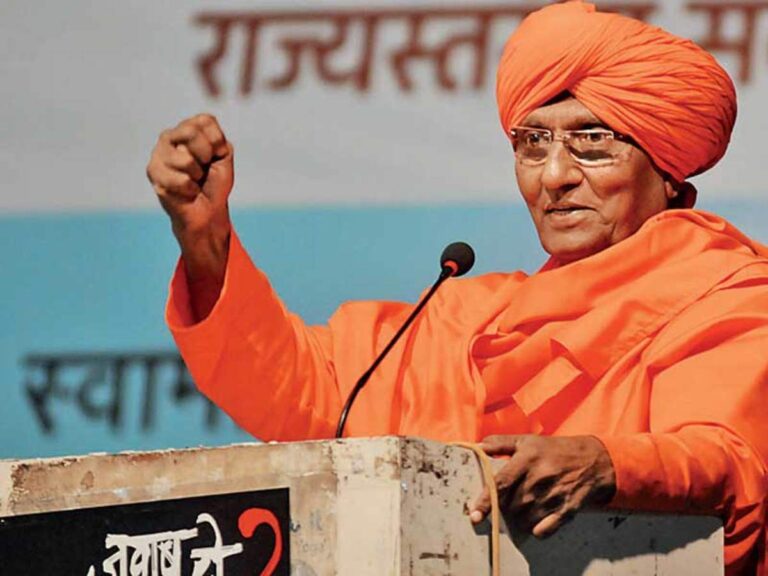
Social activist and Arya Samaj leader Swami Agnivesh passed away Friday at the Institute of Liver and Biliary Sciences in New Delhi. He was 80. Agnivesh had been suffering from liver cirrhosis and was put on ventilatory support on Tuesday due to multiple organ failure. “His condition deteriorated today and he went into cardiac arrest at 6:00 PM. Resuscitation was attempted but the stalwart passed away at 6:30 PM,” said a statement by the Institute of Liver and Biliary Sciences.

 But he was best known for his work against bonded labour through the Bandhua Mukti Morcha (Bonded Labour Liberation Front), which he founded in 1981.

Born as Vepa Shyam Rao to a Brahmin family in Srikakulam, Andhra Pradesh, Agnivesh studied law and commerce and taught law in Kolkata for some time. Later he decided to renounced his name, caste, religion, family, and property and to live the life of an ascetic. In 1970, Agnivesh founded Arya Sabha, a political party based on Arya Samaj principles. He also became an MLA from Haryana in 1977 and served as a cabinet Minister for Education in 1979. It was during his time as a minister that he founded the Bonded Labour Liberation Front in 1981,which continues to raise issues surrounding bonded labour in India, especially in the quarries in and around Delhi; he remains the chairperson of the organisation.

Social Activism

Swami Agnivesh activism spanned various fields. He worked against Sati system and champoined for the rights of women he participated in a campaign against female foeticide in 2005. He testified before the Working Group on Contemporary Forms of Slavery at the United Nations Human Rights Commission in Geneva. At a World bank conference on economic development and religion he argued for free movement of people across borders through the elimination of all passports and immigration laws. In 2011 he was part of the team to negotiate with the Maoists along with In Feb 2011, Agnivesh along with Kavita Srivastava, Rajinder Sachar, Gautam Navlakha, Manu Singh & Harish Dhawan. He also urged the prime minister Manmohan Singh in 2013 to initiate a dialogue with the Naxalites. Swami Agnivesh took part in the 2011 anti-corruption protests in India in August of that year but soon got disillusioned with it and separated himself from the movement. Agnivesh advocated the rights of marginalised people in society and went to Pakur district of Jharkhand to address a rally of farmers and tribal. During this, allegedly a right-wing mob attacked upon him and he escaped from lynching somehow with help of local people. Activists of all over the country in India and even of other countries condemned the incident.
Gauri Lankesh death anniversary Sept 5, 2018
He also led the march ‘Raj Bhawan Chalo’ on the death anniversary of journalist Gauri Lankesh.
Many believe that his efforts to reform society and to bring facts based on logic about superstition and false agendas of all religions. The mortal remains of Swami Agnivesh will be kept at his Jantar Mantar residence from 11 am to 2 pm for Antim Darshan. The last rites will take place in Gurugram at 4 pm on Saturday.              

Abortion Cases Increased, Women Suffered Lay-offs: Lockdown Survey 

0

Half of the population has been crushed under male domination in a capitalist system. The lockdown stripped women of even the modest freedom achieved through labour, hard work, and struggle. The lockdown left women with access to neither healthcare nor any way to protect their bodily autonomy.

Days of the struggle of emptying themselves in order to overcome the problems of arranging for two meals for the family.

More than the epidemic, it was governmental fetters that shattered their hopes and dreams. The Pragatisheel Mahila Ekta Kendra attempted to find out the suffocation of this entire scene and how women faced it.

Women took part in the online and offline surveys from large parts of Uttarakhand and expressed their pain.

Women from various areas participated in the survey conducted amidst the fallout of the Epidemic Act. These areas included Haldwani, Lalkuan, and rural area Bindukhatta in the Nainital District, Pantnagar University’s ‘T’ Labour Colony, Jawahar Nagar, and Ramnagar, the rural area of Pirumdara, some labour colonies in the Haridwar district, and the labour colony in Shahbad Deri in Delhi.

Participants in the survey included women labourers, self-employed women, ASHA workers, midday meal workers, Anganwadi workers, teachers, doctors, pharmacists, sanitation workers, students, domestic workers, and women who stay at home.

Women labourers suffered the most.

Loss of Work but Increase in Workload

On the issue of lockdown and employment, 65 out of 300 labouring women reported that they had lost their job. They did not find any other work and nor did they receive any financial assistance from anywhere during the entire lockdown.

Self-employed women (those who do sewing work, run a parlour, make paper bags, sell cosmetics, or have small grocery shops and so on) also did not get any work during the lockdown.

Food workers, ASHA workers, Anganwadis, teachers, pharmacists, doctors, sanitation workers, etc., did not lose their jobs. However, the extra work at their workplace increased their load greatly.

Sanitation workers said that while earlier they worked for eight to nine hours on contract for 4,800 rupees, now the work was doubled.

They were merely given a PPE kit in the beginning for protection for COVID-19 but received no safety equipment after that.

Meagre Pay and Even that Was Withheld In May

ASHA workers described the burden of the responsibility placed on them during the lockdown. They were called ‘corona warriors’ in name but were not given any protection, benefits, nor any increase in their honorarium.

Midday meal workers said that although schools were closed, they were given the work of providing midday meals and cooking food in the schools that were made into quarantine centres, without any protective equipment. They were also given the work of cleaning and clearing out bushes.

They get a meagre sum of two thousand rupees in the name of an honorarium. But they did not even receive this honorarium in May.

Private school teachers said that schools remain closed and they did not receive any pay. They had no experience with online education which led to a lot of chaos in their lives, and they later received only half of their pay for these classes.

Pharmacists said that they only received sanitisers by way of protection from COVID-19 and nothing else.

Had to Feed Sugar Water to Children Instead of Milk 

Women who stay at home said that during the lockdown their husbands lost their work, causing difficulties in ensuring their everyday needs as well.

A women labourer from Haldwani said, “We lost our jobs due to the lockdown, and didn’t have any money at home to buy food. We have three children. Two of them drink milk. Since we didn’t have any money, we couldn’t get milk for them. Many times we had to mix sugar in water and feed that to the children”.

Asifa, a woman who stays at home, said that their financial situation was so bad during the lockdown that they didn’t even have 300 rupees left to buy wheat, rice, and pulses using their ration card. So they didn’t get any ration at all.

While many women said that their workload at home had increased during lockdown, many said that it was normal because other members of the family helped out. Many women said that during the lockdown their husbands and children were at home. This increased their workload. Normally, their husbands would have gone to work, and the children would have gone to school.

Due to everyone staying at home during the lockdown, the work of cooking, cleaning, and washing utensils increased a lot. Some working women said that they would go to work after finishing all the household work early in the morning and find an increased workload at their workplace as well.

Abortion Cases Increased During Lockdown 

The survey noticed an increase in crimes against women and domestic violence during this period.

According to the women, due to losing their livelihood during the lockdown, there was no money to meet household expenses, children were left hungry, and since they were not getting any jobs, everyone was at home without anything to do.

As a result, people began to go into depression, leading to fights and quarrels, and domestic violence. Troubled men began to vent their anger on the women out of frustration.

One teacher said that there were many media reports of women committing suicide and attempting to kill their children as well, which is a result of the immense tension they were going through.

Rabiya, an ASHA worker, said that there were many cases of unmarried women looking for abortions during the lockdown, which suggests sexual offenses taking place against women.

In addition, some women who did not want to have children became pregnant in the midst of the lockdown and were forced to have children.

Adversity Faced by Pregnant Women

Most women did not acknowledge that any such crimes were taking place because most of them stayed at home. The majority of them said that they could not access treatment during this time, and those who could, got incomplete treatment. They could not get any tests for 2 months. This was an incredibly terrible time for pregnant women.

A woman labourer from Haridwar said that in the name of Corona, sick and pregnant women were made to run from one hospital to another. Another woman from Haridwar who stays at home said, “I was pregnant, but suddenly I had a miscarriage. I went to the hospital but did not receive any treatment”.

ASHA workers said that even vaccinations were stalled for two months. In Kumaun, Haldwani, the biggest government hospital, known as the Sushila Tiwari hospital, was turned into a COVID centre, and as a result, all other patients had to remain at home in the absence of any kind of treatment.

The private hospitals they went to for emergencies looted the patients. The requirement of mobile phones and internet connections for online education and the task of an educated family member having to sit with children for their online classes derailed everything. Most children, who did not have access to all of these facilities, had their education disrupted.

This article was originally published in Hindi on WorkersUnity.com. It was translated to English by Damayanti Saha. 

If We Do Not Rise: Unorganised Sector Left to Perish by Govt

0
Protests took place across the country on September 5, the day of the assassination of Gauri Lankesh, under the ‘If We Do Not Rise’ campaign. Dr. E. Rati Rao, National President of the All India Progressive Women’s Association (AIPWA) writes about some of the issues, especially relating to women in the unorganized sector, that this campaign attempted to address. The life, livelihood, and democracy of citizens especially of the informal sector during this pandemic time have been affected adversely. Every section of the unorganized sector suffered numerous hardships due to the lockdown.

The Unorganized Sector

The lockdown that was announced without any prior indications on March 22, shocked the Nation. 80 to 90 percent of the unorganized sector comprises of marginalized women. Women, sexual minorities, urban and rural labourers, Safai Karmacharis, ASHA workers, Midday meal workers, Anganwadi workers, nurses, housekeepers, daily wage earners, domestic workers, street vendors, vegetable vendors, teachers, Ayahs, contract employees, and the like suffered the most due to the unscientific lockdown. The industries in general started retrenching the labourers in huge numbers.

The Corona Warriors

Doctors and the medical staff of both government and private hospitals have been treating COVID-19 patients on a war footing. The contractual staff of hospitals, including nurses, Ayah’s, and housekeeping staff, had to work overtime. The ASHA workers who make up the link between hospitals and society had to move around, checking the population for fever or collecting samples for COVID-19 testing. Sanitation workers went around cleaning the hospital and entire cities. The police were on 24-hour duty, looking after the containment zones.

The safety of these workers lies in the provisions of protection gear, hand sanitizers, protection coats, and masks. Unfortunately, many of them did not receive this protective equipment. Doctors, nurses, and other warriors died due to infections contracted during their work. Police & other warriors also died during this pandemic.  While families of some sanitation workers who died received compensation of Rs 10,000, many are yet to receive it. In contrast, compensation for a doctor’s death Rs 1 crore. This discrimination is unacceptable. All workers who worked during the pandemic and the lockdown should be treated equally in a democratic country. Many sanitation workers did not receive wages for more than five months.

Lives and Livelihood

The lives and employment of the entire population have been completely disrupted in recent times. General health services suffered because COVID-19 patients were treated on top priority and other ailments had to be neglected. Domestic violence increased during the pandemic. The police refused to register cases, citing pandemic duties. The lack of health services was felt acutely during this difficult time. Unemployment reached its peak, and the lack of economic activity threw every household into difficulty. There was rent to be paid electricity & water bills, and of course, the debt & interest installment payments were also pending. Loans given to SHG‘s were also issues of concern. House owners harassed tenants, the agents of banks and microfinance companies harassed the SHG members for payments of loan amounts. Many women committed suicides due to this hounding!

The inadequacy of food security and health services and the lack of employment options took the center stage during this pandemic.

No relief packages to citizens

The sudden lock own disrupted the lives of unorganized sector workers as they were suddenly betrayed by the State. Employment schemes like MNREGA in rural areas should have been implemented to tide over the crisis. Similarly, the urban employment scheme MNUEGA (Mahatma Gandhi Urban Employment guarantee Act) could have been taken up to guarantee jobs for the urban poor.

No cash relief (cash transfer) packages were distributed among the unorganized poor. The government has announced that there will be no collection of debt during the pandemic, but a strict direction to stop all loan payments until August 2021 should have been helpful. Formation of a State level Regulatory Authority for Group Loans could have helped Self Help Groups. Banks frequently waive debt and interests when big corporate companies don’t repay huge loan amounts, while many women committed suicide due to harassment by microfinance company agents who continued to insist on payment of interest or the debt amount.

When film actors or Sub-inspectors commit suicide a CBI enquiry is ordered. But poor women’s lives don’t attract any CBI enquires or sympathy. In a democratic country like India, citizenship rights are all flouted by the State and yet the government does not indulge in constructive reflection on the policy that broke the backbone of its citizens!

Instead, we have the deputy CM of Karnataka announcing 39 crore package for distribution among temples which never asked for this relief. This money could have been distributed amongst the unorganized sector poor women who are suffering on multiple fronts! Where did we lose scientific thought and processes in a democratic country? Instead, our ministers are drowning in obscurantic faith. By this, they are barking up the wrong tree!

#If we do not rise, we perish!

Accenture to Lay-Off 25,000 Workers in India

0

Accenture, one of the most prominent professional services companies in the country, has decided to lay-off 25,000 workers. This decision by the company will put the jobs of thousands of Indians in danger.

According to an Economic Times report, there are more than 2 lakh employees of Accenture in India.

The company has decided that it will lay off a percentage of low performing employees.

According to a report on the Australian Financial Review, Accenture CEO Julie Sweet had held a meeting with employees in mid-August, during which the decision for lay-off was taken.

Julie Sweet has said that the lay-off of 5% of the employees is not new, but happens every year.

Every year, the company lays off 5% of the low performing employees and hires new people to replace them, but this year, as their business has been slowed due to COVID-19, no new hires will be made in place of the laid-off employees.

The growth rate of the company has fallen to 1.3 percent due to COVID-19. Accenture employs 509,000 employees across more than 120 countries.

Accenture is a global management consulting and professional services firm that provides strategy, consulting, digital, technology, and operations services.

The latest CMIE report shows that more than 18 million people lost their jobs between April and July.

The report said that in the month of July alone, 5 million people lost their jobs. These jobs were such that the salary holder has some protection.

This article was originally published in Hindi on Workers Unity.