Today Ravish Kumar received the prestigious Ramon Magsaysay Award for 2019. He delivered a speech on “The Power of Citizen’s journalism to Advance Democracy”, in the Philippines. He won the award for “harnessing journalism to give voice to the voiceless” and his “unfaltering commitment to professional, ethical journalism of the highest standards”.
Here is the full text of Ravish Kumar’s speech:
Namaskaar,
India has conquered the moon. In this very proud moment, I am looking at the moon and at the ground beneath my feet simultaneously. My streets have craters and potholes which outnumber the moon. Across the world, democracies on fire in broad daylight are craving the coolness of the moon. But this fire can only be doused with information that is pure and with courage, not by mere rhetoric. The more pure our information, the deeper the trust within our citizenry.
The information helps build nations. Fake news, propaganda and a false history, on the other hand, helps create mobs. I’m thankful to the Ramon Magsaysay Foundation for giving me this opportunity to put my views into the other parts of the world. As you know that I am a pure Hindi
wala and for your benefit, my friends have translated this lecture
in English, so pardon my pronunciation and some misplaced articles in my lecture.
Two months ago, I was working on my daily broadcast in my corner office when I received a call on my cell phone. The caller ID flashed an unknown international number from the Philippines. I was certain it was a troll calling. For some reason, a lot of my troll calling traffic comes from the Philippines. If they are all indeed living in Philippines then I’d like to take this opportunity to welcome them. I am here now.
Anyway, coming back to that day, I turned around to my colleague and asked her if she’d be interested in listening to the language used by my trolls. I put my phone on loudspeaker and from the other end, was greeted by a female voice which asked: “May I please speak to Mr. Ravish Kumar?”. I have received thousands of calls from trolls in my life but never from a woman. I quickly shut off the speaker and put the phone against my ear. In sophisticated English, the woman informed me that I won the Ramon Magsaysay Award.
Flash forward to when I’m here with you. I am not here alone. I have brought the entire world of Hindi journalism practiced by Ganesh Shankar Vidyarthi and Peer Munis Mohammad.
We are living in testing times, as journalists and as common citizens. Our citizenship itself is on trial right now and make no mistake about it, we need to fight back. We need to rethink our duties and responsibilities as citizens. I believe that in today’s times when the attack on our citizenship is all-encompassing and the state’s surveillance apparatus is more overbearing than ever, the individuals or groups who are able to withstand this onslaught and emerge stronger from it, will be the ones who lay the foundation for a better citizenry and for that matter, maybe even better governments in the future.
Our world is filled with such determined citizens already who in spite of pervasive hatred and a manufactured information deficit, have chosen to fight back and bloom as the cactus flower does in the midst of a barren hopeless desert. Standing alone and surrounded by the ever stretching desert on all sides, the cactus doesn’t think about the meaning of its existence: it stands there to let you know that it’s possible. Wherever the fertile plains of democracy are being subverted into deserts, the exercise of citizenship and the fight for the claim over – and right to – information have become perilous, but not impossible.
Citizenship effectively requires a free flow of verifiable information. The state today has established full control over the media and the corporations. The implication of this control over the media and in turn your information flow is that it limits and narrows the scope of your citizenship. In other words, the media controls the diversity of the news stories and specifies what interpretation of news events is acceptable. The media is now a part of the surveillance state. It isn’t the fourth estate anymore, but the first estate.
News channel debates take place within a vocabulary of exclusionary nationalism wherein they seek to replace the collective history and memory of the nation with that of the ruling party’s in their viewers’ minds. There are only two types of people in this news universe narrative: the anti-nationals and us. It’s the classic “us” and “them” technique. They tell us that the problem with Anti-nationals is that they ask questions, disagree, and dissent. Disagreement is the
aatma [spirit, soul, or essence] of democracy and citizenship. The democratic
aatma is under relentless attack every day. When citizenship is under threat or when its very meaning has been altered, then what happens to the nature of a citizen’s journalism? Both are citizens: those who claim to speak as the nation, and the victims of their derision.
There are many countries in the world where this regime, which co-opts the judiciary too, has gained legitimacy amongst people. And yet, when we see what’s happening in Hong Kong and in Kashmir, you realise that people are still out there fighting for their citizenship. Do you know why the millions of people fighting for democracy in Hong Kong renounce social media? Because they could no longer trust a language that they know their government speaks better than them. And so they created their own language and communicated protest strategies and tactics in this newfound syntax. This is an innovative vision of the fight for citizenship.
In order to save their rights, the citizens of Hong Kong are creating (parallel/similar) spaces where lakhs of people now talk in a new register. Where they fight in new, innovative ways and gather at and disperse from protest sites in a matter of minutes. Where they have created their own apps and have altered the use of electronic metro-cards. They have modified their phones’ SIM cards. The citizens of Hong Kong have challenged the government’s effort to render citizenship hollow by refashioning objects of control into devices of liberation. The citizens of Hong Kong were willing and able to extricate themselves from the authoritarian network of information. This tells us that the state has not yet defeated citizenship.
Kashmir is another story. An information and communication blackout imposed for several weeks. More than 10 million people cut off from any information trade whatsoever. There was an internet shutdown. Mobiles were rendered useless. Can you imagine a citizen without information? What happens when the media, which is meant to gather, process and relay information, supports the shutdown of all sources of information? In doing so, the media stands against the citizen who is trying to learn about the world around her – not as a matter of curiosity, but for her survival and her family’s well-being.
It is an unfortunate coincidence that most of India’s neighbors are also its neighbors on the press freedom index. India, Pakistan, China, Sri Lanka, Bangladesh, Myanmar – all fall within 50 ranks of each other, right at the bottom of the international press freedom index released by reporters without borders. Freedom can have various manifestations. There is the freedom of saying what one wants. Then there is the freedom of being able to refuse what one does not want to say. There is the freedom of being able to decide the course of one’s speech and thought, and here I am referring specifically to the media. Note here that I am talking here about two of the most important nations in the Indian subcontinent.
A few days ago, going through my Twitter feed, I encountered a notification issued by the Pakistani electronic media regulatory authority which gave clear directions to the country’s news channels on reporting the situation in Kashmir. Very aptly (and un-ironically) titled ‘Advice’, the directions in the notification included suspending all Eid celebrations as a token of mourning, reporting news of Indian atrocities on minorities, telecasting news which was in solidarity with Kashmiris and observing 15th August as a black day.
It was specific to the extent of recommending the use of only black and white colours on TV channel logos on the15th, which happens to be India’s Independence Day. One wonders how such directions are to be followed. The visual drama of the television screen relies heavily on its use of colours – bright reds and greens and yellows. I wonder how Pakistani news channels managed to work on the 15th with such a limited colour spectrum, since closer home in India, I cannot imagine Indian TV channels to run their logos and graphics in less than 10 colours and shapes at any given point in the day.
One merely has to look at the kind of headlines that are used on Indian TV channels with respect to Pakistan. Every night, our 8 or 9 pm news shows design flashy, apocalyptic headlines, turn every piece of casual news into an insult for Pakistan and keep viewers hooked while they have their dinner under the blaring cacophony of these anchors and their panelists shouting themselves hoarse. Recently, the Press Council of India sent an application to our Supreme Court, supporting the media ban in the Kashmir valley, citing its commitment towards national interest and keeping up “high standards of public taste”. The Editor’s Guild took cognizance of the matter and issued a letter condemning the Press Council saying the Council was working against journalists.
Naturally, the Press Council backtracked and issued a statement, stating in bold letters that it does not support restrictions on the media. Such incidents are almost amusing in their occurrence but have graver implications on our freedoms as viewers and citizens. Freedom here has become a farce. When those that are meant to safeguard the reporter’s right to report make a mockery of freedom in such an obvious way, not only is our intelligence as viewers insulted, but the very imagination of citizen journalism begins to weaken.
When mainstream journalism can neither support its own rights nor the sheer idea of journalism, citizen journalists and citizen journalism both are under a constant (existential) threat. The threat here is not merely on the practical implications of reportage, viewership or financial sustenance, but also on the atmosphere which should not enable the growth and nurture of such hypocrisy and bankruptcy. Such media – and may I go so far as to claim that its audiences too – cannot stand by pure information and hard facts, be it anywhere in the world. It has moved so far away from its foundational ideas and principles that it was imagined on, that it will, and it already does, fail to see the irony and tragedy in the cases that I have just listed.
This is the same media that promoted “citizen journalism” to reduce operating costs for itself. It outsourced its risk to you. Citizen journalism within mainstream journalism is different from citizen journalism outside mainstream journalism. In the early days of social media when people began asking hard questions online, the old school media houses had turned against social media and critiqued it.
Blogs and websites were blocked inside newsrooms. Even today, several newsrooms do not allow reporters to express their personal opinion. It is another matter however, that when the 24-year old woman ‘Riverbend’ started documenting the Iraq war and its devastation in the form of everyday blogs and which was later published as the 2005 book Baghdad Burning: Girl Blog from Iraq, prominent media houses from around the world conceded that their reporters could not have done what this unnamed girl had done through social media.
Today if a Kashmiri girl decided to write a blog on the lines of Baghdad burning, our mainstream media would label her as anti-national. The media today is increasingly delegitimising the space of citizen journalism because it is not interested or invested in journalism. Under the garb of journalism, the media is today the comprador of the state.
In my opinion, citizen journalism is the need of the hour when the media and mainstream journalism turn hostile to information. When the struggle for the information itself is described as anti-national, and disagreement is decried as treason, ‘testing time’ is a meek euphemism for where we are today.
When the media turns against the citizen, then it’s time for the citizens to take on the role of the media. She has to do so knowing that the chances of success are slim in these times of state brutality and surveillance. The state has increasingly been opaque and blocking information. The mainstream media seeks profit maximisation above everything else and this singular motive compels it to serve as a PR agent of the state. Government advertising forms a huge chunk of revenue for the media today. Citizen journalism, on the other hand, is struggling to survive purely on public support whilst staying outside the web of the government patronage and advertisers.
India’s mainstream media is working night and day to convert our citizens into “post-illiterates”. It has given up on trying to convert superstitious beings into rational thinking beings. Its syllabus is comprised of unthinking nationalism and communalism. The mainstream media has begun to consider the state’s narrative as pure information. There are numerous channels on television but the manner and content of news on all these channels are the same. The opposition is a derogatory word for this media.
India is a great nation, and it has magnificent achievements to show for it that is pre-eminent in the world. However, a majority of its mainstream and television media has gone to the dogs. Indian citizens possess a great passion for democracy, but every night news channels arrive to trample over that passion. While evening in India may arrive with the setting of the sun, it is the reportage from news media that spreads the darkness of night.
Democracy is actually alive and kicking among the people of India. Every day, there are vociferous demonstrations against the government, but the media has a screening process wherein it decides to keep these protests out of their bulletin. There is no reportage of these protests since for the media they are a futile activity. No democracy can be a democracy without public demonstrations.
As a result, the people involved in these demonstrations have now begun recording videos themselves. In these videos recorded on their phones, they take on the role of journalists themselves, providing a break-down of the scene of action, later sharing the videos on the WhatsApp groups of the participants in the demonstration.
The definition of citizenship trumpeted by the media doesn’t allow for the raising of slogans against the state. This is why citizens are attempting to preserve that essential part of themselves by creating videos for their WhatsApp groups. They begin to upload their videos on YouTube. Agitators begin to practice citizen journalism. By uploading their videos on YouTube, agitators have become citizen journalists.
When the state and media unite to control citizens, is it possible for a citizen to be able to act as a journalist? To be a citizen and exercise the associated rights, it requires a system that has to be provided for by the same democracy that the citizen belongs to. If the judiciary, police, and media become hostile towards the citizen, and the part of society that is aligned with [is/indistinguishable from] the state begins excluding them, how much can we expect a defenceless citizen to fight? Yet, the citizen is fighting back. The cactus is coming alive.
Every day I receive about 500-1000 messages on WhatsApp, sometimes more. In every second message, people, alongside their problems, also write about what journalism means to them. Mainstream media may well have forgotten what journalism is, but the people remember how it should be defined. Every time I open my WhatsApp to check for updates on my office group, I never even make it that far.
Instead, I get caught up in the messages from thousands of people sharing their news. Trolls publicised my number in an attempt to send abuse my way. The abuse arrived, as did threats. They continue to. But so did the people, bringing with them their stories and news from their regions. Stories and news that, in the understanding of news channels, were finished and irrelevant. When they face trouble themselves the viewers of these mainstream news channels realise what journalism means. The meaning of journalism has not yet been erased from their minds.
When the ruling party boycotted my show, all paths were closed to me. At that time, it was these people who filled my show with their issues. As the mainstream media maintain the illusion of a functioning media among the people by outsourcing even voices against journalism and power in the name of citizen journalism, this group of citizens made me a citizen journalist within mainstream media. This is the future of the media. Its journalists need to become citizen journalists just so that people can be citizens.
While common people were being erased from news channels and a single political agenda was being shoved down their throats, some people didn’t stop trying to break free of this nexus. In the midst of all the abuse and intimidation, the number of messages making demands on the government started rising. I started getting trolled by the issues of the people. “Will, you not speak up for us? Are you afraid of the government?” they asked me, incessantly.
I started listening to them. Prime Time’s temperament changed. Thousands of young men and women began to message me, telling me how central and state administrations would not conclude examinations for government jobs even 2 or 3 years after they were declared. Job appointment letters would not be sent even after the results were published. If I were to ballpark the number of youngsters involved in all these exams, then the number of men and women waiting for their results would come to around one crore/ten million.
The impact of Prime Time’s “job series” was soon felt and many pending exam results were published and appointment letters issued. As late as 2018, Bihar, the state that I come from, had not published results of exams conducted in 2014. My WhatsApp number has become a public newsroom. When my secret sources within political parties and the government began to distance themselves from me, the public became my open resource.
Prime Time has become increasingly reliant on people’s WhatsApp messages for its composition/creation. This was our subversion of the WhatsApp campaign launched by those in power against me. On the one hand, the party “IT cells” spread communal hate and xenophobia by bombarding broadcast lists and groups with millions of messages, and on the other hand real news was traveling to me through the same medium.
My newsroom has shifted from NDTV’s newsroom to being among the people. There is still hope for India’s democracy because neither have people given up on their expectations from the government nor have they stopped posing questions to the government. That is the reason why they are looking for an opening in mainstream media.
While the mainstream media parroted the falsehoods that Indian universities were rising in global rankings, students from countless colleges sent me their classroom and staff strengths. Had these students not approached me, how could I have reached out to a college with 10 or 20 teachers and 10,000 students? Journalism is never complete without citizens and citizenship; it is an exercise of the latter in the service of the former. In times when the media was defining the citizen per the state’s parameters, citizens began to define me in their terms. The cactus’ flowers of hope began to bloom in this democracy.
I still remember the message I received from a girl in Chandigarh. She was watching Prime Time when her father turned off the television. She did not heed her father and went on watching the show. She is a citizen of India’s democracy. As long as that girl is there, democracy will be able to surpass the challenges in front of it. I want to mention here the many people who trolled me and abused me but then apologised of their own accord.
If I have received lakhs of abuses then I have received thousands of such messages too. I also remember the boy from Maharashtra who was so distraught by the hatred being spouted on a news debate on his shop’s television that he left to find solitude elsewhere. When he tried to watch Prime Time at home, his brother and father insisted he turn it off because they said I was anti-national. The mainstream media and the IT cell have run this campaign against me. And they have run it well, for the willing compliance of citizens in restricting the information available to them is a sign of legitimised surrender – abdication.
I say this because in order to be a citizen journalist today, you have to struggle with the state and the citizen who is behaving per the state’s desires. The challenge is not merely the state but in equal and often greater measure those who have acted to supplement its will: the people who take it upon themselves to commit atrocities that they think the state is too constrained to perform.
Media and social media contribute to the process of isolating, silencing, and intimidating citizens by placing them in the midst of mobs, virtual and real. The perception of risk rises – and the experience of fear paralyzes. Today’s citizens are under immense pressure. The challenge before them is to find out how to fight against this media, which runs its business in their name.
We are at that moment in time when people will have to push against the barricade of the media if they want to reach the government. Otherwise, their voice will continue to haunt WhatsApp inboxes. The people will have to first become citizens and then remind the state that its duties also entail the creation and nurturing of an atmosphere of fearlessness where citizenship can flourish.
The government is also responsible for creating an atmosphere where the state can be questioned. You can evaluate a government only when the media is independent and free during its time. After information, the next in line under attack is history, which gives us our strengths and our inspirations. That history is being snatched away from us.
It was the same during the independence movement. Bal Gangadhar Tilak, Mahatma Gandhi, Dr. Ambedkar, Ganesh Shankar Vidyarthi, Pir Muhammad Yunus; the list is endless. They were all citizen journalists. In 1917, during the days of the Champaran Satyagraha, Mahatma Gandhi told the press in a letter to not come to Champaran for a few days and to stay away from the area. He then started meeting farmers and listening to their stories. The people of Champaran made a newsroom around Gandhi. They started telling him about their complaints and provided proof. The history of India’s independence struggle from then on is there for all to see.
No nation could exist without news. The nation as a community came about because the stories of those we thought our own stoked our imagination. Every nation is different. The curiosity – and concern – for the well-being of others, and especially the weakest among us made our struggle for independence special. It is of utmost importance for any nation that information be factual. If information is not true and factual, trust between citizens will diminish. And that is why there is a dire need for citizen journalism once again: journalism that is independent of the business strategy of mainstream media.
Even in these times of despair, there are numerous people who are trying to fill this gap. From comedians to YouTube channels, they have tried to keep the essence of journalism alive: an exercise of citizenship in the service of citizens. It is their strength and determination which has not let everything become one-sided in India’s democracy. Even if they may have not won the battle (yet), the people continue to fight.
In his prayer meeting on the 12th of April 1947, Mahatma Gandhi discussed newspapers. His comments can indeed be quite useful for today’s divisive media. Gandhi recounted how a leading newspaper of the time had published a report alleging that no one in the Congress Working Committee was paying any heed to him. He responded by saying that if the newspapers were not going to be authentic then India’s freedom was of no use. Newspapers are scared today. Any criticism is misconstrued into an invective against the nation.
My criticism of the mainstream media, and in particular of news channels, is intended for the sole purpose of my great country. India’s newspapers and news channels incite and provoke conflict between communities. Gandhi had said – you should throw away these wretched newspapers. If you want any news/information, ask each other. If you do want to read, then carefully choose those newspapers which are being run in the service of Indians/India’s citizens. Those that teach Hindus and Muslims to stay together. Had Gandhi been alive today he would have said what he did on the 12th of April 1947, and what I am repeating here today.
We are in urgent need of Citizen Journalists during today’s times but even more than that we need the Citizen Democratic.
I would like to thank the millions of viewers who watch NDTV. I am thinking about all my colleagues at NDTV. I am thinking about Dr. Prannoy Roy and Radhika Roy. My journalism is in Hindi but I have received love across all languages in India – Marathi, Gujrati, Malayalam, Bangla – I belong to everyone.
India turned me into a citizen. I’ll always remember my History professors. I am also thinking about my idol Anupam Mishra who came to Manila with Chandi Prasad Bhatt. I miss Anupam
ji a lot. My friend Anurag is here. My daughters and my life partner Nayana is here. I have walked in Nayana’s footsteps to arrive here. I hope you too will follow in the footsteps of intelligent women. I hope you become good citizens.
Courtesy: NDTV.com



 This election also saw an independent candidate, Ragavendra Mishra, a PhD student in Sanskrit, known as ‘JNU’s Yogi’ running for president position. Mishra, a former Akhil Bhartiya Vidyarthi Parishad (ABVP) member says that the RSS-backed student wing does not take care of true Hindutva ideology on the campus and he has decided to save “fading of pure Hindu ideology”. He got 47 votes till the last count.
The Congress-affiliated NSUI also fielded a candidate for the president’s post, while the Chhatra Rashtriya Janata Dal also contested for posts of president and vice-president.

 A two-member team from the Network of Women in Media, India (NWMI) and the Free Speech Collective (FSC) spent five days in the Valley between August 30 and September 3, 2019 to determine the impact of the severe crackdown on communication on the media in Kashmir. The team spoke to more than 70 journalists, correspondents and editors of newspapers and news-sites in Srinagar and South Kashmir, members of the local administration and citizens.
In this, the latest and most intense phase in the ongoing conflict on Kashmir, the government of India has pulled out all the stops – political, legislative, militaristic and punitive. It has detained and arrested scores of people, including leaders of mainstream political parties. No other democratic government has imposed a communication blockade of this scale and proportion in Kashmir.


 September 5th also marks one month since Kashmir was put under military siege. We are committed to Kashmir in solidarity and found it fitting to express this on Gauri’s board as well. A few former members of the Collective stopped by to help write content on the board. One of them, being from Karnataka, recalled the widespread protests around Gauri’s death, and added a Kannada translation of the heading, ‘Gauri Lankesh Amar Rahe.’
On this day last year, Ashoka’s Savitribai Ambedkar Study Circle, a group now consisting mostly of alums, had screened the film Namma Gauri (Our Gauri) to commemorate the day.
Our artists created postcards that we sold, including one with a quote by Gauri and another with the slogan of the Kurdish women’s resistance –

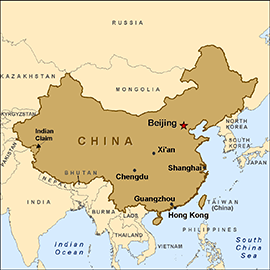 Most of the current population of Hong Kong has been culturally, politically and economically distinct from Mainland China. The language spoken in Hong Kong is native to the nearby province of Guangzhou (formerly known as Canton) and is distinct from the majority language and administrative language of China, Mandarin. Mandarin and Cantonese are both called the Chinese language, but they do not have any grammar, pronunciation and little vocabulary in common. Even in Cantonese, because of westernization, Hong Kong Cantonese is culturally distinct. Half of the words used in Hong Kong Cantonese are not used in the Cantonese spoken outside of Hong Kong. Hong Kong Cantonese uses more English words, leading to a variety of English-style Cantonese that is only spoken in Hong Kong.
Historically Hong Kong has been a trading port and is the only part of China that was colonized by the west. Contact with the west began in the early 1800s when demand for tea increased in Britain with the industrial revolution. The trade was controlled by the Qing dynasty and to protect China from foreign traders, they restricted trade to specific regions on the South. These trading areas gave westerners military and economic access to China and were often considered areas of corruption and disrepute. Le Khow, for example, was called the island of pirates and thieves.
Regulation of trade made China a beneficiary of trade with respect to Britain. British traders reported on various small instances to make the Chinese people look like savages to the British press. The propaganda system helped justify invasions of China, which are now called the Opium War, as much of the black market trade between Britain and China was in the form of Opium.
Britain took over the island of Hong Kong and later Beijing. On withdrawal, the British agreed to leave China as mostly independent, though they retained control over Hong Kong. In the agreement, the British “leased” Hong Kong for 99 years.
Decades later, during the Chinese revolution, many of the wealthy Chinese people fled to Hong Kong as a haven. From this point, anti-Beijing feelings in Hong Kong became more intense. This has a longer history though.
From the 1980s, it was becoming more pressing that China would eventually reclaim Hong Kong. As Hong Kong was going to be in the crossfires of Britain and China, negotiations began to determine the conditions of the handover.
This led to the one country two systems agreement with the Thatcher government and the Xiaoping government in 1987 where it was agreed that Hong Kong would be handed over to China as per the agreed upon lease, but the transition of government would not finish until 2047, or 50 years from the handover. Until 2047, Hong Kong would keep its own government, judiciary, and currency. A border between Hong Kong and China would be retained even after the handover.
For the first 10 years after China regained Hong Kong, Hong Kong was seen as a source of economic wealth. The one-country-two systems agreement benefited both the Chinese economy as well as the Hong Kong economy. However, with the penetration of neoliberal economic reforms, the added benefit of keeping Hong Kong as it was started to decline. Chinese manufacturing started to dominate global trade and Chinese cities started to catch up to Hong Kong.
To put this in perspective, Hong Kong has a population of about half a percent of China as a whole. Hong Kong went from contributing almost one-sixth or 18% of China’s GDP at the time of the handover, to almost one-fortieth or 2.5% in 2019. The incentive of China to keep the one-country-two system in the place has been declining.
Since the global 2008 financial crisis, Hong Kong went from contributing to China’s trade surplus to taking away from it. As Hong Kong relies on a relatively free-market style economy and does not have a prominent manufacturing base, foreign powers see Hong Kong as a point which can partially balance economic relations, while the Chinese government sees the Hong Kong economy as a drain, rather than the tap it was before.
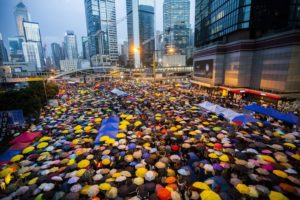 In 2014, the Chinese government published a white paper on the one country-two system, which made recommendations towards the reunification of Hong Kong with China. The Chinese government instituted a democratically elected Chief executive position in Hong Kong, elected by the people of Hong Kong, but would ban anyone contesting elections if they were deemed anti-Chinese. This provoked what later became called the Umbrella protest (called because umbrellas were used to guard protesters against pepper spray).
The Umbrella protests polarized and galvanized Hong Kong into pro-Beijing and anti-Beijing factions, with the latter having a strong base among students. This base created the groundwork for the recent protests and a stronger suspicion of the Beijing government among the youth.
As the one country-two system has less than twenty years left on it, the integration of Hong Kong with China is on the horizon. Until then, a number of reforms will be proposed and may occur to facilitate the move. As many of the Hong Kong youth have been in opposition to China, we may see more protests against these reforms.


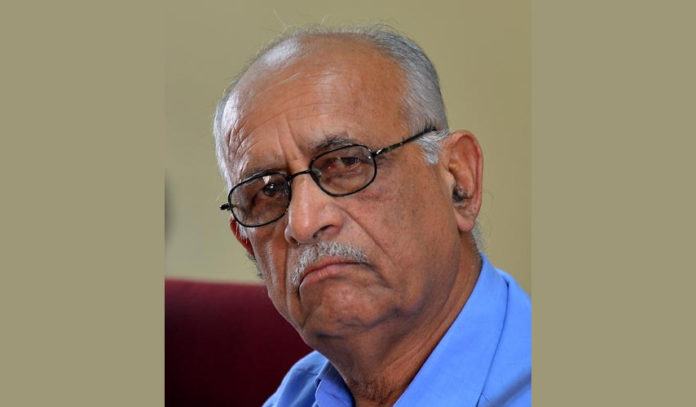

 Thousands of students signed up for a job creation campaign in front of the SJP Polytechnic College in Bangalore.

 Four months after the Andhra Pradesh government came to power, the salary increment remains pending for eight months. The implementation of a new grading system has also made their job precarious. The state leaders of the Andhra Asha Union say that even though the names of Asha operatives are included on all government web sites, they are not considered government employees but are deprived of identity cards and other facilities.


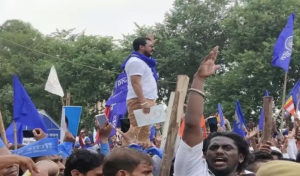

 Sant Ravidas


 The midnight celebrations were kicked off by playing drums at Sirur Park. HS Doreswami, Chandrashekhar Azad Ravan, Dr. Vijaya, Noor Sridhar, DH Poojar, Siddhanagowda Patil, R Manasayya, Indira Krishnappa, Kumar Samathala, Sirimane Nagaraj, Heggodu Prasanna, Siddhanagowda Modige, Agalaganchi and the founder of Vishwashaanti Souharda Peetha, Vijayananda Swamiji were all present. Cultural programs and slogans for the poor went on throughout the night. The committee planned to march to the parade ground if the government had not heard them by morning; however, the protest was called off at twelve, as representatives from the government arrived to hear the protestors out.


 Some channels are also showing how J&K is gearing to celebrate Independence day. There are videos of army and police preparations, parades and cultural programs. But they don’t explain the irony. How are people celebrating Independence day when they are in curfew and lockdown!