
National Register of Citizens: How the BJP is turning regional conflicts into national campaigns of hate.

The article is part of our series on migration. 

History of NRC in Assam

The National Citizens Registry (NRC) was the result of movements to ensure the dominance of the Assamese community in Assam. In the colonial period, Assam was a source of tea, an important crop for the British Empire. The movement for Assam came in the 1930s when there was a wave of linguistic movements across the country. Demands for redistricting were felt in many parts of British India, and many British territories were reorganized on linguistic lines. For example, the Kannada speaking southern part of the Bombay Presidency became Karnataka, and the Eastern part of Bengal Presidency became Assam. In Assam, many tea leaf pickers came from the Sylhet region now in Bangladesh, but the migration has been gradual and long-standing. The people there spoke a distinct language that resembled Bengali. For administrative purposes, Sylhet was part of Assam. During the independence struggle, there were some parties that wanted an independent Assam nation. When the decision was made to either join India or the primarily Bengali East Pakistan, there were parties who felt that the Sylhet region could shift the balance towards Pakistan. Assamese nationalist groups insisted on a partition so that the Muslim majority Sylhet district would join Pakistan, and Assam would join India. Of course, the citizenship of the labouring population was not clear as they migrated between areas under the two new countries. To add to the confusion, many Hindu Bengalis migrated to Assam from East Pakistan at the time of partition. Assam was crossed between the identity of a modern multicultural state and a guardian of Assamese culture. Assam is home to many ethnic groups apart from Assamese and Bengali with complicated dynamics. Interference from the London before 1947 and Delhi after have exacerbated this. This problem was compounded during the Bangladesh war of independence, which saw many Bangladeshis fleeing to Assam as refugees. The ambiguity of the status of the refugees and those that were not part of Assamese culture led to a struggle by the Assamese. In the late 1970s, there were movements by Assam nationalist groups to demand control over immigration into Assam, which formed the basis of the NRC, which laid policies ensuring that anyone who came at the time of the Bangladesh Independence war or after would be treated as a foreigner, and not be included as voters. These movements also included amnesty provisions for people who migrated in before 1971.

Operation Push Back

The bogey of illegal immigration has been sweeping the world from the late 1980s. In 1992, the Congress government implemented “Operation Push back” to deport Bangladeshis, which began when 132 people from New Delhi were determined to be Bangladeshis and were handed over to the Border Security Forces on the Bangladesh border. This operation faced criticism for its inhuman treatment of a vulnerable population, both nationally and internationally, and was suspended. The BJP government has continued to mobilise by claiming that India has been under siege by a growing Muslim population that seeks to overtake the Hindu population by numbers through a combination of having “large numbers of children”, and immigration. There has been some struggle in using the NRC exclusively against Muslims, and many local Assam groups have insisted that it be applied to Bengalis across religion. On 18th September 2019, Home Minister Amit Shah at a public event announced that NRC will be implemented across the country. Since then, BJP leaders in the states which are facing assembly elections in the coming months have started the NRC bogey.

Also Read: “All-India NRC Makes Absolutely No Sense”, Says IIM Professor

NRC in Karnataka
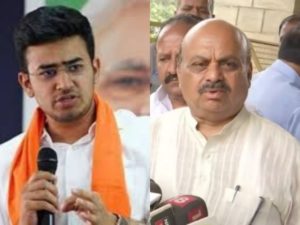
NRC in Karnataka In July 2019, BJP MP, Tejaswi Surya asked in Lok Sabha that Centre extend the National Register of Citizens to Karnataka claiming that a significant population of undocumented Bangladeshi immigrants had been living in Karnataka, especially in Bengaluru. Now 2 days ago, on 3rd October, Union Home minister Basvaraj Bommai said that Karnataka is considering to implement NRC in the state. He also told the press that the detention center has already been built and the government is collecting data on NRC. Karnataka has been a laboratory of Hindutva hate since the 1990s. Unlike other states, Karnataka’s popular movements are not as suspicious of a hegemonic Indian state and do not have a solid resistance to Hindutva. Like with Assam, Karnataka is home to many ethnic and linguistic groups. Karnataka became the first and only state in the South to be run by the BJP and has not successfully resisted the BJP. If the experiment works in Karnataka, it can be repeated in other states and become a tool by the BJP. The BJP has been having difficulty dealing with resistance to cultural hegemony from non-Hindi parts of the country, and Karnataka is an area where they can test using citizenship as a way to police the Muslim population. Different parts of the state have Muslims with different histories. Initially, it may look like they are targeting Muslims who are migrant labourers, and later, they can expand their policy to cover other groups as well. NRC exercise in Assam is declared a failure even for BJP. It has left 19 lakh citizens out of the final NRC list, majority of them Hindus. The exercise took five years and cost Rs. 1,220 crore. NRC has claimed 60 lives and the people on the list have spent close to Rs.7,800 crore on hearings. After the disaster, Amit Shah has announced the citizenship amendment bill to give citizenship to Hindus, Sikhs, Buddhists, Christians, Jains. By excluding Muslims from the citizenship amendment Amit Shah has shown the true intention behind the citizenship amendment bill and the NRC. According to the Indian constitution, one cannot be granted citizenship on the basis of religion. These unconstitutional statements from BJP leaders only fan the communal and Islamophobic sentiments across the country. Is Karnataka also staring at a similar fate?   

Sedition charges against 49 writers and filmmakers who wrote open letter to PM Modi

1
On Thursday, an FIR was lodged in Muzaffarpur, Bihar against 49 imminent personalities for writing an open letter to Prime minister Modi on frequent mob lynchings. The 49 celebrities include historian Ramchandra Guha and filmmakers Mani Ratnam, Anurag Kashyap and Aparna Sen. The FIR is lodged after an order was passed by Chief Judicial Magistrate Surya Kant Tiwari two months ago on a petition filed by local advocate Sudhir Kumar Ojha. The celebs are booked under sections which include sedition, public nuisance, hurting religious feelings and insulting with an intent to provoke breach of peace. In their letter to Modi in July the public figures claimed that the “Jai Shri Ram” slogan had become a “provocative war cry” and the reason for a number of lynchings. “Regrettably ‘Jai Shri Ram’ has become a provocative ‘war-cry’ today that leads to law and order problems, and many lynchings take place in its name,” the signatories had told the prime minister. “It is shocking that so much violence should be perpetrated in the name of religion! These are not the Middle Ages! The name of Ram is sacred to many in the majority community of India. As the highest Executive of this country, you must put a stop to the name of Ram being defiled in this manner.” Also Read: 49 distinguished personalities from film, theatre, and academia write to PM Modi on lynchings Some of the other prominent names who signed the letter are filmmakers Ravathy, Anurag Kashyap, Adoor Gopalakrishnan, Shyam Benegal, author Amit Chaudhuri, scholar Ashis Nandy, and actor Konkona Sen Sharma.

Sudhir Kumar Ojha- the petitioner

Muzaffarpur based lawyer Sudhir Kumar Ojha has a penchant for filing cases on celebrities, activists, and politicians. His favorite target is film stars who are “hurting religious sentiments” or for posting “obscene pictures”. He is known to be a publicity monger and it has also helped him establish his practice. Among the list of people, he has filed cases are Shahrukh Khan and his wife Gauri Khan and Alia Bhatt for the song “Radha teri chunri” of the move Student of the year for hurting religious sentiments. He has filed cases against Amitabh Bachchan, Aishwarya Rai Bachchan, Abhishek Bachchan, Hrithik Roshan and Salman Khan. He has filed against actresses Bipasha Basu, Katrina Kaif, Vidya Balan and Bihar girl Sonakshi Sinha for “obscene photographs”. He always seems to target the opposition government. He has filed cases against Sushil Kumar Modi, Anna Hazare, Arvind Kejriwal, and even Lalu Yadav.

He has also filed cases against Ex-Prime Minister Manmohan Singh and Sachin Tendulkar. Ojha has filed a criminal complaint case against the Prime Minister, challenging the decision to award the Bharat Ratna to the cricket maestro. He has charged the Prime Minister with hurting “people’s sentiments”.

He has also filed a case against Congress leader Sonia Gandhi to apologize before the court for being depicted as a goddess in the Moradabad Congress office.

In the present case, he has accused the celebrities of tarnishing the country’s image, and undermining ‘the impressive performance of the prime minister’ and  “supporting secessionist tendencies”.

Social media reacts 

In her response to theQuint, Aparna Sen has commented on the FIR- “This is ridiculous, there is nothing seditious in the letter. These are very strange times. Slowly, our democratic space is being taken away like this. This is pure harassment, it is just harassment and nothing else”.
Rahul Gandhi who was in Wayanad to meet youth protesting against the travel ban on Bandipur National Highway 766 also commented on the increasingly authoritarian state country is going towards.

NRC to be Implemented in Karnataka

Yesterday, Karnataka Home Minister Basavaraj Bommai said, “We (government) have started the preliminary exercise to prepare the ground to introduce NRC in Karnataka.” As reported by the Times of India, the state government will begin collecting information about illegal immigrants in order to start the implementation of the NRC (National Register of Citizens). “They [pose] a very important threat to the state,” Bommai said. First-time BJP MP Tejasvi Surya had also demanded the the NRC be introduced. Surya spoke up during Zero Hour of the Lok Sabha on Wednesday, claiming that the influx of immigrants from Bangladesh posed a “security threat” to Bengaluru and Karnataka. The Home Minister claimed that the state government would take a decision within a week or two. However, The News Minute reported that the Karnataka government was at an advanced stage of building a detention centre for illegal immigrants. The centre is allegedly located at Nelamangala Taluk of Bengaluru Rural. While the BJP is keen to introduce the NRC in the state, the previous Congress and JD(S) coalition government had dismissed the need for it, claiming that there were only about 200 illegal immigrants in the state. Janata Dal (Secular) spokesperson Tanveer Ahmed said, “Let the home minister of Karnataka first concentrate on flood victims. NRC is a national issue that needs a lot of deliberation.”
Also read: Democracy under Detention: Report details horrors of NRC in Assam

Communal Flavour

The NRC is a cause for concern due to the seemingly discriminatory nature of the citizen list. Officials from the United Nations have expressed worries about the huge volume of people who will be left stateless. Experts from the Human Rights Council had requested that the Indian Government review its decision to implement the NRC, warning that it might result in “discriminatory or arbitrary deprivation or denial of nationality”. They said that the burden of proof of nationality must lie on the State, not its citizens. With Amit Shah’s recent statement that Hindu, Sikh, Jain, Buddhist and Christian refugees would not be deported, the NRC’s communal flavour was once again brought to light.

Data

The BJP’s narrative that illegal immigrants from Bangladesh are taking away local jobs seems contrary to census data. According to the recently released 2011 Census data, 17.3% of the residents of Bengaluru are born outside the state of Karnataka. However, two-thirds of these migrants come from the nearby states of Tamil Nadu, Kerala and undivided Andhra Pradesh. 42% of Bengaluru residents are migrants from outside the city, but most are from within Karnataka itself rather than from outside. Karnataka has become home for so many people, such as the 14,000 Tibetan refugees at Byalikuppe. Bengaluru itself is known for its hospitality. It is hard to believe that a government list will expel these people and communities who have come here looking for a home.

Manmohan Singh to attend Kartarpur corridor inaugration ceremony in Pakistan

0
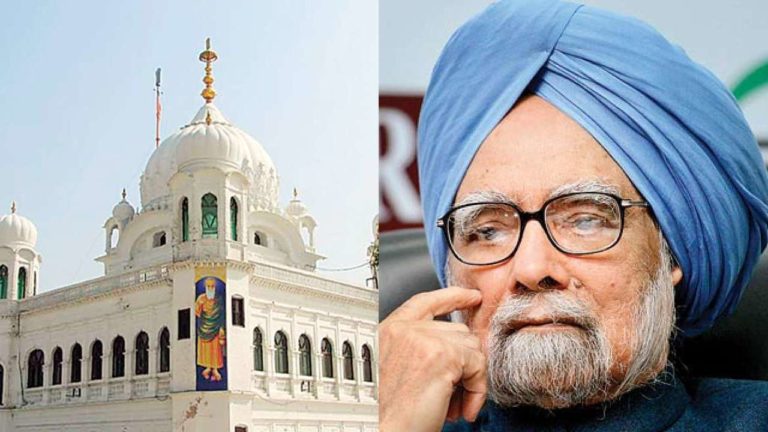
Ex-Prime Minister Manmohan Singh will visit Pakistan for the inauguration ceremony of the Kartarpur Sahib corridor next month. The Punjab chief minister called on Manmohan Singh at his residence in Delhi and asked him to attend the first jatha to Kartarpur Sahib for the inauguration of the cross-border corridor on November 9. The day also marks the 550th birth anniversary of Guru Nanak, the founder of Sikhism and the first of the ten Sikh Gurus, which will also be attended by Manmohan Singh.   Prime Minister Narendra Modi and President Ram Nath Kovind have also accepted the Punjab government’s invitation to be a part of the celebrations that will be held in the state. Manmohan Singh’s visit to Pakistan will not be on the invitation of Pakistan. Though on 1st October Pakistan foreign minister Shah Mahmood Qureshi had invited him to join in the inauguration of the event. Kartarpur Corridor will connect the Sikh shrines of Dera Baba Nanak Sahib in Punjab India with Gurdwara Darbar Sahib Kartarpur in Punjab, Pakistan. It will help devotees from India to visit the Kartarpur Gurdwara which is 4.7Km from India Pakistan border without a visa. Presently, pilgrims from India have to take a bus to Lahore to get to Kartarpur, which is a 125 km journey, despite the fact that people on the Indian side of the border can physically see Gurdwara Darbar Sahib Kartarpur on the Pakistani side. The proposal for the Corridor was first proposed by Indian PM Atal Bihar Vajpayee and Pakistan PM Nawaz Sharif in 1999 to strengthen diplomatic efforts.  On 26 November 2018, the foundation stone for the Kartarpur corridor was laid down on the Indian side. Two days later the foundation stone for the corridor was laid down on the Pakistani side. The prime minister of Pakistan Imran Khan has compared the decision to go ahead with the corridor by the two countries to the fall of the Berlin Wall, saying that the project may help in easing tensions between the two countries.  

Karnataka: Rift in BJP over move to split Bellary

0
With increasing tension among the BJP legislators for carving out a Vijayanagara district out of Bellary, CM B.S Yediyurappa has postponed the idea till after the bypolls. Chief Minister of Karnataka B.S Yediyurappa has made it clear that the Bellary district will not be bifurcated, After having a meeting with lawmakers and parliamentarians from Bellary, who opposed the state government’s plan to split the district to carving out a new Vijayanagara district. CM B.S Yediyurappa had discussed the issue in a meeting of MLAs, MLCs, and MPs representing Bellary district on Wednesday, October 2nd at his home office, where the sections of the ruling BJP MLA’s expressed their stiff resistance against the proposal to create the new district by carving out six taluks from Bellary. According to the sources, BJP MLA Somashekar Reddy has voiced strong opposition to the move in the meeting. He also warned the government that any approval for dividing Bellary to create separate Vijayanagara district will ignite a fire. “We will not allow it to happen. Bellary district will remain united. The government should drop the idea of the bifurcation,” He said.

Bifurcation- a move to help disqualified MLA Anand Singh

The discussion led to a heated exchange of words among the Congress and BJP MLAs with both targetting the disqualified MLA Anand Singh. Congress MP Syed Naseer Hussain questioned the presence of Mr. Singh in the meeting of legislators. He termed the participation of a disqualified MLA in the meeting as “unethical and unconstitutional”. The matter may be in the Supreme Court, but the court has not stayed the disqualification. The reason for the meeting was to try and help the disqualified MLA, who is likely to contest the byelections,” Mr. Hussain said. Anand Singh has been demanding the establishment of a new district saying that it will help promote tourism of Hampi. Hampi once served as the capital of the Vijayanagar empire. Singh’s agenda for the new district is also to re-contest from the newly Vijayanagar district in the Assembly by-polls on BJP ticket if the Supreme Court upholds the plea of the disqualified MLAs.

Rift in BJP

The Chief Minister had earlier asked chief secretary T. M Vijay Bhaskar to place the proposal on the creation of the district before the next cabinet meeting, A day after he met a delegation led by Vijayanagar’s disqualified MLA Anand Singh who demanded the creation of the new district.
The proposal on bifurcation is being seen as a move to promote Mr. Singh to counter the enormous influence Reddy Brothers and Health and Family Welfare Minister B. Sriramulu have in the Bellary district.
Former Minister Gali Janardan reddy brothers and BJP MLAs even celebrated Bellary bundh on Tuesday, October 1st, who strongly opposed bifurcation of Bellary. Hundreds of supporters of Reddy brothers were part of bundh and warned government drop plan of carving out a Vijayanagar new district. Deputy Chief Minister Laxman Savadi, Health Minister B Sriramulu, Karunakara Reddy, Bheema Naik, Congress MLA B. Nagendra opposed the decision for bifurcation in the meeting. Only Anand Singh was in favor of the formation of a new district with Hospete as its center. When several BJP and Congress MLAs cornered him, he walked out of the meeting midway. After this, BS Yeddyurappa suggested – First, let us gather opinions from various political leaders and experts. Then will take the final decision”, concluded the meeting. In his interaction with media, BS Yediyurappa told that the decision has been postponed until after Karnataka by-polls. As per the plan, Hosapete, Kampli, Hagari bommanahalli, Kotturu, Hadagali, and Harapanahalli would form part of the proposed Vijayanagara district, while Kurugodu, Bellary, Siruguppa,Sandaru, and Kudligi will remain in Bellary district, as explained by Yediyurappa in his note to the chief secretary on September 20th. Meanwhile, Former Chief Minister Siddaramaiah has also criticized BS Yediyurappa move to create Ballari district and alleged that it as an attempt by the BJP government to help Anand Singh.

Demands for the division of more Districts

On the other hand, Congress leader G Parameshwara also wrote a letter to Chief Minister Yediyurappa to consider the creation of the Madhugiri district by bifurcating Tumakuru. There was a long pending demand from some quarters to carve out Chikkodi as a separate district from Belagavi, which is the state’s largest district in terms of area. Along with this demand for the creation of a new Jamkhandi district from Bagalkot has also gained momentum.

The Woman Who Beat Usain Bolt

0
You may not have heard of Allyson Felix, but start paying attention. The 33-year old American athlete was just crowned the most decorated runner in the world after winning a gold at the mixed 4x400m relay at the IAAF World Athletics Championships, Doha. She now holds the record for the most gold medals in track and field world championships, beating Usain Bolt. Felix had already won many prestigious accolades, including nine medals spread across four Olympic games. Not even a year ago, Felix battled a difficult pregnancy to deliver a daughter via emergency C-section. Despite this, she is back on the Olympics team and is preparing for the Tokyo Olympics, which will take place in the summer of 2020. In August this year, Felix fought for female athletes across the globe by battling Nike on its discriminatory policy regarding its sponsors. Nike’s policy meant that pregnant athletes and new mothers were paid far less than their counterparts. Felix, who was a Nike sponsor, shared that Nike was to pay her 70% less due to the fact that she was a new mother. Along with a group of other female athletes, Felix successfully ensured that Nike amended this policy. The new policy states that Nike sponsors will not be financially impacted for at least 18 months after the start of pregnancy. Felix’s win is significant in the larger political landscape, with women in various sports fighting for equal pay. One of the most prominent battles has been that of Megan Rapinoe and her team. They shed light on the unfair pay gap between the men and women’s football team before and during the World Cup title in 2019. It is an open secret that women athletes and sportspersons are given much lower pay and praise than their male counterparts, regardless of how accomplished they might be. This pay gap persists across most professions, but is particularly pronounced in the sporting world. Likewise, pregnancy-based discrimination is prevalent in most fields. For most working women, pregnancy means the end of a hard-won career, or at least, a significant slowdown in their journey to the top. Allyson Felix’s high-profile victory with Nike gives hope to women all over the world. Although Felix is an exceptionally talented, decorated athlete – she won her first Olympic medal at age 18 – her work on the gender pay gap is a step forward for all mothers. Felix’s spectacular win at Doha and other venues has shown that pregnancy hasn’t affected her performance on the track. While Felix admits that getting back her former level of fitness has been harder than she thought, she’s proving that she can do it, and will no doubt come back with at least one gold from the upcoming Tokyo Olympics. The privilege of starting a family while maintaining a career has always belonged to men – not by accident, but because of policies like Nike’s. It’s time that this started changing, and Allyson Felix’s activism is a step in the right direction.

Siddharamaiah: Time to follow Gandhi´s path and start a second Independence Movement

0

Karnataka Ex-chief minister Siddaramaiah gives Gandhi´s message of truth and nonviolence on Mahatma Gandhi´s 150th anniversary.

Siddharamaiah in a message on social media reminds the people about the philosophy of Mahatma Gandhi. He says- “The two main parts of Mahatma Gandhi’s philosophy are the truth and nonviolence. He wanted to address all the social evils of society and merge the gaps. He believed that poverty is the ugliest form of violence. Our policies were formulated to address this violence manifested by poverty.”

The message was shared on his Facebook account. Siddharamaiah message on 150th gandhi jayanti

Siddharamaiah expressed concern over the extreme communal atmosphere in the country coupled with the economic crisis the country is pushed into under the Modi led BJP government at the centre. He describes the present state of the country as a “police state” where dissenting voices are being silenced.

The Narendra Modi government has waged a war on those who are fighting against poverty, social injustice, hatred, and intolerance. The democratic nation has broken down and has taken the shape of a police state. There is no transparency in governance and people are left blindfolded with all the lies propagated by BJP.

He adds that such is the state of the country that if Mahatma Gandhi was alive today, he would have started a second independence movement which is a fight against communal hatred, lies, intolerance and systematic atrocities against the weak, which are a direct result of the current political regime.

He wished everyone on the occasion of Gandhi Jayanti and urged his followers that ” Now in Mahatma´s absence it is our duty to do the same and it is the only way we can pay tribute to great soul on his 150th birth anniversary”.

This year Gandhi Jayanti holds special significance as it marks the 150th birth anniversary of Mahatma Gandhi. It is being celebrated all over the country. Gandhian principles of non-violent resistance and satyagraha resonate more than ever in today´s divisive and violent times. United Nations General Assembly inspired by Mahatma Gandhi announced on 15 June 2007, to celebrate 2 October as the International Day of Non-Violence.

Karthik Bittu: The Trans-Queer Community

0
Today the transgender and queer communities in India find ourselves at a crossroads. On the one hand, the courts have granted us unprecedented rights to self-identification under the NALSA judgment, making it possible for transgender persons to identify in the gender of our choice, including in our identity documents, regardless of what our bodies or medical records look like. Through this judgment, the Supreme Court recognized the historical injustice done to transgender persons in this country and proposed several remedies like reservation in education and employment for transgender persons, free health care and housing provisions. Likewise, the reading down of Section 377 by the courts has had the strong symbolic impact of reading down a section of the law that technically criminalized sexual acts practiced by all sections of the population, but was disproportionately used to criminalize and extort from transgender and queer individuals. However, the legislature has been rapidly passing a series of bills that have criminalized the transgender community in even more draconian ways than before. The BJP government formulated a Transgender Persons (Protection of Rights) Bill in 2015, whose name is extremely misleading, since it stripped any form of positive protection that was enshrined in the bill it aimed to counter – a transgender rights bill passed in the Rajya Sabha by DMK MP Tiruchi Siva and drafted with the help of the transgender community. Later versions of the bill made things even worse,  criminalizing traditional begging without any provisions for reservation or affirmative action or penalties for discrimination in employment, education, housing, and access to health care of the kind that transgender persons routinely face. After a prolonged struggle in which the transgender community held protests, press conferences, consultations and made depositions before the government, this provision was rolled back in the 2019 version of the bill. However, the bill continues to violate the right to self-identify gender that was enshrined in the Supreme Court’s NALSA vs UOI judgment. It now mandates that people have to all first open up their identity as transgender persons before the government and request documents in that identity from a committee headed by a district magistrate. We then have to submit proof  of surgery in order to get identity documents in any other gender of our choice. This means that a trans man who has taken hormones and grown a beard would have to continue to live with a mismatched ID stating gender as female, if he does not want or can’t afford to have surgery. The bill encodes discrimination by providing vastly lower sentences (from 6 months to 2 years) for perpetrators of sexual assault of trans persons than cis women (7 years to life). The transgender and intersex community’s greatest worry is that this bill will worsen the already difficult lives of the young members of the community who are starting their legal transitions, and in fact make legal transitions prohibitively expensive. Perhaps in response to this kind of legislative assault on our rights, the transgender community was very strongly involved in visibilizing the need for our democratic rights in the 2019 election. While members of the transgender community have been contesting elections for years, what set apart the 2019 election was both the number of transgender candidates contesting from different parts of the country, and more substantively, the inclusion of transgender community issues in some detail in election manifestos. In the 2019 election, promises to fight against this bill have clearly made it to the election manifestos of the Congress party, the CPM and the newly formed Vanchit Bahujan Aghadi; while the DMK, CPI and CPI (ML) Liberation reiterated their commitment to trans empowering legislation. Meanwhile, several transgender candidates ran for election: Bhawani Singh in Allahabad from AAP while the rest ran as independent candidates: “Chinju” Aswathi Rajappan from Ernakulam, Raju Mataji from Ahmedabad East, Jatin Rangrao Harne from Mumbai North East, Sneha Kale from Mumbai North Central, and M. Radha from Chennai South. The BJP’s victory spells doom for the transgender community, perhaps ensuring even more political participation by the community against their policies in the years to come. The BJP manifesto quite glibly pledged to “bring transgenders to the mainstream” through “adequate socio-economic and policy initiatives”, and that “self-employment” and “skill development” will be ensured by the government. Arguably, self-employment is what the community has already organized in the form of begging and sex work, both forms of distress driven self-organized livelihoods. While it is perhaps an unsurprising statement from a party whose Prime Minister exhorted people in the country to make pakodas instead of generating employment, their government has not even encouraged distress driven self employment by trans people. The newly re-elected government plans to reintroduce the Transgender Rights Bill in parliament. This places the transgender community in the same position of helplessness as many other minority communities. The rights of minorities will be fully decided by a majoritarian majority party, entirely permissible within the already limited framework of majority-based democratic legislative processes. Depressing as that prospect is, it is clear that this state of mass Hindu majoritarian organization under a fascist ideological umbrella are part of a long-term sociopolitical process of change in relationship to economic crises. Demographic data put the estimate of the number of LGBTQIA identified people at between 4 and 11% of the population, a significant enough fraction of the voting population to count in crude terms as a vote bank. But my concern is not about the rising visibility and numbers of the LGBTQIA community, but of how solidarities get built between this community with other oppressed communities. The goal is to fight not just for a narrow version of self-liberation, but for the liberation of all people from the heartbreakingly unequal and brutal society that we currently live in. Dr. Karthik Bittu is Assistant Professor of Psychology at Ashoka University. He is a social activist who works with various social justice movements including those involving the LGBTQ+ community. 

Writers and Activists Slam SL Bhyrappa’s Remarks on Women’s Entry into Hindu Temple

0
Well-known Kannada author SL Bhyrappa inaugurated the Dasara festival in Mysuru on Sunday, 29th September. In his inaugural speech, he made a statement about women’s entry into the Sabarimala temple. The writer took serious objection to both the court and the Kerala government’s stand over the issue of women’s entry into the Lord Ayyappa temple in Sabarimala. “It is not a question of gender equality but of one’s beliefs. Now, we are celebrating Goddess Chamundeshwari’s triumph over the evil and killing of demon king Mahishasura. Can people go to the court alleging discrimination against men?” asked Bhyrappa adding that law cannot establish gender equality as the cultural nuances and reality of the country were different. Bhyrappa’s statements have drawn sharp criticism from prominent writers and women activists especially his statements where he supports the ban on temple entry of women of menstruating age. “Well known writer S.L. Bhyrappa in his statement has opposed women’s entry into Hindu temples during menstruating age. This is an insult to all women and mothers,” said Akhila Vidyasandra, Advocate and Socio-Legal Activist, Karnataka.   Preethi Nagaraj, a senior journalist based in Bangalore, had taken to social media to counter Bhyrappa’s statement, “Uterus is where women store the menstrual blood. Poor cursed men, they carry it (always) in their heads.” Kadambini Ravi, a prominent writer, said the basic principle of being a writer is to treat all human beings equally. “But Prof. Bhyrappa has never treated women as human beings.” This was not befitting a civilized person, she said. Bhyrappa also said that gender discrimination was not Indian “culture” but a temporary aberration brought in by invasions. According to him Women always have had a high status in Indian society where we worship female deities “more”. But suddenly we get to hear that women are not respected in our society. Women remained withdrawn or sidelined owing to invasion and assault. But today, we see more girls than boys pursuing higher education. Our society is always open to change,” said Bhyrappa. Social media was abuzz where netizens were not too happy with his regressive statements. Srinivas Karkala says- “We carry many things in our body. Feces in the gut, Urine is present in the bladder. You can go to the temple with that. But only females experiencing menstruation should not enter the temple.” We used to think that literary people have more sensititvity and with age, wisdom comes!  it is our mistake to think like that! A rapist can enter the temple. The thug, the thief, the corrupt, the crafty, the gangster can enter the temple. Only females who have given life to the world should not enter the temple because of menstruation !. “If work is worship, then why should we go to the office when we are menstruating? Give us 3 days off a month in your name please,” said Chaitra Kotur. “The whole world was born because of menstruation. Where did this sarvagya come from if not uterus? How was he born that he says not to touch menstruating women?” wrote Leela K Gulbarga. “The person who calls menstruation impure suffers from a mental illness. Does he not remember the women of his own household?” asked Mahalingappa Alabala. In his inaugural address, Bhyrappa claimed that everyone should respect customs followed in Hindu temples and that the government should not interfere in religious matters. He also talked about writers who practice activism and criticized them saying that “writers should not become activists”. Bhyrappa´s statements not just reflect his mentality on menstruation but are also part of the misogynistic attitude prevalent in mainstream society and should be condemned.

Sujatha Surepalli: We Can Become the Powerful Majority

On 15th August, Prime Minister Modi talked about One Nation, One India (One Religion is silent perhaps). This  is against the spirit of the Indian constitution, and it should caution all of us. India is going through a difficult phase now. We have to look at India after and before the Modi era. We have lost many intellectual, brave personalities like Gauri Lankesh, who not only questioned religion, but also wrote, fought single-handedly, and touched on core issues which are not spoken about in the present day. Today Hindutva has spread across all sections of society. By gaining political power, Hindutva forces are trying to either co-opt the people who are different or kill them.  Economic onslaught makes people helpless and forces them join hands with local bodies which are completely saffronized. Demonetization and GST killed almost all middle and lower sections of the society by helping the rich. Pulwama and surgical strikes paved the way for political gain. This led to the inhumane decision of occupying Kashmir and abrogating Article 370. The silence of the majority of people is very scary. This is not the original character of India. We used to feel proud of this country not because of its so-called ‘Unity in Diversity’ but its ‘plurality’, that plurality that we understood and lived, which is enshrined in the constitution. The visionary and the leader of human rights, Dr. Baba Saheb Ambedkar experimented all his life with theories, concepts of liberty, equality, freedom. For the majority of people, Indians Constitution is the only support that can protect them from dominant Hindu Cultural practices. Now India is incomplete without talking about caste. The growing atrocities on Dalits are not only confined to rural, uneducated, and poor Dalits. Rohith Vemula’s brutal murder (we will not call it a suicide) in HCU and Perumalla Pranay who was killed for marrying a Vaishya caste girl, proved that educated youth who are well aware of politics can be killed if they touch upon the issue of caste. Dalits are raising their voices for the voiceless and so became the target for State forces. There is a major crisis within social and democratic movements with the arrest of Bhim Army leader Chandra Seker Azad and the arrests of activists, writers, lawyers, and teachers in Bhima Koregaon. We all need to think seriously about this. Dalits and minorities are not only targeted through the cow but also chantings of Jai Shriram. We have witnessed the killings of Ansari, Jarkhand as well in the recent past. When we talk about Telangana, known as the land of movements and struggles of culture, religious diversity, self-respect movements, after achieving statehood, the repression of people is multi-faceted. People have been arrested just for posting on social media, and third-degree punishment has been slapped on many innocent students and activists. The BJP is slowly capturing the political space, which was an impossible task till recently. In name, all political parties espouse the same principles against, class, caste and gender. Now the state of Telangana is completely toeing the line set by Modi Sarkar, by encouraging multinational companies, strengthening the  armed forces, and oppressing voices that are different from the norm. One main concern is the privatization of natural resources, opening the gates for Uranium mining, and selling government land on the pretext of generating income. After five years, one full term of TRS failed to fulfill its promises, familial and feudal rule pushing the state into acute poverty. The education sector is being completely ignored, health and employment policies have taken a back seat. Overall, Central and State Governments are following the same strategy: arresting activists, killing innocents, spreading Hindutva. The only way in front of us is to recognize the common enemy and unite all forces of anti-caste, anti-class, and pro-democracy voices. Every progressive section in this country is under attack. If we all come together, and cease to fight over small ideological issues, we can become the powerful majority section, play the role of opposition parties and protect people from the dangers that are to come. For this, we have to make use all mediums, forums, and reach out to everyone possible. Gauri Lankesh was killed perhaps because she was a lonely voice. If we all raise our voices and stand, no one will be killed in the future. Sujatha Surepally is an activist and academician. She has actively participated in struggles against caste and gender disparity as well as Adivasis rights, environmental issues, natural resources and Telengana. She hold a Masters in Sociology and has done her Ph.D on Dalit Women’s Empowerment. She has been teaching Sociology for over 13 years.