Casteism runs deep in the veins of the country. When the government put the country of 1.3 billion people in lockdown, the people ensured their casteist practices were not made to go under lockdown. In a telling example of the casteism of the country, a case of honour killing was filed in Tamil Nadu. A 24-year-old man was murdered in his village for marrying outside of his caste. The man had returned to his village from Chennai once the lockdown was announced. After he came back, he made attempts to meet his wife. This enraged the women’s family and relatives which lead to them killing him.According to a Frontline report, M. Sudhakar, the victim, came from Morappan Thangal village near the town of Arani in the Tiruvannamalai district. Both the man and the women belonged to groups that were classified as most backward classes. Sudhakar was from the Oddar caste, which is considered the lowest among the most backward classes. The woman belonged to the Vanniayar community from Ondikudisai hamlet. Sudhakar and she fell in love, ran away, and got married to each other at Walajah six months ago. The woman’s family was strongly opposed to this marriage and convened the local panchayat to annul the marriage. The couple was forcefully separated. Sudhakar was beaten up and harassed and was forced to leave the village. Sudhakar’s parents were daily wage labourers and they could say nothing against the judgement of the panchayat. Worried about their son’s safety, they sent him to Chennai to work as a labourer. Sudhakar’s parents would go visit him in Chennai so that he would not come back to the village. Once the nationwide lockdown was announced Sudhakar found it difficult to earn a living and was forced to return to his village. “But what he did subsequently had cost his life. He made an attempt to meet his wife, which infuriated the girl’s relatives and caste people,” said Selvam. When Sudhakar was alone in his village on March 27, the woman’s father, along with a relative, attacked and killed him.” Said P Selvam, secretary of the Tiruvannamalai District Untouchability Eradication Committee, a wing of the CPI (M), who has taken up the issue. “The government must arrest those who sat in the local panchayat that nullified the legally solemnised marriage,” said A. Kadir, executive-director of a Madurai based NGO, ‘Evidence’ Soon after the killing, a case was registered at the Aarani town Police Station. When the case was being filed, the women’s parents and relatives surrounded the police station. The girl’s father and cousin were identified as the perpetrators and were arrested.
Sugumaran from the Federation for People’s Rights told Frontline that it was said that new legislation was needed to deal with honour killings. According to him, many Dalits face violence in their villages but only a few cases come to light. He also added, in a conversation with Frontline “The respective district administrations must remain sensitive to such developments and chalk out a comprehensive plan so that those facing threats are insulated from any sort of violence.”
Many Dalits moved to cities in search of jobs to escape the discrimination they faced in villages. Once the lockdown was imposed, they were forced to return to their villages because they had no other means of income. This could mean that there would be a rise in violence against them. The lockdown is affecting Dalits more than others as they are not insulated against this violence anymore.
The Uttar Pradesh Police filed an FIR against The Wire editor, Siddharth Vardarajan, over his comments on Twitter. The tweet claimed that the day the Tablighi Jamat was held Yogi Adityanath had insisted that the Ram Navami Mela would be held in UP from the 25th to the 2nd of March. The FIR was filed by Nitish Srivastav, a resident of Faizabad, UP. In the FIR Srivastav claimed that Vardarajan wrote the tweet with the aim to spread rumours and hostility among the public. He claimed that this was an objectionable comment and had ‘caused anger amongst people.’ The FIR also mentioned the ‘objectionable comments’ made by the editor on Yogi Adiyanath’s involvement in the Ram Janmbhoomi eventduring the nationwide lockdown. The FIR was filed under sections 188 (Disobedience to an order issued by a public servant) and 505 (2) (statements conducing to public mischief). Vardarajan’s tweet was in reference to the Tablighi Jamaat incident. “On the day the Tablighi Jamaat event was held, Adityanath insisted a large Ram Navami fair planned for Ayodhya from March 25 to April 2 would proceed as usual and that ‘Lord Ram would protect devotees from the coronavirus’.” Vardarajan tweetedMrityunjay Kumar, the media advisor to Yogi Adityanath, took to twitter and asked Vardarajan to delete the tweet. “Do not try to spread lies. Chief Minister Yogi Adityanath had never said such a thing. Delete it immediately, otherwise, action will be taken and a case of defamation will also be imposed.”Vardarajan followed his tweet with a correction “I should clarify that it was Acharya Paramhans, Hindutva stalwart and head of the official Ayodhya temple trust, who said Ram would protect devotees from coronavirus, and not Adityanath, though he allowed a public event on 25/3 in defiance of the lockdown and took part himself.” The FIR was filed soon after this clarification. After the case was filed Mrityunjay Kumar said that despite warning neither did Vardarajan take the tweet down nor did he apologize. The Wire put out a statement in response to the FIR. The statement said that the FIR ‘aimed at stifling legitimate expression and factual information.’ It also stated that this was a ‘blatant attack on freedom of the press’. It also criticized the UP Police ‘the UP police seems to think it is their job to go after those who criticize the CM.’Attack on Freedom of pressIn the past few weeks, there have been multiple means that the government has used to clamp down on media houses. Before the lockdown began, PM Modi got on a conference call with editors and owners of 20 media houses. He asked them to refrain from criticizing the government in relation to COVID and post only positive news. On the 31st of March, the Modi government also urged the Supreme court to direct media outlets to not publish any news about COVID-19 without confirming the facts with the government. The SC refused to ‘interfere with free discussion about the pandemic’ but directed media outlets to ‘refer and publish’ the official version about the developments of COVID-19. The danger in these directives by the government is that for the next few months, the lack of questioning voices in the media can lead to the government absolving itself all responsibility.
A 20-year-old indigenous woman belonging to the Kokama tribe has been tested positive for coronavirus in Brazil. Hers is the first case to be tested positive, confirmed the Health Ministry’s indigenous health service Sesai. She is currently experiencing no symptoms and has been quarantined along with her family. Kokama is amongst the 300 tribes who live in the Amazon Forest. The woman tested positive in the district of Santo Antonio da Içá. She was in contact with a doctor from the district who was also tested positive for the virus. She was the only one, among 15 health care workers and 12 patients who were tested positive after coming in contact with the doctor. With four cases that have been tested positive in the district, including the doctor, there is a real danger that the virus could spread to tribal communities in the Amazon. This could have a devastating effect on the population.
Much like the tribes in the Amazon, the tribals in Andaman and Nicobar are cut off from the world and thus do not have a high immunity against diseases. The population of the tribals has drastically reduced in the past due to the outbreak of diseases like flu and measles.
According to reports the doctor had returned from southern Brazil and started working with one of Amazon’s largest tribes, the Tikunas. They have a population of about 30,000. Health Minister Luiz Henrique Mandetta said, “We have to be triply careful in these communities, especially the most isolated ones.” Health experts have warned that 850,000 indigenous people are at the risk of being wiped out. They are concerned that the living arrangements in the villages could be dangerous. People live in communal huts, which means, if any one of the members caught the virus, all others could be infected. This incident is a red flag and needs to be monitored closely. Indigenous tribes have lost 95 percent of their population in the past due to outbreaks of diseases like small pox, which Europeans brought with them. The tribal community has not developed immunity against a number of diseases because they live cut off from the world. Reports state that tribal leaders are kept in isolation from the tribe every time they come from a visit overseas, to avoid spreading any diseases that they might have carried.India is currently facing a similar fear. Andaman and Nicobar have a tribal population that is about 1000 people. It is home to 5 endangered tribes – the Great Andamanese, Jarawas, Onge, Shompen, and the Sentinelese. Andaman has also seen 10 positive cases of coronavirus in the past few weeks. 9 of the 10 cases were people who visited the Nizamuddin Markaz. The 10th patient was the wife of one of the 9 who were tested. The biggest task of the authorities right now is to ensure that the virus is contained and does not spread to the tribes. “Our biggest challenge is to contain the spread, to ensure it doesn’t go to the islands and is restricted to Port Blair,” medical nodal officer Avijit Roy said. “We are already on the third level of tracing of the contacts of the positive cases.” Extra precautions are being taken to contain the virus. Only field staff, who have been medically cleared are allowed to deliver food to the tribals and monitor them from a safe distance. Australia and Canada face similar issues of protecting the indigenous communities from the pandemic as they are in more danger of being wiped out because of the virus. Stephane McLachlan, a professor in the department of environment and geography at the University of Manitoba in central Canada, told Aljazeera “It’s clear that Indigenous people everywhere are susceptible [and] have been devastated by these pandemics in the past,” he said. “People are relatively isolated, they had inadequate access to healthcare to begin with, the housing is often crowded … food insecurity is an issue sometimes and certainly unemployment rates – those all act to make people more vulnerable.”
Amidst the COVID-19 induced lockdown, on 3rd April, Friday, Prime minister Modi shared a video message urging Indians to switch off all lights on Sunday 5 April at 9 pm for 9 minutes and light a candle or diya in their doorways or balconies.
“I request all of of you to switch off all the lights of your house on 5 April at 9 PM for 9 minutes, and just light a candle, ‘diya’, or mobile’s flashlight, to mark our fight against coronavirus,” he said.
WATCH: PM Narendra Modi shares a video message with the nation. (Courtesy: DD) https://t.co/4bIdR7v3dP
Speaking on people’s anxiety amid the lockdown, PM Modi said that “none of us are alone” and that 130 crore Indians are together in the fight against the pandemic.
Prime Minister also reminded Indians to maintain social distancing while performing the event and do not gather in groups.
“I request you all, that while doing this, please do not gather anywhere in groups, be it on streets or localities. Please execute this from your doorsteps or balconies. The ‘laxmen rekha’ of social distancing cannot be crossed. This is the only solution against coronavirus. So, at 9 pm on 5 April, sit alone for a while and remember ‘maa bharti’,” he said.
“The way you paid gratitude to people fighting against coronavirus on 22 March has become a model that is being emulated by other countries. Janata curfew and ringing of bells, clanging utensils, made the country aware of its unity amid this challenging time,” the prime minister added.
Last time PM Modi asked people to clang pots and plates, many people got overwhelmed and came out on streets in groups with conch, drums, and big pots throwing caution to the wind. In some cases, such marches were led by police administration in full revelry. So many wonder how can that be a model to be emulated.
Did the PM’s message meet people’s expectations?
The message might be a disappointment for those who were expecting that the Prime minister will speak of some measures to instill trust in the people. But like his earlier messages, this time also turned out to be an announcement of an event.
The population at large is worried about the control and treatment of the pandemic. There are health professionals who are still without the personal protective equipment (PPE) and are being attacked in some parts of India because of misinformation about the corona outbreak. PM Modi did not speak about the health infrastructure of provisions for health professionals in handling the crisis at hand. He also did not speak a word on food scarcity, migrant woes and any plan of how the post lockdown situation will be handled.
“The unpreparedness of the educated classes, the lack of practical links between them and the mass of the people, their laziness, and, let it be said, their cowardice at the decisive moment of the struggle will give rise to tragic mishaps.”― Frantz Fanon, The Wretched of the EarthFrantz Fanon said this in the context of colonization and the coloniser’s inability to acknowledge the harm it did to mankind. In a strange way, the collapse of the Indian model of governance in the midst of a pandemic must help us realise that the current educated class in India lacks a practical link with the masses. A friend who works in a senior role in the private sector was amazed to know that nine out of ten Indian labourers belong to the informal sector and nearly three out of the nine are seasonal migrants. 120 million people (two times the population of UK ) migrate for jobs. The idea of locking a country without a plan is ill-conceived and we will be paying a price for it in the years to come. Yet, in these times of utmost hopelessness, I remember Mandela,“There were many dark moments when my faith in humanity was sorely tested, but I would not and could not give myself up to despair. That way lies defeat and death.”Vinay Kumar supports blood banks and drives patients to hospitals and clinics. A friend collects and collates details of migrants so that help can reach them. Saman & Umair distribute 200 food packets every day in Ilyas Nagar, Kanaka Nagar and Chandra Nagar of Bangalore.I spoke to Ameen from Mercy Mission, a collaboration of fourteen NGOs. They have a helpline. Their operational teams have been set-up in eight areas. The relief is often handled locally. They provide cooked food that is often sought by migrant labourers, and ration for those who have lost their job or income because of the lock-down but still have a place to stay. They are also providing medicines. Ameen informs me that the demand for medicines is increasing as lower-income communities often stock medicines only for a week and it is nearly a week since the lock-down began. Mercy Mission is receiving close to 3,500 calls a day and they now have a backend team for needs-assessment. They have also started a kitchen in DJ Halli. They are working with the Government to reach a maximum number of people.Naavu Bharatiyaru ( hum bharat ke log) team distributing food rations in Ashwath nagar areaNaavu Bharatiyaru (Karnataka’s unit of Hum Bharat Ke Log) and WithBangalore have put together a team of volunteers with the necessary infrastructure to coordinate relief operations. Goonj has already started its relief operations in Bengaluru. Its ability to manage large scale relief and rehabilitation will be critical as the impact of the lock-down are likely to worsen. CareMongers and others are using social media like Facebook and WhatsApp-groups to share needs and help volunteers reach the impacted communities. Many individual efforts are getting co-ordinated, citizens are coming together through various platforms to connect and support the people who have been impacted the most.We as citizens must make our Government accountable. We must also demand improved governance and devolution of power to local communities. The demand for federalism and local decision making is key in finding a way out of the pandemic and the economic distress of lock-down. The efforts of our people must inspire us to do more in this unprecedented crisis. To inspire us I will borrow a line from Mercy Mission’s poster, Saving One life is equivalent to saving Humanity. The author is a data scientist based in Bangalore.
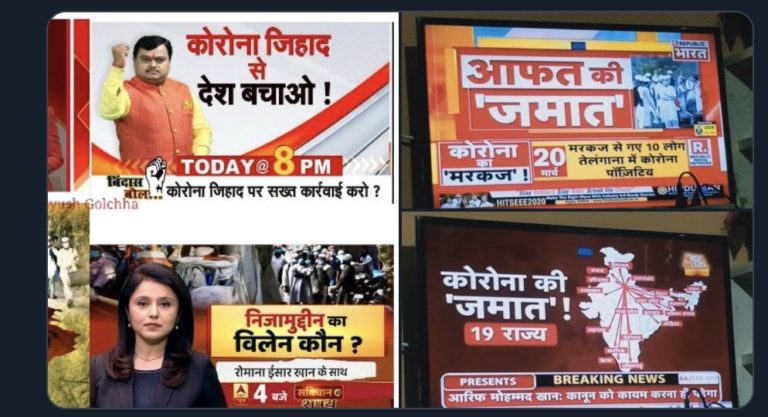
The Tablighi Jamaat issue has been picked up by the Indian media and has been turned on its head. Instead of being seen as a failure of the government to ensure the Nizamuddin Markaz was vacated, it has now become a Hindu-Muslim issue. Indian Twitter and media jumped up on the opportunity to call this event a ‘planned attack’ by the Muslim community on India. Tablighi Jamaat is being called an extension of the Al Qaeda. Many news channels are claiming that this a well-planned conspiracy by the Tableeghi Jamaat. They say that that Jamaat has conspired and sent their workers all over the country to spread the virus. According to news channels, the Tablighi Jamaat told all their followers to purposely defy rules of the lockdown. Based on evidence this claim is false. The Indian media has had a field day with the issue and has pushed the blame of the outbreak on the Jamaat. There is proof that there has been a clear lapse on the government’s part in handling the outbreak. The Indian media, though, has completely skipped over this fact and targeted the community. The COVID-19 issue is no more focused on the government’s failure to contain the outbreak. While the attention is diverted on the Jamaat none of the news channels are discussing other gatherings, especially gatherings organized by BJP leaders and Hindu groups, that were functioning during this period of the health emergency.
Official Gatherings that violated the curfew and lockdown guidelines
On March 14th the Karnataka government advised people to avoid mass gatherings, including weddings and engage in social distancing. On the 15th of March, Karnataka CM BS Yedyurappa attended a wedding ceremony with 2000 people in attendance and violated his own government order. There were no arrests made in this case and the BJP government did not pull him up for this gross violation of a health advisory. On March 14th Bihar Health Minister Magal Pandey attended a regional workshop for BJP party workers. In another part of the state Bhupendra Yadav (BJP leader) attended a similar workshop. Both members were flouting the health advisory rules and no action was taken against themOn March 18th, when the number of COVID-19 cases were 162 and the Delhi government had given a health advisory to ensure social distancing, President Ram Nath Kovind was hosting Ministers from Rajasthan and Uttar Pradesh for breakfast at the Rashtrapati Bhavan BJP party workers and MLAs in Madhya Pradesh came together to celebrate the return of the BJP government into power. On the 23rd of March the government was sworn in and a large gathering was present at the BJP office despite the PMs orders to maintain social distancing. On March 20th BJP leaders in Mathura attended the Rani Avantibai Balidan Divas. There were 150 people present at this gathering. This was after the government announcement to ensure that large gatherings should not take place. No action was taken against any of the people presentOn the 22nd of March hundreds of people came out on the streets clanging vessels, cheering, and ignoring social distancing protocols in an effort to show enthusiasm in clapping for the front line workers. There were no arrests made even though this was a clear violation of the lockdownOn 28th March thousands of migrant workers thronged to bus stops to go back to their hometowns and were packed in buses by the UP and Delhi government in unsanitary conditions. In all of these instances the government was directly involved in not maintaining protocol of social distancing and enforcing it. In the case of the migrants the state and the centre governments made no safe arrangements to get them back home.
Gau Mutra party, Tirupathi temple, and Yogi´s Temple Run
On 14th of March the ABVP hosted a Gau Mutra Party to ward off coronavirus and 200 people were in attendance. No action was taken against themOn March 15th 1.5 lakh people attended a temple festival in Andhra Pradesh, by which time the cases had crossed 100, and there were no protocols being followed endangering lakhs of people in the state. Up till the 20th of March the Tirupati Balaji Temple was still open and up till the 18th had 40, 000 people visiting it on a daily basis. There has been no testing that has been done of the devotees who visited the temple and the temple has not faced any heat for not following social distancing protocolsOn 24th of March, 12 hours after the lockdown was announced, Yogi Adityanath attended an event to inaugurate a temple on the Babri Masjid land. There were 100 people in attendance. No FIR was filed against the CM for violating the lockdown rulesThe news channels have turned a blind eye towards these cases of violation and in the process given a clean chit to the government. The BJP is not going to be questioned about organizing these events despite the lockdown. They will not be questioned on why they did not stop vacate the Markaz, they will not be questioned on the lack of masks and PPE kits being sent to frontline workers, they will not be questioned about the low economic package that has been released for the poor, and they will not be questioned for the lack of testing that has been taking place. Instead all the questions will be aimed at the Tablighi Jamaat and their role in the COVID-19 outbreak in India.
When the lockdown began migrant and daily wage labourers were the first to feel the impact of it. With factories, construction sites, hotels, and other services being shut down, hundreds of thousands of migrants are staring at unemployment. The Government has announced a 1.7 lakh crore package for those who will be worst affected by the lockdown, which included migrant and daily wage workers.
The government fell short on their promise of ensuring that the socio-economically backward do not get the full hit of this lockdown. A 11-year-old Dalit boy from Bihar died of hunger on the 28th of March due to the lack of ration. There have been reports of migrants who have died trying to get back to their villages. Those who would have been worst hit by the lockdown are already facing the brunt of it.
The micro-credit system and informal credit system will also take a beating as it is linked to the larger economy and thus there will be no relief for the labourers and the farmers. “Those who have not been able to return-migrate, and who are unable to earn during the lockdown, will have no funds to repatriate to their home-villages, affecting rural consumption too.” Dr. Kamath
Many migrants and daily wage labourers come from rural ares and were forced to go back to their homes due to the sudden stoppage of their income. Many migrants were forced to walk back to their hometowns, in which case they could develop serious ailments like cholera, diarrhea, and face shortage of food and water. This would mean that many would die in deaths which were not related to coronavirus. Others were sent home packed into trucks, buses, and trains in unsanitary conditions. If anyone of them were carriers of the virus, it is just a matter of time before it spreads across rural India. The Primary health care system is not in a position to handle the scale of the pandemic. According to reports, hospitals will run out of beds if even 0.03 percent of rural India was affected by the virus. This could essentially incapacitate the economy as 70 percent of the population lives in rural India. The migrants thus were not safe in the cities, with their jobs and homes being taken from them, and will be in danger even in their villages.
“This could be an opportunity to link locally grown safe food to demand. If community kitchens procure from local farmers, both consumers and farmers can tide over COVID-19 safely. It also is a message for an alternate decentralized network of ecology-farming-food and health domains,” Seema Purshotaman
Rural India will not only see a breakdown of its already failing health care system but is already seeing a breakdown in the rural economy and agriculture system. With the migrants returning to their villages in large numbers, the pressure on the land will increase. With no buyers for the farm produce and agriculture taking a hit, the rural economy will see a massive crash.
Gauri Lankesh News spoke to Dr. Anant Kamath, a social scientist and Assistant Professor at Azim Premji University, whose focus is on economic-sociology and technological change about how the present lockdown will impact the rural economy.
He says- If migrants are going to return to their places of origin and stay there for a couple of weeks, or even months depending on when economic conditions in urban and metropolitan India pick up, the pressure on land in those respective places of origin will increase once again. Ironically, this is why they left and came to the towns and cities in the first place.”
The micro-credit system and informal credit system will also take a beating as it is linked to the larger economy and thus there will be no relief for the labourers and the farmers. “Those who have not been able to return-migrate, and who are unable to earn during the lockdown, will have no funds to repatriate to their home-villages, affecting rural consumption too.” Dr. Kamath added.
The need of the hour is for the governments to ensure that they work on a long-term plan to revive the rural and urban economy. Small scale measures to mitigate immediate problems are not enough. As small scale measures the government has promised an increase in rations, but these figures are not enough and need to be doubled if not tripled and made free for three months. Cash grants to over 12 crore people need to be given through the Jan Dhan yojana and they should be given a minimum of 5000 rupees, which is double the current package. Janata canteens or community kitchens must be opened.
We posed concerns about the impact on the agrarian economy to Dr. Seema Purushothaman. Dr. Purshotaman is also a professor at Azim Premji University whose research focus is on the concepts and issues of sustainability, agrarian concerns from an economic point of view.
She says- “This could be an opportunity to link locally grown safe food to demand. If community kitchens procure from local farmers, both consumers and farmers can tide over COVID-19 safely. It also is a message for an alternate decentralized network of ecology-farming-food and health domains,”
She adds further Asha workers need to be regularized, MNREGS wages need to be increased and be given to farmers and labourers, and pump resources into strengthening the Primary Health Care System.
The government has decided to divert some of their resources into the Central Vista project instead of diverting all their resources into protecting the economy from an impending crash. If this prioritization continues, India might end us seeing more people dying of hunger, starvation, and unemployment rather than of coronavirus.
With the Corona virus having infected over 700,000 people and killed more than 33,000 in almost across 177 countries, questions are being raised in each country about the level of preparedness of their respective healthcare and administrative system, and their capability to combat the virus by flattening the curve.Neither has any country fully rid itself of the coronavirus, nor can we be sure of any country having permanently contained the spread of the virus at this moment, but China and South Korea seem like they could be the first to reach this goal based on current statistics.China:Being the country where the virus started infecting humans from late November 2019, it lost precious time to prepare for the worst due to the time it took for the authorities to understand the level of threat it poses and also the nature of the virus which takes days before its victims show any symptoms. Over 15,000 cases were reported in a single day on the 13th of February.Eventually the country was effective in enforcing a complete lockdown in the City of Wuhan, a city of 11 million people, where the first cases were documented. Aggressive social distancing was implemented across the country and many stadiums were converted into quarantine centers. A thousand-bed coronavirus hospital was built within 10 days.The bold measures have yielded positive results in flattening the curve, with the country being able to decrease and hold the number of infected cases to under 200 per day for the past 30 days. The rate of doubling of cases is 48 days, which is the lowest in the world as of 29th March. The country is now easing the lockdown in Wuhan and businesses have started operating even in the worst affected regions.South Korea:The north-east asian country of 51 million people has become one of the most successful in battling coronavirus. They have been able to achieve this feat without declaring a lockdown. The experience of similar epidemics in the previous decades and a high degree of social trust has also contributed to their success this time.The government did downplay the seriousness of the pandemic initially but they were quick to realise their mistake and rapidly implemented targeted programmes to battle the virus. A number of manufacturers were asked to prioritise the mass manufacture of testing kits. The aim was to quickly test and notify as many people as soon as possible. Easily accessible testing solutions such as testing booths in public places and drive through testing centres, along with aggressive public messaging achieved a high number of tests which also provided accurate data on spread pattern.The government used existing mass surveillance and personal data collection systems to back-track a patient’s previous movements and interactions and publicly warn others who may have been at the same place and time as the patient was.These measures have been followed by a drastic reduction in the number of daily cases from more than 800 at the beginning of March to under 150 as of 29th of March. South Korea’s rate of doubling of cases now stands at 27 days, which is the second lowest in the world.How did they manage?The pre-existing socio-political realities of these two countries have had a major influence on their success in containing the spread of the virus. Countries that wish to implement the same policies must also note what sets them apart from many others.Rapid Mobilisation:Although China lost precious time to nip the pandemic in the initial stage, the country rapidly mobilised its resources and streamlined the entire operation to make up for the lost time. Other countries cannot implement policies in the same way without accounting for their social realities.Surveillance and Social Trust:A high level of public trust in government institutions and a pre-existing network of deep surveillance in South Korea has greatly assisted the authorities to track and isolate a large number of potential carriers of the virus. Many countries do not have the same level of surveillance infrastructure, which always comes at the cost of the right to privacy. Many governments may not enjoy the same level of public confidence thus decreasing the effectiveness of similar measures to contain the pandemic.Technology and Political Will:The building of dedicated hospitals in 10 days, installing a large number of quick and accessible testing booths in public, the use of individual tracking systems, all at short notice are the results of pre-existing industrial and technological capacities supported by political will. Many developing countries may not have access to the similar resources within their boundaries. Countries that have the capabilities are not showing the required political will.Time and Money:The cost of testing and treatment have been taken up by the governments in both countries from the beginning. This resulted in greater voluntary participation by its people who do not have to think about the financial burden of tests and treatments. Many countries have still not taken up this responsibility therefore indirectly discouraging potential careers from getting tested immediately. The longer it takes to test, the longer it takes to fight coronavirus.The most important lesson from China and South Korea is that they fully utilised all of their existing resources to fight the virus. Their methods may be questionable and the ends may not justify the means. But how will the world justify its unwillingness to make use of its available resources at the time of an existential crisis?
Rajasthan was the first state to go into complete lockdown on the 21st of March amidst the coronavirus outbreak. In Bhilwara, home to one of the largest textile industries is a city in Rajasthan, 250 km from Jaipur. 3 doctors and 3 nurses had tested positive for the virus in a medical hospital in Bhilwara and were one of the first few patients in the city. They had met over 6,192 patients in the period before they got tested for the virus. The Rajasthan government responded by shutting the state down because it feared that the virus would spread rapidly if social distancing would not happen. Brijesh Bangar Medical Hospital, where the doctors and nurses had tested positive has been shut down. The 1 km area around the hospital has been declared a no mobility zone.
How the doctors contracted the virus is still uncertain. It is suspected that a patient who was being treated for pneumonia could have had the virus and spread it. The other possible means is that it was spread by a doctor who went to a Holi party at a resort where there was someone who was infected.
Out of the 52 cases in Rajasthan, 22 cases have come from Bhilwara. Which is almost 50% of the total number of cases. Community spread in Bhilwara has already begun and its population, which is around 28 lakhs, is under threat of being infected. The state government has undertaken a widespread screening exercise with 1, 948 teams of health workers going from house to house to survey of 4 million families. There have been over 600 tests that have been done in Bhilwara out of which 19 cases have tested positive. All 19 cases have been traced back to the hospital where the doctors and nurses were tested positive. Two deaths have also been reported from Bhilwara.
Bhilwara has become the epicenter of the virus outbreak in the State. Sodium hypochlorite is being sprayed across the city to sanitize it. 4000 quarantine beds and 80 isolation wards have been set up in Bhilwara as a precautionary measure. Hostels, Dharamshalas, and hotels have been acquired by the state to set up 1500 beds. There are 6,445 people who have been quarantined, out of which 11,000 are high-risk patients. The District collector has also instructed 5 private hospitals to set up isolation facilities for the patients. Water, electricity, and basic necessities are being promised to the patients who will be in isolation. “Bhilwara has been a trouble spot for us. We have screened every suspect — almost the entire Bhilwara. We are doing the best we can,” Sachin Pilot, Deputy Cm of Rajasthan commented to News 18.
With the district going into lockdown, hundreds of labourers are out of work. 1.8 million of its 2.4 million population live in rural areas and most of them are daily wage labourers. According to Newslaundry most of them have had to no help from their employers and no access to relief by the state. Bhilwara is the district that is not only facing a health crisis but also an economic crisis with many labourers not having food, ration, or money to make ends meet. “This is a mining area and we are all very poor. All work in the mines has stopped,” he said. “The police and the administration have said ‘stop work’, and people have no money. Cities and banks are closed and people cannot get any cash. We are not able to get food services. Section 144 is imposed and we cannot go out of our homes.” Told Ratan Bhil, who is an Adivasi worker from Mangarh told Newslaundry. Currently, the Rajasthan government needs to also ensure that they reach pockets of Bhilwara. They should ensure transparency in handing out rations and spreading information about how labourers and migrants can access the relief packets.
A Washington DC court handed down Wednesday a major victory for the Standing Rock Sioux tribe of North Dakota, ruling that the U.S. Army Corps of Engineers (USACE) violated the National Environmental Policy Act (NEPA) by approving federal permits for the Dakota Access Pipeline (DAPL).
In what can be seen as a significant win for the native American Sioux Tribe, a federal judge in Washington DC ordered an environmental review of the Dakota pipeline on Wednesday. The Sioux Tribe has been legally fighting this battle for four years.
The court granted a request by the Standing Rock Sioux tribe, which had petitioned to nullify federal permits for the Dakota Access Pipeline on grounds that the USACE violated the National Environmental Policy Act when it issued permits in 2016 without conducting adequate environmental reviews.
The Standing Rock Sioux had raised concerns regarding the likelihood and danger of potential oil spills, DAPL’s leak-detection system, and the safety record of Sunoco Logistics, the company behind the pipeline.
Background of Dakota Access Pipeline (DAPL)
Standing Rock Indian Reservation is one of the legally designated land areas managed by native Indian tribes in the US. There are 326 such Indian reservations in the US.
The Dakota Access pipeline (DAPL) has been carrying crude oil for three years from North Dakota to Illinois, it spans over 1886 kilometers and cost about $3.8 billion to be constructed. The route of this pipeline crosses under the Missouri river. The Missouri river is half a mile from the Standing Rock Indian reservation.
A spill from to the pipeline could have far-reaching effects on drinking water access and irrigation of the fields in the area. This could potentially destroy the way of life for the Standing Rock Sioux Tribe.
The pipeline has been protested by the Native American tribes who live near the pipelines and many activists have condemned the pipeline. The fear that the oil spill could negatively affect the lives of the people was not imagined, the pipe had oil spills in North and South Dakota when feeder lines leaked. No water bodies were affected then, but this set precedence for what could happen in the future. From 2016 there have been protests against the DAPL April. In August 2016 the Sioux Tribe sued the US Army Corps for their failure to consult the tribe before approving the line. By December of that year, the Obama administration had put a stay on the DAPL but once Trump came into power, he overturned these orders.
In 2017, the Sioux Tribe had challenged the permits in court and won but the judge did not shut the pipeline down. Then, the US Army Corp re-did an environmental impact assessment but kept the Sioux Tribe out from the review process and concluded that the previous analysis they had done was sufficient.
The protest against the DAPL gained momentum with the youth from the tribe taking lead in the protests. Several organizations, activists, leaders joined the movement.
The movement gained international attention in 2016, when thousands of water defenders gathered at camps in North Dakota, facing a highly militarized police force armed with tanks, riot gear, rubber bullets, and other weapons.
The protestors were often met with violence from the state. Bulldozers were used to defile sacred land, dogs were released on the protestors, water cannons were used on them in the middle of winter, and protestors were arrested and were met with harsh treatment in jail.
Victory for water and environment
On Wednesday, a federal court granted the request of the Standing Rock Sioux Tribe to strike down the federal permits for the DAPL. The US army corps of engineers, who had granted permits for the pipeline, were ordered to do a full environmental impact assessment. The judge stated that the US Army Corp had failed to consider the health and environmental impacts in case of an oil spill and had violated the National Environmental Policy. The court criticized the Army Corp for not taking the Tribes expert critique into account about leak detection systems, operator safety records, spills in adverse weather, and worst-case discharge. The court relied on the Tribe’s technical analysis of the DAPL’s history of spills and low performing safety records which according to the court ‘did not inspire confidence.’ The US Army Corp was also criticized for supporting DAPL instead of conducting an impartial inquiry into their abysmal safety records. The judge in the order stated that the US Army Corp had not “adequately discharged its duties”
A spokesperson of the GAIN (Grow America’s Infrastructure Now) Coalition, a group that advocates for large infrastructure projects, said that this could jeopardize the country’s economy and energy security.
The judgement has not shut down the pipeline yet and has asked both parties to submit briefs on whether they think the pipeline should be shut down or not. The Sioux Tribe is now gearing up to argue that the DAPL should be shut down while the environmental review is completed. “It’s humbling to see how actions we took four years ago to defend our ancestral homeland continue to inspire national conversations about how our choices ultimately affect this planet.” Said Standing Rock Sioux Tribe Chairman Mike Faith.