The Supreme Court has asked the government of India to make all COVID-19 testing at private labs free of charge. The interim judgement comes two weeks into the 21-day nationwide lockdown announced by Prime Minister Narendra Modi from the 24th of March.
Until now the government has allowed authorised private labs conducting COVID-19 tests to charge up to Rs. 4500 per test. Advocate Shashank Deo Sudhi had filed the petition in the apex court as the charges may not be affordable to most people.
In a video conference hearing, the Supreme Court bench of justice Ashok Bushan and justice Ravindra S Bhatt observed that private hospitals and labs have an important role to play in fighting the pandemic by extending their philanthropic service.
Justice Bushan suggested that the government could set up a mechanism to reimburse the private labs while not allowing them to charge people for getting tested. He also suggested that government or corporates through their corporate social responsibility (CSR) could reimburse the material costs involved in the tests conducted by the private labs.
The bench also directed that all the tests must be carried in labs that are certified by the National Accreditation Board for testing and calibration Laboratories (NABL), or certified by agencies approved by the World Health Organisation (WHO) and the Indian Council for Medical Research (ICMR).
The bench has sought the government’s view and the government has two weeks to respond.
For a population of 1.3 billion people, there are only 52 designated government labs that conduct free COVID-19 tests. That is just 1 lab for 26.6 million people.
5% of India’s population i.e 65 million people are living in extreme poverty. The cost of tests in private hospitals is capped at 4,500INR, but given the poverty, many would still not be able to afford the tests. If India has to flatten the curve as soon as possible it has to rope in all available testing infrastructure, private and government.
There are lessons to be learnt from other countries who are handling the epidemic in a warlike manner.
Many countries have announced that there will be a postponement in paying off mortgage, and basic facilities like water, gas, and electricity will not be shut off due to non-payment, during the emergency.
Spain has nationalised all its hospitals to tackle the pandemic even though the healthcare in Spain is largely public. The Spanish government has nationalised the private hospitals to have all facilities and infrastructure available to everyone.
It is important to note that governments across the globe have the capacity to make essentials free of cost
The Spanish flu was a deadly pandemic that spread across the world. It began in January 1918 but took a deadly turn later that year. In October, the number of people dying each month jumped ten-fold. The illness remained very deadly until December, after which death rates dropped again. It took almost a year to disappear.
More people in World War I died because of the Spanish flu than because of combat.
The flu broke out during the first World War. Most countries involved in the war did not want to report on the spread, as they felt it would hurt national morale!
Soldiers were especially vulnerable, and they carried the disease from country-to-country, and the virus affected men in their twenties more than any other group. Soldiers were also not told about the extent of the virus, as their leaders felt it would harm morale, and make them less effective in combat.
How terrible! To support their soldiers, the countries lied to them about the dangers they were facing.
The origins of the flu are unknown. The flu broke out during the first World War. Most countries involved in the war did not want to report on the spread, as they felt it would hurt national morale. Reporting began when the flu came to Spain and their king, Alfonso the eighth became sick with the flu. Spain became the first major European country to report on the extent of the flu.
The Spanish flu was different than other types of flu. Usually, the flu is more deadly with people who have weaker immune systems, such as the very young and the very old. The Spanish flu killed people in their twenties. It is not clear why, but one theory is that in responding to the flu, the body’s immune response is so destructive that the body cannot handle it. The lungs would overflow with liquid, leading to death. People with stronger immune systems would be at higher risk.
Like with the Coronavirus, the Spanish Flu spread through coughing and sneezing. The virus is highly contagious. The first wave was not particularly deadly, though the second wave.
The British did not keep records of how many people died in India. Comparing death rates from before and after the flu, most people believe that nearly one in sixteen Indians died in the few months that the flu ravaged. This makes the Spanish flu one of the greatest disasters to hit India during the colonial period. We do not have a strong memory of the epidemic.
In the Mysore kingdom, nearly six percent of the population died in 1918. Like with Cholera and the Bubonic plague, the disease spread via rail from Bombay. The disease was first seen in Bangalore. In October, thousands of people in Bangalore were treated for the disease, and this was only a small number of total cases.
India was still battling the aftermath of the plague which had come twenty years before, and the sudden spike of Spanish flu was devastating. Most who contracted the disease could not get any form of treatment.
The tragedy of the Spanish flu in India was that there were no major reforms. The Bubonic plague only taught the British that their international reputation was at risk. The Spanish flu just came and went, and today is called the forgotten epidemic.
Even before the spread of COVID 19 in India, experts from across the world expressed caution on India. India is a poor country and spends very little on healthcare. Even today, we do not know exactly how many Indians die of influenza each year.
It is important to respond to a crisis. It is also important to learn from them. At this point, data collection and public health systems are weak. The Spanish flu was an important time in our history, and we did not learn the lessons it taught us. As the COVID 19 pandemic spreads in India, it is important, not to get overwhelmed by nationalist pride, the way the British did, but learn the lessons this epidemic has to teach us.
The novel coronavirus is exposing the true colours of populist and extreme nationalist leaders who until recently seemed less dangerous than what they are now.
Boris Johnson and Donald Trump have been rightfully criticized for their botched coronavirus policies. From ignoring the scale of the problem to coming out with a plan that had more in common with human sacrifice than with disease prevention, their lack of foresight and insensitivity has been well reported.
But they are not the only heads of state who have gambled with the pandemic. Some of their international allies are in unique ways making the rest of the world feel better off by just not being their subjects.
Rodrigo ‘Shoot-Them-Dead’ Duterte: President of the Philippines
“Everything is well. There’s nothing really to be extra scared of that coronavirus thing” it will eventually “die on its own” Duterte was reported saying about the coronavirus when Wuhan was already two weeks into a lock-down.
The Philippines was in denial while its neighborhood was taking strict measures to contain coronavirus by restricting international passengers and public messaging.
Currently, the Philippines has more than 3000 positive cases and 177 fatalities. The government is now trying to enforce a long needed lock-down that hasn’t taken into account the livelihood concerns of its people. To those who are protesting the lack of food aid due to the perfect plan, the president has a quick fix.
Jair Bolsonaro: President of Brazil
The chief guest of this year’s Republic Day celebrations surely beats every other head of state when it comes to making the coronavirus a bigger disaster than it is. Not only did he ignore the threat of coronavirus to his country, he launched a campaign against coronavirus awareness.Bolsonaro’s views of the pandemic were so dangerous that social media platforms had to delete his posts from his official handle because they contained potentially harmful coronavirus misinformation.
The country also saw its biggest protest against the president with people banging pots and pans from their balconies expressing their anger over his handling of the pandemic. With the lack of active measures from the government, in some areas the local mafia has stepped in to enforce lock-downs and manage essential supplies.Brazil has now registered more than 12,000 positive cases and more than 500 deaths.Only recently has the president publicly acknowledged the threat of the virus.
Recep Tayyip Erdogan: President of Turkey
The maybe forever president of Turkey seems to be caring about the economy now more than ever.Turkey had recovered from a recession only recently. For Erdogan it seemed like there was ample time to improve the economy given how long he intended to stay at the top.But that situation has changed in the past month. Turkey is only behind the UK with 34,000 positive cases and more than 700 deaths. Calls for a nation wide shutdown are being made by doctors and the opposition and the president is ready to do anythingbut.Turkey’s economy may not be able to sustain the effects of a nation wide shut down, and the president has no predecessor to blame for the current impasse, since it was him at the helm for more than a decade. The president has announced a curfew for only individuals younger than 20 and older than 60, but the bulk of the country’s work-force that comes from ages in between still remain exposed to the virus as they are not told to stop going to their daily work. Criticism of the government’s handling of the situation is dealt with the enthusiasm that is much needed elsewhere.
Viktor Orban: Prime Minister of Hungary
Under the pretext of fighting the coronavirus the country’s parliament, which has a majority of Orban’s supporters, recently passed a bill that allows him to rule by decree, indefinitely.Hungary, with a population of 9.8 million has registered less than 900 coronavirus cases and 58 deaths since the beginning of March, which is one of the lowest numbers in its neighborhood of European democracies.Ranked as the sixth worst country in Europe for journalists by Reporters Without Borders, the government has been effectively controlling criticism of its coronavirus policy, and the media narrative. The European Union, which usually joins the chorus of preaching democratic values to the world has limited its criticism of Hungary’s government to a statement that does not even mention Hungary or Orban.
Hungary and Turkey were seen as promising democracies in the past decade. Brazil, it was thought, had put its years of dictatorship behind. There was a new hope when Durete won the election. What is happening now in these countries is a result of the corrosion of their democratic institutions under the guise of populism and extreme nationalism as an answer to all its problems.
No country is immune to the emergence of similar leadership if it allows itself to fall for the same tricks.
26 health workers who were hired through outsourcing at the Government Medical College in the Banda district of Uttar Pradesh were dismissed with immediate effect on Friday 3 April.The dismissal came when the workers demanded Corona safety kits as they were working on the treatment for Corona virus-infected patients and had been on strike since 2nd April.UP Medical and Health Services Director Agyaat Gupta wrote a letter to the Principal of the Government Medical College Banda on Friday. The letter addressed the 26 sacked workers. The letter said-
Despite the difficult situation in the country, you people are going on an arbitrary strike. The country is under ESMA law. The health services of Government Medical College Banda are being affected by this act of yours. Therefore, on a contract basis, the services of all will be concluded with immediate effect,”.The health workers are angry over this unilateral action. Dismissed health worker, Preeti Dwivedi alleged that the Principal of the State Medical College put only the outsourcing employees on duty in the Corona Isolation wards without any security kits. Due to this situation, all health workers were on strike since last week demanding the Corona safety kit. But due to the conspiracy of the college principal, they were dismissed by the department. All the dismissed contract workers will challenge this decision in court.’It is worth noting that health experts are constantly raising the issue of safety of the doctors and health workers treating corona victims and are demanding the government to provide safety kits. Reacting to Prime Minister Modi’s plea on Friday, to light a lamp on the night of April 5, Congress has raised the issue of the availability of personal protective equipment (PPE) for medical personnel fighting against Corona. The Congress asked, ‘Explain why the medical personnel, for whom you had clapped for are not getting personal protective equipment. Whose responsibility is it? ‘Earlier when Prime Minister Modi had announced janta curfew, he had called on the countrymen to clap and clang the ‘thali’ in honour of the doctors and health workers engaged in the treatment of coronavirus patients. This took place on March 22 at 5 pm on the day of the Janata curfew. Despite the threat of the corona infection, people all over the country clapped, banged plates and pots, blew the conch shell, but also came out on the streets to beat drums.But now when some of those health workers have asked for safety kits to protect their lives, the BJP government of Uttar Pradesh has dismissed them from their jobs. This clearly shows that the BJP believes that you will be honoured only with taalis and thaalis, but if you ask for essential equipment, all you will get is dismissal!This is not the only instance where doctors have faced a lack of medical kits. The Resident Doctor’s association of AIIMS wrote to PM Modi over health care professionals being targeted for raising issues about the availability of PPE, testing kits, and quarantine facilities. Doctors and frontline workers in various cities have been protesting and demanding for PPE, including Aurangabad, Odisha, Uttar Pradesh, Kolkata, and Haryana. Reports suggest that AIIMS has diverted 50 lakh rupees to the PM Cares Fund, even though that money was earmarked for PPE. Doctors have also faced attacks and have been evicted from their rented houses over the fear of passing the infection. Clearly, the ‘thaali and taali bajao’ initiative was only a PR stunt for the government, and seems to be a PR stunt for the public. The news first appeared in janjwar.com. It is translated into English by Amla Pisharody.
Gauri Lankesh News is doing a series on how lockdown is affecting the economy. Read here: Part1.We spoke to experts working in the field of agriculture and economy about the effect of lockdown on the agrarian economy. With the Rabi harvesting season coming up, the Centre exempted procurement agencies, mandis, agri-machinery-hiring centers, and intra and inter state movement of farm equipment from lockdown rules. This was done to ease the pressure on farmers during the pandemic. Manufacturing units of pesticides, fertilizers, and seeds are also exempted from lockdown. Despite these measures, farmers are facing a huge crisis. Farmers were already finding it hardto sell their produce and had faced severe economic backlash due to the already struggling Indian economy, but the lockdown seems to be the finalnail in the coffin. The farmers have experienced a bumper crop this harvest season but most are forced to either plough the crop or sell it at throwaway prices to whoever is willing to buy it. The government had listed out the essential services that will be kept open, they have failed to take into account the ancillary services that keep these services running. Further, with the supply chain being disrupted, farm gate prices for many rabi crops have come crashing.Nilotpal Kumar, Professor, Azim Premji UniversityIn a conversation with Gauri Lankesh News, Nilotpal Kumar, a professor at Azim Premji University who works on the interaction between political economy and culture, said in reference to how the lockdown will affect farmers. “Anantpur district of Andhra Pradesh, farm gate prices for groundnut came down from 2900/bag on 15th March to 1900/bag on 21st March. By 25th of March there were no buyers for the product. A consequence of this disruption is that whenever the lockdown is going to be lifted, it may become a buyer’s market because most farmers will try to sell their produce at the same time, leading to lower prices for farmers. In other words, we are looking at substantially lower incomes for farmers this year. This also implies, most probably, substantially lower consumption in the rural economy, which has a cascading effect on the wider manufacturing sector.” Those who are managing to sell their produce are selling it to middlemen and the prices that the farmers get are well below the market price. The lockdown has also made it hard for the farmers to venture out and sell their crops as they do not have permission to move out to the markets during the curfew. The mandis that farmers sold to and at are shut down across the country. Those which are open are open only for a few hours which is not enough time for the farmers to sell their produce at desired prices. Farmers don’t have labourto help them harvest the crops, and this could mean that the wholesale markets would come to a halt. If the farmers manage to harvest crops by themselves, they will have a problem carting the crops to the markets, as there will be only few trucks to move the harvest. Dhanya Bhaskar, Professor, Azim Premji University Farmers who grow perishable crops will be worst hit due to the lockdown. Dhanya B, a professor with Azim Premji University, who has done extensive interdisciplinary research in the field of forest/agriculture ecosystems said in a correspondence with Gauri Lankesh News:“There is a change in both nature and quantity of demand. In urban areas people are purchasing more processed items to tide over the curfew period. Peri-urban farmers who have completely shifted from traditional millets and coarse grains to producing perishables like vegetables and flowers will be severely affected. Further the closure of hotels and restaurants has seriously affected demand for vegetables, meat etc.Poultry farmers are also being affected due to the fake news about COVID-19 being spread via meat.”The economy and its sectors do not function in a vaccum. The shocks that one sector faces are not absorbed by the others, instead the blow of the shocks spreads to all sectors. Thus, if the aviation, hotel, and construction industry feels the shock, there is no doubt that the farmers will also be affected by this economic hit. Currently, the government’s plans and packages are not farsighted and are only efforts to mitigate the losses in the near future. The government has announced that they will give 2000 rupees under the PM Kisan scheme, though this sum was already promised to the farmers before the lockdown. Instead of being given at the last month of the quarter it is being advanced to the first month of the quarter. This is not enough. It is necessary that the farmers are given double the amount they are being promised. The government must ensure that they start buying food grains directly from farmers to ensure that the farmers can sell their products. In an interview with Jayati Ghosh in The Wire she says that rations need to be doubled and made free for the period of one month in the least, the excess food stocks that the Centre is sitting on should be released. The Centre also needs to ensure that the minimum support price is maintained and that there is a moratorium on all loans and payments of the farmers. P. Sainath has also pointed out that one of the biggest steps that the government can take at this time is to get farmers to grow crops in the Kharif season. If the situation persists then the farmers will not be able to sell cash crops this season. With the vaccine being months away, growing more cash crops could lead to the dwindling of the food stock. The farmers are facing uncertainty in the coming few months and it is the responsibility of the government to ensure that their economic plan accounts for the long-term impacts of the lockdown.
Spain is to roll out a universal basic income (UBI) “as soon as possible” to mitigate the impact of coronavirus.
In an interview with Spanish news channel La Sexta, Minister for economic affairs Nadia Calvino told that the move was intended to help families during the pandemic.
Iran is the only country to have a UBI program in 2011 in the form of monthly cash transfers to individual family accounts.
Ms Calvino, who is also deputy prime minister, added that the government plans to make UBI as a permanent measure.
Spain is the second worst-hit country by the coronavirus pandemic, reporting a total of 135,032 positive cases and 13,055 deaths as of Monday.
The country’s economy has nearly ground to a halt during a strict lockdown imposed on 14 March, with the closure of schools, shops, and restaurants. People are only allowed out of their homes to get essential supplies, or to go to work if they cannot work from home.
The restricted movement will continue until 26th April.
If the payments are successfully implemented, Spain would become the first country in Europe to introduce them nationwide on a long-term basis.
What is Universal Basic Income?
UBI is an unconditional income that is sufficient to meet a person’s basic needs (at or above the poverty line). It can be a full basic income or a partial one to meet some of the needs
The payment is to be made on a regular basis to every citizen. The amount of money paid to each person may differ based on demographic factors, such as age.
There are some variants to basic income, where the governments pay a specified minimum which is called a guaranteed minimum income system. For example, Bolsa Família in Brazil is restricted to poor families and the children are obligated to attend school.
So far, Iran is the only country to have a UBI program in 2011 in the form of monthly cash transfers to individual family accounts. Most countries have only had done it as trials for a small group of people or for a short amount of time.
Finland carried out a UBI trial for a period of two years for its unemployed population through a monthly payment of 560 Euros.
Calls of UBI to be implemented In the US and UK to deal with the economic impact of COVID-19 are coming from several quarters. But the governments have not announced any relief in this direction.
In India, this was an idea that has been discussed for decades in both the public and private spheres.
India has also experimented with UBI in the form of two pilot projects since January 2011. There were fears among the government officials and detractors fo UBI that basic income will make people lazy and reduce the workforce. But the results were quite positive, with better health indicators and better school attendance. Villages spent more on food and healthcare, children’s school performance improved in 68 percent of families, time spent in school nearly tripled, personal savings tripled, and new business startups doubled.
The idea of UBI made a comeback in India in 2016, when the Economic Survey of India included a 40-page chapter on UBI as a serious and feasible solution to India’s poverty and hope for the economy as a whole.
Supporters believe this large-scale welfare program could be revolutionary and could provide a poverty alleviation blueprint for other developing countries. However, critics are wary of establishing such a wide-scale program because it might undermine the fragile social security architecture, cause already employed workers to drop out of labor force and encourage idleness, and also encourage wasteful spending.
In the forward, the Chief Economic Adviser Arvind Subramanian writes, “providing a Universal Basic Income (UBI) that has emerged as a raging new idea both in advanced economies and in India.” In the chapter itself, he notes: “Universal Basic Income is a radical and compelling paradigm shift in thinking about both social justice and a productive economy. It could be to the twenty-first century what civil and political rights were to the twentieth.”
Before the 2019 Lok Sabha elections, Congress party in their election manifesto had promised a ‘Minimum Income Guarantee Scheme’ (MIGS), formally called Nyuntam Aay Yojana (NYAY), to five crore ‘poorest families ’ covering 25 crore people by assuring them a guaranteeing minimum income of ₹6,000 per month or ₹72,000 a year.
Kumbalangi Nights is an Indian Malayalam language movie released in 2019.
“Kumbalangi Nights” is a breath of fresh air in Malayalam cinema. Malayalam cinema is full of examples of toxic masculinity both within the films and outside of it. It has in fact been a breath of fresh air in Indian cinema which more often than not is centered within the notion of sexism, misogyny, hyper-masculinity, and patriarchy. Unlike the prototype of Malayalam cinema, Kumbalangi nights show male characters and masculinity with warmth, vulnerability, and kindness.
The movie revolves around four brothers, Saji, Boni, Bobi, and Franki. Bobi falls in love with Baby, an old schoolmate, and that is where the story builds. Baby’s sister, Simmi, is married to a man named, Shammi. The three brothers stay in a dilapidated house on a small island. Baby and her family live in the town, and Shammi, through marriage, becomes the patriarch of the household. He believes that “he is the only man in the house who can ‘protect’ the helpless women.”
These men are clearly flawed. In a particular scene, Bobi asks for a kiss from his partner, Baby, who refuses (as she is not married to him). As a response, he tells her “I am a man” and walks off in anger. This response is very common for women, who refuse men. These characters develop and change as the movie proceeds. The brothers don’t share the same parentage but are bound by love and support that they show for each other. Through the fights and the disagreements, the movie shows the warmth and the love they share. The vulnerability the characters show towards each other and willing to show in front of themselves is what makes the story stand out. In another scene, Shaji’s best friend killed by suicide and Shaji is responsible for his death. After this, Shaji tells Franki (the youngest) that he needs help. “Can you take me to the hospital? I am unable to cry.” We watch as Shaji breaks down the stigma around mental health and goes to a therapist. He breaks down and cries. This scene is pivotal as it shows that there is no shame in reaching out. That an older man can reach out to a younger person and ask for help. This help is rooted in getting professional help. It shatters the taboo around seeking professional help, around adult men being vulnerable. The movie though does fall when it explains Shammi’s controlling and abusive behaviour on a possible mental illness. It does good in some parts and does badly in not holding the person with mental health problems if we believe Shammi had one, accountable for their actions.
A scene that stands out is when Shammi- played by Fahadh Faasil is standing in front of the mirror admiring his moustache- the symbol of masculinity. He takes in his reflection and sees a pottu (bindi) that is stuck in the mirror. He scraps it off, and follows this up by saying “Raymond-the complete man”. This scene does a few things to set the tone of the political commentary that the movie aims to make. It is symbolic for how the Malayalam film industry has erased women and their role in the society, how Malayam cinema has scraped away at anything feminine that obstructs the image of a “complete man”, and shows what a complete man looks like. The complete man is one who has a moustache, is in control, and has the ability to do away with the feminine. Shammy’s character though has a lot of nuance in it. His toxicity comes not through overt expressions of violence, rather in how he takes the role of the patriarch. He feels entitled to make decisions for women in a female-run household. He constantly has a (discomforting) smile on his face, especially when is being emotionally manipulative. Shammi is the ‘modern man’ who believes that he can grant and take away freedom from the women in his family. Shammi is used as a contrast to the four brothers often through the film. Apart from the disheveled look of the brothers and the impeccably dressed Shami, the movie also contrasts between the stereotype of the male patriarch of the house and that of the imperfect Shaji, who is shown at his most vulnerable. The contrast runs deeper when Shammi disapproves of Bobi because of their class and their living conditions. The movie builds to show how masculinity can be toxic but can (through the story of the brothers) can become a corrective form of masculinity.
The movie is not a commentary on women, it does not focus on their story arc or character development. We know of the role of women and their story arcs only through the point of view of the men. While the story does its best to show hints of female solidarity, their right to choose, their assertiveness, it still fails in doing away with the tropes associated with women, they continue remaining the love interest or the dutiful wife for the most part. One of the only scenes where this agency comes out is when the brother’s mother, who had gone on a path of spirituality, refuses to come back home to her children. She tells them that they must find their own path without her. And they do, through love and loss, they find their path. While the movie falls short here, the aim of the movie was – a break away from the tropes of masculinity and to question the toxic ‘complete man’. The movie does not end with the men being completely reformed and a happy ‘family’. Rather it shows men transitioning, unlearning, and growing. It imagines family beyond the traditional Malayali set up of a household.
“Muslims….
You brought the deadly virus into this country
Immediately come out.
Every moment of your hiding is dangerous to the world”
This was announced at a high pitch.
With a sense of urgency
I came out with a white flag…
I am a responsible Indian
I am a responsible Muslim
Responsible, but…doubtful citizen
In the past, Muslim was seen as a terrorist
What is more terrorising now?
Muslim is seen as a carrier of the deadly virus.
Never before in the history
A virus has undergone a religious conversion.
It was born in China
It was a Communist virus
It entered India. It transformed into an Islamic virus
It all started in a small place…through tourists from Thailand.
It was never proved. They all happened to be Muslims.
In a city, the first death due to community transmission was declared
He was buried in a hurry. The news was repeatedly reported.
He happened to be a Muslim.
Now, it came from Delhi. The story says,
Muslims brought the Islamic virus through Islamic trains
They all happened to be Muslims
Muslims should be responsible citizens
Muslims should voluntarily come for testing
Any crowd should behave responsibly.
Here, the possibility of Islamic virus
Hence, extra responsibility and extra caution required
The old way of taunting —
Muslims demolish temples, Muslims throw bombs
Muslims betray the country, Muslims indulge in Love Jihad
New way —
Muslims bring deadly virus, Muslims spread deadly virus
Such news, spreads faster than the virus itself
People were struggling to explain
While denying house to Muslims, while denying jobs and while boycotting their shops
Now it is easy…… Muslims bring deadly virus
WhatsApp makes such a news viral. It enters our heads faster than the virus.
On the suspicion of eating beef
One Muslim was killed
On the suspicion of bringing virus
One Muslim may be pushed out of train
What has not happened in this country
Easier to suspect a community rather than individuals
As the carrier of the deadly virus
This is how racial cleansing is done…
Purification is done
We know why you are saying this again and again
Fear of death has gripped everybody
Including me
Still….
I feel lonely more than you people
Because I am a Muslim.
This is what is happening for long time
My friend who is a champion of communal harmony
Tells me with some anxiety
“Keep a distance”
Another friend, who preaches religious brotherhood murmurs,
“Why your people are behaving in such an irresponsible way”?
I wanted to tell…
Wait for some time for the truth to come out
But I kept quiet. In the past too I told similar things.
As I normally do nowadays,
I remained silent with my head down.
If I respond,
Instead of being branded as the carrier of the deadly virus
I may be branded as the deadly virus.
We believe the governments
We believe every warning
We obey every order
Still……these things happen
We are tired.
We have exhausted all the soaps used repeatedly proving our purity.
The hatred virus is born in rumour labs
Expect the announcement that the deadly virus started
With those
Who were sitting
With National flags
At Shaheen Bagh.
You may not be opening the gas pipes as Hitler did.
But now you see the opportunity…
For virus bathing of the entire Muslim community
Otherwise let us unite against Corona
Ever since Iran became an Islamic theocratic state in 1979, it’s foreign policy and the nuclear program has not found favour with western countries.As a result, Iran has faced on and off sanctions from the US, EU, and the UN targeting it’s oil and banking sector- thus periodically crippling its economy and undermining the living standards of Iranians, who are expected, by the authors of the sanctions, to raise up against the government and eventually change Iran’s foreign and nuclear policy. Something that the Trump administration is banking on during a global pandemic that has already taken the lives of more than 3000 people in Iran.Sanctions are essentially a type of weapon used by a powerful country or a group of countries, against a non-cooperating country, to isolate it from international trade and finance, hence crippling its economy. The worst affected by sanctions are the common people of the country, whereas the lifestyle of the ruling elite, who are incharge of the country’s policy, is hardly affected.Even before the Covid19 crisis reached Iran, it’s economy was in a bad shape thanks to the imposition of fresh sanctions by the Trump administration which unilaterally withdrew from a negotiated nuclear deal that had reduced tensions between the two countries, lifting previous sanctions, and was also supported by a large majority of the international community.At a time when western countries with the best medical facilities available, and their allies who do not face any kind of international sanctions, are themselves facing huge shortages of basic PPE, ventilators, beds, and blood, it is not difficult to imagine the plight of the common Iranian living under harsh international sanctions.The Iranian government, like the governments of many other countries, was not quick in responding to the pandemic and lost precious time to prepare. Now it’s hospitals are facing a shortage of beds, medical equipment and protective gear, and the sanctions are making it impossible for Iranian hospitals and doctors to import much needed medical equipment. The World Health Organisation suspects that the number of cases in Iran are five times higher than what is being documented.The UN Human Rights Commission and lawmakers within the US have called on the president to lift the sanctions on Iran in light of the pandemic and allow humanitarian transactions, but the response from the Trump administration has only been limited to announcing a bureaucratically exhausting procedure for organizations that wish to send help to Iran. The procedure aids more to discourage, than it does to allow, for humanitarian aid to reach Iran.When the world comes out of the covid19 crisis, data and statistics of those who died in this global battle will be shared from all countries.In the case of Iran it will be difficult to arrive at the exact number of those who died due to coronavirus, not because of government mismanagement, but because the cause of death could be the sanctions just as much as the coronavirus.
Coronavirus disease (COVID-19), an infectious disease that has taken over the world is caused by a new kind of virus. The disease COVID-19 causes respiratory distress and has flu-like symptoms which in people with weak immune systems like the elderly and with other illnesses can lead to death.
The number of cases of coronavirus is increasing day by day and spreading globally. So far one million people are tested positive for coronavirus.
What started in China has spread to almost all parts of the world. Countries are following the China model of complete lockdown to contain the disease and flatten the curve so that the disease does not overwhelm the already fragile health care system.
When the cases start to increase in India, PM Modi also announced the nation-wide lockdown with only four hour time for citizens to prepare for a 3-week lockdown. Naturally, this created mayhem and rush at grocery stores to stock up the supplies.
This short period of time without any prior preparation has been heavily criticized.
In this context, a 10-year-old schoolboy from Bangalore has shared his thoughts on the 21-day lockdown. here is the letter-
Hi guys, My name is Kabir. S. Sirasangi. I am 10 years old. I study at 4 E, St. Joseph, Bangalore.Today I am going to tell you about Modi’s actions against coronavirus. Modi made the 21-day lockdown just like his other decisions, without thinking. If you look at his other decisions like demonetization, CAA, NRC, NPR, etc. As you have seen his decisions you will notice that he acts without thinking but it affects the citizens of India
Four days before the lockdown Kabir had gone to visit his aunt in TamilNadu. Since the lockdown, Kabir is stuck in Tamil Nadu and cannot return to Bangalore to his parents. And being a child, he definitely misses his parents. Though he is sad, he is hopeful that we can fight the virus together.
Kabir had doubts about the lockdown. The letter was written in the early days of lockdown.
Kabir writes further-
The 21-day lockdown isn’t bad but it even isn’t good.The good part is this idea of trying to stop the spread of coronavirus.The bad part is that market sales drop-down and people won’t be able to survive without money and homeless people don’t have food, money or shelter. He should have provided them with time to buy groceries and go to their homes.ConclusionFrom his decision, I am not allowed to go to my parents for the next 21-day. Together we can change this. Me and all of you. Together we will stop and change this.Kabir S. Sirasangi4 E, ST. Joseph, Bangalore




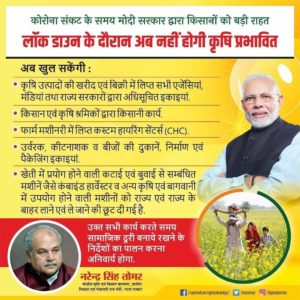 The farmers have experienced a bumper crop this harvest season but most are forced to either plough the crop or sell it at throw away prices to whoever is willing to buy it. The government had listed out the essential services that will be kept open, they have failed to take into account the ancillary services that keep these services running. Further, with the supply chain being disrupted, farm gate prices for many rabi crops have come crashing.

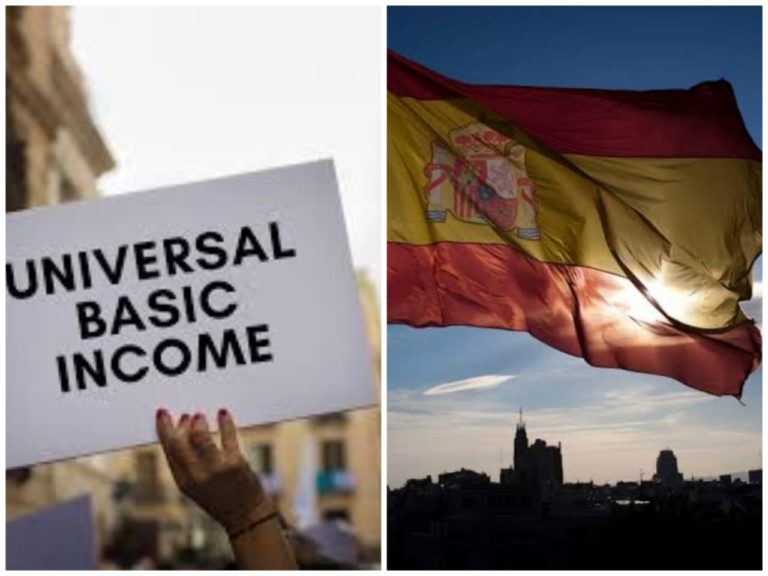
 In the forward, the Chief Economic Adviser Arvind Subramanian writes, “providing a Universal Basic Income (UBI) that has emerged as a raging new idea both in advanced economies and in India.” In the chapter itself, he notes: “Universal Basic Income is a radical and compelling paradigm shift in thinking about both social justice and a productive economy. It could be to the twenty-first century what civil and political rights were to the twentieth.”
Before the 2019 Lok Sabha elections, Congress party in their election manifesto had promised a ‘Minimum Income Guarantee Scheme’ (MIGS), formally called Nyuntam Aay Yojana (NYAY), to five crore ‘poorest families ’ covering 25 crore people by assuring them a guaranteeing minimum income of ₹6,000 per month or ₹72,000 a year.


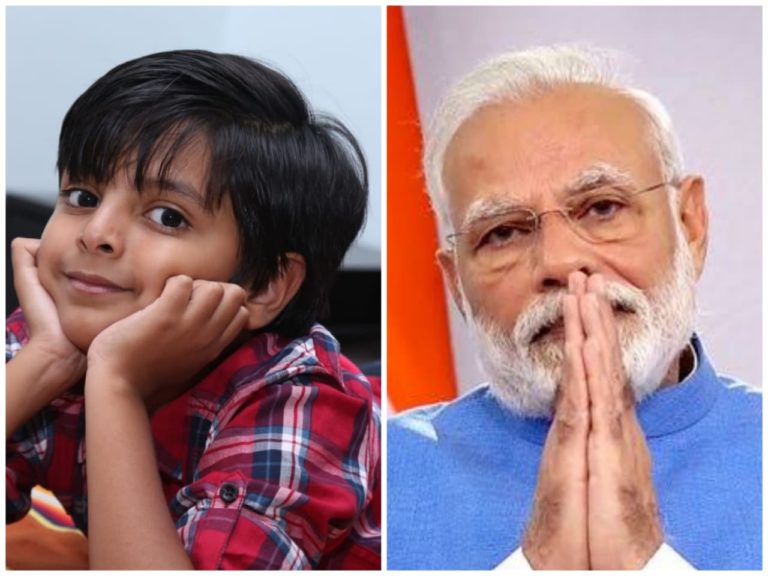
 Four days before the lockdown Kabir had gone to visit his aunt in TamilNadu. Since the lockdown, Kabir is stuck in Tamil Nadu and cannot return to Bangalore to his parents. And being a child, he definitely misses his parents. Though he is sad, he is hopeful that we can fight the virus together.
Kabir had doubts about the lockdown. The letter was written in the early days of lockdown.
Kabir writes further-
The 21-day lockdown isn’t bad but it even isn’t good.
The good part is this idea of trying to stop the spread of coronavirus.
The bad part is that market sales drop-down and people won’t be able to survive without money and homeless people don’t have food, money or shelter. He should have provided them with time to buy groceries and go to their homes.
Conclusion
From his decision, I am not allowed to go to my parents for the next 21-day. Together we can change this. Me and all of you. Together we will stop and change this.
Kabir S. Sirasangi
4 E, ST. Joseph, Bangalore
