

India Buys $116M Worth Of Weapons from Israel amid COVID-19 Crisis

Amidst the criticism over the handling of the coronavirus crisis, the Indian government has decided to go ahead with an arms deal with Israel worth hundreds of millions of dollars.
According to a statement released by the Indian government, Israel will supply the Indian military with 16,479 Negev light machine guns, despite growing concerns over the health emergency facing the country of 1.3 billion people.
The deal, worth $116m, came as doctors on the frontline in India continue to complain of a shortage of masks and protective equipment, highlighting concerns that India is ill-prepared to deal with a crisis of this magnitude.
The health care workers are in dire need of personal protective equipment (PPE) in India. The health ministry has not yet released the specifications needed for the PPE and there is a shortage of material for the PPE. India also has a weak public health system that may not be able to deal with the possible outbreak of the virus.
A solution to this would be to direct funding into the health care sector so that the sector can fulfill its needs. According to health care professionals, the country needs to put in every rupee it can to fight the virus.
Lutyens’ Delhi makeover plan moves ahead as India fights the COVID-19 Pandemic

India is undergoing a serious crisis and trying to fight a pandemic. It has gone into a 21-day lockdown to ensure social distancing takes place to curb the spread of the novel coronavirus. The need of the hour for the country at this time is to ensure that resources and funds are put into fighting the pandemic – to ensure better health care facilities, to ensure more health care facilities, to have more testing, and to provide protective gears to all frontline workers.
The government announced initially announced a 15,000-crore relief package. This package is to be used for building the health infrastructure, increasing the number of beds and testing kits, and training professionals to combat the spread of the disease. This package would not be enough to cover the costs of stabilizing the flawed health system in the country.
Meanwhile, on 20th March, 4 days before the package for the health care system was announced, the BJP government passed 20,000 crores for another project. This project has nothing to do with fighting COVID-19 or improving healthcare.
Lutyens’ Delhi Makeover
Lutyens’ Delhi has been an eyesore for BJP and especially PM Modi. Time and again he has expressed his disdain for the Lutyens’ Delhi and its people claiming that the Lutyens’ gang has not accepted him.
The land-use change has been notified even as a petition challenging the project is pending in the Supreme Court.
Since 2019, the plans for a revamping of the area has been on the cards. The plan is for beautification and revamping of Rajpath (3km long road between Rashtrapati Bhavan and India Gate). The Central Vista development project in Lutyen’s Delhi is a project to reconstruct and redevelop several historic landmarks in Lutyens, which includes the Rajpath, a new parliament building, and a common Central Secretariat.
The Central Vista revamp plan, aimed at giving Delhi’s power corridor a complete makeover, is estimated to cost around Rs 20,000 crore. It will include the construction of a new triangular-shaped Parliament, new PM residence, and 10 new building blocks to accommodate government offices, including Shastri Bhavan, Nirman Bhavan, Udyog Bhavan, Krishi Bhavan, and Vayu Bhavan, among others.
Last week the Centre gave a notification amending the land use of five plots for the project. The land is no more for “recreational/public and semi-public activities” as it has been now changed to “government use.”
No transparency in the Project
From the beginning, the revamping is projected as a normal exercise to bring all ministries together. But something that will have a lasting impact on the heritage and environment of the area has continued without a single parliamentary debate about the project, without any environmental impact assessment or any detailed heritage auditing.
The land-use change has been notified even as a petition challenging the project is pending in the Supreme Court.
The manner the project is being carried out looks less of a revamping exercise but more to leave a legacy in the public eye. The Government wants to finish this project before 2024 to ensure this impression stays with the public during the elections.
The lack of transparency throughout the project (from how the design was chosen to the bidding to the lack of parliamentary debate) highlights that the Government willfully does not want any interference of the opposition or the public in its masterplan.
Many historians, sociologists, activists, and architects denounced this project and have banded together under a common banner called Lokpath. Lokpath circulated information about how the money for the project will be a colossal waste and could be used for other necessities like building the public health system. According to the poster, if the money was spent on building AIIMS hospitals, then we could have had 15 new public hospitals in the country, which is something that the country desperately needs at the moment.
Twisted Priorities
In a world that is fighting against coronavirus, the Indian government is tearing down historical structures and funding the construction of buildings. It has given a mere 15,000 crore package to strengthen the health care system of the entire country but has allocated 20,000 crores for buildings in a four-square kilometer area around both sides of the Rajpath.
The BJP Government has not put a pause on its petty politics even though the lives of health workers and citizens are on the line. The priorities of the government are clearly mapped out, where the political agenda comes first and the safety of its citizens, second.
CPI(M) leader Sitaram Yechuri responded to this notification by tweeting “Modi government priorities are cruel. When all resources must be mopped up to meet this Covid-19 challenge a Gazette notification is issued for the 20K crore Central Vista project. Shame.”
India might be in Lockdown but BJP’s Hindutva project goes on

India has been under complete lockdown since PM Modi made the announcement that to control the COVID-19 pandemic the country is under complete lockdown from Monday midnight.
Despite PM’s assurance that groceries and medicines shops will be kept open, there were several instances of police violence against street vendors and few stray bikers. Police are forcefully shutting down all shops violating the general lockdown guidelines.
On Wednesday a 36-year-old man from Bengal went out to buy milk amidst the lockdown. On his way the police stopped him and beat him up with batons, he was badly injured. When he was rushed to the hospital, the hospital declared him dead on arrival.There have been multiple incidents that have been reported where those found to be violating rules of lockdown have been thrashed by the police and been badly injured. Telangana CM Chandrasekhar Rao has gone a step further and in his usual dictatorial way announced that ‘shoot at sight’ orders will be given to Police if the lockdown is not taken seriously.
In some states, a large number of cases have been filed against those who flout lockdown rules. 402 cases have been registered in Kerala against those violating lockdown- rules, which include a priest and a police officer. A congress MLA was also booked for violating lockdown rules in Pondicherry.You might think that with such over-enforcement of police who would defy such orders? The ruling party BJP thinks that rules are for Janta to follow and ministers are exempt from it.
Ram Janmbhoomi Project Marches On
Come rain, shine or Corona, BJP’s pet project Ram Janmabhoomi temple goes unabated. On Wednesday, Yogi Adityanath participated in an event to inaugurate the Ram Temple in Ayodhya, all in attendance of 100 other people.Modi had also said in his speech that all religious congregations had to be on lockdown, without any exception. Except, this rule seemed to not apply to BJPs long-standing electoral goal of the Ram Janmbhoomi temple.Ayodhya: Uttar Pradesh Chief Minister Yogi Adityanath shifted 'Ram Lalla' idol to a temporary structure near Manas Bhawan in Ram Janmabhoomi premises, till completion of the construction of Ram Temple. CM also presented a cheque of Rs 11 lakhs for the construction of the temple. pic.twitter.com/OwEX5j1oN6
— ANI UP (@ANINewsUP) March 24, 2020
Police have also punished people by making them do sit-ups, shaming them, etc. The police have been given unfettered access to using any means to stop the lockdown, and this impunity has already taken the life of one person.The event didn’t happen in secret, but the CM Yogi Adityanath himself shared the photos and videos of the event on social media. Yet no lathis, or arrest or shaming for the CM of UP Adityanath! When the CM of the biggest state is happily flouting the lockdown and making a mockery of all measures to stop the spread of the pandemic, what can one expect from the public? But No!! There are different sets of rules for Ministers and different ones for the Public. In UP over 350 violators have been booked for violating the lockdown rules, cases against 5590 people have been registered for violating the rules, and have been shamed for violating the rules.
Madhya Pradesh Government Swearing-in Ceremony
BJP government is so used to toppling elected state governments that nothing stops it from horsetrading MLAs, not money and definitely not Coronavirus. The Madhya Pradesh government fiasco started when Jyotiraditya Scindia resigned from the Congress party and took 22 MLAs with him and joined BJP last week. On Monday, when the cases in India were skyrocketing, instead of adhering to social distancing norms, BJP was busy swearing in the Shivraj Singh Chauhan as CM of Madhya Pradesh.Dismantling of Shaheen Bagh and renovation of Lutyens Delhi
The country is in the midst of grappling with a pandemic that has taken 13 lives and affected 649 people across the country. But BJP government has its priorities on only one thing. How can it crush dissent and leave a mark for itself so that generations from now will remember PM Modi and the Bhartiya Janta Party? So devoted the party and its expansionist plans are that even a Pandemic cannot stop it from happening!The project will revamp the 86-acre of the Lutyens’ Delhi, including the residence of the Prime Minister, the Rashtrapati Bhavan, North Block, South Block, and Sansad Bhavan among others.Shaheen Bagh was dismantled amidst the fears of the spread of COVID-19. Even the walls of Shaheen Bagh painted over so that not even the slightest speck of dissent is visible. PM Modi plans to see Lutyens Delhi in its own vision. None of that British architecture! The mega project to renovate Lutyens Delhi has been given a go-ahead with 20,000 crores. Meanwhile, the total budget allocated to combat coronavirus stands at ₹15,000 crores.
Priorities right?
At a time when with every fresh positive case of covid-19 stirs panic in the population, the government on one side is aiding in this panic by ordering lockdowns without any preparations and then punishing the citizens when they go out to get their essential supplies. On the other hand, there is no panic but business as usual for BJP and its subsidiaries. The BJP government has been flouting rules of social distancing and the lockdown with impunity. The government formation in Madhya Pradesh, Ram Janmabhoomi inauguration, renovation of Lutyens Delhi could not wait until the 21-day lockdown. All the energy of the party seems to be aimed at ensuring that it continues its stronghold over the country.Lessons from History: Bangalore and the Bubonic Plague of 1898
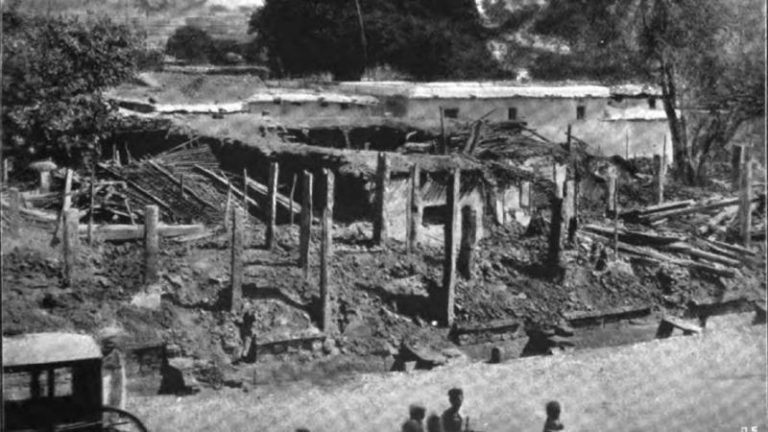
At least 20% of the global population is on coronavirus lockdown. In this pandemic like situation it may be helpful to look back at an earlier pandemic, one that happened in Bangalore, Karnataka. The third Bubonic plague transformed the city of Bangalore.
This is that story.
How the Plague arrived
The third Bubonic plague began in the 1850s. It originated in the Chinese Cantons. The British invaded China and forced China to open its ports to trade. The plague then spread to Hong Kong, and then to Bombay. It spread across the world. In the 1890s, every inhabited continent had outbreaks of the plague. The Bubonic plague was said to have killed 10 million in India in the first wave and eventually killed another 12 million people in sporadic outbursts over the next thirty years. The Bubonic plague is caused by the bacteria, Yersinia pestis. The infection causes the subject to experience flu-like symptoms, followed by the swelling of the lymph nodes. Half of those who contract the disease and are untreated die within a week of getting the infection. The disease spreads through fleas, which might inhabit small animals, most commonly rats. Rats might hide within the house, leading to a dispersal of fleas. If the host dies, the fleas spread and bite any person nearby, spreading the disease.A plague on the train
It spread across India because of the railway lines, which developed massively in the 1880s. The first cases in modern-day Karnataka were in September 1898. They originated in Bellary and Bangalore. The explosion of the plague caused a panic in Bangalore.Bangalore was a major trade hub at the time. People coming to Bangalore were required to register with the police and would be required to show up at the police every day for 10 days to check if they were developing any symptoms.Immediately the state began to quarantine people. This was done in a very cruel manner, where people were taken by the government, and kept away. Nearly 10,000 people assembled in front of the Governor’s house in protest, but they were dispersed by the colonial military. Cases were reported from the districts near Bangalore soon after. Nearly 500 people died in the first month in Bangalore alone. Government officials realized that the plague was spreading along the major railway lines, and concluded that human interactions caused the spread. They began to respond by requiring passports to travel by train. Bangalore was a major trade hub at the time. People coming to Bangalore were required to register with the police and would be required to show up at the police every day for 10 days to check if they were developing any symptoms.
Hiding from “Health-care”
The British had a very heavy-handed approach of dealing with those suspected of carrying the plague. People often hated quarantining and would take measures to avoid registration and would escape if they could. To avoid quarantining, many people hid illnesses and even deaths in their homes. Sometimes dead bodies were hidden in wells and reservoirs. Riots and mass looting began in response to the draconian approaches of the state in managing the plague. Eventually, authorities changed their approach. They found people responded better when they could be treated at home. The state then adopted a policy of making hospital visits voluntary and home visits proved to be more effective. In practice, patients were told they had to stay in their homes with the surrounding rooms in the house disinfected. They found that this improved the rate of compliance. When it was suspected that animals were the cause of the spread of the disease as opposed to human-human contact. The British government made a list of animals suspected to spread the disease including monkeys and squirrels. In hindsight, these policies turned out to be counter-productive, as the fleas carried by the animals would be released when the animals were killed. The plague continued to spread. Within 6 weeks of the first case, over a thousand people had died. Riots broke out in the city and the military had to suppress them. At its peak, over a hundred people were reported to have died each day.Trouble in Srirangapatanam prison
Prisoners were vulnerable. The enclosure put them at risk of the plague, and the panic put them at risk of a riot in the prisons. When violence in the prison escalated, staff used lethal force to suppress the prisoners. To maintain order, the State relocated the prisoners to the military fort until vaccinations could be made available.From the empty city to a new one
After about a hundred days, after the plague hit, rates began to decline, but there was much fear in the city. Shops, courts, and schools were all reported to have been abandoned. From a population of nearly two lakhs, only about 10,000 people remained in the city. The next year, the plague resurfaced at around the same time of year, leading to another great exodus from the city. Instances of the plague would keep resurfacing annually, though each time was less deadly than the previous year. The city of Bangalore was forever changed. Before this time, the city had two separate units, the market, and the cantonment. In the years to follow, city extensions were built to extend the territory of the city. These new extensions had wider roads and open drains.Why a democratic health-care system is so important in a crisis?
Many of the problems experienced in the plague got worse because of three reasons. First, quarantining in healthcare for the poor was seen as a prison sentence. For a health care system to be effective in combating diseases, there has to be a universally accessible, community-based healthcare system that delivers to all sections of society in a transparent and accountable way. Second, authoritarian responses made things worse. The State found that their interventions were more effective when they worked in cooperation with the people. When they tried to enforce their authority, people responded by hiding and rioting. When their concerns were taken on board as part of the process, things went more smoothly.How Cuba is saving the world during COVID-19 pandemic?

Cuban cigars are not the only export from Cuba. Cuba has another important export that the world doesn’t know about. Its the Cuban health professionals!
On 23rd March Cuba deployed a team of doctors and nurses to Italy, to aid health care professionals with the COVID-19 outbreak. They were sent to Italy’s worst affected region, Lombardy. This is the eight international aid mission that Cuba has done in an effort to provide to aid regions affected by epidemics and natural disasters. They were front and centre in providing health care during the Ebola outbreak in West Africa, Cholera in Haiti, and now Coronavirus in Italy. It has also sent teams of its “armies of white robbed warriors” to Venezuela, Jamaica, Nicaragua, Suriname, and Granada.
Leonardo Fernandez, an intensive care specialist, told Reuters late on Saturday shortly before his brigade’s departure- “We are all afraid but we have a revolutionary duty to fulfil, so we take out fear and put it to one side,”.There were 52 specialists, with 36 doctors, 15 nurses, and a logistics specialist. Doctors from Cuba received standing ovation when they arrived at the airport in Milan, Italy.
Cuba has also sent supplies of Interferon 2b to Italy, Venezuela, and Panama to help combat the outbreak. The drug has effectively helped in curing more than 1500 patients of the virus, in China. The drug has been developed by the Cuban biotech industry, it is shown to boost the immune system, and has proved effective in combating previous epidemics like dengue fever and HIV/AIDS. Cuba’s contribution to the fight against coronavirus has been phenomenal and the demand for Cuba’s aid in battling the virus has been increasing. Cuban doctors are also going to be sent to Belize. Belize saw its first case a few days ago and immediately declared a state of emergency. Belize’s health care system is not well equipped to deal with the virus and has reached out for help from Cuba.Doctors from Cuba arrive in Italy to help the fight against Covid-19.
— StanceGrounded (@_SJPeace_) March 22, 2020
This is what humanity and solidarity looks like. 😭
Please keep these heroes, their families, and loved ones in your prayers 🙏🏽🤲🏽❤️ pic.twitter.com/idNnom8sXS
Cuban medical internationalism
Cuba has been sending medical personnel overseas as part of its international solidarity and humanitarian ventures after the Cuban Revolution in 1959. Cuba provides more medical personnel to the developing world than all the G8 countries combined. The Cuban missions have had a substantial positive local impact on the populations served. has 42,000 workers in international collaborations in 103 different countries, of whom more than 30,000 are health personnel, including no fewer than 19,000 physicians. The programme was initiated in 1963 as part of Cuba’s foreign policy of supporting anti-colonial struggles in Algeria, where French medical professionals had withdrawn during the independence struggle. Cuban doctors have worked in African countries like Guinea-Bissau during its independence war against Portugal and in Angola as well. From 1963 to 2004, Cuba was involved in the creation of nine medical faculties in Yemen, Guyana, Ethiopia, Guinea-Bissau, Uganda, Ghana, Gambia, Equatorial Guinea, and Haiti. Cuban medical missions were sent to other countries in Latin America like Honduras, Guatemala, and Haiti following 1998’s Hurricane Mitch and Hurricane Georges. Cuba’s medical aid to Pacific countries has been two-pronged, consisting of sending doctors to Oceania, and in providing scholarships for Pacific students to study medicine in Cuba at Cuba’s expense.Cuban commitment and Solidarity
Transatlantic British cruise ship MS Braemar, was carrying 682 people on board, several of them showed symptoms of COVID-19 and were kept in isolation was stranded in the Caribbean since the last week of February. The ship was not allowed to dock at ports of several Caribbean countries, including the Bahamas, Barbados, Dominican Republic. The UK reached out to the US and to Cuba to help find a suitable port for MS Braemer. Unsurprisingly, the US refused to let the ship dock on its ports. Trump’s xenophobia and the need to keep people in need out of the US are well known. Cuba allowed the ship to be docked at its port. According to an official statement, Cuba allowed the ship to dock “due to the urgency of the situation and the risk to the lives of sick people.” “These are times of solidarity, of understanding health as a human right, of reinforcing international cooperation to face our common challenges, values that are inherent in the humanistic practice of the Cuban Revolution and our people,” added the statement. Passengers who were healthy were sent back to their home countries and the others were given treatment in Cuban hospitals. “Thank you, Cuba that you could open your hearts to us. We will never ever forget that you reached out to us when absolutely nobody, and I mean nobody, else would,” Anthea Guthrie, a passenger aboard the ship, wrote on Facebook. “I trust we will never ever forget the help we’ve had from a poor country with a brave, huge heart.”Cuban pandemic control at home
There are 40 cases in Cuba and 1 death. Cuba started its lockdown a little before the first case was discovered. It took an ‘all-hands-on-board’ approach and responded swiftly to the threat. Cuba has put 30,000 people in quarantine (at their respective homes) and there have been constant check-ups by teams of doctors. Cuba is well known for its well-developed health care system, medical research, and training and providing scholarships for medical research. The Cuban health care system is public and thus the government is entirely responsible for ensuring the safety of its citizens. According to sources Cuba’s resources are going to be strained during this time. A part of the reason for this is that the Trump Administration has levied sanctions against Cuba. Cuba is being instrumental in curbing the violence and amidst this has to face the brunt of the sanctions of the US. Shipping contracts that carry supplies to Cuba are blocked and harassed by the US on regular basis. These sanctions hurt the Cuban economy and might incapacitate them. “The great paradox is that while the ships contracted by Cuba to carry oil and food are harassed by the United States, the ships carrying the sick that nobody wants in their ports receive solidarity and respect in Cuba,” Cuban journalist Rosa Miriam Elizalde wrote in the Mexican newspaper, La Jornada.Garment Workers Agitate Against Forced Work and Unpaid Leave amidst the COVID -19 Crisis

Over the last two weeks, due to the COVID-19 scare, garment factories in Bangalore have been shutting down creche facilities. This has forced many women garment workers to either leave their jobs or go on unpaid leave, as creches are vital for many to remain in the workforce.
Last week, the workers’ union in Shahi Exports Private Limited (Unit 8), with the support of Karnataka Garment Workers Unions (KOOGU) approached the factory management to discuss paid leave for women workers who were unable to work due to the closing down of creches in factories.
The factory management refused to provide paid leave and argued that such measures cannot be implemented without directives and financial support from governments and apparel brands. This response from then management forced many women garment workers to choose between unpaid leave and forced resignations, pushing many families to crippling poverty. Meanwhile, the number of COVID-19 cases started increasing in Bengaluru and workers became increasingly worried that garment factories, were not taking adequate steps to prevent its spread in the workplace. For workers, social distancing seemed impossible within a factory where 500- 5000 workers worked in close proximity. Soon, soaps in the factory started running out within two hours of factory opening and lines to the few bathrooms became so long that many workers returned to their work without using the restroom. On Sunday, after the imposition of Janata Curfew and show of applause to emergency workers, garment workers felt extremely panicked and agitated that no measures were being taken to protect their lives. On Monday, workers at Shahi Exports (Unit 8) refused to enter the factory, unsure if the factory had taken adequate health and safety measures. The agitation continued for hours, with the factory management refusing to shut down the factory or implement adequate safety measures. The factory management remained adamant that workers must resume production as there were too many pending orders. However, the workers refused to work and the factory management was forced to shut down operations. Nevertheless, the factory has informed workers that they will remain closed only till 28th March, although the Government has mandated a lockdown till 31st March. Workers in Shahi Exports (Unit 8) have temporarily been successful in protecting themselves and their communities against workplace exposures to COVID-19. However, questions still remain if workers would receive paid leave or if they would be forced to work extra-days and overtime for the rest of the year, to compensate for this. It seems that garment workers might have to pay a heavy cost for social distancing. (Written by Nandita Shivakumar, South-India Coordinator for Asia Floor Wage Alliance with inputs from Ganga Sekhar,FEDINA)Garment workers in B'lore refuse to enter factory unsure of measures in place to protect from #COVID19 Without Brands and Govt support factories say unable to take a stand re paid leave or at least reducing workforce and production to allow recommended distance btw workers pic.twitter.com/FOv1Jyql4C
— KOOGU (@koogu_kgwu) March 23, 2020
Shaheen Bagh cleared, protest art removed amidst corona virus lock down

On Tuesday morning, Shaheen Bagh Delhi, Shahi Eidgah, and Hauz Rani protest sites were cleared by the Delhi Police. Amidst the lockdown, the Police came to Shaheen Bagh and forced women sitting in protest to leave, they pulled down the tents both at the protest site at Jamia and Shaheen Bagh. They also went on a cleanup spree and covered up the slogans, protest artwork that was painted on the walls near Shaheen Bagh and Jamia. Women at Shaheen Bagh were doing a symbolic protest and nobody was in contact and they had ensured all precautionary measures, but the police forcefully tore everything down.
 In Lucknow, the protest has been suspended by the women as a precautionary measure against COVID-19. The protest site in Lucknow has been kept intact and women have left their dupattas at the site in a symbolic gesture. The Mumbai Bagh has also suspended its protest temporarily. The site at the Mumbai Bagh has also been kept intact and a symbolic protest will continue both online and on the ground.
All the Baghs were taking precautionary measures and did not have more than 5 people at the protest site at any given time. These women sat through police brutality, rain, cold, and even when the footfall at the site was low. These protests have for the time being moved to the online space and people have been asked to continue the protest online. For now, Shaheen Bagh Delhi has called off the protest but the women have promised that they will return to protest once the COVID-19 situation settles down.
The southeast deputy commissioner of police told ANI “People at the protest site in Shaheen Bagh were requested today to clear the site as lockdown has been imposed. But after they refused, action was taken against violators as the assembly was unlawful. Protest site has been cleared. Some protestors have been detained,” While the rationale behind why the women were moved can still be debated, there is no rational reasoning as to why the police felt the need to cover up all the protest art and tear down the tents. Social Distancing was only an excuse to cover up everything that the protest stands for. Shaheen Bagh was in its 101st day of protest when the police came to tear down the protest site. The police were in riot gear and detained 11 protestors near the site.Delhi: Delhi Police clears the protest site in Shaheen Bagh area, amid complete lockdown in the national capital, in wake of #COVID19 pic.twitter.com/4IYvGCqyFL
— ANI (@ANI) March 24, 2020
The Bangalore Bagh was also cleared Tuesday morning. The police broke into Bilal Bagh, seized the area, and dismantled the site. The women at Bilal Bagh chanted slogans as the police tore down the protest site.This is insanity! Resistance art on walls of Jamia Millia Islamia being whitewashed at the time when these workers should have been at home. Shows that removing Shaheen Bagh protest site this morning wasn't only about Coronavirus. pic.twitter.com/0fd2d1gMRT
— Vijdan Mohammad Kawoosa (@vijdankawoosa) March 24, 2020
In Lucknow, the protest has been suspended by the women as a precautionary measure against COVID-19. The protest site in Lucknow has been kept intact and women have left their dupattas at the site in a symbolic gesture. The Mumbai Bagh has also suspended its protest temporarily. The site at the Mumbai Bagh has also been kept intact and a symbolic protest will continue both online and on the ground.
All the Baghs were taking precautionary measures and did not have more than 5 people at the protest site at any given time. These women sat through police brutality, rain, cold, and even when the footfall at the site was low. These protests have for the time being moved to the online space and people have been asked to continue the protest online. For now, Shaheen Bagh Delhi has called off the protest but the women have promised that they will return to protest once the COVID-19 situation settles down. Anti-CAA protests: Shaheen Bagh(s) during the Janta Curfew

Amidst the Janta curfew, right-wing forces are still at work trying to ensure that the Anti-CAA protests come to a halt. A petrol bomb was thrown at the police barricades near the Shaheen Bagh (Delhi) protest site.
 According to the Police, the bomb was thrown by some protestors. There have been clashes amongst the protestors regarding the protest since yesterday. “Last night, we received a call about a fight there and had to intervene. Due to the coronavirus scare, few of the protesters want to call off the sit-in protest while others debated and they fought with each other.” Said Additional Deputy Commissioner of Police Kumar Gyanesh. There were two people on a bike who were seen throwing the bomb. There have been no injuries reported.
There were rumors that due to the COVID-19 outbreak, protests across the country would come to a crashing halt. This did not happen. Delhi’s Shaheen Bagh continued to soldier on with a number of precautions in place. At Shaheen Bagh protestors will not be allowed to sit for more than four hours at a stretch as a preventive measure. The protest has now become silent protests and children and elderly women will not be allowed at the site. For the Janta curfew, only two women were allowed at the protest site. Women are also not sitting on mattresses, rather cots have been placed with a distance between them. Sanitizers and masks are being distributed at the site.
The sit-in in Mumbai Bagh continues too. Organizers have said that they will continue the protest with fewer people and more precautions. They asked senior citizens, mothers, with children under the age of 5, and people with the illness to not come for the protests. They have taken precaution measures by having volunteered at entry points who have sanitizers and masks to give those coming for the protest. They have asked BMC to sanitize the area and have on-call doctors for check-ups. Other protest sit-ins in the city with about five people or less attending the protests.
The protests in Bilal Bagh at Bangalore continue as well. Organizers have said they will continue their protests. “To shut this place down means defeat for the anti-CAA movement. We are fighting for our future.” The women are resolute and have decided to move ahead with the protests but by ensuring the utmost safety of the protesters. They have taken to screening visitors, dispensing sanitized, handing out home-made masks, conducting sessions about the virus, and ensuring that protestors are sitting one meter away from each other. They have also been sanitizing the place throughout the day and ensuring all visitors wash their hands before entering. Like the Mumbai Bagh, they also have a doctor-on-call to ensure there are regular checks for the protestors.
Kolkata Shaheen Bagh has also continued its protest with ensuring sanitizers and masks are distributed amongst protestors, distance is maintained between the protestors, and the footfall for the protest is kept willfully low. The Shaheen Bagh in Kondhwa, Pune has decided to also continue with the sit-in with only 5 to 8 women occupying the protest site at a point of time.
The Chennai Shaheen Bagh has temporarily called off the protests amidst the COVID-19 spread as a precautionary measure.
The Baghs have been resilient in their fight. “If PM Modi wants us to be safe from coronavirus then he should have withdrawn CAA, NPR, and NRC. We will continue our protests” one of the protestors at Shaheen Bagh said.
According to the Police, the bomb was thrown by some protestors. There have been clashes amongst the protestors regarding the protest since yesterday. “Last night, we received a call about a fight there and had to intervene. Due to the coronavirus scare, few of the protesters want to call off the sit-in protest while others debated and they fought with each other.” Said Additional Deputy Commissioner of Police Kumar Gyanesh. There were two people on a bike who were seen throwing the bomb. There have been no injuries reported.
There were rumors that due to the COVID-19 outbreak, protests across the country would come to a crashing halt. This did not happen. Delhi’s Shaheen Bagh continued to soldier on with a number of precautions in place. At Shaheen Bagh protestors will not be allowed to sit for more than four hours at a stretch as a preventive measure. The protest has now become silent protests and children and elderly women will not be allowed at the site. For the Janta curfew, only two women were allowed at the protest site. Women are also not sitting on mattresses, rather cots have been placed with a distance between them. Sanitizers and masks are being distributed at the site.
The sit-in in Mumbai Bagh continues too. Organizers have said that they will continue the protest with fewer people and more precautions. They asked senior citizens, mothers, with children under the age of 5, and people with the illness to not come for the protests. They have taken precaution measures by having volunteered at entry points who have sanitizers and masks to give those coming for the protest. They have asked BMC to sanitize the area and have on-call doctors for check-ups. Other protest sit-ins in the city with about five people or less attending the protests.
The protests in Bilal Bagh at Bangalore continue as well. Organizers have said they will continue their protests. “To shut this place down means defeat for the anti-CAA movement. We are fighting for our future.” The women are resolute and have decided to move ahead with the protests but by ensuring the utmost safety of the protesters. They have taken to screening visitors, dispensing sanitized, handing out home-made masks, conducting sessions about the virus, and ensuring that protestors are sitting one meter away from each other. They have also been sanitizing the place throughout the day and ensuring all visitors wash their hands before entering. Like the Mumbai Bagh, they also have a doctor-on-call to ensure there are regular checks for the protestors.
Kolkata Shaheen Bagh has also continued its protest with ensuring sanitizers and masks are distributed amongst protestors, distance is maintained between the protestors, and the footfall for the protest is kept willfully low. The Shaheen Bagh in Kondhwa, Pune has decided to also continue with the sit-in with only 5 to 8 women occupying the protest site at a point of time.
The Chennai Shaheen Bagh has temporarily called off the protests amidst the COVID-19 spread as a precautionary measure.
The Baghs have been resilient in their fight. “If PM Modi wants us to be safe from coronavirus then he should have withdrawn CAA, NPR, and NRC. We will continue our protests” one of the protestors at Shaheen Bagh said. Can one day Janta curfew curb the spread of Coronavirus?

History has shown us that some battles are won in a single day. Or a single day may change the course of a long drawn battle. In the battle against Corona Virus, today’s Janta curfew will neither be our victory day nor does it seem to change the course of the battle. Corona will not go after we clap our hands from our balconies tonight. There is a lot more to be done.
The challenge we face here is that we are trying to understand the virus at the same time we are providing care for the ever-increasing number of affected people, and also racing to find a cure while we are trying to prevent its spread. We are preparing for a battle and fighting it at the same time.
Etiology of COVID-19
Our enemy is the SARS-CoV2 aka Corona Virus, and COVID-19 is the respiratory disease that it causes. This virus is difficult to detect in the early stages. We will only know about its existence in our body days after getting infected, we may not experience any symptoms for days, meanwhile, we would have spread it to our near and dear ones before we know it.Since this has not just been an individual’s battle or only one nation’s battle. We can learn from the mistakes and experiences of those who have suffered before us.According to the World Health Organisation, only 4% of affected individuals have died globally, this translates into a large number of people given how many have been affected within the past four months. The latest figures are 2,34,073 infected and 9840 dead. Among them, 24,247 fresh cases and 1061 deaths were reported in the last 24 hours. The virus has shown itself to be resilient and can survive on various surfaces for days. The most reliable weapon we have so far is washing our hands more often, not touching our face and social distancing for long periods. Because we are both the victims and the medium for the virus, the more strictly we follow social distancing, the lesser the chance for the virus to spread. A long period of social distancing among ourselves will go a long way in reducing the spread of the virus, thus saving many lives. Since this has not just been an individual’s battle or only one nation’s battle. We can learn from the mistakes and experiences of those who have suffered before us. The most important lesson to be learned from the experiences of the worst affected countries is that we need to test a lot more people, to begin with. We need to stop defending the policy of testing only a limited number of people who have come in contact with a known case. This would have helped in the very early days when the virus was only reported in China. But that time has passed. The authorities must act with the assumption that they may not have detected and quarantined early carriers of the virus who could have entered the country from any of the 30 international airports. We will be unaware of the actual number of infected individuals as long as we do not expand our testing. The lack of reliable data could turn the containment strategy ineffective. There are many cases of passengers missing the tests and not declaring their travel history. There could be many unknown positive cases clapping from their balconies tonight, and many more that would have come in contact with them.
What needs to be done?
We need to quickly build the infrastructure needed for testing and quarantining lakhs of individuals outside airports and borders. The manufacturing and distribution of testing kits must be taken up on a war footing. Not having enough kits, and hence not willing to test more people, is not an excuse the government can sit with. The low number of positive cases could very well be due to the low number of tests. A fee on getting tested would be counterproductive. This will discourage people from getting tested through scientific means and those who cannot afford it will simply not show up. This could also lead some people towards unscientific or unhygienic forms of testing if it works out cheaper. Moreover, how can you trust those who try to profit during a health crisis to help fight the crisis? The virus has shown that anybody can be affected. It has no religion, no ideology, and no particular preference. We are only safe from the virus when everyone around us is also safe from the virus. Therefore the government should ensure that all affected citizens, no matter how rich or poor, majority or minority, must be given the best care and support. It should not tie the burden of access to quality health to the quantity of a person’s wealth. As some of us have the privilege of working from home, lakhs of public health workers, doctors, sanitation workers, soap and sanitizer factory workers, law enforcement officers, public transport workers, airport staff, journalists, internet and telecommunication workers, are voluntarily or involuntarily risking their health and showing up to work daily. They are the reason society is still functioning during this crisis. They deserve more than just our balcony gratitude. They deserve our solidarity. Our government has to make sure that all necessary protective equipment is supplied to them as they discharge their duties, and that they are not overworked or abused. Many self-employed individuals and small businesses, who are yet to recover from the central government’s experiments in GST and currency demonetisation, are already now suffering from a drop in customers. Workers in small scale industries were already suffering from unpaid salaries for months due to depreciating demand. Farmers are not sure if they can take their produce to the markets this month. As a result of people avoiding going out and the prohibition of large gatherings, the livelihoods of daily wage labourers, street vendors, artists, and short term service providers have taken a huge hit. There must be an immediate focus on supporting them through a no-nonsense rescue package. Their situation is dire and should not be forgotten in the process of addressing the anxiety of shareholders and owners of large businesses, whose standards of living does not necessarily depreciate with the value of their stocks. There is no doubt that a great level of cooperation and solidarity exists among the people, across class barriers, to help each other survive this crisis. The government has to contribute to this spirit of unity and address the issues of livelihood, and public health while simultaneously funding research for a vaccine, and making it accessible to all citizens. Perhaps this is how a government ought to express its gratitude to all those who are keeping the county going: By giving them a healthy and prosperous society as soon as possible.Quid Pro Quo: The Rise and Rise of Ranjan Gogoi on the wings of BJP Government

Former Chief Justice Ranjan Gogoi shot to fame when he, along with three other judges, bravely spoke up against the arbitrary manner in which then CJI Deepak Misra was handing out cases. At the time, Gogoi was the shining example of the integrity of a Judge and the upholder of Justice for all. .. He had once said “Noisy judges were democracy’s first line of defense.” Unfortunately, once he was made CJI he was the first to threaten democracy by pandering to the BJP government. All the noise of the line of defense had become a drum that beat to the Government’s tunes.
Progressive beginnings
Gogoi was one of the five judges who gave the judgment for the abrogation of section 377, which criminalized ‘carnal intercourse against the order of nature.’ This landmark judgement de-criminalized all other sex which was not limited to peno-vaginal, or all sex that didn’t lead to producing a child. This essentially meant homosexuality was not illegal in India anymore. Gogoi has also presided on the Sabrimala judgement, which lifted the ban that prevented women between 10-50 from entering the temple. These judgements were seen as massive victories for the country. These judgements clearly made him the poster child for justice. That didnt last long. With BJP coming to power the second time in 2019, the Gogoi quickly became the puppet giving judgements in line with the BJP/RSS agenda.NRC debacle, Human rights abuse in Kashmir and Ayodhya Verdict
From 2014 to 2019 Ranjan Gogoi was on a bench that directed and implemented the NRC. The executive and the judicial powers were put together to implement a law that would determine the citizenship of the population in Assam. The Supreme Court was responsible for deciding how the implementation would take place, what documents would be accepted. Gogoi’s hijacking of this process lead to not having strong appellate measures in place which lead to 19.06 lakh people being left out of the NRC. The result of this implementation has not only affected Assam but will continue to affect all of India at large. One of the reasons for the current protests against CAA and NRC is against the way things were handled in Assam and the fear that the same will happen across the country.Information in Sealed covers for controversial cases was the norm under Gogoi. Sealed covers are profoundly undemocratic as they go against the open-justice principle of the judicial system.This was not the only fire that the CJI stoked. He also presided over the Ayodhya Judgement. The Muslim plaintiff was asked to prove that the Masjid was under exclusive possession, while the Hindu plaintiff was not asked to demonstrate exclusive possession. While there was proof that namaaz was offered at the site for 450 years, weak evidence from ASI was used to hand the Babri Masjid land to the Hindu plaintiff. A 5 acre plot was given to the Muslim plaintiff to build the mosque at a different location. This paved way for BJP´s dream- the Ram temple will be built on the Ram Janm Bhoomi (mandir wahi banayenge). This vision came at the cost of the rights of a community, not only over their land but against the violence that was undertaken against their cultural symbol by Hindu terrorists. Gogoi legitimized this violation of rights by giving the land to the Hindu plaintiff. The year 2018 is littered with such contentious judgements and delays in hearing of related petitions. While the proceedings of Ayodhya verdict was being undertaken, Kashmir was sent into a lockdown. The lockdown began on August 5th and many petitions were filed against the unconstitutional repeal of article 370. Many political leaders were put under arrest. Two habeas corpus petitions were filed with regard to the illegal detentions, Gogoi, instead of questioning the legality of the detention allowed the petitioners to visit Kashmir to visit the concerned people, but not to engage in politics while there. While Kashmir was having its human rights suspended, and protests erupted across the country, Ranjan Gogoi claimed that there was no time to hear Kashmir and article 370 related petitions. This was because, the Babri Masjid case was underway before a constitution bench. The Supreme Court, under ex-CJI did next to nothing when the rights in Kashmir were being suspended. It turned a blind eye towards the Modi government’s blatant move to disempower Kashmir further.