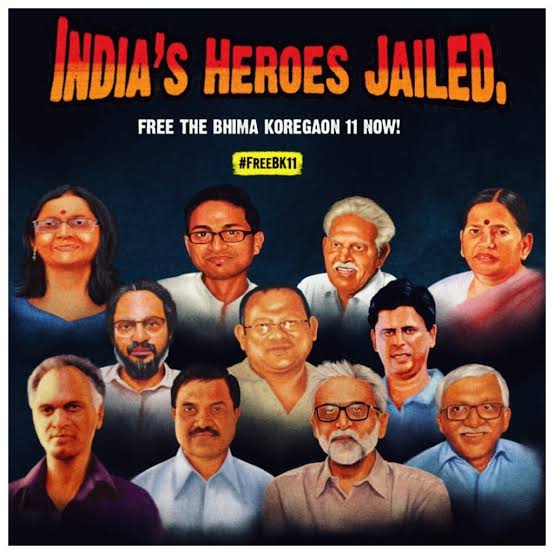
On Monday, Varavara Rao’s lawyer told the Bombay High Court that the poet-activist, who is admitted at the Nanavati Hospital, is “almost on his deathbed”. “Besides COVID-19, he suffers from several ailments, he is hallucinating and is delirious”, the lawyer stated. In such a condition, one might reasonably expect that the judiciary would finally grant him bail. Yet, despite his serious health condition, Rao has not been granted bail and his family has not been allowed to meet him.
It seems to have almost bypassed public consciousness that Varavara Rao and his fellow activists are under-trials, against whom no crime has actually been proved. They have been accused on the basis of flimsy evidence and fictitious claims.
Instead, the NIA submitted to the High Court that Varavara Rao, “under the garb of the current situation on the account of a global pandemic of COVID-19 and his old age is trying to take undue benefit of the situation in seeking bail”.
We are reminded of Rao’s poem, where he asks; “In what discourse, can we converse, with the heartless?”. The state’s callous treatment of imprisoned activists is not just heartless, but also a violation of the basic legal principle of an accused being ‘innocent until proven guilty’. The deliberately drawn out and draconian process – of imprisoning activists for months, sometimes years on end, denying bail, and without even filing a charge sheet – is an injustice in itself. It seems to have almost bypassed public consciousness that Varavara Rao and his fellow activists are under-trials, against whom no crime has actually been proved. They have been accused on the basis of flimsy evidence and factitious claims.
Sudha Bharadwaj, another co-accused in the Bhima Koregaon case, sought bail on health grounds after an inmate of Byculla prison tested positive for Coronovirus. But she has not been granted bail yet, with hearings being adjourned for frivolous reasons. Vernon Gonsalves and Anand Teltumbde are also lodged at Taloja jail, where several prisoners have tested positive for COVID-19. They have filed a petition seeking to be tested for the virus, due to their close proximity with COVID-positive patients.
The Supreme Court has passed directions to de-congest prisons, and especially consider releasing prisoners who are aged above 60. Yet, despite these directions, the NIA seems hell-bent on keeping these scholars and activists imprisoned. The courts also seem to be untroubled by the continued imprisonment of such under-trials, even when some of them have tested positive for COVID and have sought bail for proper medical treatment. This is in stark contrast to the NIA’s soft treatment of terror-accused persons like Pragya Thakur. In her case, the NIA told the Supreme Court that there was no need to entertain a petition which sought the cancellation of Thakur’s bail. Is law really the same for everyone then?
The Congress party minority cell in Uttar Pradesh has announced a door-to-door campaign demanding the release of Dr. Kafeel Khan. This campaign, which began on 22 July, is scheduled to run for three weeks till 12 August. Dr. Khan had been arrested on 29 January 2020 for allegedly making inflammatory remarks at an anti-CAA protest in Aligarh Muslim University in December 2019. He has been charged under the National Security Act (NSA) and is currently imprisoned at the Mathura jail.
In March, when India went into a lockdown, Dr. Khan wrote to Prime Minister Modi requesting that he be allowed to use his medical expertise and join the effort against the COVID-19 pandemic. He stated: “I have conducted 103 free medical camps since out of jail after the BRD oxygen tragedy examining over 50,000 children/patients all over India…I feel I could be of some help in curtailing this disease”.
On 15 June, he wrote another letter describing the unhygienic living conditions at the Mathura prison. He noted that there were only 4-6 toilets for each barrack, which held 125-150 inmates. He also highlighted the serious risk of COVID-19 spreading in such congested spaces where social distancing was not possible.
Soon after his letter, hundreds of people on Twitter began to demand the release of Dr. Khan. It was reported by the Times of India that more than one lakh posts were put up on Twitter in a span of few hours which called for the immediate release of political prisoners, including Dr. Khan. The medical fraternity had also voiced their concern for Dr. Kafeel Khan and supported the demands for his release.
The campaign for Dr. Khan’s release is to be led by Shahnawaz Alam, the head of the UP Congress minority cell. Mr. Alam himself was imprisoned for around two weeks allegedly for his participation in an anti-CAA protest in Lucknow. In this door-to-door campaign, the participants aim to collect signatures for memorandums and make videos demanding Dr. Khan’s release from prison.
Alam stated that the Congress would mobilize support for Kafeel Khan from the minority community in UP. “We will reach out to clerics, madarsas, educational institutes, self-help groups, members of civil society and ask them to raise their voice in favour of our demand”, he told the media.
Dr. Kafeel Khan had earlier been arrested in 2017 by the UP police when over 60 children died in a government hospital in Gorakhpur due to the lack of oxygen cylinders. He was jailed for nine months by the UP government and accused of medical negligence. Almost two years later, a government inquiry gave Dr. Khan a clean chit and acquitted him in that matter.
Read Next: Women in UP Demand Rule by Constitution, Not Goonda Raj
The COVID-19 pandemic has brought the world’s attention back to the need
of equitable access and provision of clean water. The WHO in its Interim Guidance
on water, sanitation, hygiene, (WASH) and waste management for the COVID-19
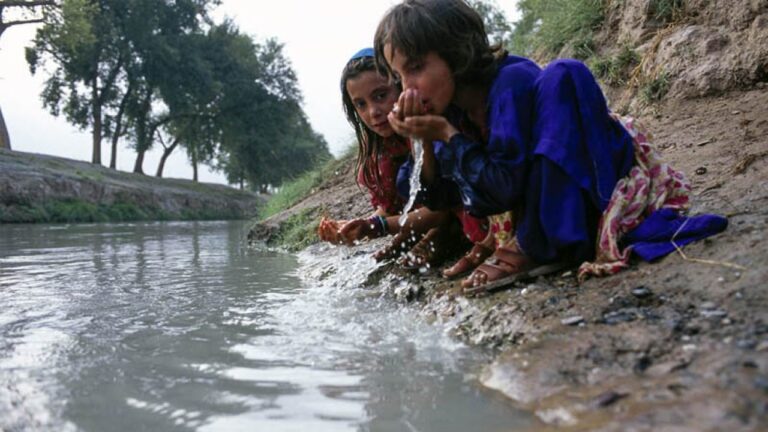
virus states: “The provision of safe water, sanitation, and hygienic conditions is essential toprotecting human health during all infectious disease outbreaks, including the COVID-19outbreak. Ensuring good and consistently applied WASH and waste management practices in communities, homes, schools, marketplaces, and health care facilities will help preventhuman-to-human transmission of the COVID-19 virus.”A report by WHO/UNICEF mentions that in 2017, 785 million people across the globe lacked access to the basic drinking water facilities or depended on unimproved
water sources. In the context of access to safe drinking water, sanitation facilities and hygiene practices, the same report highlights the prevalent inequalities among countries, the gap between the rich and poor population, and the gap between the rural and urban population. Like many other countries, India too must go a long way to provide access to safe water to a significant portion of its population.
According to a 2018 WaterAid report, 163 million people in India lacked access to clean water near to their home. In the rural parts of the country 63.4 million did not have access to the clean water. A news article in Time, which reported on the country’s annual per
capita water availability forecast ,gives cause for alarm. It explains, “water available per
person is dependent on population of the country and for India, water availability per capita is reducing progressively due to increase in population.”
Caste and Unequal Access to Water
On March 20,1927 Dr. B R Ambedkar led a movement and reclaimed Chawdar Tank, the only public source of water in Mahad. The Dalits were forbidden, by the upper castes in collusion with the colonial government, to use or even touch the water from the tank. The practice of untouchability created several barriers in accessing common water resources.
93 years after of this act of resistance, Dalits and other socio-economic backward
communities still face discrimination and violence. Caste-based violence and discrimination is not only present in rural parts of the country, but also is manifest in the urban centers of India.
A study in 2015 explored the relationship between caste hierarchy and access to
drinking water in the rural parts of five states. The Schedule Castes (SC) face a variety
of challenges in accessing drinking water. Most of the SC households did not own any water
resources such as open wells, hand-pumps and household tap water supply. This resulted in their dependence on public or common water resources. Around 27.8% of the Scheduled Caste households surveyed faced discrimination while fetching water from public resources. In few incidents, few Schedule Caste households that were in a slightly better position in their economic status discriminated against those at a lower socio-economic strata.
The study also highlighted the caste-based vulnerabilities of Schedule Caste women who generally go to fetch water. To mitigate this discrimination, one of the measures suggested was to employ a robust water supply system designed with the principal of equal access and provision. The economic changes in 1990s or neoliberal reforms are often touted as champion of caste-equalisation. But often such well-intentioned systems are trumped by the dominance of those who belong to the upper rungs of the caste ladder. This is illustrated in a study conducted in the rural parts of Rajasthan where the investigators found that neoliberal reforms of water governance did not diminish caste distinctions but rather strengthened them. The authors note; “market mechanisms actually assisted dominant caste groups in seizing public resources.”
The linkages of the caste system and access to water are still thriving. A news article from February 2020 recounts the horrors of the caste system in a village of Uttar Pradesh: “On February 16, however, more than 50 members of a Mehtar family lost their only potable
water source — a hand pump near a forest post — as foresters shot dead Madan Balmik
while his family drew water from there.” At the outset of COVID-19 pandemic these conflicts are anything but absent. A National Geographic article reports water scarcity problems in relation to COVID-19: “Caste politics, which are especially strict in Bundelkhand, compound the problem: Upper-caste people control most of the water, Kesar Singh explained. Every village has a small colony at one end for lower caste Dalits, and these colonies typically have next to no sanitation facilities. In Kaithi’s colony, there is one tap for 400 people.”
In the face of dwindling number of freshwater resources across the country,
inefficient and mismanaged water supply systems, climate change, and now the
pandemic, water equality might seem a far-fetched idea. But this should not stop the policy
makers to formulate solutions to ensure equitable water to everyone. Neither it should deter the marginalised communities in the country to demand and fight for their basic right of access to clean water.
Read Next: Corona Crisis & the Workers’ Movement- The Labour Report on the Lockdown
COVID-19 pandemic has affected the working class in more ways than one. On 9th July over 15 labour organisations, train union federations across India held a webinar and discussed various issues related to labour and how the same has been aggravated by the Covid-19 pandemic outbreak, the future of the economy and its possible impact on employment opportunities for the toiling masses of the country.
Police excesses, Privatisation, and dilution of labour laws
Labour organisations from various states are part of the umbrella platform- Mazdoor Adhikar Sangharsh Abhiyan (MASA). The members of the respective state organisations gave a report of how the pandemic affected the working class.
Somnath who works with workers from Punjab and Haryana discussed how the pandemic devastated the three major sectors that working-class engaged in namely agriculture, industries, and MGNREGA.
migrants waiting to go home
Police excesses and assualts on the labourers had violated their dignity. The funds allocated for the workers’ welfare remain unspent. In the state, MGNERGA was not implemented as per rules and the claim of the government to rise in funds for the same is just a trick to fool the people.
Senior activist Venkateshwar Rao from Telanganaspoke about the history of coal mining in India and argued that the movement had for long struggled to get the coal mining nationalized. However, in recent years, governments had attempted to privatize the industry. The most recent attempt in this direction is BJP’s unidirectional decision to auction 41 coal blocks was also discussed.
Amrish Patel from Gujarat detailed about the dilution of labour laws by both the Union Government and the State Governments. He pointed out that there has been a constant attack on two very important ideas of minimum wages and the same pay for the same work and how these changes have shifted the burden of the economic and Covid-19 crisis on the working classes.
Mallige from Karnataka Shramika Shakthi (KSS) spoke about workers’ struggles in the time of the pandemic.According to the survey conducted by the organisation around 82.3% of around 1800 workers surveyed by the first week of June had informed that they neither had the ration to sustain themselves for a month nor the money to buy the same. 44.3% of the respondents did not receive any assistance from either the central, state, or local governments apart from 10 Kgs of Rice that they received from the PDS.
92.97% of the workers were deprived of medical and nutritional provisions (for Corona and other non-corona ailments) including nutritious food for pregnant women that had to be provided to them. Also, 94.5% of respondents had opined that neither did people’s representatives not officials have listened to their issues.
Mukul informed about the apathy of the management of Bajaj Auto Industrial Plant at Waluj in Aurangabad. Death of at least 6 workers due to Coronavirus was reported in this case. However, management responded that people had to learn to live with Corona and did not heed to the demand of the workers to halt the functioning of the plant for a few weeks. The orders of the government to work on 30 or 50% of the total strength and to pay wages and salaries for the workers only stayed on papers and was not followed in most other places.
Siddhanth from Patna noted the need for the workers’ movements to adapt to newer forms of struggles in the times of the pandemic, especially to make the best use of the internet and social media. He opined that it was important to stay relevant on the internet but also take ahead grass-roots level activism while adopting safety measures to be not affected by Corona. For this, building up the next line of leadership in these movements held the key. He also added that fighting out fascism was at the core of the fight of fighting for the rights of workers.
Ashok from Biharspoke about the migrant workers’ issue post the lockdown period. He noted instances wherein managers and employers lured the workers back to work by assuring higher wages and better facilities so that they would get back at the earliest after they had gone back to their native places in times of lockdown. However, when the migrants got back to work, they were not provided any protective equipment, facilities nor were they provided with wages properly. He noted that Bihar had failed to provide workers with MGNREGA work and job cards to workers who had migrated back to the state.
Amitava from West Bengal spoke of the workers’ experiences during the time when the state was challenged not just by the outbreak of Coronavirus but also was hit largely by the Amphan cyclone. Amphan devastated both lives and livelihoods of workers in the unorganized sector especially living in the slum areas in cities and rural areas, coastal and Sundarban areas which have left them vulnerable to be infected by Corona and other ailments.
Sinha of All India Worker’s Council, speaking from Lucknow, Uttar Pradeshnoted that the state had recorded one of the worst living and livelihood conditions for the working classes especially of the unorganized workers. Corona adding to the high rate of unemployment had made sure that not even basic human rights are guaranteed to the people. People’s movements that had aroused because of such inhumane conditions of livings are actively suppressed by the regime, he noted amongst other things.
Call for a Month-Long Campaign
All the labour organisations agreed that the Corona pandemic times is being effectively used by the governments to push anti-people policies. To draw attention to these issues and to organise the labourers, the Mazdoor Adhikar Sangharsh Abhiyan(MASA) declared the commencement of the month-long ‘Mazdoor Sangharsh Abhiyan’ or ‘Workers’ Struggle Campaign’ that would culminate on 9th August 2020 with the spirited ‘All India Protest Day’. Throughout the month, the constituent organizations would conduct campaign programs among the workers and common masses.
You can watch the Online Convention by clicking here
In India, the first COVID-19 case was detected on 30th January this year. In the first week of February, Niti Ayog had sent a proposal to all the States to hand over all district hospitals to private parties in the Public-Private Partnership (PPP) model. This shows that there was no focus on strengthening the public health system despite knowing that the pandemic had reached India.
Unethical clinical trials by doctors on patients belonging to all socioeconomic classes have resulted in 5344 deaths and 20,758 Serious Adverse Events (SAE) between 2005 to 2018. Patients undergoing treatment were completely clueless that doctors had used them as clinical research subjects, the worst kind of breach of trust.
Ministry of Health and Family Welfare had issued certain advisories on COVID 19 in February. But there was no urgency in preparing for the pandemic by preparing the public health system. Neither the public hospitals were prepared well nor were necessary logistics arranged. Since then 6 months have passed, and even now the public healthcare system is unable to manage on their own and is heavily dependent on the private sector which remains unregulated. Every state is trying to manage the pandemic using different approaches but the number of cases is going up. If we compare the global test per million data, India is doing far lesser tests than other countries with heavy caseloads. Countries like Brazil are doing better than India. India is doing only 10,664 tests per million, lagging far behind from other heavily impacted countries such as the USA (150,752), Brazil (23000), and Russia (176132) as of 22nd July 2020. Maharashtra, Tamil Nadu, and Delhi are leading with a large number of cases, with Karnataka deteriorating fast.
In the timeframe between June and July, two incidents happened around the issue of the clinical trials. The one on the clinical trial of a drug called Coronil by Patanjali which claimed that they had found a cure for COVID and another on claiming that an Indian vaccine will be launched by 15th August this year.
Before analyzing the recent clinical trial controversies, we need to know what happened in the last 10 years.
Unethical clinical trials by doctors on patients belonging to all socioeconomic classes have resulted in 5344 deaths and 20,758 Serious Adverse Events (SAE) between 2005 to 2018. Patients undergoing treatment were completely clueless that doctors had used them as clinical research subjects, the worst kind of breach of trust. The whole system comprising of doctors, investigators, ethical committees, and the Drug Controller have played with the patient’s right to ethical treatment.
Members of Ethics committees, clinical trial researchers at Vishakhapatnam, Pune, Indore, Jaipur, Bikaner, Ahmedabad, Bhopal, Hyderabad, Mumbai, Delhi, and many other places are still doing unethical clinical trials without due consent or providing necessary information. Thus it is important to view the recent approvals of COVID vaccine trials, immunity boosters, and drugs in the light of these rampant violations that compromise the rights of patients.
As per experts, vaccines usually require rounds of trials that may take years as well as time to manufacture at scale. When we look at current global data, a number of vaccines have been in trials for the past months, and those still require until the end of this year to be available to the public at large.
It begs an explanation when ICMR issues instructions to make the Indian vaccine ready for launch by 15th August this year, whereby the first human trial has started only in July.
It came as sudden news when Govt of India announced, in the last week of June, that Bharat Biotech and ICMR have developed an indigenous COVID vaccine and it is set to launch by 15th August followed by clinical trials. While digging deeper into detail, it’s clearly mentioned that participant enrollment for the trials would start by mid-July and all trials will take at least 15 months. But surprisingly ICMR issued a letter asking trial institutions to complete participant’s recruitment before time and hurry up the whole process for an independence day launch. This is completely unscientific and an unethical claim of success when even the first phase of the human trial has not been initiated for the vaccine. There was shock and disbelief at such a claim, and various experts stated that such a feat is impossible and the process of testing a vaccine should be handled with better prudence. Many of the trial sites were pending approval from ethics committees. As of now, the proposed sites are still enrolling trial subjects.
Moving over to COVID drugs in India, there are no less controversies. Recently Glenmark Pharmaceuticals conducted fast track trial of a drug called Fabiflu and claimed that this drug works for patients with co-morbid conditions like hypertension and diabetes. This drug costs almost Rs. 12,500 for a course that is far from the affordability of the poor and middle class. Central Drugs Standard Control Organization (CDSCO) has now demanded clarification on the high price from Glenmark pharma and declared that the claim of efficacy on patients with comorbidity is false and unfounded.
Another controversy involving a claim of an ayurvedic drug that can cure COVID came to light in June. Collector of Indore had approved a clinical trial by Patanjali for a drug to be conducted in MGM medical college, a government medical college. The Drug and Cosmetic Act does not allow a district collector to approve any clinical trials, which is the sole authority of the Drugs Controller General of India (DCGI). As per the Clinical Trial Register of India (CTRI), which keeps detail of all clinical trials in the country, permission was given to conduct trials only in Jaipur. Moreover, this was approved for an immunity booster which was later touted as a cure for the Coronavirus. As Patanjali launched Coronil drug and promoted it as a treatment, various civil society platforms like Jan Swasthya Abhiyan, Rajasthan Nagrik Manch, and Swasthya Adhikar Manch raised these violations.
Ministry of Ayush asked for clarification from Patanjali but has refrained from taking any concrete action.
Both Madhya Pradesh and Rajasthan has history of conducting unethical clinical trials in the recent past.
The legal framework of clinical trials in India is poor and lacks various provisions in the interest of trial subjects such as a strong charter of Patient Rights. A draft charter has been circulated by the Ministry of Health & Family Welfare, however not included as part of the law. It is also silent on the award of a penalty to subjects and criminal action against responsible bodies in circumstances where serious violations are made.
As true for all aspects of public interest, a good democracy needs transparency in research and development as well as adopting a scientific approach while doing new clinical research and trials on COVID 19. India should aspire to high standards of quality ensuring that patient rights are prioritized.
The author is an independent health activist and national co-convener of Jan Swasthya Abhiyan and Swasthya Adhikar Manch
The Supreme Court on Wednesday initiated contempt proceedings against activist and lawyer Prashant Bhushan over two of his tweets that he posted on June 27 and June 29th. The court said that these had “brought the administration of justice in disrepute”.
A three-judge SC bench, headed by Justice Arun Mishra and also included Justices BR Gavai and Krishna Murari, issued notice to Bhushan to respond by August 5.
The complaint against Bhushan was registered over a June 29 tweet by him on a photo of Chief Justice of India SA Bobde astride a Harley Davidson motorcycle.
CJI rides a 50 Lakh motorcycle belonging to a BJP leader at Raj Bhavan Nagpur, without a mask or helmet, at a time when he keeps the SC in Lockdown mode denying citizens their fundamental right to access Justice! pic.twitter.com/PwKOS22iMz
The bench also issued notice to Attorney General KK Venugopal and sought a reply from Twitter Incorporated, USA. It directed that the matter be listed again for hearing on August 5.
The registration of the suo motu contempt case against Prashant Bhushan stems from a petition filed by Mahek Maheshwari, an advocate based at Guna in Madhya Pradesh, seeking contempt action against both him and Twitter India.
Maheshwari had termed Prashant Bhushan’s other tweet, posted on June 29, as “inhuman” especially when, according to Maheshwari, the CJI and the other judges had been sacrificing their vacations and using video conferencing to satisfy the litigants, according to Bar and Bench.
The bench of Justices Arun Mishra, B R Gavai and Krishna Murari, which began hearing the matter Wednesday, said: “We are, prima facie, of the view that the aforesaid statements on Twitter have brought the administration of justice in disrepute and are capable of undermining the dignity and authority of the Institution of Supreme Court in general and the office of the Chief Justice of India in particular, in the eyes of public at large.”
The bench also issued notices to Twitter Inc (and not Twitter India, as the court had impleaded earlier), which was allowed to file an application in the case. Earlier, Twitter Inc’s senior counsel, Sajan Poovayya, promised the bench that it would disable Prashant Bhushan’s controversial tweet, if ordered by the court.
Poovayya also told the bench that he did not defend the tweet, as reported by LiveLaw.
While taking up the matter for hearing, the bench also took note of another tweet by Bhushan on June 27 regarding the judiciary which it said was published Wednesday in The Times of India.
When historians in future look back at the last 6 years to see how democracy has been destroyed in India even without a formal Emergency, they will particularly mark the role of the Supreme Court in this destruction, & more particularly the role of the last 4 CJIs
“We take suo motu cognizance of the aforesaid tweet also apart from the tweet quoted above and suo motu register the proceedings,” the bench said.
Currently, Bhushan is appearing in the Supreme Court for the Centre for Public Interest Litigation, seeking transfer of PM Cares funds to the National Disaster Response Fund. He also represents the Association for Democratic Reforms in a petition challenging the Electoral Bond Scheme.
The top court will also take up on July 24 another contempt matter against Bhushan and former Tehelka editor Tarun Tejpal. The 2009 matter pertains to statements by Bhushan against former Chief Justices in an interview to Tehelka.
Senior advocate Harish Salve, who was amicus curiae in the 2009 matter, had submitted a report, drawing the court’s attention to the alleged statements. Senior advocate Ram Jethmalani had represented Bhushan in the matter. Jethmalani passed away last year.
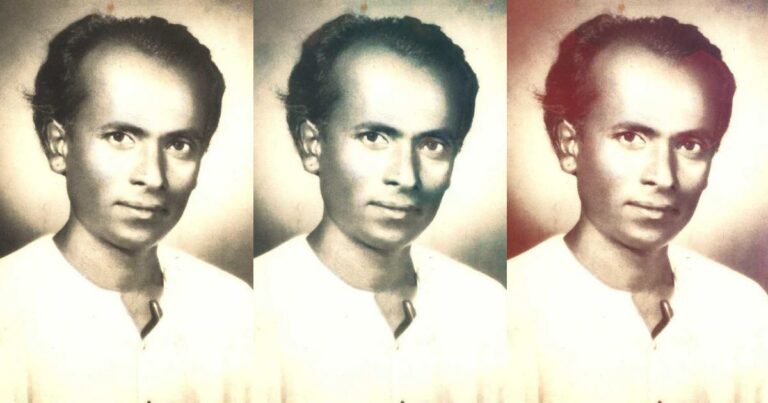
Annabhau Sathe (1920-1969) was a giant of Indian literature. He was the pioneer of Dalit literature in Marathi. He wrote thirty-five novels, scores of short stories, powadas (ballads), and tamashas (folk theatre of Maharashtra). He is rightfully revered as sahityaratna (jewel of literature) and lok-shahir (people’s bard) and hero of Maharashtra’s statehood movement. But these epithets barely do him justice. He was first and foremost a worker and a Comrade. He had set out to destroy capitalism and the caste system. The pen and the drum were his weapons. Revolution was his dream – a world where all would prosper and none would be exploited, considered impure or inferior.
The project to appropriate his legacy, strip it bare of all revolutionary messages is well underway. He is being projected, not as an anti-caste icon, but as a ‘Matang’ icon and ironically – a “rival” to Ambedkar. Even worse- as a deity to be worshipped, not emulated.
He wrote from his lived experiences not just as a member of the industrial working class of colonial Bombay, but also as an ‘untouchable’ and a marginal worker doing every sort of menial job to survive. His protagonists always come from such marginal and oppressed backgrounds as himself. They express the pain of the oppressed but always wage a fight against oppressors. They win some battles and lose others but the point is that they always fight.
In “Smashanatil Sona” (Graveyard Gold) Bhima, unemployed and desperate, fends off hungry jackals to get gold teeth from corpses. In “Barbadya Kanjari” the eponymous hero from the labour camps of Mumbai defies his caste elders. The convict “Sultan” fights his jailors for the human right to a full meal. ‘Fakira’ the hero of his most popular and renowned novel rebels against the British empire.
In his tamashas, like “Akalechi Goshta” (Tale of Wit) the traditional village simpleton becomes a satirical critic of the establishment. Peasants outsmart village elites. Milkmaids are no longer the object of double-meaning humour but the bearers of revolutionary messages.
Annabhau Sathe Stamp. Wikipedia
In one famous song, Daulatichya-Raja, he exhorts peasants to –
“uproot the weeds of capitalism … fire slingshots at imperialism.”
In another, he declares:
“Thus spoke Bhimrao (Dr. Ambedkar)
The zealots have tortured us, the wealthy have squeezed us dry.
Change this world with a hammer blow!”
By extolling the bravery of the defenders of Stalingrad in a powada, he instantly relates them with Shivaji’s peasant guerrillas.
From the depths of his writings, Annabhau exposes the social systems that rob the poor, and emphasizes the essential unity of workers in the struggle against those systems – cutting across caste, religion, gender and nationality.
Recovering Annabhau’s Ideas
His contribution was largely ignored by the mainstream, just like Babasaheb Ambedkar’s. For decades grassroots activists, bards and publications preserved his memory. As political parties increasingly felt the need to consolidate Matang (Annabhau’s caste) votes the elite cultural apparatus grudgingly acknowledged Annabhau’s existence as a literary icon – but nothing more.
Statues and memorials are being built or renovated. Roads and government schemes are being named and re-named after him. However, his ideas are being silently buried.
The project to appropriate his legacy, strip it bare of all revolutionary messages is well underway. He is being projected, not as an anti-caste icon, but as a ‘Matang’ icon and ironically – a “rival” to Ambedkar. Even worse- as a deity to be worshipped, not emulated.
In one ceremony in 2016, BJP’s Devendra Fadnavis, then CM of Maharashtra, sporting a sunflower (colour of Matang pride) turban, called Annabhau the ‘deity of bards’. Steering clear of mentioning Annabhau’s working-class roots or anti-caste views the CM emphasized his caste identity before moving on to standard vote-grabbing rhetoric. Flex banners commemorating his Jayanti increasingly leave out ‘Comrade’ from his string of honorifics. At his memorial in the heart of Pune, a fresco depicting his communist legacy has now been effectively concealed behind a temple-style canopy. A ‘YouTube’ search reveals fewer videos on his works than Matang pride songs and ‘DJ dances’.
On the other hand, these facts also indicate that people would like to hear about Annabhau. For more than ten years now, we have been performing his original songs in slums, on streets, and at his memorial. The response of many ordinary people is heartening. It reminds us that the fight is far from lost. It is still possible to restore the true content of Annabhau’s writings in the minds of the people. Hope lies in action.
Three decades of neoliberal globalisation and a neo-fascist government have ensured that the suffering of Annabhau’s protagonists – workers, peasants, farm labour, women, Dalits, nomads, and Adivasis has seldom been worse. Migrant labourers walking to their villages during the COVID-19 lock-down are not much unlike the young Annabhau who walked hundreds of kilometers from his famine-ridden village to Mumbai. Maybe they will agree with his call to unite. To reach their hearts and minds is the challenge confronting those who dream as Annabhau dreamt. Comrade Annabhau Sathe has furnished the tools. How will we use them?
Nishchay Mhatre ([email protected]) on behalf of Kafila – cultural wing of the Pune based activist group Lokayat (lokayat.org.in)
Women all over Uttar Pradesh are protesting against the atrocities committed on women in the state. They took to the streets to protest the incidents of feudal and Brahminical oppression that women suffered. The protests were provoked mainly by the self immolation of mother-daughter duo in Lucknow a few days ago. In addition to that, the women protesters demanded that the atrocities on Dalit women, from Ambedkar Nagar to Western Uttar Pradesh, should be stopped immediately. The protests were organised by the All India Progressive Women Association (AIPWA). In an attempt to stop these demonstrations, the police raided the AIPWA office.
AIPWA State President, Krishna Adhikari, while talking to Janchowk said: “While the whole country and the state of Uttar Pradesh is struggling with the COVID-19 pandemic, in such a situation, under BJP’s rule, the number of atrocities against women are increasing. From UP to MP (Guna), there are reports of atrocities on women.”
“While Chief Minister Yogi Adityanath is patting his own back for handling UP’s law and order situation, the recent incident from Lucknow Lok Bhawan, where two women tried to self immolate, is proof enough to show that in this government, there is nobody to listen to the poor and that the door to justice is always closed to them.”
Adhikari continued; “In Yogi’s Raj, the displacement of Dalits and Adivasis from their land and police suppression through state protection is much higher compared to previous governments. In recent times, in Lucknow, Kanpur, Lakhimpur, Ayodhya, Azamgarh, Chandauli and Sonbhadra, incidents of murder and harassment of Dalits, OBC and Adivasis have come to light. However, there are no FIRs registered for these incidents, and neither have there been any arrests”.
APIWA State Secretary, Kusum Verma, stated: “The Yogi government has budgeted crores of rupees for the Ram temple construction but has no plans for the public who is struggling with hunger and unemployment during this pandemic. Despite Yogi Adityanath’s promises when he was sworn in as Chief Minister, the statistics on crimes against women show that he has failed on his promises.”
गांव से बोला शहर से बोला ऐपवा की बहनों ने बोला यूपी में गुंडाराज नही चलेगा संविधान का राज चलेगा pic.twitter.com/fUXZHP3s2C
Protests were held in Lucknow, Allahabad, Lakhimpur, Mathura, Sitapur, Varanasi, Devariya, Mirzapur, Chandauli, Bhadohi, Gazipur and Sonbhadra. The women demanded justice for many instances of attacks and harassment on Dalits and women within the state. They demanded:
Quality medical care for the mother-daughter duo in the Lucknow self immolation case and faster resolution of the related land dispute in Amethi.
Registration of proper FIRs and medical check-up of Dalit women, who are survivors of obscene behaviour from feudal upper-caste men. (Previously, the women’s complaints were ignored by the police and instead, an FIR was registered against the survivors.)
Registration of FIR against the accused named in a Dalit atrocity case in Chandauli district.
Arrest of men who sexually harassed AIPWA leader, Jeera Bharti, or the resignation of the District Magistrate and Senior Superintendent of Police. (Even though more than 20 days have passed, no arrests were made by the police).
Tamil Nadu cyber crime branch has taken down all videos of the YouTube channel “Karuppar Koottam”. The Youtube channel was recently dragged into controversy for allegedly making offensive remarks on Hindu deity Murugan, and a devotional poem ‘Kanda Sashti Kavacham’, in a video. As of now, four persons associated with the channel – Senthil Vasan, Surendra Natarajan, and two others – have been arrested by the cybercrime branch.
Karuppar Koottam espouses a rationalist attitude and has been doing a series of videos on decoding the meaning of Sanskrit mantras in Tamil. When one of their videos went viral last week, the head of Tamil Nadu BJP Advocates’ Division filed a complaint with the cyber crime police against Surendra Natarajan for allegedly making derogatory remarks about the Hindu god in the video. The issue soon gained traction and BJP members across Tamil Nadu protested and demanded legal action against the Karuppar Koottam channel, claiming that it was ‘hurting religious sentiments’.
Following some claims on social media that linked the Dravida Munnetra Kazhagam (DMK) to the Youtube channel, the DMK has also distanced itself from the people running Karuppar Koottam. MK Stalin, DMK President, stated that these claims were attempts by some groups to portray DMK as ‘anti-Hindu’. Stalin said that this was being used for political gains, by trying to undermine support for the DMK in the State Assembly elections coming up next year.
RS Bharathi, the DMK Organising Secretary, stated that social media groups who linked DMK to the Youtube channel were trying to “turn Hindus against us and there are one crore Hindus in the DMK”.
Linked to this controversy over Hindu religious sentiments, on July 17, a statue of ‘Periyar’ E.V. Ramasamy was defaced in Coimbatore with saffron paint. Arun Krishnan, a member of the right-wing organisation Bharat Sena, surrendered to the police for the act and claimed that he had defiled the statue because Periyar’s followers were ‘responsible for the constant defaming of Hindu Gods’. “This is the trend started by Periyar only”, Arun Krishnan stated. Following this, there was another attempt in Coimbatore to tie a saffron cloth over a statue of Periyar statue on Monday, for which a functionary of the Thamizhaga Hindu Makkal Katchi has been arrested.
This controversy must be seen in the larger context of BJP’s attempts to make inroads in the electoral politics of Kerala and Tamil Nadu where it has been largely unsuccessful by polarizing Hindus on issues like Sabarimala. The right-wing’s growing demands for censorship of any text, movie, or speech which contradicts their ‘Hindu’ narrative in the domains of history, culture, and religion is also a worrying pattern.
Read Next: The Politics of Defacing Periyar’s Statue
The COVID-19 pandemic has brought all academic activities in India almost to a standstill since March. In this situation the government and private players are pushing pupils towards online education. For instance the recent UGC directive has asked all universities to conduct final year/semester examinations by end-September via online/offline/blended mode. This is a double-edged sword as online education is not universally accessible and offline examination can jeopardize many lives. Additionally, successive governments have gradually reduced the education budget as part of the ploy to privatize and commercialize education. The current push towards online education, taking advantage of the COVID-19 situation, should be seen as an integral part of this ploy.
Since the last decade, online education has secured a growing market in India. The New Education Policy also focuses on online education as a means of better enrolment and cost reduction. The USA has already made it possible for students to earn degrees from colleges by paying for multiple online courses. In India too an initiative by MHRD called “Study Webs of Active-learning for Young Aspiring Minds” or SWAYAM is already in effect since 2017. Regarding SWAYAM, MHRD stated in a press statement that, “This covers all higher education subjects and skill sector courses. The objective is to ensure that every student in our country has access to the best quality higher education at an affordable cost”.
Moreover, the chairman of UGC also made it clear that not only in the present situation of COVID-19 but also when the situation is normal, online education would be emphasized. He also said that such emphasis would increase the Gross Enrolment Ratio (GER) of our country. Thus, the main aim of the government is to increase the GER and not to improve the accessibility and affordability of education for the vast majority of India. However, even if we make a “nationalist” move of believing all these claims just because our esteemed government is saying it, a fundamental question should be asked by all rational citizens; can the “Digital India” scheme really bring online education to the majority of the masses? The following are some facts which possibly answer this question loud and clear.
a) On 29th April, 2018, PM Modi made an unfounded claim of 100% electrification of all 6,00,000-plus Indian villages. In 2017 the Antyodaya mission of the Ministry of Rural Development found that only 47% households received more than 12 hrs of electricity everyday.
b) The September 2019 data from TRAI mentions that about 52% Indians are internet users. In terms of internet speed India ranks quite low. According to a report by Quacquarelli Symonds, nuisances like poor connectivity, frequent power cuts, weak signal etc., are common. Despite all these the MHRD reduced the spending on digital infrastructure from Rs. 604 crores in 2019-20 to Rs. 469 crores in 2020-21.
c) Only 24% Indians own a smartphone and only 11% own a computer or tablet. Only 8.9% of the poorest 20% households have access to internet. 35% households in Delhi own computers while in Bihar this number is 4.6%. For families crammed in single rooms (37% of the total population), students cannot be expected to learn uninterruptedly.
d) According to a survey by University of Hyderabad, the lack of devices, poor connectivity, data costs, etc., bar students from attending online classes. From a survey conducted by DUTA, problems like inability to access classes via platforms like Zoom/Google Meet and study materials sent online are common. As per a 2017 survey among DU students, 40% were found to be first generation college-goers and 75% of the students had family income less than Rs. 5 lakh per annum.
Students and teachers are already speaking up against this digital divide. In many higher educational institutes like Delhi University, Pondicherry University, Amity University, Christ University, Central University of Kashmir, the students have raised demands for scrapping online exams though their demands remain largely unheeded. The suicide of a 15-year-old Dalit girl from Kerala due to inability to attend online classes is a recent instance of such tragic incidents that continue to be reported from other states as well.
Setting aside the problems of accessibility and affordability, a completely online education system is also putting the students of marginalized communities and less proficient students into oblivion. Online education, for the lower strata of our country, is nothing but a luxury. This becomes quite obvious once we accept the inequality that we live in. Even if online classes increase the GER in the record for the government to flaunt around, in reality, it is taking education further away from the majority of our people.







 “While Chief Minister Yogi Adityanath is patting his own back for handling UP’s law and order situation, the recent incident from Lucknow Lok Bhawan, where two women tried to self immolate, is proof enough to show that in this government, there is nobody to listen to the poor and that the door to justice is always closed to them.”
Adhikari continued; “In Yogi’s Raj, the displacement of Dalits and Adivasis from their land and police suppression through state protection is much higher compared to previous governments. In recent times, in Lucknow, Kanpur, Lakhimpur, Ayodhya, Azamgarh, Chandauli and Sonbhadra, incidents of murder and harassment of Dalits, OBC and Adivasis have come to light. However, there are no FIRs registered for these incidents, and neither have there been any arrests”.

 APIWA State Secretary, Kusum Verma, stated: “The Yogi government has budgeted crores of rupees for the Ram temple construction but has no plans for the public who is struggling with hunger and unemployment during this pandemic. Despite Yogi Adityanath’s promises when he was sworn in as Chief Minister, the statistics on crimes against women show that he has failed on his promises.”


 Since the last decade, online education has secured a growing market in India. The New Education Policy also focuses on online education as a means of better enrolment and cost reduction. The USA has already made it possible for students to earn degrees from colleges by paying for multiple online courses. In India too an initiative by MHRD called “Study Webs of Active-learning for Young Aspiring Minds” or SWAYAM is already in effect since 2017. Regarding SWAYAM, MHRD stated in a press statement that, “This covers all higher education subjects and skill sector courses. The objective is to ensure that every student in our country has access to the best quality higher education at an affordable cost”.
Moreover, the chairman of UGC also made it clear that not only in the present situation of COVID-19 but also when the situation is normal, online education would be emphasized. He also said that such emphasis would increase the Gross Enrolment Ratio (GER) of our country. Thus, the main aim of the government is to increase the GER and not to improve the accessibility and affordability of education for the vast majority of India. However, even if we make a “nationalist” move of believing all these claims just because our esteemed government is saying it, a fundamental question should be asked by all rational citizens; can the “Digital India” scheme really bring online education to the majority of the masses? The following are some facts which possibly answer this question loud and clear.
