Raipur: The Chhattisgarh Kisan Sabha and Adivasi Ekta Mahasabha have demanded recognition of Scheduled Tribes for the people of ‘Kisan'(farmer) and ‘Lohar'(blacksmith) tribes living in Surguja and Balrampur districts as Nagesia and Agaria tribes. In this regard, a memorandum in the name of the President was submitted to the District Collector, Surguja today.
In a statement issued today, Chhattisgarh Kisan Sabha President Sanjay Parate and General Secretary of Adivasi Ekta Mahasabha Balsingh said that at present the majority of kisan and lohar tribes reside in these two districts, which are actually Nagesia and Agaria tribes. Their population at present is about three lakhs. There has been a continuous movement here demanding the status of Nagesia tribe to the ‘kisan’ tribals. Therefore, ‘kisan’ should be associated with Ngesia tribe and ‘lohar’ with Agaria, so that these tribes can get the benefit of reservation and it can be saved from the loot of land by non-tribals.
It is noteworthy that in this session of Parliament, the Constitution (Scheduled Tribes) Order (Fifth) Amendment Bill, 2022 is being brought by the Central Government, in which it has been proposed to recognize 42 tribal communities of Chhattisgarh as Scheduled Tribes. Due to minor discrepancies including spelling errors, these communities of tribals have been deprived of the recognition of Scheduled Tribes till date. An attempt has been made to remove these loopholes in the proposed bill.
Kisan Sabha and Adivasi Ekta Mahasabha have welcomed the bill and demanded that justice should also be done which are known as ‘Kisan’ and ‘Lohar’ in Nagesia and Agariya tribes and in the amendment bill, ‘Kisan’ and ‘Lohar’ should also be added. They have said that the people of this community are deprived of the recognition of the tribe due to the land settlement records, in which they are registered as ‘kisan’ and ‘lohar’.
They said that the kisan have Roti–Beti (familial-marital) relations with the people of Nagesia tribe and their kinship extends to Jashpur and Raigarh districts of Chhattisgarh state as well as Jharkhand and Odisha states. In Jharkhand and Odisha, the kisan tribe has been recognized years ago by equating ‘Kisan’ with ‘Nagesia’, while in Chhattisgarh the discrepancy continues and the BJP, which ruled the state for 15 years, is clearly responsible for this.
Kisan Sabha and Adivasi Ekta Mahasabha have appealed to all the BJP MPs representing this state to take the necessary steps to include ‘Kisan’ and ‘Lohar’ tribes in the amendment bill to remove the injustice done to ‘Kisan’ and ‘Lohar’ tribals. They have also urged the Congress government in the state to pass a resolution in this regard in the assembly.
Lima, Peru:The President of Peru, Pedro Castillo, has been arrested and is being held in the police station located on Avenida España in the city of Lima. This is following a vote by the majority right-wing congress to oust him in a legislative coup. The Military and the Police have declared their support for the congress, according to kawsachunews.
Peru’s Congress has ousted President Pedro Castillo from office after he tried to temporarily shut down the government’s legislative branch and call for new elections.
Lawmakers moved ahead with their impeachment trial on Wednesday, ignoring Castillo’s decree to suspend the body, and voted overwhelmingly (101-6) to oust him.
The Peruvian Congress dismissed Pedro Castillo for “moral incapacity,” with 101 votes in favor out of a total of 130 congressmen, 6 votes against and 11 abstentions. The President’s decision to dissolve Congress and reorganize the judicial system was thus ignored.
Peru’s armed forces and national police issued a joint statement rejecting his attempt to replace the opposition-controlled Congress with an “exceptional emergency government.”
Castillo is being held at the Lima prefecture. The Attorney General, Patricia Benavides, and Marita Barreto, prosecutor in charge of the Special Team of Prosecutors against Corruption of Powers, which is investigating Castillo for alleged corruption crimes, arrived at the place.
On Wednesday afternoon, the plenary removed Castillo from office by applying article 113 of the Constitution, which establishes that the president can be removed from office for “permanent moral incapacity” to exercise it.
He also announced to summon “in the shortest term elections for a new Congress with constituent faculties to elaborate a new Constitution in a term no longer than nine months from this date.”
The temporary dissolution of Congress and the establishment of a national emergency government were ordered by Castillo hours before the third vote of no confidence motion against him since taking office 16 months ago.
The former President also decreed a curfew throughout the country starting this Wednesday at 22.00 local time (03.00 GMT on Thursday).
Dina Boluarte, First Vice President takes office in Peru After Castillo’s Dismissal
The new president took the oath of office in the Legislative seat and in the presence of the parliamentarians and then addressed a brief speech to the country, broadcasted by national media.
“I request a political truce to install a government of national unity; this responsibility must be assumed by all. I request a deadline to rescue our country from corruption. My first measure will be to confront corruption in all its treacherous dimensions”, said the president as reported by TeleSur.
This Wednesday, Castillo was to face an impeachment request to be voted in Congress and promoted by a group of opposition parliamentarians on the grounds of permanent moral incapacity.
In a nationally televised message in the morning, the former head of state announced the dissolution of the Congress and the establishment of a “government of exception.”
Castillo took the measure of force without the support of any State institution, including the Armed Forces.
According to the law, the person in charge of succeeding the ousted president was Vice President Boluarte, who rejected the actions taken by the former president.
Castillo is currently detained in a police station in Lima; it is still unknown what measures will be taken by the judicial authorities regarding his attempt to close the parliament.
Lawmakers had previously tried twice to impeach him since he took office in July 2021.
Bangalore: At a time when atrocities against Dalits have increased all around, as a ray of hope, different factions of Dalit Sangharsha Samithi (DSS) came together and gave a wake up call to fellow Dalits to resist against government anti Dalit policies.
On 6th November The “Dalit Cultural Resistance – Massive Unity Convention of DSSs” organised by the ‘Aikya Horata Chalana Committee of Dalit Sangharsha Samithis’ (United Struggle Convening Committee of Dalit Sangharsha Samitis) instilled new hopes among dalit masses. Over 40 thousand dalits who had come from all corners of Karnataka sounded off a war cry against the BJP governments’ anti-dalit policies.
The show of strength by various DSS factions at the National College grounds, Bengaluru on 6th December, the Parinibbana Day of Dr.B.R.Ambedkar holds immense significance especially in the light to silencing of dissenting voices.
The program began with the inaugural speech of Ms. Rama Ambedkar Teltumbde, the grand-daughter of the Architect of the Indian Constitution Babasaheb Dr. B.R.Ambedkar.
“Today is Dr. Ambedkar’s ‘Parinibbana’ day. As Ambedkar said, it is our birth right to agitate. Babasaheb has given voting rights to everyone. He has given emphasis to women’s education. The whole society advances if women get education. It is only by making progress through education that we can pay real homage to Babasaheb”, Rama said.
“Build your organisation by electing your own leaders and agitate for your rights. Scholarships of the students have been snatched, education as such is being snatched away. Struggle is the only way as Babasaheb has said” she prodded.
“The Constitution is being nullified inch by inch. All our facilities are being snatched away. But I feel very happy seeing so many Dalits assembled here. We need to tread the path of struggle. You have all stood by us and supported us when my husband Dr. Anand Teltumbde was in jail, I thank you all for that” she said.
The National College grounds in Bengaluru city literally overflowed with people. People came to Bengaluru from even very distant districts hiring buses and other vehicles. There were people inside the grounds, on the compound walls around it and the streets around the grounds. The slogan of “Jai Bheem” resounded throughout the ground, intermittently all through the event. Dalit organisations, which came together on the same stage after decades, pronounced the importance of unity.
Bangalore: At a time when atrocities against Dalits have increased all around, as a ray of hope, dalits, with dreams of an egalitarian society, displayed a firm unity at the National College grounds, Bengaluru on 6th December, the Parinibbana Dayof Dr.B.R.Ambedkar.
Different factions of Dalit Sangharsha Samithi that has a place of significance of its own in Karnataka’s cultural history, made a show of strength by coming together on the same stage.
The “Dalit Cultural Resistance – Massive Unity Convention of DSSs” organised by the ‘Aikya Horata Chalana Committee of Dalit Sangharsha Samithis’ (United Struggle Convening Committee of Dalit Sangharsha Samitis) instilled new hopes among dalit masses. Over 40 thousand dalits who had come from all corners of Karnataka sounded off a war cry against the BJP governments’ anti-dalit policies.
The National College grounds literally overflowed with people. People came to Bengaluru from even very distant districts hiring buses and other vehicles. There were people inside the grounds, on the compound walls around it and the streets around the grounds. The slogan of “Jai Bheem” resounded throughout the ground, intermittently all through the event. Dalit organisations, which came together on the same stage after decades, pronounced the importance of unity.
Ms. Ramabai Ambedkar Teltumbde, the grand-daughter of the Architect of the Indian Constitution Babasaheb Dr. B.R.Ambedkar, inaugurated the convention.
Ramabai Ambedkar offering tribute to Dr. B R Ambedkar
Senior journalist Indudhara Honnapura made preliminary remarks: “The dalit movement has made big achievements during our times. The ideas that we spread through struggles have kindled self esteem in the hearts of lakhs of dalits. The word Dalith does not mean untouchables alone, all the suffering people of the land are dalits. DSS has fought for the sake of all distressed. It is 50 years since dalit movement took birth. The slogans that dalits gave out have become the governments’ programmes. We pride on all these”, Indudhar reminisced.
“This is a land that has grown sharing its food. But we are seeing to what condition the country has descended. Our culture, our food, our jobs, dress, everything is being snatched away. They are deceiving us right in the name of the Constitution itself. The scholarships of dalit students are being discontinued, but lakhs of crores of rupees of the big capitalists are being waived. Withholding the statistics the rulers are claiming that there is no poverty at all. Babasaheb burned the Manusmruthi and created the Constitution. But today the Sangh Parivar is bringing into force the same Manusmruthi and the almanac (panchang) and so on under the very nose of the Constitution. They are committing violence, atrocities in the name of Ramarajya. Those who question are jailed. They put Anand Teltumbde in jail for more than two years. The RSS and BJP people are the real traitors”, Mr. Indudhar fumed.
Cultural performance by DSS, Dalit Sangharsh Samiti youth
“Today dalits have come on to the streets. The governments’ policies are also a reason for the organisations coming together. Today the leaders of ten organisations have joined hands. This will not end here, many more organisations will join this process in the coming days. We will include all the secular organisations, and will keep out those who stand by the Manuvadis and are against the Constitution.” Alluding to the future, Indudhar warned, “If we do not unite, we will all suffer the worst form of hell.”
Speaking on the occasion, Justice H.N.Nagamohan Das, retd. Judge of the Karnataka High Court said: “Saluting Dr. Ambedkar is not enough. Developing arrogance about Ambedkar will not help, we need to develop the correct knowledge about him; that means the knowledge about the Constitution.”
“The Babri Masjid was demolished on the day of Ambedkar’s Parinibbana. A lie is being wilfully circulated that Ambedkar did not write the Constitution. It is the Constitution that has built this country. The Constitution written by Ambedkar is the sole reason why we are all able to participate directly or indirectly in the democratic institutions”, Justice Das said.
“We have made several achievements in these years after the Constitution came into force. Likewise there are problems also. Prices are rising every day, UAPA is being imposed on anyone who questions the government. Encounters are committed. PTCL Act is becoming irrelevant. Privatisation is increasing, and so on”, Das said.” “The government has agreed to raise the reservations, but the vacant posts are not filled. When this is so, what is the use of increasing the reservations?” he asked.
“Only pro-people agitations are a solution for the people’s problems. The government does not hear if we speak separately. Dalit organisations should unite based on ideology. Ambedkar’s path alone should be our ideological foundation. We should safeguard the Constitution. We are at a juncture where we are losing whatever we had achieved”, Mr. Das said.
“If communalism triumphs we will have to live shutting our mouths. Today they are saying that Muslims cannot do business around the temples. Tomorrow they will prohibit dalits from selling coconuts, flowers etc. in the vicinity of temples, beware!” he warned.
Mr. S. Mariswamy, retired IPS officer, speaking on the occasion said: “In any country, governments, however cruel, will at least make a pretence of providing justice. But even this is not happening in our country. Mr. Modi has conducted a road show even on the day of voting on his way to the polling booth. He has given out the message that ‘rules are only for you not us’. He has decided that the country can be ruled through injustice. He has decided that the people are fools, they will not object”, Mr. Mariswamy regretted.
Farmer leader Mr. Badagalapura Nagendra spoke on the occasion. “The state is killing the Constitution every minute. People are being deceived chanting the name of Dr. Ambedkar. They are selling the country. A ploy is set in motion to impose a uniform culture. It is only when the farmers, dalits, workers, women and youth take up struggles unitedly that this country can be saved” he opined.
Senior dalit leader N. Muniswamy extended ‘lal salaams’ to the ‘blue army’ that had assembled from all corners of the state. “We need to remember the two main enemies that Babasaheb Ambedkar has mentioned. One is Manuvaada, the other capitalism. DSS remained splintered for 17 long years. Now we are uniting. The other organisations are also joining in the coming days”, Mr. Muniswamy was happy and hopeful.
Another senior dalit leader Mr. Mavalli Shankar electrified the gathering through his scintillating words – “Your footsteps have purified the streets of their sins and liberated Basavanagudi from the curse that had gripped it.” “It is we who have built this country. Today Babasaheb is not with us physically, but he lives through the Constitution. We need to save the Constitution” he urged.
Mavalli Shankar
“The Buddha’s revolution was thwarted through deceitful means during Pushyamitra Shunga’s rule. The Buddh Dhamma was sent out of the country. But Babasaheb brought Buddha back. Now the Manuvadis have begun ghost pranks”, Mr. Shankar criticised.
Pointing at the display sign that depicted all the infamous brutal atrocities and mass murders of dalits in the country in the past 50 years or so and speaking in a sarcastic tone, Mavalli said: “They say ‘Kashmir Files’. But look at the Dalit Files here. And where did the Bilkis Bano file go?” “Kangana Ranaut gets ‘Z plus’ security while dalits have no security whatsoever here” he let out his anger.
“They say that they will prohibit cow slaughter. Do Modi or Bommai rear cows in their houses? You killed dalits just because they touched the water? However much you bury us we will rise again. We are the progeny of Babasaheb”, Mr. Shankar thundered.
“We are not ‘deshdrohis’, we have not taken up guns, but the RSS-wallas brandish guns. This ‘shani santaan’ (progeny of evil) has to be wiped out. We are descendents of Ekalavya, even if our thumbs are cut, we still use bows and arrows. We are the ones who have built this country”, he said.
“You have given EWS reservations to the powerful castes. Does reservation belong to your forefathers? We should not swear at Modi, but curse the dalit MPs who have become slaves of BJP”, Mr Shankar did not hold back his rage.
Dalit leader Mr. Lakshminarayaya Nagavara objected to the proposal to amend the PTCL Act. “We do not need your bundles of lies”, he said.
Dalit activist Gangamma said: “The need of the hour is to put aside individual interests and work unitedly. We need to stay together leaving aside the caste feeling. The dalit youth should pay attention to self employment also and should struggle for government jobs too.” “The chariot of struggle of Babasaheb Ambedkar should be taken forward” she pleaded.
Expressing satisfaction that the organisers had gained success more than they expected, senior dalit leader Mr. N. Venkatesh, who presided over the function, said: “We need to study centuries of our history and surge forward as Babasaheb has said.”
“Dalit Sangharsh Samithi has its own history. As a cultural organisation we have led the DSS politically also. Several leaders of the land including Prof. B. Krishnappa have built and nurtured the organisation against all odds and challenges. They have devoted their entire life for the cause of struggle”, he outlined.
“You should adopt all forms of struggles and struggle with sincerity and morality. We are prepared to visit every village, every taluk. Let us continue the struggle to achieve our demands. Let us overthrow both Brahminism and capitalism”, Mr. Venkatesh called.
The Tamil Nadu government on Monday filed a review petition in the Supreme Court on the court’s verdict upholding the 10% quota for Economically Weaker Sections (EWS).
On November 7, a five-judge Constitution Bench had delivered a 3:2 verdict in favour of the 103rd Constitutional Amendment Act, 2019, that provides 10% reservation in jobs and admissions to EWS — people other than Scheduled Castes, Scheduled Tribes and Other Backward Classes and whose annual family income is below ₹8 lakh.
The petition states that the November 7 judgment neither considered, nor referred to the law laid down by a larger bench of the top court in the Indra Sawhney case — also known as the ‘Mandal’ verdict.
“The Hon’ble Supreme Court never examined as to how “forward castes” benefitted under the impugned constitutional amendment can be called as “weaker sections” merely because they are economically not sound when they have already enjoyed the government jobs and acquired enough qualifications, generations after generations and their families are bestowed with “cultural capital” (communication skills, accent, books, social networks or academic accomplishments) that they inherit from their families,” the petition contended.
“It’s a fact that they have not suffered social stigma nor discriminated from society or kept away from jobs or from the mainstream,” the plea said.
In a crucial judgement a day before then Chief Justice India Uday Umesh Lalit retired, the constitution bench on November 7 held that: “The EWS quota law doesn’t violate basic structure or equality code for taking into account economic criterion.”
“It doesn’t also cause damage to any essential feature by exceeding 50 per cent ceiling for quota since the ceiling is itself flexible,” Justice Dinesh Maheshwari had said.
Justice S Ravindra Bhat was among the judges to dissent, calling the law “discriminatory and violative of basic structure”.
Monday’s plea added that some portions of the observations in the November 7 judgment overruled the ‘Mandal’ verdict. “And in fact some portions of the impugned majority opinions overrules/ rewrites the judgement in Indra Sawhney as well disregards the Judgement in NM Thomas case, and coequal bench judgment rendered in Nagaraj, Asoka Kumar Thakur cases,” the plea stated.
“The impugned judgement approves exclusion and discrimination as it permits the poor from ST, SC & OBC to be excluded from the 10% reservation, when they too are economically backward and therefore it violates equality code,” it added.
The petition states that the amendment has made a large section of advanced classes “viz upper caste of population eligible for easy exclusive luxurious reservations” and that the Constitution has given them “a mask to hide behind the misleading term “Economically weaker sections”.
The petition argued that the top court has “committed an error” by holding that abolition of reservations will abolish the caste system leading to an egalitarian society.
“Such a finding is not correct,” it said, adding that reservations exist because of the caste system raising caste atrocities.
“In order to create a casteless society, one must abolish the caste system in toto, including caste names, caste identification and caste practices,” the petition said.
“When a human being is not permitted inside a temple because of their caste, reservation is not to blame. When a person is murdered in the name of ‘honour killing’ for marrying outside his caste, it is not the fault of reservation. Thus, to create a casteless society, one must battle caste itself, not affirmative action,” it contended.
Among other legal grounds for seeking a review of the order, the DMK has sought for an open court hearing stating the judgment affects the entire country’s population.
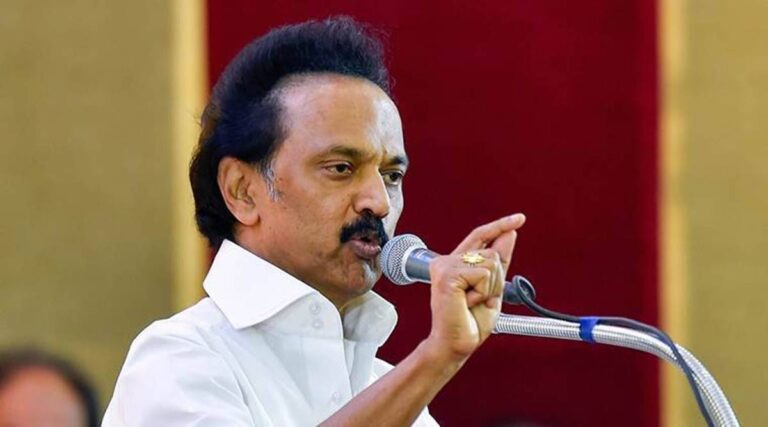
The DMK has filed a petition running 579 pages seeking review of the order. This comes after Tamil Nadu chief minister and DMK President M K Stalin convened an all-party meeting which concluded that they would file a review petition before the Supreme Court.
A trial court in Uttar Pradesh on Tuesday framed murder charges against Ashish Mishra, son of Union Minister Ajay Mishra Teni, in the Lakhimpur Kheri violence case in which eight people were killed after being allegedly mowed down by Mishra’s vehicle.
Additional District Judge I Sunil Kumar Verma framed charges of murder and various offences under the Indian Penal Code (IPC) against Mishra and 13 other accused persons.
The trial in the case will begin from December 16.
On Monday, the same judge had dismissed discharge pleas filed by Mishra and other accused in the case.
The charges have been framed under Sections 147 (rioting), 148 (rioting armed with deadly weapons), 149 (offence committed in prosecution of common object), 302 (murder), 307 (attempt to murder), 326 (voluntarily causing grievous hurt by dangerous weapons), 427 (mischief causing damage), 120B (criminal conspiracy) of the IPC and Section 177 of the Motor Vehicles Act.
Another accused, Virendra Shukla, will be tried for causing disappearance of evidence.
On October 3 last year, eight people were killed in Lakhimpur Kheri during violence that erupted when farmers were protesting against the now revoked farm laws. The protesters had impeded the visit of Uttar Pradesh Deputy Chief Minister Keshav Prasad Maurya, who was planning to attend an event in the area.
During the protests, a four-wheeler belonging to Mishra had allegedly mowed down and killed eight persons, including the protesting farmers.
Mishra was arrested on October 9, 2021 by a Special Investigation Team (SIT), and was sent to days police custody.
Justice Rajeev Singh of the Allahabad High Court had granted bail to Mishra on February 10, stating that there might have been a possibility that the driver of the vehicle that mowed down the protesting farmers sped up the vehicle to save himself.
The Supreme Court in April cancelled the bail granted by the High Court and remanded the matter back to the High Court for fresh consideration.
On July 26, the High Court denied Mishra bail.
“If you ever think about me, and you ain’t gonna do no revolutionary act, forget about me. I don’t want myself on your mind if you’re not going to work for the people.”– Fred Hampton
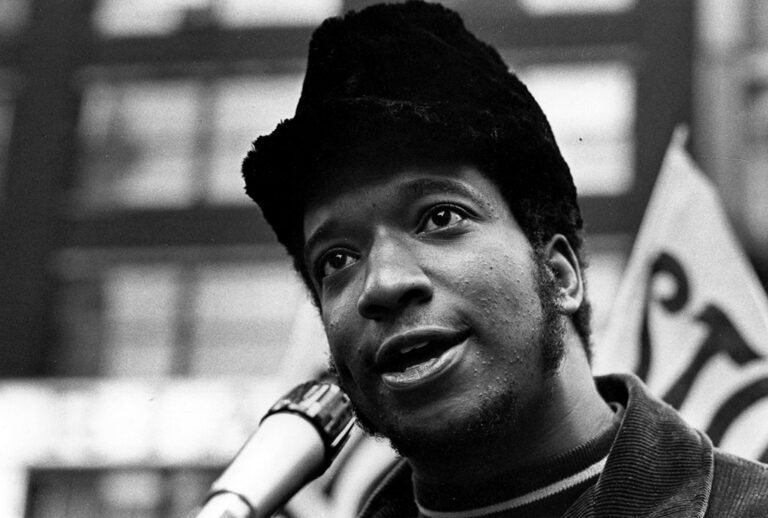
Born on August 30th, 1948, Frederick Allen Hampton was a revolutionary socialist and a prominent leader of the Black Panther Party for Self Defense (BPP). Hampton rose to become the chairman of the Illinois chapter of the BPP, and through his skills as a leader and orator, helped create and fund coalitions of working-class and oppressed racial and/or ethnic groups across Chicago. Of this, the most notable group was the Rainbow Coalition. For his organizational efforts, in 1967, Hampton was identified by the Federal Bureau of Investigation as a radical threat. On December 4th, 1969 he was brutally shot and killed in his bed as part of a planned assassination by the Chicago Police and FBI.
Hampton was born as the third child of Francis and Iberia and raised in the suburbs of southwestern Chicago. Their families farmed the lands their great-grandparents had worked on as slaves in Louisiana. And so, like many black people, his father shifted to Chicago in the 1930s, seeking employment. Growing up in the suburbs, Hampton was subjected to racial attacks, especially by rednecks. Though a talented and athletic student, he was mocked by his peers through racially charged phrases, such as “watermelon head”. Though upset, Hampton learned to defend himself through his words.
Hampton took on the role of a community leader at a young age. On the weekends, he would organize children in the neighborhood to collectively buy, cook, and distribute food since many of them did not have much to eat. This practice would be continued by the Black Panthers. As a student at Proviso East High School, he organized walkouts and a boycott for lack of diversity in teaching, administrative and leadership positions in the school. He also helped found the Maywood NAACP (National Association for the Advancement of Colored People) and worked to improve educational and recreational facilities for the neighbourhood’s impoverished youth. As the leader of the NAACP Youth Chapter, Hampton initially marched for raising police wages in order to get more professional police in their neighbourhood, and later to make the police more accountable by giving the citizens power to fire brutal officers.
Courtesy: Sun-Times Print Collection
Around the same time, Hampton became increasingly attracted to the rising national Black Panther Party’s approach, which based its praxis at the intersection of black self-determination and the economic critique of class. He was also growing further towards Malcolm X’s message of self-defense. So, in 1968, Hampton founded the Illinois and Chicago chapters of the Black Panthers (C-BPP). As a part of the organization, Hampton established a multitude of community service programs, including a free medical clinic, free breakfasts for children, and most notably, political education classes.
Courtesy: Hiroji Kubota
Hampton himself was very well-read, and carefully studied the speeches of Dr. King, Malcolm X as well as the preaching techniques of reverends in black Baptist churches. He became a charismatic public speaker, and could both instill hope and pride in working-class Chicagoans, as well as speak out against police brutality and advocate for the members to mobilize and defend their communities. His charisma and critical eye attracted people to reach across boundaries and build coalitions which included black, white, and Latino people from both welfare groups and street gangs. He also created coalitions with students, such as the Students for a Democratic Society.
In particular, he coined the phrase “Rainbow Coalition” to describe his assemblage of a broad array of politicized actors. For Hampton, the destruction of working-class unity was at the core of fighting against the racialized capitalism that America was founded upon. He stated, “When they brought slaves over here, it was to make money. So first the idea came that we want to make money, then the slaves came in order to make that money. That means, through historical fact, that racism had to come from capitalism.”
Through the Rainbow Coalition, he incorporated into the Panthers, two groups. First were the “Young Lords”, a Peurto Rican gang that would organize against the gentrification of their neighbourhoods. And second were the Young Patriots, consisting of immigrants from coal-mining families. According to Hampton, the groups had to work together for their “shared community”. This especially included educating themselves through “revolutionary education”, and arming themselves against the violence and brutality of state forces.
Courtesy: http://blackpower.web.unc.edu/
As Hampton’s popularity rose and the BPP publicly declared the need to take up arms to protect black communities against the police, FBI Director J. Edgar Hoover vowed to prevent his development into a “Black Messiah”. Surveillance measures increased to subdue Hampton. In particular, the FBI created the “Racial Matters” squad to coordinate attacks against the C-BPP. In order to make the Panthers vulnerable, they began isolating individuals and groups, including the “Rainbow Coalition”, which was decimated in 1969. Furthermore, the Chicago police deliberately attacked C-BPP medical and food supplies marked for the needy.
The final and most profound attack on the C-BPP came with the assassination of Fred Hampton. FBI agents used an informant, William O’Neal, to acquire detailed plans on Hampton’s dwelling, which included the plan of his room and the bed he slept on. On the night of 3rd December, O’Neal drugged Hampton as part of a dinner he made for the Panthers. At 4:45 am, 4th December, Chicago police raided Hampton’s house. In the living room, they found another drugged Panther, Mark Clark, whom they shot dead immediately. Hampton had been lying unconscious next to his pregnant fiancee, a frightened Deborah Johnson, who was ordered out of the room. Deborah alleges that she heard an official claim that he was “barely alive”, immediately after which, with two shots, he was brutally killed. “He is good and dead now”, a raiding officer critically mused of the 21-year-old panther.
“When Fred was shot in Chicago, black people in particular, and decent people in general, bled everywhere” – Jesse Jackson
Fifty years after Hampton’s death, perhaps tragically, his words continue to speak to the lives of marginalized classes, races, and castes across countries who continue to be persecuted by the same institutionalized foot soldiers of racialized capitalism. However, despite the continued efforts by mainstream media to erase or appropriate his narrative, Hampton is able to inspire radical ideas through his speeches and articulate a language for people’s movements against the very institutions that shot him down.
References
Encyclopedia of African American History-Leslie M. Alexander and Walter C. Rucker
The Assassination of Fred Hampton: How the FBI and the Chicago Police Murdered a Black Panther- Jeffrey Haas
Power to the Poor: Black-Brown Coalition and the Fight for Economic Justice, 1960-1974- Gordon K. Mantler
New Delhi: Delhi Court discharges student activist Umar Khalid and UAH member Khalid Saifi in a Delhi Riots case (FIR 101/2020).
Both Khalid and Saifi are on bail in the FIR. However, they continue to remain in judicial custody in the UAPA case alleging a larger conspiracy behind the riots.
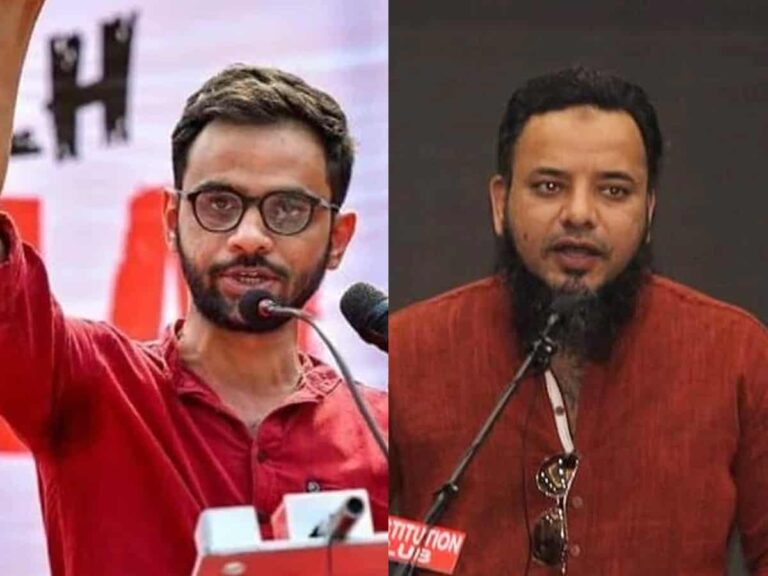
Umar Khalid and Khalid Saifi, both members of United against Hate organisation were protesting against the Citizenship Amendment protests in Delhi.
#BREAKING Delhi Court discharges student activist Umar Khalid and UAH member Khalid Saifi in a Delhi Riots case (FIR 101/2020).
Umar, arrested by Delhi Police in September 2020, sought bail on grounds that he neither had any “criminal role” in the violence in the city’s north-east area nor any “conspiratorial connect” with any other accused in the case. Though Umar was not part of the mob, he and Khalid were accused of criminal conspiracy in the case.
Khalid had challenged the trial court order of March 24, 2020, denying him bail in the matter.
The bail plea was opposed by the Delhi Police.
Khalid, Sharjeel Imam, and many others have been booked under the anti-terror law Unlawful Activities (Prevention) Act (UAPA) and provisions of the Indian Penal Code for allegedly being the “masterminds” of the February 2020 riots, which had left 53 people dead and over 700 injured.
The violence had erupted during the protests against CAA and NRC.
While granting bail to Umar Khalid in the FIR, the court had said that he cannot be permitted to remain behind bars on the basis of sketchy material against him. Noting that the investigation in the case was complete and chargesheet had also been filed, the court had observed that he “cannot be made to incarcerate in jail for infinity merely on account of the fact that other persons who were part of the riotous mob have to be identified and arrested in the matter.”
Order pronounced by ASJ Pulastya Pramachala. Detailed copy of the order is awaited.
The Karnataka High Court on Wednesday permitted Datta Jayanti celebrations for three days from December 6 at the shrine in Bababudangiri Hills of Chikmagalur district.
A division bench comprising Justices Alok Aradhe and N Vishwajith Shetty granted the permission for the celebrations to be organised under the supervision of a committee set up by the state government earlier this year. The Karnataka government had approached the court for permission last week.
On July 19 this year, the Karnataka government constituted a committee, comprising both Hindu and Muslim representatives, to supervise the religious ceremonies at the shrine which is sacred to both the communities. The state government had then said that the committee will appoint a Hindu priest and a Muslim ‘mujawar’ to carry out the religious rituals at the shrine during the Datta Jayanti in December.
The Karnataka HC is currently hearing a writ appeal filed by a former ‘mujawar’ of the shrine, Syed Ghouse Mohiyiddin Shah Khadri, against a September 28, 2021, order of the High Court that had quashed a March 2018 order entrusting the religious rituals at the shrine to a ‘mujawar’.
A HC division bench had in May this year clarified to the state that new measures for conducting religious rituals at the Baba budan giri shrine will be subject to the verdict of the HC in the appeal filed against the September 28, 2021, order of a single judge of the HC.
In May, the Karnataka government had informed the High Court that as per the HC order (September 28, 2021), a cabinet sub-committee comprising three cabinet ministers was constituted to address the issue amicably.
Bababudan girl Dargah has been in the midst of a controversy for several years with right-wing activists viewing it as the Babri of the south.The controversy tends to peak around December when annual religious ceremonies are conducted to mark Datta Jayanti.
According to the government’s July 19 order, a Hindu priest appointed by the committee will conduct daily rituals at the temple, while a ‘mujawar’ will carry out customs at the ‘dargah’ every evening and on Mondays and Thursdays.
On September 28 last year, a single judge of the Karnataka HC, while hearing a plea filed against a 2018 government order by the Sree Guru Dattatreya Peeta Devasthana, ruled that the 2018 order of the government entrusting ceremonies to the ‘mujawar’ of the shrine at the exclusion of Hindu priests was “unsustainable in law”.
The High Court stated that “the impugned order infringes the right of both communities guaranteed under Article 25 of the Constitution by preventing Hindus from performing ‘pooja’ as per their faith and compelling the Mujawar to offer ‘pooja’ contrary to his faith”.
The HC ruled that the Karnataka government erred in going by the recommendations of a high-level committee to allow ceremonies to be conducted by a ‘mujawar’ while rejecting a 2010 report of an Endowment Commissioner on the shared status of the shrine.
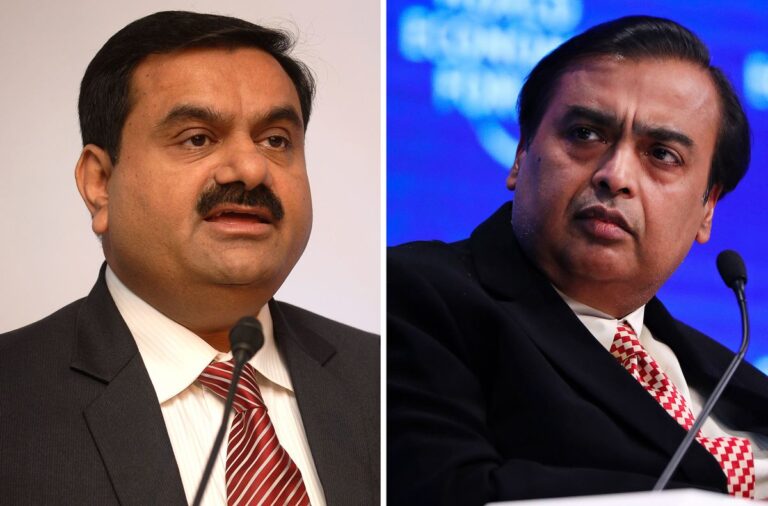
As India’s ranking in democracy and global Hunger Index slips to dangerous levels, there is one list where India or some Indians are climbing, the list of India’s richest billionaires. According to the Forbes 2022, Gautam Adani has bagged the top stop followed by Mukesh Ambani who is 2nd on the list.
As per the list, the combined wealth of India’s 100 richest grew by $25 billion to touch $800 billion. The wealth grew despite the stock market down marginally from a year ago with the biggest dampener being a weaker rupee, which fell by 10 percent over the same period.
Gautam Adani tripled his wealth in 2021 and gradually shot up to become the country’s wealthiest person. As per the report, his fortunes doubled to $150 billion in 2022 and that was a major contributor in the rise of the richest 100 list. He is the second richest on the planet.
The Adani Group boss, who owns the country’s largest port in Gujarat’s Mundra, has a net worth of ₹1,211,460.11 crore.
Gautam Adani and Mukesh Ambani are said to account for about 30 per cent of the total wealth of the country’s richest.
The report noted that the rise was mainly due to a record-breaking feat by Adani group chairman Gautam Adani, whose wealth doubled this year to $150 billion, making him the richest Indian and replacing Reliance Industries (RIL) chairman & managing director Mukesh Ambani at the top of the list.
India’s richest person has a net worth of $150 billion while richest woman has a net worth of $16.4 billion. There are nine women on the list. The cut-off to be on the list is $1.9 billion. The full top 100 richest Indians list can be checked here.
Here’s a look at the top 10 richest Indians in the Forbes 2022 list:
1. Gautam Adani (net worth $150 billion)
Adani Group Chairman Gautam Adani has a net worth of Rs 1,211,460.11 crore. According to Forbes, Adani had tripled his wealth last year and this year he has become India’s richest person for the first time. With a $75.2 billion wealth gain in a year, Adani is the biggest wealth gainer in absolute and percentage terms.
2. Mukesh Ambani (net worth $88 billion)
RIL Chairman & MD Mukesh Ambani’s net worth stands at Rs 710,723.26 crore. In dollar terms, his net worth stands at $88 billion, down 5 percent from last year.
3. Radhakishan Damani (net worth $27.6 billion)
Radhakishan Damani owns the DMart chain of supermarkets. According to Forbes data, he has a net worth of Rs 222,908.66 crore. In 2002, Damani entered the retail business with one store and now there are 271 DMart stores in India. He broke into the top three for the first time though his net worth declined by 6 per cent to $27.6 billion.
4. Cyrus Poonawalla (net worth $21.5 billion)
Cyrus Poonawalla is the chairman of the world’s largest vaccine manufacturer Serum Institute of India (SII). His net worth stands at Rs 173,642.62 crore. SII has multiple partnerships to make Covid-19 vaccines. Cyrus Poonawalla’s assets also include stud farms. He is fourth on the list with a fortune of $21.5 billion.
5. Shiv Nadar (net worth $21.4 billion)
Shiv Nadar is the chairman emeritus of HCL Technologies and has a net worth of Rs 172,834.97 crore. Nadar is considered as one of the pioneers of the Indian IT industry. He has donated $662 million to education-related causes, a record this year. His net worth saw a $9.6 billion decline, the biggest drop in net worth in absolute terms, but despite the fall, Nadar retains his spot in the Top 10.
6. Savitri Jindal (net worth $16.4 billion)
Savitri Jindal is the chairperson emeritus of O.P. Jindal Group and the only woman billionaire and active politician in the top 10 list. According to Forbes, her net worth is Rs 132,452.97 crore.
7. Dilip Shanghvi (net worth $15.5 billion)
Sanghvi is the founder of Sun Pharmaceuticals and has a net worth of Rs 125,184.21 crore.
8. Hinduja Brothers (net worth $15.2 billion)
Hinduja group was started by Parmanand Deepchand Hinduja in 1914. It is now controlled by four siblings, Srichand, Gopichand, Prakash, and Ashok. The brothers’ total wealth stands at Rs 122,761.29 crore.
9. Kumar Birla (net worth $15 billion)
Textiles-to-cement conglomerate Aditya Birla Group’s chairman Kumar Birla has a net worth of Rs 121,146.01 crore.
10. Bajaj Family (net worth $14.6 billion)
The family owns a network of 40 companies under the Bajaj Group and is worth Rs 117,915.45 crore. It was started in 1926 by Jamnalal Bajaj in Mumbai.


 It is noteworthy that in this session of Parliament, the Constitution (Scheduled Tribes) Order (Fifth) Amendment Bill, 2022 is being brought by the Central Government, in which it has been proposed to recognize 42 tribal communities of Chhattisgarh as Scheduled Tribes. Due to minor discrepancies including spelling errors, these communities of tribals have been deprived of the recognition of Scheduled Tribes till date. An attempt has been made to remove these loopholes in the proposed bill.
Kisan Sabha and Adivasi Ekta Mahasabha have welcomed the bill and demanded that justice should also be done which are known as ‘Kisan’ and ‘Lohar’ in Nagesia and Agariya tribes and in the amendment bill, ‘Kisan’ and ‘Lohar’ should also be added. They have said that the people of this community are deprived of the recognition of the tribe due to the land settlement records, in which they are registered as ‘kisan’ and ‘lohar’.
They said that the kisan have Roti–Beti (familial-marital) relations with the people of Nagesia tribe and their kinship extends to Jashpur and Raigarh districts of Chhattisgarh state as well as Jharkhand and Odisha states. In Jharkhand and Odisha, the kisan tribe has been recognized years ago by equating ‘Kisan’ with ‘Nagesia’, while in Chhattisgarh the discrepancy continues and the BJP, which ruled the state for 15 years, is clearly responsible for this.
Kisan Sabha and Adivasi Ekta Mahasabha have appealed to all the BJP MPs representing this state to take the necessary steps to include ‘Kisan’ and ‘Lohar’ tribes in the amendment bill to remove the injustice done to ‘Kisan’ and ‘Lohar’ tribals. They have also urged the Congress government in the state to pass a resolution in this regard in the assembly.


 “We have made several achievements in these years after the Constitution came into force. Likewise there are problems also. Prices are rising every day, UAPA is being imposed on anyone who questions the government. Encounters are committed. PTCL Act is becoming irrelevant. Privatisation is increasing, and so on”, Das said.” “The government has agreed to raise the reservations, but the vacant posts are not filled. When this is so, what is the use of increasing the reservations?” he asked.
“Only pro-people agitations are a solution for the people’s problems. The government does not hear if we speak separately. Dalit organisations should unite based on ideology. Ambedkar’s path alone should be our ideological foundation. We should safeguard the Constitution. We are at a juncture where we are losing whatever we had achieved”, Mr. Das said.
“If communalism triumphs we will have to live shutting our mouths. Today they are saying that Muslims cannot do business around the temples. Tomorrow they will prohibit dalits from selling coconuts, flowers etc. in the vicinity of temples, beware!” he warned.
Mr. S. Mariswamy, retired IPS officer, speaking on the occasion said: “In any country, governments, however cruel, will at least make a pretence of providing justice. But even this is not happening in our country. Mr. Modi has conducted a road show even on the day of voting on his way to the polling booth. He has given out the message that ‘rules are only for you not us’. He has decided that the country can be ruled through injustice. He has decided that the people are fools, they will not object”, Mr. Mariswamy regretted.