Popular Pushback Against Pension Proposal rocks France

1
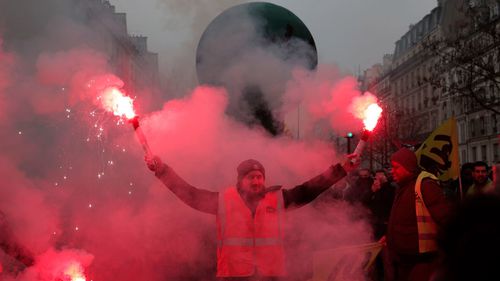
Paris: Since 19 January 2023, France has seen a general strike and accompanying demonstrations, in protest of the government’s proposed pension reforms. The reforms would raise the standard retirement age from 62 to 64 years. The proposal has generated a great deal of anger and opposition from the working class of France from across the country. Since it started lakhs of people have taken part in the demonstration in different parts of France. These demonstrations have been organized by a coalition of trade unions, including eight of the largest groups, and are supported by the majority of people in France, despite the inconveniences caused by the strike. The unions have vowed to continue the strikes and protests in a bid to persuade the government to abandon the reforms. The protests have been mostly peaceful, though there have been some reports of clashes between police and a small number of protesters. Despite the large turnout, Macron has remained determined in his plans to go ahead with the pension reforms. The demonstrations are ongoing with millions of people taking part in protests across the country, causing widespread disruption to transport, schools, and public services. The General Confederation of Labour (CGT), one of the largest trade union confederation has estimated that 28 lakh people have taken part in the protests.
Pension
Protests in Paris , January 2023

Thousands of Medical Workers hold Protests in Paris

Rise of Protests over Macron

The international media has seen protests against the Macron government as a sign of its fragility. However, the reason people have been protesting the Macron government is more complicated. Since the 1990s, French leaders have tried to dismantle the welfare system of France in face of public opposition. Since the November 2015 Paris terrorist attacks, the French government has effectively held a state of undeclared emergency in France. In the years following the attacks, labour protests and other forms of dissent were severely repressed. When Emmanuel Macron became President, he lifted these measures, but his policies as a neoliberal politician remained a source of contention. Trade unions have consistently organized protests against Macron’s administration. Even right-wing groups have taken advantage of the political unrest.
Remembering the victims of terrorist attacks, 2015

Macron taking on Pensions

In 2019, Macron proposed a pension system reform that would simplify the retirement scheme and raise the retirement age. He claimed that the current system was unsustainable and that more French citizens needed to work. He has said that if reforms are not implemented soon, then the pension system would be in danger. There does not appear to be any basis for this. According to government-run studies, the pension system in France produces a surplus as workers pay into the system. This proposal was met with opposition from trade unions, who organized widespread strikes. In a scandal, the High Commissioner for Pension Reforms, Jean-Paul Delevoye, was found to have ties with the French Federation of Insurances, which is a conflict of interest and is illegal in France. Most French people supported the strikes, which were called by trade unions. The 2019 protests were partially successful. Macron announced that he would delay presenting the new plan until January 2023. Part of the reason for this was the COVID Pandemic. This year, trade unions called for a general strike, which has led to the current situation. The strikes have had a significant impact on the country, with transportation and other essential services disrupted. Despite Macron’s efforts to reform the pension system, many French citizens remain dissatisfied with the proposed changes and continue to call for a more equitable solution. The protests against Macron’s administration reflect a wider trend of political unrest in France and across Europe. As governments grapple with economic and social challenges, citizens are increasingly taking to the streets to voice their concerns and demand change.

Origins of the Pension issue:

In 1983, the Socialist-led Mitterrand government reduced the retirement age from 65 to 60. However, in 1995, the right-wing Chirac government sought to usher in neoliberal policies, which included scrapping several welfare programs and reforming the retirement program. This sparked the largest general strike in France in over 25 years, which lasted from May to December 1995. The protests led to the closure of essential public services, such as transportation, but were still popular, with many organizations in France tracing their origins back to this strike.
Jacques Chirac (1995-2007)
Fifteen years later, in 2010, the Sarkozy government proposed raising the retirement age, which was met with massive strikes and demonstrations in September and October of that year. This proposal had been suggested as early as 2007, but it was not until three years later that it was met with widespread opposition. Many compared the 2010 protests to those in 1995, as they both revolved around proposed changes to the pension system. Again in 2017, President Emmanuel Macron argued that the current program is unsustainable, and more people need to work to ensure its viability. However, protesters have pointed to growing economic inequality and proposed higher taxes on the rich to fund the program.

Why not tax the rich?

The French government is not the only one to have tried cutting welfare schemes in the name of reducing the deficit. In many countries, inequality has continued to increase, while the wealth of the rich remains protected. This has led to growing tensions between the working class and the wealthy elite, causing strife around the world. One potential solution to this problem could be to use the wealth amassed by large businesses for social welfare programs. For example, even in India, where economic inequality is high, the profits of large corporations could go towards funding such programs. This would help ensure that the burden of paying for social welfare programs does not fall solely on the working class. The debate over pension reform in France is just one example of a larger global issue: the growing inequality between the rich and the poor. By finding ways to distribute wealth more equitably and ensuring that everyone pays their fair share, governments can help alleviate the strain on social welfare programs and create a more just and sustainable society. Author is a mathematician and political observer based in Bangalore. Views are personal. 

SKM: Govt. has Abandoned its Duty towards Farmers in Budget 2023

0
Samyukt Kisan Morcha has expressed shock and bewilderment at the Union Budget 2023 announced by the Finance Minister on Wednesday. After the sustained and determined protest of the farmers at Delhi, SKM had expected that the party-in-power would appreciate the importance of the farm sector and the need to secure income and future of the rural farming community, who form the bulk of India’s population. SKM has listed in detail that the Union Budget 2023 is the most anti-farmer budget in history of the nation for the following reasons: 1) The Allocation on Agriculture and Allied Sectors has been reduced from 3.84% (BE 2022) to 3.20% (BE 2023) of the total budget. 2) The Allocation on Rural Development has also been reduced from 5.81% (RE 2022) to 5.29% (BE 2023) of the total budget. According to SKM, govt has shown its intent with such massive reductions. It also highlights how Union Budget 2023 hides more than it reveals. 1) Union Budget 2023 is silent on Doubling Farmers Income. There were no figures given in the Budget. It may be recalled that according to the Govt., it was Rs.8000 per month in 2016 (the year of announcement) and was to be increased to Rs.21,000 per month in 2022, so that the grand announcement of doubling income becomes reality. After 3 years, it was found to have been Rs.10,200 and perhaps now it is a maximum of Rs.12,400. Thus, out of the targeted increase in income of Rs.13,000, only Rs.4,400 has been achieved, that is only one-third of the target. In any case, the Govt has dishonestly stopped giving data on this and has hoodwinked the farmers. 2) Union Budget 2023 is silent on status of Minimum Support Price (MSP) on crops as per recommendation of Swaminathan Commission and what shall be done to ensure that farmers get legal guarantee of MSP. While the Govt has irrationally resisted the demands of farmers for MSP and its guarantee, this Budget has removed even the fig-leaf with which the Govt was trying to cover its meagre efforts to ensure that farmers get MSP. Flagship schemes like PM Annadata Aay Sangrakshan Abhiyan (AASHA) have seen a steady decline in allocation. 2 years ago it was Rs.1500 Cr. In 2022 it was reduced to Rs.1 Cr !! Only Rs.1 Cr to secure 150 million farming households. Similarly, Price Support Scheme (PSS) and MIS (Market Intervention Scheme) was reduced from Rs.3000 Cr to Rs.1500 Cr in 2022 and this year it an unimaginable Rs.10 lakhs! In effect, the Govt has buried ASHA, PSS and MIS and with that the fate of farmers getting MSP has been buried. 3) Union Budget 2023 is silent on PM Fasal Bima Yojna. In times of shifting weather patterns and climate change, this scheme was supposed to protect farmers from crop losses due to natural calamities. In 2022, the allocation was Rs.15,500 Cr but this year it has been reduced to Rs.13,625 Cr. As crop losses mount, crop insurance support is being cruelly reduced by the Govt. Does the Govt. admit that the scheme has failed to protect the interest of farmers? 4) The Govt is drastically hacking the allocation for Mahatma Gandhi National Rural Employment Guarantee Scheme (MNREGS) that provides critical income support to rural workers. In 2022, the budget allocation was Rs.73,000 Cr but in the face of rural joblessness and restless demand, the Govt. was forced to spend Rs.90,000 Cr. Since the general economy and especially the rural economy is still in deep crisis, it is unbelievable that the Govt. has hacked down the allocation of MNREGS to Rs.60,000 Cr, a dramatic cut of Rs.30,000 Cr. 5) The Allocation for PM Kisan Samman Nidhi been reduced from Rs.68,000 Cr in 2022 to Rs.60,000 Cr in this budget. The number of beneficiaries has been steadily declining and now the portal has stopped displaying real-time beneficiary data. At a time of deep economic distress of farmers, this scheme gave some relief to farmers but now even that is being constricted. 6) The Subsidy on Fertiliser has been reduced from Rs.2,25,000 Cr in 2022 to Rs.1,75,000 Cr in this budget. The past two seasons have seen farmers die in the scramble to get fertiliser and this budget is further deepening that crisis. 7) The Govt is grandly announcing new funds like Agriculture Accelerator Fund even as earlier announcements have been forgotten and lost. It may be recalled that the Govt had announced with much fanfare the Agriculture Infrastructure Fund of Rs.1 lakh crore; after 3 years it is found that only 10% of this fund had been actually disbursed. 8) The Govt is grandly announcing new storage and marketing schemes of agri products even as earlier schemes have failed, like the scheme announced 4 years ago of converting 22,000 village haats into mandis within 3 years. The Govt refuses to share any information about these schemes and is trying to fool farmers by announcing new schemes of the same type when earlier scheme have failed. SKM demands that the Govt. stops fooling farmers and seriously focuses on resolving the critical issues of farmers like legal guarantee of MSP, crop insurance, reduction of input costs and steady availability of inputs. Since the Union Budget 2023 does not address these issues and it is apparent that even the flagship schemes named after the PM are failing, SKM calls upon the Govt to do the needful so that farmers do not have to confront and compel the Govt to what is anyway the duty of the Govt. Media Cell: Samyukt Kisan Morcha

Delhi court discharges Sharjeel Imam and Asif Iqbal Tanha

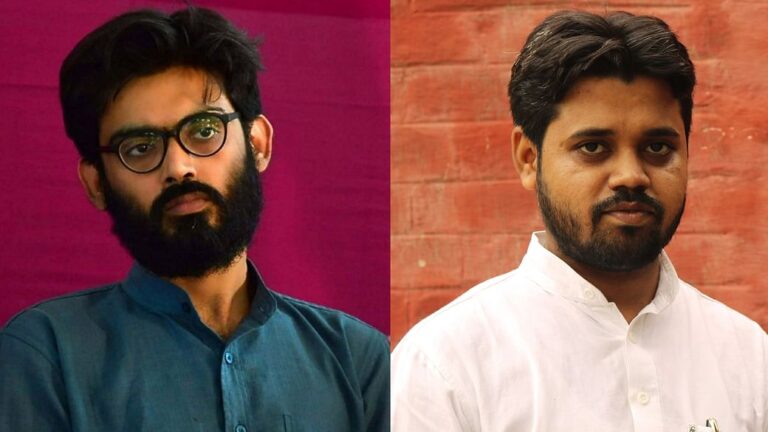
A Delhi court on Saturday discharged Sharjeel Imam in a case related to the violence that took place at Jamia Millia Islamia in December 2019. Additional Sessions Judge Arul Verma of the Saket courts also discharged Asif Iqbal Tanha in the same case. Police had registered an FIR under various sections of the Indian Penal Code, including rioting, in connection with the communal violence that erupted after a clash between police and people protesting against the Citizenship Amendment Act (CAA). Last year, the trial court had ordered the framing of charges against Imam under Sections 124A (sedition), 153A (promoting enmity), l53B (Imputations prejudicial to national integration), 505 (Statements conducing to public mischief) of IPC, and Section 13 (Punishment for Unlawful Activities) of Unlawful Activities Prevention Act. As per the prosecution, Imam had allegedly made speeches at Jamia Millia Islamia on December 13, 2019, and at the Aligarh Muslim University on December 16, 2019, where he threatened to cut off Assam and the rest of the Northeast from India. The court discharged the duo, but framed the charges of unlawful assembly and rioting against one Mohammed Iliyas. A detailed order is awaited. Despite discharge in the present case, Imam will continue to remain in jail, since he is also an accused in the Delhi Riots conspiracy case and some other FIRs.

UAPA: Lawyers Challenge Sections Defining ‘Unlawful Activities’ as Vague

The UAPA has been used routinely to harass and imprison people raising dissenting voices, including last year when raided the homes of various human rights activists across the country. A notable case was that of Delhi University professor, GN Saibaba, who, owing to his deteriorating health and weak physical condition, is wheelchair-bound, 90% disabled, and is physically suffering in prison. Arbitrary use of anti-terror laws has usually been counter-productive. For example, in the case of POTA, only 13 people were convicted in the 4,349 cases it covered. Arbitrary anti-terror laws usually lead to the flawed and uncertain procedure, which often backfire in preventing violent activities and create an unending sense of undeclared war reminiscent of the emergency.

Siddique Kappan walks out of UP Prison after 28 months

0
Siddique Kappan, who spent nearly two and half years in jail without trial, has walked out of prison, more than a month after he was granted bail in a money laundering case. Kappan was arrested in October 2020 in the northern state of Uttar Pradesh, where he had travelled to report on a high-profile gang-rape case. He and three others, including his driver, were accused of belonging to a Muslim organisation and eventually charged with conspiracy to incite violence. Kappan was initially charged under various sections of the Indian penal code, before being hit by terror and money laundering charges. He had been granted bail in the terror case by the Supreme Court in September 2022. His driver, Mohammad Alam, was granted bail last month while the two others remain behind bars. The police have claimed that the accused are members of the banned PFI and its student wing, Campus Front of India (CFI).

Journalist Siddique Kappan Granted Bail in PMLA case

Kappan’s release comes more than a month after he was granted bail on December 23 by the Allahabad High Court in a money laundering case filed by the Enforcement Directorate. Speaking to the media after his release, Kappan said that it was a “long fight” to acquire bail and be released. “After 28 months and a long fight, I am out today. I got a lot of support from the media and I am happy,” he said. Kappan has maintained his innocence and says that he had only travelled from his home state of Kerala to do his duties as a journalist. “I had only gone to report. What is wrong with that? I was only carrying two pens and a notepad,” he said about the case of a young Dalit woman gang-raped by upper-caste Hindu men in Hathras city in Uttar Pradesh. Kappan and three others were held in Mathura on October 5, 2020, while heading to Hathras. The high court in an order passed by Justice Dinesh Kumar Singh had said that “except for allegations that Rs 5,000 was transferred in the bank account of co-accused, Atikur Rahman, there is no other transaction, either in the bank account of the accused-applicant or in the bank account of co-accused”.

Political Prisoners: Collusion of State Apparatus and Apathetic Law Enforcement

It said that Kappan was entitled to be released on bail as the “proceeds of crime is less than Rs 1 crore and there is no likelihood” of Kappan “to commit the same offence in future” Kappan had been granted bail by the Supreme Court on September 9 last year in an Unlawful Activities (Prevention) Act case after being booked by the UP Police for alleged links with the radical Popular Front of India – the outfit and its affiliates were banned by the Centre on September 28. While granting Kappan bail in the UAPA case, the Supreme Court inquired what exactly had been found against him, and also noted “the length of custody undergone”. In December, a Lucknow court framed charges against Kappan and six others in the case under the Prevention of Money Laundering Act. The other accused are K A Rauf Sherif, Atikur Rahman, Masud Ahmad, Mohammad Alam, Abdul Razzak and Ashraf Khadir. Journalist rights watchdog, the Committee to Protect Journalists (CPJ), welcomed Kappan’s release and demanded that all charges be dropped against him. India has seen a sharp decline in media freedoms since the BJP government of Prime Minister Narendra Modi took office in 2014. According to the World Press Freedom Index released by Reporters Without Borders last May, India’s ranking dropped to 150 from 142 among 180 nations.

Farmers Org Call to Hold Tractor March in 20 States on Republic Day

0
On the call of Samyukt Kisan Morcha, farmers all over the county will mobilise again on 26th January 2023 to observe the Republic Day and hold Tractor Rallies, Foot Marches, and Conventions after hoisting the National Flag. It is expected that programs will be held in more than 20 States, covering 300 Districts. Homage will be paid to all Kisan Martyrs who lost their lives in the historic struggle of farmers led by SKM against the anti-farmer Union Govt of India. Memorandum will be given to District Collectors.

Massive Kisan Mahapanchayat at Jind, Haryana; Lakhs expected

A massive Kisan Mahapanchayat of farmers will also be held at Jind in Haryana on 26th January. SKM will expose the conspiracy of the BJP Government on 26th January, 2021 to break the unity of SKM. In a strong show of Kisan Unity the Mahapanchayat will meet and announce the future course of action. The Mahapanchayat will send a resolute message against fascist, communal forces attacking the Indian Constitution and democracy, while also raising issues of farmers.

Shock and Dismay at Interim Bail Granted to Ashish Mishra

Samyukt Kisan Morcha has expressed shock and dismay at the order of interim bail of 8 weeks granted to Ashish Mishra, son of Union Minister Ajay Mishra, who killed 4 farmers and 1 journalist in broad daylight by running them over with his vehicle at Lakhimpur Kheri of Uttar Pradesh. It is little consolation that the order stipulates that Mishra has to leave UP within 1 week of his release and he cannot stay in UP or NCT of Delhi. It is universally known that the minister had threatened to kill farmers who oppose him and the BJP government and the murder of farmers was a follow-through act of extreme and unproved violence. Mishra is a powerful politician affiliated with the ruling BJP and his release will greatly intimidate witnesses and jeopardise the trial. It may be kept in mind that the BJP-led UP state govt was soft-pedaling the arrest and charging of Ashish Mishra and ultimately the Supreme Court had to order an independent investigation and action. It can only be imagined how Mishra on the loose will divert and pervert the course of justice. SKM has all along demanded swift punishment of the culprits of Lakhimpur Kheri and the removal of Ajay Mishra Teni from the Cabinet, both of which remain unfulfilled. SKM said that it will be vigilant to ensure that Ajay Mishra does not start another reign of terror and humbly submits that the Supreme Court should revoke the interim bail and in any event, not extend it any further. SKM further added that Ashish Mishra and his father Ajay Mishra are a threat to society and they cannot be allowed to play havoc in society. SKM demands the grant of permanent bail to the farmers and the withdrawal of fake cases against them.

Lakhimpur Kheri Trial Will take 5 years: SC on Ashish Mishra Bail Plea

1
The Supreme Court on Wednesday observed that the trial in the case concerning the 2021 Lakhimpur Kheri violence in which Ashish Mishra stands accused, may take up to five years, as per a status report submitted in the matter. A Bench of Justices Surya Kant and V Ramasubramanian, while referring to the status report on the case, orally observed, “Report says it will take at least 5 years. More than 200 witnesses.” The Supreme Court had, last month, asked its registrar to ascertain from the Additional Sessions Judge at Lakhimpur Kheri as to how much time the trial in the case on Lakhimpur Kheri violence is likely to take to a conclusion.
The top Court was hearing a bail plea moved by Ashish Mishra, son of Union Home Minister of State Ajay Mishra, who is the prime accused in the 2021 Lakhimpur Kheri violence case in which 8 persons were mowed down by a four-wheeler.
Appearing for the complainants, advocate Prashant Bhushan today urged the Court to hold the trial on a day-to-day basis in the main case, while also raising concerns that the complainants were facing threats as reported by the bar & bench.com 
“There are material witnesses, who were threatened and badly beaten up. They can be examined first on a day-to-day basis… It needs a day-to-day trial. They have been threatened, Minister had said a lesson will be taught,” Bhushan submitted. “We are aware,” the Bench responded. “Three people were brutally attacked,” Bhushan added. Senior Advocate Mukul Rohatgi, who appeared for Mishra asserted that the allegations are totally false.
The Supreme Court eventually proceeded to ask whether a day-to-day trial may be in the interest of the case, since it may adversely affect the prosecution’s case. “Mr Bhushan you want Mr Dave to argue or … Because fixing a timeline may cause serious prejudice to the prosecution case,” the Court observed. “Hold the trial on a day-to-day basis and deal with the material witnesses first. It cannot be that the son of a Minister who carries a firearm… and mows down people and beats witnesses is not a threat,” Bhushan replied.
The Court proceeded to list the bail plea for hearing on January 19, after directing the AAG to confirm whether the co-accused in the case were still in custody. During the course of the hearing today, the Supreme Court was also informed that the trial in the matter is listed for further hearing on January 13.

Lakhimpur-Kheri Incident

On October 3, 2021, eight people were killed in Lakhimpur Kheri during violence that erupted when farmers were protesting against the now-revoked farm laws. The protestors had impeded the visit of Uttar Pradesh Deputy Chief Minister Keshav Prasad Maurya, who planned to attend an event in the area. A vehicle belonging to and allegedly being driven by Mishra mowed down protesting farmers, among others. After he was arrested, the Uttar Pradesh Police’s special investigation team (SIT) filed a 5,000-page charge-sheet before a local court, naming Mishra prime accused in the case. In November that year, a trial court had rejected his application for bail, prompting Mishra to move the High Court. The High Court had first granted bail to Mishra on February 10, 2022, stating that there might have been a possibility that the driver of the vehicle that mowed down the protesting farmers sped up the vehicle to save himself. After the High Court granted bail to Mishra in the case, family members of the deceased had approached the Supreme Court in appeal, seeking cancellation of the bail. Oddly, the State of Uttar Pradesh did not file an appeal against the bail order. In April 2022, the apex court had cancelled the bail granted to Mishra by the High Court and remanded the matter to the High Court for fresh consideration. On July 26 last year, the High Court denied Mishra bail, prompting the present appeal before the Supreme Court. The top court had sought the response of the UP government in the matter in September last year. The bench in the previous hearing had asked how long the accused can be kept in jail.

Brazil: Pro-Bolsonaro Supporters Invade Congress and Supreme Court

0
Brasilia: Supporters of former president Jair Bolsonaro breached the National Congress in Brasilia. They broke the blockade carried out by the Military Police and the National Security Force at the Esplanade of the Ministries in Brasilia. As thousands continue to storm toward the building, current President Lula was taken to ‘safe place’ in Brasilia. As reported by Telesur the Lula govt has requested federal intervention to disperse pro-Bolsonaro demonstrators. Brazil protesters smash through National Congress windows. As crowds swell in the capital, comparisons are being drawn to the Capitol riot in America in 2021

Historical Pictures: Trump Supporters Storm Capitol Hill

Brazil’s Minister of Justice, Flávio Dino, affirmed this Sunday that “the will of the radical Bolsonaristas who have invaded the National Congress “will not prevail”. Bolsonarista demonstrators do not accept the electoral result and invaded an area of the Congress. When they were heading towards the Government Palace they were dispersed with tear gas bombs by the police in Brasília. Minister Dino authorized the use of the National Force in the security of the capital in the face of the threat of violent actions. The extremists, mostly wearing yellow and green T-shirts and Brazilian flags, also attacked some vehicles of the Legislative Police, which provides security to the Congress. They also destroyed protection barriers and armed with sticks confronted the agents who tried to contain, without success, the entrance of the demonstrators. Hundreds of radical Bolsonaristas have been camped in front of the Army Headquarters, in Brasília, since the day after the elections of last October 30, in which Lula defeated Bolsonaro. Since Lula’s victory in the October 30 runoff election with 50.9% of the valid votes against Bolsonaro’s 49.1%, Bolsonaro’s supporters have gathered outside the Army barracks. Before the invasion of Congress, Dino made a statement on social networks and said that opponents will have to wait until 2026, when the next presidential elections will be held, just as the current government waited between 2018 and 2022.

Latin American Leaders Reject Anti-democratic Coup in Brazil

Leaders and political organizations of Latin America and the Caribbean repudiated the attacks on democracy perpetrated this Sunday by supporters of former Brazilian President Jair Bolsonaro, who invaded the headquarters of the three branches of government in the nation’s capital, Brasilia. Rulers of several nations condemned the violent acts of a sector of society that does not accept the victory at the polls of President Luiz Inácio Lula da Silva and during this day took over the Planalto Palace (seat of the Executive), the National Congress and the headquarters of the Federal Supreme Court. Press reports indicate that security forces are now taking control of these institutions after they were invaded and vandalized by violent groups encouraged by the extreme right-wing ex-president.

Thousands of Medical Workers hold Protests in Paris

‘We take care of you. Take care of us’: Thousands of French medical workers protested in Paris for better working conditions and increased salaries. Thousands of doctors on Saturday take to the streets in Paris to protest against unfavorable working conditions. In the video published on social media, French medical staff in Chartres city showed their protest by placing their stethoscopes on the ground. It was previously reported that French doctors are planning to demonstrate in Paris on January 5 amid nationwide strikes. Doctors, who started their strike on Dec. 26, will continue their strike action through Jan. 8 to demand better working conditions and the revalorization of their rates. Other healthcare workers’ groups may also protest in solidarity with the doctors, the reports added. A similar walkout took place earlier last month. The French healthcare system is facing an unprecedented crisis. Last summer, medical workers staged a nationwide strike, demanding higher wages and denouncing the healthcare policies adopted by the government. The fight with the government for better wages comes as France has been grappling with rising inflation amid worsening economic conditions. Similar strikes have also hit other European countries, including the Spain and United Kingdom, in recent months amid a cost-of-living crisis. On 25th October, Doctors and nurses join thousands of protesters in Madrid to call for more resources for the public health system, improved working conditions for professionals and increased funding.

Largest Nursing Strike in NHS History in UK

On 20th Dec, UK saw 10,000 Nurses on strike in England, Wales and Northern Ireland when ministers refused to reopen pay talks. This was followed by the biggest Ambulance Walkout in 30 Years.

London: World’s 2nd Busiest Airport Hit with New Year Strikes 

On December 15th, 400 ground handlers brought London Heathrow airport to a grinding halt when they put their tools down for 72 hour period on New Year’s Day. UK has been grappling with a wave of strikes across its economy, including rail workers, nurses and doctors, postal staff and border officers.

Kisan Sabha opposed the increase in electricity rates in the name of VCA

0
Raipur: Chhattisgarh Kisan Sabha has opposed the increase in electricity rates under the guise of VCA. Kisan Sabha has said that including this increase, there has been an increase of Rs 1.24 per unit so far in this financial year and this will worsen the condition of the people. With this increase in electricity rates, inflation will also increase rapidly. In a statement issued here today, Chhattisgarh Kisan Sabha President Sanjay Parate and General Secretary Rishi Gupta said that in the name of power reforms, cross subsidy for the common people is being abolished on the one hand and on the other hand, the burden of corruption and failures of power companies is being imposed on the public. Government departments and private industries owe thousands of crores of electricity bills, instead of recovering it, the common people has been burdened in the name of rising coal prices. Overall, there has been an increase of more than 34% in electricity tariffs in this financial year so far. He said that in this financial year, the power rates were increased by 10 paise per unit in April, then in July the electric energy charge was increased by 12 paise per unit, then in August by 30 paise per unit in the name of imported coal, then In October, VCA has been increased by 23 paise and now by 49 paise per unit. Thus, in the last 9 months, the electricity rates have increased by Rs 1.24 per unit. This increase has resulted in an average burden of Rs 124 per person and Rs 620 per family per month, which is beyond the economic capacity of the poor people. It is worth mentioning that the average monthly income of 90% families in the state is less than Rs 10,000 and their household budget has increased by more than 50% in the last two years due to inflation. Kisan Sabha leaders said that with these hikes in electricity rates in the name of VCA, the importance and relevance of the Electricity Regulatory Commission has ended. Kisan Sabha has appealed to the state government to withdraw this increase immediately in the interest of the common people of the state.

Maharashtra-Karnataka Border Dispute was BJP Manufactured:DK Shivkumar

Bangalore: Accusing the BJP governments in Karnataka and Maharashtra of manufacturing the border dispute, the Congress on Wednesday questioned the need for legislatures to pass resolutions when Union Home Minister Amit Shah had chaired a meeting on the issue. “There is no border issue. It has been created by the BJP governments in Karnataka and Maharashtra,” Karnataka Congress president D K Shivakumar said. “This is a ploy by the ‘triple-engine’ government of Karnataka, Maharashtra and the Centre,” he said, taking a dig at the “double-engine government” claim made about the BJP ruling both at the Centre and in the states. “Home Minister had called both of them (chief ministers of Karnataka and Maharashtra) and asked them to come up with some formula. After all this, why do you need resolutions?” Shivakumar said. He also urged Shah to clarify his stance about the dispute. The Congress leader said neither state would accept any decision to cede an inch of land. “That is not possible. Politically you are playing hide and seek,” he said. Shivakumar reiterated his demand that an all-party delegation from Karnataka go to New Delhi, saying that it was essential to know the stances of the Centre as well as the BJP units of both states. “Whatever views we have, we will convey it to the central government. Because we know that BJP MPs (from Karnataka) and the BJP government do not have any strength to speak before the high command,” he said, adding that they had not sent a single delegation till date to sort out any issues faced by the state. The Congress wants to know Shah’s position on the dispute, he said. After the meetings and discussions between the chief ministers, are the governments “trying to see that (there is) no peace here?”, he asked. In reply to a question, Shivakumar said that Maharashtra was hurting the sentiments of the Karnataka people by passing a resolution that declared more than 800 villages to be part of it. “They are creating a nuisance,” he said.