Foreign ministers of 12 countries and the EU, including the United States and Britain, urged Afghanistan’s Taliban-led government on Wednesday to reverse its decision barring female employees of aid groups.
“The Taliban’s reckless and dangerous order barring female employees of national and international non-governmental organizations (NGOs) from the workplace puts at risk millions of Afghans who depend on humanitarian assistance for their survival,” said the statement by the foreign ministers of the United States, Australia, Canada, Denmark, France, Germany, Italy, Japan, Norway, Switzerland, the United Kingdom, the Netherlands, and the EU as reported by Reuters.
Taliban orders NGOs to send women workers home
The ban comes days after the Taliban-run government ordered universities to suspend classes for women until further notice.
Afghanistan’s Taliban-run administration has ordered all local and foreign nongovernmental organisations (NGOs) to stop female employees from coming to work, according to an economy ministry letter, in the latest crackdown on women’s freedoms.
The letter, confirmed by economy ministry spokesperson Abdulrahman Habib on Saturday, said the female employees were not allowed to work until further notice because some had not adhered to the administration’s interpretation of the Islamic dress code for women.
The letter said any NGO found not complying with the order would have their operating licence revoked in Afghanistan.
The order came days after the Taliban-run administration ordered universities to close to women, prompting strong global condemnation and sparking some protests and heavy criticism inside Afghanistan.
It was not immediately clear how the order would affect United Nations agencies, which have a large presence in Afghanistan delivering services amid the country’s humanitarian crisis.
When asked whether the rules included UN agencies, Habib said the letter applied to organisations under Afghanistan’s coordinating body for humanitarian organisations, known as ACBAR. That body does not include the UN but does include more than 180 local and international NGOs.
However, the UN often contracts with NGOs registered in Afghanistan to carry out its humanitarian work.
Ramiz Alakbarov, the UN deputy special representative for Afghanistan and humanitarian coordinator, expressed deep concern after receiving the letter.
“Participation of women in humanitarian action is a fundamental principle which cannot be breached,” he told Al Jazeera. “It is a principle of operational independence of humanitarian action. So, obviously, comprehensive humanitarian aid and assistance to population cannot be delivered in situation that operating principles are violated.”
Speaking to Reuters news agency, Alakbarov said contracted NGOs carried out most of the UN’s activities and that their work would be heavily impacted.
The potential endangerment of aid programmes that millions of Afghans access comes when more than half the population relies on humanitarian aid, according to aid agencies, and during the mountainous nation’s coldest season.
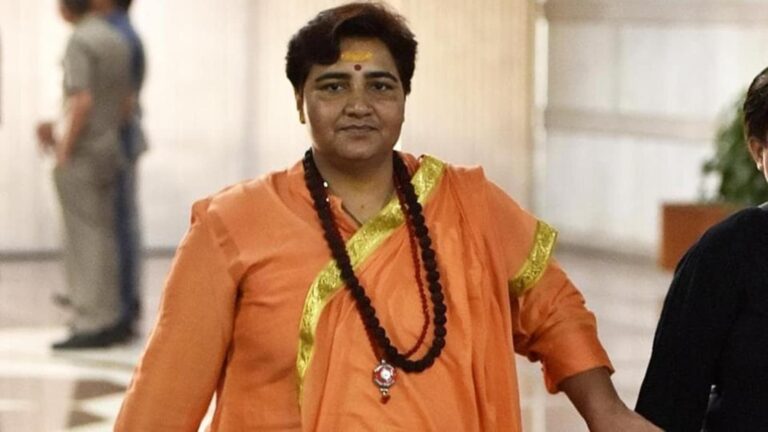
A first information report was registered against Bharatiya Janata Party MP Pragya Thakur on Wednesday in Karnataka for urging Hindus to keep weapons at home, PTI reported. She had made the remarks while addressing the Hindu Jagarana Vedike’s South Region annual convention in Shivamogga on December 25.
“Keep weapons in your homes, if nothing else, at least keep knives used to cut vegetables sharp,” Thakur said in a video widely shared on social media. “Don’t know what situation will arise when…Everyone has the right to protect themselves. If someone infiltrates our house and attacks us, giving them a befitting reply is our right.”
The FIR against Thakur was registered based on a complaint by Shivamogga District Congress Committee President HS Sundaresh.
Thakur has been booked under Sections 153A (promoting enmity between different groups on ground of religion, and race) and 295A (deliberate and malicious acts intended to outrage religious feelings of any class by insulting its religion or religious beliefs) of the Indian Penal Code, reported PTI.
During Sunday’s event, Thakur had said that Hindus should teach their own culture to their children, reported The Hindu. “Stop sending your children to missionaries,” Thakur had said. “If you do so, you will be opening old-age homes for yourselves. Your children will become selfish and will not take care of you.”
The Lok Sabha MP had also urged Hindus to protect their girls from “love jihad” – a debunked Hindutva idea that Muslim men romantically lure Hindu women to have them converted to Islam. “Even if they [Muslims] love they do jihad in that,” Thakur alleged. “Answer those involved in love jihad in the same style. Protect your girls, teach them the right values.”
Trinamul spokesperson Saket Gokhale and political analyst Tehseen Poonawalla have slammed Karnataka police for summoning them over their email complaints against BJP MP Pragya Singh Thakur for her hate speech in which she urged Hindus to keep their kitchen knives ready to retaliate against those who engage in “love jihad”.
Shocking:
How @Shivamogga_SP & Karnataka Police are protecting BJP's Pragya Thakur:
Shivamogga Police issued a notice on my complaint for a hate speech FIR against BJP MP Pragya Thakur & have illegally said that FIR can be registered only if I'm physically present.
In his written response to the police summons to appear before an inspector in Shimoga on Wednesday, Gokhale warned that he would move the Supreme Court naming the officer and the district superintendent of police as respondents for failing to register an FIR citing frivolous reasons.
The police have said they are unable to lodge an FIR against Pragya for want of a written complaint.
While Poonawalla lodged his complaint on Monday, Gokhale filed his plaint on Tuesday. But the inspector of Kote police station in Shimoga issued notices asking them to appear before him at 11am on Wednesday for verification.
Poonawalla has authorised district Congress president H.S. Sundaresh to appear before the inspector on his behalf since it was too short a notice for him to make the trip from Pune where he is based.
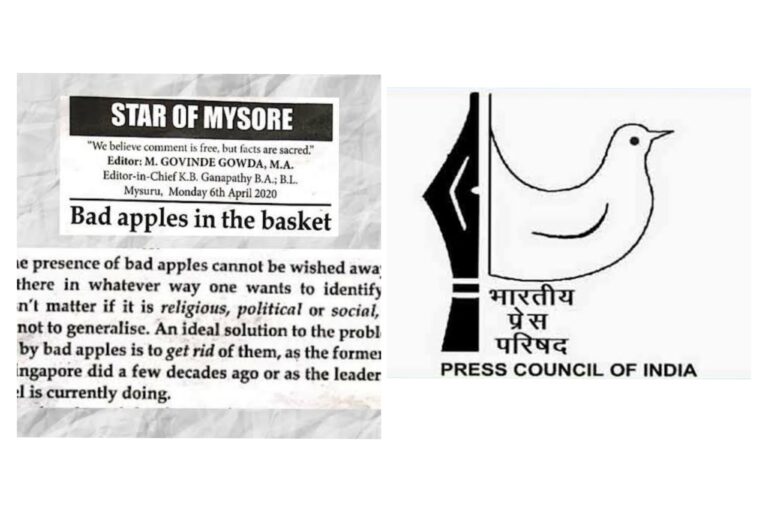
Press Council of India (PCI) censured the ‘Star of Mysore’ (SOM) for its April 2020 editorial, ‘Bad Apples in the Basket’. In the piece, the Mysore-based news publication purportedly called the Muslim community in India “bad apples”.
A censure by the PCI means that the state government concerned must not advertise in the paper for three consecutive months.
The PCI’s order comes on the basis of a complaint filed on 03.05.2020 by the Campaign Against Hate Speech, a collective that works towards promoting media accountability.
The complaint claimed that “the news agency is promoting and inciting hatred towards the community (Muslims) on the grounds of religion… thereby violating a basic principle of journalism of not to attribute individual actions to a whole community to spread hatred and violence against it.”
An inquiry committee had been constituted by the PCI which recommended censure after hearing both parties involved in the matter.
The committee refused to accept the contentions of the newspaper that the editorial had been published in ‘good faith’ and had been published in the context of the coronavirus pandemic to caution readers against those not following safety protocols.
Star of Mysore (Editorial April 2020)
In its report, the inquiry committee stated that ‘it is of the opinion that this editorial may have been written in the context of Corona pandemic but the conclusion is inevitable that it is targeting one community, i.e. the Muslims’ even though the community had not been explicitly named in the editorial. It refused to accept the apology that had been tendered by the newspaper on April 10, 2020, soon after the publication of the editorial, stating that the ‘apology is not genuine’ and had been tendered only because a mob had surrounded the offices of the newspaper. It called the apology an ‘example of journalism of the worst kind’.
In its irresponsible editorial published on April 6, 2020, the then editor-in-chief KB Ganapathy had written that the ‘the nation is currently hosting an annoying 18 percent of its population self- identifying as rotten apples’ and ‘the unedifying conduct of some sections in the population, marked by their faith and other features including their attire may bring to our mind the analogy of badapples in the basket’.
Advocating for the elimination of a community, the editorial had further stated, ‘An ideal solution to the problem created by bad apples is to get rid of them, as the former leader of Singapore did a few decades ago or as the leadership in Israel is currently doing’. In unequivocal terms the Inquiry Committee found that after these statements, “Nothing more is needed to draw the conclusion that a particular community is targeted”.
The inquiry committee pointed to these excerpts in particular and stated that ‘it is unfair to blame particular community for the spread of pandemic. There were several lapses during the relevant period and we cannot identify people belonging to a certain community as being responsible for those lapses.’
The inquiry committee also highlighted the responsibility of the press to ‘not indulge in such divisive acts’, to ‘spread the message of brotherhood amongst people of all communities’, ‘strengthen India’s unity in diversity’ and ‘desist from publishing inflammatory writings which fan the flames of communalism’. It cited the following provisions under section 4 of Norms of Journalistic Conduct 2020:
The first wave of the pandemic led to especial targeting of Muslim communities across India. This order of the PCI, even though coming after nearly two and a half years of filing of the complaint, follows observations by various high courts of India that the Tablighi Jamaat had been unjustly condemned as responsible for the spread of the pandemic. The vile and hateful reportage by news media, particularly in Karnataka had vitiated the public sphere to such an extent that many Muslims had faced abuse and even violence during the first wave of the pandemic.
A senior police officer has told a judicial commission that the Elgar Parishad event had no role in the caste violence that broke out on January 1, 2018, in Bhima Koregaon village near Pune, The Wire reported on Tuesday.
Sixteen activists, academics and lawyers were arrested in relation to the caste violence. The police claim that these persons were involved in organising the Elgar Parishad event on December 31, 2017, to commemorate the 200th anniversary of the battle of Bhima Koregaon. Provocative speeches at this event, the police claimed, led to large-scale violence the next day.
However, Sub-Divisional Police Officer Ganesh More told the two-member commission, headed by Justice (Retd) JN Patel, that nine cases of atrocities filed within his jurisdiction and investigated by him showed that there was no link between the Elgar Parishad event and the Bhima Koregaon violence.
“I did not come across any information or material to show that the incident of riots which took place on 1st January 2018, was a result of holding of Elgar Parishad on 31st December 2017 at Shaniwar Wada, Pune,” More said while answering a question by advocate Rahul Makhare, representing one of the witnesses of the violence.
More, who recently retired from service, was the senior officer in charge of arrangements in the area on January 1, 2018, Rediff reported. He told the commission that when he was on duty at Vadhu Budruk village, which is 3.5 kilometres away from Bhima Koregaon, he had dispersed a crowd of around 1,200 men with saffron flags.
Dalit groups and political activists have accused Hindutva leaders Milind Ekbote and Sambhaji Bhide of instigating the violence through hate speeches before the incident. Nationalist Congress Party chief Sharad Pawar had also earlier raised suspicion about the role of Hindutva groups in the violence.
On Tuesday, Makhare accused the Maharashtra government of suppressing evidence in the case.
“All along we have pointed to the evidence that clearly shows the direct role of Milind Ekbote and Manohar Kulkarni alias Sambhaji Bhide in the violence,” he told The Wire. “The FIRs lodged by the victims too point to their roles and those associated with their organisation working for many years in the Bhima Koregaon region.”
The revelations by More came days after a new report said that a hacker planted evidence on a device owned by tribal rights activist Stan Swamy, who was accused of involvement in the Bhima Koregaon violence. The 83-year-old Jesuit priest died in July last year, nearly nine months after he was arrested under the Unlawful Activities (Prevention) Act.
United States-based digital forensics firm Arsenal Consulting said that Swamy had been targeted by an extensive malware campaign for nearly five years till his device was seized by the police in June 2019. In that duration, the hacker had complete control over the activist’s computer and placed dozens of files in a hidden folder without his knowledge.
This was not the first report that raised questions about the veracity of the evidence used against those accused in the Bhima Koregaon case.
In June, cybersecurity firm SentinelOne found that there was a “provable connection” that the Pune Police hacked the email accounts of three other accused persons – Rona Wilson, Varavara Rao and Hany Babu, Wiredmagazine reported. The police, the firm said, planted material on devices belonging to Rao and Wilson.
In 2021, Arsenal Consulting Limited, in another report, claimed that key evidence against two accused persons in the case, Surendra Gadling and Wilson, was planted using malware.
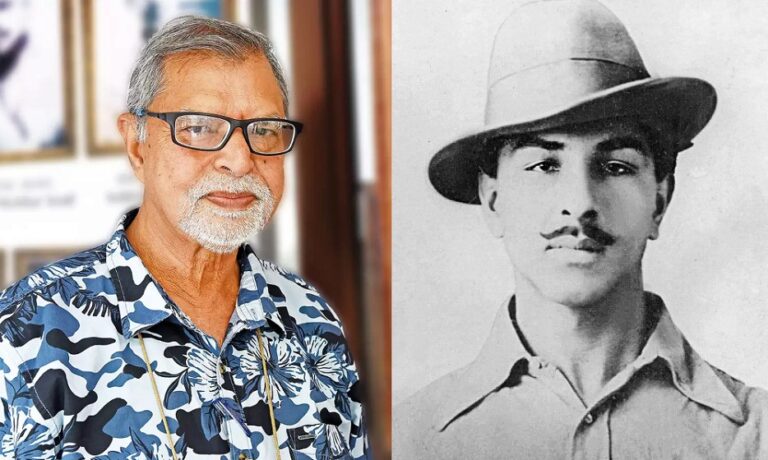
Acclaimed documentary filmmaker and cartoonist KP Sasi succumbed to prolonged illness and died at the age of 64. He breathed his last in a hospital in Thrissur.
K.P Sasi is one of the unsung heroes of the Indian parallel cinema movement. He worked as a cartoonist in his early days. His work consists of a diverse repertoire of feature films and music videos to a plethora of documentaries that touch every aspect of our lives.
His films are about social issues and social movements which cover diverse social sectors in India. He has made several documentaries on environmental issues, Adivasi struggles, displacement, and growing attacks on Christians in Orissa.
He used to call himself- “…an activist first and then a filmmaker.” Known for his incisive analysis, Sasi’s works explore the socio-economic contradictions and collision between the commercial interests and the lives of the masses as well as the socio-ecological issues that crop up in the name of ‘development’.
He was living in Bangalore but was active with people’s movements across India. His music videos “Gaon Chorab Nahi” and “America America” are hard-hitting reminders of violence thrust on the oppressed population by capitalism and Imperialism.
His documentaries include “A Valley Refuses to Die”, “We Who Make History”, “Living in Fear”, “In the Name of Medicine” and “Voices from a Disaster”.
His documentary film “Voices From the Ruins – Kandhamal in Search of Justice”, a documentary about large-scale violence against Christians in Odisha in 2007 and 2008 exposed the brutal horrors of RSS on the Adivasis Christians of Kandhamal, Orissa.
Sasi’s feature films include Ilayum Mullum, on the social and psychological violence against women in Kerala.
“Ek Alag Mausam (A Different Season) is a 2003 Hindi language movie directed by Sasi and starring Nandita Das, Anupam Kher, Renuka Shahane, Rajit Kapur, Arundathi Nag, Sreelatha and Sally Whittaker.
His father K. Damodaran (25 February 1912 – 3 July 1976) was a Marxist theoretician and writer and one of the founder leaders of the Communist Party in India.
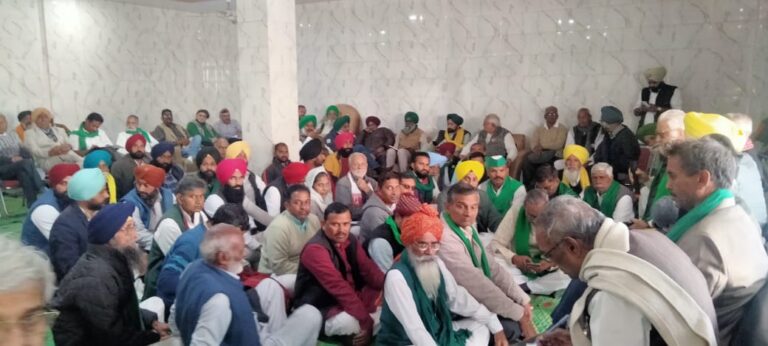
The National Meeting of Samyukta Kisan Morcha (SKM) was held at Karnal in Gurudwara Dera Kar Seva yesterday.
The meeting unanimously decided to observe the Republic Day and hold Tractor Rallies and Conventions after hoisting the National Flag without obstructing official Government programmes. Memorandum will be given to District Collectors.
A massive Kisan Mahapanchayat of farmers from North Indian States will be held at Jind in Haryana on 26th January.
A Kisan Rally will be held in Delhi in the month of March, dates of which will be announced on 26th January at Jind.
The SKM will expose the conspiracy of the BJP Government on 26th January, 2021 to break the unity of SKM. In a strong show of farmers Unity the Mahapanchayat will meet and announce the future course of action. The Mahapanchayat will send a resolute message against fascist, communal forces attacking the Indian Constitution and democracy, while also raising issues of farmers.
The Meeting called out the BJP Government’s anti-farmer stance and demanded legal guarantee for MSP.
Demand Withdrawal of Electricity Act Amendment Bill
SKM condemned the BJP Government’s betrayal of farmers by introducing the Electricity Act Amendment Bill in Parliament which it had earlier assured to withdraw.
The meeting demanded the withdrawal of Rural Development Cess on Farmers brought by Haryana BJP Government.
The meeting expressed solidarity with Farmers’ Dharna and struggle against Malbrose international Pvt Ltd. manufacturer of Liquor going on since 24th July (5 months). SKM supports the ongoing struggle demanding compensation for pig-rearers led by SKM Rewa going on for the last 80 days.
SKM Demands Action Against Lakhimpur Kheri Culprits
The SKM demanded swift action against the culprits of Lakhimpur Kheri and the removal of Ajay Mishra Teni from the Cabinet. It called for the release of farmers who are still languishing in Jail. The SKM Meeting demanded the withdrawal of fake cases and police repression of farmers.
It condemned the raids by Central agencies and the IT Department on Punjab singers Kanwar Grewal and Ranjit Bawa both of whom supported the Kisan movement. SKM extended solidarity to the farmers’ struggles across the country.
SKM also condemned the Punjab Government’s demolition of the houses of more than two dozen families who migrated from Pakistan and settled at Latifpura (Jalandhar).
A meeting to finalise the rules and regulations of SKM will be held on 9th February 2023 at Kurukshetra.
The Meeting was presided over by Joginder Singh Ugrahan, Dr. Vijoo Krishnan, Dr. Sunilam, Ranjit Raju, and Ravula Venkaiah.
The following quote is from the first paragraph of Lenin’s great work; The State and Revolution: The Marxist Theory of the State and the Tasks of the Proletariat in the Revolution (2017) underlining a cardinal truth; how rulers and their henchmen/women repress those ideologies and individuals who strive to emancipate masses from the exploitative rules. This chameleon-like lot uses every trick in their criminal armory.
“What is now happening to Marx’s theory has, in the course of history, happened repeatedly to the theories of revolutionary thinkers and leaders of oppressed classes fighting for emancipation. During the lifetime of great revolutionaries, the oppressing classes constantly hounded them and received their theories with the most savage malice, the most furious hatred, and the most unscrupulous campaigns of lies and slander. After their death, attempts are made to convert them into harmless icons, to canonize them, so to say, and to hallow their names to a certain extent for the ‘consolation’ of the oppressed classes and with the object of duping the latter, while at the same time robbing the revolutionary theory of its substance, blunting its revolutionary edge and vulgarizing it. Today, the bourgeoisie and the opportunists within the labor movement concur in this doctoring of Marxism. They omit, obscure, or distort the revolutionary side of this theory, its revolutionary soul. They push to the foreground and extol what is or seems acceptable to the bourgeoisie.”
What is happening to the great martyr Bhagat Singh and his revolutionary heritage in India is living proof of the truthfulness of Lenin’s understanding of the phenomenon. Since India is supposed to be ‘Vishwa Guru’ (spiritual teacher of the world) we have added new sinister dimensions to it! The British rulers hounded him (and his comrades) which culminated in his hanging on March 23, 1931 with Rajguru and Sukhdev. After Independence these were/are his supposed ‘fans’ who converted him into a harmless icon robbing the substance of his revolutionary heritage or presenting him as a hero of Jats or Sikh. It could be witnessed in more than half a dozen Hindi movies on his life. Even Hindutva gang which shamelessly colluded with the British rulers and denigrated the whole tradition of martyrdom has the audacity to display his photos in public.
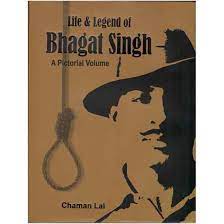
The newest foul, in fact, criminal addition goes beyond the imagination of all those who have read Bhagat Singh and are familiar with his commitments in his short eventful life. This time Bhagat Singh is being offered as a package in the form of a decorated book; a coffee table book to the Indian armed forces as an icon for the militarization of the Indian State not by someone inimical to Bhagat Singh, a Communist revolutionary but by someone who is stated to be a chronicler of Bhagat Singh’s life’; Professor Chaman Lal whom I always regarded as a person who genuinely believed in the ideals of great revolutionary!
He is a retired Professor from JNU, honorary advisor to Bhagat Singh Archives and Resource Centre, New Delhi, Dean of the Faculty of Languages, Panjab [sic] University Chandigarh, and former President of JNU Teachers Association. According to his own description (‘Spreading Bhagat Singh’s ideas’, The Tribune, December 3, 2022), he seems to be the most prolific author after Bhagat Singh of the latter’s writings:
“I received author/editor’s complimentary copies of 11th reprint of the book from National Book Trust, New Delhi, few days before I got a copy of another book, Jail Notebook, and other writings from another publisher leftword [sic], mentioning it as 12th reprint…Marathi translation of Bhagat Singh’s complete writings from my edited book in Hindi of the same title by Datta Desai was released by late Supreme Court Justice, PB Sawant, during Bhagat Singh birth centenary.“Another coincident is that the Publication Division, Government of India, had released an edited volume in Hindi of complete writings of Bhagat Singh, in 2007 in the presence of two of his nephews and late Kuldip Nayar. This was updated into a four-volume edition, brought out in the beginning of celebrations of the 75th anniversary of independence. I was invited to write a biography-Life and Legend of Bhagat Singh: A Pictorial Volume! I was more in collecting and researching Bhagat Singh’s writings and was in a dilemma about how to plan it since there were already a number of biographies in print! It suddenly struck my mind that for decades, I have been collecting documents, writings, images, etc., in order to focus on the authenticity of Bhagat Singh’s life and writings, I accepted the invite and this book has just come out. The Bhagat Singh Reader is being published by Harper Collins shortly, as I found more documents since its first publication in 2019. In 2019, I had included 130 writings of Bhagat Singh along with Jail Notebook and three more writings are being added to an upcoming edition.”
Professor holds the copyright of all the above-mentioned books. He missed mentioning a few Hindi editions of Bhagat Singh’s writings copyrighted to him. This inventory of Professor Chaman Lal’s writings of/on Bhagat Singh is quite impressive. After its perusal, it is natural to assume that Professor genuinely believes in the ideals of Bhagat Singh whose writings were based on deep academic research. Bhagat Singh was a voracious reader who did not let die his thirst for knowledge despite high-handed censorship and the unspeakable hardships of jail life. In fact, he and his comrades resorted to a hunger strike for 116 days at Mianwali Jail (now in Pakistan) demanding a supply of books and the status of political prisoners in 1929 in the course of which Jatindra Nath Das was martyred. Bhagat Singh was in Jail for 716 days out of which 167 days as death prisoner. In this period he read 143 foreign published English books and 159 Indian published books (English 54, Hindi 63, Punjabi 7, Urdu 28, Bengali 17 and Marathi 3.
Professor also shared the following information with 2 exclamations that
“I was invited to write a biography-Life and Legend of Bhagat Singh: A Pictorial Volume! I was more in collecting and researching on Bhagat Singh’s writings and was in a dilemma how to plan it since there were already a number of biographies in print! It suddenly struck my mind that since decades, I have been collecting documents, writings, images, etc, in order to focus on the authenticity of Bhagat Singh’s life and writings, I accepted the invite and this book has just come out.”
Who invited him to accomplish this task and when it was released has not been made clear by him. However, a perusal of the official site of the Publication Division of the Government of India unravels the reality. It was planned in January 2022, an e-tender floated on August 4, 2022, and printing work was awarded on August 17. It must have been out last November. It is priced at INR 895 with Chaman Lal mentioned as the author on the cover (only hardbound edition is available presently).
There is no record of the release of this book but the author does inform where it was first discussed. According to him:
“It was a bit perplexing for me when I got a call from Sports University, Patiala, Vice Chancellor, Lieutenant General JS Cheema (Retd), inviting me to be part of a discussion panel in a session on Bhagat Singh in Military Literary [Literature] Festival, as I could not see any connection, since the festival concentrates more on defense related books and matters, national and international. Among other panelists, he named Mahavir Chakra awardee, Maj Gen Sheonan Singh (Retd), who is a nephew of Bhagat Singh…Among all close relations of Bhagat Singh, he is one of the most well-read about Bhagat Singh and his ideas, as Ranbir Singh, his father and younger brother of Bhagat Singh, had penned a biography of the great martyr in Urdu!”
Professor is reported to have told the top brass of the Indian army, the 4th most powerful army in the world, on the last day of the Military Literature Festival at Chandigarh [The Times of India, Chandigarh, December 5] that “Bhagat Singh was a socialist revolutionary…by calling only patriot and fearless, attempts are made to reduce his stature…Governments are not interested beyond his stories and photographs”.
There can be no objection to the Indian Army deliberating on Bhagat Singh or releasing books on his valour. But it is highly ‘perplexing’ (resorting to the term used by Professor himself while accepting the invitation to the Military Festival) that he was allowed to say what he told about Bhagat Singh to the military personnel. It could happen only if the Indian Military was changing its character from Indian State’s armed organ to people’s army. The reality is that it is committed to serve loyally the interests of the pro-rich Indian ruling elite which believes that slogan INQUILAB ZINDABAD preaches violence and refuses to accord the status of martyr to Bhagat Singh and others who laid down their lives during the freedom struggle. It is also to be noted that writings of Bhagat Singh are part of the archives or museums and not part of academic syllabuses at any level.
Militarism and Anti-Militarism by Karl Liebknecht
It is sad that while joining the Military Literature Festival Professor as a chronicler of Bhagat Singh brazenly overlooked that Bhagat Singh while in Jail read an amazing book by a German revolutionary academician Karl Liebknecht (1871-1919) titled Militarism & Anti-Militarism (1907). Karl was assassinated with Rosa Luxemburg on January 15, 1919 by a killing squad of the German reactionary ruling classes. This book is a great work of academic research combined with his experiences in the revolutionary movements not only in Germany but in whole of Europe. This peerless work on militarism traces roots of militarism under capitalism and fore-warned the coming of the World War I. According to Karl militarism is not only a project for saving the Fatherland from foreign enemies but also controls colonies and crush the ‘internal enemy’; the rising tide of working class, peasantry and youth movements against the repressive rule.
In a chapter titled ‘Sins of Militarism’ Karl discusses how under militarism soldiers are ill-treated, people have to bear the cost of financing it, “it is rule of the sword and rifle against strikes”, army is used as “a tool against the proletariat in the political struggle” and is “danger to peace” and “proletarian revolution”. The book ends with a list of tactics to be used fighting militarism.
We should not be foolish enough to believe that Indian military establishment is developing love for a Socialist revolutionary, Bhagat Singh who combined two mottos together; Down with Imperialism and Long Live Revolution. Professor was allowed to introduce Bhagat Singh in a military-literary conclave held in Punjab as year-long (2020-21) historic farmers struggle used Bhagat Singh (his visuals as well as writings)as the most prominent tools of resistance against all kinds of repressive acts of the Modi regime. Bhagat Singh needs to be converted into a harmless icon, blunting his revolutionary edge and adopt him as a hero who laid down his life for the country without going into the question; country for whom!
I will be the last person to believe that Professor Chaman Lal had any illusion that he would bring about change of heart of the participants or those who invited him to this Military Literature Festival. His pictorial book coinciding with this festival will bring him more laurels, more royalty; may even get him a mention in Guinness Book of World Records as the most prolific author (or compiler) on Bhagat Singh.
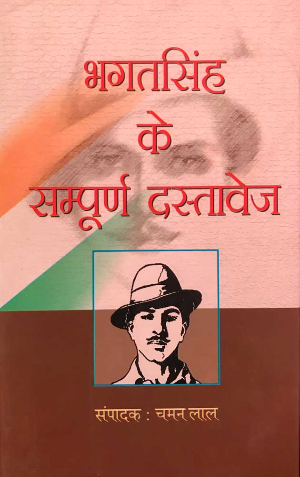
It brings me to a serious ethical issue concerning writings, contemporary photos and records of Bhagat Singh, his comrades and the family. Professor has been chronicling/remodeling writings of Bhagat Singh and his contemporary material in book forms assigning to himself as copyright owner. Furthermore, nobody knows under what authority the copyright of Bhagat Singh’s writings published by Government of India publication houses and edited by Professor have been appropriated by the former. Forget about revolutionary morality even bourgeois morality demands that if descendants of Bhagat Singh have not claimed ownership of his writings (a great gesture) these belong to all those who love and follow him. Professor should have retained copyright of his introductions to the books, if any. I remember a Hindi edition of Bhagat Singh’s writings titled as ‘Bhagat Singh aur unke Sathiyon ke Dastavez’ [Documents of Bhagat Singh and his comrades] jointly edited by Bhagat Singh’s nephew (sister’s son) Dr. Jagmohan Singh and Professor Chama Lal copyright of which was assigned to a committee formed to collect revolutionary’s unearthed documents.
I will end by reminding Professor Chaman Lal, a dear friend that his obsession with selling Bhagat Singh has landed him into the category of the lot referred to by Lenin above. Shockingly, the title of his latest book on Bhagat Singh which coincided with the military festival at Chandigarh describes Bhagat Singh a LEGEND. As a renowned linguist he is expected to know the meaning of the term. According to almost all English dictionaries it means a story from the past that is believed by many people but cannot be proved to be true. In Hindi too it is defined as pracheen kathaa jiskaa satey yaa asatey hona prasangkik naheen hae (an ancient story whose being true or untrue is not relevant). The ruling classes need a Bhagat Singh who happened sometime in the past, to be worshipped as a saint having no relevance in the present times; a harmless icons devoid of revolutionary side of his theory as stated by Lenin. Only this kind of Bhagat Singh is acceptable to the rulers and Professor Chaman Lal is facilitating it.
[I received above mentioned The Tribune piece penned by Professor Chaman Lal on December 19 and immediately wrote a protest note to him which read “Unbelievable that you were involved in this!” Since there was no response I decided to pen this piece.]
Siddique Kappan, a journalist from Kerala, was granted bail by the Allahabad High Court today in relation to a Prevention of Money Laundering Act (PMLA) case that the Enforcement Directorate had filed against him (ED).
He was granted bail by the single judge bench of Justice Dinesh Kumar Singh. After the Lucknow District Court denied him bail in the case, he moved to the High Court in October 2022 to request relief.
Three months after the Supreme Court had granted bail in all other counts brought against him, the Allahabad High Court granted bail to Kappan.
Kappan, who was arrested by UP Police on October 6, 2020 when he was travelling to report on Hathras Rape case. He was granted bail by the Supreme Court on September 9 in connection with the Hathras Conspiracy case. Kappan was detained for alleged offenses under Sections 17 and 18 of the UAPA, Sections 120B, 153A and 295A of the IPC, and Sections 65 and 72 of the IT Act. He was accused of conspiring to stir disturbances in response to the gangrape murder of a Dalit young girl in Hathras.
Since it was the last working day for the Allahabad high court this year, Kappan will be in custody until at least January 2.
On September 9, the Supreme Court granted him bail in the Unlawful Activities Prevention Act (UAPA) case, saying that “every citizen has the right to free expression”. However, he remained in jail in Lucknow in a case under the Prevention of Money Laundering Act, which was slapped against him by the Enforcement Directorate in 2021.
The Lucknow bench’s Friday order pertains to the second case.
Kappan’s counsel Md. Danish told The Wire that the Lucknow bench of the high court granted him bail without any conditions. However, he was still waiting for the order.
He added that the court has asked for two sureties for Kappan to be eligible for bail.
As the courts have granted him bail in both cases, he is most likely to walk out of prison after more than 26 months.
In response to the Supreme Court’s order, the UP government had opposed his bail alleging that he has “deep links” with the Popular Front of India, which is not a banned organisation.
The Lucknow bench of the Allahabad high court had earlier rejected Kappan’s bail application, saying the journalist had “no work” in Hathras. Kappan had challenged this order at the Supreme Court.
It’s been 13 long years since we last visited the planet of Pandora. During that time back here on Earth, we’ve seen huge tumultuousness: economic crises, the rise of populist politics, a deadly global pandemic, and a growing climate emergency. But on Pandora, very little has changed.
The main hero of the first Avatar film, Jake Sully (Sam Worthington), is still leader of the Na’vi tribe. The tribe still live a symbiotic life with nature and the forests are still awash with neon flora and exotic fauna. Sully now has a family though: four children including an adopted child called Kiri (Sigourney Weaver).
The trailer for James Cameron’s Avatar: The Way of the Water.
Perhaps in an attempt to keep in tune with the development of cinematic universe franchises (one of the biggest popular culture changes in the last 13 years), director James Cameron has decided to rehash the themes of the first film only bigger, louder, and with a more substantial CGI budget. But in so doing, he has created a sequel that, while visually stunning, has stunted politics.
It isn’t long into the film that the “sky people” (the invading and colonising humans Sully was once among) make their return.
As if the last 13 years hadn’t happened, we are once again fed the plot of an evil imperialistic force fighting against a nature-loving indigenous population. Only this time it’s wetter and with bigger animals.
If the first installment was Pocahontas in Space, Avatar: The Way of the Water is Free Willy in Space.
For those who haven’t kept up, Pandora is a far-away planet, rich in natural resources that the greedy human race is looking to mine. In the first film, it was the very valuable (if ridiculously named) unobtainium that they were willing to kill for.
This time, humans are looking for a new home away from a dying Earth.
This threat is explored through the familiar science fiction cinematic narrative of an invading army (who are working for a corporation looking to extract resources) fighting against an insurgent indigenous people.
This is a common cinematic allegory used to depict practices of colonialism that tie military offences tightly with the motivations of profiteering international corporations. Last year’s Dune, a similar science fiction epic, has clear colonial overtures, and since 9/11, many American cinematic adventures have played on how the US waged it’s imperialistic war on terror.
After a prolonged introductory conflict, Sully is forced to flee his forest home and take his family to a distant tribe living on and in the water.
We are invited into a serene, ethereal, and shimmering world full of colour, strange creatures and clear blue vistas. That the film spends so much time creating this beautiful but “natural” landscape is deliberate.
It is emphasising how indigenous populations’ careful stewardship of their habitats is an important corrective to the runaway climate catastrophe that we as a species (or more accurately, as a capitalist society) are creating.
This Blue Planet aesthetic only charms for so long. The hours spent building this water world add little to the characters’ depth. Instead, a cliched rebellious child versus stern father subplot plays out in exactly the manner you would expect. This is particularly irksome as the complexities of being a parent are themes that Cameron has explored brilliantly in the past – motherhood in Aliens and fatherhood in Terminator 2.
Given the clear links to the natural world and its destruction, this portion of the film could have leaned more into the current atmosphere of protest against climate catastrophe. Climate activism is dominated by the collective action of young people, yet The Way of the Water depicts the tribal children as passively submitting to the will of their parents and elders (with grave consequences for those who didn’t).
Where the film falls short
In Cameron’s third act, the rebellious unity of the indigenous tribes, the animal life and indeed the rocky edifices and outcrops come up against the mechanistic and militaristic invading humans. It’s nature versus capitalism, the pervading battle of our contemporary age.
Given that there is already an Avatar 3 in the works, it’s not surprising that this battle is only partly concluded. Perhaps Cameron is saving the collective resistance of the younger Na’vi against invading forces for the third film? If so, it would be a more fitting allegory for current climate activism.
Mainstream popular culture has always been a vehicle to speak truth to power. But in these turbulent times, it is often mirroring back to us the multiple troubles of our world with increasing detail and artistic quality. Avatar: The Way of Water doesn’t seem to go too far down this road. It tells a similar story to the one it told 13 years ago.
As geopolitical climate scholarship tells us so emphatically, climate justice is only possible with a recognition of, and action against, the massive damage wrought by climate catastrophe.
In the 13 years since the first Avatar, these lessons have yet to be learned. Climate catastrophe is upon us more than ever. And yet the world will need to take politically bold and perhaps even dangerous steps in fighting against it.
The inspiration for such bold action won’t necessarily be found in Avatar’s sequel. But what we do find is a reminder of the exquisite natural beauty in the world that we should all be fighting for.
Oli Mould, Reader in Human Geography, Royal Holloway University of London
This article is republished from The Conversation under a Creative Commons license. Read the original article.
The government on Tuesday informed Lok Sabha that at least 115 daily wage earners and more than 43 salaried people died by suicide every day in the country in 2021. While it did not assign any particular reason, it nonetheless painted a grim picture of the possible social and economic stress among the people, exacerbated by the Covid-19 pandemic.
In a written reply to a question, Minister of State for Home Nityanand Rai shared NCRB data that detailed the number of suicides profession-wise in 2021. The data showed about 164,000 people died by suicide last year. Of them, daily wage earners comprised the largest group at 42,004, followed by housewives.
The number of housewives who killed themselves last year was a staggering 23,179, meaning at least 63 housewives died every day in the country. Several studies have pointed out that women remain one of the most significant vulnerable groups across ages. They say the burden of suicide behaviour is more in women than in men globally likely due to gender-related issues, psychopathology, and psychosocial stress.
Housewives accounted for 14.6 per cent of the total 153,052 recorded suicides in India in 2020, according to a BBC report.
A study published in the October, 2018 issue of the Lancet Public Health said that women in India accounted for 36 per cent of global female suicide deaths in 2016, despite making up less than 18 per cent of the world’s female population.
The data also showed that over 37 unemployed persons died by suicide every day with an annual total of 13,714. On the other hand, 20,231 self-employed and 15,870 people in salaried jobs died by suicide.
At least 13,089 students died by suicide, the NCRB data also revealed.
Among the states, suicide numbers were highest in Tamil Nadu. At least 7,673 people killed themselves in the southern state last year. It was followed by Maharashtra (5,270), Madhya Pradesh (4,657), Telangana (4,223) and Kerala (3,345).
Ladakh and Lakshadweep recorded zero suicides and in Nagaland, Manipur, D&N Haveli and Daman&Diu, and Jammu & Kashmir were in single digits. The situation in the rest of the northeastern states was relatively low when compared to the rest of the country: Meghalaya (77), Mizoram (37), Arunachal Pradesh (23), Assam (659), and Tripura (351).
In his reply, minister Rai said the government has enacted the Unorganised Workers’ Social Security Act, 2008, in order to provide social security benefits to the workers in the unorganised sector including workers in the agriculture sector.





 The newest foul, in fact, criminal addition goes beyond the imagination of all those who have read Bhagat Singh and are familiar with his commitments in his short eventful life. This time Bhagat Singh is being offered as a package in the form of a decorated book; a coffee table book to the Indian armed forces as an icon for the militarization of the Indian State not by someone inimical to Bhagat Singh, a Communist revolutionary but by someone who is stated to be a chronicler of Bhagat Singh’s life’; Professor Chaman Lal whom I always regarded as a person who genuinely believed in the ideals of great revolutionary!
He is a retired Professor from JNU, honorary advisor to Bhagat Singh Archives and Resource Centre, New Delhi, Dean of the Faculty of Languages, Panjab [sic] University Chandigarh, and former President of JNU Teachers Association. According to his own description (‘Spreading Bhagat Singh’s ideas’, The Tribune, December 3, 2022), he seems to be the most prolific author after Bhagat Singh of the latter’s writings:
“I received author/editor’s complimentary copies of 11th reprint of the book from National Book Trust, New Delhi, few days before I got a copy of another book, Jail Notebook, and other writings from another publisher leftword [sic], mentioning it as 12th reprint…Marathi translation of Bhagat Singh’s complete writings from my edited book in Hindi of the same title by Datta Desai was released by late Supreme Court Justice, PB Sawant, during Bhagat Singh birth centenary.
“Another coincident is that the Publication Division, Government of India, had released an edited volume in Hindi of complete writings of Bhagat Singh, in 2007 in the presence of two of his nephews and late Kuldip Nayar. This was updated into a four-volume edition, brought out in the beginning of celebrations of the 75th anniversary of independence. I was invited to write a biography-Life and Legend of Bhagat Singh: A Pictorial Volume! I was more in collecting and researching Bhagat Singh’s writings and was in a dilemma about how to plan it since there were already a number of biographies in print! It suddenly struck my mind that for decades, I have been collecting documents, writings, images, etc., in order to focus on the authenticity of Bhagat Singh’s life and writings, I accepted the invite and this book has just come out. The Bhagat Singh Reader is being published by Harper Collins shortly, as I found more documents since its first publication in 2019. In 2019, I had included 130 writings of Bhagat Singh along with Jail Notebook and three more writings are being added to an upcoming edition.”
Professor holds the copyright of all the above-mentioned books. He missed mentioning a few Hindi editions of Bhagat Singh’s writings copyrighted to him. This inventory of Professor Chaman Lal’s writings of/on Bhagat Singh is quite impressive. After its perusal, it is natural to assume that Professor genuinely believes in the ideals of Bhagat Singh whose writings were based on deep academic research. Bhagat Singh was a voracious reader who did not let die his thirst for knowledge despite high-handed censorship and the unspeakable hardships of jail life. In fact, he and his comrades resorted to a hunger strike for 116 days at Mianwali Jail (now in Pakistan) demanding a supply of books and the status of political prisoners in 1929 in the course of which Jatindra Nath Das was martyred. Bhagat Singh was in Jail for 716 days out of which 167 days as death prisoner. In this period he read 143 foreign published English books and 159 Indian published books (English 54, Hindi 63, Punjabi 7, Urdu 28, Bengali 17 and Marathi 3.
 Professor also shared the following information with 2 exclamations that
“I was invited to write a biography-Life and Legend of Bhagat Singh: A Pictorial Volume! I was more in collecting and researching on Bhagat Singh’s writings and was in a dilemma how to plan it since there were already a number of biographies in print! It suddenly struck my mind that since decades, I have been collecting documents, writings, images, etc, in order to focus on the authenticity of Bhagat Singh’s life and writings, I accepted the invite and this book has just come out.”
Who invited him to accomplish this task and when it was released has not been made clear by him. However, a perusal of the official site of the Publication Division of the Government of India unravels the reality. It was planned in January 2022, an e-tender floated on August 4, 2022, and printing work was awarded on August 17. It must have been out last November. It is priced at INR 895 with Chaman Lal mentioned as the author on the cover (only hardbound edition is available presently).


 This is a common cinematic allegory used to depict practices of colonialism that tie military offences tightly with the motivations of profiteering international corporations. Last year’s Dune, a similar science fiction epic, has clear colonial overtures, and since 9/11, many American cinematic adventures have played on how the US waged it’s imperialistic war on terror.
After a prolonged introductory conflict, Sully is forced to flee his forest home and take his family to a distant tribe living on and in the water.
We are invited into a serene, ethereal, and shimmering world full of colour, strange creatures and clear blue vistas. That the film spends so much time creating this beautiful but “natural” landscape is deliberate.
It is emphasising how indigenous populations’ careful stewardship of their habitats is an important corrective to the runaway climate catastrophe that we as a species (or more accurately, as a capitalist society) are creating.
This Blue Planet aesthetic only charms for so long. The hours spent building this water world add little to the characters’ depth. Instead, a cliched rebellious child versus stern father subplot plays out in exactly the manner you would expect. This is particularly irksome as the complexities of being a parent are themes that Cameron has explored brilliantly in the past – motherhood in Aliens and fatherhood in Terminator 2.
Given the clear links to the natural world and its destruction, this portion of the film could have leaned more into the current atmosphere of protest against climate catastrophe. Climate activism is dominated by the collective action of young people, yet The Way of the Water depicts the tribal children as passively submitting to the will of their parents and elders (with grave consequences for those who didn’t).


