

LGBTQI Rights Activists Urge SC to Legalise Same-Sex Marriage

Judicial Reforms Spark Massive Protests in Israel

Palestinian voices have mostly stayed away from the protests, as many see the difference between the so-called draconian reforms and the so-called liberal democracy as negligible.
Kestenbaum doctrine
The reforms are a rollback of the so-called 1992 Constitutional Revolution. The 1992 Constitutional Revolution, led by Supreme Court judge Aharon Barak, developed the Kestenbaum doctrine where human rights principles would be guiding principles in private law. However, this has been criticized as giving too much power to the judge, introducing legal uncertainty. As the judge becomes important, it creates a system where legal cases are judged based on the individual’s understanding and interpretation of the law, creating legal uncertainty. The proposed reforms would seek to limit this power, but critics argue that this would be a step backward for democracy. The reforms came at a time when Israel struggled to maintain a stable government. The reforms were intended to consolidate power across many wings of government The Israeli government has been unstable since 2018, with less than four years seeing five snap elections. No party has been able to hold a majority, and many conservative parties in Israel have problems with Netanyahu as there are many types of conservatism in Israel.Hindutva & Zionism As Natural Allies Pose Great Danger to Multicultural World
Corruption
In 2019, Netanyahu was indicted on fraud and corruption charges, taking a plea deal in 2020. He lost power in 2021, but in December 2022, he was able to form a coalition and return as Prime Minister of Israel. This new coalition promises to expand the role of religion in public life. Netanyahu still faces a number of corruption charges. The reforms would allow Netanyahu to receive donations for his legal case in fighting off those charges.
Netanyahu’s government said that it was keen on passing these reforms to give his government more stability. The reforms were announced by Justice Minister Yariv Levin, who was appointed by the most recent government. On 4th January, he announced his plans for reforms, which triggered the current protests. The proposed reforms have been met with widespread criticism and opposition, with over 150 people arrested in the protests so far.
Protests Against Reforms: Left Right, and Center
The protests have a strong presence of members of the Israeli military, they have not engaged with the concerns of the Palestinians. Palestinian voices have mostly stayed away from the protests, as many see the difference between the so-called draconian reforms and the so-called liberal democracy as negligible. Israel courts have always ruled to the detriment of the Palestinians, and the current reform only seeks to streamline the process of human rights violations in the region. The protests have been going strong, with many roads blocked in the month of March, and lakhs of Israelis participating in the protests. There is a lot of international support for the protests, as many international observers see these reforms as an end to the checks and balances system, which is important for any democracy. Many countries’ leaders have expressed concern about the direction of Israeli democracy. The reforms have been seen as a threat to the rule of law and democratic institutions, and many have called on the Israeli government to reconsider its position. The protests in Israel reflect a larger trend of democratic backsliding around the world. The erosion of democratic norms and institutions is a global phenomenon, and Israel is just one example of this trend. The rise of authoritarian leaders and populist movements, coupled with the weakening of democratic institutions, has created a dangerous situation in many countries. The erosion of democratic norms and institutions is a threat to global peace and stability, and it is imperative that we take action to protect democracy around the world.Need for reform, but not this way
Opinion polls show that most Israelis are frustrated with the current judicial system and want reforms. At the same time, most Israelis oppose the current set of reforms. As opposition to the reforms is coming from different corners, it is unclear what kind of reforms most people want. In Israel, there is strong support for centralization and a greater role of Judaism in public life. Without concern for democratic principles, the will of the Israeli people will keep floundering. The Israeli state, with the strong presence of religion and the military, will always run counter to the democratic spirit. The author is a mathematician and a political observer based in Bangalore. Views expressed are personal.Hundreds of Youth and Workers Launch Bhagat Singh Jan Adhikar Yatra

Land-for-jobs scam: ED Raids Lalu’s family and RJD leaders
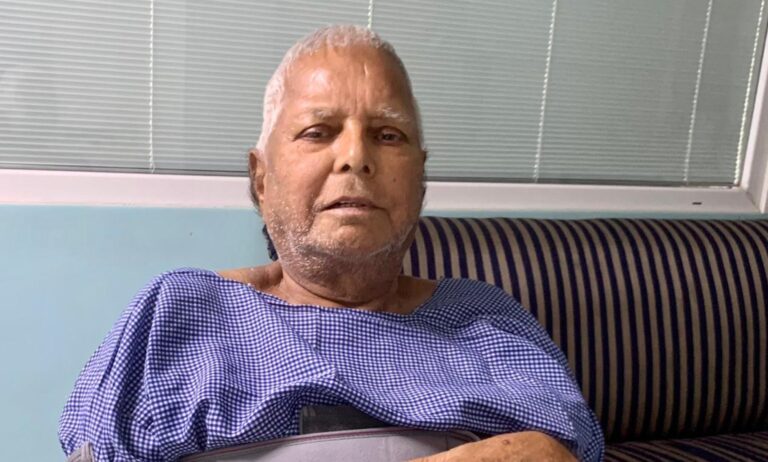
The case pertains to people allegedly given employment in the railways in return for land parcels gifted or sold at cheap rates to the Yadav family and its associates, they said. The CBI has filed a charge sheet in the case against Prasad, his wife and former Bihar chief minister Rabri Devi and 14 others under charges of criminal conspiracy and provisions of the Prevention of Corruption Act, and all the accused have been summoned on March 15, officials had said. The ED case, filed under the criminal sections of the Prevention of Money Laundering Act, stems from this CBI complaint. Both Lalu Prasad and Rabri Devi were questioned by the CBI in this case recently. Notably, family and supporters of Prasad allege that the legal wrangles are a result of the political vendetta of the BJP to which the RJD president has remained opposed all through his life.After Lalu Yadav, the ED (Enforcement Directorate) has also clamped down on his brother-in-law and SP leader Jitendra Yadav.
— Ahmed Khabeer احمد خبیر (@AhmedKhabeer_) March 10, 2023
ED’s raid is going on at Jitendra Yadav’s Ghaziabad residence. pic.twitter.com/Xqird3NzRw
35 Adivasis Arrested After Run-ins with the Forest Department

Adivasis demand prosecution of illegal contractors forcing Adivasis into Bonded Labour
Bengaluru Court restrains from broadcasting defamatory content against BJP MLA Madal Virupakshappa and his son

Bengaluru Advocates’ Assn has also slammed the VIP treatment for BJP MLA in bail case. The Advocates’ Association said that while the High Court’s usual practice is to take days and weeks for anticipatory bail postings, MLA Virupakshappa’s plea was heard within one day.
Case Filed Against OpIndia and Dainik Bhaskar for Fake News on Migrant Workers

Timeline of events:
A series of videos went viral on social media claiming that Hindi-speaking migrant workers – particularly those from Bihar – were being attacked and murdered in Tamil Nadu. These videos were retweeted by many, including members of the Bharatiya Janata Party – who used the incident to attack Bihar’s coalition government for failing to protect its citizens. Along with these videos, a false newspaper clipping of Dainik Jagran’s Lucknow edition was circulated. The clipping reported that the Chief Minister of Tamil Nadu, MK Stalin had asked Hindi-speaking migrants to leave the state as only Tamil people could work in Tamil Nadu and that the Tamil Nadu government would not be responsible for the safety of those who stayed on. Fact-checking platforms such as AltNews found that the article was fake, written using an Android application called “News Banner Maker” in poor unedited language. On 2 March 2023, Bihar Chief Minister Nitish Kumar tweeted expressing concern and asked the Director General of Police (DGPs) of both states to look into the matter. Responding to this, Sylendra Babu, the DGP of Tamil Nadu, called these videos “false and mischievous”, and claimed that these were older videos from different districts, and neither involved clashes between Bihari migrants and Tamilian residents. According to him, the first video depicts an incident between two groups of Bihari migrant workers while another video depicts tensions between the local Tamilian residents in Coimbatore. AltNews too published a report finding that at least 5 of the viral videos were unrelated to Bihari migrants and some were even from other South Indian states and did not have anything to do with Hindi-speaking migrants. The Bihar government sent a team of 4 senior officials to Chennai to meet Bihari migrants and verify the claims of attacks. D Balamurgan, the Bihar Rural Development Secretary led the team and reported that these claims were fake. Despite these videos being debunked, on 3 March 2023, Dainik Bhaskar published an article claiming that Bihari migrant workers were being attacked in Tamil Nadu and referenced the viral videos. Preliminary police probes find that this was the first news report regarding the incident and was the trigger for the spread of panic on social media, WhatsApp groups and TV news outlets. Soon after, Op India also published an article detailing hate crimes against Hindi-speaking migrant workers in Tamil Nadu. Citing Dainik Bhaskar, the report claimed that terror has gripped migrant labourers in Tamil Nadu, with 15 labourers losing their lives in “Talibani” style attacks. The report detailed a particularly gruesome account of a Bihari migrant whose fingers were severed because he spoke Hindi, while another 12 migrants were hanged to death. On 4 March 2023, Tamil Nadu Chief Minister MK Stalin tweeted that migrant workers are safe in Tamil Nadu and warned of strict action against those spreading false news with “the vile intention of disturbing the peace and harmony of our country”. Subsequently, a case was filed against BJP spokesperson Prashant Patel Umrao, an unnamed editor of Dainik Bhaskar, and Bihari journalist Mohammed Tanvir,. All three were booked under Section 153A and 505 of the IPC. Most recently, a case has also been filed against the CEO of Op India, Rahul Roushan and Nupur J Sharma, editor-in-chief, under the same sections. The Economic Offence Unit (EOU) of Bihar police also lodged an FIR against 4 social media users for spreading fake news. These include Manish Kashyap who runs a YouTube news channel called Sachtak, Rajesh Tiwari who runs another Youtube news channel called Prayas News, and two twitter users – Yuvraj Singh Rajput and Aman Kumar. As with previous instances of fake news going viral, BJP members used the news to level allegations against other party members in the Bihar state Assembly on 2 March 2023. Tejaswi Yadav, Deputy Chief Minister and member of Rashtriya Janata Dal (RJD) for attending CM MK Stalin’s birthday celebration on 1 March. The Tamil Nadu police say that the rapid spread of fake news had definite “political motives” linked to the birthday of MK Stalin on 1st March, where calls were made for a united front against the BJP.“Namma” Metro Project: Built on Illegal Wage Theft of Migrant Workers
Why we fight: Rosa Luxemburg on War

Your “order” is built on sand: Remembering Rosa Luxemburg
In Germany, the Social Democratic Party came to power, after winning mass support. In theory, the SDP was a radical communist party, though it only supported moderate reforms when it got power. As a result, many Communists became disillusioned with the SDP and pursued revolutionary action directly with workers. Against the interests of the German people, the SDP supported Germany’s entry into World War I. Many former members of the SDP called this a betrayal of their socialist principles. They felt that the state could have worked for the people. Instead, it imprisoned revolutionaries and brought the country into a massive war.
 But Luxemburg noted that there was another unique dimension to war. The military was a way to use tax money purely to fund big industries. Money goes directly from the people, through taxation, to big industry. The state military becomes a source of profit for the big businesses. Even in countries where defence is completely within the public domain, profit is co-opted by the large businesses in many ways, through the supply of machinery and equipment, public research and development, and development projects.
The destruction meted out by war could produce demand, and fuel a nation’s economy. Lives can be traded for profit. Luxemburg noted that this was the trend with European countries, and had to be fought as part of a peoples’ struggle. Luxemburg noted that this war only benefits the big business at the expense of the people, and along with other former SDP members, protested Germany’s involvement in the war. She co-founded the Spartacus League.
The Spartacus League was named after the historical slave from ancient Roman who launched a rebellion against his masters. The leaders organized workers in agitating against factory owners, and run factories democratically. Luxemburg’s activities landed her in jail in 1916 for over two years.
In protesting the war, the Spartacus League organized soldiers to form soldier councils, where units could be run democratically, instead of in a top-down fashion. Soldiers were encouraged to work with workers, where they would protect the workers and workers would economically support the soldiers. While in Prison for her anti-war activism, Rosa Luxemburg continued writing. Her work had to be smuggled out of prison and would be published as the Julius Pamphlet. She wrote under the pseudonym, Lucius Junius Brutus, a famous ancient Roman politician who overthrew the monarchy in Roman and established a Republic.
 In the Junius Pamphlet, Luxemburg showed a more human cost to war. She described how many poor people, including those who contributed to the political and cultural life of the German working class were lost to war. She said that her opposition to the war was not based on a naive idea that violence is always wrong. Sometimes a country goes to war to protect itself, but when a country develops, it will invest in its military for the wrong reasons. At that time, war cuts the world in parts and benefits the rich at the expense of the poor.
In the twenty-first century, these observations are more relevant than ever. The web of war is cast over peaceful as well as war-torn countries. The military has deep connections with transport, surveillance, energy and other industries. Whenever an invasion happens, companies from across the world profit in reconstruction efforts, making money on lost lives.
The author is a mathematician and a political observer based in Bangalore, India.
SKM Condemns CBI Raids on Farm Leaders of Punjab

SKM: Govt. has Abandoned its Duty towards Farmers in Budget 2023
Supreme Court dismisses Petition to stop media from reporting on Adani-Hindenburg Case

The Supreme Court on Friday dismissed a petition seeking to gag the media from reporting on the allegations of stock manipulation by the Adani Group, Live Law reported.
The petition was mentioned by advocate ML Sharma before Chief Justice DY Chandrachud
“We are not going to issue any injunction to the media ever,” Justice Chandrachud remarked, adding that the court will pronounce orders in the case shortly.
The ports-to-energy conglomerate led by billionaire Gautam Adani has been steeped in a crisis since January 24, when United States-based investment firm Hindenburg Research alleged that the group has amassed substantial debt by pledging overvalued shares.
Since the report was released, the Adani Group has lost over $136 billion(over Rs 11.26 lakh crore) in market capitalisation.
The Supreme Court is hearing two petitions filed by Sharma and another advocate Vishal Tiwari.
While Sharma had sought directions to the Securities and Exchange Board of India and the Union home ministry to conduct an investigation and register a first information report against Hindenburg Research founder Nathan Anderson as well as his associates in India, Tiwari has sought the formation of a committee under a retired Supreme Court judge to investigate the report.
At previous hearings, the Union government had said it had no objections to forming a panel to protect investors, but had insisted on suggesting the names of members of the committee.
On February 17, the government had submitted the names in a sealed cover, which the Supreme Court had refused to accept.
The court had also reserved its order on the matter of appointing the committee.
The US-based short-seller published a report on January 24, named ‘Adani Group: How The World’s 3rd Richest Man Is Pulling The Largest Con In Corporate History’, which led to the downfall of Adani Group stocks. Gautam Adani-led group’s market capitalisation has tumbled to Rs 7.15 lakh crore at the time of writing this report, as compared to Rs 19.18 lakh crore on January 24, with the loss totalling Rs 12.02 lakh crore.
Hindenburg accused the Adani family of stock manipulation and money laundering and said that its 7 key listed companies have an 85% downside purely on a fundamental basis owing to sky-high valuation. Some of the stocks, such as Adani Green Energy, Adani Total Gas and Adani Transmission have plunged over 70% while the flagship Adani Enterprises shares have lost over 60%. Adani Power has crashed by 46% and Adani Ports, Adani Wilmar, ACC and Ambuja Cements have fallen over 25%. On Friday, the group’s four stocks, Adani Power, Adani Transmission, Adani Green Energy and Adani Total Gas were locked in the lower circuit, falling 5% while Adani Enterprises shares fell 7.68% to Rs 1277.40.