Batukeshwar Dutt: A Forgotten Revolutionary

1
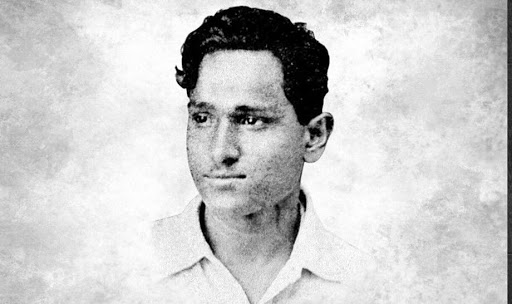
Today marks the 55th death anniversary of Batukeshwar Dutt (1910–1965), who was an Indian revolutionary and freedom fighter. Born into a Brahmin family in 1910, in the village of Oari (in present-day West Bengal), he grew up and studied in Cawnpore (Kanpur, UP). It is here that he meets Bhagat Singh in 1924 and later became a close associate of Chandrashekhar Azad. He joined the Hindustan Socialist Republican Association (HSRA) and got involved in revolutionary activities. The HSRA was established in 1928 at the Feroz Shah Kotla, New Delhi by Chandrasekhar Azad, Ashfaqulla Khan, Bhagat Singh, Sukhdev Thapar, and Jogesh Chandra Chatterjee. It had previously operated from 1924 as the Hindustan Republican Association (HRA). The name change indicated the organisation’s move towards Marxism and its goal of revolution. They aimed to overthrow the colonial British state and establish a “Federal Republic of the United States of India”, in which all systems of exploitation would be abolished.

The bombing of the Central Legislative Assembly

On 8 April 1929, Batukeshwar Dutt and Bhagat Singh stormed into the Central Legislative Assembly and threw two smoke bombs at empty treasury benches, being careful to ensure that there were no casualties in order to highlight the propagandist nature of their action.

“If the deaf are to hear, the sound has to be very loud”, the two revolutionaries explained at their trial for the bombing.

Dutt and Singh made no attempt to escape and courted arrest while shouting slogans of ‘Inquilab Zindabad!’ (‘Long Live the Revolution!’) and Samrajyavad ka nash ho’ (Down with Imperialism). They scattered leaflets titled “To Make Deaf Hear” that explained that this bombing was an act of opposition to the regressive and unpopular Trade Disputes and Public Safety Bills which were being presented in the Central Assembly. Both acts were drafted in an attempt to counter the effects of revolutionary activities and trade unionism. “If the deaf are to hear, the sound has to be very loud”, the two revolutionaries explained at their trial for the bombing. Mr. MK Gandhi, a proponent of non-violence was highly critical of HSRA methods and the use of bombs and called their actions as “cowards” and “dastardly”. In response to Gandhi’s criticism of them, these young revolutionaries responded; “has Gandhi, during recent years, mixed in the social life of the masses? Has he sat with the peasant round the evening fire and tried to know what he thinks? Has he passed a single evening in the company of a factory labourer and shared with him his vows?”…“We assure Gandhi that the average Indian, like the average human being, understands little of the fine theological niceties about Ahimsa and loving one’s enemy…we affirm that the masses of India are solidly with us because we know it from personal experience”.

Fight for Prisoners’ Rights

Sentenced to imprisonment for life, Dutt was held at the Cellular Jail in Andaman and Nicobar Islands. Along with Bhagat Singh, Dutt participated in the infamous prison historic hunger strike where they demanded the status of ‘political prisoners’ and protested the differential and discriminatory treatment between white prisoners and Indian prisoners. This hunger strike attracted a lot of media attention and helped towards the improvement of prison conditions. Batukeshwar Dutt contracted tuberculosis after he was released from prison. However, this did not stop him from participating in the Quit India Movement of 1942, due to which he was again imprisoned.

Death and Legacy

After Independence, the Indian State did not confer Dutt any recognition for his participation in the anti-colonial struggle. He lived in poverty, and some have lamented that “a revolutionary like Batukeshwar Dutt had to work as a cigarette company agent, shuttling between Patna’s tobacco shops, or sell biscuits and bread for a living”. He also worked as a tourist guide to support his family. In 1964, Dutt was diagnosed with cancer at AIIMS in Delhi. After years of non-recognition, the then chief minister of Punjab met Dutt in the hospital and offered some financial aid for his treatment. Dutt died of the illness on 20 July 1965. As per his last wish, he was cremated in Hussainiwala, Punjab, where Dutt’s comrades – Bhagat Singh, Rajguru, and Sukhdev – had also been cremated. As one commentator noted; “Batukeshwar Dutt [has] been forgotten by this death-worshipping, idol-worshipping country, simply because he made it through the freedom struggle alive”.

Read Next: Ayyankali: the First Revolutionary Voice against the Upper Castes in Kerala

Karnataka: Upper caste men beat Dalit man over allegedly touching their bike

0
In yet another incident of atrocities against Dalits in Karnataka, a Dalit man and his family were stripped, beaten with sticks, and manhandled for having allegedly touched the motorcycle of an upper-caste person. The man has also lodged a complaint regarding the same in TaliKoti Police Station on the same day. According to the complaint lodged, the incident took place in a public place near Chennamma Circle in Minaji village on the Talikoti-Muddebihala Road of Vijayapura District on 18th July 2020. The Dalit man and his son who belong to the Holeya community were on their way to the fields for work. Enroute, the Upper-Caste men alleged that his son has touched their motorcycle. The upper-caste men then started to beat up the son, the father was also beaten up when he came to aid his son. In his statement, the complainant has recorded that the upper-caste men had been irked by the ‘attitude and courage of these Holeya men’ to touch the motorcycle belonging to an upper-caste man. The spouse and daughter of the Dalit man came to plead for letting their men go. However, the upper-caste men have also trashed and tried to strip them too. Even the villagers around actively sided with the upper-caste men in trashing up the Dalits and none of them even tried to intervene and stop the incident from happening. The complaint notes that at least 25-30 people trashed the Dalit’s family. The upper-caste men did not stop there but have also passed on life threats to the Dalit family. The vengeance of the upper-caste community against the Dalits as a community was also reflected when they threatened to burn down Dalit’s house in the village. It was by chance that the PSI of the Talikoti who was on rounds came to the place of incident and freed the Dalit family. A total of thirteen men have been booked as accused in the FIR that has been lodged. The case was registered under Prevention Of Atrocities against SCs Act and sections 143,147, 324, 354, 504, 506, 149 of Indian Penal Code (IPC) A video of the incident was shared widely on social media a day ago. Read About: Nepali Man’s Head Shaved Off and Forced to Chant Jai Shri Ram

Fandry: An Unflinching Look at the Enduring System of Caste

Fandry is a 2013 Marathi film which explores the practices and effects of the caste system from the point of view of an adolescent Dalit boy. The movie shows how caste oppression, at the structural and individual level, continues; but, there are changes in the attitude of the lower castes in bearing the brunt of this enduring system. The emerging assertion of lower castes is conveyed, mainly, through the differences between the father, Kachriya, and the son, who is the protagonist – Jabya. The argument often made by liberal elites is that caste doesn’t ‘exist’ or ‘matter’ anymore in the modern nation-state of India. However, the film shows us that caste is not so easy to annihilate because its structures of inequality are reproduced and re-entrenched through modern institutions rather than eroded.
click from the film
At the beginning of the movie, we see that even though Jabya and his Brahmin classmate have ‘access’ to the same education in that they go to the same school, Jabya falls behind in his academic work because he has to miss school and help his family work to earn a living. This shows how structural inequalities of class, which are imbricated with caste, cannot be evened out only by providing uniform ‘access to education’. Equality inside the classroom cannot be separated from the inequality outside it. Jabya’s family works odd jobs in the village, doing construction work, cleaning, and making baskets. When a litter of pigs disrupts the village activities, the task to catch them also falls on Kachriya, as his is the untouchable family in the village. Kachriya’s task of chasing the black pigs and Jabya’s desire of catching the black sparrow drive the plot of the film and symbolically convey the reality of caste and social mobility.
From the film- Fandry
The black pig represents the status of Kachriya and his family because pigs are considered impure according to local custom. It also shows the humiliation that untouchable castes are subjected to, by being treated the same way that pigs are. On the other hand, the black sparrow, which Jabya is intent on catching but which is always out of his reach, represents the position that upper castes occupy. The father chasing the pig and the son chasing the bird represents their differing attitudes towards their status as lower castes. Kachriya accepts his fate and is submissive to the orders of the upper castes in the village. This is, of course, not so much a ‘choice’ as it is driven by compulsion and fear. Jabya, however, is angry towards the upper castes and is more resistant to accepting his oppression. That he is even dreaming of a relationship with an upper-caste girl shows that he aspires to reach beyond what the constraints of his caste allow. This could also represent the changes at the political level, with the increasing mobilisation and assertion of lower castes. But the film makes clear that the reality for Dalits is not improving, even if their attitudes might be changing. A nightmare that Jabya has, of him drowning in a dark well from where the light of the sky is visible but unreachable, also seems to suggest the inescapability of his caste or the improbability of moving beyond it. Throughout the film, we see his reluctance to help his family with work, which consists of manual labour, and his shame at being associated with them. As an adolescent boy, he resents his parents for passing onto him the burden of their caste and is embarrassed by them, which strains relations between them. This shows how caste relations in society affect interpersonal relationships even within the family. He is torn between wanting to hide his caste and having to accept the realities of it. Jabya studies Sant Chokhamela’s poems in school on how one’s caste does not define their character, and yet, outside the classroom he is defined by his caste. The film raises the question of the role that education plays in challenging or fortifying caste prejudices among the upper castes. There are portraits of Ambedkar, Jyothiba Phule and other anti-caste activists painted on the walls of the school, but this lip-service does not seem to cause any change in practice. In one of the film’s best scenes, when Kachriya and Jabya are almost about the catch the pig, the National Anthem begins to play from the school ground. Jabya stops and silently stands to attention while his father, though standing still, is restless. This is an important moment that makes the viewers reflect on nationalism and ‘national’ identity. We are tempted to ask: who is the Nation helping and the ideology of nationalism serving? Why should Jabya’s family stand to the national anthem when they are marginalised in the ‘national’ institutions and imagination? Does the fact that Jabya is more willing to stand for the anthem than his father reflect the indoctrination of the education system? The anthem, in a sense, paralyses them. This perhaps represents how ‘national’ identity is used to co-opt marginalised groups such as Dalits into a system which does not work for them, and how it is used to upbraid lower-caste assertion. At the end, humiliated and heart-broken, Jabya pelts stones at the upper-caste men who taunt him. Jabya’s act of pelting stones is an act of rebellion. He flings a stone at the camera, toward the audience, as a scathing indictment of ourselves, for inflicting and being indifferent to the injustices of the caste system. It shakes us, the audience, out of our complacency and leaves us with a sense of shame and a need to reflect. The film shows that the oppressive caste system persists despite our ‘modern’, ‘secular’ institutions, and offers hope that real change will only come from below, with the changing attitude of the marginalised castes towards their own oppression. Read Next: Caste system Makes it Hard for Young People to Decide Their Life Partner: Gujarat HC

Protests in Punjab Demanding Release of Varavara Rao and Other Activists

1
Protests held in various parts of Punjab for the release of the revolutionary poet, Varavara Rao and 11 other human rights activists (who have been arrested in the Bhima Koregaon case). The protests were organised by the Association for Democratic Rights Punjab (AAFDR) and over a dozen other organisations. The protests saw women and youth participating in large numbers.   The Chief Public Relations Officer of the organisation, Mr. Buta Singh, said that in just the district of Barnala, protests were organised in almost 30 locations. Despite the Coronavirus threat, people came out on the roads to protest against the dictatorial methods used by the government. Punjab The leaders participating in these protests said that the current government was unnecessarily harassing those who are fighting for people’s rights. The protesters also asserted that these poets, intellectuals, and human rights activists were being punished for a crime they did not commit. They condemned the actions of the government and the indifference of the courts as being extremely disappointing. They strongly expressed that the Modi government has taken the Constitution for granted and has crippled various democratic organisations. If the people who are part of such organisations and the citizens of India do not wake up in time, then it will not be long before this country is turned into an Iraq or Syria, they stated.

Also Read: Democracy Is Being Destroyed through Political Tools – Kapil Sibal

The protesters believe that the government is targeting only those who have understood its intentions because the government apprehends that it is such people who will show maximum resistance to their actions. Thus, the government has either jailed such people or is harassing them through other means.   Protests were also held in other places including Nava Sheher, Sangroor, Monga, Patiala, Bhatinda, Jalandhar, Manasa, Muktsar, Hoshiyarpur, Gurdaspur, Ludhiana, Jagraon, Mullanpur, Baba Bhan Singh, Sirsa (Haryana). The organisations which participated in these protests include the Rationalist Society, Punjab, Pragatisheel Lekhak Manch (Haryana), Punjab Student Union, Naujavaan Bharat Sabha, Inquillabi Kendra, Punjab, Lok Sangram Morcha, PLS Manch, Bharati Kisan Union, Varg Chetna, Pendu Majdoor Union (Mashaal), Punjab Radical Student Union, BKU (Krantikaari), Democratic Teacher’s Front, DMF, and many other organisations.

Read Next: Bhima-Koregaon: When the Process Becomes Punishment

Migrants Lives Matter: Open Letter to the Election Commission

“The Assembly has adopted the principle of adult franchise with abundant faith in the common man and the ultimate success of democratic rule, and in the full belief that the introduction of democratic government on the basis of adult suffrage will bring enlightenment and promote the well-being, the standard of life, the comfort, and the decent living of the common man” –Alladi Krishnaswamy Ayyar
While the United State of America granted universal adult franchise incrementally, India, moved from a restrictive 15 percent of Indians having (limited) voting rights to universal adult franchise, driven by the transformative impetus of the national movement and the ideals of equality and non-discrimination that it threw up.
When it came to voting rights, it was Dr. BR Ambedkar’s clarity of vision that resulted in Article 326 of the Indian Constitution which not only provided that elections would be held on the basis of the universal adult franchise but ensured that elitist notions of qualifications did not exclude individuals from either voting or standing for elections, such as property qualifications.
Ambedkar had influenced public opinion on the matter for decades, giving evidence before the Southborough committee in 1919. [The Committee was recording evidence on designing representative institutions for what was then the Indian Dominion]. Ambedkar emphasized that, ultimately, democratic government was inseparable from the right to vote, and it was voting that would prove to be (one of) the harbinger(s) of political education.
21st Century India, especially post COVID-19 Pandemic Lockdown India needs well to recall this rich history. It is the will of all the Indian people getting reflected in policy and the choices of parties of governance through the ballot that epitomizes the very foundations of representative democracy. With all attendant ills of unchecked money power in politics, class, caste and community interests overshadowing a modern and truly transparent electoral process today, India cannot look itself in the eye and explain how such a large section of its population—simply by virtue of its work definition which is being away from home – is excluded from this basic constitutional right.
India’s gaze has, for the first time, been turned towards the “Migrant Labourer”. For Indian democracy to learn the right lessons from the plight that a sudden lockdown caused this vast section of Indians, a condition that has been brought before the more settled and privileged sections, including politicians, one crucial element must surely be to secure them the right and facility to vote. To elect, to State Assemblies and National Parliament, parties that they believe to be in their best interest, able and prepared to ensure transformative social change.
Let’s take this further. The Indian Constitution guarantees freedom of movement to every citizen and to reside in any part of the country; allowing internal migration inter-se the states in search of better work and opportunities. According to the latest 2011 census, the number of internal migrants stands at 450 million (45 crores), a 45% surge from the earlier census of 2001. Among these, 26% of the migration, i.e., 117 million (11.7 crores), occurs inter-district within the same state while 12% of the migration, i.e., 54 million (5.4 crores), occurs inter-state. Both official and independent experts admit that this number is underestimated. Circular migration accounts for those migrants that have not permanently relocated to host cities, and instead circulate between host and home cities. For instance, short term and circular migration could itself amount to 60-65 million migrants (6-6.5 crores), which including family members could approach 100 million itself (10 crores). Half of these are inter-state migrants.
Studies also reveal that migrant labourers are among the most vulnerable sections of Indians, hailing from most poverty-driven rural areas and from among the most marginalized sections (SC/STs and OBCs, and Other Minorities, including Muslims), often uneducated, lacking in assets and land ownership. As of 2011, Uttar Pradesh and Bihar were the largest sources of inter-state migrants, with 83 lakhs and 63 lakhs migrants respectively, while Maharashtra and Delhi the largest receiver states. Jharkhand, West Bengal, and Orissa have joined these ranks. In their host cities, migrant labourers work primarily in informal sectors.
Most migrant voters have voter cards for their home constituency. A 2012 study showed that 78% of migrant labourers surveyed possessed voter ID cards and names present on voting lists of their home cities. Economic constraints disable a majority of migrant labourers to exercise their franchise as they cannot, in the midst of harsh work cycles, commute to their home states in the one-day declared for Parliamentary elections per constituency.  One survey shows that only 48% of those surveyed voted in the 2009 Lok Sabha elections when the national average was 59.7%. Only 31% of those surveyed voted in that election. These patterns have stayed consistent: in the 2019 Lok Sabha polls, major sender states such as Bihar and Uttar Pradesh had among lowest voter turnout rates at 57.33% and 59.21% respectively (when the national average was 67.4%).
Additionally, given the nature of migration being circular and seasonal, migrants are not permanent/long-term residents in host cities and do not satisfy the requirements of being an “ordinary resident” under Section 20 of the Representation of People Act, (RP Act), in the host state, to obtain voter cards. They are, therefore, unable to transfer their constituency. Only 10% of migrant labourers surveyed possessed voter IDs in their host cities.
The Inter-State Migrant Workmen Act, 1979 (“ISMW”) was passed to ensure guarantees against the exploitation of migrant labourers. This law requires the Centre (and States) to maintain updated records of such work. This data needs to be accurately maintained and sourced by the Election Commission of India (ECI).
The ECI, a constitutional authority under Article 324 of the Constitution has under Section 60(c) of the RP Act, the power to notify a certain class of persons to vote via postal ballot. The ECI’s much-proclaimed mission to ensure that “no voters are left behind” has resulted in attempts to ensure a secure system of postal ballots. In the 2019 Lok Sabha elections, more than 28 Lakhs votes were received via postal ballots.  The Indian migrant worker deserves the secured right to have access to vote through a similar system.
The Supreme Court too has interpreted the right to vote, the final stage of the exercise of voting right as an extension of the fundamental right of the freedom of expression, Article 19(1)(a) of the Constitution. This brings with it a positive obligation on the ECI to ensure optimal conditions for the exercise of this freedom. Ensuring this fundamental freedom to the Indian migrant worker, regardless of caste, gender, creed, ethnicity or faith, therefore is a constitutional obligation on the ECI.
Arguably, this failure to ensure that this “class of Indians’ are legitimately allowed to exercise their franchise has meant that their security, dignity, and overall well being has been invisibilized from the entire political discourse of the country, be it of the ruling party or the opposition.
Ambedkar’s prescience on right to vote for “Untouchables” bears note. He had observed that “the right of representation and the right to hold office under the State are the two most important rights that makeup citizenship”. India would do well to extend this vision to a long invisibilized section of Indians to ensure that they, too, are educated into political life.
Let Migrant Lives Really Matter.
The writer is secretary, Citizens for Justice and Peace. She received research assistance from Sanchita Kadam, Radhika Goyal, and Sharvari Kothawade, all lawyers. The subject matter of the article was part of a collective memorandum submitted to the ECI by Citizens for Justice and Peace (cjp.org.in) on July 10, 2019, which has been co-signed by the Lok Shakti Abhiyan, Odisha, the All India Union of Forest Working Peoples (AIUFWP), Bangla Sanskriti Mancha and Bharatiya Nagarik Adhikar Suraksha Manch, Assam. Read about: Life of Bengali Migrants in Bangalore Slums

Tamil Nadu: The Politics behind the defacing of Periyar Statue

On Jul 17, 2020 the statue of ‘Periyar’ E.V. Ramasamy in the Sundarapuram area of Coimbatore was found coated with saffron-colored paint by unknown miscreants. Oppositions and condemnation statements to such acts have from various circles all over India, including the tweet by Mr.Rahul Gandhi, who condemned this act. Later in the evening, a person named Arun Krishnan belonging to a right-wing sangha Bharat Sena has surrendered himself to the police taking responsibility for this act. However,  these kinds of attacks on statues of Periyar or Ambedkar in Tamil Nadu is neither a new nor a one-off incident. Periyar was a Social reformer of Tamil Nadu in the 20th century. He built a movement called Self Respect Movement to free the Backward and Scheduled caste people from Brahminical dominance, which later evolved into the much larger Dravidian Movement. He envisioned that everybody should have equal access to education and employment breaking the caste barriers in Tamil Nadu. The political parties like DMK, ADMK which were formed following his ideologies, have been largely successful in disallowing the national parties to penetrate in Tamil Nadu since 1967. However, the National Parties are trying in so many frontiers to enter and capture state power since then.

Periyar: The Anti-Caste, anti-Superstition Rationalist 

Periyar was also a rationalist and a modernist who opposed the religious rot in the society and has shown the way of rationalism and scientific temper. So, in various speeches during his lifetime, he opposed Hindu Gods in the background of the Caste system, superstitious beliefs, and traditional practices. Even today, many of his followers are using this approach to enrich scientific temper and rationalism among the people of Tamil Nadu. A you-tube channel named ‘Karuppar Kootam’ has been doing a show for a long time aimed at decoding the meaning of Sanskrit mantras in Tamil in the name of ‘Abaasa puraanam’ (Adult content in puranas). In that, one episode about the Kandha Shasti Kavasam of Lord Muruga was released seven months before. Controversy arose based on that video now, stating that Murugan is the Tamil God and the video is like defaming the whole Tamil population, their culture, and their beliefs. This was used by Bharatiya Janata Party to harvest this controversy for their political benefits. Other than BJP, so many other right-wing groups are trying to use this controversy for their political gains. Hindu Frontier, Hindu People Party, Bharat Sena, Hindu Sena, Bharat People Party, Hindu National Party, Krishna Sena, Rashtriya Sanathana Seva Sangh, to name some, are trying to penetrate the urban population of Coimbatore. There are prevailing competitions among these groups to come to the front. They are using these opportunities to prove their worth. They need this media light to show themselves as the saviour of the Hindu population in Tamil Nadu. One among them is the ‘Bharat Sena’ of Coimbatore which used its South Coimbatore division head to do this defaming on Periyar statue. This group having the motto of ‘Hinduisation of Politics and Militarization of Hindus’ is using the controversy now. The prime target of these groups to defame the Anti-religious stand of Periyar and the political parties following his ideology. They plan to dechannelize the Hindus from the path of Periyar and Dravidian parties to Hindu parties, especially BJP. In Tamil Nadu, the people are very sensitive about Tamil culture and language. Though there are other videos regarding other Puranas and other Gods in that youtube channel, these right-wing forces chose this video which is posted 7 months before about Lord Murugan because it is easy for them to target the Hindu population by triggering their cultural sentiments as Lord Muruga is believed as Tamil God. Also, the responsible video has been deleted from the channel after a defaming case filed by BJP and the respective channel head has been surrendered to the police in Puducherry. The surrendered Bharat Sena head Arun Krishnan has told that he defamed Periyar because the people following him are responsible for the constant defaming of Hindu Gods. “This is the trend started by Periyar only,” he told. But still, there are a large number of supporters for Periyar, which is preventing the entry of BJP and other Religious politics into Tamil Nadu. So far so many statues of Periyar and Ambedkar have been destroyed and defamed by Hindutva forces using slippers, black paint, and now saffron paint in order to remove him from Tamil Nadu whose ideology has been blocking their entry. But whenever his statue is destroyed or defamed, a greater number of people start to read Periyar to know who he is and why he is important. But the recent advancement of these Hindutva Forces into Tamil Nadu is alarming and threatening. The authors are students based in Chennai. Views are personal. 

Democracy Is Being Destroyed through Political Tools-Kapil Sibal

The CAN Foundation hosted a webinar with Senior Advocate and MP, Mr. Kapil Sibal, on Saturday, titled ‘Constitution and the Times: Four Decades of My Professional Journey‘. Mr. Sibal talked about the worrying state of democracy in India, the dismantling of the rule of law, police encounters, and more. The conversation touched on issues like political defections, toppling of governments, and the internet ban in Kashmir. On the Vikas Dubey encounter, Mr. Sabil stated; “How can a democracy governed by rule of law ever accept encounter as a valid tool for doing justice… I think it is the most barbaric way. Then how are you different from a country that cuts off your arms for stealing?”. He reiterated that even the worst criminal or terrorist has a right to legal representation before the courts in India. In relation to this, the issue of prominent lawyers refusing to take up briefs in ‘controversial’ cases was brought up. On this, he said; “You may not take a brief for whatever reason but you don’t have to prove your nationalism in public”. Mr. Sibal was also critical of the media for exercising not “free speech but rather commercial speech” and peddling a narrative of “assertive nationalism”. In discussing free speech, he also criticized the BJP government’s imposition of internet restrictions in Jammu & Kashmir, by which citizens there are being deprived of their fundamental rights guaranteed under the Constitution. He argued that the possibility of terrorist attacks alone cannot be used to justify the denial of fundamental rights to a whole people/region. Also Read: Fraternity: Ambedkar’s Forgotten Gift He discussed legal principles such as the Basic Structure doctrine, without which, Mr. Sibal mentioned, an authoritarian mindset could have led to the destruction of democracy. However, we are now at a stage where the political class no longer needs to amend the Constitution to destroy democracy, he reflected. Mr. Sibal noted that, “it’s time for Courts to realise that slowly and slowly, democracy is being destroyed in India through political tools, whether it’s using tenth schedule to their advantage or to topple governments or these encounters or spreading fear in a section of the community”. “Courts must recognise this fact and take up matters suo motu“, he said.  

Bangalore: Street Vendors Go On Hunger Strike, Demand Income Compensation

0
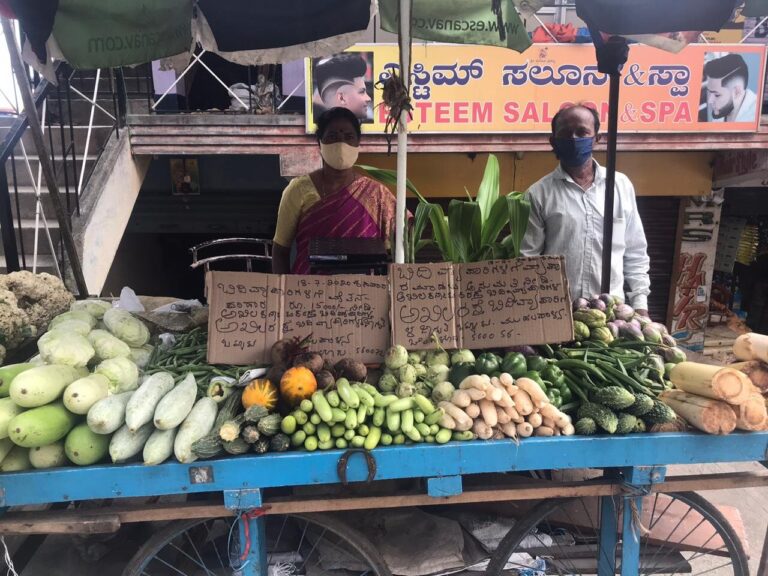
As Bengaluru and other districts of Karnataka went on yet another lockdown as a measure to contain the outbreak of Covid-19 pandemic in the city, livelihoods of lakhs of people stand deeply affected yet again. Street vendors as a community are one such community who will have to bear the first and most brunt of such measures initiated by the state. To protest against the state negligence, street Vendors today undertook a One Day Hunger Strike with three major demands. Karnataka Progressive Street Vendors’ Association (KPBVS) and Forum of Bengaluru District Street Vendor’s Associations (BJBVSO) have demanded that the Street Vendors must be:
  1. Provided with an income compensation of Rs. 15000 for the last three months;
  2. Be allowed to vend their products and services while adhering to the distancing norms; and
  3. That the announcement made by PM Narendra Modi under PM Street Vendors’ Atmanirbhar Nidhi (PM-SVANidhi) for Street Vendors be treated as a grant instead of viewing it as a loan.
Their livelihoods were devastated as PM Narendra Modi announced the nation-wide lockdown with no time for anyone to be prepared for the same. The livelihoods of millions were under immense pressure and had just started to recover to normalcy when the state government has again called off the functioning of the city for yet another week between 14th July to early hours of 22nd July. This has left the street vendor community who depend on the daily earnings to sustain their livelihoods with immense financial stress with no money to pay for food, rents including that of house and their carts while many of them have been caught up in the high-interest debt trap. They have not just questioned as to how would the government expect them to pay back the loan with no idea as to when would the economy roll back to ‘normalcy’ even after the lockdown and when their livelihoods had been completely devastated for the last three months. The street vendors also complained that the government has turned a blind eye towards the vendors who do not possess Street Vendors’ ID cards. The fact that 1.54 lakh street vendors from across the country have applied for the loan under PM-SVANidhi program is an indicator of the deep financial crisis that has hit them. It must also be acknowledged that many of them might not be able to pay back these loans provided that Corona pandemic is expected to continue at least till the end of the year and the same will have a long-lasting adverse impact on the economy. Hence, the need of the hour is that the government takes cognizance of the issue and addresses the demand put forth by the street vendors. Read about: 35000 Private School Teachers lose Jobs, 8 Guest Teacher commit suicide

Amnesty International Condemns Jailing of Rape Survivor’s Caregivers

0
After public outrage over the arrest and imprisonment of a rape survivor and her two caregivers by a Magistrate in Araria, Bihar, the rape survivor was released on bail. However, her two caregivers, who are social workers from the NGO Jan Jagran Shakti Sangathan (JJSS) have been denied bail and continue to remain in jail. Amnesty International India has demanded the release of the social workers, especially in light of the spread of COVID-19 in prisons. Avinash Kumar, the Executive Director of Amnesty International India stated: “The week-long incarceration of a 22-year-old gang-rape survivor and two social workers assisting her amidst COVID-19 in Bihar was unwarranted and excessive. On 17 July 2020, the Chief Judicial Magistrate in Araria granted bail to the survivor but upheld the detention of the social workers. Rape survivors already face numerous barriers in seeking redress, which go above and beyond the trauma they have experienced. Each case of sexual violence must be dealt with utmost precaution.” Amnesty also referred to the recommendations of the Justice Verma Committee report to emphasize the lack of gender-sensitive judges and the need to create a friendly and non-hostile environment for survivors of sexual assault. The organisaton’s statement records that: “According to the 2015-16 National Family Health Survey, 77% of women who experienced any type of physical or sexual violence never sought help or told anyone about the violence. Of those, only 3% sought help from police. Lack of trust in the justice system and the stigma attached to the violence deter many from reporting rape.” In light of this, the insensitive, harsh treatment meted out by the judicial Magistrate to the rape survivor and her social workers in Araria only exacerbates the problems that sexual assault survivors face in accessing legal recourse. By keeping the social workers in detention, the court has put their health and safety in grave risk due to the overcrowding of prisons and the increased danger of contracting COVID-19. Read Next: Rape Law: Legislative Progress Reversed by Patriarchal Baggage?

Ex-IAS Officers, Academics Demand ‘Commission of Inquiry’ on North-East Delhi Violence

A group of ex-IAS/IPS officers, academics, and activists have written to the President of India, Ramnath Kovind, seeking a ‘Commission of Inquiry’ into the investigation of the communal violence in February 2020, North-East Delhi. The letter endorsed by 72 signatories, including Advocate Prashant Bhushan, has highlighted the allegations of police complicity in the North-East Delhi violence which primarily targeted Muslims. The letter has asked for a probe under the Commission of Inquiry Act, 1952, headed by a sitting or retired judge(s) from the higher judiciary. Although three SITs set up by the Delhi Police are investigating the matter, the letter urges the need for an external, credible investigation considering the fact that the Delhi Police themselves have been accused of deliberate inaction in preventing violence and active complicity. In the North-East Delhi communal violence between 23rd-26th February 2020, 53 official deaths were reported, although activists working on the ground suspect the number of victims to be higher. Videos have emerged which show policemen assaulting injured youths. The letter points out that, “the [FIR] registered by the Bhajanpura Police station makes no mention of the clearly documented video footage of the police assaulting Faizan and the Delhi police has not named any policemen as accused in the case”. In light of such bias by the police to protect their own, the signatories state that the investigations led by the Delhi Police do not inspire confidence. The letter also states that the refusal by the police to pursue FIRs filed against BJP leaders like Kapil Mishra displays political bias. It highlights the persecution of anti-CAA protestors, on whom false allegations of inciting violence have been cast. The signatories to the letter added that “it is extremely concerning that the Delhi Police has refused to put nearly 700 FIRs registered by it in the public domain”. This lack of transparency “thwarts all attempts at public scrutiny as only the Police knows which complaints and allegations are being pursued and which continue to languish”, they stated. First published by Live Law. Also Read: Delhi Police Mute Spectators to Pro-CAA Rioters’ Violence