At least five members of the Great Andamanese tribe in India’s Andaman Islands are reported to have tested positive for Covid-19. Two have been admitted to the hospital. The Andaman Islands have had a total of almost 3000 confirmed COVID cases and 37 deaths, out of a population of approximately 400,000.
The Great Andamanese are a small group of just over 50 survivors, down from more than 5000 when the British colonized the islands in the 1850s. They suffer from the long term impacts of diseases introduced by this brutal occupation. Tuberculosis and alcoholism are widespread, making them particularly vulnerable to Covid-19. In April this year, Licho, the last speaker of the Sare Great Andamanese language, died after suffering for years from multiple health problems, including chronic tuberculosis.
Concerns are also growing for the safety of the other tribes on the Andaman Islands, including the Jarawa and the uncontacted Sentinelese. Earlier this month it was reported that five welfare staff working with the Jarawa tribe tested positive for Covid-19, yet poachers continue to invade their territory, risking bringing in the virus. Last week, eight fishermen were arrested for illegally entering the Jarawa’s territory.
The Andaman authorities have sought to protect the tribe by restricting movement on the illegal road that cuts through their territory and informing them of the dangers of COVID. However, the Jarawa continue to be at risk from welfare staff who have been insufficiently quarantined and poachers who enter their forest in order to steal the animals the tribe relies on to survive.
The Jarawa are a nomadic hunter-gatherer tribe, who have only had friendly contact with settlers neighbouring their territory since 1998. Due to their isolation, relatively recent contact, and the impact of two measles epidemics, they are also likely to be especially at risk from the virus.
The uncontacted Sentinelese, as the most isolated tribe in the world, are extremely vulnerable to diseases from outsiders, but during a global pandemic, the risk of devastating infection is even greater. Without proper patrolling of the waters around their island, they are at risk of coming into contact with poachers illegally fishing and diving for lobster.
Survival Senior Researcher, Sophie Grig, said today, “It is extremely alarming that members of the Great Andamanese tribe tested positive for Covid-19. They will be all too aware of the devastating impact of epidemics that have decimated their people. The Andaman authorities must act urgently to prevent the virus from reaching more Great Andamanese and to prevent infection in the other tribes. The waters around North Sentinel must be properly policed and no outsiders should enter the territories of any of the Andaman tribes without their consent.”
Covid-19 has already hit tribes in Brazil and Peru hard, including isolated Amazon tribes such as the recently contacted Arara people of the Cachoeira Seca (Dry Waterfall) territory. There are fears for the safety of uncontacted tribes there, including a group of 10 uncontacted tribal people who entered an indigenous community in Brazil’s western Amazon region earlier this month.
Kamala Devi Harris is born to first-generation immigrant parents. Her mother is Shyamala Harris, born in Chennai, and father is Donald Harris are from India and Jamaica respectively. She has recently been chosen as a Vice-Presidential candidate for the Democratic party for the United States Presidential election this year being the first African American woman or Asian American or person of Indian ancestry to have reached such a position in American history.
The American Vice-President
Vice Presidents are supplements to the Presidential candidates. To understand the Presidential politics of the United States, one has to note three things:
First, the American political process is unique as both its primaries and its final elections are open to the public. This means that before running for President, the two major political parties open prospective candidates to an election to people who are registered with the party. Any citizen can register with the party, and registration does not come with any additional requirements. In this way, the Primaries act as a first-round election.
Second, America employs the Electoral College system when choosing a President and Vice President. This means that people vote for the candidates that their state supports. Every state has a certain number of votes roughly proportionate to their population. Of the two major political parties, Democratic and Republican, some states consistent
Third, American Vice President have very few official powers. Their position is mostly ceremonial. Informally, a vice-president might be able to influence policy by their proximity to the President, and if the President is unable to act as President, the Vice-President is the successor, but during the term of the President, they have very little power. The Vice President also acts as a signal that the person will pursue the President’s office in a future election.
Why Kamala Harris?
To understand why Harris was chosen as a Vice Presidential candidate, it is important to understand her as someone who balances the image of the Presidential candidate, Joseph Biden Jr. To win the election, Biden will need to balance his vote-banks, as well as undecided voters who live in critical areas of the country vital for the election. The electoral system of America makes it difficult to win by focusing on one at the expense of the other.
During the Primary elections, Biden promised to choose a woman as his Vice-President. This seems to be a response to the aftermath of the #MeToo movement, where the American polity, particularly the vote-banks of the Democratic party, became more concerned about the politics of representation.
Obama Biden friendship
Biden is also seen as more appealing to the undecided voter, being able to generate consensus across different conflicting political terrains. This ability has recently become a liability as it has alienated the traditional support-base of his party. Racial minorities have noticed his willingness to compromise with racists. The poor and the indebted middle class have noticed his willingness to give concessions to big business. Since he is seen as part of the Obama administration, he also carries the baggage of that administration, which gave large subsidies to large private banks, and was unwilling to end the prolonged American wars abroad. This willingness to compromise makes Biden a weaker candidate amongst his traditional voting base, which could easily cost him the election.
During the primary elections, Kamala Harris was one of the sharpest critics of Biden. She openly accused him in debates of working with racists to promote segregationist policies.
This election also comes in the context of a very divisive issue- the Police Violence.
In the aftermath of George Floyd’s murder by police officers, two critical vote banks have come at odds with each other, African Americans and the Police. While the Police population is much smaller, they are evenly distributed across districts in the United States. In many districts, especially those White-dominated who have not seen the racialized violence and might even support it, alienating the police force can cost the party critical votes. At the same time, African Americans, a traditional vote bank for Biden’s party, have been losing faith in the party owing to its lacklustre record on racial issues, particularly police brutality. In recent times, it has been highlighted that many of the policies that increased police violence against African Americans came from Democratic politicians and Presidents.
Harris threads between these two identities. First, she is the first African American woman to be either a Presidential or Vice-Presidential candidate in history. She is very vocal about how her racial identity informs her politics, though, in terms of actual policy, her positions have not been particularly forward. Second, she is also seen as part of the police establishment. Surveys done during the Democratic primaries found that she is less popular with African American Democratic voters than Biden.
Biden’s choice of Harris as a Vice-President seems to reflect his image more than hers. His campaign has included a desire to increase the visibility of women and people of colour, and the ability to reach out and negotiate with people in the opposition, contrasting the Trump establishment that is primarily white men reluctant to negotiate.
Biden is 77 years old, about 3 years older than Trump. The youth are a strong vote bank for the Democratic party, but surveys have suggested that they might not vote for Biden in large numbers. Harris, being relatively young at 55 years, a woman, and a person of colour are supposed to be a signal of change in the party, without being a commitment to change in policy.
On August 25, the Delhi police arrested JNU scholar Sharjeel Imam in connection with the Delhi ‘riots’ under the Unlawful Activities Prevention Act (UAPA).
A graduate of computer science from the Indian Institute of Technology Bombay, Sharjeel joined JNU in 2017 to pursue a Ph.D. in Modern Indian History. He was closely associated with the anti-NRC-CAA protests in Shaheen Bagh.
For two of his speeches given on December 13 and December 16, a number of FIRs were filed against him across the country. The Guwahati Crime Branch Police Station filed an FIR against him on January 25 under sections 153 A, 153 B of the UAPA, and 124 A IPC, which can lead to imprisonment for life.
Police in Aligarh, Uttar Pradesh filed an FIR against him on the same day for sedition and creating enmity between different religious groups. The Manipur Police filed an FIR against him for sedition, waging war against the Indian government, conspiracy to commit offenses, indulging in vilification, or attacks on a particular group. On January 26, the Arunachal Pradesh police registered a case of sedition against him.
The Delhi Police registered an FIR against him under IPC section 153 (wantonly giving provocation with intent to cause riot) in addition to charges of sedition and promoting religious enmity.
He was arrested from Jehanabad, Bihar on January 28 and brought to Guwahati Jail. While he was in prison, in late April, Delhi Police further booked Sharjeel under the UAPA in connection with the anti-CAA protests near Jamia Millia Islamia in December.
On July 22, Sharjeel tested positive for COVID-19 along with 435 other inmates of Guwahati jail, just before he was about to be brought to Delhi by the Delhi police. On July 25, Delhi Police filed a 600-page long charge sheet against him at the Delhi Patiala House Court.
On August 23, he was brought back to Delhi on a production warrant and the Delhi Police has now arrested him under the UAPA, accusing him of being involved in the conspiracy of the Delhi violence.
The glaring inconsistency here is that the Delhi riots, or rather, the anti-muslim pogrom, took place between February 23 and 29. Sharjeel had been in Guwahati Jail since January 28. Meanwhile, there has been no action taken against BJP leader Kapil Mishra who gave his speech, directly inciting Hindus to forcefully remove Muslims from protest sites, on February 23, shortly before the violence broke out. The arrest of Sharjeel Imam shows the clear attempts of the Delhi police to frame anti-NRC-CAA activists and protestors in the pogrom which was incited by members of the BJP and aided by the Delhi police.
The different attempts at arresting and charging Sharjeel Imam under so many different acts and in so many different states also show an attempt to overwhelm him and his legal resources and drawing out the legal process, especially as the courts are inaccessible during the lockdown. Today, the Supreme Court adjourned the hearing on a plea by Sharjeel Imam asking to club all the various FIRs against him. His legal counsel told the court that while charge sheets are being filed against him, the courts are not allowing them to inspect court files due to the lockdown. The plea hearing was earlier delayed as the Court had to take the permission of all the different State governments.
On the call of the CPI(M) Central Committee, protests took place across the country between August 20 and August 26. The protests were held against the anti-people policies of the Modi government.
CPIM Delhi protested against rising unemployement, price hike, dilution of labour laws, the investigative incompetance of the Delhi police over the Delhi Riots and the surrender of the govt. of private interests today. pic.twitter.com/pzzbMFaG0S
In Bihar, the CPI(M) protests demanded that North Bihar be declared a flooded area. They also protested against the looting of public property by the private sector, against dilutions in labour laws, and against the conviction of Prashant Bhushan.
सरकार की जन विरोधी नीतियों के खिलाफ 16 सूत्री मांगों को लेकर सीपीआईएम का देशव्यापी विरोध सप्ताह के तहत समस्तीपुर जिला विभिन्न प्रखंड कार्यालय के समक्ष प्रदर्शन। pic.twitter.com/oHUydVF6Bw
Protests took place across Jharkhand as well, including in Ranchi, Dhanbad, Latehar, Koderma, Sahebganj, Chirkunda, and East Singhbhum. Protests also took place across Maharashtra, Andhra Pradesh, Haryana, Bihar, West Bengal, and Delhi.
मध्य प्रदेश के मलगढ़ा में सीपीआई(एम) की ओर से आज बिजली की समस्याओं को लेकर मलगढ़ा बिजली घर पर प्रदर्शन किया। प्रदर्शन में बिजली घर पर ज्ञापन दिया गया तथा जल्द समाधान की मांग की गयी। कार्यक्रम का नेतृत्व माकपा के राज्य सचिव कामरेड जसविंदर सिंह और जिला सचिव अखिलेश यादव ने किया। pic.twitter.com/njTemokDGn
The CPI(M) protests in West Bengal also demanded rapid testing and better health facilities, and action against the corruption of TMC members. In Kerala, a Satyagraha was held on August 23 simultaneously at 9,70,629 venues, with 33,20,003 participants.
Pictures of protest demonstrations from Dhandabagh,Durgapur,against the the anti-people,pro-corporate,communal and authoritarian policies of the Modi regime as a part of observance of week long protest from Aug 20 to Aug 26 on the call of CPI(M). pic.twitter.com/SqIx3SLtHv
The 16 points raised by protestors across the country were as follows:
1) Immediate cash transfer of Rs. 7,500 per month for the next six months to all families outside the income tax bracket.
2) Immediate distribution of free foodgrains of 10 kg per individual per month for the next six months for all the needy.
3) Expand MGNREGA to ensure at least 200 days of work a year with enhanced wages. Promulgate an Urban Employment Guarantee Act. Announce unemployment allowance to all the unemployed.
4) Scrap the proposal to repeal the Interstate Migrant Workmen Act (Regulation of Employment & Conditions of Services) Act 1979 and, on the contrary, strengthen the Act.
5) Increase Central expenditure on public health to at least 3 per cent of the GDP.
6) Scrap the ordinances that remove the Essential Commodities Act and to amend the APMC Act to allow free movement of foodgrains across states on the basis of unregulated pricing.
7) Withdraw all proposals to abolish/amend/suspend existing labour laws.
8) Scrap privatization of public sector undertakings, especially Indian railways and in electricity, petroleum, coal, banks/insurance, defense production sectors.
9) Transfer all funds collected in a private trust fund bearing the PM’s name to the States who are at the forefront of combating the pandemic.
10) As the Disaster Management Act has been invoked for combating the pandemic, announce a one-time financial assistance to the families of victims who succumbed to the pandemic in accordance with the National Disaster Relief Fund provisions.
11) Strictly implement reservations for SC/ST/OBCs & disabled. Fill up all backlog posts.
12) Examine and award degrees to the final year graduate and post-graduate students on the basis of their previous semesters’ performance.
13) Immediately release all those who have been detained since August 2019 in Jammu & Kashmir. Restore full communications and allow free movement of people.
14) Release all political prisoners in jails detained under draconian laws like UAPA, NSA, Sedition Act.
15) Withdraw Environment Impact Assessment 2020.
16) Punish the perpetrators of growing caste violence against Dalits, domestic and sexual violence against women and exploitation of the tribals.
The Supreme Court on August 26 asked the central government to take a stand on a waiver of interest in loan repayments during the moratorium.
A petition had been filed to the SC, asking for some portion of an RBI notification issued on March 27 to be cancelled so that interest on loan repayments during the moratorium could be waived. The petitioners said that the interest on loan repayment creates hardship, hindrances and objection in right to life guaranteed under the Constitution.
Lawyer Kapil Sibbal appearing for the petitioners said that the moratorium period will end on August 31 and asked for its extension. As on August 31, people who have taken loans will be in default if the extension is not granted.
The Reserve Bank of India (RBI) had earlier informed the Supreme Court that such a waiver on interest on loan repayments during the moratorium cannot be granted, as such a move would put the financial health and stability of banks at risk.
Responding to this, the Supreme Court said that the government cannot hide behind the RBI anymore, and asked it to make its stand clear by September 1.
The government argued that waiving interest on loan repayments would hit businesses and banks, but the Supreme Court reacted sharply to this argument.
The Supreme Court said that the government cannot be interested only in business and not about the sufferings of the people. The Supreme Court also pointed out that the entire problem has been created by the centre’s lockdown, which shut down the entire country. The Supreme Court said that the government has ample powers under the Disaster Management Act to grant this waiver on interest and that this is not time to consider the interests of business over the plight of people.
The Supreme Court has asked the government to make its stand clear on two things. First, whether the Disaster Management Act will be used, and second, whether the interest on interest for deferred loan repayments will be accounted for.
The BJP-led Assam government has extended AFSPA in the state for another six months, starting from August 28. Assam’s term of its declared status as a ‘disturbed area’ ends on August 27.
Yesterday, the state government declared Assam to be a ‘disturbed area’ for six more months under the Armed Forces (Special Powers) Act, 1958. The notification by the government stated the reason for this declaration as “recent insurgent attacks on security forces in the northeast and recovery of illegal arms and ammunition from different areas of Assam”.
Assam’s present term as a disturbed area was declared in March last year, on grounds that armed outfits may lure youths opposing the Citizenship Amendment Act into joining their groups.
While earlier the application of AFSPA in Assam was decided by the Centre, in 2017, the power to decide further extension of the imposition of the Act on the state was transferred to the State Government.
The first time AFSPA was imposed on the state was in 1990, in order to control the activities of the United Liberation Front of Assam (ULFA). It has been continuing since then, with law enforcement agencies and senior security officials reviewing the situation every six months and deciding to extend the AFSPA.
The AFSPA gives armed forces the power to maintain public order in disturbed areas. It applies to the seven northeastern states and Jammu and Kashmir. Originally promulgated during colonial rule to suppress the Quit India Movement, this act gives security forces the power to search properties without a warrant, to arrest people, and to use deadly force if there is “reasonable suspicion” that a person is acting against the state.
Under Section 6 of the Act, armed personnel cannot be challenged in the court of law for all these acts, and hence armed Forces have misused this section on various occasions, including for immense human rights violations such as brutal torture, unlawful arrests, sexual violence, and rape.
In the Saranda forest of Jharkhand, the CRPF had killed an Adivasi, Mangal Honhaga in a fake encounter on June 29, 2011. In an investigation on this encounter by the CID, the erstwhile Assistant Commandant of the 97th battalion of the CRPF, Shambhu Kumar Vishwas has been found to be guilty. The CID has applied to the Chaibasa Court for the issuing of an arrest warrant against him.
The incident
On June 28, 2011, a contingent of CRPF led by the Assistant Commandant of the 97th battalion of the CRPF, Shambhu Kumar Vishwas, arrived in Baliba village, which is located under the jurisdiction of Chhota Nagra police station, in the West Singhbhum district of Jharkhand. This contingent of the CRPF was running a campaign against the guerillas of the CPI (Maoist). According to the deceased Mangal Honhaga’s wife Mangari Honhaga’s statement, as soon as the CRPF reached the village, they grabbed 20-22 villagers, tied their hands behind their backs, and took the villagers along with them to carry their luggage. They kept the villagers without a roof on the night of June 28, and on June 29, they made the villagers transport their luggage to Bahda Forest. Mangal Honhaga was shot dead by the CRPF when he refused to transport their luggage any further.
Earlier on June 30, 2011, Assistant Commandant of the CRPF, Shambhu Kumar Vishwas lodged case number 6/11 at the Chhota Nagra police station. The case was registered under Sections 147, 148, 149, 353, 307, 302 in the IPC, Section 27 of the Arms Act, Section 17 of the Criminal Law Amendment Act, and Section 13 of the UAPA. The Assistant Commandant Vishwas said in the FIR that they had used the villagers from Baliba and nearby villages to transport their luggage. These villagers were Mangal Honhaga, Tasu Siddhu, Angara Gudiya, Somiya Barjo, Koka Honhaga, Buddhu Barjo, Barto Honhaga, Somra Barjo, Soma Barala, Rondey Honhaga, Dubin Barjo, Lando Devgam, and Budhram Torkot. Then, when they climbed a hill, indiscriminate firing suddenly started from the other side. They also fired in defence. In this back and forth, Shambhu Kumar Vishwas fired 16 rounds, Sohan Lal Sharma fired 10 rounds, Soldier G.D. Simadri fired 6 rounds, G. Lal fired 7 rounds, and Mithilesh fired 10 rounds. He said that on the day of this incident, the surrounding areas were inspected by the forces, and Mangal Honhaga was found to have died during this incident. The bullet was found on the right side of his body. Vishwas said in the FIR that Mangal Honhaga was killed by a bullet fired by Maoists.
People from Baliba and dozens of nearby villages came out to the streets in protest of the FIR filed by the erstwhile Assistant Commandant of the 97th battalion of the CRPF, Shambhu Kumar Vishwas. They started calling the entire incident a fake encounter, because according to the villagers, there was no encounter between the CRPF and the Maoists on that day. On seeing the villagers’ protest, the then Zonal Inspector General Reji Dundung investigated the incident and found the role of the CRPF and the police to be suspicious. After this, police case number 9/12 was registered in the Chhota Nagra police station, and an investigation of this case began.
In September 2012 itself, the Executive Magistrate who was investigating the Mangal Honhaga case, Podahat Chakradharpur in his report, declared the entire encounter to be fake. He said that in light of the descriptions given by the CRPF, the villagers, and the police, the encounter said to have taken place on the scene appears to not be true. In this situation, it is expected that the person who shot Mangal Honhaga be identified and the necessary investigation be started. The investigation supervisor along with the Magistrate found in their investigation that the CRPF soldiers had left for Chotanagra from Baliba along with Mangal Honhaga and the other villagers. S.K Vishwas’s contingent was walking ahead. Mangal Honhaga was walking with them. Sonua police station in-charge Rajesh Kujur, who was involved in a raid before the Magistrate and the Supervisor, said that after some time, the Assistant Commandant S.K. Vishwas moved ahead along with the villagers, making them carry the luggage. When they reached the mountain, the villagers kept the luggage and started running away. On seeing this, the CRPF soldiers began to chase after them with flashlights. Shambhu Vishwas said that if the villagers don’t stop they will fire at them, and then he started firing the bullets at them.
After this investigation report, the case was handed over to the CID in 2012 itself. Nearly 8 years later, the CID too has found the erstwhile Assistant Commandant Shambhu Kumar Vishwas, of the 97th Battalion of the CRPF, to be guilty in the fake encounter. The CID reportedly gave the guilty CRPF officer a notice asking him to appear for questioning, but he did not present himself to give his statement. Later, CID requested that the CRPF DIG make the Assistant Commandant give his statement. In response, the CRPF DIG asked CID to first provide documents related to the case, and after that, since the guilty CRPF officer was on duty, CID could come to the CRPF headquarters at any time within the duty hours to take his statement. According to reports, Shambhu Kumar Vishwas is at the CRPF headquarters at present.
Now that the Assistant Commandant of the CRPF has been declared guilty by the CID in the fake encounter of Mangal Honhanga, the question is that, will the CID be able to arrest the guilty CRPF officer and get him punished? This is one of many cases of fake encounters by the CRPF in Jharkhand that are blamed on Maoists. Investigations are ongoing in many of these fake encounter cases.
This article was translated into English by Damayanti Saha.
The Supreme Court bench headed by Justice Arun Mishra on Tuesday reserved judgment on the sentence in the suo moto contempt case against Advocate Prashant Bhushan over his tweets. The bench heard arguments of Attorney General KK Venugopal, who sought forgiveness for Bhushan.
“Tell us what is wrong in using the word ‘apology’? What is wrong in seeking apology? Will that be a reflection of the guilty? Apology is a magical word, which can heal many things. I am talking generally and not about Prashant. You will go to the category of Mahatma Gandhi if you apologise. Gandhiji used to do that. If you have hurt anybody, you must apply the balm. One should not feel belittled by that”, observed Justice Mishra while reserving Judgment
Advocate Rajeev Dhavan, who was appearing for Prashant Bhushan in the case, reminded the bench, “When Justice Mishra was in Kolkata High Court and Mamata Banerjee said the court is corrupt, Justice Bagchi wrote the judgment but Justice Mishra said as her position is that of a politician, we will not punish.”
“If a Mamata Banerjee could be let off because everything she said was in the public domain,” said Dhavan, seeking pardon for Prashant Bhushan.
He also said, “Don’t make Prashant Bhushan a martyr.”
Ahead of the sentencing, the Supreme Court granted 30 minutes to activist-lawyer Prashant Bhushan to ‘think over’ his allegations against the judiciary and his stand to not express regret over his tweets against the court and CJI SA Bobde.
Supreme Court granted another opportunity to Prashant Bhushan on Tuesday after Attorney General KK Venugopal sought forgiveness for the activist-lawyer.
“He (Bhushan) should withdraw all statements and express regret,” said AG Venugopal when the Supreme Court bench headed by Justice Arun Mishra sought his views on the ‘defiant’ statement of Prashant Bhushan.
Prashant Bhushan has refused to offer an apology to the Supreme Court for his two tweets against the judiciary, saying what he expressed represented his bona fide belief which he continued to hold.
“Bhushan says the Supreme Court has collapsed, is it not objectionable,” the Justice Mishra bench asked AG Venugopal who went on with his appeal of pardoning Prashant Bhushan in the contempt case.
He further noted that the convicting judgement contained “half-truths and contradictions”. Observations on the August 20 Order of the Supreme Court were submitted by Dhavan before the Court as he stated that the Order giving time to Bhushan to apologize gave the impression that Bhushan was being coerced to give an apology and it was an “exercise of coercion.
“An apology cannot be made to escape the clutches of law. An apology has to be sincere”, submitted Dhavan.
“If Bhushan’s statement is read as a whole, it says he has the highest respect for the judiciary, but has a critical opinion about four Chief Justices
All of us are troubled by what has happened in this Court in the last 6 years. I am proud of many judgements of this Court, but I am also not proud of many judgements of this Court”, stated Dhavan.
In the present controversy, many persons like Justices Lokur, Kurian Joseph, Arun Shourie etc. have made comments in the public domain.
“Are they also in contempt?”Dhavan submitted that there was no question of withdrawal of Bhushan’s statements or exorcising his Affidavit from the record, which was a part of his defence.
Earlier this month, Supreme Court convicted Prashant Bhushan in the contempt of court case over two of his tweets criticising the judiciary.
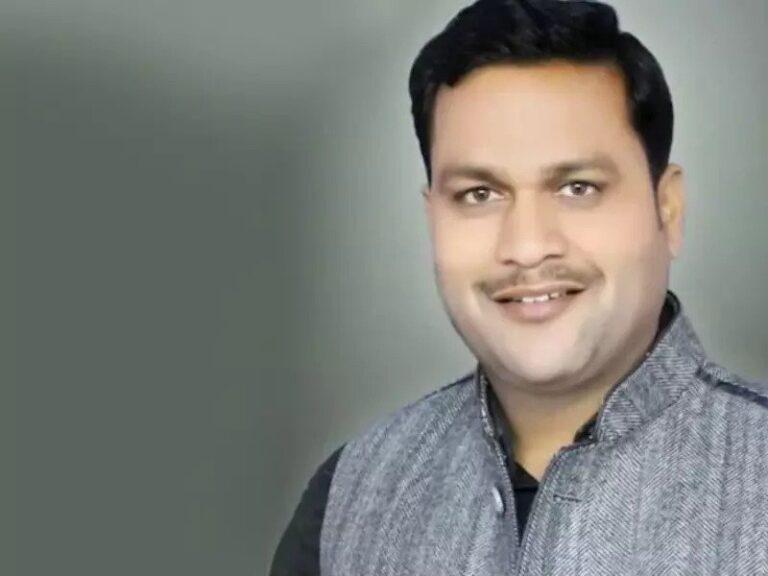
A journalist working at a Hindi news channel was shot dead on August 24 in Uttar Pradesh. This incident comes barely a month after the murder of another journalist in Ghaziabad.
The journalist, identified as Ratan Singh, was shot dead at the residence of the village head in the Fefana area of the Ballia district.
The police first identified and arrested three men who had chased and shot him. According to the police, the murder had to do with a property dispute between Ratan Singh and the accused. However, the journalist’s family has denied this and alleged that the police are building a false narrative.
According to the police, the journalist lived in an urban part of the district, and the dispute was regarding a house in the village, which had been going on for a few years. The police also said that they suspected that Ratan Singh was beaten up before he was shot, and the village head’s husband is absconding. He was rushed to the hospital where doctors declared him dead.
The police later arrested three more people. The main accused are Arvind Singh, Dinesh Singh and Sunil Singh. According to the family, the main culprit of the crime is the in-charge of the Fefna police station, who went to the spot in his vehicle and fled away. They accused the local police officials of misinforming senior officials about the incident and pointed out that the incident took place merely 20 steps away from the police post.
Ballia police tweeted, “Ratan Singh had an old dispute with his relatives. Three persons have been immediately taken into custody. The incident has nothing to do with journalism”.
Last month, another journalist Vikram Joshi, was shot dead in front of his daughters, after he had filed a police complaint about harassment of his niece.
Justice C.S Karnan recently extended his support for Prashant Bhushan, who was convicted for contempt of court by the Supreme Court. Justice Karnan described the proceedings against Bhushan as being unconstitutional.
Contempt proceedings against Bhushan had started on grounds of two tweets he had posted in June this year.
The first tweet said: “When historians in the future look back at the last six years to see how democracy has been destroyed in India even without a formal Emergency, they will particularly mark the role of the SC in this destruction, and more particularly the role of the last four CJIs.”
The second tweet said: “The CJI rides a Rs 50-lakh motorcycle belonging to a BJP [Bharatiya Janata Party] leader at Raj Bhavan, Nagpur, without wearing a mask or helmet, at a time when he keeps the SC on lockdown mode denying citizens their fundamental right to access justice!”
After Bhushan was convicted, thousands of lawyers across the country extended their support for him, with protests being organized by lawyers associations in different cities, and more than 1,500 lawyers writing to the Supreme Court against the decision. The Court gave Bhushan multiple chances to reconsider his statement and apologize, which Bhushan denied, hence standing by his opinion.
In 2017, Justice Karnan had become the first serving judge to be convicted for contempt of court. In stark contrast to the widespread support garnered by Bhushan today, the media, judges, and lawyers, including Bhushan himself, had welcomed Justice Karnan’s conviction in 2017.
After being appointed as a judge in the Madras High Court in 2009, Justice Karnan wrote to the National Commission for Scheduled Castes (NCSC) in 2011, alleging discrimination and victimisation by fellow judges as he was a Dalit. In 2014, as a Division bench was hearing a PIL on a matter relating to the appointment of certain judges, he came to the courtroom and said that the selection for the division bench was unfair. He also wrote to the joint registrar of the Right to Information section, alleging irregularities in the appointment of district judges and sought details of the selection process in order to file a complaint before the President of India.
First the Chief Justice of the Madras HC, and then all 20 judges of the Madras HC, asked the CJI to transfer Karnan to a different court saying that he was “difficult to work with”. Contempt proceedings against him began after he wrote to the Prime Minister in 2017, naming “an initial list” of 20 sitting and retired Supreme Court and High Court judges, accusing them of corruption and casteism.
Justice Karnan’s statements or accusations never went into the public domain as the Supreme Court barred the media from publishing and broadcasting Justice Karnan’s statements. Justices J Chelameswar and Madan B Lokur who have now endorsed the resolution expressing solidarity with Bhushan were part of the bench of judges that convicted Justice Karnan.
In 2017, Justice Karnan wrote that he was pained to note that the media had been omitting crucial parts of his communications regarding his allegations. He wrote, “For example, I have often mentioned in my communications that I am a victim of caste discrimination by some erring judges and such violations attract a jail sentence with a fine on the perpetrators”.
While many in solidarity with Prashant Bhushan have pointed out the arbitrary nature of the law of contempt and argued that it is an undemocratic and archaic law, Bhushan has recently defended his support for Justice Karnan’s conviction under the same law.
Some people are questioning why I supported the Conviction of Justice Karnan for Contempt of Court.Karnan had,apart from making absurd allegations against judges,abused his Judicial office to illegally order jailing SC judges etc He was interferening with adminstration of justice pic.twitter.com/TxTdgPjJyk
Justice Karnan refused to comment on Bhushan’s statements about him and the inequality in support, instead, focusing on the law itself. He said that the law of contempt goes against the principle of free speech and said that the different ways in which the two cases have been dealt with reveal inconsistencies in the functioning of the Court itself, further highlighting the arbitrary nature of the law. In fact, even during his own conviction, in 2017, he had made a petition in front of the Delhi High Court, challenging the constitutional validity of the Contempt of Courts Act itself.
An allegation that Justice Karnan had made in 2015, against Justice AK Ganguly, accusing him of sexually harassing an intern in the courtroom, which was dismissed at the time as part of Justice Karnan’s “difficult nature” was later found to be true by a fact-finding committee. Justice AK Ganguly suffered no consequences.
It is important to remember the conviction of a Dalit judge who had repeatedly attempted to critique the judicial system for its exclusionary nature and the dominance of upper castes. The conviction was preceded by years of sidelining, isolating, and making light of Justice Karnan’s statements, chalking it up to his personality and calling him “difficult”.
While Prashant Bhushan’s brave statements have been published on every news portal, Justice Karnan’s communication to the public was stifled. While he may not have maintained the existing standards of ‘decorum’ of the Court while making his allegations, it is important to consider the ideological argument he had attempted to make, and note that practices promoting lack of transparency and internal deliberations of the court are to the advantage of the system. It is for this reason that even in Prashant Bhushan’s case, the Supreme Court is deliberating on an ‘internal mechanism’ to deal with complaints in order to keep them from reaching the public. Now, as we see the law of contempt being misused, rather than glorifying one man’s fight against it, it is important to question the arbitrary nature and vagueness of the law itself, which can be used to target anyone who challenges the practices of the Court.