Adani Australia Coal Mine Blocked by Indigenous Wangan and Jagalingou People

The Wangan and Jagalingou traditional owners have blocked the Carmichael coal mine project by Adani Australia in Queensland. They have named their movement ‘Standing Our Ground’ because they intend to stand their ground to defend their rights as First Nations people.

The Wangan and Jagalingou people are one of the many indigenous communities whose ancestors lived in Australia before British colonization. On Standing Our Ground, they wrote that they are “the original sovereign people of a vast area of unceded land in the Galilee Basin in central-western Queensland”.

Wangan and Jagalingou Standing Our Ground to #EvictAdani

BREAKING: We are serving Adani with an eviction notice for illegally trespassing on Wangan and Jagalingou land and demanding they cease all mining and extractive activities on our Country. They’ve got to stop work, and get out.Adani’s operations seek to destroy our Country, and decimate our heritage. This is unlawful and will be resisted. Soon they'll start draining the water table and digging their mine. That's going to drain the life out of our country and kill our dreaming. Adani have given us no choice but to intervene to protect our land, water and culture.We intend to stand our ground to defend our rights as First Nations people. We have not ceded sovereignty. Our inalienable rights to this land cannot be signed away. We will continue to fight to have Adani removed from our land. To protect its water and to fight for the future generations #StandingOurGround #EvictAdani

Posted by Wangan and Jagalingou – Standing Our Ground on Wednesday, August 19, 2020
According to an Australian common law doctrine known as ‘Native title’, Australian law recognizes that Indigenous Australians have rights and interests to their land that derive from their traditional laws and customs.

However, last year, the Queensland government extinguished native title over 1,385 hectares of Wangan and Jagalingou country, granting Adani freehold title. This was done without consulting traditional owners of the land and was opposed by many from the community.

In order to stifle the opposition, Adani engaged a private investigator and equipped security guards with body cameras to film a verbal confrontation that led to a Supreme court order which exposed two traditional owners to possible jail time if they returned to a ceremonial camp on Adani’s mine site.

Thus ‘Stand Our Ground’ said that Adani has already destroyed their culture and their country, and soon they will start draining the water table and digging their mine. They wrote, “That’s going to drain the life out of our country and kill our dreaming”.


On August 20, they announced that they are serving Adani with an eviction notice for illegally trespassing on Wangan and Jagalingou land and demanding that Adani cease all mining and extractive activities in their Country.

At present, they have re-established tribal control of their lands in central Queensland, and have blocked workers from reaching the mine construction site. They said that they will restrict Adani Australia and contractors’ free movement within Wangan and Jagalingou lands, but these restrictions will not apply to the general public or local farming families.

According to a report on The Guardian, this incident highlights issues in the law that gives traditional owners few rights to block development. According to the native title system, First Nations people can only obtain royalties or compensation for their land if they sign a land-use agreement with the proponent. If an agreement is not reached, the native title tribunal then makes a decision and rarely rejects mining leases.

The Wangan and Jagalingou people have refused to acknowledge what they have called the Queensland government’s “illegal land grab” and “sham Adani agreements” created without the free, prior, and informed consent of the community. They have demanded that Adani Australia abandon the Carmichael mine project immediately.

China Asks U.S. to Stop Military Actions in the Pacific

0

China Foreign Affairs Ministry spokesman Zhao Lijian Friday said that if the U.S. continues with its provocative military actions in the Asian region, his country will be forced to take retaliatory measures to safeguard its security interests.

“We strongly oppose the deployment of U.S. medium-range, land-based missiles in our region and express our strong dissatisfaction with the frequent pressure on China’s neighbors,” the senior official said.

Lijian mentioned that the White House shows its Cold War mentality as it increases the U.S. military presence in the area with military exercises and demonstrations.

He urged Washington to take a responsible attitude and concentrate its efforts on maintaining global and regional peace and not the other way around.

“If the U.S. insists on following its own path, China will take the necessary countermeasures to firmly safeguard our own security interests,” the spokesman warned.

The diplomat negatively valued the words of the U.S. Special Presidential Envoy for Arms Control Marshall Billingslea, who said that the White House plans to discuss the deployment of missiles with some Pacific countries to counter China’s nuclear arsenal.

Lijian said his country supports the START III Treaty, an offensive arms control agreement between Russia and the U.S, as it gives not only the strategic security of the U.S. and Russia but also global stability.

In the last few months, the U.S. has been on the offensive against China. U.S. President Trump has attempted to blame China as solely responsible for the pandemic multiple times and made comments against Chinese immigrants in the U.S., including calling the virus the “Kung Flu”. Trump then carried out a number of orders against Chinese businesses in the US as well, including Tiktok, WeChat, and has indicated banning the e-commerce company Alibaba as well. The U.S. also supported India in the recent Indo-China confrontation.


Prashant Bhushan Refuses To Apologize In Contempt Case

0
Advocate Prashant Bhushan has filed a supplementary affidavit before the Supreme Court, refusing to tender an apology with respect to the statements made by him over Twitter, in connection to the functioning of the Supreme Court as well as the CJI. Bhushan said that the remarks made by him were a “constructive criticism” of the Court and therefore, retracting the same would amount to tendering and “insincere apology”. He stressed that as an officer of the court, he has a duty to “speak up” when he believes that the Judicial institution is deviating from its sterling record. “Therefore I expressed myself in good faith, not to malign the Supreme Court or any particular Chief Justice, but to offer constructive criticism so that the court can arrest any drift away from its long-standing role as a guardian of the Constitution and custodian of peoples’ rights,” he said. He said that he made bonafide remarks with full details. However, the same has “not been dealt with by the Court”. Thus, declining to tender an apology Bhushan said,  “My tweets represented this bonafide belief that I continue to hold. Public expression of these beliefs was I believe, in line with my higher obligations as a citizen and a loyal officer of this court. Therefore, an apology for the expression of these beliefs, conditional or unconditional, would be insincere. An apology cannot be a mere incantation and any apology has to, as the court has itself put it, be sincerely made. “This is especially so when I have made the statements bonafide and pleaded truths with full details, which have not been dealt with by the Court. If I retract a statement before this court that I otherwise believe to be true or offer an insincere apology, that in my eyes would amount to the contempt of my conscience and of an institution that I hold in highest esteem. Prashant Bhushan was convicted by the Supreme Court for criminal contempt of court over his tweets against the judiciary and CJI SA Bobde. Bhushan Added further “I believe that the Supreme Court is the last bastion of hope for the protection of fundamental rights, the watchdog institutions and indeed for constitutional democracy itself. It has rightly been called the most powerful court in the democratic world, and often an exemplar for courts across the globe. Today in these troubling times, the hopes of the people of India vest in this Court to ensure the rule of law and the Constitution and not an untrammeled rule of the executive.” The bench had earlier asked Bhushan to take few days time and reconsider the statement, and posted the matter for hearing on August 25.                  

Vaccine Alone Cannot End Pandemic: WHO

1

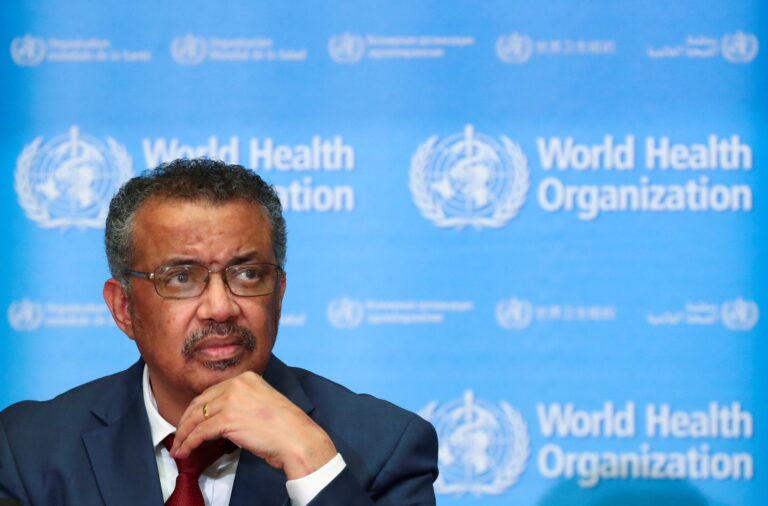
The World Health Organization (WHO) said on August 21 that although a vaccine will be a vital tool in the global fight against COVID-19, a vaccine will not end the pandemic on its own.

According to data compiled by Johns Hopkins University, the virus has infected more than 22.7 million people worldwide and killed at least 794,100. There are currently at least 30 vaccines in clinical trials, according to the WHO.

Three COVID-19 vaccine candidates are in various phases of development in India. Two of these have been developed by Indian companies, including one Bharat Biotech in collaboration with ICMR and the other by Zydus Cadila Ltd. The phase-one human trials for both have been completed and the trials have moved to phase-two.

The Serum Institute of India (SSI), which partnered with AstraZeneca to manufacture the University of Oxford vaccine, has been permitted to conduct phase two and three human clinical trials in India.

Recently, reports were floated around saying that this vaccine would be available in 73 days. However, SSI called this information “completely false and conjectural”.

According to Dr. Gagandeep Kang, the logistics of manufacturing, reviewing, regulation, licensing and then distribution and the time all of this will take means that even if the vaccine is cleared completely, it will not be widely available to everyone immediately, and it doesn’t mean that everyone can be treated with it. In other countries, frontline workers have been prioritized in terms of administration of the vaccine, and high-risk patients take the next priority. However, these issues have been whitewashed in recent speeches by the Prime Minister where he has promised that the three vaccines being developed will be ready for mass distribution and associated it with the launching of the new digital health card.

The WHO has said that since the virus was only discovered in December and scientists still don’t fully understand how it affects the body or how well someone is protected from reinfection after recovering, and so there is no guarantee for a vaccine being completely effective, especially over time.

Instead, the WHO has emphasized the need for public health measures to stop transmission. The pandemic needs to be tackled at different levels all at the same time- testing, isolating and treating patients, tracing and quarantining their contacts, informing the public, and empowering and listening to communities.

Efforts to respond to climate change need to be accelerated and the pandemic needs to be taken as an impetus to restructure economies. The WHO guidelines are in complete contrast to the current actions of the Indian government, which has been taking this pandemic as an excuse to exploit workers and marginalized communities and privatize the economy further, which will lead to fewer and fewer sections of society being able to survive the pandemic.

Natural Gas Deposit Discovered in Turkey: Largest in its History

0

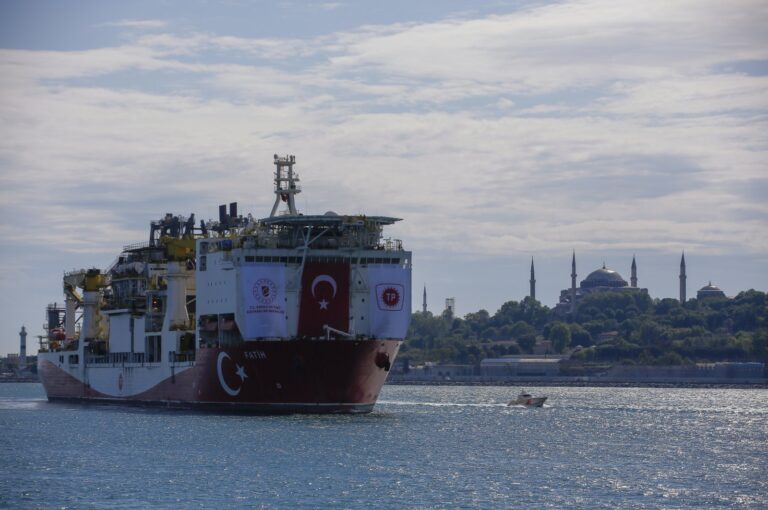
Turkey discovered a natural gas deposit in the Black Sea, spanning 320 billion cubic meters, the largest in its history, according to the President, Recep Tayyip Erdogan.

According to a teleSUR report, the Turkish drilling ship Faith began a search on July 20. The deposit was found in the Tuna-1 exploration, around 150 miles off the coast of Turkey, near its maritime borders with Romania and Bulgaria.

This discovery is notable as Turkey has historically depended on foreign imports for its energy. According to a report on DailySabah, foreign energy accounts for 75% of the country’s energy consumption, on which it spends approximately $50 billion. Turkey buys one-third of its natural gas from Russia, one-fifth from Azerbaijan, 17% from Iran, and 12% from Algeria.

Recently, before this discovery was made, Turkey had sent a research ship to look for undersea gas and oil deposits in Greek territorial waters. Due to the lack of agreed-upon maritime borders between Turkey and Greece as well as Turkey and Cyprus, there are many regional conflicts over energy reserves and resources in the sea.

Hinting that there could be more reserves of natural gas where this one was found, President Erdogan has stressed energy sovereignty for Turkey, and further, the possibility of the country becoming an exporter of energy.

Turkey is currently experiencing high inflation, a devalued lira, and a wide account deficit. This discovery of natural gas provides hope for the improvement of the Turkish economy.

According to Simon Tisdall, due to Turkey’s internal economic problems coupled with the pandemic, President Recep Tayyip Erdogan has been attempting to assert the country’s dominance through faith-fuelled nationalism, especially through aggression towards neighboring countries, and a shift from Turkey’s earlier secular attitude towards Islam. Turkey’s recent attempts at maritime expansion, under the doctrine of ‘Blue Homeland’, a vision of maritime jurisdiction of areas surrounding Turkey, are perhaps part of this attempt.

Factory Accidents on the Rise: 130 Workers Have Died

1

The scrapping of labour laws is beginning to show its effects. 130 workers died in factory accidents in Gujarat in the first seven months of 2020.

According to a report published on the Indian Express, 57 per cent of workers’ deaths have been due to accidents after the relaxation of lockdown.

According to the Director of Industrial Safety and Health (DISH), an office that comes under the Labour Ministry, there have been 89 factory accidents between January and July, in Gujarat. In these accidents, 130 workers have lost their lives.

Out of these, 51 accidents occurred between April and July, and 74 workers lost their lives.

Six labourers died in April and May. The maximum number of deaths occurred in June and July. In the 18 accidents that occurred in June, 37 workers died. 22 workers died in July.

According to the Indian Express, “The Director of DISH P.M Shah has said that compared to last year, there have been fewer factory accidents in the months of April and July”.

After the relaxation of lockdown, the biggest factory accident took place in Gujarat. There was a boiler blast in a factory of Yashashwi Rasayan Private Limited in Dahej, Gujarat, in which 10 workers died and 50 workers were injured.

After this huge accident, DISH shut down the company and gave an order for verification of safety measures taken by all factories in Dahej.

A case has been registered against the fire safety head along with 7 other people from Yashasvi Rasayan Pvt. Ltd for involuntary manslaughter.

The accused appealed for bail to the Gujarat High Court which the Court rejected in August.

While there was another fire in Sanand factory, there were no casualties, but the Japanese diaper manufacturing company was burnt to ashes and it took 24 hours to control the fire.

In order to reduce factory accidents, DISH has organised a special Safety month, for spreading awareness about safety measures.

Chemical factories will be the focal point of Major Accident Hazard (MAH) while conducting the awareness campaign for reducing factory accidents.

MAH has identified 529 chemical factories and included 7000 small factories from Gujarat in the list. Bharuch, Vadodara, Ahmadabad, Surat, Kuchh, and Valsad districts are included in this list.

According to the data, the Labour Ministry has to give around 8.71 crores to the families of the workers who have died in factory accidents in 2020. This includes the families of 130 workers. The process for giving them compensation has been held up due to the lockdown.

Shah said that most courts are closed in the month of March. The compensation will be given to the families of the workers through the labour court, but even the labour court is shut due to the lockdown.

He then said that after the Labour Court, the process of compensation is the responsibility of the Employee State Insurance Corporation (ESIC). The process is ongoing there.

President of Sanand company Ajit Shah said that they have been asking for fire safety for the past six years but have not received any offer from the government.

He then said, “Ahmedabad is a manufacturing hub and it is not possible that there will be no fire accidents in the industrial areas of Ahmedabad”.

Workers at factories had this to say that there are many factories in Gujarat and they questioned whether the government’s safety campaign will reach all the factories.

According to the Indian Express, in the last two years, factory accidents in Gujarat have reduced. In 2017, there were 230 factory accidents. In 2018, there were 236, while in 2019, it had come down to 188.

This article was originally published in Workers Unity in Hindi. It has been translated to English by Damayanti Saha. 

AG Declines consent to Initiate Contempt Proceedings against Swara Bhasker

0
Attorney General KK Venugopal has declined to grant consent to initiate contempt proceedings against actress Swara Bhaskar. He further stated that her remarks about the Ram Janmabhoomi judgement by Supreme Court were “not an attack on the institution”. He has rejected an application filed by Advocate Anuj Saxena seeking sanction under Section 15 of Contempt of Courts Act 1971 read with Rule 3 of Contempt proceedings of the Supreme Court 1975, for initiating Criminal contempt proceedings against actor Ms. Swara Bhaskar. The petitioner is Usha Shetty, who is a leader of the right-wing organisation, Virat Hindustan Sangham (VHS) Karnataka, founded by Subramaniam Swamy. The petition was filed through advocates Anuj Saxena, Prakash Sharma, and Mahek Maheshwari. Mahek Maheshwari is the advocate who filed the complaint against Prashant Bhushan. Maheshwari began his legal career at BJP leader Subramaniam Swamy’s law office and is an active member of the Virat Hindustan Sangham. The petition alleges that Swara Bhasker scandalized the court by saying “courts are not sure if they believe in the constitution” while addressing a conference “artists against communalism” at Mumbai in February 2020. They cited two paragraphs, the first of which quoted Bhaskar as having stated, The plea alleged “objectionable statement” made by Bhaskar is reproduced in the petition as : “We are living in a country where the Supreme Court of our country states that the demolition of Babri masjid was unlawful and in the same judgment rewards the same people who brought down the mosque.” “We are ruled by a government that doesn’t believe in our Constitution we are ruled by police forces that do not believe in the constitution it seems we are now in a situation where our courts are not sure whether they believe in the constitution or not what then do we do and it seems to me that as everyone has said that path is clear to its and it has been shown to us by you all whoever of you all have been part of the protest by the students by the women and by the citizen protestors it is to resist” The petition alleges that her statements were not only a “cheap stunt of publicity” but also a deliberate attempt to turn masses to revolt against the Supreme Court. “The alleged contemnor statements intends to incite feeling of no-confidence amongst the public with respect to the proceedings of the Hon’ble Court and integrity of the Hon’ble Judges of the Apex Court of India”, states the Petition filed by Adv. Anuj Saxena, Prakash Sharma & Mahek Maheshwari on behalf of Usha Shetty. Referring to the first part of Bhaskar’s statement, Venugopal stated that her remarks were factual. “The Statement in the first part appears to me a factual one and is a perception of a speaker. The comments refer to the Judgment of Supreme Court and is not an attack on the institution. This does not offer any comment on the Supreme Court itself or say anything that would scandalise or lower the authority of the Supreme Court”. “The Second Statement is a vague statement not related to any particular Court and something which is so general that no one would take any serious note of this statement. I do not think that this is a case where the offence of scandalising of Court or lowering the authority of the Court would arise”.  I, therefore, decline consent to initiate contempt proceedings against Swara Bhaskar,”. Venugopal told the petitioner’s lawyer, as reported by PTI. Being unsatisfied with the reasons provided by the AGI the petitioner has approached the Solicitor General of India as under rule 3 (c) both Attorney General & Solicitor General can provide the consent.

Banks in Beirut: How the Lebanese banks stoked public anger through the pandemic

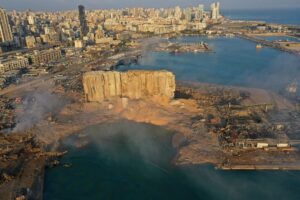
On 4 August 2020, two explosions occurred in the port area of Beirut Lebanon, killing nearly 200 people, injuring thousands more, and leaving nearly 3,00,000 people homeless. The explosion came from an abandoned ship, the MV Rhosus, which contained nearly 3000 tonnes of ammonium nitrate. The explosion has been called one of the most powerful non-nuclear explosions in human history.
beirut
The crater at Beirut port this morning where the explosion took place( Twitter)
The MV Rhosus was an abandoned ship confiscated by the Lebanese government in 2014. The reasons for its abandonment are unclear, but the original owner claimed bankruptcy, and the ship was considered unfit for sailing. Lebanon state did not use proper safety protocol, effectively leaving a large live bomb on its port. Immediately after the explosion, protests erupted in Beirut. These protests are a continuation of the protests from last year, where people have expressed anger at the political elite of the country, which they accuse of looting their country. These protests seem to have erupted in anger immediately following the explosions with many people on the ground have been saying that the initial protests were very violent.
Lebanon PM announced the resignation of the government
As a result of the protests, the Prime Minister, Hassan Diab declared two weeks of emergency. He then resigned on 10 August 2020 and will remain as a caretaker Prime Minister until a new government is formed. Many other ministers also resigned. Hariri’s resignation had not ebbed the protests. Protesters have said that their protests target not just a particular party, but the constitution of Lebanon itself.

To understand, it is important to look at the financial system in Lebanon.

From its partition from Syria, Lebanon has always held a strategic position for Western powers in the Middle East. Originally it was carved out to be a nation for the Urban Christian Maronite community in western Syria but has been at the crossroads of the western powers, reunification movements with Syria and hostility between other countries, including Isreal, Egypt, Saudi Arabia, Iran, and Russia. Following a 15 year civil war that ended in 1990, Lebanon adopted a constitution that promoted a free market, to protect the business interests of western powers and their allies.

Since 1990, Lebanon adopted a constitution that promoted a free market, to protect the business interests of western powers and their allies. Protesters have said that their protests target not just a particular party, but the constitution of Lebanon itself.

While the Banque du Liban, Lebanon’s central bank, has fixed the Lebanese Pound to LP 1500 to the USD or 20 LP to the INR almost consistently, the amount of foreign currency reserve has been consistently low. A lot of foreign currency circulates in the economy, and the bank gets a lot of foreign currency from savings. The country has a huge black market, which many members of the Lebanese elite have been able to profit from. The divide between the ultra-rich and other people in Lebanon is one of the starkest in Asia. For most of the country, this has led to an association of power with corruption by the rich, the state and other parts of the establishment. Those with political connections they manipulate the system in a way that suits them. The vast majority of the country is forced to pay high taxes to keep the government going. The protests last year, famously called the WhatsApp protests, were sparked by the imposition of taxes on WhatsApp calls. Like many other countries in the Middle East, the structure of the state has been constructed under the influence of foreign powers to promote a certain kind of politics. The parties in Lebanon can be divided into two, one is supported by the United States, and Saudi Arabia and the other is supported by Iran and Syria. The absence of proper public services, the closeness of state and business, the extreme inequality of the elite against the population and the influence of global capital, are all contributing factors to the current protests. Protesters have long understood that any alliance with a political party, a foreign country or any other member of the elite would delegitimize their movement. This can be a trying time for a movement. When protests become reduced to expressing dissent to the current status quo, the ability to imagine and chart a future path stops.

Who are these protesters?

beirut
Lebanese anti-government protesters on May 1, 2020, marking International Workers’ Day (Labour Day). PC: AP
It is important to look at the class nature of the protesters that are there. Most of the protesters come from the Lebanese Middle class. The Middle class of Lebanon has long been in a very precarious state. Unlike immigrants and refugees from Syria, which are incredibly poor and have to live in dire poverty within the country consistently, the Middle class has bounced in and out of poverty based on the global economy. In many ways, they feel the crisis with a mix of good days and bad. Their frustration is as much about precarity as it is about poverty. Lebanon, in terms of economic inequality, ranks as one of the worst countries in the world where the top 1% and the top 10% of almost exclusive control over the nation’s wealth. This means that in times of economic crisis when banks start defaulting and this class starts losing their savings. Already at the beginning of 2020, banks limited withdrawals to only to about LP 2,00,000 per week (Rs. 10,000) and only LP 6,00,000 per month (Rs. 30,000), citing fear of capital flight. The cost of living in Lebanon is around twice that of India. The limit was challenged as being illegal and the restrictions were eased, but almost immediately, the COVID 19 Pandemic made matters worse. A nationwide lockdown that began 15 March and ended 26 April hurt the local economy making people reliant on their savings. The exorbitant wealth of the elite, which is very visually obvious in the city of Beirut. We should note here that the area around the city of Beirut constitutes nearly a third of the country’s population. It is usually the vast majority of the people that lose out. There’s a substantial portion of the Lebanese people who circle the poverty rate, and it’s not to say that they are always close to being impoverished, but given the wide economic fluctuations that the country has seen over the past few decades. They also complain that there are few public services to help them out, and there is also a lot of corruption. This is a very precarious population. This includes many small business owners who may have difficulty making ends meet, and are very much at the mercy of the broad economy. Recently, owing to the economic problems suffered worldwide. The Lebanese pound plummeted, leading to a large flight of capital from Lebanon, something that the government has not been able to control. On the other side, there is a substantial portion of Lebanon’s working class, which include Syrian refugees and other working immigrants who do not have space in these protests. Lebanon’s debt adds a complication to matters, as it gives western powers a string to pull in times of largescale change. There is some pressure coming in on getting Lebanon to take up the American Dollar, as a way to combat inflation, debt, and a flagging economy. This will further the problems Lebanon has had in provisioning public services and controlling the financial sector of the economy. Given the class composition of the Lebanese protests, there does not seem to be a strong source of resistance to these pushes.

Foreign Tablighis were made “scapegoats”- Bombay HC Quashes FIR

0

Quashing the FIRs against 29 foreign nationals who were accused of participating in the Tablighi Jamaat congregation at Delhi without permission amid the COVID-19 pandemic, the Aurangabad bench of the Bombay High Court said the action against them was taken in order to make them scapegoats during a pandemic.

A division bench of Justice TV Nalawade and Justice MG Sewlikar said, “A political Government tries to find the scapegoat when there is pandemic or calamity and the circumstances show that there is probability that these foreigners were chosen to make them scapegoats. The aforesaid circumstances and the latest figures of infection in India show that such action against present petitioners should not have been taken.”

Slamming the media for carrying propaganda about the Tablighis, Justice TV Nalawade said, “There was big propaganda in print media and electronic media against the foreigners who had come to Markaz Delhi and an attempt was made to create a picture that these foreigners were responsible for spreading COVID-19 virus in India. There was virtually persecution against these foreigners.”

“Smell of malice” in action taken

Before quashing the FIRs, Justice Nalawade noted, “This action indirectly gave warning to Indian Muslims that action in any form and for any thing can be taken against Muslims. It was indicated that even for keeping contact with Muslims of other countries, action will be taken against them. Thus, there is smell of malice to the action taken against these foreigners and Muslim for their alleged activities. The circumstances like malice is important consideration when relief is claimed of quashing of F.I.R. and the case itself.”

The 58-page judgment stated, “The record of this matter and the submissions made show that action of central government was taken mainly against Muslim persons who had come to Markaz Delhi for Tablighi Jamaat. Similar action was not taken against other foreigners belonging to other religions.”

When the State sought a stay on the operation of the order on the grounds that an appeal was to be preferred, the Court replied that there was no “question of a stay”.

The Tablighi Jamaat hit the headlines in March after authorities said a congregation at its headquarters in Delhi’s Nizamuddin area was responsible for a spike in COVID-19 infections.

Shoma Sen: Teacher, Dissenter, and More

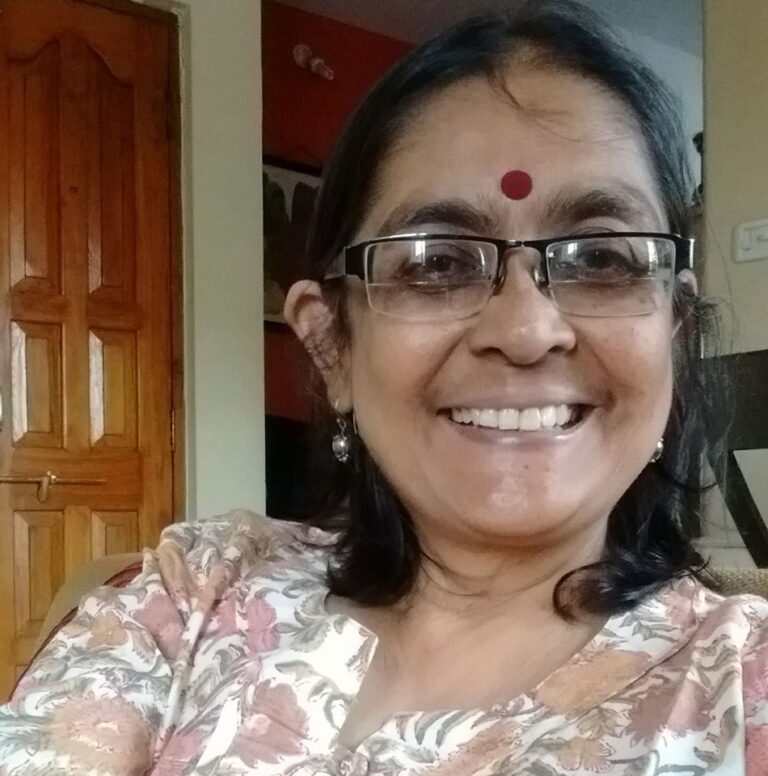
A reputed academician, a Dalit and Women’s Rights activist, a teacher, and dissenter, Shoma Sen is all of the above and more. Born and raised in Mumbai, she moved to Nagpur with her partner and daughter with a strong resolve to protect and promote the democratic rights of the most marginalized people in society.

Shoma Sen has been a respected academic for almost three decades. She has been actively involved with the Women’s Department of Wardha Vishwavidyalaya and taught in various colleges across Nagpur. During the time of her arrest, she was the Head of the Department of English at Rashtrasant Tukadoji Maharaj Nagpur University. She has written extensively on post-colonialism and women’s studies for several decades.

Shoma Sen
Courtesy: Koel Sen

Shoma’s writings have discussed the feminist subjectivities of Dalit and Adivasi women oppressed under multiple structures. Her writings reflect the resilience and political assertions of women. Apart from her writings, her political work has contributed significantly to the processes of political and social transformation. She was a part of Vidyarthi Pragati Sangathana in her college days in Mumbai in the late 1970s. In the 1980s, she edited the students’ magazine Kalam and was active during the textile workers’ strike.

When she moved to Nagpur, Shoma Sen continued to work for the furtherance of civil and democratic rights. She became actively and intimately associated with the Committee for Protection of Democratic Rights (CPDR) and continued to organize people under its banner with the aim to protect civil and democratic rights. She was actively involved with women’s organisations Women against Sexual Violence and State Repression (WSS) and Stree Chetna and founded and convened the Committee Against Violence On Women (CAVOW).
Shoma Sen
Courtesy: Amnesty.org

CAVOW conducted fact findings in conflict-torn regions affected by State brutality, like Manipur and Chhattisgarh. She also worked vigorously to organise legal aid for women political prisoners. It is her sincere belief that women should have the space to actively and effectively participate in democratic processes, as opposed to being given tokenistic gestures. She has worked for the rights of Dalit women who are doubly oppressed under Brahmanical patriarchy. Shoma Sen has also been publicly critical of mainstream feminism which invisibilizes caste and the oppression of Dalit women from outside and within the community.

Shoma, 60, was arrested by the Pune Police on June 6, 2018, as part of a brutal crackdown of the State on human rights defenders. Her daughter has documented their jail mulaqats on social media.
Shoma sen
Courtesy: Huffpost India

In one of the letters to her daughter, Shoma writes, “They can keep me locked inside, but my mind is completely free”.

This mirrors her resilient spirit that holds strong despite the prison officials’ insensitivity to her arthritis, her age, and her needs.

Shoma’s exemplary contributions to the field of education and her prolific ability to mobilize people and especially women from across locations had brought her under the State’s scrutiny. It is the clear intent of the masculine State to stifle the voices of women who transgress the rigid structures of patriarchy and challenge the very structures that shackle them.

This article was originally published on Mumbai Rises to Save Democracy.