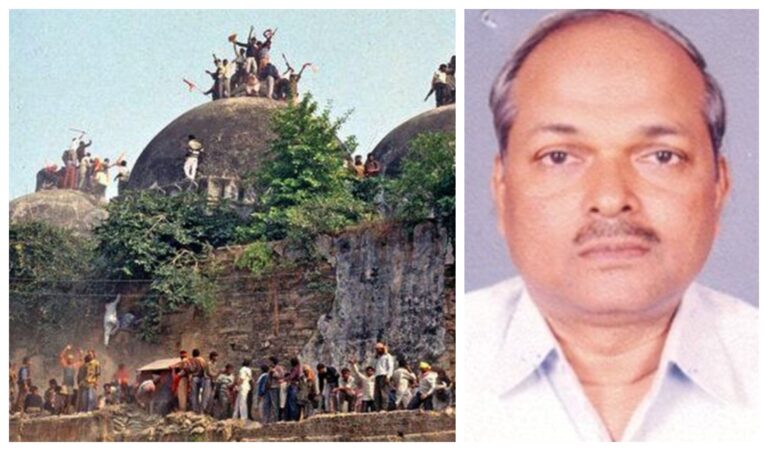
All 32 accused have been acquitted in the Babri Masjid case according to the verdict given by Judge SK Yadav today. The verdict was given by a CBI Special Court in Lucknow, 28 years after a mob of Hindu karsevaks illegally demolished the historic site of worship.
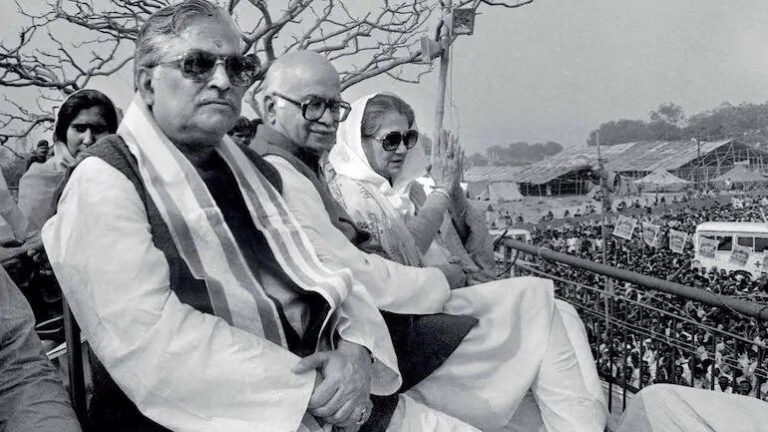
The 32 accused included BJP-RSS leaders had been charged with instigating violence through speeches which incited the mob to demolish the Babri Masjid in 1992, especially in LK Advani’s rath yatras. These included LK Advani, Murli Manohar Joshi, Ashok Singhal, Vinay Katiyar, Giriraj Kishore, Vishnu Hari Dalmia, Uma Bharati, and Sadhvi Ritambhara. Others were named in an FIR against the karsevaks who conducted the demolition itself.
The verdict, delivered under high security outside public access in the court flanked by 1000 police personnel including from anti-terrorism squads, acquitted all 32 accused. The Court said that the CBI had not presented enough evidence to prove that the VHP and RSS leaders had conspired to instigate violence. The verdict said that the violence was not pre-planned and was carried out by ‘mischievous elements’.
The court acquitted the Babri Masjid accused of all the charges, on the following grounds:
Section 120B – could not be established since there was no evidence that the accused sat together to plan the demolition.
Section 153 – inciting slogans and speeches could not be proven.
Section 295 – no desecration of religious place since Muslims were not using the place to offer namaz for years.
Section 149 – no unlawful assembly established since Section 144 was not in place when ‘kar sevaks’ demolished the structure.
Section 395 – dacoity could not be established since no one saw the accused run away with inscriptions and other allegedly stolen artefacts
The court said that the audio and video of the speeches in which violence was instigated was not reliable and could be doctored, and dismissed the photographic evidence because the CBI had not furnished the original negative images. Those who climbed the dome of the Babri Masjid, were “anti-social” elements, according to the verdict, and did not prove the involvement of the VHP.
The verdict on the Babri Masjid demolition case will be delivered by a special Central Bureau of Investigation (CBI) court in Lucknow today. This verdict is being delivered 28 years after the demolition of the Babri Masjid by Kar Sevaks.
Before the verdict, in this case, was delivered, the Supreme Court in November, ordered the construction of the Ram temple on the site of the Babri Masjid, and the foundation stone for the temple was laid in a huge ceremony in August, with the participation of Modi and other major RSS-BJP leaders.
S.K Yadav, the judge who has been handling this case at the Special Court since 2015 was to retire last year, but was given an extension by the Supreme Court to hear this case.
Two main FIRs were filed in the aftermath of the Babri masjid demolition in 1992, the first one against lakhs of unknown karsevaks who had been part of the demolition. The second FIR was filed against 8 RSS-BJP leaders who had been seen to instigate violence through speeches which led to the demolition. They were LK Advani, Murli Manohar Joshi, Ashok Singhal, Vinay Katiyar, Giriraj Kishore, Vishnu Hari Dalmia, Uma Bharati, and Sadhvi Ritambhara. The verdict today is expected to declare whether they had conspired to pull down the temple and instigated the crowd.
Meanwhile, the Lucknow police have been put on high alert and told to counter any type of gathering or “law and order situation”. Three-layer security has been deployed in and around the court including civil police, anti-terror squad, and bomb disposal squad. Over 1000 police personnel have been deployed. The court in which the verdict is being given is also placed on high security and blocked off from the public. Is the verdict going to be such that the UP government expects protests?
There are 32 accused in the verdict being delivered today. 26 of them are present in court, but LK Advani, MM Joshi, Uma Bharati, and Kalyan Singh have excused themselves on grounds of health and old age. If convicted the accused can get between 3 to 5 years of imprisonment.
This dossier on RSS has been prepared by Prof. Shamsul Islam on the demand of the academicians, activists, and civil society organizations from different parts of the world who want to understand the terrorist character of the RSS which has a free run in India and abroad.
RSS Modelled After Nazi & Fascist Parties
The process of Hindutva takeover of the democratic-secular Indian polity got huge push with Narender Modi, a seasoned RSS ideologue becoming PM of India in 2014. His commitment to the cause of the Hindutva politics and hatred for the Indian democratic-secular polity has been unambiguous. While ruling the State Gujarat as the chief minister in 2013 he had declared himself to be a Hindu nationalist. It was first time in the history of Independent India that any person occupying a constitutional office identified him/herself as Hindu nationalist. It is to be noted that terrorists who assassinated MK Gandhi on January 30, 1948 at Delhi, too, described themselves as Hindu nationalists.
His taking over as the PM was celebrated by the RSS and its innumerable known and unknown organizations with declaring open war against the democratic-secular Indian polity on a large scale. The Hindutva cadres and mobs ruled the streets of India with vehemence never seen after Independence. RSS leaders declared that with Modi as the PM India was once again under a Hindu ruler after Prithvi Raj Chauhan (1178-92); almost 1000 years later! One leading RSS office-bearers, Rajeshwar Singh declared:
“Our target is to make India a Hindu Rashtra by 2021. The Muslims and Christians don’t have any right to stay here…So they would either be converted to Hinduism or forced to run away from here.”
The terrorism is in the genes of RSS (Rashtriya Swayamsevak Sangh; National Volunteer Association) as evidences from its own archives will prove. It was formed in 1925 by KB Hedgewar (known as Doctorji in the RSS fraternity), his mentor BS Moonje and the propounder of the idea of Hindutva, Vinayak Damodar Savarkar.
Savarkar || Courtesy: Counterview.net
Hedgewar was in the Indian National Congress (INC) but left it as he was against the anti-British freedom struggle led by MK Gandhi which treated people of all religions as part of the Indian nation and stood for an inclusive independent India. A biography of Hedgewar published by the RSS describes that he parted with INC because,
“Gandhiji worked constantly with one eye on Hindu– Muslim unity…But Doctorji sensed danger in that move. In fact, he did not even relish the newfangled slogan of ‘Hindu– Muslim Unity’”.
Linkages with Mussolini
This group of Hindu nationalist leaders declared India to be a Hindu nation where the main enemies were Muslims and Christians of India. According to them Muslims and Christians remained out of this nationhood because they did not assimilate into the Hindu cultural heritage or the Hindu religion. Savarkar argued that they,
“cannot be recognized as Hindus; as since their adoption of the new cult they had ceased to own Hindu civilisation [Sanskriti] as a whole. They belong, or feel that they belong to, a cultural unit altogether different from the Hindu one. Their heroes and their hero-worship, their fairs and their festivals, their ideals and their outlook on-life, have now ceased to be common with ours.”
Indian Muslims and Christians were thus ’emigrants’ following foreign religions, and not entitled to be part of the Indian nation which was a Hindu nation. In order to tackle the Muslims and Christian ‘problem’ they found the Nazi and the Fascist projects of cleansing the Jews very attractive. The Italian researcher, Marzia Casolari has done pioneering work in making public the direct linkages between RSS and Mussolini based on Moonje’s diary. Moonje, “a politician strictly related to the RSS” had man-to-man meeting with Mussolini on March 19, 1931 (3.00 pm) at Rome. According to Moonje’s own diary he told Mussolini that
“I just saw this morning and afternoon the Balilla [Italian Fascist Youth Organization] and the Fascist Organisations and I was much impressed. Italy needs them for her development and prosperity…Every aspiring and growing Nation needs such organisations…‘Signor Mussolini–who appeared very pleased–said– Thanks but yours is an uphill task. However I wish you every success in return.’”
Moonje
According to Moonje’s diary immediately after his return from Rome he called upon Hindu nationalist leaders to
“Imitate the youth movements of Germany and the Balilla and Fascist organisations of Italy. I think they are eminently suited for introduction in India, adapting them to suit the special conditions. I have been very much impressed by these movements and I have seen their activities with my own eyes in all details.”
March 31, 1934, Moonje, Hedgewar, and Laloo Gokhale had a meeting, the subject of which was again the military organisation of the Hindus, along the Italian and German lines. Moonje called upon the gathering that they should work for “standardisation of Hinduism throughout India… But the point is that this ideal cannot be brought to effect unless we have our own swaraj with a Hindu as a dictator like Shivaji of old or Mussolini or Hitler of the present day Italy or Germany… But this does not mean that we have to sit with folded hands until some such dictator arises in India. We should formulate a scientific scheme and carry on propaganda for it…”
According to Marzia, Moonje publicly admitted that his idea of militarily reorganizing Hindu society was inspired by the “military training schools of England, France, Germany and Italy” Moonje’s ‘Preface to the Scheme of the Central Hindu Military Society and its Military School’ declared at the outset:
“This training is meant for qualifying and fitting our boys for the game of killing masses of men with the ambition of winning victory with the best possible causalities of dead and wounded while causing the utmost possible to the adversary”.
The renowned Indian historian, Professor Ramchandra Guha underscoring the continuation of the Fascist Italian legacy by the current RSS-BJP regime wrote recently,
“The Italian State of the 1920s bears a striking resemblance to Modi’s regime today which speaks respectfully of the Constitution while blatantly violating its spirit and essence, which appeals to ancient wisdom while displaying contempt for modern science, which claims to exalt ancient culture while manifesting an utter philistinism in practice…
“Benito Mussolini and his fascists thought they would rule Italy forever. Narendra Modi and the BJP think likewise. These fantasies of eternal rule will not come to fruition; but so long as the present regime remains in power, it will continue to extract a horrendous cost — in economic, political, social, and moral terms. Italy took decades to recover from the ravages of Mussolini and his party; India may take even longer to recover from the ravages of Modi and his party.”
RSS Celebrated the Holocaust & Planned to Execute it for Cleansing Indian Muslims & Christians
The most prominent ideologue of the RSS, MS Golwalkar (known as Guru Golwalkar in the RSS fraternity) who became RSS Supremo in 1940 and who is credited by the present Indian PM to have groomed him into a political leader declared:
“If, as is indisputably proved, Hindusthan is the land of the Hindus and is the terra firma for the Hindu nation alone to flourish upon, what is to be the fate of all those, who, today, happen to live upon the land, though not belonging to the Hindu Race, Religion and culture?”
Golwakar || Courtesy: Wikipedia
It would be like the Jews under Hitler and Mussolini. Thus Golwalkar glorified the Holocaust in the following words:
“German Race pride has now become the topic of the day. To keep up the purity of the race and its culture, Germany shocked the world by her purging the country of the Semitic races—the Jews. Race pride at its highest has been manifested here. Germany has also shown how well-nigh impossible it is for races and cultures, having differences going to the root, to be assimilated into one united whole, a good lesson for us in Hindusthan to learn and profit by.”
Golwalkar, finally, following in the footsteps of Hitler, arrived at the following solution for the minority problem in India,
“From this standpoint, sanctioned by the experience of shrewd old nations, the foreign races in Hindusthan must either adopt the Hindu culture and language, must learn to respect and hold in reverence Hindu religion, must entertain no idea but those of the glorification of the Hindu race and culture, i.e., of the Hindu nation and must lose their separate existence to merge in the Hindu race, or may stay in the country, wholly subordinated to the Hindu Nation, claiming nothing, deserving no privileges, far less any preferential treatment not even citizen’s rights. There is, at least should be, no other course for them to adopt. We are an old nation: let us deal, as old nations ought to and do a deal, with the foreign races who have chosen to live in our country.”
Savarkar went on to support Hitler’s anti-Jewish pogroms and on October 14, 1938, he suggested the same solution for the Muslim problem in India:
A Nation is formed by a majority living therein. What did the Jews do in Germany? They being in minority were driven out from Germany.
RSS Rolls out Racist Project of Producing ‘Aryan’ Babies in India
According to RSS, Nazism is to be followed not only for cleansing of Muslims and Christians but also for producing the ‘Aryan’ babies as was done in Germany under Hitler. RSS has officially shared the information that one of its offshoots, Garbh Vigyan Sanskar (Uterus Science Culture), following the Vedic preaching and experiments in Germany, is conducting live trials in many parts of India for producing ‘fair’ and ‘tall’, ‘customized’ perfect babies. According to Dr. Hitesh Jani, convener of Arogya Bharati (health with), another outfit of RSS which is part of the project, if the proper procedure is followed, “Parents apparently have small, dark babies because they are impure, but purification is, fortunately, a simple, protocol-driven process tied to the lunar calendar. Prospective parents should copulate by astrological schedule and watch what they ingest, hear, and think. Thus they will clean up the chromosomes in their gametes, and the original sin tattering the telomeres.”
Vedant garbh Vigyan and Sanskar center in Meerut, UP. Courtesy: Hindustan Times
Speaking to a prominent English daily of India, the top office-bearers associated with this “top-priority” project of the RSS, shared the facts that
“it was launched in Gujarat over a decade ago, and taken up at the national level in 2015. Today, the project, assisted by the Sangh’s education wing Vidya Bharati, has around 10 branches in Gujarat and Madhya Pradesh, with more units to come up soon in Uttar Pradesh and West Bengal.”
According to Dr. Karishma Mohandas Narwani, national convener of the project,
Our main objective is to make a Samarth Bharat (capable India) through Uttam Santati (best off-springs). Our target is to have thousands of such babies by 2020.
According to the managers of this venture this project was inspired on the advice of a senior RSS ideologue, received over 40 years ago, who found Germany had “resurrected itself by having such signature children through Ayurvedic practices within two decades after World War II”. Dr. Ashok Kumar Varshney, an RSS whole-timer for over 30 years and national organising secretary of Arogya Bharati, said that apart from a university in Jamnagar (Gujarat), two other institutions have incorporated Garbh Vigyan Sanskar in their curriculum: Children University in Gandhinagar and Atal Bihari Vajpayee Hindi University in Bhopal.
The project claims to have ensured the delivery of 450 “customised babies” so far, and its target is to have a Garbh Vigyan Anusandhan Kendra, a facilitation centre, in every state by 2020.The aim of this project is that women should deliver an “uttam santati”; a perfect, “customised child”. The process requires three months of “shuddhikaran” (purification) for parents, intercourse at a time decided by planetary configurations, complete abstinence after the baby is conceived, and procedural and dietary regulations.
In order to spread the goal of producing ‘tall’ and ‘fair’ babies several seminars and counseling sessions were held in Delhi, Mumbai, and smaller cities such as Udupi in Karnataka, Kasaragod in Kerala, and Visakhapatnam and Vijayawada in Andhra Pradesh.
The counseling sessions were also scheduled to be held in Kolkata, Rohtak and Gurgaon. The RSS was hopeful that by 2020 to have thousands of ideal infants on the production line.
This RSS love for a Race which is of “fair” complexion is part of its ideological heritage that Indians are Aryans; fair, tall, honourable, respectable and noble who speak Sanskrit language. RSS stands for Aryan supremacy and believes that only Hindu Brahmins of North India are from that stock. We read above how second Supremo of RSS, Guru Golwalkar while addressing a gathering of faculty and students of the School of Social Science of Gujarat University on December 17, 1960 shared the wisdom that Namboodri Brahmins from North India were sent to Kerala to improve breed of the Hindus there.
The RSS belief of Aryan superiority has been borrowed from Hitler and his Nazi Party of Germany. According to the website of the United State Holocaust Memorial Museum, Adolf Hitler even before becoming chancellor of Germany was obsessed with the ideas about superiority of the Aryan Race. He believed in Racial “purity” and in the superiority of the “Germanic race” which he described as Aryan “master race.” He declared this Aryan Race must remain pure in order to rule the world one day which was not far away. According to Hitler, the ideal “Aryan” was blond, blue-eyed, and tall.
Racially “pure” women made to produce pure Aryan babies during the Nazi regime || Courtesy: Keystone-France
When Hitler and the Nazis came to power, these beliefs became the state ideology and were propagated publicly through posters, on the radio, in movies, in classrooms, and in the newspapers. The Nazis began to put their ideology into practice with the support of German scientists who believed that the human race could be improved by limiting the reproduction of people considered “inferior.” Beginning in 1933, German physicians were allowed to perform forced sterilizations, operations making it impossible for the victims to have children. Among the targets of this public program were Roma (Gypsies), an ethnic minority numbering about 30,000 in Germany, and handicapped individuals, including the mentally ill and people born deaf and blind. Also victimized were about 500 African-German children, the offspring of German mothers and African colonial soldiers in the Allied armies that occupied the German Rhineland region after World War I.
In fact, the present project of RSS aimed at producing ‘fair’ and ‘tall’ customized babies is direct borrowing from the Nazis‟ “Lebensborn” (Spring of life) program to create an Aryan master Race. Under this project of breeding of children of pure Aryan race, some 8,000 children were born in Germany and around 12,000 in Norway as part of “Lebensborn” under the direct supervision Nazi theoretician and leader, Heinrich Himmler to encourage women of pure blood” to bear fair-tall Aryan children. Interestingly, most of such bred children did not grow into fair-tall and blond babies. However, it was an integral part of a murderous racial policy that on the one hand aimed at producing pure Aryan children and on the other hand exterminating non-Aryans like Jews, 6 million of them killed and the forced sterilization of people with hereditary diseases.
The RSS project of “uttam santati”; a white and tall “customised child” in its first gear, attempts to follow the Nazi Racist project, “Lebensborn”. As a natural corollary, soon it will go for the second part of the project like Nazis; eliminating all those Indians who are not found to be “Aryan” of pure blood. It is to be noted that the Hindutva gang historically has been a worshipper of the Nazi ideals. The most prominent ideologue of RSS even penned a highly despicable book We or Our Nationhood Defined in 1939. In this book, Golwalkar not only glorified cleansing of millions of Jews by Hitler but also advised the Hindutva organizations in India to emulate the Nazis in exterminating Muslims and Christians who were not “Aryans”. However, these will not be only Muslims and Christians who will face the Hindutva scientists and lynching mobs but also most of the South Indians who have already been declared as “Black”.
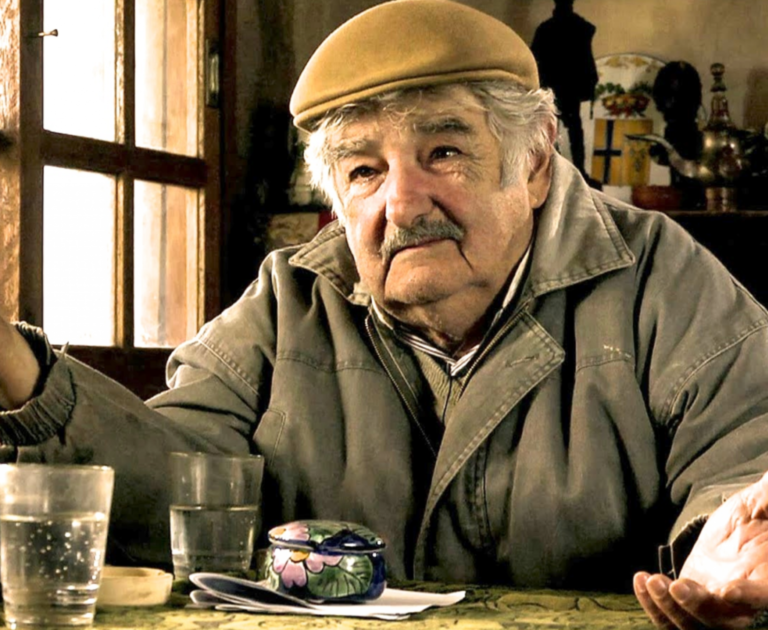
Jose “Pepe” Mujica, the former President of Uruguay, announced his retirement from politics on Sunday. He said that although he loves politics, he has a chronic immune disease which will cause a lot of difficulties and keep him from being active in his duties as a senator and a political leader. He will now be leaving his place in the Senate.
This marks the end of his time as a brilliant political leader dedicated to people’s interests. His anti-capitalist and pro-people legacy that took him from an urban guerilla group to becoming the head of state is one that must be remembered in present times as we are surrounded by the poverty of politics caused by the rise of the neoliberal right-wing across the world.
Jose Mujica has been famously termed as the “poorest president in the world”. His choices of lifestyle are a matter of awe for people from other countries, where material interests seem to be the driving force for all politicians. But his life simply portrays a refreshing lack of hypocrisy that we have come to stop expecting.
The Tupamaros and the Revolutionary Life of Mujica
Born in 1935 to a family of poor immigrant farmers, Mujica became active in the National Party as a young man, where he grew close to Enrique Erro, a popular leftwing politician. However, it was his meeting with Ché Guevara in post-revolutionary Cuba that caused a political epiphany for him. Many young Uruguayans like him, inspired by the Cuban revolution, formed the MLN-Tupamaros movement, an armed leftwing urban guerilla group, trying to resist the old order and heal their country from the widespread poverty and inequality.
The Tupamaros || Courtesy: tvaraj.com
As a guerilla, he was shot by the police, arrested, and imprisoned many times, but he managed to escape from prison twice. Finally, as Uruguay underwent a military coup in 1973, he was one of eight Tupamaros who were captured and kept in military custody as hostages- to be killed if their group was ever revived. He was in captivity for 13 years where the brutality of the conditions pushed him into severe mental distress. At one point, he had to put stones in his mouth to keep himself from screaming because of the constant auditory hallucinations he experienced.
Kept in solitary confinement, the hostages could only communicate by tapping morse code on their cell walls, and could only use the toilet once a day, urinating in their water bottles during the day and drinking what they could from there when they needed to. For more than two years during his imprisonment, Mujica was confined to the bottom of an old, emptied horse-watering trough.
Courtesy: Mujica being released from confinement || Courtesy: The New Republic
He was finally released in 1985, after the restoration of constitutional democracy in the country. A few years later, he and many other former Tupamaros joined other left-wing organizations, forming the Movement of Popular Participation (MPP) which became a part of the Broad Front leftist coalition. Jose Mujica entered electoral politics in 1994, becoming a senator in 1999, and a cabinet minister in 2005. He was elected as the president in 2009.
In interviews, Jose Mujica talks about how much he lost during the 13 years of imprisonment he endured, things that he will never get back. However, his warmth shines through as he refuses to hold any resentment towards those who imprisoned him and sees them as being representative of power. In his first speech after becoming President, he addressed his political opponents, saying there were no winners or losers in the election, and called for unity. In these moments, even outside of political speeches, Jose Mujica’s capacity of empathy shines through, the most sincere expression of his people’s politics.
His history as a part of the Tupamaros is something that keeps coming up, the group having been accused of assassinations and violence and so on. But Mujica maintains that he will never try to hide that part of his history and is not apologetic for any of it either. He admits to robbing banks and the wealthy but refuses to let anyone colour this in a negative light, asserting that he was expropriating resources from the rich for a collective movement against capitalism.
His partner, Lucía Topolansky, a fellow former Tupamaros member, is also followed by allegations of assassinating people during her time as part of the group. But she says that her biggest crime was revealing the private records of a banking company which was gaining wealth through illegal means.
Courtesy: TelesurEnglish
As an employee at the bank, she had found out about their illegal transactions and told her comrades. The Tupamaros then robbed the bank, taking the documents with them and giving them to government authorities. Both Mujica and Topolansky reject the ideas of morality and non-violence that protect the privileged- where the robbing of a bank is a crime but not so much when it comes to the exploitation of the poor.
Mujica’s Anti-Consumerism and Pro-People Life and Policies
As a president, Mujica has notably refused to use the presidential palace or the presidential staff, and donates 90% of his presidential salary to the poor. Him and Lucia live in the same one-bedroom farmhouse they have lived in for the past 30 to 40 years, working in their farm and selling chrysanthemums for a living. He talks about how easy it is to become prisoner to the consumerism pushed by the market and the time it can take away from a person’s life to build meaningless possessions and then trying to maintain them, and that as President he is not someone special but just one of the people.
As a political leader, he balances between pragmatic policies that can improve the conditions of the people in the present, along with imagining a future that is not held captive to the market. He critiques the pettiness of politicians across the world who are just thinking about the next election to the next election, even as global capitalism is taking the world to a destruction from which there will be no return. He is perhaps one of the few leaders in the world raising the issue of anti-capitalism as essential to protect the world from climate change. He has also been a critic of globalisation and the imperialism of the US and other major countries over countries like Uruguay.
Courtesy: Ines Maria Hiriart
During his term, he legalized cannabis in order to regulate it and help poor Uruguayans escape the clutches of the drug market, reduce drug-related crimes and incarceration. He has also legalized homosexual marriage and abortion.
His term has coincided with an economic boom, caused by China’s import of food from the region, but also helped by policies introduced by him and his predecessor Tabaré Vázquez which have increased public spending, introduced the country’s first income tax, increased social spending in education, and so on. By the time his presidency ended in 2015, the national poverty rate had reduced from 40% to 11%, the minimum wage had been raised by 250%, and trade unions and bargaining power of workers, supported by the government, had been strengthened more than most other countries.
Jose Mujica is retiring, but let us hope that this does not signify the end of an era. A time must come when leaders like Jose Mujica are no longer anomalies across the world and the people of any country can expect and demand representatives who are committed to their interests, and free from hypocrisy and corruption.
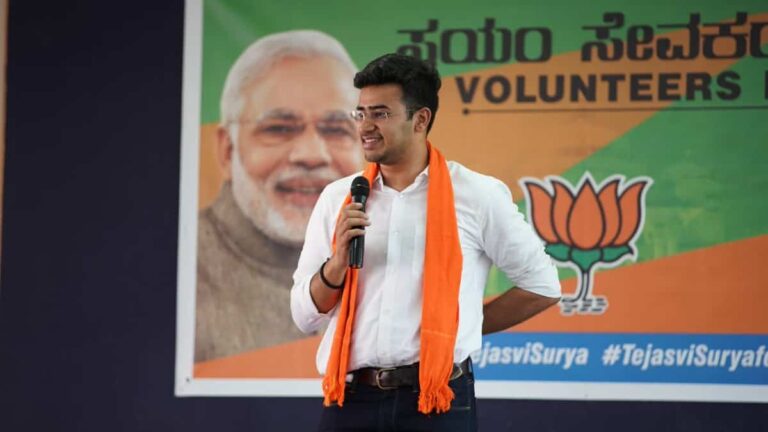
Bengaluru south constituency MP Tejasvi Surya made a statement on twitter on the 27th of September saying Bengaluru has become an epicenter of terrorist activities.Bangalore citizenry and netizens, in general, did not take it lightly and his tweet generated huge outrage on social media. Some took a jibe at BJP saying as BJP is ruling the state, hence terror activities might have increased. ‘In the last few years, Bluru has become epicenter of terror activities, proven through many NIA arrests & busted sleeper cells in the city. I urged Hon HM Sri @AmitShah Ji to set up a permanent division of NIA in Bluru I thank him for his assurance that it will be set up soon!’ Tejasvi Surya tweeted.
In last few years, Bluru has become epicenter of terror activities, proven through many NIA arrests & busted sleeper cells in the city.
I urged Hon HM Sri @AmitShah Ji to set up a permanent division of NIA in Bluru
Taking strong objection to the tweet, KPCC president DK Shivakumar also tweeted- BJP MP Tejasvi Surya calling Bengaluru, a global city known for Technology and Innovation, as an epicenter of terror is highly condemnable. GDP growth has crashed and with such statements, which investor will come to Bengaluru & Karnataka? Will PM and Finance minister Nirmala Seetharaman answer?
BJP MP @Tejasvi_Surya calling Bengaluru, a global city known for Technology and Innovation, as an epicenter of terror is highly condemnable.
GDP growth has crashed and with such statements, which investor will come to Bengaluru & Karnataka?
Congress leader Priyank Kharge too reacted and tweeted saying, ‘Would love to hear from BJP Karnataka, how many terror activities have been orchestrated in Bengaluru? What are the criteria for qualification as an ‘epicenter’?’
Would love to hear from @BJP4Karnataka, how many terror activities have been orchestrated in Bengaluru? What is the criteria for qualification as an “epicenter”?
He also criticised the BJP further by saying ‘Jagdish Shettar and Finance minister Nirmala Sitharaman will have tough time convincing investors to come to the city of terrorism.’Congress MLA Soumya Reddy too expressed her anger by tweeting, ‘Our city have given these ppl everything & they want to ruin, defame our city for their agenda? 1.2 crore ppl are offended & will not tolerated such nonsense’ and she goes on to state that BJP is in power in centre, state and city bodies and puts the count of BJP MPs sent from the state. She then says, ‘Namma Bengaluru a #terrorHub? Wth. I take offence to that. My city is beautiful, cosmopolitan, diverse, IT/BT Hub, safe, peaceful/silicon city. I WILL NOT let a one guy tarnish the imagine of our city. Never. NO WAY. #proudofmycity
Namma Bengaluru a #terrorHub? Wth. I take offence to that. My city is beautiful, cosmopolitan, diverse, IT/BT Hub, safe, peaceful/silicon city.
I WILL NOT let a one guy tarnish the imagine of our city. Never. NO WAY. #proudofmycity
Apart from political leaders, many netizens too took to social media and expressed their outrage for Tejasvi Surya’s statement, and hashtag #ApologiseTejasvi too was started and asked Tejasvi to apologise for his remarks.
Bigot Tejasvi Surya called Bengaluru as the epicenter of terror hub ..
By doing this he is only disrespecting his own constituency , that means he was elected by terrorists??
You are an international shame to feminism & your own constituency whom you casually called terrorists. What a Disgrace to have an MP like you.#ApologiseTejasvipic.twitter.com/w8aNUKM4IE
Karnataka chief minister BS Yeddyurappa has extended his support to MP Tejasvi Surya. He said, he had appealed for the NIA center to PM a few years ago and he congratulates Home minister Amit Shah and Prime Minister for getting the nod.
Women are being rendered invisible in news coverage regarding COVID-19 due to a strong bias towards men.
The findings were a result of a project aimed to examine women’s representation in COVID-19 newsgathering and news coverage in India, Kenya, Nigeria, South Africa, the UK, and the US.
The study used various quantitative and qualitative methodologies to arrive at reliable inferences about three indicators of gender equality: women as sources of news expertise, news stories leading with women protagonists, and coverage of gender equality issues. Based on its findings, the report also made recommendations for news providers who want to improve the quality of their COVID-19 reportage in terms of representation of women.
The report was commissioned by the Bill and Melinda Gates Foundation.
Underrepresentation of Women in COVID-19 News
Firstly, women’s voices as experts are extremely sidelined from COVID-19 stories, more so than other stories as well.
In India, men were quoted five times more frequently than women in news about COVID-19, which was the worst out of all the six countries.
In the UK, they were quoted three times more frequently, in Kenya nearly four times more frequently, in the US more than four times more frequently, and in South Africa and Nigeria nearly five times more frequently.
In the 175 most highly ranked stories about COVID-19 from the top five providers in each of the six countries, women were four times less likely to feature as experts and commentators than men.
One possible reason for this bias is perhaps that during crises, journalists fall to sources that are well established in an industry, which tend to be men due to the power imbalances in most sectors. This can also be seen from the fact while the men who were quoted were more likely to be experts, commentators, or politicians, the women who were quoted were more likely to be sharing subjective experiences, often as victims. In fact, out of the 175 top stories, only 17% of the protagonists portrayed as empowered, were women.
Women are also less likely to be featured as the protagonist in news coverage headlines, more so in COVID-19 stories than in other stories, especially since politicians are often made the protagonist of such stories and women are underrepresented in politics as well. In India, women were three times less likely to feature as protagonists than men. Out of the top 175 COVID-19 stories from all six countries, less than one in four protagonists were women.
The underrepresentation of women is also seen in the kind of COVID-19 stories that are most commonly published, most of which are those that centre around hard facts rather than around people. Only 25% of the 175 top stories from the six countries centered around people and only 9% contained an element of a human interest story.
More than 99% of the coverage from across the six countries entirely missed the dimension of gender equality. Even in these stories, men featured more prominently than women.
In India, only 28% of the 25 most frequently featured protagonists in gender equality stories were women. On average women made up only 1/3rd of this number across the six countries.
This underrepresentation of women needs to be seen in the socio-political context of women in the COVID-19 crisis.
Socio-political Context of Women’s Underrepresentation
First is the exclusion of women from decision-making processes. 100% of the COVID-19 response decision-making group in the UK is made up of men. In India, it is 86%.Other than South Africa, where men make up 50% of the concerned body, men are overrepresented in all the other countries analysed in this report.
Second, is the increased vulnerability of women to health-related challenges.
COVID-19 data from some countries suggests that women may be more likely to be infected with coronavirus than men, and reports from socially conservative countries in Africa and Asia suggest that women may be left out of testing, leading to under-reported data on infections amongst women.
ASHA health workers protest in Bengaluru for salary payment and PPE gear
Further, women make up a majority of health professionals globally and are therefore more exposed to the virus. But there was hardly any coverage of nurses dying of COVID19. In many countries, nursing staff also went on strike to highlight the dismal infrastructure of nonpayment of salaries.
In India, ASHA health workers, comprise of women and had to do the monitoring of COVID19 cases in low-income neighborhoods without the PPE kits or other protective gear. In many states, ASHA workers were not even paid for months. They protested in many states demanding payment of dues.
Women’s and maternity health is one of the major areas of healthcare being neglected as services are scaled back and resources used to support women’s reproductive and sexual health are redirected to COVID-19 responses.
Thirdly, women have been facing increasing socio-economic challenges during the pandemic. Vulnerability to gender-based violence, physical and economic strain as primary caregivers, precarity due to informal employment, and lower-income are some of the factors which affect women disproportionately.
Why News Platforms Need to Pay Attention
The underrepresentation of women in COVID-19 news coverage in this context of already existing socio-economic vulnerabilities means that women have limited influence over how the crisis is framed and subsequently limited influence over policy responses to the pandemic.
According to Kassova, part of this underrepresentation has to do with the framing of the crisis as a ‘war’, which tends to give more space for male representation.
The report recommends that in order to amplify women’s representation in COVID-19 stories, media houses can try to cover those topics which affect women more, such as healthcare, poverty, unemployment, and gender violence, and to cover them by emphasizing on human interest and local dimensions of a story. Further, women protagonists and experts such as nurses, paramedics, scientists, teachers, doctors, and so on should be given more of a voice.
Amnesty International India joins the list of human rights individuals and organizations facing the harassment of the Indian government aimed at suppressing all forms of dissent. On September 10, Amnesty International India found that all of its bank accounts were frozen by the Enforcement Directorate, hence bringing a sudden halt to all the work being done by the human rights organization.
The organization was first attacked on October 25 in 2018, when the Enforcement Directorate conducted a 10 hour-long raid at its office premises, not allowing any of the employees to leave. The residence of a Director of the organization was also raided. Most of the documents demanded during the “raid” were already in the public domain or filled with the concerned government authorities, hence showing that the raid was an attempt to harass and intimidate the organization.
After this, bank accounts were also frozen by the ED, hence forcing Amnesty International India to let go of a number of their staff, adversely affecting the functioning of the organization. Meanwhile propaganda platforms conducted a media smear campaign against them.
Throughout 2019, the organization continued to face attacks aimed at impeding upon their work. First, the Department of Income Tax started sending investigative letters to more than 30 small regular donors, adversely affecting their fundraising campaigns.
In June 2019, a report on the misuse and abuse of the Public Safety Act in Jammu and Kashmir by Amnesty International India, was denied the permission to be launched at a press conference in Srinagar, and had to be released digitally.
After Amnesty International testified at the US Congressional hearing on the situation of human rights in South Asia with specific focus on Jammu and Kashmir since the abrogation of Article 370, rumours began to circulate about the impending arrest of the top officials of the organization, and the CBI conducted raids at the office and at the residence of one of the directors again.
The raids were conducted on the basis of a First Information Report filed by the Ministry of Home Affairs over unsubstantiated allegations of suspected violations of Foreign Contribution Regulation Act. It suggested investigations be launched under other laws like Prevention of Money Laundering Act. This is in spite of the fact that Amnesty International India operates through a distinct model of raising funds domestically.
On April 15, two days after Amnesty International India called on the UP government to stop its intimidation of journalists using repressive laws during a pandemic, the Cyber Crime Police Station of Lucknow notified Twitter to furnish information about the organization’s twitter account.
According to a statement on the Amnesty International India’s website, the recent attempt at harassment and intimidation has been triggered by the organization’s activities to recognize the human rights violations in Jammu and Kashmir on August 5, and to point out the complicity of the Delhi police in the anti-Muslim riots through an investigative brief released on August 28.
Feeling threatened by the questions raised by this organization, amongst many others, the Government has resorted to intimidation and harassment tactics. This unlawful freezing of its bank accounts without any substantial evidence has put a complete stop to the organization’s activities.
Recent judgements in the cases of Dr. Kafeel Khan, and Kochi students Allan Shuhaib and Thwaha Fasal, all dissenters who were framed for being terrorists and incarcerated under draconian laws, show how two courts took a stand to preserve the civil liberties of the people of this country.
Dissent and criticism is essential for accountability in a democracy and promotes liberty. Any regime becoming a hurdle in this process, is only paving path towards fascist society. The rise of right wing politics in India has also lead to rise in stifling the voice of dissent.
Interestingly in the recent judgments of the Allahabad High Court and the Special Court for NIA case, Kochi, we see that the Judiciary has come to the rescue of persons who were arrested with false charges under draconian laws, and preserved the civil liberties that uphold the principle of freedom of speech and expression of individual.
An Example Set to Protect and Preserve Civil Liberties
The order of the Allahabad High Court on 1st September, 2020, directing the U.P Government to release Dr. Kafeel Khan forthwith is the most important decision in recognizing the civil liberties of an individual and rightly so, as the detention of Dr. Khan under section 3 of National Security Act, 1980 (NSA) was the most bizarre act on the part of the Yogi government to crush dissent.
Inspired by the practice during the colonial period, Section 3 of the NSA, a draconian legislation which empowers the Central or State government to detain any person to prevent acting prejudicial to the security of India; was invoked against Dr. Khan to clamp down upon the voice he was raising against the passing of the communal and anti-muslim Citizenship Amendment Act, 2019, by Parliament.
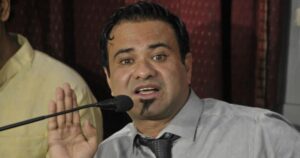
Briefly while deducing into what exactly lead to detention of Dr. Khan and the invocation of NSA against him, we see that, he was initially arrested for a speech he made against CAA-NRC-NPRon 12th December, 2019 in Aligarh Muslim University. This arrest takes place after lapse of more than 45 days of the said speech made, on 29th January 2020, alleging that it amounted to offence under section 153A, 153B, 109, 505(2) IPC. However, the Chief Judicial Magistrate, Aligarh was pleased grant to him bail on 10th February, 2020, but irrespective of the order granting him bail and a direction to release him, the Superintendent, Mathura District Jail, failed to comply with the order and refused to release Dr. Khan, therefore, a second order dated 12th February, 2020 was sent from the Magistrate to release him forthwith.
Here it is important to note that till this episode, the Magistrate as well as the DIG, do not have any kind apprehension that Dr. Khan might be a threat to the national security. It is only after passing of the release order dated 12th February,2020, i.e. after 3 days of illegally being detained in Mathura Jail, the DIG/Senior Superintendent of Police, Aligarh, relying upon the speech he made in Aligarh Muslim University, make a request to the District Magistrate to detain Dr. Khan, and therefore in compliance with this request the Magistrate decides to invoke section 3 of NSA and detain him giving a reason that it is important to prevent him from engaging in activities that are prejudicial to the maintenance of public order. The same order of detention was served upon to Dr. Khan, while he was in jail, along with the grounds for his detention and the supporting material, which included a mere CD.
On 6th May, 2020, the U.P. Government invoked powers under the same draconian legislation, sub-Section (1) of Section 12 of the National Security Act, 1980, extending the term of detention for a period of six months from the date of detention i.e. 13th February, 2020, and on expiry of 6 months, through order dated 4th August, 2020, detention was extended for three more months.
In the entire judgment of the Allahabad High Court, directing release of Dr. Khan, the Court was furious against the actions of the Magistrate and the DIG/Senior Superintendent of Police, Aligarh. The Court meticulously analyzed the entire speech made by Dr. Khan and came to conclusion that the speech was certainly opposing the policies of the government, but that nowhere reflects the requirement of detention and a complete reading of the speech does not disclose any effort on part of Dr. Khan to promote hatred or violence, instead his speech calls for national integrity and unity among the citizens and deprecates any kind of violence.
The Court further observed that in order to enable Dr. Khan to oppose his detention under the NSA, sufficient material should be supplied for reason of his preventive detention as provided under Article 22 (5) of the Indian Constitution, however, only a CD was given to him without any device being made available to know the contains of it or a transcript of the details in the CD, in order for Dr. Khan to go through it and file his objections. Considering this action of the UP government and Aligarh police officials, the Court held that not only his detention was illegal, but the extension of it was also illegal and violated Article 21 and Article 22 of the Indian Constitution, therefore directed for his immediate release.
It is important to note that the power to preventively detain a person has its roots in the principle of “subjective satisfaction” of the detaining authority, which has been incorporated in Article 22 (7) of the Constitution, empowering the Parliament to make a legislation to preventively detain any person for more than 3 months. With rise in arbitrary invocation of preventive detention laws, the time has come to review Article 22 (7) of Constitution.
Freedom Granted to Students From the Clutches of UAPA
Similarly, after nearly 10 months of being in jail, on 9th September 2020, a Special Court for National Investigating Agency (NIA) Trials, Kochi granted bail to two students, Allan Shuhaib (20) and Thwaha Fasal (24), student of law and journalism, respectively, who were charged under another draconian law, section 38 and 39 of Unlawful Activities Prevention Act, 1967 (UAPA), alleging them to be associated with a terrorist organization and supporting it with the intention to further its activities.
The accused students were politically active who were associated with the CPI (Marxist), and were taking part in several protests and programs, as in furtherance of the same they possessed certain notices, pamphlets, banners relating to the “burning social and political issues” such as calling for implementation of Gadgil Committee report for the protection of Western Ghats, condemnation of encounter killings of Maoists, protests against police atrocities, abrogation of J&K special status etc.
However, observing that mere possession of these documents not being enough to be prosecuted under UAPA, it was held that this evidence might suggest that the students had leaning towards Maoist ideology, but that in no way can be concluded that they were promoting or facilitation terrorist activities. It was also observed that the NIA during the course of the investigation dropped the charges against them for being members of terrorist organization under section 20 of the UAPA, this showed that there was no evidence to prove that they were members of terrorist’s outfits.
The Court, while rejecting the evidences produced by NIA with regard to the students being involved in protests, observed that the right to protest is a constitutionally guaranteed right and that any protest against policies and decisions of the government, even if it is wrong cause, cannot be termed as sedition or an intentional act to support cession or secession.
Impunity of Police Action and the Agenda to Silence Dissent
While in the above two cases the judiciary has intervened in timely manner and passed decisions condemning the actions of the police in furtherance of protecting the civil liberties of individuals, justice for the 12 and more Human rights activists and intellectuals arrested in connection to the Bhima Koregaon case, along with other Anti-CAA protestors, awaits, who have been falsely implicated for taking part in protests, letters and other incriminating files in the devices that were seized in violation of the procedure. Further, it is also important to note that none of the persons arrested have been made available with any material evidence against them for their detention.
The rise in arbitrary arrests has become common phenomenon in the country. The National Crime Records Bureau (NCRB)data interestingly reveals that there were no crimes registered under the UAPA before 2014, however, the total numbers of cases filed under the UAPA rose from 976 in 2014 to 897 (2015), 922 (2016), 901 (2017), and 1182 (2018), which shows clear agenda of the State suppress dissent.
The rise in the number of the cases under the UAPA and the so called anti-terror laws only shows the impunity of the police in invoking the provisions of draconian legislations without any application of mind. Irrespective of there being several guidelines and judgments of the Courts, the two judgments analyzed above shows that the Police do not care about the rule of law instead their action has only lead to rule by law.
Basawa Prasad is an advocate at the Alternative Law Forum.
The Karnataka bandh that was organised by the farmers across the state against the farm bills passed by the state and central governments has been quite successful.
In the midst of the pandemic and while the country was under lockdown, the government passed three ordinances relating to the Agriculture sector. The Farmers’ Produce Trade and Commerce (Promotion and Facilitation) Ordinance, 2020, The Farmers (Empowerment and Protection) Agreement on Price Assurance and Farm Services Ordinance, 2020, and The Essential Commodities (Amendment) Ordinance, 2020.
Various civil society organisations, trade unions joined hands to protest against the farm bills in Karnataka Bandh today. BengaluruBengaluru near town Hall
Protesters in thousands gathered in front of the town hall, shouting slogans expressed their anger towards the central and state government. They demanded an immediate withdrawal of anti-farmer bills and continued to march towards Freedom Park in large numbers.
During the rally, protesters requested the shop keepers to support the bandh and close the shops. Many shopkeepers obliged and closed their shops in support of the farmers.
Here are some photos from different districts across the state.
RaichurRasta roko in ShimogaFarmers rally in MandyaPolice arresting the protesting farmersFaremrs rally and procession in Sindhanurbandh and Rasta roko in MaddurFarmers union protest in front of DC office in RamnagarProtest in KanakpuraProtest in Athani, North KarnatakaSound of struggle in Koppala, North KarnatakaBandh in AnekalWorkers struggle in KalaburgiBandh at Hospete, North KarnatakaProtest at Hoskote, Outskirts of BangaloreRoad block at Arakal gooduFarmers and workers together in protest at SiraguppaFarmer’s roar in GundlupeteIn Bijapur (Vijayapura) Dalit Sangharsh Samiti support the farmers struggle.Also Read: Why are farmers opposing the new agriculture bills?
Today, September 28, marks 20 years since the beginning of the Second Intifada in Palestine against Israeli occupation. The Second intifada, also known as the Al-Aqsa Intifida, began on September 28 in the year 2000 and waged on for almost five more years, ending in around February of 2005.
The people of Palestine had led two intifadas, meaning uprisings, against the military occupation of Palestine by Israeli troops and Israeli settlement in occupied lands, the first of which began in 1987.
Where Did It All Start?
Pushed by the writings and organization of Austrian-Jewish journalist, Theodor Herzl, Zionist ideology began to gain prominence as an international movement around 1896. Zionists, who saw Judaism as not just a religion, but also a nationality, saw the return to ‘Zion’ as the rightful claim of the international community of Jews, especially those in Europe.
As nationalism and anti-Semitism gained strength in Europe, Jews mass-migrated to the then British-controlled Palestine. Seen as European colonization, this mass migration led to violent conflicts between the Arabs in Palestine and the Jews. When the United Nations voted for Palestine to be divided into two countries, the Palestinians rejected it, leading to the first Arab-Israel war in 1948, which resulted in Israeli occupation of most of the erstwhile state of Palestine, more than 700,000 Palestinians being rendered refugees, and the creation of the state of Israel.
Refugees on the way to Lebanon || Courtesy: Associated Press
In a second war in 1967, Israel further occupied the remaining areas of the West Bank and the Gaza strip, both home to millions of Palestinians who have since then faced years of military occupation and violence, and economic disadvantage at the hands of Israeli troops and settlers.
Breaking Down of Negotiations and Israeli Aggression
After the first intifada, a new Israeli government was elected in 1992 and negotiations between Israel and the Palestine Liberation Organization began, leading to an agreement known as the Oslo Accords. PLO was recognized as the Palestinian people’s legitimate representative, and Israel agreed to withdraw in stages from West Bank and Gaza, allowing the creation of a Palestinian Authority to govern those areas. The aim was to eventually reach a two-state solution.
However, Israel had continued to build settlements in occupied territories, leading to an increasing Israeli population in colonized Palestinian areas. Another Palestinian organisation, Hamas, in opposition to PLO, refused to recognize the legitimacy of the state of Israel at all, choosing complete resistance over negotiation. In 2000, at the Camp David II meeting where the Oslo Accords were supposed to reach its final stages, negotiations between Palestine, Israel, and the US broke down, and no agreement was reached.
A few months later, Ariel Sharon, an Israeli politician who was at the time the leader of the opposition, made a controversial visit to Temple Mount in Jerusalem. A former member of the Israeli army, held indirectly responsible for the 1982 Sabra and Shatila massacre of Palestinians by a Lebanese Christian Right-Wing party, and a staunch advocate of the settlement movement, Sharon himself was an icon of right-wing Israeli colonization.
The Immediate Trigger for the Second Intifada
In September, 2000, Ariel Sharon visited the ‘Temple Mount’, flanked by a cadre of over 1000 Isreali riot police, and declared that the complex would remain in Israeli hands. While the Temple Mount was known as the holiest site of Judaism, part of the same compound was the Al-Aqsa mosque, known to be the third holiest site in Islam, making this entire visit extremely communally charged.
Ariel Sharon visiting Temple Mount || Courtesy: New York Post
His visit sparked large scale protests, which included demonstrations, stone-throwing and civil disobedience. The protests started in Jerusalem and soon spread to Gaza and the Western Bank. Although the Second Intifada is painted to be a violent movement characterized by Palestinian suicide bombings and acts of terrorism, it began with protests which were met by brutal repression from Israeli forces.
The Israeli troops shot at the protestors with rubber coated bullets and live ammunition, followed by attacks with helicopter guns and tanks, and even carrying out targeted assassinations and military incursions. Suicide bombings by Palestinians did not start for until one month after the Intifada began, by when the Israeli forces had been firing an average of 40,000 bullets a day. According to Amnesty International, 47 Palestinians were killed and 1,885 wounded in just the first five days of the Intifada, 80% of whom were posing no life-threatening danger to the Israeli forces.
The mainstream media, eager to characterise the Second Intifada as a violent Islamist movement, ignored a prominent part of the uprising which involved unarmed Palestinian communities organizing nonviolent actions to oppose Israeli settlements, acts in which Israeli and international civilians were also involved.
Brutal Repression and Attacks on Leaders
The Second Intifada was marked by aggressive acts of repression and colonisation by the Israeli State. According to the Palestinian Centre for Human Rights, at least 4,973 Palestinian civilians were killed. More than 10,000 children were wounded, according to Children International. Most of the deaths were caused by air strikes in areas densely populated by Palestinians.
Meanwhile, the state unleashed an oppressive siege on the basic rights of the Palestinian people, imposing severe restrictions on their movement, blocking access to Palestinian cities, enforcing a curfew, and so on. Sharon, who became the Israeli PM in the midst of the Intifada, delivered on his promise and in 2002 led the biggest Israeli offensive in the West Bank since 1967, destroying the main section of the PLO’s headquarters and building the security wall, also known as the Apartheid wall, which allowed for further expansion of Israeli occupation. All while the State targeted, arrested, and killed Islamist leaders of Hamas.
The Apartheid Wall || Courtesy: Palestinian Information Centre
There was no conclusive end to the Second Intifada, although the death of Yasser Arafat, the Palestinian leader, is considered to be one of the markers of the end of the movement.
20 Years from Then, Israel Remains In Power
As Palestinians live with the memory and the constant presence of genocide and military occupation, the state of Israel has not faced any consequences for the continual assault on human rights it has been responsible for. The Indian government, specifically the BJP, has consistently shown support for Israel, with the 2003 BJP government welcoming Sharon in the midst of the Second Intifada, and now, Modi and Benjamin Netanyahu building India-Israel relations and visiting each other back and forth.
Israel’s right-wing neoliberal Likud party which has been at the forefront of the colonization of Palestine, has been enjoying the support of the right-wing governments in India, US, and Brazil. Of course, it is not a surprise that the Indian government has found a companion in a violent and repressive state involved in a massive colonization project attempting to ethnically cleanse a group of Muslims from the very land they have historically resided in. At least while Jews have faced a history of religious persecution in other countries, the same can’t be said for Hindus, who are fighting tooth and nail to sell a similar story of victimhood to build a neoliberal Hindu state in India.








 Briefly while deducing into what exactly lead to detention of Dr. Khan and the invocation of NSA against him, we see that, he was initially arrested for a speech he made against CAA-NRC-NPRon 12th December, 2019 in Aligarh Muslim University. This arrest takes place after lapse of more than 45 days of the said speech made, on 29th January 2020, alleging that it amounted to offence under section 153A, 153B, 109, 505(2) IPC. However, the Chief Judicial Magistrate, Aligarh was pleased grant to him bail on 10th February, 2020, but irrespective of the order granting him bail and a direction to release him, the Superintendent, Mathura District Jail, failed to comply with the order and refused to release Dr. Khan, therefore, a second order dated 12th February, 2020 was sent from the Magistrate to release him forthwith.


