Huge Protests in Rajasthan for Teachers Recruitment,Youth dies in Police Firing

1

The agitation for fair inclusion of Adivasis in teacher recruitment has been continuing for over three days in Dungarpur, Rajasthan. On September 26, protesters surrounded the Kherwara area and began their demonstration, when part of the mob set fire to some houses and hotels. In retaliation the police fired at the mob. A 17 year-old boy named Tarun Ahari was shot dead in the firing, and five other people were injured, Janjwar reported.

The protestors had occupied an area of 20 km, demanding the teacher recruitment of youth from Scheduled Tribe category into the vacant seats of the General category. Protests regarding this issue have been taking place frequently for more than a year. Distressed by widespread unemployment, Adivasi youth have been agitating for a fair chance to be recruited as teachers through the Rajasthan Eligibility Examination for Teachers (REET).

Before this, issues have arisen over the government declaring that having the qualifying degree before the test was mandatory in order to be eligible, rendering lakhs of candidates ineligible. Since then, candidates have been troubled by the lack of information and delays in the process.

According to a report by Newsclick, the government has also been under-recruiting when it comes to ST candidates, leaving many reserved seats vacant which are then filled up by General category candidates.

In Rajasthan, certain areas that have been notified as Tribal Sub Plan (TSP) regions have 45% reservations for ST candidates, 5% reservations for SC candidates, and the remaining 50% for general candidates. Only 1554 students from the General category were able to secure the 60 per cent cut off in the examination to qualify for recruitment, and 1167 seats remained vacant in the recruitment process. The ST candidates demanded that those seats be filled up by ST categories who had secured the ST cut-off of 36%. This demand was refused by the High Court.

During the protests this past week, the demonstrators had blocked the Udaipur-Ahmedabad highway, and in response, CM Ashok Gehlot had deployed the Rapid Action Force in the area. Many senior officers were also sent from Jaipur to Udaipur via special flights on Saturday night.

An internet blockade and was imposed in the area and Section 144 has been imposed in Dungarpur, Banswara, and Pratapgarh. Reportedly, there has been some chaos caused by outsiders who have entered the protests and are not allowing negotiations to take place between protestors and authorities. Further, some protestors have joined the movement from Jharkhand and Chattisgarh, hence not being able to speak the local language.

‘Sakha and Sindoor Order Taken Out of Context’ : Guwahati HC Dismisses Review Petition

0

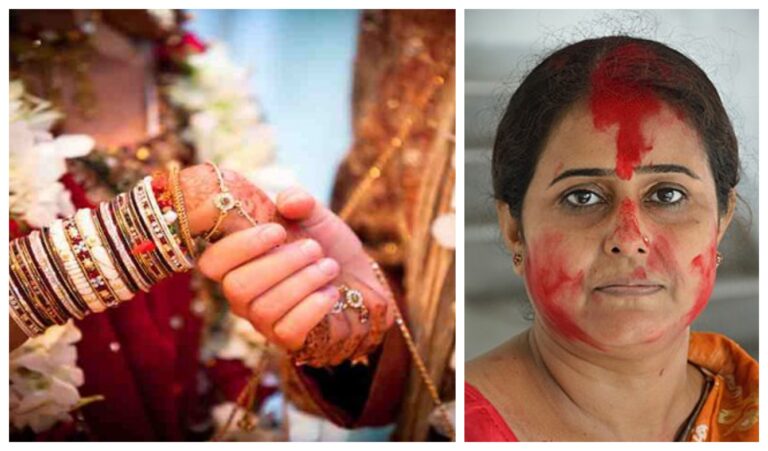
A review petition challenging its earlier controversial order regarding the wearing of sakha and sindoor has been dismissed by Guwahati Hight Court.

The order was made in June, when a bench consisting of Chief Justice Ajai Lamba and Justice Soumitra Saikia was hearing an appeal by a man against a family court order which did not allow him to divorce his wife.

Both parties in the case had alleged that the other had subjected them to cruelty. The woman had argued that her husband and other members of his joint family harassed her for ‘dowry’ payments.

The man had accused his wife of harassment in his plea for separation, saying that she was ‘indifferent and negligent’ towards him and his family and refused to don the markers of a Hindu marriage.

In that judgement, the Guwahati HC bench had ruled in favour of the man, noting that under the custom of Hindu Marriage, a lady who had entered into the marriage according to Hindu rituals and customs her refusal to wear sakha and sindoor will project her to be unmarried and points to her unwillingness to continue her conjugal life.

Dismissing the review petition that challenged this order, the bench said that the statement was taken out of context, and the refusal to wear sakha and sindoor was only one of many facts that were taken as grounds of ruling in favour of the man.

It is a shame that such a refusal to follow ritualistic markers of Hindu marriage, which have historically meant to signify the possession of a husband over a woman have even been made a part of such a judgement in passing.

Perhaps if there were other facts that provided grounds for the same ruling then the HC should not have noted that the refusal to wear sakha and sindoor can be ‘construed’ as harassment of a husband and his family by a wife. While the HC has said that the review petition has taken the statement out of context, there is no doubt that it gives tacit approval to the policing of women’s behaviour in Hindu marriages.

FridaysForFuture – West Bengal Joins Global Climate Protest to Oppose EIA 2020 and Farm Legislations

0

FridaysForFuture protesters took to the streets across the country on September 25 in solidarity with farmers and to oppose the draft EIA bill. In a report released by the UN Intergovernmental Panel on Climate Change (IPCC) on 8th October, 2018 it was emphasised that only 12 years remained to prevent catastrophic and irreversible damages to the environment by limiting temperature change within a range of 1.5°C.

Obviously such a situation demands emergency response from all nations that have huge carbon imprints, particularly India, which currently ranks third in terms of emission of greenhouse gases. The RSS-BJP led central government has chosen this critical situation as the ideal time for pushing the revised Environment Impact Assessment (EIA) Notification 2020. The associated public consultation process has been mired in controversy and the final draft is yet to be passed. It seems that 23rd March was intentionally chosen as the date of issuance as the national lockdown started two days later which effectively prevented environmental activists and concerned individuals to come down on the streets to protest the diluted clauses of EIA 2020.

The propagated aim of EIA is to study and predict the effect of a proposed project on the environment and make subsequent modifications such that any adverse effect on environment can be mitigated. Although EIA includes public participation it virtually acts as a legalization mechanism as almost zero projects get rejected under this policy. Despite all these existing problems the revised EIA 2020 is set to make imperialist loot smoother, rendering the locals voiceless. Coupling it with the three anti-farmer legislations passed by brute force in the parliament, the economic, social, and ecological onslaught on the marginalized people of the nation is complete. By complete corporatization of the agri-sector the international giants would have a free hand at imposing their genetically modified seeds, chemical fertilizers, insecticides etc. upon the Indian farmers.

Be it zoonotic viruses like SARS, MERS, COVID-19, cyclones like Amphan, Bulbul etc., forest fires, desertification, ground-water depletion, air pollution or the sixth mass extinction- each and every catastrophe is caused by the actions of a handful of corporate enterprises and their pet state machinery.

With the rising global temperature and melting of permafrost, the future is pregnant with the possibility of multiple waves of pandemic caused by hitherto dormant microbes that might revive. In such a situation individual actions like banning straws, planting saplings, using public transport etc. can never prevent the runaway global heating processes that might start within a few years if emergency global actions are not taken. All these facts taken together have laid bare the fact that a system premised upon exponential growth and profit for a few has brought human civilization to the brink of collapse.

FridaysForFuture is a global youth movement started by a Swedish teenager named Greta Thunberg who started skipping school every friday to protest the absolute lack of measures taken by the Swedish government with respect to climate emergency.

The FridaysforFuture movement spread across the globe and has been getting more and more intense as real time effects of climate change like cyclones, forest fires, submergence of small islands become more frequent.

The pandemic did cause a temporary snag but the global protest for climate justice was observed all across the globe on Friday, 25th of September. People at more than 300 places within India participated in this global protest by coming out onto the streets despite this situation. Students and youth also participated in the protest digitally. It is to be noted here that FridaysForFuture India was served a UAPA notice by the Delhi police in July this year merely for conducting a mass email campaign to the MoEFCC protesting against the draft EIA 2020. The notice was later retracted after public outrage.

In West Bengal alone there were protest gatherings at eight places and numerous students participated in the digital protest. These were organized by FridaysForFuture by collaborating with many grassroots level groups and organizations. Park circus, Dumdum, Kharagpur etc. were some of the places where the protests took place in West Bengal. The participation of children was the most encouraging aspect of these protests. It is this generation which would be rendered the most vulnerable as the climate catastrophes get more frequent. There was extensive wall postering, leafleting, and sloganeering conducted by the protesters.

On that very day, thousands of farmers all across India came out on the streets demanding scrapping of the three new farm legislations.  Besides EIA 2020, solidarity with the farmers’ struggle took centre stage in all these protests.

FridaysForFuture WB also condemns the current efforts of creating a utopian environment-friendly fourth industrial revolution that aims to replace nature with technology. FridaysForFuture WB strongly condemns Indian projects like the Thurga dam project, Dibang valley project, Dehing-Patkai mining project, Hasdeo-Arand mining project, extensive deforestation within caged Kashmir valley etc. which are nothing but different facets of corporate plunder.

The demands put forth by FFF WB are the following:

  • Scrap EIA 2020
  • Protect farmers and farming sector from corporatization. Resist GM seeds, chemical fertilizers, insecticides, and monocultures to protect indigenous biodiversity and health.
  • Protect indigenous rights over Jal-Jangal-Zameen to prevent climate crisis and future pandemics
  • Carbon emission should be reduced to zero within 2030
  • Renewable, decentralised, eco-friendly energy sources should be used instead of fossil fuels and nuclear fuels.
  • Production as per need not for profit
  • Stop war-mongering and related emissions. Cut emissions in the military sector.
  • Reduce war budget. Increase public health and education budgets.
  • Plastic production and use be stopped immediately.
  • Ecology destroying Unnayan/Vikas must be stopped.
  • To prevent groundwater depletion end producing high yielding varieties of crops, close Bisleri, Nestle, Pepsi-Cola etc. plants.
  • Stop obstructing riverine motion using dams and barrages.
  • End urbanisation. Protect wetlands, farmlands etc.
  • Wild and marine flora and fauna need to be rehabilitated.
  • Sunderbans need to be protected for preventing cyclones.
  • There can be no climate justice without social and political justice. #NoNRC #NoNPR #NoCAA

Modi, Trump, and Bolsonaro: The Naked Emperors

1

The so-called “Strong Men” of the world, Narendra Modi, Donald Trump, and Jair Bolsonaro, who seem to admire each other quite a lot, have something else in common as well. They are the head of states of the countries that have topped in terms of the number of COVID-19 cases and deaths related to it, i.e India, USA, and Brazil.

The mishandling of the COVID crisis by the three leaders is not a coincidence but is a product of the brute capitalism espoused by these leaders. The capitalist economic model followed by these countries has left the public health system in shambles, totally unprepared to deal with a pandemic, and has left people to die on the streets if they cannot afford treatment.

A public crisis situation requires a humane and empathetic approach that has people’s interests at the forefront. Instead, these three leaders are known for being unscientific megalomaniacs who blame the opposition or marginalized communities for any crisis that befalls the country. So it is no surprise that these three countries have been most affected by COVID-19.

COVID-19 has only exposed the mask of majoritarian concern that these leaders had put on and shown them as what they actually are- chest-thumping, incompetent leaders.

The Rise of Modi, Trump, and Bolsonaro 

The trajectory of Modi, Trump, and Bolsonaro also follows the last stage of global capitalism where the capitalist forces of the world need to make their biggest loot before the already rotten system collapses. The system needs these self aggrandising figures who are masters of gimmickry and can trick people into believing that they are being taken care of, even as the ground beneath them is pulled away.

These puppet figures see a drastic rise in their status within a short period of time through the pumping of large sums of money and media manipulation, and hijack the inherent contradictions in capitalist society to create majoritarian victimhood.

Narendra Modi, who has been a part of the RSS since he was 8 years old, had his term as CM of Gujarat marked by a pogrom in which thousands of Muslims were killed by Hindu mobs, with police participation and Modi’s tacit approval. His two terms as Prime Minister have been marked by widespread violence against Muslims and Dalits, brutal repression on dissent, massive inequality, privatisation, corporate control, and so on.

Donald Trump’s presidential campaign was received in a much different way from that of Modi. He was a television personality and businessman, known for his ridiculous comments, and was a popular target for comedic mimicry. It came as a surprise to progressive Americans when he won the 2016 presidential race. Since then, he has sustained his racist, anti-immigrant rhetoric, especially targeting Mexicans and Muslims, passing stringent anti-immigration laws, implementing tax cuts, and drastically reducing social security measures such as insurance.

Jair Bolsonaro made himself known for being a strong opponent to social welfare, secularism, homosexuality, abortion rights, and so on as a member of the lower Congress. Advocating strengthening of relations with the US and Israel, and protection of traditional family values, Bolsonaro ran for the presidency in 2019 as part of the Social Liberal Party, and won with over 55% of the vote. Since coming to power, Bolsonaro has left the party. A major focus of his term has been rolling back on the provisions that protected the Amazon rainforests and the indigenous people living there, extreme homophobia, praise of Pinochet’s dictatorial regime, and the elimination of communists.

Disregard for Scientific Measures to Prevent COVID-19

Modi, Trump, and Bolsonaro have all shown a disregard for scientific preventive measures, instead focusing on gimmicks or ignoring the crisis completely.

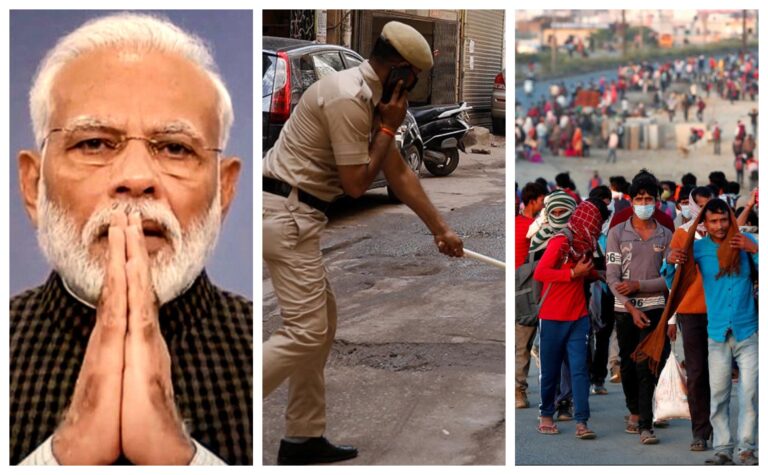
Although Modi implemented one of the most extensive and strictest lockdowns in the world, it has been criticised as being unscientific, since the time bought by the lockdown was not used to implement other measures such as conducting comprehensive contact tracing, scaling up testing, preparing medical infrastructure, and effectively communicating with the people. Lockdown in India became part of the Modi’s ever-growing vanity project. With his penchant for dictatorial leadership, he implemented the first phase of the lockdown with a notice of just four hours, giving rise to widespread panic, and causing a migrant crisis where hundreds died while travelling by foot across states, of hunger, from police violence, or committing suicide from distress. Modi paid more attention to gimmicks to serve his own cult of personality, commanding the people of the country to perform tricks, testing their loyalty to him irrespective of whether what they were doing made any sense.

Meanwhile, Trump led a personal crusade against the wearing of masks, vowing to not force Americans to wear masks even as many states passed laws mandating mask-wearing in public. He has also appointed right-wing conservatives into the FDA, pushing the body to authorize scientifically dubious treatments and authorize vaccines before the elections without completing trials, much like Modi who has made the promise of vaccines a major part of all his speeches.

Bolsonaro’s administration meanwhile was accused of downplaying the number of cases, and Bolsonaro himself claimed that COVID-19 is no more dangerous than the common flu. He has also said that protective masks were “coisa de viado” (a homophobic slur that roughly translates to “for fairies”).

Failing Public Healthcare System 

One of the earliest decisions the Modi government took after coming to power was to elevate the Department of Indian medicine and homeopathy to the status of a Ministry, known as AYUSH. The AYUSH Ministry, which received a budgetary allocation of Rs 1,739 crore for 2019-20 issued guidelines advising people to consume homeopathic drugs and herbs without any scientific link to COVID-19.

Private hospitals in the country have been charging people thousands and even lakhs of rupees for COVID-19 treatment, actively flouting price caps enforced by various state governments. Meanwhile, the state of the public healthcare system is dismal. Spending just over 1% of the GDP on healthcare, India’s healthcare system is one of the most underfunded ones in the world. According to a report on the New Frame, India has just 0.11 hospital beds per 1000 people in 12 major states, there is a nationwide shortage of 600,000 doctors and two million nurses, and about 90% of India’s poorest do not have any form of health insurance.

Bernie Sanders, whose presidential campaign focused on universal free healthcare among other welfare measures has pointed out the dismal state of healthcare in the US. Although the US government spends twice as much as other developed countries, healthcare remains ridiculously expensive and inaccessible as the government refuses to regulate private healthcare companies. Tying insurance to employment has further endangered the lives of nearly 87 million uninsured people, and will endanger many more, as COVID-19 creates a new wave of unemployment.

Although the Constitution of Brazil guarantees universal free health coverage, the state of public healthcare systems has been declining under Bolsonaro’s mismanagement. Since the COVID-19 crisis, Bolsonaro has had to appoint a Minister of Health twice, as he officeholders resigned in response to Brazil’s exponential growth in cases. In the department, Bolsonaro has placed at least 25 members of the military, with no prior experience in public health. A cadre of healthcare professionals have filed a complaint in the International Court of Justice against President Bolsonaro stating that his handling of the crisis (or lack thereof) is akin to “genocide”.

Finding Scapegoats to Distract from Covid Failures

The mismanagement of Modi, Trump, and Bolsonaro relies on the manufacturing of distractions and scapegoats to escape accountability for the crisis at hand.

Modi has made sure to distract the people of the country from the pandemic by scapegoating and blaming Muslims. A media campaign to vilify Muslims was launched after the Tablighi Jamaat congregation, with Muslims being tracked and criminalised, harassed, and abused by the police and local communities irrespective of whether they attended the congregation. Fake news was spread about Muslims waging a ‘Corona Jihad’. All of this provided a welcome distraction from the lack of government response to COVID-19 in terms of treatment and social security.

Meanwhile, Trump decided to zero in on China as the scapegoat on whom to blame its own mismanagement of the pandemic. Giving COVID-19 names such as ‘kung flu’, ‘chinese flu’, and ‘chinese virus’, Trump’s response to the pandemic was focused on blaming China for intentionally spreading the disease. This easily morphed into his election promise to decouple the US economy from China. For Trump, China became a catch-all term for all problems, with even political opponent Biden representing Chinese interests. Trump has since then banned Chinese apps in the country, and attempted multiple times to interfere in India-China relations. This distraction strategy is an effective way to capture the attention of the average ‘red scare’ driven White American who is inherently suspicious and antagonistic towards China.

Bolsonaro who called COVID-19 a mere “cold”, blaming the media for spreading fake news, suddenly began to mass produce two drugs with no proven ability to cure COVID-19, hydroxychloroquine and chloroquine, as the one-stop solution to the pandemic. In a letter to Modi, Bolsonaro likened India’s supply of HCQ to Brazil to Hanuman finding medicine in the Ramayana. Meanwhile, video footage of a cabinet meeting showed Bolsonaro’s Environment Minister suggesting that they use the pandemic as a distraction so that the government can relax regulations and environmental standards on the exploitation of the Amazon.

Modi, Trump, and Bolsonaro, the three leaders who have come to power on grandiose promises of singlehandedly making their countries great again have now been exposed for the failures that their regimes are. Perhaps the COVID-19 crisis will push the people of India, USA, and Brazil to see these leaders for who they really are, and demand public representatives who actually work for the wellbeing of the people.


Koti-Chennaya Series: Heroes of Tulu Folklore (Part-2)

1
[Note by the translator: The twin daivas(spirits) of Koti and Chennaya are one of the most popular folk deities of Tulunadu. Along with other daivas or bhutas such as Kallurti, Bobbarya, Maisandaya, Alibhuta, Koragajja, etc., Koti-Chennaya get venerated in the length and breadth of the Tulu region. Numerous studies suggest that most daivas are reminiscent of the folk heroes of that name, who were subjected to oppression of different sorts to maintain the hierarchical status-quo of the traditional Tulunadu. When they became mayaka (or perished fighting that oppression), they started getting venerated. Being born in the Billava¹ caste, Koti-Chennaya were subjected to constant treachery and harassment, even though they came close to power centres. It is roughly estimated that the twin brothers lived in the seventeenth or the eighteenth century. The following story of Koti and Chennaya is a translation based on the story written by Shri Panje Mangesha Rao, an early litterateur in Kannada. Panje himself got several (Tulu) versions of the story – one of them from Hermann Moegling of the Basel Mission. Comparing and contrasting, he finally arrived at the following story in the early twentieth century.] 

This is Part II of the 14 part Koti- Chennaya series 

As Deyi approached the Kambala field, she started experiencing the labour pain unexpectedly. Deyi stopped there leaning onto a coconut tree beside the field. Mallaya Buddhivantha, the minister of Ballala, came the same way at that moment. Without bothering about her predicament, he angrily remarked “You, Billava female! Dare to block my way?! Audacious woman!” At this, Deyi sighed and said with composure, “If I stood here out of my audacity, I would face the consequences! If I am here because of my labour pain, my children would retort.” However, by then the news of Baiditi’s pain reached the beedu. Perumaalu Ballala responded to Deyi’s needs and arranged for the delivery. In a closet of the beedu, Deyi delivered twin boys! After a few days, the children were christened. The elder boy was named Koti, after the southern God, Koteshwara. The younger boy was named Chennaya, after the northern God, Chenniga.  After christening the children, Deyi Baiditi did not survive for long. We do not know whether she died naturally or because of the wicked ploy of Ammanna Baidya and Mallaya Buddhivantha. But the Ballala of Padumale did not give up those twin children who were now orphans. He called an uncle of those children, one Sayina Baidya. He gave him the children and asked them to be looked after. He also gave him cows, buffalos and clothes for the children. Koti and Chennaya grew up in the house of Sayina Baidya and Baiditi.  In Padumale, there was a vast playground, where the village children used to play in the evening. All children of the village without any discrimination – rich and poor or Vokkaliga and Baidya – played there. One day the game ended in a quarrel. The Billava children had won the game and the Vokkaliga children had lost. Buddhivantha’s children, who were in the latter group, then demanded rent from Koti and Chennaya for the ground where they played. Chennaya claimed that it was not a condition before the game started. Thus, the quarrel intensified and the children stopped the game. Finally the ball remained with Koti-Chennaya. Buddhivantha’s children went home bear-handed and crying.  At home, Mallaya Buddhivantha saw his children crestfallen and heard their complaints about the twin brothers. Buddhivantha went in search of Koti-Chennaya. He found them playing with each other merrily, on their way home. He snatched the ball forcefully from them. The twin brothers did not attempt to get the ball back, but only said, “Oh sir, please preserve the ball; what you snatched from our tiny hands, will be gotten back when they are big!” Having said that, both the boys walked home. Thereafter, there were frequent quarrels between the Buddhivantha’s household and that of the Billava’s on small issues. Complaints were often received by the Ballala by either of the parties. He thought it would be good to separate them rather than entertain complaints again and again. He said, “If you are in the same neighbourhood, you would keep quarrelling. Therefore, I am dividing the land. The lower field should go to the Buddhivantha; the upper field would belong to the Billavas. However, he made it a rule that the Billavas pay a token gift to the Buddhivantha when they ploughed the field. Thus, Koti-Chennaya left the place called Anilaje and settled in a place called Eraje.
Representative image of Kambala festival (annual buffalo race)
Though Koti-Chennaya were far from sight, Mallaya nursed a grudge within him against them. One day, this bitterness exploded. As per the annual rituals, the Kambala festival of Anilaje was to be celebrated. Buddhivantha was going to the astrologer to seek advice regarding the auspicious time for such festivity. He had to go to the astrologer via Eraje, the place of Koti-Chennaya. As he passed their place, Koti saw him and said, “Sir, please seek the astrologer’s advice for our Kambala too.” He gave a coconut as offering for the God at the astrologer’s. Apparently Buddhivantha agreed. However, as soon as Koti disappeared from his sight, he ate up the coconut, drank its water and proceeded as normal. On returning he said, “for the Kambala at Anilaje, the auspicious time is this Tuesday; for your Kambala, it is the next Tuesday.” Now Chennaya suspected his words to the core. He decided that their Kambala too would happen on the same Tuesday when Buddhivantha celebrated his. Buddhivantha came to know about this plan of Chennaya. He got furious. He came to Koti-Chennaya and said, “So you too got the same day for the Kambala? I will have mine tomorrow itself. By tomorrow dawn, before the women come for water, your oxen will be in our fields.” Warning them thus, he returned. Next day, Koti-Chennaya ploughed a few lines of their field. Only after levelling the field, they sent their oxen to Buddhivantha’s field with a couple of servants.  Buddhivantha grew jealous at the fact that the field of the Billava boys was ploughed first! When he saw the four oxen of Koti-Chennaya in his field, he furiously started beating them in the pretext of ploughing and levelling the field. Koti-Chennaya saw him thrashing the oxen. “Sir, it is improper to flog someone else’s oxen like this. When you beat them, we feel the pain in our heart. If you have any vengeance against us, confront us directly; please don’t show it on the poor oxen”, they said directly. To this, Buddhivantha hesitantly said, “hm…”. The celebration of Kambala concluded as per tradition. As was the practice, they were required to sow the seeds following Kambala. Buddhivantha brought seeds in a palanquin and Koti-Chennaya brought the seeds in a basket. They sowed the seeds and installed the pookare as per the usual custom. 
Kannada version is written by Shri Panje Mangesha Rao (“Koti Chennaya”, from Panjeyavara Kritigalu: Sanna Kathegalu mattu Kadambarigalu, Ed: Panje Ramaraya, Madras: Orient Longman Ltd, 1973) The Kannada version is translated into English by Shashikantha Koudur (Professor in Humanities at National Institute of Technology Karnataka, Surathkal

Glossary of Kannada and Tulu words 

  1. Billava: A community in coastal Karnataka with almost one-fifth of the population in that region. The traditional occupation of the community was toddy tapping and working as agricultural help.

  2.  Gurikara: headman
  3.  Enmooru: And many more. But our story is concerned with these. At present, these are in Puttur and Sullia Taluks of Dakshina Kannada district.
  4.  Kasarka: A small plant with big thorns
  5. Ole, Bugudi, Koppu, and Mooguti: Different kinds of ornaments
  6. Kambala: A field where buffalo race takes place
  7. Pookare:  A decorated plantain stem installed in the paddy field as an agricultural ritual.

Also Read: Koti-Chennaya Series: Heroes of Tulu Folklore (Part 1)

The Rise of a new extreme Right-Wing Party in Germany – and the Begin of its Decline

0
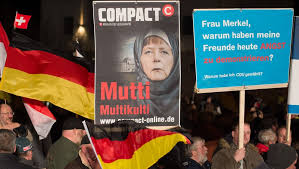
After World War II, for more than 75 years, there was no important extreme right-wing party in Germany. Various small right-wing parties managed here and there to win seats in the parliaments of some individual German states, but only for one or two legislative periods. However, they never entered the national parliament. This situation changed in 2017. The AfD (Alternative for Germany) reached 12.6 % in the national elections. What had happened? People with a mainly neoliberal-conservative background, including many academics, founded the AfD in April 2013. They criticized the common European currency the “Euro”, some of them wanted to return to Germany’s former national currency, and above all, they called for more “national” sovereignty against the European Union (EU). The founding groups showed some similarities with the Brexiters in Great Britain. The party found support among some voters of the FDP (Free Democrats, a small but influential neoliberal party), and of the CDU (Christian Democratic Party, Germany’s big conservative party, which had become much less conservative since 2005, the year the party’s chairwoman, Angela Merkel, became German Chancellor). However, this support was not enough. At the national elections in September 2013, the AfD reached only 4.7%, but 5% is necessary in order to obtain seats in parliament. In 2015, Germany was confronted with the so-called “refugee crisis”. Many refugees from Afghanistan, Syria, and some African countries reached the EU and a large number of them tried to enter Germany. For a few months, chancellor Merkel opened the borders. This decision was not guided mainly by humanitarian considerations. Much more important was the fact that the number of refugees at the borders was so large that only military force could have prevented them from entering, but this would have caused a great domestic (and perhaps also an international) crisis. In 2015, almost one million refugees came to Germany. Many more than in the years before, but compared with the 82 million inhabitants and the enormous wealth of Germany, this was not a real problem. However, German nationalists and fascists saw a threat to the “German nation” by the so-called “refugee invasion”. While large parts of German society accepted refugees, right-wing groups attacked homes for refugees, and a smaller part of the German people, especially the inhabitants of smaller cities, protested against refugee homes in their neighborhoods. Under these conditions, the AfD was able to grow. From 2015 to 2017, the party managed to enter nearly all parliaments of the individual German states. During the national elections in September 2017, the party reached 12.6%. Although far fewer refugees reached Germany in 2018, the question of refugees and migrants remained an important political issue. Furthermore, the right-wing-violence against refugees and activists who supported refugees continued. In 2018 in opinion polls, the AfD had already reached 15-16%. Meanwhile, the party succeeded in merging the original conservative and neoliberal circles with nationalistic and fascist groups. In the past, small right wing parties had never been able to do this. However, the party did not get much support from big capitalist enterprises. There are some single right-wing business people supporting the AfD, but a large section of German capital is oriented to the world market. Exports play a crucial role for the German economy. Crude nationalist phrases do not help. Nevertheless, the AfD’s success in elections strongly influenced the political discourse in Germany. Some sections of the CDU stressed that the number of refugees in Germany should be regarded as a problem and that the government should take seriously the “concerns” of the people about it. Some sections of the CDU even discussed whether cooperation with the AfD would be possible. Although the protests against the AfD continued – no AfD party convention took place without big counter-demonstrations  – the party seemed to grow steadily and to become more and more influential. In 2019, the situation began to change slightly. During the elections to the EU-parliament, the AfD reached 11%. A little bit less than during the national elections in 2017 and considerably less compared with the opinion polls of 2018. In early February 2020, the AfD seemed to have a parliamentary success in the East German state of Thuringia. Together with Thuringia’s FDP and CDU, the AfD voted in the parliament for a member of the FDP as prime minister of Thuringia. However, the protests among the German public and the resistance of the national leaders of especially the CDU were so great, that this prime minister had to resign after a few weeks. In the next state-level election, which happened in a western state of Germany, the FDP lost many voters – people punished the FDP for cooperating with the AfD, although this had happened in another German state.
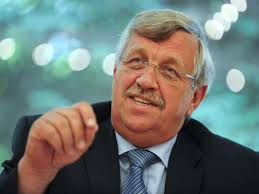
In June 2019, right-wing extremists murdered the CDU local politician Walter Luebcke.
In 2019 and in early 2020, extreme right wing assaults shattered Germany. In June 2019, right-wing extremists murdered the CDU local politician Walter Luebcke. In 2015, he had defended refugees against right-wing protesters. It was the first murder of a politician by right-wing terrorists since World War II. In October 2019, a right-wing terrorist tried to kill Jewish people in a synagogue. He failed, but he killed a pedestrian and attacked a Turkish fast-food restaurant, killing another person. In February 2020, another right-wing terrorist attacked two shisha bars, killing nine people. In all three cases, the murderers didn’t belong to any well-organized group. They had loose contacts to other extreme-right people, participating in right-wing demonstrations and events. They emerged from the background of a loosely connected right-wing scene, which extended from AfD to violent fascist groups. As a result, not only leftists and activists of civil society but also the police and the domestic secret service became active against the extreme right. In the past, these institutions used to minimize the terrorist threat of the extreme right. Traditionally, they saw the enemy only on the left. Now, police and the domestic secret service had to admit that the main danger comes from the extreme right. The domestic secret service started to monitor the most extreme parts of the AfD. However, extreme-right tendencies also exist in the police and in the army. This summer, the minister of defense dissolved one of four units of the Special Forces, the elite troop of the German army, and the minister threatened to dissolve even more units if necessary. Right-wing networks also exist inside the police. In September 2020, a network of at least 30 police officers was discovered in Nordrhein-Westfalen, Germany’s largest state. However, the fight against such networks is not so easy, since most of Germany’s police are locally organized. During the last few months, Covid-19 dominated public debate, and it is obvious that AfD has nothing to contribute regarding this issue. Now, AfD reaches around 10% in opinion polls. That’s still a lot, but much less than two years ago. For the national elections in September 2021, the AfD needs a program. Conflicts between the conservative-neoliberal wing (which wants for example to cut the welfare state) and the nationalist-fascist wing (which wants to extend the welfare state, but only for Germans) will increase. Probably, this conflict will further weaken the AfD. The fight against the AfD and extreme-right tendencies in Germany will continue. They will not disappear in the short run. However, there is a good chance of achieving considerable containment. Michael Heinrich lives in Berlin, Germany.  He is the author of “An Introduction to the Three Volumes of Marx’s Capital” and of a new Marx-biography, “Karl Marx and the birth of Modern Society”. Michael Heinrich has also travelled to India and conducted classes on Marx’s Capital.

Also Read:Pratap Bhanu Mehta on Ascendence of Right wing forces

Batla House: Nearly 900 Rendered Homeless After Slum Demolition

0

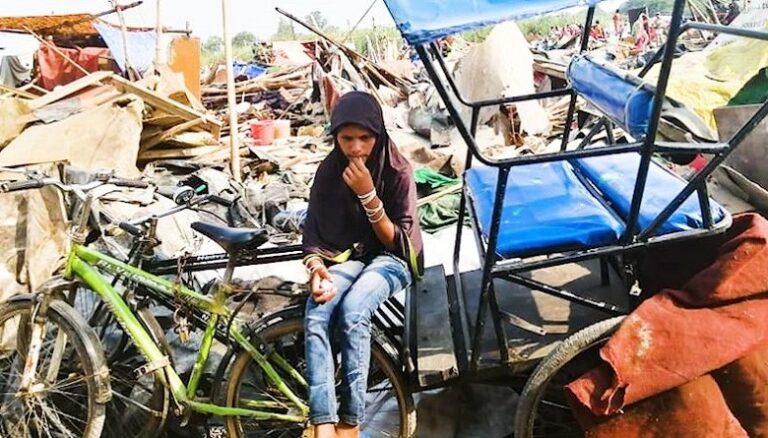
More than 200 homes in Batla House have been razed to the ground without notice, rendering hundreds homeless in the midst of a pandemic.

Despite the ongoing legal dispute over the demolition of 48 thousand slum clusters in Delhi, the Central Government continues to ravage the slums in which the poor of Delhi reside.

The Delhi Development Authority (DDA), working on the instruction of the Centre, has been attempting to demolish slums without giving any notice to the residents.

The DDA’s latest victim is the cluster of slums located in Batla House, which were demolished on September 24 by deploying heavy police forces, Workers Unity reported.

Batla House is a muslim-dominated area located near Jamia Millia Islamia which was the site of the 2008 police encounter. The area’s ghettoization has led to a lack of civic amenities and neglect from the administration.

According to a report by Sumedha Pal on NewsClick, the slum clearance procedure began on September 22, however, no notices were served to people and no alternate site was designated for their rehabilitation.

More than 200 homes were demolished and more than 900 people, including children and the elderly, were rendered homeless in a matter of days. This comes at a time when the COVID-19 outbreak has been steadily increasing in Delhi and thousands of cases are being reported daily.

In spite of the risk to health homelessness can pose especially during this time, the residents were not given any prior notice about the demolition. Students from Jamia, AISA told Workers Unity that by the morning of the second day of the demolition, people were sitting hungry in front of houses that had been reduced to rubble.

Meanwhile, the police aided the demolition by detaining anyone who resisted the demolition in any way and lathi charging on the residents, including women and children.

The residents attempted to seek help and intervention from the AAP MLA for the area, Amanatullah Khan. However, he did not respond. There has been complete silence from Kejriwal, who had made the promise during elections to build permanent housing for the residents of all slums. During the elections, the BJP had also raised slogans saying they would build permanent houses wherever there were slums.

There have been no attempts to help or visit the area by any representative of the Delhi government or any politicians.

The residents fear that the DDA will return in a few days to demolish the rest of the slums in the neighborhood.

Krishna Janmabhoomi: Ayodhya Lawyer Files Suit Against Idgah Mosque in Mathura

0

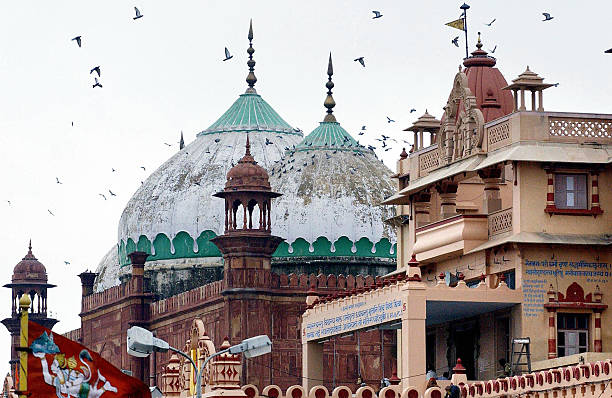
A suit to claim ownership of a ‘Krishna Janmabhoomi’ at the site of a mosque has been filed in a Mathura local court, Bar and Bench has reported.

The fever of Ram Janmabhoomi has passed after the foundation stone for the temple was laid in the midst of the pandemic in a huge ‘Bhoomi Pujan’ function, bringing to conclusion the illegal demolition of the Babri Masjid and the many Muslim lives that were lost in the riots that followed.

As a result, the forces of Hindutva were scrambling to find a new distraction, as hundreds across the country have come out on the streets to protest the government’s new agricultural laws.

Ranjana Agnihotri, one of the advocates who argued in the Ayodhya Title Suit before the Lucknow High Court, has now filed a suit seeking to claim ownership over the land on which the Shahi Idgah Masjid is built. The suit seeks the removal of the mosque.

Making a joke out of the law of the country, Agnihotri and six others have filed the suit on behalf of ‘Shri Krishna Virajman’, the Hindu deity. The lawyers have argued that ‘Shri Krishna’ can be the plaintiff as justified by ‘Hindu Law’.

The suit argues that Aurangzeb who ruled over the country from 31.07.1658 to 3.03.1707 issued orders for demolition of large number of Hindu religious places, being a “staunch follower of Islam”.

The suit challenges the 1968 agreement between the Shri Krishna Janmabhoomi Trust and the Idgah committee in which the ownership of the land was granted to the trust, and the management rights of the Masjid left with the Idgah committee, hence depriving the Trust of the legal right to stake a claim on the Masjid.

This agreement was also challenged by Manohar Lal Sharma in 1993, as the Idgah mosque came under the radar after the demolition of the Babri Masjid.

Sharma had also challenged the Places of Religious Worship Act of 1991, which was enacted when VHP and other RSS organizations began to launch campaigns similar to that against Babri Masjid, against Gyanvapi mosque in Varanasi and the Shahi Idgah in Mathura. This act froze the status of any place of worship as it existed on August 15, 1947.

Hindu militant activists and advocates should pay heed to this law, since if one were to ignore it, the people of the country could very well challenge the existence of thousands of Hindu temples that have been built after the historical demolition of Buddhist and Jain sites of worship.

Bangla Pokkho: Sub-Nationalism Cannot be A Solution to RSS Domination

0

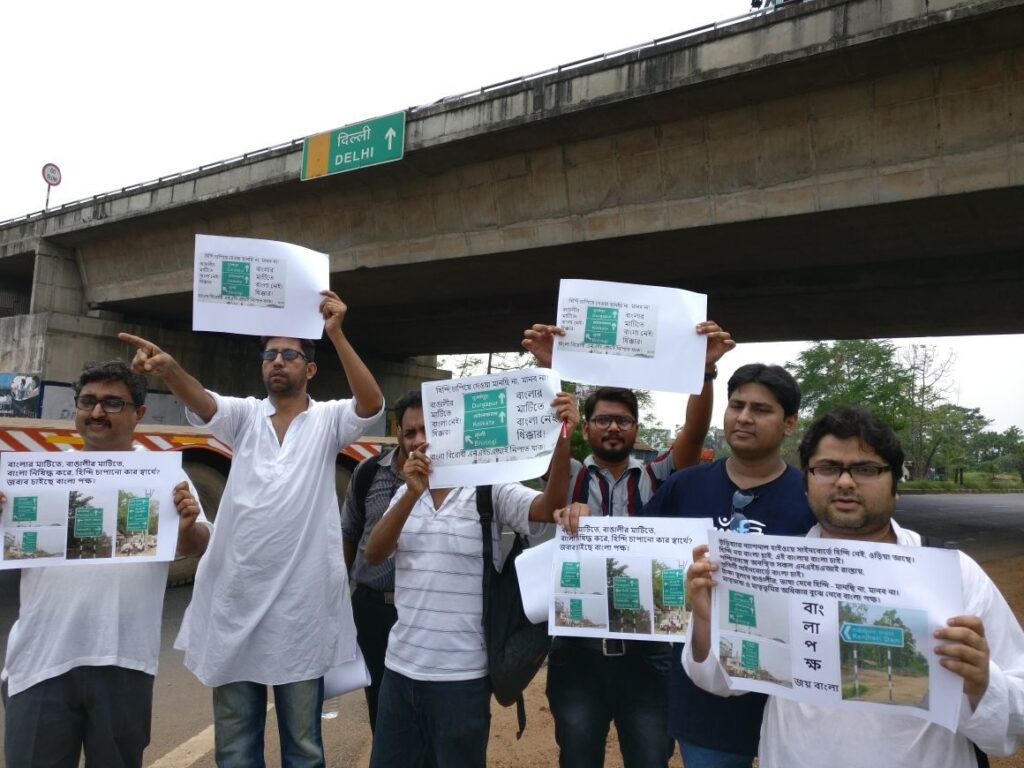
The Bangla Pokkho is a fast-growing nationalist movement in West Bengal organized along linguistic lines and aimed at protecting the ‘Bengali Jaati’. With the BJP’s active provocation along Nationalist Hindu ideas and its promotion of a Nationalist identity, many reactionary forces and groups have formed all over India, and in West Bengal. One such group is Bangla Pokkho, a group that frames its stance along linguistic lines, claiming to fight against “Hindi Imperialism”, the threat to the “bengali identity”, as well as the federal structure of power distribution.

Bangla Pokkho- The Organisation 

Bangla Pokkho, formed in 2017, call themselves a “non-communal, apolitical and non-profit organisation”, working for the rights of “Bengali language and Bengalis”. Their demands include:

  • 85%  reservation for residents of West Bengal or people voting for the state in fields like job sectors, education, military, administration work
  • Usage of Bengali language in all state and national level exams, forms, documents
  • Reservation of 85%  for students of the state board examination in state universities
  • Hiring only candidates who cleared state level exams for state government administration positions instead of the national level examinations like IAS.
  • The Bengali language getting equal status like that of Hindi constitutionally
  • and many more.
bangla pokkho
Courtesy: thebengalstory.com

Their demands are weaved around pushing the Bengali language for domination, as well as preserving a “Bangali Jaati”, an identity of which is formulated around the Bangla language itself. The kind of narrative that Bangla Pokkho prescribes is that Bangla, the Bengali people, and Bengali culture are at risk of being overrun by the imposition of Hindi and Hindustani culture. While they have been called a front of the Trinamool Party, and have definitely shown opposition towards the BJP Party in Bengal, one of their spokespersons states in an interview with The Telegraph, “We are not anti-BJP, it is the BJP that is being anti-Bengali by promoting Hindi Hindu Hindustan. We are against that ideology”. Hence, the emphasis is strongly put upon the Bengali Language and a certain claim to indigeneity by virtue of having spoken that language or prescribing to the cultural icons that are popularly marked as “Bengali Culture”.

In the same interview with the Telegraph, the spokesperson talks about how the language divide is a problem of “class”, and imposition of Hindi would mean people who can read only Bengali are deemed illiterate. Furthermore, he talks about how the organisation operates (by going village to village to make the people “aware” of their rights “as Bengalis”). He even states that they are very “liberal”, so much so that they were at that time thinking to open a front for the non-Bengali speakers. Another spokesperson further adds that “We want equal rights for Santhali, Rajbangshi, everyone” and that “We support any language which has roots in Bengal.

On the ground, they talk about promoting the “culture of Bengal” with festivals like Durga Puja, Kali Puja etc, or literature written by the likes of Tagore, Bankim Chandra Chattopadhyay and more, or promoting foods thought to be part of the Bengali cuisine. On the side of the things they oppose happen to be Hindu festivals that are more popularly celebrated outside west Bengal, with a special hatred towards the “Biharis”. The things they do promote are what are loosely considered in popular culture as signifiers of a Bengali culture.

The Glaring Problems

The problems that arise with this narrative and Bangla Pokkho itself are many. To start with, this narrative ignores many of the core realities of Bengal.

Where is caste in all of this? Where are the non-hindu groups in this narrative? Where are the Adivasi populations and their language and culture in all this? What about the people of the Northern part of West Bengal and their culture? The imposition of Bengali  culture that has long been resisted by groups such as the Gorkhas? The culture promoted here as “Bengali” culture is very distinctly that of the Hindu Upper-Caste. While loose statements of solidarity to other groups are made by the organisation, it only extends as long as the other groups are ready to accept the upper-caste cultural symbols. The harm the culture of the hegemonic upper-caste has done to these other residing populations of West Bengal which can make claims to indigeneity or nativity, are not acknowledged.

The extreme xenophobic hatred towards Hindustani people, especially towards the people of Bihar is alarming. On the Bangla Pokkho YouTube channel, one can find videos of Bihari people being harassed by Bengali mobs (like asking a man who cursed at a bengali man to do sit-ups). People of Bihar even equated to dirt. But most of the people who migrate towards West Bengal happen to be poor Bahujans in need of work. These people are in no position to be a threat to the “Bengali Culture” that Bangla Pokkho seems to promote.

Even among groups that speak Bengali, not all can make a claim to victimhood to threats to their identity. The Bangla Pokkho claims to fight for all Bengalis, even that of Assam. However the problem that Assamese Bengali population face by virtue of being mostly Muslim, Bahujan, and migrants from Bangladesh, is not comparable to someone not getting a holiday during Kali puja. The culture that the Bangla Pokkho promotes already belongs to those who form the dominant group of Bengal, and the promotion of such nationalism threatens to create a similar situation in West Bengal for supposed ‘outsiders’ that has led to the persecution of Bengali Muslims in Assam.

If the government is to truly grant the 85% reservation, that the Bangla Pokkho has been campaigning for, then those seats will eventually be filled up by upper-caste Bengalis. A productive demand instead could have been for more seats in Universities and more job opportunities for all.

There cannot be any unifying identity formed upon claims of persecution that do not uniformly apply to all that are included in that identity.

Linguistic Chauvinism and Nationalism

Most definitely, there is a need to oppose the Nationalism and fascism that has got India in its grip. However the answer to that cannot be to form identities that operate in a similar manner. Like all forms of Nationalist identity building, a single identity cannot be formulated without an “other” to pit against it. The “other” is the outsider. Here, it is the Hindi speaking Hindustani (mostly the Biharis), who threaten the fabric of the apparent united Bengalihood. That is the very thread that stitches together this “bangali Jaati”, because there was no unified “Bangali Jaati” to start with.

This trend is similar to the other forms of chauvinistic political groups in India, like the Shiv Sena (Bangla Pokkho claims to be not like them, but the similarity cannot be denied), or the Linguistic Chauvinism that has been gaining traction in Karnataka. Unlike the Shiv Sena, Bangla Pokkho does not have such power in the state yet. This might only be by virtue of it being a new organisation.

The Root of the Problem

A failing economy has been a problem in West Bengal for a long time now. However, the rapid fall of the economy under the rule of the BJP, and the growing support towards BJP in many parts of Bengal, has now affected the Upper Caste and middle class groups as well, leading to increasing panic. If one looks at the rate of unemployment in West Bengal as of 2017-18, on paper, the rates might be lower than that of the rest of the country. However, 32% of those employed were working as a part of the casual labour force while among the salaried jobs, 59% did not have any social security. However, the biggest burden will still be on the shoulders of those who were already suffering from before.

This kind of movement and ideology can easily be hijacked by the BJP. Moreover, the actual issues would still not be solved. All it would help with is preserving the previous status quo, rather than actually causing any improvement in employment and the economy as such. This kind of subnationalist articulation cannot fight the fascist nationalist communal forces at the centre.

In Conclusion

A different, more nuanced, movement is needed to be of any effect upon the actual threats that people of West Bengal or persecuted Bengalis may face. That movement cannot  come from the Upper Caste Hindu dominant groups, and would have to have at the forefront people from the communities and groups that are actually threatened (and have been so for a long time). No such claim of a united identity and nativity can be made solely on the basis of the Bengali language. Resistance is definitely needed. but the Hindu Raj is not merely an issue of Hindi Versus Bengali, but that of upper-caste Hindu domination. What is being promoted by the likes of Bangla Pokkho is just another, more “liberal” Hindu domination under the garb of fighting for a fictional “Bangali Jaati”.

Shinjini Moitra is a recent graduate from Presidency University about to pursue her Masters in Sociology. 

India’s Lockdown: A Key to Modi ’s tyranny

0

In April, Dr. David Nabarro, a WHO special envoy on COVID, singled out India’s coronavirus response for praise, saying ‘Indians know how to do it’, after the country decisively locked down the entire country to prevent the disease from spreading. What we see in India today tells a very different story. As cases have continued to rise, the most vulnerable in India have been hit hardest by the lockdown, and it is becoming increasingly clear that the Prime Minister, Narendra Modi, is using the lockdown as a way to suppress his critics and make dramatic changes to the Indian state.

Surprise Lockdown: Panic, Distress, and Climate of Fear

Modi surprised the entire country on 24 March. At 8 pm, he announced on a government-owned news channel that a nationwide lockdown would be enforced from midnight. All workplaces, schools, shops and hotels were shut down. India had one of the harshest lockdowns in the world in March, according to Oxford University’s Stringency Index.

labour

The government did not consider the 88 million people living in extreme poverty when it locked down. After the measures were announced, the homeless and beggars had only four hours to find shelter, and rural migrants were forced to flee to their homes thousands of miles away as any prospect of work disappeared. These migrant workers ended up travelling thousands of miles back to their villages without any money or medical supplies.

Men, women, the elderly, and the pregnant walked barefoot, carrying their small children and heavy luggage on their backs and heads.

Some only reached their destination after tolerating the brutality of the police, who used violence to enforce the coronavirus restrictions.

Immediately after the lockdown, most hospitals stopped taking non-COVID patients and were forced by the government to close their out-patient departments and cancel elective surgeries. Pregnant women in labour were denied admission. Meanwhile, the government’s closure of factories and workplaces led to the loss of livelihoods of another million workers, who are struggling to survive. Many have died due to a lack of medical care and hundreds have committed suicide. In a normal year, 27 percent of the people who die in India will have received no medical attention. That number will be far greater in 2020, thanks to the lockdown measures.

Modi’s administration has dangerously ignored the scientific advice during the pandemic. According to leading Indian professional health associations, the government has failed to consult the country’s epidemiologists and experts and relied on the technical advice of the clinical establishment and bureaucrats. As a result, India has introduced ‘ill-planned, hasty lockdowns’ even though the pandemic has ‘not been as fearsome as projec­ted’.

Even the Indian health ministry’s own epidemiologists and health teams have reportedly been side-lined by the government. Annoyed with this, an anonymous epidemiologist working on the PM’s Covid-19 task force has told a leading Indian magazine that ‘there is no doubt in my mind that the lockdown has failed due to the adoption of unscientific methods.’

Modi’s approach to the pandemic can be summed up by the measures taken in the north-eastern state of Meghalaya. The region is one of the areas least affected by COVID in India, with just 44 confirmed cases and only one death. On June 2, the local health department declared that all of its citizens would be classed as asymptomatic carriers of COVID ‘by default’. The government claims the best way to prevent community transmission is through a ‘behavioural change model’. In reality, this has hampered the civil rights of its citizens.

Recently on August 7, a 15-year-old returned to her village from Shillong, the state’s capital. A village secretary instructed her family to temporarily leave and stay in the nearby jungle. The entire family including a 5-month-old baby had to leave the village and spend 9 days in the jungle. Meghalaya Health Commissioner and Secretary Sampth Kumar said “First thing we must remember is that behavioural change does not happen through scaring people,” But ironically declaring every person as an asymptomatic carrier creates nothing but panic.

Often it appears that Modi and his BJP party are more interested in creating a climate of fear in India than actually fighting the disease. The government has used the virus as a tool to suspend civil liberties and punish those who oppose Modi’s dream of making India a Hindu nation.

Scapegoating Muslims and Suppression of Dissent

‘To get a disease is not a crime but to hide it, definitely is’ said the Chief Minister of Uttar Pradesh, Yogi Adityananth, in March. Adityananth, who belongs to the BJP, blamed Muslims for the spread of the disease after they attended a religious event in Delhi a day before religious gatherings were banned in the capital. Most news channels joined him in blaming Muslims for the spread of the virus across the entire country. By comparison, relatively little attention was paid when the Chief Minister himself took part in a ceremony to move a Ram idol to a new shrine in the city of Ayodhya after a complete lockdown was imposed.

tablighi
Courtesy: AFP

In December a citizenship bill was passed by Modi which gave citizenship to non-Muslim immigrants from Pakistan, Bangladesh, and Afghanistan. The bill has been criticised by Muslims and supporters of secularism, who believe it is a way to marginalise Muslims in certain states. But due to the lockdown restrictions, people are not able to protest the changes.

Modi is using the lockdown to crush his ideological opponents and police are arresting those who protested the bill before the lockdown began, on charges of sedition and terrorism.

Dr Hany Babu, Associate Professor in English at Delhi UniversityIt’s not just Muslims who are being targeted. The government has used the pandemic to silence intellectuals, activists, and writers who have spoken out against the Prime Minister. In August, two Delhi University professors and critics of the government, Hany Babu and Anand Teltumbde were arrested for their alleged involvement in violent protests. The police have drawn up elaborate conspiracy theories to curtail their right to dissent, and they have been accused of being involved in a plot to assassinate the Prime Minister. No evidence has been provided for these claims.

Not only this, the registered cases against many intellectuals who oppose the making of a Hindu nation were reopened and they were harassed on the pretext of interrogation by police. These include the names of a tribal writer hailing from Jharkhand, Vasavi Kiro, and a Dalit writer who was also the former Director-General of Uttar Pradesh Police, S.R Darapuri. Kiro was charged years ago for organising a political demonstration, while Darapuri was accused of leading the anti CAA protest in Uttar Pradesh. The Uttar Pradesh Government has threatened Darapuri to promptly compensate for the loss of government property during anti CAA protest, otherwise, his private property would be confiscated.

Meanwhile, 55 journalists have been charged by police since the beginning of the lockdown, after criticising the government’s coronavirus response.

For some people, exercising their freedom of speech has become more dangerous than the virus itself in India. The real result of the pandemic measures enacted by Modi has been the curtailment of citizens’ right to dissent and the transformation of Covid into a pandemic of fear.