Our Debt to David Graeber

On 2 September 2020, the world-famous anthropologist David Graeber passed away. Graeber will be remembered for his incredible and original scholarship and his role in various political movements. He was known for coining the expression, “We are the 99%,” a political slogan against the economic inequality in the USA.

I write this article with a heavy heart, as Graeber was someone who left the world with a large hole to be filled. He was a rare academic who was politically active, giving inspiration to many of us.

Debt: The first 5000 years, is a book that brought his scholarship and politics together. Graeber decided to write this book as a result of conversations he had as an anti-Globalization activist. (He disliked that name, anti-Globalization because the so-called Globalization leads to isolation and xenophobia, and stricter controls on immigration. This so-called Globalization was just for multi-national corporations to get profit. )

The anti-Globalization movement brought attention to how first world countries, and international organizations like IMF and the World Bank, kept poorer countries in debt and forced them to adopt neo-liberal policies.

Debt is a key system of control. When taking part in the struggle, Graeber said that many people were confused by the demands of the protesters. If poor countries are in debt, shouldn’t they work to pay off their debts?

It is clear that debt is used to push poor countries into deeper levels of poverty, and leave them at the mercy of richer countries. Even within countries, debt is a tool by the elite class to oppress the broader population. As oppressive as debt it, it appeals to our common sense. Graeber’s book was intended to separate the myths and the facts regarding debt and look at the history of debt.

Graeber’s research explains where the idea of debt comes from. In ancient cultures, debt was a positive thing. People would help each other in different situations, and when receiving help, people would be indebted to them.

As power systems evolved, debt would become entangled with those systems of power, be them patriarchy, conquest, caste, or money. Early power systems emphasized using peoples’ moral values against them, which is how religions originally evolved. Debt became a tool in preserving systems of power. Graeber showed how rules regarding debt forgiveness, intergenerational debt, and dowry systems were developed with debt, evolved in different parts of the world to become the systems of state, market, patriarchy and community.

While debt is a tool of oppression, it works because it is based in a very basic moral impulse. That is to return a favour that someone grants you. Not all debts are supposed to be paid back, Graeber notes. For example, children may feel indebted to their parents. People might feel indebted to their friends, but to pay back those debts almost feels cruel, as if to erase the relationship. Graeber shows how, in different cultures, to pay back a debt, is almost like breaking a relationship.


Debt is becoming an important political issue. In India, Household Debt has risen from 9% of the GDP to 13% of the GDP since 2014. This is still low by global standards but doesn’t take into consideration informal credit systems that are large parts of the Indian economy and have been used to control people. In recent times, with the rise of online credit systems, gradually the Indian moneylender, who gives quick credit to those in need, is becoming an app.

Graeber’s work reminds us that debt and morality are connected, as debt is a natural relationship that arises when people are in need. The impulse to help others without asking for anything in return is strong and can help us form a more just society. When we are given aid, either in a formal process, like through a bank, or an informal process, like with a friend, we feel obligated to return the favour. This forms a basic principle that Graber calls Everyday communism. 

Everyday communism is the impulse to give to every one according to their needs and to help to the best of everyone’s ability. We see it all around us. As Graeber points out, even in the most corporate of businesses, workers have to cooperate to get a job done. If they were constantly negotiating while working, no work would ever get done.

Outside of the workplace, we also try to help other people, when the cost of helping people seems so low that one can forgive the debt without much thought, or when the need is so high that one feels cruel for not helping. Everyday communism is often a good impulse that lies beneath the surface. With the proper political institutions and social structure, everyday communism can become a more powerful force in the economy. In everyday communism, forgiving a debt is a norm, and promotes social harmony.

The holding of a debt, in many religions, has been associated with evil. As Graeber points out, the words for sin and debt are often the same, and many religions have stories about punishments meted out to people who hold on to debts in a cruel manner, and to people who have not paid off their debts. Finishing a debt, either by payment or by forgiveness, as always been an important part of morality.

Graeber saw this work as being an important part of political action. Whether it is the debt between rich and poor countries or the debt between rich and poor people, we musty remember that debt is an ethical issue and needs a moral approach that is kind and just. He felt that with the 2008 financial crisis, the people of America were beginning to understand that. Hopefully, we will too.

From “Crazy Kangana” to “Kshatriya Leader”: How Feminist & Anti-Elitist Politics are Appropriated

Through her films as well as criticisms of Bollywood, Kangana earned a reputation as an assertive feminist. Her criticisms of nepotism and elitism particularly had sparked conversations on Bollywood culture. But in reality, Kangana uses feminist and anti-elitist discourses for her own gain, avoiding any real engagement with structural problems. She also furthers casteist and sexist rhetoric and organisations in the process.


Elitism & Bollywood

Kangana often describes Bollywood as an “elite nepotistic Mafia.” Her claims that Bollywood supports actors who are good at networking is undoubtedly true. But Kangana is now one of the most powerful and well-connected actors and has benefitted from these networks. Her “victimhood”, then, is both dishonest and opportunistic. 

In the last two decades, celebrity culture around Bollywood has drastically changed. Characters- like actors- often live lavish lives that audiences can’t relate to. This is unlike 1950s-80s where characters portrayed by Amitabh Bachan or Raj Kapoor were visible in public consciousness as paragons of working class anger. The distance has increased with the advent of social media, as well as the shift from the melodramatic films of olden times; actors don’t seem “larger than life”. Combined, audiences feel like they can’t access celebrity spaces because of material inequalities. One person noted:

“They move from set to set, from lavish homes to lavish offices and back. Have you noticed they never show the streets?..most time they are not even in India, they are in Mauritius or Vancouver.”

Murals of Bollywood celebrities- which were visible everywhere in the 80s,90s- have become a dying art as new actors are not venerated in public consciousness

It is at this key point that Kangana came forward, naming “elitism” and corruption within nepotistic circles in Bollywood as these inequalities. These had already become buzzwords in layman critiques of politicians and industrialists in India, and she weaponised the same in her own favour. However, with regards to her claims of elitism, a few concerns are raised:

1. Who is an “Outsider”?

Kangana’s claims of being an “outsider”- and what it even entails- has shifted over the years. In 2017, when she first spoke of not being favoured because of nepotism, her main issue was with the way some directors mocked the “inherent” talent of new actors, who weren’t as trained as star kids.

At the time she acknowledged- and even took pride in- the fact that many directors and producers had recognised her apparent star quality early on. They offered her roles accordingly, and even recommended her to others. She also refuted the term “outsider” as she had become a powerful figure and household name.

This stance has shifted in the past year, as Kangana claims that she is completely “self-made”, did not benefit from networking, or have any of the same benefits as star kids. She also used to claim that her issue wasn’t with people, but “ideologies”, but now verbally harasses other stars:

Kangana would be subject to many of the same criticisms that so-called “insiders” face. She was born into an “elite” Rajput family in a small town in Himachal Pradesh, and her father is a businessman. Even if she didn’t have godfathers within the industry or come from a metropolitan city, she still had capital that helped her within and outside the industry; She was able to hire a speech therapist to change her English accent. She had “gurujis” who trained her in theatre and advised her even before going to Bollywood. Through her social capital, she was able to get opportunities to walk in foreign runways, and change her image into a “fashion icon”.

By the late 2010s, Kangana had fostered enough power and connections in Bollywood that she could challenge her scriptwriters and cast mates without being negatively affected, as in the case with Simran and Manikarnika. Anurag Minus Verma writes that so-called outsiders like Kangana often harass newcomers when they become powerful. Plus, despite having many flops since Queen and Tanu Weds Manu, she continues to get roles in movies with a “strong female lead” because of her self-presentation and connections. If she really was an “outsider”, she would not have been given so many second chances, especially after extensively critiquing powerful people in the Industry. 

2. Is Nepotism a Bollywood/Congress Issue?

Kangana Ranaut’s critiques of nepotism especially come across as insincere and self-serving as she only acknowledges it when convenient to herself. In an interview, she likens quotas fixed for “elite” families in her own pre-medical examinations to the favouring of star kids in Bollywood. However, while she has extensively critiqued the latter, Kangana finds no faults in seats being reserved for upper-caste, upper-class, privileged families.

This was very similar to the claims of elitism and nepotism that the BJP was making against Congress and the Gandhis just a few years prior when propping up Modi. As his surname is largely associated with rich bania castes, they had made it a point to present Modi as a lower caste “chai wala“. This is despite the fact that the BJP and RSS largely have upper-caste leadership. Even in the current parliamentary session, Nirmala Sitharaman used “dynasty politics” to deflect criticism from the BJP, who have been in power for two terms.

Memes falsely equate caste-based reservations to exclusion

The BJP did not need to do this to gain votes from Dalit, OBC, or Adivasi groups. Instead, both the BJP and Kangana use the “outsider” narrative to mobilise young Savarna anxieties around “merit” and reservations. Instead of looking at a lack of seats in colleges, Savarna youth argue from a “caste blind” approach that reservations only help the “elite” and hurts middle-class students. The vagueness of the terms also don’t alienate working class or rural groups, who actually do struggle against elitism.

This kind of articulation of nepotism ignores the structural basis of it in casteism, classism and regionalism. Nepotism is inherent to the structuring of all Indian job markets since traditionally children do the same work as their family. Even if they differ, most still follow occupations that are saturated by members of their caste. Because of this, and the continuation of the extended family system, they would still have relatives helping them out.

Besides, Kangana also employs her own family members in her production house and her sister works as her assistant. In the BJP every fifth candidate of is family member of a party leader.

Appropriation of Feminist Discourses

The “Good Woman” of Bollywood

manikarnika kangana

In the past, Kangana Ranaut had been deemed a spokesperson for feminism in India. She was invited by brands such as AIB – who had opportunistically presented themselves as feminists- as well as left-liberal news organisations to speak on her experiences. However, much like elitism, Kangana appropriated the feminist discourse for her own personal gain, and to attack women she does not like.

Despite calling women “fake feminists” for not supporting her, she consistently attacks women for not fitting into Brahmanical standards of being a “good woman”. She attacked and cheered on when actresses like Deepika Padukone, Shraddha Kapoor, Rhea Chakraborty and Sara Ali Khan went through media trials and were questioned for alleged drug use. She also attacked Rhea for baseless claims that Rhea had caused Sushant Singh Rajput’s suicide. She also called Urmila Matondkar a “soft porn star.”

Despite being critical of the MeToo movement in the past, Kangana also supported Payal Ghosh. In her statement, Ghosh had singled out a few other women who performed “sexual favours” for Kashyap, making it seem like those women were at fault for the alleged sexual misconduct.

Though she is “anti-elitist”, her feminism also lacks intersectionality. Most recently, Kangana spoke out against the brutal rape of a dalit teenager in UP, Manisha Valmiki, by four Thakur men. But she glorified capital punishment and police brutality and failed to mention that it was motivated by caste. Feminists have critiqued such responses, which don’t fix with structural misogyny and end up targeting marginalised men. In her statement, she also praised UP CM, Yogi Adityanath, despite his earlier misogynistic statements.

Read More: No place for Women and Dalits: Women organisations protest in B’luru

This kind of feminism appropriates western radical feminist discourses- which centre violence against female bodies- to propagate brahmanism. As Ambedkar explains, one of the core tenants of Brahmanism is the control of women’s sexuality. Savarna women are venerated into goddess-like figures so that our protection becomes a matter of the community’s interest.

BJP often uses feminism to push Islamophobic and casteist rhetoric, and therefore have propped up Kangana as a “strong feminist”. BJP politicians like Nirmala Sitharaman and Smriti Irani also invoke their womanhood, motherhood and devotion to project themselves as “good women” who face threats from “outsiders”, especially when facing criticisms of the BJP. 

Using Feminism to Mobilise Casteist, Sexist & Pro-BJP Sentiments

I am a Kshatriya woman. You can cut my head, but I cannot bow my head! I will always raise my voice for the honour of the nation. I live with honour, respect, self-respect and will live proudly as a nationalist! I will never compromise with the principle, I will never do it! Jai Hind.

– Kangana Ranaut on twitter, translated from Hindi

As soon as Sushant Singh Rajput died, Kangana reiterated her “anti-nepotism” narrative. She argued that his depression was fuelled by nepotism and use of drugs, and that Rhea Chakroborty had abbetted the suicide. But she had mocked and dismissed claims that Sooraj Pancholi abetted Jiah Khan’s suicide. Though Kangana claims to be a feminist, her caste affiliation and Islamophobia seem to have motivated this differentiation. And even regardless of motivation, she was able to victimise herself and mobilise Rajput caste groups.

Subsequently, right wing media went from shunning Kangana as “crazy” and “obsessive”, to now propping her up. In 2017, when Kangana spoke out against Hritik Roshan, Arnab Goswami provided Hritik a platform, but not Kangana. Goswami prodded Roshan to dismiss Ranaut’s claims of elitism and misogyny. However, now they constantly invite Kangana to speak of drug use, elitism, nepotism and sexual harassment in Bollywood.

While BJP-supporting celebrities like Akshay Kumar presented an aspirational figure of masculinity, Kangana Ranaut becomes a “good woman” upon whom audiences can project masculine desires. Her boldness comes from her present political and caste location. But she portrays herself as someone without any political backing or support within the industry. While protestors were burning her images, BJP spokespersons also did not say anything in her favour. She also weaponised her victimhood as a woman when BMC broke down her illegal construction comparing it to rape. All this furthers the narrative of her as an outspoken but vulnerable Kshatriya woman who Savarna male audiences should protect.


After Railways, Privatisation of Power Companies; Many to Lose Jobs

“The SBDs literally sound the death knell for State discoms since private players will take over all the assets without liabilities,”

TEEA president N Sivaji 

On 20th September, the Union Ministry sent out a standard bidding document to all states and union territories which can be referred to while privatising power companies. Recently, the Central Government issued an order for the complete privatisation of power distribution in the country under the Atmanirbhar Package. The Union Ministry has given stakeholders a deadline till October 5th to voice their complaints.

The document is prepared in such a way that the transfer will be quick.

Corporate India has been rejoicing the move, with Vinayak Chatterjee, the Chairman of Feedback Infra calling it the “biggest investment opportunity” at the moment. But privatisation will be harmful to citizens: both consumers and workers.

Power Companies vs Consumers

The Electricity (Amendment) Bill 2020 states that subsidy and cross subsidy will be abolished in the coming three years under the new tariff policy and no one will be given electricity below cost.

Because of this, “Privatization of power companies will have the greatest impact on the common people”, writes Girish Malviya; Currently, farmers, citizens who live below the poverty line and consumers who spend 500 units of electricity per month get subsidy. Lack of subsidies will make electricity naturally more expensive for all domestic consumers. This will especially effect farmers, who already have to compete against big companies because of the new Agricultural Laws, and will now have to pay the full cost of electricity. 

The Ministry has suggested several suggestions with regards to the involvement of State Governments into the companies, ranging from 0-26%.

Power Companies vs Government Employees

Power employees have also been raising their concerns regarding this move, the biggest of which is the transfer scheme. It is clearly mentioned that privatisation, they will become employees of private companies. The Mathrubhumi reports that 12 Lakh staff– including employees and engineers- will be transferred from public to private employees. This would lead to job insecurity, and loss of privileges as the new companies will be responsible for expenses after the staff is transferred. The document directs that the amount raised for the retirement benefit should be handed over to the trusts.

Privatisation will empower companies to exploit their workers; Tata Power has already written to the Orissa Electricity Regulatory Commission rejecting the pre-conditions, asserting that employees will have to work on the terms of Tata Power or would be be thrown out. Malviya writes that private companies will also exclude contract workers, because of which thousands of workers would lose their jobs.

Power Companies vs States

The All India Power Engineers Federation (AIPEF) threatened to go on an indefinite strike, stated chief Shailendra Dubey said:

“Union government wants to privatise power discoms in the country and even healthy distribution companies making profit have been proposed to be privatised. This is unacceptable. The Centre wants to impose its will on all states and arm-twist state governments to fall in line.”

State Governments have very little power in the matter. While handing over companies from the state to private companies, the state government is allowed to decide what to do with the shares. Otherwise, the condition of implementing the reforms has been imposed for availing benefits of Rs 20 lakh crore relief package announced by Modi in may. Minister for Power M.M Mani stated that Kerala will oppose the move to privatise power distribution.

Read More: To Save Public Sector, Need a Mass Movement Against Privatisation


Some forgotten goals of Mahatma Gandhi :Rajmohan Gandhi

Awareness. Because India’s independence was an immediate goal that excited and united all Indians, some of Gandhi’s other goals were forgotten. One of these forgotten goals was public awareness of evils in Indian society. Three years after his return to India from South Africa, Gandhi wrote a preface to a book of poems by Amritlal Padhiar which described the cruel treatment daily meted out to Gujarat’s “untouchables”. In this 1918 preface, Gandhi asked for the poems to be “read out to men and women in their millions, in the same way, that works like the Bhagavat are read out to them in every square’. (Collected Works 14: 344-5). All-round education. Zeal for popular education in the widest sense may also be seen in the details of Gandhi’s well-known wish, expressed on the day before he was assassinated, for the Congress to transform itself into a Lok Sevak Sangh. Political independence having been achieved, the national goal now, Gandhi wrote on January 29, 1948, was “social, moral and economic independence” for every citizen, and especially for the villager. He wanted the contemplated Lok Sevak to educate the people of his or her village “from birth to death”, including “in sanitation and hygiene and in the prevention of illness and disease”. In 1948, Gandhi seemed to be writing for 2020. The right to vote. Most interestingly, Gandhi specifically asked this Lok Sevak to ensure that “those whose names are missing on the statutory voters’ roll are duly entered therein”. This Lok Sevak must, of course, have “abjured untouchability in any shape or form, in his own person or in his family” and must be a believer “in inter-communal unity and in equal respect and equality of opportunity for all”. In this note (Collected Works 90: 526-8), Gandhi predicts that “the struggle for the ascendancy of civil over military power is bound to take place in India’s progress towards its democratic goal”. Through this memorandum, Gandhi calls for a grassroots struggle for democratic rights and duties.
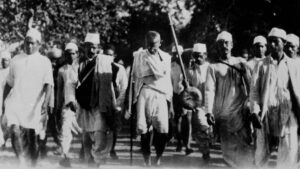
Mahatma Gandhi leading the Salt March in 1939.
Right to speak. Few remember that the Jallianwalla Bagh massacre of April 1919 was the Empire’s response to a nationwide satyagraha called by Gandhi against the Rowlatt Act, which the British had imposed for controlling speeches and writings in India. Twenty-one years later, in 1940, freedom of speech was once more the right demanded by thousands who joined the Individual Civil Disobedience campaign that Gandhi had launched. Among those imprisoned for a year or more under the ICD campaign (which preceded the more famous Quit India campaign of August 1942) were Nehru, Patel, Abul Kalam Azad, Vinoba Bhave, and Rajaji. On October 21, 1940, Vinoba, the first ICD satyagrahi, was arrested. Ordered not to report Vinoba’s arrest in his journals, Gandhi suspended their publication! He said: Let everyone become his own walking newspaper and carry the good news from mouth to mouth…  The idea here is of my telling my neighbour what I have authentically heard. This no Government can overtake or suppress. It is the cheapest newspaper yet devised and it defies the wit of Government, however clever it may be.

Also Read: Documentary on centenarian freedom fighter H S Doreswamy to be released on Oct 2

Let these walking newspapers be sure of the news they give. They should not indulge in any idle gossip. They should make sure of the source of information, and they will find that the public gets all the information that they need without opening their morning newspaper… (Harijan, Nov. 3, 1940; CW 73: 126) Right to dissent. But freedom of speech also meant the right to dissent. While launching Quit India in Mumbai on August 7, 1942, Gandhi declared: I have read a good deal about the French revolution… Pandit Jawaharlal has told me all about the Russian revolution. But I hold that though theirs was a fight for the people, it was not a fight for real democracy, which I envisaged. My democracy means every man is his own master (CW 76: 381). Quit India shook the Empire, but it also brought imprisonment and death to fighters for liberty. (Among those who died in detention was Gandhi’s wife Kasturba.) In the summer of 1945, three years after Quit India, most of the jailed were released, and freedom was near. In February 1946, a mutiny by Indian ratings in ships of the Royal Indian Navy created much excitement in Mumbai, Karachi, and Vizag. No Indian officer joined the ratings in the mutiny, but thousands of workers in Mumbai struck work in support. Agitated mutiny supporters demanded that everyone they came across should shout ‘Jai Hind’. Commenting from Pune, where he was at the time, Gandhi said: “In as much as a single person is compelled to shout ‘Jai Hind’, or any popular slogan, a nail is driven into the coffin of Swaraj in terms of the dumb millions of India.” (CW 83: 171). Rajmohan Gandhi has written widely on the Indian independence movement and its leaders, Indo-Pakistan relations, human rights and conflict resolution. He is a biographer and grandson of Mahatma Gandhi and former President of Initiatives of Change International (IofC).

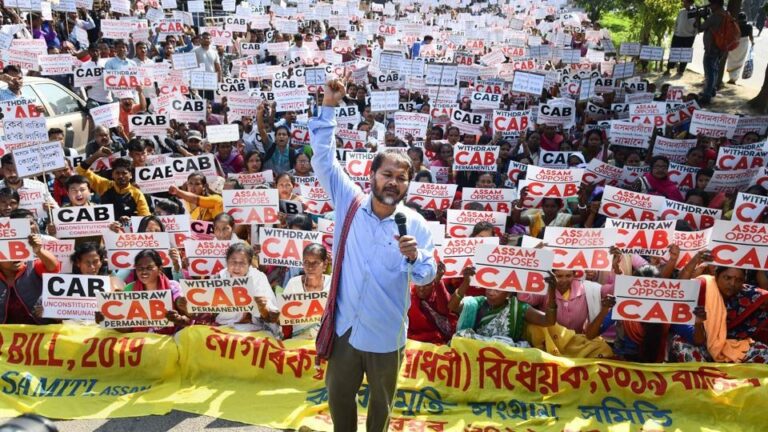
Peasant Leader Akhil Gogoi Granted Bail

On Thursday, A National Investigation Agency special court on Thursday granted bail to Krishak Mukti Sangram Samiti (KMSS) leader Akhil Gogoi on a surety of ₹30,000. However, Gogoi will remain in jail as he has not yet been given bail on another case.

The Special NIA Court granted bail to the activist in connection with the Chabua Police Station Case. Police alleged that Gogoi had led a crowd of 6000 persons, caused economic blockade, pelted stones and tried to murder a police personnel on duty. He was arrested under the controversial UAPA (“Terrorist Act”).

Based on the charge sheet and case diary, the Court prima facie found that Gogoi took part in a protest at Chabua on 9th December wherein he delivered a “aggressive or provocative” speech. They stated that he didn’t incite the violence, but also didn’t do anything to stop vandalism.

The evidence used against him included seized marxist, socialist and communist books, such as titles related to Mao, Lenin and the Communist Manifesto. He was alleged of being overground workers of the banned CPI (Maoist).

According to Live Law, the court stated:

“Considering the Content of the speeches and the statement of the witnesses about provocative speech, it appears that the tone and tenor of the speech might have been aggressive on the much-debated issue of CAA, rather than the speech directly inciting violence.” 

As the evidence against Gogoi could not sufficiently show intention of threatening the “unity, integrity, sovereignty and security of India”, and since he wasn’t motivated to strike terror, the Court granted Gogoi bail. However, he has to pay a surety of Rs. 30,000 and follow other conditions, including not tampering with evidence and influencing witnesses.

In July, activists criticised the state for not releasing Gogoi despite being tested positive for COVID-19. They pointed out that jails could be a hotbed for the spread of the virus. They also showed that conditions in prisons were inhumane, and deny political prisoners the right to a healthy life. 

Gogoi was granted bail Assam Police’s cases related to burning of a post office, a circle office and a branch of United Bank of India at Chabua of Dibrugarh district during anti-CAA protest in July 16.

Despite being granted bail on the four cases, Gogoi will remain in jail as, on August 7th his bail plea against the Chandmari case was rejected. The hearing for the same will be on October 18th. On the whole, 12 cases were filed against Gogoi by the Assam Police.

Also Read: Why The State is So Afraid of Akhil Gogoi?

No place for Women and Dalits: Women organisations protest in B’luru

1
Bengaluru: Chief Minister Yogi Adityanath’s governments and its police approach and negligence towards the Hathras rape and murder incident has drawn serious criticism in the state and from across the country. Akhil Bharat Janavadi Mahila Sanghatane (AIDWO), Student Federation of India (SFI), Dalit Hakkugal Samiti (DHS) All India Lawyers Union, Socialist Unity Center of India, and various other organizations came out to protest in the state capital. The brutal rape and murder incident has shaken the country. The protesters demanded the UP government to wake up from its slumber and take all necessary action to protect the women. Gauramma of Janavadi Mahila Sanghatane said that Uttar Pradesh had become a hub for crime as criminals, rapists have a free run. Close on the heels of the Hathras incident yet another gang-rape incident had occurred that highlights the failure of the Yogi Adityanath’s government in ensuring protection to the women in the state. It only indicates that the Yogi government was protecting the culprits. The alleged rapists not only raped the 19-year-old girl in Hathars but also inflicted physical injuries. The rape survivor after battling for life for a fortnight from September 14 -19 had succumbed to her injuries. “When alive the police did not allow the rape survivor to live a respectful life now even in her death also she lost a dignified goodbye as the police did not allow the family members to conduct the final rituals. The police locked the family members and conducted the last rites which was shameful” the protesters expressed anger.

ಉತ್ತರ ಪ್ರದೇಶದ ಹತ್ರಾಸ್‌ನಲ್ಲಿ ದಲಿತ ಯುವತಿಯ ಮೇಲೆ ನಡೆದ ಅತ್ಯಾಚಾರವನ್ನು ಖಂಡಿಸಿ ಬೆಂಗಳೂರಿನಲ್ಲಿ ನಡೆಯುತ್ತಿರುವ ಪ್ರತಿಭಟನೆ

Posted by Naanu Gauri on Wednesday, September 30, 2020
SUCI district unit secretary M N Shriram said “there is jungle raj prevailing in the state. The government itself had been protecting the accused like Kuldeep Singh Sengar in the Unnao rape incident. Though the CBI had sought action against the two IAS officers for dereliction in duty the Yogi government failed to act against the errant officials. This only highlights the royal patronage being enjoyed by the accused in view of the inaction of the state government. As the anger grows against the Hathras incident, another case of sexual assault and death of a Dalit girl has been reported in Balrampur.  The Yogi government was not able to run the government and safeguard the women and Dalits in the state.

ಉತ್ತರ ಪ್ರದೇಶದ ಹತ್ರಾಸ್ ಎಂಬಲ್ಲಿ ದಲಿತ ಯುವತಿಯ ಮೇಲೆ ನಡೆದ ಮನುಷ್ಯತ್ವ ತಲೆತಗ್ಗಿಸುವಂತ ಅತ್ಯಾಚಾರ ಮತ್ತು ಕೊಲೆ ಘಟನೆ ಖಂಡಿಸಿ ಪ್ರತಿಭಟನೆ

Posted by ಅಬ್ದುಲ್ ಸಮದ್ ಚೌದ್ರಿ on Wednesday, September 30, 2020
The protesters demanded for adequate compensation to the kins of the victims. Action should also be initiated against the police for not allowing the family members to conduct the last rites and action against concerned police officials should also be taken who failed to book case even after the incidents were reported.
There have been reports of physical assault and rape attempt incident at Hagari Bommanahalli in Bellary on September 6 the protesters said and demanded to Karnataka government to initiate an investigation into the matter to bring the perpetrators to book.

Also Read: Rastriya Parishad Protests in Support of Hathras Thakur Rapists


Documentary on centenarian freedom fighter H S Doreswamy to be released on Oct 2

2
Bengaluru: ‘Mahan Tata’ (The Great Grand Father) a documentary that depicts the life and struggle of centenarian freedom fighter H S Doreswamy will soon be released across the state. The release of the documentary on the Gandhian will be held on October 2 that marks the birth anniversary of Mahatma Gandhi. The documentary is produced by Pedestrian Pictures a media activist organisation and is directed by K P Pradeep who is also the founder member of the media house. The official release of the documentary will be held at 4 pm on October 2 at Karnataka Scouts and Guides Auditorium located on Place road in Bengaluru while Committee for Land and Housing Rights Deprived will be release and showcasing the documentary in several district places.
H. S. Doreswamy
H S Doreswamy has always been the guiding inspiration irrespective of his old age. Age has never been a hindrance to centenarian freedom fights who still is actively involved in civic activism and fighting for the rights of the poor. Doreswamy who has been credited as the “conscience of the state”  is a vocal critic and has voiced against every dispensation that is dictatorial in nature including the present regime.  Undeterred by the smear campaign against him the centenarian aspires to launch a campaign for ensuring civic rights. K P Pradeep the director of the film who is popularly known as Deepu is a native of Malappuram at  Tiruvur in Kerala. He is based in Bengaluru for the last 20 years while his media house aims at creating an understanding of socio-political realities existing in the society and aims at using different forms of media including documentary as a tool that is very effective, as part of their awareness campaigns. Ever since the likeminded people joined hand to establish Pedestrian Pictures the forum had produced documentaries on various campaigns, topics, events including Bababudangiri, BMIC Struggle among others. The documentaries ‘Our Gauri’ on journalist turned activist Gauri Lankesh who was assassinated by right-wing members and ‘Ammi’ produced after the disappearance of Najeeb Ahmed have received huge accolades while the documentary ‘Shit’ was awarded the national award. Pradeep has tried to capture the long and meaningful life of the icon in the 39 minutes. Those who are interested in getting a copy of the documentary can contact the following number- 9964676400.    

Activists from Belarus, Iran, Nicaragua and US to Receive ‘Alternative Nobel’ Prize

0
  The Right Livelihood Award that is sometimes referred to as the “Alternative Nobel,” will be awarded to a prominent Belarus opposition figure and an imprisoned Iranian human rights lawyer together with activists from Nicaragua and the United States. Ole von Uexkull, the head of the Swedish Right Livelihood Foundation behind the prize, said that it “highlights the increasing threats to democracy globally. It is high time that all of us supporting democracy around the world stand up and support each other.” The foundation cited 58-year-old human rights activist Ales Bialiatski and the non-governmental organization Human Rights Center Viasna which he heads, “for their resolute struggle for the realization of democracy and human rights in Belarus.” In 2014, Bialiatski was released nearly three years into his prison sentence, ahead of schedule. He was convicted of tax evasion and sentenced to 4 ½ years in prison in November 2011. Western governments criticized the trial as politically vindictive. Bialiatski was nominated for the Nobel Peace Prize in 2012 and received an array of international awards while imprisoned. His group has provided legal assistance to thousands of Belarusians arrested or imprisoned for challenging President Alexander Lukashenko’s rule. Iranian lawyer Nasrin Sotoudeh, who has defended activists, opposition politicians, and women prosecuted for removing their headscarves, was given the award “for her fearless activism, at great personal risk, to promote political freedoms and human rights in Iran.” Earlier this month, Sotoudeh was transferred from a prison cell to a hospital north of Tehran following a hunger strike for better prison conditions and the release of political prisoners amid the pandemic. She has since ended her hunger strike that began in mid-August. The 57-year-old Sotoudeh was arrested in 2018 on charges of collusion and propaganda against Iran’s rulers and eventually was sentenced to 38 years in prison and 148 lashes. Created in 1980, the annual Right Livelihood Award honors efforts that the prize founder, Swedish-German philanthropist Jakob von Uexkull, felt were being ignored by the Nobel prizes. The foundation also gave its 2020 award to Milton, Delaware-born U.S. civil rights lawyer Bryan Stevenson, 60, “for his inspiring endeavor to reform the U.S. criminal justice system and advance racial reconciliation in the face of historic trauma.” The fourth winner was 61-year-old rights and environmental activist Lottie Cunningham Wren of Nicaragua “for her ceaseless dedication to the protection of indigenous lands and communities from exploitation and plunder.”
greta thunberg
“Defying unjust legal systems and dictatorial political regimes, they successfully strengthen human rights, empower civil societies and denounce institutional abuses,” said von Uexkull, the foundation’s executive director and nephew of the founder. The winners will each receive prize money of 1 million kronor ($110,100) and will be honored during a virtual award ceremony on Dec. 3. Earlier recipients of the Right Livelihood Award include Swedish climate activist Greta Thunberg.

Also Read: P Sainath´s People´s Archive of Rural India (PARI) bags Prem Bhatia Award – 2020

Idgah Mosque Removal Suit Dismissed by Mathura Court

0

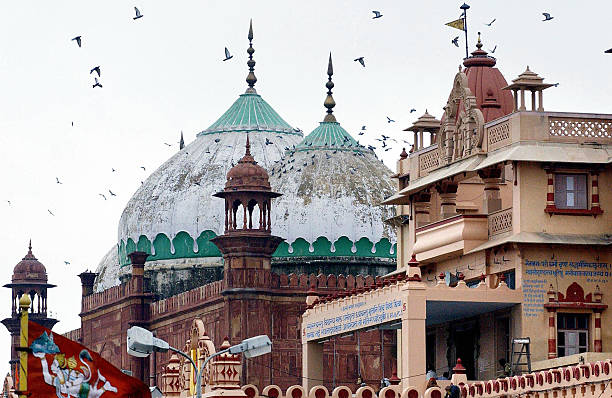
A civil court in Mathura refused to admit a suit seeking the removal of the Idgah mosque in Mathura on the allegation that it was built over the birthplace of Krishna, the Hindu deity, LiveLaw reported.

Ranjana Agnihotri, one of the advocates who argued in the Ayodhya Title Suit before the Lucknow High Court, had filed the suit seeking to claim ownership over the land on which the Shahi Idgah Masjid is built, and the removal of the mosque.

Agnihotri and six others had filed the suit on behalf of ‘Shri Krishna Virajman’, the Hindu deity. The lawyers had argued that ‘Shri Krishna’ can be the plaintiff as justified by ‘Hindu Law’.

The suit challenged the 1968 agreement between the Shri Krishna Janmabhoomi Trust and the Idgah committee in which the ownership of the land was granted to the trust, and the management rights of the Masjid left with the Idgah committee, hence depriving the Trust of the legal right to stake a claim on the Masjid. This agreement was also challenged by Manohar Lal Sharma in 1993, as the Idgah mosque came under the radar after the demolition of the Babri Masjid.

The Court of Civil Judge (Senior Division) cited the Places of Worship (Special Provisions) Act, 1991 to dismiss the suit. The Act had been enacted in the aftermath of the illegal demolition of the Babri Masjid, when the VHP and RSS organizations were beginning to launch similar campaigns against the Gyanvapi mosque in Varanasi and the Shahi Idgah mosque in Mathura.

The act froze the status of any place of worship as it existed on August 15, 1947. As per Section 4 of the Act, Courts are barred from entertaining pleas seeking the conversion of the character of religious places as it stood on the day of Independence.

The approval of the judiciary for the disgraceful acts of VHP karsevaks in the demolition of the Babri Masjid, with the Supreme Court verdict allowing the building of the Ram Temple, and now the CBI Special Court verdict acquitting all those RSS leaders responsible for inciting the violence, has created a feeling of impunity amongst Hindu fundamentalists.

In spite of a prior attempt to remove the Idgah mosque having failed and the existence of a law that does not allow its removal, Hindutva activists have continued to push for it. Now that the fervour of the Ram Janmabhoomi has passed, the push for Krishna Janmabhoomi is worrisome. The RSS is not known for its respect for the law, and perhaps this suit signals the beginning of another propaganda campaign to instigate Hindus against Muslims and distract the people of the country from noticing the government’s failures.

Rashtriya Savarna Parishad Protests in Support of Hathras Thakur Rapists

1

The Rashtriya Savarna Parishad, an upper-caste Hindu group, in a shameless attempt to protect the rapists in the Hathras case, came out in protest to the front of the SP office in Chandpa, according to a newspaper clipping that has been circulating on social media. 

Manisha Valmiki, a 19 year old Dalit woman was gangraped and tortured by four Thakur-Rajput men in Hathras on September 14. Abducted while working on her family’s fields, she was found injured and bleeding in the Thakur-owned part of the fields, almost unconscious and left to die by her rapists, Ramu, Ravi, Luvkush, and Sandeep. The accused Thakurs live right across from the home of the victim. 

At first, Manisha had named Sandeep, against whom an FIR had been filed for attempt to murder, as well as the SC/ST Prevention of Atrocities Act. Later on September 21 and 22, she named the others as her assaulters as well and the police then added the penal section of gangrape to the FIR. However, in almost 2 weeks, the police and medical personnel still did not medically confirm that she had been raped, giving excuses of heavy caseload and so on. 

A report by Akanksha Kumar and Nidhi Suresh highlights the caste motivations of the Hathras case. The Thakur family feels insulted by the fact that the Valmiki family no longer works in their homes as manual scavengers and cleaners in exchange for meagre payments. Their apparent lack of subservience is an insult to the Thakur family’s caste, who have hence attempted to retaliate and intimidate them for years. Nearly 20 years ago, the Thakur family had attacked the victim’s grandfather, because he dared to ask them to not graze their buffaloes in their field. They had tried to stab him with a knife, and ended up cutting away his fingers. Six months ago, the Thakur family had threatened to kill the Valmiki family to the victim. 

It is clear that the violence against Manisha was a premeditated act of caste violence aimed at subjugating and intimidating the Valmiki family, who have attempted to preserve their dignity in spite of the widespread practise of untouchability in Hathras. 

The rapists were part of the Rashtriya Savarna Parishad, according to Janjwar. Under Pankaj Dhavaraya, the group is attempting to protect the caste interests based on which the crime was committed. Maligning the victim and calling it a fake case in order to assert the impunity of Thakur-Rajput and other savarna men to commit sexual violence against Dalit women, even as the victim’s family faces injustice upon injustice in the aftermath of the crime. 

This is not new, as casteist and communal groups have made it a point to support sexual violence against marginalized women and girls. Around two years ago, after the abduction, rape, and murder of an 8 year old Muslim girl belonging to a nomadic tribe by Hindu priests and police officers, a similar defence of the rapists had followed. Right-wing Hindu groups, including members of the BJP, came out to protest in support of the accused. As upper-caste Hindu men use Bahujan women’s bodies to assert their power, the rest of their caste society comes out in support, recognising the true nature of their crimes. Meanwhile, progressive Savarnas try their best to undermine the caste motivations of sexual violence in India. 

What Manisha Valmiki and her family are having to suffer is a travesty of justice, and a shame for caste-Hindu society. No amount of compensation or empty assurances from politicians will undo the caste brutalities thousands of Dalit families have to face in this country, in most of which Savarna rapists, murderers, looters, abusers, and so on, go scot-free after years of harassing and intimidating the victims. 

Manisha, who was suffering from paralysis of four limbs and respiratory problems, succumbed to her injuries on September 29, exactly fourteen years after the Khairlanji Massacre. Late in the night, at around 2:30 am on Wednesday, the UP police forcefully cremated her body against her family’s wishes, depriving them of even the right to see the body.