In a courtroom twist Tuesday to the high-profile case, a law student who had accused former Union minister Chinmayanand of sexually exploiting her disowned her statements to police and now faces a perjury charge.
Appearing before an MP-MLA court in Lucknow, the LLM student categorically denied that she had levelled any allegation against the former Union minister as the prosecution had charged.
At this, the prosecution immediately moved an application under Section 340 of the CrPC, seeking action against her for perjury.
Judge PK Rai directed his office to register the application and asked the prosecution to furnish a copy of the application to the victim and the accused.
The court fixed October 15 for hearing on the application.
The Allahabad High Court in February this year granted bail to Chinmayanand, whose trust runs the Shahjahanpur law college where the woman studied. He was arrested in September last year.
The case was registered under Section 376-C of the IPC, an offence pertaining to the abuse of one’s position by a person in authority to “induce or seduce” a woman under his charge to have “sexual intercourse not amounting to the offence of rape”.
Chinmayanand (72) also faced charges under Sections 342 (wrongful confinement), 354-D (stalking) and 506 (criminal intimidation) of the IPC.
According to government lawyer Abhay Tripathi, the victim had lodged an FIR in this regard with the Lodhi Colony police station of New Delhi on September 5, 2019. Her father lodged another complaint in Shahjahanpur and both FIRs were merged.
An SIT had recorded her statement. Later, her statement under Section 164 of the CrPC was recorded in Shahjahanpur.
In both statements, she had supported the FIR version but now during the trial, she changed her statement and denied the facts mentioned in the complaint.
The Allahabad high court had on February 3, 2020 transferred the trial from Shahjahanpur to Lucknow’s MP-MLA court.
The case first came to light after the woman went missing on August 24, a day after she posted a video on social media alleging that a “senior leader of the sant community” was harassing and threatening to kill her.
Her father filed a complaint with police, accusing Chinmayanand of sexually harassing her, a charge refuted by the former Union minister’s lawyer who claimed it was a “conspiracy” to blackmail him.
An SIT was constituted by the Uttar Pradesh government on the orders of the Supreme Court in September to investigate the charges levelled by the woman.
The law student was also later charged with trying to extort money from Chinmayanand. The 23-year-old woman and her three friends were booked on Chinmayanand’s complaint that they had demanded Rs 5 crore from him.
The former Union minister alleged that they had threatened to make public video clips that showed him getting massages from the student. She was, however, granted bail in December.
The Supreme Court had last week set aside an Allahabad High Court order allowing Chinmayanand to get a copy of the statement of the woman recorded before a magistrate in connection with the case against him, saying “utmost confidentiality is required to be maintained” in sexual exploitation cases.
Former BJP MP and Union minister Swami Chinmayanand, accused of raping a law student inside his ashram in UP’s Shahjahanpur have admitted to most allegations against him when confronted with the massage videos of him with the students by the Special Investigation Team (SIT) in September 2019.
“Ab aapne sab dekh liya hai. Main kya bolun. Apne kiye pe sharminda hoon (Now you have seen everything. What more can I say? I am ashamed of what I have done).”
This U
On 10th October, Moga Civil Hospital, Punjab, a 19-year-old Dalit pregnant woman had to give birth in the parking lot. The family alleged that not only did they deny admission, staff also misbehaved with them because of their caste.
According to the hospital, this was because she was a “high-risk case” and had low haemoglobin levels. So, they referred to Guru Gobind Singh Medical College and Hospital, which is 60 km away. The woman was already in labour pain when she had gone to the hospital at 5 am.
Narender Kumar, brother of the woman, Ankita told the Indian Express:
“We were turned out of hospital and around 5.45 am, when we were still in the parking area, she screamed and collapsed on the floor. She delivered on the floor without any help from the staff.After the delivery, the stray dogs licked blood on the floor. If this is how, patients are treated here then what kind of government hospital is this.”
After the delivery, she was referred to Guru Gobind Singh Medical College and Hospital, Faridkot where the condition of mother and baby was stated to be stable.Dr. Simrat Khosa stated:
“First the family agreed to take her there and we made them sit and wait for the ambulance. Immediately, another patient arrived and entire staff got busy in conducting her delivery. Later, Ankita’s family said they want to go to private hospital, not GGSMCH Faridkot and they signed consent document for the same. After signing the document, patient and her family left without informing anyone.”
However, the family alleged that the thumb impressions were forcibly taken and that they wouldn’t have been able to afford private healthcare.
The Health Minister Balbir Singh Sidhu announced that both doctors indicted in the report were ‘suspended’, but later revoked his orders.
Such incidents are extremely common across the country; in June, a woman was refused entry to 15 hospitals. In April, a pregnant woman was not allowed to enter the hospital because she was Muslim. In September, notices were sent to a hospital in Manipur for denying entry to a pregnant woman for being an Adivasi.
On October 8th, 55 year old man from Thoothukudi, Tamil Nadu, Paulraj, a 55 year old dalit man was made to repeatedly fall at the feet of severn savarna men after one of his baby goats mixed with their herd. This was clearly because they believed his goat would “pollute” their herd.
According to SP Jeyakumar, on October 11th, the 55 year old from Olaikulam town from the same district approached the police after the seven posted the video onto social media. The police arrested the seven the very next day.
According to the Indian express, per his complaint, Paulraj accused 60-year-old Sivasangu of forcing him to fall at his feet after a heated argument over the baby goat. Sivasangu, police said, also sought help of his family members Sankilipandi (19), Udayammal (33), Periyamari (47), Veeraiah (42), Mahendran (20), and Maharajan (24) to humiliate Paulraj. The two had reportedly clashed a few months ago after one of Sivasangu’s goats went missing and he accused Paulraj of stealing it.
MP Thol Thirumavalavan from Viduthalai Chiruthaigal Katchi (former: Dalit Panthers of India) said such horrendous incidents are not limited to North India but take place in the so-called “progressive” Tamil Nadu, too.
via the Hindu
In fact, Thoothukudi district registers the highest cases of caste based crimes and acquittals (285), per 2011 and 2017 reports. During the lockdown itself a case was registered in the district where two dalit men were attacked.
Tumkuru: The Karnataka Police has registered a First Information Report (FIR) against Bollywood actress Kangana Ranaut for her tweet on farmers protesting the recently passed Farmers Acts, bar and bench reported.
People who spread misinformation and rumours about CAA that caused riots are the same people who are now spreading misinformations about Farmers bill and causing terror in the nation, they are terrorists. You very well know what I said but simply like to spread misinformation 🙂 https://t.co/oAnBTX0Drb
This comes days after a Judicial Magistrate (First Class) Court in Tumakuru, Karnataka had directed the state police to register an FIR against Ranaut.
The recent bills that have been passed in the parliament by the Modi Government have been heavily criticised for being anti-farmer and pro-market. While Modi stated in his tweet that Minimum Support Prices will continue, farmers and critics have other concerns as well; the Bill could undermine food security and increase hoarding by traders, which would profit the market but not farmers. There’s no mechanism for price fixation and it would increase cooperative federalism.
Kangana’s statement reads as ignorant as well as insensitive. Firstly, it ignores the plight of Muslims in the country by blatantly falsifying the existence of detention camps as well as the extent of state violence that Muslims faced. Secondly, it also undermines the concerns of farmers at a time where India has one of the highest numbers of farmer suicides in the world. One farmer had already lost his life protesting the Bills. It also uses existing Islamophobia to create a bias against the farmers.
The FIR has been registered under the Sections 44, 108, 153, 153(A), 504 under the Indian Penal Code, 1860 (IPC) against Kangana for her tweet which reads as follows:
The FIR, originally in Kannada, refers to the allegations made by Advocate Ramesh Naik who stated that Kangana’s tweet termed the farmers who were protesting the Farmers Bills passed by the Parliament as “terrorists”. The complaint also alleged that she had the motive of inciting riots and disturbing the peace prevailing in the society.
The said tweet has hurt the sentiments of lakhs of farmers. These kind of statements by the celebrities will instigate enmity between different groups of society and will lead to untoward incidents, which will spoil the peace and tolerance prevailing in the society, the FIR states.
Last month, Naik had moved a complaint seeking registration of an FIR against Ranaut for her tweet on farmers opposing the Farmers Bills passed in the Lok Sabha.
Recently, Justice Sreeniwas Harish Kumar of the Karnataka High Court to revoke the FIR charged against Prakash Raj- the actor- along with two others. The three were charged with violating the Model Code of Conduct for elections and causing public nuisance by campaigning at a protest meet.
Why was Prakash Raj arrested?
On March 12th, the NGO Grama Seva Sangha organised a peaceful protest meet at Mahatma Gandhi Circle on March 12, with permission from the Bruhat Bengaluru Mahanagara Palike (BBMP). The event was organised under “Media and Freedom of Expression.”
Assistant Engineer with BBMP, who was on the vigilance squad for election duty, reported that two persons, Abhilash CA and Praveen K, gathered a group of around 25 people, used a mic without permission, and obstructed pedestrians.
Allegedly, Prakash Raj, who was present at the programme spoke about the upcoming election, and in doing so campaigning for votes. He contested the elections from Bangalore last year, but did not win. According to the Hindu, some of the attendees forwarded his recorded to election organisers.
The police charged Raj and the organisers of the event under various sections of the Representation of People Act and the Karnataka Police Act. Prakash Raj then approached the High Court, requesting them to quash the complaint.
Bar and Bench reported:
Arguments Raised
Counsel for the petitioner argued that when the investigating officer sought permission of the Magistrate for registration of FIR, the latter ordered the said NCR to be registered as a private complaint under Section 200 CrPC. However, there was no supporting affidavit of the first informant.
It was also argued that when the protest meet was held, the petitioner had not yet filed his nomination to contest in the Lok Sabha elections. It was further stated that he just participated in the meeting as a citizen, and that he was not the organizer of the protest meet.
Opposing this, the High Court Government Pleader contended that there was a large gathering which caused obstruction to pedestrians and traffic. He argued that since the investigating officer sought permission to register FIR and investigate, filing of affidavit was not at all necessary.
He was further of the view that there were no grounds to interfere under Section 482 of the Code, and therefore sought dismissal of the petition.
What the Court held
After going through the relevant provisions of the CrPC, the Court noted,
“So it is clear that a person who reports to the police of an offence which is non-cognizable has every right to make a complaint according to section 200 of the Code. At the same time it may also be stated that nothing prevents a police officer from applying to the Magistrate for an order to register FIR and proceed further according to section 155(2) of the Code. This is what is discernible if sections 155 and 190 of the Code are read.”
The Court next went into the argument that there was no supporting affidavit of the first informant, as required under Section 200 CrPC.
Referring to the decision of the Supreme Court inPriyanka Srivastava and Another v. State of Uttar Pradesh and Others, the Bench opined that an affidavit is insisted upon with a view to bind the complainant to the allegations that he has made and to take action against him in case these allegations turn out to be false.
“The conspectus of the ratio is that affidavit is necessary to be filed with the complaint only in those cases where the police fail to take any action when a report of commission of an offence is made to them according to section 154(1) of the Code and the Superintendent of Police also fails to initiate action when his attention is drawn as required under section 154(3) of the Code.”
However, the Court observed that when the police officer placed the report of commission of a non-cognizable offence (NCR), the Magistrate should not have directed his office to register it as a private complaint, and that such a procedure is not contemplated.
On the issue of lack of a supporting affidavit, the Court commented that procedural irregularity cannot be a ground for invoking jurisdiction under Section 482 of the Code. Besides, it was noted that the petitioner’s counsel failed to point out the substantial injustice caused to him on account of the procedural error.
Concluding its order, the Court opined that bare denial of the charge sheet cannot be a ground for interference under Section 482 of the Code.
The Madhya Pradesh High Court on October 6, 2020 finally dismissed charges against four Muslim boys, booked for carrying swords during a Muharram procession in 2019. The High Court levied a Rs. 10,000 fine on the state government for filing the statement under the National Security Act (NSA.)
Sabrang India reported, after hearing four habeas corpus petitions, the Court said, “It appears that only in order to detain the petitioner’s brother under the National Security Act, 1980 such an incorrect statement is being made before this Court and therefore, the petition deserves to be allowed and is accordingly allowed with a cost of Rs.10,000.”
Similar petitions are also to be given similar compensation and warned officials to only use the NSA for serious matters.
Justices S.C. Sharma and Shailendra Shukla, observed that the Rajgarh Collector had incorrectly invoked NSA charges against Hakim, Salman, Abdul Karim and Zahir Khan on September 4 for allegedly smuggling sharp-edged weapons and potentially disturbing communal harmony. Barring one boy, the accused persons did not have any criminal record.
“Preventive detention involves serious encroachment on the right of personal liberty and therefore, it is the solemn duty of courts to ensure that this power is exercised strictly in accordance with the requirement of the Constitution and the law,” said the Court order.
According to the Rajgarh police, they had detained the four youths to maintain peace and to “prevent them from acting in any matter prejudicial to the security of the state.” The SP submitted a report on September 3 following which the district collector passed the NSA detention order.
However, the bail petition filed by Hakim’s elder brother said that the police had detained him on the intervening night of August 23 and 24 and later sent him to district jail under section 25 of the Arms Act. Following this, the Collector invoked NSA charges and passed an order of detention.
“The brother of the petitioner is not a hardcore criminal and was only charged with section 25 of the Arms Act. But, the collector invoked NSA against him, that too when he was in jail for an alleged crime which was done a year ago. The order of detention has been passed in a vindictive manner,” said Advocate Manish Vijaywargiya for the petitioner.
He argued that the detention under NSA was also not approved within 12 days as per requirement.
The court in turn questioned why the order was not issued on September 14 when the approval to the detention was granted. They suspected the administration ante-dated the order of approval.
The grounds of detention were served to Hakim along with supporting documents on September 5, when he was in jail while the state government gave its approval on September 14. Hakim received the approval on September 17 and the matter was still pending before the advisory board.
“This court really fails to understand that based upon a Rojnamcha entry, dated August 30, 2020, in which it was stated by police that the brother of the petitioner participated in Muharram procession last year carrying swords, how can he be a threat to law and order? Participation in Muharram last year, even if it is presumed to be correct, has got no relevance with the procession which was to take place this year,” said the Bench.
“In this case, the district magistrate acted with non-application of mind and passed detention order under NSA. Similarly, in the other petitions, approval was not given within 12 days, so the order of NSA is revoked in them also,” the court said.
While hearing the pleas, the Court referred to another case on September 15, where the Court disposed of similar detainment under the NSA imposed by the Indore Collector on five Muslims for participating in a Muharram procession on August 30.
Monday: Family members of the victim in the Hathras case appeared in front of the Lucknow Bench of the Allahabad High Court. The late victim was a 19 year old Dalit girl, who died after four savarna men raped her. The court chided the UP police for their conduct, particularly cremating her body, against the family’s wishes, in the middle of the night.
Justices Pankaj Mithal and Rajan Roy the next date of the hearing as November 2nd.
Meanwhile, the victims family beseeched the court to transfer the case since they did not trust UP authorities, and requested security till the end of the trial.
Who was summoned?
The girl’s father, mother and her three brothers were brought to the court with tight security yesterday morning.
Lucknow: Family members of Hathras alleged gang-rape victim to appear before Lucknow Bench of Allahabad High Court today.
The family members who are en-route to Lucknow from Hathras are accompanied by the District Magistrate, Sub-Divisional Magistrate & Superintendent of Police pic.twitter.com/mw3SiIAbwF
Besides the family, the court also summoned the Additional Chief Secretary, Home; the Director-General of Police; ADG, Law and Order; and the District Magistrate and Superintendent of Police of Hathras to furnish the status report of the investigation into the case. On Monday, parties appeared before the court and recorded their statements.
Family: We don’t trust the UP authorities
The family’s representative in court, Advocate Seema Kushwaha said that the family wanted the case to be transferred out of Uttar Pradesh. The security of the family is a major concern as they have been receiving threats from various groups. Kushwaha urged the court to provide them with security until the end of the trial and appeals. She also stated that information regarding the information should be kept secret for the family’s privacy.
They also did not trust UP local authorities because of their misconduct in the investigation. They informed the court that the victim was cremated against their wishes and they were barred from attending her last rites.
Hathras DM Praveen Kumar Laxkar claimed that the cremation was done to control law and order situation. But the family interjected: there was already heavy police presence, so there was no question of compromising law and order.
Seema Kushwaha, said that the police robbed the victim’s family of basic human rights, guaranteed to everyone, regardless of their caste or status. She said that the police “burnt her with kerosene, robbing her of basic human rights,”
Police burnt the body against the wishes of the family, and barred them from coming to the cremation
The court also critiqued the police’s actions according to the counsel. Kushwaha told the media
“ADG Law and Order Prashant Kumar was asked ‘if you had a daughter, would you allow the funeral to take place without seeing her body? ADG Law and Order was speechless.”
Additional Advocate General VK Shahi, who represented the state authorities in the court only stated that the next date of hearing has been fixed for November 2.
CBI Violates Supreme Court Orders
In violation of a Supreme Court order that FIRs in cases of rape and sexual assault should not be made public, the CBI, which is now investigating the Hathras case, briefly uploaded the FIR to its website. It was only hours later that they removed the document.
Reacting to this, CPI(M) general secretary Sitaram Yechury on Monday slammed Yogi Adityanath. He stated that Yogi’s eagerness to transfer the case to the investigating agency was “obvious”. Left parties have been demanding a court monitored probe and opposed transferring the case to the Central Bureau of Investigation (CBI), PTI reported.
Supreme Court Hearing
Meanwhile, the Supreme Court has also fixed a hearing on the matter for October 15. Earlier, the SC had listed out a number of questions to the UP Government regarding security measures, whether the family had an advocate and status of the HC trial. The UP Government had not yet submitted its reply.
Journalist Siddique Kappan was arrested on sedition charges on 10th | TOI
In a related matter, the SC stated on Monday that it would hear the plea filed by a journalists’ organisation against the arrest of Sidhique Kappan. The UP Police in Mathura had arrested him while he was on way to Hathras. Senior advocate Kapil Sibal informed SC that no court in the state would listen to him as UAPA was filed against him. The SC has said the hearing will be in four weeks.
Gaurilankeshnews interviewed Kannaiyan Subramaniam (in the above video) a farmers leader from Tamil Nadu, about the controversial agro-marketing bills and farmers bill. Subramaniam has been working in the agriculture sector for many years and is the General Secretary of the South Indian Coordination Committee of the Farmers Movements. He represented farmers from Tamil Nadu in Aikya Horata, a coalition of farmers, workers and Dalits in Karnataka.
Recently, several farmers organisations around the country protested against three agro-marketing bills introduced by central government. The central government, which did not respond to any of the protests or allow any debate in the parliament, passed the bills in both the houses by obtaining the majority consent. But the protests are still ongoing.
In Karnataka, many farmers and other organisations got together and staged protests for more than a week. State legislature has passed several laws which are complimentary to the central laws. Currently these laws have been stalled in legislative council.
Kannaiyan Subramaniam discussed the dangers these laws pose, and the resistance farmers are putting up against them:
1. Tell us about the three laws that central government has passed – farm services and the essential commodities (Amendment) Act, Farmers produce trade and commerce (Promotion and facilitation) Act and Farmers (Empowerment and protection) Agreement of price Assurance – and APMC amendment act and land reform act of state, and why you protest against these laws.
It is not enough to see the laws that have been brought through ordinances by the central government because the centre cannot amend the laws which are in state list. Hence, central government had long back sent a circular to states asking them to amend the laws that are complimentary to these laws. And as if that was not enough, central government brought in ordinance, got it approved in Lok Sabha and it was passed in Rajya Sabha also.
The objective behind is nothing other than making it easy for transnational corporate investment. The amendments are going to help just them.
As there was the APMC law, the corporate could purchase crops in large quantities and could not store in large quantities. Hence they put pressure on government for a law that would make farmers sell their produce outside the APMC. When it comes to land acquisition act, it is a hindrance for foreigners to buy land here. Hence, they are putting pressure amend it. Earlier laws prevented non-farmers from buying agricultural land and that was the reason corporates put pressure. And thus the laws were amended through ordinances. With this, thousands of cases which were unresolved in courts related to violation of land reforms acts now stand acquitted.
So, shouldn’t the corporates never enter? They are definitely welcome. But they shouldn’t become everything. If it gets corporatised, they will all make a syndicate among themselves and they will again get a monopoly market. Whenever the corporates enter, they enter with an agreement. Once the farmer puts her/his signature on it, he will become his slave of the big corporate for her or his entire life. The farmers will have lesser choices. Hence they will be facing serious problems. Farmers wouldn’t know the hidden agendas behind these laws. But the farmers leaders are aware of it hence the farmers organisations are opposing it.
Aikya Horata held protests for ten days | New Indian Express
2. The demands put by Aikya Horata did reach the people to some extent, so why did neither the central government, which introduced these bills, nor the state government, which introduced complimentary bills, feel any heat due to the protests?
The central government is of totalitarian nature. Initially, they had won in two constituencies. Then, they were part of coalition government. But in 2014, they formed their government and one can see the change. In 2019 as they came in power with full majority, they think things should run as they say. So, even if people oppose something, they have resolved to go ahead as they have majority in parliament.
Opposition protests farmers bills after BJP ignored their demand in parliament | Business Standard
3. Agricultural activists are saying, APMC is also not working in the interests of farmers. but the free market that the central government is bringing is even more dangerous. Why would the farmers have any interest in retaining APMCs? Is this the reason for this movement not becoming as big?
APMC too has several problems. We cannot deny that.
But the problem is the way this law was brought in without any discussion. They claim this law was brought in for reforms in market and for the benefit of farmers. I won’t go into details on this law now, will just speak on fundamental principle behind it.
The primary objective of this (APMC) law is farmers should be involved in pricing by transforming from monopoly market to universal market. The farmers form a syndicate among themselves and set the minimum support price. And they make it a rule not to lower the prices for any reason. But because of the brokers, the problem has remained. And to resolve the problem, it would have been enough if the APMC law was strengthened and made farmer friendly. But what these people have done is uproot the very law. For this their defence is, ‘one nation, one market’. This is flawed and fraud and will not work in India because they do not know that there are ‘many Indias in one India’.
According to central government guidelines, this APMC law was enacted in June in Tamil Nadu. But there hasn’t been a strong resistance to it. The first reason being, the APMC turnover in our state (TN) is much less compared to other states.
Secondly, everyone believes that if there’s problem because of it, and pressure is brought in Tamil Nadu government, the ruling regional party will soon ban the amendment to this law. Hence there has not been much much resistance to APMC law in our state.
When we come to pan India scene, the farmers have not been organised nationwide. The existing organisations have fragmented. Hence we have not yet seen a big level resistance against this phenomenon.
People can join the protests and movements only if there are organisations. But as the organisations have fragmented only some groups have been protesting.
4. Support price, scientific price etc should have gained strength after Swaminathan report recommendations, but that didn’t happen. Why?
Yes, according to recommendations of this committee, there’s a support price and that should have gained more strength. But this support price, scientific price and all such things are on just on paper. If you write sugar on a paper and lick it, is it going to be sweet? Such is the situation of support price today.
5. How did the COVID-19 crisis impact agriculture?
There has definitely been a big blow. Due to the pandemic, labourers were not available. That has become a big problem during harvest season. There were no markets for farmers, and even if there were, they are not getting a fair price. The demand too had fallen. It is recovering now slowly.
Farmers, Dalits protest over Karnataka government’s land reforms | Hans News Service
6. All the farmers organisations which were fighting separately gave a united call for bandh. Is this unity going to continue?
Looking at the current situation, i think this should continue. If these organisations continue being voice of each other, its definitely going to give results.
7. Due to good monsoons and better sowing we can expect a bumper crop. Due to this prices might crash. What is your foresight in this regard?
If there’s more supply than the demand, then prices will come down for sure. This will be decided by the market, so we cannot determine the future.
The interview was translated from Kannada to english by Rajshekhar Akki
Top Bollywood associations and producers filed a civil suit in the Delhi high court today, directing that news channels including Republic TV and Times Now be barred from carrying on a defamatory campaign against the industry.
The petition was filed by four top associations and nearly three-dozen producers including Shah Rukh Khan’s Red Chillies Entertainment, Salman Khan Films, Aamir Khan Productions, Ajay Devgn Films, Karan Johar’s Dharma Productions, Farhan Akhtar’s Excel Entertainment, Anil Kapoor Film and Communication Network, Arbaaz Khan Productions, Ashutosh Gowarikaer Productions, Reliance Big Entertainment, Rohit Shetty Pictures, Sohail Khan Productions, Vinod Chopra Films, Vishal Bhardwaj Film and Yash Raj Films.
The suit singles out Republic’s Arnab Goswami and Pradeep Bhandari and Times Now’s Rahul Shivshankar and Navika Kumar for conducting media trials of Bollywood personalities and interfering with the right to privacy of persons associated with Bollywood.
The producers have taken exception to the phrases being used by these reporters to describe a so-called drug cartel operating in the film industry in the wake of Sushant Singh Rajput’s death. These phrases include, “dirt”, “filth”, “scum”, “druggies” and expressions such as “it is Bollywood where the dirt needs to be cleaned”, “all the perfumes of Arabia cannot take away the stench and the stink of this filth and scum of the underbelly of Bollywood”, “This is the dirtiest industry in the country”, and “cocaine and LSD drenched Bollywood”.
The channels urged the court that the defendants abide by the Programme Code under the Cable Television Networks Rules, 1994, and to withdraw, recall and take down all defamatory content published by them against Bollywood.
The petitioners said they were not seeking a blanket gag order against media reporting the probe into the death of Sushant Singh Rajput or the FIRs filed by the Narcotics Control Bureau, Mumbai. They were merely seeking “perpetual and mandatory injunction against the defendants from carrying on reportage and publication of material that violates applicable laws,” said the petitioners.
The privacy of Bollywood personalities was being invaded and their reputations were being irreparably damaged. The new channels were projecting the industry to be full of criminals and seeped in drug culture. “To be a part of Bollywood was being painted as being synonymous with criminal acts in the public imagination,” they said.
The four leading associations that initiated the move include The Producers Guild of India, the Cine & TV Artistes Association, the Film & TV Producers Council and Screenwriters Association.
The petition in the Delhi high court comes just a day after the Mumbai police questioned Republic TV’s CEO and others in connection with an alleged fake Television Rating Points (TRP) mega-scam. Last week, the Mumbai police unearthed a huge scam allegedly involving Republic TV, Fakt Marathi and Box Cinema and also set up a special team to conduct a forensic audit into the financials of the channels.
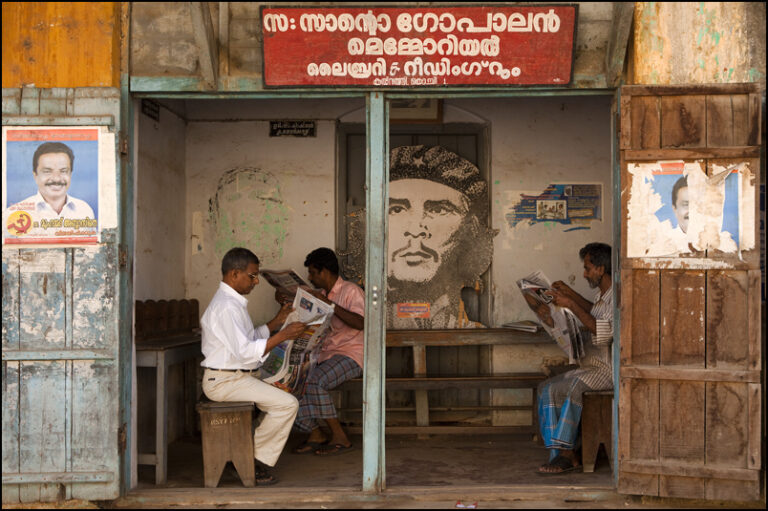
On 9th October 1967 socialist revolutionary and Latin-American guerilla leader Che Guevara was killed by CIA-backed Bolivian forces. Now, with the increased influence of western and American-centrism, Che Guevara seems to be going through a slow, second death in India.
Che Guevara: life and legacy
“I am not the person I once was…All this wandering around ‘Our America with a Capital A’ has changed me more than I thought.”
Che and Fidel
In December 1951, a 23-year-old, wealthy, Argentinian medical student, went on road trip across Latin America that deeply transformed his life. Through the trip, for the first time Che witnessed the first hand effects of American imperialism in the lives of the Latin American: people forced to work in coal mines, indigenous cultures exploited into absolute destitution, leprosy patients without proper medical care who are treated as outcasts.
Che realised that American imperial capitalist forces and feudal powers were so brutal that only way to defeat them was through a counter-revolution, which would involve taking up arms. He had witnessed first hand how the US destroys democratically elected socialist leaders and replaces them with genocidal dictators, such as in the case of Arbenz Government in Guatamala who the exploitative United Fruit Company campaigned against.
And so, he reached out to a small group of guerrillas led by the Castro brothers who were on exile from Cuba, and intended to overthrow the CIA-backed mass murderer and dictator, Fulgencio Batista.
Che was highly involved in the setting up of a revolutionary democracy in Cuba, and spearheaded progressive laws after the revolution. Guevara stressed on the need for literacy and land reform. By 1959, the official literacy rate became 60-76 percent, with rural areas getting access to education for the first time. In May 1959, he also introduced the Agrarian Reform Law, which sought to break up large landholdings and redistribute land to peasants who on worked it, cooperatives, and the state.
Disturbing images of Che Guevara after death recovered recently
In 1965, Che Guevara resigned from the Cuban Government, and travelled to Congo and Bolivia, to help their own anti-imperialist, anti-racist and anti-colonial movements. In Bolivia, he was captured and shot by their CIA-backed army. For years, the American Government claimed this was “stupid”, but the order to shoot came from the White House.
After death, Guevara was transported on the landing skids of a helicopter and paraded to Bolivian citizens, who deeply respected him and compared him to Jesus. His mutilated body was eventually thrown in an unnamed ditch, but recovered and received a second burial with military honours in Cuba in 1997.
Che Guevara’s Legacy & a Second Burial
During his lifetime, Che was a popular figure in India, though he wasn’t the kind of icon that he is today for Communist Party or its students groups. Instead, he was associated with Nehruvian Socialism, because of his closeness to Nehru. The dismissal of Che on CPI’s part seems to be because of his distaste for the Soviet Union after feeling betrayed by them in the Cuban missile crisis.
Nehru and Che during a visit to IndiaA farmer donning the Gandhi cap garlands Che
After the fall of the Soviet Union in 1991, mainstream western media started shifting towards a liberal and left-of-centre ideology. With this, they were able to profit off of the popularity of leftist ideologies and movements without threatening capitalism. One of the figures who gained popularity in Europe and America because of this is Che Guevara. With this, Che became one of the most commercialised figures.
Crucially, it is around the same time that Indian markets opened up and western liberal-capitalist media became popular, and his icon became popular amongst Indian youth. At the same time, with the fall of the Soviet Union and the Communist Party of China’s shift from Mao Tse Tung thought, there was a gaping lack of foreign leadership and desire for “quick revolution,” Thus, it was only in the 90s, with the capitalist adoption of Che, that the parliamentary left and its associated student groups such as SFI or DYFI adopted Che Guevara as their icon. Ambedkarite and Grassroots Left activists have criticised them for adopting his image as a prop, and without engaging with similar politics in India.
However, anti-communist and anti-Che Cuban American rhetoric has gained liberal appeal with the rise of Latinx media, a reaction to the calls for identity based representation, as well as the anti-latinx campaign that Trump had pushed forward. Anti-communist Cuban Americans present themselves as being “of colour” and working class. This is despite the fact that initial immigrants were wealthy white landowners, who feared their property would be redistributed to oppressed peasants and Afro-latinas, and/or supported the repressive Batista regiment. The later exodus was because of the economic scarcity caused because of the embargo the US enforced on Cuba. This reflects in their politics as well; even though media presents Cuban Americans as liberal to make them likeable to “woke” rich audiences, most are Republican in the US.
This also ignores the influence of CIA propaganda in generating immigration to undermine the socialist regime and to present the US as humanitarian; they made false claims that the Castros and Che were living in decadent wealth and murdering thousands. They also circulated rumours that the Cuban Government would kidnap children and indoctrinate them in camps, and then introduced the Pedro Pan program to transport children to the US. Such policies, however, are presented as being “good” by such media, and are never critically analysed for fear mongering or separating families.
Much of the information promoted by search engines such as Google also favour anti-Che rhetoric, and are often directly from the CIA. They downplay the institutionalised violence of Batista and the role of the US in creating oppressive conditions in Latin America. Instead, they present Latin American countries as inherent regressive and favour “the American Dream”. Many articles also write Che off as “homophobic” or “racist” by placing 2020 standards of “wokeness” onto the Cuban revolution, ignoring similar condition of American queer people in prisons, as well as the massive economic and social transformation of afro-Latino and indigenous populations after the revolution.
Leftist culture is abusing Centrists & Gandhi while idolising Che Guevara.
Because of this, though Che remains an important figure for working class and marginalised groups, we are witnessing a shift in the way upper caste liberals respond to. For this group, “wokeness” is a matter of social status and capital, and defined through an American liberal lens. This dangerous, as it excludes those who don’t have access to American tv shows, music, influencers and politics and reduces progressive politics to being “cool”. This is a minuscule part of the population, of course, but an extremely influential and powerful group, who enforce their ideals of “wokeness” on others.
The politics of many revolutionaries, including Che, is then slowly being reduced to what is fashionable or not. And though he remains plastered on t-shirts, Che Guevara apparently is no longer “in”.