Domestic abuse survivors will now have right to stay in in-law’s house!

0
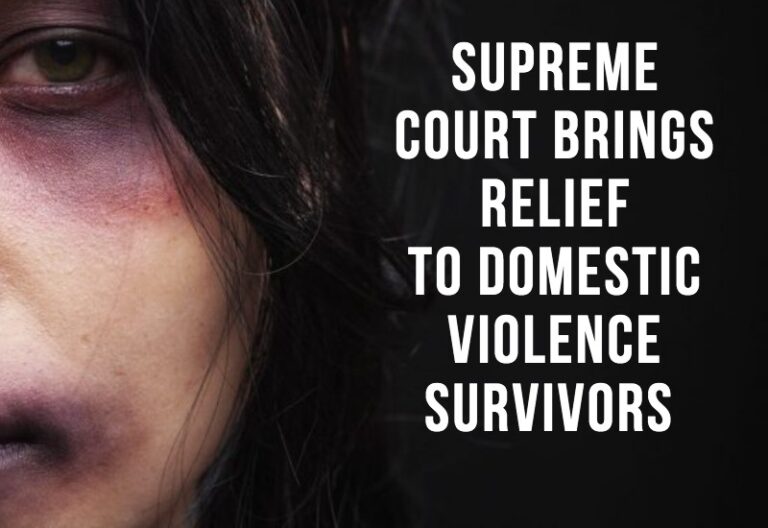
The SC stated that even if their household is owned by her in laws, the woman have a right of residence under the Domestic Violence Act even if the house is owned by in-laws. The judgement overrules the SR Batra verdict, and will come as a relief for women facing domestic abuse. In the judgement, the bench held that under the protection of women from Domestic Violence Act, 2005, “shared household” includes houses owned by the joint family or the husband’s relatives, provided she is a long-term resident “in a domestic relationship”, ie, has lived in the house since marriage. Previously, in the SR Batra and Anr. v. Taruna Batra case, the court held that since the house belonged to the wife’s mother-in-law, and not her husband, the wife could not claim any right to live in the said house. According to the older judgement, “shared household” only extended to a house belonging to or taken on rent by the husband, or the house which belongs to the joint family of which the husband is a member.

Background of the Judgement

In this case, Satish Chander Ahuja filed a Suit against his daughter in law for mandatory and permanent injunction and for mesne profits as her landlord. He pleaded that defendant has filed a complaint under the Protection of Women from Domestic Violence Act, 2005. According to him, since he was the sole owner of their residence, and her husband had no share in the property, the woman had no right to residence and therefore had to pay dues. The trial court passed an order in favour of the in-laws, but this was overruled by the Delhi High court, which held that the woman did have the legal right to claim the right of residence. The High Court’s decision was also upheld by the Supreme Court.

Conditions on “Shared Residence” for Domestic Abuse Survivors 

However, the court ruled that relief for the daughter-in-law depends on whether the allegation of domestic violence can be proved in the trial, especially in cases where father or mother-in-laws own the house. They stated:
“senior citizens in the evening of their life are also entitled to live peacefully not haunted by marital discord between their son and daughter-in-law”
While this addition could be concerning as it provides security for the husband but not wife, the judgement can nevertheless be considered a positive for women’s rights in India. As the the bench observed that the Domestic Violence Act 2005 was a “step to secure social justice by legislation.” However, even though domestic violence is rampant and “several women encounter violence in some form or the other almost every day” it is one of the least reported crimes and “majority prefer to suffer in silence.” This is because reporting abuse can lead to great social and material loss for women. Many could become homeless and have no legal claim to the house as many times they are owned by the husband’s parents, or in bigger joint families one of his siblings or cousins. In the concerned case itself, the family was attempting to use legislations that exist to protect victims of domestic violence against the abused woman. Though the judgement cannot solve all the issues that stop women from reporting domestic abuse, it is one step to assuring legal recurse.

Related: Women & the Pandemic: The Challenge of Domestic Violence

Greece: Neo-nazi leaders of Golden Dawn party sentenced to 13 years prison!

1
Athens: Leaders of Greece’s fascist Golden Dawn party leaders- including former MPs- were given a sentence of 13 years in prison by Presiding judge Maria Lepenioti. This included leader Nikos Mihaloliakos, a 62-year-old politician and Holocaust denier. Six other prominent former MPs were also found guilty. The Court also gave a life sentence to one member, Yiorgos Roupakias, who murdered anti-fascist rapper Pavlos Fyssas. He also received an additional 10 years for membership.

Rise and fall of the Golden Dawn

Nikolaos Michaloliakos started creating Golden Dawn in the 1980s. At the time it was a journal that published articles pushing a return to the right-wing military dictatorship in Greece. The party rose into prominence in 2012, where it was able to mobilise anger towards the severe austerity measures placed on the country after their debt crisis from 2008-2010 in their favour, specifically through a racist, anti-immigrant campaign. The Golden Dawn won 7% of the popular vote and was able to enter the parliament with 21 seats. After a second election is the same year, their seats were reduced to 17, but the party remained the third-largest party in parliament. Following an investigation on the murder of Pavlos Fyssas in 2013, several Golden Dawn MPs were arrested and detained. When the trial began in 2015, they were one of the most popular parties, but had a steep fall from grace and lost all seats in the 2019 legislative election. For many years, the Golden Dawn rejected the labels “neo-nazi”, fascist and rejected claims of racism. However, on October 7th, 2020, the Athens Appeals Court ruled them as a criminal organisation that systematically attacks migrants and leftists. The court also announced verdicts for 68 accused, and charged 6 MPs with running a criminal organisation, while others were charged with murder, attempted murder or violent battery. Police also found unlicensed weapons and Nazi flags in the party members’ homes. The court will decide if any sentences can be suspended later this week.
Late rapper’s mother Magda shouted, “Pavlos, you did it!” when the verdict was announced.

“pavlos you did it”

When the verdict was announced last week, deeming Golden Dawn a criminal organisation, the late rapper’s mother Magda shouted, “Pavlos (Crown of Greece) you did it!” She attended most of the 453 sessions of the hearing. “The court has simply upheld the recommendation made yesterday by the prosecutor. It hasn’t lightened them nor made them any heavier, except in the case of the killer (Roupakias),”

Related: RSS as a Terrorist Outfit: Evidence From its Archives (Part I)

Varavara Rao’s wife moves SC seeking bail for him in Elgar Prasad case

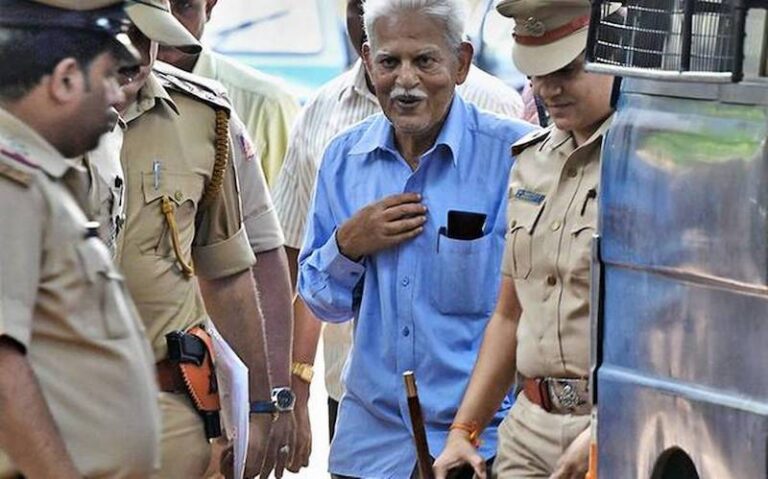
The wife of Telugu poet and writer Varavara Rao, arrested in connection with the Elgar Parishad-Koregaon Bhima case, moved the Supreme Court on Thursday seeking bail for him claiming that his continued custody amounts to cruel and inhuman treatment. The petition, filed by Pendyala Hemalatha, urged the court to immediately release of Rao on the ground that his continued custody was violating his rights granted under Article 21of the Constitution (life or personal liberty) and dignity. The petition further said that during the pendency of the petition, the 81-year-old accused “be released on temporary medical bail and be allowed to travel to Hyderabad to be with his family and loved ones”. The health condition of the petitioner’s husband is very feeble and he suffers from various comorbidities. It is therefore highly likely that COVID-19 and the fall that he had in St. George’s Hospital led to neurological problems as reflected in the medical report filed by Nanavati Hospital dated 30.07.2020,” the court has been told. The petition adds that Ms Rao, her two daughters and brother had arrived in Mumbai and met Mr Rao, then Covid-positive, in JJ Hospital, where he was found “in a pitiable condition, in a pool of urine, without any nurse or attendant”. He was sent back to jail after recovering from COVID-19 on August 28. Mr Rao’s wife and daughters have repeatedly sought bail for the activist on medical grounds and written to the central and state governments seeking information about his health after conflicting reports about his medical condition emerged in the media in May. The family also wrote to the National Human Rights Commission, which then issued notices to the Maharashtra government asking it to ensure Mr. Rao was taken care of and adequate medical facilities are arranged. Mr. Rao has been accused of making allegedly inflammatory speeches at Pune’s Elgar Parishad conclave on December 31, 2017, which triggered violence the next day near the Koregaon-Bhima war memorial located on the outskirts of the western Maharashtra city. He was first arrested from Hyderabad on August 28, 2018, after his extended house arrest ended. He and other accused in the Bhima Koregaon case were shifted to Mumbai’s Arthur Raod jail in February this year after the National Investigation Agency (NIA) took over the probe from the Pune Police. The NIA had earlier opposed Mr Rao’s bail plea in the High Court saying he was involved in anti-national activities and was trying to benefit from the pandemic.  Varavara Rao, an 80-year old Telugu revolutionary poet, along with 12 others, have been languishing in jails for the last two years as accused in a case, famously known as Bhima Koregaon case. During these two years, partly due to the lack of proper medical care and partly because of the negligence of police and prison administrations, coupled with the stress involved in imprisonment, his health deteriorated. Particularly he has been suffering from electrolyte imbalance and fall in Sodium and Potassium levels, leading to loss of memory, confusion, incoherence In the words of his friend, Rao, a popular public speaker with eloquent oration and elephantine memory is now reduced to searching for words, incoherent delirium.

Also Read: When the moon slips into Darkness: K Satyanrayana on Varavara Rao


Kafeel Khan urges EU to stand with all political dissenters

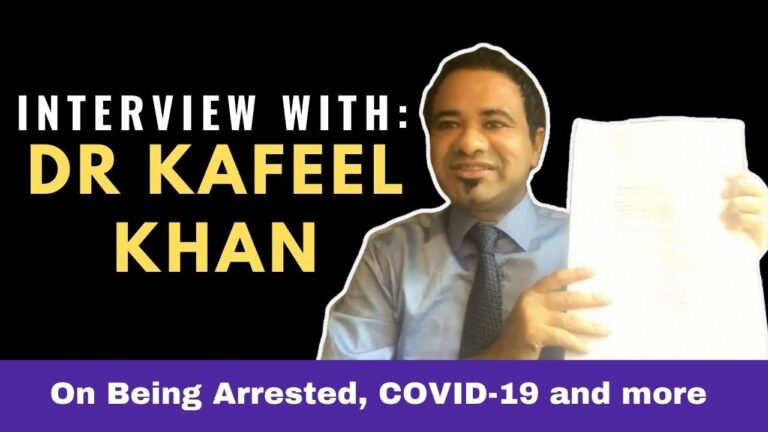
Dr. Kafeel Khan, who was previously arrested in UP, wrote a letter to the chair of the subcommittee on Human Rights in the European Union, Marie Arena responding to a letter written by her to Amit Shah on political dissenters. Denouncing the Government’s continued attack on political dissenters, he thanked them for their continued support and urged them to show support towards all political prisoners. He also brought to light the terrible conditions they are subject to in prison. Khan was previously imprisoned on two occasions without reason. In August 2017 also he was arrested for medical negligence after cessation of oxygen supply killed more than 60 children at the Baba Raghav Das Medical College in the eastern UP town of Gorakhpur, 270 km northeast of state capital Lucknow. After he spent almost nine months in prison for alleged medical negligence, a government-appointed inquiry acquitted Khan in September. After spending nine months in prison he received bail, but it was only two years later that he was absolved of all charges. But the UP Government ordered a fresh probe into Dr. Kafeel Khan. Then, he was arrested in January from Mumbai by the UP Police, who alleged he made a “provocative speech” at Aligarh Muslim University during anti-Citizenship (Amendment) Act protests. The Aligarh High Court granted him bail on 10 February but three days later, the Yogi Adityanath government in UP promulgated the 40-year-old National Security Act, 1980. He was one of the many peaceful political dissenters arrested during and in the fallout of the anti-CAA/NRC/NPR protests. Dr. Kafeel Khan described the conditions as deplorable, and that he was tortured by prison officials. In a letter released from the Mathura prison, he wrote:

“I don’t know why I am being punished. I don’t know when I will be able to see my children, my wife, my mother and my brothers and sister. I don’t know when I will as a doctor, fulfil my duties and fight the menace of Coronavirus alongside my brethren.”

In his recent letter and twitter post, Dr. Kafeel Khan described the horrible conditions that prisons in India are in and asserted that political dissenters were being arrested on false charges. He also observed that in the fight against COVID-19, it is essential to engage as many as people as possible, and not lock them up.

Read More: The Two Tales of Protection of Constitutional Guarantee of Civil Liberties

Latter on Treatment of Political Dissenters

Thank you all for urging our Indian government to immediately release human rights defenders who have been arrested for peacefully protesting against changes in the nation’s citizenship laws and an upcoming national register for citizenship. Although Government didn’t listen to the appeal and many others (Umar Khalid, Prashant Kanojia, Akhil Gogoi, Anand Teltumbde, Gautam Navlakha, Khalid Saifi, Meeran Haider, Stan Swamy, Sharjeel Imam and 100s more )are still incarcerated behind the bars. Authorities are continue invoking counter-terrorism and national security legislation using procedural police powers against these human right defenders for raising issues which would affect India’s poorest and most marginalized community, violating international human right standards.

I was tortured mentally as well as physically, denied food and water for many days, and treated inhumanly during my 7 months of incarceration in a congested, overcrowded Mathura prison.

Fortunately,I got my NSA and all 3 extensions quashed by Hon’ble High CourtUttar-Pradesh, India which called the whole process illegal.

I believe in this era when COVID-19 is creating havoc in our country it is indeed essential to engage all strength and means to fight against the pandemic rather than using discretionary powers to suppress freedom of speech.

I assure you that my sanctification, devotion, and determination towards serving my countrymen would continue regardless of the obstacles created. Once again I thank you all very much for supporting our cause and standing in solidarity with us and would appeal to continue raising our plight as many Human rights defenders/social activists/students are continue to be detained. The use of stringent national security laws /UAPA against political dissenters, in the absence of any appeal to violence, is something to be condemned in all cases.

Read More: Kafeel Khan- People want Health, education and Employment, not Hate

Email sent by the Human Rights division to Amit Shah

Thailand declares State of Emergency amid large scale protests

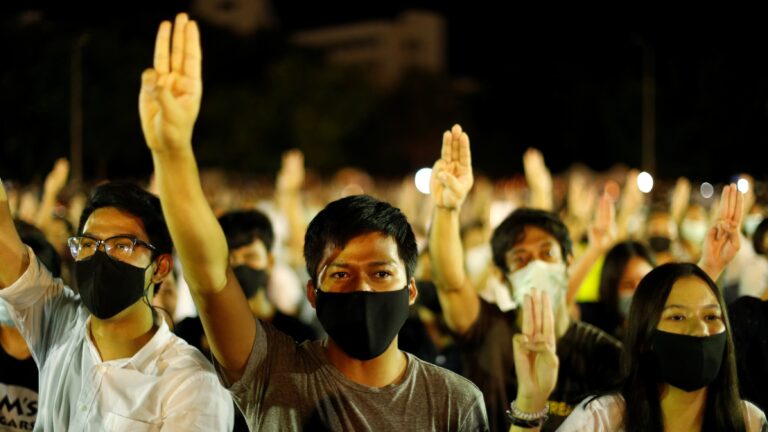
BANGKOK (Reuters) – Thailand’s government announced an emergency decree early on Thursday to address street protesters in Bangkok who have set up camp outside the prime minister’s office and obstructed a royal motorcade, state television announced. The police and soldiers dispersed demonstrators on Thursday, marking the start of a crackdown on a student-led protest movement. Protesters have called for the ousting of Prime Minister Prayuth Chan-ocha, a former junta leader, and a new constitution. They have also called for reforms to the monarchy of King Maha Vajiralongkorn. In an announcement published on Thailand’s Royal Gazette website, the government said it took the measure because of “an action that had an impact on a royal motorcade” carrying members of King Maha Vajiralongkorn’s family, as well as national security and economic considerations. Prime Minister Prayuth Chan-ocha declared the state of emergency after about 10,000 anti-government protesters rallied at Bangkok’s Democracy Monument on Wednesday before marching to Government House, the seat of the Thai government. They broke through police barricades and surrounded the building, pressing their demand for the resignation of Mr Prayuth’s administration. The biggest cable operator in Thailand called Two visions has censored all the international coverage associated with the crackdown so that news related to it doesn’t reach the people. An announcement on state television said- “As it appears that many groups of people have invited and incited illegal public assemblies in Bangkok … acted to affect the royal motorcade and committed severe actions that affected national security … it is extremely necessary to introduce an urgent measure to end this situation effectively and promptly to maintain peace and order,” Thailand’s youthful protesters began near-daily demonstrations in July and are demanding Mr Prayuth’s resignation, the writing of a new constitution and limits on the monarchy’s powers and wealth. Thailand banned demonstrations and arrested at least three protest leaders on Thursday after an escalation in more than three months of anti-government rallies. Thailand’s crackdown coincided with a visit to the country from the king. The king, who lives in Germany and had visited the country only on one-day visits in recent months, arrived on Saturday in Bangkok for what Thais expect to be a longer stay. Since ascending the throne after the death of his father King Bhumibol Adulyadej in 2016, the king has taken ownership of tens of billions of dollars’ worth of crown property and put two army regiments under his direct command.

Also Read: Indonesia: Omnibus “killing us slowly”, police-protestors clashes intensify


Chandrashekhar Azad party ASP to fight Bihar elections with Pappu Yadav as CM`s face

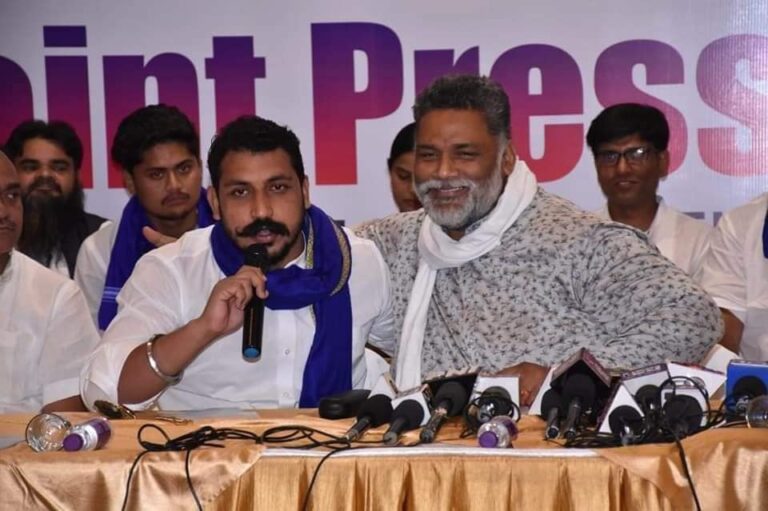
Jan Adhikar Party-Loktantrik (JAP-L) president Rajesh Ranjan alias Pappu Yadav is the chief ministerial candidate of the newly formed Progressive Democratic Alliance (PDA) for the Bihar Assembly election. The announcement was made yesterday. Pappu Yadav will contest the Bihar Assembly election from Madhepura, his stronghold. The announcement was made in Patna at a joint press conference on Wednesday. The press conference was also attended by the Social Democratic Party of India (SDPI) national president M K Faizi, National Presiden Chandrashekhar Azad of Azad Samaj Party, and other coalition partners.

आज दिनांक 14 -10 – 2020 को पटना में PDA की प्रेस वार्ता में @BhimArmyChief व @AzadSamaajParty के राष्ट्रीय अध्यक्ष…

Posted by BHIM ARMY on Wednesday, October 14, 2020
Pappu Yadav-led JAP has started the alliance with Chandrasekhar Azad Ravan’s Azad Samaj Party, the Bahujan Mukti Party (BMP) and Social Democratic Party of India (SDPI) to contest the Bihar Assembly election against the ruling National Democratic Alliance (NDA) Announcing Pappu Yadav`s name Azad Samaj Party chief Chandrashekhar Azad said, “The working style of Pappu Yadav is people-centric and under his leadership, PDA has started making changes in Bihar. I hope the people who love Bihar and feel its pain will give our alliance a chance this time around Bihar goes to the polls in three phases beginning October 28. Azad also aded that if Pappu Yadav becomes chief minister of Bihar, Dalits, Muslims and OBCs will be protected. This alliance will work towards the politics of money and power but the politics of service and will involve everyone in this endeavor. After having been nominated the PDA’s chief ministerial candidate, Pappu Yadav said that a safe and miling Bihar will be his priority. PDA alliance will not tolerate caste and communal riots at any cost. He also promised if under his rule if migration from Bihar doesn’t sop then he will resign from his chief ministership. He also hit out at Nitish Kumar. He said, “Why is the development not an issue for Nitish Kumar? Why does Nitish Kumar make Lalu Prasad his election issue? Why does not Nitish Kumar speak on the issues of flood and migration?” This year’s Bihar Assembly election is witnessing a flood of chief ministerial candidates. Pappu Yadav’s name adds to the long list of CM hopefuls — leading names are Nitish Kumar, Tejashwi Yadav, and Upendra Kushwaha.

Also read-Bihar Elections: JDU gives ticket to Muzaffarpur shelter home Accused

Indonesia: Omnibus “killing us slowly”, police-protestors clashes intensify

Protests in  Indonesia against the dangerous Omnibus bills entered the second week today. In the last week the protests intensified; disgruntled protestors torched police vehicles and stations after police officers repeatedly fired tear gas and water canons at them. Labour activists and green groups had slammed the legislation for removing 79 existing statutes that are meant to protect workers as well as the environment. The Government hopes that this will increase foreign investment and claims it will create jobs, but Amnesty International stated that it is “catastrophic” for workers. One person said:

“I came to ask for justice. The Omnibus Law cannot be accepted by society, unless we are all rich people,” he said. “Our parents are labourers. Tuition fees, food, electricity, everything is very expensive in the Jokowi era. Setting up a system like this will bleed us dry. It’s like the government is trying to kill us slowly.”

President Jokowi stated

“What I see is the widespread protest against the Job Creation Law is basically driven by disinformation about the law’s substance and social media hoaxes,”

It should be noted, however, that the Government had paid influencers to speak in favour of the law on social media.
On Thursday, protesters burned tyres, vandalised bus stops and dismantled partitions of a construction site while others were seen smashing bricks and concretes into smaller pieces to be hurled at the police, reports Channel News Asia. Both before and after this turn, the police have been continuously using tear gas on dissenters- peaceful or otherwise- multiple times during the day. Black smoke rose across the capital late Thursday afternoon and into the night.
Such use of extreme force is despite the fact that police have tapped into people’s phones and messengers, and have been tracking their movement. So, they should have prior knowledge of the protests and able to control them using more peaceful methods. Nikkei The state and afflicted media is also spreading propaganda against the protestors. Nikkei Asia determined that the protestors- largely consisting of environmental activists, workers and students- are actually “hard line Islamists“. While the headline makes it seem like they’re leading the protests, a radical group 212 had just joined one of the days. The return of student protest has been considered a return to Indonesian political tradition which has been missing in the last two decades. Students have not been a particularly important political force, at least not in their own right. They have, in the recent past, affiliated with individual groups benefitting them, but are now strongly creating affiliations with workers. The main reasons for this has been considered rise of student organisations as well the fact that these students have grown up in an Indonesia where democracy is itself a tangible legacy of the Reformasi protests pioneered by students in 1998-99.

Read More: Omnibus bill: Massive protests in Indonesia over pro-market, anti-worker and environmentally hazardous policy

Voter ID, Pan Card or Aadhar not proof of Indian Citizenship- Patna HC

0
A woman who was born a Nepali citizen’s validity to be elected Mukhiya of a Gram Panchayat was challenged on the grounds that she did not hold Indian citizenship. Patna HC ruled that she could not be considered an Indian citizen as under existing Constitutional and legal regime, formally relinquishing foreign citizenship or holding documents such Voter ID, PAN Card or aadhar, or living in India for many years do not determine citizenship.
“… it is not that anyone or everyone can, as a matter of right, claim Citizenship of India. Power and discretion of conferring citizenship vests with the Central Government which, of course, has to be exercised as per settled principles of Law.”

Background of the Case

The plea was by a woman whose election as the Mukhiya of a Gram Panchayat was challenged on the ground that she was not an Indian citizen.
In 2003, she had married an Indian citizen and in 2016, formally relinquished Nepali citizenship. While those who marry Indian citizens have the option of becoming citizens themselves, she did not make a formal application for citizenship under the Indian Citizenship Act, 1955. The court noted that relinquishment of original citizenship cannot be perceived as seeking Indian Citizenship since the person may migrate to another country. Continous and uninterrupted stay can also not be perceived as desire to be a citizen. 
The Court also rejected her claim that the voter identity card can be used as proof of citizenship. The Court noted that the Representation of the People Act 1950 shows that non-citizens are disqualified from entering their names in the voter list, but does not provide that name in the electoral roll (voter list) would be proof of Citizenship of India, the Bench said. This had been a contentious issue with regards to determining citizens per the CAA and NRC as much of the working class population may not have original documents beyond such identity cards. Moreover, if someone needs to be a citizen to gain a voter id, then surely it should also act as proof. Possession of PAN card or identity card also do not confer citizenship rights, the court stated referring to Binoy Viswam v. Union of India & Ors and the Aadhar Act. The Court also affirmed that sale records for property in India or existence of a bank account are not proof of citizenship. Thus, the High Court affirmed the State Election Commission’s decision to set aside her election to the Panchayat on the grounds that she was disqualified for not being an Indian citizen.

Issues that arose

Given that the appellant was stuck in limbo, having surrendered her Nepali citizenship and not gained Indian citizenship, the Bench empathised with the woman. The Bench did observe that the woman’s desire to make India her permanent home are clear. They urged Central government authorities to decide expeditiously on the woman’s application for Indian citizenship. This observation also brings to question the lack of provision for automatic conferring of citizenship based on time. Gauhati High Court also recently dismissed citizenship claims of two petitioners on similar grounds- one of whom produced as many as 15 documents while another submitted his electoral photo identity card.

Read More: “All-India NRC Makes Absolutely No Sense”, Says IIM Professor

Close to 70% debates conducted by Navika Kumar and Arnab were on Sushant Singh Rajput

0
Author and researcher Dr. Kota Neelima, who had earlier intervened in the Sudarshan TV case before the Supreme Court, has placed on record a study on the way television debates are conducted and how they constitute hate speech. The application filed through Advocate Sunil Fernandes has utilized the services of Rate the Debate, an independent research platform, which has evaluated the content of the news coverage and debates undertaken by journalists Arnab Goswami and Navika Kumar. The report contains a detailed analysis of 32 weekdays of news content, 55 hours of programming, and 76 debate topics conducted by Arnab Goswami on Republic TV, and 24 days of news content, 20 hours of programming and 32 debate topics conducted by Navika Kumar on Times Now. As per the application, the study shows that 65% of the total debates conducted by Goswami from July 31, 2020 to September 15, 2020 and 69% of the total debates conducted by Navika Kumar from June 16, 2020 to October 6, 2020, were on a singular topic – the death of Bollywood actor Sushant Singh Rajput. Dr Neelima’s application adds, “Not only an overwhelming and inordinate amount of time is devoted to a single topic, but the manner, tone, tenor and content of the ‘News Coverage’ and ‘TV Debate’ was also highly toxic, polarised and filled with innuendos, salacious gossips, wild allegations, and character assassinations.”

Application filed in Supreme Court

“Firstly, they deliberately create a hypothesis or a false construct/premise, for example, Sushant Singh Rajput was murdered and did not commit suicide. They will then insinuate that a top politician or a powerful personality is behind the “cover-up”. Once this hypothesis and insinuation/innuendo is established, the viewer will be bombarded with a relentless barrage of “TV Debates”, “Hashtags”, “Evidences” and “Conspiracy Theories” which would convince the viewer of the hypothesis even before the prosecuting agency has completed its investigation and filed its charge-sheet.”

Also Read: Bollywood Strikes back: Sues Republic TV and Times Now for irresponsible reporting

It is further averred that certain TV anchors have consistently created a false narrative through media trials influencing public opinion. Dr Neelima has gone on to state that those media trials are another facet of hate speech. She states, “Media Trials can take place for a variety of reasons, for instance, it can be in order to grab a higher share of Television Rating Points (TRPs) or it can be something more sinister whereby certain private television channels act as proxy propaganda machines for the Central government.” Sudarshan TV was served a show-cause notice by the Union Ministry of Information and Broadcasting to appear for a personal hearing and show how their show on “UPSC Jihad” did not violate the Programme Code under the Cable Television Networks (Regulation) Act, 1995. A formal decision from the Centre is awaited and the case is set to be taken up by the Supreme Court thereafter. Dr. Neelima had earlier intervened in the case along with Sangeeta Tyagi, alleging that there is a parallel between the current state of the electronic media in India and Nazi Germany.

Allahabad HC: UP Police violated human rights in Hathras rape case

On Monday, the Allahabad High Court chastised the UP police for cremating the Hathras rape victim at odd hours without the consent of the family, and barring them from giving her a respectful funeral. The bench made clear that this was a human rights violation against the victim and her family. 

High Court: UP Police’s Actions in violation of Constitutional Rights and IPC

While hearing the suo motu case registered on October 1, the bench noted that the administration at the local level was given the order to do so by the District Magistrate. Bar and bench reports that Justices Pankaj Mithal and Rajan Roy observed:

“This action of the State Authorities, though in the name of law and order situation, is prima facie an infringement upon the human rights of the victim and her family. The victim was at least entitled to decent cremation in accordance with her religious customs and rituals which essentially are to be performed by her family.”

hathras police burn body
Police burnt the body against the wishes of the family, and barred them from coming to the cremation. This is in violation of fundamental rights

The District Magistrate claimed they made the decision in the interest of maintaining law and order. He stated that the state was on high alert as the Babri Masjid verdict was upcoming, and there were interest groups who wished to politicise the Hathras incident.

However, the court was skeptical of this motivation and emphasised that there was no good reason on behalf of the administration for cremating the body immediately, instead of handing over the body to the family to pay their respects and perform rituals. They said this was in violation of the victims fundamental rights as enshrined under Articles 21 and 25 of the Constitution of India.

“the situation needs to be handled deftly and responsibly on a proper appreciation of both the aspects as such valuable rights can not be trampled or trifled casually or whimsically especially when those likely to be deprived are of the downtrodden class, uneducated and poor.”

victim's family
The victim’s family pointed out that there were enough police officers deployed so it wouldn’t have become a “law and order issue”

The Court also questioned the UP Police and States claims based on the lack of semen found in the forensic examination, pointing out that according to the law the “mere absence of semen during forensic examination…would not by itself be conclusive as to whether rape had been committed or not” 

The matter will be next heard on November 2.

Instructions for the future

up police hathras Avnish Awasthi
Avnish Awasthi, additional chief secretary (Home) to draft new policy on code of conduct for such cases

The court directed the Additional Chief Secretary (Home) to produce a draft policy containing guidelines for district officials to be following in the future in matters involving cremation/burial of the dead in similar circumstances.

Per the family’s wises, the bench also directed that their safety is ensured by the state, that the investigations carried out be kept confidential, and no post to be leaked to the public; previously, the CBI had accidentally leaked the investigation file online, though her name was hidden. Officials also are barred from making statements, to avoid unnecessary public speculation.

The court also directed the State to give any necessary compensation to the family as soon as possible.

PIL against UP Police & State in Supreme Court under SC/ST (Prevention of Atrocities) Act

With regard to the concerns raised by the High Court, a fresh PIL has been filed against the concerned officials before the Supreme Court for committing penal offences as well as those under the Scheduled Caste and Scheduled Tribes (Prevention of Atrocities) Act.

The PIL was filed by social activist Chetan Janardhan Kamble, drawn by Advocates SB Talekar and Karthik Jayashankar, and filed through Advocate Vipin Nair.

It accuses police officials, hospital staff and medical officers and other government officials who were complicit or directly involved in “destruction of evidence” and “shielding of the accused”. The PIL urges the Supreme Court to take swift action against those involved.

“…the very people Constitutionally assigned with the obligation of maintaining the rule of law are involved in covering up this heinous crime committed against a woman of lower caste.”

Firstly, despite clear visual signs that a sexual offence has been commited against her, the government hospital did not collect requisite swabs and other samples. The PIL points out that the forensic evidence- where no semen was found- was taken too late and therefore taints evidence in favour of the accused.

Petition also states that the statements made b high ranking officials denying accusations before the investigation concluded “indicates a clear nexus between the State Police and the accused.”

The PIL also critiqued the midnight cremation conducted by the UP police for violating fundamental rights.

Therefore, the petitioner hold that officials- regardless of their position of power- should be tried under Sections 166-A, 193, 201, 202, 203, 212, 217, 153-A and 339 of the Indian Penal Code as well as offences under section 3 (2) and 4 of the Scheduled Castes and the Scheduled Tribes (Prevention of Atrocities) Act.

The petitioner also requested the SC to direct an investigation by an independent and unbiased special task force. The CBI investigation and Yogi Government has been accused of bias by politicians as well the victim’s brother.