Yet another institutional murder at the altar of caste

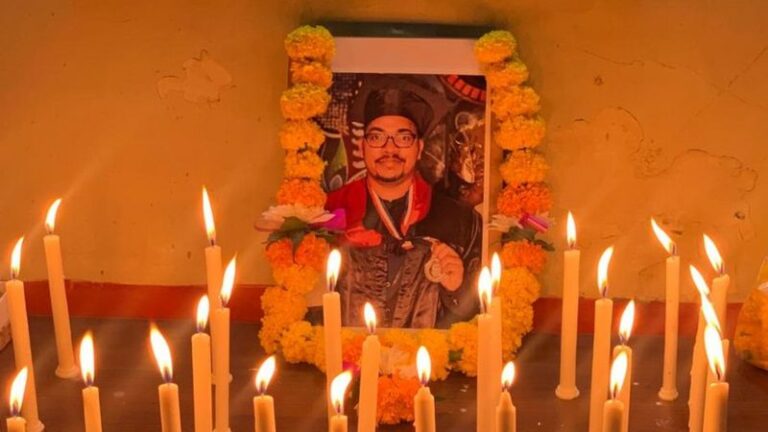
Jabalpur, Madhya Pradesh: On October 1st, Dr. Bhagwat Dewangan first year PG medical student committed suicide. According to family member, he had been mentally tortured and harassed by his so-called “upper caste” (savarna) seniors for months. He was 28 years old.
Bhagwat Dewangan was a resident of Rahoud, a small town in Janjgir-Champa, and his father sold utensils in the village. Bhagwat was considered a bright and promising student; after studying in a local school till the sixth, he was selected in Navodaya Vidyalaya, where he studied till XIIth. After this, he was selected at the Byramji Jeejeebhoy Government Medical College, Pune, where he studied MBBS.
Bhagwat as a medical student | BBC Hindi
The family members allege that this was because of continued harassment from five seniors. On July 1st, a fortnight after joining college, Bhagwat informed them of being physically and mentally abused by them for his caste and financial background.

“he repeatedly told me that his seniors would physically and mentally harass him up citing our poverty and caste. the management was also aware of this, but would not intervene.”- Brother, Prahlad

Prahlad states that his seniors would repeatedly call him “meritless” and that he could not study properly because he got admission due to reservation. Not only did they misunderstand the purpose of reservation, they falsely assumed that he did avail reservations because of his caste, as his brother denied this. This kind of discrimination is blatantly casteist, and based on the presumption of superiority.

Because of this harassment, Bhagwat also attempted suicide previously on July 24th and was sent back home for a month. After Raksha bandhan, he returned upon the HOD’s request, but the harassment did not cease. The family has filed a complaint against Vikas Dwivedi, Salman Khan, Aman Gautam, Shubham Shinde and Abhishek Game for harassment.

Dr. Arvind Sharma- the warden of the Medical College Hostel and the member of the Anti Ragging Committee of the college- is denying ragging or any type of harassment inside the hostel. Despite being a part of the Ragging Committee, he also stated that as this was beyond his jurisdiction, and instead a matter of their department.

obc medical student suicide

Since October 7th, the family and members of his local community have protested and held candlelight vigils for their son because of police inaction. The police have been investigating the matter for over a week, but no FIR has been charged. The community is accusing them of purposefully trying to postpone the matter. Dilip Dewangan, Bhagwat’s childhood friend, stated that they have started a campaign called “Justice for Bhagwat Dewangan” and will send a 1000 postcards to the Chief Minister of Madhya Pradesh.

Chhattisgarh Health Minister TS Singhdev also wrote a letter to Madhya Pradesh Chief Minister Shivraj Singh Chauhan on Thursday with a request to investigate the matter with urgency. Singhdev said that despite the provision of strict anti-ragging rules and stringent punishment, students are suffering mental and physical harassment due to ragging.

Medical students & institutional murder

Many people have dubbed this a case of “institutional murder” to point out that this case is not isolated or individualistic, but part of a systematic way in which so-called “lower caste” (Bahujan) students are forced to commit suicide because of continued physical and mental casteist harassment from seniors and the purposeful negligence of the management. Though casteist violence is institutionalised in every university in India, it has become a pandemic in PG medical colleges because of 1. toxic seniority which is easily abused 2. lack of seats, high competition and pressure, because of which savarnas falsely take out their anger on vulnerable bahujan medical students.

The Blue Dawn, a mental health group wrote on the matter:

In 2010, a dalit medical student from AIIMS, Dr. Balmukund Bharti, committed suicide. The administration claimed that he had “fallen into depression”, though they refused to consider that his mental health might have been affected by caste based exclusion. In 2019, Nair College in Mumbai also stated the same after Dr. Payal Tadvi committed suicide and her parents named and filed complaints against her upper caste abusers.

Protests against the institutional murder of Payal Tadvi | idiva

In Dr. Payal Tadvi’s case, there was even great pressure put on the police and Government by protestors and her family. But the case was not taken forward, and on October 8th, the accused were allowed to return to the. In other cases of violence against bahujans by savarna aggressors- as in the rape and murder of a dalit woman in Hathras- the police and state don’t take action and instead try to protect their savarna aggressors.

In each case, the same cycle seems to continue: bahujan students become depressed because of harassment by savarna seniors, authorities are either negligent or support the aggressors and when they feel compelled to kill themselves, the authorities blame mental health to avoid accountability.
Babri Masjid Case: Special CBI court did not follow Supreme Court Orders

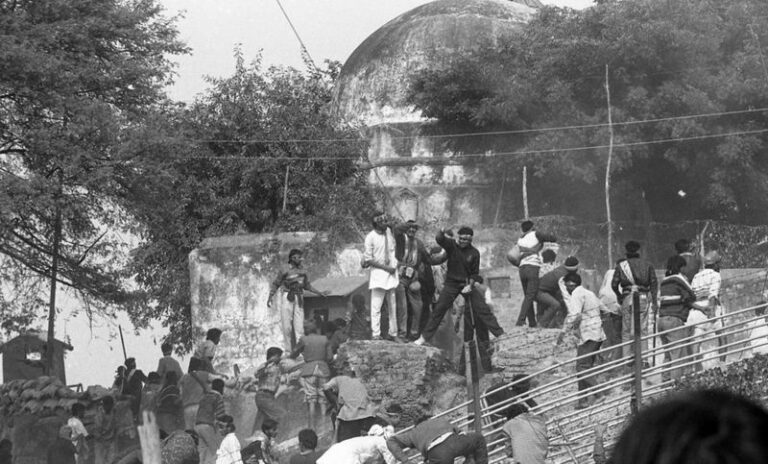
The Special CBI Court at Lucknow acquitted all 32 persons accused of hatching the criminal conspiracy which resulted in the demolition of the Babri Masjid on 6th December, 1992. The court reasoned that it was not pre-meditated, and that there was no criminal conspiracy behind it. The judge also raised concerns around the authenticity of the audio and video clips produced by the CBI.

This finding of “no conspiracy” behind the demolition, of course, is the official line of the Sangh Parivar; they referred to the demolition as a spontaneous act of unknown people. The Sangh Parivar succeeded in getting judicial imprimatur to this theory when the Special Court in 2001 dropped proceedings against those charged with conspiracy. When the matter was challenged in the High Court they also concurred with the conclusion of the trial court in 2010.

Witness testimony & photographs of the day before the demolition and its preperations

Supreme Court Orders on Babri Masjid Demolition Conspiracy:

babri masjid verdict
When the Babri Masjid was being demolished, many BJP leaders were at the site. Pictured here (from left): Murli Manohar Joshi, then-president of the BJP, L.K. Advani and Vijayaraje Scindia | Photo: Praveen Jain | ThePrint

However, it is important to note that the Supreme Court itself has implicitly distanced itself from this theory of “spontaneity”. In CBI v Kalyan Singh, Justices Nariman and Pinaki Chandra Ghose in 2017 restored conspiracy as a charge and directed the Sessions Court to complete the trial in two years. As the Supreme Court observed, “in the present case, crimes which shake the secular fabric of the Constitution have allegedly been committed almost 25 years ago. The accused persons have not been brought to book largely because of the conduct of the CBI….”

The Supreme Court recorded its order to the Special Judge Lucknow in 2001:

“As far as question of conspiracy, u/s120-B of IPC is concerned, connection is not necessary to have proved evidence because a conspiracy is hatched in secrecy and the knowledge of this conspiracy comes to the remaining accused gradually, slowly and this knowledge is discernible from what becomes clear by their speeches and by actions done by them.” The Supreme Court goes on to record why Kalyan Singh, Lal Krishna Advani and the others should be charged with the conspiracy to demolish the Babri Masjid.

By explicitly overruling the High Court judgment and restoring the charge of conspiracy, the Supreme Court indicates that prima facie there is credence to the theory that there was premeditation and planning underlying the demolition, and that it was not an act of spontaneous violence.

Bricks bearing the inscription ‘Shri Ram’ were brought to Ayodhya from a village on the Delhi-Haryana border, for the Ram Janmabhoomi temple | Photo: Praveen Jain | ThePrint
babri advani
The morning of the demolition, BJP leader L.K. Advani meets leaders of the Ram Janmabhoomi movement | Photo: Praveen Jain | ThePrint
babri masjid kar sevak
Kar Sevaks practice fighting day before demolition | The BBC

The Liberhan Commission gives further judicial heft to the idea that the demolition was not the result of ‘spontaneous action’, and that underlying the demolition was the work of the organisations of the Hindu Right. Justice Liberhan observes:

“these organisations are collectively an immense and awesome entity with a shrewd brain, a wide encompassing sweep and the crushing strength of the mob. The leadership provided by the RSS, BJP, VHP and the other mutating and constantly transforming organisations like the Hindu Mahasabha and the Jan Sangh, in furtherance of the suspect theories of the founders of these organisations was consistent and unabashed. The ends are all that matter to the core group of thinkers and the destruction of the disputed structure was only one victorious battle in their ongoing campaign against secularism and the multicultural society, clothed in the garb of religion.’

The Special CBI Court by its finding that there was no conspiracy to demolish the Babri Masjid is selectively reading the voluminous evidence before it and coming to a conclusion at odds with reason, history, as well as the implicit directive of the Supreme Court. By finding that there was no conspiracy, the Special CBI Court has done a grave injustice to facts, truth as well as justice.

Can justice still be delivered in the Babri Masjid Demolition Case?

It is clear that there is sufficient warrant to file an appeal against this judgment and the CBI should forthwith file an appeal. All those concerned with the fundamental principle of a “rule of law” society- where there should be no impunity for crimes committed- should press for an appeal to be filed.

Undoubtedly, while the verdict is a serious blow to the credibility of India being a rule of law society, we should not forget that the only reason conspiracy was restored as a charge was because of the intervention of the Supreme Court in 2017. The fact that the judgment was finally delivered in less than three years after the Supreme Court directive after delaying for over twenty five years also indicates that a turn around is possible.

What is required is an appellate court judge who is not afraid to weigh the evidence fairly and give a judgment on merits, even if it goes against the prevailing political winds. Such people, though rare, are not impossible to find in the Indian legal system.

Images from the Naroda Patiya massacre, where 97 were killed by mobs orchestrated by the Bajrang Dal

One example which comes to mind is Justice Jyotsna Yagnik who delivered the momentous judgment in the Naroda Patiya case. She tried the violence in Naroda Patiya on February 28, 2002 during the Gujarat pogrom. In Naroda Patiya, the planned violence resulted in the death of 96 Muslims, serious injuries to over 124 Muslims and the rape of Muslim women. In this case, Justice Yagnik, when Narendra Modi was the Chief Minister of Gujarat, came to the courageous finding that 32 people were part of this conspiracy. This included the former Minister, Mayabhen Kodnani. All were sentenced to imprisonment.

Taking a lesson from holocaust surviver and philosopher, Hannah Arendt, we have to invest our faith in humanity and not the utter impossibility of terrorising all people into submission and converting them into committed ideologues. As Arendt argues, “under conditions of terror most people will comply but some people will not, just as the lesson of the countries to which the Final Solution was proposed is that “it could happen” in most places but it did not happen everywhere.”

Our struggle to defend the Constitution has to continue with the faith that the Indian judicial system, against all odds will continue to throw up judges like Justice Yagnik. Such judges would stick to their oath to “bear true faith and allegiance to the Constitution of India” and keep up the struggle for justice.

The author is a constitutional expert and co-founder of the Alternative Law Forum. 

Read More: Babri Masjid case: When matters of faith prevail over rule of law

World Mental Health Day 2020: Kindness is the need of the Hour

0
  World Mental Health Day is observed every year on 10th October for global mental health education, awareness, advocacy against the social stigma that is often attached to it. This year’s theme is of grest significance and importance is kindness. It’s the day when millions of supporters around the world celebrate the day by participating in wellness programs and by bringing to attention the major effects and major illnesses related to mental health. Good mental health is not just about being free from mental illness, it also involves the ability to better handle everything life throws at you and fulfill one’s full potential. A lot of people associate mental health with emotional well being. Either way, good mental health is as important as good physical health, if not more. The ongoing Covid-19 lockdown and social isolation have already started breaking down the economy, livelihoods, businesses, jobs, relationships, and whatnot, which all are channeling a huge imbalance in the mental health of the mass population. We must get emotionally and mentally ready with a solution-centric approach to face the shift that has started to happen. In view of the rising demnd many free counselling sessions, seminars and stress management workshops are being conducted. According to WHO’s recent report, India is the most depressed country in the world. The report suggests that one in seven people from India have suffered from mental illness such as depression and anxiety from 1990 and 2017. It is an alarming situation for the country to secure the future of upcoming generations. Mental Illness is still a taboo in Indian society and people hesitates to talk on such topic as they are afraid that they might face discrimination because of it. There is also a very low number of health professionals to deal with mental health issues in India and has been suffering from chronic underfunding. Thus, it has become very important to invest in mental health programs not only in India, but across the globe. To prevent mental illness here are few tips to boost your mental health.

Surround Yourself With Positivity

This is in your control. You need to stay miles away from any kind of negativity as it contributes to mental health problems. Be a self-motivator and understand self-worth. You are unique and can achieve everything in life. This is what you need to tell yourself. Always think about the positives of a situation and try to look for the solution.

Exercise

We know this is the most commonly advised thing to do to improve mental health. But, that’s only because it is therapeutic and plays a significant role in boosting your psychological health. When you indulge in exercise, your body releases mood-boosting and stress-relieving hormones called endorphins, that help in feeling fresh and happy. Exercise is a powerful antidote to depression, stress, and anxiety. You can also do yoga asanas to calm your mind and make it stress-free.

Eat Good Food

One must include healthy food in your daily diet and nourish your brain. Having carbohydrate-rich food items increases the secretion of serotonin that has a calming effect on your mind. Eating protein-rich foods helps in the secretion of norepinephrine, dopamine, and tyrosine that help you remain alert. Also, including food items rich in omega-3 fatty and Vitamin D acids in your daily diet can improve mood and help in better cognitive function.

Share Your Feelings

Keeping your emotions and feelings to yourself can lead to an accumulation of toxins in the body and that contributes to stress and anxiety. To improve your emotional well-being, you need to confide to people you trust. Talk to them, share what you feel, and listen to what they advise. Believe us, you will feel much better. Also, socializing makes you feel happy and relaxed. We are a social animal and so must keep interacting. Without socializing, we cannot exist.

Sleep Enough

Sleep a significant part of our lives. It serves various purposes. It not only repairs your damaged cells and helps in healing but also keeps your mind functional. Without taking proper sleep, you won’t be able to concentrate, think, and act. A lack of enough sleep can affect your psychological health in ways you cannot even imagine. Sleep deprivation creates stress, headache, and harms your mood. Therefore, you must practice good habits to get better sleep. Do not expose your eyes to blue light an hour before bedtime and restrict yourself from having caffeine-containing drinks in the morning and at night too. Mindora a north-east based social start-up is helping out people to deal with mental illness  like depression, stress & anxiety founded by Jayanta Haloi and Chinmoy Kashyap. Contact them to seek help.

After a century of exploitation, Assam tea workers strike for fair wages

1
On thursday, at least 400,000 workers in Assam went on strike over the government’s failure to implement a wage hike. The Assam Tea Tribes Students’ Association (ATTSA) also staged demonstrations at Biswanath Chariali and Golaghat seeking hikes in wage for tea garden workers, and to receive tribal status for their people. Assam produces half of India’s annual 1,235 million kgs of tea leaves, and is the biggest private industry in India. It is also the second biggest tea industry in the world. For years these owners have accused of violating fundamental human rights for years; workers are severely underpaid and exploited, have little access to clean water and work in dangerous and highly unsanitary conditions. The workers also don’t a strong labour union. Their identity as tribal migrants without legal status also makes it easy for employers to exploit them. The workers are decedents of the “coolie workforce” created 150 years ago, and are unable to integrate into Assamese civil society or enjoy human rights assured by the Constitution.
Low wages, a high rate of illiteracy, coupled with the lack of alternative employment opportunities have resulted in these workers falling into a vicious circle of poverty and deprivation, one generation after the other.
Chattaraj explains that, because of the denial of ST status, the community is unable to seek employment outside, or compete in the same educational spaces as general or OBC category students. Thus, they are forced to return to the exploitative tea gardens. The workers are also so poor that they cannot buy land outside the plantations. They have no land rights within the garden and therefore have to work on the fields. This is similar to the way American slave plantations and quarters were conceived. Thus, legal ST status and higher wages are essential for the workers. The Plantation Labour Act of 1951 ensures fair treatment and socio-economic security on paper, but this is not implemented systematically. Moreover, in the past week at least 250 tea estates shut down, and many workers, who were already underpaid have now lost their livelihood. The Government did promise a wage hike, but because of continued systemic negligence, Assam tea workers are extremely suspicious of this. Two years ago, they were supposed to have a hike in daily wages from 167 to 350 rupees, but this was never implemented.

The Guardian reports that workers are unable to meet basic household necessities:

“The only way we manage is by not buying any clothes. When the children ask for a certain food item, we say no. We have to keep saying no all the time to everything they ask. I need this wage rise but I don’t know if it will happen,” a worker said.

This will be an important issue as the Assam elections are coming up in April. A civil servant told the guardian that if it does get politicised, then there’s an even less chance of payment.

Read More: Adivasis in Tea Gardens of Assam: Identity and Denial of ST Status

Ordnance Workers Fight Back Against Corporatization!

0
All the unions and federations of the 41 ordnance factories of India have given notice for indefinite strike against corporatization from 12th October. Earlier too the unions had held a strike, but it was called off on assurance of central govt that there would be no corporatization. By using the pandemic to push through anti-worker pro-Corporate policies, the Central Govt has gone back on its assurance, and private consultants have been appointed for the purpose. 80,000 employees of grade A, B and C are employed in these factories. The Govt has cited ‘lack of accountability’ as one of the reasons for corporatising this hitherto department led sector and the unions are especially challenging this premise. The corporatization of Ordnance factories is in keeping with Central Govt’s drive to sell off all public sector set up on people’s money, privatise all vast assets of these at throw away prices and it has even opened defence sector for this loot. Giving slogans of nationalism to cover its pro corporate pro imperialist drive and its sale of every sector of the country, the Govt is in fascist overdrive to label all opposition to its policies as antinational. It has moved to hand over agriculture to corporate, open doors wide for corporate farming and totally dump labour laws in the dustbin in the name of rationalisation. Govt employees who dissent, trade union leaders among them, are being attacked through compulsory retirement in the name of non performance. Working class must fightback the all around assault on both jobs and rights including the very right to dissent, to unionise and even to a legal strike. National Committee of IFTU calls on all units to support the struggle of the Ordnance workers. We demand that the Central Govt revokes the plan to corporatise this sector, and takes back all policy decisions taken during pandemic period.

Read More: To Save Public Sector, Need a Mass Movement Against Privatisation

Amidst Pandemic, Delhi Police demolish property and attack poor workers in Batla House

0
Amid the pandemic when people are working from home for many that very basic necessity is being snatched away by the state and its machinery. Residents of Batla House woke up to the sound of bulldozer early in the morning. The demolition of the slum quarter was carried out by Delhi Development Authority with ample help from Delhi Police.
After the first demolition drive, residents were living in such tents. Yesterday, police set these on fire.
This is not the first time Balta house, which is a a predominantly muslim dominated area has faced demolitions. On September 24th, over 700 people in Batla House were rendered homeless as part of a a slum clearance drive by the authorities. The slum clearance procedure began on the 22nd, but residents were not given any notice. The morning of 8th October, the Delhi police demolished what was left of Batla House. The police beat up people, destroyed their make-shift tents, crushed rickshaws and utensils and buried their documents, Sumedha Pal from Newsclick.com reported.   
batla house children
Children pick up the pieces of what their house used to be
batla house woman
Rukhsana scrambles to find her clothes in the heap of debris as houses were demolished
This area was completely ghettoised after the 2008 encounter, and was neglected by civic administration. The residents- domestic and daily wage workers- are one of the worst hit groups from the COVID-19. Just as people were picking up the pieces after the demolition, the Delhi police started another crackdown in the area. This is typical of the DDA as they time and again demolish houses and takes everything from people. They don’t issue notices, rehabilitation or accountability. As Pal asserts, “it’s the criminality of DDA that needs to be exposed.” After the Delhi police’s attack, people have no water, and many have not eaten since the morning, they are scared and extremely vulnerable, Pal reports. One woman said:
“if we had any utensils, maybe we could feed our children. They destroyed the kindling wood, but we could’ve made a brick stove. but they didn’t even leave our vessels for making food. we’re poor people…now where can we buy all this?”
In her twitter thread, Pal urges people to reach out to help the residents and amplify the news.      

Nobel Peace Prize 2020 awarded to World Food Programme

1
The Nobel Peace Prize 2020 was awarded to World Food Programme (WFP) “for its efforts to combat hunger, for its contribution to bettering conditions for peace in conflict-affected areas and for acting as a driving force in efforts to prevent the use of hunger as a weapon of war and conflict.” Announcement of the 2020 Nobel Peace Prize to the World Food Programme, presented by Berit Reiss-Andersen, Chair of the Norwegian Nobel Committee, on 9 October 2020.
Along with enormous prestige, the prize comes with a 10-million krona ($1.1 million) cash award and a gold medal to be handed out at a ceremony in Oslo, Norway, on December 10, the anniversary of prize founder Alfred Nobel’s death. The World Food Programme is the food-assistance branch of the United Nations and the world’s largest humanitarian organization addressing hunger and promoting food security. According to its website, WFP’s efforts focus on emergency assistance, relief and rehabilitation, development aid, and special operations.  In 2019, the WFP provided assistance to close to 100 million people in 88 countries who are victims of acute food insecurity and hunger. In 2015, eradicating hunger was adopted as one of the UN’s Sustainable Development Goals. The Nobel Prize committee in its statement has highlighted how in recent years, the situation has taken a negative turn. In 2019, 135 million people suffered from acute hunger, the highest number in many years. Most of the increase was caused by war and armed conflict. COVID-19 pandemic has also intensified the epidemic of hunger across the world. In countries such as Yemen, the Democratic Republic of Congo, Nigeria, South Sudan and Burkina Faso, the combination of violent conflict and the pandemic has led to a dramatic rise in the number of people living on the brink of starvation. In the face of the pandemic, the World Food Programme has demonstrated an impressive ability to intensify its efforts. As the organisation itself has stated, “Until the day we have a medical vaccine, food is the best vaccine against chaos.” The world is in danger of experiencing a hunger crisis of inconceivable proportions if the World Food Programme and other food assistance organisations do not receive the financial support they have requested. The link between hunger and armed conflict is a vicious circle: war and conflict can cause food insecurity and hunger, just as hunger and food insecurity can cause latent conflicts to flare up and trigger the use of violence. We will never achieve the goal of zero hunger unless we also put an end to war and armed conflict. The Norwegian Nobel Committee wishes to emphasise that providing assistance to increase food security not only prevents hunger, but can also help to improve prospects for stability and peace. The World Food Programme has taken the lead in combining humanitarian work with peace efforts through pioneering projects in South America, Africa and Asia. Earlier on Monday, the Nobel Committee awarded the prize for physiology and medicine for discovering the liver-ravaging hepatitis C virus. Tuesday’s prize for physics honored breakthroughs in understanding the mysteries of cosmic black holes, and the chemistry prize on Wednesday went to scientists behind a powerful gene-editing tool.

Lalu Prasad Yadav gets bail in Chaibasa Treasury case, but to remain in jail

0
Lalu Prasad Yadav, former Bihar Chief Minister and Rashtriya Janata Dal (RJD) supremo, was granted bail by the Jharkhand High Court in the Chaibasa Treasury case, related to the fodder scam on Friday. However, the former CM will remain in jail since the Dumka treasury case is still pending. The High Court asked Yadav to submit two personal bonds of Rs 50,000 each and deposit penalty of Rs 2 lakh for securing bail. It also sought his medical report and the details of all those he has met during the course of his treatment at Rajendra Institute of Medical Sciences in Ranchi, PTI reported. This case, RC 68(A) / 1996, pertains to the fraudulence of Rs 33.67 crore from Chaibasa (now in Jharkhand) district treasury during 1992-93 when Lalu was the chief minister of undivided Bihar. On January 24, 2018, a special CBI court in Ranchi had convicted Yadav and former chief minister Jagannath Mishra in the third case of multi-crore fodder scam related to the fraudulent withdrawal of money from the Chaibasa treasury in 1990s. The court had handed both Lalu and Jagannath a jail term of five years, besides a fine of Rs. 5 lakh each. A total of 50 accused were convicted in the case while six were let off. Apart from Lalu, the other main accused convicted in the case were R K Rana, Vidyasagar Nishad, Dhruv Bhagat, former chief secretary Sajal Chakraborty, IAS officials Phool Chand Singh and Mahesh Prasad. The 72-year-old is currently serving time in Birsa Munda jail in Ranchi. Earlier, he was granted bail in Deoghar treasury case. Union Minister and LJP leader Ram Vilas Paswan passes away

HC dismisses Hathras victim’s family’s plea against illegal detention by State

The Allahabad High Court on Thursday dismissed the habeas corpus writ petition filed on behalf of the Hathras victim’s family against alleged illegal detention by the UP Government. The Bench of Justices Pritinker Diwaker and Prakash Padia observed that the Supreme Court is already seized with this matter in Satyama Dubey & Ors. v. Union of India & Or and thus, it would be improper for the High Court to entertain this petition. The victim’s family in the Hathras case had moved a habeus corpus petition in the Allahabad High Court against alleged detention by the UP Government as reported by livelaw.com.  It was alleged that the immediate family of the deceased victim, i.e. her father, mother, two brothers, sister-in-law and grandmother have been illegally detained in their own homes by the UP Government. The plea disclosed that the victim’s family has been “geraoed” at their own home since September 14th, i.e the date of the incident, and where only her brother was allowed to accompany her at the hospital in Agra. Further, it was submitted that only on September 28, when she was being moved to Delhi, did the Government allow two more members of the family to visit her. It was also alleged that the family was not given custody of the victim’s corpse and they remained “forcefully confined” in their homestead land and continue to remain as such. Further, it was submitted that they family has been prevented from even meeting or communicating freely, which violates their Fundamental Right to freedom of speech and expression as well as the right to receive information under Article 19(1)(a) of the Constitution. The plea was filed by Adovocares Kashif Abbas Rizvi and Joun Abbas. The State on the other hand denied that the victim’s family was restrained. In fact, it categorically submitted that the are “free to move” but “they have never made any request before the Administration for going anywhere.” Further, the State had argued that the writ petition is not maintainable as the matter is already sub-judice before the Supreme Court. It was also claimed that when the victim’s family was informed about filing of the present petition, they had categorically stated that they did not authorize any one to file such petition. The State also contended that pursuant to the direction given by the Hon’ble Apex Court, adequate protection and security has been provided to family members of the deceased victim-girl, including petitioners 1 to 6 and even personal Guards have been deployed on duty to ensure their safety. Moreover, CCTV Cameras have been installed near the house of the deceased victim-girl so that unwarranted and unsocial elements may not enter the premises.

Read the Order Here

Also Read: Decoding the Politics of “Order”: Hathras Gangrape and Caste-Crimes in Uttar Pradesh

Bhima Koregaon Case: NIA arrests 83 year old Activist Father Stan Swamy

Human rights activist Stan Swamy has been arrested on Thursday night 8 Pm from his residence in Ranchi, Jharkhand by a team of National Investigation Agency (NIA). Stan Swamy is 83 years old, Jesuit priest has been a long time human rights defender and a tribal rights activist.
stan swamy
Father Stan Swamy at a protest site in Jharkhand
On 6th August 2020, the NIA interrogated Father Stan Swamy, for nearly two and a half hours in relation to the Bhima Koregaon case. This interrogation took place at his Ranchi residence in Bagaicha, Namkum. His home has been raided twice in connection with the case.
Swamy was taken into custody from the Jesuit-run Bagaicha social centre, where he lives. “No warrant was presented,” a colleague on the campus said. “NIA people were rough and arrogant. They said he [Swamy] was accused and a senior officer wants to meet him at the NIA office in Ranchi.” However, it is not clear where the activist was taken. Video statement (English) of Stan Swamy two days before his arrest. In the eventuality of him being forcefully taken.
“Life and death are one, even as the river and the sea are one” [poet Kahlil Gibran] Statement: I was interrogated by NIA for 15 hours during a span of 5 days (July 27,28,29,30, Aug. 6).  Apart from my bio-data and some factual information, several extracts allegedly taken from my computer implicating my connection to Maoist forces were placed before me. I told them all these are fabrications stealthily put into my computer and I disowned them. The nature of the present NIA investigation of me has nothing to do about Bhima-Koregaon’s case in which I have been booked as a ‘suspected-accused ’ and consequently raided twice (28 August 2018 and 12 June 2019). But it had everything to do to somehow establish (i) that I am personally linked to extremist leftist forces, (ii) that through me Bagaicha is also relating to some Maoists.  I denied both these allegations in the strongest terms. After six weeks of silence, I am being summoned to appear in NIA-office in Mumbai. I have informed them (i) that I fail to understand the need for interrogating me further given the fact I have been subjected to that for 15 hours already, (ii) that I am not in a position to undertake the long journey given my age (83) and the nature of the epidemic ravaging the country. Besides Jharkhand State Govt has given a directive that during the lockdown period elderly persons above the age of 65 may not appear in public, (iii) that if the investigating agency wants to interrogate me further it can be done through video-conference. If NIA will refuse to consider my request and insist that I go to Mumbai, I’ll tell them that it will not possible for me to go for the above reasons. Hoping human sense will prevail. If not, I / we must be ready to face the consequences. Grateful to all who have stood in solidarity with me all these years. It is widely known that originally hailing from Kerala, Father Stan Swamy has been fighting for the issues of Adivasis and Mulnivasis in Jharkhand for almost 50 years. He was also one of the founding members of the Visthapan Virodhi Janvikas Andolan (VVJA). He has done significant work with undertrials in Jharkhand prisons. He is one of the most eminent human rights activists in Jharkhand.