Karnataka Congress has complained to the Governor Vaju Bhai Vala alleging Chief minister BS Yeddyurappa and Amit Shah´s role in operation Lotus.
Karnataka congress says that Chief Minister BS Yeddyurappa in the BJP core committee meeting has accepted that he and Amit Shah were directly responsible for the collapse of the coalition government in Karnataka.
Opposition leader Siddaramaiah with other congress leaders had visited the governor and briefed him about the issue. They also gave a complaint saying “Actions of BJP leaders have killed democracy through an anti-constitutional conspiracy called Operation Lotus.
Several Congress leaders, including Dinesh Gundurao, MB Patil and VS Ugrappa were present.
Siddaramaiah has announced on Facebook that he has met with the honorable governor and party leaders, and has demanded governor to recommend the president to dismiss the state BJP government involved in “Operation Lotus” and taking action against Union Home Minister Amit Shah.
In the leaked video, Yeddyurappa is saying that Amit Shah oversaw the whole exercise of keeping the 17 MLA who resigned in Mumbai for one and a half months.
Also read: NDA setback in Maharashtra and Haryana Polls is Sigh of relief for Yeddyurappa
BJP led Central government time and again has shown its prejudice towards India ́s federal structure. After failing in its Hindi language imposition through “One Nation One language” campaign, BJP once again tries to impose national identity over regional identity when state education minister C.T. Ravi, oppose the hoisting of Karnataka flag on Karnataka formation day on Nov. 1. Many districts and taluk offices of Karnataka admitted that there is an order from the state government to not hoist the Karnataka flag. Officials in district headquarter of Koppal and Sindhanur taluk had passed an order to hoist the only national flag and not Karnataka flag on government buildings on Nov 1st. Somehow, the rumor of such an order also spread to other districts and there are also government offices hoisted National flag rather than Karnataka flag.Contrary to all this, chief-Minister B.S. Yeddyurappa hoisted the Karnataka flag in Kanteerava Stadium in Bengaluru City. Meanwhile, Suresh Kumar, Minister for primary education, said through his facebook account that two officers are responsible for the entire confusion and are suspended until the inquiry into the matter is resolved.However, how this order had been passed to administrative officers of Koppal District and Sindhanur Taluk is a million-dollar question.
Social media responded
Despite government assurance that no such order has been passed Kannadigas are angry and feel that the government is trying to attack Kannada identity. They took to social media to vent their anger. thinker M.R. Krishna alleged- Government buildings are not assets of the BJP or the government led by it. BJP never guard the interest of Kannada and Karnataka.
Journalist Dinesh Kumar Dinu and Odu Siddegouda alleged that, unless there is a deliberate intention from the government to not hoist the Karnataka flag on Nov.1st, Officers would never dare to hoist National flag on Karnataka Rajyotsava. Moreover, Kannadigas are celebrating Karnataka Rajyotsava, not the Indian Independence day.
On 29th october, Vijaya Hiremath, class 4th student lost his life . In a press meet, the parents have alleged that the hostel warden of Dayashankar Chatralaya as the main reason for the death of their child.The parents said that their child was beaten by the warden, for the hostel payment related issues. The parents are supported by the committee named Akhila Karnataka Jangama Kshemabhivrudhi Sangha. They have demanded for a detailed probe into the matter, compensation and action against Shravana Kumara, the warden of the hostel.In a press release by the Seva Bharati, the trust that runs the hostel, said that the allegations made by the parents are false. Instead it has accused the boy’s father of blackmailing the institution. The press release says that the father had demanded 40000 rupees and warned the trust that he will file a legal case against them and go to Media. Seva Bharati is the trust that runs the Dayashankar chatralaya in Hangal. It is affiliated with RSS. According to a news report in The Hindu, Mrityunjaya Hiremath, the boy’s father said that “my son was beaten for the payment related issues and was mentally harassed. When I asked the hostel’s official to take my son home for recovering his health, I was denied saying he would be treated in the hostel itself. After his condition did not improve, he was admitted to kIMS hospital in Hubbali. When situation got worse, we brought him to Vani Vilas Hospital in Bangalore, where the doctors could not save him. The warden is the reason for my son’s death. I want an immediate action against him and compensation for my son’s death.” Sujata, the mother of the boy who is blind by birth says “I lost my only son who was like my sight. I need justice for my son’s death.”Bangaresh Hiremath, leader of the committee that supported the parents said that he had spoken to the doctors who regularly conducted the medical check-up of the students and that the doctors also hid the information about the ill treatment of the boy. He said that, as the hostel was run by Seva Bharati they were trying to cover up the issue. He demanded that a murder case be filed against the warden and proper compensation to the boy’s family.The secretary of Seva Bharati Trust, Govardhan Rao denied all allegations and said that the boy suffered with health issues relating to improper digestion from the beginning. As a sign of humanity they helped the parents take the child to Bangalore for further treatment. He said that the child died because of his health issues, but the warden is unnecessarily being blamed for it.
With inputs from Prajavani and The Hindu.
Raichur police have arrested friend Doddipalya Narasimhamurthy on the suspicion of him being one ‘absconding’ Vinod, who is supposed to be part of ‘criminal case’ which occurred two decades ago.
DMN Murthy during a meeting of social organizations in KarnatakaDMN Murthy at a student workshopTo say Narasimhamurthy was absconding itself creates fear, because Narsimhamurthy has always been a public figure, well known in the field of journalism, general secretary of the political party Swaraj India, been a friend of all progressive movements and organizations. Since decades he has been travelling all across the state including Raichur, photos of him participating in events have regularly appeared in papers. We have seen him being active in the movement against Bengaluru- Mysuru corridor (BMIC) along with renowned freedom fighter H.S. Doreswamy since 1997. H.S. Doreswamy is president of Gauri Media trust and Narasimhamurthy is its general secretary. As his right hand, Narasimhamurthy has always been wherever HS Doreswamy is.DMN Murthy with Swaraj India president Yogendra Yadav
In such a case, if we were to say Narasimhamurthy has been absconding then we might as well reach a pitiful stage where we would have to say HS Doreswamy is absconding. What’s even funnier is, Narasimhamurthy’s home is right in front of the police quarters of Kengeri satellite town. When looking for Narasimhamurthy’s home, people ask the police officers staying around for his address.
In such a case, the doubt that there is some pressure of invisible hands in saying that Narasimhamurthy is absconding comes to mind? This doubt is creating fear because, in recent times, freedom of expression, media, journalists, dissident voices have been strangled.
We need to pay special attention to what Mr. Vedamurthy, the police chief had to say about this case.
Very public life of DMN Murthy..DMN Murthy at Lankesh Memorial program with Gauri Lankesh in Bangalore
He says; 1- some seven-eight people were having a meeting alleging that government was not working for poor- this is a case. 2)at the time of constructing Sabha Bhavan, some people obstructed to the construction saying a poor man’s hut would get demolished. 3) charge sheet has been filed in these cases. We have warrant from court. According to this warrant, we consider Narasimhamurthy to be the person who participated in these cases, so we have arrested him and produced in court, rest the court will take the course of action, he says.
First, we need to respect the simple straight words of SP Vedamurthy; we should understand his situation. According to them, the court gave a warrant and they acted on it. They have blindly followed the law.
But the issues that we need to discuss are different.
“If debating whether the government is not working for the poor becomes crime, then 90% of all the cities and villages would have to be turned into jails. “
And the case about obstructing the construction of Samudaya Bhavana is already collapsed; the court has done the inquiry and found no evidence. Whatever the charge was, it has collapsed. The other accused in the case have been acquitted and released. When the charge itself has collapsed, how does it matter if the accused Vinod is caught or not? Why should this case be kept alive? Is it not a big useless burden on our police and courts? We need to ask this question through PIL and people, organizations and alternate legal experts too need to debate this.
Knowing very well that no crime is beyond the purview of law, having the confidence that Narasimhamurthy will be released after completing legal procedures, I fear there would be the torture of delay tactics. If that comes true; it becomes imperative that Swaraj India and its co organizations like Raita Sangh(farmers organization), Dalit organizations and other pro-people organizations should come together and join hands in the struggle against drought, floods, unemployment and protest together.
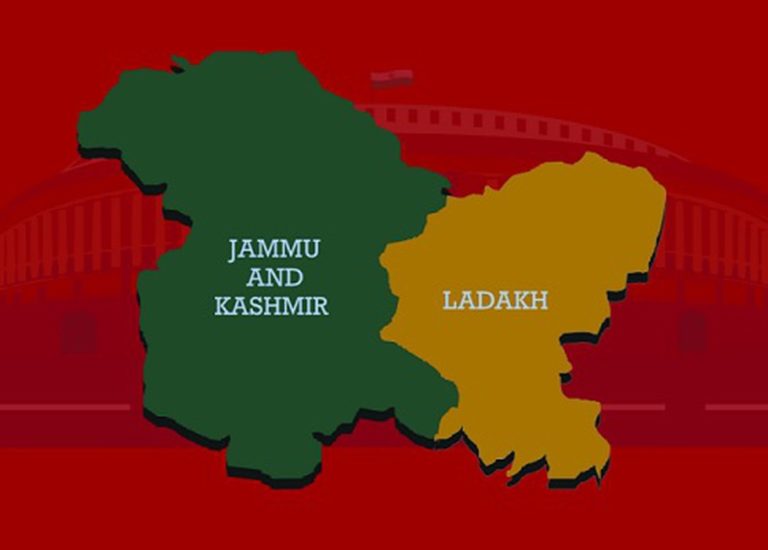
As of 31st October 2019, J&K and Ladakh are officially union territories, as The Jammu and Kashmir Reorganisation Act, 2019, came into effect.
Today marks the 86th day of the announcement of the abrogation of the state’s special status and its bifurcation by Home minister Amit Shah on August 5.
With the bifurcations and conversion of J&K into two UTs, the President’s rule imposed in undivided Jammu and Kashmir was also revoked.
The central rule was imposed in Jammu and Kashmir in June 2017 after the resignation of then Chief Minister Mehbooba Mufti when the BJP withdrew support to the PDP-led government.
The UTs of Jammu and Kashmir and Ladakh will be headed by lieutenant governors G C Murmu and R K Mathur, respectively. R K Mathur was sworn in as the LG of Ladakh by Chief Justice of Jammu and Kashmir High Court Geeta Mittal.
Beyond the symbolic importance — October 31 is the birth anniversary of Sardar Vallabhbhai Patel — the day will mark the beginning of the functioning of the two UTs at a bureaucratic level.
The announcement of the official bifurcation on 31st October is of symbolic significance as it is the birth anniversary of Vallabh Bhai Patel, who is credited for merging all princely states into the Union of India.
Today PM Modi is at the Statue of Unity made to honor Vallabh Bhai Patel near Narmada dam to celebrate it as ‘National Unity Day’.
As of today, the Constitution of Jammu and Kashmir and the Ranbir Penal Code cease to exist.
The UT of Jammu and Kashmir will have a legislature like Puducherry while Ladakh will be a UT without legislature like Chandigarh and both the UTs will be headed by two separate lieutenant governors (LG), as per the Act.
The Centre will be in direct control of the police and the law and order in Jammu and Kashmir from Thursday when it becomes a UT, while the land will be under the elected government there.
The UT of Ladakh will be under the direct control of the central government which will administer the high-altitude region through the LG.
Other appointments announced were ahead of the official date, with IAS officer Umang Narula being made advisor to the Lieutenant Governor of the Union Territory of Ladakh, while Inspector General SS Khandare was appointed as the police head of the new Union territory.
Even after the official bifurcation, however, the rules to govern the Jammu and Kashmir Reorganisation Act of 2019 are yet to be notified.
For full-fledged bifurcation, the Reorganisation Act gives a period of one year. Reorganisation of states is a slow process that at times can take years; issues relating to reorganisation of erstwhile Andhra Pradesh, which was bifurcated into Andhra and Telangana in 2013, are still being brought to the Union Home Ministry for resolution.
On the other hand, China has voiced strong dissatisfaction and firm opposition to India’s move of officially establishing new union territories of Jammu and Kashmir and Ladakh, which they claim includes “Chinese territories,” Chinese media People’s Daily reported.
Also read: 4000 Kashmiris arrested since August 5, Indian government official data reveals
There is a saying ‘Vyaparam droha chintanam’. I don’t know whether it is a saying or something that was brought into being by common people coming face to face with trade. After globalisation, trade has been prancing around as a betrayal. Now intellect and commerce have come together and that is being seen as knowledge. These two together are weaving a pillaging trap for this earth itself. Deceit has become a strategy. The ones who run this are seen as being Chanakya or clever. This is a colossal tragedy. Today, governance is in the hands of commerce. Betrayal and deceit rule us. In the world of globalisation trade has become war. In such a crisis, India has set out to sign a 16 nation free trade agreement, the RCEP.
Also Read: What is RCEP and why are Indian Farmers against it?
RCEP is the work done by those without any wisdom. Because as a consequence of this, collapsing employment will collapse more. Please, Prime Minister don’t hastily sign this demonstrating that only a fool could have more courage. It’s okay even if you don’t listen to us. At least listen, setting aside your man ki baat, to the words of Swadeshi Jagran Manch, RSS’s sister organisation. With regard to signing on to RCEP specifically addressing dairy, Swadeshi Jagran Manch says, “This will prove to be the most suicidal step by the government since independence.” If these very words were said by someone else, you and your followers would label them anti-nationals and inflict a variety of tortures on them. Now? I do believe that you will not muster up the courage to call them anti-nationals. Do remember that poverty eradication does not mean pushing the poor into the jaws of death. Today the working class has become much like the after-a-meal disposable banana leaf.
Lastly a word. Someone asked me as to what is the difference between a country and a nation. What do I say? Simply, a nation is ego, prestige. A country means people. If this has to be made clearer I would say a nation pursues prestige. But a country follows the well being and prosperity of its people. Or it can be said like this. Nation is the garland on one’s neck. Country is the food for the stomach. I beseech you – enough of all the national and international tours with the garland around your neck.
During the time of India’s struggle for independence when the Lancashire mill was close to shut down, on account of the burning of foreign clothes campaign, the unemployed workers spoke about their troubles to Gandhi and he said “There is a party in my country which would sooner see an end to the lives of these half-starved millions in order that the rest may live.” {September 26/27, 1931}
I hope that your party, your Sangh and its’ Parivar do not enlist on to this group. What India needs right now is dignified employment and self reliance.
Protests took place all over the country on 24th October 2019 opposing the readiness of the central government to sign on to RCEP [Regional Comprehensive Economic Partnership]. This is the text of the speech made by Devanoora Mahadeva at the protest in Mysore which was lead by Karnataka Rajya Raitha Sangha.Devanoora Mahadeva is a Kannada writer who has been conferred with the Padma Shri as well as the Sahitya Akademi award both of which he returned in protest against the growing intolerance in the country. A public intellectual and Dalit activist he has been a guiding force to various social movements in Karnataka and the country. This has been translated from Kannada into English by Rashmi Munikempanna.
The article wa first published in Countercurrents.
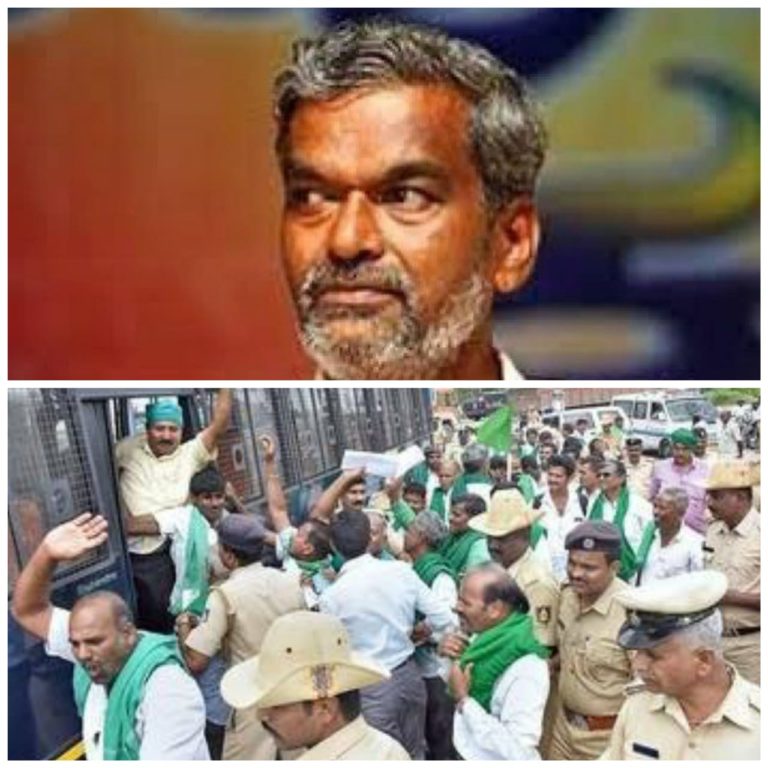
Noor Sridhar, an activist who has been working with people’s movements all his life went underground when several false cases were filed against him identifying him with the Naxal Movement. Due to the reconciliation efforts done with the Karnataka government by freedom fighter H.S. Doreswamy, Gauri Lankesh and Late A.K Subbiah around 2013-14, Noor Shridhar could return to the mainstream and now is acquitted of all charges that he was facing since 5 years of his return.
He returned to the mainstream on December 8, 2014, with fellow activist Sirimane Nagaraj after spending a month in jail and was released from prison on January 15, 2015. The Court after four years and a half years has acquitted him from all cases. After coming into the mainstream, Noor Sridhar has mobilised several movements for primarily the ones for poor and landless in Karnataka called “Bhoomi mattu Vasati horata” ( Struggle for land and shelter). Along with social recognition, he has also gained legal recognition now.
Out of four cases he was facing, two cases were related to Chikamagalur that resulted in acquittal one year ago. And out of the other two remaining cases in Udupi court, one case he got acquittal six months ago and today he was acquitted of the other remaining case.
The court ruled that he was not involved in any of the crimes and that there were no witnesses of that nature. Padmanabh, who had returned to the mainstream after Noor Sridhar, is acquitted in 5 out of 07 cases. The court today acquitted him as well in the other three cases.
Noor Sridhar, who was activist since his student days, after coming to the mainstream has played an instrumental role in the struggle for Land and shelter movement and with Diddalli Adivasis Land struggle in Coorg district of Karnataka. He has an organic link with all people-centric movements.
It is ironic that on one hand activists who were linked with the Naxalite movement and were booked in false cases are acquitted and around the same time, Raichur police have arrested social activist and journalist Doddipalya Narasimhamurthy on false charges last week.
Speaking to Gauri Lankesh news, Noor Sridhar said- ” There were four cases against me. All were false cases but I had to go through the legal procedure. I had to do the democratic struggle in society and legal struggle for justice. This process is going on for the last five years and one by one, I was getting acquitted. Today even the final case was closed.“I am relieved but happiness is only temporary as many activists are still in prison under false cases. This foisting of false cases will continue and only increase. We have to be ready for this and still continue the struggle for justice.”
He thanked Late A. K. Subbaiah Late Gauri Lankesh and H.S. Doreswamy who fought with the government for him.
He also thanked his family, friends, and comrades who stood by him and supported him whenever needed
Is Karnataka catching up with north India in persecuting civil society activists? is this the first of a series of actions to come? is there more to it than meets the eye? These were the first thoughts that came to my mind as I heard about the detention and subsequent arrest of Doddipalya Narasimha Murthy.I have now known Murthy for nearly 7 years. I think we first met in one of the early meetings with political activists of Karnataka during the formative phase of the Aam Aadmi Party. I have always admired the richness and depth of movements and activists in Karnataka. I found Murthy to be one of the few whose understanding and acceptance span across the entire political and ideological spectrum of progressive movements in Karnataka, from farmers’ movement to Dalit movement, from liberal civil right groups to the left. What amazed me about him is the maturity of his political judgment without any element of personal bias. He came from the left movement background and has deep democratic convictions. So, it was little surprise that all the colleagues from Karnataka proposed his name as the general secretary of the party, despite his own reluctance due to this preoccupation with the Gauri Lankesh trust work.
Given what I know about Murthy, the charges leveled by the Karnataka police against him come as a shock. The cases they mentioned are about 25 years old, so it would be wrong on my part to claim any knowledge or to give any certificate of innocence but there are some very obvious questions that the police account does not seem to answer.
How come he was so visible and active in public life if he was absconding for two decades as the police claim? If he was wanted in a criminal case why did the police not arrest him earlier if the police suspect him to be the person they have been looking for? why did they not simply question him and complete their investigation and then arrest him? Why did the police not verify his version that he was active with his business at a time when he was allegedly involved with criminal conspiracies? why this hurry to put him behind bars when he is willing to co-operate with the investigation and is so easily and publicly accessible?
As far as I can see, there are no answers to these questions. That is why we have no option except to assume that this sudden action out of nowhere is a sign of something big that is about to come, the proverbial tip of the iceberg. It is heartening to see that the vibrant civil society of Karnataka has responded to this action with promptness and firmness that it deserves. As I wish and hope that the charges would be dropped and Murthy will soon be with us in action, something tells me that we may need to steel ourselves for a long battle.
The author is the National President of Swaraj India Party
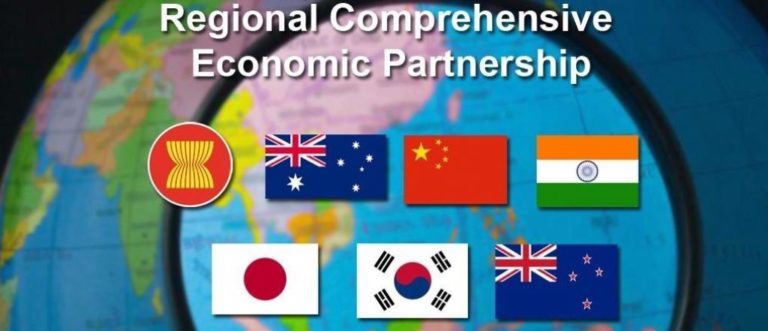
The Regional Comprehensive Economic Partnership (RCEP) is a proposed Free Trade Agreement (FTA) between the ten member states of the Association of Southeast Asian Nation (ASEAN) and its six FTA partners (China, Japan, India, South Korea, Australia, and New Zealand). RCEP negotiations were formally launched in November 2012 at the ASEAN Summit.
RCEP will be the largest agreement ever as these countries account for almost 50% of the world’s population, 25% of the world’s exports and 30% of global GDP. The purpose of RCEP is to create an “integrated market” spanning all 16 countries, making it easier for products and services of each of those countries to be available across this region. Piyush Goyal attended the Intersessional Ministerial Meeting in Bangkok to negotiate the RCEP pact on Oct 11-12th.
Indian Farmers fear that if Prime Minister Narendra Modi signs the treaty of RCEP, they will likely get a lesser price for their produce if foreign players are given unrestricted access to Indian markets.
Farmers protests all over India
Farmers unions have been staging coordinated protests across over 50 places in the country demanding that the Central government keep agriculture produce and dairy sector out of the purview of the RCEP pact, a trade deal involving India and 15 other nations in the Asia Pacific.
Dairy farmers oppose RCEPrcep_amritsar
On 10th October, protests led by Rashtriya Kissan Mahasangh – a coalition of over 180 farmer organisations from across the country – gathered at Jantar Mantar in New Delhi to protest against the RCEP agreement.
Kavita Kuruganti of the Alliance for Sustainable & Holistic Agriculture (ASHA), said, “In more than 75 districts protests against RCEP was organised on October 24-25. On 28th October, the Kerala government itself is organising a protest. Many states likewise are protesting,” adding that if RCEP is signed, Indian farmers will have to contend with cheaper produce coming in from other countries.
People resistance forumSeveral farmers were taken into custody by the police on Friday when they were staging a road blockade on the national highway linking Mysuru and Nanjangud in protest against India entering into the Regional Comprehensive Economic Partnership (RCEP) agreement.
Farmers are concerned that the agreement could hurt their cause as cheaper imports from other nations producing commodities at a comparative advantage are likely to flood Indian markets, thereby reducing the value realised by local producers. Several industries feel India needs to be mindful of the amount of access it gives to its market.
Experts also warn about the dangers of signing RCEP. Various sectors of the Indian economy including agriculture, dairy, services, and data will be facing the heat due to the forthcoming Regional Comprehensive Economic Partnership (RCEP) according to leaked documents, experts said while talking to media on October 16, 2019.
Biswajit Dhar from the Jawaharlal Nehru University noted that India already had complete market access in most countries that were participating in RCEP. “What additional market access is India is going to get after the RCEP deal?” he asked.
This question became pertinent especially when one considered that India had foregone revenues of $5.3 billion due to preferential rates under free trade agreements in 2018 while at the same time considering releasing sovereign bonds to get some funds, Dhar added.
It was quite strange that the Bharatiya Janata Party (BJP), which had opposed similar trade deals while it was in opposition, was now going ahead without consulting even those whose very interests were at stake, he emphasized.
According to a report by newsclick, Kavita Kuruganti says- “The IPR clauses are likely to seriously impinge on farmers’ seed freedoms. We are particularly concerned about the dairy sector and plantations sector, which are going to be hit very hard,”. “There has been no rigorous and widespread evaluation of past experience in such trade deals and it makes no sense for India to walk into binding agreements without a proper review, to begin with,”
All the key agricultural States such as Uttar Pradesh, Punjab, Telangana, Andhra Pradesh, Karnataka, Tamil Nadu, and Haryana witnessed protests by farmers, who demanded India’s exit from the economic pact.
In a newsclick interview, Sanjay Parate, President of AIKS, Chhattisgarh, said: “We are launching a nationwide offensive with the AIKS and other organisations conducting strikes, demonstrations, and effigy burning against the proposed agreement. We want to take the protests further to the villages to amplify the voices of farmers.”
The All India Kisan Sabha has announced a nationwide protest on November 4.
The author is a Journalism student from Bangalore.
Since the beginning of 2019, a series of protests across the globe have erupted mainly driven by neo-liberal economic policies. These protests are direct consequences of economic policies making rich richer and the poor poorer thereby globalizing inequality and injustice.
France
Starting from last November 2018 one of the biggest uprisings in France started protesting against the economic policies of French Emmanuel Macron. The protests were known as “yellow vests” symbolizing safety jackets of truck drivers (welfare state policies of common people) being removed by the French government spread throughout the country before it was quelled using force.
Spain
In October 2019, protesters in Spain have been filling the street of Madrid to protest against the Spanish state repression of the Catalan Independence Movement. More than a lakh protesters have been gathering regularly protesting against sentencing (13 years imprisonment to 9 politicians and activists) and witch hunt of people who were involved in the Catalan Independence Movement.
Palestine
Palestinians have been protesting the 12 years of the Israeli blockade of the Gaza strip. The protesters are demanding the right to return to their land in Gaza. Gaza Strip has seen a severe bombardment of Gaza Strip for last 10 years and in on the brink of the biggest humanitarian crisis.
Lebanon
Protesters form human chain. Courtesy Al Jazeera
Protests have erupted in Lebanon against rising taxes and government corruption. It is said that protests started after the government’s announcement of a planned daily tax on the use of WhatsApp, Skype, and other voice-over-internet services. But the deepening crisis is mainly blamed on high prices, unemployment and poor services which challenge the long-established systems dominated by political dynasties. The protesters even created a 105-kilometer human chain from north to south running through Capital Beirut.
Chile
One million chileans take to streets protesting against rising inequality
Chile is witnessing one of the biggest people’s mobilisation in decades against the neo-liberal policies of the government. Though the trigger to the protests is said to increase in Metro rail fare, deeper dissatisfaction amongst people on poverty, inequality and rising cost of living has triggered people coming in huge numbers against the government. More than 100 people have lost lives and thousands injured with allegations of police brutality including sexual intimidation of female students. More than a million Chileans have been protesting against the government shouting slogans with “Neoliberalism started in Chile and they will end neoliberalism in Chile.
Columbia
Students in Columbia are protesting for better funding at the universities demanding an end to economic policies of austerity and government corruption. Capital Bogota is witnessing series of protests against wealth concentration by a few plutocrats and the expense of the impoverishment of Colombians.
Haiti
Haiti’s population has taken to streets demanding the removal of President Jovenel Moïse blaming fuel shortages and widespread corruption. Haiti has been paralyzed by protests against the falling livings standards and rampant corruption by the ruling government. So far 9 protesters have been killed by police and more than a dozen injured with the president still refuses to resign.
Ecuador
Ecuadorians are protesting against the economic policies of Lenin Moreno after IMF imposed austerity measures (cutting fuel subsidies and social spending) were introduced by the government. The general strike called on October 2nd resulted in one of the biggest protests against the government with more than a million protesters participating in the event. Since then, the government has retracted the austerity measures.
Iraqi youth for more than a month are protesting against unemployment and rampant government corruption. So far more than 250 protesters have lost lives in the anti-government protests. The youth who have grown up post-Saddam Hussain in a war-torn country have taken to streets against corrupt religious oligarchy, the corrupt Iraqi administration and the failed promises by the President Adil-Abdul Mahdi.
Algeria
Algeria is protesting against the military backed government for civilian democracy. The Hirak movement of the revolution of smiles has swept Algeria from February 2019 against the 5th term nomination filed by the president Abdulaziz Bouteflika. Though subsequently the nomination was withdrawn the protesters are still demanding more democracy, civil liberties and democratic rule of law.
Indonesia
Mass protests broke out in Indonesia by students against the dilution of anti-corruption laws and unemployment on 23 September 2019. The students from more than 300 universities demanded more transparency by the government. These protests were largest since 1998 student’s movement against the Suharto Regime.
Hongkong
Hong Kong protests which started with the extradition law by Mainland china has transformed into complex hybrid warfare. Though Hong Kong ranks number three in the world freedom index its organizers are fighting against the Chinese government by waving British flags and placards saying “Trump save us” . Interestingly, protestors are demanding more freedom laws to be introduced and recognized by the United States which ranks 17 in the world freedom index. Hong Kong protesters now known as black bloc are intensifying their protest against the anti-mask law introduced by the Hong Kong Government by destroying public property. The government has retracted the extradition law but the protests continue.


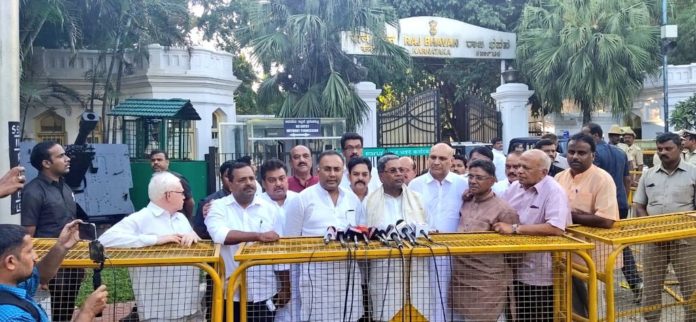


 Several Congress leaders, including Dinesh Gundurao, MB Patil and VS Ugrappa were present.
Siddaramaiah has announced on Facebook that he has met with the honorable governor and party leaders, and has demanded governor to recommend the president to dismiss the state BJP government involved in “Operation Lotus” and taking action against Union Home Minister Amit Shah.
In the leaked video, Yeddyurappa is saying that Amit Shah oversaw the whole exercise of keeping the 17 MLA who resigned in Mumbai for one and a half months.
Also read: NDA setback in Maharashtra and Haryana Polls is Sigh of relief for Yeddyurappa



 He returned to the mainstream on December 8, 2014, with fellow activist Sirimane Nagaraj after spending a month in jail and was released from prison on January 15, 2015. The Court after four years and a half years has acquitted him from all cases. After coming into the mainstream, Noor Sridhar has mobilised several movements for primarily the ones for poor and landless in Karnataka called “Bhoomi mattu Vasati horata” ( Struggle for land and shelter). Along with social recognition, he has also gained legal recognition now.
Out of four cases he was facing, two cases were related to Chikamagalur that resulted in acquittal one year ago. And out of the other two remaining cases in Udupi court, one case he got acquittal six months ago and today he was acquitted of the other remaining case.
The court ruled that he was not involved in any of the crimes and that there were no witnesses of that nature. Padmanabh, who had returned to the mainstream after Noor Sridhar, is acquitted in 5 out of 07 cases. The court today acquitted him as well in the other three cases.
Noor Sridhar, who was activist since his student days, after coming to the mainstream has played an instrumental role in the struggle for Land and shelter movement and with Diddalli Adivasis Land struggle in Coorg district of Karnataka. He has an organic link with all people-centric movements.
It is ironic that on one hand activists who were linked with the Naxalite movement and were booked in false cases are acquitted and around the same time, Raichur police have arrested social activist and journalist