




As many experts have pointed out, this bill would be the penultimate step towards the establishment of an Orwellian State.The books ‘Mindf*ck’ and ‘Permanent Records’ would provide a thorough understanding of what could be done with such information. Such data could be used in multifarious sectors, from the manipulation of elections to managing consumer behavior. As a matter of fact, the Economist magazine has entitled four companies (Facebook, Apple, Netflix, Google) as the pillars of the US stock market and all these four companies utilize data to understand consumer behavior and rearrange their selling pattern accordingly. Big data analytics and Artificial Intelligence bolster their efforts to behave more consumer-friendly. Moreover, data analytics have encroached from all walks of life. The spurious involvement of Cambridge Analytica in the US Presidential elections, as well as its association with Indian political parties, manifest the importance of personal information or data in determining the political course of a nation. Unsurprisingly, the richest man in the country and the trailblazer in the Indian internet ecosystem, Mukesh Ambani had made the statement “data is the new oil”.

 CAA is a tool to harass the Kashmiri population and is the next step after the abrogation of 370. By including Afghanistan in the list of countries in the CAA, India is reasserting its claim on the full undivided Kashmir and maintains the right to religiously profile, giving itself the right to screen people from Afghanistan as well on the basis of religion. Anyone who moved from Afghanistan to Kashmir to escape persecution in Afghanistan will now have to produce documents, which nomadic tribes are not likely to have or pass a religious test.
The inclusion of the non-Muslims from Afghanistan into CAA is odd. It will only help those who came from Afghanistan to India from 2009 onward get citizenship. In the last census in Afghanistan in 1973, the combined population of the Hindus, Sikhs, Parsis, Buddhists, and Christians amounted to a few hundred thousand. Almost all of that population fled during the Taliban rule, over 18 years ago. Nobody knows exactly how many are left, but estimates are that there are around a thousand each of Hindus, Sikhs, and Christians.
If the state really wanted to help non-Muslims from Afghanistan, amnesty provisions can easily be made for those settled here. For those who are expected to come, the state can create a system of safe passage, a rehabilitation package with programs of integration, and legal protection. Citizenship can be given to those who chose to live in India for the long term, whether it be 11 years or longer.
Shortening the time to 6 years might help those who are prone to travel and would need Indian citizenship to travel, but the state is equipped to grant basic rights to non-citizens, whatever their background.
If the state were serious, a draft refugee, settlement and rehabilitation scheme would have been appropriate. The policy could give local officials enough space to assess the specific needs of each case.

 Swamy rightly starts with a response to the need for the CAA, which the critics too have been actively seeking from the leaders of the Union Government. To this, he pushes the ruling party’s argument that the non-Muslim minorities face persecution in Pakistan, Bangladesh, and Afghanistan, and, must be granted citizenship. India, of course, has a duty, above all, humanitarian, to protect the persecuted minorities of her neighbors, however, there are at least four aspects of the critics’ concerns that Swamy has failed to consider:
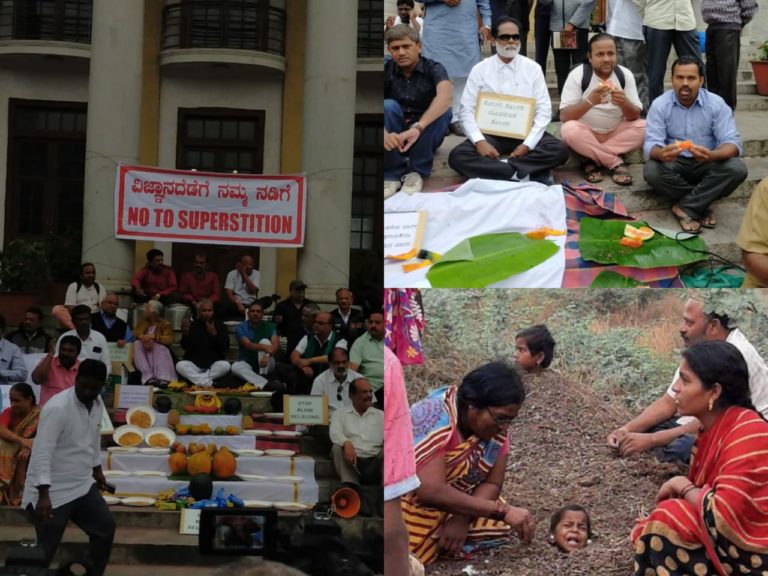
 Eclipse, solar or lunar are natural phenomena, but in a country like India with a majority population still bereft of basic education, there are many blind and superstitious beliefs that surround such natural events. But its not just the uneducated, it’s also the upper class educated who also indulge in such superstitious practices.
Among the most common practices are fasting, not taking bath and not stepping out of the house during the eclipse. Traditionally, many of the big temples like Thirupathi Balaji temple and Sabrimala temple also shut down and reopen only after purification rituals.
Most of these practices do not have any scientific basis.

 Talking to Gauri lankesh news team- Mr. Mallappa, a transgender activist who was part of the team organizing the program said- “Commonly people believe that one is not supposed to come out of the house, should not consume food or water, etc which is applied to Pregnant ladies also, which is harmful,”
Mallappa also added that people must function on the basis of science and not superstition; condemning the wrongdoings that has been propagated by priests and others which cannot be proven scientifically. He also said that these practices bring more harm to the lower class people who easily tend to believe the superstitions because of a lack of education and knowledge.
“No consumption of food or water, not stepping out of the house, etc during an eclipse is all false beliefs held by superstition and only that one should not see the sun through naked eyes is true scientifically which should be followed,” said Narasimha Murthy, an advocate who was one of the people eating at the protest site to show the myths surrounds the eclipse.

Jharkhand, means “the land of forests” the state in Eastern India was formed out of Bihar for tribal welfare in 2000. The region has been inhabited since the Mesolithic- chalcolithic period. Use of Iron started in this region as early as 1400 BC. The region was ruled by Maurya, Gupta, Pala, and several tribal kingdoms before coming under East India company under British rule. After the Independence of India, the region became part of Bihar state. The state is mineral rich but 40% of its population is below poverty line and 19% of its children malnourished, a typical story of India’s adivasi lands.The Das government had brought two bills in 2017 to change the two tenancy acts-the Chotanagpur Tenancy Act (CNTA) and the Santhal Parganas Tenancy Act (SPTA)–to allow commercial use of tribal land. These laws protect tribal rights over their land and put restrictions on the acquisition and sale of tribal land. The move was largely seen as a pro-corporate and anti-tribal. The Congress-JMM led opposition along with the Church opposed the proposed amendments. Sensing the anger and criticism from the tribal community, the BJP had put the decision on hold before the Lok Sabha polls. But the damage was done.
 These fears have led to a spate of protests and one significant movement called the ‘Pathalgarhi movement’ in 2018, whereby the tribals erected pathar (stones) plaques engraved with provisions of the Fifth Schedule in the constitution as an assertion of autonomy and independence from the Indian union. The Das government in a bid to suppress the movement filed FIRs against at least 10,000 people, many were still languishing in jail. In Khunti district alone, where the activist Dayamani Barla stood for elections on Jharkhand Vikas Morcha ticket, there were 23 FIRs, 19 of which involved sedition, kidnapping, rape, and other heinous charges mainly against tribal leaders. Some villages have also given a boycott call for elections by burying their Aadhar and voter IDs as a protest against police crackdown.
Mineral-rich states, such as Odisha, Chattisgarh and Jharkhand have been accruing forest land under Land Banks for use by corporates for years, often without the knowledge of any of the local forest-dwelling communities.One can judge the impact of the tribal anger by the defeat of BJP state president Laxman Giluwa from a ST reserved seat. Giluwa was a vocal supporter of the police action against the people who participated in the Pathalgarhi movement. Jharkhand is also the state with 20 cases of mob lynchings, highest in the country. CM’s ideological push on conversion and cow-related issues also did not go well with Hindu as well as Christian tribal communities.
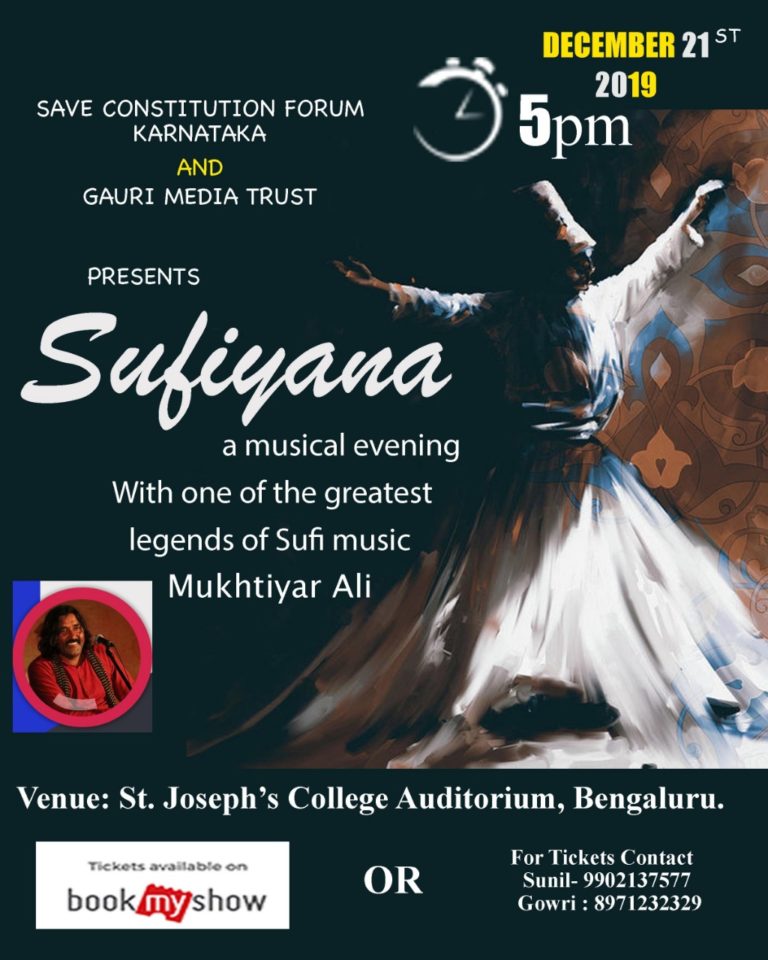
For them, caste had no meaning and all human beings were equal. Such content resonated with the common people and it does even today making India a contemporary epicenter for Sufi culture.Sufi music is the devotional music of the Sufis, inspired by the works of Sufi poets, like Rumi, Hafiz, Bulleh Shah, Amir Khusrow and Khwaja Ghulam Farid. The Sufi saints and fakirs sang on universal love, humanity, world harmony, egalitarianism in a caste-ridden Indian society. The Sufi movement made a valuable contribution to Indian society. Like the Bhakti saints who were engaged in breaking down the barriers within Hinduism, the Sufis too infused a new liberal outlook within Islam. The interaction between early Bhakti and Sufi ideas laid the foundation for more liberal movements of the fifteenth century. The Sufis believed in the concept of ‘Unity of Being’ which says- that all beings are essentially one. Different religions were identical. This doctrine gained popularity in India. A notable contribution of the Sufis was their service to the poorer and downtrodden sections of society. According to the Sufis, the highest form of devotion to God was the service of mankind. The Sufi movement encouraged equality and brotherhood. The Sufi saints tried to bring about social reforms too. Like the Bhakti saints, the Sufi saints contributed greatly to the growth of a rich regional literature. Most of the Sufi saints were poets who chose to write in local languages. They wrote in Punjabi, Hindawi, Deccani, and Bengali. Listening to these bhajans which start with these words makes us feel as if we are witnessing the medieval times and as if Kabir himself is saying these words while immersed in weaving his loom. Bengaluru is fortunate to witness such an artist.
The victims are identified as Jaleel Kudroli (49) and Nausheen Bengre (23) and were brought to Highland Hospital. As the news of the death spread, people started gathering outside the hospital that led to some confrontation between the police and people. Later in the night, many videos emerged of police entering the hospital in riot gear, firing tear gas and indiscriminately beating patients, their relatives and many of the hospital staff.@ndtv @thewire_in @NewIndianXpress @scroll_in @ThePrintIndia @TheQuint @ttindia @Gauri_News https://t.co/bY55a0Dfzf
— ಪ್ರದೀಪ್ Pradeep (@DREAMYPRADEEP) December 20, 2019
Parts of Coastal Karnataka has been put under high alert with a curfew in Mangalore. There is internet shutdown till tomorrow in mangalore.Video 1: Shows that a tear gas shell was thrown in Highland Hospital lobby in Mangaluru and people including caregivers rushing inside. Police entered highland hospital and kicked at ICU doors. People can be seen running. @thenewsminute #CAAProtests pic.twitter.com/Jt8RYILZPM
— Theja Ram (@thejaram92) December 20, 2019
#Lucknow Police lathi-charged people who gathered to protest against the Citizenship (Amendment) Act and the National Register of Citizens. #CAA_NRC #lucknowprotest pic.twitter.com/w0tKBQ9kGu
— Saurabh Trivedi (@saurabh3vedi) December 19, 2019


Hindus formed human chain when Muslims offered Salah/prayer during #CAAProtest in Hyderabad,India.
— Md Asif Khan آصِف (@imMAK02) December 19, 2019
These videos will give nightmares to fascists. #IndiaAgainstCAA pic.twitter.com/WfuZEKjg8g
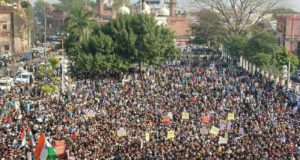
It's a shame that one of India's well historian and intellectual is being treated this way. #CAA_NRC #bangaloreprotest #AshfaqullaKhan #RamPrasadBismil #IndiansAgainstCAB https://t.co/ytFzHEy2FL
— Shabbir Ahmed (@Ahmedshabbir20) December 19, 2019
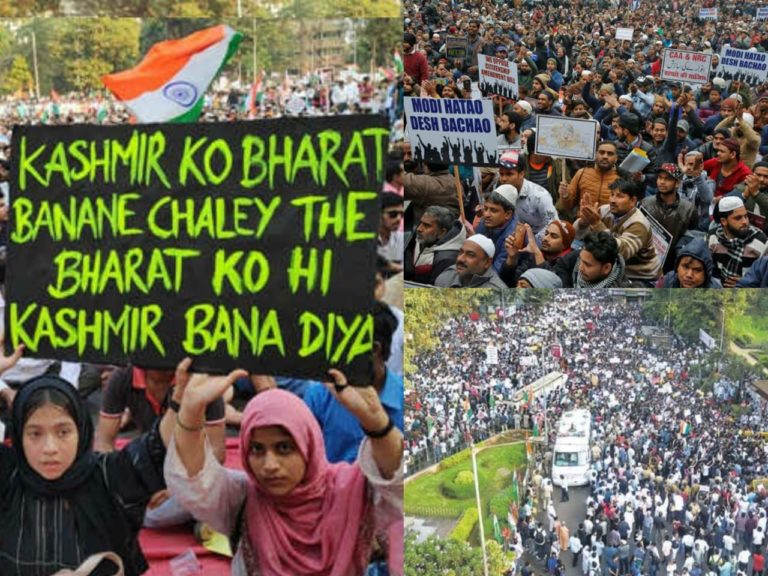
A big crowd at SJP Road near Town Hall in Bengaluru.
— Shahnawaz Ansari (@shanu_sab) December 19, 2019
Police try to lathi charge but are outnumbered by the large crowd which is now singing anti NRC and anti CAA slogans.#Section144#BangaloreProtest#IndiaAgainstCAApic.twitter.com/vNw9ekZGq8
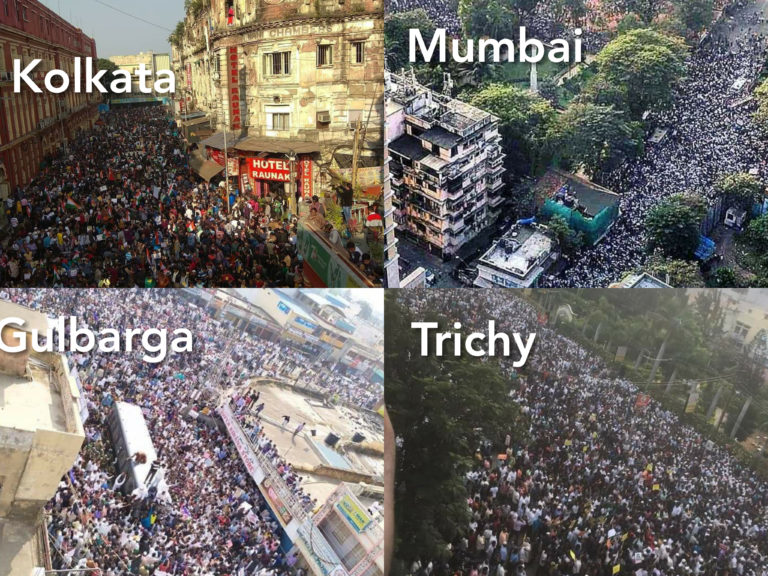
In Gulbarga district, 40,000 people march to protest against the citizenship amendment act.Police are now saying that entire central Bengaluru is blocked off and that they will start releasing those who are detained since morning if the crowd assembled at Town Hall will start dispersing.#bangaloreprotest #IndiaAgainstCAA pic.twitter.com/lIsfx3fDh0
— Srivatsa (@srivatsayb) December 19, 2019
While in Delhi Swaraj Abhiyan leader and social activist Yogendra Yadav, Umar Khalid (social activist) was arrested early on. In Gujarat, social activist Jignesh Mewani was also arrested.Watch this sea of ppl????????????
— Èl Profesor (@IamSRKxFanboy) December 19, 2019
In Gulbarga , Karnataka ????????????#bangaloreprotest #IndiaAgainstCAA pic.twitter.com/rcJwB1KxdI


 All over the country may prominent activists and common people were detained by the police.
A government at war with it's own people! #CAAProtest #IndiaAgainstCAA #CAA_NRC pic.twitter.com/x256sq0RQS
— Suresh Mathew (@Suresh_Mathew_) December 19, 2019
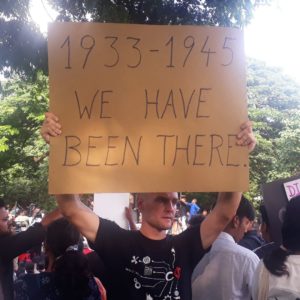
Eminent personalities, students, social activists and people from different walks of life took part in a rally in Kolkata to protest against the new citizenship law and NRC. Protests are continuing at jantar mantar in Delhi. By evening people started gathering in Chandigarh and Mumbai for anti CAA protests.Police open fire in Mangalore. Police claims shots were fired in the air and no one has been injured.
— Arun Dev (@ArunDev1) December 19, 2019
Police claims crowd turned violent near port area and started throwing stones. In retaliation they opened fire.
More details awaited#Section144 #CAAProtests pic.twitter.com/vdVsCKNRZV


Gauri lakesh news is an independent news website, pro-people and committed to constitutional values. We bring you not just the news, but truth and change with it
Contact us: [email protected]
© Designed By : StandardTouch