Opposition Slams Modi Government over Migrants Train fare issue

After opposing the ‘Aarogya Setu’ app the congress party has once again questioned the Modi government for collecting train fares from the stranded migrant labourers to go home. In a tweet on Monday, Rahul Gandhi said “On one hand the Railways is extorting ticket fare from labourers stranded in different states, on the other hand, the Rail Ministry is depositing donations of Rs 151 crore in PM Cares fund. Please solve this puzzle.”

Also Read- Corona Chronicles: Luxury buses for Rich and long march for the poor

After the centre announced the special Shramik Trains for the migrant labourers to return to their homes, they also released a set of guidelines which asked the state governments to collect the railway fare from these labourers. After the centre’s announcement on Sunday, congress party member Sonia Gandhi expressed her grief for the migrants and others who were stuck in different states because of the lockdown. She announced that the Congress party will pay the expenses for the labourers who are returning homes throughout India. Sonia Gandhi said that this was the party’s decision and this would be the Congress’ humble contribution in standing shoulder-to-shoulder with these workers. Sonia Gandhi also accused the Modi government and the Railways of completely ignoring the demands made by Congress for ensuring the safe and free travel of migrant workers and labourers to their homes. After the letter from Sonia Gandhi to PM on Apr 7, demanding the transfer of all money under PM- cares Fund to the Prime Minister’s National Relief Fund (PMNRF) to “endure efficiency, transparency, accountability and audit,” The Congress party has now questioned the Indian Railways and Modi government about the funds that were given to PM cares and the donation of 151 crores to the PM cares fund on one hand by the Indian Railways and on the other hand, they have asked the migrant labourers and workers to pay to the railways to go home. In a tweet the Karnataka Congress party has said that first, we opposed the centre’s decision of charging the migrant labours, then we requested them, even after that we had to step out on the road and then the Congress party by themselves have written off 1 crore cheque as the pay to the KSRTC fare for the migrant labourers travelling in Karnataka. Maharashtra CM Uddhav Thackeray had also tweeted late on Sunday and requested the central government to not charge railway fares to migrant labourers returning home. He tweeted saying that these labourers are from extremely poor backgrounds, “They have been financially affected by the novel coronavirus pandemic. Taking a humanitarian approach, the Railways should not charge them ticket fare,” People’s organisations have also sent out letters to Prime Minister and Railways Minister Piyush Goyal requesting that fares on the special trains facilitating inter-state travel for migrants during the nationwide lockdown be waived off. The letter reads, “ in this time of trouble the decision to charge even more railway fare than normal is not judicious.” Samajwadi Party chief Akhilesh Yadav said in a tweet- “It was highly shameful that the BJP government was charging the vulnerable labourers for the train ride home. Migrants travelling back home being asked to pay for the train rides by the BJP government is highly shameful. It has become clear today that the ruling government waives loans for capitalists and businessmen and supports the rich. It works against those who are poor. At the time of crisis, exploitation is done by money-lenders not by the government.” Along with many opposition parties and state officials and as well as the civilians have disapproved the central governments move and have been asking the centre to bear the cost. After the opposition from all corners, today noon, news agency PTI tweeted that Railways will now subsidise 85% of ticket fare of the  migrant labourers and state government will pay the remaining 15%    

Lucknow: UP government names COVID19 hotspots after Mosques

0
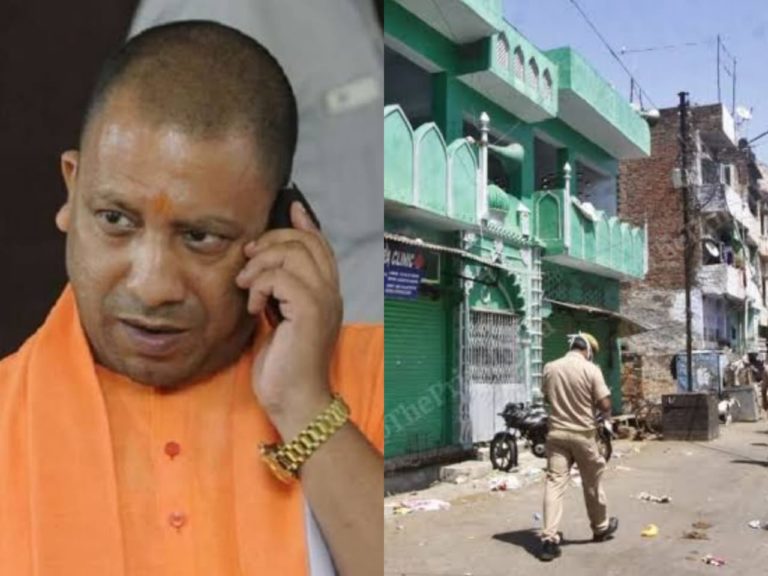
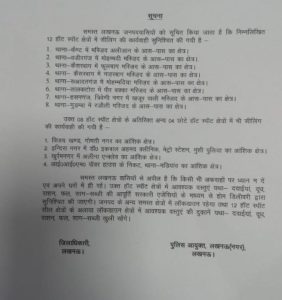
Even as the Indian government is receiving flak from Gulf countries for the inability to control the climate of hate that propagates Islamophobia, another incident of religious profiling has come to light from Lucknow, Uttar Pradesh. The Uttar Pradesh administration has named COVID-19 hotspots in Lucknow after the mosques in the areas. One of the hotspots in Lucknow’s Sadar Bazar is called ‘Masjid Ali Jaan and nearby areas’. Similarly, some others mentioned in the list of Covid-19 hotspots are ‘Mohammadiya Masjid and nearby areas’ in Wazirganj, ‘Khajoor Wali Masjid and adjoining areas’ in Triveni Nagar and ‘Phool Bagh/Nazarbagh Masjid and adjoining areas’.       The residents of the area and members of opposition parties have raised objections to this nomenclature saying that the UP administration is trying to give communal color to the disease. According to UP Congress chief Ajay Kumar Lallu, the state government has been unable to contain the spread of coronavirus and is rather interested in diverting attention by linking the issue with religion. He also added that it is discriminatory to link the illness to one particular community. Saying that the practice of naming hotspots after mosques were being followed only in Uttar Pradesh, Lucknow-based law professor Abdul Hafiz Gandhi adds further-  “This is a wrong practice as you are blaming one particular community by naming hotspots after mosques. Are we naming hotspots after any other religious institution? Hotspots are named after areas and this is what is being followed across the country.” In a report by The Print, a  resident living in one of the hotspots said, “This is nothing but an attempt to create an impression that Muslims are behind the spread of Covid-19. Even today Tablighi Jamaat is shown as the major reason behind the surge in cases. The areas that have been labeled as hotspots include both Muslim and Hindu communities. When areas are not being named after temples or churches, why are they being named after mosques?” Meanwhile, the administration has denied these claims and stated that the mosques were only named due to the presence of positive cases. As of now, Lucknow has reported 214 Covid cases with 8 new positive cases on Friday. Since the Nizamuddin Conference incident, there was a flood of fake news not just from social media but from mainstream news channels targetting the Muslim community and blaming them for the spread fo coronavirus.
nizamuddin
Courtesy : twitter
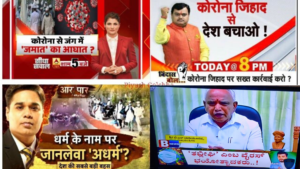
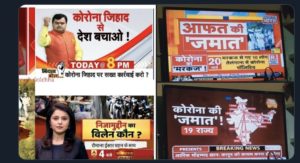
nizamuddin   Many news channels ran with headlines like ‘Corona Bomb’ and ‘Corona Jihad’. This was further fueled by the Hindutva brigade on social media and many of BJP leaders. Instead of controlling the hate-filled environment, the Indian government and health departments aided this process by giving daily updates of only cases from the Tablighi jamaat event. All this happened while the migrants were forced to walk hundreds of miles to their homes and doctors were demanding proper protective equipment. Instead of arranging transport and providing better health infrastructure, the government abetted the rise of the hate-filled environment in the country. When faced with failures, the BJP led government has time and again tried to communalise the Pandemic.

Stranded at sea: Andhra Pradesh fishermen forced to stay on boats

0
35-year old, Kori Jaganathulu, who was a migrant fish worker died on board a fishing boat 2 days ago in Uttan Pali, Mira Bhayandar, Maharashtra. He was suffering from kidney problems and succumbed to his ailment. He is one of the few migrant workers who have lost their lives due to the lockdown. Kori had come to Mumbai 3 months before the lockdown began and was managing to access hospitals for his dialysis. His health kept deteriorating and he wanted to go back home to be with his family. Some of his colleagues arranged for an ambulance to take him back home but were sent back from the Maharashtra-Karnataka border because of the lockdown. As the lockdown intensified, Kori found it impossible to access medical care and died.  In a conversation with Madhuri Mondal from Dakshin Foundation, an NGO allied with the National FishWorker’s Forum, an umbrella organization of various fish worker’s unions, she said, “This is not the first time that we are hearing about people who have not been getting access to their medicine. Another group in Mangalore informed us that there are other fish workers who are facing kidney problems.” This issue was resolved after the authorities were contacted.  In a video shared by the fisherman, Kori’s body is kept on a bed and the fishermen are standing around the body. They said, ” Yesterday one of our colleagues died due to kidney ailments. Due to the lockdown, he couldn’t avail of medicines on time. If the lockdown continues like this, there would be more problems. So, we want Union leaders, State, and Central governments to take notice of the situation. There are around 200 people here. We request everyone to send us back to our hometowns by bus or train.” Another fisherman added, ” Now, this person has died. Maybe his death will make the state and central government take notice.” So far none of the officials have reached out to the group even after Kori’s death. Since the lockdown began, the fishermen have been living on the boats. They are part of the mechanized marine fishing fleet, which provides 80% of India’s annual fish catch. This is largely crewed by migrant workers who come from central and east India to west India. There is no official census on the number of workers in this sector thus it is hard to estimate just how many workers are stranded under the lockdown. Dakshin Foundation has estimated a minimum of 950 fish workers who are stranded across different harbors in Maharashtra.  Kori’s death has led to fish workers demanding that they be sent home immediately. This is not the first death that has taken place. Two deaths were previously reported from Gujarat. 45-year old T Jagannathan, a native of Kalingapatnam town in Srikakulam, had a heart attack and died. He had not eaten in days because he was scared of contracting the virus. In another case, 22-year old  K Raju died due to a panic/heart attack hearing the news that there has been 1 COVID-19 case in a village nearby. Fishworkers are also facing the harsh reality of no wages, which means they can not send any money back home. With the monsoon fishing ban coming up and their wages from this period drying up, they face a grim reality.  Fishermen have also shared that there is not enough food, water, and sanitation facilities. “We are facing a lot of difficulties; there is no drinking water. We are given a can of drinking water and told to adjust for 2 to 3 days, and we are 5 to 6 people in a boat and we are told to adjust with that,” said Dhananjayarao, another fisherman who was stranded in Gujarat. Each boat has about 5-10 people living on one boat and this has also made social distancing very difficult, which could cause further problems. The fish workers in Gujarat have had some respite as many of them were transported, by buses, to their home states For the fishermen in Maharashtra, food and water are not of concern, all they want is to go home. Duryodhan, a fisherman on Kori’s boat said, “We are facing a lot of problems here, please just send us home. Even if you keep us in quarantine there, it is okay.”   As a result of the various problems, many fish workers have been facing mental health issues. Madhuri Mondal said, “Due to the panic around COVID-19 and the news about deaths, many fishermen are becoming anxious and are facing mental health issues. They just badly want to go home and meet their families.” Organizations and the fish workers union have been in talks with authorities to make arrangements of buses or trains to send migrant workers back to their hometowns. In Karnataka, the cost of sending the migrant workers back may not be covered by the state. Vineetha Venugopal, from Dakshin Foundation, said “Currently there is a lack of clarity on who will be paying for the buses. The onus of paying for the transport may fall on the fish workers who are already in a financially vulnerable place.” The need of the hour is for the government to step up and bear the expenses of sending the migrant workers back home. Vineetha added, “Considering the fact that they have been living in highly deplorable conditions and are hearing about the deaths of their colleagues many of them have massive anxiety. It is imperative that both, the center and state government pay for the transportation along with arranging it.”       

May Day 2020: International Labour Day in Pictures

Mayday, also known as labor day was a landmark date in the labor rights movement. It was established by the Second International Socialist Congress in 1889 as a commemoration of an 1886 American general strike, organized in Chicago in pursuit of an eight-hour workday. As this movement has taken over the world, Mayday is celebrated differently across various countries. Under the lockdown, many countries have managed to still come out on the streets to demand better labor rights from their government. Most protests practiced social distancing.
Image
“Covered mouths have voices.” Hundreds in Greece defied lockdown to protest Parliament on #MayDay — using markers to maintain social distancing. The pandemic is creating new job worries just as it recovers from a 10-year financial crisis. via AJPlus
With social distancing, mask, and military discipline members of the Communist union PAME gathered outside the Greek Parliament on Friday to celebrate the International Workers’ Day on May 1. They demanded a society that was fair for workers and the health of the people.
Police detain a protester after marching on Taksim Square to celebrate May Day in Istanbul via Twitter
In Turkey, several demonstrators were arrested as they marched towards Istanbul’s symbolic Taksim Square to mark May Day in defiance of the government’s coronavirus lockdown via BBC
In Istanbul, Turkey the police detained 137 people for trying to hold illegal demonstrations in the city to celebrate May Day.
Protestors wearing face masks gather during a demonstration on May Day, amid the spread of the coronavirus disease (COVID-19), in Berlin, Germany May 1, 2020 via Reuters
In Germany, leftist groups called for the protest to denounce capitalism and urge more solidarity, especially with refugees seeking to reach Europe. They had urged participants to wear masks and stay at least 1.5 metres apart.
It’s the first of the month and May Day. New yorkers call to Governer Cuomo to cancel rents.Photos by Reina Gattuso
It’s the first of the month and May Day. Cuomo still has not canceled rent even though more than 30 million people are unemployed.  
Protestors in Vienna stand on painted circles to maintain social distancing and to protest against the government measures to slow down the spread of the virus via Getty Images
 
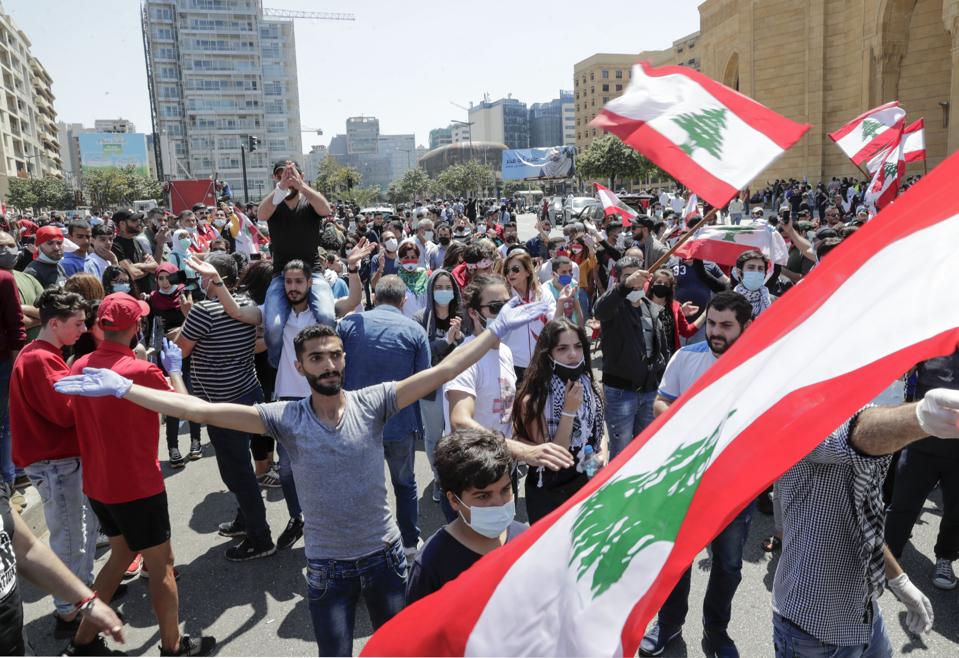
Protesters criticize the government’s handling of the crisis that saw the local currency crash, devastate their savings, and sent prices and inflation soaring. via Getty Images
According to ABC News, “The lockdown worsened the recession’s sharp bite, increasing unemployment and popular resentment. In recent days, protesters ignored social distancing measures and calls to stay home to rally outside the central bank and private banks, setting off clashes with the security forces and the army.” Pro-democracy protesters gathered in New Town Plaze in Sha Tin for a Sing With you protest. Around 7.00PM the riot police came and asked the crowd to disperse.
In Chile, protestors gathered to demonstrate in favour of May Day. Police in riot gear tried to disperse the protestors using water canons and arrested few of the protestors.  
In South Korea, workers wear protective gear calling for improved working conditions and labor rights. JUNG YEON-JE, AFP VIA GETTY IMAGES
Activists carry the Spanish message: “With hunger, there is no quarantine” during a protest marking May Day, or International Workers’ Day, amid a government-ordered lockdown in Buenos Aires
In Argentina, different social organizations demonstrated this morning at the Obelisk to make visible the very serious situation suffered by thousands of people due to food shortages, which has worsened after the isolation decreed due to the coronavirus health crisis.
Protestors have a peaceful gathering in France to commemorate May Day
Health workers, unions & civil society hold a picket outside Chris Hani Baragwanath Hospital in Soweto, South Africa via Morning Star
 
Labour union workers maintain social distancing as they carry placards during a May Day rally in Karachi on May 1 -AFP
Protest in Span
Trade union members in Barcelona, Spain, hold up placards in front of the emergency admissions of a medical centre via BBC
Trade Union members take to streets in Spain calling for better working conditions and more protective equipment.
Women workers stage a silent protest while practicing social distancing to mark Labor Day on May 1, 2020 in Quezon City, Philippines. Millions of workers and daily wage earners living in poverty in the Philippines suffer the brunt of work stoppage during the government imposed Enhanced Community Quarantine in a bid to stop the spread of the novel Coronavirus. (Photo: Jes Aznar/Getty Images)
Women workers stage silent protest in the Philippines while practicing social distancing via Getty Images
Millions of workers and daily wage earners living in poverty in the Philippines suffer the brunt of work stoppage during the government imposed Enhanced Community Quarantine
May Day protesters gather outside the offices of New York governor Andrew Cuomo
As the coronavirus crisis rages on, the economy is seeing a massive crash. In this crash, the highest casualties will be workers and their livelihoods.

El Salvador President orders inhumane treatment of prisoners during lockdown

This week, The office of El Salvador President Nayib Bukele released harrowing photos showing the brutal conditions hundreds of prisoners have been put in — stripped and stacked together after several days of violence leading to more than 20 deaths in the country. The President of El Salvador has ordered a 24-hour lockdown amid fears that these murders were committed on the behest of jailed gang leaders. This is the highest number of murders in one day since President Nayib Bukele took office.
via Aljazeera
The photos were released to try and intimidate or humiliate the captives after intelligence warned the deaths outside of prisons had been ordered by imprisoned gang leaders. But human rights groups fear for the prisoners. The El Salvador security forces have been asked to take lethal measures against the gang members and a state of emergency has been declared in the jails. The President tweeted “No contact with the outside world. Shops will remain closed and all activities are suspended until further notice.” Ignoring social distancing recommendations, Izalco prison inmates were crammed tightly in the jail yard with some wearing masks as the jailors searched their cells for evidence. The gang leaders were sent into solitary confinement. The government also put members of rival gangs in the same prison cell to cut off lines of communication between the groups and searched 5 prisons. The President said that the prisoners were taking advantage of the police who were busy enforcing the lockdown in the country instead of battling the crimes in the country. He added that lethal force can be used against those who endanger the citizens of the country. “The maximum emergency in all the penal centers where gang members are found seeks to determine the origin of the homicide orders perpetrated in the country. The criminal Izalco [prison] is one of the venues where @CentrosPenales and the @PNCSV carry out searches,” the office of Bukele tweeted.”The use of lethal force is authorized for self-defense or for the defense of the lives of Salvadorans.”
The country’s General Director of Penal Centers Osiris Luna Meza tweeted, “Not a single ray of sunlight is going to enter any cell, more practical and harsh measures have been established, this is necessary to stop this wave of homicides that have happened these days.” Nayib Bukele tweeted videos of prison cells being boarded up to stop inmates from conversing with each other and so that the gang members would not see a day of sunlight. He warned the gangsters will regret for the rest of their lives having made the decision to order the murders. Erika Guevara, Amnesty International’s director for the Americas, told Reuters: “We view these photos taken of people deprived of their liberty in the prisons with great concern, they are scenes where people are brought together in prison yards in a humiliating, demeaning manner.” The human rights violations against prisoners due to these steps are not being investigated. El Salvador has someone of the strictest lockdown measures and has been doing well in combating the virus. It has tested over 20,000 people and has had 323 cases and 8 deaths only. The country began the lockdown on March 22 and now breaking of the lockdown is illegal and punishable by imprisonment.
In many Latin American prisons, the jails are overcrowded and are the perfect breading spot for the virus. Social distancing measures here are poor and with poor medical facilities, an outbreak here could have devastating effects. In Chile, the Puente Alto prison in Santiago has had the largest outbreak so far, with more than 300 reported cases. The prison’s 1,100 inmates are in serious danger of contracting the virus. Prisoners need to be released if the countries want a fighting chance to win against the virus that is sweeping the world. The fear of the virus has lead to jailbreaks, riots, and strikes across Latin America. This Al Jazeera report highlights the situation of prisons in Latin America and the state of the prisoners in various countries.

US government panel recommends India to be put on religious freedom blacklist

0
The recent criticism from a US government panel on India’s status on religious tolerance and treatment of minorities has not gone down well with the Indian government. The exhaustive report has cited events surrounding the citizenship law, the Babri verdict, and lynchings. The report is especially worried by the ‘culture of impunity for nationwide campaigns of hate and violence against religious minorities’ created by the new citizenship law, the National Register of Citizens and the Ayodhya judgment, among other things. The United States Committee on International Religious Freedom (USCIRF) has ‘downgraded’ India’s status on the basis of metrics related to tolerance, from Tier 2, which includes countries on a ‘Special Watch List’, to the category of ‘Countries of Particular Concern’, alongside neighbours China and Pakistan, Saudi Arabia and 10 other countries.
In 2003 and 2004, in the aftermath of the 2002 Gujarat riots, India had been listed among the “Countries of Particular Concern”. During that period too, the BJP had been in power at the Centre.
USCIRF is an independent, bipartisan U.S. federal government commission, the first of its kind in the world, dedicated to defending the universal right to freedom of religion or belief abroad. USCIRF reviews the facts and circumstances of religious freedom violations and makes policy recommendations to the President, the Secretary of State, and Congress. USCIRF Commissioners are appointed by the President and the Congressional leadership of both political parties.

Allowed violence against minorities

The commission is empowered as an independent arbiter to look only at nations’ religious freedom records, apart from their relationship with the US, Vice-Chair at USCIRF Nadine Maenza said. It called on the US to impose punitive measures, including visa bans on Indian officials, believed responsible and grant funding to civil society groups that monitor hate speech. The commission said Modi’s Hindu nationalist government, which won a convincing election victory last year, “allowed violence against minorities and their houses of worship to continue with impunity, and also engaged in and tolerated hate speech and incitement to violence.” The report also highlighted comments by Home Minister Amit Shah, who notoriously referred to mostly Muslim migrants as “termites,” and to a citizenship law that has triggered nationwide protests. Beyond the controversial citizenship law, Maenza said in an interview, India has a broader “move toward clamping down on religious minorities that’s really troublesome”. It also highlighted the revocation of the autonomy of Kashmir, which was India’s only Muslim-majority state, and allegations that Delhi police turned a blind eye to mobs who attacked Muslim neighbourhoods in February this year. The Indian government, which has long been irritated by the commission’s comments, quickly rejected the report. “Its biased and tendentious comments against India are not new. But on this occasion, its misrepresentation has reached new levels,” Foreign Ministry spokesman Anurag Srivastava said. “We regard it as an organisation of particular concern and will treat it accordingly,” he said in a statement. The State Department designates nine “countries of particular concern” on religious freedom – China, Eritrea, Iran, Myanmar, North Korea, Pakistan, Saudi Arabia, Tajikistan and Turkmenistan. The commission asked that all nine countries remain on the list. In addition to India, it sought the inclusion of four more – Nigeria, Russia, Syria and Vietnam. Pakistan, India’s historic rival, was added by the State Department in 2018 after years of appeals by the commission.

Citizenship law ‘tipping point’

India’s citizenship law fast-tracks naturalisation for minorities from neighbouring countries. The minorities include people of all religions except Muslims. The citizenship amendment act puts the onus on people to prove their citizenship to the country. Tony Perkins, the commission’s chair, called the law a “tipping point” and voiced concern about a registry in the northeastern state of Assam, under which 1.9 million people failed to produce documentation to prove that they were Indian citizens before 1971 when mostly Muslim migrants flowed in during Bangladesh’s bloody war of independence. “The intentions of the national leaders are to bring this about throughout the entire country,” Perkins told an online news conference. “You could potentially have 100 million people, mostly Muslims, left stateless because of their religion. That would be, obviously, an international issue,” said Perkins, a conservative Christian activist known for his opposition to gay rights who is close to President Donald Trump’s administration. Modi’s government says it is not aimed at Muslims but rather providing refuge to persecuted people and should be commended. Although the manner the act was being brought out targetted Muslims living in the country. But critics consider it a watershed move by Modi to define the world’s largest democracy as a Hindu nation and chip away at independent India’s founding principle of secularism. The law will also leave many poor, homeless, nomadic communities, and people of transgender communities who due to their economic situation and identities are already marginalised in the country.

French Group advocates Nobel Peace Prize for Cuban Doctors for their battle against COVID-19

The French association Cuba Linda advocated yesterday for the awarding of the Nobel Peace Prize to the Cuban medical brigades Henry Reeve, deployed in more than 20 countries for the fight against the Covid-19. The international community is witnessing the solidarity of health professionals who leave their country to provide services and share experiences in other parts of the world, which in the case of the pandemic caused by the new coronavirus even reach the heart of Europe, it specified in a statement to which Prensa Latina had access. During the COVID-19 pandemic, Cuba sent its first mission to Lombardy, Italy’s worst-hit region. Soon after Italy, it has sent its missions to over 20 countries, which include Venezuela, Nicaragua, Belize, Suriname, Dominica, St. Lucia, Mexico, St. Kitts and Nevis, Antigua and Barbuda, Jamaica, Honduras, Grenada, St.Vincent and the Grenadines, Barbados, Haiti, Andorra, Italy, Angola, Togo, St. Thomas and Prince, Qatar, Cape Verde, and South Africa.

Cuban Medical Internationalism

Fidel Castro had defined the medics of Cuba as Cuba’s “army of white coats”. For years now this army has been going across countries helping them through outbreaks of deadly viruses, be it SARS, Ebola, Cholera, or now Coronavirus. Cuba’s Henry Reeve International Medical Brigade has helped 3.5 million people in 21 countries between 2005 and 2017. These countries were affected by disasters, such as floods, earthquakes, hurricanes, and epidemics, including the 2014 Ebola outbreak in West Africa according to the Pan American Health Organization. Since the early days of the Cuban revolution, leader Fidel Castro believed that universal free health care and education will be the key strategy in building the country. Cuba has more than three times doctors per capita than the US. Cuba sent its first long-term mission of Cuban doctors to Algeria in 1963. Since then, Cuba has sent more than 400,000 healthcare professionals to work in 164 countries, according to statistics published by the state media. For example, in 2010 a tragic earthquake hit Haiti. 230,000 people died and many were left homeless. The Henry Reeve Contingent reached Haiti within 24 hours  and started working alongside hundreds of Cuban-trained Haitian physicians. Jose Angel Portal Miranda, Cuba’s health minister tweeted around a month ago- “Cuba has extended a hand many times, but never so many times in such a short time. In the past week, a Henry Reeve brigade has departed with each sunrise. There are already 11 in total. There is no precedent,”

Also Read: How Cuba is saving the world during COVID-19 pandemic?

There are critics of Cuban medical Internationalism who claim that Cuba is using its doctors to spread its socialist propaganda and using it as a revenue source. In a piece by Helen Yaffe, she argues that this is a very shallow understanding of why Cuba engages in aid programs, she writes “Cuban missions differ from most global health security responses, which are anchored in military and defence programmes and aim to protect domestic populations from external threats of disease. They[researchers] recognize that Cuban medical internationalism is rooted in a “principle of solidarity” with the global population rather than the notions of responsibility, charity, and altruism common in aid frameworks.” It is not only Cuban doctors that are being needed across the world but also Cuban drugs. Cuba invested heavily in the biotech industry to develop medicine and vaccines and support a prevention-oriented healthcare system. The  Cuban anti-viral drug Interferon alfa-2b is now being used as a treatment drug against the virus. In China, it was one of the treatment drugs against the virus and in many cases was found to be successful. It has been effective to treat other viral diseases like HIV/AIDS, Hepatitis B and C, shingles, and dengue. Cuba has received requests from 45 countries for the drug. In 2020, Cuba has been sending medical aid across the world. But the Trump administration has not been happy with this. Under pressure from the Trump administration, Ecuador, Bolivia, and Brazil have ended their contract with Cuba. This has left millions without health-care in these countries. This tactic of sabotaging the Cuban medical aid has come from the Bush-era, where Cuban doctors were given US citizenship in return for abandoning the program and this was not ended till the Obama administration in 2017. As a response, Argentina invited citizens to sign a proclamation to welcome Cuban medical aid workers and to oppose the United States campaign against Cuba’s medical aid missions. “Today, it is about preserving the lives of millions of people, without exceptions, and this is what is most important. The virus kills without respecting borders or ideologies.” the letter said. They denounce “the United States campaign against Cuban medical collaboration in the world, which today is part of the aggressiveness and intensification of the blockade against that brother country.” In these times when the world needs to stand in solidarity, this move by the organization is important in recognizing the humanitarian work done by the ‘army of white coats’

Bollywood Veteran, Actor Rishi Kapoor passes away at 67

0
The evergreen heartthrob of Hindi cinema Rishi Kapoor passed away today in Mumbai at the age of 67. Bollywood fans are still mourning the loss of Irrfan Khan who died yesterday of neuroendocrine cancer. This is the second loss in one week. Rishi Kapoor was suffering from cancer and was in treatment in US in 2018. Yesterday, his brother Randhir Kapoor confirmed to news agency PTI that the actor had been taken to hospital in the morning. “He is in the hospital. He is suffering from cancer and he has some breathing problems, so he has been admitted to the hospital. He is stable now,” Randhir Kapoor told PTI. Rishi Kapoor comes from Kapoor family, one of the most influential families in Bollywood, which has given many legendry actors and filmmakers to the Hindi film industry. His grandfather Prithviraj Kapoor established Prithvi Theaters a travelling theatre company in 1944. It was later rebuilt by his son Shashi Kapoor and is at present Mumbai’s best-known theatres. Rishi Kapoor was famous for being the romantic lead in many movies during 80s and 90s, most notable of those being Bobby and Chandani. He was treated in New York for cancer and returned to Mumbai last year. “Back home! 11 months, 11 days! Thank you all,” Mr Kapoor tweeted after his homecoming. Rishi Kapoor was taken to hospital twice in February this year – first in New Delhi, where he was attending a family event, and then in Mumbai. After being hospitalised in Delhi, Mr Kapoor tweeted, “Dear family, friends, foes and followers. I have been overwhelmed by all your concern about my health. Thank you. I have been filming in Delhi past 18 days and because of the pollution and my, I caught an infection whereby I had to be hospitalized.” He also revealed that doctors had found a patch on his lungs that could have led to pneumonia. Rishi Kapoor is survived by his wife Neetu Kapoor, son Ranbir and daughter Riddhima. Last seen in the 2019 films The Body and Jhootha Kahin Ka, Mr Kapoor was meant to star in a Bollywood adaptation of The Intern with Deepika Padukone. The film fraternity and the cinema lovers are in shock and are mourning the loss of another actor. From actors to politicians are paying their tribute to the famous actor.

Odisha Government’s relentless persecution of Adivasis continues even during the Lockdown

0
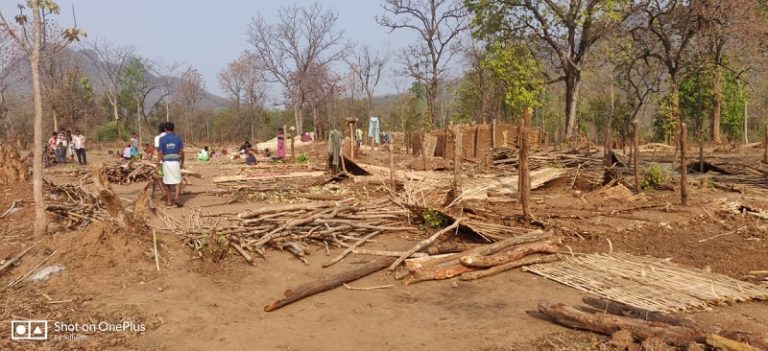
The Karlapat Wildlife Sanctuary is located in Odisha and at a distance of about 15 km from Bhawanipatna, the district headquarter. The Khandualmali hill range located in the forest is a major bauxite deposit of Odisha and companies like BHP Billion, L&T, Vedanta, etc. have been trying to obtain mining lease for it. The Adivasi people of the region have organised themselves under the banner of Khandualmali Suraksha Samiti and resisted these attempts by the mining companies. This has also led to widespread repression by the Police who have branded the movement as a Maoist backed insurgency with at least three people having been killed in staged encounters (Nov. 2015). While on one side the Government of Odisha is extremely proactive in displacing Adivasis from their homeland it is equally apathetic to their needs and requirements. The people of Nehla village have been lobbying with the Forest Department and the District Administration to relocate them ever since landslides in 2017 affected their village located on a hill slope. Every monsoon they lived in great fear of their village being washed away and people getting buried under the mud. Earlier this year they identified a clear land in the plains and built a new village. On the 24th of April 2020, the Forest Dept. forcefully demolished the village leaving the 32 Adivasi families homeless. The demolition is not only a violation of the COVID19 lockdown it is a grave criminal offence amounting to an atrocity under the SC-ST PoA Act. The next morning when legal activist Siddharth Nayak arrived at the location he was manhandled and detained for several hours by the police in an attempt to prevent the villagers from taking legal action.
Police assisting village demolition during the lockdown
Narrating his harrowing experience, Advocate Siddharth Nayak said : “I am absolutely shocked with the way the Forest Dept. personnel behaved with me. They manhandled me, pushed me around, detained me for hours, took away my phone, motorcycle keys, and Aadhar card. A journalist from a TV channel accompanying me was also mistreated and his camera was taken away. They refused to believe me that I am an Advocate. I asked them to verify with their senior officials whom I had met several times along with the same villagers to discuss the matter. I even showed them online reports about the Niyamgiri case where I was a petitioner. But they just refused to listen and continued with their misbehaviour. One can imagine that if they behave like this with me then what would be their attitude towards the Adivasi people. All I was trying to tell the Forest Dept. is that if they would have at least waited till the COVID19 lockdown period was over then the people could have tried to make alternate arrangements. It is really surprising that during a national lockdown period the Forest Dept. is busy demolishing Adivasi villages.”
Villagers are forced to live under trees
The only shelter available for the Adivasi villagers are the trees which can hardly protect them from the scorching summer or the heavy Kala Baisakhi rains occurring all over Odisha. It is ironic that the same Forest Dept and District Administration use the most violent and unconstitutional means to evict Adivasis from their ancestral villages when a mining company requires it but do not allow the voluntary relocation of villagers when they are unable to lead a proper life. The people of Nehla faced several problems in the previous location for which they decided to relocate. Sunadhar Majhi, a resident of the village said:   “The Panchayat is far away and difficult to access and moreover it’s a Sanctuary area so we don’t have proper facilities. We have to walk 15 km through the forest to get PDS rice and other provisions. For generations we practiced shifting cultivation but now they say we cannot do it because it’s a Sanctuary. How will we survive? After the landslide we lived in great fear and finally decided to relocate two months ago. Now they are saying we cannot do this. Why? The village was earlier inside the Sanctuary and now also we are within the Sanctuary. We are still within the limits of Sagada Panchayat as before. How can they say we don’t have a right to settle here? We are the traditional custodians of this forest and it belongs to us. Moreover it is not as if we just suddenly decided to do it. For years we have been running from pillar to post, met the Collector, the DFO, etc. How long will we wait for them to fulfill their duties?” The Adivasis of Odisha living in the Sanctuaries and Parks have always been persecuted by the Forest Dept. which often is hand in glove with the timber mafia, the mining mafia, paper industry, etc. Wherever forests remain in Odisha it is because of the protection from Adivasi communities rather than from the Forest Dept. During a global pandemic and national lockdown the decision of the Forest Department to demolish an entire Adivasi village leaving them without shelter, food and water is not surprising considering that the Odisha Government has been a regime of genocide and ecocide, rather it reminds everyone that the same rulers who orchestrated the massacre of Kalinga Nagar, the mass displacement at Lanjigarh, the devastation of  Sukinda, the pogrom of Kandhamaal, and the plunder of Odisha’s coastline are still in power. The Odisha Government has always been clever to publicize relief work during natural disasters to present a picture of itself as a caring and efficient Government but the reality remains that it will continue to subject its marginalized citizens to utmost brutality. The author Surya Shankar is a filmmaker-activist from Odisha.

Vietnam: How a small nation is leading the way in the fight against the pandemic

0
Vietnam is the 15th most populous country in the world. This socialist country has had only 268 cases of coronavirus that have been reported so far along with 0 deaths. Vietnam shares its borders with China and has managed to contain the virus better than most first world countries. This was possible because the government took pro-people steps first to ensure the virus was contained. When there were only 6 cases in the country, Vietnam declared a national emergency in the country and implemented social distancing, forced quarantine, and aggressive testing. The narrative that capitalist nations are progressive, are better equipped to deal with emergencies, and have better healthcare has been shaken. As the world stands, socialist countries have been performing better than many superpowers in containing and eradicating the virus from their nations.
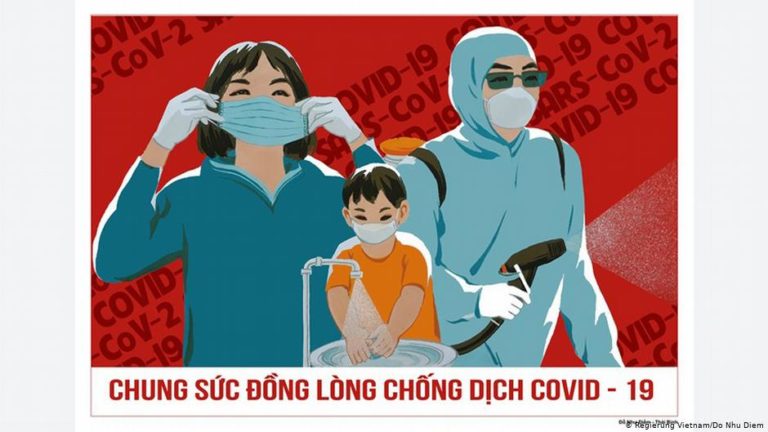
A Vietnamese government propaganda poster
Le Duc Hiep’s propaganda poster, which includes the message: ‘To stay at home is to love your country’ to help Vietnam fight coronavirus via The Guardian

The Vietnam Model

At the end of January, when the rest of the world was doing business as usual, the Vietnamese government got proactive. This was during the time when the virus was still contained to China. Premier Nguyen Xuan Phuc said that it was only a matter of time before it reached Vietnam. Starting February, the country ensured that they temperature screen everyone at the airport and that they filled out health-self-declaration forms which asked them about their contact details and their travel history. These measures are now mandatory for those entering government buildings, hospitals, or moving across state borders. Those who lie on the self-declaration forms can be criminally charged. The government also ensured that everyone who was entering the country was self-quarantined for 14 days and were tested for COVID-19. They had very strict lockdown measures, with villages of 10,000 people being confined because of one case.  While countries like Germany only tracked patients and their direct contacts, Vietnam tracked the second, third, and fourth levels of contacts.
Public notices in Hanoi explain social distancing measures. Luong Thai Linh/EPA via The Conversation
Testing across the country has been intensive. Communities who live near those who are confirmed cases are tested, sometimes testing the entire street. Testing booths have been set up across the country where people can come and get tested. The testing kits in Vietnam have been developed fast and at low costs. The test kits were all under 25$ and were fully state-funded. The State was responsible for the coordination and ensuring these kits were made available at low costs. The country does not have a strong public health-care system, with only eight doctors to every 10,000 people. While the country did not focus on mass-testing it did ensure that the virus was contained through the mobilization of the army and running compulsory state-operated quarantine centers and having mass surveillance. The Vietnamese government ensured that from Day 1 it maintained full transparency with its citizens and provided unrestricted access of information to them. The government has efficiently used social media and SMS to keep the people informed about the measures that were being taken.

Also read: Vietnam- Rice ATMs are feeding the poor during the lockdown

State-controlled media have also launched a massive information campaign. The Health Ministry even sponsored a song on YouTube about proper hand-washing that has gone viral.
To minimize workers and their families being affected by the lockdown, the government approved a 111.55 million dollar financial support package that includes covering all costs for workers in quarantine or who are recovering from the disease.

The West Stands Exposed

For the West, who boasts of state-of-the-art health-care systems, human rights of citizens, and booming economies, they have clearly missed the boat on this world-wide emergency. The US now has the highest number of cases in the world and the Trump administration is still focused on opening the economy in this volatile condition. The Governments in other non-communist countries have also failed to control the virus. Unlike the US, Vietnam went into lockdown when they had their 6th case and were ready to fight the virus even before it entered the country. From the era of the Vietnamese Resistance War to SARS, and now the Coronavirus, Vietnam has a history of success in fighting against deadly diseases. It is necessary that we as nations start recognizing the power of publicly owned health-care systems that put the health of its citizens before corporate greed. In a world where capitalism has been ignorant over the loss of lives and has been focused on generating profits through a pandemic, it is essential that we look to socialist countries like Vietnam and Cuba who have put no price on the value of the life of its people.