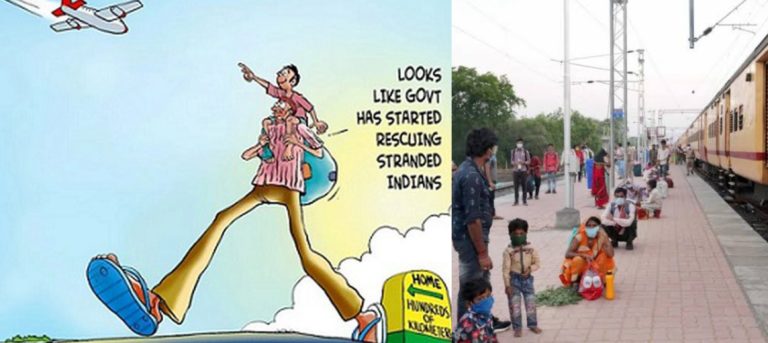
Poor coordination between states has put Migrant workers in a limbo

On 7th May, the Indian government started the Vande Bharat Mission, in which the Indian government is bringing Indian nationals home from other countries. So far, the government has brought back 15,000 stranded Indians from 12 countries. Pretty Amazing… Right?  You must be feeling very proud to be an Indian…like after watching the Akshay Kumar movie `Airlift´. The 56-inch Indian chest is swelling with pride. Check another news… The next day on 8th May, 16 migrant workers were run over by a goods train early morning in the Aurangabad district of Maharashtra. The migrant workers were walking to board a “Shramik Special” train to return to Madhya Pradesh. According to the police, the migrant workers must have fallen asleep on the tracks due to exhaustion. Imagine, what would have made these workers sleep on the railway tracks. PM Modi has done his customary grieved tweet. Migrant workers have been trying to reach home since the beginning of the lockdown. We have seen and heard several stories of people gathered to bus stops only to be beaten and sent back. Many started walking from Delhi to parts of Uttar Pradesh and Bihar in the early parts of the lockdown. Many found escape in trucks and even cement mixers, all the while disappointed and hopeless about any help coming from the government. PM Modi and his pronouncements since the lockdown and his call for duty have been getting him brownie points while putting the burden of managing pandemic on the state governments. After the lockdown 3.0 announcement, the central government announced that migrants will be sent home by special trains. It should be noted that the central government did not make any announcement on who will bear the cost of travel for millions of migrants and how such an exercise will be done during the pandemic. State governments, many of them unwilling as well as unprepared to send and receive the migrant workers, also acted in a predictable manner of disinterest and apathy. As expected it caused chaos and confusion at the train stations in many states, again putting the burden as well as the blame of any mishap on the states.

The curious case of Karnataka

The Karnataka government has presented a special case in withholding its migrant workers. Firstly by overcharging even the migrant workers within the state for which it got a lot of criticism as well. Then it delayed the arrangement of trains until 4th May, which was also discontinued the next day by the CM Yeddyurappa apparently due to pressure from the builder lobby. Again due to criticism, it restarted the train service. The Karnataka government has also launched a Migrant registration form called the “Seva Sindhu” app for Interstate travel, which has to be filled online by each migrant willing to leave the state. Most of these migrants are not educated and will need help in registering for the app. that gives them information about trains and dates of travel. In the government machinery also there is lack of coordination between administration and Police. The labour department, transport department and police should be better coordinated to solve the crisis. Amid the announcements and denouncements by several state governments about starting and stopping trains, several of them have started to walk home even to far off north Indian states like Uttar Pradesh, Jharkhand and Bihar.

The receiving states

Most of the migrants are from the states of Uttar Pradesh, Bihar, Jharkhand, Orissa, and West Bengal. These states also have not been very proactive in bringing their natives back home. These states are also among the poorest and backward states in the country, the reason for migration in the first place. The Karnataka government is accusing that it is now ready to send the migrant workers home but it has not gotten a nod from the receiving states. Today morning Home Minister Amit Shah and West Bengal Chief Minister indulged in a round of sparring when Amit Shah accused the Bengal government of not allowing “Shramik (worker)” trains to reach Bengal and warned that non-cooperation would create hardship for the state’s migrants. To which Trinamool Congress responded that they have planned to run eight trains to ferry migrants from Karnataka, Tamil Nadu, Punjab, and Telangana over the next three days. The tug of war further intensified when railway officials responded soon after that there was no proposal on record from the West Bengal government to run anymore ‘Shramik Special’ trains to ferry migrant workers to the state. Karnataka government has also accused Bihar government over denial of permission to the Karnataka government to run special trains to Bihar. The Karnataka government wants to run two trains every day to Bihar. Bihar’s deputy chief minister Sushil Kumar Modi reacting strongly to the accusation said- “This is absolutely wrong. Nobody has stopped people from coming from Karnataka. In fact, two trains, one on May 3 and another on May 6, have already arrived here. The state government has also given consent to run eight more trains. 15-18 trains are reaching Bihar every day from different destinations. The Orissa government yesterday cancelled the permission of three trains coming from Surat carrying migrant workers citing a Orissa high court order that states only COVID19 negative migrants will be allowed. This led to hundreds of migrant workers from Odisha coming to the streets defying lockdown in Surat yesterday. Jharkhand has been receiving trains from Telangana and Kerala since 1st May, but the coordination between Jharkhand and Karnataka government seems to be missing. Many of these state governments do not even have an estimate of the number of migrant workers outside and are already overwhelmed by the ones who have arrived. Orissa, for example, had an estimate of around five lakh migrants across the country, while the real estimate is around 20 lakhs. Bihar has allowed only a few trains in a week and is already overwhelmed by the pouring migrant workers for whom there is neither adequate quarantine facilities or employment later on. Governments that mostly act out of their vote bank compulsions do not have any interest in the life and rights of the workers that make buildings, malls, and roads for their cities since the migrant workers are not their vote bank. We should ask how the government that can coordinate with foreign countries, international airlines suddenly become so helpless and confused when it comes to performing on domestic grounds?
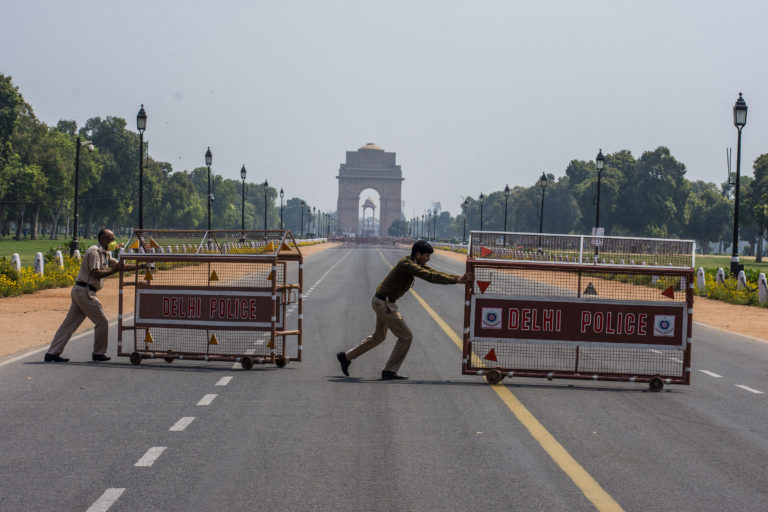
COVID-19: How Effective is the lockdown in India?

2
The coronavirus pandemic has forced a large proportion of world population into domestic confinement – otherwise imperialistically termed as a ‘lockdown’. As on date, about 260 crore people in about 50 countries face legally imposed movement restrictions. While seven countries including Italy, France, UK, Poland, New Zealand, China, and India ordered a total lockdown, some countries like the Netherlands, Germany, and South Korea imposed partial restrictions on movement and gatherings. Sweden, on the other hand, only provided a public health advisory with no legal restrictions. Containing the spread of coronavirus due to human social interaction and thus avoiding crowding of hospitals is the principal motive of imposed lockdowns. However, containing social interaction adversely affects microeconomics and livelihood besides curtailing civil liberties. Socio-economics distress is now apparent globally; including in resource-rich countries of Western Europe and the USA. Moreover, lockdown is not a recommended containment measure by the World Health Organization (WHO) or any other global public health organization. Experts and activists have stirred a debate on the effectiveness of lockdowns and its adverse humanitarian impacts. An open discussion on effectiveness is essential to democratically steer decisions leading to the removal of movement and social restrictions. To set a context for such discussions, this article analyses events leading to decisions of lockdowns containment of coronavirus infection.
lockdown
Wuhan Lockdown
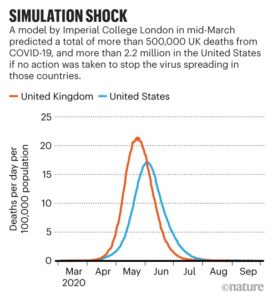
On January 7th, 2020, China identified a new coronavirus as the causative agent of a respiratory illness epidemic affecting Wuhan. With previous experience of containing SARS caused by a coronavirus, China imposed general movement and travel restrictions in Wuhan. By mid-January, hospitals in Wuhan reported a dramatic increase in patients with respiratory symptoms followed by deaths due to pneumonia. With little knowledge of the virus and dynamics of spread, China was forced to increase movement restrictions culminating in a total lockdown of Wuhan on 23rd January 2020. China then took to aggressive testing of the population (using different clinical tools as laboratory testing was yet to be available) and prepared health care systems to manage severe cases. Diagnosed coronavirus infections (COVID) and deaths peaked by mid-February to only decrease sharply, thereafter.  By mid-March, China was discussing the relaxing of lockdown norms in Wuhan due to a dramatic decrease in new cases. By this time, COVID was a pandemic, with several countries hosting multiple pockets of the outbreak. Governments across the globe were shaken and forced to look for quick solutions. Wuhan’s two-month lockdown and its apparent containment of COVID appeared as a solution template.  In the third week of February, COVID was an epidemic in South Korea, Iran, and Italy with all three countries imposing restrictions on public gatherings (including schools and events) and international travel. South Korea managed the epidemic with aggressive testing and isolation of positive cases, a containment template that Germany would later adopt. Unlike China, these countries were affected when the world had more knowledge about the virus and the time to organise testing infrastructure. But developing economies like Iran scrambled to mobilize health resources and were forced to depend on external aid. Thus, in the absence of aggressive testing, Iran took to impose restrictive lockdown in several of its cities.  In the first week of March, Chinese epidemiologists published details of transmission dynamics of the novel coronavirus, thus providing the world with an equation series – usable to predict the course of the epidemic in different populations. In quick time governments had prediction models for their countries at their disposal. Interestingly, Indian Epidemiologists of Indian Council of Medical Research (ICMR, Government of India) had modeled the course COVID epidemic in India, at least one week prior to the Chinese publications.  Simulation models, predicting infections, and deaths widely circulated in the media, with jargon like ‘exponential curves’, ‘infection peak’, ‘bending the curve’ being widely discussed. Meanwhile, in the second week of March, Italy witnessed a dramatic surge in cases that overwhelmed their health systems, resulting in 600-900 deaths daily. This surge of COVID cases was happening despite movement and gathering restrictions. Stories and videos of burdened ICUs, piling bodies, and long queues of coffins awaiting burials were circulated worldwide. Italy’s COVID spike stood testimony to the simulation models, which also predicted similar spikes in France, Spain, UK, and USA in the following weeks. Panic in the section of an informed population, across the globe, was palpable with public lobby groups pushing governments into radical action. Public discourse within countries was directed to avoid ‘an Italy like situation’, which eventually suggested drastic de-socialization measures. Lockdowns were a trending topic of action as China prepared to lift lockdown in Wuhan, citing successful containment. By Mid-March, Italy, Spain, the UK and some states of the USA had announced severe restriction of movements resembling a ‘lockdown’. The following week, a complete lockdown was legally imposed in India.  On 27th February 2020, ICMR’s medical journal received a mathematical simulation article from its own group of Epidemiologists. The article (which was later published in the third week of March) had simulated different scenarios of COVID outbreak and deaths in four Indian cities. Simulation models of cases and deaths were similar to the more publicised and discussed simulation model by the Maryland based ‘The Center For Disease Dynamics, Economics & Policy’ group. The article suggested several public health measures to tackle a bleak scenario of a widespread epidemic. Community engagement, surveillance, non-alarmist quarantine measures, prompt media reporting of facts were some measures suggested by the authors.  The article did not advocate for restrictions of movement and social interactions or measures similar to that of lockdowns. The influence of this article on decision making in India (states and central governments), related to containment of COVID is not known.  The successive imposition of lockdowns in major countries was followed by lockdowns in smaller countries like Pakistan, Bangladesh, and Sri Lanka in Asia, Nigeria, South Africa, Rwanda, Libya in Africa, and countries of Latin America. However several social scientists and activists, worldwide, criticized the extreme restriction of people’s movement for a plethora of reasons. In Western European countries, the lockdown was also viewed as a curtailment of civil liberties and human right to socialise. Daily wage earners worried about job losses and eventual dependency on social security systems. Refugees and homeless suffered due to reduction is social support and decrease access to health care. In other parts of the world, issues were grave and related to food insecurity and loss of livelihoods. Activists predicted a larger humanitarian crisis in the developing world due to the unplanned and undemocratic imposition of restrictions. A consultative approach could have empowered communities to prepare for short-term distress. They doubted the capability of state machinery to ensure food supply and employment.  India witnessed immense distress among migrant workers and daily wage earners leading to sporadic protests. Many incidents of death due to migration were reported. The lockdown also reduced the efficiency of the health system in handling non-COVID illnesses. There are multiple reports of in-access to health care due to movement restrictions and denial of care due to fear of COVID. Vertical public health programs treating Tuberculosis, HIV, malaria, and care for sexual and gender-based violence muted their activity. The human cost of these restrictions is yet to be realised.  African countries face a graver situation of food insecurity due to lockdowns and sealing of borders. In sub-Saharan Africa, people stare at starvation even for a week of lockdown. In the Democratic Republic of Congo (DRC), people broke lockdown rules after one day of imposition. Currently, lockdown is only appreciable in the elite residential areas of their capital city. In the past too, lockdowns were not effective in containing Ebola outbreaks of 2014 in Liberia and Sierra Leone, despite military intervention. It is now well documented that community-based consultative plans helped contain Ebola in most remote of African communities including Sierra Leone and DRC. Public health activists continue to advocate a similar strategy to contain COVID in Africa.  Countries imposing lockdowns argue that the restriction of social interaction is essential to reduce deaths due to the sudden burdening of hospitals. In most affected countries, with the exception of Sweden and the Netherlands, the available hospital beds are less than predicted severe cases during the peak of the epidemic. Only a robust analysis at a later time (where more data is available) will indicate the effectiveness of lockdowns or otherwise. However, some preliminary data analysed by a group of US-based researchers suggest that countries with police enforced lockdowns did not save additional lives compared to countries that had limited restrictions (social distancing and ban on gatherings). Infection transmissibility did not change in Sweden, with no restrictions but reduced to a similar extent in countries with some restrictions like the Netherlands and in countries with lockdowns like France, Italy, and the UK. Likewise, in these countries, the total number of deaths was similar to those predicted by simulation models despite restrictions and lockdowns.   
Sl no. Country  Total deaths on 24th April 2020 predicted by simulation before restrictions Total observed deaths as on 24th April 2020
France 11669 13798
Italy 17016 25549
Spain 16940 22157
UK 19962 18738
Thomas Meunier and colleagues, Pre-publication manuscript, pending peer review; 1st May 2020 Initial trends of Western European countries and experiences of Ebola containment suggest that there was room for a less repressive alternate strategy to contain the COVID epidemic. On 24th March 2020, India recorded 74 new COVID cases with one death. On 6th May 2020, 42 days into lockdown, India recorded 3582 COVID cases and 91 deaths. Hence it is worth evaluating the effectiveness of Indian lockdown in preventing additional COVID related deaths. Given the high density of the population in urban India, a lockdown would have significantly reduced the transmissibility of coronavirus. But it remains to analyse if this gain translates into fewer deaths over time after accounting for humanitarian misery. As lockdowns are not sustainable in the long run, it is time to debate alternative democratic strategies that accommodate the livelihoods of the poor and limit the spread of COVID.   

Three Photojournalists from Jammu and Kashmir Win Pulitzer prize 2020

0
Three photojournalists from Jammu and Kashmir are among the  2020 Pulitzer Prize winners. The awards were announced virtually owing to the coronavirus outbreak. Associated Press photographers Dar Yasin, Mukhtar Khan, and Channi Anand won the prize for feature photography for their work in capturing the shutdown in Kashmir following the abrogation of special provisions under Article 370 last year.  After the revocation of Article 370, with the unprecedented lockdown which included a sweeping curfew and shutdown of phones and internet service across the union territory, it was difficult to show the world the conditions of life in Kashmir under the lockdown mainly because of the communication blackout. But the three photojournalists captured images of protests, police and paramilitary action and daily life snaking around roadblocks, sometimes taking cover in stranger’s homes and hiding cameras in vegetable bags and then headed to an airport to persuade travelers to carry the photo files out with them and get them to the AP’s office in New Delhi.
Kashmiri Muslim devotees offer prayer outside the shrine of Sufi saint Sheikh Syed Abdul Qadir Jeelani in Srinagar in December 2019. The image was part of a series of photographs by the 3 awarded photojournalists
Yasin, one among the winners said that it was always a cat and mouse race, and he added that the difficulties made them more determined than ever to never be silenced. He added “I was very excited to hear the news about my colleagues and I getting selected for the prize. We are very thankful for the support from our family and friends. We have worked very hard for it.”
Photo credit : Dar Yasin
The announcement by Dana Canedy, the administrator of the prizes, came late Monday, deferred by two weeks, via live stream on YouTube from her living room – rather than at a ceremony due to the coronavirus outbreak. The photographers have conferred the most prestigious award in journalism for capturing “striking images of life” in Jammu and Kashmir amidst the lockdown and communication blackout in the region.
Photo credit: Channi Anand
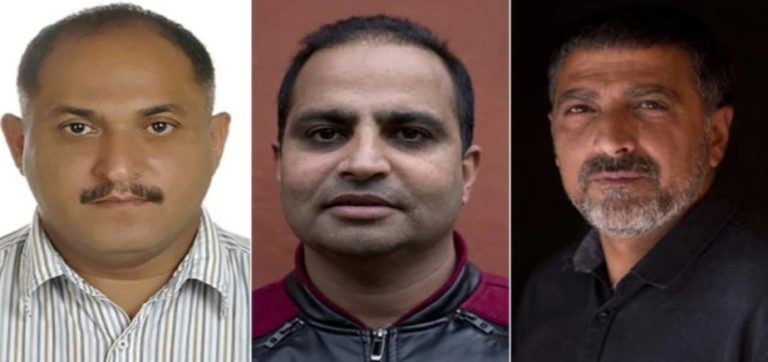
The irony of the Pulitzer prize to these Kashmiri Journalists at a time when, another three Kashmiri Journalists were arrested for “anti-national” activities is not lost on anyone. The arrest of Peerzada Ashiq, Gowhar Geelani, and Masrat Zahra in the Valley has been widely condemned by the journalistic fraternity.  Masrat Zahara, who is a freelance photojournalist has been booked under UAPA under which a person could be jailed for up to seven years. Kashmir Peerzada Ashiq (L), Gowhar Geelani (C), and Masrat Zahra (R) are all Kashmiri journalists targeted by India’s far-right regime. | Photo: TwitterIltija Mufti, daughter of PDP chief Mehbooba Mufti, congratulated the three photojournalists from AP news from her mother’s Twitter account: While on one hand where there is no response to the honour made to these journalists from the ruling government many others are congratulating and expressing their support to them including Omar Abdullah congratulating them through his tweet. Congress leader Rahul Gandhi also sent a congratulatory tweet for the prize winners.   A prestigious award given to journalists from the valley was not well received by the Hindutva brigade. Rahul Gandhi was soon targeted by BJP´s spokesperson Sambit Patra and the troll army. Sambit Patra attacked Congress and Rahul’s congratulatory tweet to the photojournalists and alleged him of endorsing those who considered Kashmir a “contested territory” and calling him an “anti-national”.   
Some of the photos of the winners
Dr. Patra grouse seems to be rising from the fact that the photojournalists showed the grim life in Kashmir post the revoking of article 370 and the shutdown since August 5, 2019. But can you contest the pictures because it doesn’t fit the Indian government “All is Well” narrative in Kashmir?              

Canada: Indian man loses his job over Islamophobic Tweet

In the past few weeks, many Indian origin people were fired from their jobs in Gulf countries for their Islamophobic social media posts. Now, Canada is taking strict action against growing Islamophobia in the country. An Indian origin man, Ravi Hooda was sacked from his job as well as a member of the school body as a result of his islamophobic posts on social media.  On April 22, Indian embassies in the Gulf had urged citizens to remain vigilant against a spate of derogatory posts on social media linking the coronavirus pandemic to the Muslim community in India. Ravi Hooda was a school council chair and a real estate partner with RE/MAX and is now been fired on Tuesday after his Islamophobic tweet went viral and reached the Canadian officials notice. He tweeted against the mosques being allowed to play the call to prayer during Ramadan. Several Toronto-area municipalities have granted local mosques permission to broadcast the ‘Azaan’ or the call to prayer using loudspeakers during Iftar (breaking of fast) every day during Ramadan. The move was widely hailed since Muslims could not gather in mosques due to the global coronavirus pandemic. Ravi Hooda raised objection to the practice and tweeted- Islamophobia  “What’s next? Separate lanes for camel & goat riders, allowing the slaughter of animals at home in the name of sacrifice, bylaw requiring all women to cover themselves from head to toe in tents to appease the piece fools for votes.” Hoods’s tweet was widely criticized in Canada, which is known for its Liberal values. Peel District School Board in Brampton announced that it had removed Hooda as the ‘School Council Chair’ and an investigation was underway against him. Its tweet read, “The Principal has begun an investigation. The individual is being removed from their role as School Council Chair and won’t be able to participate on council in any other capacity. Islamophobia is not acceptable and a clear violation of our Safe and Accepting Schools Policy.” RE/MAX Canada is one of Canada’s top real estate marketing websites, which has now terminated Ravi Hooda from his job and contract with the company.   Brampton Mayor Patrick Brown on his twitter account said that Islamophobia will not be tolerated in Canada. Brown thanked RE/MAX for taking action to terminate Hooda and said Islamophobia and hate have no place in the community. Hooda is also a registered certified immigration consultant. It is not clear if the government will consider revoking his license in light of his Islamophobic views.    Ravi Hooda has now made his Twitter account private after politicians and civil society members in Canada reacted with outrage on his brazen Islamophobia.

Also Listen: Podcast on the History of International Labour Day

Gas leak at Vishakhapatnam, 10 dead, over 5000 fell sick

0
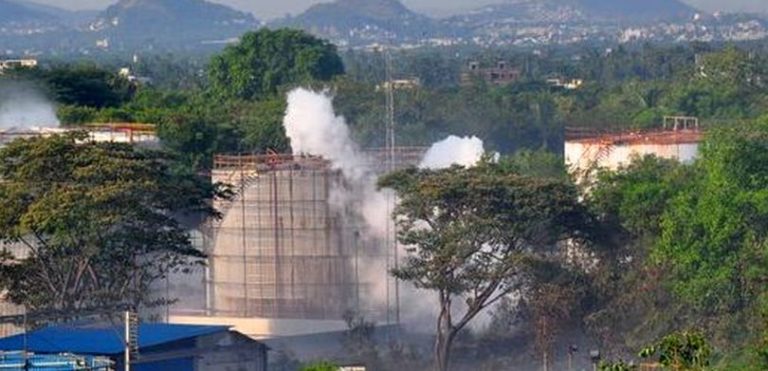
Reports are coming in from Vishakapatnam that a gas leak LG Polymers industry at RR Venkatapuram near the Naiduthota area took place at 3.00 AM today. As per news coming from the ground 10 people, including an 8-year old girl have died and 5000 people have fallen sick. The Vizag based factory was trying to open post lockdown when this incident occurred. The industry was doing maintenance activity, and the gas broke out.
The incident has left many with rashes, sore eyes, breathing difficulties, and many were lying unconscious on the roads. The exact cause of the leak is yet to be identified. The National Disaster Response Force and the State Disaster Response Force have been called to initiate rescue operations in the area. The Prime Minister has offered support to the State in response to the gas leak Hundreds of people were rushed to hospitals, both private and government, with the help of locals. According to doctors, the death toll is likely to not increase. There were 128 people from Venkatapuram alone who were shifted to hospitals and 98 of them have recovered. About 1000-1500 people have been evacuated. At least 1,000 people had been sent to different hospitals, and that it was feared many others may be unconscious in their homes, SN Pradhan, DG, NDRF. Former Andhra CM Chandrababu Naidu writes to Centre seeks immediately closing down of the LG Polymers unit. Naidu has also sought a thorough inquiry into the gas leakage. He has said, “Post inquiry, shift the entire unit to Special Economic Zone (SEZ) that has no population in the vicinity.”
Precautions to be undertaken for the LG Polymers Industrial accident.
South Korean company managing this has to be responsible for the gas leak, said Andhra Pradesh Industries Minister MG Reddy. ‘They’ll have to come and explain to us exactly what all protocols were followed, and what all were not followed. Accordingly, criminal action will be taken against them’ he said. Andhra Pradesh DGP, Damodar Goutam Sawang, says that the Vizag gas leak is an accident. “They were strictly following all protocols. Investigation underway. Forensic teams are also being sent to the spot.” Andhra Pradesh chief minister YS Jaganmohan Reddy has left for Vizag and is likely to visit patients in the hospitals

COVID-19: “Cancel Rent” Movement growing Amid the Lockdown

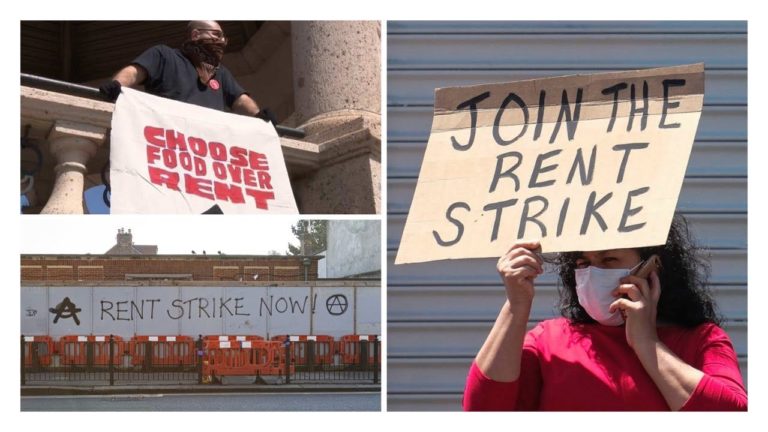
With COVID lockdowns officially entering their third month, many people have been struggling to make ends meet. Many people have been finding it exceedingly difficult to pay their bills and rents with the current economical state of the world. In countries like the USA, UK, and Australia renters have gone on strike and demanded that governments rule against paying rents until the pandemic is over. USA With more than 30 million Americans filing for unemployment benefits, tenant groups across America have called for a strike to protest against paying rent until the economy recovers. At an apartment building in New York, tenants came to their windows and banged pots and pans. This display wasn’t for essential workers but a strike declaration. Several dozen tenants announced they would not be paying rent this month. Activists in New York, Pennsylvania, and California are urging tenants to not pay rent even if they can, to shed light on the plight of those who can’t. The demands of the strike are
  • Rent/mortgage cancelation for the duration of the pandemic
  • Block corporations from swooping in and taking over the property in ravaged communities
  • Halt all foreclosures and evictions during this crisis
The strike is the largest coordinated tenants’ action in more than a century. Over 190,288+ people have signed a pledge to not pay rent and 31% did not pay rent in April. 19 states have suspended evictions to protect tenants from being ousted by landlords. According to activists, this is not enough. They argue that tenants will not be able to pay rent during this period. “We need a suspension of rent and automatic forgiveness of any rent, mortgage or utility payment owed or accumulated during the length of this crisis,” said Housing Justice for All, which campaigns to increase tenants’ rights and to end homelessness in New York. “People aren’t striking because they don’t feel like paying rent, they’re striking because they can’t,” Ocasio-Cortez, New York Congresswoman, who is supporting the strike, said. UK Unlike the rent strikes in the other two countries, the Uk rent strike has students spearheading the protests. Hundreds of University students have signed pledges to stop paying rents on their accommodations. Many of them have said they are locked on campuses where many facilities have stopped or they have lost their jobs/funding and can’t afford the rentals of their accommodations. While many universities have waived rent for the final term or the whole year, private providers have refused to release students from their contracts. According to the Office for Students, only 19 percent of students live in university-managed accommodation, with the vast majority renting from private providers. The government in the UK has also announced a 3-month eviction suspension for tenants who are suffering from the economic effects of the pandemic. The New Economics Foundation, a think tank, has recommended that to help 1.2 million renters who are at risk of not being able to pay their rent and lose their jobs, private rents should be suspended. They recommend a three-month suspension to protect those facing severe financial hardship. Australia Over 17,000 Australians, mainly from Melbourne, Sydney, and Queensland have signed a pledge to stop paying rent to their landlords starting April 2020. They have demanded that there be a total freeze on rent payments and that nobody is evicted, fined, or put into debt until the pandemic is over. The Australian government has put a ban on landlords from evicting renters from their residents for a six month period to help Australians who are struggling due to the crisis. The National cabinet has also suggested that landlords and tenants negotiate with each other to come to a common consensus. The government has signed rent waivers for commercial tenants but no such rule has been made for residential tenants. Rent and Mortgage Strike Australia issued a letter to the prime minister and state. The letter read, “We fear that vulnerable people will be forced onto the streets. We fear that people will accrue exorbitant debts and fines. We fear that workers will expose their communities to risk by showing up to unsafe workplaces solely out of fear of missing out on payments.” The need for rent strikes Rent strikes are not happening only in these countries but are also in countries like Canada. Most countries have similar reasons for the protests, the pandemic has left lakhs of people unable to afford rents. The rental crisis is not an isolated event affecting a few hundred people, but a debilitating crisis that could lead to thousands being rendered shelter-less. Students, are now being hit by the crisis as their funding and jobs are in danger and they have nowhere else to go. The worst affected by this crisis in these countries will be the black communities and people of colour. The rental crisis is not an economic problem alone, it is an issue entrenched in racism. As disadvantaged communities suffer, governments are invested in bailing out corporates. White upper-class communities would never have to face a rental crisis and this is reserved for the poor, especially black people and POCs. The refusal to suspend rents, focus on tenants negotiating with landlords, and not bailing out tenants or landlords is not an issue of lack of funds, it is an issue of who ‘deserves’ these funds, and more often than not, it not POCs or black people.  It is imperative that the governments not let private players use this as an opportunity to take over and disenfranchise these communities further. “If we do not stop the rental crisis, we’re going to be taking what were preexisting disparities and we’re going to be widening. This is a moment to close the gap. It is certainly a moment not to let the gap get wider,” NYU professor Kathy O’Regan said. This is a resource link on unions organizing strikes and which places across these countries it is taking place

Read more: Podcast on the History of International Labour Day


Three more Indians in UAE face action over Islamophobic posts

1
Three more Indians based in the United Arab Emirates have joined a list of expatriates who have either been fired or suspended from their jobs over their Islamophobic posts on social media, a media report said. Chef Rawat Rohit, storekeeper Sachin Kinnigoli and a cash custodian whose name has been withheld by his firm, faced action, said the Gulf News report on Saturday.  On April 22, Indian embassies in the Gulf had urged citizens to remain vigilant against a spate of derogatory posts on social media linking the coronavirus pandemic to the Muslim community in India. A spokesperson for Azadea Group, which operates a chain of Italian restaurants in Dubai, said chef Rawat Rohit had been suspended and is facing a disciplinary probe, according to Gulf News.  Sharjah-based Pneumics Automation suspended its storekeeper Sachin Kinnigoli and withheld his salary. “The matter is under investigation. We have a zero-tolerance policy. Anyone found guilty of insulting or showing contempt for someone’s religion will have to bear the consequences,” the firm’s owner said. Dubai-based Transguard Group said it sacked an employee who posted anti-Islamic messages on his Facebook page using the name Vishal Thakur. The employee was handed over to authorities and is in the custody of Dubai Police, a Transguard spokesperson said.  The issue of inflammatory posts by Indian expatriates has been in the limelight since it was raised on several occasions by Princess Hend al-Qassimi, a member of the UAE’s royal family.  Former Indian ambassador Navdeep Suri has also cautioned Indians about the UAE’s hate speech laws and similar warnings have been issued by Indian missions in other Gulf Cooperation Council states.  UAE’s anti-discrimination and anti-hate law prohibits all acts “that stoke religious hatred and/or which insult religion through any form of expression, be it speech or the written word, books, pamphlets or via online media”.  Last month, Sharjah-based businessman Sohan Roy had to apologise for a video depicting Islamic clerics leading blindfolded men in skull caps in an adaptation of his poem on religious bigotry, while three other Indians were fired for derogatory social media posts. A police complaint was filed against Sameer Bhandari, CEO of Future Vision Events & Weddings, after he told an Indian job-seeker to “Go back to Pakistan” in a text message.

Health: Why we should be Sceptical about the Benevolence of Billionaires

The coronavirus pandemic has produced a surge in philanthropic giving from some of the world’s wealthiest people. Bill and Melinda Gates, longstanding champions of global health, have committed funds to research the disease and manufacture a vaccine when one becomes available. Jack Dorsey, co-founder of Twitter, has pledged US$1 billion (£816 million) for “global COVID-19 relief”. Then there are Jack Ma, Li Ka-Shing, George Soros, Giorgio Armani and Jeff Bezos – other examples of billionaires giving staggering amounts of money to help alleviate the suffering caused by this global crisis. It is not surprising that they have enjoyed widespread praise and acclaim. Indeed, it is well deserved. But the situation also illustrates a profound imbalance in society.

Master and servant

Consider for a moment whether you would agree to be a slave. Let’s say a kindly benefactor offered you a better standard of living than that which you currently enjoy, or can realistically aspire to, and credibly promises to treat you very well. The only condition is that they would own you. Would you accept the offer? My suspicion is that most people would not. Slavery is incontrovertibly wrong, though it is important to understand why. The depictions we see in popular culture often emphasise the cruelty and exploitation. These are terrible, but they are not at the core of what’s wrong with owning another person.

Read More: Podcast on the History of International Labour Day

If they were, then we would not have a problem with the idea of a kindly benefactor. The real problem with slavery lies in its structure as a social relationship, specifically with the distribution of power. Philosophers like Philip Pettit have spent the past few decades putting forward a conception of liberty that uses slavery as the archetype of “unfreedom”. Unlike Thomas Hobbes or Isaiah Berlin, he doesn’t think of freedom as the absence of interference, but the absence of arbitrary interference. Pettit argues that the problem with slavery is not that the slave is interfered with in a cruel or exploitative way, but simply that their owner has the capacity to interfere in their choices at will. Well treated slaves may be in an enviable condition compared with abused slaves, but they still have no control over an owner’s power to interfere. This is what it means to be dominated. Even in circumstances where an owner is benevolent, the slave will be aware that their choices are based on the master’s tacit permission. And if we are worried about domination, we must worry about billionaire philanthropy. This becomes acute in times of crisis because it leaves matters of life and death in the hands of a few powerful individuals who lack any constraints on their power other than their own conscience. Freedom is at risk when the imbalance of wealth and power is so stark. How healthy can it be that so many people in the world are utterly dependent on the generosity of billionaires? The provision of healthcare for millions of people rests on their goodwill and nothing else. They choose what to give, how to give it, and who to give it to. They establish large organisations that have a profound influence on public bodies. The Gates Foundation, for example, is the largest funder of the World Health Organization after the United States. The foundation’s influence shapes the global health agenda in a way that has been already been described as a “cartel”. Now that Donald Trump appears set to stop American funding for the WHO, the foundation will be even more important. Indeed, it has already committed an additional US$150 million.

Power and influence

This crisis has laid bare the raw power of the state as millions of people have been forced into quarantine and isolation. Even in such times of crisis, we try to minimise that arbitrary power through checks and balances, the rule of law, and democracy. Yet few seem concerned about the power of private organisations. These are organisations that are as powerful as some states, but lack constraints and accountability. In short, too many people in the world have to rely on the generosity of philanthropists – it’s a stark illustration of the gap between the very rich and the very poor, and the lack of freedom the very poor have. These are not trivial issues. They will decide who lives and dies. I do not think that most billionaire philanthropists have bad intentions, quite the opposite in fact, but that’s irrelevant. As I argue in my recent book Global Poverty, Injustice and Resistance, domination is a structural relationship. It is about the distribution of power between human beings. If someone has the power to arbitrarily interfere in your choices, then you are not free. It does not matter if that interference is benevolent or malevolent or indeed if they choose not to interfere. It is about the capacity to arbitrarily interfere and nothing else. You might say that the world is a better place for having billionaire philanthropists in it. That is true, but it is not enough. No one with such power can be above scrutiny. In A Theory of Justice, the political philosopher John Rawls claimed that moral progress was made when people stopped killing captives in war and enslaved them instead. He is correct – it is better to be a slave than a corpse. But that does not mean anyone should be content with being a slave. Once the COVID-19 pandemic has passed, we will take time to mourn our dead and celebrate everyone who helped save lives, including people like Bill and Melinda Gates. But then we should ask why so many lives depended upon the munificence of billionaires rather than transparent, accountable, and adequately funded public agencies. We should ask why we don’t have stronger international organisations that are not beholden to wealthy states or persons. We should ask why billionaires are allowed to endow immensely wealthy, tax-protected philanthropic trusts, rather than paying more taxes. We must ask why health was treated as a privilege, not a right. The writer is a Lecturer in International Politics, City, University of London. This article is republished under Creative Commons license. The original article can be found here. 

Use Phrase “Physical Distancing” instead of “Social Distancing: Petition in SC

0
A letter petition has been filed in the Supreme Court seeking directions for discontinuance in usage of the phrase “Social Distancing” to all State Government, owing to the stigma associated with the phrase. The plea has initiated in the form of a letter PIL, has been filed by Dr. B. Karthik Navayan, an Advocate practicing in Hyderabad and contends that that “Social Distancing” must be replaced by “Physical Distancing” or “Individual Distancing” or “Safe Distancing” or “Disease Distancing” of effectuating guidelines to curb the Coronavirus pandemic. “….direct them to stop using the word “Social Distancing” and start using “Physical Distancing” or “Individual Distancing” or “Safe Distancing” or  “Disease Distancing” or any other appropriate word that was used to prevent the similar pandemics that happened earlier in the world, for the better interest of our country, society and to upheld the spirit of the constitution of India” – Letter petition states. Justifying that the phrase is being used indiscriminately by putting on record various advisories issued at the behest of Government authorities, petitioner avers that this could lead to “furthering the existing discriminatory caste-based social practices” such as practices of untouchability and shall “lead to caste prejudices against Scheduled Castes & Scheduled Tribes”. The petitioner depicts instances where one such incident by a Telugu artist created a furore for promoting untouchability. He states, “…one of the Telugu cine lyrist who is a non – scheduled caste has made a video of the poem he wrote and in that 1.16 minutes video he asked his non- scheduled community to take pride in being non-scheduled caste and their practices, which are discriminatory towards SC STs, and asked the non- scheduled castes to live proudly as the entire world is accepting their practices to save people from Coronavirus. The said video has created outrage in the Telugu states and one of the scheduled caste organisations. Further, petitioner urges that since the WHO has also begun using the phrase “physical distancing”, India must take up the cause immediately and refrain from disseminating the use of “Social Distancing”. Apropos this, the plea emphasises that various experts have strongly condemned the usage of this phrase with the objective of highlighting how its usage “will be shored up as new justifications for caste, untouchability, and supremacism” and that doing away with replaceable, more suitable terms is need of the hour. “That the definition of Social Distancing Advisory by MOHFW (Ministry of Health and Family Welfare), is to 1) Stay at least 6 feet (about 2 arms‟ length) from other people, 2) Do not gather in groups, 3) Stay out of crowded places and avoid mass gatherings. That means, what is required to prevent the spread of Covid19 – Corona Virus is that, it is “Physical Distancing” and not “Social Distancing” which resembles like the age old practice of caste based untouchability. There requires a “Social solidarity” and “Physical Distance” instead of “Social Distance”- The petition reads.  

Read More: Caste virus take one more life: Honour Killing in Tamilnadu amid lockdown


Podcast on the Migrant workers Report

0
In today´s podcast, we talk about May Day, its origins and where do we stand with respect to labour movements in India and the World.