Socialist icon Ram Manohar Lohia’s most popular and oft repeated slogan is- “Live communities do not wait for five years”. His ideological proteges and their affiliated caste-communities in Uttar Pradesh are so sure of their guaranteed lives that they tend to wait full five years for realising the long-awaited dream of social justice. The political scenario that has emerged after the announcement of poll dates for UP assembly elections proves this.
Election Commission of India announced the poll dates for five state assembly elections on January 8th and election code of conduct came into force thereafter. Moral and political misconduct started 24 hours later when the very first switchover happened. Congress party strongman in West UP Imran Masood formally announced his resignation from INC and joined Samajwadi Party with one sitting MLA (from INC) Masood Akhtar, his close confidant. It was the news that everyone knew of since December not only in Saharanpur but even in UPCC headquarters, Lucknow. But no one was clear as to why Congress leadership waited until last minute for confirmation straight out of the horse’s mouth!
Also Read:Surgical Strike on the Yadav Family: Daughter in Law Aparna Yadav Joins BJPImran Masood
Imran Masood is the lone figure behind INC’s two successes (Behat and Saharanpur Rural seats) in last assembly election in West UP. Moreover, Masood’s political clout stretches out to Muzaffarnagar and Shamli too. So it was clear from the first day that around a dozen seats are going to be affected. This can be seen in the most recent inventory while filing this copy- SP plus alliance has still not finalised candidates in six constituencies of Saharanpur and INC is full blank on all seven seats of Saharanpur as well as three seats of Shamli district. Last date of filing nominations for first phase seats is January 21st which includes Shamli. Saharanpur goes to poll in the second phase so it still has a week left after that which means a breather for both the parties.
What started with Masood in Saharanpur turned into an exodus within a couple of days when newspapers were full with headlines of backward caste BJP leaders and sitting MLA’s including cabinet ministers in Yogi Adityanath government switching over to Samajwadi Party. The biggest name among these was Swami Prasad Maurya who is said to be leading the fight of OBC leaders and has announced an “endgame for BJP”. A total of three Ministers and seven MLA’s have left BJP and joined SP.
This phenomena has resounded in Delhi’s political circles and media as the return of ‘Mandal’ against ‘Kamandal’. Social commentators and seasoned journalists are announcing the resurge of the politics of Social Justice in Uttar Pradesh. This has created pressure upon Chief Minister Yogi Adityanath and BJP leaders who are now being seen eating regular meals in Dalit houses and circulating photographs on social media. The resurge of caste leaders and revived metaphor of ‘Mandal’ has also forced Vishwa Hindu Parishad to initiate a campaign for the abolition of caste divide and creating Hindu Unity.
Also Read: Karnataka: Dalits beaten up for entering temple, case against 27 persons filedOn the face of it this phenomena re-assures those who are anti-BJP and want Hindutva regime to end but it has its own complexities. The most visible being a Catch-22 situation for Samajwadi Party Supremo and Ex-CM Akhilesh Yadav who is having a hard day in distributing tickets and containing reverse migration from SP to other parties. Some recent examples are glaring that put a dent into the much talked slogan of social justice.
In Shamli constituency a BJP defector Prasun Chaudhary has been given ticket by SP-RLD alliance. RLD workers have fiercely protested his candidature because Chaudhary was the one who once celebrated the defeat of Chaudhary Ajit Singh, father of RLD chief Jayant Chaudhary. Bijendra Malik was the most probable candidate on this seat who fought election on RLD ticket in 2017 and lost to BJP. When Bijendra was denied ticket he was contacted by INC and BSP but finally he secured ticket from BSP.
On the neighbouring Kairana seat, SP-RLD alliance candidate Nahid Hasan is a sitting MLA from SP who is a gangster and history sheeter criminal. As soon as the ticket was announced he got arrested on January 15th in an old case due to which partycancelled his candidature and gave ticket to his sister Ikra Hasan. Nahid has been sent to 14 day judicial custody. In Delhi, Ashwini Kumar Upadhyaya of BJP has filed a PIL (Diary No 1834/20222) in Supreme Court accusing Samajwadi Party of violating ECI norms by fielding a gangster. The petitioner also seeks direction to the Election Commission of India to de-register the political party, which violates the directions of the Supreme Court dated 25.9.2018 and 13.2.2020 in letter and spirit.
Also Read: Upper caste Villagers Assaulted Dalit man for beating drum
In Saharanpur after the news of Imran Masood’s switchover came, Behat sitting MLA from INC Naresh Saini joined BJP. He has now been given ticket from Behat by BJP. Masood on the other hand is said to be disgruntled from Akhilesh Yadav and in contact with BSP to secure ticket for him and his son-in-law. Congress party is waiting for all the disgruntled leaders to come in front so that it could ‘poach’ from the leftovers at the last moment. Believe it or not, ‘Poachable’ and ‘Non-poachable’ Assembly Candidates are the latest entries in political parties electoral inventory!
Meanwhile an interesting development seems to be taking shape in Saharanpur where upper caste Brahmin Muslims (called Gadha Muslims) are mobilising against Sanjay Garg, the sitting MLA from Saharanpur city who is again fighting on SP ticket. The Gadha Muslim community has a large presence in the area and is mostly business class. Community leaders are in close contact with Asaduddin Owaisi’s AIMIM. The community has a long history of feud with Rashid Masood family and they want to show Imran “his real face” by defeating Sanjay Garg. Advocate Intikhab Azad who comes from the same community alleges that Imran has been sent to Samajwadi Party by Garg only and both have a deal in place. He also alleges of financial deals.
Not only SP and RLD are facing a credential crisis due to party-hoppers, Congress is also in dock over joining of Amit Jani, a Hindutva leader who had formed UP Navnirman Sena a couple of years back and then joined Shivpal Yadav’s party. Jani was welcomed into INC by Acharya Pramod Krishnan recently. Twitter users resorted to anger on welcome images posted by Krishnan and reminded Congress on how Jani gave death threat to Kanhaiya Kumar and announced a bounty over activist Sharjil Imam’s head. UP Congress has given a formal clarification but no explanation over photographs posted by Krishnan. Krishnan is now Covid positive and in isolation.
Also Read: Sandalwood Actor, Chetan takes on Right Wing, extends open support to HamsalekhaChandrashekhar Azad. Credits: Facebook
To end with the latest icon of social justice in UP Chandrashekhar Azad who wept on air in a TV9 debate upon failed alliance with Samajwadi Party. Azad was at his home in Chhutmalpur on January 11th with hundreds of supporters observing his father’s death anniversary. He spoke at length for around an hour and a half telling tales of conviction and commitment towards the Dalit community. After the speech ended, he sat on a chair and ordered his aide to bring those ‘special and senior’ people who have come to meet him personally. Those were the people who sought favour from Azad in the form of ticket. Glancing at the applications and files he assured each and every one of them of a ticket and told a journalist that he would be fighting alone in the interest of the community.
A couple of days later he met Akhilesh Yadav and the deal could not be struck. Now he says that Akhilesh would be responsible if BJP returns to power in UP. Akhilesh Yadav has said that seat sharing deal was done but Azad got a phone call from Delhi at the last moment and withdrew. Whatever be the truth, Azad Samaj Party is not capable of fielding candidates on its own and after this fiasco SP is not going to entertain it. BSP will never take a chance as West UP is its stronghold. It seems that Chandrashekhar Azad’s electoral debut in UP is going to be a flop show.
Then there is Aam Aadmi Party and many other political parties that are not part of any political alliance. They all are absent in the groundtalk. The initial sentiment on the ground, specially when West UP goes to poll in phase one and two, is almost polarised- it is either BJP or anti-BJP.
Also Read:Headscarf ban: Girls of Udupi College protesting against the decision
Ashok Chaudhary, a veteran activist fom Saharanpur sums it up, “You may count 325 seats where battle is bi-polar- either BJP or anti-BJP. Just 80 seats are there where other players have some role. Since the sentiment is vertically divided, we may have a full majority verdict in favour of BJP or anything that is anti-BJP? You cannot generalise this time. The fight is from seat to seat”.
And social justice? What about ‘Mandal’ narrative? He suggests to wait for the next ten days when reverse migration takes place from SP to others. Meanwhile first phase nominations that end on January 21st would clear the picture whether tickets have been distributed to potentially winning candidates or those committed to social justice.
While this copy goes to print Chaudhary’s prophecy has come out true in a big way, to say the least. Aparna Yadav, daughter-in-law of Mulayam Singh Yadav has joined BJP. This is the anti-climax of poaching season in UP where someone from the political dynasty has switched sides. Nothing could be more peculiar than this eventful ten day precursor to UP elections.
(Continued)
Also Read:Paresh Mesta Case Resurfaces Again In Run-Up To Uttara Kannada MLC Polls
The state of Uttar Pradesh is increasing becoming a battlefield of sorts with not just swords drawn between the opposition parties but with in the parties themselves. Those who were hopeful of end of Yogi Raj with the jumping of 10 BJP leaders to Samajwadi Party are in for a shock.
Today BJP conducted its surgical strike in the house of its biggest rival Akhilesh Yadav. Aparna Yadav, the younger daughter-in-law of Mulayam Singh Yadav joined BJP today morning.
After joining the party, Aparna declared that she is highly influenced and impressed by both Yogi and Modi. “I feel their polices are morally right and that is the reason I have joined BJP.” She also mentioned that “Rashtra Dharm”(duty towards country) is above all for her.
Despite being an important part of Mulayam Singh family, she considers UP Chief Minister Yogi Adityanath as her elder brother and praises PM Modi on all issues. There was talk of her going to BJP for some time which turned into reality today.
Background
Aparna, wife of Prateek Yadav, son of Mulayam’s second wife Sadhna Yadav, was born on January 1, 1990. Her father Arvind Singh Bisht was in a media company. He was also the Information Commissioner in the SP government. Aparna’s mother Ambi Bisht is an officer in the Lucknow Municipal Corporation. Aparna did her schooling from Loreto Convent, Lucknow. She knew Prateek Yadav from her school days.
Aparna also holds a master’s degree in International Relations and Politics from University of Manchester, UK. Aparna and Prateek got married in December 2011. They also have a daughter name Prathama.
Reason behind Aparna’s disillusionment with SP
Aparna has contested from Lucknow Cantt seat on a SP ticket in 2017 assembly elections but lost it to Rita Bahuguna Joshi(BJP). It is this seat of Lucknow Cantt that is the point of contention for Aparna Yadav.
It is reported that Aparna Yadav sought ticket from Lucknow Cantt, but SP National President Akhilesh Yadav has decided not to field anyone from the family. She also visited Tiloi seat of Amethi, but she was keen on Lucknow Cantt seat to start her political journey.
For this reason, Aparna Yadav has now decided to switch sides. It is believed that Aparna Yadav can now contest the assembly elections from Lucknow Cantt on a BJP ticket. Speaking to Aaj Tak, Aparna said- “I have been working hard in Cantt for the last 5 years, from medical camps to organizing many public programs.”
Lucknow Cantt assembly seat is a Stronghold of BJP
Lucknow Cantt assembly is Brahmin dominated area. There are about 1 lakh Brahmin voters in this seat. Sindhi-Punjabi voters are at number two, whose population is about 65 thousand. At the same time, Muslim population is about 25 thousand, Yadavs are about 20 thousand votes and Thakurs about 15 thousand votes.
It is considered a stronghold of BJP. In the 2017 elections, Rita Bahuguna Joshi had won on a BJP ticket. After this, Suresh Tiwari of BJP became the MLA in the by-election. Before this, Suresh Tiwari has won under BJP ticket on this seat three times (1996, 2002 and 2007). In the 2012 elections, Rita Bahuguna won on a Congress ticket.
Lucknow Cantt being a brahmin dominated is a hot ticket for BJP so its not surprising that there are many contenders in the party for this particular seat. Rita Bahuguna Joshi is claiming for her son Mayank Joshi, Deputy CM Dinesh Sharma, Cabinet Minister Mahendra Singh and Mayor Sanyukta Bhatia for her son.
For now it looks like BJP has managed to make a dent in the swelling image of Akhilesh Yadav but how the dissenting decision of the daughter in law will pan out for her political future only time will tell.
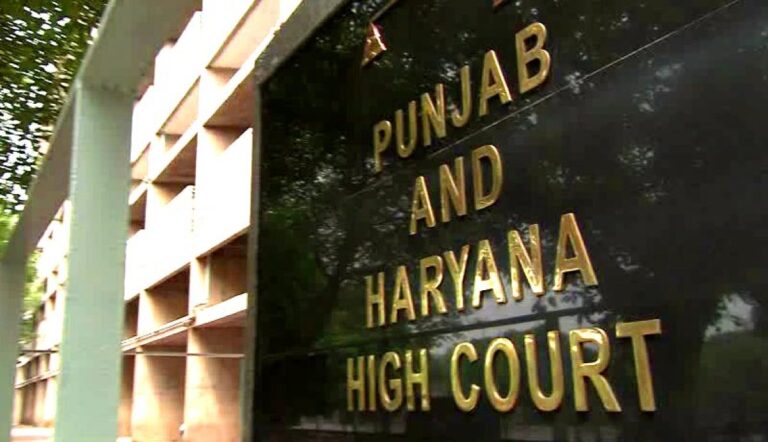
The Punjab and Haryana High Court last week granted bail to a man accused of having Khalistani links and charged for offences under Unlawful Activities Prevention Act (UAPA) for allegedly testing bombs and abetting the commission of terrorist offences.
The Court was hearing an appeal against an order of Special NIA Judge dismissing the accused person’s bail application on the ground that he was associated with a terrorist gang to support the Khalistan movement.
“Mainly because there are some Khalistani mentions spotted in his social media account which are of offending nature as reproduced above which show that there are two mobile numbers that have been saved under the title ‘Guri Khalistani’ and another mobile number wherein the entry reads as ‘Khalistan Jindabad’ would not as such be conclusive proof that the appellant is a member of a terrorist group,” the order said.
The case of being heard by a Bench of Justices GS Sandhawalia and Vikas Suri.
However, the High Court found that the accusations were unconvincing and allowed the appeal.
“It can be safely recorded that the accusation is not prima facie true and he is entitled for the benefit of regular bail during the pendency of the trial,” the Court ordered.
The appellant was held under Section 304 (culpable homicide) of the Indian Penal Code, Sections 4 and 5 of the Explosive Substances Act, 1908 and Section 13 and 20 of the UAPA.
He was arrested for testing an Improvised Explosive Device (IED) in the year 2016 with a co-accused who died during the pendency of trial. Before his death, the co-accused made an extra-judicial confession that the appellant was with him when he had exploded a test bomb.
mere Khalistani mentions on the social media accounts of the accused and numbers saved with references of Khalistan did not prove that the appellant was a member of the terrorist group
The Special Judge, while dismissing the bail application, had reasoned that the appellant’s association with the other arrested persons established his nefarious intention and pro-Khalistan activities. While observing this, the incriminating material collected by the prosecution from his mobile phone and WhatsApp account were relied on.
The counsel appearing for the appellant argued that he was named as accused only on account of his meeting with the other accused which led to the allegation that the appellant had become “highly radicalised”.
It was stated that there was nothing on record to show that he was actually a member of any terrorist gang or involved in illegal activity.
The Court was informed that the appellant had been in custody for 2 years and 4 months.
On examining the chargesheet, the Division Bench opined that there was nothing incriminating against the appellant. It was pointed out that the investigation only showed the appellant was in contact with one of the accused, but no material was put forth to show his connection with the other eight.
Further, the Bench stressed that it was a settled position of law that a confession made before the police was weak evidence. “It is a rampant practice by the police/investigation agency to use third degree methods for extracting confession,” the Court observed.
The Court, therefore, concluded that keeping in view the fact that the appellant had been in custody for a long time and the trial was not likely to be concluded in the near future, he was entitled to the benefit of bail during the trial’s pendency.
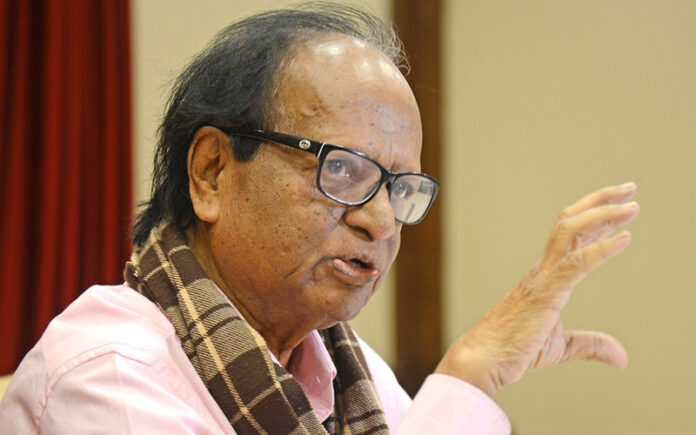
Kannada writer and activist Prof. Chandrashekhar Patil, 82, popularly known by his pen name Champa passed away in Bengaluru on January 10. He was suffering from age related ailments for the past two years.
Despite studying in Leeds University of England and becoming well versed in the English literary movement, an iota of his sensibility for Kannada language had not lost.
Even though he had made Bengaluru his home at his fag end of his life, but his emotional attachment with Dharwad district was still cherishing.
Chandrashekhar Patil, fondly known as Champa, was not only a man who spoke his mind, but he also was a great organizer.
Champa traveled extensively around Karnataka, he built up an army of friends, he fought with them, he struggled on many things, but ultimately he lived like he wanted to live. He lived a unique life.
Childhood and Education
Born in Haveri district to Murigewwa and Basayya in Jangamma sect of Lingayat household. Though the family owned 12 acre land and was known as landlords, the land was not enough to survive.
Champa proved to be an exemplary student from the beginning. He completed his High schooling in Haveri itself where he scored rank in SSLC. Later he moved to Dharwad for higher education.
During his Pre University studies he joined his juniors, Siddalinga Pattanshetty, Giraddi Govindraju and B. T. Desai formed a union called ‘Kamala Mandala’ and got a compilation called ‘ Brahanganaada’ published while studying in PU.
He later augmented his liking for English literature by attending the classes of his Principal, V. K. Gokak. He secured first rank in 1962 and joined as an English lecturer in Karnataka College where he was a student. During this time, he wrote several poems including ‘Banuli, ‘Madhyabindu’ etc. He got the compilation of 19 of poems published in 1964.
In 1968, he was deputed to Hyderabad where he completed a Diploma in English Studies from Central Institute of English. Here too, he secured top rank.
He also got a scholarship from the British Council and flew to English in 1972 for higher studies at Leeds University.During his stay in England, he wrote Gokarnaka Goudashani and Kattala Ratrigalu.
When he returned to Dharwad, he got promoted to the post of lecturer in Dharwad University where he had a prolonged career as teacher between 1969 and 1996. Champa had penned various plays including, Kodegalu, Appa, Kuntakunta Kuravatti, Havu Bantu and Gurtinavaru.
His publication ‘Sankramana’ which he had started during his student days, was converted into a revolutionary paper. His association with noted personalities, eminent writers and activists such as Nanjundaswamy, Lankesh, Devanur, Tejaswi and Shankrappa helped him find sharpness in editorial skills.
Confluence of various social movements
The meetings of socialist activities only cemented his commitment for movements. Champa had emerged as a strong voice that disseminated the socialist movement of farmer leader M. D. Nanjundaswamy.
He had become a clear example for more ‘aggressive’ Gandhian ideologies of actions that included disfiguring the portrait of Saibaba and taking out that in the procession, shredding the degree certificates, tearing off the gown of convocation, etc.
He blamed Brahmins for creation of caste system. He did intercaste marriage himself and conducted many such marriages. The socialist meetings in his youth had become a primary inspiration for all his actions.
The convention held in 1972 at Bangalore University acted as a platform that gave glimpses and indication of Champa’s literary movements. In that convention, he openly criticized the noted Kannada newspaper, Prajavani, as being in the clutches of Brahimins. He even gave a call to boycott the newspaper.
The call however did not go in vain as non-Brahmins refused to send their articles for the annual special edition of the newspaper. Because of which, that year’s special edition was not published. Champa thus succeeded in his efforts.
Though for generations, Karnataka had been witnessing a tradition of having differences with Brahmanical ideology, but it can easily be said that the credit for expanding it in modern context goes to Champa.
Emergence of Streams of Literature
The call given by Champa to boycott Prajavani as he blamed the newspaper as fully controlled by Brahimins, led to polarization between Brahmin and non-Brahmin writers. It did not stop there as in the coming days, it also led to germination of the concept of ‘Federation of Writers’. The formation of Federation of Writers surely acted as a milestone in Kannada literary tradition.
One such Federation was inaugurated by none other than the eminent writers, Kuvempu himself. This helped in giving a clear, distinct identity and approval to the thinking and aspirations of the Federation. G. S. Shivaruddrapa became the first president of the Federation inaugurated by Kuvempu while Champa became General Secretary. This shows the important role Champa played in the literary field in those days.
Though the Federation did not last long, however it prompted the creation of ‘Revolutionary Literary Association and got its existence. The role of Champa was clearly identified during revolutions. The duo of Champa and Baraguru Ramchandrappa strengthened revolutionary literature. But their ideological differences acted as a hurdle in the movement.
The Federation of the Writers had become a point of convergence for socialist ideology, Marxism, Ambedkar ideology and Gandhian ideologies. It acted as an alliance of various Indian ideologies in the history of literature.
Champa however described himself as socialist and called Baragur as Marxist. But the difference emerged over the controversy that Marxist are prominent in revolutions and Ambedkar followers were cautioned to stay away from Marxists. This led to emergence of new literary sect called ‘Dalit Literature’.
From Lohia to Ambedkar
Though fundamentally, Champa was socialist and ideological follower of Lohiya, yet he was critical of Lohiya on several occasions. He had different views on various subjects on Lohiyan ideology. It was the result of his internal conscience for criticism.
Champa described the political stand taken during the emergency period by Jayaprakash Narayan who was one of the founders of Socialist movement as a ‘ strategic mistake’. Champa calls it the miscalculation of J. P which had resulted in RSS rising to become a giant political force.
Despite Champa being a Lohia follower, he did not hesitate to say that Ambedkar is more relevant that Lohia. He vehemently believed that till his last day. The analysis of Ambedkar about Indian society is far more perfect than Lohia. This belief of Champa indicates his gradual ideological drift towards Ambedkar ideology from Lohia.
He said that Ambedkar took a big risk for the welfare of his people, but Lohia did not have that guts. By making such critical analysis, Champa was consciously crossing the self created ideological barriers.
Even in Gandhian ideology, Champa had strong and harsh views.
“ Gandhi basically had Hindu mentality, however he even had liberal thinking. Though Gandhi was propagating equality and removal of untouchability, he said that it was foolish of Gandhi to try to remove such problematic beliefs. It was like Gandhi saying cut the branches and leave the roots”.
A constant Internal Rebellion
Champa who said that he should rebel against himself which is the foundation of his ideology, he advocated that Brahmins should launch against Brahminical ideology, Lingayat should rebel against Lingayat feudal ideology etc.
True to his words, he had opposed the holding of the state level convention of Akhil Bharat Veerashaiva Mahasbha in Bangalore.He even got people who had gathered from the Veerashaiva community toshow black flags at the event. During the protest, he gave a slogan, ‘ Reject Veerashaiva, long live Basavanna’.
This protest of him is a clear indicator of his ideological commitment.
Champ had an unequivocal view that more than Gandhi and Lohiya about their ideologies on removal of caste system, the thinking of Ambedkar was more apt.
Champa however made it clear that he did not have pain like Ambedkar who had announced that he was born as Hindu but will not die as Hindu. “ Since I am born in the Lingayat religion therefore, I am anyways not a Hindu. But if someday, the Apex Court declares that Veerashaiva or Lingayats are part of Hindu religion, then certainly on the same day I would leave that religion”.
Contribution to Kannada Movement
It is not possible to forget the responsibility Champa had shouldered in strengthening Kannada language movements.
Champa was the prominent leader in the Gokak revolution. He had made efforts in bringing Kannada actor Dr. Rajkumar to the Gokak revolution. Even in the coming days, he played a vital role in launching various Kannada movements for the preservation and protection of Kannada and its culture. He also had rejected ideologically the concept of Bhuvaneshwari, a mythical figure who is projected as the mother of Kannada.
The author is a poet, writer and an activist based in Kartagi district. He has been active in various pro-people movements. His noted publication is ‘Akka Sita, Ninnante Naanu Shankita (Sister Sita, I am also a suspect like you).
The article was first published in our sister website naanugauri.com. It has been translated into English by Firoz Rozinder.
A Jharkhand Court on Tuesday refused to grant bail to two men accused of assaulting a mentally ill Muslim man in Dhanbad.
Chief Judicial Magistrate Sanjay Kumar Singh disposed of the bail plea by two of the accused persons who were alleged to be associated with the Bhartiya Janata Party (BJP).
As per the First Information Report (FIR), during a BJP programme, on seeing the victim walking in a Pathan Suit, the accused pointed the same out and encouraged everyone to beat him up.
It was alleged that the mob dragged the victim, beat him up, made him lick his spit and chant Jai Shri Ram.
According to a report, the victim was accused of abusing BJP leaders including Prime Minister Narendra Modi.
The complainant had stated that the victim was mentally ill and was being treated at the Central Institute of Psychiatry (CPI) in Ranchi for the last 8-10 years.
The Delhi High Court has held that permitting illegally intercepted messages and audio conversations as evidence would lead to manifest arbitrariness and promote violation of the fundamental rights of citizens.
Justice Chandra Dhari Singh said that as per Section 5(2) of the Telegraph Act, an order for interception can only be issued either on the occurrence of any public emergency or in the interest of public safety, as per the law laid down by the Supreme Court in PUCL.
“…if the directions of the Hon’ble Supreme Court in PUCL (Supra) which are now re-enforced and approved by the Hon’ble Supreme Court in KS Puttaswamy (Supra) as also the mandatory rules in regard to the illegally intercepted messages/audio conversations pursuant to an order having no sanction of law, are permitted, it would lead to manifest arbitrariness and would promote the scant regard to the procedure and fundamental rights of the citizens, and law laid down by the Hon’ble Supreme Court,”.
The observations came as the Court set aside the 10-year-old order of a special CBI Judge framing charges against one Jatinder Pal Singh, under the Prevention of Corruption Act as well as section 120B (punishment for criminal conspiracy) of the Indian Penal Code.
Singh was accused of being a middleman and paying a bribe of ₹2 crore to then chairman of the Medical Council of India (MCI), Ketan Desai, for allowing admission into the 4th Batch of MBBS in a medical college in Patiala ,by bypassing the alleged deficiencies in the process.
The petitioner had approached the Delhi High Court arguing that the telephonic conversations, based on which CBI built its case, were intercepted and recorded illegally and never sent for forensic analysis. The petition said that the CBI had relied on conjectures and surmises in the conversations.
It was argued that there had been no violation of MCI Rules and the alleged bribe of ₹2 crore was the money from sale of a property.
The petition submitted that the chargesheet was filed by the CBI in violation of its manual, as it never received the permission of the CBI Director, necessary for prosecuting a government servant.
The Court was told that that the main accused in the case, Ketan Desai, had already been discharged and as there is no involvement of any public servant in the alleged conspiracy, the prosecution under the PC Act stands void.
The Court has said that as per Rule 419A of the Rules framed under the Telegraph Act, the order of the Home Secretary granting permission to intercept telephonic conversations is to be forwarded to the review committee within seven days of passing the order. However, in this case there was no material on record to establish that any review of the order of the Home Secretary was conducted.
“This Court is of the view that as per Section 5 (2) of the Telegraph Act, an order for interception can be issued on either the occurrence of any public emergency or in the interest of the public safety as per the law laid down by the Supreme Court in the case of PUCL (Supra). After the perusal of the records, this Court is satisfied that in peculiar facts of the instant case, the mandatory requirements laid down by law for placing reliance on such audio conversations, have not been fulfilled. It is an admitted position that Rule 419(A)(17) which provides for destruction of intercepted message also adopt the said directions. The court below while passing the impugned orders has also ignored the settled legal positions and directions of the Supreme Court.”
Justice Singh, therefore, held that tape-records of the intercepted calls are not admissible, since the due procedure for interception and the Rules framed under the Telegraph Act were not followed by the authorities.
The single-judge said that the main basis of the matter was that the bribe had been paid to bypass certain rules of the MCI also does not hold, since there was no such condition in the rules back then as has been alleged by the CBI.
The Court held that the statement of the accused is also inadmissible as it was taken without sanction from the appropriate authority, and since the public servant accused of taking the bribe has already been discharged, the petitioner herein cannot be prosecuted under the PC Act.
“Thus, in an offence alleging conspiracy, where the main conspirator has been discharged and in the absence of evidence implicating the petitioner as a co-conspirator alleged to be a middle-man, there is no point in continuing with the case and keep the entire criminal justice machinery running endlessly especially in light of the fact that the criminal proceedings had been initiated ten years back and has stayed pending ever since,” the Court said.
It, therefore, allowed the petition and set aside the special court’s order.
Senior Advocate Sudhir Nandrajog along with advocates HS Bhullar and Shikar Sharma appeared for the petitioner. The CBI was represented by Special Public Prosecutor (SPP) Rajesh Kumar and advocate Mishika Pandita.
The Mumbai Police has told a Mumbai court that the three accused persons in the Bulli Bai case, had intentionally used Sikh names on their Twitter and other social media handles to create enmity between Sikhs and Muslims.
According to the police, the three accused, Bangalore student Vishal Jha and Uttarakhand natives Shweta Singh and Mayank Rawat were very active on social media groups and used to post material which could have provoked breach of peace.
“This was done to create enmity and friction between two religious communities which could provoke breach of peace in the society,” the Mumbai police stated in their affidavit opposing the bail plea filed by the three accused.
The Cyber Cell of the Mumbai Police had registered a first information report (FIR) based on complaints by some women, out of the more than 100 prominent Muslim women whose details were uploaded on an app ‘Bulli Bai’ allowing users to participate in an ‘auction’. according to a report by bar&bench.
The police contended in their reply that the accused constantly used Sikh words and put Sikh names on their handles to create a deception that they were members of the Sikh religious community, having created those accounts to target Muslim women.
The police further claimed that while they are still trying to locate the other persons involved in the offence, the timely arrest of the three accused helped in preventing a law-and-order situation.
The affidavit also stated that the investigation is still ongoing and they are trying to unearth the reasons and intention behind the actions of the accused.
Pertinently, it was submitted that further probe will be needed to ascertain whether any person was instigating the arrested-accused to target women from a particular community.
Preliminary probe has revealed that apart from Bulli Bai app, the arrested accused were also active in the Sulli deals app of July 2021 and further probe is required to be done with this regard,” the affidavit said.
The police also said that the three accused knew another accused Neeraj Bishnoi, arrested by the Delhi Police and presently in judicial custody for a similar case registered in Delhi.
The affidavit stated that the accused were amongst those who created the Bulli Bai app and committed the offence together.
As per the investigation carried out so far, the trio during their custodial interrogation accepted that the app was created by Twitter accounts @giyu84, @giyu44 and @giyu94, which in turn used the Github platform to set up the app.
All three accused were operating multiple social media accounts on Twitter, Instagram and Gmail, and many of the accounts were deleted or suspended for posting defamatory content, the response highlighted.
However, further information regarding the same is yet to be procured, it added.
The affidavit also highlighted how the accused had tried to hide their location history while using their social media accounts by showing that they had logged into their accounts from other countries while continuing to hide their identities.
Bank statements of the accused have to be examined to ascertain whether there were any monetary gains, the affidavit added.
The case was triggered by an app called ‘Bulli Bai’, which appeared on open-source platform GitHub, putting out details of more than 100 Muslim women, allowing users to participate in an ‘auction’ of those women.
Complaints were filed by women who had been targeted by the app, after which the Cyber Cell of the Mumbai Police registered an FIR on January 1 against relevant Twitter handles and the developer of Bulli Bai for offences under the Indian Penal Code and the Information Technology Act.
The bail plea for the accused have been filed through advocates Aarti Deshmukh, Shivam Deshmukh and Sandeep Sherkhane.
The bail pleas were argued by the applicant counsel today, and the prosecution will argue their case on January 18, 2022.
Former Chief Minister and Leader of the Opposition in Karnataka Assembly, Siddaramaiah has expressed his anger over the Union Government for rejecting the tableau on Narayanaguru prepared by Kerala government for the Republic Day parade in New Delhi.
According to the reports, the Kerala government had proposed the Central Government to present a tableau on saint and social reformer Narayanaguru to be part of the Republic Day parade where various other States represent their tableau.
The tableau proposed by Kerala Government was based on the concept of women safety. It contained a large statue of Jatayu, a mythological bird mentioned in Ramayana. It also had a large statue of Narayanaguru.
But the BJP government reportedly had directed the Kerala Government to use the statue of Shankaracharya. But since the Kerala government did not agree to it, the BJP government reportedly rejected the proposal of Kerala government.
“ The decision of the BJP government to reject the tableau of Narayanaguru who is revered as the deity of oppressed classes, clearly depicts the mentality of BJP towards prominent leaders of oppressed classes. What is the reason behind rejecting the tableau of Narayanaguru ? Was he not associated with Hindu religion ? If the BJP really thinks so, then the party should show guts to express it openly”, he dared.
Continuing to pose questions, Siddaramaiah asked whether Prime Minister, Narendra Modi who is termed as ‘Hindu Hruday Samrat’ ( Ruler of Hindu hearts) by his followers, did not come to his notice of the decision of his own government.
Clearly, the rejection is an insult to Narayan Guru who too was a Hindu leader, Siddaramaiah remarked.
He said that it is appalling that Modi has not reacted even when Narayanaguru has been insulted right under his nose. Since Modi is keeping quiet, then it means Modi too has approval for the insult.
He said that centuries ago Narayanaguru had raised his voice against inhuman practices such as untouchability and many other inhuman practices existed in Hindu religion. He strove for bringing the radical changes in several ill practices present in Hindu religion. What moral right the BJP has to talk on Hindu religion after insulting Narayanaguru? He asked.
He demanded an apology from the Union Government for insulting Narayanaguru. The Government should also accord permission to the tableau of Kerala Government, he urged.
Meanwhile, many people sensing conspiracy in the BJP Government rejected the tableau of Kerala government successively for two years. The Modi government had done the same thing last year also.
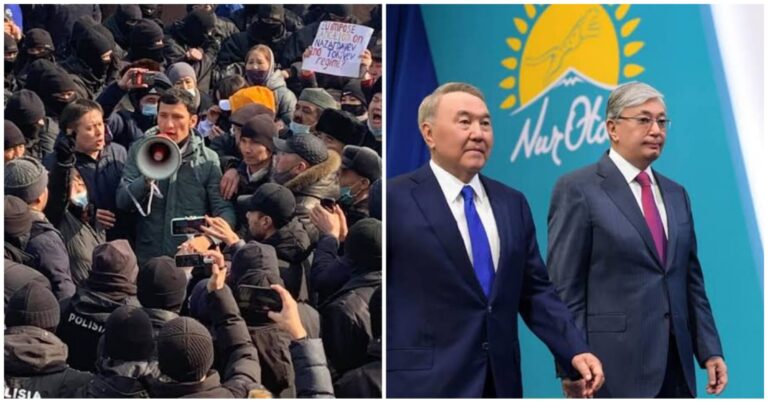
In Kazakhstan, 2022 began with nationwide proteststhat were showcased internationally as a spontaneous mass demonstration against an authoritarian Russian supported state government. What began with a mass demonstration against rising fuel prices in a small town led to a nationwide movement. This occurs a few years after another mass demonstration led to the resignation of Nursultan Abishuly Nazarbayev, who had ruled Kazakhstan for nearly thirty years. While the protests started as a reaction to the state’s unwillingness to protect its workers, it has now been displayed as a call for less state intervention.
Protests
Protests began on 2 January 2022, after the Liquified Natural Gas price, after the public subsidy was cut, doubled. Protests began in the West Kazakhstani town of Zhanaozen and spread across the country within a day.
President Kassym-Jomart Tokayev announced that he was looking into the matter. Tokayev said that his government would launch a full investigation into price-fixing cartels. However, the protests escalated on 4 January with violent clashes with law enforcement officers in many towns.
The authorities insist that prices were determined by electronic systems, and hence reflected market prices. The government promised to bring down the LNG prices. Protests continued for over a week, leading to nearly 200 deaths and 8,000 arrests. The Russian government sent in peacekeeping troops to help the Kazakhstani state restore order.
10 January was declared a day of mourning by the Government for those who lost their lives in the protests.
Why the Workers went on strike?
Tengiz Oil
Last year, Tengiz Oil fired nearly 40,000 workers at once with no action by the state, leaving millions of family members without any source of income. This has led to many workers in Western Kazakhstan feeling insecure. The strike started as a spontaneous reaction against the sudden jump in fuel prices.
While the strike appears to be sudden, it must be remembered that Kazakhstan’s economy is not very developed, and is heavily dependent on raw material exports. Strikes from the western part of the country have been common on a smaller scale for over 10 years, with workers demanding a stronger state hand in these sectors to protect employment.
The International Dimension
Kazakhstan has been one of the most stable states to have broken off from the Soviet Union. For nearly thirty years, the country was ruled by President Nursultan Abishuly Nazarbayev. Nazarbayev was a former steelworker, who rose the Communist Party, to become the First Secretary in the Kazakhstan Soviet Socialist Republic. Following the disintegration of the Soviet Union, Nazarbayev ran unopposed as President in 1991.
Nazarbayev’s Presidency was filled with many constitutional machinations which allowed him to keep running with very little political opposition.
In terms of foreign policy, Nazarbayev was keen on keeping close ties with Russia, both politically and economically.
End of Nazarbayev’s rule
Nazarbayev’s final term ended in the wake of large-scale protests that began in 2018 and continued past his resignation in 2019. The protests were carried out by large groups that eventually came together under a common platform call Oyan, Qazaqstan (in English: Wake up, Kazakhstan) on 5 June 2019. The Oyan, Qazaqstan activists were well versed in social media, using videos and hashtags as part of their demonstration. As a result of the protests, Nazarbayev stepped down, and a snap election was held, with Nazarbayev not running. The elections were won by Tokayev, who was also the acting President after Nazarbayev’s resignation. Though Oyan, Qazaqstan was not a political party, many members of the group were close to the banned party, QDT (Democratic Choice of Kazakhstan). The QDT was a pro-business party, founded in 2001 that eventually got banned following criminal accusations of financial fraud of billions of dollars and political abuse. Leaders of the QDT insisted that the election was a fraud and called for a boycott. The election had the lowest turnout since 2005 with 77.5% of eligible voters coming out to vote. Tokayev won with 71% of the popular vote.
Tokayev’s regime was characterized as moderately conservative. He has been critical of nationalism, which he has claimed has been creating rifts between people of different countries during the COVID pandemic. He is considered to be the political and ideological heir to Nazarbayev.
Tokayev, as a practising Muslim, has been vocal in his opposition to radical elements, calling for “enlightened Islam” that supports science and cultural traditions. He supports a strong central state. While being accused of authoritarianism, he has projected the need for a responsive state, in light of protests.
Real issues behind the protests
Many of the protesters have legitimate grievances. Rising fuel and food prices and drinking water shortages, which have been too common these past few years, not just in Kazhakstan. Inflation in Kazhakstan was very high last year, adding to the misery of the poor country. The initial upsurge in Zhanaozen occurred in an especially poor part of the country, which has high levels of unemployment. Even Tokayev’s “State that listens” approach has to face a difficult situation.
PC: Al Jazeera
Internationally, the western powers have tried to show this as a response to an authoritarian Kazakhstani government. Nazarbayev extremely long reign, coupled with the changes to the Kazakhstani constitution, which removed term limits and extended Presidential powers, has led to a very centralized state, and hence less responsive to the needs of the rural west of Kazakhistan. Russia has claimed that there are outside influences that have supported the protests, which may be motivated by pro-western or radicalIslamic elements.
The initial protest of Zhanaozenis was the result of the very genuine needs of the local people to have a state that protects their employment. Given that political opposition is very difficult to mobilize from western Kazakhstan, strikes and protests are their only tool. However, since they have spread, on the international stage, the protests are described as a microcosm of Western powers vs the Russian umbrella. The state was willing to address the demands of the initial workers, though it may not have been enough.
The author is a mathematician and a political observer based in Bangalore.
In the Samyukta Kisan Morcha meet held at Singhu border in Delhi today, many important decisions were taken regarding the programs and future direction of the SKM. SKM expressed its dismay and anger that the Government of India has not fulfilled any of the promises of the letter dated 9th December on the basis of which we decided to withdraw the morchas.
No action has been taken by the Union Government, Madhya Pradesh, Uttar Pradesh, Uttarakhand and Himachal Government on the promise of immediate withdrawal of the case during the agitation. The Haryana government has done some paperwork only. The rest of the state governments have not even received a letter from the Union Government. The Uttar Pradesh government has not initiated any action on giving compensation to the martyred farmers’ families. No announcement has been made by the Haryana government regarding the amount and nature of compensation. On the issue of MSP, the government has neither announced the formation of the committee, nor has given any information about the nature of the committee and its mandate.
To protest against this betrayal of the farmers, the SKM has decided that on 31st January, Day of Betrayal will be observed across the country and large protest demonstrations will be organized at the district and block levels.
Mission Uttar Pradesh will continue with SKM’s permanent Morcha for injustice in Lakhimpur Kheri massacre case
Despite the conspiracy been acknowledged in the SIT report, Ajay Mishra Teni, the main conspirator of this incident, remaining in the Union Cabinet is adding salt to the wounds of the farmers. On the other hand, the Uttar Pradesh Police is over active in implicating and arresting the farmers named in this incident. To oppose this, the Samyukta Kisan Morcha will announce a permanent morcha in Lakhimpur Kheri. The Samyukta Kisan Morcha has made it clear that “Mission Uttar Pradesh” will continue, through which this anti-farmer politics will be taught a lesson.
SKM to support the nationwide strike announced by trade unions on 23 and 24 February
On 23 and 24 February, the central trade unions of the country have called for a nationwide strike on issues like withdrawal of the four anti-labour codes, as well on issues of MSP to farmers and against privatization. SKM will endorse and support this call in the form of a rural strike.
The name of Samyukta Kisan Morcha will not be used in the election
Regarding the announcement of some constituent organizations to field candidates by forming parties in Punjab elections, SKM clarified that no political party can use its name, banner or platform. The same rule applies in elections as well. The name or banner or platform of the Samyukta Kisan Morcha shall not be used by any party or candidate in the election. Any farmer organization or leader associated with the Samyukta Kisan Morcha, contesting elections, or who plays a key role for any party in the election, will not remain in the Samyukta Kisan Morcha. If needed, this decision will be reviewed in the month of April after these assembly elections.




 On the face of it this phenomena re-assures those who are anti-BJP and want Hindutva regime to end but it has its own complexities. The most visible being a Catch-22 situation for Samajwadi Party Supremo and Ex-CM Akhilesh Yadav who is having a hard day in distributing tickets and containing reverse migration from SP to other parties. Some recent examples are glaring that put a dent into the much talked slogan of social justice.
In Shamli constituency a BJP defector Prasun Chaudhary has been given ticket by SP-RLD alliance. RLD workers have fiercely protested his candidature because Chaudhary was the one who once celebrated the defeat of Chaudhary Ajit Singh, father of RLD chief Jayant Chaudhary. Bijendra Malik was the most probable candidate on this seat who fought election on RLD ticket in 2017 and lost to BJP. When Bijendra was denied ticket he was contacted by INC and BSP but finally he secured ticket from BSP.
On the neighbouring Kairana seat, SP-RLD alliance candidate Nahid Hasan is a sitting MLA from SP who is a gangster and history sheeter criminal. As soon as the ticket was announced he got arrested on January 15th in an old case due to which partycancelled his candidature and gave ticket to his sister Ikra Hasan. Nahid has been sent to 14 day judicial custody. In Delhi, Ashwini Kumar Upadhyaya of BJP has filed a PIL (Diary No 1834/20222) in Supreme Court accusing Samajwadi Party of violating ECI norms by fielding a gangster. The petitioner also seeks direction to the Election Commission of India to de-register the political party, which violates the directions of the Supreme Court dated 25.9.2018 and 13.2.2020 in letter and spirit.
Also Read: Upper caste Villagers Assaulted Dalit man for beating drum
In Saharanpur after the news of Imran Masood’s switchover came, Behat sitting MLA from INC Naresh Saini joined BJP. He has now been given ticket from Behat by BJP. Masood on the other hand is said to be disgruntled from Akhilesh Yadav and in contact with BSP to secure ticket for him and his son-in-law. Congress party is waiting for all the disgruntled leaders to come in front so that it could ‘poach’ from the leftovers at the last moment. Believe it or not, ‘Poachable’ and ‘Non-poachable’ Assembly Candidates are the latest entries in political parties electoral inventory!
Meanwhile an interesting development seems to be taking shape in Saharanpur where upper caste Brahmin Muslims (called Gadha Muslims) are mobilising against Sanjay Garg, the sitting MLA from Saharanpur city who is again fighting on SP ticket. The Gadha Muslim community has a large presence in the area and is mostly business class. Community leaders are in close contact with Asaduddin Owaisi’s AIMIM. The community has a long history of feud with Rashid Masood family and they want to show Imran “his real face” by defeating Sanjay Garg. Advocate Intikhab Azad who comes from the same community alleges that Imran has been sent to Samajwadi Party by Garg only and both have a deal in place. He also alleges of financial deals.
Not only SP and RLD are facing a credential crisis due to party-hoppers, Congress is also in dock over joining of Amit Jani, a Hindutva leader who had formed UP Navnirman Sena a couple of years back and then joined Shivpal Yadav’s party. Jani was welcomed into INC by Acharya Pramod Krishnan recently. Twitter users resorted to anger on welcome images posted by Krishnan and reminded Congress on how Jani gave death threat to Kanhaiya Kumar and announced a bounty over activist Sharjil Imam’s head. UP Congress has given a formal clarification but no explanation over photographs posted by Krishnan. Krishnan is now Covid positive and in isolation.
Also Read: Sandalwood Actor, Chetan takes on Right Wing, extends open support to Hamsalekha





 Nazarbayev’s final term ended in the wake of large-scale protests that began in 2018 and continued past his resignation in 2019. The protests were carried out by large groups that eventually came together under a common platform call Oyan, Qazaqstan (in English: Wake up, Kazakhstan) on 5 June 2019. The Oyan, Qazaqstan activists were well versed in social media, using videos and hashtags as part of their demonstration. As a result of the protests, Nazarbayev stepped down, and a snap election was held, with Nazarbayev not running. The elections were won by Tokayev, who was also the acting President after Nazarbayev’s resignation. Though Oyan, Qazaqstan was not a political party, many members of the group were close to the banned party, QDT (Democratic Choice of Kazakhstan). The QDT was a pro-business party, founded in 2001 that eventually got banned following criminal accusations of financial fraud of billions of dollars and political abuse. Leaders of the QDT insisted that the election was a fraud and called for a boycott. The election had the lowest turnout since 2005 with 77.5% of eligible voters coming out to vote. Tokayev won with 71% of the popular vote.
Tokayev’s regime was characterized as moderately conservative. He has been critical of nationalism, which he has claimed has been creating rifts between people of different countries during the COVID pandemic. He is considered to be the political and ideological heir to Nazarbayev.
Tokayev, as a practising Muslim, has been vocal in his opposition to radical elements, calling for “enlightened Islam” that supports science and cultural traditions. He supports a strong central state. While being accused of authoritarianism, he has projected the need for a responsive state, in light of protests.


