Suvarna-Kannada news channel is coming under criticism sharply from people for presenting extremely objectionable news about some female celebrities.
What is appalling is that despite a large section of readers and viewers expressing anger at the channel for its insensitive reporting on women, the channel has continued to air such news.
Recently, the channel was reprimanded by Kannada actress Sanjana Galrani for airing some objectionable content about her. This news had gone viral and viewers too stood by the actress.
After being criticized from all corners, one of the staff of the channel had announced that the channel will not telecast any news related to Sanjana.
Despite this shameful episode, the Channel continues to air low-grade news about women celebrities.
Just recently, the channel aired similar objectionable news about South Indian actress, Samanta. The channel aired a programme with the title, ‘ Samanta is pregnant after divorce, fans shocked’.
Now, even cheaper and further low grade news has been aired by the channel. The news is about bollywood actress Malaika Arora where the title says ‘ Malaika goes on morning walk, without wearing bra’.
Thinker, N. Diwakar has described such news as the moral bankruptcy of the channel in his facebook post.
“ A few decades ago, the print media protected its respect and independence. Media had still not become a product like any other which is sold in the market. The morality was still existed in the media. It was that time when some porn magazines in regional languages were gradually entering into the market which had become instantly hit among some youth. A section of the society which was against the introduction of such magazines, were disgusted over the development. They felt that the media should not compromise on morality.
Even in such a phase, the then media retained its moral values by not getting lured to TRP or readership craze.
“ But unfortunately during the digital era, the media have sold themselves and no morality is left. These media have been acting like surrogate porn magazines by giving low-level news. The development has gone beyond the sphere of the word ‘ moral bankruptcy’ as the media has sold itself to money-driven market forces. The media has lost gender sensitivity and decency”, he remarked.
When a section of media have lost social courtesy and human dignity from their channel, then how it is possible to expect any kind of gender sensitivity from them”, he questioned.
“ There is a limit even for moral bankruptcy and compromising on the values for money. Suvarna channel has become exposed by crossing all these limits. I would say that Suvarna channel has become synonymous with the word, moral bankruptcy by crossing all the limits of decency. What else can be said about the channel”, Diwakar said in his post.
The channel has uploaded the post related to its news on Malaika on its facebook page which has received over 500 comments.
By reading some of the comments, it is easy to gauge the anger of the people about the news.
“ Don’t you feel ashamed about writing such cheap content about women? Will you talk about your sisters too in the same manner”, comments one of the reader.
Another reader Usha wondered is the channel has no other issues related to public or development?. “ We have many civic issues in our town, why don’t you raise such people-centric issues. Some women have some medical issues which is why they avoid putting on underwear. What right does the channel have to question it”, she said.
“Dear Suvarna Web, recently actress Sanjana reprimanded you. Was it not enough for you to have continued to air such cheap news. What is your business in one’s decision of wearing or not wearing garments of their choice? If possible show similar interest in working for the needy people through your news. It might help them”, said one of the residents of Mysuru.
Soumya Hedge, another reader, has said that because of channels such as Suvarna, the entire media gets a bad name.
The news was published in our sister website naanugauri.com. It has been translated into English by Firoz Rozinder
Lakhimpur Kheri, UP: The reign of terror against marginalised continues under the Yogi Adityanath govt rule. Custodial murder is the order of the day. The latest case is of Sampoornnagar area of Palia area of Lakhimpur Kheri district where a 17-year-old Dalit youth of Tharu caste was beaten to death by the police in the police station. The relatives have not done the final rites and have kept the body on road and have been demanding justice.
According to a report by Janchowk, Rahul, the 16-year-old son of Lacchiram, resident of village Kamalapur had gone to his uncle’s house. On the same day a mobile phone was stolen from uncle’s house. The uncle filed a case accusing Rahul of theft of mobile. The family says that the police reached their house on Saturday and started beating Rahul when they caught hold of him. The police took Rahul to Khajuria post in the night, beat him up there too.
According to family members, on Sunday morning, the police told the family that Rahul’s condition was bad.Immediately, the family reached the police station and took Rahul to the hospital. Where Rahul died late night during treatment.
Stupified by the murder of his only son, father Lachhiram is saying- “I had only one boy, who was a minor. The policemen beat him up in such a way that he was unable to even turn over. He has bruises all over his back. I want justice”.
The sister of the deceased youth, Rahul, has told that after being summoned in the case of theft, his mother took the brother to the police station. After this the police beat him mercilessly. He later died as his condition worsened.
Villagers have demanded action against constable Sachin, Gaurav and outpost in-charge. As soon as the information about the matter was received, the area incharge and SDM reached the spot. They tried to convince the family, but the family is adamant on their demand. Relatives say that the constable and outpost in-charge had taken their son from home. They should be suspended and departmental action should be taken against them.
On the other hand, Lakhimpur Kheri SP Sanjeev Suman said that the victim’s uncle is the complainant in the mobile theft case. Both the sides were called to the police station and the boy was interrogated for 2-3 hours and later he was handed over to the family safely. On January 20, the victim’s mother had complained to the police that her son was beaten up by his uncle. He was later admitted to the hospital and died this morning. The family is blaming the police. We will make a written complaint and take action against the police if found guilty, the family said.
Several Human Right organisations, student organisations, farmers’ organisations, social, political and feminist activists from all over the country have issued a statement strongly condemning the brutal police violence and terrorunleashed on the villagers of Dhinkia in Jagatsinghpur district of Odisha on January 14.
The villagers of the entire region have been agitating against forcible land acquisition by the Odisha government for Jindal Steel Work Utkal Limited.
The signatories to the statement urge the Odisha Government to immediately withdraw all police force from the area, withdraw all pending criminal cases on the people from the movement against POSCO until now in the case of JSW, release all those protesters who are in judicial custody and handover the land acquired for the POSCO project back to the people from whom it was acquired in the first place.
The statement along with the name of organisations and activists are given below:
We the undersigned strongly condemn the brutal police violence by Odisha Police that continued for hours on the villagers of Dhinkia in Jagatsinghpur district on January 14. The villagers of the entire region have been carrying out a protest against land acquisition by the district administration for Jindal Steel Work Utkal Limited.
On January 14, as people were gathering for a rally in the area, they were mercilessly assaulted by the police. The evening news on regional TV channels showed women and children being chased and beaten, groups of police raining blows on villagers thrown to the ground, bodies being trampled by the police and people running helter-skelter and crying for help. The police carried out a flag march.
Countless villagers were injured. Many could not step out of the area for treatment because of the terror and violence unleashed by the Odisha Police. The whereabouts of some of them are still not known. Phone calls continue to come about people missing who might be still hiding in the forest or among the betel vines.
Six people have been arrested that include Debendra Swain the leader of the people’s movement; Narendra Mohanty from Campaign against Fabricated Cases (Bhubaneswar) as he was visiting the area; and Muralidhar Sahoo, Nimai Mallick, Manguli Kandi and Trinath Mallick. The PC number is 21/22 GR-34/22 under sections 307, 147, 148, 323, 294, 324, 354, 336, 325, 353, 332, 379, 427, 506, 186, 149 of the IPC, CLA and PPDP Act. They were forcibly dragged to police vehicles without any information to relatives, kept in an unknown place, and presented to the magistrate in the wee hours of January 15. This was done deliberately to prevent them from demanding medical examination or informing anyone of ill treatment during police custody.
The village lanes are deserted now, there are police in the entire area and surrounding villages. They continue to be confined in terror and intimidation inside their houses. Many have had to switch off their phones too. Many people have locked their houses from outside and are using the back entrances.
Dhinkia has hundreds of dalit families who work as wage labourers in the betel vine plots or do fishing. Many are getting targeted by police excesses. On January 6, seven members of a dalit family have been arrested. They include Shiba Mallick, Sankar Mallick, Kaushalya Parbati Mallick, Kusum Mallick, Sarat Mallick, Sujan Mallick and Jhini Mallick.
On January 15, a team of Odisha-SKM and its supporters were stopped right outside Dhinkia from the Trilochanpur side when they were entering the area to investigate into the lathi charge incident and offer support and solidarity to the villagers. Over 50 to 60 men stopped the team on its way, hurled abuses and alleged that human rights defenders bring trouble to the village. They used threats, intimidation and foul language and were also smelling of alcohol intake. The team comprised: Mahendra Parida, Prafulla Samantara, Jyoti Ranjan Mahapatro, Pradipta Nayak, Santosh Ratha, Jambeshwar Samanatray, Sujata Sahani and Ranjana Padhi. Three team members registered a complaint in the Abhaychandpur Police station.
As we put out this statement, we hear that the police are knocking on each door and asking people to come out to form peace committees. It is a direct means to legitimise the loot and plunder of people’s land in the name of peace committees.
The complicity of the state government to acquire land for JSW through all means is clear as it continues to ignore appeals made by a wide section of people and progressive organizations.
The State Human Rights Commission has been informed about arbitrary and fabricated arrests.
Several citizen’s groups and organizations appealed to the Chief Minister for the withdrawal of police ever since the villagers barricaded themselves.
PUCL Odisha has demanded for withdrawal of police and restoration of normalcy.
An appeal has been given to the Governor by the Odisha-SKM.
Indeed, the silence of the Chief Minister makes it clear how complicit the state government is in using terror, violence and intimidation on behalf of corporations. The situation in Dhinkia Chaaridesh has revealed yet again the iron hand of authoritarian power to push back the gains made by the people’s struggle. Organizations and supporters of the people’s movement are also targeted. All this amounts to a systemic denial of villagers’ absolute right to protect their land, livelihood and lives.
It is well known how the people of Dhinkia Chaaridesh fought several years from 2005 to 2017 and emerged victorious in stopping the South Korean steel conglomerate POSCO. But the state is once again usurping hundreds of acres of fertile agricultural land and pauperizing betel cultivators, labourers and fisher folk. In addition to having kept the acquired land for POSCO in the Land Bank, the government is helping JSW with more land. The company is yet to get environment clearance. Last but not the least, a steel plant, captive jetty and cement factory that the JSW project entails will play havoc on the fragile coastline of Odisha with its increasing frequency of cyclones and receding land. The Odisha government needs to wake up to the destruction caused by mining of minerals and steel production that compounds ecological havoc.
We urge the Odisha Government to:
Immediately withdraw all police force from the area.
Conduct an SIT enquiry headed by a High Court judge into the events in Dhinkia from December 4.
Withdraw all pending criminal cases on the people from the movement against POSCO until now in the case of JSW.
Release all those who are in judicial custody.
Give compensation to betel vine cultivators whose betel vines have been demolished without their consent or consent taken forcibly by police terror.
Handover the land acquired for the POSCO project back to the people.
Protect the land, lives and livelihoods of the people.
Uphold ecological sustainability of the fragile eastern coastline and facilitate efforts to prevent the global climate crisis
Biswapriya Kanungo, Advocate and Activist
Debaranjan – Ganatantrik Adhikar Suraksha Sangathan (GASS)
Pramodini Pradhan, PUCL Odisha
Shankar Sahu, All India Krantikari Kisan Sabha (AIKKS)
Srikant Mohanty, Chaasi Mulya Sangha
Mahindra Parida, AICCTU, Bhubaneswar
Bhalachandra Sadangi, New Democracy
Sudhir Pattnaik, Journalist and Social Activist
Ranjana Padhi, Feminist Activist and Writer
Sujata Sahani, Poet and Activist
Pramila Behera, AIRWO, Bhubaneswar
Sabyasachi, TUCI, Odisha
Tuna Mallick, Adivasi Bharat Mahasabha, Odisha
Hena Barik, Secretary, Basti Suraksha Manch, Bhubaneswar
Nigamananda Sadangi, Writer and Translator
Srimant Mohanty, Political Activist, Bhubaneswar
Pramod Gupta, Political Activist, Kolkakta
V Geetha, Feminist Historian and Writer, Chennai
Committee for Protection of Democratic Rights (CPDR) -Tamil Nadu
Saheli Women’s Resource Centre, New Delhi
PUCL, Maharashtra
Forum against Oppression of Women (FAOW), Mumbai
Swati Azad, Political Activist, Bhubaneswar
Nisha Biswas, WSS, Kolkata
Sujata Gothoskar, Labour Rights Activist, Mumbai
Arya, Labour Rights Activist, New Delhi
Venkatachandrika Radhakrishnan,Thozhilalar Koodam, Chennai
Venkat Narasimhan, Thozhilalar Koodam, Chennai
Alok Laddha, Teacher, Chennai
Santosh Kumar, Workers Unity, New Delhi
Anuradha Banerjee, Saheli, New Delhi
Shambhavi, General Secretary, Collective
Feminists in Resistance, Kolkata
Worker Peasant Student Unity Forum, Kolkata
Refraction, Kolkata
Revolutionary Students’ Front, Kolkata
Inqilabi Students’ Unity, Kolkata
Teachers Against Climate Crisis (TACC)
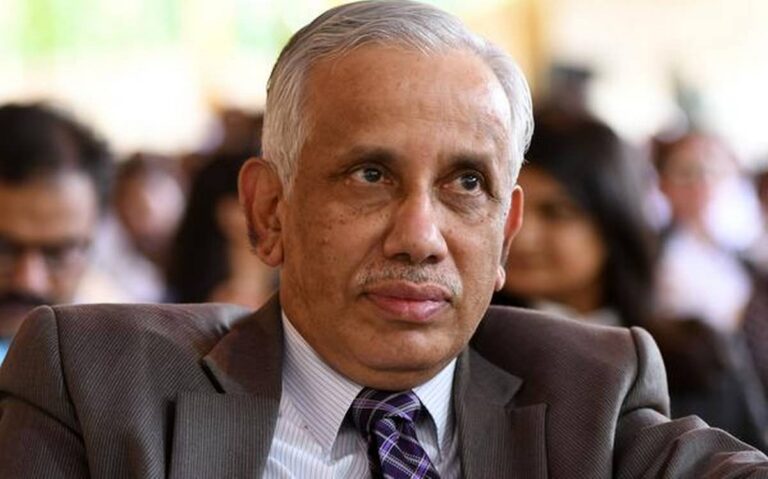
Justice Abdul Nazeer, is not only one of the judges with longest term at the Supreme Court (SC) of India but also the one, only 3rd in the history of SC, who was elevated to the highest court in 2017 (to retire on October 20, 2023) without being chief justice of any High Court.
On December 26, 2021, he addressed the 16th National Council Meeting of the Akhil Bhartiya Adhivakta Parishad (ABAP) at Hyderabad on the theme of ‘Decolonisation of the Indian Legal System’. His participation in this event was surprising in many respects. It was an organizational meeting of one of the appendages of RSS. According to a Hindi publication of RSS [Parm Vaibhav ke Path Per, 1997] ABAP was created in 1992 to work for moulding the Indian judicial system according to “Bhartiya culture…to suggest amendments in the Indian Constitution… [and] amendment in Article 30”. It is to be noted that according to RSS Bhartiya culture is Hindu culture only. The Indian constitution needs to be discarded as according to the most prominent ideologue of the RSS, MS Golwalkar [Bunch of Thoughts], “it has absolutely nothing which can be called our own”. It stands for removal of Article 30 of the constitution which provides minorities right to establish and administer educational institutions.
It is interesting to note that ABAP on its website did not reproduce the text of the address of the Justice for reasons known to them only but thanks to a prominent legal portal (LiveLaw.in) the whole text was made available. Justice Nazeer deliberating on the theme declared that Indian legal system was a colonial legal system which “is not suitable for the Indian population. The need of the hour is the Indianisation of the legal system”.
What he meant by Indianisation of the Indian legal system was made clear by the following utterances of his:
“We must go back in time to the ancient Indian Scriptures to get a true and correct picture of the legal system of ancient India. It is then that we discovered that ancient Indian jurisprudence was founded on the basis of the rule of law and had some of the features that were immensely revolutionary for the ancient world.”
He lamented the fact that the Indian legal system continued to neglect the great knowledge of the “legal traditions as per Manu, Kautilya, Katyayana, Brihaspati, Narad, Yagyavalkya and other legal giants of ancient India” which resulted in “adherence to colonial legal system” that proved to be “detrimental to the goals of our Constitution and against our national interest”.
According to him “Despite such a rich tradition of highly sophisticated pre-existing legal system which was prevalent in India, foreign legal systems were imposed upon us with every invasion [he means Arabs] and occupation” [by the British] and it is lamentable and “tragic that the same colonial legal system is being continued in a large and changed manner even today in 2021”
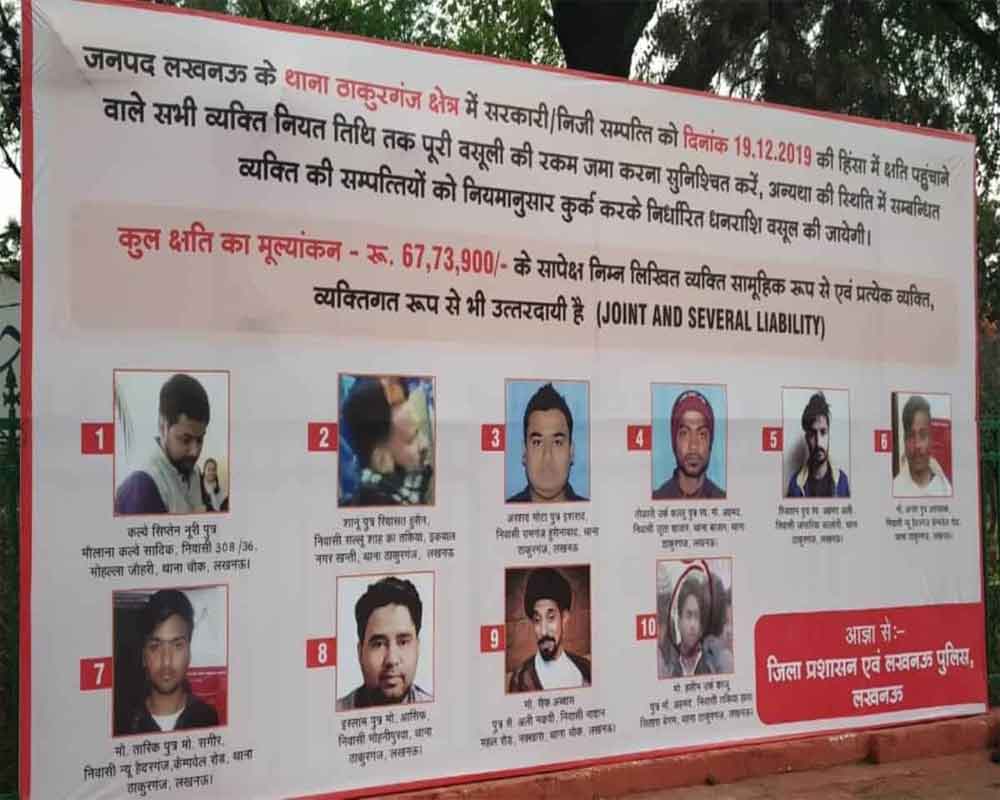
Justice fondly remembered Manu who prescribed “public censure as one of the punishments for crime”. It is immensely sad that a legal luminary gracing the SC Bench is glorifying public shaming as a form of punishment. He completely disregarded the fact that public censure was and is in vogue in totalitarian regimes which leads to witch-hunting [both in literal and macro sense] and lynching. In fact, Allahabad High Court in a judgment [March 2020] declared naming and shaming of CAA protestors by Adityanath government as “nothing but an unwarranted interference in privacy of people” and violation of Article 21.
Posters of anti-CAA protesters in Lucknow: No law to back UP govt’s action, says SC
He also praised Kautilya and his work Arthashastra for upholding the concept of a welfare state in which “the happiness of his subjects lies the King’s happiness; in their welfare his welfare…”
For Justice Nazeer the present legal system which propelled him to reach to the highest court of justice of India suffered from “Colonial psyche” which led to rejecting the ancient Indian legal system in which
“the king was himself subject to the law…The judges were independent and subject only to the law…disputes were decided essentially in accordance with the same principles of natural justice which govern the judicial process in the modern state today”.
In order to know the truth we need to compare above stated claims by Justice Nazeer with the original writings of two of his favourite ancient Indian legal luminaries, Manu and Kautilya (also known as Chanakya and Vishnugupta).
MANU CODE
Some of the laws Manusmriti or Manu Code denigrating Sudras: 1.For the sake of the prosperity of the worlds (the divine one) caused the Brahmana, the Kshatriya, the Vaisya, and the Sudra to proceed from his mouth, his arm, his thighs and his feet. 2. One occupation only the lord prescribed to the Sudras, to serve meekly even these (other) three castes. 3. If Sudra arrogantly teaches Brahmanas their duty, the king shall cause hot oil to be poured into his mouth and into his ears. 4. A low-caste man who tries to place himself on the same seat with a man of a high caste shall be branded on his hip and be banished, or (the king) shall cause his buttock to be gashed.
Some of the Laws of Manu denigrating women: 1. Day and night woman must be kept in dependence by the males (of) their (families), and, if they attach themselves to sensual enjoyments, they must be kept under one’s control. 2. Her father protects (her) in childhood, her husband protects (her) in youth, and her sons protect (her) in old age; a woman is never fit for independence. 3. Women do not care for beauty, nor is their attention fixed on age; (thinking), ‘(It is enough that) he is a man,’ they give themselves to the handsome and to the ugly. 4. (When creating them) Manu allotted to women (a love of their) bed, (of their) seat and (of) ornament, impure desires, wrath, dishonesty, malice, and bad conduct.
Manusmriti
It will be interesting to note that VD Savarkar declared Manusmriti to be the “most worship-able after Vedas for our Hindu Nation” and when the Constituent Assembly of India finalized the Constitution of India on November 26, 1949, RSS was angry. Its English organ, Organiser in an editorial on November 30, 1949, complained: “But in our Constitution there is no mention of the unique constitutional development in ancient Bharat…To this day his laws as enunciated in the Manusmriti excite the admiration of the world and elicit spontaneous obedience and conformity. But to our constitutional pundits that means nothing.”
It will not be out of context to know that the architect of the Indian constitution, Dr. BR Ambedkar was present when on December 25, 1927 at Mahad, Maharashtra a copy of Manusmriti was burnt. On this day he also called upon to commemorate every December 25 as ‘Manusmriti Dahan Divas’ by burning the same.
Kautilya and Arthashastha
One of BJP’s official websites (http://library.bjp.org/jspui/handle/123456789/80) runs text of English translation of Arthashastra (Kautilya’s Arthshastra, tr. by R. Shamsastry) which defends Casteism in the following words:
“The duty of the Brahman is study, teaching, performance of sacrifice, officiating in others’ sacrificial performance and the giving and receiving of gifts. That of a Kshatriya is study, performance of sacrifice, giving gifts, military occupation, and protection of life. That of a Vaisya is study, performance of sacrifice, giving gifts, agriculture, cattle breeding, and trade. That of a Sudra is the serving of twice-born, agriculture, cattle-breeding, and trade, the profession of artisans and court-bards.”
Kautilya’s king is a ruthless dictator,
“It is the king in whom the duties of both Indra (the rewarder) and Yama (the punisher) are blended, and he is a visible dispenser of punishments and rewards; whoever disregards kings will be visited with divine punishments, too. Hence kings shall never be despised. Thus treacherous opponents of sovereignty shall be silenced”.
Arthshastra is a detailed ready reckoner for torture methods. The chapter VIII in book IV titled as “Trial and Torture to Elicit Confession” reads:
“Those whose guilt is believed to be true shall be subjected to torture…Torture of women shall be half of the prescribed standard. There are in vogue four kinds of torture…Six punishments, seven kinds of whipping, two kinds of suspension from above, and water-tube. As to persons who have committed grave offences, the form of torture will be nine kinds of blows with a cane:–12 beats on each of the thighs; 28 beats with a stick of the tree; 32 beats on each palm of the hands and on each sole of the feet; two on the knuckles, the hands being joined so as to appear like a scorpion; two kinds of suspensions, face downwards burning one of the joints of a finger…These are the 18 kinds of torture…Each day a fresh kind of the torture may be employed.”
Kautilya brazenly prescribed apartheid in human habitants. According to him in a fort, “Royal teachers, priests…and ministers shall occupy sites east by north to the palace. To the west, artisans manufacturing…as well as the people of Súdra caste shall have their dwellings”.
The punishment prescribed for women who are not submissive reads:
“Three beats either with a bamboo-bark or with a rope or with the palm of the hand may be given on her hips…” If a woman goes out in day time “She shall pay a fine of 6 panas (a contemporary coin) for going out at day time to sports or to see a woman or spectacles. She shall pay a fine of 12 panas if she goes out to see another man or for sports”.
Justice Nazeer by glorifying such inhuman legal systems and decrying the constitutionally ordained legal system has violated the oath that to “bear true faith and allegiance to the Constitution of India as by law established…and that I will uphold the Constitution and the laws” which he took while assuming the office. His sermon has greatly insulted the work and contribution of Constituent Assembly of India.
Justice Nazeer’s address at ABAP suffers from two serious infirmities too; factual as well as normative. Factually, he is hugely wrong when he underlines a single source of Indian civilization and its legal heritage. His all jurist idols, Manu, Kautilya, Katyayana, Brihaspati, Narad, Yagyavalkya from ancient India are known for Brahmanical interpretations. Justice Nazeer for reasons known to him only did not bother to refer to Buddhist and Jain heritage of jurisprudence which was amazingly humane and egalitarian.
Rahul Shyam Bhandari, a renowned lawyer and researcher of the history of Indian jurisprudence has done pioneer work on the legal system under Buddhism which could be described as constitutionalism. One of the greatest followers of Buddha in ancient India King Ashoka got the following proclamation, a great example of inclusivity, engraved on a rock known as Rock Edict No 12. It read:
“The Beloved of the Gods, the king Piyadassi, honours all sects and both ascetics and laymen, with gifts and various forms of recognition…On each occasion, one should honour another man’s sect, for by doing so one increases the influence of one’s own sect and benefits that of the other man…This is the desire of the Beloved of the Gods, that all sects should be well-informed, and should teach that which is good…”
King Ashoka and Buddha Statue
According to Bhandari, Buddha propagated that no absolute authority vested in one person. The Vinaya Texts and Patimokkha Texts were the basis of Buddhist legal framework. The first part of Patimokkha dealt with the four gravest sins—sexual intercourse, theft, murder and demonstration of one’s miraculous powers which were punishable.
Jainism also had elaborate legal system which did not treat women as inferior beings. Acharya Bhadrabahu (367 BC-298 BC) wrote Bhadrabahu Samhit which accorded full inheritance rights to women. If a person died having a son or without a son, property was passed to the widow. The male enjoyed no preferential treatment.
A more critical problem, a theoretical one, with the lecture was that Justice Nazeer was glorifying the pre-modern legal practices as superior to those which were adopted by the Indian Constituent Assembly as integral part of a modern nation building. According to him the august Assembly suffered from “Colonial psyche” thus falling prey to the colonial system. It was horrendous on his part to declare that Manu and Kautilya stood for legal systems based on Rule of Law, Natural Justice and independence of judiciary. Such notions did not exist then. Those were the times when a group of brothers as rulers, the Pandavas, enjoyed the sole authority to put on stake, in a gamble, their kingdom, assets, even joint wife, Draupadi. If it was Rule of Law and Natural Justice prevailed such heinous happening could not have taken place.
The call by Justice Nazeer to return to the golden past (the historicity of which is greatly doubted by the large number of serious historians) is fraught with multiple dangers. De-colonization was a long-drawn process unleashed in the mid-20th century against the mightiest imperialist powers. It succeeded at the cost of unimaginable human sacrifices offered by the people of the colonies. The object was to get rid of the shackles of imperialism, feudalism and capitalism and march on for a progressive, egalitarian and rational polity. Indian constitution and our judicial system may rightly be found wanting in many respects. The solution lies in further humanizing these, not seeking refuge in the stories of kings and kingdoms.
Justice Nazeer’s sermon bodes ill for democratic-secular polity of India which is already under threat from the RSS-BJP rulers. According to the renowned political analyst, Pratap Bhanu Mehta by using the brute power of the vote and least bothered about constitutional protections they have turned Parliament into a notice board, not a debating forum. In such critical times judiciary, specially the highest court of justice remains the only hope of taming the Hindutva juggernaut which is running amok.
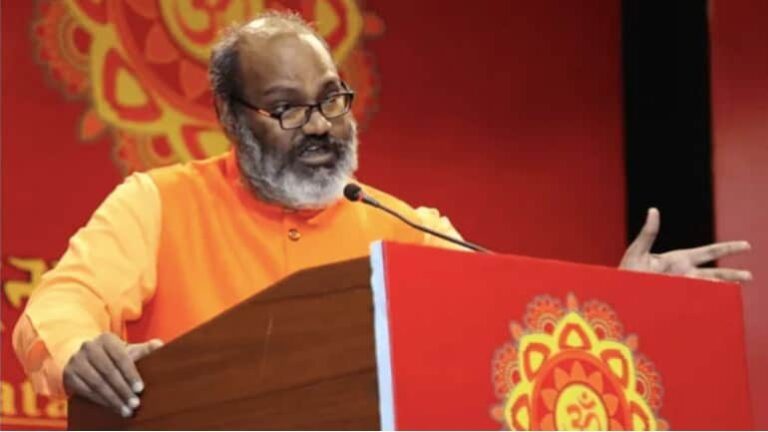
Attorney General (AG) KK Venugopal on Friday granted consent to activist Shachi Nelli for initiation of criminal contempt of court proceedings against Yati Narsinghanand over his recent derogatory remarks against the Supreme Court.
The AG found that Narsinghanand’s statement “those who believe in this system, these politicians, in the Supreme Court, and in the Army will all die the death of a dog”, was a direct attempt to lower the authority of the Supreme Court in the minds of the general public.
As per Section 15 of the Contempt of Courts Act, the consent of Attorney General is required before the Supreme Court can hear a criminal contempt of court petition filed by a private individual.
Nelli had, therefore, written to the AG seeking his consent for the same.
I have sought consent from the AG KK Venugopal to initiate contempt of court proceedings against Yati Narsinghanand for his abhorrent statements against the Constitution and the SC.
In her letter seeking consent, Nelli had stated that in an interview given by Narsinghanand which went viral on social media platform Twitter, he went on to make his contempt for the Supreme Court and the Constitution of India clear by saying, “we have no trust in the Supreme Court of India and the Constitution. The Constitution will consume the 100 crore Hindus of this country. Those who believe in this Constitution will be killed. Those who believe in this system, in these politicians, in the Supreme Court, and in the Army will all die the death of a dog.”
Narsinghanand’s statements were made in response to questions posed about the Court proceedings in the Haridwar Hate Speech cases.
It emphasised that to permit these remarks to pass unaddressed will be to allow this attempt of lowering the authority of the Supreme court to succeed, if not wholly then in considerable measure.
“The Supreme Court of India is the first interpreter and the guardian of the Constitution of India. It is appalling to see the lack of faith and sheer contempt being expressed towards the fundamental frameworks of this country. The intent to undermine the Court and its capacity to dispense justice is evident,” the letter said.
Has Kannada and Culture Minister of Karnataka, Sunil Kumar has lied by giving false information related to allowing various States to present their tableau during Republic Day parade in New Delhi?.
This matter has led to a war of words between the Minister and veteran journalists.
The controversy erupted after the Modi government reportedly rejected the proposal of Kerala government to have the statue of social reformer, Narayanaguru in its tableau.
The Kerala government had prepared a tableau of women safety, in which the government wanted to install a big statue of Narayanaguru who is considered a social reformer in Kerala and elsewhere.
But after the Modi government rejected the proposal, the decision has come under sharp criticism by many leaders including Former Chief Minister, Siddaramaiah and other Former Chief Minister, H. D. Kumaraswamy.
“ Karnataka has prepared a tableau on the concept ‘ Karnataka is cradle for traditional handicraft’. This concept and the tableau have been accepted. Of the 12 States, Karnataka has become the only State from South India which got selected”, he tweeted.
On the contrary, Minister Sunil Kumar has said that each State gets a chance to participate only once in three years.
Noted journalist, Dinesh Amin Mattu refutes the claims of the Minister. “ Minister Sunil Kumar is only trying to defend his government’s decision of rejecting the tableau of Narayanaguru. When Siddaramaiah was the Chief Minister, Karnataka represented the tableau for five year successively. It seems that the Minister has conveniently forgotten this fact”, he reacted.
He asked why the team of officials who have rejected the proposal of Karnataka, did not quote this reason which was mentioned by the Minister?
Why did the officials ask the Kerala government to install the statue of Shankaracharya instead of Narayanaguru?Aminmattu questioned.
Adding further, he said that Sunil Kumar holds a responsible post. Yet, he is trying to mislead the people with his self-created rules. Not just that, even the Chief Minister himself has proved his Minister wrong with his tweet.
Aminmattu demanded the Minister to show the proof of the three year rule that he mentioned in his tweet.
Amid this, BJP State President, Nalin Kumar Kateel too has tweeted in defence of his government. He has given a different reason for it which does not match that of with the tweet of Sunil Kumar.
He tweeted that there are certain norms made for allowing the tableau to participate in the Republic Day parade. The Kerala government failed to abide by those norms. The tableau has been rejected because of the negligence of the Kerala government, he said.
Meanwhile the activists point out glaring mismatches between the statements of three BJP leaders over the rejection of the tableau.
When gaurilankeshnews.com tried to contact the Minister Sunil Kumar for his reaction, he was not available. His reaction will be updated when he responds.
Meanwhile reacting to the episode, DYFI State President, Muneer Katipalla said that the Minister Sunil Kumar has been caught red-handed while misleading the people with his lie.
He demanded the Minister to tender an apology to all the followers of Narayanaguru and the Kerala government.
He criticized three leaders of the BJP for giving contradictory statements over the rejection of tableau.
Amid this, the Modi government has not given approval even to the tableau of Tamil Nadu Government. The Tamil Nadu government had prepared a tableau about various freedom fighters including Subramanya Bharati, V. O. Chidambarnar, Rani Velu Nachiyar and Murut Pandiyar. But according to a report, the BJP government rejected the proposal stating that the people mentioned are not known freedom fighters. The government has described V. O. Chidambarnar as a trader.
Sandeep Dhillon and Suresh, two of the 13 Maruti workers who had been sentenced to life imprisonment in 2017 and incarcerated in Bhondsi Jail, Gurgaon, over the alleged charge of attempt to murder of a Maruti official in 2012 during a workers’ protest in the Manesar plant of Maruti, has been granted bail on Wednesday, 19 January 2022, by the Chandigarh High Court. After repeated denials of bail to all the accused for years, the bail has came as a ray of hope for the other co-accused, as well as, all struggling workers in Maruti Suzuki and elsewhere, because the Maruti workers’ movement has been iconic in the history of workers’ struggle in liberalised India in many ways. A Groundxero report.20 January, Gurgaon : Two more among the 13 leaders of Maruti Suzuki workers union, undergoing life imprisonment, got bail on Wednesday from the Chandigarh High Court. Earlier, Rambilas was the first worker leader who was released on bail in the case on 24 November, 2021.
After spending nine and half years in prison, two members of Maruti Union, Sandeep Dhillon and Suresh, got bail on 19 January. The bail petition of another worker Sohan Lal in the same case was however rejected and he has been implicated in the criminal case of setting fire to the factory. In total, 8 workers leaders are still in prison, while two workers – Jia Lal and Pawan Dahiya – died under tragic circumstances (electrocution and cancer respectively) last year.
The workers in the Manesar plant of Maruti had launched a struggle in June 2011 demanding the right of workers to form a union and secure respectable working conditions and their labour rights. The valiant and spirited struggle of the Maruti workers had become a symbol of workers’ power and unity for the exploited working class in Haryana and all over the country.
In July 2012, a HR manager of Maruri died in clashes which happened between the workers and bouncers employed by the management. After this incident, the services of 546 permanent and 1800 contract workers were terminated without any enquiry. An FIR under stringent criminal acts was registered against 213 workers including all worker leaders of the plant.
In spite of putting such a large number of workers and worker leaders in jail and other repressive measures, the Maruti workers’ struggle continued. A ‘provisional committee’ consisting of sacked worker leaders was formed to guide the struggle from outside.
On 18 March, 2017, five years later, while 117 workers arrested in 2012 were acquitted and released by the Gurgaon Sessions Court, all 12 members of the Union body and a worker Jia Lal were sentenced to life imprisonment. It was first time in history of India that so many workers were sentenced to life by falsely implicating them in murder and arson case in course of their struggle to get the right to form union.
TUCI general secretary and senior advocate Sanjay Singhvi says that this case will not last long in the higher courts as it is not yet decided how the manager died and what was the hand of these workers in it.
The life imprisonment of the worker leaders of Maruti was a signal to the working class of the likely consequences they will face in case of their struggle against unfair working conditions and exploitation. It was also meant to pacify and assure the Capitalist that they need not worry about workers’ resistance to their unjust labour practises. The government and the judiciary will ensure their interest.
The fact is that, ultimately, the Maruti management has to recognize the workers union. It is the independent Maruti workers’ union, born out of the struggle launched in 2011, that is carrying on the legal battle to secure the release of their jailed comrades. Time and again, in an exemplary show of class solidarity, the Maruti union has collected money from worker members and distributed it among the families of the jailed workers.
The article was first published in groundxero.com
Former Uttar Pradesh MLA Pramod Gupta, a relative of Samajwadi Party patriarch Mulayam Singh Yadav, joined the BJP on Thursday. Pramod Gupta is the brother-in-law of Mulayam Singh Yadav’s wife Sadhna Gupta.
This comes a day after Mulayam Singh’s daughter-in-law Aparna Yadav joined the BJP.
Pramod Yadav while leaving the party accused party chief Akhilesh Yadav of imprisoning Mulayam Singh Yadav and said his condition was very bad within the party at present.
He even said, “Criminals and gamblers have been inducted to Samajwadi Party.”
After joining the party, Aparna declared that she is highly influenced and impressed by both Yogi and Modi. “I feel their polices are morally right and that is the reason I have joined BJP.” She also mentioned that “Rashtra Dharm”(duty towards country) is above all for her.
Despite being an important part of Mulayam Singh family, she considers UP Chief Minister Yogi Adityanath as her elder brother and praises PM Modi on all issues. There was talk of her going to BJP for some time which turned into reality today.
It is reported that Aparna Yadav sought ticket from Lucknow Cantt, but SP National President Akhilesh Yadav has decided not to field anyone from the family. This seems to have miffed her and consolidated her decision to join BJP.
With the string of leaders leaving SP, the going seems to getting tough for the Yadav family.
Former Congress leader Priyanka Maurya also joined the Bharatiya Janata Party. Priyanka Maurya was the face of Congress’s ‘Ladki Hun, Lad Sakti Hun’ campaign spearheaded by Priyanka Gandhi Vadra in Uttar Pradesh.
Assembly polls in Uttar Pradesh will be held between February 10 and March 7. The election results will be announced on March 10.
On Saturday, the BJP released its first list of 107 candidates for the first two phases of polling on February 10 and 14. As many as 44 OBC names, including 16 Jats, figure in the list, followed by 43 from upper castes and 19 from Scheduled Castes.
Also read:Party-hopping equated to resurgence of social justice politics in UP!
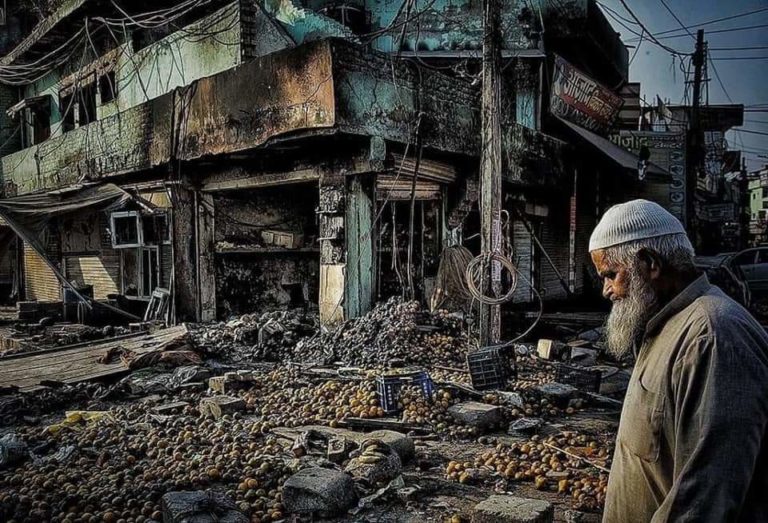
In the first sentencing in the 2020 Delhi Riots cases, a Delhi Court on Thursday awarded a man five-year jail term after he was found guilty of rioting and setting on fire.
The order, sentencing Dinesh Yadav to five years in prison, was pronounced by Additional Sessions Judge Virender Bhatt.
On December 6, 2021, the Court had convicted Yadav for offences under Sections 143 (unlawful assembly), 147 (rioting), 148 (rioting armed with deadly weapon), 457 (house trespass), 392 (robbery), 436 (mischief by fire or explosive substance with intent to destroy house, etc.) read with Section 149 (every member of unlawful assembly guilty of offence committed in prosecution of common object) of the Indian Penal Code.
According to the Court,
“The fact that the accused also belongs to Hindu community and was present in the mob armed with an wooden rod which mob resorted to violence against the Muslims, indicates that he shared the common object of the unlawful assembly.
The mere fact that he was not seen entering complainant’s house or vandalising or looting or putting it on fire, does not mean that he was mere a bystander. There is nothing on record to show that the accused had disassociated himself from the unlawful assembly and he did not share the common object of the assembly.”
The Court had later heard Yadav on quantum of sentence on December 12, 2021 before pronouncing its order on the same today.
The prosecution, which examined 13 witnesses during the trial, alleged that a mob of 150-200 rioters gathered at around 11:30 am in front of the house of the complainant. The mob broke into her house and committed robbery, and some of the material in the house was set on fire. The complainant and her children were stated to have jumped to the terrace of the adjacent house in order to save their lives.
Yadav’s named cropped up in the statements of the complainant and the police personnel for being involved in the acts of arson, loot and robbery in the complainant’s house. It came on record that he had been arrested in another case on June 3, 2020.
He denied all the charges, saying he was being framed. He also chose not to lead any evidence in his defence.
A Bajrang Dal leader, among four, was arrested in the murder case of a 19-year-old Muslim youth in Karnataka, said police on Wednesday in Gadag district of Karnataka.
Those arrested have been identified as Bajrang Dal leader Sanju Nalvade, Mallikarjun alias Gundya Muttappa Hiremath, Channabasappa alias Channu Chandrashekar Akki, and Sakrappa Hanumanthappa Kakanur.
The 19-year-old youth, Sameer Shahapur, who worked at a roadside eatery, and his friend Shamsher Khan Pathan, employee at a photo studio, were allegedly attacked by 15 men carrying weapons on January 16.
The incident took place on Monday when Nargund resident Shamir Shahapur and his friend, Shamshir were returning home after closing their business. The duo was attacked with lethal weapons during which Shahapur was killed and Shamshir sustained serious injuries. Shamshir is undergoing treatment at KMC Hospital, Hubli, the police said.
“Sameer closed the hotel and went to the barber shop that night,” Sahil, a relative of the deceased, told The News Minute. “He then picked up Shamsher from the studio and was returning home. I realised something was wrong when he didn’t return home till late.”
Sahil later found Shahapur and Pathan lying on a road in Nargund town of Gadag district.
“They were assaulted by people carrying weapons near the [local] State Bank,” he said. “We immediately took Sameer to Karnataka Institute of Medical Sciences [in] Hubballi, but he died due to his injuries on Tuesday morning.”
Pathan had sustained injuries on his back, reported The Hindu.
Mohammed Zubair, the brother of the deceased, said that Sameer Shahapur did not even know the assailants, reported The Print.
“Two months ago there was a tiff between a Muslim man and a Hindu man over a girl,” he told The Print. “Since that incident, RSS [Rashtriya Swayamsevak Sangh] and Bajrang Dal members have been attacking Muslim youths whenever they can. My brother had nothing to do with that incident or the people who killed him.”
Gadag Superintendent of Police Shiv Prakash Devaraju also said that they found no connection between the victims and the accused persons. In a statement the police said they were suspecting that the accused persons had targeted the victims out of anger on communal incidents that took place in the town since November.
Devaraju also confirmed that conflicts have been occurring between members of the two communities in the town since November.
“This is the third altercation since November,” he said. “We made arrests in the first case and booked the men under section 307 [attempt to murder] of the IPC [Indian Penal Code]. Though Sameer and Shamsher were present in this altercation, they were not directly involved.”
The police officer added: “On January 14, there was a protest by Bajrang Dal members in front of the police station demanding that more Muslim men be booked. These members [of Bajrang Dal] also went to a Muslim locality and started an argument.”
The protest was led by Nalvade, the Bajrang Dal leader who has been arrested for the killing. In videos of the protest, Nalvade can be heard criticising the police for not taking up cases against Muslim men.
Devaraju told reporters that a first information report has been registered for hate speech as well.