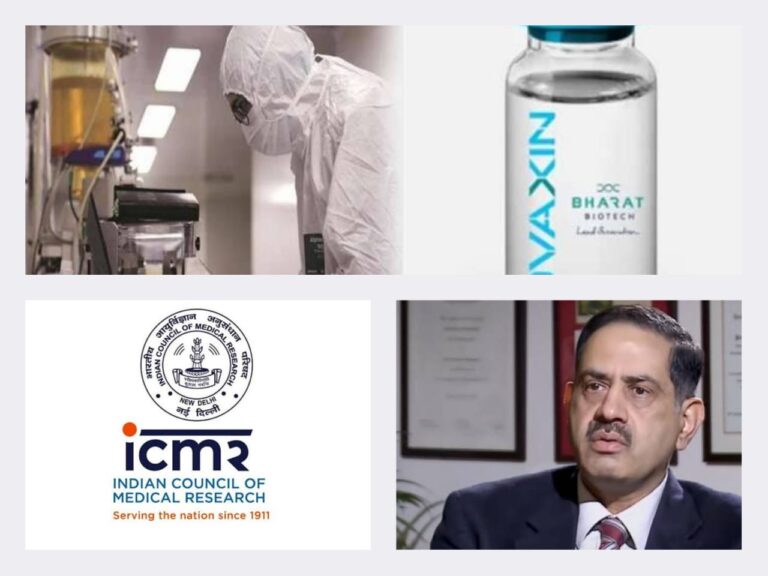
Covaxin: ICMR’s miserable adventurism with our lives

Amongst the many collapses one has witnessed during the COVID-19 pandemic influenced lockdown (without a plan), the most critical one is that of governance. It was not unexpected, considering how dysfunctional India’s governance systems are. But none would have imagined this to also afflict India’s science establishment and the miserable collapse of scientific leadership in the Indian Council for Medical Research (ICMR).

Only a Joint Parliamentary Committee investigation may reveal who and what prevailed on Prof. (Dr.) Balram Bhargava, MD, DM, FRCP (Glasg), FRCP (Edin.), FACC, FAHA, FAMS, FNASC, FASc, FNA, DSC (these are his qualifications) and Secretary, Dept of Health Research to the Indian Ministry of Health & Family Welfare, who in his position as the Director-General of ICMR wrote a letter on 2nd July this year to his “Colleagues”, as he addressed them, explaining that “ICMR has partnered with Bharat Biotech International Limited (BBIL) to fast-track clinical trials of the indigenous COVID-19 vaccine (BBV152 COVID Vaccine)”. Dr. Bhargava went on to state that this is “the first indigenous vaccine being developed by India” and with pronounced emphasis added that this “is one of the top priority projects which is being monitored at the topmost level of the Government”. Where that “topmost” level is, we well know.

Disturbingly, the letter then proceeds to state that it is “envisaged to launch the vaccine for public health use latest by 15th August 2020 after completion of all clinical trials” (emphasis supplied). It is claimed that “BBIL is working expeditiously to meet the target”, but, “however” (and this is where the responsibility shifts) “final outcome will depend on the cooperation of all clinical trial sites involved in this project”.

At this point, the letter could have ended, problematic as it is in two aspects. One, BBIL is a private company, very close to Vice President Mr. Venkaiah Naidu, Prime Minister Narendra Modi, Health Minister, Dr. Harshvardhan, and also BJP President Nadda. With such patronage, it is not difficult to guess how this particular company came to be selected by ICMR for mass production of the vaccine, over so many other worthier ones. In fact, the letter makes no effort whatsoever to justify how and why this particular private company came to be selected.

Second, when admitting it is a “top priority” initiative being monitored “at the topmost level of the Government”, the Director-General perhaps intended to stress the criticality of developing the vaccine to tackle COVID. However, when clear deadlines are indicated to the “launch of the vaccine for public health use” and that too “latest by 15th August 2020”, it does not take much to guess the intent. Wouldn’t it be a global spectacle of historic proportions that Prime Minister Narendra Modi would seize, and then from the ramparts of the Red Fort, where he would deliver the Independence Day Address to the nation, declare to the world that India has found a vaccine to the most deadly pandemic. Who knows, he may even declare the vaccine will be mass-produced in India and sent across to all the world – for free even, as a measure of India’s goodwill. The global political dividends would be massive, and all criticisms of Modi’s style of divisive and authoritarian functioning would quickly recede at the speed of light into the far reaches of the cosmos.

From here on the letter gets a sinister tone. “In view of the public health emergency due to COVID-19 pandemic,” Dr. Bhargava writes, “and urgency to launch the vaccine” (emphasis supplied), the chosen institutions for human trials are “strictly advised to fast track all approvals” (emphasis supplied). Besides, they must “ensure that the subject enrollment is initiated no later than 7th July 2020”. Subject enrollment here means the recruitment of healthy human volunteers, who would be tested by the trial vaccine following certain protocols.

By the 7th of July, as per news report, the letter had not reached the participant institutions, and through the proper channels. Of course, it leaked out and served a body blow of an embarrassment no scientific organization has ever suffered. For as every credible lab, every major vaccine research company, and all countries who have invested in vaccine research would know, vaccines cannot be produced like that, tested and released to freakishly short timelines – of a month. It takes lots of time, many failures, lots of testing, and even then the vaccine may not be found. And if there is a worthy candidate discovered, it would have to go through approvals of World Health Organisation and various other leading agencies to substantiate its worth beyond any reasonable doubt. Just ask anyone who has worked to discover a vaccine for HIV/AIDS, for instance.

Whilst this third aspect is most troubling, here comes the fourth salvo at science and humanity. The letter warns in no untoward manner that “non-compliance will be viewed very seriously” (emphasis supplied). In other words, the heads of 13 institutions selected for trials would be held accountable for violating the Disaster Management Act, 2005, a law with some draconian provisions, that is governing all aspects of the COVID pandemic struggle in India. Besides, they would also invite the wrath of Prime Minister Modi. Who else? Fearful, they would now rush to recruit candidates for testing, and we can well imagine how this might be done.

The most unfortunate victims of these human trials would be those who are most desperate to earn whatever little they would be paid for their ‘service’. They might likely be illiterate and thus unknowingly surrender their bodies to be ‘guinea pigs’ – signing consents, or just putting their thumb impressions without fully realizing what they are doing. Nothing at all is available on the ICMR website, and nothing at all is stated in the letter, to suggest that the human trials are compliant with the ICMR’s own guidelines for human trials. In fact, such a miss begs the question if the intent was to sidestep these guidelines?

Caught by the harsh criticism from all over the world, ICMR issued a clarificatory Press Release on 4th July in which it claimed: “ICMR’s process is exactly in accordance with the globally accepted norms to fast-track the vaccine development for diseases of pandemic potential wherein human and animal trials can continue in parallel” (emphasis in original). Then it went on to say ”the letter by DG-ICMR to investigators of the clinical trial sites was meant to cut unnecessary red tape, without bypassing any necessary process, and speed up recruitment of participants” (emphasis supplied).

It is difficult to imagine which bureaucrat would ‘red tape’ approval of invoices or clearing bills for the purchase of reagents and lab equipment, to move this critical effort forward, knowing well s/he would receive the wrath of none other than Modi. But was this attack on ‘red tape’ to nudge the exercise in a direction to ensure somehow or the other ‘recruitment of participants’ in human trials would happen in a couple of days? When normatively it would take weeks, if not months?

Here’s the funny part. To those who rightly raised alarm over ICMR’s ham-handed, oh-so-most-embarrassing, dealing of human trials of a COVID-19 vaccine, this is the response: “While issues raised in the public domain from time-to-time by commentators are welcome, as they form an important part of the feedback loop, the best of India’s medical professionals and research scientists should not be second-guessed for their professionalism or adherence to the highest scientific rigour” (Emphasis supplied).

Nobody is second-guessing Indian scientists’ capabilities. What is at stake here is the very future of India. Dr. Bhargava simply did not function as Director-General of ICMR. He appears to have been driven by his role as a Secretary of the Health Ministry. So much must have been the pressure on him “topmost level of the government” that he failed to think for a moment what he was signing. What if the vaccine developed at Pune based National Institute of Virology, which “appears to be promising” to BBIL/ICMR, is not quite that? Who is to tell if public transparency and accountability mechanisms, critical to recruiting volunteers for such trials, are not complied with because of the pressure to deliver to an impossible timeline? What if the testing centers aren’t sufficiently equipped, or do not have the qualified personnel to document results correctly, and report them fearlessly? What if the vaccine is a cure worse than the disease and afflicts India’s population in ways unimaginable – for wrong vaccines can do that.

It’s alright to say one messed up. But ICMR is not doing that. It is defending its terrible decision and must be fought tooth and nail. For our lives, and that of generations to come, depend on that fight.

The author is an environmental activist based in Bangalore. Views are personal.
Also read: American store serves Islamophobia on a cup of Coffee

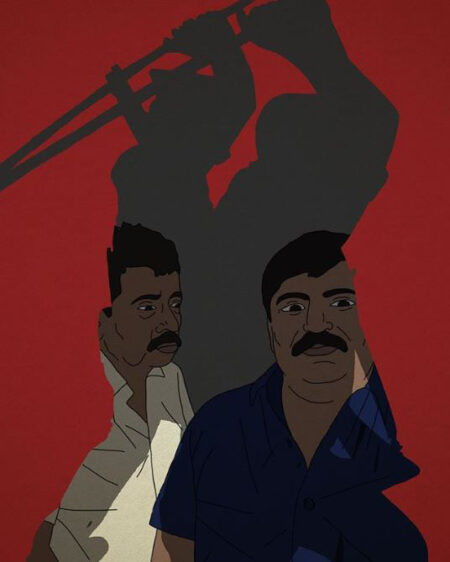
Satanic Police of Sathankulam: Need to Counter Police High-Handedness

It was India’s own ‘George Floyd moment’ as the recent custodial killings of a trader and his son by police in Sathankulam, a small town in Tamil Nadu’s Thoothukudi district, sent shock waves throughout India and across the world. While the national and global outcry has resulted in charges of murder against four policemen, going by previous experience in such cases, there are grave doubts about whether justice will be really done or bring any lasting changes in the behaviour of police with ordinary citizens.

Though it faces no major civil unrest or insurgencies like Kashmir or the North-East, Tamil Nadu operates like a virtual police state, being among the few states in India that have used anti-terrorism laws such as TADA and POTA against mainstream opposition politicians.

Even by dismal standards that Indian police are known for, the gruesome details of torture that Jeyraj and his son Bennicks were subjected to has touched a raw nerve everywhere.  For the ‘crime’ of keeping their small mobile phone shop open a few minutes past the lockdown deadline of 8 pm the duo were not just brutally assaulted inside a police station for hours,  Bennicks was sodomized with a baton before being taken to a hospital after their health condition worsened. Both father and son died within a day of each other due to severe injuries. The crime would have been hushed up, if not for Bennick’s sister Persis challenging the police account and the Madurai bench of the Madras High Court taking suo-moto cognizance of the case and ordering an inquiry. There was a denial of any wrongdoing initially, by both the police and the Tamil Nadu government, which subsequently ordered compensation to the family of the deceased. Tamil Nadu has one of the oldest police forces in India, with the East India Company setting up a Board of Police to deal with ‘removal of public nuisance, & maintenance of public health and order’ as far back as 1770.  The modern form of the state police has its roots in the Madras District Police Act XXIV of 1859, brought in by the British regime. The colonial nature of the Tamil Nadu police has never really been challenged or reformed in the post-Independence period.  Ignoring both the Indian Constitution as well as various judicial directives, the state police have been a law unto itself, arbitrarily wielding the ‘danda’, while also extracting a regular share of ‘Chanda’ from establishments both big and small. The impunity with which police in the state operates is a result of how successive governments have used them, to settle scores against political rivals, suppress public protests, or simply terrorize citizens. Though it faces no major civil unrest or insurgencies like Kashmir or the North-East, Tamil Nadu operates like a virtual police state, being among the few states in India that have used anti-terrorism laws such as TADA and POTA against mainstream opposition politicians.

Also Read: AFSPA – The Tale of Agony Extended for Six More Months in Nagaland

On a more routine basis, draconian laws such as the Goondas Act of 1982, a copy of legislation first brought in by the colonial rulers back in 1923 in Bengal, are used to harass and intimidate anyone opposing state policies.  While the law is meant for preventive detention of habitual offenders, it has become a tool to put anyone in prison, without the opportunity to defend themselves before the courts. With ruling politicians more interested in making money than in governance, a large part of routine tasks that the civil administration should handle is also outsourced to the police. The ongoing COVID-19 lockdown for example has been enforced mainly by the police, without consultation with civil society, the general public, or even opposition political parties. With such impunity, it is not surprising that in Tamil Nadu which has a sordid history of torturing and killing prisoners in custody, many more cases are coming to light, following the Jeyraj and Bennick’s murder. The police, in Thootukudi district, in particular, is known for using extreme force against members of the public. In 2018, police snipers killed 13 people and injured over a hundred peaceful protestors demanding the closure of the Vedanta-owned Sterlite Copper factory for environmental pollution. While a one-man commission was set up to examine the excessive use of force by the police no officers have been arrested for the cold-blooded murders.

Custodial Deaths: Encounters, Extra-Judicial Killings

Custodial deaths are, of course, an all-India phenomenon also, with the National Human Rights Commission of India recording a total of 1,723 cases of death of persons in judicial and police custody during 2019, which translates into an average of five custodial deaths per day.  Indian police are also notorious for carrying out hundreds of extra-judicial killings or ‘encounters’ against anyone they want to get rid of for whatever reason – usually dubbed as ‘criminals’ or even ‘terrorists’. What the routine and flagrant violation of law by the police in India shows is simply that police reform cannot be brought about through purely legislative means or by pointing to the rights enshrined in the Indian Constitution. In Sathankulam for example, none of the guidelines laid down by the Supreme Court of India in its landmark 1987 judgment in the D.K.Basu vs State of West Bengal case to protect the rights of those arrested were followed. The guidelines include the attestation by at least one witness for the memo of arrest, countersigned by the arrestee; and the medical examination of the arrestee every 48 hours. However, the Indian police – whether in Tamil Nadu or elsewhere-  behaves the way it does because the dominant elites in Indian society, like businessmen, politicians, bureaucrats, and the mostly upper-caste Hindu middle classes, openly condone their actions. Police terror in other words is needed to maintain their hold over the vast Indian population, much of which is poor and kept in horrific conditions of deprivation. It is not a coincidence that a majority of the victims of police torture typically belong to the poor and marginalized sections of Indian society, usually also from a religious minority or suppressed caste. For example, Dalits, Adivasis, and Muslims together constitute only 39% of the Indian population but form 55% of all undertrials and around 50% of convicted prisoners in Indian jails. India is one of only five countries that are yet to ratify the 1987 UN Convention against Torture – the result of deliberate indifference to the fate of ordinary citizens shared across the mainstream political spectrum. In the case of the Sathankulam custodial deaths also there seems to have been caste as well as religious angle, with the victims being Nadar Christians and the main policeman accused in their murder from the rival Konar caste. A shadowy outfit called ‘Friends of Police’, which has branches all over Tamil Nadu, but is locally infiltrated by the RSS also seems to have played a role in the custodial killings. The state government has sought to defuse growing public outrage by handing over the investigation into the Sathankulam custodial deaths to the Central Bureau of Investigation, itself an institution with low credibility- particularly in politically sensitive cases. The calculation of the state authorities is perhaps being to ‘manage’ the outcome once the issue disappears from the news headlines. In order to foil any attempt to protect the culprits, not only should there be constant vigil over details of this particular case, but there is also a need for setting up direct public mechanisms to counter police high handedness. Some innovation is long overdue in how police and citizens in India interact with each other, to restore the balance of power between them, which is essential to the functioning of any democracy.  

American store serves Islamophobia on a cup of Coffee

1
Aishah, a 19-year old college student was served with a cup of coffee that had ‘ISIS’ written on it by a Starbucks barista in a Target store in St. Paul, Minnesota. The incident happened on July 1st, 2020 when Aishah along with her friend visited the Starbucks which was operated by the Midway Target Store, reads a Sahan Journal Article. She has complained that when she revealed her first name while placing the order, the barista wrote something on a clear plastic cup. When she received the order, she found that it was marked as ‘ISIS’. ISIS refers to a terrorist group active in Iraq and Syria which goes by the name of ‘Islamic State in Iraq and Syria’ The girl through a press conference from the Minnesota Chapter of the Council on American-Islamic Relations’ Office has informed that when she first received the drink, she was shocked. ‘I felt humiliated, I felt enraged, I felt belittled’ she has noted. When she complained to the barista about the same, the Target store manager sided with the employee stating ‘What is the Issue?’ she informed in the press conference. This incident must be understood to be a testimony for the widely prevalent Islamophobia and the discriminatory practices that puts down the Islam community. Target in its statement to the journal has also apologized for the incident has called it an ‘unfortunate mistake’. They have also said that the store employees and leaders were sensitised about the problematic behaviour and warned against it. Aishah has also been a participant of the Black Lives Matter protests. She has stated that ” All these protests and all these people who are using their voice for a change. To me, it felt like at that moment, we’re doing all of this for people who don’t even care, or who are going to look the other way.” Aishah has demanded a true apology. She has also demanded the firing of both the barista and the manager, careful examination of the employees’ attitudes, and thorough in-depth training for employees rather than a one-time workshop. If things would not go better, calls would also be given for protests reported the journal. Also Read: International students must leave if their classes go online: US Immigration officials

International students must leave if their classes go online: US Immigration officials

After the suspension of work visas until the end of 2020, there is another bad news for Indian immigrants in the US. According to a new set of regulations by the US Immigration and Customs Enforcement (ICE), foreign students attending U.S. colleges that will operate entirely online this fall semester cannot remain in the country. ICE said it would not allow holders of students visas to remain in the country if their school was fully online for the fall. Those students must transfer or leave the country, or they potentially face deportation proceedings, according to the announcement made on Monday. It was not immediately clear how many student visa holders would be affected by the move, but foreign students are a key source of revenue for many US universities as they often pay full tuition.   As college students across the United States and around the world contemplate what their upcoming semester might look like, the federal guidance limits options for international students and leaves them with an uncomfortable choice: attend in-person classes during a pandemic or take them online from another country. And for students enrolled in schools that have already announced plans to operate fully online, there is no choice. Under the new rules, the State Department will not issue them visas, and U.S. Customs and Border Protection will not allow them to enter the country. “Active students currently in the United States enrolled in such programs must depart the country or take other measures, such as transferring to a school with in-person instruction to remain in lawful status,” read a release from ICE’s Student and Exchange Visitor Program. “If not, they may face immigration consequences including, but not limited to, the initiation of removal proceedings.” Colleges and universities have begun to announce plans for the fall 2020 semester amid the continued coronavirus pandemic. Harvard University on Monday announced it would conduct course instruction online for the 2020-2021 academic year. The ICE guidance applies to holders of F-1 and M-1 visas, which are for academic and vocational students. The State Department issued 388,839 F visas and 9,518 M visas in fiscal 2019, according to the agency’s data. The guidance does not affect students taking classes in person. It also does not affect F-1 students taking a partial online course-load, as long as their university certifies the student’s instruction is not completely digital. M-1 vocational program students and F-1 English language training program students will not be allowed to take any classes online. President Donald Trump’s administration has imposed a number of new restrictions on legal and illegal immigration in recent months as a result of the coronavirus pandemic.

In June, the administration suspended work visas for a wide swath of nonimmigrant workers that it argued compete with US citizens for jobs. The administration has also effectively suspended the admission of asylum seekers at the southern border with Mexico, citing coronavirus-related health risks as justification.

Also Read: Modi government next surgical strike -Indian Railways up for sale!

#ManuMustFall: Thirumavalavan, MacWan Among Others Demand Manu Statue Removal

The inhumane act of the murder of George Floyd by Minneapolis Police officer has triggered spontaneous resistance across the US. As the #BlackLivesMatter gathered momentum and took the form of an Anti-Racism Movement in the USA and spread elsewhere, the activists took down to the statues of prominent leaders. This was done to denounce the racist and oppressive histories and lives that they stood as a symbol of. In the US, while Confederate Monuments were struck down, many busts of the well-known leaders were busted across the world. This included the ones of MK Gandhi, Christopher Colombus, Winston Churchill amongst others. With this, there is a growing demand in India to remove the Manu statue from Rajasthan High Court.

#ManuMustFall

On 1st July, Dalit leader, activist, and MP from Tamil Nadu, Thol. Thirumavalavan tweeted in support for #ManuMustFall. He has mentioned in his tweet that the Statue of Manu, who wrote Manusmriti stands in the Rajasthan High Court. The MP from Tamil Nadu has also mentioned that the Laws of Manu are the basis for the birth-based caste hierarchy and that the Indian Constitution was totally antithetical to the Manusmriti. He has also added that the statue was an insult to the constitution and must be removed. It must be noted that this is not the first time that there has been a call to remove the statue. On October 8th, 2018, anti-caste activist and district president of ‘RPI-Kharat’ Kantibai Ahire along with Sheela Pawar had smeared the statue with black paint. Ambedkarites across the world celebrate Manusmriti Dahan Divas on 25th December each year to commemorate the historical Mahad Struggle led by Dr. BR Ambedkar. Under Ambedkar’s guidance on that day, the untouchables not just refused to lift the dead cattle belonging to the Hindu’s but also questioned the fundamental understanding of Hindu social order which based itself upon caste hierarchies. The oppressive and casteist Hindu social orders are understood to derive its legitimacy from the Manusmriti that Manu had prescribed. Not just Thol. Thirumavalavan, but many other activists and leaders have joined in the call for bringing down the Manu statue. Martin Macwan, a noted Dalit Human Rights Activist from Gujarat has addressed a letter with at least 850 signatories demanding the removal of Manu statue from the Rajasthan High Court premises. At least 20 lakh people had written for the same cause in an earlier attempt as well. Read about: Activists’ condemnation of the Misogynistic and Patriarchal Order of Karnataka HC Judge Martin Macwan and his group have launched a MISSED CALL campaign to ensure that this movement becomes widespread and reaches many more especially the rural communities.  A missed call on 9823157779 will help us to see how many people support the campaign.

Akhil Gogoi shows Covid-19 symptoms: Not treated despite Court Orders

1
As we witnessed the outspread of the Covid-19 pandemic, political prisoners and accused under trails have been released worldwide. This is in conformity with the understanding of human rights. However, the Narendra Modi-Amit Shah led BJP Government in the country has unabatedly used the prevailing health concerning situations to its political use. Many activists and intellectuals from across the country including Anti-CAA activists were being imprisoned and kept in jails under draconian laws. Prisons have largely been the most inhumane places to live in especially in times of the pandemic. Covid-19 cases have also been reported in prisons across the country. The higher courts of the country too have functioned as extended arms of the government and have denied many political prisoners the basic human dignity and the right to a healthy life. Concerns were repeatedly raised about the health of intellectuals and activists incarcerated under draconian laws. Safoora Zargar, an Anti-CAA activist was booked under the UAPA laws. Her bail pleas were rejected three times even on humanitarian grounds despite the fact that she was a 23-week pregnant.  Gautam Navlakha, Anand Teltumbde, Sudha Bharadwaj, Rona Wilson amongst other political prisoners whose health was reported to be deteriorating were also denied bails. They were also not provided with the necessary medical aid.

The health of Akhil Gogoi deteriorates

Now, concerns have been raised about the deteriorating health conditions of Human Rights activist Akhil Gogoi. Akhil Gogoi has been the leader of Krishak Mukti Sangram Samiti and a well-known human rights activist. The media outlet, Prag News in its tweet has also mentioned that his body has shown all symptoms of Covid-19. On 4th July 2020, the court had ordered the authorities to provide him proper medical treatments but no action had been taken by the concerned authorities the tweet states. Akhil Gogoi has been booked under the draconian UAPA Laws for being a part of the Anti-CAA Protests. Read: Safoora Zargar Granted Bail after it was denied three times

AFSPA – The tale of Agony in Nagaland

The Union Home Ministry (MHA) has extended the Armed Forces (Special Powers) Act (AFSPA) in Nagaland for another six months, officials said here on Thursday. It is a news that might not gain much importance in the national media or might be valid for many in the name of national security and maintenance of law and order. Another related new related to AFSPA in recent times is the custodial death of a 23-year-old man named Jayanta Bora of Assam, who was alleged by the police of being associated with armed organisations that demand sovereignty. The family of the man even did not even receive his dead body.

An Introduction to AFSPA

In simple terms, AFSPA gives armed forces the power to maintain public order in disturbed areas. This act which has a root in the colonial times was brought up by the then Prime Minister Jawaharlal Nehru almost 6 decades ago. The Act came into force in the context of increasing violence in the North-eastern States almost six decades ago, which the State governments found difficult to control. The Armed Forces (Special Powers) Bill was passed by both the Houses of Parliament and it was approved by the President on September 11, 1958. It became known as the Armed Forces Special Powers Act, 1958. It is said that a few years into Indian Independence, Jawaharlal Nehru, the first Prime Minister had to face the first insurgency in the Naga districts of then Assam along the Burmese border. Indian Union responded back by sending in thousands of Indian army soldiers and paramilitary men from the Assam Rifles to crush the rebellion. Rousseau’s principal contribution to legal theory is his idea that in existing societies, rule of law and rule by law does not occupy a single continuum and do not present mutually exclusive options. Probably, Nehru did validate what Rousseau had argued and passed the Armed Forces Special Powers Act (1958) in the Indian Parliament. One of the few members who spoke against the law in the Parliament was Surendra Mohanty from Odisha. He quoted “We want a free India. But, we do not want a free India with barbed wires and concentration camps, where havaldar’s (sergeants) can shoot at sight any man,”.  This statement probably denies the essence of the law with the impunity given to the armed forces, where a civil aspiration is blown off by Military force. Today AFSPA covers a major portion of the North East.

Colonial Roots

This draconian law has its root in colonial times. This law symbolizes the colonial power structure and the mechanism in which colonialism is being carried on. On August 15, 1942 Lord Linlingthow, the Viceroy of India, promulgated the Armed Forces Special Powers (Ordinance) to suppress the Quit India Movement by Mahatma Gandhi. During this, police stations were burned down as well as railway and telegraph lines which the British vision as designed to hamper their war effort against an impending Japanese invasion on the Burmese front.  The AFPSA provides impunity such as – Section 4, allows any commissioned officer, warrant officer, non-commissioned officer or any other person of equivalent rank in the armed forces to arrest any person without a warrant. Additionally, if he feels that an absconder is hiding somewhere, he can destroy any structure without verification and use force even to kill. Under Section 6 of the Act, armed personnel cannot be challenged in the court of law for all these acts. Armed Forces have misused this section on various occasions. With no doubt one can say that this act is modelled along the Armed Forces Special Powers (Ordinance of 1942). But the irony is that the 1942 version was used to carry forward colonial oppression. However, in the post-colonial era with a change in the title, mostly it is being used to carry forward the repressive legacy in the biggest democracy in the world.

Human rights violations and AFSPA

AFSPA after being enforced in 1958, due to the extreme law and order situations has been incrementally applied. It has been also applied in Jammu and Kashmir. Over the years, various atrocities of armed forces through frequent raids, fake encounters, demolition of private property etc have made lives of people in the areas labelled as disturbed areas too disturbing and vulnerable. Real freedom seems to be too far for the people from these areas. Over the last 6 decades AFSPA has remained as a telling tale of agony. India even after absorbing the ideals of a democracy through adoption of its Constitution, has made a mockery of human rights through enactment of draconian laws like AFSPA. Since the law does not clearly define what is a peaceful gathering and a wild or berserk mob, and actions can be taken on grounds of suspicion, there is every possibility that even innocent individuals could be harassed or killed under AFSPA. What is more fearful and worrisome is that if an area is declared as “Disturbed Area” it cannot be challenged in the court of law. Right to life – a fundamental right under the constitution of India is violated by section 4(a) of the AFSPA, which grants the armed forces power to shoot to kill without regard to international human rights or the law restrictions on the use of lethal force. Lethal force is broadly permitted under the AFSPA if the target is part of an assembly of five or more persons, holding weapons, or “carrying things capable of being used as weapons”. However, the terms “assembly” and “weapon” are not defined. The act also allows ground of arbitrary arrests through section 4(c). The Justice Verma Committee was set up to suggest amendments (not repeal) to laws relating to crimes against women. The areas under AFSPA have experienced a widespread human rights violations and abuses. Some of the cases where human rights have been grossly violated over the years are
  1. Rape, Brutal and Merciless Torture- The brutal and merciless torture that Thongjam Manoroma suffered at the hands of Assam Rifles came into the picture through the Judicial Inquiry commission report (after 10 years of her death. Manorama was found dead with a multiple gun shot injuries on her private parts after being picked up by “a strong- armed troops of 17th Assam Rifles” in the night between July 10-11, 2004 from her home in Imphal East District.
In Meghalaya Armed Forces have reportedly committed numerous atrocities against civilians in under the auspices of AFSPA. During Operation Birdie it is reported that many Khasi tribal women were reportedly raped. There were also reports of usage of women human shields by the Assam Riffles  An woman named Lianthangvuanga  from Mizoram was reportedly raped by five soldiers. While she escaped from it, she had to bear the trauma of her father being tortured by the army who died later due to the injuries.
  1. Sexual Violence against children: A 12-year-old girl was raped by a member of the Assam Rifles in Karbi Anglong on February 7, 2005. Medical tests confirmed that the abuse was sustained after the child was sedated with sleeping tablets. Fearing a backlash against the military and the AFSPA similar to that which followed the death of Manorama Devi in Manipur, police arrested the accused and his accomplices.
  2. Tire bursting lead to death of civilians- In 1995 in Kohima city Indian soldiers began shooting civilians after mistaking the sound of tire bursting for a bomb attack. During this episode of shooting seven civilians which included girls age three and eight were killed
AFSPA has been a tool of arbitrary detention, torture and the killing of peaceful critics. With the rights to remedy also been violated under AFPSA, a shield is being provided to the armed force personnels who are implicated in serious abuses. This really makes one to think- “Will Jayanta Bora get Justice”. AFSPA has been facilitating violation of the right to be free of torture, cruel or degrading treatment. Even the ill treatment of the armed forces during the interrogation in army barracks cannot be questioned. The author has studied MA in Social Work in Tata Institute of Social Sciences, Mumbai and presently working with Public Health Resource Society, Odisha. Views expressed are personal.   

Chattisgarh: Farmers and adivasi organisations join the nationwide strike against Coal auction

The Narendra Modi led Union Government led initiated to auction 41 coal blocks for commercial mining on 18th June 2020. Out of 41 coal blocks, 8 blocks are in the state of Chattisgarh. Rest come under the states of Jharkhand, Madhya Pradesh, Maharashtra, and Odisha. The coal mine workers had called for a 3-day strike from July 2nd to July 4th, 2020 demanding the reversal of the decision to allow 100% FDI in the coal mining sector. More than 25 organisations working on the issue of agriculture, land, and forest rights also joined with the nationwide struggle in Chattisgarh.

Also Read: Centre approves Mining: Protest call by Jharkhand Janadhikar Mahasabha

Many in Chattisgarh gathered at MGNREGA centers, fields, and some from their homes to protest against the auction of coal blocks to corporates and the disinvestment and privatisation of Coal India.

Protesters said they will give up their lives but will not be displaced from their homes and will not let corporates take over their land and forest.

According to farmer organisations, protests happened in more than 25 districts of Chattisgarh like Rajnandgaon, Mahasamund, Dhamtari, Gariaband, Korba, Champa, Marwahi, Sarguja, Bastar and Balrampur.  In Adivasi areas, protests happened in many interior areas. According to Chattisgarh Kisan sabha state President Sanjay Parate, these protest demonstrations are led by Chattisgarh Kisan sabha, Adivasi Ekta Mahasabha, Hasdeo Aranya Bachao Sangharsh Samiti, Rajnandgaon Zila Kisan Sangh, Dalit Kisan Adivasi Manch, Krantikari Kisan sabha, Janjati Adhikar Manch, Chag Kisan Mahasabha, and Chag mazdoor-Kisan Maha Sangh. The organisations have come together to protest against the displacement of Adivasi, environmental damage, and for the protection of biodiversity and wildlife of the region.  These organisations joined in solidarity with the demands of the coal miners and in the struggle to protect Adivasi life. In Surajpur and Korba coal mines, the protests were organised with workers from coal fields and trade unions. All these organisations are also demanding from the state government that like Jharkhand, the Chattisgarh government should also challenge this decision in the supreme court because this central government decision is against state rights, constitution, and against the federal structure of the country. In a press release, the organisations have talked about how till now 2 crore Adivasis have been displaced int he name of development projects. Globalisation which is a policy to acquire natural resources has only hastened the displacement process. For almost 10 crore framers and Adivasi, the income from the sale of forest produce make up 40% of their income. Without any concern of their livelihood, only for corporate profit, coal mining is pushing Adivasis towards devastation, because private companies don’t even follow the terms of rehabilitation and compensation. Displacement has destroyed the socio-economic, cultural-spiritual, and traditional rights of Adivasi communities. The press release stated that in Korba itself from 2004-2014 due to coal mining, the land was acquired from 23254 people but only 2479 people got jobs or some kind of compensation. Accusing the Modi government, the orgnisations spokesperson said that Modi government is hell-bent on destroying the public sector, and to with it is with this mal intention they are defaming the Coal India and to dismissing its achievements that gives jobs to around 4 lakh workers. According to reports, Coal India has not only contributed 53236 crores in the form of revenue, royalty, cess, and taxes but has made a profit of 17462 crores. Chattisgarh government has got 4320 crores through these coal mines. Despite this, the central government is weakening the coal India by withdrawing 64000 crores from this reserve fund which is equivalent to the profits earned in the last 4 years. By crippling the enterprise economically, the government is now questioning the capability of Coal India. The leaders of farmer organisations said the decision to remove 4 blocks located in Hasdeo Aranya from the auctioning list by the central government is an early victory. This also proves that the decision to sell off the invaluable and nonrenewable natural resources was taken for corporate profit and not keeping the interest of Adivasi way of life and the environmental issues in mind. This decision is equivalent to the sale of the country. The farmer leaders of Chattisgarh have demanded that auction of all coal blocks, coal mining for export, and privatisation of the mines be stopped.

Also Read All India 3-Day Coal Strike: Workers, Trade Unions demand reversal of coal blocks auction

All India 3-Day Coal Strike: Workers, Trade Unions demand reversal of coal blocks auction

As the world struggles with the COVID19 pandemic and the coronavirus curve doesn’t seem to be anywhere near to flattening, the political masters have some different designs altogether. The time when the political, social, and economic orientation of the country should be in one direction i.e controlling the pandemic and saving lives, the Modi government seems to have taken the task of selling the natural resources of the country. The Narendra Modi led Union Government led initiated to auction 41 coal blocks for commercial mining on 18th June 2020. These coal blocks include ones in the state of Jharkhand, Madhya Pradesh, Chattisgarh, Maharashtra, and Odisha. The decision was widely criticised for violation of environmental, legislation and constitutional provisions. The move will also have a big impact on the lives of landowners, mining workers, and the Adivasi communities living around the area. The coal mine workers had called for a 3-day strike from July 2nd to July 4th, 2020 demanding the reversal of the decision to allow 100% FDI in the coal mining sector. Other civil societies, land rights organizations, environmentalists, Adivasis, and farmer organizations, students’ organizations and political parties have extended solidarities and support to the strike.

The Coal Workers strikes

On 1st July 2020, a virtual meeting was convened between Coal Minister Prahlad Joshi and trade Union leaders at Coal India. As no solutions could be arrived at, the unions moved ahead with their demands. In addition to the left parties, the workers’ union of the Sangh Parivar, BMS has also been involved in the strike under pressure to do so.

Also Read: Centre approves Mining: Protest call by Jharkhand Janadhikar Mahasabha

As the strike moved to day two, the strike has only intensified. Coal mine workers and other trade unions across the countries have extended support for the cause. It was reported that almost 4.5 Lakh coal mine workers have not gone to work. While 3 Lakh workers were working with Coal India and another 50000 workers were with Singareni Collieries Company Limited (SCCL) and another lakh were contractual employees. The union leaders have said that strike has been successful with both permanent and temporary workers joining in for the cause. Coal India authorities have maintained that the strike had little impact on mining activities.  As mining activities came to a standstill on the first day of the strike, the loss was estimated to be around 2 million tonnes of output.

Support extended to Coal Mineworkers’ strike:

The Left Parties from all across the country have extended support to the protesting coal mine workers. 10 Central Trade Unions had called for a joint protest in solidarity with the coal mine workers. From across the country, support was extended to the coal mine workers. This included trade unions from Jharkhand, Chattisgarh, West Bengal, and Bihar In West Burdwan (West Bengal) and Asansol district. Protest of Grameen Mazdoor Union in various parts of Rohtas district, Bihar protest as part of all India protest demonstration. https://m.facebook.com/story.php?story_fbid=748929325931419&id=100024430756989&ref=content_filter   https://m.facebook.com/story.php?story_fbid=10157630920163922&id=546078921&ref=content_filter    

Will bring back Congress in Power: DK Shivakumar takes Oath as KPCC President

‘Troubleshooter’ for Congress in the state, DK Shivakumar today took oath as the President of Karnataka Pradesh Congress Committee. The oath taking ceremony or the ‘Pratigna Dina’ was viewed by millions from across 16000 places across the state. The oath taking ceremonies fell well within the Covid-19 prevention laws in place across the state. “I will take up the KPCC Presidentship as a challenge. Though I have never been an aspirant for this position, I’m happy about the decision take by senior leaders of the state. I believe it to be my duty to undertake the responsibility that I have been entrusted with.” he said. Read about: Karnataka Government’s Decision to honour Savarkar Popularly known as D K Shi in Karnataka, DK Shikvkumar spoke at length at the ceremony about his journey from student politics to the present. He said- I have been involved with the movements since my student days. Having drawn inspiration from Indira Gandhi, I have made the best use of the opportunities to work with leaders right from the Taluk, District and also at State level. I have surpassed innumerable problems to be here today. Problems do exist even now. However, I will work in accordance with the party’s vision and values to usher development. He also called upon the party’s cadre to work together. Lakhs of people have viewed today’s Oath taking ceremony. This is not a program of one man. This is a party program. The whole world has watched the program today. I’m not highly educated. We have organized the program to the extent of our understanding. We have been blessed by our party workers. This is a huge responsibility. We will live up to their trust. We will work as per the wishes of the people said DK Shivakumar. DK Shivakumar took over as the KPCC President officially today from Dinesh Gundu Rao. Rahul and Priyanka Gandhi conveyed their wishes to DK Shivakumar over a telephonic conversation in the public event. Senior party leaders from the state including Ex-Chief Minister Siddaramaiah and Mallikarjuna Kharge also have conveyed wishes to DK Shivakumar. The large scale program is understood to be an effort of the Congress to project DK Shivakumar as a fearless and powerful leader building upon cast who is able to withstand the attacks of the BJP. The move to project DK Shivakumar can also be understood on lines of caste politics of the state as he hails from the dominant Vokkaliga caste. However, it is important to note that there seems to be some signs to rejuvenate Congress by adopting the cadre-based party model similar to the BJP.