Karnataka: A glimpse of State wide Protests against Anti Farmers Acts

0
Expressing strong objection against the anti-farmer legislations enacted by the center the farmers hit to the street across the state on Friday. The farmers expressed their ire by holding rasta-roko in the city capital. They demanded the union government to immediately withdraw the amendments brought to the Farmers’ Produce Trade and Commerce (Promotion and Facilitation) Bill, 2020; The Farmers (Empowerment and Protection) Agreement of Price Assurance and Farm Services Bill, 2020 and The Essential Commodities (Amendment) Bill, 2020. The farmers congregated at the Mysuru Bank Circle and staged protest for over an hour. They raised slogans against the anti-farmer, anti-labour and pro corporate policies of the BJP government at the centre and in the state. Traffic movement was disrupted for sometime due to the protest. farmer During the protest demonstration, Farmers beat drums and performed ‘Urulu Seva’ (rolling on floor as a form of praying out of helplessness of their situation) and tried to draw the attention of the government towards their demands. farmer The centre without holding any discussion with the farming community had unilaterally brought the amendments first though the ordinance route and subsequently by sabotaging the democratic set-up. The ruling dispensation had only aim to serve the corporate sector. Justifying the amendments in the pretext of avoiding the middlemen the government had  only tried to handover the agriculture sector to the corporates. The amendements are only a death knell to the farmers as they were highly detrimental to the interest of the farmers and should be immediately withdrawn. farmer At a time when people of the nation are confined to their homes due to the pandemic, sweeping changes had been brought to farmer, labour related laws without asking stakeholders opinion. Even opposition parties had been denied to discuss the amended laws which is not a sign of democratically elected government.
If the government does not withdraw the draconian amendments, the farmers will further intensify their protest. Farmers across the nation had expressed solidarity to the nation wide band call on Sep 28. farmer protestfarmer Farmers say that today´s Rasta roko is a warning to the ruling governemnt. Farmers Dalit and Labour Aikya Horata Samiti (Committe for United Struggle), Karanataka Rajya Raita Sangha(Karnataka state farmers union) and Hasiru Sene (Green Sena), labour orgnisations CPM, CITU, Committee for the Land and Housing Rights and various organisation took part in the protest. The government used force to suppress the protest as police arrested the protesters.

Also Read: Rail Roko Campaign by Farmers in Punjab Against Anti-Farmer Bills

Film Industry grieves loss of Veteran Singer SP Balasubrahmanyam

0

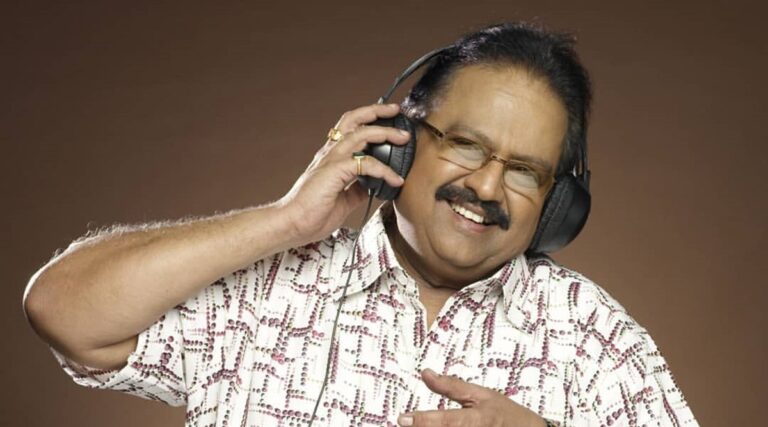
SP Balasubrahmanyam, the playback singer, passed away today in Chennai due to cardio-respiratory arrest after recovering from COVID-19. He was 74 years old.

SP Balasubrahmanyam had been at MGM Healthcare in Chennai, where he was admitted after he tested positive for COVID-19 in August. Though he had only mild symptoms initially, he developed complications and was put on a ventilator and ECMO support.

SP Balasubrahmanyam tested negative for COVID-19 on September 4, but continued to be on ventilator and ECMO support and participated in passive physiotherapy. His health deteriorated today and he went into cardio-respiratory arrest and passed away at 13:04 hrs. .,

Film Industry all over India is mourning the loss of SPB, “Balu” as he was fondly called.

Born in Konetammapet village in the Nellore district of Andhra Pradesh, he made his singing debut in 1966. His debut was in the Telegu film Sri Sri Sri Maryada Ramanna.

Since is debut in 1966, he sang over 40,000 songs in as many as 16 languages including Telugu, Tamil, Malayalam, Kannada, and Hindi.

SP Balasubrahmanyam worked in the industry for over five decades. He also became a voiceover artist for many actors, including Kamal Haasan, Rajinikanth, Vishnuvardhan, and Salman Khan, dubbing for their characters in various languages. He was the official dubbing artist for Kamal Hassan in all his Tamil films that were dubbed in Telegu.

He rose to international prominence for his work in the 1980 Telegu film Sankarabharanam, which was critically lauded as one of the best films to come out of the Telegu film industry. He won his first National Award for his work in the film, and went on to win a total of 6 national words.  SP Balasubrahmanyam also became a recipient of the Padma Shri in 2001. He was awarded the Padma Bhushan in 2011.

He was fondly known as SPB and ‘Paadum Nila’ (Singing Moon) by his fans. His death is being mourned by musicians, actors, politicians, and people across the country.

Kerala Lockdown Survey: No Cash Transfers in Jan Dhan Accounts

0

A survey in Kerala highlighted the distress faced by the people during the lockdown in spite of the best efforts of the Kerala government.

According to a report by Workers Unity, the survey was conducted by Surajit Das and Soni T.L, who tried to reach 2056 people from 480 families via telephone.

Kerala has been fighting the COVID-19 crisis more efficiently than not only the other states of India but also other countries of the world. The state’s relative success is a result of a better public healthcare system, effective decentralisation, community participation, planning, and perhaps most importantly, the pro-poor and humanist approach of the Left Democratic Front government.

However, the people of Kerala have still been troubled by the loss of income, burden of debt, and uncertainty of livelihood caused by the nationwide lockdown.

While the sample of this Kerala lockdown survey is not representative of the population, it does give some important insights.

The Sample

Out of the respondents, 50 families were Muslims, 89 were Christians, 334 were Hindus, and 7 families were from other backgrounds. 5 families were from Scheduled Tribes (ST), 56 from Scheduled Castes (SC), 258 from Other Backward Classes (OBC) and the remaining 159 households from other caste backgrounds.

There were 135 female and 345 male respondents in the sample, whose ages ranged between 13 and 35 years, and they came from varied employment backgrounds.

The sample can be divided into four equal sections, where the average monthly income per person of the households in each section was below Rs 1875, between Rs 1875 to Rs 3775, between Rs 3750 to Rs 6000, and between Rs 6000 to Rs 80,000 respectively.

Unemployment, Debt, and Loss of Income

Out of these respondents, 59% households reported an increase in their debt during the lockdown, and 85% households reported a reduced income. For 60% of households, their income in the months of April, May, and June is less than half of pre-lockdown income.

More than 80% households did not receive any financial assistance in their Jan Dhan accounts to which cash transfers of Rs 500 had been promised, and more than 95% did not receive any free LPG cylinders even 3 months after the announcement of the PM Garib Kalyan Yojana that free gas cylinders would be given to Ujjwala beneficiaries.

70% of the respondents expressed the need for a universal employment guarantee scheme but only 10% of them had a job card. Employment opportunities and cash transfers were two prominent demands amongst the respondents.

About 80% of respondents expected their average monthly income to be lower than pre-lockdown income in the coming six months.

What The Government Needs to Do

The survey shows the extreme insecurity and distress in the minds of the people regarding employment. The government must give some assurance to the people and address the uncertainty.

The researchers who conducted the survey have given a few suggestions to the government based on the responses. Firstly, most people are urging the government to create more employment opportunities, including the return migrants. There is also a need for financial assistance to families with below taxable income, and unemployment assistance of at least Rs 7,500 per month.

Prices for essential commodities and especially of petrol products need to be regulated, and the government should provide a waiver on the electricity bills. The government should also create the provision of interest-free loans during this crisis as paying EMIs during lockdown is extremely difficult with the loss of unemployment and income.

BJP’s sins have reached its limits: K.N. Umesh, Labour leader

0
Bengaluru: India is not of Modi and Yeddyurappa, it belongs to the workers, who have built this country said Center of India Trade Union leader K N Umesh at today’s workers/labour protest in Bangalore freedom park against the government’s anti-people and anti-labour policies. Taking a dig at BJP led National Democratic Alliance government at the centre Umesh said the abrupt nation-wide lockdown which was imposed on four-hour short notice turned out to be disastrous that snatched the livelihood of millions of people. At a time when COVID-19 afflicted tens of millions of people, Modi government used this crisis to push its anti-poor agenda and amended the labour laws and privatized Public sector Undertakings ( PSUs). Massive protest happened at the Vidhan Soudha Cholo protest rally organised by various labour organisation fighting for the rights of the working class. CITU State unit president Varalakshmi expressed concerns over the declining democratic setup. “The people in power instead of working for the welfare of the people were only working to push policies that favoured capitalist and corporates. During the crisis, the government should have worked for the welfare of the laboures but had acted in contrast that has cost the life to the labour community” she said. The poverty rate was 28% before COIVD-19 has doubled, 14 crore people across the country had lost their jobs, while the government instead of ensuring job security had brought a contract system that had put working-class rights at stake. The present government had convened the monsoon session only to push the bills that favoured the corporates while the farmers, poor were left to fend for themselves. “The ruling dispensation aims to serve only 1% rich and had given up the welfare of 99% people” she alleged. Varalakshmi demanded labours be adequately compensated for the labours to improve their purchasing power and for the economy, market and manufacturing sector to stabilized. Meenakshi Sundar another labour leader came down heavily on the government for giving financial aid to the rich. “What is the use of manufacturing if people themselves lack purchasing power? She questioned. Criticising the amendment of the labour laws as marriage after seeking for divorces, Meenakshi condemned the pro-rich policies the government. The labour organisations has expressed total solidarity to September 28 Karantaka Bandh call. The kannada story can be found here.

Read More:  Bangalore: ASHA workers protest against Government Stepmotherly Treatment


Missing Parliamentary Opposition: Physically and Metaphorically

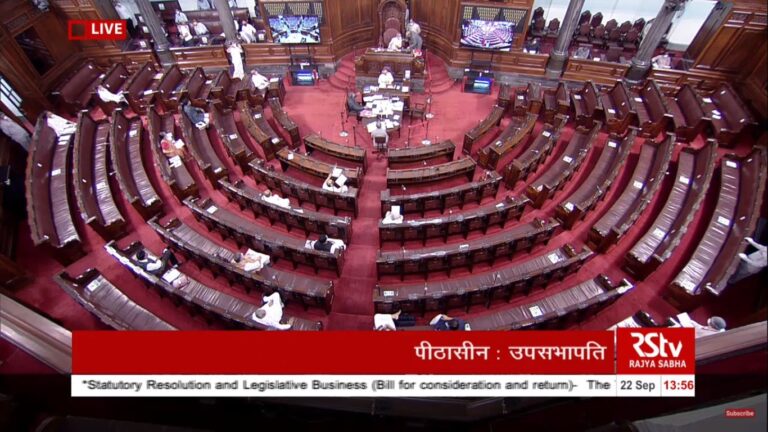
The monsoon session of Parliament started on a series of speeches from the opposition parties about the government handling of the COVID crisis, the migrant crisis, and the ordinances that BJP passed without taking the opposition into confidence. On Tuesday members of the opposition boycotted all parliamentary sessions. They raised three demands with regards to the Agricultural Laws and asserted that they wouldn’t return until demands are met. Shockingly, that very day the Parliament passed 7 key bills in the complete absence of opposition.
They cheated. They broke every rule in Parliament. It was a historic day. In the worst sense of the word. -Derek O’Brien

Chaos in Parliament 

On Sunday, 9:00-13:00 had been allotted for the parliament session. During the time, opposition members extensively critiqued both the introduction of ordinances during COVID-19 so as to pass legislatures without scrutiny. Moreover, the BJP was also criticised for not speaking to farmer organisations, or taking the agitations into consideration. At 1 pm, Deputy Chairperson Harivansh Narayan Singh extended the proceeding. The BJP had agreed to this, the opposition had not; if the session had ended as planned, the opposition would have had time to move resolutions against the Bills. Frustrated, Aam Aadmi Party MP Sanjay Singh, TMC member Dola Sen and others marched into the well of the House raising slogans against the legislations. RSTV audio feed was cut for these protests. Later, 8 of these MPs were suspended for “unruly behaviour.”
parliament opposition storms well
Opposition storms well of the house
As this was happening, Singh asked for a voice vote to decide if the Bills should go to a special committee consisting of both the NDA and the opposition. Traditionally this is followed to assure that the Bills are carefully examined. Many members including CPI(M) MP K.K Rajesh claim they asked for a division of votes, but the Deputy Chairperson ignored their requests. During the ruckus, the Chair passed the Bill despite clear dissent. At 3:40, 100 members including the Congress, RJD, CPI, CPI (M) NCP, TRS, SP, IUML and TMC signed a no-confidence motion against the Deputy Chairperson, which the Chair rejected.

Democratic Subversion 

Voting in the Rajya Sabha occurs in two primary ways:
  1. Voice note– the Chair asks those who are in favour of a motion to say “Aye” and those against the to say “No” and makes a decision accordingly
  2. Division of Votes– This method keeps a record of the MP votes and does not leave the decision upon the Chair’s discretion. This is usually done by an electronic vote, but if this was not possible because of COVID-19 precautions, they could have counted the votes.
The former is only used if the Bill is received unanimously and should not have been applied to the deeply controversial farm bills. They were highly critiqued by other parties; this included BJP’s long term allies, Shiromani Akali Dal, who gave instructions to its MPs in parliament to vote against the Bill. Other allies such as Biju Janata Dal, TRS, and AIADMK also opposed the Bills. Therefore, it is unlikely that the BJP would have passed the Bills with a division of votes. Parliamentary procedures recognise the lack of legitimacy of the voice votes; if even one person challenges the Chair’s decision of using voice notes, then they must order a division. This is considered an MP’s right. However, this must be before the decision is announced. It is possible that the opposition’s claim that they asked for the division of vote before could be false, but video footage of the bills being passed shows an extremely suspicious situation. When the deputy chairman passed the bills, the situation was so chaotic that it would have been impossible to ascertain how the MPs voted.

The dubious decision to go with a voice vote, the audio being cut along with the no-confidence motion being rejected suggests that the Chair’s decisions have been unlawful and from a partisan position.

Opposition response 

Boycotting parties listed three demands:
  1. Bring a bill that ensures private players don’t procure food grains below an MSP fixed by the government.
  2. MSP be based on the recommendations of the MS Swaminathan Committee report.
  3. the government or the Food Corporation of India to ensure that crops are procured from farmers at the fixed MSP.
Besides this, they also stated that the MPs must be reinstated.
The boycott could have been useful if the BJP did not have enough members on its own. But they hold a majority in the Lok Sabha, and in the Rajya Sabha there are currently 86 members from the BJP. The Rajya Sabha only requires 25 to conduct a session. If anything, the members boycotting the decision made matters worse for the people they are meant to be representing. The MPs who had been suspended argued that this was because they had moved resolutions against the upcoming Bills. What does removing even more of their members achieve if not make matters easier for the BJP?
Opposition MPs with placards
Sure enough, on the first day of the boycott, the Rajya Sabha was able to pass 7 bills in 3 and a half hours. The productivity of the Lok Sabha and Rajya Sabha are also at 167% and 100.47% respectively, meaning they’re able to push bills forward with little to no scrutiny. This is especially useful when passing controversial bills, like the Labour Bills, 2020. In their “protests” Opposition also isn’t using their resources to mobilise the masses and storm parliament. They’re simply holding up signs the BJP can walk past.

Can we have an effective Opposition? 

Since 2014, this is the question in the minds of many well-meaning Indians. Maybe it’s too much to expect from the parliamentary opposition party to do the job. At the most they can do walk outs, submit memorandums to the President and sit near Gandhi statue. But does the opposition have any moral right or face to act like being cheated or a victim.
As the BJP pointed out in the parliament the Bills were not that different from Congress’ own neoliberal policies; they had the same reforms in their 2019 political manifesto. SAD created a spectacle with Harismrat’s resignation, but in 2001 the party had set up a committee to remove these restrictions on agriculture trade and commodities. The UPA government’s downfall itself can be attributed to its own pro-market policies, which led to mass discontent. During the lockdown the coalition in Maharashtra also tweaked labour laws to increase working laws, causing union unrest.
The answer can be in the present opposition itself, which has reduced itself to just namesake. As the article in The Caravan says-
“The real question is: why is the extent of rural distress not fully manifested in the election results? The reason is Congress’s complacency and inability to be a real opposition…This is a technical victory for the Congress when it should have scored a knockout.”
If they are able to suggest policy changes that include loan waivers, procurement price support, lucrative prices for farm produce, and so on, then the opposition parties may be able to capture voters in rural areas during this key moment in time. However, this can’t be done by just banking on the population’s anger towards the BJP.
Also Read:Massive Protest in Bangalore against the Anti labour and Anti farmer Bills  

Adivasi Protests in Jharkhand For Separate Tribal Religion in Census

0

Adivasis across the country are agitating for the inclusion of a separate tribal religion code in the upcoming 2021-22 census. Meanwhile, the BJP and RSS in Jharkhand are campaigning amongst the Adivasi community to convince them to register themselves as Hindus in the 2021 Census. 

Under British rule, there was a separate ‘Tribal Religion’ code that Adivasis could write themselves under. This was included in the 1951-52 census after independence but was abolished in the 1961-62 census. The demand for a separate religion code has been gaining momentum again. On September 20, Adivasis from Jharkhand staged a massive protest, forming a huge human chain that included hundreds of people from villages, towns, blocks and panchayat wards, and many organizations and committees as well. 

Arving Oraon, the Chief Convener of the National Adivasi-Indigenous Religion Coordination committee, said that people of all religions and sects living in Jharkhand also participated in the protest and extended their support for the demand. The movement was also supported by people from other states, including members of the Bhim Army. According to Arvind, voices have been raised from all parts of the country for the demand of a separate column for Adivasis in the past as well. 
According to Yogo Purti, the decision to exclude the Tribal religion column or Sarna religion column and with it the third-largest group of the country with a population of more than 150 million people, shows an attempt that has been going on for several decades to destroy the core of their religion, faith, language, traditions, culture, and identity as a community. The separate religion code that is a marker of the national tribal identity was included on paper from the years 1871 to 1951. However, its abolition was a political conspiracy in independent India. At present, there are separate religion columns for many other minorities including Muslims, Sikhs, Christians, Jains, Buddhists, Persians, Jews, Lingayats, etc, but to only exclude the separate religion column of the Adivasis is an attempt to deprive them of their constitutional and fundamental rights. 

Ratan Tirkey, an expert in Adivasi issues, said that Bandhan Tigga, the person who gave the name of ‘Sarna Dharma’ to tribal religion, was very close to the RSS. He also says that the word ‘Sarna’ is not in the vocabulary of any tribal language. Sangram Besra, a retired administrative officer from Jharkhand, confirms that out of the 32 tribal communities that are there in Jharkhand, the word ‘Sarna’ is not there in any of the languages. 

According to him, the word ‘Sarna’ belongs to the Nagpuri-Sadri dialect spoken in Ranchi. Aloka Kujur, an Adivasi social activist says that the word ‘Sarna’ is RSS-sponsored. The RSS wants to create confusion amongst the tribals about their religion, so that they are not able to unite under one platform. 

After the option for ‘Tribal religion’ was removed and replaced with an ‘Other’ category in 1961 without any stated reason, the demand for a separate religion category was raised multiple times. In the 80s, Congress MP Kartik Oraon had advocated for a separate religious category of ‘Adi Dharma’ in the Parliament, but the Central government at the time did not pay any attention to this demand. Later Ramdayal Munda, the linguist, sociologist, tribal intellectual, and social worker, put forward this demand once again but it was again ignored. Declaring himself the religious leader of the tribals, Bandhan Tigga in 2001-2002 coined the name of ‘Sarna Dharma’ and raised the slogan of ‘No Sarna No Census’. Later, a Congress MLA Devkumar Dhan carried the movement forward but left it on the backburner when he joined the BJP. After all this, in the 2011-12 census, even the option of ‘Other’ was removed. 

The argument given was that while all religions have their own worshipping places to mark their identity. Hindus have temples, Muslims have mosques, Sikhs have gurudwaras, and so on, whereas Adivasis have no such worshipping place and they worship trees and plants, due to which they cannot be considered as having a separate religion. All these changes took place during the rule of the Congress. At whose behest and for what reason is not yet clear. 

Meanwhile, Seva Bharati, an RSS-affiliated organization, has been trying to establish Hindu rites and rituals in tribal-dominated areas under the banners of Vanvasi Kalyan Kendra and Vanbandhu Parishad. The RSS is of the view that the percentage of Hindus in the total population of the country has come down due to the Tribals stating their religion as ‘other’ in the census.

The RSS is on a mission to ensure that Adivasis put down their religion as ‘Hindu’ in the upcoming census so that the population numbers of Hindus increases. While the truth is that the Corporate-funded RSS-BJP government has its eyes on Adivasi’s land, water, and forest resources. They are attempting to reduce the population of Adivasis by listing them as Hindus so that their community becomes so weak that when the corporates attack their land, water, and forest resources, they are not even able to resist. 

According to the Constitution of India and government reports, Adivasis have cultures and traditions different from other religions. According to the Census report of 2011-12, the number of Adivasis is nearly 12 crore, which makes up about 9.92 of the country’s population. It is worrisome that in spite of this, they are not counted as a separate religion in the census. In Jharkhand, Adivasis make up nearly 90 lakh people out of the total population of 3.5 crores. 

At present, there are 781 Adivasi communities in India. Amongst them, there are 83 different religious traditions. The prominent ones out of these are known as Gound, Punem, Adi, and Koya. What is common to all the religious traditions is that they are all worshippers of nature and of their own ancestors. Amongst them, there is no priestly class, no caste system, no holy texts, no temples, and no deities. 

According to Tony Joseph’s book ‘Early Indians’, the first inhabitants of the Indian subcontinent were those who arrived here from Africa about 60 thousand years ago. About three thousand years ago, the Aryans arrived in India and drove the original inhabitants into jungles and mountains, who are now called Adivasis. On the other hand, the RSS promotes a theory where the Adivasis were originally Hindus, who had fled to the forests due to the tyranny of Muslim rulers, a claim that has no absolutely any scientific or historical basis.

The RSS, in order to implement its political agenda, calls Adivasis ‘Vanvasis’, meaning those who live in forests, because the word ‘Adivasi’ in itself means that they are the original inhabitants of this land. Whereas, the RSS’s ideology of the Hindu Rashtra says that the Aryans were the original inhabitants of India and that they migrated to other parts of the world from here. 

People from Adivasis communities from across the country had staged a one-day dharna at Jantar Mantar on February 18 this year to demand a separate Religion code in the upcoming 2021-22 census. Besides Jantar Mantar, protests also took place in front of the Rajbhavan in various States. Along the same lines, Adivasi communities of Jharkhand created a massive human chain in order to demand a separate Tribal column. 

The author is a Jharkhand based journalist. The article has been translated to English by Damayanti Saha. The original article in Hindi can be found here. 

Nationwide Farmers Protest on September 25 against Agriculture Bills

1

Farmers from across the country will come out on the streets on September 25 to protest against the three new agricultural bills that are set to sell the country’s agricultural sector and food security to corporate interests. This is the first time that all the major farmer’s organizations across the country have come together to protest against these three bills. Farmers organizations have called for strikes, chakka jams, and protest marches against the bills.

In the midst of the pandemic and while the country was under lockdown, the government passed three ordinances relating to the Agriculture sector. The Farmers’ Produce Trade and Commerce (Promotion and Facilitation) Ordinance, 2020, The Farmers (Empowerment and Protection) Agreement on Price Assurance and Farm Services Ordinance, 2020, and The Essential Commodities (Amendment) Ordinance, 2020.

These ordinances have been introduced in the parliament in spite of nation-wide protests by farmers, strong opposition in the parliament, and notably the resignation of Union Minister Harsimrat Kaul Badal of the Shiromani Akali Dal, a long-standing ally of the BJP.

The ordinances and now the Agriculture bills have been criticised for being anti-farmer and pro-agricultural business. Farmers have raised the issue of the lack of guarantee of MSP, the destruction of the mandi ecosystem, disadvantage of the small and marginal farmer in an open-market, exploitation under contract farming, and the issue of hoarding.

In addition to the All India Kisan Sangharsh Coordination Committee, a platform of 250 farmers’ organisations, other farmer’s organisations such as the Bhartiya Kisan Union have also announced strikes and chakka jams on September 25. All the 31 peasant organizations in Punjab, and other unions in Haryana and Uttar Pradesh have also announced their participation.

Farmers’ groups in West Bengal have announced a chakka jam, and organizations in Bihar have organized chakka jam and protest marches. Farmers unions in Rajasthan, Madhya Pradesh, Chattisgarh, Jharkhand, Odisha, Karnataka, Kerala, Pondicherry, Tamil Nadu, Andhra Pradesh, Telengana, Assam, Tripura, etc will also participate.

The farmer’s protests have been supported by the CPI(M) and central trade unions. RSS-affiliated farmers groups will not join the protests, though they have also demanded amendments to provide a legal guarantee to MSP. The Aam Aadmi Party has announced its support for the strike on September 25.

Protests against the agriculture bills have been going on across the country already and will continue for the rest of the week as well.

Umar Khalid to Remain in Judicial Custody till October 22

0

A Delhi Court today ordered for Umar Khalid to remain in judicial custody till October 22 in connection with the Delhi riots case.

Umar Khalid was arrested by the Delhi Police’s special cell on September 13 for his alleged role in the riots that broke out in north-east neighbourhoods of the national capital in February this year. The FIR against him was filed under the Unlawful Activities (Prevention) Act (UAPA).

He had earlier been charged under the UAPA in another case related to the riots. He had been questioned on July 31, when his mobile phone was seized by the police. He was then summoned earlier this month, when the police arrested him after questioning him.

He was virtually produced before Judge Amitabh Rawat of the Additional Sessions Court, Karkardooma after his 10-day police custody ended today.

The Delhi police sought an order from the Court to send Umar Khalid to judicial custody. After the order, Umar Khalid requested to meet his parents and to be allowed to carry his spectacles and some books to jail. The Court asked him to file the appropriate application for the same.

Violence in parts of north-east Delhi from February 23 to 26 – after weeks of protests against the Citizenship (Amendment) Act and the National Register of Citizens – had left over 50 dead and hundreds injured, many with gunshot wounds.

The FIR against Umar Khalid states, states, as quoted by the Indian Express: “Khalid allegedly gave provocative speeches at two different places and appealed to the citizens to come out on the streets and block the roads during the visit of US President Donald Trump to spread propaganda at the international level about how minorities in India are being persecuted.”

He is one of many other students, Muslim activists, journalists, and academicians who had been peacefully protesting against the CAA and NRC, who have been framed for the violence largely committed by Hindu mobs against Muslim residents of Delhi.

Rail Roko Campaign by Farmers in Punjab Against Anti-Farmer Bills

1

Farmer’s groups in Punjab are starting a ‘Rail Roko’ (Stop Trains) campaign from today in order to protest the new anti-farmer agriculture Bills introduced in Parliament. As a result, all trains which go to and from Punjab have been suspended by the Indian Railways for two days, ie, from September 24 to September 26.

The three anti-farmer ordinances brought in during the lockdown have been introduced in the parliament in spite of nation-wide protests by farmers, strong opposition in the parliament, and notably the resignation of Union Minister Harsimrat Kaul Badal of the Shiromani Akali Dal, a long-standing ally of the BJP.

The agriculture bills have been criticised for being anti-farmer and pro-agricultural business. Farmers have raised the issue of the lack of guarantee of MSP, the destruction of the APMC mandi ecosystem, the disadvantage of the small and marginal farmer in an open-market and unfair competition, exploitation under contract farming, and the issue of hoarding and food security.

The Kisan Mazdoor Sangharsh Samiti announced that trains will not be allowed to run in Punjab during these two days in order to intensify the protest against the agricultural bills.

The administrative inconvenience and hurdle to travel and economic activities that this ‘Rail Roko’ campaign and the stoppage of trains can cause will perhaps finally force the government to take cognizance of the farmer’s protests. Until now, their demands have gone unheeded by the government, with the PM attempting to pacify them with empty promises that MSP will not be harmed.

All farmers’ unions in Punjab have already announced a massive strike and protest on September 25 against the anti-farmer bills.

The central government introduced these bills in the Lok Sabha on Monday. These are the Farmers’ Produce Trade and Commerce (Promotion and Facilitation) Bill, 2020; The Farmers (Empowerment and Protection) Agreement of Price Assurance and Farm Services Bill, 2020, and The Essential Commodities (Amendment) Bill, 2020.

Bangalore: ASHA workers protest against Government Stepmotherly Treatment

0
Bengaluru: As the legislative session is going on, Bengaluru is becoming a focal point for many struggles against the anti-people bills being passed. Asha health workers who are at the forefront in the fight against the COVID-19 pandemic have launched a struggle to fulfill their demands at freedom park. The health activists who are playing a vital role as a key medium between the health care system and the rural population have been working without a salary for the past few months. Among one of their demands is the payment of a fixed honorarium of Rs 12,000 and the release of arrears that is due.

Also Read:Karnataka: ASHA Workers & Sanitation Workers Protest against the Government

The ASHA workers had organised a Bengaluru Cholo agitation and to protest in front of deputy commissioners offices in respective district headquarters of Karnataka. Activists from across various districts were traveling to the state capital to join their counterparts to participate in the massive protest at freedom park in Bengaluru. However, the state government using the police machinery has tried to subdue their agitation by restricting the activist from traveling to Bengaluru. Health workers who have been stopped by police at Tumkur, Maddur, Mandya districts have condemned the highhandedness of government. Under the banner, Karnataka State United Asha Workers Association supported by All India United Trade Union Center (AIUTUC) had given a call for the agitation after the government failed in keeping its promises of addressing the demands of the health workers.

12000 ಕನಿಷ್ಠ ವೇತನ ಕೊಡಿ

ಆಶಾ ಕಾರ್ಯಕರ್ತರು ಹಕ್ಕೊತ್ತಾಯಗಳೇನು? ಅವರ ಬಾಯಲ್ಲೇ ಕೇಳಿ

Posted by Naanu Gauri on Wednesday, September 23, 2020
“We have been effectively working as forefront warriors and fighting against the unprecedented Corona pandemic and in reaching government health care schemes at the grass-root level. Over 42,000 Asha workers across the state do the difficult work of door to door surveys, detecting positive cases, tracing primary and secondary cases. However, activists have been deprived of all protective gear. The government is showing a step-motherly attitude by adopting a dilly-dallying approach in revising the honorarium which has forced the health workers to launch the agitation. Presently the government which is paying Rs 6,000 as honorarium had announced of providing Rs 3,000 additional incentive in view of the corona crises but has not fulfilled its own decision. It merely indulged in lip service calling us frontline workers and applauding our service but none of our demands are being fulfilled rued Asha workers association state unit secretary Dr. Nagalakshmi. The protesters strongly condemned the attitude of the government that has stopped Asha workers and its leaders from traveling to the state capital. Such restrictions will not deter the workers from continuing the agitation. The government should immediately respond to their justified demands failing which would force us to launch an indefinite agitation they warned.