Union minister Ram Vilas Paswan, who recently underwent heart surgery, died today at a Delhi hospital where he was recuperating. The 74-year-old was undergoing treatment at the hospital, and had to undergo surgery “due to the situation that had suddenly emerged,” his son Chirag Paswan had tweeted on Saturday.
“Papa… Now you are not in this world but I know you are always with me wherever you are. Miss you Papa,” Chirag Paswan tweeted this evening.
He shared an old photo of him and his father along with the tweet.
Union Minister and LJP leader Ram Vilas Paswan passes away, tweets his son Chirag Paswan. pic.twitter.com/YQi5oNHz8Q
Paswan was 74 years old and had been in politics for more than five decades and is one of the country’s most noted Dalit leaders, has been hospitalised for the last few weeks.
Ram Vilas Paswan was serving as a Cabinet Minister of Consumer Affairs, Food and Public Distribution in the present NDA government. Paswan was also the president of the Lok Janshakti Party, eight-time Lok Sabha member, and current Rajya Sabha MP.
Condolences have been pouring from all over the political spectrum with people remembering and mourning the death of a veteran leader.
Prime Minister Narendra Modi condoles the death of Union Minister Ram Vilas Paswan.
I am saddened beyond words. There is a void in our nation that will perhaps never be filled. Shri Ram Vilas Paswan Ji’s demise is a personal loss. I have lost a friend, valued colleague and someone who was extremely passionate to ensure every poor person leads a life of dignity. pic.twitter.com/2UUuPBjBrj
Rahul Gandhi tweeted- The news of the untimely demise of Ram Vilas Paswan ji is sad. The poor-downtrodden lost a strong political voice today. My condolences to his family members.
रामविलास पासवान जी के असमय निधन का समाचार दुखद है। ग़रीब-दलित वर्ग ने आज अपनी एक बुलंद राजनैतिक आवाज़ खो दी।
Lalu Prasad Yadav also tweeted- I am very sorry to hear the sad news of the untimely demise of Rambilas Bhai. I am reminded of the unbroken relationship of the past 45 years and all the social, political battles. Rambilas brother, you left early. I am not in a position to say anything more than this: Lalu Prasad Yadav
रामबिलास भाई के असामयिक निधन का दुःखद समाचार सुन अति मर्माहत हूँ। विगत 45 वर्षों का अटूट रिश्ता और उनके संग लड़ी तमाम सामाजिक, राजनीतिक लड़ाइयाँ आँखों में तैर रही है।
रामबिलास भाई, आप जल्दी चले गए। इससे ज़्यादा कुछ कहने की स्थिति में नहीं हूँ।
BSP supremo Mayawati also tweeted her condolences to the family of Ram Vilas Paswan
केन्द्रीय मंत्री व बिहार के प्रमुख नेताओं में से एक श्री रामविलास पासवान के निधन की खबर अति-दुःखद। उनके परिवार व पार्टी के लोगों के प्रति गहरी संवेदना।
Extremely saddened by the demise of senior leader Sri Ram Vilas Paswan Ji. He was a towering leader who leaves behind a rich political legacy which will remain unparalleled for a long time. The nation will truly miss him and his selfless service! pic.twitter.com/lSCWCqCsZi
— N Chandrababu Naidu #StayHomeSaveLives (@ncbn) October 8, 2020
My heartfelt condolences at the passing away of Union Minister & founder of Lok Janshakti Party, Ram Vilas Paswan ji. May God give strength to his family members & supporters to bear this loss. May his soul rest in peace.
Janta Dal-United (JD-U) gave a poll ticket to former Bihar social welfare minister, Kumari Manju Varma, who is one of the accused in the infamous Muzaffarpur shelter home rape case.
While the country is boiling over Hathras gang rape and murder case, for Indian politicians it is just another day of politicking and planning how to win the next elections.
Kumari Manju Devi name was part of the list JD-U released of 115 candidates on Wednesday.
Muzaffarpur Shelter Home Rape case refers to a shelter home called “Sewa Sankalp Evam Vikas Samiti” where Mumbai’s Tata Institute of Social Sciences reported cases of repeated sexual abuse, rape and torture in May 2018. A medical examination confirmed that 34 out of 42 of those living at the shelter were sexually abused. The girls, aged 7-14 were allegedly scalded with boiling water, raped and forced to sleep naked at the state-funded shelter home. 11 girls were also missing from the house, who were allegedly murdered. Many girls also allegedly were forced into abortions.
Manju Varma’s husband, Chandrashekhar Varma was reportedly a close friend of the main accused in the case, Brajesh Thakur, and regularly visited the home. When the CBI investigated their house, a 50 live cartridges were found. The couple was charged under the arms act.
After she was accused of the case, Manju Varma became “untraceable” for a week, but eventually surrendered. She denied all charges brought against her during trial in the case.
Two months after the case was registered, she resigned from the cabinet. During the time Nitesh Kumar was heavily criticised for fielding her. The decision to add her to the list now has also proven to be controversial.
JD-U leader Sanjay Singh defended the party’s decision states, “She is not an accused in the case and was arrested for possessing illegal arms and ammunition. What is wrong in fielding her to contest elections?” Singh said. However, JD-U ally BJP has remained quiet on the matter.
Leader of All India Progressive Women’s Association said that the JD-U has exposed its mindset towards the victims of Muzaffarpur shelter home case by giving ticket to Verma.
Kumari Manju Verma will contest from the Cheria-Bariarpur Assembly constituency, which she represented from 2010 until 2018.
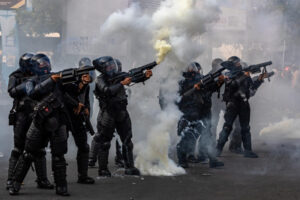
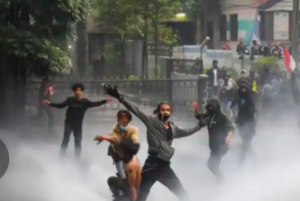
In Indonesia, students and workers went on a massive strike protesting the new “job creation” omnibus bill that will weaken environmental protections and workers’ rights to favour investment. The bill was pushed through parliament with unprecedented speed and has been characterised as a “ruinous false choice”. Police forces since launched “cyber patrols” and fired tear gas and water canons at protestors.
Indonesian president, Joko Widodo claims that the Omnibus Bill, which is central to Widodo’s economy reforms, will promote investment and boost jobs. It was first introduced in October following re-election, with the promise of revising laws that obstruct job creation.
During his second term, the government and media put forth narratives which gave importance to economic growth and FDI to lend legitimacy to the Widodo government. As Trissiaoei writes:
There are at least three sets of Omnibus Bills that are/will be introduced this year:Job Creation, Taxation, and New Capital City. All three aim to increase liberalisation by making markets more flexible to foreign investment. Of these, workers are currently protesting the Job Creation Bill, though the controversial taxation bill was also introduced yesterday.
The bill will revoke around 26 articles on buildings including those of building permits and licenses, building ownership status, licenses for land rights, safety, structural requirements, protection against fire and lightning strikes along with requirements for health, air lighting, sanitation, building materials, etc.
The bill will simplify the business license procedure across all business sectors including agriculture, security, military and defence, trade, energy, telecommunications, among others. Regulations for foreign investors will also be removed, and instead certain businesses are prohibited for both domestic and foreign companies.
Labour “reforms” will scrap severance payments, payments for recognition of length of service and compensation for rights. Article 93 that stipulates workers’ rights for paid leave of Foreign workers will also be allowed to work in Indonesia without a permit in upper level and management positions. Outsourcing requirements will be significantly relaxed, and institutions can even outsource full-time work. The industries will not have to adhere to regional minimum wages, and Article 93, which stipulates worker’s rights for paid leave under certain circumstances will be scrapped.
There will also be a stronger central government, and regional governments will be weakened.
Even though it claims to be creating jobs, the Omnibus Bill will make the workers’ situation even more dire. It legalises many of the ways in which corporates take advantage of vulnerable workers, and makes it impossible for them to take legal recourse against mistreatment.
“Easy hiring, easy firing” will empower big corporations to lay off workers for minuscule reasons, or even for demanding conditions that are not oppressive. Mass firings, which rose during COVID-19, will be institutionalised. The relaxation of outsourcing laws will also give them a pool of vulnerable workers to choose from, who have to work under precarious conditions, with unregulated hourly wages, and longer working days.
With the scrapping of paid leave, workers can also be overworked. This will also put workers who have to take days off under further risk of getting fired. This especially puts those who come from disenfranchised backgrounds and areas lacking in sanitation at further risk as they could fall sick and not be able to take the required rest.
All this would disempower workers unions and put their members at risk. In the case of the United States, for instance, workers are afraid of unionising for the danger of getting fired.
The bill also makes it easier for foreign nationals to be employed. This would make it more difficult for domestic employees to attain social mobility as companies can hire foreign workers at lower pay at both higher and lower levels. Immigrant workers at lower levels can more easily be exploited, because of which employers will also be less likely to employ domestic labour.
Environmental Concerns
The new Bills scrap the mandatory Environmental Impact Assessments especially for the so-called “low-risk business” category. Buying and selling land is also made much easier, as mentioned above, without any scrutiny at how the building materials are created, or how it will affect the people around.
The bill also simplifies business license procedures, making it easy for private corporations in environmentally draining sectors- such as energy, defence, agriculture, marine- to buy, steal and exploit land.
Combined, this will negatively impact “resource rich” protected zones such as indigenous lands, forests, remote islands, etc. Along with the recent mining law, this can be disastrous for pollution, and also accelerate displacement of the indigenous population.
State response to Omnibus protests
The police and state has been trying to suppress protestors with excessive force. Their new directives include mandates to launch “cyber patrols”. In the past too, the Indonesian police had tapped into people’s phones and had access to whatsapp messages. The police are also allowed to create and spread false news in the form “counter-narratives”. All of this has been used to suppress dissent. They are able to track movements and plans of the protestors and then use excessive force, in the form of tear gas, water canons, etc to disperse them. They also arrested at least 400 protestors on 7th October alone.
Police fire at and use teargas and water canons against protestors
This move from the Government could have been anticipated from the outset. The Bills itself lacked any sort of transparency and were rushed in the parliament, despite massive outcry. The Bill also encodes criminalisation of dissent by weakening regional governments and strengthening power at the centre.
This, of course, isn’t unique to Indonesia as similar methods of curbing dissent, centralising power and passing controversial bills while avoiding scrutiny are methods used by the Indian Government. Moreover, around the world and in India, similar neoliberal bills are being passed to serve big industrialists. This cannot be understood as Indonesia’s issue, and instead the consolidation of regional conservatives with global liberal capital.
Noida (UP):The alleged gang rape and murder of a young girl in Hathras, Uttar Pradesh has raised quite a storm in the society. As if the death of the victim is not enough to raise anger in society, the blatant support of police and administration has raised a lot of questions on the how caste crimes and crime against women are treated by the society.
Lot of citizenry and social organizations came to streets protesting the government handling of the case and their harassment of the victim’s family since the news broke out of the death of the girl.
UP government tried to stop opposition leaders like Rahul gandhi and Priyanka Gandhi from entering Uttar Pradesh on 1st October.
800 people have been booked in 5 FIRs from 1st october to 5th oct.
The latest in the series of overt police action came yesterday, when around 60 people including samajwadi party workers were booked by Gautam Buddh Nagar police for carrying out candle-light marches on October 2 seeking justice for the Hathras gangrape and murder victim.
Workers of the opposition Samajwadi Party staged a candlelight vigil in Noida on 2nd October, demanding a fair investigation into the death of the 19-year-old Dalit woman who was allegedly gang-raped in Uttar Pradesh’s Hathras.
Many Locals and city-based rights activists also took part in the candlelight vigil.
Demanding strict punishment for the guilty, the SP workers raised slogans against the Yogi Adityanath government during the march that started from Salarpur and culminated near Bhangel in Sector 82 of Noida.
“Strict action should be taken against the culprits after a fair investigation into the Hathras incident,” local SP leader Raghvendra Dubey said.
“All government departments are trying to hush up the case and the possibility of a fair probe looks bleak. Opposition parties are baton-charged on the instructions of the government, with might replacing democracy,” he alleged. SP workers said their struggle will continue until the victim’s family gets justice.
The move comes as a series of FIRs registered against protesters, who came out on the streets against the UP police’s handling of the case.
According to police, the FIR has been filed against Samajwadi Party leader Deepak Nagar among the ten named and around 50 unnamed persons.
According to a report by Times of India The compliant which has been filed by sub-inspector Avshesh Bhati from Bisrakh police station in Greater Noida states that on the evening of October 1, scores of people carried out candle-light marches near the Ek Murti roundabout in Greater Noida West thus disrupting traffic and violating guidelines formed in the view of COVID-19.
The protesters also raised slogans against the Uttar Pradesh government and police, the complaint read. Meanwhile, the local Samajwadi party leaders have claimed that the protest was carried out peacefully and under the supervision of Bisrakh police while no guidelines were violated.
A 19-year-old Dalit woman was allegedly raped by four upper-caste men in Hathras on September 14. She died on September 29 at Delhi’s Safdarjung Hospital where she had been brought for treatment. The victim was cremated in the dead of the night near her home on September 30. Her family alleged that they were forced by the local police to hurriedly conduct her last rites. Local police officers, however, said the cremation was carried out “as per the wishes of the family”.
For the first time since 2000, there has been an uptick in the acceleration of extreme global poverty. The World Bank reported on October 7th that between 88 and 114 million people had been thrown into extreme poverty because of COVID-19, and an expected 150 million people will be in the same position by the end of this year.
The World Bank’s estimates show a much more dire situation than previously expected. For example, Bill & Melinda Gates Foundation reported 37 million people went into extreme poverty because of the pandemic.
The new estimates show that a between 703 and 729 million people are in extreme poverty- defined as living on less than $1.90 a day- and that the number could rise further in 2021. Before the pandemic struck, the number of people in in extreme poverty was estimated at 615 million for 2020.
At least 9.1 to 9.4% of the world’s population will fall into extreme poverty in 2020. This is not too different from the poverty rate in 2017, which was at 9.2%. But before the COVID-19 pandemic, the poverty rate was expected to drop to 7.9% in 2020. And between 1990 and 2015 global poverty was decreasing by 1 point every year. This reversal of poverty reduction is by far the largest increase since 1990, when the World Bank first started recording these rates.
“This is the worst setback that we’ve witnessed in a generation,” said Carolina Sánchez-Páramo, global director of the World Bank’s Poverty and Equity Global Practice.
Even during the financial crisis and global recession of 2008, the number of people in extreme poverty was still on the decline because of the continued growth of emerging markets of India and China.
Before this, the most severe setback was in 1998, after the Asian financial crisis threw tens of millions of people into extreme poverty. This setback proved to be brief, and the figures completely rebounded by 1999.
The majority of the world’s extreme poor live in sub-Saharan Africa, where there has been little improvement, especially because of neo-colonial impositions. Even before the pandemic, the rate of poverty was at 40%, with around 440 million of the continent’s population was in extreme poverty. This is expected to rise to a rate of 42% this year, or 480 million people, due to the effects of the pandemic.
The new surge in poverty is expected to likely dash the hopes of the Sustainable Development Goals to eradicate extreme poverty by 2030.
After 15 Lakh power employees boycotted work for a full day on October 5th, the Yogi Adityanath Government in Uttar Pradesh decided to postpone selling the Purvanchal Power Distribution Corporation (a subsidiary of UP Power Corporation Limited) to a private corporate. The proposed plan was part of the Modi Government’s nationwide project of privatising electricity distribution companies (discom).
Based on a call for action put forth the Vidyut Karmachari Sanyukt Sangharsh Samiti, government employees in the power department in Uttar Pradesh began an indefinite work boycott on Monday. This resulted in long power cuts in many parts of the state. Essential services were still running as the unions separated them from the protest.
On October 6th, representatives of UP Power Corporation and the Vidyut Karmachari Sanyukt Sangharsh Samiti and related trade unions met and came to a compromise. They agreed on five points, including halting privatisation.
However, the issue of privatisation has not completely ended as the Government will hold monthly review for three months, till January 15th, on the matter.
Discom Protests: Yogi-Modi state plunged into darkness
The most affected area is Purvanchal, where the proposal of privatisation of the distribution corporation was first cleared by the Yogi government.
Yashwant Singh from Ghazipur district near Banaras, wrote on facebook,
“I am in Ghazipur. It is a bad situation. Water, fan- everything has stopped. Even the inverter isn’t working anymore. There’s public outcry as everyone is discussing the strike. The issue of privatisation has reached the public. The BJP people are just trying to hide face. Farmers need water for paddy. Even tube wells have stopped”
Similarly, Aditya Srivastava wrote that most of Gorakhpur is in chaos due to lack of electricity.
There are similar reports from Banaras and Allahabad. On social media, people stated that there wasn’t electricity in their cities for 36 hours. Workers Unity also reports that some places had demonstrations regarding the same.
When the employees decided to boycott work for the whole day, accountants took charge of the substations. In many places, including Gorakhpur, incidents of suspending engineers were reported.
As a result of this, the anti-privatisation gained traction and support, with many people questioning the intentions of the government on social media.
Key points of the agreement
The proposal to privatise Purvanchal Power Distribution Corporation is withdrawn. No proposals for any other arrangements will be under consideration with regards to discom. Improvements will be made with the consent of the employees within the present system of power distribution corporations of UP. No other power distribution corporation will be privatised in Uttar Pradesh without the consent of the employees.
Employees and management will work together to improve the existing power distribution system.
Vidyut Karmachari Sanyukt Sangharsh Samiti will cooperate in: 1. making the distribution sector corruption-free 2. making billing and collection efficient 2. fully satisfying consumers while taking meaningful steps to make power sub-stations Aatmanirbhar and self-sufficient.
The above points will be reviewed monthly till 15 January in this financial year, and the Energy Minister, Management and Employees Union will take part in the same.
No action will be taken against any employee, engineer or contract worker who participated in the anti-privatisation movement. The government will unconditionally withdraw the cases they filed against electrical workers, contract workers, junior engineers and officials of the Sangharsh Samiti during this period.
Issue of privatisation & discom not yet finished
The press release of the agreement does not discuss the governments plans regarding privatisation.
In villages in UP, private electricity meters are being installed near farmers’ tubewells. Poles and metres of private power companies have also been installed in many villages. Billing processes have been handed over to private companies in substations. Because of this, consumers are complaining about their bills doubling in payment.
Moreover, this issue isn’t unique to UP. On September 20, the central government sent orders to all states to disband the public sector discom and hand them over to private companies. Earlier, the Government took steps to dismantle the Purvanchal Bijli Vitran Nigam in Narendra Modi’s parliamentary constituency, Benaras. This too was met with dissent, and the UP Government had to halt plans.
Therefore, there has been dissent from power workers across the country. The Federation of Karnataka Electricity Board Employees Union and Associations held demonstrations outside the power corporation’s headquarters in Karnataka.
Swaraj India president Yogendra Yadav, Haryana Kisan Manch chief Prahalad Singh and numerous farmers have been detained in Haryana’s Sirsa district. They were protesting the recently passed farm laws.
Over 100 farmers were taken into custody & detained from Haryana’s Sirsa. The farmers were protesting against the contentious Farm Laws. Farmer organisations, however, said that they will continue to protest.
Singh said that farmers were holding a dharna on a busy highway in Sirsa despite the administration not granting them permission. “The protesting farmers had been allowed to hold their dharna on Dussehra grounds and we had asked them to move there. However, they did not agree, after which we took them into preventive custody,” Singh said adding that local commuters were facing difficulties as the dharna was being held in the middle of a busy road. The protest was being held on the Sirsa-Barnala highway near the Baba Bhumman Shah Chowk in Sirsa.
“Along with protesting farmers, I have been detained from farmers’ protest site in Sirsa Been taken to Police Thana Sadar, Sirsa,” Yadav tweeted. Yadav claimed that the Haryana government was rattled by farmers’ questions and was bent upon using “brutal force to prevent dissent”.
I have been detained by Haryana Police for joining peaceful dharna at Sirsa. Dharna site demolished. About 100 farmers and leaders arrested.
Clearly, Haryana govt is rattled by farmers' questions, bent upon using brutal force to prevent dissent. https://t.co/vEWxUWW9UN
Police had on Tuesday used water cannons and tear gas to disperse protesting farmers who tried to cross barricades and proceed towards the residences of Dushyant Chautala and his grand uncle and power minister Ranjit Singh Chautala in Sirsa. The farmers demanded the resignation of the minister over the recently enacted farm legislations.
अब पुलिस इस जुगत में है कि किसान नेताओं पर मुकदमा बना दिया जाए और मेरे सहित बाकी को छोड़ दिया जाए। सिरसा जिले में किसानों कि तरफ से विरोध शुरू। मेरी सभी किसानों से अपील: शांति बनाए रखें! हमारी लड़ाई पुलिस से नहीं सत्ता से है। हमला चाहे जैसा भी हो, हाथ हमारा नहीं उठेगा। https://t.co/9ZxJ56TAxO
Swaraj India National President Yogendra Yadav said that farmers are not afraid of getting arrested. Peasants have come on the streets and they will not be cowered down. The police repression reminded me of Pipli, Orissa. Farmers will contunue to protest until the governemnt take back these laws.
While farmers belonging to 17 different organisations were part of the protest held on Tuesday, only a few continued protesting today. The farmers said they will carry on with their dharna for an indefinite period and force the centre to roll back the new farm legislations, which they dubbed as “anti-farmers.”
“Neither the police nor the administration can suppress the voices of farmers. They may ask us to clear this protest site, but our agitation against the farm legislations will continue and we will not rest till we force the government to revoke these laws,” a farmer, who was at the protest site said.
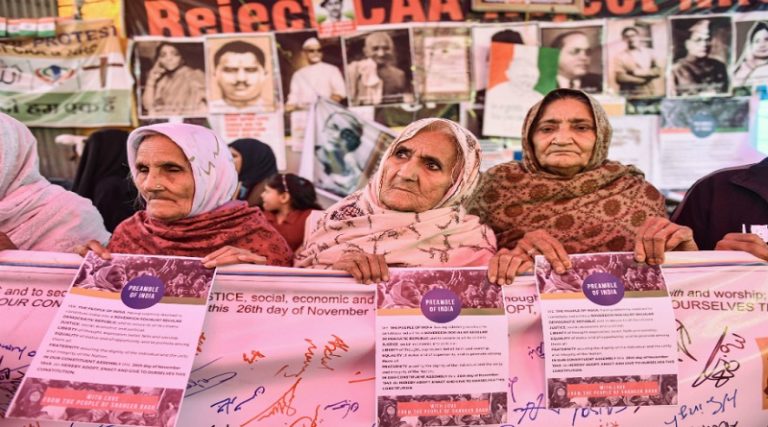
Pronouncing its verdict on the balance between the right to protest and other rights in relation to the protests that took place at Delhi’s Shaheen Bagh this year, the Supreme Court has held that public spaces cannot be occupied indefinitely.
The Bench of Justices Sanjay Kishan Kaul, Aniruddha Bose and Krishna Murari held,
“Dissent and democracy go hand in hand.”
The Bench held that while the right to protest is a constitutionally protected right, it cannot be exercised in a manner so as to cause obstruction to other citizens.
The Court went on to note that it was the duty of the administration to remove such blockades of roads. The administration’s inaction in this regard warranted the Court’s intervention, the Bench held.
The administration must carry out its function of clearing out obstructions from roads and carriage ways and not wait for the Court’s order to do so, the order states.
In light of the anti-CAA protests at Shaheen Bagh, two petitions were filed before the Supreme Court for the clearance of Kalindi Kunj Road, which is in proximity to the site of the protests. The first petition was filed by lawyer and activist, Amit Sahni. Sahni has prayed for certain specific directions for the removal of the blockage at the protest site.
The second petition was filed by Nand Kishore Garg. He had sought the removal of protesters from the site on Kalindi Kunj Road.
While hearing the petitions seeking the clearing of the protest site at Delhi’s Shaheen Bagh, the Supreme Court had asked a team of interlocutors to hold talks with the protesters. The interlocutors – Senior Advocate Sanjay Hegde and Advocate Sadhana Ramachandran – had submitted the report before the Court on February 26.
Owing to the COVID-19 pandemic, the protest site had to be cleared out earlier this year, after many months of a peaceful sit-in demonstration against the controversial Citizenship Amendment Act (CAA).
While reserving its verdict in the matter, the Court had noted that a balance needed to be struck between the people’s right to protest and the right to free movement of others. The Court had said that while the right of people to protest is a valuable right in a democracy, that there are also other public rights such as the right to movement and mobility that exist, and a balance has to be drawn between these.
Tamil Nadu chief minister E Palaniswami will be All India Anna Dravida Munnetra Kazhagam’s (AIADMK) chief ministerial candidate for state elections next year, party leader and deputy chief minister O Panneerselvam said on Wednesday.
O Paneerselvam, who is the coordinator of the AIADMK, announced Edappadi Palaniswami as the CM candidate for the Assembly Elections on Wednesday. The announcement came after intense deliberation in the party meetings.
The announcements were made at the party headquarters in Chennai on Wednesday.
“I am happy to announce that our dear brother Palaniswami will be the victorious chief ministerial candidate of the AIADMK for the 2021 Assembly elections,” he said. The decision was taken unanimously in consultations led by party presidium chairman E Madusudanan, he added.
Palaniswami, who is the joint coordinator of the party announced the formation of a steering committee, which has been O Panneerselvam’s consistent demand. While EPS was initially opposed to creating two different power centers in the party, he is said to have finally conceded. The committee includes Ministers Dindigul C Sreenivasan, P Thangamani, and S P Velumani.
There was friction between the two leaders O Paneerselvam and E Palaniswami for the CM candidate from AIADMK.
This announcement marks the coming together of the EPS (E Palaniswami) and OPS (O Panneerselvam) factions. The decision to make EPS the face of the party came through the party presidium chairman E Madhusudhanan today morning.
Tamil Nadu will go to Assembly polls in 2021.
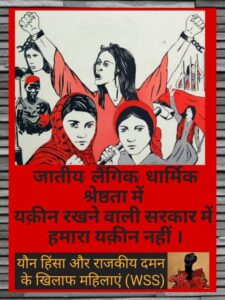
On Friday, Women against Sexual Violence and State Repression (WSS), in a strongly worded statement, denounced the response of UP’s State forces to the rape and murder of a young dalit girl, Manisha Valmiki. They also demanded the resignition of Yogi Adityanath.
The WSS is a non funded grassroots organisation that started in November 2009 to put an end to the violence that is forced upon women’s bodies by the state and society. They consist of a nationwide network of women from diverse political and social movements from various organisations and movements.
Those who chant “Save the Daughter” are busy saving the rapists!
Women Against Sexual Violence and Political Suppression (WSS) express concern over increasing sexual violence against women in Uttar Pradesh. With regards to the rape of Dalit women in Hathras and Balrampur, we strongly critique the negligent and complicit actions of the State forces, which have served the Savarna rapists, including burning the body overnight, erasing evidence of rape from the autopsy.
The WSS believes that in UP people, justice is a far cry for Women especially Dalit women. According to the National Crime Record Bureau, violence against women and Dalits in UP has increased in the last 2 years. UP has the highest record of crimes against women and dalits, as well as crimes against young girls. The Hathras incident of rape and murder of a valimiki girl has provided an example of these statistics.
Such a crime would shake any civilised society, which proves how deep rooted Manuvadi patriarchy is established in the society.
If that was not the case, it would not have taken a week for police to register FIR of the victim. The incident occurred on September 14 and by the 17th the SSP was made aware of the incident through a tweet. The police only registered an FIR and treatment of the injured girl started only after there was state-wide outcry. After the news spread only then the accused were arrested.
hathras police burn the dead body of the rape victim
It’s clear from their illegal actions that the police administration is trying to save the culprits. After the girl’s death in Safdarjung Hospital, the police created narratives that varied from her statement: that the rape did not happened, that they didn’t cut her tongue, or that she died of suffocation. For the police to make such statements even after the girl had given statement to magistrate that she was raped and named the accused is a crime in itself and raises questions about their intentions.
The UP Police broke law by kidnapped the girl’s dead body from the hospital to burn it in the middle of the night while the family kept on requesting the police to hand over the body to them repeatedly asked them so that they can do the cremation rituals in the morning. This is both inhumane and illegal. Thankfully, the Lucknow bench of Allahabad High Court took cognisance and stated that this act was in violation of Article 21 of the Constitution, “the right to life”. The right to life includes respecting the person’s dead body. In disregarding the family’s wishes and disrespecting her dead body, the Hathras police committed an illegal act. We strongly condemn this too.
To save the upper criminals, the government is doing one criminal act one after another.
Instead of taking action against those who are accused in the rape and murder, the state is trying to suppress the victims’ family. There are videos in media that show the DM openly threatening the victim’s family. The police harassed the ABP journalist who tried to meet the family, and blocked the victim’s lawyer from meeting the family. Whether it is the upper caste rapists of the Hathras case or Chinmayanand, the governemnt is always seen saving the rapists. For them “Beti Bacho” (Save the Daughter) is just a slogan. How can we expect such a police state to bring justice?
The day when the police burnt the victim’s body in secret, another heinous case of the rape and murder of a Dalit girl from Balrampur district in UP came into light; the criminals broke the girl’s limbs sent her home on a rickshaw. When she reached home, she died. There is another incident from Azamgarh district. These highlight the state’s view towards women. Why is it that in each and every case of rape and murder, the police is seen protecting the upper caste rapists. Though the Government invokes Ambedkar, crimes against Dalits and women have increased. This only shows that the current government is against Dalits, women, Adivasis and minorities.
WSS strongly denounces the Government’s attitude. We demand a criminal lawsuit to be filed against the senior Police officers who tried to suppress the matter and burnt her victim’s body in secret. We also demand the resignation of Chief Minister Ajay Singh Bisht as his government is against Women, Dalits and minorities. Since the Hon’ble High Court has taken cognisance of the illegal nature of burning the body, the WSS urges them to get the matter investigated under their supervision, given the seriousness of the case and the conduct of the police. The WSS also requests that the victim’s statement given to the magistrate under section 164 be submitted in High court to prevent any tampering with it.




 Even though it claims to be creating jobs, the Omnibus Bill will make the workers’ situation even more dire. It legalises many of the ways in which corporates take advantage of vulnerable workers, and makes it impossible for them to take legal recourse against mistreatment.





 Those who chant “Save the Daughter” are busy saving the rapists!

 The UP Police broke law by kidnapped the girl’s dead body from the hospital to burn it in the middle of the night while the family kept on requesting the police to hand over the body to them repeatedly asked them so that they can do the cremation rituals in the morning. This is both inhumane and illegal. Thankfully, the Lucknow bench of Allahabad High Court took cognisance and stated that this act was in violation of Article 21 of the Constitution, “the right to life”. The right to life includes respecting the person’s dead body. In disregarding the family’s wishes and disrespecting her dead body, the Hathras police committed an illegal act. We strongly condemn this too.
