What happened on 17th July 2019?
Village chief Yagya Dutt came on 32 tractor-trolley with around 200 henchmen to take over the land from the tribals of Village Umbha in Sonbhadra district of the eastern district of Uttar Pradesh. When the tribals resisted, what followed was nothing short of a bloody massacre. There was firing for 1 hour from Yagya Dutt and his men. When they were done with the firing, they beat up the villagers with Lathis to ensure they are dead. The incident resulted in the death of 10 people including 3 women and another 28 injured. Villagers called police stations, DM, SDM offices but to no avail. Police reached an hour later when the perpetrators were finished with their job and left a bloody scene behind them. The village is in mourning since then.
Media silence for the next two days!
Except for the local Hindi newspapers, none of the mainstream newspaper reported the incident. There was conspicuous media silence until Priyanka Gandhi reached Sonbhadra and was detained to prevent her from visiting the family of the deceased villagers.
Two questions…
Why was media sleeping till then? Was it not a newsworthy story until the entry of political bigwigs and chance of sensational drama in it.
What could have happened if Priyanka Gandhi had visited the village and assessed the situation? What is it that the Yogi government didn’t want the opposition to see?
We should give credit to Priyanka for at least bringing it to national attention otherwise this issue would have been hushed away in local print newspapers.
Now that the issue has created ripples in the political circles and newsrooms, mainstream Media is at its deceptive best presenting the story as a Yogi Vs Priyanka, Yogi Vs opposition spins, distracting from the main issue which was the illegal land transfer and land grab that caused the slaughter of innocent Adivasis.
Killings, arrests, torture and mass displacement of Adivasis is rampant in Central and East India. Sonbhadra is no exception. Media has maintained a very tacit silence regarding tribal issues and only focuses on them for tourism photo ops or anti-Maoist propaganda. It doesn’t care about dead Adivasis or how to bring them justice, but how can it milk the sparring between political heavyweights for TRPs.
What were the ruling party and the opposition doing?
The shamelessness doesn’t stop with media ignorance. It is systematic and runs deep. Since the news made national headlines, political parties have started their usual tug of war between Congress and BJP where congress blames the present administration for the Gunda raj and BJP blames Nehru, Gandhi and 70 years for the present state of affairs.
Yogi Adityanath who has already gained the reputation of running of Jungle raj in UP did not visit the Village until Monday, 4 days after the massacre. But he was quite prompt in stopping opposition leader Priyanka Gandhi from visiting the victim’s family and imposing section 144.
Everyday Yogi Adityanath is coming up with claims to absolve his government from the bloody massacre. He has swiftly blamed the Congress government of 1955 for the present situation. In the next 2 days, he also managed to claim that the accused is associated with SP and BSP, rounding of all the opposition in one corner. And an unquestioning media lapped it up and made it headlines without any fact check. Since then the issue has been reduced to a political circus and blame game between the ruling BJP and opposition parties.
This was a great opportunity for the opposition to question the ruling party but they have only paid lip service to the incident on their twitter accounts. Priyanka Gandhi being the exception. This is especially inexcusable because the parliament is in session, but none of the MPs raised it in Parliament.
Meanwhile, there have been protests all across north India by civil society activists condemning this heinous crime.
Ever since more than 15 legislators handed in their resignations and flew to Mumbai, the state’s politics has been taking a new turn every day, evoking disgust. Expressing their outrage the state’s conscience keepers Devanoora Mahadeva and H.S. Doreswamy wrote a letter to the speaker Ramesh Kumar asking him to take appropriate action. In this context, Naanugauri.com interviewed Devanoora Mahadeva.NG: Why did you think of writing a letter to the Speaker, Sir?
DM: The media has been portraying the politics around the disappearance of the state’s MLAs as high drama. But what is really happening is filthy drama. Do you know what is actually transpiring now? It is the squeezing out of the life of the anti-defection law. In one way or another, our courts, the governor and the politicians are all responsible for this. What is increasing day by day is the doubt whether these people have any belief in or any respect for the constitution or the courts. Hence I felt that I shouldn’t keep quiet.
NG: Why did you write specifically to the speaker?
DM: See, some are conducting an operation here. Some are getting the operation done on them. Finally, where does this take us? We have been forced to hang our heads in shame because of this resort politics. Seeing the speaker’s words and actions it felt like he would manage this appropriately keeping a conscience. Hence our prayers were directed to him. More importantly, there is a feeling that the speaker is the custodian of the assembly as well as the legislators. This has been said many times in discussions in the legislative assembly. If he is a custodian of the legislators directly then indirectly he should also be the custodian of the voters who chose those legislators, a custodian of their right to choose. Hence we wrote a letter to him.
NG: Can one say that the legislators had no right to resign?
DM: Absolutely not. We never said that no one should resign. But it is fair isn’t it to ask those legislators to stay with the people till their resignations are accepted? Don’t you feel that these elected legislators are accountable to their voters? Isn’t this morally right too? The message that is being sent out by them sitting in a resort, in a different state, without even the guarantee of sticking to their decision is that there is some other immoral interest involved in this or that someone has kept them there against their will.
NG: What do you think should be done to stop this Sir?
DM: It should be made mandatory that people who resign should stay among their voters. We have the belief that the Speaker will bring in this new tradition. It’s true that there is no such law. We can’t change all this by only following the legal handbook. But, within today’s context of unruly, sycophantic and egotistical politicians, the speaker should make a decision that puts the fear about honour and respect in these politicians is what I feel.
Translated from Kannada into English by Rashmi Munikempanna
also read: Veteran writer Devanoora Mahadeva and freedom fighter H.S. Doreswamy write a letter to karnataka Speaker
Priyanka Gandhi was detained on her way to visit the kin of the villagers killed in Land dispute in Sonbhadra district, UP.
Priyanka Gandhi Vadra detained in Narayanpur by Police. She was on her way to meet victims of firing case in Sonbhadra where section 144 has been imposed. Says 'I don't know where are they taking me, we are ready to go anywhere.' pic.twitter.com/YF2kIXA9DL
The illegal arrest of Priyanka in Sonbhadra, UP, is disturbing. This arbitrary application of power, to prevent her from meeting families of the 10 Adivasi farmers brutally gunned down for refusing to vacate their own land, reveals the BJP Govt’s increasing insecurity in UP. pic.twitter.com/D1rty8KJVq
Congress general secretary Priyanka Gandhi visited the victims of clash over the Sonbhadra land dispute at BHU Trauma Centre in Varanasi. She wanted to meet the victims of the firing at Ghorawal village where she was stopped to meet the family members, after which she sat on Dharna. She was moved from the protest site. Section 144 has been imposed in Sonbhadra.
Yesterday, the village chief and his associates opened fire on a group of tribals killing 10 people over a land dispute. A total of 26 people have been arrested.
The dispute is about 36-acre land that tribals have been tilling for generations and have been demanding titles (Patta) for it. The main accused, village chief claimed he had bought the land 10 years ago from a prominent local family.
The state’s scheduled tribe commission has taken cognizance of the matter and decided to send a team to the spot.
Opposition members have raised concern over the deteriorating law and order condition in the state. Congress general secretary Priyanka Gandhi Vadra also termed the killing of the villagers in UP as “shocking” and criticized the Yogi Adityanath-led government over the spate of murders in the state.
“Under the BJP government, the confidence of criminals has grown so much that murders are being committed in daylight. In Sonbhadra, the killing of 9 people, including three women, belonging to the Gond community has shaken the conscience. The chief minister, his ministers, and the administration are all sleeping. Is this how the state will become crime-free?” she said in a tweet in Hindi.
Rahul Gandhi also tweeted calling the illegal arrest of Priyanka in Sonbhadra, UP disturbing. This arbitrary application of power, to prevent her from meeting families of the 10 Adivasi farmers brutally gunned down for refusing to vacate their own land, reveals the BJP Govt’s increasing insecurity in UP.
On 16 July 2019, several Civil Society groups organized a panel talk at St. Josephs College Bengaluru to learn from the experiences of those who have been fighting the ever-rising number of cases of lynching in India. The event was called, Dwesha Mukta Samajadhade: Lynchinganna nilisonna (To a hate-free society: Let’s end lynching). The speakers were Harsh Mander, Director of the Centre for Equity Studies, Sharib Ali, from the Innocence Network and Quill Foundation, and Vidya Dinker, All India Progressive Forum.
Harsh Mander, IAS, and sicial activist
Harsh Mander spoke about his journeys in the caravan of love (Karvan-e-Mohabbat), where they had visited the homes of families of victims of 29 lynchings. He shared disturbing patterns in the cases. The violence was indescribably cruel. There was an effort by the perpetrators to make it a public spectacle, often using video and social media. In this way, they showed how proud they were of their crimes. Rather than blame the criminal, there were accusations and charge-sheets against the victim and their families. Unlike earlier cases of communal violence, the people of the locality had no compassion or sympathy for the victim. Even in communal riots, there would be stories of people reaching across communal lines to help people be safe, but in lynching cases, there was nothing but contempt for the victim. While hatred against minorities is rising around the world, what makes the Indian brand unique is that it is built on almost a century of right-wing groups organizing on hate and division. Harsh Mander outlined the need for radical love to fight this radical hate. The caravan of love went on many journeys to express solidarity to the victims of lynching, ask for forgiveness on behalf of society and promise to tell their story.Vidya Dinker, Social activist
Vidya Dinker described the cases from Dakshina Kannada (South Canara). As a district, it ranks number one district in the country in the number of hate crimes, making Karnataka rank number two after Uttar Pradesh. She described how the Bajrang Dal once attacked Muslim mango trader who has nothing to do with cattle under the pretext of protecting cows. Such groups strike with moral impunity which needs to be understood historically. Resistance has to be ongoing, by holding police and the judiciary accountable, and making sure they take notice and pursue the correct action against the aggressors.
Since there is no proper definition of a hate crime, most cases go unrecorded. It’s unclear how far back the violence goes. The RSS had established itself in Dakshina Kanara in 1941 and began cattle related movements from 1954. There is a lot of work to be done, to resist the effects of this long history.
Sharib Ali of Quill Foundation, that is engaged in research and advocacy on issues of human rights, justice, and equity started by saying how complicated hate is.
“We do not know what makes hate spread or how it stops. In India, there are nearly a thousand hate crimes every year, of which mob lynchings are about 15% of them. Most cases involve attacks by 1-3 people, which technically would not be called lynching since it lacks a mob. It may include vandalism to a church, and many include attempts to fuel hatred, like throwing a pig into a mosque. What hate-based attacks do is that they reorder society. They assert superiority by some groups over others. We can ask for a law, but that will not reverse the damage of this reordering. It may do a little to help, but what we need is a strengthening of institutions that protect those communities affected, and have packages that recognize the effects of this violence and this hate.
Institutions like the National Human Rights Commission are slow and can take up to 30 years to recognize the violence, if at all. When the global war on terror began, it became easy for the Indian establishment to equate Muslims with terrorism and began a campaign of hate. It included formal state violence, with the rise of encounter killings of Muslims, and less formal ways, like lynchings.
Citizens against hate (CAH), a collective of individuals and groups committed to a secular, democratic, caring India provides practical help to victims of hate crime, and to counter, through research, outreach, advocacy and litigation, hate in all its forms. In Sept 2017, CAH released a fact-finding Report into religiously motivated Vigilante Violence in India. The report can be found here.
Ahead of Lok Sabha election results, noted writer Devanuru Mahadeva, in a private conversation anticipated that in future the BJP might get considerable support in the Vokkaliga dominant districts, which were hitherto the strong bastion of the Janata Dal (Secular). Mahadeva, a politician identified with the Swaraj India Party, had closely observed how youth in the old Mysuru region vote. The Lok Sabha results vindicated him, though he was not expecting his fears would to reality so early.
The collective failure of all the ‘secular’ parties in reaching out to the youths with a strong ideology upholding the secular values created a climate conducive for the BJP to win 25 out of 28 parliament seats
Under the leadership of B.S.Yeddyurappa, a prominent Lingayat leader, the BJP has succeeded to expand its base in Lingayat dominant north Karnataka districts. The party had difficulty in reaching out to the old Mysuru area. However, the last Lok Sabha election has shown the party is growing strong in all regions, by recording a vote share of 51.4 percent in the state. Now, the JD(S) is losing its base allowing the BJP to take over. The JD(S)-Congress alliance in the elections benefitted the third party.
The time has come for the JD(S) to introspect why it failed to retain its votes base. One among the prime reasons is that, despite having ‘secular’ in its name, the party and its leaders hardly represented it on the ground. Party’s patriarch H.D.Deve Gowda, former PM, has the record of taking the minorities along with the party. But that reputation suffered a serious beating when the party under the leadership of his son H.D.Kumaraswamy joined hands with the BJP to form the government in 2006. With regard to the backward classes, particularly the Dalits, the party puts up a sorry face.
Prominent leaders of the party look no better than Golwalkars or Hedgewars in treating Dalits. In fact, former associates of H.D.Revanna, Minister for Public Works in the H.D.Kumaraswamy cabinet, have often accused him of rushing to take bath for the second time in the day if the person he encounters a Dalit when he steps out after his regular pooja (prayers) in the morning. The stand he took on many occasions with regard to incidents of atrocities on Dalits has made people such accusations.
Even as the JD(S)-Congress alliance was in crisis, the PWD Minister was busy offering promotions to his staff in an objectionable manner. The officers from Scheduled Castes and Scheduled Tribes were allegedly sidelined while offering promotions. Earlier, he was accused of denying posts for SC-ST officers in his department after their deputation to other departments ended. With such a track record, how can he claim to be a leader of a ‘secular’ party?
The failure of all secular parties to build a strong secular vote base is the main reason for the present mess in the state. It is true the BJP has lured 15 legislators promising them cabinet berths, huge cash among other offers. Beyond all that, the prime reason that prompted the legislators to switch their sides is that they are confident of returning to the legislature on the BJP ticket, in face of a by-election in their constituency. The assembly-constituency wise poll turnout in the Lok Sabha elections clearly show that the BJP has increased its strength, by and large, in all assembly constituencies represented by these rebel MLAs. They have strong reasons to be confident of a victory.
In all these developments the sure losers are people of the state. Take the case of Hunasur voters in Mysuru district. A majority of the voters supported A.H.Vishwanath and got him elected in the 2018 assembly elections. Among those voted him included minorities, backward classes, and fans of the H.D.Deve Gowda family. Now, he resigned to support the BJP come to power. This is a betrayal of people´s mandate. Those who elected him are the losers now.
Naanu Gauri news Desk
S. Raghunandan, an eminent Kannada theatre director was honoured by the Sangeet Natak Academy two days ago. However, the playwright has rejected the award citing the increasing episodes of communal lynchings and hateful atmosphere against intellectuals in the country.
In an open letter on social media, he has expressed his gratitude to the academy for giving him the award along with the reasons for not accepting the award.
The letter:
The Sangeet Natak Akademi is an autonomous institution and has been, on the whole, upholding its principles of autonomy through the years. I thank the Akademi for giving me, along with others, its award for the year 2018. However, today there is mob lynching and violence in the name of God and religion, and even in the matter of what one eats. The powers-that-be are directly, or indirectly, responsible for these deadly acts of murder and violence. They are directly, or indirectly, supporting the hate campaign that uses all means, including those offered by internet technology, to fulfill its unholy aims.
An attempt is being made to put in place systems that will teach lessons of hate and irrationality to students everywhere, from those in institutions of the highest education to those in schools and colleges. The very meaning of what it is to be an Indian, and the adage Vasudhaiva Kutumbakam, are being distorted and erased. But, is not hybridity Shivam indeed? Crores of people like me can only lament: Cry, the Beloved Country.
Young people such as Kanhaiya Kumar who should shape the future of India and the world at large are facing charges of sedition and criminal conspiracy. Others – intellectuals and social activists – are facing trial under UAPA. Most of them have not even got bail and are spending time in prison. These are people who have always stood up for the cause of the most exploited and downtrodden of our country and everywhere else. They have argued on behalf of the exploited in the courts, have written books and articles about their suffering, have guided them to fight non-violently, have always followed the tenets prescribed by the Constitution of India, and have upheld its spirit and values. They have waged their righteous struggle with not a thought for themselves. Yet they are in prison. Our rulers have decided that the best way to silence the poor and the powerless is to throttle the voices of these conscientious intellectuals and activists.
This has always been so, regardless of the party, or parties, in power. These wonderful men and women, young and old, are our truest patriots. They tread the path of true Dharma and uphold its values. They want, work for, and live for nothing but the good of all beings, sentient and non-sentient. I cannot, as a theatre artist, poet and playwright, accept this award when such injustice is being done to these dharma margis in my country, in the name of my country. My soul, my antaraatma does not permit me to. This is not a protest. It comes out of despair, a helpless inability to accept the award.
I respect the Akademi and all those who have received this award, now and in the past. I thank the members of the Akademi and apologise.
May there be Shivakarunya
Raghunandana
I am Gauri NewsDesk
We all are aware of the developments happening in Karnataka. More than a dozen MLA’s have resigned. Speaker of assembly Mr. Ramesh Kumar has taken route to court and is supposedly weighing all the constitutional ways to either to accept the resignations or reject them.
Question is, do the general public too can have a say in the process? If they do, what can they do? Shouldn’t they have the right to know the true answers for the resignations? Who will be responsible if the resignations are accepted, who will bear the cost of re-elections?
In the wake of the resignation, defection and disqualification of MLAs, veteran writer Devanoor Mahadeva and freedom fighter HS Doreswamy have written a letter to the President of the Assembly. They are trying to assert the right of the common people. They say that the MLA´s who have resigned have shown no accountability to the people and have betrayed their voters.
To,Honourable speakerKarnataka Legislative AssemblyBengaluruRespected Sir,Subject: When the MLA are selling their soul and our votes, the responsibility of upholding the dignity of the state and the politics lies with us.The political developments in the state are shocking to say the least. Defections are happening towards one particular party but, we feel that all the major political parties should take onus for these unfortunate developments. We know that our parliamentary democracy is not perfect. But the makers of our constitution had put faith in the future generations and had given some opportunities. To prevent unethical defections using those clauses, anti-defection law came to place in 1985. And in 2003, it got constitutional amendments.But bypassing the law and violating the spirit of anti defection law, these MLAs resign from their position and gain much more power than they had immediately and then contest from different party. And the fact that our state Karnataka has shown the country this new short cut to violate the ethics makes our heads hang in shame. Today, another such situation has arrived in our state. As said above, all three major parties need to take responsibility for this. Today, those who are changing the parties for the reasons of pressure, inducement or any other reasons known to them are also selling their souls and the votes that the voters have casted to them. Yes, it is true that the legislators do have the right to resign. But we should not be seeing this as just a technical issue but we need to see it as a part of public political code of conduct. There is no doubt that what is happening now is defection. Voters do not vote just for the candidates; they vote for the parties too. Many a times, even if the voters do not like the candidates, they go ahead and vote for the particular candidate because of the party they are representing. And the voters vote them for a period of five years. It is the responsibility of the voters to do justice for it. Except for death and ill health, it is irresponsibility to cite any other reasons for resignations. What is happening now is not just irresponsibility it is betrayal. A rule which prohibits such resigning legislators to contest elections and to hold any office of power for 6 years should be brought. This libertinism is an act of uprooting the anti defection law while being under the very law; it is rats destroying their own den. Speaker must take this with utmost seriousness.Due to these developments, soul of the political system has come under another severe attack. And we appeal you to take all the actions to make it right. We appeal you, the one who is sitting in such responsible position, not to come to any decision in a hurry or which can be termed as wrong irrespective of your personal orientation. And we request you to consider this as our complaint.If needed, we have decided to approach to higher courts and appeal to judges who have the power and responsibility to uphold the constitution. And we sincerely hope that you, having constitutional power would take actions so that such situation does not arise. Thanks and RegardsYours sincerely Devanoora Mahadeva and HS Doreswamy
Naanu Gauri News Desk
The Vijayavani newspaper, which calls itself as the “number one newspaper in Kannada”, has published a headline on its cover, “nabhakke negeda bāhubali” meaning Baahubali jumps into the sky, Baahubali is the name of the ISRO vehicle to moon. It also claimed that Rashtrapati Ram Nath Kovind who had gone for Tirupati Darshan was also present there to witness this “memorable” event. ISRO had officially tweeted at 3.09 AM that due to technical snag the Chandrayaan-2 launch is cancelled and it will take about a month for the re-launch. But VijayaVani has done a great job of even trumping ISRO scientists.
A technical snag was observed in launch vehicle system at 1 hour before the launch. As a measure of abundant precaution, #Chandrayaan2 launch has been called off for today. Revised launch date will be announced later.
The fake news of chandrayan-2 has created confusion among the readers. By publishing the fake news of successful launch of Chandrayaan 2, Vijayavani has put the principles of Journalism to grave. It has fell into the trap of being the first and “breaking news” race.
It didn’t stop at that. It wrote that due to visit to temples and blessing of Gods made the launch successful. It published that the launch happened at 2.15AM in the morning and the President Ram Nath Kovind has congratulated the ISRO staff on the successful launch.
Later in the online edition it has corrected informing about the cancellation of the launch. But by that time, paper has been printed distributed and reached many people.
VIjayavani has connected Chandrayaan launch to religion
The news piece credited not science but religious ceremonies and blessings of Sri krishna math in the successful launch of Chandrayaan -2. It also made a big news that ISRO President K Shivan recently visited the Udupi Krishna Math and Kollur Mookkambika temples.Udupi math Sri Vidyadhishtirtha Sripad has commented- “This is a good coordination of science and spirituality. Science is not just another face of atheism. There should be coordination. ISRO chief prayed to Kollur Durga temples that is why the Chandrayaan -2 mission got successful.
This news piece vijayvaani is being trolled on social media.
VIjayavani newspaper lacks journalistic values. Time and again it has shown that it is only after money, name and fame. Earlier also during the demand for independent Lingayat religion it has published fake letter from M. B Patil to Sonia Gandhi.
The NDA- 2 government under the leadership of PM Modi isn’t wasting any time in crushing any real or perceived opposition. It started with the life term imprisonment of Sanjiv Bhatt, who has accused Mr. Modi for his role in Gujarat riots. This was followed by bizarre arrests and assaults on journalists who were critical of Yogi government in UP.CBI raids on ex additional solicitor General, Indira Jaising ́s home and office yesterday should be also seen in the same light.She has been a vocal critic of Narendra Modi and his policies since he came to power in 2014. Jaising and the Lawyer’s Collective have previously been involved in a number of legal cases against the Bharatiya Janata Party leadership. Among the high profile cases one was of IPS officer Sanjiv Bhatt and human rights activist Teesta Setalvad. Sanjiv Bhatt had alleged that Narendra Modi had a role in the 2002 Gujarat riots when he was chief minister of the state. Teesta´s organisation fights for justice for the victims of communal violence during the 2002 Gujarat riots. She has also represented Teesta Setalvad where she was accused of money embezzlement. Indira had represented a Greenpeace activist, Priya Pillai in 2015, when she was debarred from flying out of India by the government. Pillai was fighting for the rights of adivasis in Madhya Pradesh.Indira has been critical of the procedure for designating senior advocates in the Supreme Court which she also challenged in court in 2016. Last year, she raised concerns in the appointment of judges in the Supreme court in the assignment of Judge Loya death case. Since the unlawful kidnapping and arrest of a journalist Prashant Kanojia in UP, five more journalists and rights activists have been arrested. These cases didn’t make headlines as Kanojia case because they were from small towns.
9th June 2019, journalist and social activist, in Jharkhand Rupesh Kumar along with lawyer and activist Mithilesh Kumar Singh.
8th july 2019, Kripashankar and his wife Prabha were picked up from a hotel and arrested. Kripa Shakar is the editor of a UP newspaper, Viruddh and a member of All india forum against hindutva fascism.
9th July 2019, Manish and his wife Amita Shrivastav, social worker and school teachers.
All these cases follow the same pattern of abduction followed by arrests.These five arrests were made for alleged links with naxal groups. We have been seeing since last six months, Modi government has been arresting human rights activists under the farce of naxalite charges. What is the crime of these activists? They were speaking against the anti people policies of the government. From targeting small town journalists, RTI activists to now much lauded senior lawyers and advocate generals, Modi government has shown that it doesnt care about the stature of its opponents. It is out there to crush all opposition and dissent. The question is to us- How long are we going to remain silent?
I am Gauri news DeskYesterday, Indira Jaising and her husband Anand Grover ́s NGO Lawyers Collective ́s offices were raided by CBI for FCRA (Foreign contribution Regulation Act, 2010). Who is Indira Jaising?Indira Jaising, a Padma Shree recipient, known for her legendary work in human rights activism is an outspoken and brave lawyer. In 1986, she became the first woman to be designated a Senior Advocate by the High Court of Bombay. In 2009, Jaising became the first woman to be appointed Additional Solicitor General of India. Jaising has fought and won a number of landmark legal battles, particularly those dealing with Christian women’s right to inherit property, the right of the mother as the natural guardian in child custody cases, or having the Supreme Court strike down instant Triple Talaq as unconstitutional. She also fought for justice and compensation for the victims and survivors of the Bhopal Gas disaster in December 1984 against Union carbide corporation. Among the most prominent of the human rights and environmental work done by her include the rights of pavement dwellers during the 1980s Bombay and work on protection of eco sensitive western Ghats region from mining. Lawyers collective has worked on the access to lifesaving cancer medicine Glivec opposing the Novartis patent for Glivec. On 1 April 2013, Novartis’ patent was rejected by the Supreme Court of India. It has also worked on the bill against discrimination of HIV person in employment, healthcare and education. Lawyers Collective(LC) has been under Modi government radar since June 2016, when under the orders from Home ministry, the license of LC for six months for alleged violation of FCRA. It was alleged that the foreign funds were being used for rallies, Dharnas with political “hue and colour” . The organisation was also put on the list of 25 NGOs found allegedly taking part in activities detrimental to the country’s interest in 2016. The complainant in the foreign-funding case is the Union Ministry of Home Affairs. Indira has clarified all the charges in 2016 itself but in May 2019, another legal NGO called Lawyer ́s Voice, a BJP-backed NGO ,submitted a PIL in the Supreme Court alleging that Lawyers Collective has violated FCRA. Lawyers Voice has sought criminal prosecution of those running Lawyers Collective for alleged misutilisation of foreign funds for “activities against the nation”. Lawyers Voice convener Neeraj is the all india co-convener legal cell BJP.Let’s take a look at these activities “activities against the nation”. Even at a cursory glance the charges seem flimsy. According to the home ministry, Lawyers Collective illegally used Rs 13 lakh out of foreign contribution in advocacy with MPs or the media to organise rallies/dharnas for draft legislation meetings in 2009, 2011 and 2014. Any bill goes through several drafts and meetings with concerned parties. The draft legislation meetings, rallies were for the HIV bill that the NGO was working on. The travels with the foreign contribution that Anand Grover is accused of were for the Novartis case. How do any of these things anti national? Indira Jaising is accused of accepting foreign funds while being a government servant. She had clarified it in 2016 itself that the lawyers collective received grants. She did not work for LC while being the additional solicitor general. The remuneration received during this period had government permission. Indira Jaising has denied the charges and accused the Union government of using the FCRA as a tool for curbing dissent.Around 200 academics, activists, artists and others have signed a statement condemning the CBI ́s raids on the homes and offices of advocates Indira Jaising and Anand Grover.The Opposition MPs in Rajya Sabha also wrote to PM Narendra Modi, condemning the raids on senior advocates.
A group of Opposition MPs in Rajya Sabha have written to PM Narendra Modi condemning the raids on senior advocates Indira Jaising and Anand Grover in a FCRA case, say 'it is a brute show of intimidation and gross abuse of power' pic.twitter.com/xSq1iKDf43
In their statement, the civil society members have said that the raids are “the latest in a long line of coercion and intimidation of Ms Jaising and Mr Grover” and “nothing short of a brute show of intimidation as well as gross abuse of power”. Signatories include economists Amiya Kumar Bagchi and Jayati Ghosh, author Githa Hariharan, journalists Nitin Sethi and Pamela Philipose, and artists Vivan Sundaram and Parthiv Shah are among the signatories.
Supporters of BJP and PM Modi are euphoric as NDA government has returned into power with increased majority in 2019 Lok Sabha elections with BJP itself increasing its tally to 303. NDA is also expected to garner majority in Rajya Sabha as early as 2020 making it much easier for it to get through its desired proposals and legal enactments in both houses of the parliament. This will allow BJP to further speed up the implementation of its cherished political agenda overriding the weakened challenge from opposition parties. Does that mean that the government no longer has any tough challenges to overcome? Not really.
Fact remains that though BJP has decimated the electoral power of opposition parties, they were never its real challengers. The biggest threat to BJP rule has always been risk of mass protests because of simmering discontent among the peasants, workers and lower middle class people owing to the constantly deepening economic stress and misery in their lives. Presently it has overcome that threat with the nationalistic jingoism, promises of welfare packages like Kisan Mandhan, Shram Mandahan, Ujjwala, etc and the strength of its organisational machinery. However, the economic problems facing the country and the hardships caused to the people have seen no resolution and will continue to worsen. Despite all this, the people have given another chance to Modi leadership as it could successfully project itself to be at least making some decisions and efforts in that direction, successful or otherwise, whereas none of the opposition leaders and parties in contention was seen presenting a coherent alternate agenda for this and also carried the blot for earlier deterioration in the economy during their rule. But that doesn’t mean that people are happy and content with their economic lot and will not waver in their support to Modi if they don’t see any alleviation of economic hardships.
Despite loud trumpeting of India being the fastest growing nation on the path of becoming an economic superpower, anybody looking at facts even fleetingly will find that the Indian economy, on the contrary, is in dire straits and in the cross hairs of a serious slow down. January-March 2019 Gross Domestic Product (GDP) growth has been computed as 5.8% which is lowest in last 5 years and almost the same as during the same last quarter of Manmohan Singh government in 2014. The veracity of these GDP growth figures has been questioned by large number of economists in India and abroad, but even if we take these at face value, these point to impending slowdown in economy. Index of Industrial Production (IIP) for February and March 2019 confirms this slow down as after showing stagnant growth of 0.1% in February it showed downward trend of 0.1% in March. Out of the 22 industry groups, 13 have shown decline with capital goods production decreasing by 8.7% in March after decline of 8.8% in February earlier.
GDP data also confirms that private consumption growth has been severely constrained as the income growth has been flat or negative for majority of the working people in real terms both in rural as well as urban areas. Consumer durable sales were already showing stagnant growth for several months but even fast moving consumer goods sales are flat in recent months as people apprehending further problems and income stagnation are cutting down even on essential necessities of their daily life like soaps, oils, tea, coffee, etc as demonstrated by tepid sales announced by consumer companies like Unilever, Marico, Dabur, etc. Besides we have also seen huge declines in sales of such products as cars, two wheelers, tractors, etc leading to deep production cuts by big manufacturers like Maruti and resultant retrenchments in the vendor companies supplying parts to them.
On the other hand, public consumption or government expenditure has also gone down as the government tax and non-tax revenues have been short of target by more than 1 lakh crore rupees with both Income Tax and GST collections under budget targets because of economic slowdown. As a result, fiscal deficit has gone beyond budget estimates to 3.39%. This is also to be seen in the context that government has hidden much of its deficit by the jugglery of accounts known as off budget financing as it has not fulfilled its payment obligations to many public sector undertakings like FCI, Oil Marketing Companies, PFC, Discoms, etc and huge debt is outstanding in their balance sheets which is actually the government debt hidden there to hide acute fiscal crisis in government finances.
All of this is resulting in low or negative job creation scenario. On 31st May government, after long denials and dithering, has officially confirmed that NSSO in its periodic labour force survey (PLFS) has found unemployment rate to be 6.1% which is at highest level of last 45 years. However, even more worrying is the labour force participation rate (LFPR) of only about 40% which is among the lowest in all comparable economies worldwide and shows the desperation and deep distress for the people especially the youth, 30% of whom are now neither in any education or training programme nor in a regular employment. Worse is the situation for women for whom LFPR has gone below 15% evidencing overwhelming majority of women being stuck in the vicious and back breaking unpaid work, domestic or within the family based production system. Even now we are coming across more news of retrenchments in all sectors of economy from Jio and BSNL in Telecom to public sector banks because of closing down of thousands of branches consequent to mergers completed and planned.
Rural distress reflected in huge number of suicides by agricultural workers and small medium farmers unable to repay huge debts arising out of stagnant wages or falling crop income and high costs of living because of rising prices especially very expensive education and health services have been discussed at length without any resolution in sight. Modi had promised doubling of farmer incomes by 2022 but there is no sign of it’s materialising. Instead the things are getting worse with large number of small farmers joining the labour market which is already over supplied.
We can keep on citing number of such issues as banking NPAs, liquidity issues in NBFCs and Mutual Funds, crisis in real estate market, increasing burden of indirect taxes on common people, lower capacity utilisation in industry, increasing industrial bankruptcies, etc. But let us now see what is the real issue here? Real problem is squeezing of demand in both internal and external markets. We shall examine here internal factors in brief to show that this is a crisis of capitalist economic system for which Modi government has no resolution except to transfer its burden from the big capitalist monopolies on to the common people pushing them into indigence and dire poverty.
After the neo liberal economic reforms started in 1990s, the Indian capitalists, to lower production costs in the intense competition for markets, have constantly increased investment in constant capital (technology, machinery, buildings, materials, etc) as compared to variable capital or employment of labour. Therefore, the employment creation elasticity has continuously declined, i.e., less and less jobs have been created compared to same level of growth in GDP. Besides, wage growth has declined and casualisation of jobs has increased, which results in less wages for same work for large number of contract and ad hoc workers compared to permanent workers. Consequently, share of labour in gross value added has declined vis-à-vis that of capitalists. Hence consumption demand of the working class has not increased on the same level as that of the growth in economy. Freely expanding bank credit for retail consumption has for long been deployed for increasing this demand. However, with enough jobs not being created and wages not growing commensurately, there was bound to be a limit to this expansion as the loans ultimately need to be repaid at some stage breaking this cycle. Thus, the contraction of demand and lowering capacity utilisation of industry in last decade.
Most of these investments in constant capital were made by expanding bank credit in the GDP. Especially after the global financial crisis of 2008, UPA government, to avoid that crisis, encouraged huge investments in infrastructure by nudging public sector banks to relax credit norms and disburse loans freely. However, demand contraction owing to stagnant job creation and wage growth, the profit rates per unit of capital deployed have declined, and sufficient cash is not being generated by operations. This has severely impacted loan servicing capability of corporates with many unable to even service interest on huge bank credit leading to Non Performing Assets (NPAs) or bad loans and liquidity crisis in financial sector both banks and NBFCs. This has also resulted in worsening investment climate with new investment proposals of only 9.5 lakh crore rupees last year were at lowest levels in 14 years, with share of private sector being at 45% down from usual 60%. Low level of new investments, increased government debt and high fiscal deficit indicate impending recessionary conditions and further job losses.
So how does the new BJP government propose to deal with these economic challenges?
These are some of the prescriptions that we garner from election manifesto, speeches, NITI Ayog and RBI policy decisions and FICCI-CII declarations. More capital infusion in banks and injection of more liquidity into financial markets by open market operations and Swap deals by RBI so that Banks and other NBFCs / FIs lend more to industry. Reform labour laws to free capitalists from any restrictions on hire and fire, casualisation, labour welfare and work place safety issues. Reform land laws and relax environmental regulations for easy and cheap availability of land, forest, mines and other natural resources to corporates. Give more incentive packages in the form of lower taxes and other fiscal and non-fiscal concessions for exports through Special Economic Zones (SEZ) now being renamed as Employment and Economic Hubs. Lower interest rates to reduce costs of capital by cheaper bank loans to encourage further investments in constant capital. Bigger bail out packages to bankrupt companies. Lower corporate and other direct taxes. Huge spending of 100 thousand crores on infrastructure to kick start the demand by expansionary economic policies.
But, as one can see all of this is more of the same medicine which led to present critical situation of the patient, Indian economy. Hence be prepared for more jolts and shocks.
In 19 December 2018, the United States passed the Justice for Victims of Lynching Act. It is the first American national anti-lynching law. The Bill seeks to address the troubling history of lynching in the United States and prepare for a resurgence of white supremacy. It marks almost 100 years since the first anti-lynching law was put before the American Congress (Parliament). This is a historic victory for the black people of America.After the abolition of slavery, African Americans tried to find ways to better their lives, by entering into education, politics and business. Many whites were threatened by this and asked for laws to make it harder for black people to vote or hold office. Laws began to be passed mandating segregation between white and blacks in railway travel, workplaces, toilets, and housing. These were the material conditions necessary for lynching to happen on a mass-scale. When black people were segregated and pushed to the periphery, lynching became a tool by white Americans to spread fear in the black community. Lynching is sometimes called the second slavery in America. It started after the first slavery of the African American people. The third is the phase of mass incarceration of black men. Lynching rose in the 1880s, twenty years after the abolition of slavery. To justify lynching, false stories about victims were spread. Many whites thought that lynching happened when a black man raped a white woman. False news stories and stories reinforced these beliefs. They thought that lynching was a spontaneous reaction of anger and justice. This myth persisted until the valiant efforts of the African-American journalist Ida B. Wells. She studied lynching cases across the country and showed that often lynching was preplanned and done with the approval of local police and business leaders. The majority of cases did not involve accusations of rape of white women. In many cases, it was black women who were lynched. Lynching was often used to terrorise a community, rather than just the individuals and keep African Americans scared.Her efforts were scaled up by the budding black-led civil rights organisation, the National Association for the Advancement of Coloured People (NAACP). The NAACP expanded Wells’ work and pushed for anti-lynching legislation. The 1918 Dyer-bill, introduced by Representative Leonidas Dyer, enjoyed large-scale support, but could not pass because opposition kept stalling discussion until the session got over, using a tactic called filibuster. Over the next 50 years, 200 attempts were made to get the bill passed, but all failed.The movement to end lynching also involved grassroots movements that challenged the policies of segregation and discriminations that came in the 1880s. These movements were successful because they were able to change the foundational causes of lynching. Lynching rates fell from, more than one case every week in 1919, to less than 1 case every year in 1968. The need for a special anti-lynching law had passed for the black community. From 1971 onwards, when Neoliberal reforms started to take place in America, state policies were changed to ensure greater criminalisation of the black community. The American establishment began to be scared of the Black movement as they started to bring together issues of race and class. Over the years, the American state targeted the black community, by programs that ensured that black people were pushed deeper into poverty, systematically broke their social structure, heavily policed and imprisoned them. Today, more than two-thirds of African American families are single parent families, one-third of African American families are BPL, and one in three black men has spent time in jail. The effects of these policies were invisible until camera phones became common, and photos and videos of unarmed black people by the police started circulating. One particular death shook the core of society; the killing of an unarmed 17 year old boy, Treyvon Martin. His killer, George Zimmerman, shot and him, claiming him to have suspicious behaviour, might be using drugs and was wearing a sweater that covered his head (which is common attire in that climate). Zimmerman was not convicted because he made a special claim of self-defence, which allows people to shot and kill people that look suspicious. This case highlighted for the American public that such laws, especially when they are unclear, work in favour of whites and against blacks. This led to mass protests in the city of Baltimore in 2015.Many White supremacists felt that the black people were getting too confident. In the following year, a white supremacist, Dylan Roof, felt he needed to teach them a lesson, and entered black majority church in Charlottesville Virginia, US, and killed nine people, including a pastor of the church and a member of the state legislative assembly. After this tragedy, activists fighting White supremacy demanded to remove symbols and statues of people who fought to defend slavery and racism during the American Civil War be removed. White Supremacist groups started begun protesting these efforts, leading to a Unite the Right demonstration in Charlottesville. This rally was intended to bring together all White Supremecist groups including Klu Klux Klan, neo-Nazis, pro-slavery secessionist movements and other militant groups. Black rights groups came to peacefully protest their event, but were violently attacked. One of the White supremacist members tried to run over the protesters with his car. The National Memorial for Peace and Justice, informally known as the National Lynching Memorial, is a national memorial to commemorate the victims of lynching in the United StatesThis action highlighted that informal and paralegal networks that caused lynching in the past were on the rise again. This prompted Black rights leaders to demand a law to protect them from lynching. Finally, one century after the Dyer Act was first introduced; the law had finally been passed.Passing the Justice for Victims of Lynching Act is a victory of a hundred and fifty year long struggle. The movement to criminalise lynching (that is planning or taking part in gang attacks against racial or ethnic minorities) did more to stop lynching then any law could. These movements were so effective that White supremacist groups needed to find new ways to oppress the black people. Writer is a mathematician and a political analyst.
Massive Protests were seen all across the country in response to the Mob lynching of a young man in Jharkhand. Concerned citizens raised slogans against the trend of lynching in the name of cow, beef or theft, the protesters demanded the government to put a check on the menace the earliest.
Tabrez Ansari, 24, was badly beaten a week ago. He succumbed to his injuries and died 4 days later. The family alleges that police delayed medical attention that could have saved his life. After media uproar police arrested 11 people.
Several eminent people took part in the protest and candle march at Jantar Mantar near the Parliament House in Delhi on Wednesday.
Prof. Apoorvanand Jha of Delhi University said: “It is not the question of mob lynching. Actually hatred against Muslims is being promoted in a planned way. Those sitting in power today are instigating this… The way ‘Jai Shri Ram’ slogan was raised in Parliament when Muslim MPs were taking oath, that scene was not less than a mob lynching. It was fortunate that the place was parliament, otherwise how would you stop those people sloganeering from attacking a Muslim MP with ‘Jai Shri Ram.’ He said all people, particularly Hindus should come out against it.
“It is clear that the slogan of ‘Jai Shri Ram’ is a new weapon to attack Muslims with. And it is being instigated by people in government and rulers of the country. People of the country particularly Hindus should understand it and they need to openly speak against it, otherwise India has fallen in vortex of violence that I am not able to see a way to escape through.”
Young youtuber and social activist Wali Rahmani, who also took part in the Delhi protest said: “Civil society is a balancing factor of the society. If there is something wrong going on in the society, the civil society should come out and speak against it. They should speak against mob lynching and ask people not to turn Hindustan into Lynchistan.”
He also targeted the Opposition for not speaking strongly on hate crimes against Muslims. “In the last six years, more than 800 incidents of hate crime have occurred in the country. On how many times has the Opposition spoken on them? Rahul Gandhi tweeted on Jharkhand lynching on Tuesday, several days after the incident. In that tweet too, he did not mention that a Muslim was killed. He said lynching should stop in the country. But he should know who is being lynched? Is every person is being lynched? People of a particular identity and ideology are being lynched – Muslims and Dalits. If you (Rahul) are so afraid of using the word Muslim, this shows where the country is going. We have to ask us a question today – where is the country heading towards,” asked Rahmani.
Here are some of the photos and videos from different parts of the country.
Protests in Lucknow against mob lynchingGorakhpur joins in All India protests against mob lynching Student activist and Justice against Hate campaigner, Umar Khalid was also there, He commented on the PM MOdi comments in the parliament. PM Modi says that he is pained by it, but one shouldn’t insult the entire state of Jharkhand. If he is geniunely pained, would he care to tell us what action would he take against his leader from Jharkhand Jayant Sinha who garlanded mob lynching convicts? Otherwise his pain his fake, just like the tears of a crocodile. It is not those who speak out against mob violence, but the likes of Jayant Sinha and the BJP which backs him who are insulting the proud legacy of Jharkhand, a state born out of sacrifices and the struggles of the most oppressed!
Muzaffarpur and Gorakhpur show the mirror to the New India – and its not shining
The death toll of children in Bihar due to encephalopathy has reached close to 150. Those who are familiar with the interior of this country can easily see that Muzaffarpur was a tragedy waiting to happen. The rural population is trapped in the web of caste, poverty, malnutrition and poor health administration. Early reports blamed the toxin found in unripe litchi fruit that causes extremely low levels of glucose. But within a few days, it became clear that it’s the malnourished children eating the unripe lychees that got affected by the syndrome.
Children dying due to poverty and malnutrition is not accidental, its criminal. It is part of a well thought out strategy where the poor who cannot afford food, health and education are to be dispensed with because it doesn’t fit the illusion of shining India that we are living in.
Many children died in the long commute from the villages to the hospital. Many local reporters and youth volunteers have highlighted the closed primary health units. Children were brought to a tertiary care unit far from the village when the early symptoms could have easily been averted by glucose and ORS provided by the primary health units. Why were the public health centres closed and ASHA workers missing? Who is responsible for the dismal state of existing health centres? Most of the mainstream news focussed on only two hospitals inability to handle the number of cases. There were complaints about the sanitation, inadequate number of beds, patients and families lying on the floor, shortage of doctors etc. While that is the case, there are many other factors as well that have led to this otherwise preventable tragedy. In the wake of the calamity, there are some questions that we should ask the state and central government and mostly ourselves that how long are we going to let this state of affairs continue.The questions that most media will probably never ask- 1. In Bihar, almost 44% of children are malnourished. Malnourishment reduces the capacity to fight disease. Studies by the Centre for Disease Control (CDC) and the Indian collaborators have found that the AES symptoms are exacerbated in children who are weak and malnourished. All the children diagnosed for AES in Bihar belong to poor, lower caste families and are malnourished. There has been no case of AES found in urban areas. When half of the children are malnourished what is the state doing to improve their status?
2. The state has been seeing AES cases in the area since 1995. It took 17 years for the health departments to make a standard operating procedure (SOP) on how to control the disease. This year, state and central ministers started making the rounds when the death toll reached above 100. The indifferent attitude of the administration, health authorities, ministers were caught on camera but we still fail to ask what causes this nonchalance where they can get away with comments like – “Children die in these months”.
3. The MoS health department Ashwini Choubey and chief minister Nitish Kumar admitted that due to elections, awareness programmes were not proper this time. Awareness programmes are a big part of the SOP. The resources and manpower that should have been used for the people were diverted for elections. Yes, elections are important but neglecting crucial health schemes and programmes shows where the government priorities lie.
Where is the money, honey?
Despite being one of the most populous countries, India has the most private healthcare in the world. India spends less than 1% of its national income on healthcare – one of the lowest in the world. Let’s look at some of the government expenditure in the last couple of years. On the first international yoga day that was celebrated on 21st June 2015, central Government spent close to 32 crores. In the last 5 years, Centre has spent sums amounting to close to Rs. 140 crores in organising Yoga days. Most of it was spent on the publicity of the event and as grants to government institutions and NGOs to celebrate yoga day. 2019 Kumbh Mela was the costliest ever Kumbh Mela with the budget of over 4000 crores. Even a temporary hi-tech hospital was set up with 100 beds for the visiting pilgrims. Last year, the Uttar Pradesh government spent over Rs 14 Lakhs for hiring the chopper from which senior police officers showered rose petals on Kanwar pilgrims.This begets the question of why the state could not spare a couple of crores to make one temporary hospital for the ailing children. After 100 deaths, Central health Minister, Harsh Vardhan made same promises as he made 5 years ago, of more beds, more diagnostic labs and more ICU´s. When will these promises be delivered?
Why is Media not asking these questions to the government?
Media in their unflinching subservience to the ruling party has been scolding, chastising, shoving mikes down the throats of doctors, nurses and affected parents. In their bid to highlight “breaking news” and being “sabse tez” they were shamelessly selling the misery of others as tamasha to get more TRP ́s. All this while asking what the opposition parties have done. They have forgotten that opposition is not in power in Bihar for more than 10 years and in the centre for the last 5 years. Let us also not forget the role of media in Gorakhpur, where more than 1000 children suffering from Japanese Encephalitis died of oxygen shortage in 2017. In a bid to save the ruling government of any accountability, Dr Kafeel Khan, the paediatrician was made the scapegoat and was suspended. Despite all criticism, the governments remain unscathed. The same Dr Kafeel Khan has been working relentlessly in Muzaffarpur putting health camps in villages and doing awareness programmes on preventing AES. Somehow the mainstream media failed to report this.
Caste
Some news channels accused RJD, Lalu Yadav ́s party of playing “politics “ by bringing in the caste angle by mentioning that most children dying were SC and OBC. Why are most deaths Dalits and OBCs is a pertinent question that is being swept under the carpet. This is a fact that the media is trying to gloss over because it will show the link between poverty, caste, malnutrition and government apathy.
Malnutrition and Modi Antoinette
Last year, India was at number 103 out of 119 countries in Global hunger index. According to statistics, 4 children out of 5 are malnourished. Four days ago, PM Modi celebrated International Yoga Day in Ranchi, 400 Km away from Muzaffarpur where he said: “We have to take Yoga to the villages”. He did not tell how can malnourished children benefit from Yoga.In 2012, Mr Modi, then Gujarat CM had attributed his state’s high rates of malnutrition to vegetarianism and figure-conscious Gujarati girls. In 2019, it seems Bihar ́s children have also become figure conscious. While the whole country is saddened by the death of over 150 children, the silence of PM Modi over the issue is deafening. Meanwhile, he has tweeted about the thumb injury of cricketer Shikar Dhawan. He also tweeted and expressed grief about the death of 14 people in a pandal collapse in Rajasthan. They were listening to Ram Katha. Priorities..right?When the governments prioritise private healthcare over public infrastructure, we as a country are a failure. India is a third world country. In a third world country, the so-called “dole” are not a political necessity, it’s a humanitarian need. Until the states fail to provide basic services of food, health and education that is constitutionally mandated, Gorakhpurs and Muzafarpurs will not stop!
I am Gauri desk
Twitter is buzzing with the hashtag #Notojaishriram as the whole country is outraged by yet another case of Hindutva mob lynching in Jharkhand.
Latest victim of Hindutva motivated mob lynching, Tabrez Ansari, a 24 year old was tied to a pole and beaten for hours.The Videos of the beating that have been widely circulated show his attackers forcing him to chant “Jai Shri Ram” and “Jai Hanuman”. He was handed over to the police. He succumbed to his injuries on Saturday.
Yesterday, a madrasa teacher was allegedly pushed off a moving train for refusing to chant the same slogan in the heart of Kolkata.
The hashtag #Notojaishriram is trending number 3 on twitter with 13k tweets so far. It seems to have started in TamilNadu in response to the mob lynchings in North India.
Here are some of the tweets-
No one in India, not even Modi can force you Muslims to say Jai Shri Ram.
#NoToJaiShriRam Why should other people chant that words ? Is this country only for one particular religion ? Than why are you maintaining relationship with Christian and Muslim countries?
— Contractor Muneeswaran Thillaichidambaram (@tmuneeswaran) June 26, 2019
#NoToJaiShriRam If you are a Muslim and accused of petty theft, you should be killed. If you are a Hindu and a terror accused, you should be sent to Parliament!
I am Gauri news DeskIn the latest case of hindutva mob lynching Tabrez Ansari, a 24 year old man was beaten badly last week. He was accused of stealing a motorcycle. He was tied to a pole and beaten for hours. Videos of the beating that have been widely circulated show his attackers forcing him to chant “Jai Shri Ram” and “Jai Hanuman”. He was handed over to the police and was in police custody for four days. During this time his family was not allowed to meet him. According to his family, police delayed taking Tabrez to the hospital. He was declared dead when brought to a hospital on Saturday. The family has demanded action against all concerned, including the police and the doctor. Tabrez was married one and a half months ago. His wife, Shahista Parveen says- “He was mercilessly beaten as he was Muslim. I don’t have anybody, no in-laws. My husband was my only support. I want justice,” Eleven men have been arrested and two police officers suspended amid nation-wide outrage over the fatal mob attack . PM modi broke his silence over the issue and expressed his sadness about the killing. Hate Crime Watch, a database of hate crimes across India by FactCheckIndia, reported 14 incidents of hate crime in Jharkhand from 2016 to 2019. The attack on Tabrez Ansari was the eleventh such incident of hate crime this year. In 59 per cent of the cases, the victims have been Muslims and 28 per cent of the incidents have been over cow-related issues.
Naanu Gauri news deskIn Bihar death toll of children dying from AES rises to 152 children.
Today, Supreme Court issued a notice to central and Bihar government on the issue of deaths of children in Muzaffarpur due to the outbreak of acute encephalitis syndrome (AES). The bench also directed the Bihar government to file an affidavit on the adequacy of medical facilities, nutrition and sanitation and the hygiene conditions in the state. The matter has been posted for hearing after 10 days.
In a similar development, Muzaffarpur Chief Judicial Magistrate Suryakant Tiwari on Monday, 24 June, ordered an investigation against Union Health Minister Dr Harsh Vardhan and Bihar Health Minister Mangal Pandey, in a case of negligence registered against them, in connection with deaths of children due to Encephalitis in Bihar.
Naanu Gauri Desk
Shweta Sanjiv Bhat, wife of ex IPS officer, Sanjiv Bhat on Thursday night gave a press release stating that her husband has been framed and it is a clear case of vindictiveness.
“The sessions court today sentenced Sanjiv to Life Imprisonment for a crime he did not commit. To all of you who have stood by Sanjiv as his pillar of support – Your words of support are comforting and encouraging, but words without action will amount to nothing. your support will mean nothing if you let such travesty of justice happen to a man who has done nothing but serve his country and his people diligently.
To the IPS association – today one of your very own has been vindictively persecuted for being a true IPS officer. You didn’t stand by him, you didn’t protect him … he keeps fighting his battle against this vindictive government, the question is till what end are you prepared to remain as silent spectators?
We as a nation are going through an extremely dark phase. We shall continue fighting till our last breath, the only thing remaining to see is whether we will be fighting a lone fight? or will the people of this sovereign democracy fight for a man who never stopped fighting for them.
The following is the press release detailing the particulars of this case and the judicial miscarriage we have been subjected to. Attached are copies of Sanjiv’s Further Statement and the Forensic Medico-Legal Expert’s Opinion.
India, Its time to wake up. Today it is us, tomorrow it can be you.
God bless
#Timeforactionsnotwords #Enoughisenough #JusticeforSanjivBhatt
(Please find attached, Sanjiv’s Further Statement and Dr.Reddy’s Expert Medical Opinion)
Press Release:
On 24th October 1990, major communal violence had broken out in different parts of Jamnagar city following the stoppage of L.K. Advani’s Rath Yatra in Bihar and his subsequent arrest. At that time Shri Sanjiv Bhatt was posted as ASP Jamnagar Rural Division; wherein the district of Jamnagar was divided into three police divisions as Jamnagar City, Jamnagar Rural and Khambhalia. Following the absence of Dy. Sp. Of Khambalia division who had proceeded on a sick leave, Shri Sanjiv Bhatt was handed over with additional charge of the Khambalia Division on 16th October 1990. On 24th October 1990, the day of the mass break out of the communal riots in Jamnagar district, Mr. Pravin Gondia IPS proceeded on leave, following which Shri Sanjiv Bhatt was asked to immediately take over the additional charges of Jamnagar City Division as well and to prepare, implement and supervise the bandobast in Jamnagar city. Thus, on 24th October 1990, Shri Sanjiv Bhatt was officially holding charge of entire Jamnagar District and was effectively dealing with the communal violence in the city.
A call for Bharat Bandh on 30th October 1990 was given by Vishwa Hindu Parishad (VHP) and the Bhartiya Janta Party (BJP). Large scale communal violence was expected across the country during the Bandh call of 30th October 1990 and all communally sensitive states of India were put on high alert. Following the break-out of communal violence on the 30th in Jamnagar, the Collector, District Magistrate, Mamlatdar and the Executive Magistrate of Jamjodhpur announced for immediate imposition of curfew in the entire town. While the implementation of curfew was yet to begin, the entire town was in the grip of violent miscreants who were spreading terror by indulging in targeted violence including loot and arson against individuals, shops, establishments and properties belonging to the minority Muslim community of Jamjodhpur.
The first priority of Shri Sanjiv Bhatt was to quell the riotous mobs and ensure strict enforcement of curfew to maintain peace, law and order. After handling various incidence of violence across the state, and having ensured enforcement of curfew, Shri Sanjiv Bhatt reached the Jamjodhpur Police station at around 1:30 pm on 30th October 1990, wherein he was informed by CPI Bhanvad that a total of 133 people including the deceased Prabhudad Madhavji Vaishnani had been arrested by the local police led by PSI Jamjodhour between 9:30 am and 12:15 pm from 15 separate incidents of mass communal violence and arson across the city under the single offence C.R. No. 96/90 registered under sections 147, 148, 336, 337, 395, 436, 151, 327, 452, 454, 455 of the IPC, Section 3-6 of the TADA Act and Section 135(1) of the Bombay Police Act.
The deceased, Prabhudas Madhavji Vaishnani was arrested by a team consisting of K.N. Patel, CPI, Bhanvad, PSI Thakor and Mahashankar Joshi hours before Shri Sanjiv Bhatt and his staff had reached the Jamjodhpur Police Station. While the 133 persons including the deceased and his brother were being arrested for arson and communal violence, Shri Sanjiv Bhatt along with his staff were diligently dealing with riotous mobs in a different part of the city between 9:30 and 12:15 pm.
At no point in time were any of the arrested 133 persons including the deceased and his brother were in custody of Shri Sanjiv Bhatt or any of his staff. None of the arrested 133 persons including the deceased and his brother were interrogated by Shri Sanjiv Bhatt or any of his staff.
The complaint filed by Amrutlal Madjavji Vaishnani, an active member of the VHP/BJP falsely accusing Shri Sanjiv Bhatt, alleges that the arrested rioters were made to do sit-ups while in custody and were kept in an open chowk adjoining the police station. It is to be noted that on being presented before the nearest Magistrate by the local police on the 31st October 1990, no complain of torture or any grievance was made by the deceased Prabhudas Madhavji Vaishnani or any of the other 133 arrested rioters. The 133 rioters including Prabhudas Madhavji Vaishnani were sent to Judicial Custody on orders of the Magistrate and were to remain in jail till 8th November 1990. No complaint of any grievance or torture was made by any of the arrested 133 rioters including the deceased Prabhudas Madhavji Vaishnani. Even after the rioters including Prabhudas Madhavji Vaishnani were released on bail, there was no complaint of torture or any grievance.
On 12th November 1990, owing to ill health Prabhudas Madhavji Vaishnani was taken to the hospital in Jamnagar and then Rajkot. During his visit to the hospital as well, no complaint of any grievance was made against Shri Sanjiv Bhatt. On 18th November 1990, while undergoing treatment in Rajkot, Mr. Vaishnani passed away. The hospital records as well as the forensic postmortem records of Prabhudas Madhavji Vaishnani have noted that there were no internal or external indication of any injury/torture or any grievance.
The complaint of custodial torture was made by Amrutlal Madjavji Vaishnani who also happens to be an active member of the VHP/BJP after the demise of the Mr. Prabhudas Madhavji Vaishnani
30th October 1990, the day of the communal violence and the subsequent arrest of Prabhudas Madhavji Vaishnani, was only the 20th day of Shri Sanjiv Bhatt’s posting in Jamnagar. He did not know any of the persons arrested, let alone have a grudge against anyone.
The complaint filed against Shri Sanjiv Bhatt is a classic case of political vindictiveness, as the then Chief Minister of Gujarat Mr. Chimanbhai Patel was to face a vote of confidence in the Gujarat Assembly on 1st November 1990 and was very keen to ensure the support of Patel MLAs from the BJP as well as the INC. Shri Sanjiv Bhatt’s refusal to remove the sections of TADA from an offence where majority of the arrested persons were from the Patel community was seen as a personal affront to the then Home Minister Narhari Amin and the then Chief Minister Chimanbhai Patel, both of whom happened to belong to the Patel community.
Shri Sanjiv Bhatt’s superiors in the Police Department as well as the Home department were fully aware that Shri Bhatt was being falsely victimized for having performed his duty with utmost sincerity and diligence. Hence the Home department Government of Gujarat decided to accord Shri Sanjiv Bhatt Legal Assistance vide Government of Gujarat Resolution No. MIS/1090/6152-B dated 9th January 1991. The investigation conducted by CID declared that there was no evidence found against Shri Sanjiv Bhatt, and the state government refused to give sanction to prosecute.
The State Government protected the police officers and Shri Bhatt in earnest up until 2011. In 2011, Shri Sanjiv Bhatt was summoned as a commission-witness by the Justice Nanavati and Justice Mehta Commission inquiring into the riots of 2002, where Shri Bhatt truthfully deposed regarding the role of the then Chief Minister of Gujarat, other ministers and high-ranking officials in the 2002 riots of Gujarat. Following Shri Bhatt’s deposition, there was an immediate withdrawal of the Revision Application filed by the State of Gujarat on the very same evening, and instructions were given the very next day to start the immediate prosecution of Shri Sanjiv Bhatt and other officers who were being duly protected by the Government of Gujarat till that date.
Since the commencement of the vindictive persecution, out of the 300 witnesses only 32 witnesses were examined. The complainant who sat silent from 1990-2012, suddenly became vigilant and engaged senior lawyers before the courts including the Supreme Court. In a blatant miscarriage of justice, Shri Sanjiv Bhatt was not permitted to call in any defense witness. On having requested to summon Forensic Medicine Expert Dr. Reddy; the court in mockery, ordered at 12:30 pm for him to report in court by 3:00 pm on the very same day, despite knowing that he resides in Hyderabad and would require at least a day’s notice to make the commute. Thereby dismissing the request to examine a key defense witness. Moreover, the order to complete the trial was conducted ex-parte, without the knowledge and in absence of Shri Bhatt’s lawyers.
Shri Sanjiv Bhatt today was convicted for a crime he did not commit and under S. 302 of the IPC was given life imprisonment for being an upright officer and doing his duties diligently, irrespective of political pressure.
It is strange that how a death which occurred after 18 days of being out of custody; without any indications of internal or external trauma or injury, a death which was examined and reported by the forensic medicine experts to have no indication of torture or grievance, was declared to be a Homicidal death.
There cannot be a more blatant example of vindictive persecution of totally innocent officers including Shri Sanjiv Bhatt and his staff who had performed their duties in an outstanding and exemplary manner during the most difficult phase of the communal rioting.
We shall be examining the order minutely once we receive it and we shall challenge it in the appropriate forum. Justice has not only been denied, but an innocent man has been persecuted for doing his duty with diligence.
Sanjiv Bhatt, a former IPS officer from Gujarat cadre, who had accused Narendra Modi for his role in Gujrat riots in 2002 has been sent for life imprisonment by Jamnagar sessions court in a 30-year-old custodial death case. The custodial death case dates back to 1990 when Sanjiv Bhatt was an Additional Superintendent of Police in Jamnagar, Gujarat. Bhatt and his team arrested 150 people for rioting during Rath yatra in Jamnagar. One of the detainees was PrabhuDas Madhavji Vaishnani. 10 days after his release, he was hospitalised and he died of renal failure. His brother accused that Prabhu Das was tortured in custody and filed an FIR against Sanjiv Bhatt and six other policemen.Gujarat high court had a stay order on the trial until 2011 after which the trial was started. Presently, Bhatt is already in custody in a 20-year-old narcotics case. Last week the Supreme Court refused to hear Bhatt’s plea seeking examination of 11 additional witnesses in the case, which he had said was crucial for coming to a just and fair decision in the case.Background of Sanjiv BhattFrom December 1999 to September 2002, he worked as Deputy Commissioner of Intelligence in the State Intelligence Bureau at Gandhinagar. He was responsible for looking after the state’s internal security, border and coastal security, and security of vital installations. He was also responsible for the Chief Minister Narendra Modi’s security. During this period, the Godhra train burning and the subsequent Hindu-Muslim riots led to over a thousand deaths in February-March 2002. In 2003, he was posted as superintendent of Sabarmati central jail. Is Sanjiv Bhatt being targeted? After the 2002 riots, a group of social activists had formed the Concerned Citizens Tribunal to analyze the riots. Gujarat’s home minister Haren Pandya allegedly told this tribunal that Modi had organised a meeting at the Chief Minister’s residence on 27 February 2002, after the Godhra train burning, in which over 50 Hindu pilgrims died. According to Pandya, in this meeting, Modi had asked the police officials not to come in the way of “the Hindu backlash”. Hiren Pandya was murdered in 2002. In 2011, Sanjiv Bhatt filed an affidavit in the Supreme Court of India, making similar allegations claiming that he was also present at that meeting where Narendra Modi made that statement. It is noteworthy that the Gujarat government had originally appealed the court to drop charges against Bhatt and other policemen in the 1990 custodial death case. However, after Bhatt’s affidavit against Modi, the Government withdrew its application, and the court initiated criminal proceedings against the policemen. In 2015, Bhatt was removed from the police service, on the ground of “unauthorised absence”.
Since the beginning of 2019, the countries of Sudan and South Sudan have been in a state of turmoil. Sudan has been seeing waves of nonviolent popular protests leading to the stepping down of its prime minister, Omar Al Bashir after nearly thirty years of rule. The protests have been met with massive reprisal and the country’s future still is in doubt. South Sudan, Africa’s youngest country, maybe caught in a year of famine where an estimated 60% of the population is vulnerable to food shortage. In this three-part essay, we look at the historical and political factors responsible for these crises.
Sudan was colonized by the British as part of their plan to hold a strip of African land, going from Cairo, Egypt to Cape town, South Africa. Historically South Sudan and North Sudan were culturally distinct. North Sudan was more Arabic speaking with majority Muslim, constituting nearly 97% of the population. South Sudan had a more diverse set of languages spoken commonly and their religious practices were more a mix of Christianity and indigenous religions. When Sudan gained independence, following Egypt’s independence from Britain, the state was still quite divided. The British mostly recruited their military personnel from North Sudan leading to a strong association of Military rule, with North dominance and Islamic rule. Much of Sudan’s post-colonial history has been marked by tensions that have led to oscillations between democratic governments and military coups, which have been changed owing to a combination of popular movements and realignments in the military.
Sudan was in a politically and economically precarious situation in the 1980s for two reasons. The IMF became a growing power in Africa and the end of the Cold War marked an increase in international arms trade. IMF orchestrated restructuring made the economy vulnerable, and this was marked by famines and unstable economy. The restructuring came at the end of the Cold war, where arms dealers had to look for new markets following the reduction of tensions from the Cold War. African became a new market, with Sudan being a prime target for sales. This led to Sudan becoming a centre of the arms trade, contributing to violent conflicts erupting all across the country with state and non-state actors committing massive atrocities.
In 1989, Omar Al-Bashir, a military colonel and founder of the National Congress Party, overthrew the previous coalition government, who was led by Sadiq Al- Mahdi, who was already losing power owing to a Civil War at the time. Bashir held power for almost 30 years, but had to maintain a balance between the forces of war and conflict on all sides. It was only in 2005, when there was a declaration of peace. That declaration ended with an agreement that South Sudan could declare independence after 5 years.
In 2011, a UN monitored referendum was held, where the South Sudanese people opted to secede from the rest of Sudan. Significantly, this election was seen as one of the first times in history that a formerly colonized people could change their own national boundaries through a democratic process.
Around the same time, inspired by the Arab Spring, protests against Bashir erupted that year. Unlike the other protests in the Middle East, popular movements in Sudan have led to the fall of unpopular governments, as in the case of the 1960s and 1980s. Protests complained that Bashir was a stooge of the IMF and had problems with the austerity measures that he implemented on their behalf.
When South Sudan seceded, the remaining country of Sudan found itself in economic hardship as it lost billions of dollars in oil revenues from South Sudan as about three fourth of Sudan’s oil fields was in the South. South Sudan inherited many problems from the earlier historical phase as well. Over 30 lakh weapons are in South Sudan, with at least 20 lakhs in the hands of non-state groups and individuals leading to political instability in South Sudan.After the succession of South Sudan, the Sudanese government found itself in a vulnerable situation. As the country had defaulted its debt, the IMF devalued its currency. The IMF have imposed a series of measures against Sudan calling it as defaulter country, and its measures have made Sudan vulnerable to the international arms trade as well. In the 1990s, 2.7 Sudan Pounds equalled one US Dollar, and remained relatively stable until 2011 when massive devaluation occurred. By 2017 it had reached 7 pounds to the dollar, and in 2018 it was 28 Pounds to the dollar, and in 2019, 40 Pounds to the dollar. The economic changes that Sudan had to implement to manage the IMF and the related debt that it has incurred will continue to be a challenge for the people of Sudan.
Since the separation of Sudan into South and the remaining parts of Sudan, massive political and economic strife has marked the South, while developing political movements have marked the north. The structural features of post-colonial borders, neoliberal globalization and international arms deal continue to place challenges to the Sudanese people.
The writer is a mathematician and political observer.


 The shamelessness doesn’t stop with media ignorance. It is systematic and runs deep. Since the news made national headlines, political parties have started their usual tug of war between Congress and BJP where congress blames the present administration for the Gunda raj and BJP blames Nehru, Gandhi and 70 years for the present state of affairs.
Yogi Adityanath who has already gained the reputation of running of Jungle raj in UP did not visit the Village until Monday, 4 days after the massacre. But he was quite prompt in stopping opposition leader Priyanka Gandhi from visiting the victim’s family and imposing section 144.
Everyday Yogi Adityanath is coming up with claims to absolve his government from the bloody massacre. He has swiftly blamed the Congress government of 1955 for the present situation. In the next 2 days, he also managed to claim that the accused is associated with SP and BSP, rounding of all the opposition in one corner. And an unquestioning media lapped it up and made it headlines without any fact check. Since then the issue has been reduced to a political circus and blame game between the ruling BJP and opposition parties.
This was a great opportunity for the opposition to question the ruling party but they have only paid lip service to the incident on their twitter accounts. Priyanka Gandhi being the exception. This is especially inexcusable because the parliament is in session, but none of the MPs raised it in Parliament.
Meanwhile, there have been protests all across north India by civil society activists condemning this heinous crime.


 NG: Can one say that the legislators had no right to resign?
DM: Absolutely not. We never said that no one should resign. But it is fair isn’t it to ask those legislators to stay with the people till their resignations are accepted? Don’t you feel that these elected legislators are accountable to their voters? Isn’t this morally right too? The message that is being sent out by them sitting in a resort, in a different state, without even the guarantee of sticking to their decision is that there is some other immoral interest involved in this or that someone has kept them there against their will.
NG: What do you think should be done to stop this Sir?
DM: It should be made mandatory that people who resign should stay among their voters. We have the belief that the Speaker will bring in this new tradition. It’s true that there is no such law. We can’t change all this by only following the legal handbook. But, within today’s context of unruly, sycophantic and egotistical politicians, the speaker should make a decision that puts the fear about honour and respect in these politicians is what I feel.
Translated from Kannada into English by Rashmi Munikempanna
also read: Veteran writer Devanoora Mahadeva and freedom fighter H.S. Doreswamy write a letter to karnataka Speaker

 The dispute is about 36-acre land that tribals have been tilling for generations and have been demanding titles (Patta) for it. The main accused, village chief claimed he had bought the land 10 years ago from a prominent local family.
The state’s scheduled tribe commission has taken cognizance of the matter and decided to send a team to the spot.
Opposition members have raised concern over the deteriorating law and order condition in the state. Congress general secretary Priyanka Gandhi Vadra also termed the killing of the villagers in UP as “shocking” and criticized the Yogi Adityanath-led government over the spate of murders in the state.
“Under the BJP government, the confidence of criminals has grown so much that murders are being committed in daylight. In Sonbhadra, the killing of 9 people, including three women, belonging to the Gond community has shaken the conscience. The chief minister, his ministers, and the administration are all sleeping. Is this how the state will become crime-free?” she said in a tweet in Hindi.
Rahul Gandhi also tweeted calling the illegal arrest of Priyanka in Sonbhadra, UP disturbing. This arbitrary application of power, to prevent her from meeting families of the 10 Adivasi farmers brutally gunned down for refusing to vacate their own land, reveals the BJP Govt’s increasing insecurity in UP.


 Sharib Ali of Quill Foundation, that is engaged in research and advocacy on issues of human rights, justice, and equity started by saying how complicated hate is.
“We do not know what makes hate spread or how it stops. In India, there are nearly a thousand hate crimes every year, of which mob lynchings are about 15% of them. Most cases involve attacks by 1-3 people, which technically would not be called lynching since it lacks a mob. It may include vandalism to a church, and many include attempts to fuel hatred, like throwing a pig into a mosque. What hate-based attacks do is that they reorder society. They assert superiority by some groups over others. We can ask for a law, but that will not reverse the damage of this reordering. It may do a little to help, but what we need is a strengthening of institutions that protect those communities affected, and have packages that recognize the effects of this violence and this hate.
Institutions like the National Human Rights Commission are slow and can take up to 30 years to recognize the violence, if at all. When the global war on terror began, it became easy for the Indian establishment to equate Muslims with terrorism and began a campaign of hate. It included formal state violence, with the rise of encounter killings of Muslims, and less formal ways, like lynchings.
Citizens against hate (CAH), a collective of individuals and groups committed to a secular, democratic, caring India provides practical help to victims of hate crime, and to counter, through research, outreach, advocacy and litigation, hate in all its forms. In Sept 2017, CAH released a fact-finding Report into religiously motivated Vigilante Violence in India. The report can be found here.


 Question is, do the general public too can have a say in the process? If they do, what can they do? Shouldn’t they have the right to know the true answers for the resignations? Who will be responsible if the resignations are accepted, who will bear the cost of re-elections?
In the wake of the resignation, defection and disqualification of MLAs, veteran writer Devanoor Mahadeva and freedom fighter HS Doreswamy have written a letter to the President of the Assembly. They are trying to assert the right of the common people. They say that the MLA´s who have resigned have shown no accountability to the people and have betrayed their voters.
To,
Honourable speaker
Karnataka Legislative Assembly
Bengaluru
Respected Sir,
Subject: When the MLA are selling their soul and our votes, the responsibility
of upholding the dignity of the state and the politics lies with us.
The political developments in the state are shocking to say the least. Defections are happening towards one particular party but, we feel that all the major political parties should take onus for these unfortunate developments. We know that our parliamentary democracy is not perfect. But the makers of our constitution had put faith in the future generations and had given some opportunities. To prevent unethical defections using those clauses, anti-defection law came to place in 1985. And in 2003, it got constitutional amendments.
But bypassing the law and violating the spirit of anti defection law, these MLAs resign from their position and gain much more power than they had immediately and then contest from different party. And the fact that our state Karnataka has shown the country this new short cut to violate the ethics makes our heads hang in shame. Today, another such situation has arrived in our state. As said above, all three major parties need to take responsibility for this.
Today, those who are changing the parties for the reasons of pressure, inducement or any other reasons known to them are also selling their souls and the votes that the voters have casted to them. Yes, it is true that the legislators do have the right to resign. But we should not be seeing this as just a technical issue but we need to see it as a part of public political code of conduct. There is no doubt that what is happening now is defection. Voters do not vote just for the candidates; they vote for the parties too. Many a times, even if the voters do not like the candidates, they go ahead and vote for the particular candidate because of the party they are representing. And the voters vote them for a period of five years. It is the responsibility of the voters to do justice for it. Except for death and ill health, it is irresponsibility to cite any other reasons for resignations. What is happening now is not just irresponsibility it is betrayal. A rule which prohibits such resigning legislators to contest elections and to hold any office of power for 6 years should be brought.
This libertinism is an act of uprooting the anti defection law while being under the very law; it is rats destroying their own den. Speaker must take this with utmost seriousness.
Due to these developments, soul of the political system has come under another severe attack. And we appeal you to take all the actions to make it right. We appeal you, the one who is sitting in such responsible position, not to come to any decision in a hurry or which can be termed as wrong irrespective of your personal orientation. And we request you to consider this as our complaint.
If needed, we have decided to approach to higher courts and appeal to judges who have the power and responsibility to uphold the constitution. And we sincerely hope that you, having constitutional power would take actions so that such situation does not arise.
Thanks and Regards
Yours sincerely
Devanoora Mahadeva and HS Doreswamy

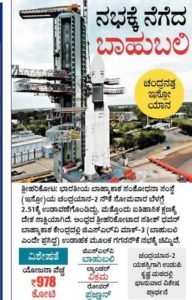
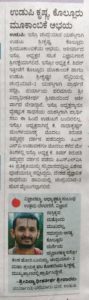 This news piece vijayvaani is being trolled on social media.
VIjayavani newspaper lacks journalistic values. Time and again it has shown that it is only after money, name and fame. Earlier also during the demand for independent Lingayat religion it has published fake letter from M. B Patil to Sonia Gandhi.
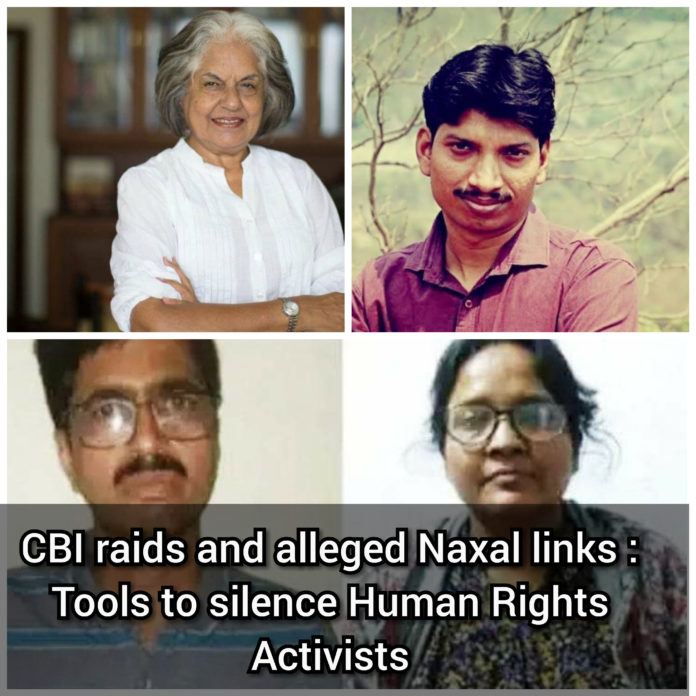
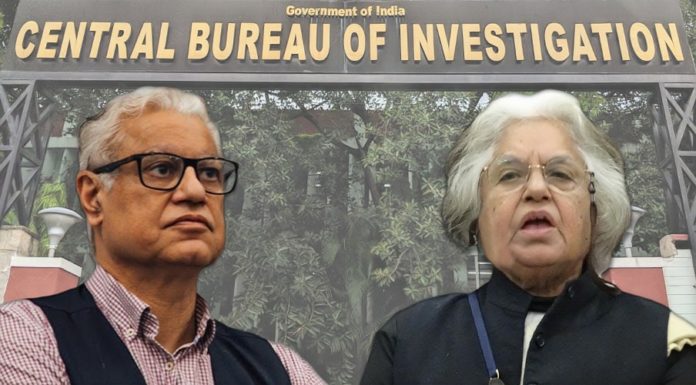

 After the neo liberal economic reforms started in 1990s, the Indian capitalists, to lower production costs in the intense competition for markets, have constantly increased investment in constant capital (technology, machinery, buildings, materials, etc) as compared to variable capital or employment of labour. Therefore, the employment creation elasticity has continuously declined, i.e., less and less jobs have been created compared to same level of growth in GDP. Besides, wage growth has declined and casualisation of jobs has increased, which results in less wages for same work for large number of contract and ad hoc workers compared to permanent workers. Consequently, share of labour in gross value added has declined vis-à-vis that of capitalists. Hence consumption demand of the working class has not increased on the same level as that of the growth in economy. Freely expanding bank credit for retail consumption has for long been deployed for increasing this demand. However, with enough jobs not being created and wages not growing commensurately, there was bound to be a limit to this expansion as the loans ultimately need to be repaid at some stage breaking this cycle. Thus, the contraction of demand and lowering capacity utilisation of industry in last decade.
Most of these investments in constant capital were made by expanding bank credit in the GDP. Especially after the global financial crisis of 2008, UPA government, to avoid that crisis, encouraged huge investments in infrastructure by nudging public sector banks to relax credit norms and disburse loans freely. However, demand contraction owing to stagnant job creation and wage growth, the profit rates per unit of capital deployed have declined, and sufficient cash is not being generated by operations. This has severely impacted loan servicing capability of corporates with many unable to even service interest on huge bank credit leading to Non Performing Assets (NPAs) or bad loans and liquidity crisis in financial sector both banks and NBFCs. This has also resulted in worsening investment climate with new investment proposals of only 9.5 lakh crore rupees last year were at lowest levels in 14 years, with share of private sector being at 45% down from usual 60%. Low level of new investments, increased government debt and high fiscal deficit indicate impending recessionary conditions and further job losses.
So how does the new BJP government propose to deal with these economic challenges?
These are some of the prescriptions that we garner from election manifesto, speeches, NITI Ayog and RBI policy decisions and FICCI-CII declarations. More capital infusion in banks and injection of more liquidity into financial markets by open market operations and Swap deals by RBI so that Banks and other NBFCs / FIs lend more to industry. Reform labour laws to free capitalists from any restrictions on hire and fire, casualisation, labour welfare and work place safety issues. Reform land laws and relax environmental regulations for easy and cheap availability of land, forest, mines and other natural resources to corporates. Give more incentive packages in the form of lower taxes and other fiscal and non-fiscal concessions for exports through Special Economic Zones (SEZ) now being renamed as Employment and Economic Hubs. Lower interest rates to reduce costs of capital by cheaper bank loans to encourage further investments in constant capital. Bigger bail out packages to bankrupt companies. Lower corporate and other direct taxes. Huge spending of 100 thousand crores on infrastructure to kick start the demand by expansionary economic policies.
But, as one can see all of this is more of the same medicine which led to present critical situation of the patient, Indian economy. Hence be prepared for more jolts and shocks.

 In 19 December 2018, the United States passed the Justice for Victims of Lynching Act. It is the first American national anti-lynching law. The Bill seeks to address the troubling history of lynching in the United States and prepare for a resurgence of white supremacy. It marks almost 100 years since the first anti-lynching law was put before the American Congress (Parliament). This is a historic victory for the black people of America.
After the abolition of slavery, African Americans tried to find ways to better their lives, by entering into education, politics and business. Many whites were threatened by this and asked for laws to make it harder for black people to vote or hold office. Laws began to be passed mandating segregation between white and blacks in railway travel, workplaces, toilets, and housing. These were the material conditions necessary for lynching to happen on a mass-scale. When black people were segregated and pushed to the periphery, lynching became a tool by white Americans to spread fear in the black community. Lynching is sometimes called the second slavery in America. It started after the first slavery of the African American people. The third is the phase of mass incarceration of black men. Lynching rose in the 1880s, twenty years after the abolition of slavery.
 To justify lynching, false stories about victims were spread. Many whites thought that lynching happened when a black man raped a white woman. False news stories and stories reinforced these beliefs. They thought that lynching was a spontaneous reaction of anger and justice. This myth persisted until the valiant efforts of the African-American journalist Ida B. Wells. She studied lynching cases across the country and showed that often lynching was preplanned and done with the approval of local police and business leaders. The majority of cases did not involve accusations of rape of white women. In many cases, it was black women who were lynched. Lynching was often used to terrorise a community, rather than just the individuals and keep African Americans scared.
Her efforts were scaled up by the budding black-led civil rights organisation, the National Association for the Advancement of Coloured People (NAACP). The NAACP expanded Wells’ work and pushed for anti-lynching legislation. The 1918 Dyer-bill, introduced by Representative Leonidas Dyer, enjoyed large-scale support, but could not pass because opposition kept stalling discussion until the session got over, using a tactic called filibuster. Over the next 50 years, 200 attempts were made to get the bill passed, but all failed.
 The movement to end lynching also involved grassroots movements that challenged the policies of segregation and discriminations that came in the 1880s. These movements were successful because they were able to change the foundational causes of lynching. Lynching rates fell from, more than one case every week in 1919, to less than 1 case every year in 1968. The need for a special anti-lynching law had passed for the black community.
From 1971 onwards, when Neoliberal reforms started to take place in America, state policies were changed to ensure greater criminalisation of the black community. The American establishment began to be scared of the Black movement as they started to bring together issues of race and class. Over the years, the American state targeted the black community, by programs that ensured that black people were pushed deeper into poverty, systematically broke their social structure, heavily policed and imprisoned them. Today, more than two-thirds of African American families are single parent families, one-third of African American families are BPL, and one in three black men has spent time in jail.
The effects of these policies were invisible until camera phones became common, and photos and videos of unarmed black people by the police started circulating. One particular death shook the core of society; the killing of an unarmed 17 year old boy, Treyvon Martin. His killer, George Zimmerman, shot and him, claiming him to have suspicious behaviour, might be using drugs and was wearing a sweater that covered his head (which is common attire in that climate). Zimmerman was not convicted because he made a special claim of self-defence, which allows people to shot and kill people that look suspicious. This case highlighted for the American public that such laws, especially when they are unclear, work in favour of whites and against blacks. This led to mass protests in the city of Baltimore in 2015.
Many White supremacists felt that the black people were getting too confident. In the following year, a white supremacist, Dylan Roof, felt he needed to teach them a lesson, and entered black majority church in Charlottesville Virginia, US, and killed nine people, including a pastor of the church and a member of the state legislative assembly. After this tragedy, activists fighting White supremacy demanded to remove symbols and statues of people who fought to defend slavery and racism during the American Civil War be removed.
White Supremacist groups started begun protesting these efforts, leading to a Unite the Right demonstration in Charlottesville. This rally was intended to bring together all White Supremecist groups including Klu Klux Klan, neo-Nazis, pro-slavery secessionist movements and other militant groups. Black rights groups came to peacefully protest their event, but were violently attacked. One of the White supremacist members tried to run over the protesters with his car.

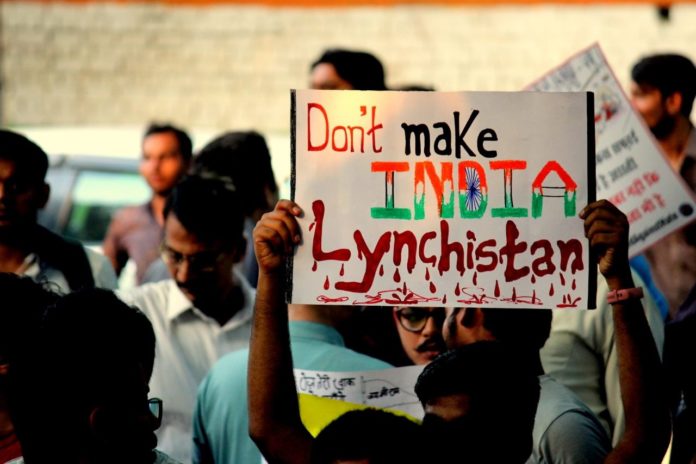


 Student activist and Justice against Hate campaigner, Umar Khalid was also there, He commented on the PM MOdi comments in the parliament. PM Modi says that he is pained by it, but one shouldn’t insult the entire state of Jharkhand. If he is geniunely pained, would he care to tell us what action would he take against his leader from Jharkhand Jayant Sinha who garlanded mob lynching convicts? Otherwise his pain his fake, just like the tears of a crocodile. It is not those who speak out against mob violence, but the likes of Jayant Sinha and the BJP which backs him who are insulting the proud legacy of Jharkhand, a state born out of sacrifices and the struggles of the most oppressed!
 Tabrez Ansari, 24, was badly beaten a week ago. He succumbed to his injuries and died 4 days later. The family alleges that police delayed medical attention that could have saved his life. After media uproar police arrested 11 people.

 ng youtuber and social activist Wali Rahmani, who also took part in the Delhi protest said: “Civil society is a balancing factor of the society. If there is something wrong going on in the society, the civil society should come out and speak against it. They should speak against mob lynching and ask people not to turn Hindustan into Lynchistan.”

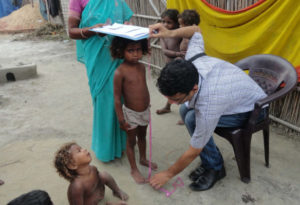
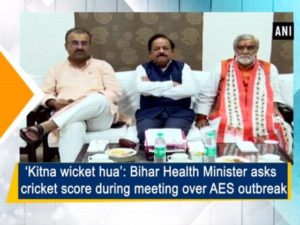 3. The MoS health department Ashwini Choubey and chief minister Nitish Kumar admitted that due to elections, awareness programmes were not proper this time. Awareness programmes are a big part of the SOP. The resources and manpower that should have been used for the people were diverted for elections. Yes, elections are important but neglecting crucial health schemes and programmes shows where the government priorities lie.
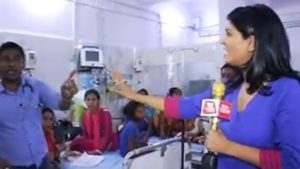 Media in their unflinching subservience to the ruling party has been scolding, chastising, shoving mikes down the throats of doctors, nurses and affected parents. In their bid to highlight “breaking news” and being “sabse tez” they were shamelessly selling the misery of others as tamasha to get more TRP ́s. All this while asking what the opposition parties have done. They have forgotten that opposition is not in power in Bihar for more than 10 years and in the centre for the last 5 years.
Let us also not forget the role of media in Gorakhpur, where more than 1000 children suffering from Japanese Encephalitis died of oxygen shortage in 2017. In a bid to save the ruling government of any accountability, Dr Kafeel Khan, the paediatrician was made the scapegoat and was suspended. Despite all criticism, the governments remain unscathed.
The same Dr Kafeel Khan has been working relentlessly in Muzaffarpur putting health camps in villages and doing awareness programmes on preventing AES. Somehow the mainstream media failed to report this.
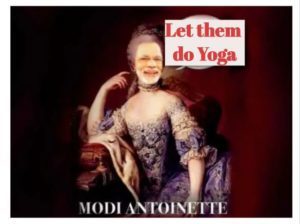 Last year, India was at number 103 out of 119 countries in Global hunger index. According to statistics, 4 children out of 5 are malnourished. Four days ago, PM Modi celebrated International Yoga Day in Ranchi, 400 Km away from Muzaffarpur where he said: “We have to take Yoga to the villages”. He did not tell how can malnourished children benefit from Yoga.
In 2012, Mr Modi, then Gujarat CM had attributed his state’s high rates of malnutrition to vegetarianism and figure-conscious Gujarati girls. In 2019, it seems Bihar ́s children have also become figure conscious.
While the whole country is saddened by the death of over 150 children, the silence of PM Modi over the issue is deafening. Meanwhile, he has tweeted about the thumb injury of cricketer Shikar Dhawan. He also tweeted and expressed grief about the death of 14 people in a pandal collapse in Rajasthan. They were listening to Ram Katha. Priorities..right?
When the governments prioritise private healthcare over public infrastructure, we as a country are a failure. India is a third world country. In a third world country, the so-called “dole” are not a political necessity, it’s a humanitarian need. Until the states fail to provide basic services of food, health and education that is constitutionally mandated, Gorakhpurs and Muzafarpurs will not stop!


 To the IPS association – today one of your very own has been vindictively persecuted for being a true IPS officer. You didn’t stand by him, you didn’t protect him … he keeps fighting his battle against this vindictive government, the question is till what end are you prepared to remain as silent spectators?
We as a nation are going through an extremely dark phase. We shall continue fighting till our last breath, the only thing remaining to see is whether we will be fighting a lone fight? or will the people of this sovereign democracy fight for a man who never stopped fighting for them.
The following is the press release detailing the particulars of this case and the judicial miscarriage we have been subjected to. Attached are copies of Sanjiv’s Further Statement and the Forensic Medico-Legal Expert’s Opinion.
India, Its time to wake up. Today it is us, tomorrow it can be you.
God bless
#Timeforactionsnotwords #Enoughisenough #JusticeforSanjivBhatt
(Please find attached, Sanjiv’s Further Statement and Dr.Reddy’s Expert Medical Opinion)
Press Release:
On 24th October 1990, major communal violence had broken out in different parts of Jamnagar city following the stoppage of L.K. Advani’s Rath Yatra in Bihar and his subsequent arrest. At that time Shri Sanjiv Bhatt was posted as ASP Jamnagar Rural Division; wherein the district of Jamnagar was divided into three police divisions as Jamnagar City, Jamnagar Rural and Khambhalia. Following the absence of Dy. Sp. Of Khambalia division who had proceeded on a sick leave, Shri Sanjiv Bhatt was handed over with additional charge of the Khambalia Division on 16th October 1990. On 24th October 1990, the day of the mass break out of the communal riots in Jamnagar district, Mr. Pravin Gondia IPS proceeded on leave, following which Shri Sanjiv Bhatt was asked to immediately take over the additional charges of Jamnagar City Division as well and to prepare, implement and supervise the bandobast in Jamnagar city. Thus, on 24th October 1990, Shri Sanjiv Bhatt was officially holding charge of entire Jamnagar District and was effectively dealing with the communal violence in the city.
A call for Bharat Bandh on 30th October 1990 was given by Vishwa Hindu Parishad (VHP) and the Bhartiya Janta Party (BJP). Large scale communal violence was expected across the country during the Bandh call of 30th October 1990 and all communally sensitive states of India were put on high alert. Following the break-out of communal violence on the 30th in Jamnagar, the Collector, District Magistrate, Mamlatdar and the Executive Magistrate of Jamjodhpur announced for immediate imposition of curfew in the entire town. While the implementation of curfew was yet to begin, the entire town was in the grip of violent miscreants who were spreading terror by indulging in targeted violence including loot and arson against individuals, shops, establishments and properties belonging to the minority Muslim community of Jamjodhpur.
The first priority of Shri Sanjiv Bhatt was to quell the riotous mobs and ensure strict enforcement of curfew to maintain peace, law and order. After handling various incidence of violence across the state, and having ensured enforcement of curfew, Shri Sanjiv Bhatt reached the Jamjodhpur Police station at around 1:30 pm on 30th October 1990, wherein he was informed by CPI Bhanvad that a total of 133 people including the deceased Prabhudad Madhavji Vaishnani had been arrested by the local police led by PSI Jamjodhour between 9:30 am and 12:15 pm from 15 separate incidents of mass communal violence and arson across the city under the single offence C.R. No. 96/90 registered under sections 147, 148, 336, 337, 395, 436, 151, 327, 452, 454, 455 of the IPC, Section 3-6 of the TADA Act and Section 135(1) of the Bombay Police Act.
The deceased, Prabhudas Madhavji Vaishnani was arrested by a team consisting of K.N. Patel, CPI, Bhanvad, PSI Thakor and Mahashankar Joshi hours before Shri Sanjiv Bhatt and his staff had reached the Jamjodhpur Police Station. While the 133 persons including the deceased and his brother were being arrested for arson and communal violence, Shri Sanjiv Bhatt along with his staff were diligently dealing with riotous mobs in a different part of the city between 9:30 and 12:15 pm.
At no point in time were any of the arrested 133 persons including the deceased and his brother were in custody of Shri Sanjiv Bhatt or any of his staff. None of the arrested 133 persons including the deceased and his brother were interrogated by Shri Sanjiv Bhatt or any of his staff.
The complaint filed by Amrutlal Madjavji Vaishnani, an active member of the VHP/BJP falsely accusing Shri Sanjiv Bhatt, alleges that the arrested rioters were made to do sit-ups while in custody and were kept in an open chowk adjoining the police station. It is to be noted that on being presented before the nearest Magistrate by the local police on the 31st October 1990, no complain of torture or any grievance was made by the deceased Prabhudas Madhavji Vaishnani or any of the other 133 arrested rioters. The 133 rioters including Prabhudas Madhavji Vaishnani were sent to Judicial Custody on orders of the Magistrate and were to remain in jail till 8th November 1990. No complaint of any grievance or torture was made by any of the arrested 133 rioters including the deceased Prabhudas Madhavji Vaishnani. Even after the rioters including Prabhudas Madhavji Vaishnani were released on bail, there was no complaint of torture or any grievance.
On 12th November 1990, owing to ill health Prabhudas Madhavji Vaishnani was taken to the hospital in Jamnagar and then Rajkot. During his visit to the hospital as well, no complaint of any grievance was made against Shri Sanjiv Bhatt. On 18th November 1990, while undergoing treatment in Rajkot, Mr. Vaishnani passed away. The hospital records as well as the forensic postmortem records of Prabhudas Madhavji Vaishnani have noted that there were no internal or external indication of any injury/torture or any grievance.
The complaint of custodial torture was made by Amrutlal Madjavji Vaishnani who also happens to be an active member of the VHP/BJP after the demise of the Mr. Prabhudas Madhavji Vaishnani
30th October 1990, the day of the communal violence and the subsequent arrest of Prabhudas Madhavji Vaishnani, was only the 20th day of Shri Sanjiv Bhatt’s posting in Jamnagar. He did not know any of the persons arrested, let alone have a grudge against anyone.
The complaint filed against Shri Sanjiv Bhatt is a classic case of political vindictiveness, as the then Chief Minister of Gujarat Mr. Chimanbhai Patel was to face a vote of confidence in the Gujarat Assembly on 1st November 1990 and was very keen to ensure the support of Patel MLAs from the BJP as well as the INC. Shri Sanjiv Bhatt’s refusal to remove the sections of TADA from an offence where majority of the arrested persons were from the Patel community was seen as a personal affront to the then Home Minister Narhari Amin and the then Chief Minister Chimanbhai Patel, both of whom happened to belong to the Patel community.
Shri Sanjiv Bhatt’s superiors in the Police Department as well as the Home department were fully aware that Shri Bhatt was being falsely victimized for having performed his duty with utmost sincerity and diligence. Hence the Home department Government of Gujarat decided to accord Shri Sanjiv Bhatt Legal Assistance vide Government of Gujarat Resolution No. MIS/1090/6152-B dated 9th January 1991. The investigation conducted by CID declared that there was no evidence found against Shri Sanjiv Bhatt, and the state government refused to give sanction to prosecute.
The State Government protected the police officers and Shri Bhatt in earnest up until 2011. In 2011, Shri Sanjiv Bhatt was summoned as a commission-witness by the Justice Nanavati and Justice Mehta Commission inquiring into the riots of 2002, where Shri Bhatt truthfully deposed regarding the role of the then Chief Minister of Gujarat, other ministers and high-ranking officials in the 2002 riots of Gujarat. Following Shri Bhatt’s deposition, there was an immediate withdrawal of the Revision Application filed by the State of Gujarat on the very same evening, and instructions were given the very next day to start the immediate prosecution of Shri Sanjiv Bhatt and other officers who were being duly protected by the Government of Gujarat till that date.
Since the commencement of the vindictive persecution, out of the 300 witnesses only 32 witnesses were examined. The complainant who sat silent from 1990-2012, suddenly became vigilant and engaged senior lawyers before the courts including the Supreme Court. In a blatant miscarriage of justice, Shri Sanjiv Bhatt was not permitted to call in any defense witness. On having requested to summon Forensic Medicine Expert Dr. Reddy; the court in mockery, ordered at 12:30 pm for him to report in court by 3:00 pm on the very same day, despite knowing that he resides in Hyderabad and would require at least a day’s notice to make the commute. Thereby dismissing the request to examine a key defense witness. Moreover, the order to complete the trial was conducted ex-parte, without the knowledge and in absence of Shri Bhatt’s lawyers.
Shri Sanjiv Bhatt today was convicted for a crime he did not commit and under S. 302 of the IPC was given life imprisonment for being an upright officer and doing his duties diligently, irrespective of political pressure.
It is strange that how a death which occurred after 18 days of being out of custody; without any indications of internal or external trauma or injury, a death which was examined and reported by the forensic medicine experts to have no indication of torture or grievance, was declared to be a Homicidal death.
There cannot be a more blatant example of vindictive persecution of totally innocent officers including Shri Sanjiv Bhatt and his staff who had performed their duties in an outstanding and exemplary manner during the most difficult phase of the communal rioting.
We shall be examining the order minutely once we receive it and we shall challenge it in the appropriate forum. Justice has not only been denied, but an innocent man has been persecuted for doing his duty with diligence.

 Sudan was colonized by the British as part of their plan to hold a strip of African land, going from Cairo, Egypt to Cape town, South Africa. Historically South Sudan and North Sudan were culturally distinct. North Sudan was more Arabic speaking with majority Muslim, constituting nearly 97% of the population. South Sudan had a more diverse set of languages spoken commonly and their religious practices were more a mix of Christianity and indigenous religions. When Sudan gained independence, following Egypt’s independence from Britain, the state was still quite divided. The British mostly recruited their military personnel from North Sudan leading to a strong association of Military rule, with North dominance and Islamic rule. Much of Sudan’s post-colonial history has been marked by tensions that have led to oscillations between democratic governments and military coups, which have been changed owing to a combination of popular movements and realignments in the military.
 Sudan was in a politically and economically precarious situation in the 1980s for two reasons. The IMF became a growing power in Africa and the end of the Cold War marked an increase in international arms trade. IMF orchestrated restructuring made the economy vulnerable, and this was marked by famines and unstable economy. The restructuring came at the end of the Cold war, where arms dealers had to look for new markets following the reduction of tensions from the Cold War. African became a new market, with Sudan being a prime target for sales. This led to Sudan becoming a centre of the arms trade, contributing to violent conflicts erupting all across the country with state and non-state actors committing massive atrocities.
In 1989, Omar Al-Bashir, a military colonel and founder of the National Congress Party, overthrew the previous coalition government, who was led by Sadiq Al- Mahdi, who was already losing power owing to a Civil War at the time. Bashir held power for almost 30 years, but had to maintain a balance between the forces of war and conflict on all sides. It was only in 2005, when there was a declaration of peace. That declaration ended with an agreement that South Sudan could declare independence after 5 years.
In 2011, a UN monitored referendum was held, where the South Sudanese people opted to secede from the rest of Sudan. Significantly, this election was seen as one of the first times in history that a formerly colonized people could change their own national boundaries through a democratic process.
Around the same time, inspired by the Arab Spring, protests against Bashir erupted that year. Unlike the other protests in the Middle East, popular movements in Sudan have led to the fall of unpopular governments, as in the case of the 1960s and 1980s. Protests complained that Bashir was a stooge of the IMF and had problems with the austerity measures that he implemented on their behalf.
When South Sudan seceded, the remaining country of Sudan found itself in economic hardship as it lost billions of dollars in oil revenues from South Sudan as about three fourth of Sudan’s oil fields was in the South. South Sudan inherited many problems from the earlier historical phase as well. Over 30 lakh weapons are in South Sudan, with at least 20 lakhs in the hands of non-state groups and individuals leading to political instability in South Sudan.
 After the succession of South Sudan, the Sudanese government found itself in a vulnerable situation. As the country had defaulted its debt, the IMF devalued its currency. The IMF have imposed a series of measures against Sudan calling it as defaulter country, and its measures have made Sudan vulnerable to the international arms trade as well. In the 1990s, 2.7 Sudan Pounds equalled one US Dollar, and remained relatively stable until 2011 when massive devaluation occurred. By 2017 it had reached 7 pounds to the dollar, and in 2018 it was 28 Pounds to the dollar, and in 2019, 40 Pounds to the dollar. The economic changes that Sudan had to implement to manage the IMF and the related debt that it has incurred will continue to be a challenge for the people of Sudan.
Since the separation of Sudan into South and the remaining parts of Sudan, massive political and economic strife has marked the South, while developing political movements have marked the north. The structural features of post-colonial borders, neoliberal globalization and international arms deal continue to place challenges to the Sudanese people.
The writer is a mathematician and political observer.