

Prof. Sai Baba: Kin worried of his health and demand his Release

The Kin of Prof. GN Sai Baba has expressed grave concerns about his worsening health and the situation he is forced to live in as Covid-19 pandemic has seen an outbreak in Nagpur Central Prison.
In his most recent call to his family and advocate, Prof. GN Sai Baba has informed that an uncontrolled outbreak of Covid-19 pandemic in the Nagpur Central Prison where he has been incarcerated as of now. He made this telephonic call to his family and advocate after obtaining special permission from the prison authorities. He also informed that the disease had seen a widespread and large scale outbreak in the prisons wherein barracks after barracks were getting infected. On 8th July 2020, 20 prisoners of the Anda Cell underwent Covid-19 swab tests and one of the prisoners was found infected.”The disease has reached very close to me” and that it was only a “matter of time” said Prof GN Sai Baba. Owing to his weak health and existing co-morbidities, he was in a more vulnerable situation. According to him, even the officers who oversaw and roamed in the barracks too were infected. No special care has not been provided to him. He has neither been provided any treatment for the other serious health issues he suffers from.
Patna High Court: Contempt for Rape Survivors?

A 22-year-old rape survivor has been charged with contempt of court and placed in judicial custody by a Magistrate in the Araria District Court, Bihar after she alleged raised her voice in court and created disorder. Over 300 lawyers have written to the Chief Justice of the Patna High Court urging the Court to intervene in this matter and highlighting the “need for urgent and systemic changes in the treatment of survivors of sexual crimes in the Araria District Court”.
The incident occurred when the Magistrate was recording the statement of the rape survivor in court, four days after the alleged violent gang-rape. The victim, who understandably was mentally and physically exhausted after having to spend 3 hours in the court complex, “allegedly raised her voice against the Magistrate, threatened him, and snatched a copy of her statement in an apparent onset of disorientation”. The two caregivers who were with her, from NGO Jan Jagaran Shakti Sangathan (JJSS), have also been charged with contempt and taken into custody.
The letter to the Chief Justice of the Patna High Court, noting that the “magistrate perceived her disoriented state of mind as a personal affront”, emphasized the need to “infuse the incident with some sensitivity and view it from that perspective”. The letter states that “judicial custody is excessive and harsh given…the survivor’s emotional state is extremely fragile”.
The lawyers have stressed that the court’s attention must be focused on the original complaint of the gang-rape, rather than on the alleged contempt of court. Drawing excessive attention to the contempt incident would malign the victim and convey a “complete lack of sensitivity to a victim of violent sexual crime and to her caregivers”, the letter stated. Shockingly, the survivor’s personal details, including her father’s name and full address have also been disclosed to the local press, alleged by members of the court staff.
Furthermore, the lawyers stated that the FIR against the rape survivor and her caretakers “had been filed under the Contempt of Courts Act, which is not applicable to the magistrate’s court”. Apart from that, the three individuals have been charged with the following provisions of the Indian Penal Code: Section 353 (Assault or criminal force to deter public servant from discharge of his duty), Section 228 (Intentional insult or interruption to public servant sitting in judicial proceeding), and Section 188 (Disobedience to order duly promulgated by public servant). The lawyers’ letter points out that the allegation of the rape survivor assaulting or using criminal force to deter a public servant from discharge of his duty is “most implausible, even if we accept the facts at face value”.
Another petition has been circulated by women activists, condemning the insensitivity of the Magistrate in dealing with the survivor and demanding the immediate release of the rape survivor and her caregivers.
PM-KISAN Yojana : West Bengal not a part of 19Cr disbursed during Lockdown
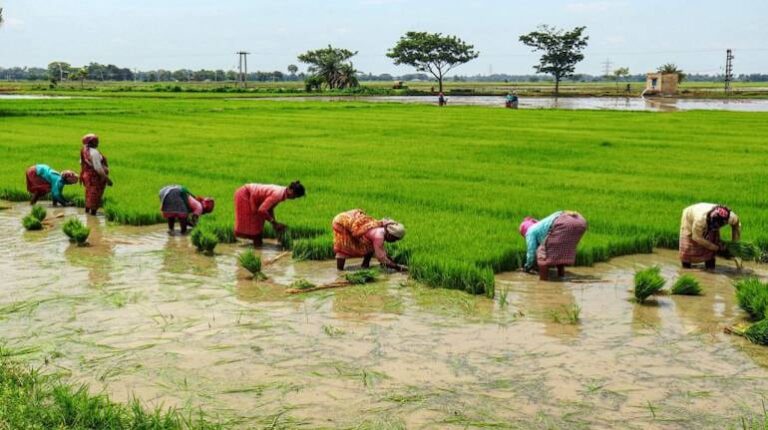
An amount of Rs. 19457Cr. was disbursed to farmers during the lockdown period from 26th March 2020 till 28th May 2020 under the much-hailed PM-KISAN Yojana – a component of the PM Garib Kalyan Yojana.
Under the scheme, all landholding farmer families are entitled to an amount of Rs. 6000 payable in three equal installments over a financial year. The scheme of the Union Government, though was announced in February 2019, came into operation from December 1st, 2018.
Through the scheme, at least 9.5 Crore farmers are provided the income support to date under the scheme. Initially, the scheme was meant for the small and marginal farmers with lesser than 5 acres of cultivable land. In 2019, when Narendra Modi was re-elected as the Prime Minister and the regime known popularly as Modi 2.0, the scheme was extended to all farmers. This means, that the scheme must potentially cover around 14.5 Crore farmers as its beneficiaries.
The Case of West Bengal
However, almost 69.69 lakh farmers in the state of West Bengal have not received any income support as the state government has not yet verified the details of the farmers. When the PM-KISAN scheme was announced, CM of West Bengal, Mamata Banerjee decided that the state will not be a part of the Union Government’s scheme. However, alternatively, the ‘Krishak Bandhu’ scheme has been in place in the state of West Bengal, under which Rs. 5000 per acre to farmers is provided in two installments for both Kharif and Rabi crops. The schemes also permit the amount to be divided proportionally between share-croppers if shared cropping patterns are followed. Additionally, under the scheme, a one time grant of Rs 2 lakhs as compensation is provided to the farmers’ family in case of death of a farmer aged 18-60. However, farmers organizations have understood the need for the state to be part of the PM-KISAN scheme to be able to gain additional financial assistance in turbulent times of the outbreak of the Covid-19 pandemic and also when the state’s farmers are under deep distress due to the hit of Amphan Cyclone. It has been noted that the state of West Bengal has not yet joined in the scheme despite numerous reminders from the Union Government including one in February 2020. MP Dulal Chand Goswami had also raised the concern in Lok Sabha on 17th March 2020. Earlier, In February 2020, the Union Minister of Agriculture, Narendra Singh Tomar has said that West Bengal has not yet joined the scheme. He had also said that there were 70 lakh farmers in the state and that the quantum of scheme’s benefit to the farmers of the state would stand at around Rs 4000 Crore. He had said that about 10 lakh farmers of the state had already self-registered on the portal and the cash benefits would reach them once the state government would verify the data. RTI Activist, Venkatesh Naik has shared with Gauri Lankesh News the data provided by the Ministry of Agriculture in response to his RTI plea. He had filed the RTI application in May to know about the number of beneficiaries under the PM-KISAN scheme and also the amount disbursed to the beneficiaries.The case of Karnataka
From the reply provided to the RTI plea filed, it is noted that at least 50 lakh farmers from Karnataka have benefitted from the scheme. The total amount disbursed to farmers from the state till date across 5 installments amounts to Rs. 1018.8 Crore. Read About: Need for Nation-Wide Non-Cooperation Movement against Land Reforms231 Years Ago: A Prison Stormed, A Monarchy Toppled in Bastille
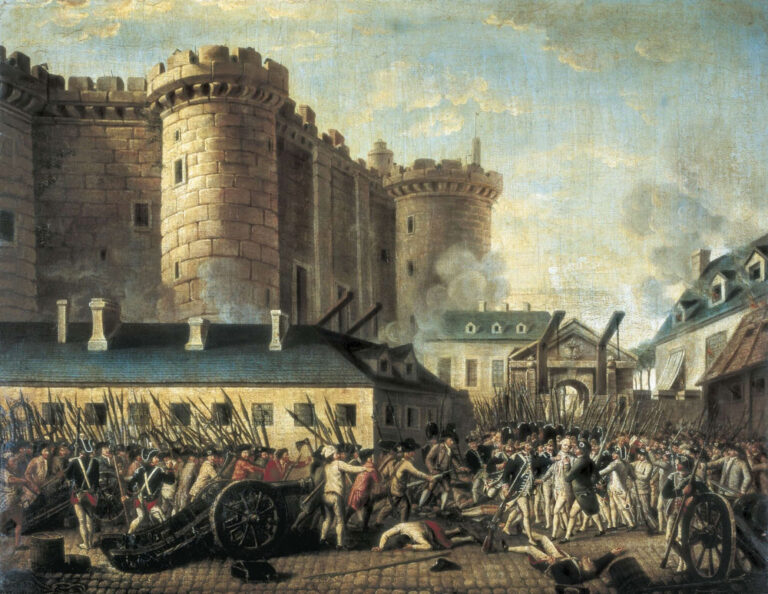
On this day in 1789, around a thousand revolutionaries stormed the Bastille prison in Paris. This was seen as one of the most iconic moments of the French Revolution and as a symbol of the victory of commoners against the tyrannical regime of Louis XVI. 231 years later, the impact of the Revolution and its infamous slogan; ‘liberty, equality, fraternity’, is still palpable.
Read: May Day 2020: International Labour Day in Pictures
See Also: Why People All Over the World are Protesting
Background
When Louis XVI took power in 1774, France was already facing a deep economic crisis. There was mass unemployment, food shortages, and the state was on the brink of bankruptcy. Yet, the royal family lived lavishly, while the peasants and working-class (or the ‘Third Estate’) could barely afford to fill their stomachs. With a worsening financial situation, in May 1789, the King called for a meeting of the three estates; which included representatives of the clergy (First Estate), nobility (Second Estate), and the commoners (Third Estate).The Third Estate made up for a vast proportion of the population but held less representative power than the other two estates. After the May 1789 Estates-General, the Third Estate broke away in rebellion and formed a national assembly. Taking inspiration from the American Revolution (1775-83), the commoners of the Third Estate demanded the abolition of absolute monarchy; instead, they wanted a constitution and a democratic law-making system. Before the revolution in 1789, the King enjoyed extensive power to make laws and issues royal edicts. This power allowed him to imprison his subjects with no trial or appeal for an indefinite period of time. Monarchs had used such absolute powers to imprison political dissidents, ‘disreputable’ individuals, and writers/publishers of seditious or offensive texts. Many such political prisoners, including Voltaire and the Marquis de Sade, had been kept in the Bastille prison at varying points in time. Thus, in the eyes of the masses, the prison came to symbolize the injustices and the tyrannical control of the monarchy.Monarchs had used such absolute powers to imprison political dissidents, ‘disreputable’ individuals, and writers/publishers of seditious or offensive texts. Many such political prisoners, including Voltaire and the Marquis de Sade, had been kept in the Bastille prison at varying points in time.
The storming of the Bastille
On 14 July 1789, with the revolution already underway, a crowd of participants broke into the Hôtel des Invalides and captured arms from the state’s military complex. When they gathered information that the royal authorities had 250 barrels of gunpowder stored in the nearby Bastille prison, they stormed the Bastille to seize the ammunition and free the prisoners housed there. The prison only held seven prisoners at that point in time, but the demolition of the building represented an attack on the tyrannical regime that the structure had come to symbolize. It is estimated that around 100 people died in the storming of the Bastille. After the structure was torn down, its bricks were distributed throughout France as memorabilia.Day of Remembrance
Since 1880, July 14 has been celebrated in France as ‘La Fete Nationale’ (the National Holiday). The holiday is usually commemorated with fireworks and military parades, but this year due to the COVID-19 pandemic, the annual celebrations have been scaled down. In 1789, a section of the impoverished working-class who participated in the revolution demanded; “Wealth and poverty must disappear in a world based on equality. In future, the rich will not have their bread made from wheaten flour whilst the poor have theirs made from bran”. Today, protests by students and the working class against Macron’s neoliberal policies share, at least partly, the revolutionary ideal of equality.Paris Anti-Government Protests On Bastille Day[LIVE] Protesters have taken to the streets of Paris to protest against the neoliberal government of Emmanuel Macron.
Posted by Redfish on Tuesday, July 14, 2020
Rape Law: Legislative Progress Reversed by Patriarchal Baggage?
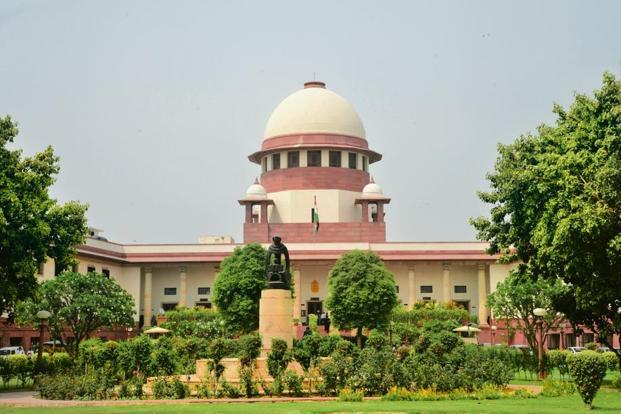
In a webinar hosted by LiveLaw on Friday, 10th July 2020, Navroz Seervai (Senior Advocate) and Gulnar Mistry (Advocate) reflected on the issue of ‘Patriarchy, Misogyny & Sexual Assault: Women And The Courts’. This discussion was prompted by the recent order of the Karnataka High Court in a rape case, where Justice Dixit commented that the behaviour of the complainant was “unbecoming of an Indian woman” as it “is not the way our women react when they are ravished” (Rakesh B v. the State Of Karnataka). After these statements invited widespread criticism for their patriarchal and misogynistic content, the Court decided to expunge these remarks from the record.
See Also: Activists condemn the Misogynistic and Patriarchal Order of Karnataka HC Judge
Nonetheless, the judge’s comments reflect the broader patriarchal framework within which rape cases are adjudicated in courts. The webinar focused on some of the most persistent and problematic notions which continue to be reinforced by judges in deciding cases of rape. It raised an important question on the development of rape law in India; that despite ‘progressive’ amendments to statutes in 2003 and 2013, an examination of recent judgments of High Courts and the Supreme Court shows that we have not moved away from long-held, patriarchal understandings of consent, womanhood, and sexual relations. A ‘believable’ rape victim, in the eyes of the court, continues to be the patriarchal construct of a woman who is raped by a stranger, who resisted the assault and sustained injuries, and who is also sexually inexperienced (i.e., with a ‘respectable’ past)- Navroz SeervaiStatutory Amendments
In 2003, in a progressive move, Section 155(4) of the Indian Evidence Act was repealed, which had stated that “when a man is prosecuted for rape or an attempt to ravish, it may be shown that the prosecutrix was of generally immoral character” in order to impeach her credibility as a witness. This legal provision had allowed the use of a woman’s prior sexual history to establish her character as being promiscuous and unreliable. The deletion of this provision meant that the woman complainant’s past sexual history could not be brought forth in court to discredit her allegations of rape. This is significant considering that, in many instances, a woman might have had earlier consensual sexual relations with a man who later rapes her. As advocate Gulnar Mistry highlighted, NCRB’s statistics show that 94% of the rapes reported in 2018 were committed by a man who was known to the victim. In 2013, after the Nirbhaya rape case, the rape provisions in the Indian Penal Code were amended to expand the definition of ‘rape’ beyond the act of non-consensual peno-vaginal penetration (or intercourse) to other forms of forced sex. Importantly, the amendment also added an explanation clause which defined ‘consent’ as “an unequivocal voluntary agreement when the woman by words, gestures or any form of verbal or non-verbal communication, communicates a willingness to participate in the specific sexual act: Provided that a woman who does not physically resist to the act of penetration shall not by the reason only of that fact, be regarded as consenting to the sexual activity”. This means that an absence of physical resistance by the woman, in itself, is not enough to constitute her consent. Consent is re-framed to mean ‘affirmative’ consent which emphasizes active willingness, rather than a lack of resistance, to engage in the sexual act.Patriarchal Interpretations of Law
However, despite the deletion of Section 155(4) in the Evidence Act, courts continue to lay stress on the prior sexual relationships of the woman complainant. They have continued to interpret the absence of physical resistance by a woman as her consent to the sexual act, even though the 2013 amendment expressly states the opposite. Therefore, although the law does not necessitate physical resistance on the part of the woman to prove rape, the courts have continued to burden women with this requirement. The Supreme Court conflated a ‘submissive’ disposition with consent in Raja v. State of Karnataka, and the Delhi High Court stated in Farooqui’s case that “absence of any real resistance of any kind re-affirms the willingness” of the woman, therefore reaching an absurd conclusion that “a feeble ‘no’ may mean a ‘yes’”. As articulated by Mr. Seervai, a ‘believable’ rape victim, in the eyes of the court, continues to be the patriarchal construct of a woman who is raped by stranger, who resisted the assault and sustained injuries, and who is also sexually inexperienced (i.e., with a ‘respectable’ past). Mr. Seervai noted a pattern of patriarchal notions that are repeatedly employed by the courts to judge the credibility of a rape complainant. For instance, the courts continue to rely on the presence of injuries to prove the non-consensual nature of sex, despite this being in direct contradiction with the definition of consent under Section 375, IPC. Women under coercive circumstances do not put up physical resistance against the perpetrator out of fear for their life or safety, but this fact is often twisted by defense lawyers to suggest the probability of consensual sex and thus undermine the victim’s account of the incident. Furthermore, the element of previous consensual sexual relations between the accused and the complainant is commonly used to discredit the victim and her allegation of rape. In such cases, the woman’s sexual autonomy to withdraw consent, after giving it once, fails to be recognized. Instead, undue emphasis is placed by the courts on the chastity and ‘virtue’ of the rape victim. In condemning rape as an offence against societal honour (which is closely associated with virginity in India), rather than as a violation of a woman’s sexual autonomy and bodily integrity, it is a patriarchal understanding of rape which is reinforced. One might add that in the Indian patriarchal system, a woman who freely exercises her sexual autonomy becomes, by that very fact, a ‘suspect subject’. In a society where sex outside marriage is still a taboo and frowned upon, a woman who engages in such sexual relations is judged for giving consent in the first place. Perhaps it is easier for our judges to imagine a ‘pure’, un-desiring, and vigorously resisting victim than a woman who gives and withdraws consent at her own will.Read Next: Making of the Chilean Feminist Anthem: A Rapist in Your Way
Varavara Rao’s Poems they dont want you to Read

Varavara Rao, the 81-year-old Telugu poet, and activist has been imprisoned for almost 2 years now as an under-trial in the 2018 Bhima Koregaon case. Due to his currently deteriorating health condition, he was moved to JJ Hospital in Mumbai on Monday (13 July 2020). Last month, the NIA Court had rejected his interim bail application. One wonders what serious threat to national security this 81-year-old poet could pose, so grave that he cannot be granted bail even in the midst of a worsening pandemic. Here is a look at some of his poetry, which showcases the strength of his political convictions and his sensitivity to the suffering of oppressed people.
More Here:Varavara Rao’s Condition Deteriorates in Jail
Varavara Rao has been imprisoned as an under-trial multiple times since 1973 and has faced more than 25 cases over the past 45 years. In 1985, he was charged with distributing bombs in order to protest the custodial death of a Radical Students’ Union activist. Rao wrote the poem below as a response to these allegations:Reflection
I did not supply the explosives Nor ideas for that matter It was you who trod with iron heels Upon the anthill And from the trampled earth Sprouted the ideas of vengeance It was you who struck the beehive With your lathi The sound of the scattering bees Exploded in your shaken facade Blotched red with fear When the victory drum started beating In the heart of the masses You mistook it for a person and trained your guns Revolution echoed from all horizons. Source: The WireSee Also: Chattisgarh Farmers and Adivasi Organisations Protest Against Coal Auction
In this next poem, Varavara Rao writes about the destruction of Adivasi dwellings and forest land by multinational corporations exploiting natural resources or by state-led ‘development’ projects like dams, which benefit the urban population through the deprivation of forest-dwellers. He traces this to capitalism’s ‘hideous greed’ and its ‘insatiable thirst’, which continues to accelerate ecological destruction today.When The Moonlight Moves Into The Dark
For just a nest no aborigine Cuts away the wooded-shelter. For the simple slash-burnt crop no man of the forest Burns down the nurturing woods. Even when the hill people Cut the bases and burn the stumps, And harvest, On the hillside, in the slope, on the brink: Whose sweat of the brow turns into whose burp? A little moisture of the palm is enough For the forest that fells and billows away in the Godari – Forest, the target of hewn lacerations. Taking forms it fails to find itself in. This civilizing forest – Who owns this hauled-out wealth? In cities and in bungalows All the riches hidden behind closed doors Are the forest. All the power, inciting rare game on the prowl, Is pillaged from the woods. Forest with its broken back and blown-out belly, Dams spreading across its mouth From reservoir to granary Measuring heaps of sweat pearls Burning the fuel of dismal lives-in-death. In the wilderness of city Cementing with flesh and blood of the forest The iron system of justice. In ‘safari’ robes stitched in the hide of skinned forest On the intestinal pages of the woods Death sentences preserved in writing . . . In the forest reserve As moonlight prowled – Furiously, when you set the forest dwellings on fire Those fires that would show your shady face to the world Fires – your hideous greed that would put mankind to shame. Those fires of tears that cannot quench your insatiable thirst. The blaze smites the vigorous, Rising defiant, bloody fires. Flames, flames – the bloody crops Sprouting in the dwellings you burnt down Vines entwined everywhere Flames blossoming new worlds. Source: Poetry International Archives (Telugu version also accessible here)The poem below, although written in 1986, continues to be a sharp depiction of the increasingly authoritarian crackdown on people’s movements and the muzzling of political dissent.
The Bard
When the order is amiss And billowing pitch-clouds of time Strangle the throat Neither blood trickles Nor tears drop Lightening swirls into thunder, Drizzles surge into deluge, and, Absorbing mother’s tears of agony Purl out from prison grills Voice of the poet’s missive. When the tongue pulsates, Tone manumits the air, and Song turns missile in battle The foe fears the poet; Incarcerates him, and Tightens the noose around the neck But, already, the poet in his notes Breathes among the masses The scaffold Like a gravitating balance Disseminates into earth Challenges to death And hoists the paltry Hangman colonist Source: Poetry International Archives (Telugu version also accessible here) Read Next: Bhima-Koregaon: When the Process Becomes PunishmentKarnataka: ASHA Workers & Sanitation Workers Protest against the Government

Frontline workers including the Accredited Social Health Activist (ASHA) workers and Sanitation Workers working with Bruhat Bengaluru Mahanagara Palike (BBMP), popularly known as Paurakarmikas are serving the city as ‘Corona Warriors’ in these turbulent times and have staged multiple protests across the city.
They have demanded better safety measures and protection and better working conditions and timely payment of their wages amidst the coronavirus crisis.
The paurakarmikas are protesting against the government’s total disregard and apathy towards their health and thereby their lives itself. While the lives and livelihoods of the people have been completely devastated for the last 3 months owing to the Covid-19 pandemic outbreak, they have been serving the city while putting their own lives under immense risk. However, they have not been provided with adequate facilities by the state. Even after multiple letters to the BBMP, they have neither been provided with protective gear, medical checkup nor have been covered under the insurance schemes. Earlier, their worker’s union had written to and thereby demanded that a Standard Operating Protocol (SOP) be formulated for the paurakarmikas.
Dasarahallinews.com has reported about the protests that paurakarimkas undertook in Yeshwantpur constituency of Bengaluru.
The absence of any concern for the health of the paurakarmikas and ASHA workers on part of the government and the BBMP has pushed them to the risks of being infected by COVID-19. Therefore, they have demanded timely and systematic provisioning of much-needed protective gear including full PPE kits, facemasks, and hand gloves to be able to continue their works in these turbulent times. They have also demanded strict steps in the collection of waste from houses under containment zones, daily health check-ups, and provisioning of sick leaves. The paurakarmikas are worried about health and safety of their family members too.
They have also demanded that at least one month’s salary be paid in advance to them so as to provide for their subsistence. They have also demanded that the paurakarmikas who aren’t able to report to work as they live in containment zones be provided with full wages.
ASHA Workers, on the other hand, have continued their long-drawn demand that they are provided with an honorarium of not less than Rs. 12000 per month. ASHA workers in the state are undertaking risks to ensure that the facilities provided for the children below age 6 and their mothers are reaching them in these testing times. They have also been asked to undertake other Corona-related tasks as and when required.
Read about: Patanjali Coronil: An attempt to defame Ayurveda
#LekkaKodi: Ex-CM Siddaramaiah raises 7 questions to BJP Government

Leader of Opposition and Ex-CM of Karnataka, Siddaramaiah has launched #LekkaKodi (submit accounts) campaign on social media demanding accountability and transparency on part of Karnataka’s BJP Government on the allocation and usage of funds towards containment of Covid-19 pandemic. He has alleged that the state government has been involved in massive corruption in the funds allocated for the Covid-19 containment in the state and thereby demanding the government to provide accounts through the #LekkaKodi campaign.
He has demanded answers for the following questions:
- How much has the government spent since the outbreak of the Covid-19 pandemic and what has been the contribution of the Union Government towards the same?
- How much has each department spent and for what purposes?
- At what rates has the government procured protective gear and other equipment to contain the spread of Covid-19 including PPE Kits, Face Masks, Hand Gloves. Sanitizers, Thermal scanners, and Kiosks and at rates are these available in the market. From which companies were these equipments purchased?
- How many food kits and food packets have been provided till date? To whom and what have been the per-unit expenses on these food kits and food packets provided? Provide Taluk-wise and ward-wise accounts for the same.
- How many food kits were provided for migrants during their migration? What were they provided with and what has been the per-unit cost of the same?
- What ‘packages’ were declared by the State and Union governments for the people whose livelihoods are under deep troubles? Which were the communities and occupations it intended to benefit and the quantum of resources released?
- How much of funds was spent on Covid-19 patients and how has it been utilized?
In a video he has posted through his Twitter handle, he has also noted that it is the right of the citizens to demand accountability and transparency in the usage of government’s funds and that the government is duty-bound to provide accounts for the same. He has also called upon all Ministers, MLA and Party Workers of the Indian National Congress to demand the same through #LekkaKodi social media campaign. Earlier he had alleged that the state government was involved in a massive scam of about Rs. 2200 Crores in the purchase of medical equipment to contain the spread of Covid-19 pandemic. Read About: #ManuMustFall Movementಕೊರೊನಾ ನಿಯಂತ್ರಣದಲ್ಲಿ ನಡೆದಿರುವ ಭ್ರಷ್ಟಾಚಾರದ ವಿರುದ್ಧ ಸಾಮಾಜಿಕ ಜಾಲತಾಣಗಳಲ್ಲಿ #LekkaKodi ಎಂಬ ಹ್ಯಾಷ್ ಟ್ಯಾಗ್ನೊಂದಿಗೆ ರಾಜ್ಯ ಸರ್ಕಾರದ ವಿರುದ್ಧ ವಿಡಿಯೋ ಅಭಿಯಾನ ಶುರು ಮಾಡಲಾಗಿದೆ.
— Siddaramaiah (@siddaramaiah) July 11, 2020
ನಮ್ಮ ಪಕ್ಷದ ಎಲ್ಲ ಶಾಸಕರು, ಸಂಸದರು, ಕಾರ್ಯಕರ್ತರು ವಿಡಿಯೊ ಮಾಡಿ, ಶೇರ್ ಮಾಡುವ ಮೂಲಕ ಇದರಲ್ಲಿ ಭಾಗವಹಿಸಬೇಕೆಂದು ವಿನಂತಿ.#LekkaKodi pic.twitter.com/lXSCjLkiNT
Bhima-Koregaon: When the Process Becomes Punishment

In recent developments, denial of the right to life and inaction of the state towards revolutionary poet Varavara Rao’s distressing health coupled with the court’s extension of another 90 days to file charge-sheet against Prof. Anand Teltumbde and Gautam Navalakha has further raised questions on the intention behind the entire Bhima Koregaon – Elgar Parishad case. It has been more than 2 years that 9 well-reputed rights activists are booked as accused and are languishing in jail without even a trace of trial while the other 2 accused languishing for more than 3 months without even a charge sheet being filed against them.
It was for the first time in the last two years that anti-caste activist Sudhir Dhawale and advocate Surendra Gadling- two of the eleven activists incarcerated in the Elgar Parishad case, moved the Bombay High court against ex-CM of Maharashtra Devendra Fadnavis, the Pune police, and two chief perpetrators of the Bhima-Koregaon violence- Hindutva leaders Milind Ekbote and Sambhaji Bhide in May accusing them of falsely implicating the rights defenders, thus, questioning the government’s intention. Their petition had also questioned the legality of the transfer of the case from Pune police to the National Investigation Agency (NIA). In January this year, the NIA proceeded to take over the investigation from Pune police. After the Shiv Sena-NCP-Congress coalition assumed power last year, there were speculations regarding the formation of a Special Investigation Team (SIT) for probing into the Elgar-Parishad case. The coalition government initially objected but acceded to the takeover in February. Suggesting political vendetta, the petition further added, “The Central government, since the registration of the FIR in January 2018, did not feel it necessary to transfer the investigation to NIA till there was a change of government in Maharashtra”; the hearings are due in July.
The tiny village of Bhima-Koregaon in Pune has been the epicenter of a state-sponsored crackdown on dissenting voices. According to Pune police, inflammatory speeches given at the ‘Elgar Parishad’ event held on 31st December 2017 triggered caste violence at Bhima-Koregaon the next day. On this pretext, there was a countrywide witch-hunt with multiple raids and ultimately arrests of eleven prominent human rights defenders under the draconian Unlawful Activities Prevention Act (UAPA). The Pune police made wildly varying accusations of them inciting the Bhima-Koregaon violence, to them being over-ground operatives of the banned CPI(Maoist) to constituting an “anti-fascist front” to destabilize the government and assassinate PM Narendra Modi.
All these accusations have been based on digital documents in the form of letters allegedly seized from lawyer Surendra Gadling and activist Rona Wilson. The Pune police made rampant procedural violations in procuring and handling this digital evidence. There have been arbitrary mentions of numerous civil rights organizations, student outfits, student activists, opposition party members, and even Christian missionaries in these letters as alleged members of the banned party. Security experts have pointed out various discrepancies in these documents raising questions regarding their authenticity. Moreover, on close cyber-forensic scrutiny, remote access enabling malware was detected in the clone of the hard disk seized from Rona Wilson. On October 2019, it was revealed that some Indian journalists and activists including Dr. Anand Teltumbde were being snooped on via Israeli spyware named Pegasus that can be accessed only by government agencies, raising questions whether the arrested accused were also under illegal surveillance and their seized electronic devices were bugged and remotely controlled by the government.
More than two years have passed since the first round of raids, Yet the accused have been denied proper trial as well as basic rights of a political prisoner. They have constantly been denied proper phone calls, books, as well as newspapers. The situation has turned grimmer as both the central and state governments have failed to tackle the coronavirus pandemic. On 23rd March the Supreme Court directed the states to decongest prisons to prevent an internal outbreak. The Maharashtra government constituted a ‘High Powered Committee’ to enlist prisoners eligible for temporary bail. The HPC has omitted prisoners charged with special acts like UAPA from availing temporary bail but has set up a special criterion for aged prisoners with co-morbid conditions.
Amidst the pandemic, on 14th April, Gautam Navlakha (68) and Anand Teltumbde (70) were forced to surrender to the NIA in Delhi and Mumbai respectively. Currently, the nine male arrestees are lodged in Taloja jail and the two female arrestees are lodged in Byculla jail. The rights activists are mostly 60+ besides being afflicted with chronic ailments making them all the more vulnerable. In the month of May alone two inmates of Taloja jail died who were found to be COVID positive upon post-mortem. The special NIA court in Mumbai has already rejected their bail applications multiple times with the NIA making callous claims like there being no circumstantial change to accusing Sudha Bharadwaj (58) of taking “undue benefit” of the pandemic, displaying court’s brazen bias. Despite poet Varavara Rao(81) being seriously ill, the NIA and the prison authorities are displaying criminal negligence. As per the account shared by Navlakha over a phone call on 20th June, he was placed in an extremely unhygienic quarantine facility along with 349 others, in a school building by Taloja jail authorities. The recent grant of a 90 days extension to NIA for filing charge sheet against Dr. Anand Teltumbde again exposes the RSS-Police-Judiciary nexus executing the strategy of delaying the process of trial.
While the law UAPA, under which all the 11 accused have been framed, has been introduced in 1967 by the Congress government and has been heavily used, the RSS-BJP government made it more repressive. After the 2019 amendment, an individual can be labeled a terrorist (earlier, only organizations could be designated as terror outfits) and their property can be seized by the NIA even before the charges framed against them have been proved in court, with no bail granted. Further, the fact that UAPA had a conviction rate of just 1%, meaning 99 out of 100 jailed people under it were innocent, proves it to be a fascist tool in the hand of the state to suppress and repress the activists and the individuals who vehemently expose the anti-people policies of the government. Historically, it has been a tool to alienate the dissenting voices from the society, torture them physically and mentally, and perpetuate an environment of fear in the society, all by legal means without even convicting the accused.
In handling the Delhi riots case the central government is following an uncannily similar rulebook. Taking advantage of the lockdown Delhi police has arrested numerous anti-NRC-CAA-NPR protesters, specifically targeting students and minorities. On the other hand, the three chief perpetrators who are BJP leaders- Anurag Thakur, Kapil Mishra, and Parvesh Verma are roaming free. From arresting left-oriented individuals in the Elgar Parishad case to hounding liberal activists in the Delhi riots case, the increasing fascist repression of the RSS-BJP regime is evident.
The attitude of the Pune police and the NIA has made it amply clear that their chief intention is to keep the human rights defenders behind the bars for as long as possible without proper trial simply because the evidence is so feeble that the charges would hardly sustain in court. These clampdowns serve the manifold purposes of silencing dissenters, creating a fear psychosis, and distracting the masses from the incompetency of the government. To quote Navlakha, “In this Kafkaesque domain, the process itself becomes punishment.”
Manufacturing Consent and Encounter[ing] Justice
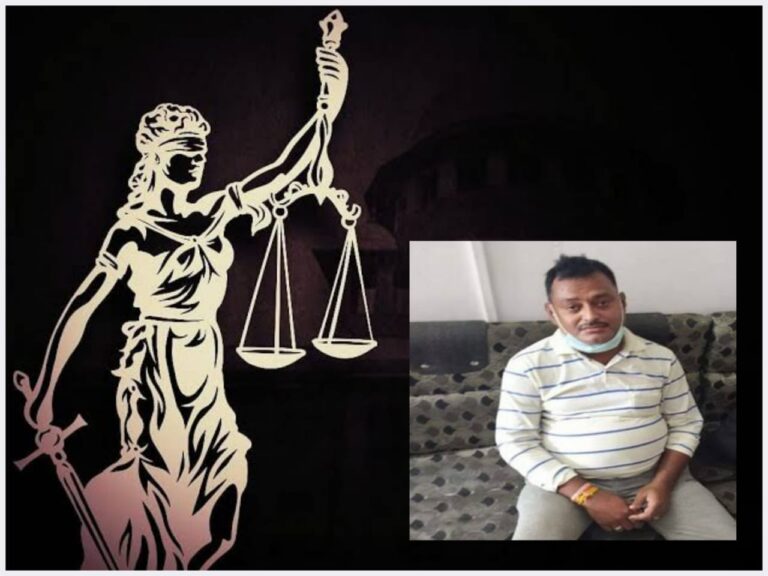
There is little about Vikas Dubey’s encounter which comes to us as a surprise. The encounter killings of his associates over the days preceding Dubey’s death, and Uttar Pradesh’s notorious reputation for being an ‘Encounter Raj’ presents us with the larger picture within which Dubey’s death is but a small piece. In fact, Dubey’s encounter killing follows the established pattern so clearly that his death was a foreseeable step to some observers. Hours before his death, a petition had been filed before the Supreme Court seeking security arrangements to be made for Dubey, out of the apprehension that “there is every possibility that even accused Vikas Dubey shall be killed by Uttar Pradesh Police like other co-accused once his custody is obtained Uttar Pradesh Police”. But who can we look to for security when the police force entrusted with the duty of protecting citizens is the very institution which is endangering them?
Also Read: Vikas Dubey: A Trigger-Happy Police and Unending Encounters
A History of Encounters
Dubey’s death must be seen within the context of the UP police’s long history of conducting similar encounters. Investigative journalist Neha Dixit found that in the 10 month period between April 2017 and February 2018, the UP police had conducted four encounters per day. However, encounters are not unique to Uttar Pradesh; an RTI query revealed that, between 2000 and 2017, there were 1,782 cases of fake encounters registered in India. A large proportion of the victims of encounter deaths belong to marginalised groups such as poor, lower-caste, Adivasi, or Muslim communities. S.Darapuri, a former UP senior police officer turned human rights activist, revealed that “encounters by the police are being used as a strategy which is illegal… This strategy is being specifically used to immobilise the Muslim community by killing young Muslim boys and against Dalits and OBCs by implicating them in criminal cases”. Encounters have long been the ‘norm’ in states like Chhattisgarh, Kashmir, and Telangana against alleged ‘Maoists’ and ‘separatists’. A significant portion of the public, however, has continued to support or acquiesce to such encounter tactics adopted by the police. Encounters have ironically been seen as a measure to improve the law and order situation since they supposedly ‘eliminate criminals’ and reflect a strong police force that is willing to act ruthlessly if needed. This public approval of excessive and arbitrary force has been used by governments to justify and further exploit such extrajudicial measures to escape accountability and circumvent the law. The Supreme Court strongly condemned such encounter killings in 2012 by stating that; “This Court has repeatedly admonished trigger happy police personnel, who liquidate criminals and project the incident as an encounter. Such killings must be deprecated… They amount to State-sponsored terrorism”. The People’s Union for Civil Liberties (PUCL) has filed a petition before the Supreme Court seeking CBI/SIT inquiries and a Monitoring Committee to investigate the thousands of police encounters in Uttar Pradesh. Letters written to the Chief Justice of India and the Chief Justice of the Allahabad High Court have highlighted that such extrajudicial killings convey “an unfortunate and horrifying message about how fractured and anaemic the Judicial system is, which will result in the common man losing his faith and trust in Indian judicial system and valued principles of rule of law as is promulgated by the Constitution of India”.Police Encounters are specifically used to immobilise the Muslim community by killing young Muslim boys and against Dalits and OBCs by implicating them in criminal cases”. S.Darapuri, a former UP senior police officer turned human rights activist
