
Gangubai Kathiawadi Portrays Entire Area as Red Light District: Plea in Bombay HC
0
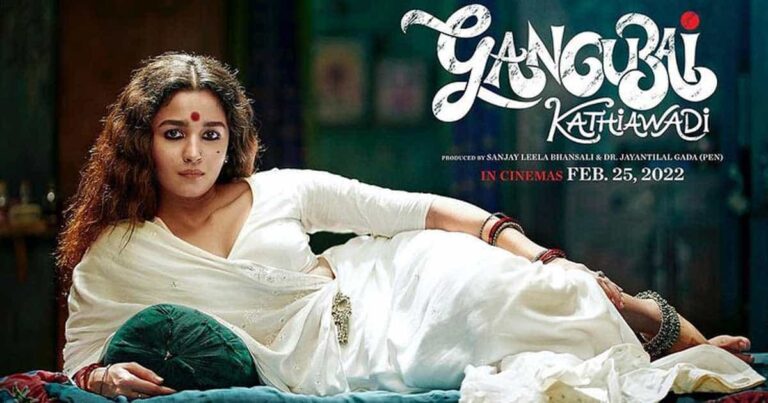
Residents of Kamathipura, a neighbourhood in South Mumbai, have moved the Bombay High Court seeking to remove the references to the area in the film Gangubai Kathiawadi, starring Alia Bhatt. The plea said that the reputation of the area has been lowered after the film’s trailer was released, since the movie makes wild, derogatory allegations by portraying the entire area as a red-light hub. A Bench led by Justice GS Patel will hear the plea on Wednesday. The petition filed by a lady resident on behalf of 55 other such residents of Kamathipura, has assailed the Censor Board’s decision to certify film. The social impact the movie will cause is that all girl residents will be termed prostitutes, be teased and taunted, and families will have to live with lowered dignity, the plea said. “All cannons of fairness, equity, and justice have been breached and violated,” the petition alleged. The plea thus sought stay on the release of the film and direction to the Censor Board to remove all reference to use of the name ‘Kamathipura’ in the movie. A separate public interest litigation (PIL) petition has also been filed by Congress MLA Ameen Patel seeking similar reliefs. The PIL said the Patel received objections from various quarters, including local social service organisations and the daughter of the film’s protagonist, against the portrayal of the neighbourhood and Gangubhai as a prostitute and alleged ‘mafia queen’. Residents of Kamathipura, as per media reports, have filed representations objecting to the portrayal of the neighbourhood as a hub of the flesh trade. The Punarjivan Rahivaasi Seva Mandal, the Akhil Padmashali Samaj, Tiranga Housing Society, Khatik Samaj and other Gujarati trusts wrote to the petitioner against the film, it was pointed out. This plea will be heard by the bench headed by Chief Justice tomorrow. The High Court had earlier stayed a criminal defamation complaint against the producers of the film, actress Alia Bhatt and authors S Hussain Zaidi and Jane Borges who authored the book on which the film is based. The defamation complaint filed by one Babuji Shah who claimed to be the adopted son of Gangubai Kathiawadi. The biographical crime drama is set for theatrical release on Friday, February 25.

NATO at Russia’s doorstep: The Ukraine conflict

From March 2021, thousands of Russian troops aligned themselves along the Russian border with Ukraine. Since then, Ukraine has become the epicentre of an international standoff. The United States has accused Russia of preparing for an invasion of Ukraine. Russia has expressed deep concern about Ukraine joining the American led North Atlantic Treaty Organization (NATO). American President Joseph Biden has promised Ukrainian President Volodymyr Zelenskyy that the United States will offer military protection to Ukraine against Russian invasion. This is a global concern. The conflict includes two of the worlds largest military alliance networks. Two parties to the conflict are the world’s largest nuclear powers. Russia insists that the inclusion of Ukraine into NATO would pose a huge security risk. Russia’s largest European border is with Ukraine at over 2,000 km. NATO originated to counterbalance the Soviet Union. Since the dissolution of the Soviet Union, NATO has expanded closer to Russia. This was despite a promise by the United States not to expand after the fall of the USSR. The United States has had poor relationships with Russia, particularly the Syrian Civil War, where the United States and Russia supported conflicting sides in the war.

Ukraine’s Past with Russia

The nation of Ukraine traces back to the development of the Kievan Rus’ people around the end of the first millennium. Various Russian empires had held the territory at different times. After the Russian Revolution, a movement for Ukrainian self-determination led to the independence of Ukraine. After World War I, the Ukrainian state joined with the USSR to become the Ukrainian Soviet Socialist Republic and remained part of the USSR until its dissolution, when Ukraine became an independent country again. Most former members of the USSR kept strong military and economic ties with Russia after the dissolution of the USSR. Ukraine remained more independent of Russia and forged closer ties with the European Powers.

From Afghanistan to Latin America: International Politics in 2021

Support for Russia in Ukraine

The Southern and Eastern parts of Ukraine, for cultural and economic reasons, favoured reestablishing closer relations with Russia. Ukraine still had a large ethnic Russian population, and in 2003, they managed to elect pro-Russian leadership. However, the new government did not have much time to consolidate a new relationship with Russia in the face of mass anti-Russian demonstrations in what has been called the Orange Revolution. In 2008, the United States opened an invitation to Ukraine to join NATO. This concerned the Russian government. NATO, an alliance developed during the Cold War, not only outlived its purpose but continued to gather allies closer to Russia. Ukraine’s membership would keep Russia at an indefinite military disadvantage. Discontent led to unrest in the Southern and Eastern parts of Ukraine, culminating in mass unrest. The unrest came when, internationally, Russia had been making claims on part of Ukraine, leading to the Donbas war and the Russian annexation of the region of Crimea, with strong support in separatist groups in the region. Russian-backed separatists in eastern Ukraine carried forward the war until the end. The Donetsk and Luhansk regions were the sites of conflict. The Donetsk and Luhansk both have large ethnic Russian populations

After the Donbas War

After the Donbas War, a trilateral agreement between Ukraine, Russia and the Organization for Security and Co-operation in Europe, known as the Minsk Protocol sought to end the war. After extensive talks, a new package, known as Minsk II was signed in 2015. Minsk II called for a full ceasefire in the Donetsk and Luhansk regions of Ukraine. Both of these areas have been sites of strong separatist movements. The OSCE was to oversee the withdrawal of heavy weapons. Ukraine was to effect constitutional reforms and promote decentralization. Both Ukraine and Russia feel Minsk II does not fully address their concerns. Western European countries, particularly France, strongly support Minsk II. The agreement gives the OSCE powers of mediation and oversight, making France a mediator in the conflict. French President, Emmanuel Macron has been in talks with Vladimir Putin to carry through with Minsk II, claiming it to be the best option for Ukraine and Russia.

US and Russia

The end of the Cold War led to a period of unrivalled global military dominance by the United States. In the past 15 years, other powers across the world have recovered positions in different parts of the world. Russia, building off of many of the countries that broke off of the Soviet Union represent a power block that challenges Western dominance. Ukraine has been a neutral actor, hoping to maintain good relations with the west. The prospect of Ukraine joining NATO poses a direct threat to Russian interests. After the annexation of Crimea, the United States imposed sanctions on Russia, leading to a huge drop in foreign investments in Russia. This has worsened the relationship between Russia and the United States. Both sides want to avoid a direct war, as a war between Russia and the United States could be worse than any in the history of mankind. President Biden has already advised American citizens in the area to leave, drawing concern from the international community regarding America’s plans in holding back Russia. The situation oddly mirrors concerns America raised after the Cuban revolution, where the establishment of a potential Soviet ally close to American borders was considered a dire threat. In American eyes, Cuba remains a threat to this day and has been sanctioned accordingly.

Keeping Ukraine Neutral

The recent assembly of troops by Russia is a direct response to Ukraine’s possible membership in NATO, and the eastward expansion of NATO since the fall of the Soviet Union. Apart from the US, western powers have favoured the diplomatic approach, which would keep Ukraine a neutral power. While Russia might be capable of covertly supporting separatist movements in Eastern Ukraine, it does not seem interested in a whole-scale invasion of Ukraine. If a diplomatic approach could safeguard Russian security concerns, the conflict could be resolved. A neutral Ukraine is in the world’s best interest. Ukraine can act as a geographical buffer zone between two of the worlds largest and most deadly military alliances. This can best be achieved through the diplomatic path, which the US is not respecting. Even allies within NATO would prefer the diplomatic solution. Author is a mathematician and political observer based in Bangalore, Karnataka. Views are personal. 

Karnataka Hijab Row: Get your hands off women

0
I was once invited to speak at a literary event organised in a panchayat place near Kundapura, Karnataka. I reached the location with barely enough time to change my clothes and go to the function. So I chose to wear a chudidar kurta instead of a sari. When I walked out of the room, the organiser, a woman, asked me why I was not wearing a dupatta on the kurta-chudidar. I said, my dress was fully buttoned-up and didn’t need a dupatta as I was covered up to the neck. She was not convinced. “People here don’t wear a kurta without a dupatta,” she said. I knew that. Though I did not grow up in Dakshina Kannada or Udupi, my parents’ hometowns were located in these districts. My grandparents lived there all their lives. I visited every year and studied in Manipal for two years to be closer to them. So I was fully aware of the dress codes followed in the region. When my mother and aunts were growing up there, the kurta churidar known as punjabi dress was almost as forbidden for women as trousers and pants. It was north Indian, alien to local culture. Half-saris, saris, skirts and frocks were the norm. But no pyjamas, chudidars and pants. Growing up in Delhi, Mysore and Bangalore, I wasn’t allowed to wear pants, trousers or jeans. It was only when I reached Class 10, that I managed to win the argument and allowed to wear jeans. My first pair of jeans-pant was bought when we were living in Delhi. They were men’s and hung on me even after being altered. When I look at those photos of me wearing them, I am reminded of the battles I and countless other women have fought to gain autonomy over our bodies and minds. But here I was, in my mid-30s in my parents’ ‘native place’, being told my dupatta-free dress was not appropriate. Even if I was fully covered. The unspoken message was that the shape of my upper body could be seen without a dupatta. It did not shock me that I was being lectured even at this age. I had grown up being listening to others’ opinions of what I could or couldn’t wear. The message was clear: hide the shape of your body, follow our tradition and only wear what we tell you to. I was constantly reminded I couldn’t wear pants, sleeveless tops, plunging neck lines, shorts, or even three-quarter pants (“Was there a shortage of cloth at the store?”).

One would think that being fully covered would shut everyone up. No. Apparently, covering the head is too much cover, but not wearing a dupatta is too less of cover. Look at the situation of the students being locked out of their college in Kundapur for wearing the hijab.

When there is no type of women’s clothing that doesn’t have patriarchy’s paws over it, how can we accept singling out hijab and punishing young women who wear it?

To support Hindu patriarchy’s assertion that its brand of patriarchy is better than Muslim patriarchy, is damaging to all women. Every woman must fight against what is happening in Karnataka’s colleges today and stand in solidarity with the students whose education is at stake because of majoritarian politics.

Too many women in our country can go to college only because they wear the clothes their families and immediate societies find acceptable – whether it is the hijab, burqa, dupatta, salwaar kameez, saris or langa-dhavani. The imposition of one religious group’s idea of what girls should wear is not just a violation of their rights, but it sets a dangerous precedent for women’s rights in the rest of the country. Whether it is the kurta chudidar or hijab, whether the policing of women’s bodies is done at home or in colleges, they are all ways of controlling women. And women’s bodies become weapons in the hands of men who seek to establish the power of patriarchy, caste, ethnicity or religion. But women have the right to their bodies and their beliefs. No woman should allow her body to be used in any way without her consent. And no man should have the right to tell her how to dress and how to live. Views are personal. 

Muslim family donates 2.5 acre land for school in Mysuru district

0
At the time when majority of the districts of Karnataka are gripped under Hijab-saffron shawl controversy, a Muslim family of H.D. Kote taluk of Mysuru district has set an exemplary example for people by donating 2.5 acre land to the government school. With an objective of promoting education in rural areas, meeting the desire to increase literacy rate and to meet the need of the land for the school, the family has donated the land. “ My father Mohammed Jaffer who is native of Marchalli village had the wish to donate the land to the school. But for some reason, he could not realise it when he was alive. But we decided to complete his wish after his demise”, said his son Mohammed Rakeeb. According to him, currently, the value of the land is around Rs. 50 lakh. The land has been handed over to government higher primary school of Bachegoundanahalli and has been registered in the name of the Head Master of the school. The land will help rural students in their education as the building and other facilities can be developed on the land. “ I am so elated to meet the wish of my father who was keen for education. He wanted the children of the village to get better education and better infrastructure. Thinking that, he wanted to donate the land which have done on his behalf”, Rakeeb said. He said that they are six siblings, four brothers and two sisters. All of them together decided to meet the wish of their father to donate 2.5 acre land. He said that they registered the land in the name of the school on February 15. The family, which is essentially involved in farming, has around 12 acre land in the village, of which 2.5 acres has been donated. The wish of the family is now that the school needs more classrooms, then the school should use the land for the purpose, or it can also develop a playground for the students. Expressing happiness for the family donating land to the school, Block Education Officer Chandrakant said that the donated land would be used for the development of the school. More classrooms will be constructed if needed. “ The act of the family is greatly admirable and inspiring to others”, he asserted.

Karnataka’s capital witnessed ‘blue sea’ of humanity against Judge Mallikarjun Gowda

0
A massive protest rally was taken out in Bengaluru on Saturday, against the Judge Mallikarjungouda who allegedly insulted the architect of the constitution, B. R. Ambedkar during the recently held Republic Day programme at Raichur District Court premises. The rally was taken out under the banner of Samvidhana Samrakshana Maha Okkuta ( Federation of Save Constitution organizations). karnataka The protestors demanded the removal of the judge. The picture of this mega protest rally is going viral in social media. Here are some selected pictures of the protest. karnataka karnataka karnataka

The Erasure of the Issue of Corporate Dominance in Punjab Elections: Part 2

Part-1 can be read here

Punjab is an agricultural state, but surprisingly, we do not have any agriculture policy yet. Punjab State Farmers and Farm Workers Commission tried to formulate two agricultural policies. The fact that even after years these agricultural policies are still lying in the form of a draft. Similarly, Punjab does not have any industrial policy either. There is no policy of how our natural resources can be utilized; how jobs can be provided to our youths. All the political parties are silent on these pressing issues. The biggest problem in Punjab today is unemployment. Neither agriculture, nor industrial nor service sector is providing employment. Work opportunities in agriculture are declining due to mono-culture of two-crop (wheat-paddy) cycle and mechanization. In Punjab, an average farm worker gets work for only two and a half months in a year. Industrial and services sector is also not creating sufficient jobs. Surprisingly, six industrial units are shutting down per day in the state. The public sector is being privatized. Vacant posts are not being filled up in the public sector. The present government had in 2017 promised to give a job to one person per family for fifty five lakh families. Before that, in 2012, the SAD-BJP alliance government had promised employment to ten lakh youths. Current chief minister Charanjeet Singh Channi has promised to give one lakh jobs every year. Shiromani Akali Dal has promised that they will create a 75% quota for local Punjabis in the private sector. Despite all these promises, the unemployment rate in Punjab is 7.8%, above the national average of 6.1%. In reality, our economy has been following a jobless growth model in which employment elasticity is nearly zero. This is the reason that there is a huge increase in immigration to foreign countries and drug addictions among the youths of Punjab. People won’t get employment until we are free from the claws of the corporate sector and the public sector is not developed. The promises of providing jobs by the political parties cannot be addressed unless the economy is freed from corporate control. It will need massive investment in the public sector. Our agricultural sector is being handed to Ambani-Adani by bringing new laws in the name of farm reforms. Today, American, Chinese and European companies are buying fertile agricultural land at large scale in different parts of the world. Adani Agri Logistics Limited has already made huge investments in building massive storage (Silo) infrastructure in various states of the country. The government will definitely try to bring back the repealed laws in some form or other to protect the investments of the crony-capitalists. Many BJP leaders have already made statements to this effect.
farmers
Women farmers protest against the farm laws at Singhu Border
There is a debt of Rs. 3 lakh crores on Punjab government which means a debt of Rs. 1 lakh per head. On one hand the government is in debt and on the other hand the people are also stuck in huge debt. There is an average debt of Rs. 10 lakh on each farmer family and a debt of Rs. 80 thousand on each farm workers’ family. So it is a matter to ponder upon as to where all the income of Punjab is going. This can be explained with the fact that the gap of income inequality is rapidly growing wider in the state as well as in the whole country. Most of the income and wealth generated is being concentrated in the hands of only a few rich families. With rising inequality, the chances of these rich families influencing government policies by funding the political parties during elections become high. We are well aware that agriculture in India is heavily affected by the policies of the World Trade Organization, World Bank and International Monetary Fund. The WTO agreement on agriculture forces the government to reduce subsidies on agriculture. The farmers’ movement has demanded repeal of the three new agriculture laws and also legal guarantee for getting minimum support price (MSP) for the crops. The Union government has repealed the laws but has till now maintained silence on the MSP demand. The policies of the WTO and pressure of the corporates are preventing the legal guarantee of MSP for the crops. This is why none of the political parties have made the legal guarantee of MSP for all crops an election issue. It is also clear from the latest Union Budget that the government has withdrawn itself from investing in agriculture. The percentage of total expenditure in the budget for the agricultural sector has been reduced; as well the amount earmarked for crop procurement also has been reduced. Similarly the allocation for MNREGA scheme for the rural poor has also been reduced. But the political parties have not made these an issue in their election campaign.
MNREGA Workers haven’t got any wages since July. PC: Hindustan times
The total government investment in Punjab’s economy is half of the national average. That is why there is no growth in the public sector and few new jobs are being created. In fact, the development of the economy requires a model in which the forward and backward linkages of agriculture and industry are developed under the cooperative sector. This model should be developed according to our own resources, our own skills and our own requirements. But this can be done only by a pro-people government, not by parties financed by the corporates. With the left farmer organisations opting out of electoral battle, there is little hope of things changing in Punjab, whoever among the contesting parties forms the next government after March 10 in the state. The author is Principal Economist, Punjab Agricultural University, Ludhiana. Views are personal.

The Erasure of the Issue of Corporate Dominance in Punjab Elections: Part 1
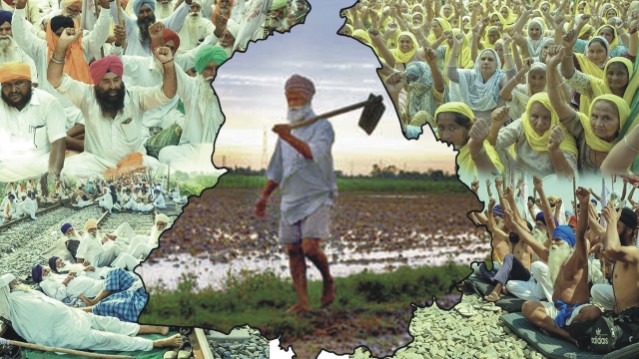
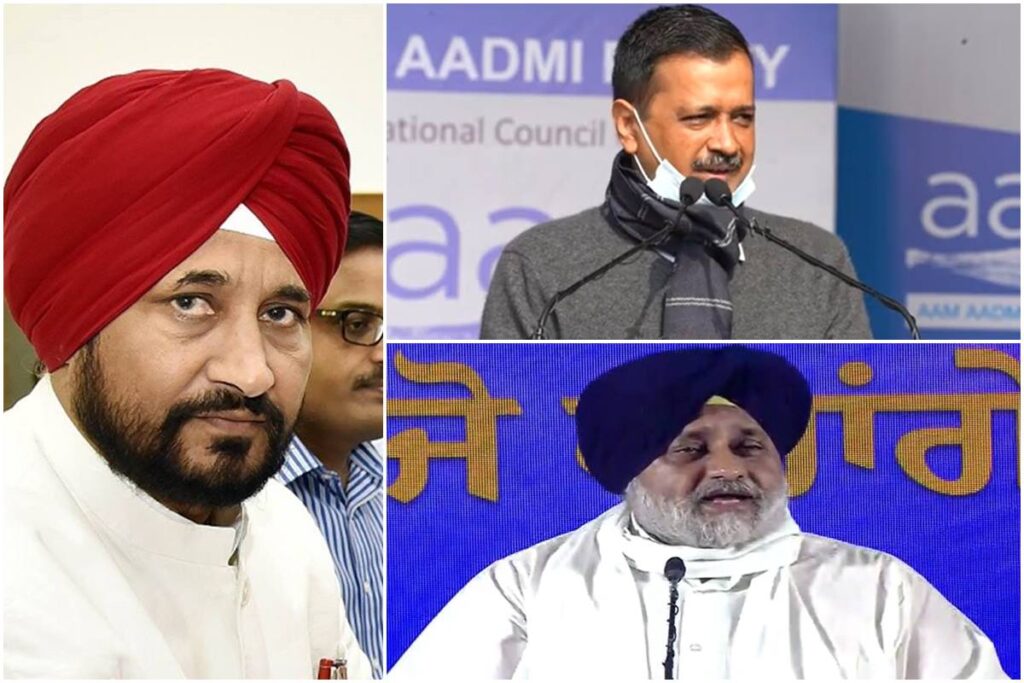
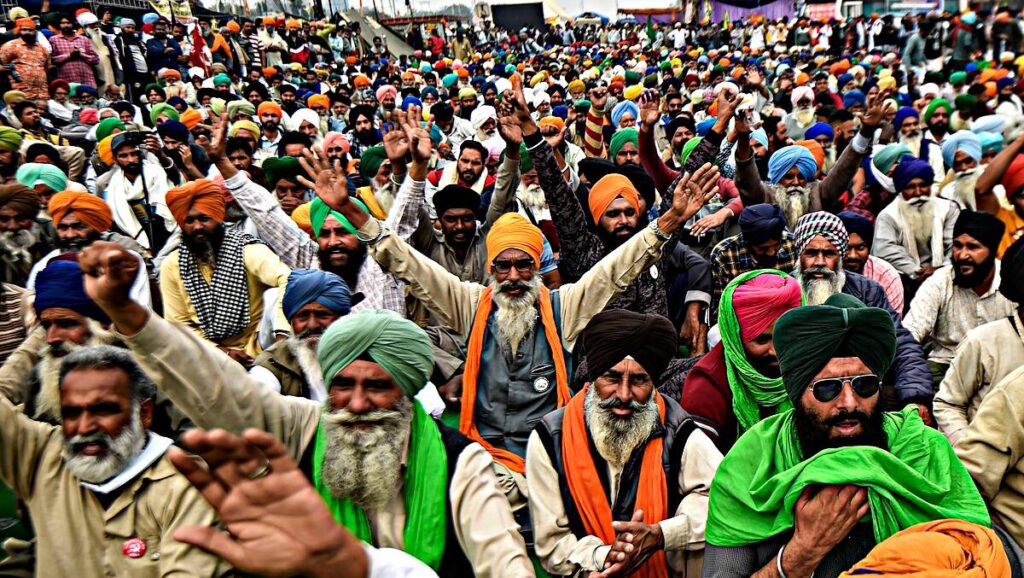
The political core of the historic Farmers’ Movement was anti-corporate. Tens of thousands of farmers had camped outside Delhi, demanding the withdrawal of  the three Farm Laws stating that the laws were designed to allow billionaires such as Mukesh Ambani and Gautam Adani to enter and control farming. Yet, in the assembly elections campaign in Punjab, all the mainstream political parties in the state are silent on this issue. Punjab’s 117 assembly seats will go to the polls on February 20. The state heads into polling in an atmosphere of deep discontent stemming from an aggravating agrarian crisis to massive unemployment, corruption and mafia raj. The people of Punjab,  it seems, are looking for a change, and in the absence of a credible political force, Arvind Kejriwal’s Aam Aadmi Party (AAP) has emerged as a key challenger to the Congress and Akali Dal’s traditional monopoly over power in the state. Propelled by a ‘no progress without change’ sentiment among the people, the Aam Aadmi Party (AAP) poses a serious threat to the incumbent Congress. While the result will be known on 10 March, many analysts and opinion polls are giving AAP a majority. In the intense campaign in the run up to the election, the prominent leaders of the main political parties in fray, are competing with each other in announcing freebies like electricity, water, monthly allowance to women, loan interest waiver to farmers etc. The Congress High Command, sensing the people’s disillusionment with Captain Amrinder’s misrule and to stop the intense factional infighting between the Captain and Navjot Sidhu, which at one point threatened to split the Congress, appointed Charanjit Singh Channi as the CM replacing Amrinder Singh. The Congress has projected Channi, a Dalit, as its chief minister candidate. Rahul Gandhi while campaigning in the state has stressed on Channi’s humble and poor roots.
Punjab goes to polls
To neutralize the Dalit-face advantage of Congress, all the parties are wooing the Dalits, who comprise 32 percent of the state’s population. The Shiromani Akali Dal (SAD) fighting the election in alliance with Mayabati’s Bahujan Samaj Party (BSP) has promised to pick a person from the Dalit community as deputy chief minister if voted to power in the state. SAD is highlighting the failures of the Congress government, and being a regional party, is stressing on the issue of federalism. The BJP while raking up the bogey of nationalism, too has announced to make a Dalit the CM of the state if it is elected to power. Prime Minister Narendra Modi in campaign speeches in the state, in his favorite usual style, attacked the Nehru-Gandhi family and held them responsible for all the present problems of the country. The anti-Channi or the Jat Sikh faction of the Congress are talking of the ’Sidhu Model’ of providing a corruption free clean government in the state by eradicating the sand, cable and drug mafia. The Aam Aadmi Party has made the need for a ‘change’ in Punjab, a focal point of its campaign, and is highlighting Arvind Kejriwal’s ‘Delhi Model’ of good governance. In a state already under massive debt, the parties are competing to lure the voters with further concessions, while the real economic issues of concern to the masses, the agrarian distress and creation of jobs outside the agriculture sector, have remained unaddressed. The Assembly elections in Punjab are happening in a little over a month after the farmers’ movement at Delhi borders. The more than year-long movement led by the farmers’ organizations in the state and supported by every section of Punjabi society forced Narendra Modi to take back the three Farm Laws. The victory of the farmers was not only the first significant defeat of the Modi-regime but also a big setback for the corporates, both domestic and foriegn, eyeing to penetrate the Indian Agricultural sector and control the production, marketing and consumption of agri-products. For the first time in India’s history of mass movement, the farmers’ of Punjab made the corporates — Adani and Reliance — the direct target of their agitation. At that time all the political parties in Punjab agreed with the farmer’s stance that the three laws were meant to facilitate corporate takeover and control of agriculture. Even Rahul Gandhi, during his visit to the state, said that the Modi government is a puppet of the corporate houses and was serving their interest. But sadly, none of the parties, in their election campaign or Manifestos, have uttered a single word against the Corporates. There is no mention of combating the corporate takeover of agriculture in Punjab. The root of all the economic problems in the country lies in the neoliberal model of handing over every productive resource to the crony capitalists.
Credits: The Indian Express
The economy is mainly divided into three sectors — agriculture, industry, and services. Corporate control is much more predominant in industries and services. Even in the agricultural sector, the inputs used are produced by the corporates. If we look at the model of the Green Revolution, we will find that the corporates increased their control over agriculture through the use of fertilizers, pesticides, insecticides, hybrid seeds, modern machinery and technology. The sudden increase in agricultural production at that time had also increased the income of the farmers. As a result, a large number of people and policy makers ignored the future negative effects of this model of agriculture. Today in Punjab, the agriculture sector faces problems like debt, suicide and exit of small farmers from agriculture. In addition to this, the Green Revolution has led to alarmingly low underground water table, toxic chemical pollution of land and water bodies, loss of soil fertility etc. Even at that time neither the political parties nor the policy makers opposed the dominance of corporate over agriculture through the model of Green Revolution. Today, when we look at the three repealed laws, it is clear that while the Green Revolution model only led to corporate control of agricultural inputs (fertilizers, seeds, machinery etc.), these three agricultural laws, in addition to inputs, would also ensure corporate control of crop output. The world economy is going through a crisis of stagnation. The rate of growth in manufacturing is declining. There is stagnation in the services sector also. The corporate world is seeing great potential for investment in the agricultural sector, both in food production and its marketing. In fact, governments are in favour of corporate farming, in which companies will farm on a large scale, introduce digitization and robotization through use of artificial intelligence in the sector. With this kind of technology intensive farming gaining ground, the farmers will be pushed out and their land will go in the hands of the companies. While small and marginal farmers will be converted into wage labourers, even the big farmers will be compelled to go for contract farming or rent their land to the companies. In fact, due to the huge pressure from the corporate world, all the political parties are preparing their election manifestos in favour of corporates in the name of bringing development to Punjab. Continued in Part-2. It can be read here. The author is Principal Economist, Punjab Agricultural University, Ludhiana. Views are personal.

Violation of Child rights with regard to Hijab row: Shimoga reporter admitted mistake

Several media channels that are reporting on the ongoing Hijab controversy, are now facing strong criticism for being insensitive in reporting and in violation of the rights of the children. One of the incidents that took place in Shimoga recently where the journalist chased a muslim girl student to capture the picture. The video that become viral has attracted the anger of the people. Following the incident, the District Child Welfare Committee of Shimoga had issued notices to some of the media channels. According to the sources, the journalists who appeared before the committee, have admitted their mistake and given that in writing. The Committee which has been constituted to advocate for the interest of the children, took severe exception to the reportage of the children in connection with the Hijab issue. It reportedly called a section of reporters to educate them about the law. The committee had written a letter to the Department of Information and Public Relation on February 17 where it had asked the department to take necessary action for the appearance of the select reports before the committee. Considering the video being shown in the social media about the Hijab issue, it is clear that the incident is in violation of the rights of the children. The letter had asked the chief of bureau of the media house, reporters and the camera persons to appear before the committee.

Open letter to Karnataka HC on misinterpretation of interim order on Hijab

“ The incident was reported across the state. The Hijab issue has led to confusion among the students fraternity.  Some of  the media houses violate the rights of the children with their insensible reporting. The Committee has taken note of the video being circulated on social media. The report has been generating mental agony for the children. This is clearly against the rights of children as per section 75 of Child Rights Act 2015. Some of the news channels have even telecast the incident live from Shimoga”, the committee said. The video clips were telecast on Suvarna News, TV9, Digvijay TV, Power TV, News First, Public TV and Btv Kannada news channels. “ Since it is a matter of urgent concern, the heads of these channels, reporters and camera persons were asked to appear before the committee. Since the committee did not have address or the contract numbers of the persons, therefore the message was passed on to the Department of Information to convey about the notice to the persons concerned”, the letter said. The committee wanted them to appear before it on February 18, at 11:00 am. Meanwhile, one of the reporters who did not wish to be identified, confirmed to gaurilankeshnews.com that the reporters concerned met the committee members. They have also admitted their mistake and given that in writing. Speaking to this portal, Shivamogga district child welfare committee president, G. M. Rekha said that they have instructed the media persons not to report in a manner that violates the rights of the children. “ Some of the reporters are new and may not be aware of the rights of the children and the laws related to it. They were called to educate them about the law so that they do not repeat the mistake in future”, she said. “ After violating the law, no one can say before the judge that they are not aware of the law”, she said, adding that all those who were served notices were present. “ We have told the media persons not to pose questions to the students whether they need Hijab or education. This is not an appropriate question to be asked. Already the schooling of the students have been adversely affected because of the Covid pandemic. In such a situation, if more hurdles are created, then the students will get deprived of the education. Since children are the future of our country, therefore we should be serious and sensitive in matters related to children”, she said. She said that despite prohibitory orders being imposed, several media channels had gone to schools and colleges. The committee has educated them about it. “ We have explained to them about every law made in the interest of children at international level and also Indian laws related to the children. If the media persons want, then we are ready to hold awareness programmes for them about laws related to children’s protection. The incident has taken place because of the lack of knowledge which may put them in legal trouble in coming days. We explained these things to the reporters”, she said. She said that the committee has given strong warning to the media channels not to repeat the mistake, else stern action would be taken against them.

What is the problem if girls wish to cover head with cloth, asks writer Devanuru Mahadeva

0

During his interview with a Kannada news channel, Veteran Kannada writer, Devanuru Mahadeva has raised objections over the development taking place in Karnataka in the name of Head scarf.

Some vested interests are working behind the entire Hijab episode, he said.

“ There is absolutely nothing wrong with wearing a Hijab along with the uniform. Why create controversy over it”, he asked.

He felt that the issue has now become a matter of prestige and leading to hatred for a particular community.

“ We have seen women of different faiths use stole to cover their head. Then why oppose Muslim girls covering their head with a cloth”, the eminent writer said.

The case is now before the Court and solution should be found to it as quickly as possible, till then there will be a sword hanging over the head.

He opined that the innocent students should not be dragged into religious politics which will create hatred among the students.

Open letter to Karnataka HC on misinterpretation of interim order on Hijab


When the anchor asked whether it is right to wear Hijab inside the classrooms, Mahadev said that the girls may be wearing Hijab to keep their hair turning uneven with the wind. Why make this simple matter big.

“ If you leave the matter, the issue will slowly die down in the coming days. But if you oppose it, many girls who don’t wear Hijab, may start wearing it as a mark of protest”, he noted.

Drawing attention of the students towards several burning issues of the country, the writer said that the middle class people are rapidly being pushed toward poverty. The poor people are being forced towards hunger. “ Is this not the job of students to think about these critical issues”, he asked.

He said that on the one hand, poverty is affecting the society like a plague, on the other, the wealth of the country is fast going into the hands of some capitalists.

While common people were losing their earnings during the pandemic and due to demonetization, the rich people became richer. How did this happen?, he asked.

The students should ask these questions to the society.

The economists are suggesting to impose higher tax to wealthy capitalists and use the money for improving educational and health standards of the country.

“ But instead of adding more tax, the government has slashed the taxes of wealthy people. When the government comes to the rescue of wealthy people, it does not help the poor farmers. The government does not wish to waive the loan borrowed by farmers. The students should ask why this discrimination”, he said.

Practice of wearing hijab must pass test of constitutional morality, AG to HC
0
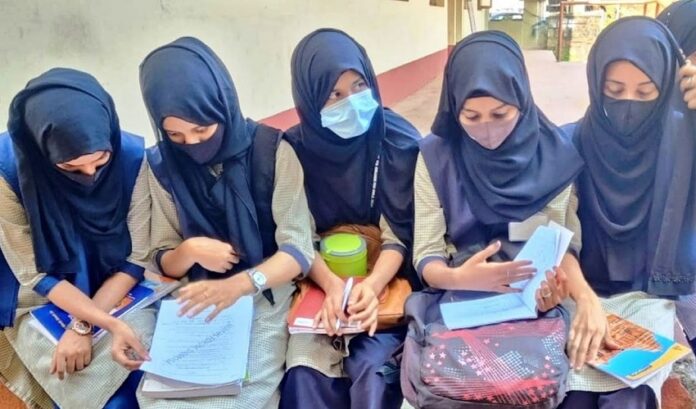
The Karnataka government on Friday told the Karnataka High Court that that the practice of wearing hijab must pass the test of constitutional morality laid down by the Supreme Court in the judgments in Sabarimala and Triple Talaq cases. The hearing in the petitions challenging the hijab ban continued on Friday, day 6, in the High Court. Advocate General Prabhuling Navadgi made arguments to that effect on behalf of the State, before the Bench of Chief Justice Ritu Raj Awasthi and Justices Krishna S Dixit and JM Khazi in a batch of petitions filed by Muslim girl students in the State claiming that they were not being allowed to enter colleges on account of the government order (GO) which effectively bans the wearing of hijab (headscarves). He said that the state government has taken the stand that the hijab does not come under the essential religious practices in Islam. He added that the state government has ordered that the students should wear uniforms prescribed by colleges and that the government does not want to intervene in religious matters. The hearing in the case will continue on Monday. Referring to the Supreme Court’s decisions in the Sabarimala and Triple Talaq cases, AG Navadgi said,
“Practice of wearing hijab must pass the test of constitutional morality and individual dignity.”
During his submissions, he also said that the government was “pained” at how it was being berated in the backdrop of the hijab ban controversy. “We are pained at the way the government has been berated in these proceedings and how it is alleged we are dictated by some other reasons and that we are discriminating against girls and women. With absolute humility we say, State believes in treating everyone equally.” The hijab and saffron shawl row has also spilled over to political leaders. Karnataka Congress President DK Shivakumar on Friday said that state Minister KS Eshwarappa must resign over his remarks that the saffron flag might become the national flag in the future. He further warned the BJP government that if the minister is not sacked, Congress would move court besides continuing to disrupt the ongoing assembly session. The Congress had on Thursday staged an overnight protest in the Karnataka Assembly demanding minister Eshwarappa’s resignation. While Congress legislature party leader Siddaramaiah said that the party will continue its protest till the minister is sacked, Shivakumar said that no action has been taken against the minister for “disrespecting” the national flag.