The nation of Ecuador has been a battleground between international capital and popular struggle. It has always been an important site of struggle. Over the past thirty years, the battle between the elites and the people has intensified with multiple military coups and the rise of “populist” leaders pushing the country in multiple directions. Public debt is an important part of this struggle. The decentralized nature of governance is another.
Ethnically, most people in Ecuador are descendants of either Indigenous and European people. Mestizos, or people of both Indigenous and European ancestry, are nearly three-fourths of the population. 7% are people of exclusively Indigenous ancestry and another 7% are exclusively of European ancestry. Most of the rest are Afro-Ecuadorans, being of exclusive or African ancestry. In terms of identification, about a quarter of Ecuador identifies as indigenous, making it the sixth-largest population in the western hemisphere. Geographically, Ecuador is very diverse and sits between the mountains, desert, heavy forested areas, and coast. Historically, the state has been fragmented into distinct regional characters, but with special relationships with nature being a common theme.
Ecuador became independent from Spain in 1822 and became an independent republic in 1830. In the 1940s, Ecuador had its Glorious May Revolution, following which, there was a rise in electoral populism in Ecuador. Socialist leaders became common until 1963, when the army overthrew the president for having strong sympathies with communism. This coup may have been part of American interference in the region to prevent the spread of communism in the region. After the coup, elections were suspended until 1979.
In the elections that followed, there was a struggle between pro-globalization forces associated with the army and pro-people leaders. With strong regional leadership, any anti-people structural adjustments that required strong central leadership failed, and there were a series of missteps between policies coming from the top and that enacted below. The results were a series of crises from conflicts between the two sides, including runaway inflation, replacing the Ecuadoran currency Sucres with the American Dollar as currency, and dissolution of a number of governments. Military coups and popular protests would ebb and wane.
The high indigenous population meant that popular struggles had a strong focus on the rights of indigenous people, preservation of the environment, and reducing inequality in the country. In 2002, a former member of the army, with help from the military, Col. Guiérrez assumed power in the center. However, his ability to institute Neo-liberal reforms was limited, and he was still restricted by his party’s poor support in parliament. In 2004, Guiérrez dissolved the Supreme Court. Mismanagement and corruption charges against Guiérrez led to a fall of support from the middle classes. He was overthrown by popular protests, and in 2005, his vice-president promised to hold elections in 2006.
rafael correa
In 2007, Rafael Correa became the President of Ecuador. He won on the promise that he would draft a new constitution for the country which would speak to the desires of the Ecuadorian people.In defiance to Neo-liberalism, Correa insisted that Ecuador’s debts were illegitimate and the country defaulted on $4 billion of debt, rejecting the usurious conditions of that debt.
With a poor economy worldwide, Rafael Correa established a series of left-wing measures. Ecuador, with Bolivia and Venezuela, were seen as part of a new socialist model growing in Latin America. Internationally, they supported Iran, Bolivia, Cuba, Venezuela and Syria, though the United States still remained their largest trading partner. Correa brought spending on education and welfare programs from 2.6% of the GDP to 5.2%. To finance the measures, Ecuador took loans from China. These welfare measures increased Correa’s popularity as a leader. He continued to serve as a leader from 2007 to 2014 when he declared that he would step down after implementing socialist measures in line with Venezuela. These measures led to a massive reduction in poverty and inequality, Poverty went from 60% in 2000 to 21% in 2017.
The present Economic crisis
With rising oil prices, relations with China began to decline. China, which had provided loans in installments of USD 1-2 billion and totally held nearly a fifth of Ecuador’s economy in debt. They agreed to be paid back in oil. In years, as oil prices rose, the Ecuadoran state began to feel trapped in this arrangement. Correa began to look for other ways to finance the country.
Welfare and protection of the environment were cornerstones of Correa’s presidency. He became famous worldwide for drafting the first constitution in the world that recognized the environment as having rights. This is deeply embedded in the demands of the people of Ecuador.
Chinese demand for oil and other natural resources from the country had begun to run counter to that. Correa had frequently exclaimed that they were alone in the world in the struggle to protect the Earth, being betrayed and attacked on all sides.
In 2015, there were a series of protests against Correa, which coincided with similar protests in Brazil and Venezuela, Latin American states with pro-labour parties in powers. Issues raised included allegations of corruption and a declining economy. Correa was succeeded by his Vice President, Lenin Moreno. Though claiming to be a socialist, Moreno represented a movement away from the socialism of Correa. While in power, Moreno implemented term limits on the Presidency, preventing Correa from being able to contest as president in the future, and in 2018, Correa was arrested for dozens of corruption charges while in office.
As the Ecuadoran economy continued to decline, Moreno began to decrease public spending, which led to a drop in his popularity. Ecuador began borrowing from the IMF. With the loans shifting to the IMF, Moreno began implementing austerity measures leading to a rise in the cost of energy and food, and a reduction in welfare programs. These policies resulted in the protests we see today.
Indian-American Abhijit Banerjee, his wife Esther Duflo and Michael Kremer were awarded the 2019 Nobel Economics Prize on Monday for their approach to alleviate global poverty.
Fifty-eight-year-old Banerjee was born in 1961. He studied at Calcutta University’s Presidency College and Jawaharlal Nehru University and then did a Ph.D. from Harvard in 1988. Abhijit was also a student of another Nobel Award winner in Economics, Amartya Sen.
Esther Duflo of France waves after receiving the Princess of Asturias award for Social Sciences from Spain’s King Felipe VI at a ceremony in Oviedo, northern Spain.Esther Duflo, 46, born in Paris, also has the honor to be the youngest ever person to receive the economics award. She is the second woman to win the economics prize after Elinor Ostrom got it in 2009. She is married to Abhijit Banerjee.
Banerjee is the author of four books that include Poor Economics, for which he won the Financial Times and Goldman Sachs Business Book of the Year Award in 2011. The book has been translated into more than 17 languages.
Both Abhijit Banerjee and Esther Duflo work at Massachusetts Institute of Technology while Kremer is at Harvard University. Duflo is also the Editor of the American Economic Review, a member of the National Academy of Sciences and a Corresponding Fellow of the British Academy. Kremer, 54, is a development economist, who is currently the Gates Professor of Developing Societies at Harvard University.
The news was received with much enthusiasm and pride by Indians.
Hearty congratulations to Abhijit Banerjee, alumnus of South Point School & Presidency College Kolkata, for winning the Nobel Prize in Economics. Another Bengali has done the nation proud. We are overjoyed.
Abhijit Banerjee is also the batch mate of Yogendra Yadav, social activist and national President of Swaraj India. He also congratulated Banerjee on Twitter.
The first Nobel Prize for JNU !
Abhijit Banerjee was my batchmate (1981-83). Did MA (Eco) from CESP/SSS, JNU. https://t.co/Lw87ezVBqm
Opposition leader Rahul Gandhi also congratulated Abhijit Bannerjee and revealed that Abhijit was one of the consultants in conceptualising NYAY scheme, congress minimum basic income guarantee scheme.
In his congratulatory message to Banerjee, Gandhi took a dig at BJP-led government, saying that NYAY had the power to destroy poverty but the current government policies, which he called ‘Modinomics’, are destroying the economy and boosting poverty.
Congratulations to #AbhijitBanerjee on winning the Nobel Prize in Economics.
Abhijit helped conceptualise NYAY that had the power to destroy poverty and boost the Indian economy.
Instead we now have Modinomics, that’s destroying the economy and boosting poverty. https://t.co/joBYusVFKT
Heartiest congratulations to eminent economist Abhijit Banerjee for being among the winners of this year’s Nobel prize for Economics. Work on poverty alleviation gets highest endorsement.
Many have also questioned that PM Modi who is normally very quick on Twitter has not congratulated the Awardee.
PM of India @narendramodi, the quickest to tweet on every matter hasn't tweeted his wishes yet for 2019 noble price winner from India. #AbhijeetBanerjee had questioned the implementation of demonetization..#NobelPrize2019#economics
Same cannot be said about his right-wing followers who are dissecting and questioning the Nobel prize and discrediting him because he had criticized demonetisation.
Officially known as the Bank of Sweden Prize in Economic Sciences in Memory of Alfred Nobel, the award wasn’t created by the prize founder, but is considered to be part of the Nobel stable of awards.
The Nobel prize in economics prize includes 9 million-kronor (USD 918,000) cash, a gold medal, and a diploma. The winners will equally share the prize money.
Quito, the capital of Ecuador is a war zone for the last two weeks. Protests have erupted across the country after Ecuadorian President Lenín Moreno announced that he is ending fuel subsidies.
This is one of many neoliberal austerity reforms being pushed by the Moreno government.
Indigenous women in the midst of protests in Quito, Ecuador
The national strike was coordinated by indigenous groups in conjunction with Ecuador’s biggest trade unions and the student movement and was heavily repressed by military and police forces.
What started as protests against ending fuel subsidies has taken shape into an indigenous people led anti-International Monetary fund (IMF) and the neoliberal model imposed by the IMF masters.
In March 2019, a 4.2 billion dollar IMF loan was granted to Ecuador with strings attached i.e provided they give up Julian Assange. Julian Assange dragged out of Ecuadorian embassy
IMF board in its statement stated- “We are here to help you” says the IMF. Our objective is to help Ecuador “modernize its economy and pave the way for strong, sustained, and equitable growth.”
This was followed by the imposition of several austerity measures by the government.
Moreno’s government lifted the petrol and diesel subsidies on 30th September, 2 weeks ago as part of a $4.2bn loan deal with the International Monetary Fund(IMF) last year.
Ending fuel subsidies means that poor, working-class people will have to pay more for gas while private energy companies walk away with more profits.
“What the government has done is reward the big banks, the capitalists, and punish poor Ecuadorians,” said Mesías Tatamuez, head of the Workers’ United Front umbrella union.
Thousands of protesters from across the country – many in traditional indigenous dress – have descended on the capital to protest Moreno’s austerity measures.
Protest leaders said that the vast majority of protesters were marching because the fuel price hike had inflated food and transport prices and the indigenous people were the hardest hit.
Demonstrators also tried unsuccessfully to storm barricades around the presidential palace that forced President Lenín Moreno to move his government to the port city of Guayaquil on 7th October.
Lenin Moreno´s administration has moved the country in a right-wing direction after former President Rafael Correa left office in May 2017. Though he enjoys the support of business and the military, Moreno’s popularity has sunk to under 30%, compared with 70% in 2017.
Many of the progressive policies established under ex-President Rafael Correa have been rolled back since Moreno took power.
Eight uniformed officers were brought onto a stage and forced to address a crowd of thousands of activists but were not harmed
Indigenous protesters in Ecuador have paraded a group of captured police officers on stage in a brazen show of defiance to the government of Lenín Moreno, as protests against austerity-measures dragged into a second week.
Indigenous protests have played a central role in toppling a string of Ecuador’s presidents, including Abdalá Bucaram in 1997, Jamil Mahuad in 2000 and Lucio Gutiérrez in 2005.
Isso não está acontecendo na Venezuela, Está acontecendo no Equador com o governo de @Lenin onde os direitos humanos estão sendo violados! Onde estão as organizações internacionais que criticam tanto a Venezuela e dizem defender os direitos humanos? pic.twitter.com/zbv59dw3oI
President Lenín Moreno and leaders of Ecuador’s indigenous peoples struck a deal today to cancel a disputed austerity package and end nearly two weeks of protests that have paralyzed the economy and left seven dead.
Under the agreement announced just before 10 p.m., Moreno will withdraw the International Monetary Fund-backed package known as Decree 883 that included a sharp rise in fuels. Indigenous leaders, in turn, will call on their followers to end protests and street blockades.
The district Magistrate of Ayodhya Anju Kumar Jha has imposed Section144 in Ayodhya district in anticipation of the verdict in the Ayodhya Case.
He also said that the decision to impose Section 144 was also taken while considering the upcoming festivals.
The Supreme Court has said that it will conclude the hearing in the Ayodhya Case by 17 October, a day before the earlier deadline. Supreme court will announce its verdict in the Babri masjid-Ramjanmabhoomi dispute on November 17th.
Babri Masjid Demolition
The Babri Masjid built in 16h century was demolished by Karsevaks belonging to many hindu organisations like VHP, Bajrang Dal and RSS. BJP rallied politically to make a temple at the site where masjid was. BJP stalwart L. K. Advani had carried a month long rath yatra to rally hindus to build Ram temple at the Babri Masjid site.
On 6 December 1992 the VHP and the BJP organised a rally at the site involving 150,000 volunteers, known as kar sevaks. The rally turned violent, and the crowd overwhelmed security forces and tore down the mosque.
A subsequent inquiry into the incident found 68 people responsible, including several leaders of the BJP and the VHP.
The demolition resulted in riots between Hindu and Muslim communities for several months in several places in India causing the death of at least 2,000 people.
Supreme Court hearing
In 2010, Allahabad High Court judgment had ruled that the land in Ayodhya be partitioned equally among the three parties: the Sunni Waqf Board, the Nirmohi Akhara, and Ram Lalla.
This year on 9th january, the Ayodhya Case was referred to a Constitution Bench. A Constitution Bench comprising five judges, headed by Chief Justice Ranjan Gogoi is hearing the matter.
Arguments from all three parties are being heard by the bench. All three parties lay claim to the disputed land.
The counsel for deity Ram Lalla claims that there is “proof beyond doubt” about the existence of a “massive structure” beneath the demolished Babri Masjid in Ayodhya, and inference from excavated materials can be drawn of it being a temple.
Sunni Waqf Board is represented by senior advocate Rajeev Dhavan. They have objected that the birthplace cannot be a juristic entity and moreover, it has been made a party in 1989 to ensure that no law applies to it and other claimants are “knocked off”.
In a couple of days decision will be sealed on one of the most long pending and contentious political issues of India.
I knew Gauri as a fellow activist. She was intense, fearless, fierce, rebellious and still so soft and affectionate. Like any other activist I might have met her less than half a dozen times but felt so close that when the news of her felling to assassin’s bullets reached me, I felt a part of me collapsed. We met for the last time at the gala conference on Ambedkar organized by the Karnataka Government in July 2017, where we ate our lunch together. She reiterated her wish to publish my book on Mahad in Kannada but complained that my friends did not cooperate in translating it. I would be happy to see it published by the Nyayapatha publication in deference to her wishes. For such may be the only things we can think of doing; many of her wishes are fast getting distant from the realm of possibility these days. Can we think of India being secular? Can we expect justice to Dalits and minorities? Can we empty out the communal poison from our people’s minds? Many such things that Gauri willed for are just getting out of bounds for us today.
I wonder how she would have reacted to a series of things that are passing around us with the speed of moving frames of a horror movie. It appears like worst nightmares come alive before our eyes in rapid succession that we cannot even grasp them. How she would have felt about the media prostrating to the powers and people falling silent or themselves becoming part of the nightmares. How would one feel who spent the best part of one’s life in teaching people how to love to see lynching hapless humans like brutal beasts? How would she feel people celebrating someone being so killed, someone being raped and defamed as promiscuous? How would one feel being helpless and defenceless when the institutions became collaborators of criminals?
A 23-year old student, running out from the clutches of a rapist, who is the chairman of her college, has been a Member of Parliament and a central Minister and is close to the present chief minister, musters unusual courage in speaking out against her powerful tormenter. This man, feigning as a holy man, allegedly raped her for over a year and abused many other girls of her hostel inmates. But still, the SIT constituted at the instance of the Supreme Court grilled her for 15 hours, searched her premises but neither filed an FIR nor questioned the tormentor. The horrific tale, where the girl is now arrested for extortion charges is a travesty of justice. With all evidence against the former MP, he is enjoying VIP treatment in the hospital while the student is sent to judicial custody. Media that was silent when the girl had filed a case against the chairman of the University, has subverted the narrative and making a victim out of the chairman being the victim of extortion, ignoring all the video evidence that implicates him in his abusing the power.
A similar case of a 17-year girl in Unnao being raped by an MLA of the ruling party, cried for justice since June 2017, losing in the process her father in judicial custody, two more relatives when a speeding truck dashed against her car, and barely surviving herself to see her own devastation in years ahead. Even a man on the street could see who is behind such killings but our justice delivery system these days just cannot. As per the latest news, the murder charges are removed from his charge sheet. It appears to see what is prompted to be seen by the powers that be.
The case of Tabrez Ansari, a 24-year old Muslim youth who was mercilessly beaten to death in June this year, already appears decades old in our memory clock conditioned by the media that has completely sold its soul. He was mercilessly beaten as he helplessly shouted Jai Shriram as dictated by his tormentors on a film, which was broadcast publicly on television. He died in the hospital of the cardiac arrest, as his post-mortem report noted. It also noted that the cardiac arrest was due to his deep injuries caused by brutal beatings but the police picked up the word “cardiac arrest” to drop the murder charges on the 11 accused. The innocent woman who lost her husband in such a horrific manner stares blankly demanding justice, which may never come. Not to speak of Kashmir, an open and shut case of the breach of constitutional morality and of the Kashmiris who meekly wonder whatever was happening to them and least about the NRC, that might entail the biggest human tragedy in modern history if it unfolds as the honorable home minister promised. Every day, dozens of such misdemeanors of our power-drunk rulers are happening around us emboldening the tribe of their Bhakts.
Even if Gauri had not left us that day, she could have been trapped in the even expanding Bhima-Koregaon case!
Anand Teltumbde is a professor, scholar, writer and civil rights activist.
On October 6th, activist and theatre personality Prasanna, along with other Gandhians, began an indefinite fast for ‘sacred economy’ in Bengaluru. According to the Gram Seva Sangh, ‘sacred economy’ is a system of production in which the maximum number of jobs are created through minimum investment in capital and the least damage to the natural environment.The hunger strike, which they term as a satyagraha in the tradition of Mahatma Gandhi, is an “introspection and an expression of social intent”, as the Gram Seva Sangh website puts it. A sacred economy, in their view, would rejuvenate both the economy and nature itself. “It revives community, revives love,” the website says. “Today’s system is the opposite of the sacred. It is a monster economy in nature and size.” At an event on September 15th, Prasanna said, “Gandhi was killed by ignorance, we will revive him through action.” The satyagraha is to fight for workers in garment factories, anganwadis, municipal corporation, and small traders and vendors, manufacturers, and service sector workers. The Gram Seva Sangh, which is an organization with aims to bridge the urban-village divide, is a supporter of the satyagraha. In a statement on the website, Prasanna argues that the current economic crisis is a sign that we must shift to a sacred economy. The unprecedented scale of consumption as well as government policies which prioritize bailing out banks mean that the poor and the rural people are neglected. A sacred economy would not afford as much growth as the current system, but it would be a healthier system to live in. The satyagraha has garnered much attention, with former Chief Minister Siddaramaiah and former Prime Minister H.D. Devegowda paying a visit to the hunger strikers at Gandhi Bhavan. The non-violent method of protest for the sacred economy is meant to draw attention from industrialists, government officials, and other influential personalities. Yesterday, Union Minister Sadananda Gowda visited the protesters and assured Prasanna that he would arrange a meeting with Finance Minister Nirmala Sitharaman. On this assurance, Prasanna and the other activists broke their fast. “The government should give tax discounts to small sectors and producers of handicrafts, not corporates or India Inc. alone,” Prasanna told Indo Asian News Service. In an interview with The Hindu, he argued that Gandhi not only provided political solutions but economic ones. Bringing up Greta Thunberg’s climate change activism, he said that that India still had a chance to be redeemed. “The problem is that the heads are in the city while the hands are in the village,” he pointed out, “We need to integrate the two, bringing discipline and the concepts of the 21st century to villages while making cities sustainable.” The satyagraha began on October 2nd with relay fasting, and then changed to an indefinite fast, which continued for about a week. The satyagrahis were fasting outside Gandhi Bhavan, Kumara Krupa Road.
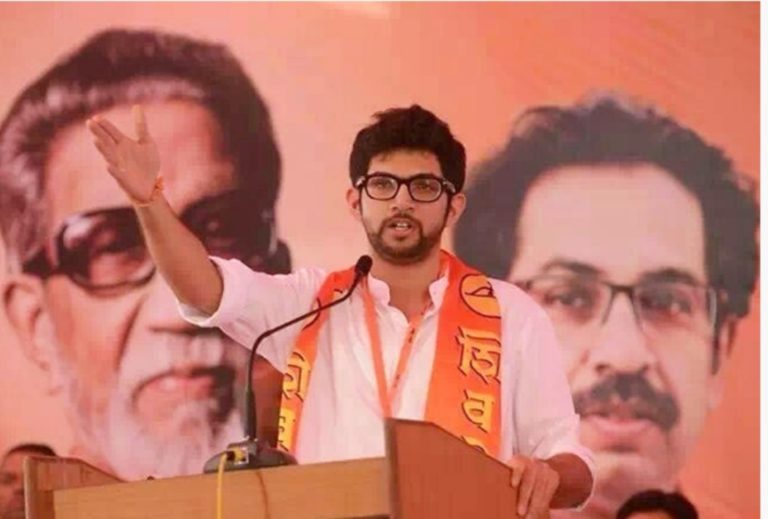
Aditya Thackeray’s entry into electoral politics made a regular and uninteresting Maharashtra state assembly election exciting for the Shiv Sena cadres. Born in a political family, politics is not new to Aditya Thackery. In 2010, he entered politics in a “quintessential” Shive Sena style of burning a copy of Rohinton Mistry’s celebrated book ‘Such a Long Journey’, citing offensive content against ‘Marathis’ and Bal Thackeray. Congress- NCP government had later withdrawn the novel from the syllabus of Mumbai University. Even while Aditya Thackery is a third-generation political leader from the Thackery clan, one must note drastic changes in the current political situation since the inception of Shiv Sena, considering they have lost a vast part of their ground to the BJP, making them into a junior partner of the alliance.
Aditya Thackeray’s entry in politics also underlines the changing political situation in the country. While Bal Thackery and his son Uddhav Thackeray has always projected themselves above ‘electoral politics’, as rather ‘Kingmakers’ whose prime motivation has not been to capture power but to protect the cultural values of Hindutva and secure the rights of Marathis, such tactics and propositions came to be challenged and demolished in 2014 by the successive electoral win of BJP over Congress, with the critique of the Manmohan Singh government as a remote control government. The knowledge of the same alongside the understanding that leading from the front does not mean staying in the party house and giving press statements, Aditya Thackeray intends to rather be in the helm of affairs of the state by being in power (Government).
It’s interesting to observe Aditya Thackeray being surrounded by non-Marathi people and greet people in various languages through hoardings. While the party started with the idea of ‘Marathi first’, wishing people different languages now underlines the changing nature of politics with Aditya Thackeray at the helm. Even when these multilingual posters did make some murmurs among the Sena supporters, reiterating Shiv Sena’s initial intention to defend the interest of the Marathi people, these rumblings have gradually diluted.
Now, considering the surety of young Thackeray’s victory in Worli, what needs to be observed is the vote margin of his victory. Aditya Thackeray has to face three tough challenges: i. Unlike the previous NDA coalition, the intent of the current NDA governments across the country under the leadership of Narendra Modi and Amit Shah has been to completely infiltrate the vote base of their alliance partners, be they longstanding alliances, to build their own party. The most recent examples of the same can bee seen in BJP’s alliance with TDP, PDP and JD (U), where BJP not only infiltrated their base but also broke the alliance and created enormous trouble for their partners through CBI, ED and etcetera. While Aditya Thackeray will clearly lead the party in the assembly. However, the question remains as to whether Shiv Sena will be a part of the government or maintain the status quo? ii. Now, Shiv Sena has officially become the junior partner of BJP. Will they continue to be a junior partner is another crucial question that is yet to be unravelled. If, yes than for how long will they continue to be so? iii. In a recent interview with Aaj Tak, anchor Anjana Om Kashyap noted Aditya Thackeray to be the Rahul Gandhi of Shiv Sena (reinstating the “pappu” image created by the BJP and its troll army). It’s an early warning sign for Aditya Thackeray against taking on BJP, by the troll army and media. On the other hand, the Thackeray’s are not Gandhis in terms of the fact that they rule by the fear and intimidation. However, whether it will work against the fearless Modi-Shah duo is another issue altogether? There are many questions and challenges for Aditya Thackeray which only time will unfold. Whether he will emerge to be another improved version of Bal Thackeray or become marginalised as Raj Thackeray, cannot be predicted with precision. Shiv Sena is one of the strong regional parties of India that is at the crossroads. Whether Aditya Thackeray will bring back the glory of Shiv Sena days or will he succumb to old political practices of power without accountability is another point in question that remains to be seen.
“We can sacrifice our lives, but not our lands which give us food,” people of Ankola Taluk’s Alageri and surrounding villages say. These people have lost their lands for the sake of Navy, Railway, and National Highway projects. How can they sacrifice their homes for the sake of an airport? How will they survive? If the proposed airport is set up, Alageri-Ankola will be wiped off the map.
Of course, it worries the people of the Alageri. The villagers were distracted by the secret surveys – they lament that if the rulers are adamant to snatch away their lands, may the airport be built on the grave of their village. It is a unique village, where late farmer-leader Chutuku Brahma Dinakar Desai spent his early childhood. Ironically, the people who fought for freedom feel as though they are hanging in balance. With the woe of becoming victims, the people of Alageri are subjected to struggle.
Asia’s largest naval base is coming up between Ankola-Karwar. This Kadamba naval base certainly requires a military airbase. A few pundits, who are assuming that a military airbase would also be open for public, are calling it a two-in-one airport. They are saying that civil aircraft can also use this military airbase. The Department of Defense has chalked out a plan to acquire 202 Acres of land in Alageri, Bhavikeri and Belekeri areas. A survey has already been done on 160 Acres of land in Alageri, 12 acres in Bhavikeri and 30 acres in Belakeri.
In 1983, while laying the foundation stone for the naval base, Prime Minister Rajiv Gandhi had said, “We will see to it that no affected people will shed a single tear.” But the tears of the people of Karwar-Ankola continued to flow for three decades since the naval base work began. The compensation amount fixed by the Department of Defense, which acquired thousands of acres of land, was only Rs. 150 per guntha.
Innocent victims were left in a barren rehabilitation center where crops cannot be harvested. No demagogue could come to the aid of these affected people who literally felt like a fish out of water. The representatives and irresponsible officials, who had declared that there would be a job for every family, appropriate aid, and a quota for victims, have gone missing. MP Anantkumar Hegde could not hear the groaning of the victims until now.
After struggling for 35 years, the affected people won a legal battle to get extra compensation. Now they are getting compensation. Ridiculously, MP Mane and former minister Deshpande are claiming credit for this. The airport has become a scarecrow in this community. It needs 500 Acres of land. Two to three families are living in huts in a guntha of land. There is fertile farmland, and groves of coconut trees. People are barely living, by doing coolie work, fishing, and through running small-scale businesses. The airport will swallow up all these things.
The people in power and their officials have not disclosed any reports on the airport, and on the map of the land acquired. The district administration has not presented survey reports before the public. Why is everything hidden? If this project comes into being, the people, who strongly believe in agriculture, will be thrown out on the streets due to the concretizing of 500 acres of their fields. There will be no chance to make use of the water during the rainy season. The overflowed rainwater wikk lead to floods in the surrounding villages. Floods will grip Ankola.
People resorted to protest against setting up this airport, which will cause much damage. Will the district administration, local MLA Roopali Naik, wake up before revolution grips peaceful Ankola?
In an interesting turn of events in the sedition case against 49 celebrities, Bihar police have closed the sedition case passing the order that the allegations against the accused are out of “mischief” and “lacked substance”.
The order for the closure of the case is passed by Muzaffarpur Senior Superintendent of Police Manoj Kumar Sinha. He also ordered the police to file a prosecution against c
omplainant Sudhir Kumar Ojha in court for filing a false case.
The officials at the police headquarters said the investigation so far has found the allegations in the petition against the accused to be out of “mischief” and “lacked substance”. The complainant was neither unable to produce supporting documents or evidence nor even the alleged letter written by the 49 persons, which may support his claim of commission of any offence. Based on these findings the case is found to be false.
The police will file a case against complainant Sudhir Kumar Ojha under sections 182 and 211 (relating to false information or false charge of offence) for lodging a false case.
Muzaffarpur based lawyer Sudhir Kumar Ojha has a habit of filing cases against famous celebrities and politicians for frivolous reasons. He is known to be an attention seeker to gain fame and to help his practice.
But this time, his PR stunt backfired, when the case received huge condemnation from all across the board. Within days after the FIR was lodged by him, over 180 personalities from the academic and cultural community wrote an open letter to the PM.
The signatories, which also included Naseeruddin Shah, cinematographer Anand Pradhan, historian Romila Thapar and activist Harsh Mander, writers Ashok Vajpeyi and Jerry Pinto, academician Ira Bhaskar, poet Jeet Thayil, author Shamsul Islam, musician TM Krishna and filmmaker-activist Saba Dewan, promised they will continue to speak up against silencing of “people’s voices”.
“Can this be called an act of sedition? Or is harassment by misusing the courts a ploy to silence citizens’ voices?” the letter read.
“All of us, as members of the Indian cultural community, as citizens of conscience, condemn such harassment. We do more: we endorse every word of the letter our colleagues wrote to the Prime Minister.
“This is why we share their letter here once again and appeal to the cultural, academic and legal communities to do the same. This is why more of us will speak every day. Against mob lynching. Against the silencing of people’s voices. Against the misuse of courts to harass citizens,” the letter added.
Some times you have to fight fire with fire
To mark their protest against the sedition charges on the letter writers and on PM Modi’s continuing silence on the issue of mob lynchings, the student organisation of CPI, SFI and DYFI, wrote and post 1.5 lakh copies of the same open letter to PM Modi. They also dared the BJP to book them in similar cases.
Both the SFI and the DYFI printed hard copies of the original letter, on which their members wrote their names and added their signatures before sending them by ordinary post to the Prime Minister’s Office in New Delhi.
In a report by telegraph “This campaign is against the anti-democratic BJP, which filed cases against some of our best-known and most respected intellectuals and artistes who had only made a point without insulting anyone or any party.”
He added: “The case against our intellectuals is part of a larger plan to destroy our Constitution and its values. By denying the rights enshrined in the Constitution, the BJP and the RSS are planning to silence those who speak against their fascist policies.
Naveen Dalal, the man who was accused of trying to shoot at Umar Khalid in Delhi during a public programme is now Shiv Sena candidate from Bahadurgarh, Haryana. The Haryana elections will be held on October 21st.
In August 2018, Dalal along with Darwesh Shahpur attempted to shoot Umar Khalid the JNU student activist near the constitution Club in New Delhi. According to witnesses, two shots were fired but Khalid escaped unhurt because the accused gun jammed.
The person who attacked me (on the right) with Editor in Chief of Sudarshan News, Suresh Chavhanke. No further comments!!! pic.twitter.com/IfQBwLNcwA
Both the accused fled the scene but were arrested after they uploaded a video saying the attack was an “Independence Day gift” for the country. The Shiv Sena candidate is out on bail at present. The case is pending in a sessions court.
Shiv Sena has defended Dalal´s actions by calling it “it was his way of “showing patriotism”.
Dalal calls himself a “Gau Rakshak” and a “nationalist”. Since his ideology “matches” with that of Sena, he joined the party six months ago.
In a statement to Indian Express, Dalal said- “We are fighting the same battle — for nationalism, cow protection and recognition for our freedom fighters,”
He feels that both BJP and Congress governments havent done enough for farmers, martyrs, cows or the poor. “They are just interested in politics.”
Shiv Sena leader from Haryana Vikram Yadav confirms his candidature and said they chose him because of his stance on cow protection and “anti-nationals”
Naven Dalal has three criminal cases pending against him including the Umar Khalid case. He had once barged into BJP headquarters with a severed head of a cow. He is also booked under a rioting case in Haryana.
Both BJP and Shiv Sena are banking on the nationalism and cow protection rhetoric in the upcoming assembly elections.
Both the accused had tried to kill Umar Khalid because of the misinforamtion campaign run by BJP IT cell, claiming that JNU students are chanting anti national slogans in the campus. During investigation it was found that the video was indeed fake and court has dismissed all charges against both Kanhaiya Kumar and Umar Khalid. Despite the truth being out in the public, the sell out and Godi media continues to refer JNU students as TUkde Tukde gang. While the person who is attempting murder is roaming scot free and contesting elections.




 Thousands of protesters from across the country – many in traditional indigenous dress – have descended on the capital to protest Moreno’s austerity measures.


 The case of Tabrez Ansari, a 24-year old Muslim youth who was mercilessly beaten to death in June this year, already appears decades old in our memory clock conditioned by the media that has completely sold its soul. He was mercilessly beaten as he helplessly shouted Jai Shriram as dictated by his tormentors on a film, which was broadcast publicly on television. He died in the hospital of the cardiac arrest, as his post-mortem report noted. It also noted that the cardiac arrest was due to his deep injuries caused by brutal beatings but the police picked up the word “cardiac arrest” to drop the murder charges on the 11 accused. The innocent woman who lost her husband in such a horrific manner stares blankly demanding justice, which may never come. Not to speak of Kashmir, an open and shut case of the breach of constitutional morality and of the Kashmiris who meekly wonder whatever was happening to them and least about the NRC, that might entail the biggest human tragedy in modern history if it unfolds as the honorable home minister promised. Every day, dozens of such misdemeanors of our power-drunk rulers are happening around us emboldening the tribe of their Bhakts.
Even if Gauri had not left us that day, she could have been trapped in the even expanding Bhima-Koregaon case!
Anand Teltumbde is a professor, scholar, writer and civil rights activist.




 In August 2018, Dalal along with Darwesh Shahpur attempted to