Manoj Tiwari replaced with Adesh Kumar Gupta as new Delhi BJP chief

0
The Bharatiya Janata Party President JP Nadda on Tuesday, 2 June, appointed Adesh Kumar Gupta as the Delhi unit chief, replacing Manoj Tiwari. The move comes almost four months after the Delhi Assembly polls in which the BJP won just seven seats. Adesh Kumar Gupta has replaced singer-turned politician Manoj Tiwari as the Delhi BJP chief. There were speculations of upcoming replacement since BJP lost Delhi elections in February 2020.

Manoj Tiwari also stirred controversy when photos emerged of his playing cricket in Haryana during the lockdown period. He broke not just lockdown rules but also went into another state while the borders of Delhi and Haryana were sealed. That left the BJP red-faced. 

Manoj Tiwari wrote on Twitter and congratulated Adesh Kumar Gupta for his new appointment.
“I am thankful to all the activists, officials and residents of Delhi for the love and support received during my 3.6-year-long tenure as Delhi BJP chief. Please forgive me for any inadvertent mistakes I might have made,”
After his appointment, Adesh Kumar Gupta said that he will aim to expand the party in the national capital. Gupta said that he will work with everyone and not indulge in partisan behaviour within the party. A former North DMC mayor, Adesh Gupta said that he will also focus on the party’s performance in the MCD elections. Moments after his appointment, the new Delhi chief slammed CM Kejriwal for ‘failing to handle Covid-19 outbreak’ in the national capital. Newly-appointed Gupta was a former Mayor of New Delhi Municipal Council and has served as a Councillor of West Patel Nagar. The official statement from the BJP said, “BJP President JP Nadda has appointed Adesh Kumar Gupta as the Delhi BJP chief. The appointment will come into effect immediately.” Adesh Kumar Gupta is only one of the appointments announced by the BJP on Tuesday. The Bharatiya Janata Party chief JP Nadda has also appointed former Union minister Vishnu Deo Sai as president of Chattisgarh BJP Prof Tikendra Singh has been appointed as the new BJP chief in Manipur.    

DR Congo reports fresh Ebola outbreak amid COVID 19

0
The Democratic Republic of Congo (DRC) has detected a new Ebola outbreak in the northwest Equateur province around the city of Mbandaka, adding to the country’s health woes as it is also attempting to battle the coronavirus pandemic. “We will send (to Mbandaka) the vaccine and medicine very quickly,” Health Minister Eteni Longondo told Monday a press conference, adding that he planned to visit the site of the outbreak at the end of the week. Six cases were confirmed, four patients have died and two are receiving care, according to the World Health Organization (WHO). The city of Mbandaka is a transport hub on the Congo River with a population of more than a million. WHO said it has personnel on the ground to test samples and trace the contacts of infected persons. The new emergence of the deadly virus comes as the vast African country is trying to stamp out what remains of an Ebola outbreak in war-torn eastern provinces of North Kivu and Ituri. The outbreak there started in August 2018 and killed 2,280 people. WHO declared the outbreak a public health emergency of international concern in July 2019, after the contagious virus threatened to spread to the large city of Goma and neighboring countries. Two vaccines produced by Merck and Johnson & Johnson – which are in clinical study phases and not yet licensed – were rolled out to immunize more than 300,000 people. Prioritizing the contacts of people diagnosed with Ebola was highly effective in halting the severe hemorrhagic fever, which attacks multiple bodily organs and can cause uncontrollable internal bleeding. Officials had hoped to be able to proclaim the outbreak over on June 25. For this to happen, there have to be no new cases reported for 42 days, double the incubation period. Since the disease was discovered in 1976, this latest appearance of the virus is the 11th one recorded in the DRC, which is also fighting an outbreak of the new coronavirus. So far 3,195 COVID-19 infections and 72 deaths were recorded, according to the latest official figures. “This is a reminder that COVID-19 is not the only health threat people face,” WHO Director-General Tedros Ghebreyesus said. “Although much of our attention is on the pandemic, WHO is continuing to monitor and respond to many other health emergencies.”

George Floyd Protests: Trump threatens with Military Mobilisation

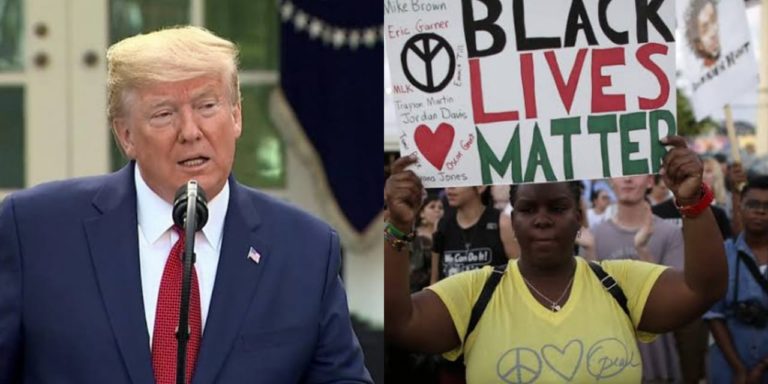
United States President Donald Trump declared himself Monday “the president of law and order” while his country is immersed in a clash between protesters and members of the forces of law. In a speech given in the Rose Garden, Trump referred to the local governments’ allegedly inefficiency to shut down the protests, and made a review about what the riots have brought. “Several local governments have failed to take the necessary actions to safeguard their residents. Innocent people have been savagely beaten (…) small business owners have seen its dreams utterly destroyed,” he said. “Brave nurses who have battled the virus are afraid to leave their homes. A police precinct has been overrun. One of our more historical churches was set ablaze, monuments have been vandalized.” Trump declared that what is going on are not acts of peaceful protests, but acts of domestic terror. “The destruction of innocent lives and the spilling of innocent blood is an offense to humanity and a crime against God,” he said as he held a Bible. Also, the U.S president encouraged the governors to take stronger measures. “You’ve got to arrest people, you have to track people, you have to put them in jail for 10 years and you’ll never see this stuff again,” he demanded. Between 600 and 800 National Guard members from five states are presumably being sent to Washington to assist. “We’re doing it in Washington, D.C. We’re going to do something that people haven’t seen before,” Trump warned. After the Civil War,In the U.S prevails the Posse Comitatus Act, which limits the powers of the federal government in using federal military personnel to enforce domestic policies within the national territory. Nonetheless, if necessary, Trump can invoke the Insurrection Act, which allows him to deploy military troops within the country to suppress civil disorder, insurrection, and rebellion.

Riot or resistance? How media frames unrest in Minneapolis will shape public’s view of protest

A teenager held her phone steady enough to capture the final moments of George Perry Floyd’s life as he apparently suffocated under the weight of a Minneapolis police officer’s knee on his neck. The video went viral. What happened next has played out time and again in American cities after high-profile cases of alleged police brutality. Vigils and protests were organized in Minneapolis and around the United States to demand police accountability. But while investigators and officials called for patience, unrest boiled over. News reports soon carried images of property destruction and police in riot gear. The general public’s opinions about protests and the social movements behind them are formed in large part by what they read or see in the media. This gives journalists a lot of power when it comes to driving the narrative of a demonstration. They can emphasize the disruption protests cause or echo the dog whistles of politicians that label protesters as “thugs.” But they can also remind the public that at the heart of the protests is the unjust killing of another black person. This would take the emphasis away from the destruction of the protests and toward the issues of police impunity and the effects of racism in its many forms. The role journalists play can be indispensable if movements are to gain legitimacy and make progress. And that puts a lot of pressure on journalists to get things right. My research has found that some protest movements have more trouble than others getting legitimacy. My co-author Summer Harlow and I have studied how local and metropolitan newspapers cover protests. We found that narratives about the Women’s March and anti-Trump protests gave voice to protesters and significantly explored their grievances. On the other end of the spectrum, protests about anti-black racism and indigenous people’s rights received the least legitimizing coverage, with them more often seen as threatening and violent.

Forming the narrative

Decades ago, scholars James Hertog and Douglas McLeod identified how news coverage of protests contributes to the maintenance of the status quo, a phenomenon referred to as “the protest paradigm.” They held that media narratives tend to emphasize the drama, inconvenience and disruption of protests rather than the demands, grievances and agendas of protesters. These narratives trivialize protests and ultimately dent public support. Here’s how this theoretically plays out today: Journalists pay little attention to protests that aren’t dramatic or unconventional. Knowing this, protesters find ways to capture media and public attention. They don pink “pussy” hats or kneel during the national anthem. They might even resort to violence and lawlessness. Now the protesters have the media’s attention, but what they cover is often superficial or delegitimizing, focusing on the tactics and disruption caused and excluding discussion on the substance of the social movement. We wanted to explore if this classic theory fit coverage from 2017 – a year of large-scale protests accompanying the first year of Donald Trump’s presidency. To do so, we analyzed the framing of protest reporting from newspapers in Texas. The state’s size and diversity made it a good proxy for the country at large. In all, we identified 777 articles by searching for terms such as “protest,” “protester,” “Black Lives Matter” and “Women’s March.” This included reports written by journalists in 20 Texas newsrooms, such as the El Paso Times and the Houston Chronicle, as well as syndicated articles from sources like the Associated Press. We looked at how articles framed the protests in the headline, opening sentence and story structure, and classified the reporting using four recognized frames of protest:
  • Riot: Emphasizing disruptive behavior and the use or threat of violence.
  • Confrontation: Describing protests as combative, focusing on arrests or “clashes” with police.
  • Spectacle: Focusing on the apparel, signs or dramatic and emotional behavior of protesters.
  • Debate: Substantially mentioning protester’s demands, agendas, goals and grievances.
We also kept an eye out for sourcing patterns to identify imbalances that often give more credence to authorities than protesters and advocates. Overall, news coverage tended to trivialize protests by focusing most often on dramatic action. But some protests suffered more than others. Reports focused on spectacle more often than substance. Much was made of what protesters were wearing, crowd sizes – large and small – celebrity involvement and flaring tempers. The substance of some marches got more play than others. Around half of the reports on anti-Trump protests, immigration rallies, women’s rights demonstrations and environmental actions included substantial information about protesters’ grievances and demands. In contrast, Dakota Pipeline and anti-black racism-related protests got legitimizing coverage less than 25% of the time and were more likely to be described as disruptive and confrontational. In coverage of a St. Louis protest over the acquittal of a police officer who killed a black man, violence, arrest, unrest and disruption were the leading descriptors, while concern about police brutality and racial injustice was reduced to just a few mentions. Buried more than 10 paragraphs down was the broader context: “The recent St. Louis protests follow a pattern seen since the August 2014 killing of Michael Brown in nearby Ferguson: the majority of demonstrators, though angry, are law-abiding.” As a consequence of variances in coverage, Texas newspaper readers may form the perception that some protests are more legitimate than others. This contributes to what we call a “hierarchy of social struggle,” in which the voices of some advocacy groups are lifted over others.

Lurking bias

Journalists contribute to this hierarchy by adhering to industry norms that work against less-established protest movements. On tight deadlines, reporters may default to official sources for statements and data. This gives authorities more control of narrative framing. This practice especially becomes an issue for movements like Black Lives Matter that are countering the claims of police and other officials. Implicit bias also lurks in such reporting. Lack of diversity has long plagued newsrooms.
In 2017, the proportion of white journalists at The Dallas Morning News and the Houston Chronicle was more than double the proportion of white people in each city. Protests identify legitimate grievances in society and often tackle issues that affect people who lack the power to address them through other means. That’s why it is imperative that journalists do not resort to shallow framing narratives that deny significant and consistent space to air the afflicted’s concerns while also comforting the very comfortable status quo. The article first appeared in conversation.com. The author is an Assistant Professor at Indiana University. 

Delhi High Court: Prisons are for punishing convicts, not for detaining undertrials

The Delhi High Court, while granting bail to a person accused of burning a shop during Delhi riots, held that ‘sending a message to society’ can’t be the basis for denying bail, if the court is otherwise convinced that no purpose in aid of investigation and prosecution will be served by keeping the accused in judicial custody, reported legal news website LiveLaw.in.

Also Read: Neither coincidence nor experiment! This is the RSS-BJP´s Project Delhi!

The Single Bench of Justice Anup Jairam Bhambhani noted that prison is primarily for punishing convicts; not for detaining undertrials in order to send any ‘message’ to society. The court said: “The remit of the court is to dispense justice in accordance with law, not to send messages to society. It is this sentiment, whereby the state demands that undertrials be kept in prison inordinately without any purpose, that leads to overcrowding of jails; and leaves undertrials with the inevitable impression that they are being punished even before trial and therefore being treated unfairly by the system. If at the end of a protracted trial, the prosecution is unable to bring home guilt, the state cannot give back to the accused the years of valuable life lost in prison. On the other hand, an accused would of course be made to undergo his sentence after it has been awarded, after trial.”

Submissions made by the petitioner

Senior Advocate Rebecca M John, who appeared for the applicant, submitted that the complainant Mohd. Shanawaz’s supplementary statement, upon which the state seeks to rely, does not in any manner identify or connect the applicant to the offences alleged. She further argued that no test identification parade was conducted of the applicant to get the complainant to identify him, which ought to have been done in a case such as this, alleging arson by an unlawful assembly. It was also submitted that the complainant’s shop, where the applicant is alleged to have been spotted and Rajdhani Public School, the CCTV footage whereof is stated to have captured the applicant’s presence, are not in the vicinity of each other. John then went on to contend that out of all the offences that the accused is charged with, only one, which is section 436 of IPC, is a non-cognisable offence.

Arguments made by state

Appearing for state, Additional Public Prosecutor submitted that the accused was identified by the complainant, Constable Vikas, as well as the CCTV footage from outside the Rajdhani School. Moreover, it was submitted that while no footage is available of the incident, footage from some cameras that are installed by the PWD in various parts of the area is still awaited, on the basis of which further investigation will be carried out.

Observations of the court

After looking at the evidence, the court observed that nowhere does the complainant name or otherwise identify the applicant. The court refused to rely upon the statement of Constable Vikas, who claimed to be the eyewitness, by observing that the complainant had mentioned in his statement that when the accused was allegedly burning his shop, he tried calling the police but to no avail. “Even on first blush, it is not understood as to why the complainant would say that he failed to reach the police by telephone, if Ct. Vikas was already present there,” the court observed. The court also doubted the claim that CCTV camera from a school which was situated 400 meters away could capture the incidents taking place outside the complainant’s shop. While granting bail, the court highlighted that: “While ordinarily this court would not have entered upon any discussion on the evidence at the stage of considering bail, however here is a case where a purported unlawful assembly of some 250-300 persons is alleged to have committed offences; of which the police have picked-up only two, one of them being the applicant. In this peculiar circumstance, this court was compelled to sift the evidence only prima-facie and limited to cursorily assessing how the police have identified the applicant from that large assembly of persons.”

Tamilnadu: Spike in Caste atrocities during the lockdown

The world is in Lockdown, but even during these times, casteism has not been locked down. Since the first nationwide lockdown that began on March 25 till the 12th of May, that is amidst the Lockdown 3.0, there have been at least 30 major incidents of caste-based violence in Tamil Nadu State, according to the study by a Madurai-based NGO Evidence. Many activists and social workers say that the lockdown is used as an opportunity for assault by the upper castes. Caste-based violence has raised its ugly head to higher levels in Tamil Nadu during the time of the pandemic, allege social activists. A Kathir, the executive director of Madurai-based NGO “Evidence” said that Tamil Nadu should be declared as an atrocity state. The caste situation here is like in no other state.

They say people attacking doctors will be booked under the National Security Act. Why is that concern not there over Dalits? How are people attacking in groups during lockdown?  

The caste discrimination is rising to new levels, this is a result as some of the upper castes people are linking the stigma associated with coronavirus to Dalit groups and say that they are not hygienic. Villupuram district has seen attacks on Dalits over alleged fears that they may be ‘carriers of coronavirus’. When those from dominant castes oppose the entry into lanes used by them and Dalits resist, it leads to a clash between the two groups, says Viduthalai Chiruthaigal Katchi (VCK) Lok Sabha MP D Ravikumar who represents the Villupuram constituency. Referring to the cluster of cases at Chennai’s central fruit, flower and vegetable market, the MP says, “90% of the workforce are Dalits, so the outbreak has increased the stigma. When Dalits go to the water tank, ration shop and other public places, upper castes create tension. When Dalits resist, it leads to clashes. In these cases, action should be taken against people creating caste tensions immediately and the police should not be lenient,” says Ravikumar. He believes that violence due to the coronavirus stigma will reduce once the lockdown is lifted. “In a lot of incidents, there are 40-50 people attacking in groups. How is this possible in a lockdown?” asks Kathir. Honor killings, group attacks, murders, rape, and harassment, all has happened during this lockdown. The report says domestic violence has increased in society. Caste-based violence has also increased now, and the victims are not even able to complain properly due to the lockdown. Under SC/ST Prevention of Atrocities Act, if the accused moves for bail, they have to intimate the victim. The High Court has now said accused don’t need to appear because of the COVID-19. Now people are using this in their favor and moving for bail. The government should make a policy decision on this. According to Evidence, the severity levels of crimes have also seen a rapid escalation during the lockdown. According to their study, on average, 100 cases are filed under the SC/ST Prevention of Atrocities Act. In a month; most of these cases are minor incidents while four to five could be bigger crimes. But in the month of April, during the lockdown, the 30 incidents are all big, showing a rapid increase in brutal crimes. Among many incidents is an incident of honour killing of M Sudhakar in Morappanthangal village in Arani. He belongs to the Oddar caste, was murdered on March 29 by relatives of the girl he loved who belonged to the Vanniyar caste. Two accused, including the woman’s father, have been arrested. In another incident on April 24, a reporter of the political party Viduthalai Chiruthaigal Katchi’s (VCK) Velicham TV channel, Adi Suresh, was attacked after he reported about a group damaging the portrait of Dr. BR Ambedkar in the town. On April 21 in Karambakkudi in Pudukkottai district, MBA graduate Muruganandham, a Dalit, married his lover Bhanupriya. Soon after the wedding, Bhanupriya’s relatives attacked Muruganandham and kidnapped her. “Bhanupriya was rescued after action by Evidence,” said Kathir. On May 8 in Udayakulam village in Tuticorin, a dispute over loan led to the murder of A Palavesam and his son-in-law R Thangaraj by a group belonging to the Devar community. On the same day in Salem, Vishnupriyan, a Dalit, was murdered by upper caste groups, Evidence says. The incidents of assaults on Dalits have increased on the migrants returning from cities to villages. People who have been quarantined as they returned from hotspots, but their families have to face the brunt of discrimination. In some villages in Tiruvannamalai district, upper caste people have allegedly even placed thorns outside Dalit colonies to ensure they don’t move out. In Nilakottai, there have been incidents where shops have refused supplying to Dalits, because of the perception that they are not hygienic people. Sanitary workers, scavengers, maids… there is a perception that they are not clean. Not all have bathrooms in their houses. Government bathrooms are hardly in usable conditions, so they still use open spaces. “They say TASMAC revenue hit Rs 175 crore on the first day it was opened. At least 80 percent of that would have come through the poorest of poor people. They’re people who struggle for food, so it’s likely that the money is from loans. Two Dalits were murdered in Thoothukudi because of this. It’s a cycle and it’s all linked,” says Kathir. Reopening of Tamil Nadu State Marketing Corporation (TASMAC) liquor stores has only added to their troubles. Unfortunately, there’s no specific time for caste discrimination. It’ll be there at all times. There is no dearth of laws against caste-based discrimination in India. Kathir, meanwhile, wants the authorities to come down hard on attackers by booking them in the state’s Goondas Act. They say people attacking doctors will be booked under the National Security Act. Why is that concern not there over Dalits? How are people attacking in groups? It’s a shame that people are fine to die of coronavirus but won’t let go of their casteism. Coronavirus is scanning the society and has brought out the worst in some people. Caste is even more dangerous than coronavirus.    

Swara Bhasker helps migrant workers reach home

Swara Bhaskar has joined the list of celebrities who are helping migrants reach their home in the time of crisis. Swara Bhaskar reached Delhi from Mumbai last week and started her initiative there to help the migrant workers stranded in Delhi to return to their homes. Swara has successfully facilitated the travel of 1350 distressed migrant workers to their homes in UP and Bihar, by arranging train tickets for them. Swara began her initiative to help the migrants with the support of the Delhi government. She coordinated with her team who personally collected the data of people who wanted to return to their homes, she provided people with footwears as many walked to their homes even without footwear. In an interview, Swara said that she had to start this initiative because she felt “ashamed” sitting at her comfort when lakhs of migrant workers are being forced into destitution and hardships to even get to their homes. She said that the guilt feeling was what pulled her out of her residence to help the stranded migrants. She thanked Aam Aadmi Party MLA Dilip Pandey for helping her initiative. “I am so grateful to Dilip Pandey ji, his team, the Delhi Government and everyone working on the ground. They reaffirm my faith in our society,” Swara said, adding she was “only amplifying their efforts” through her social media platform. “It’s really nothing much,” she said. Swara termed the whole migrant crisis as  “the most shameful incident of our times” which “exposes so many structural defects in our system and the dark reality of our society”. Swara’s said that her work has been inspired by a lot of people who have been working for helping migrant workers on the ground, organisations like Karwaan-E-Mohabbat, Khalsa Aid, Pushti Foundation and individuals like Sonu Sood.
The actor Sonu sood has been helping migrants with travel and food arrangements during the lockdown
Since the country wide lockdown due to the coronavirus started, Sonu Sood has been arranging busses, providing food for thousands of stranded migrants. And recently he has also airlifted 177 migrant workers stuck in Kerala amid the coronavirus lockdown. The actor arranged a special chartered flight for women helping them to return to Odisha. Sonu Sood is widely praised by bollywood stars as well as civilians. Foundations like these and individuals like Sonu Sood have inspired many other celebrities, who are now helping distressed migrant workers reach their home. Celebrity Chef Vikas Khanna has been providing food to millions of people amidst the lockdown, celebrity director Farah Khan has also joined hands with Vikas Khanna and has facilitated the women migrants with Sanitary napkins, Rakul Preet Singh adopted a slum with 250 families and is providing them with 2 meals a day, and Amitabh Bacchan among many others arranged 10 busses for UP migrants to return home. She has starred in many bollywood movies like ‘veere di wedding’, ‘Nil battey sannata’, and ‘Ranjhanaa’ among others.              

Black Lives Matter: Protests across US over the murder of George Floyd

The protests that began in US city Minneapolis the wake of the murder of African-American citizen George Floyd on Monday evening have sparked protests and rallies in cities across the US. In Minneapolis, where Floyd died on Monday after an officer knelt on his neck for nearly nine minutes, protesters ignored an 8 pm curfew set by the state’s governor, with thousands pouring on to the streets for a fourth straight night. In videos recorded by passers-by, Chauvin appears with his knee on his neck for minutes. The murder of George Floyd happened in full public view. Floyd can be heard saying “Please, please, please, I can’t breathe. Please,”  asking to be released. But the Police officer didnt give in. Floyd’s  “I can’t breathe” has become the cry of protest that once again brought back memories of murder of Eric Garner and many other black men who were killed in police brutalities. People irrespective of their race or color are on streets and are protesting with placards, rallies and slogans. Floyd’s death is the most recent incident of racially driven police brutality and has once again brought light to the bias of police force against people of African descent in the United States.​​​​​​​ Derek Chauvin, the white Minneapolis police officer, was arrested and charged with third-degree murder and second-degree manslaughter Friday, and authorities imposed an overnight curfew to stem three nights of often-violent protests that left dozens of stores burned and looted.
Mandatory Credit: Photo by Nina Westervelt/Shutterstock (10663110bg)
Protesters confront police at a Black Lives Matter protest in Union Square in response to the death of George Floyd
Black Lives Matter protest, New York, USA – 28 May 2020
Protesters gathered in response to the death of George Floyd, an African-American man who died while in the custody of the Minneapolis police.
However, in most of the news, the focus is on the protests turning violent and incidents of vandalism and shooting. In downtown Atlanta, hours of peaceful protests turned violent when some demonstrators smashed police cars, setting one on fire, spray-painted the logo at CNN headquarters and broke into a restaurant. Georgia governor Brian P Kempt declared a state of emergency in Fulton county and ordered the deployment of 500 National Guard troops in Minneapolis and surrounding cities as protests turned violent in Atlanta. US media reported that the White House went into a brief lockdown after hundreds of people rallied at a park across the street from the president’s mansion.

President Donald Trump, meanwhile, threatened action and tweeted, “When the looting starts, the shooting starts,” which prompted a warning from Twitter for “glorifying violence”.

Within hours, Twitter flagged the post for “glorifying violence” but let it remain visible in the public’s interest “to remain accessible.” Hollywood celebrities who normally remain neutral are also demanding justice for George Floyd.

CNN crew arrested while reporting on Minneapolis protests

The Minnesota State Patrol on Friday arrested a CNN television crew as they reported on violent protests in Minneapolis following the death of George Floyd, a handcuffed black man who pleaded for air as a white police officer kneeled on his neck. Atlanta-based CNN said that the crew, which included CNN reporter Omar Jimenez, was released later Friday morning. While live on air, Jimenez was handcuffed and led away. A producer and a photojournalist for CNN were also led away in handcuffs.

European Parliament slams Amit Shah on arrests of Gautam Navlakha and Anand Teltumbde

The European Parliament Subcommittee on Human Rights has written to Union Home Minister Amit Shah expressing concern about the recent arrests of activists Anand Teltumbde and Gautam Navlakha by the National Investigative Agency and urged India to immediately release all political prisoners in view of the coronavirus pandemic. The activists are accused in the Bhima Koregaon case. Head of the European Parliament’s Subcommittee on Human Rights (DROI), Maria Arena shot off a letter to Shah on May 28, expressing her concerns over the arrest of activists Gautam Navlakha and Anand Teltumbde.

“It is particularly alarming to note that human rights defenders cannot conduct advocacy activities, notably in favor of India’s poorest and most marginalized communities,” said Arena in her letter. Arena slammed the Modi government for portraying anti-CAA protesters as terrorists also.

“To date, the European Parliament has noticed that various forms of legitimate peaceful protests against laws, policies and governmental actions, including the Citizenship Amendment Act, have been portrayed as terrorist activities under this legislation, resulting in a number of arrests under this umbrella,” reads the letter. She demanded, “India should do much more to ensure a safe and conducive environment for civil society working in the country also.” Here is the full text of Arena’s letter: Dear Minister, I am writing to you in my capacity as Chair of the European Parliament’s Subcommittee on Human Rights (DROI), a parliamentary body that actively monitors human rights developments across the globe and publicly advocates in favor of respect for fundamental rights. It is in this context that we are closely following the protection of human rights defenders in India and wish to express serious concerns about the recent arrests of Anand Teltumbde and Gautam Navlakha by the National Investigative Agency. It is particularly alarming to note that human rights defenders cannot conduct advocacy activities, notably in favor of India’s poorest and most marginalized communities, without becoming subject to intimidation and harassment, but equally worrying is the fact that terrorism charges, including under the Unlawful Activities Prevention Act (UAPA), are used to silence them. As pointed out by United Nations Special Procedures, this clearly represents a violation of international human rights standards. To date, the European Parliament has noticed that various forms of legitimate peaceful protests against laws, policies and governmental actions, including the Citizenship Amendment Act, have been portrayed as terrorist activities under this legislation, resulting in a number of arrests under this umbrella. This is notably the case for human rights activists such as Safoora Zargar, Gulfisha Fatima, Khalid Saifi, Meeran Haider, Shifa-Ur-Rehman, Dr Kafeel Khan; Asif Iqbal and Sharjeel Imam who were recently arrested by the Police. Against this background, there are also increased fears that the legislation might confer discretionary powers upon State agencies. Indeed, the vague definition of ‘unlawful activities’ and ‘membership of terrorist organisations’ could allow for wide discretion by the government in applying the law. Such a process would substantially weaken judicial oversight and the protection of civil liberties in the country. Consequently, we strongly believe that measures should be urgently taken to stop impeding and criminalizing the work of human rights defenders by means of overly broad national security legislation and to respect their freedoms of association and expression. India should do much more to ensure a safe and conducive environment for civil society working in the country and consider enacting a law on the protection and promotion of human rights defenders. The unprecedented situation of the COVID-19 pandemic has led to repeated calls by the United Nations for the immediate release of prisoners of conscience as part of overall efforts to contain the outbreak. This collective endeavour was echoed by the Subcommittee on Human Rights during its meeting of 11 May 2020. We trust that it is our common duty and responsibility to protect human rights without discrimination and thus, encourage India to join in and implement fully the guidelines adopted by its Supreme Court aiming at reducing the detainee population at this difficult time. It is indeed essential to engage all strengths and means to fight together against the pandemic in order to avoid this becoming a risk to human rights. The Subcommittee values the principles of partnership and open dialogue with India and looks forward to further progress on the protection of human rights in the country in a spirit of cooperation and constructive engagement. Yours sincerely, Maria Arena Historically all fascist powers think of themselves as invincible and carry out their dictatorial agenda thinking that it will go unnoticed and unpunished. The powers at the helm in India are no different. But the world is watching and taking notice.

Archaeology shows how ancient African societies managed pandemics

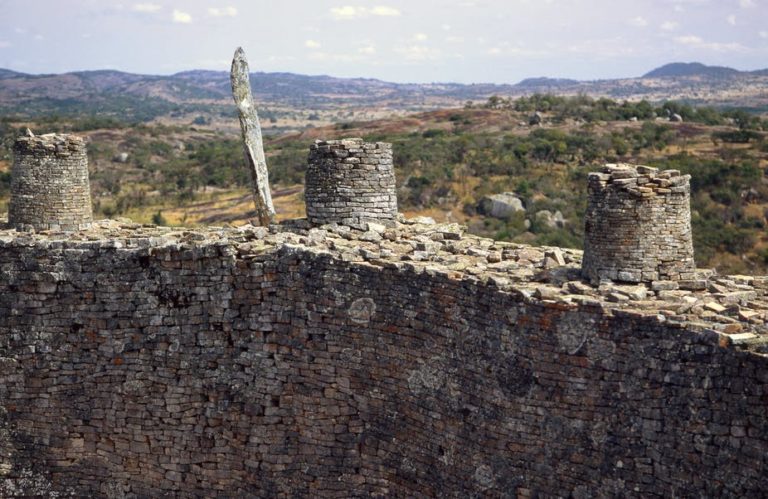
Every so often, a pandemic emerges that dramatically alters human society. The Black Death (1347 – 1351) was one; the Spanish flu of 1918 was another. Now there’s COVID-19. Archaeologists have long studied diseases in past populations. To do so, they consider a wide array of evidence: settlement layout, burials, funerary remains, and human skeletons. For example, because of archaeologists we know that the damaging impact of epidemics prompted the abandonment of settlements at Akrokrowa in Ghana during the early 14th century AD. About 76 infant burial sites at an abandoned settlement that now forms part of the Mapungubwe World Heritage site in the Limpopo Valley of South Africa suggest a pandemic hit the people living there after 1000 AD. Archaeological and historical insights also expose some of the strategies that societies adopted to deal with pandemics. These included burning settlements as a disinfectant and shifting settlements to new locations. Social distancing was practised by dispersing settlements. Archaeologists’ findings at Mwenezi in southern Zimbabwe also show that it was a taboo to touch or interfere with remains of the dead, lest diseases be transmitted in this way. In the late 1960s, some members of an archaeological dig excavating 13th-century house floors in Phalaborwa, South Africa, refused to keep working after encountering burials they believed were sacred. They also worried that the burials were related to a disease outbreak.

Also Read: How the rich reacted to the bubonic plague has eerie similarities to today’s pandemic

Social distancing and isolation have become watchwords during the COVID-19 pandemic. From archaeology, we know that the same practices formed a critical part of managing pandemics in historical African societies. In what is Zimbabwe today, the Shona people in the 17th and 18th centuries isolated those suffering from infectious diseases – such as leprosy – in temporary residential structures. This meant that very few people could come into contact with the sick. In some cases, corpses were burnt to avoid spreading the contagion. Humans have a propensity to relax and shift priorities once calamities are over. Data collected by archaeologists, that show how indigenous knowledge systems helped ancient societies in Africa deal with the shock of illness and pandemics, can help remind policy makers of different ways to prepare modern societies for the same issues.

Social distancing and isolation

Research at the early urban settlement of K2, part of the Mapungubwe World Heritage site, has thrown significant light on ancient pandemics. The inhabitants of K2 (which dates back to between AD1000 and AD1200) thrived on crop agriculture, cattle raising, metallurgy, hunting and collecting food from the forest. They had well developed local and regional economies that fed into international networks of exchange with the Indian Ocean rim. Swahili towns of East Africa acted as conduits. Archaeological work at K2 uncovered an unusually high number of burials (94), 76 of which belonged to infants in the 0-4 age category. This translated into a mortality rate of 5%. The evidence from the site shows that the settlement was abruptly abandoned around the same time as these burials. That means a pandemic prompted the community’s decision to shift to another settlement. Shifting to another region of Africa, archaeological work at early urban settlements in central and southern Ghana identified the impact of pandemics at places such Akrokrowa (AD950 – 1300) and Asikuma-Odoben-Brakwa in the central district of Ghana. These settlements, like others in the Birim Valley of southern Ghana, were bounded by intricate systems of trenches and banks of earth. Evidence shows that after a couple of centuries of continuous and stable occupation, settlements were abruptly abandoned. The period of abandonment appears to coincide with the devastation of the Black Death in Europe. Post-pandemic, houses were not rebuilt; nor did any rubbish accumulate from daily activities. Instead, the disrupted communities went to live elsewhere. Because there are no signs of long term effects – in the form of long periods of hardship, deaths or drastic socioeconomic or political changes – archaeologists believe that these communities were able to manage and adapt to the pandemic. Analysis of archaeological evidence reveals that these ancient African communities adopted various strategies to manage pandemics. These include burning settlements as a disinfectant before either reoccupying them or shifting homesteads to new locations. African indigenous knowledge systems make it clear that burning settlements or forests was an established way of managing diseases. The layout of settlements was also important. In areas such as Zimbabwe and parts of Mozambique, for instance, settlements were dispersed to house one or two families in a space. This allowed people to stay at a distance from each other – but not too far apart to engage in daily care, support and cooperation. While social coherence was the glue that held society together, social distancing was inbuilt, in a supportive way. Communities knew that outbreaks were unpredictable but possible, so they built their settlements in a dispersed fashion to plan ahead. These behaviours were also augmented by diversified diets that included fruits, roots, and other things that provided nutrients and strengthened the immune system.

Africa’s past and the future of pandemics

There were multiple long-term implications of pandemics in these communities. Perhaps the most important was that people organised themselves in ways that made it easier to live with diseases, managing them and at the same time sticking to the basics such as good hygiene, sanitation and environmental control. Life did not stop because of pandemics: populations made decisions and choices to live with them. Some of these lessons may be applied to COVID-19, guiding decisions and choices to buffer the vulnerable from the pandemic while allowing economic activity and other aspects of life to continue. As evidence from the past shows, social behaviour is the first line of defence against pandemics: it’s essential this be considered when planning for the latest post-pandemic future. The author is a Professor in Archaeology, University of Cape Town. The article was first published in www.conversation.com