Washington Supreme Court Judges Issues Statement Of Solidarity With Black American’s Protest

0
Washington supreme court judges have issued a statement of solidarity with the protest going on against the injustices against Black Americans. The letter condemned the prejudices and injustices exist against the black community in the justice systems of the United States of America. The letter asked the legal community to act together and eradicate the pre-existing racism in the system.

The letter reads as- “Devaluation and degradation of black lives is not a recent event. It is a persistent and systemic injustice that predates this nation’s founding. But recent events have brought to the forefront of our collective conscience a painful fact that is, for too many of our citizens, common knowledge: the injustices faced by black Americans are not relics of the past.”

The statement of solidarity has been issued after the gruesome murder of George Flyod, an African-American, by a white police officer. George was arrested by police officer Derek Chauvin in Minneapolis, Minnesota on May 25th for alleged use of counterfeit money at a grocery store. The officer pressed his knees on his neck for almost 9 minutes while George was saying ‘I can’t breathe’. The police did not leave him until he died of asphyxiation. This inhuman murder triggered a widespread protest against the prejudiced behaviour of the justice system against the black community.

Also Read: Losing the Race for Justice: How the Police system shapes America

The Supreme Court of the State of Washington has accordingly issued the statement, acknowledging the presence of “racialized policing and the overrepresentation of black Americans in every stage of our criminal and juvenile justice system. It further states that institution remains affected by the “vestiges of slavery: Jim Crow laws that were never dismantled and racist court decisions that were never disavowed. The issue of systematic inequalities and the lack of financial, personal or systemic support has been highlighted in the letter to portray the harms that are caused when meritorious claims go unaddressed as a result of inherent biases and racial traditions.

Too often in the legal profession, we feel bound by tradition and the way things have “always” been. We must remember that even the most venerable precedent must be struck down when it is incorrect and harmful. The systemic oppression of black Americans is not merely incorrect and harmful; it is shameful and deadly.”

The letter also recognised the individual responsibility of allowing the injustice to grow and ripe in the judicial system. The letter ended with an appeal to everyone to support our black comrades. It reads as “It is the collective product of each of our individual actions – every action, every day. It is only by carefully reflecting on our actions, taking individual responsibility for them, and constantly striving for better than we can address the shameful legacy we inherit. We call on every member of our legal community to reflect on the moment and ask ourselves how we may work together to eradicate racism”. The letter was signed by Chief Justice Debra L. Stephens, and Justices Charles W. Johnson, Barbara A. Madsen, Susan Owens, Steven C. González, Sheryl Gordon McCloud, Mary I. Yu, Raquel Montoyo-Lewis and G. Helen Whitener.

Karnataka: Opposition parties to hold an online discussion to discuss lockdown and economy

0
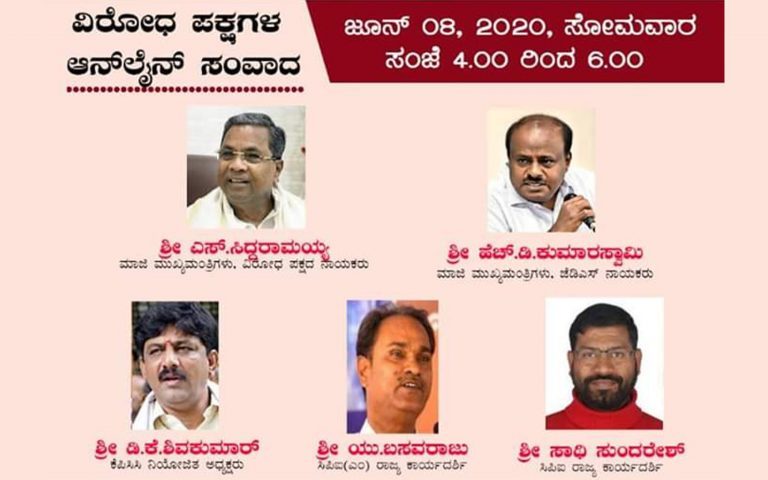
Opposition parties in Karnataka will hold an online discussion on 8th June, Monday on how the state government performed on the matters of Management of lockdown, providing relief to the affected and economic recovery. This zoom online discussion is being organized by CPI (M) party, opposition leaders like ex CMs Siddaramaiah, and HD Kumaraswami, KPCC president DK Shivakumar, CPI(M) state secretary U. Basavaraju and  CPI state secretary Sathi Sundaresh will participate. Opposition parties in Karnataka have submitted a 24 point appeal to state government urging the government to immediately respond to all those affected by lockdown by providing relief to migrant workers, economic relief to the poor and economic package to micro, small and medium enterprises. In a similar step, 22 parties have submitted alternative models to be followed to the central government too. All these issues would be discussed in the virtual meeting. The online discussion will be held on Monday, June 8th from 4 PM till 6 PM. Only the first 500 people will be allowed to participate. Those who are interested can join the meeting with meeting Meeting Id: 84316376672, Password: 082790

Losing the Race for Justice: How the Police system shapes America

On 25 May 2020, George Floyd was arrested on accusation of using counterfeit money. A video of the arrest, documenting the police officer leaning on Floyd’s neck with his knee, choking him, while bystanders pleaded for his life. Floyd begged for his life saying he could not breathe and became unconscious after 3 minutes. In every country, the criminal justice system carries the weight of history. In India, the police and jailing system works to preserve the social order instilled in the colonial era. That means it is used to protect the status quo, secure private interests, prevent public agitation and suppress movements of self-determination and dignity.

Slavery to Covert systems of Oppression

In America, the criminal justice system became a codification of white supremacy and is used to preserve the oppressive aspects of slavery and domination over the African American people.
An 1839 woodcut depicts a slave patrol capturing a fugitive. Source: Anti-Slavery Almanac/Public domain
After the abolition of slavery, the American state began to pass laws to ensure the social subordination of African Americans. These laws are mostly remembered as Jim Crow Laws. These laws were overturned in the 1960s. Starting from the 1970s, racism changed in the United States by moving to more aggressive systems of policing. Laws, housing systems, and local law enforcement tactics changed to ensure that African Americans were criminalized at mass rates to effectively suppress the community as a whole. In the 1980s and 1990s, many prominent American politicians started pushing for reforms that would increase the policing of African American communities. In the 1990s, it was noted that while crime rates in America went down, state violence and incarceration rates of African Americans went up. Today, nearly three people are killed by police every day. African Americans are 2.5 times more likely to be killed than white Americans. The violence against African Americans was initially hidden from the rest of the country, making the discussion of systemic reforms difficult.
Racism of Mass incarceration: s, the black population is the largest, and therefore make up a large portion of those incarcerated in US prisons and jails.(Wikipedia)
A combination of mass support caused by the civil rights movements of the 1960s and America’s concern of its international in the time after the Cold War meant that overt systems of discrimination and explicit language had to make way to more coded systems of oppression. For example, the American president in the 1980s, Ronald Reagan, said that he would put an end to welfare queens. While it is not clear what the term welfare queen means to an outsider, it would conjure an image of a single black woman, who would keep having children to collect money from the state. Using this rhetoric, Reagan cut many welfare programs that tended to benefit African Americans, while subsidy programs that benefited White Americans remained untouched. During the 1980s, political programs aimed to target crime, reduce drug use, and reduce state expenditure was filled with double meanings with racist subtext.

Seen, but not heard: A History of recordings without conviction

The national conversation changed dramatically in 1991 with the Rodney King trial. On 3 March 1991, Rodney King a construction worker, was violently beaten him on the street. A salesman, George Holliday, lived on a balcony overseeing the event. He took his video camera recorded the assault and sent the video to a television station. The clips from the 12-minute recording became news across the country and showcased police violence against the African American community.
Police
Rodney King a construction worker, was violently beaten by policemen on the street.
Even though the video provoked such national outrage, on 29 April, all four police officers were found to be not guilty. Hours after the acquittal was announced, riots broke out in Los Angeles, and lasted for nearly six days. Within the African American community, stories of police brutality are common. Since the 1980s, there has been a call for a movement, like the 1960s Civil Rights movement, to address the new problems the community are facing. This includes working on oppression aligned to race, like patriarchy, class, housing, inequality, and of course, violence by the state.

#BlackLivesMatters is born

In February 2013, Treyvon Martin, an unarmed African American child was shot and killed by George Zimmerman. Zimmerman defended himself by claiming that Martin was dressed in a hooded sweater and looked threatening. Zimmerman claimed self-defence, making use of a law that allowed that suspicious behaviour alone could be grounds for self-defence. After a trial, he was deemed not guilty. After the trial, the hashtag #BlackLivesMatter trended on Twitter, leading to the origin of the name Black Lives Matter as the name of the movement.

Videos of Murders by Police Continue

In July 2014, a video circulated on social media of a team of police officers choking a street vendor named Eric Garnder to death. Garner was arrested for selling loose cigarettes. The video of his murder makes it clear that he was not acting violently and that he had faced regular harassment. His last words, captured on video were:
Police
Eric Garner choked to death by police forces, July 2014
“Every time you see me, you want to harass me. You want to stop me selling cigarettes. I’m minding my business, officer, I’m minding my business. Please just leave me alone. I told you the last time, please just leave me alone. Please please, don’t touch me. I can’t breathe. I can’t breathe. I can’t breathe. I can’t breathe. I can’t breathe. I can’t breathe. I can’t breathe. I can’t breathe.” These words were said as Eric Garner was wrestled to the floor, and choked to death.

Also Read: Black Lives Matter: Protests across the US over the murder of George Floyd

Movements like Black Lives Matter have pointed out that despite these well-documented and clear cases of violence against helpless African Americans, there are few consequences for those who engage in such violence. Like with lynching victims in India today, the victims are treated like criminals, and the murders are treated as social problems. Geroge Floyd is the latest case of a well-documented murder of an African American happening in broad daylight. The riots that follow are a cry against a system that has oppressed the community for decades.

Safoora Zargar, Student activist, bail plea denied third time

After eight hours of exhaustive argument in the last two days between the lawyers of Safoora Zargar and the Delhi Police, Zargar was denied bail for the third time in the Patiala House court.  Safoora Zargar, 27, Jamia Millia Student and Anti-CAA protestor who is 21-weeks pregnant has been in custody since April 10 and has been lodged in Tihar Jail after she was arrested for the alleged conspiracy behind the riots which occurred in Delhi in February.  According to the police – “In mid-February, the accused had allegedly planned to hold protests in various parts of northeast Delhi. They had also blocked the road near the Jafrabad Metro station,”  The police told the court that the accused persons were part of the protests against the Citizenship Amendment Act in various parts of the national capital and organising anti-CAA protests in the Jafrabad araa, where the majority of participants were women. Zargar’s counsel argued that she was only holding legitimate and peaceful protests against the Citizenship Amendment Act in accordance with her constitutionally guaranteed fundamental right to speech and expression. Even assuming the prosecution case to be true for the argument case, there is no ground to invoke the stringent provisions of UAPA, the counsel argued in the alternative. The counsel also sought bail on humanitarian grounds saying that Zargar was 21-weeks pregnant and was suffering from PolyCystic Ovarian Disorder and urinary tract disorder and given the spread of coronavirus infection, it increases her chances of miscarriage. The court has asked the concerned jail superintendent to provide adequate medical aid and assistance to Zargar considering her medical condition and pregnancy but denied bail.  Zargar’s lawyers had applied for bail for the first time on 18 April when UAPA was not yet invoked, which was rejected on 21 April after the invocation of the anti-terror law. Then again on 2 May a bail application was moved, but withdrawn after arguments in court. This was therefore the third attempt to get Zargar out of custody. Rejecting these submissions, the Court denied bail, citing Section 43D(5) of UAPA, which says that bail should not be granted if a prima facie case is made out.  According to an article by livelaw by Manu Sebastian explains that to apply Section 43D(5), the Court should first explain if the case will fall under UAPA, prima facie.-  Based on materials produced by the prosecution, such as whatsapp chats and witness statements recorded under Sections 161/164 CrPC, the Court stated that there is “prima facie evidence to show that there was a conspiracy to at least blockade the road (chakka jam)”. From this minor strip of prima facie case for road blockade, the order takes off on a fanciful flight to UAPA. As evident, one can find the usage of a lot of vague terms here, such as “disruption of such an extent..such a magnitude”, “unprecedented scale”. . Are these expressions in reference to the “road blockade” alleged to have been organized by the accused? There is no specific explanation given, forcing one to speculate. Anyhow, the Court abruptly states that this is a ground to validly invoke UAPA, leaving one perplexed if a “road blockade” as part of a protest can lead to UAPA. Shockingly, this conclusion is solely based on the “case of the prosecution”, which has not been tested against the arguments of the accused. Next, one can see a constrained attempt by the Court to say that the acts of the accused (road blockade!) amounts to “unlawful activity” under Section 2(o) of the UAPA. Section 2(o) of the UAPA lists three different acts which can become “unlawful activity”. The one which is relevant for this discussion is clause (iii)of Section 2(o), which says an act which causes or is intended to cause disaffection against India amounts to “unlawful activity”. The Court also employs empty rhetoric by saying-  “When you choose to play with embers, you cannot blame the wind to have carried the spark a bit too far and spread the fire”. This topsy-turvy approach by the prosecution and the court has resulted in prolonging the custody of a pregnant student in an overcrowded prison, amid the threat of a pandemic, making a cruel joke on the constitutional guarantee of personal liberty.  

No alternative to direct Cash transfer for the poor : A workers study during the lockdown 

‘It is apparent that the lockdown has created a massive loss and for the economy to recover, there’s no other way out other than direct cash transfer to poor!’ said the report released by Karnataka Janashakti, a social organisation.
The report was titled “lockdown for workers”
The report was released in a Hakki Pikki (tribe of forest dwellers) colony of Channahalli in Mandya district in Karnataka. The report details study of economic, social and political effect lockdown has had on poor workers. It was heartening to see the report being released in an area where the most affected people, the tribals reside. “Our lives were already difficult and this lockdown has acted as a death blow. We are facing a lot of difficulties as we do not have proper houses; the rains have started and we are getting drenched in rain, when we asked the taluk administration to provide us with minimum tarpaulin, they ask us to provide land registration documents. How can we get the docuements when we don’t have houses? Asks Hakki Pikki leader Mr. Akki. He expressed anguish saying ‘we are not strangers to difficulties but if we can’t work then why should we continue to live?’

Also Read: How will national lockdown affect the Rural economy?

‘Just words don’t solve anything’. To protect these poor workers from this predicament, the government has to take concrete steps. Hence, the study report recommends that the super-rich of the country be levied with 2% corona tax on their wealth. The study also insist that they can recover from their predicament only if a minimum amount that is required for basic livelihood to be done through direct money transfer to all BPL card accounts of these poor workers. Other important recommendations to the government-
  1. Immediate supply of other necessary food grains required for livelihood apart from rice and wheat.
  2. A system to be placed wherein those people who do not have ration cards and migrant workers be issued temporary ration cards.
  3. Roadside vendors, taxi-cab drivers, auto drivers, and employees of small and micro enterprises be given relief money(subsidy) as they have been out of business for more than two months.
  4. Measures should be taken to provide adequate healthcare of poor and common people.
  5. During the lockdown, a ban on the sale of alcohol was put in place temporarily and the government could have worked on putting total prohibition in place but while the lockdown continued and amidst the danger of corona, the government started sale of alcohol. This should be stopped. The government should have a consultation with activists and experts about a scientific approach towards total prohibition and work on it.
  6. Special priority to be given to revive the rural economy; additional money should be released for MGNREGS.
  7. ‘Urban Employment Guarantee Scheme’ should be started.
  8. The survey and registration of migrant workers should take place.
  9. A special package be announced for small and medium enterprises.
Siddaraju, Chandrashekhar, Varadaraju, Jyoti of Karnataka JanaShakti, and others participated in the launch of the study report in Mandya District of Karnataka. The article was first published in naanugauri.com. It is translated into English by Rajashekhar Akki

Bangalore Quarantine Centres: No food, No water and No hygiene

0
Shashank was put in a quarantine center in Bangalore once he got back to the city, where he stayed for two days. In a conversation with Gauri Lankesh News, Shashank shared his experience of being at the center. Shashank describes the whole experience as “horrible”.

The Journey to the Quarantine center

Once Shashank reached Bangalore, he chose to stay at the government quarantine center, which was free of cost. His other option was paying between 750 to 5000 rupees to stay at the hotels. When Shashank arrived in Bangalore, there was no option for home quarantine. He pointed out that many could not afford the cost of hotels and decided to stay at the government centers.

“The whole idea looks like that you can maintain physical distance only when you can afford hotels. So, one can only get safety if you can pay for it.” 

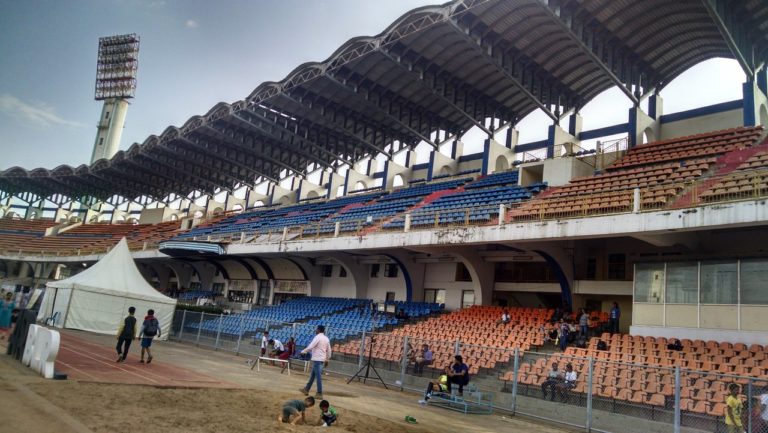
BMTC buses were arranged to drop them to the quarantine centers. According to regulations, there were supposed to be only 20-21 people on the bus with each person occupying one seat but these buses had 30-31 people with no physical distancing measures in place. They were asked to pay 100 rupees to be taken from the railway station to the quarantine centers, many were not able to pay this price as well. “For some people the other passengers, officers, or some conductors paid. We were taken to Kanteerva stadium which is not even 2kms from the railway station.” Shashank said. They were asked to sit down through the bus journey because the bus conductors were scared that the media would see that the bus was at more than full capacity. “The conductors and the drivers asked everyone to sit next to each other because they were scared that if the media sees people standing in a bus, they might question them. They were very fearful of the media.”

The Stay

There were sent to the sports facility in Kanteerava stadium which was the makeshift quarantine center. At the center, no social distancing rules were followed and the only test that was done in the one and a half days was a temperature check. Many people took paracetamols to avoid having a temperature which also made these checks unhelpful. “In one of the quarantine centers in Bangalore, all 40-45 people who stayed tested positive for coronavirus, even after that experience they didnt practice social distancing or tested us for COVID19″- Shashank said. At the center, they were asked to download the Aarogya Setu app and three other apps so they can be tracked.

Also Read: Karnataka: What actually happened at Padarayanapura, a COVID19 hotspot?

In the rooms, 6 people were put in a 10×10 room in bunk beds. So if anyone person is corona positive, the other 5 are at a very high risk of catching the virus. This meant that people were at higher risk than if they were quarantined at home. Shashank said, “The authorities said that they did not have a count of how many people would come and that this was only meant for people who cannot afford.” So it’s not just that those who cannot afford hotels were not tested but even put at higher risk of catching infection if any one of them happens to be COVID positive.

Amenities at the Center

The bathrooms were common for men, women, and children and were not even cleaned. One washroom for 60 people, all this putting everyone at higher risk.

There were no separate washrooms for women and this made the stay extremely uncomfortable for women. “Even as a man, I felt awful seeing women in this condition. Men’s urinal were just opposite for bathrooms.. So women would wait around and use bathroom when men are not around or wait till night to go. One could see that women are having a lot of trouble because of this. Even while taking food men take take up the spaces. That is the least…they could have separate bathroom arrangement for women or on separate floor for women and children.

  At night, the water would run out and people were not able to use the washrooms. The biggest problem was that this put children, senior citizens, and women at risk especially because they were sharing the building with so many others.

Access to Food

Shashank boarded the train from Hyderabad but the train had started from Delhi so there were passengers who had been in train longer than 24 hours. There was no food given to them on the trains. When some food vendors came, the cost of food was around 150 rupees and more and many of the passengers could not afford it. Others were scared that if they bought food from outside, they might get infected. They decided that they would eat only once they got home. The train had reached Bangalore at 7.00 AM and they were not provided food till 2.00 PM. A lot of people had not eaten food for 2-3 days. Only when the people started getting angry about the no food arrangement at the center, then some parcels were provided to them.

Exit Procedures

There was no proper procedure for leaving the quarantine facility. After the 2nd day, they allowed the people with local addresses to leave, i.e who were Bangalore residents. The people who were managing the facility said those travelled who have from states that were hot spots( Maharashtra, Gujarat, Tamil Nadu, Madhya Pradesh, and Rajasthan) had to be quarantined for longer.

” But this doesnt make any sense, we all have travelled in the same train, shared the same quarantine center with hardly any physical distancing, so only letting locals and holding others is totally arbitrary,” Sashank said quizically.

There were no temperature checks or any COVID-19 tests done before we left the facility. “The least that they could have done was take a test, and check if we tested positive or negative and then released us. This puts more people at risk.” Shashank said.“This makes no sense because we stayed in the same quarantine facilities as those who were allowed to leave. If there are no social distancing measures at the facility itself then this whole exercise should be null and void.” Said Shashank. “The whole idea looks like that you can maintain physical distance only when you can py to afford hotels. So, one can only get safety if you can pay for it.” Shashank added. The government has now changed the rule that those who are asymptomatic can quarantine themselves at home. (The interview was done a week ago).

Filmmaker Basu Chatterjee, pioneer of middle of the road movies no more

0
Filmmaker-screenwriter Basu Chatterjee, best known for directing films like Choti Si Baat, Rajnigandha, Baaton Baaton Mein, Ek Ruka Hua Faisla and Chameli Ki Shaadi among more, passed away on Thursday in Mumbai, following age-related ailments. He was 93. Filmmaker and Indian Film & TV Directors’ Association president Ashoke Pandit took to Twitter to share the news. He tweeted, “@ashokepandit I am extremely grieved to inform you all the demise of Legendary Filmmaker Basu Chatterjee ji . His last rites will be performed today at Santacruz creamation at 2 pm. It’s a great loss to the industry. Will miss you Sir. #RIPBasuChaterjee.” Basu Chatterjee, along with filmmakers like Hrishikesh Mukherjee and Basu Bhattacharya, were pioneers of the middle-of-the-road cinema. Chatterjee worked in Hindi as well as Bengali cinema. His films, which were considered to be more realistic, stood out as the 70s was the era of the ‘angry young man’ and action movies. He collaborated with Amol Palekar on films like Choti Si Baat, Rajnigandha and Chitchor among more. Basu Chatterjee also collaborated with the superstars of the era but presented them in unique avatars – Amitabh Bachchan in Manzil, Rajesh Khanna in Chakravyuh, Dev Anand in Man Pasand AND Mithun Chakraborty in Shaukeen and Pasand Apni Apni. His 1986 film Ek Ruka Hua Faisla was an Indian adaptation of Twelve Angry Men and is remembered till date. During the early Doordarshan days, Basu Chatterjee also helmed two hit TV serials – Byomkesh Bakshi and Rajani. Recently, Byomkesh Bakshi was reaired during the lockdown. In 1992, he was awarded National Film Award for Best Film on Family Welfare for his film Durga. At a time when cine lovers are reeling from the death of stalwarts like Irrfan Khan, it is another shock to people who admired more realistic cinema. Many fans and celebrities took to social media to mourn the demise of Basu Chatterjee.

Kerala High Court restrains Private schools from charging additional fees for online classes

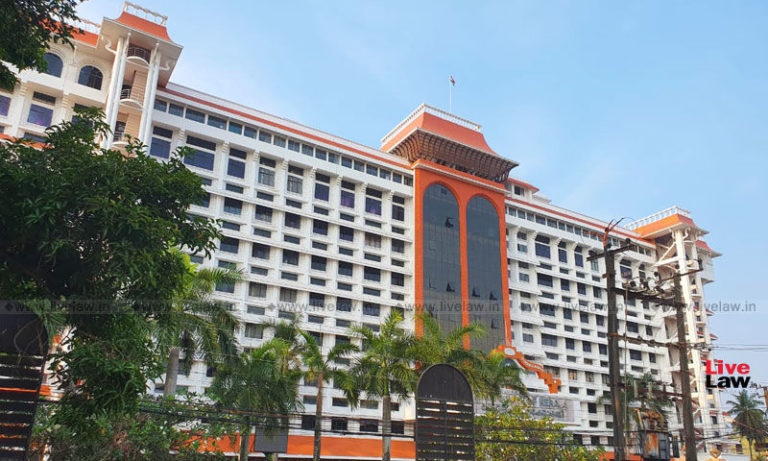
The High Court of Kerala on Wednesday passed an interim order restraining a school from levying additional fees on students for holding virtual classes. A single bench of Justice C S Dias also referred the bench also made reference to the suicide of 14-year old Devika, which was allegedly due to her inability to join online classes as she did not have a smartphone and a working television set in the house. “It is disheartening to learn that a student allegedly took away her life due to lack of access to the internet for attending virtual classes”, Court observed. The Court noted that right to education is sacrosanct in the Constitution of India and is the mandate under the Right of Children to Free and Compulsory Education Act, 2009. While making the reference, the Court also noted that several states have ordered that students should not be denied education for want of payment of fees during this pandemic period. The Court passed the order in a writ petition filed by two students, Sreelakshmi S and Dhanvin Pillai, students of 3rd standard and LKG respectively, challenging the decision of their school, Sree Budha Central School, Karunagappally, to demand payment of fees even without starting normal teaching method in the school or even without providing quality virtual classroom teaching or online classes. The petitioners also raised the grievance that the State Government has not issued proper guidelines for online classes. In the absence of clear instructions on online classes, teachers are passing off mere voice clips as if they would amount to online classes, the petitioners stated. “The charging of fees for the period during which there will be no classes is unreasonable and liable to be interfered with… The right of the petitioners and other students to get an education will be affected by the same. The lack of proper directions from the part of the government is the reason for the same and the situation prevailing in Kerala in this regard necessitates and justifies interference of this Hon’ble Court to issue directions to the Government and place interim measures till such a decision is taken”, read the petition filed through Advocates Manu Ramachandran, M Kiranlal, R Rajesh, T S Sarath, and Sameer Nair. On May 12, the Uttarakhand High Court had passed an order to stop private schools, which were not conducting online classes, from demanding tuition fee during the lockdown period. Challenging this direction, the schools had approached the SC, and the apex court issued notices on the SLPs last week.

Modus Operandi of BJP IT cell- A classic case..

Kannada Version: Here On 20th May 2020, an incident happened near Agrahara Lake of Kolar Taluk of Karnataka.  It drew the attention of the mainstream media and the people, so much so that CM Yeddyurappa himself had to react to it. How the incident unfolded in media gives us an opportunity to understand the successful model of the workings of BJP IT cell. On that day, Minor irrigation and water resources minister Madhuswamy had gone to inspect a lake, and Nalini and her sister Uma, both activists with Karnataka Rajya Raita Sangha ( Farmers´organisation) too happened to be there and they had an interaction with the minister. Nalini had asked the minister about an issue related to the lake. During the interaction, the minister said- ‘I’m a very bad man, shut up you rascal’ to the two women activists. When Maduswami said “rascal”, she was heard asking “why do you talk like that Anna(brother)” and nothing else. The video became viral on social media. Almost everyone condemned the minister. Some TV channels and Newspapers too carried special coverage of the report.

Madhuswamy issues half-apology

On that day one could see defences coming from Mandhuswamy followers with comments like the comments like “one needs to checks what happened before and after what the minister said, only then we will be able to understand the complete truth”.

BJP IT cell smear campaign tool kit contains character assassination that can range from social media photos, clothes, invoking feudal and anti-women sentiment, and tarnishing overall credibility as an activist.

The next day Madhuswamy himself defended his actions by putting the blame on Nalini and calling her problem maker. He said-  “She is always like that, listen to what the police officer said about her. Just because I’m a minister doesn’t mean I need to get scolded by anyone? I said what I said because she provoked me to it. It was true that i said, I apologize if you’re hurt.’ CM Yeddyurappa too on the same day said, “it was wrong, I will warn him and will speak with the girl too.’ Since Nalini didn’t say anything wrong or offensive, it was not possible to ruin her image just with this video. So, it was obvious that the case can’t be won with Madhuswami’s half-apology alone.

How the BJP IT cell works?

In BJP IT cell, apart from the official employees of the IT cell, there are many who work anonymously, those working on outsourcing contracts according to the agenda in different projects, and so on. But there is a central IT cell, which not just oversees the social media work but also manages about how the entire narrative needs to be. With them, there is a team that decides what should come in social media, what should be a focus on TV channels and which opinion makers should speak what. Once the central team decides on the narrative and what angle of the incident to be attacked, that message is broadcast to all the concerned users and after that, everyone starts posting posts, videos, live video using their own creativity but toeing the line that the central IT cell has decided for them. For TV channel there are different ways. They work out the narrative, the angle, and push it through their people and many times the channel chiefs themselves handle it for them. Sometimes, if the chiefs realise their narrative can’t be like the IT cell, they pass it as an exclusive saying ‘such an angle also is heard loudly’. And they run it as special breaking news. If needed, there will be a ‘Package’, which means there will be an order saying such and such story be run at a particular time, which would involve bribes of different kinds.

‘Systematic’ and ‘Spontaneous’; Two different types

Some months ago, BJP MLA Basavaraj Yatnal spoke badly of the centenarian freedom fighter HS Doreswamy. Within hours, there was a smear campaign against the celebrated freedom fighter. That was not an accident, but a systematic campaign. TV channels had received instruction as to not to abuse BJP on the Doreswamy case and the channel interpreted this instruction as ‘don’t abuse BJP but abuse Doreswamy.’ And the result was an insult to journalism and freedom struggle. BJP IT cell On the Madhuswamy case, the IT cell was quiet on the first day, only the fans of Madhuswamy defended him on their Facebook accounts. At the same time, Facebook pages and groups of Tumkur district were also criticizing Madhuswamy. Before the BJP IT cell intervened, most of the arguments were about Nalini picking fight and arguing with the minister and shared with local groups in Tumkur. But the next day (May 22) IT cell became super active and suddenly many social media posters were circulating against Nalini. In all the pictures, along with Nalini, there were local farmer leaders and her family. They all said Nalini to be an activist. But the narrative changed when…

The experienced lot descend to the field

After May 22, the experienced lot decided that this argument will NOT work. From that time onwards, (after May 22, 11.30 AM) they stopped the earlier arguments and started another tune on both real and fake BJP accounts. The new narrative had a new poster that said ‘ Hindu Virodhi Prakash Raj being feted by Nakali activist.’ and a series of such posters followed. They posted pictures of her with HS Doreswamy and started criticizing her with vulgar words. It meant, those who were capable of doing character assassination of people like Doreswami came into the picture. From that time onwards, those who shared social media posters in Kolar, started going to pages of Tumkur district, to which Mr.  Madhuswami belongs.

How certain photos were selected to create a narrative

The same Nalini had pictures of herself with KS Puttannaiah, Chukki Nanjundaswami, Devanoora Mahadeva (all renowned leaders of farmers movement in Karnataka) on her Facebook wall. It was proof enough to show that she was active in activism for long. But only those pictures which can be projected as anti-Hindu were used. And then they even stooped even further. They didn’t bother to use the pictures of her toiling in the farm or driving a tractor, instead, they used her pictures where she is seen to be sitting on a bike or riding a scooter and posters with these pictures with captions ‘Does she look like an activist?’ started flooding social media. All these posters came from BJP central team.

Why did Malavika, the actress, and BJP supporter come into the picture?

Even this is part of the systematic tactic. What’s wrong if she’s wearing trousers and shirts? What problem do they have if she rides a scooter? Does she not have a right to ask questions to a minister? And the video is proof that she hasn’t said a single wrong word or did any wrong. In such a case, there was just one way; to paint a picture that she is not of ‘good’ character. Even then they couldn’t create falsehoods that could have been accepted by society. Social media post of actress Malvika Finally, they resorted to rouse the feudal mindset by concentrating on the fact of her riding bikes and wearing trousers. They had to create posters that would be shared by men who believe and want women should be restricted to the kitchen. (it is no secret that the majority of people who support BJP have this mindset.) But that was not enough, this had to be told by a woman; hence Ms. Malavika was brought into the picture. She was already notorious about her anti-women statements. She too commented on her dress and such. Her post about Nalini, doubting her activist credential because of what she had worn in a picture came on 23rd May morning. But that also backfired. and her post received lot of flak and she deleted it.

Can a political party stoop so low?

So, we can see in this way, the IT cell can assassinate the character of model young woman who has been bravely working on farmers’ causes. These people have the experience of defending murders of MM Kalburgi, Gauri Lankesh, and such. It is worth noting that they used anti-women, anti-freedom of expression stand to attack Nalini. Not just that, they used this opportunity to strengthen the narrative of damning people like Doreswami, a freedom fighter who went to prison during the quit India movement and emergency. As if that’s not enough, she was then projected as a ‘communist’. MD Nanjundaswami, whom Nalini follows was not a communist. They have already been successful in projecting the word ‘communism’ as if its some bad word. This just shows that based on complete lies, half-lies and white lies, BJP has gained considerable experience in doing character assassination. Nalini is just a small target for the vast arsenal that they have. It is not just about Nalini; instead, we need to consider this as a fight against a machine that is anti-human and anti-nation.  

Karnataka HC takes cognizance of migrants’ huts burnt down in Bangalore

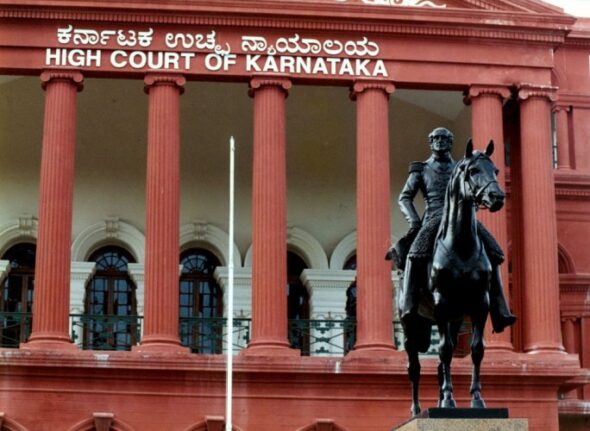
The Karnataka High Court has taken cognizance of a letter written by Advocate Vaishali Hegde detailing how temporary shanties of migrants workers were charred to the ground near the Sunday Bazaar in Kachakaranahalli in Bengaluru East. LiveLaw reported that Chief Justice Oka and Justice S Vishwajith Shetty directed the registrar to make the State government and Bruhat Bengaluru Mahanagara Palike as the respondents. The matter will be heard on June 11. There seems to be no end for the troubles of hapless migrant workers who have suffered myriad hardships The letter highlights the brazen act of rowdy elements who deliberately set fire to shanties/huts only to dispossess poor migrant workers from the shelter. The letter states that newspaper reports suggest that the police remained mute spectators and did not come to the aid of the poor labourers while citing some court case pending before the office of the Deputy Commissioner. The letter urged the court to send a strong message to such rowdy elements that a “society governed by the rule of law would not tolerate such brazen illegal actions”. Further, the letter states, “This court has been dealing with suo moto public interest litigation pertaining to the hardships and sufferings being faced by migrant labourers. This issue is treated as a suo moto PIL and monitor an appropriate investigation into the matter by ensuring the guilty are brought to book and not left to escape the clutches of law. It is also sought that directions be issued to the state and its authorities to provide requisite shelter, food, and other facilities to the unfortunate poor migrant labourers.” Sabrang India had reported the incident, “the homes of these migrants were set ablaze while they were stuck in their villages in Kalaburgi due to the lockdown. The children of the migrants, some of whom were to appear for the SSLC examinations also face an uncertain future as all their books were burnt during the incident.” A report by The Times of India read that on April 25, a group of people tried to set the homes on fire, however, they fled when those migrants who had stayed back during the lockdown, resisted. Yet, the miscreants returned two days later and not only burnt down the homes but also took away vessels and tarpaulin sheets which served as roofs. The returnee migrants alleged that when they tried to rebuild their homes, they were stopped by the local police from doing so and were threatened that they would be lathi-charged if they continued to rebuild their homes. This, even when the migrants said that they had authentic voter IDs and ID cards by the Karnataka Slum Development Board (KSDB) showing that they were residents of the area. P Anand, Ward Corporator HBR told Sabrang India, “We don’t know who is behind the incident yet. We have filed an FIR at the KG Halli Police station. I’ve also complained to the ward engineer and revenue officer about this. What was done is very wrong. We are now providing food to the homeless and have even provided fees to the children. On June 3rd, the MLA will speak to the government about the matter.” KG Halli police inspector Ajay Sarathi also spoke to Sabrang India and said, “There were around 20 to 30 huts that have been burnt. The matter is still under investigation.” Earlier this year in January, when the country was in the thick of the anti-Citizenship Amendment Act protests, many daily wage earners in Kariyammana Agrahara in Bengaluru were rendered homeless after a demolition drive. Around 200 tin and tarpaulin sheds were taken down in Kariyammana Agrahara and approximately 500 similar structures were razed down in Deverabeesanahalli. The authorities who conducted the demolition drive had claimed that the families were illegal immigrants from Bangladesh. Basically, the predicaments of the poor labourers have only augmented right from the beginning of the year. This suo moto petition will hopefully bring them some justice. Source: Sabrangindia.in Also Read: Karnataka High Court: Streamline travel of Migrant workers, free travel for those without money