

National Education Policy- 2020 leaves a lot to be desired?

The approval of the National Education Policy – 2020, has resulted in a much-needed debate, analysis, and critique. However, the first document that was circulated in the educationists’ and activists’ circles was not the one approved by the cabinet.
It was only later, after the demands by educationists that the Ministry of Human Resource Development (soon to be Ministry of Education) uploaded the final policy that was approved by the cabinet on the website on 30th July 2020.
Any analysis at this stage over the National Education Policy is around the 60- page document is only preliminary given that the document was released only recently. A few quick notes before we can undertake a detailed analysis of the National Education Policy is as under:

NEP proposes Centralization of Education System

The National Education Policy – 2020 has proposed a new set of regulatory authorities that aims to diminish states’ autonomy and power on the matters of education. It has proposed the establishment of a new Teachers’ Training Authority to regulate the teaching profession of the country. This would mean that the states cannot change the rules in accordance with their needs. This is in contradiction with the Vision of Constitution which places the subject of education under the ‘State List’.

Higher Education 

National Education Policy – 2020 is silent regarding the government’s role in higher education. The Birla-Ambani report had planned to hand over the sector of Higher Education to private players. Notably, there won’t be any support system for the marginalized sections. Once implemented it would deny any chance that marginalized sections might have to benefit from higher education.
Allowing foreign universities to open up establishments again supports the idea of privatization of Higher Education as these universities treat education as a commodity and reduce it to a supply-demand type market system. This would mean the end of the road for students hailing from Dalits, Adivasi, and marginalized communities.
The National Education Policy – 2020 document does not speak about the threats to democracy in university campuses. It also does not address the issue of scholarships for Dalits, Adivasis, and Marginalized communities.
A major change that is rolled out by the current policy is the restructuring of the Bachelor’s Degree as a 4-year course. This would pressurize the students of Medical and Veterinary subject to study a vast set of the curriculum within a period of 4-years. Also, the idea of creating multiple entries and exit from any course that is floated around. This is harmful and would disturb the students’ selection processes and leads to inconsistencies.
In any graduation course, if students are able to complete only one year of study, then they will be awarded a basic certificate. A Diploma certificate is awarded if students complete 2 years of study. On completion of the 4-year course, they are awarded a Degree Certificate. The idea is that no year of study by any student must go wasted if they discontinue the course in between. However, this will only mean a wastage of knowledge. What would the student gain in terms of knowledge? Where and How would they fit into the job market? These are important questions that remain unaddressed.
The National Education Policy – 2020 will also be the end of Government colleges as they are neither prepared nor equipped for the ‘liberal arts model’ supremely emphasize. However, the liberal arts-oriented courses in private institutes will be priced high. The Policy document claims to be focussing more on practicals and application of knowledge, but it is silent about how the Government colleges which are suffering at present with no hands-on training whatsoever would be empowered.
The Credit system adopted for Under-Graduate and Post Graduate courses will trap the students in the Education Loan Mafia. The course fees will be decided by a single authority with a fee capping on each course irrespective of the quality of education provided. This will be a total tyranny ruling. This will kill democratic voices that demand fee reductions and free education for students from marginalized sections.

School Education 

The policy does not talk about empowering and uplifting government schools. It does not specify the mechanism that would be adopted for strengthening the public education system in the country.
Wherever possible, the mother tongue or official language of the state must be adopted as the medium of instruction. However, similar recommendations have been in place for decades now. In practice, we understand that ‘wherever’ possible only means that ‘it’s nowhere possible’. The last sentence of the same paragraph contradicts its own recommendations by stating that the Three Language system has already been already rejected by Southern states.
The ‘Vocational Course from 6th Standard’  is a sure shot way to kill the future of children. Students from the marginalized community will never be able to reach the graduate-level education in the guise of vocational education. The policy never speaks about local institutions like Gram Panchayats, Zilla Parishads, School Development and Monitoring Committee in assisting the sector of school education. The document also never gives any guidelines about what should the government actions be.
Views are personal.
Also read about:Teachers: The Unheard Stakeholder of Online Education

P Sainath´s People´s Archive of Rural India (PARI) bags Prem Bhatia Award – 2020

People’s Archive of Rural India (PARI) team led by socially committed journalist P Sainath has bagged the prestigious Prem Bhatia Award 2020 for Outstanding Journalism. PARI team is awarded for their “extensive field reports, including climate change effects and the impact of the pandemic on rural India”. This is the 24th award bagged by PARI since its establishment in 2014. Prem Bhatia award was first instituted in 1995 in the memory of eminent journalist Prem Bhatia (1911-1995). The award was instituted to propagate the values that he stood for: objective reporting, fearless pursuit of truth, and a commitment to improving the standards of journalism in India. Breaking away from the tradition of honouring individual journalists, the award has been bestowed on “PARI collectively for its army of field reporters, volunteers, and its dedicated team”. P Sainath established PARI website in 2014 to archive and document the issues of rural India through its field reporting. The website is reporting extensively about the pandemic outbreak and the lockdown. To date, PARI has documented more than 100 stories and vital documents about Covid-19 pandemic and the lockdown. The reports cover over 30 regions across 20 states and Union Territories. The reporting has extensively covered the impact of the lockdown on various aspects of the rural Indian economy including farmers, boatmen, urban and rural labourers, weavers, toy-makers, other artisans and craftspeople, sanitation workers, cancer patients from rural areas and Dalits and Adivasis in various occupations amongst others.
Dipankar Ghose has won the Prem Bhatia Award for political reporting for his work on issues related to the Covid-19 pandemic, including the migrant labour crisis.
Along with PARI, the Indian Express Special Correspondent Dipankar Ghose has won the Prem Bhatia Award for political reporting for his work on issues related to the Covid-19 pandemic, including the migrant labour crisis. On July 6, Ghose reported about the children of Musahari tola, a Mahadalit colony in Badbilla village, who had turned to rag-picking and begging after the mid-day meal scheme, which guaranteed one stable meal a day, came to a halt as schools were closed. Taking note of the report within hours of it being published, the Bihar government issued an order to provide rations as well as money through Direct Benefit Transfer to all school children across the state for 80 working days from May to July. The Patna High Court and the National Human Rights Commission also took suo motu cognizance of the report. Noted earlier recipients of the Prem Bhatia award includes Raj Chengappa (1999), Kingshuk Nag and Bharat Desai (2002), Praveen Swamy (2003), P Sainath (2004), Varghese K. George (2005), Navika Kumar (2006), Pallavi Aiyar (2007), Nirupama Subramanian (2008), Neerja Chowdhury (2009), Ritu Sareen (2010), Josy Joseph and Jyotirmoy Dey (2011), P. R. Ramesh and Shalini Singh(2012), Jaideep Hardikar and Shalini Singh(2013), Nitin Sethi and Smita Gupta(2014), Ms. Suhasini Haider and Priyanka Kakodkar(2015) Gauri Lankesh Media congratulates PARI – an alternative yet very important journalistic on bagging the prestigious honour. We also wish that the team continues to work with the rigour and spirit it is best known for.

Read About: ‘Free Speech’: Reserved Only for the Right-Wing?

Unsung martyr Udham Singh who avenged the Jallianwala Bagh massacre

1
It was 80 years ago (July 31, 1940) Udham Singh died on the gallows in the Pentonville prison of London. Through the contemporary police documents, we come to know that before reaching London he had been to Mesopotamia, Kenya, Uganda, USA, and USSR, all in quest of Indian revolutionaries and ammunitions. It was on reaching the English shores that he took the name of MOHAMMAD SINGH AZAD. In fact he had secured a passport with this name. He even attempted to organize fellow English laborers. Udham Singh’s choice of the name as MOHAMMAD SINGH AZAD was not a fluke. He chose it to underline the cardinal fact that India could be liberated only by the collective and united efforts of all Indians. There is a reasonable apprehension that if Udham Singh returns to India with this name today he may be lynched. Udham Singh The British masters wanted to censure any news about his trial so that Udham Singh’s revolutionary deeds were kept hidden in India. The day his trial started in London the Governor General in New Delhi sent a telegram to the Secretary of State.. It read: “We understand that during the trial the accused intends to pose as a martyr and indulge in heroics. We would be glad if steps are taken to secure that press in England do not report substantially and that Reuters only carry as brief and unsensational a summary as possible.” This telegram showed that the Britishers, glorified as great believers in the fair-play and rule of law, germane to democracy, were masters in manipulating the fourth estate. Explaining the reason behind the killing of one of the main perpetrators of Jallianwala Bagh massacre Udham Singh made the following statement. “I did it because… he deserved it. He… wanted to crush the spirit of my people, so I have crushed him. For full 21 years, I have been trying to wreak vengeance. I am happy I have done the job. I am not scared of death. I am dying for my country.” He continued, “I do not care about the sentence of death…I am dying for a purpose…We are suffering from the British Empire…I am proud to die to free my native land and I hope that when I am gone…in my place will come thousands of my countrymen to drive you dirty dogs out; to free my country…you will be cleansed out of India. And your British imperialism will be smashed…I have nothing against the English people at all…I have great sympathy with the workers of England. I am against the imperialist government. DOWN WITH BRITISH IMPERIALISM!” These words of MOHAMMAD SINGH AZAD rang out through a London courtroom on March 13, 1940, where he was produced immediately after killing Michael O’Dyer, the Lt. Governor of Punjab, the architect of the Jallianwala massacre who ordered the crackdown. MOHAMMAD SINGH AZAD was none other than Udham Singh. Born in a Dalit Sikh family and brought up in an orphanage, Udham Singh was present in the public meeting at Amritsar on the fateful bloody Baisakhi day of 1919.
Also Read: Batukeshwar Dutt: A Forgotten Revolutionary

Having fallen under a heap of dead bodies, Udham Singh had miraculously survived the carnage. But so deep was the hatred evoked by the 20-year old vowed not to rest until he had avenged the killing of the innocent hundreds. He achieved his target 21 years later. And ‘Mohammad Singh Azad’-the name he adopted-underscored the fact that the overthrow of the British rule was impossible without the unity of the Hindu, Muslim, and Sikh populace of the land. Today this call is more relevant when Hindutva rulers are bent upon dividing the Indian nation on the basis of religion.
Link for some of S. Islam’s writings in English, Hindi, Urdu, Marathi, Malayalam, Kannada, Bengali, Punjabi, Gujarati and video interviews/debates:
http://du-in.academia.edu/ShamsulIslam
Email: [email protected]
Facebook: shamsul, Twitter: @shamsforjustice
http://shamsforpeace.blogspot.com/

Solicitor General Tushar Mehta Appointed as Special Prosecutor in Delhi Riots Cases

0
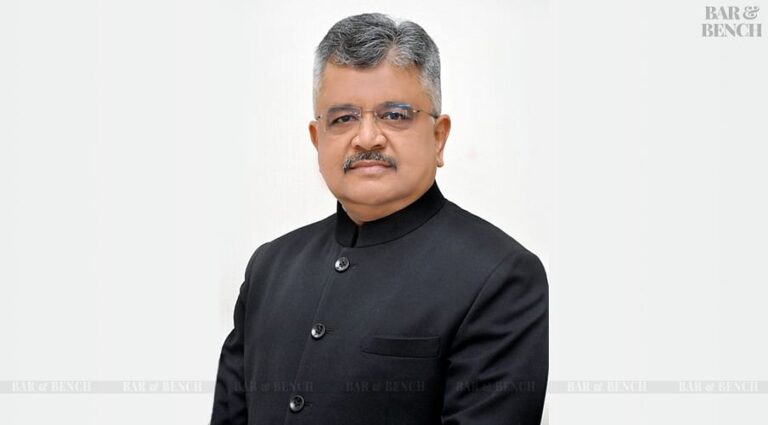
On 30 July, the Delhi Government (Home Department) appointed 6 Special Public Prosecutors, including Solicitor General Tushar Mehta, for cases related to the anti-CAA protests and the North-East Delhi riots that occurred earlier this year. Along with Tushar Mehta, the following advocates were also appointed by the Delhi government: Aman Lekhi (Addl. Solicitor General (ASG)), Chetan Sharma (ASG), S V Raju (ASG), Amit Mahajan, and Rajat Nair. The appointment of the Special Public Prosecutors was done on the orders of the Lieutenant General (LG) of Delhi, Anil Bainjal. This appointment has been a contentious issue between the Delhi Government and the LG of Delhi. The point of controversy arose because Solicitor General Tushar Mehta had appeared before the Delhi High Court, in a petition which sought investigation into the North-East Delhi communal violence, without having been appointed by the Delhi Government. In the division of power between state and centre, the Delhi Police reports to the Union Ministry of Home Affairs, but the appointment of Prosecutors falls under the Delhi Government’s ambit. The Standing Counsel for the Delhi Government, Rahul Mehra, had raised objection to the Solicitor General’s appearance in the Delhi riots case. He stated that the LG can appoint Prosecutors only on the consultation and advise of the Delhi Government. The LG then passed an order appointing Tushar Mehta to appear for the Delhi Police in the PIL filed by Harsh Mander (who had sought FIRs to be filed against BJP leaders for hate speech). It is relevant to note that many significant questions have been raised on the credibility of police action during the North-East Delhi communal violence. Although the Delhi Government had objected to not being consulted on the process of appointing Prosecutors, they have not objected to Tushar Mehta being appointed as one in the North-East Delhi violence case (Aqil Hussain v. NCT of Delhi). This seems to be a formal disagreement rather than a substantial one. Read Next: Ex-IAS Officers, Academics Demand ‘Commission of Inquiry’ on North-East Delhi Violence First reported by Live Law.

Bundelkhandi Folk songs on Water: A critical analysis

The diverse culture and tradition of folk songs are integral to Uttar Pradesh. It’s vital for both, its music and anthropological & cultural nuances. It covers relevant aspects of the society and there probably exists no theme on which folk songs are not sung in villages – both at the local household level and in the larger public discourse. Similarly, is the case with Bundelkhand. It is well known for its folk tradition and culture in the popular media. As water is the scarcest resource, there are folk songs on conservation and optimal usage of water. A total of 5 folk songs were analyzed to capture the larger discourse, perceptions, and understanding of the people on water and their struggle of its deprivation. All the songs were written and sung by male folk singers on the public platforms. While these songs are sung at a large public platform addressing larger audiences, folk songs are sung by women at the local household level in the village society. Song 1– There is an urge to the people in this song to save water. Without water, everyone is troubled and results in a drought situation and is also understood as a blessing by the god, thus implying that the value of water is high. Here, water is considered indication of life. It asserts that life, cattle and animals are dependent on water. It also suggests that water must be consumed according to the need and must not be wasted. It also calls for collective management of water resources, as there is no life without water.

Also Read: Politics of Water: Dynamics of Caste and Gender in Water Scarcity

Song 2– This song begins with a request and tells daughter-in-law of the household to pump-out only as much amount of water that is required for the household. Water is to be looked at and discussed about as rainfall has dwindled over the years. Everyone is appealed to make their children aware and understand the importance of water and not waste it. Water crisis adds up as the handpump is often non-functional and is not repaired anytime soon. During summers, with situation of water scarcity at its peak and it can only be worse. Hence, the advice is for women to use it with care and not to be too harsh on it. Song 3– The song addresses the audience as ‘brother’. Much like the previous songs, this one too asserts that life is from water. Water is essential for agriculture that forms one of the major livelihoods and income sources for the people of rural society. The scarcity of water adds up to the crisis, therefore it is important to plant trees and not cut them. This song as well asserts the importance of agriculture and the essentiality of water for it. Song 4– This song begins with how important is community participation to save water as it is a common pool resource used by all. IT noted that in times of scarcity, water cannot flow from either village to village or from one field to another field. Since it affects agriculture, life would be wasted without water. Song 5– This song implies that the most important task humans should be involved in is to save water. If there is water, then there is a future. If there is water, life is successful. If there is no water, people cannot do any work, the very life comes to halt. All we need to collectively do is to use water wisely and rationally and try our best to save water. An important point that all these folk songs address is that water is a basic necessity for life. These songs emphasize how essential is to save water by using it rationally to avoid any inconvenience and difficulties. Most of the songs imply the prominence of agriculture and how essential it is to save water for the same. However, least attention is paid to domestic water where availability, accessibility, and usership forms an important aspect of ensuring the physical, socio-cultural, economic, and political well- being of people. It is indicative of the general scenario around water, where the need for agricultural water is always prioritized over domestic water. Mention of women who play an important role in collecting, storing, and management of water is also absent. There is no mention of the burden that is placed on the women due to gender-based division of labour both within and outside the household. This places them under the triple burden of managing a household, being a major part of the agricultural force, and also collecting water. Only once is there a mention of daughter-in-law in the song, where the onus to save water wisely is placed on her. Men are intelligently kept away from taking any responsibility of water. Although the significance of community participation is suggested in these songs, the caste dynamics of water remains absent. There is no mention of the caste-based discrimination and untouchability in the context of denial of access to water resources. Thus, intersections of caste and gender which affect access to water and its usership are invisibilized in these songs. The dominant and powerful groups maintain power by controlling water resources by pushing the marginalized sections to further margins naturalizing water scarcity. Therefore, the songs largely imply water as only a means to sustain life. However, water is not just important to sustain life but is also political in nature. Water needs to be understood as a resource that has been significant in persisting as the traditional medium of segregation, marginalization, and exclusion.

Kashmir: Post 370A Abrogation Economic Loss stand at Rs 40000 Cr

On August 5, 2019, the Government of India revoked the special status granted to the state of Jammu and Kashmir under Article 370 of the Indian constitution. Almost a year later, a report titled ‘The Impact of the Lockdowns on Human Rights in Jammu and Kashmir, August 2019-July 2020’ has been brought out by the Forum for Human Rights in Jammu and Kashmir. The report is co-chaired by Justice Madan Lokur and Radha Kumar. The report highlights the trauma people in the state have undergone since August 4, 2019 – the day the state was put under lockdown. Prime Minister Narendra Modi and Home Minister Amit Shah cited ‘National Security’ as the prime reason for abrogating Article 370. However, this idea of abrogating Article 370 was also backed up by the free-market economic understanding wherein PM Modi had claimed that it would bring stability, market access, predictable laws to Kashmir. Modi and Shah had left no stones unturned in gathering support for the ‘Cause of India’. Political understandings were busted within no time, now the economic argument also seems to be doomed. The report has also elaborated on the economic impact of post-abrogation measures. Post-abrogation lockdowns was followed by restriction of the internet to 2G speeds in J&K. It also suffered from Covid-19 lockdown and opening up of J&K economy to companies from other parts of the country between August 2019 and July 2020.

Economic Situation of J& K post abrogation:

J&K was one of the better performing states of India before August 2019 both economically and in terms of Human Development Indices (HDIs). However, since August 2019, the state has suffered immensely on economic terms. Kashmir region only has suffered losses worth Rs 40,000 Crore over the past 11 months. These figures were estimated by Kashmir Chamber of Commerce and Industry (KCCI). However, economic losses for the Jammu region is still not studied the report noted. The report elaborated on the losses for the fruit industry which contributes almost 10% for J&K’s economy. It had suffered badly the industry lost almost 1.35 Lakh metric tons of crop due to restrictions on transportation. The government announcement that National Agricultural Cooperative Marketing Federation of India(NAFED) would buy the crops. This also could not help owing to the same transportation issues. Most apple dealers have also defaulted with banks and this would have domino effects on the economy. Lockdown of markets, issues in internet connectivity for online payments, non-availability of transportation and rise in cost for the same, monopoly of pesticide dealers, and lack of opportunity to market the crop were some of the major issues faced by the industry.

Read about: UN Sec-General expresses concerns on child casualties in J&K

The report detailed that the tourism industry which contributes around 8% of the GDP of J&K also faced the brunt. According to statistics provided to the Parliament by the government, the number of tourists fell from more than 3,15,000 in 2018 to just over 43000 in 2019 for 5-month period of August to December. Booking was impossible and people were unwilling to visit a highly-militarized region. In addition, the Draft Tourism Policy announced in March 2020 is affecting the Houseboat business adversely which also impacts livelihoods of lakh of people directly or indirectly. IT and e-commerce based industries have either shifted their base or have closed down services. This has left the localities unemployed. Even the carpet and garment industries, home-based and village industries which depended on online orders have faced the brunt of such drastic measures of keeping a state under lockdown for almost a year. Around 20000 weavers were employed by units to make silk carpets. According to the report, the number of losses suffered by the Transport and Communication industry between August and December 2019 amounted to Rs. 2267 Crores. Militants opposing the decision of abrogation of Article 370 and the bifurcation of the state had banned truck drivers. The truck drivers were banned from collecting harvested apples to distribute it to the Rest of India. Public transportation services including private busses serving the poor were also stalled. Hence, thousands of people associated with the transport industry are in distress. Figures for the losses by Start-ups, small businesses, and shops are unavailable. However, the report has provided testimonies for the issues faced by these entrepreneurs. It can be inferred from these testimonies that the non-availability of internet connectivity and a prolonged lockdown for over a month have left lakhs of people under immense financial distress. Newspapers were not published either online or in-print for couple of months post-abrogation of Article 370 . Also, advertisements fell drastically both from government and private players as their circulation was restricted. Also, since criticism of the governmental actions was stifled upon, opinions and content have dwindled which has decreased their readership. The Covid-19 lockdowns have also severely hampered journalism in the region. In a domino effect, journalists – especially the onfield reporters have lost jobs noted the report about journalism in the region. It must also be borne in mind that the New Media Policy announced by J&K administration will further jeopardize journalism and journalists in the region.

Unemployment in J&K 

As of July 2020, J&K’s unemployment rate was 17.9%  almost double the national average. Almost a quarter of educated youth in the region are unemployed. The new domicile rules issued has furthered the chances of unemployment for the people from the region. Under the new rules by Home Ministry under Amit Shah, only people who have lived in the state for over 15 years or have studied for at least 7 years would be considered domicile. Earlier,  the permanent residents of the state were considered as a domicile the report has noted. Human Rights Violation has been a norm in the most-militarized region in the world for decades now. However, the region has suffered immensely even on the economic front too over the last year. As the BJP-RSS and Rest of India is all set to mark One year of Abrogation of Article 370, J&K continues to suffer. Read the complete report here.

Teachers: The Unheard Stakeholder of Online Education

One of the most affected institutions due to COVID-19 outbreak has been the schools and colleges across India. The immediate shutting down of schools formally known as ‘School Closures’ disrupted the educational processes across the world. This created a sense of ambiguity as well as anxiety among students, teachers, and even parents in India. Within the blink of an eye, the schools were expected to shift their learning to non-conventional modes of education such as conducting Online classes and/or sending lessons and worksheets through WhatsApp. While most of the academicians have brought to the fore issues from the perspective of the students as to how are they perceiving and adapting this online mode of education, teachers’ perspectives as stakeholders in it have been unheard of. The responsibility of implementing any reform in the educational processes, whether at the school level or at the policy level, lies on the teachers. The expectation that a teacher will be able to adjust and accommodate changes with no adequate time or training is normalized. This normalization has been to such an extent that the common parlance of blaming the teachers for all the wrongs in the education system continues to persist without any deliberation on why this is the case.

Struggling with the know-how

The teachers, being at the receiving end of this online mode of education are now struggling at two levels. One, at the level of using a range of new applications and software that they are expected to know (with an assumption that there is access to the internet at all times). Two, at the level of preparing material/lesson plans for their students with no guidance on finding adequate resources on the internet. Anisha, a primary school teacher, shares, “It becomes very difficult to teach with such limited resources. In school, we at least have a library. The whole day goes into preparing the material and this time can be utilized otherwise for other purposes”. Adding to this burden, the teachers are also at a loss of autonomy in their own classes, where they are constantly nagged by parents and monitored by the school heads on ensuring that the delivery of content and instructions yields maximum output. Prabha, a middle-school language teacher shares, “I am at an age where technology doesn’t come to me at the tip of my fingers. It takes time and a lot of practice. Most of the time, I have to make my children sit beside me so they can guide me on how to take classes online. In between all this, the school also keeps pushing us to find out interesting ways or software to teach online. How do I find interesting software when I am still struggling to do basic teaching online?” Another teacher,  Harshita, who facilitates Maths shared, “I am unable to ensure whether my students are understanding all the concepts, which otherwise was possible in my offline classes.” The transition from offline to online mode being so sudden, makes the readiness of the teachers and the students unstably swift. Shiva, who recently experienced teaching online adds , “Technology was the major challenge. The internet is often not stable even when you have a good connection. It is also difficult to engage with all kids at all times, so you don’t even know if they are with you.”

The household spaces

The underlying assumption that the teachers will have adequate space at home which can be converted into a workspace is also not true. Heena shares, “My husband and I both work from home. We share the internet and house space. We struggle when he has a meeting and I have a class to take, both at the same time.” Shiva added, “Space is definitely a challenge. Sometimes you don’t get connectivity at some spots and at other times you are not alone. Especially with a small house, how do you ensure that space where you can freely interact with children?”. The one-room households teachers are expected to have a stable internet connection, own workplace with no disturbance while teaching. This puts them under immense challenges while they also struggle at the pedagogical levels. One of the teachers also shared, “I have to sit outside my house to ensure better connectivity. But when I am outside my house, the noise of the vehicles passing by disturbs and then the students complain. Where do I go?”

Gender Roles coming in the way!

The teaching profession is often undertaken by women as it is generally perceived that teaching jobs are half day’s work and therefore women can take care of the household while also teaching in schools in the mornings. This feminization of the profession syncs well with household expectations. Sumedha, a middle school teacher shares, “The responsibility of household chores is upon me if I’m at home. My work from home is not taken seriously because if I am physically seen at home, then providing meals, washing clothes or even looking at my children’s studies falls on me. There have been cases where I have stood up in the middle of my classes to provide water to my mother-in-law while my husband was comfortably attending his important meeting.” The paradox lies in how we expect our teachers to always be on their guard with respect to implementing any change in the educational processes. Yet we maintain absence of teacher’s voice and autonomy in most of the decision making processes. Despite this, teachers are questioned, commented upon, and blamed for any wrongs with the system. As one of the teachers expresses, “We need to be a bit more empathetic towards teachers since they are trying and are doing so at their level best”. Annu Ralli holds B.El.Ed and MA in Education Degrees. She has also worked as a teacher for more than a year. Views are personal.

Read about: Karnataka -35000 Private School Teachers lose Jobs, 8 Guest Teacher commit suicide


Karnataka HC Rejects Transfer of Amulya Leona’s Case to NIA

The Karnataka High Court on Tuesday rejected a petition which sought to transfer the sedition case against Amulya Leona to the National Investigation Agency (NIA). “What is so special that the investigation should be transferred to NIA?”, the Court asked. Amulya had been arrested in February 2020 for allegedly raising a ‘Pakistan Zindabad’ slogan at an anti-CAA protest in Bangalore. She was released on bail in June after the police failed to file a charge sheet within the stipulated time period of 90 days. Advocate Vishala Raghu had filed a petition seeking an NIA probe against Amulya Leona, to ascertain whether the 19-year-old student had ‘any links to terrorist organisations’. The advocate also asked for a cancellation of her bail, alleging that her case was ‘serious’ and concerned ‘national integrity’. A single judge had referred this petition to a division bench. A Division Bench of Chief Justice Abhay Oka and Justice HP Sandesh, who heard the matter, refused to grant the prayer of the petitioner. The bench stated; “Is it not the indefeasible right of the accused to be released on bail if charge sheet is not filed within the stipulated time? How can you make a prayer for cancellation of bail?” The Court ruled that; “looking into the nature of allegations made in the FIR, we do not think that this is a case where extraordinary jurisdiction is to be exercised for transferring the case to NIA. In a writ petition in the nature of Public Interest Litigation, it is not possible to consider the prayer enjoining the respondents to apply for cancellation of bail of the accused and to conduct a disciplinary inquiry against the respondent (investigating officer)”. This is a welcome decision from the judiciary, in the context of increasing arrests of students/activists and the heightened repression of dissent.

Read Next: Dr. Hany Babu Arrested by NIA in Bhima Koregaon Case


Arundhati Roy: Arrest of Activists like Hany Babu show the fear of the Government

0
Renowned writer, Arundhati Roy has commented on the arrest of crusader of anti-caste movement and DU professor, Hany Babu. She stated the one after other arrests of activists, academicians, and lawyers in the Bhima Koregaon matter shows the fears of the present government. In an interview with Janchowk, Arundhati said the arrest of Prof. Hany Babu is the latest in the line of arrests in Bhima Koregaon’s case. The ruthless arrests of academicians, lawyers, and activists show the fear of the government that the people who are connected with this newborn, rising secular,anti-caste, and anti-capitalist politics are not only giving an alternative narrative but are its representative as well. Yesterday, Hany Babu was arrested by the NIA in Mumbai. He was summoned from Delhi on 23 July for interrogation relating to the Bhima Koregaon matter, in which 11 other activists have already been arrested and imprisoned. Before this, Mumbai Police had gone to Babu’s house for interrogation in 2018. Hany Babu resides in Noida, Delhi NCR. Back then, they had taken away many things along with his computer. He is now the 12th person to be arrested in this matter. Before him, Sudha Bharadwaj, Varavara Rao, Anand Teltumbade, and Gautam Naulakha are some of the activists who were arrested and put behind bars. On the present government, Arundhati Roy stated: “This kind of self-destructive Hindu-Rashtra politics has brought the country to present crisis that has ruined the lives of millions of people. The irony is that it includes people who had supported this government earlier. The NIA in its statement claimed that Hany Babu´s arrest has come out of the facts that have come out during the interrogation. NIA also accused him of conspiring with the other 11 arrested people in inciting violence at Elgar Parishad and Bhima Koregaon. The mounting number of arrests are a sign of the government’s insecurity as well as its attempt to instill fear in dissenters and human rights activists.

Read Next: No Bail for Human Rights Activists: Justice Delayed and Denied

One year for Yeddi’s Government: Kneeling before BJP’s Central Leadership

It would have been two years and two months of governance by now if voters had provided any party a majority in the 2018 assembly elections. However, 26th July 2020 marked the completion of one year of governance by Yediyurappa-led BJP in Karnataka.
There exist no universally accepted standards for reviewing a governments’ functioning be it after a year or five. To evaluate and weigh the performance of a government is, however, left ultimately to voter’s sentiment and understandings.
A coalition government of the Congress – JD(S) in Karnataka came to power post the elections. The reality is that it seemed to be an adulterated government rather than a coalition government. This government was brought down by the cunning-backdoor politics by the BJP. Thereafter, BJP formed a government in Karnataka by ‘acquiring a majority’. There are two factions of this government. The first faction was the one which was elected and the other faction was purchased. However, even the elected faction is not truly elected as it has ‘purchased’ votes. Similarly, the purchased faction is also not wholly purchased as they were then re-elected in the by-election. In other words, this government has a section of eligible elected representatives while the other section consists of former ineligible elected representatives. These basic facts must be kept in mind when this government needs to be evaluated.
JD(S)-Congress Leaders address a press meet
This governments’ review can be undertaken by dividing its timeline broadly into the pre-Covid and Covid-19 period.
In pre-Covid period, the government functioned like a state-level department of BJP’s Union government for about eight months since its inception when Yeddyurappa was sworn in as Chief Minister till March when first Covid-19 case was recorded in Karnataka. The Union BJP leaders controlled the state government so much that the incumbent Chief Minister could not even imagine let alone decide who would be his cabinet ministers for more than 40 days. The centre neither provided any aid for the state in the times of flood nor during droughts. Let alone additional assistance, the state did not even receive its share of tax from the centre that it is constitutionally entitled to be able to provide for the bare necessities of the state. It seemed that the state government had to work at the mercy of the union government with whatever peanuts it was provided.
Modi and Yeddiyurappa
We had heard of weak Chief Ministers and also had witnessed how Union governments controlled the Chief Ministers from a different party in the past. However, this is probably the first time officially or unofficially recorded that an entire state government had to kneel before the union government. At times of election, while purchasing Congress MLAs and during the by-election, the BJP had trumpeted that Karanataka had to elect the same government (BJP) at both centre and state levels for better governance. A lot of people believed it as well. However, just within two months, this myth was busted.
The government was an incomplete one for a large time before Corona outbreak. Half of the Cabinet Ministries was kept ‘reserved’ for the MLAs bought from Congress. The ones who were was called ‘ineligible’ by the Supreme Court for defecting could not become ministers until they won the by-election were finally held in December. It was only in January that the government seemed to be in its full strength with the addition of these members to the Cabinet.
By the time a budget was put forth by a state with literally no funds in its kitty, Karnataka was hit by Corona. A few analysts believe that Corona outbreak in the state secured the position of the government and the CM. This was because many people had by then understood the reason for the poor functioning of the state government in its first phase. This poor functioning was due to the infighting within BJP and because the party leaders at Delhi had taken to non-cooperation with state BJP unit. The political situation eased a bit when notions that Karnataka tackled Corona outbreak well in its early days started to spread. At least temporarily, the infighting within BJP was addressed by the Delhi BJP leaders at the time of the Rajya Sabha elections.
During the Covid-19 period, it seemed to function like a stooge for the union government without any understanding of what would be good for the state. As a result, widespread changes in land laws were brought in. Land Reform and Agricultural Market regulations were relaxed, and labour laws were widely amended. The marker of the government’s first year in office was to repeal and amend major laws that would have otherwise needed widescale public consultations by misusing the lockdown and crisis-hit times.
While one can wonder what its consequences will be, it is of importance to note that the state government has done so not at its own discretion but at the behest of the party’s rulers in Delhi. The government started failing in Corona management as the days passed by. The split between elected and bought-in representatives seemed to have hampered the fight against the virus. A scandal has just erupted in purchases relating to Corona management in the state. Isn’t it enough if we can enlist so many specials in just a year?
– Narayana A (Author and Faculty at Azim Premji University). Translated from Kannada to English by Shashank SR. Views are personal.

Read About:Corona Crisis & the Workers’ Movement – The labour report during the lockdown
