Centre Collected Rs 4,000 Crore as PAN-AADHAR linking Fee

0
Central government has made it mandatory for everyone to link AADHAR Card with PAN card. Failure to do so would amount to a fine of Rs. 1000. It is reported that Central government has collected amount of Rs 4,000 crore in this exercise. In April 2017, the central government implemented a system to link PAN number with Aadhaar to prevent multiple PAN cards. Until March 2022 there was no charge for the linkage. An estimated 44 crore people had linked their PAN and Aadhaar by then. In April 2022, a deadline was given to do the linkage by the end of March 2023 with a fee of Rs 1000. Central Board of Direct Taxes Chairman Nitin Gupta said that currently 48 crore people have linked and 13 crore people have not yet linked. It means that in the last one year, around 4 crore people linked PAN Aadhaar and paid Rs 1000 each. The money collected by the government in this one year is Rs 4,000 crore. 13,000 crores will be collected if 13 crore people are linked, if the fee remains to be 1000 as it is now. But after March 31, there are fears that there might be further increase in this amount.

Outrage over fee collection

There is no provision in the original act or rules to charge for linking. However, the Finance Act, 2021 brought an amendment and added a new section called 234H to the Income Tax Act, 1961. It added that ‘those who do not link PAN-Aadhaar within the deadline set by the government will have to pay the fee at a later date’. There has been outrage against the central government for collecting a fee of Rs 1000 for linking Pan-Aadhaar. “The linking of PAN and Aadhaar is the right decision, but the central government’s rule, which is going to cut into the pockets of the middle class by imposing such a fine on it, is wrong. The cost of a new PAN card is only Rs 118, but it is unbelievable that the penalty imposed by the government for linking Aadhaar to the same PAN number is ten times more!! Instead, PAN numbers not linked to Aadhaar should be compulsorily deactivated from April 1, 2023, and a new PAN card application system should be implemented. Apart from that, this kind of imposition of penalty is condemnable in such a situation unnecessarily,” Mohan Mudabidare opined.
Overall, there has been a lot of opposition to looting from the masses in the name of Pan-Aadhaar link. Today there is some news that the date has been extended till next year i.e. March 2024 for linking. But actually there is no official announcement about this. So those who need PAN should get the link. Click on this link to check if it is linked or not.
 

Delhi High Court Overturns Discharge Of Sharjeel Imam, Safoora Zargar In Jamia Violence Case

0

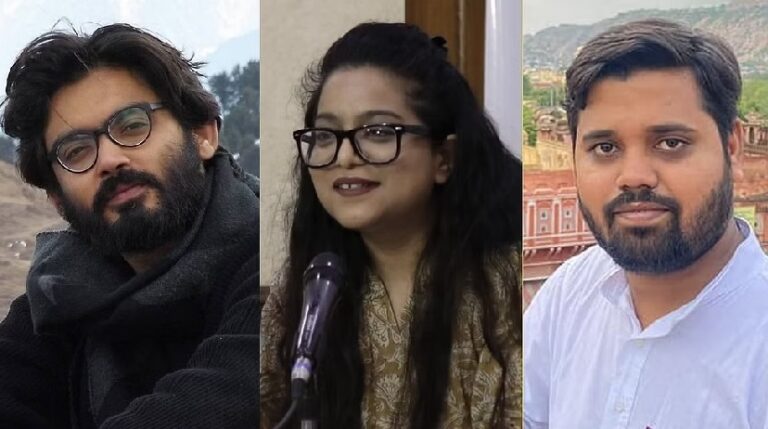
The Delhi High Court on Tuesday partially overturned  a trial court’s order which discharged Sharjeel Imam, Safoora Zargar, Asif Iqbal Tanha and eight others in the Jamia violence case, which occurred during the protests against the Citizenship (Amendment) Act in Jamia Nagar in 2019. 

This was in response to the police’s revision plea against a trial court’s order from 4 February which discharged the eleven accused in the incident. Following the Jamia incident, the Jamia Nagar police station had filed a chargesheet against twelve people – Sharjeel Imam, Asif Iqbal Tanha, Safoora Zargar, Mohammad Qasim, Mahmood Anwar, Shahzar Raza Khan, Mohammad Abuzar, Mohammad Shoaib, Umair Ahmad, Bilal Nadeem, Chanda Yadav and Mohammad Ilyas.

In its order, the trial court held that the accused were being made scapegoats by the police. It found that there was no incriminating evidence against the accused beyond mere presence at the site, and held that dissent is an extension of the fundamental right to freedom of speech and expression. In light of the police’s failure to produce any proof that the accused were interacting with each other, it also criticised the police for arbitrarily assigning perpetrator and witnesses to people in the crowd. It only ordered framing charges against one of the accused – Mohammad Ilyas. 

Read also: Delhi court discharges Sharjeel Imam and Asif Iqbal Tanha

The police then filed a petition with the HC that sought to set aside the trial court’s order and called it “patently illegal”. They accused the trial court of being swayed by emotional and sentimental feelings that were fueled by a prejudice against the police and its investigation. It argued that at this stage, the court must not question the validity of the material presented by the prosecution and should instead determine whether the alleged offence took place by examining the facts at face value. “The court is not expected to go deep into the matter and hold that the materials would not warrant a conviction,” the petition said.

Responding to this petition, the HC said that the accused were part of the “unlawful assembly” that sloganeered against the Delhi police and jumped barricades. It held that while freedom of expression cannot be denied, the right to peaceful assembly is subject to restriction, and damage to peace and property is not protected. 

The HC has overturned the discharge for nine out of the eleven accused and fresh charges were ordered against them. Mohammed Qasim, Mahmood Anwar, Shahzar Raza, Umair Ahmed, Mohd Bilal Nadeem, Sharjeel Imam, Chanda Yadav and Safoora Zargar have now been changed under sections 143, 147, 149, 183, 353 and 427 of the Indian Penal Code, as well as sections of the Prevention of Damage to Public Properties act. The remaining two, Mohammed Shoaib and Mohammedd Abuzar, have been charged with Section 143 of the IPC but discharged from all other sections.

Largest strike in decades brings Germany to a standstill

Frankfurt: Air, rail and bus, port and subway transportation across Germany came to a standstill on Monday in a 24-hour “warning” strike that made for one of the largest walkouts in Germany since 1992. The strike was called by the two of Germany’s largest trade unions, Verdi and EVG railway and transport union, as part of a larger struggle against rising inflation in Europe. 

While the strike was set to begin at midnight, Deutsche Bahn, Germany’s national rail operator, suspended all long-distance trains for the day. Some airports also cancelled flights scheduled to arrive or depart on Sunday. 

Commuter and regional trains came to a standstill. Trams, buses and other local transport services stopped operating in seven out of sixteen federal states. Thousands of flights have been cancelled, especially in Frankfurt and Munich, which are two of Germany’s largest airports. Reuters reports that almost 1,200 flights were cancelled in Frankfurt alone, leaving 16,000 passengers stranded. According to estimates by the Airports Association ADV, nearly 380,000 air passengers were affected by the flight suspensions. 

Following the warning strike, the employers and unions are engaging in three days of wage talks where employers have offered a 5% wage hike over a period of 27 months and a one-off payment of 2500 euros. However, Verdi has asked for a 10.5% wage increase and EVG has asked for a 12% increase. 

Verdi represents around 2.5 million public sector employees including public transport and airport workers, and EVG represents 230,000 employees at railway and bus companies. Should negotiations fail, both unions will increase pressure on the employers and may hold further strikes, even over the Easter holiday break.

Similar strikes have been held over the past few months in Germany. In February, members of Verdi and the Civil Service Association organised a strike in seven major German airports – Frankfurt, Munich, Stuttgart, Bremen, Hamburg, Hanover and Dortmund. More than 2,300 flights were cancelled affecting 300,000 passengers. In early March, postal workers won a 11.5% pay rise. Public sector workers in childcare and education have also organised walkouts in recent weeks. Last year in November, one of Germany’s biggest unions, IG Metall, also won a pay rise of 8.5% for the 4 million workers that it represents. Such joint calls for strikes are rare in Germany and are representative of rising public anger over ever-increasing commodity prices. 

Read Also: Popular Pushback Against Pension Proposal rocks France

Rising Prices In Germany

Germany has been struggling with high inflation after the Russian invasion of Ukraine, which affected Germany’s supply of gas. This led to a massive hike in petrol and food expenses in the recent months. Strikers told Reuters that the pay rise is a matter of survival as people are having to work two or three jobs to make ends meet. Indeed, wages have been growing far more slowly than inflation, and there has been a 5% drop in the standard of living for the average employee in Europe in comparison to 2021. 

In February, the inflation rate hit 9.3%, due to which the European Central Bank (ECB) has raised interest rates by the most in four decades to prevent an inflation spiral from increase in both consumer prices and wages. The assumption here was that inflation was wage-led. However, ECB reports show that rather than the war in Ukraine or a wage-price spiral, inflation in Europe is being driven by profit-expansion by companies that have taken advantage of the crises to raise prices in excess of their costs. The data articulated in their reports show that company profit-margins have been increasing rather than shrinking at the expense of the workers of Europe, who are underpaid and overworked. Despite this, officials and employers continue to perpetrate this false narrative by warning that an increase in wages could lead to higher taxes and fares.


Airport shut, roads blocked as Israel Protests Against Judicial Reforms

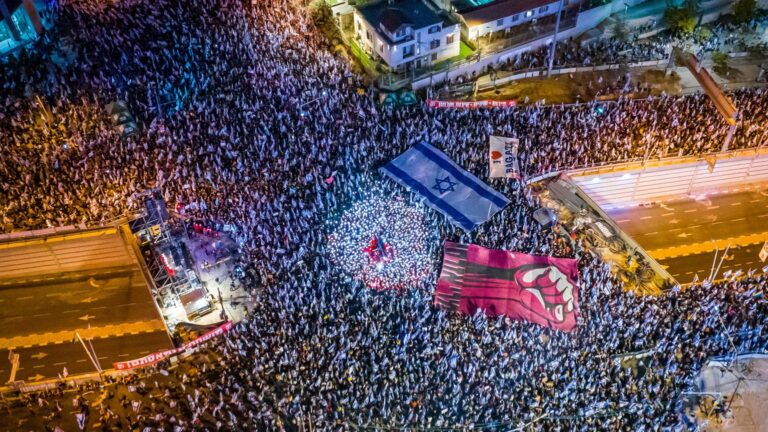
Israel is witnessing an unprecedented country-wide protest in its history over the ruling government’s proposed legislation to overhaul the justice system, which many see as an attempt to curtail the power of the judiciary. According to Reuters, workers at Israel’s international Ben Gurion Airport say they are joining a growing national strike, with both departures and landings expected to be halted over the course of the day. Departing flights from the country’s main international airport were grounded, large mall chains and universities shut their doors. The largest trade union in Israel is on strike to protest Netanyahu’s efforts to overhaul the judiciary. Over 800,000 workers are making their voices heard and there are reports that police are joining them. Diplomats walked off the job at foreign missions, local governments were expected to close the preschools they run and cut other services, and the main doctors union announced its members would also strike. Reuters is reporting that the Israeli foreign ministry union is calling for embassy staff worldwide to strike. Universities across the country also announced strikes from tomorrow morning over judicial overhaul. Israel protests

Reuters is reporting that the country’s two major ports have halted operations due to the labour strike today, which was called to pressure the government.

Haifa port in the north and Ashdod port in the south have both stopped working, according to officials.

Judicial Reforms Spark Massive Protests in Israel “The reform is necessary and we will do it, but not at the price of a civil war” Economy Minister Nir Barkat says he would back Netanyahu “in his decision to halt and reconsider,” according to a statement. On Monday Israel’s president, Isaac Herzog, called again for an immediate halt to the overhaul. “The entire nation is rapt with deep worry. Our security, economy, society – all are under threat,” he said. “Wake up now!” “We have seen very difficult scenes tonight,” he said, referring to strikes in most parts of the country. The opposition leader Yair Lapid said the crisis was driving Israel to the brink. Israeli markets rally on signs that Prime Minister Benjamin Netanyahu is considering a delay to his judicial overhaul, following escalating protests.

Background of the Protests

Mass protests erupted across Israel on 7th January 2023, with demonstrators taking to the streets in Tel Aviv and other cities. The protests were in response to proposed judicial reforms that many see as a step toward authoritarianism in Israel. These reforms would limit the powers of the Israeli Supreme Court, undoing the 1992 Constitutional Reforms of Aharon Barak. The reforms would give the Israeli Legislature more control over the judiciary in terms of appointments and powers, and limit the scope of judicial review.

Congress Dressed in Black, Protests over Rahul Gandhi ‘s Disqualification

0
Delhi: Congress on Monday dressed in black clothes took out a march from parliament to Vijay Chowk to protest against the government over the Adani issue and Rahul Gandhi’s disqualification from the Lok Sabha. The protesters, including Congress MP Sonia Gandhi and party chief Mallikarjun Kharge, gathered near the statue of Mahatma Gandhi in the Parliament complex and raised slogans against the government according to PTI. Holding a huge “Satyamev Jayate” banner and placards with “save democracy” written on them, the MPs proceeded towards Vijay Chowk where they staged a sit-in. “How has Adani’s wealth multiplied so much in the last few years. When you are going to foreign countries how many times have you taken the industrialist with you. The PM has not been able to give answers to questions raised against Adani,” Kharge told reporters at Vijay Chowk. “We want a JPC on the Adani issue. Why is the government not agreeing to this? Why are you scared of a JPC probe… it means ‘dal mein kuchh kala hai’ (something is wrong),” he said. The opposition has been seeking a joint parliamentary committee probe into the allegations of corporate fraud and stock price manipulations against the Adani Group. Kharge also raised the issue of Rahul Gandhi’s disqualification as MP after a Surat court convicted and sentenced him in a 2019 criminal defamation case. We want the truth to come out. If #Adani’s assets have increased in just two and a half years, what can be the reason behind it? If he has magic that can do that, we would like to tell the same to the citizens: #Congress president #MallikarjunKharge “You want to defame Rahul Gandhi that is why you transferred the case to Gujarat even as the comments were made in Kolar in Karnataka. Today is a black day for democracy,” Kharge said. Kharge said opposition MPs were dressed in black as the prime minister is “finishing” democracy. Tamilnadu Congress leaders also registered their protest by wearing black clothes. Trinamool Congress, which has so far stayed away from opposition protests, joined the sit-in on Monday. The Trinamool’s Prasun Banerjee and Jawahar Sircar today joined the strategy meeting in the office of Congress chief Mallikarjun Kharge, indicating a major shift by Mamata Banerjee’s party since it declared it would stay equidistant from both the Congress and the BJP. The Trinamool asserted that its support was restricted to the Rahul Gandhi protest as it believed that the Opposition should be united on this. Youth Congress members have also started the Sansad Gherao protest at Jantar Mantar. Reacting to the Trinamool’s surprise move, Mr Kharge said the Congress welcomed anyone who came forward to “protect democracy”. Chandrasekhar Rao’s Bharat Rashtra Samithi (BRS), a rival of the Congress in Telangana, also joined the “black shirt” protest along with the Shiv Sena (Uddhav Balasaheb Thackeray). Seventeen opposition parties — INC, DMK, SP, JDU, BRS, CPM, RJD, NCP, CPI, IUML, MDMK, KC, TMC, RSP, AAP, J&K NC, and Shiv Sena (UBT) also attended the meeting at the Parliament complex to discuss a strategy to take forward the Adani issue as well as Rahul Gandhi’s disqualification matter in Rajya Sabha and Lok Sabha.

Workers Rally in Kundli Industrial Area on Bhagat Singh’s Death Anniversary

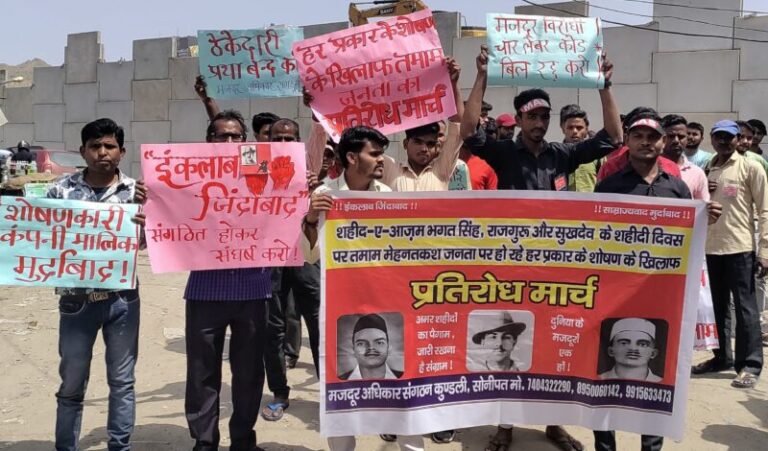
Sonepat, Haryana: On Sunday, over seventy workers participated in a rally in Kundli Industrial area on the occasion of Bhagat Singh’s death anniversary. The rally, organised by Mazdoor Adhikar Sangathan, saw participation from workers across companies in the Kundli industrial belt that predominantly engage in the production of clothes, fans, electric boards, indicators, and other goods that primarily get shipped abroad. The march began at 12 PM from Dadabai Mandir and ended outside the government school in the Kundli Market.

The rally was taken out in remembrance of Bhagat Singh, Rajguru and Sukhdev who were hanged by the British on 23 March 1931, as well as revolutionary poet Avtar Singh Pash who was shot dead on the same day in 1988. To carry forward the revolutionary dreams of these martyrs, the Sangathan demanded the following:

1. Repeal the 4 anti-labour codes
2. Increase the minimum wage to Rs. 25000
3. End the contractual system
4. Stop enacting policies of privatization, liberalization and globalization
5. Control rising inflation
6. Put an end to unemployment

The demands were contextualised in a public discussion that followed the rally. Several companies in the industrial area have increased the workday to 12 hours while the pay remains the same – which is often less than the minimum wage rate. In Kundli, most industrial workers earn Rs. 7-8000 while the current total minimum wage for unskilled workers in Haryana is Rs. 10098. Women workers often receive even less pay.

The minimum wage itself is by no means adequate in light of ever increasing commodity prices. Rent for a single room in Kundli is anywhere between Rs. 3000 to 5000, which is easily half of one’s monthly salary. Despite such high rent, residents of Kundli are constantly dealing with electricity cuts and water clogging due to poor drainage, which the rally highlighted by walking through water-clogged streets. “Mazdoor ke colony ki galiyan pani se bhare hai, dhang ke naale nahi hai, aise mazdooron ke basti mein hi kyun hota hai?” (working-class localities are always flooded and do not have proper drainage facilities. Why does this only happen in working class areas?).

Several companies are denying their employees ESI and PF benefits, and are not paying overtime. Women protesters also raised issues of harassment as more and more companies are beginning to exclusively hire young unmarried girls. Clothing manufacturers have also been hiring children as young as thirteen-fourteen years old.

Read also: Workers March in Delhi Against Anti-worker Labour Codes and Privatization

In concluding the rally, the leadership of the Sangathan informed the crowd that the labour codes have already been implemented in Haryana. They highlighted that the codes only benefit the capitalist classes and not the workers, who are already being looted for the profit of a few.

Under the guide of merely consolidating the 44 labour laws into 4 labour codes, the government has introduced key changes that promote contractualisation, increase working hours, curtail collective action, and take away crucial protections against lay-offs, retrenchment and closure. The policy of “fixed term” employment allows for workers to be fired with ease and denies them the benefits of permanent employment, such as salary, increments and promotions. Contractualisation enables both the contractor and the principal employer to divert the responsibility of occupational safety and rights onto each other, ultimately leading to workers being unable to access either. It was through the previous action of workers and their unions that an eight hour workday was instituted. Only united worker action can then safeguard the eight hour workday and fight for better working conditions.

The government has been relentlessly taking out laws against farmers, labourers, students and the youth – be it the 3 farm laws, the labour reforms, the National Education Policy or the Agneepath Scheme. Now more than ever, the Sangathan members urge the crowd to unite against the government and the company owners who are taking advantage of the working-class for their profit.

Students in Delhi Detained over BBC Film Screening and NREGA Discussion

Delhi: Amidst a backdrop of increasingly authoritarian moves by the government, students and activists from Delhi University were detained by the Delhi Police on Friday over two separate incidents.

One incident involved a public discussion organized by Collective Delhi, a student political organization, on the government’s decision to cut funding for the National Rural Employment Guarantee Act (NREGA). The event was held at Gate 4 of the Arts Faculty, DU, and featured notable speakers such as Jean Dreze, an economist currently working in Jharkhand, Richa Singh, an activist with Sangatin Kisan Mazdoor Sangathan in Uttar Pradesh, and Somnath, an activist with Jan Sangharsh Manch in Haryana.

During the discussion, the group was asked to turn off the microphone, which they complied with. However, things took a turn when the ACP of North Delhi, along with other police officers, disrupted the program, claiming that such an event could not be organized without permission. When students protested by stating that this was merely a discussion on the NREGA with a Professor and other experts, the police detained four or five people and took them to the Maurice Nagar Cyber Cell station. Later, the speakers of the event were also detained along with more students.

In another incident, earlier in the day, several students were detained by the police while protesting the debarment of two students over the screening of the banned BBC documentary, India: The Modi Question. This incident also took place at the Arts Faculty.

On 10 March, the University released a memorandum barring two students, Lokesh Chugh, who is an Anthropology student and the national secretary of National Students’ Union of India (NSUI), and Ranvinder, who is a law student. The memorandum stated that they would not be allowed to take part in any university or college or departmental examination or examinations for one year.

In response, student organisations came together on an indefinite strike to protest the “draconian” action by the university authorities against the two students. Students from All India Students’ Association (AISA) claimed that paramilitary forces were deployed inside the Arts Faculty ahead of the protest and as many as 25 students were detained once the protests began. According to sources, the detained students were taken to Burari police station.

Read also: Mere Membership Of Unlawful Organization Is UAPA Offence : Supreme Court 

These incidents have sparked outrage among the student community and activists, who see this as a clear violation of their fundamental rights to free speech and expression. The detention of students and activists merely for expressing their views and holding peaceful discussions is a worrying trend.

As authoritarian moves such as Rahul Gandhi’s disqualification from the Lok Sabha and the Supreme Court’s decision that mere membership to an “unlawful organization” counts as a UAPA offense continue to take place, it is crucial to ensure that the basic democratic rights of citizens are not trampled upon.

Who invested Rs 20,000 Cr in Adani shell firms?: Rahul Gandhi in First Presser Since Disqualification

Congress leader Rahul Gandhi on Saturday addressed a press conference, the first after his disqualification from the Lok Sabha. On Friday, Gandhi was disqualified as a member of the Lok Sabha, a day after his conviction by the Surat court in the criminal defamation case over his ‘Modi surname’ remark. Rahul Gandhi did not spare any words in the press conference and attacked BJP and its minister’s lies. He said that BJP ministers and leaders are spreading lies about him only because he has been questioning PM Modi’s relationship with business tycoon Gautam Adani. Rs 20,000 Cr In Adani-Owned Shell Companies, Who’s Money Is This?: Rahul Gandhi The main points of the press conference are as outlined:
  1. This whole drama that is been orchestrated to defend the Prime Minister from the simple question- Who’s ₹20,000 crore went to Adani’s shell companies? “Adani has shell companies and someone invested Rs 20,000 crore in those companies. The question is who gave this money? This money doesn’t belong to Adani.” He said there is a Chinese national involved, ‘why is nobody asking about it’, he asked
  2. I am not scared of these threats, disqualifications or prison sentences.
For this govt, the country is Adani and Adani is the country: Congress leader Rahul Gandhi “My speech made in Parliament was expunged, and later I wrote a detailed reply to the Lok Sabha Speaker. Some ministers lied about me, that I sought help from foreign powers. But there is no such thing I have done. I will not stop asking questions, I will keep questioning the relationship between PM Modi and Adani,” he said.
Don’t Care If They Disqualify Me, Beat Me, Do Anything I will keep doing my job: Rahul Gandhi
Rahul Gandhi said that he doesn’t care of his disqualification and it won’t affect his work even if he gets beaten. I am here to defend democratic voice of people of India. Will continue to do that, I am not scared of anyone: Cong leader Rahul Gandhi
Gandhi also thanked all opposition parties for extending support to him and appealed that they have to work together.

One Journalist asked him if he would have apologised he wont have been disqualified to which Rahul responded: ‘My name is not Savarkar, won’t apologize’.

When questioned on BJP’s charge that he insulted OBCs, He said, I have always talked about brotherhood, but this is not about OBCs. 

BJP’s Biswabandhu Elected Tripura Speaker, Tipra Motha Abstains from Voting

Biswabandhu Sen, a BJP MLA, was elected as the Speaker of the Tripura Legislative Assembly on Friday. He received 32 votes out of a 60-member house. In the election, which began at 11 AM, he defeated Gopal Chandra Roy, a Congress MLA who only received 14 votes. Sen is a four-time MLA from Dharmanagar in North Tripura district and was even the deputy speaker in the previous assembly. The ruling BJP-IPFT alliance holds 33 of the 60 seats, while the opposition – comprising TMP, the CPI(M), and the Congress – holds the remaining 27 seats.  The TMP, with 13 seats in the assembly, abstained from voting in the Speaker’s election. Expressing displeasure against the seating arrangement in the house, the 13 members staged a walk-out right before the election began.  Earlier, the TMP had promised to support Roy, who was the joint candidate of CPI(M) and Congress. Sources state that TMP’s decision to abstain from voting came after Union Home Minister Amit Shah’s call to the TMP supremo Pradyot Bikram Manikya Deb Barman. On Thursday, Shah informed Deb Barman that the centre would appoint an interlocutor by March 27 to study the “constitutional solutions” to TMP’s demands for greater tribal autonomy. These demands are to be addressed within three months or a specific time frame. Earlier, on March 8, Deb Barman and the rest of the TMP legislators also attended a two-hour long meeting with Shah, Assam CM Himanta Biswa Sarma and Tripua CM Manik Saha regarding the same.  Read also: Parliamentarians React Over Rahul Gandhi’s Disqualification The TMP, a newly formed party in Tripura, had won the majority of the seats in the tribal council elections held last month. On winning 13 of the 20 seats reserved for tribal’s in the Tripura Assembly, the party emerged as the second largest party after the BJP. The party had demanded the creation of a separate ‘Greater Tipraland’ state for the tribal communities in the state. However, the BJP had refused to concede to the demand, stating that it would not be in the interest of the state. The party had also accused the TMP of trying to create a divide among the people of Tripura.

Parliamentarians React Over Rahul Gandhi’s Disqualification

0
In a bizzare turn of events, India’s parliament on Friday disqualified opposition Congress party leader Rahul Gandhi as a lawmaker after a lower court found him guilty of defamation and sentenced him to two years in prison. This has shocked not just congress party but majority of parliamentarians. On Thursday, 23rd march,  a Surat Court in Gujarat convicted Congress leader Rahul Gandhi, in a 2019 defamation case for his remark “all thieves have Modi surname”. He was sentenced to two years in jail for the offence, PTI reported. Lok Sabha has taken a decision based on the lower court verdict. Gandhi was granted bail in the matter by the trial court and the sentence would remain suspended for the time being to enable him to file appeal. The news of Rahul Gandhi disqualification has brought a storm in Indian political scene. Congress tweeted on its twitter handle. The letter from Lok Sabha Secretariat has been sent to President’s office, PMO, Rajya Sabha Secretariat, Election Commission, Central ministers, all the departments of Indian government, Kerala’s chief election officer and Estate officer of Parliament’s office. After the Rahul Gandhi’s disqualiication, he might have to vacate his official home on 12 Tuglak Lane. Statements have come from all across the political spectrum from Left wing party CPM leader Sitaram Yechury calling the use of defamation to throttle opposition leaders. Shiv Sena leader Uddhav Thackrey and RJD leader Tej Pratap Yadav have also condemned the act as direct murder of democracy.   Rahul Gandhi has been on the target of the BJP for a long time. Since coming to power, PM Narendra Modi has kept on commenting on Jawaharlal Nehru and Congress along with Rahul Gandhi, Sonia Gandhi every now and then. Even after spending crores on its propaganda, BJP failed to show Rahul Gandhi as “Pappu”. After Bharat Jodo Yatra, emergence of a mature Rahul Gandhi has been cause of trouble for BJP. Rahul Gandhi can still challenge the Surat court verdict in High court and if there is stay on verdict his Lok Sabha membership can be saved. He can also go to Supreme Court. But if doesn’t get a stay order on the verdict, he might not be able to fight elections for next 8 years.