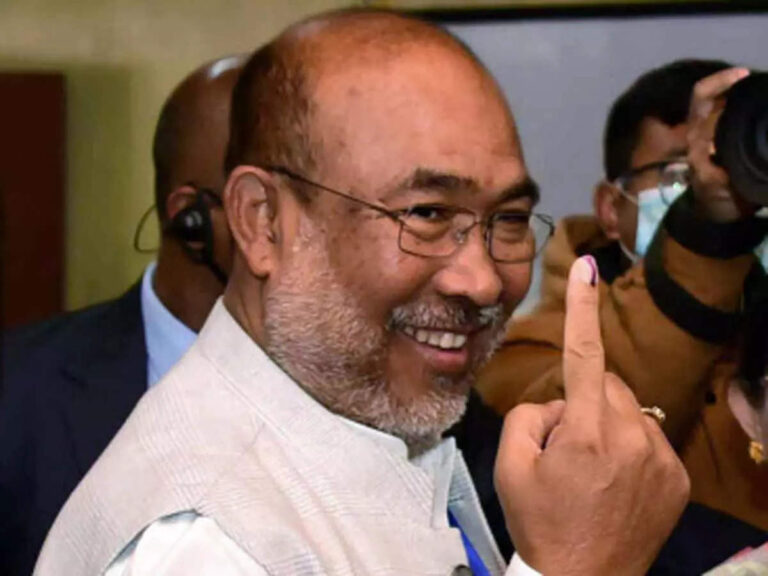
In the background of this unprecedented use of threat and violence as mechanism to influence the electoral outcomes, the informed and educated voters by and large were very sceptical of the ability of BJP to return to power again. The most dominant prediction was of a Hung Assembly wherein the BJP might win 15 at most out of the 60 seats. But today the BJP could score 32 out of 62 and thereby reaching the absolute majority mark. This absolute negation of the expectations of the educated and informed elite is what has stirred the minds of these people as to what has influenced the minds of the general voters. Here, on hindsight, it becomes clear today that the influential dynamics had worked only within the last five days or so before the two scheduled dates of voting. To begin with, the BJP must have realised that the educated elite were largely disfavouring them. It is now established that they were avoiding any kind of trucks with this group and concentrating on the remaining segments of the electorate.The prevalence of widespread poverty makes it convenient for the powers that be to adopt momentary social bribery as a means to become winners in a key democratic process.
 It here that three groups are paramount and can easily swing the votes in their favour.
- First, the poor households constitute almost about 80 per cent of the total electorate. Of the remaining 20 per cent, only about 10 per cent are decisive and 10 per cent non-committal (thus can be subject to influencers).
- Second, there is – as expected in context of mass unemployment and arguably zero creation of new employment opportunities – a large proportion of youths who can be easily subject to arousal with violent feelings.
- Third, sustenance of violence does cause a kind of submission and admiration to the vulnerable sections of the population.
Decoding the counter-intuitiveness of UP Assembly Election results
This is where we can look at the prevalence of poverty and its further complication by the presence of the Pandemic. Poverty in any context is never an enviable situation for any family. The situation is further aggravated by the absence of earning opportunities, which is contextually coupled by another absence of equalisation of opportunities due to the presence of corruption. This makes the revelation of preferences in voting exercises of the poor easily susceptible to the momentary charms offered by the powers that be. The Pandemic of the last two years has definitely deepened and widened the daily existence challenges of food and health of these poor households. While their capability to face life challenges is already low, the Pandemic has almost made it non-existent. This is where the convenience of being in the powers that be arises – the 80 per cent of the electorate can be easily lured by momentary extension of needed reliefs; anyway the poor live life only momentarily. Thus the coupling of poverty by the Pandemic creates a brilliant atmosphere for any political party to move for purchase of preferences of the poor. The political party that can pay the highest amount to the “majority” 80 per cent of the voters would definitely enjoy the preferences of the electorate when the Electoral Process gets completed. Thus the three factors that have been the determinants of the recent electoral process for the State Assembly in Manipur are Poverty, Pandemic and hidden market process of Purchase. While Constitution may mention Equality, the prevalence of widespread poverty makes it convenient for the powers that be to adopt momentary social bribery as a means to become winners in a key democratic process. So it is in the interest of the powers that be and wannabe powers to be that Poverty should prevail. If this poverty is also coupled by something like the Pandemic to make the poor much more absolutely desperate, the powers that be and wannabe powers to be cannot ask for a more congenial atmosphere to indulge in social bribery. This is the context any poor would be marketing whatever they are willing and including the rare voting right. Thus the market for the Purchase of votes spontaneously gets created. The highest bidder (here bidder means actual transactions taking place) gets the prize of Votes. Thus the lessons of the recent election outcomes in Manipur are: A. Poverty should be “sustained” for election interests; and B. There is nothing to worry about the character and quality of governance if the powers that be can sustain the prevalence of poverty. The issues of Democracy can be discussed in a seminar funded by the government that ultimately gets constituted. Prof Amar Yumnam is Professor of Economics and Former VC at Manipur University, India



 Meanwhile, several netizens have reacted sharply to the attempt of the portal to spread communal venom by linking two different events.